By Ola King
While search marketers can get bogged down worrying about high quality content, successful link building strategies, and technically sound sites, when it comes to SEO, we need to take a step back and look at the what and why in order to get results.
To that end, Moz’s own Ola King walks you through the three main pillars, or as he calls them, “bosses”, of SEO work. All of your SEO strategies feed into their demands, but they all need different things.

Video Transcription
Hi, Moz fans. I’m Ola King. I work at Moz, and I’m excited to join you today for this edition of Whiteboard Friday. I will be talking to you about the three bosses of SEO.
Creating high quality content, making sure that you have a solid link building strategy, making sure your site is technically sound, these are great things to do when it comes to SEO. However, none of them would be as effective if you’re not taking a look at things from a strategic, wider lens. Basically, it means you have to take a step back and look at what you’re doing and why you’re doing them in order for you to get the results that you need.
So for SEO, there are three main pillars really to consider. I call them the three bosses of SEO. So that’s really your business, your searchers, and your search engines. Each of these bosses have their own individual needs.
Boss #1: Your business

So let’s start with the business. So these are the needs of the business. This is by no means a comprehensive list. I’m sure there are things that I’m missing. So if there are things that you think should be here, please leave a comment and we can have a discussion on that so we can all learn from each other. But the whole idea of this is to get you thinking about things from a broader lens before you dive into tactics.
Key metrics and goals
So the first one is the key metrics and goals. Any activity that is done without a goal is essentially a hobby, which is fine. However, if you want to do serious SEO work, you need to have a goal. In order to know what your goals are, I guess you have to look at your business goals.
Then that determines your marketing goals, which then determines your SEO goals. So understand what your KPIs are, understand what your priorities are, and that will then let you know what your next steps are. So, for example, if your goal is to get more traffic, you need to focus more on the top of funnel types of content, so like an ultimate guide for example.
If your goal is to get more leads, you might start looking at maybe your product comparison pages. Then if your goal is to have more sales, then it might be time to start optimizing your product pages for example. So always look at your key metrics and goals and then work from there.
Competitors
So the competitors is also something you should really consider. A lot of people are very familiar with who their direct competitors are in terms of product or services.
But when it comes to SEO, there is also the informational competitors, so people that might not be doing the same thing as you, but they provide information to your ideal audience. So always keep an eye on those competitors as well.
Resources
The resources. So look at the resources that you have in terms of time, budget, and personnel. If you don’t have the time for SEO, you might be able to consider outsourcing it. Or if you don’t have the right talent for link building, maybe you might want to partner up with an agency that does that. So always take stock of your resources before you start thinking of what you should do.
Brand identity + recognition
The brand identity and recognition also determines the types of content that you go after. It doesn’t matter if the content has a lot of volume and it’s trendy. If it doesn’t align with your brand in the long run, it’s not really a very good use of your time.
Area of expertise
The area of expertise as well is very much related to this. So what are you an expert at? Try to lean on your expertise. If you don’t have the expertise but you want to provide that information to your audience, maybe you might want to collaborate with other people that are better suited to that so that you can still complete your goal for your business and audience.
Strengths
Strengths is very related to expertise, but this is in terms of what talents, what skills do you have. Are you better at doing research and creating long-form content, or are you better at creating things that go viral and are more like listicles? Lean into your strengths and collaborate as needed with people that can help you with your weakness.
Time in business
The time in business also the time is the approach you take for SEO. A brand-new website, what you would need would be completely different from a business that has been around for a long time, that has a great website, but they’re just trying to do a refresh, which is also different from a business that has been around for a very long time but doesn’t have a very good online presence.
All of this would affect the way you approach content, link building, and trying to rank for those tough content. So that’s your business. As I mentioned, I’m sure there are things I’m missing. So I’m very curious to know the other things that you might come up with as well.
Boss #2: Searchers

So next up let’s look at the searchers. So these are the people that you are serving as a business. The first thing, when it comes to the searchers, is look at your persona. So what are the types of people that you’re trying to attract into your website? There is no point in creating any piece of content if you don’t even know who you are trying to attract with that content. So start with the persona.
Search intent and relevance
Once you’ve identified the persona, you can then start looking at the search intent and relevance.
So what are they looking for? The good news is the answer is already right on your search engine results pages. Do a quick search for your ideal keyword and you’ll be able to see the results that the search engines have deemed as the most appropriate for what your audience is looking for, which matches the search intent. Once you’ve done that, then you’re going to want to create the right content to satisfy the searcher’s intent.
Topics, not keywords
When you’re creating content, focus on topics and not keywords. So gone are the days where you just want to create your page and stuff it with as many keywords as you can and you start ranking and print out dollars. Not so effective anymore. You basically want to look at each page on your site covering a topic that you have a focus.
While you’re doing that, then you want to make sure that you have the most comprehensive page that answers that searcher’s intent. Cyrus Shepard actually has a great
For years, one of the clearest signs that an out-of-home advertising campaign had worked was a spike in search. A billboard went live. People saw it. Someone searched the brand name. Branded search increased, website traffic followed and, suddenly, there was a digital trail showing that something happening in the physical world had created an online response. That relationship between OOH and search still matters. But the way people find information is changing. Instead of typing a few words into Google, someone can ask ChatGPT, Gemini, Perplexity or another AI-powered search tool a much more complicated question and expect an answer immediately. The journey can now look very different: See billboard → ask AI → receive an answer → investigate brand → visit website → take action. That creates a new question for OOH planners. What happens after someone notices the campaign? What information will they look for and what will an answer engine tell them when they ask? Outdoor advertising has traditionally been treated as a broadcast medium. You buy the location, create the artwork, put the campaign live and measure reach, impressions, recall and perhaps a lift in search. But a strong piece of OOH can create something more valuable than an impression: a question. If a billboard makes a surprising claim, people may want to verify it. If it introduces a not-so-familiar brand, they may want to understand it. If it shows an unusual price, statistic or comparison, they may want to know whether it is true. That means the campaign does not necessarily finish when somebody walks past it. The physical creative can become the trigger for a digital information journey. Our recent campaign on York Street in Leeds illustrates the principle. Two 48-sheet billboards were placed next to each other, contrasting an existing quoted price for the same site. The message was deliberately simple enough to understand from the road, but provocative enough to create a second life online. People photographed the boards, publications picked up the story and the physical campaign became digital content in its own right. It is the mechanism: a physical message created curiosity, curiosity created discussion and that discussion created a searchable information trail. There is a temptation to treat answer engine optimization as simply the latest acronym marketers need to add to a presentation. That misses the more important point. AEO is fundamentally about making an organization understandable to systems that retrieve and synthesize information. Who are you? What do you actually do? Where do you operate? What do your services cost? What evidence supports your claims? Who has written about you? Are independent sources talking about you? Can an AI system find consistent information about your business across your website and the wider web? These are not questions that can be solved simply by changing a meta title or adding an FAQ section. They require a broader digital footprint and clear, useful information. This creates an interesting opportunity for OOH. Instead of planning only for what the audience will see, planners can start thinking about what the audience might ask afterward. A campaign could be designed backward: creative → likely question → search behavior → available information → AI answer → action. That does not mean every billboard needs to contain a question or every campaign needs an elaborate digital strategy. It means the likely second step in the consumer journey deserves consideration alongside location, reach, frequency and format. OOH planning already asks important questions: Where is the audience? How much reach do we need? What frequency are we looking for? Which formats fit the budget? The next layer could be just as simple: What question might this campaign create? What will somebody search after seeing it? What might they ask an AI system? Where will they find the answer? Is that answer accurate, useful and credible? That is a different way of thinking about outdoor advertising. It treats attention not as the end metric, but as the beginning of a wider journey. Physical attention: A person sees the billboard, bus, digital screen, taxi, airport advert or Underground campaign. Curiosity: The creative creates a question, emotion or reason to investigate. Search or AI prompt: The consumer searches the brand or asks an answer engine for more information. Digital ecosystem: The consumer finds the company’s website, content, reviews, press coverage and other authoritative information. AI-generated answer: An answer engine can now use that wider context when responding to the consumer. Action: The consumer visits the website, makes an inquiry, buys something, visits a location or shares the campaign. I do not think the billboard is becoming less valuable because people are spending more time with AI. There is a case for the opposite. The more powerful AI search becomes, the more valuable real-world triggers may become. AI can answer questions, but it cannot put your brand physically in front of somebody walking down a high street. A billboard can create the question that sends somebody to search or AI in the first place. That is the opportunity. The next generation of OOH campaigns will not just be designed to be seen. They will be designed with what happens afterward in mind: attention, curiosity, search, AI discovery, discussion and credibility. The billboard may actually be the first prompt. What happens next is up to the rest of your digital ecosystem.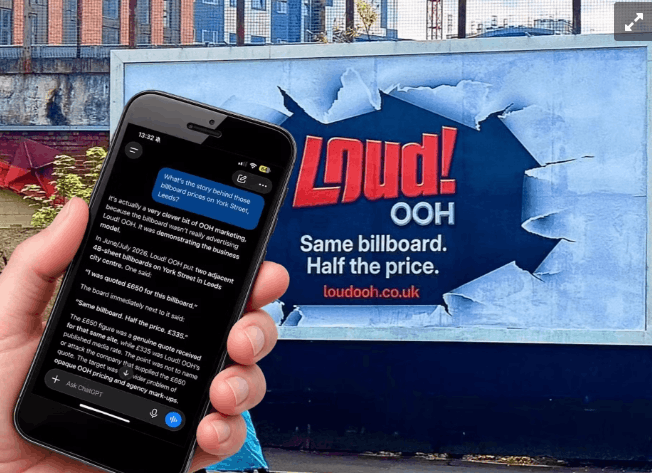
The billboard is no longer the end of the journey
OOH creates the question. The digital ecosystem has to answer it
A York Street campaign offers a useful example
AEO is about being understandable
The question becomes part of the campaign strategy
Design the question, not just the impression
The OOH-to-AEO pipeline
The billboard may actually be the first prompt
Sourced from The Drum

Psychological and socioeconomic factors
So when you’re creating your content or you’re trying to devise your content strategy, always look at the emotion, psychology, social, and economic factors that are affecting your audience. It’s easy to look at data on your site’s traffic and obsess about what could have gone wrong in terms of your competitors or other factors. But you might also want to take a step back and look at what’s happening in the lives of your audience, like what are they struggling with right now.
So in the past 18 months also, every one of us have been experiencing the pandemic. So that has changed the way people search for things. Searches for keywords like remote, things like delivery, those searches have gone up over the past few months, and that’s based on the social factors that are affecting people. It means they can no longer do things that they were able to do before, so now they’re having to adjust in different ways. So always look at what’s happening to your audience and then react accordingly.
Brand affinity and trust
The brand affinity and trust also affects the way people interact with your site. If people are familiar with a brand, they are more likely to trust them and interact with them more.
So if you’re a newer website or a brand, it might be a good idea to let the content speak for itself and not try to make your brand the front and centre of attention. Whereas for a bigger brand, it might be a good idea to do the opposite. So a site like Amazon would do good to have their brand name in the title tag for example because people know their brand and they can trust them and click on the site, whereas a brand-new website it might be a good idea to not necessarily make that the focus of attention.
Trends and seasonality
So other things to look at are trends and seasonality. As you’re looking at your SEO data, if you notice a dip, you might not be doing anything wrong. It could just mean that it’s the nature of the time of the year. So I’m sure certain keywords would trend upward around the holiday season, for example, for things like electronics, video games, etc.
Then towards like February or March, maybe those searches might reduce. It doesn’t mean you’re doing anything wrong. It’s just the seasonality.
Search behaviour
So the search behaviour as well. People’s behaviour changes over time. Humans are not robots. They are very dynamic.
Things change, things that they search for. As I mentioned before, when their emotional, psychological, social, and political factors are affected, it also changes how they search for things as well. So always try to react to that or pay attention to what people are doing. Try to understand what’s changing in their search behavior and react to that accordingly.
Customer journey
The customer journey is very important. Always understand the touch points that your customers have with your business. Even outside of your business, look at their journey before they get to your business. This allows you to know the types of content you need to create to fill in the gap in their journey. This allows you to know who you might need to collaborate with, so other information sources that your audience has, where they hang out. You are able to understand those things and be able to create the perfect content for them and also promote it in the right places as well.
Struggles
The struggles. What are the things keeping your audience up at night? What are they struggling with? Understanding this allows you to create content that no other person would be able to create. It would almost be to them like you have like some magic wand where you’re able to predict what’s going on with them.
Try to understand what are their struggles. You can find out the struggles by looking at questions that your audience asks your help team, for example. That’s a good place to start and use SEO tools to do your keyword research to know what some of those questions that they’re asking, that indicate struggles. Go on forums like Quora and Reddit. Those types of places allow you to find those struggles.
Location and language
Location and language affects how people search for things. Different locations have their own slangs, have their own culture, behaviours, and ways of doing things. Try to understand the location that you’re targeting. Try to understand what the culture is like, what the language is, and try to create your content with that in mind. If you don’t have that expertise or knowledge, it’s a good idea to partner up with someone in those locations as well.
Also make sure that your site is internationalized as well if you’re targeting multiple countries. There are lots of resources that teach you how to do this. You can find that in the Moz [SEO Learning Center] as well.
Accessibility
Accessibility, different people search for things in different ways. People have different needs. So make sure that your site is universally accessible to everyone. So make sure it’s mobile friendly. Make sure you don’t have like annoying pop-ups everywhere. Make sure that you provide an alt tag for your images to make your content more accessible to all.
So these are the factors that are affecting the searchers. There’s a lot that I probably missed, so I would love to know what you think and also other ones that I forgot.
Boss #3: Search engines

So the last but not the least is the search engines. In order to win for SEO, you really need to understand that the search engines are businesses as well.
Business model
So in order for them to rank your site, you have to be a site that is in line with their business. For Google, if you want to understand what their business model is, there is a video on YouTube that you should watch.
It’s called “A Trillion Searches, No Easy Answers.” It’s a very interesting video that shows you the behind the scenes of how they think about things, what challenges they have, and the future of where they’re heading. This would then allow you to be able to know where they might go next so that you can react accordingly.
For Google, once again, I mean ultimately they are just trying to provide content to their searchers that is valuable, that is from sites that are indexable, that provides a good experience, and of course it has to be relevant content.
Natural language processing
They put a huge emphasis on relevant content. That leads us to the next one — NLP. So every additional change that Google has been making over the past few years is geared towards that goal of helping people get answers to things that they search for in a natural way, so making search basically more human.
That allows them to be able to help people find the relevant content to them by using more advancements in machine learning. So in order for you to do well for SEO, you need to understand what are they doing with these updates. Read the release notes. Try to understand what each update means and then try to cater your content to match that goal as well.
E-A-T
E-A-T, it means expertise, authoritativeness, and trust. Google is very strict on this when it comes to sites that are in the money or your life categories. So that’s health, finance, and fitness, things like that. So make sure that your site is displaying the signals that they need for this authority.
There are a lot of resources out there. I wish I could spend more time to explain this, but we have limited time. But make sure you look into this so you can follow the right guidelines for the E-A-T.
Links
The links, I don’t need to explain this too much. Everyone that works in SEO is pretty much familiar with this. But links are basically the digital word of mouth. A lot of people are familiar with getting backlinks.
But just as important to getting backlinks, you also want to make sure that you’re spreading internal links as well. So make sure that the pages on your site that are getting high traffic, you are also linking to pages on your site that might not be getting as much traffic, but they are just as important to you.
Core web vitals
This is a recent update, the Core Web Vitals. So it’s meant to basically build better websites in the world. A lot of people debate the effectiveness of this at this very moment. I would say you should do your best. Use tools like the Moz Performance Metrics Beta and try to improve your site as best as you can to at least be prepared when these changes do start affecting your ranking power.
Indexability
Indexability, of course make sure your site is indexable to the search engines. So the things like your robots.txt file is well set up. Make sure that there are no HTML or JavaScript errors. Make sure that you are reducing pages on your site that have no value so that you’re not taking away from that crawl budget for the most important pages. Look at your site’s architecture. Make sure things are set up correctly so it makes your site very indexable.
Schema markup
Take advantage of schemas. These help the search engines understand your website very clearly. Having schemas doesn’t mean you would always win the SERP features, but at least it gives you a fighting chance. So take advantage of them as well.
Query deserves freshness
QDF is “query deserves freshness”. So for certain queries, the search engines determine that more up-to-date information is more relevant than other types of content, so they refresh them more frequently. So if you notice that some of your content did not perform quite as well, it might just be because that they are outdated.
So a little quick refresh can help you take advantage of the opportunity to rank better.
Ongoing updates
Last but not least, ongoing updates. SEO is not stagnant. It’s continuously dynamic. It’s moving, and things are changing. All the search engines are pushing dozens of updates on a daily basis.
So keep an eye on, like I said, their business model, try to understand where they are headed, and try to be able to predict where they’re going. Keep on top of the updates and then adjust as you go. But yeah, so these are the three bosses of SEO, and these are all what they need.
As I mentioned, I probably missed a lot of things. But the whole idea is not for this to cover everything. The idea is just getting to think of SEO from a very holistic perspective. You might be wondering this is a lot. Where do I even start from? Well, the most important thing is your business. Try to make sure that you’re doing the right thing for your business.
Then make sure you do the right thing for your searchers and then start satisfying the search engines to get results. But yeah, so that’s all I have for you today. Leave your comments below. I would love to have a discussion with you and see what we can learn from each other as well. All right. See you next time.
Video transcription by Speechpad.com.