Tag

Brand

Browsing

By

Abbie Oguntade, the vice-president of UK and Northern Europe for dating giant Match.com, has said brands already “respectful” in the way they handle consumer data shouldn’t be fazed by the impending General Data Protection Regulation (GDPR) laws.

Recent studies have suggested that as many as 60% of European businesses aren’t prepared for the legislation, which comes into force on 25 May. And where brands like Lloyds have overhauled their entire digital marketing strategies, Oguntade believes that data-driven businesses like Match won’t face much of an undertaking.

Though agreeing that there are likely to be “teething problems” as marketers grapple with how to incentivise consumers to share data without compromising user experiences, Oguntade said: “Companies have always had an obligation to protect consumers and to respect the use of their data,” adding that it was then only right that any changes required as a result of GDPR were implemented.

“If you’re a company that is respectful of that then it shouldn’t be too difficult to get around it,” continued Oguntade.

But there is evidence to the contrary. The hack of distinct affair-enabling app Ashley Maddison cost the company $11m in fines after the data of up to 37 million users was leaked.

In some cases, dating services (much like social networks) know more about consumers and their behaviour than users do themselves. These platforms have access to personal and potentially sensitive data, voluntarily offered up by users.

A recent investigation by The Guardian into how much data Match’s sister company Tinder holds on subscribers, illuminated the lack of user awareness around how this information is stored and used. The journalist who requested her dataset from the company as part of the report was sent back an 800-page opus containing everything from her Facebook likes and every single ‘match’ she’d scored on the service. A data scientist described the contents as “horrifying but not surprising.”

But the assurance of security is the lifeblood of dating and personals sites.

So, come May it’s likely that a spotlight will be shone on Match and its competitors to see exactly how they are handling GDPR, and responding to any related data requests.

Oguntade iterated that tenets of the directive like data protection and consent are already a highly important part of Match’s business. While she acknowledged that the dating giant is “hugely aware” of the implications of the EU rules, she was clear that this doesn’t mean it hasn’t committed significant resource to ensure it’s on the right side of the law come May.

“We have a hefty and experienced team, that have been working hard on it to make sure our policies and programmes will be compliant with the new standards,” she noted.

“While it’s something we’re ensuring we’re absolutely on point with, I have to be honest and say it’s not a huge undertaking because we have always taken the privacy stuff seriously and I genuinely mean that.

Match, part of the same group as OK Cupid and Plenty of Fish among other dating brands, is having its GDPR efforts spearheaded by its global privacy director Idriss Kechida, and has also enlisted the business leaders of each region to get involved in strategy meetings and to help implement plans.

This GDPR team includes a dedicated data privacy lawyer who works across Match’s global markets – including those outwith the EU who will also be affected by the directive.

In addition to this, Match has conducted interviews with any departments which “touch data” to ensure that there’s full awareness on the EU’s regulations and what they entail.

In Oguntade’s words, the company will be “ready to roll” by the time GDPR is implemented in the spring.

However, it’s clear that while it is prepared, the brand isn’t getting complacent in the face of fines for non-compliance. As per GDPR guidelines these could clock in at $20m (£18m) a pop or 4% of annual turnover; which for Match Group as a whole would be a $44m slice of the $1.1bn yearly revenues it recorded in 2016.

Feature Image: Recent studies have suggested that as many as 60% of European businesses are underprepared for GDPR

By

Sourced from THEDRUM

By

Geico has been trying to grab people’s attention online with its pre-roll ads, and it continues to do so with its latest, ‘Interrupt-a-palooza’ campaign that interrupts and then interrupts again.

The first Geico pre-roll campaign, ‘Unskippable,’ won plenty of accolades for its freeze-frame live action silliness and ability to entertain, where many pre-roll ads were highly skippable. It returned with ‘Fast Forward,’ which appeared to skip the middle of an ad to get to the point. ‘Crushed’ smashed the actors as the sets closed in, making for entertaining mayhem.

With ‘Interrupt-a-palooza,’ Geico and The Martin Agency again reinvent the now-tired pre-roll, cramming in more action, information and branding into 15-seconds than ever before. The company admits upfront that the ad is interrupting the viewer, then the spot in progress is also interrupted by more action, plus a falling logo.

‘Nighty Night’ sees two people in bed talking about how glad they are that they switched to Geico. They’re then interrupted by two people on elliptical machines crashing through their bedroom wall as they tout Geico’s 24-7 access. Both are then interrupted by a Geico logo that flies in from off camera. Other spots in the six-spot campaign follow a similar path.

“In the previous three rounds of pre-roll work, we played with the concept of time. First by skipping to the end, then fast-forwarding through the middle, and last year, condensing our ads,” said Neel Williams, vice president, creative director at The Martin Agency. “This year, we took a different approach, but still kept things very self-aware. Rather than apologize for the interruption, we thought it would be fun to lean into it.”

Associate creative director for the agency, Mauricio Mazzariol, added: “Getting interrupted before watching an online video is not exactly a Ferris wheel ride. So, these new Interrupt-a-palooza ads are supposed to bring some humor to the issue by embracing the disruptive nature of pre-roll and taking it to a whole new level.”

By

Sourced from THEDRUM

If you are marketing anything in the tourism game, this is what you need to know.

By MediaStreet Staff Writers

For those that are lucky enough to get away on holiday or go on an extended travel stint, we can predict what actvities you might be doing after a new study has been published by Hotels.com

The company have used a data-crunching bot to track what people are hashtagging the most on their sojourns. More than five million brags globally were analysed using a combination of Tweet data, Instagram posts and travel keywords and destinations mentioned on other social media. So here are the results.

Worldwide travellers are all about the culture: they enjoy musing around museums (300,000 brags), old-town charm (170,000 brags) and a spot of sunshine (130,000 brags), but they can also be found in floating restaurants, erotic museums and night markets.

TOP 10 GLOBAL THEMES

  1. Museum
  2. Rooftop bar
  3. Old Town
  4. Modern Art
  5. Opera
  6. Sunshine
  7. Olympic Games
  8. Cathedral
  9. Gallery
  10. Ballet

This travel bragging trend echoes the findings from the recent Hotels.com Mobile Travel Tracker report, which revealed that one in six travellers search social media before their trip to plan the photos they’ll take. And 56% of people surveyed admit to spending more than an hour a day on their smartphones while on holiday.

While travellers naturally brag about taking in the tourist hotspots and cultural offerings, more people than ever are sharing foodie ‘grams, shopping stories and luxe posts.

#Foodporn
You’re never more than an Insta-scroll away from #FoodPorn and the brag lists are brimming with culinary treats. Cakes in Stockholm and curry in Toronto spice up the brag lists, and New York steak and pizza both made the cut. Perhaps more surprisingly, enchiladas proved twice as popular as modern art in Mexico City, ice cream scooped 10% of all San Francisco brags and Jumbo Kingdom floating restaurant in Hong Kong took second place in the Hong Kong chart with more than 20,000 brags.

Shop ’til you drop
Shopping is a must-do for most travellers. Those visiting Paris brag more about the Rue Vieille du Temple, famous for its boutiques, than Le Louvre! Other top shop-spots included Bal Harbour in Miami, the Harbour City mall in Hong Kong, vintage shops in Melbourne and the stylish Cecile Copenhagen fashion brand made the Danish capital’s top 10.

Five-star luxury
When travellers check into a posh, luxury hotel they naturally want the world to know. The stunning 5-star Ritz Carlton in San Francisco topped the city’s brag list, the Four Seasons in Singapore proved brag-worthy and the Park Hyatt came in at number one in Seoul – most likely for its awe-inspiring rooftop pool.

Scott Ludwig at Hotels.com said, “Bragging about your travel experiences on social media has become the norm – if you didn’t get social kudos out of it, it didn’t happen!”

Have you listed your company in our Media Directory? It’s free! Everyone’s favourite price! Click here to do it now.


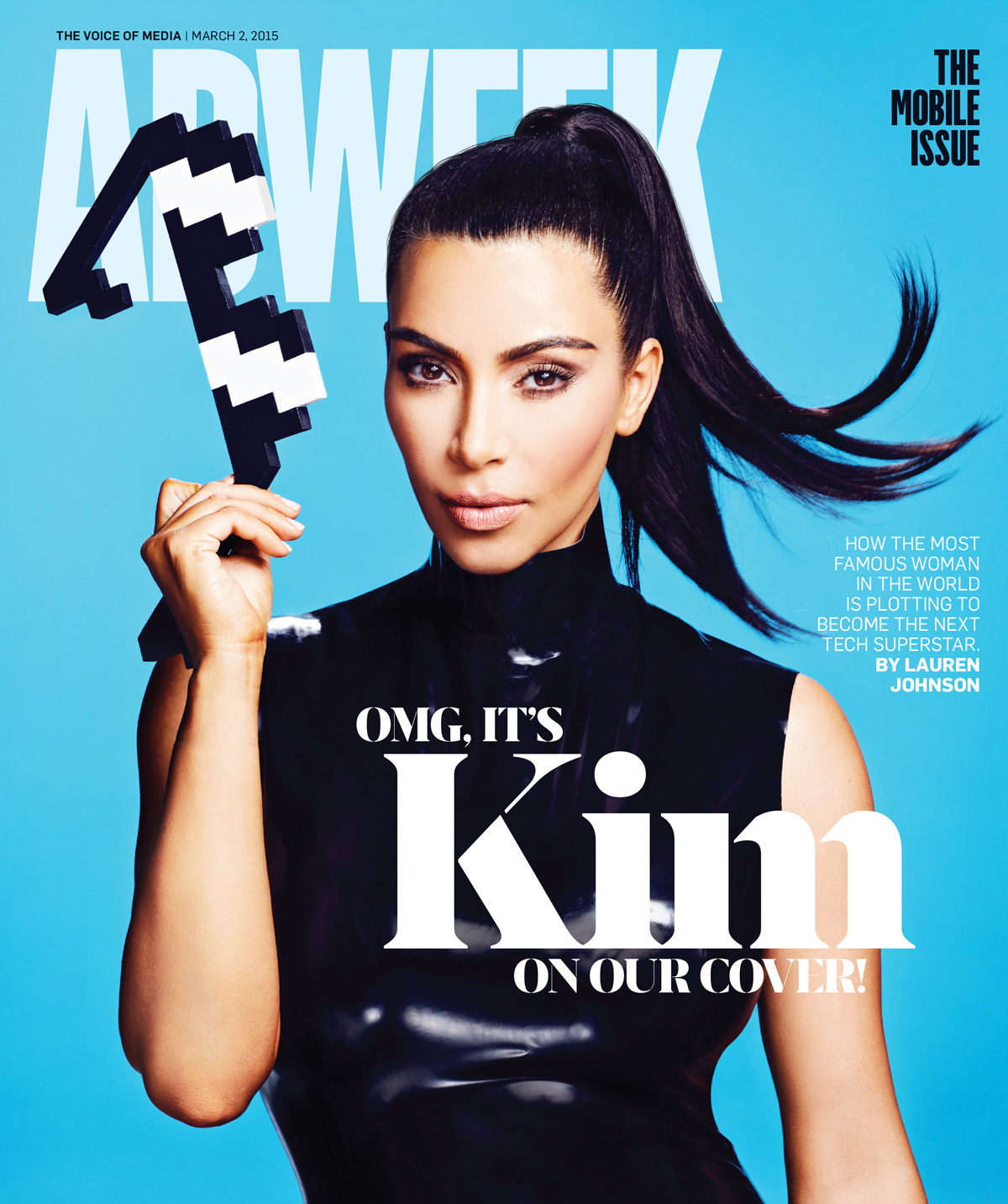
Adweek has called in the big guns for a huge collaboration which could be an example of how the rest of us will work in the future.

By MediaStreet Staff Writers

Everyone in advertising knows Adweek, a bible for marketers. Adweek has published articles for the brand marketing ecosystem since 1979. Adweek’s coverage reaches an engaged audience of more than 6 million professionals across platforms including print, digital, events, podcasts, newsletters, social media and mobile apps.

Today, the publication announced the launch of the Adweek Advisory Board, made up of 24 of the most innovative and creative executives who are shaping the modern brand marketing ecosystem.

Adweek says they recognise the need to synthesise a diversity of opinions to maintain its position as a voice in the marketplace. “Our newly formed Advisory Board will provide us – and our audiences – with the thought leadership and expertise we all need to help navigate the complex and constantly shifting ecosystem of today’s marketing and media world,” said Adweek editorial director James Cooper. “Adweek’s ultimate goal each day is helping our readers stay ahead of the curve and do their jobs better.”

“I am excited to be partnering with Adweek and joining its Advisory Board,” said GE CMO Linda Boff. “With digital transformation built into our DNA, we are in an especially unique position to guide and advise Adweek and the business community it serves.”

The Advisory Board will meet regularly with Adweek’s senior editorial team at gatherings across the country to discuss the pressing issues of the day. Members will also be on hand to publish thought leadership columns, speak at Adweek events and provide Adweek with insight and analysis on an as-needed basis across all platforms.

“The times we operate in aren’t easy. The pressure to deliver is daunting for even the most experienced here,” said board member Colleen DeCourcy, chief creative officer for agency network Wieden + Kennedy. “When an organisation like Adweek consciously turns its efforts to developing our talent, I am all in. Collaboration feels like the thing we need right now. All boats rise with the tide.”

Adweek’s Advisory Board Members:

  • Marisa Thalberg, Global CMO, Taco Bell
  • Linda Boff, CMO, GE
  • Adrienne Lofton, SVP of Global Brand Management, Under Armour
  • Andrew Keller, Global Creative Director, Facebook Creative Shop
  • Cameron Clayton, GM of Watson Content and IoT, IBM
  • Jon Suarez-Davis, Chief Strategy Officer, Salesforce Marketing Cloud
  • Ben Lamm, CEO and Founder, Conversable and Hypergiant
  • Caroline Papadatos, SVP of Global Solutions, LoyaltyOne
  • Alicia Hatch, CMO, Deloitte Digital
  • Baiju Shah, Chief Strategy Officer, Accenture Interactive
  • Joel Stillerman, Chief Content Officer, Hulu
  • Colin Kinsella, CEO North America, Havas Media Group
  • Michelle Lee, Editor in Chief, Allure
  • Tiffany R. Warren, SVP and Chief Diversity Officer, Omnicom, and Founder and President, ADCOLOR
  • Susie Nam, COO, Droga5
  • David Sable, Global CEO, Y&R
  • Colleen DeCourcy, Chief Creative Officer, Wieden + Kennedy
  • Michael Dill, President and CEO, Match Marketing Group
  • Bonin Bough, Author and TV Host
  • Terrance Williams, CMO and President of Emerging Businesses, Nationwide
  • Kasha Cacy, CEO, UM U.S.
  • David Mondragon, CEO of Triton Automotive Group and Senior Partner, Motormindz
  • Linda Yaccarino, Chairman of Advertising and Client Partnerships, NBCUniversal
  • Nannette LaFond-Dufour, Global Chief Client Officer, McCann Worldgroup

To read further about Adweek’s Advisory Board initiative, click here 


Have you listed your company in our Media Directory? It’s free! Everyone’s favourite price! Click here to do it now.
Brand managers, get on it!

By MediaStreet Staff Writers

Energy companies in the UK are using specific branding approaches instead of product innovation to keep customers, according to new research from the University of East Anglia (UEA).

While previous research has tended to focus on pricing, this study looked at the branding strategies and personalities of the Big Six energy firms – British Gas, SSE, EDF Energy, E.ON UK, npower and Scottish Power. They wanted to find out whether increasing consumer loyalty results in reducing switching behaviour. The Big Six represent more than 90 per cent of all energy supplied in the UK consumer sector.

The researchers looked at the electricity market between 2013 – when the number of customers switching providers reached its lowest level – and 2015. And, the researchers did find that brand personality consistency over time is important.

Consistent brands (such as EDF Energy) performed better, and their customers decreased switching. This was compared to firms like npower and Scottish Energy, who had significantly changed their brand personality position or communicated inconsistently in this period.

Providers that had a significantly different brand personality position between marketing communication channels, such as their website and annual report, also had more switching than those that remained consistent. Interestingly, the majority of the brands studied were inconsistent on this measure.

Lead author Dr Richard Rutter says that this research demonstrates the long-term importance of corporate branding. “Brand personality does have an impact on customer retention. The Big Six energy providers recognise the power of brand identity when attempting to persuade consumers to switch providers. Rather than doing so simply on the basis of superior financial offers, they are increasingly looking to build a long-term brand personality with which consumers will identify.

“These organisations wish to be viewed as customer-focused and as offering a fair deal to consumers. There seem to be subtle but important differences in the ways that each company is choosing to communicate with its domestic audience and some are more effective than others.”

Concentrating on companies’ communication through their websites and annual reports, the researchers examined what brand personality dimensions – defined as sincerity, excitement, competence, sophistication and ruggedness – were communicated most strongly and how consistently each organisation communicated its brand between the website and annual report. They then assessed the organisation’s performance, measured by consumer loyalty or switching behaviour.

They found that brands communicating excitement more strongly, such as EDF Energy, had the lowest levels of switching. The findings also suggest an ideal brand personality for the UK energy sector: low to medium levels of sincerity and competence and high levels of excitement and ruggedness communicated through the website lead to better performance. The authors say the annual report should maintain this, but also communicate a higher level of competence.

Said co-author Prof Konstantinos Chalvatzis, “Under scrutiny from the public and politicians, the energy sector is changing rapidly. Branding within the energy sector has become increasingly important, as energy firms seek to attract and, importantly, retain customers.

“We find that certain energy brands, for example EDF Energy have communicated their personality consistently, while others, such as npower and British Gas, seem to have repositioned themselves. A strong brand personality alone is not enough to prevent consumer switching, rather, particular dimensions of personality are more favourable than others and the relevance of specific personality traits can change.”

The authors recommend that firms should not drastically change their branding each year. Brand managers should also consider how to increase the communication of excitement in relation to their brands without being inauthentic, and ensure that their brand is consistent over time and between different marketing media.

Have you listed your company in our Media Directory? It’s free! Everyone’s favourite price! Click here to do it now.

By

nstead of price-focused ads, Ryanair’s marketing plans for the coming year will increasingly focus on customer service improvements and building its travel content business after investing in an in-house studio last year, according to its chief marketing officer.

Despite being hit with a slew of criticism last September after cancelling over 2,000 flights due to a staffing oversight, Ryanair announced today (5 February) that it had delivered a 12% rise in profits to €106m for the third quarter.

Though insistent that there was no lasting brand damage as a result, chief marketing officer Kenny Jacobs admitted to The Drum that the brand learned some tough lessons and plans to introduce a number of new customer service tools that will be talked up in its marketing efforts in the coming year.

“We needed to protect punctuality because it’s the second biggest reason that people choose Ryanair,” said Jacobs of the decision to ground over 25 aircraft. “It was challenging to get through but I think we done OK.”

According to YouGov brand tracking data, Ryanair’s Impression score (whether someone has a positive impression of the brand) dropped to -52 among the general public during that time.

Since then, things have begun to recover, though it still remains someway short of its pre-crisis levels, with its Impression score currently standing at -36.

Meanwhile, its Buzz score (whether someone has heard something positively or negative about the brand in the past two weeks) follows a similar trend. Its score dropped to -45 at its lowest point, though that has now improved to -18.

However, Ryanair remains at the bottom of the airline sector in terms of both Impression and Buzz.

Jacobs takes YouGov stats with a pinch of salt, putting more credence on its internal surveys of people who have travelled with the carrier. And according to those, 86% of the customers who flew with Ryanair in December were “satisfied”.

But that’s not to say the outrage of 300,000 passengers in the cancelled flights saga hasn’t had a longtail impact; as a direct result, Jacobs said more investment would be made into digitising customer serves to make the process of claiming compensation easier.

Bringing its previously outsourced compensations team in house, Ryanair claimed it will soon halve the time it takes to process claims to just 10 days while people will be able to access “clearer, simpler forms” to make a claim via the app.

“Those learnings from the last six months will be brought into the next year. We will invest in customer service in 2018.”

Jacobs has made no secret of the airline’s vision to be “the Amazon” of travel, and by that he means that like the e-commerce giant, he wants passengers to buy into more services, and buy more often.

According to its financial results, ‘ancillary revenue’ – the revenue generated from add on services like checked luggage, speedy boarding, reserved seating and more recently hotel bookings – grew 12%.

Like Amazon’s Prime, at the heart of Ryanair’s revenue generation plans is the MyRyanair app which now has 40 million members. Expanding the add-on services people access via the app in the coming year is priority and the next addition will be “connecting tickets”, sold in partnership with rival Aer Lingus. This means that if someone has an Aer Lingus flight from Dublin to London and a connecting flight to Paris they can check-in, along with their luggage, for the entire trip.

“We’re going back to basics of driving visits and monetising those visits into customers buying flights from us, and then buying more stuff from us. We’ve increased those conversations,” he said.

Ryanair claims to have achieved all of this with the lowest marketing spend compared to other major airliners. Since embarking on the long running ‘Always Getting Better’ programme, the most “efficient” metric for Jacobs on effectives is spend per passenger and he claims that Ryanair is spending sub €0.12 on advertising to each flier.

“If you contrast that with other low-cost airlines which are around €5 or legacy airlines which are around €10 then we’ve got the lowest,” he claimed.

The massively reduced cost is down to its reliance on email marketing, on which Jacobs would “spend on until the cows come home.”

“We now have a sophisticated programmatic approach to email. And when we announce a flash sale and we launch a social and follow up with a big email campaign it drives traffic like you wouldn’t believe,” he said.

“We don’t spend anything on PPC and take great pride in that. It’s quite something to be the world’s most visited airline platform with the most efficient marketing spend without spending anything on Google. That’s a rare achievement.”

And that doesn’t look likely to change in the coming year. But where it will be investing heavily is with content. Jacobs recently set up a six-strong in-house division of content marketers, supported by 10 freelancers, all producing everything from short videos to full destination guides which sits in an online hub.

“We’ve now got 1,000 pieces of bespoke content,” he said, saying its growth is currently being fuelled by customers uploading their own content, such as reviews of hotels.

“There’s a genuine space in the industry for every day destination guides for everyday people. Not everyone is a Conde Nast reader going to the Maldives; for every one of them there’s probably 100 that are deciding whether to go to Benidorm or Alicante,” Jacobs continued.

“That’s really what we’re pitching it at. Covering all the destinations we fly to and promoting the new destinations we add. It gives us another club in the bag, moving beyond talking about how we get you from A to B for a low price.”

This will soon be amplified in its above-the-line marketing. It launched its first campaign for Ryanair Rooms – also the first ever marketing activity that didn’t promote cheap flights – last month in the UK and Ireland, which is “working very well for bookings” and “will expand to other markets” imminently.

By

Sourced from THEDRUM

Now? Fashion brands are meeting with social media influencers directly.

By MediaStreet Staff Writers

Hundreds of NY Fashion Week influencers were invited to a party specifically held to put them in front of brands that want some of the spotlight. The party was held by a company called Influence, which connects brands and influencers. Together, they create social campaigns that expand visibility and engage new audiences for brands. The influencer gets paid, and the brands get to reach audiences that they might not be able to access using other methods. Welcome to the “now” of fashion and brand marketing.

Influence is a sister company to the already-successful operation called Newswire. Newswire currently have an online portal that publishes thousands of press releases every day. Journalists and influencers can go straight to company news, by keyword or subject search. This means that they can get their news directly from the companies, rather than have the interaction brokered through a PR agency. This renders the traditional PR agency almost obsolete.

The way the PR industry is changing is similar to the way that fashion magazines are going. Teen magazines and fashion publications are no longer the huge, powerful entities that brokered deals between brands/fashion houses and their audiences. Now, it is the online fashion influencers who have huge sway with their fans, and brands can contact them directly. This circumvents the hugely expensive fashion magazines, whose circulations are falling dramatically.

As an example, a top YouTube fashion influencer is Chriselle Lim. Her channel is growing at a breakneck pace. Her videos reveal how to transform basic pieces of clothing into stylish apparel. Chriselle has support from global brands such as Target and Estee Lauder.

The change in the way brands and fashion are marketed has been incredibly rapid. Fashion magazines? Pah. Now Facebook, Instagram, Twitter and YouTube are the place to put brand marketing spend.

But back to the party. The event hosted hundreds of NY Fashion Week Influencers at Manhattan’s chic Sixty Soho Hotel. Influencers and brands from across the globe arrived to share in networking and developing opportunities for campaign partnerships that strengthen an Influencer’s channel and widen content reach for brands. The party was also used to promote Influence.com itself. And it worked, because here you are, reading about this new company.

Said Director of Influencer Marketing, Magnolia Sevenler, “Whether you are an influencer or marketer, the Influence by Newswire platform provides a community to build your campaigns.”

According to Sevenler, the platform has been well-received from both marketers and creators for its simplicity and reach. “It’s exciting to see all the positive feedback…as we enter a new era of marketing, where micro-influencers can be rewarded for their passions and brands can reach new untapped audiences.”

The company has plans to expand its network and add additional features to enhance users’ experience. And it is doing this all because the fashion magazine industry is destined for a papery grave. It’s time to move on, people, and bring your marketing spend with you.

Have you listed your company in our Media Directory? It’s free! Everyone’s favourite price! Click here to do it now.


By

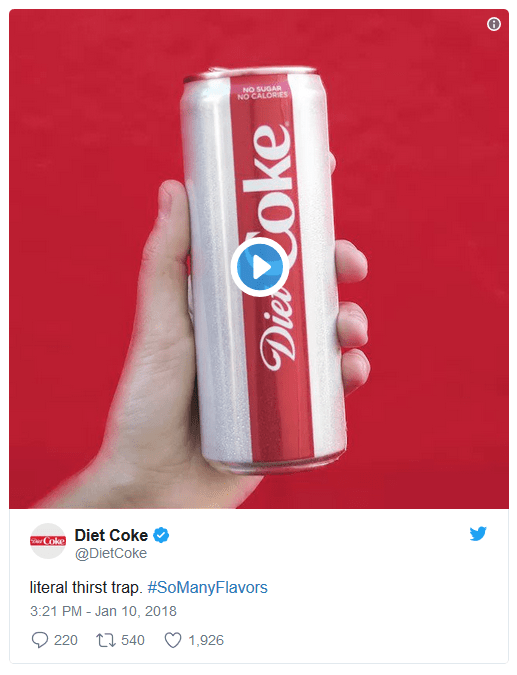
The Coca-Cola Company is looking to solidify the future of Diet Coke in North America with a new colourful rebrand that brings with it a handful of premium fruity flavors.

Over the last few years, sales of Diet Coke in the region have plummeted, partly cannibalized by Coke Zero and even Coke Life. 2017, conversely, saw the rebranding of Zero to Zero Sugar in the US and the end of Life in the UK – where sales of the drink have also been fizzling out.

In 2016, Coca-Cola rolled out a global one brand strategy to promote all of its products at the same time, rather than instinctively separating them into different marketing campaigns. In spite of this, in the same year the drinks maker still decided to champion Diet Coke in North America, pushing ad spend behind the variant with a bottle refresh campaign.

Now, in the US at least, the brand appears to have flipped its strategy and decided that answer to attracting new drinkers to the 35-year-old diet brand is a sleek and bold redesign that features tall cans.

Along with this, variant flavors, Ginger Lime, Feisty Cherry, Zesty Blood Orange and Twisted Mango have come to the fore, inspired by millennials’ love for strong tastes like “hoppy craft beers to spicy sauces”. These flavors were chosen after the company spoke to 10,000 Americans and developed around 30 final combinations – down to four.

Rafael Acevedo, Coca-Cola North America’s group director for Diet Coke, said: “Diet Coke is one of the most iconic brands loved by millions of fans in North America, throughout this relaunch journey, we wanted to be bold, think differently and be innovative in our approach. And most importantly, we wanted to stay true to the essence of Diet Coke while recasting the brand for a new generation.”

Acevedo said the work would make the brand “more relatable and more authentic”.

James Sommerville, vice president, Coca-Cola global design, said the work “elevates the brand to a more contemporary space, while still using at its foundation the recognizable core brand visual assets”.

To support the relaunch, an integrated marketing campaign will be activated later in January to introduce the new look and tastes to consumers.

By

Sourced from THE DRUM

By

The search by brand marketers for consumer engagement has led to the continued growth and funding of the social media influencer that has made millionaires of some vloggers and online celebrities the world over.

However, as these seemingly normal people have grown their fame, demand by brands for their audiences has similarly grown and the rules and regulations around their ability to promote products became a problem for marketing regulators. And in that time some have developed that relationship to become the face and voice of individual brands they truly connect with. Examples are endless, from Cole LaBrant and Mackenzie Davis to Maia Mitchell, who have used different platforms and shared their own life skills and insights to develop personal fan bases. And as Facebook changes its newsfeed algorithm to drive more personalised content to the fore, over media content, those organic relationships will become more coveted by advertisers.

According to research by blog discovery website Bloglovin’ 32% of marketers saw influencer campaigns as being essential to their strategies, with 41% admitting to seeing more success from their influencer campaigns over their traditional advertising.

“Brands are learning,” states Peter Willems, head of marketing activities and sponsorship for world footballing body, Uefa, while speaking on a panel organized by FCB Inferno about influencers and his experience of working with them through the launch of a new project alongside freestyle soccer skills channel, F2.

“Brands are more and more trying to put the objective first. We believe in data but we struggle a little bit with specific target groups, especially youngsters, and therefore one of the objectives of working with F2 was to grow our database within that specific target group. We believe at the moment that influencers can help us there.” he continues to explain, adding that sharing the objective with the influencers who are involved in the collaboration is now crucial too.

Willems also cites the comparison over the share prices of Adidas and main rival Nike as examples of how powerful the use of influencers can be in delivering sales, with Adidas having spent years now working with online personalities to achieve global growth and product awareness.

“For me, the biggest problem has to be how you measure success, which is still in its infancy to show what it can bring and what it can do,” Willems continues.

That problem around measuring return on investment is definitely to be an issue that brands entering this burgeoning sector face, agrees Laura Visick, head of social for FCB Inferno.

“There are soft and hard metrics that we can put in place such as reach and engagement which can be given to the influencers themselves to benchmark against their own content and to identify how things are resonating. One of the most important things is upfront identifying what the objective is and articulating what success looks like to ensure that everyone is on board.. there are a huge number of ways to work with influencers,” she explains of the clearly maturing marketing strategy, where one celebrity tweet is not seen as success in itself.

“The ASOS model is a good one. They are building a group of influencers that are engaging with and advocating the brand all of the time, and there are a few campaigns that we are seeing coming through that the moment that are very similar. They are building a group of ambassadors who are engaging with the brand and creating a very authentic relationship rather than a ‘one-hit-wonder’,” she continues, adding that that course helps create more robust measurements.

Using tools to help monitor and achieve return on investment is an obvious route. Verena Papik, director of marketing EMEA of Musical.ly, says it is important for brands to understand why each tool is being used and used to meet specific set goals and objectives.

She also advises that brands and influencers set objectives that see both succeed together.

“When brands and influencers really collaborate together, and they include a tool like Musical.ly, it is to add value to each other. Everyone is getting lost in setting goals and achieving data numbers, numbers of posts; but in reality is actually about adding value to each other,” she explains. “For a long term relationship you definitely have to understand what benefit the other party can actually bring to this partnership.”

Influencer, Bangs Carey-Campbell, fitness editor at Elle Magazine and blogger, advises that brands recognise the importance of not just paying online celebrities to pose with one-off products but to agree an ongoing strategy and to really follow through on the partnership for the most successful collaborations. She also advises that influencers understand the brand’s perspective rather than forcing their own ways of working fully, too.

“It’s about finding that middle ground when creating content. Especially if you are being paid to do that. You do have to understand from a brand’s perspective that they have a certain job description and certain markers that they have to achieve even if they are not 100% clear on them. It can be tough from the creative’s point of view as you have a way that you like to produce your content, but that’s why the brand got in touch with you. It can be tough to find that middle ground but as a creator, if that is the direction that you want to take your brand in, and you want to be more involved with other brands, you have got to be willing to meet in the middle somewhere. It’s not compromising your material. It’s finding a way to work together and find a way to be flexible,” she relays but later offers a reminder to brands that they are working and partnering with individual people, and not to forget that and treat them as a soulless commodity.

There is a long way still to go for the brand and influencer model, and the bubble has far from burst judging by the growing numbers offering their services and audiences to brands, however another piece of advice that all contributors agreed with was that influencers were more successful if they offered authentic insights and had achieved success in the fields their audiences held interests in. Otherwise it was likely that such influence would be fleeting and of little long-term commercial value in tandem.

By

Sourced from THE DRUM

Keep this in mind if you are marketing sexy products.

By MediaStreet Staff Writers

What does a company that makes sex products do for their annual Valentine’s sales push? They do a survey, to find out how best to market to their customers. And here are the results.

Valentine’s Day, it seems, is starting to suck for everyone. Singles have made it their own anti-holiday, full of memes and proclamations about the commercialisation of the day. But what about couples? Is it all it’s really cracked up to be?

A company called K-Y undertook a survey to find out how to best market their sex products to customers. And it makes for depressing reading. What was once thought to be a romantic and sexy day has become an experience full of pressure and hype. Pressure to buy the right card, pick the sexiest lingerie and have the most mind-blowing sex of your life – and you only have one day to make it all happen.

According to the Love All 365 survey, half of Millennials feel they are missing out if they don’t have sex on Valentine’s Day, but more than 60% of them report that the sex doesn’t live up to the hype. That’s a lot of lead up for a big letdown.

The survey further illuminates the Valentine’s Day tension by revealing that while 82% of people are more likely to have sex with their partner on Valentine’s Day, 83% report that sex is best when it’s impulsive versus planned. Preparing for sex at Valentine’s Day is certainly a faux pas many couples are guilty of committing in spite of the fact that, as the statistics affirm, our preference is for spontaneity.

The good news is that 97% of couples report that having good sex with their partners makes them feel more connected.

“We don’t want couples saving their ‘sexy’ for special occasions, when great sex can and should happen any day of the year,” said Nadja Korner, Marketing Director of K-Y. “Good sex helps strengthen the relationship, so instead of putting all your romantic energy into nights like Valentine’s Day, surprise your partner with that special sexy something on an unexpected night. After all, the essence of pleasure is spontaneity.”

So if you are creating an advertising campaign using a sexy theme, keep the idea of spontaneous sex in mind. Especially if you are targeting Millennials. ■


Have you listed your company in our Media Directory? Click here to do it now.