Tag

brands

Browsing
By Emily Tan.

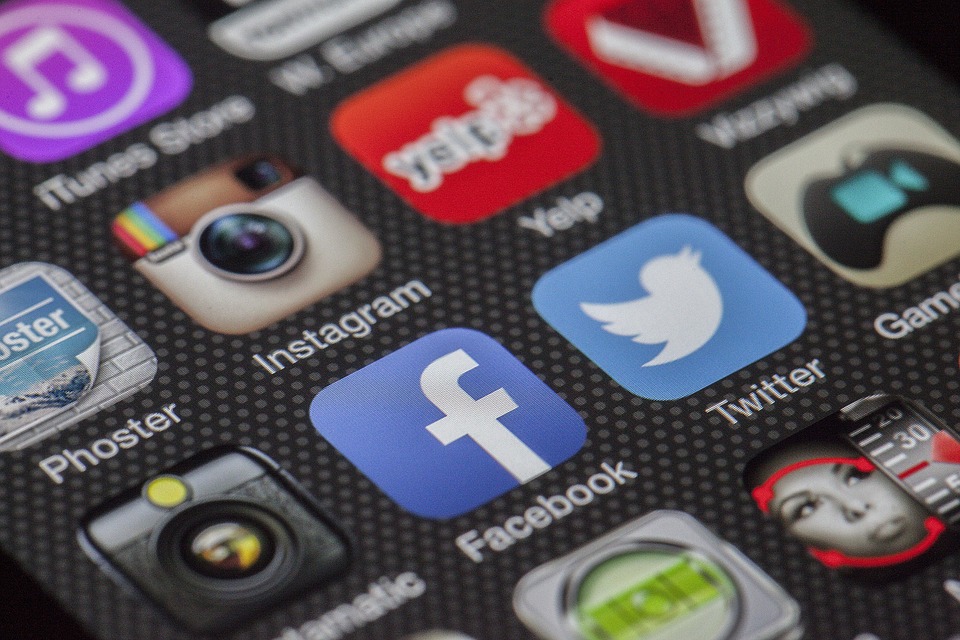
Facebook’s decision to re-prioritize its News Feed to favour “social interactions” over other forms of content may please its users, but will be challenging for brands.

In a post last night, Facebook announced that it would be introducing changes to its news feed algorithm in the coming year to ensure that posts by friends and family on Facebook appear higher in the news feed.

“Recently we’ve gotten feedback from our community that public content—posts from businesses, brands, and media—is crowding out the personal moments that lead us to connect more with each other,” wrote Facebook chairman and chief executive officer Mark Zuckerberg.

The changes Facebook is rolling out to combat this will mean that users will start to see less public content such as posts from businesses, brands, and media. The platform claims that the content users see will be the material that “encourages meaningful interactions between people.”

This move may be detrimental to brands, businesses, and publishers and will even limit Facebook’s short-term growth, but is ultimately beneficial for the social network in the long-term, said Brian Wieser, senior research analyst at Pivotal Group.

“The company was understandably focused on driving user growth over the years, although former Facebook executives have recently described negative impacts on consumers from those efforts. To the extent that those criticisms are valid, action is warranted,” Wieser said, adding that time spent by users on Facebook had started to decline prior to this decision.

Impact on brands

As Facebook takes these steps and invests in premium content to improve its user-experience, so too must brands on Facebook look to create better content, advised Greg Allum, head of social at Jellyfish.

“We [marketers] need to be clever with our content and understand what resonates with the consumer and why. More importantly, we all need to become better media planners,” Allum said.

Facebook will be looking to offset the hit it will take to near-term revenue from advertisers by stoking Instagram’s growth, Wieser noted. The platform will also be able to use this new approach to focus on higher-paying advertisers, and using more refined targeting methods to satisfy advertiser goals with less inventory.

Publishers may be most affected

In the end though, media owners are likely to be the most affected by this update, commented Allum.

While Facebook’s announcement may, on the surface, appear to tackle the issue of the spread of fake news and click-bait, that will ultimately depend on a user’s friendship circles. This may, in fact, increase the filter bubble effect as users only see posts shared predominantly by the people they interact with the most.

Publishers, who are already challenged on the platform, may not agree to continue investing their media budgets in Facebook with this change.

However, Allum believes that while publishers will test and learn on other channels, they will ultimately return to Facebook.

“The lure of a captive audience will be too much for them, but they will shift their strategy and concentrate on creating less but bigger and better pieces of content, which in turn will improve the user experience for consumers. Although brands could see an increase in the cost to advertise as the channel becomes more competitive,” he said.

Financial Times chief executive, John Ridding, criticized Facebook’s update as not particularly helpful to quality publishers.

“As a long-standing publisher of quality journalism, the FT welcomes moves to recognize and support trusted and reliable news and analysis. But a sustainable solution to the challenges of the new information ecosystem requires further measure—in particular, a viable subscription model on platforms that enables publishers to build a direct relationship with readers and to manage the terms of access to their content,” he said. “Without that—as the large majority of all new online advertising spend continues to go to the search and social media platforms—quality content will no longer be a choice or an option. And that would be the worst outcome for all.”

This story first appeared on campaignlive.co.uk.

By Emily Tan.

Sourced from PR Week

Could social media be realising its true calling as the ultimate customer service channel?

By MediaStreet Staff Writers

According to a new study released today, overall satisfaction is highest when customers ask questions or make requests via social media.

The study was conducted by J.D. Power, surveying people who were customers of mobile network operators. Said Peter Cunningham at J.D. Power, “Personalised feedback, rapid-fire response time and interaction with live humans are some of the primary factors driving the highest levels of customer satisfaction with customer service. And, increasingly, customers appear to be finding that formula through alternative channels such as social media. That doesn’t mean call centres and brick-and-mortar stores are no longer relevant; in fact, personalised assistance via phone, app and face-to-face are still critical to customer satisfaction.”

Following are key findings of the 2018 studies:

• Social channels will become front line for customer service

Among customers who ask a question or make a request, overall satisfaction is highest in the social media channel (838 on a 1,000-point scale) and the app channel (835). By contrast, overall satisfaction scores average just 797 among customers who handle these requests on the phone with a representative.

• The human touch still matters

Satisfaction tends to be much higher when customers use a channel that provides personalised feedback. For example, assisted care satisfaction is 26 points higher than unassisted care satisfaction (819 vs. 793, respectively), and satisfaction is 824 among customers who ask their question in the store channel vs. 797 among those who speak with a rep over the phone. Additionally, among customers who ask a question or make a request through their carrier’s app, overall satisfaction is 845 when they think they are interacting with an actual person vs. 800 when they think the system is automated.

• Video plays a key role

The channels with the highest first-contact resolution incidences are online videos (92%) and mobile app to research information (90%). Among customers who view an online video from their service provider, 34% say they “definitely will not” switch to a new carrier in the next 12 months vs. 21% among those who use the phone automated response system.

• Not-so-immediate gratification via email

While social, app-based and face-to-face customer support are prized by consumers for their personalised, rapid response, the average customer service response time via email is 32 hours.

Could Social Media Be The Ultimate Customer Service Channel? Soon, perhaps, it may be the ONLY service channel.


Millennials are more likely than older generations to try a new brand or product after seeing or hearing an advertisement. And who says advertising doesn’t work! It totally, totally does.

By MediaStreet Staff Writers

Millennials are more likely to make purchases after seeing or hearing advertisements compared to Gen Xers, Baby Boomers, and other older generations, according to a new survey from Clutch, a B2B ratings and reviews firm.

About 81% of millennials surveyed – those ages 18 to 34 – made a purchase after seeing or hearing an advertisement in the last 30 days. Baby Boomers and other generations over age 55, however, were not quite as influenced by advertising: Among those consumers, 57% made a purchase as a result of an advertisement.

These findings illustrate millennials’ higher tendency for “impulse buying” when it comes to new products and brands.

“Baby Boomers have already gotten set in their ways in regards to the brands they prefer, so an ad might not convince them to buy something,” said Rob Albertson, managing director of Bandwidth Marketing. “There’s an aspect of spontaneity in millennials that would cause them to try something.”

Millennials also trust advertising mediums more than older generations; 64% trust TV and print advertising, and 51% trust online and social media advertising. About 54% of Baby Boomers trust TV and print advertising, and just 27% trust online and social media advertising.

Millennials trust advertising more because they have more resources available to help them discover if a brand’s message is misleading.

“Baby Boomers come from a time when there were a lot fewer regulatory bodies in advertising,” said Julie Wierzbicki, account director at advertising agency Giants & Gentlemen. “For example, cigarettes used to be advertised as good for you, and we found out that these brands we thought were great were lying to us. Millennials feel like brands have to be honest because there’s so much more information out there, and if you’re doing things in a fraudulent or misleading way, it’s going to eventually come out.”

Consumer income is also a factor in advertising influence. The study found that 83% of consumers with a household income over $100,000 were more likely to make a purchase as a result of an advertisement, compared to 68% of consumers with household incomes of less than $49,999. This is due to a higher disposable income and more spending power.

Overall, advertisements influence 90% of consumers in their purchasing decisions, and consumers—regardless of generation—are most likely to make a purchase after seeing or hearing an advertisement on TV and in print.

Consumers view traditional advertising mediums – TV, print, and radio – as the most trustworthy, while they view online and social media advertising more skeptically.

The survey shows that advertising continues to influence consumers in their purchasing decisions, and businesses should advertise in order to reach consumers.


If you are selling clothes, use all the cute kids you want. But if you are advertising a charity, you need a different kind of kid.

By MediaStreet Staff Writers

When it comes to asking a stranger for help, being young, pretty, and the opposite sex greatly improve your odds. But when it comes to children suffering from the likes of natural disaster, poverty, or homelessness, a new study in the Journal of Consumer Research reveals that less attractive children receive more help than their cuter counterparts.

“Many charitable organisations use children in advertising and promotional materials. Our research examines how the facial attractiveness of the children in these campaigns affects the empathy and help received from adults,” write authors Robert J. Fisher and Yu Ma (both University of Alberta).

Too cute. Next!

In a series of four experiments, participants were asked to visit fictional websites where they were asked to consider sponsoring a child from a developing country. The authors then systematically varied the levels of attractiveness of the children featured on the websites as well as their levels of need.

Results showed that when the children were portrayed as having a severe need (for example, orphaned as a result of a natural disaster), their facial attractiveness had no affect on helping responses. In contrast, when their need was not severe, participants felt less compassion and sympathy for an attractive child compared to an unattractive child in an identical circumstance.

Also too cute. Go home!

The authors explain that this negative effect of attractiveness occurred because participants inferred that the attractive children were more popular, intelligent, and helpful than their less attractive peers. They also observed this negative effect despite the fact that the children in the studies were obviously too young to care for themselves.

These results offer practical implications for how children are portrayed by disaster relief agencies, children’s hospitals, and other charities. “We believe our research offers a positive and hopeful perspective on human behaviour because it suggests that when a child is in obvious need, even strangers can feel compassion and offer aid irrespective of the child’s physical appearance,” the authors conclude.

Fundraisers and marketers for charities, take note!

It’s pretty much what you think, with a few surprises.

By MediaStreet Staff Writers

A new study shows that too many unsolicited emails and sales calls will significantly damage brand loyalty. Well it does in the IT industry anyway. While this study was conducted within the IT sales arena, wisdom from the findings can be applied to all industries.

The study was conducted by Spiceworks who announced the results of the new survey today. It explored how often IT buyers are contacted by sales reps and marketers, what drives them to engage with tech brands, and what drives and damages their loyalty to vendors.

The study, Brand Loyalty 101: Winning over IT Buyers, reveals 85 percent of IT buyers believe too many sales calls and emails from tech brands make them less likely to purchase from a vendor they’re loyal to. In fact, feeling bombarded by emails and calls is just as likely to deter brand loyalty as a security issue with a vendor.

“It’s no surprise that IT buyers react to value — they want reliable products, a fair price, and timely customer support, which all helps build a great brand experience,” said Sanjay Castelino, vice president of marketing at Spiceworks. “But this brand experience doesn’t start when a buyer becomes a customer. It starts with prospects, and if you’re continuously sending them irrelevant products and information despite low engagement rates, you’re starting in a hole that you’ll have to dig out of to eventually build brand loyalty.”

Great customer support and fair pricing are the top drivers of IT brand loyalty

In terms of how loyal IT buyers are to their current technology vendors, the results show more than 70 percent of IT buyers are loyal to their server, virtualisation, and networking vendors. About 65 percent of IT buyers are also loyal to their computing device and security vendors. However, they’re least loyal to their cloud-based service vendors (47 percent) and their IT outsourcing/consulting partners (52 percent).

When examining what drives brand loyalty among IT buyers, the results show more than 95 percent of IT buyers believe great customer support, consistently fair pricing, and a history of reliable products are important to driving brand loyalty. Ninety-one percent of IT buyers also believe access to technical experts at a company is important.

Additionally, when comparing the results by different generations of IT buyers, it’s evident creative marketing efforts are slightly more important to millennials than older generations. While 23 percent of millennials believe creative marketing efforts are important to driving brand loyalty, only 18 percent of Gen Xers and 13 percent of baby boomers said the same. The quality and frequency of communication from tech brands is also much more important to millennials than Gen Xers and baby boomers.

Over-Contact

The survey results show that on average, IT buyers are contacted by technology sales reps and marketers 13 times via email, five times via phone, two times via online forums/communities, one time via social media, and one time via physical mail per week. In some cases, IT buyers are contacted by tech sales reps and marketers up to 25 times a week.

However, the preferences of IT buyers aren’t always taken into consideration when it comes to how they want to be contacted by sales reps and marketers. Fifty-seven percent of IT buyers prefer to be contacted via email and only 8 percent of IT buyers prefer to be contacted via phone. Additionally, 36 percent of IT buyers prefer to seek out information on their own. In fact, 97 percent of IT buyers surveyed said they use online forums and communities to learn about new products, while 79 percent rely on tech news sites and 77 percent research new products via Google.

The vast majority of IT buyers won’t respond to a tech brand they don’t recognize

In terms of what motivates IT buyers to respond to a new sales rep or marketer, the results show a relevant product or service is most important. In fact, 77 percent of IT buyers said relevant products drive them to respond, followed by detailed pricing information (61 percent), detailed product specs (55 percent), a timely solution to a challenge (44 percent), and a free product trial (35 percent). However, only 12 percent of IT buyers said they’re likely to respond to sales or marketing outreach if they’ve never heard of the tech vendor.

When comparing the results by generation, it’s evident millennials are more likely to respond to sales reps and marketers if there’s a personalised message to them. Conversely, Gen Xers and baby boomers are more likely to respond if there’s a product or information that provides a timely solution to a challenge.


And it’s free! Everyone’s favourite price!

By MediaStreet Staff Writers

A free email service alerts you about your brand (or your competitor’s brand) activity across the internet. This includes results from Twitter, making it an essential tool for any communications professional.

Talkwalker, a social listening and analytics company, today announced the launch of Talkwalker Alerts. It delivers mentions of any keyword (i.e. brand name, hashtag, competitor) across the internet straight to your inbox. The revamped product also features brand mentions from Twitter, making it the only free alerts service that delivers social media mentions as they happen.

“Social media is where the action is today. If you want to stay on top of news and social conversations about your brand or products, you have to constantly check all major social platforms. We’re trying to make that process easier for you by bringing all brand mentions from across the internet to your inbox automatically,” said Robert Glaesener, CEO of Talkwalker. “Our aim is to empower marketers around the world and help make their job easier. This is why we’ve decided to keep the tool free and make it essential for communication professionals by adding the most important Twitter results.”

Users will have access to the tweets that matter most, as the service delivers the conversations with the highest engagement. Aside from Twitter, users can also opt to receive alerts from websites (news), discussion forums and blogs. This will enable digital marketers and PR professionals to keep track of their brands and keywords online, and let everyone monitor the web for their topics of choice, with a special emphasis on social media.

Social media presents a very accurate picture of the buzz generated around a brand or a topic. Talkwalker Alerts is the only product in the market to include alerts from a major social network such as Twitter in its results, thus enhancing the value of the service considerably.

To try Talkwalker Alerts out for yourself, click on this link: www.talkwalker.com/alerts


“Experts” in the media get it so wrong so often you have to wonder what’s going on.

By MediaStreet Staff Writers

Research shows that investing in the stocks least-favoured by analysts yields five times more than buying the most recommended.

But we often defer to experts, especially those in the media. So, we listen to them, then assume taking their stock analysts suggestions would make us better off than doing the exact opposite, right? Well, no.

Recent research by Nicola Gennaioli and colleagues shows that the best way to gain excess-returns would be to invest in the shares LEAST FAVOURED by analysts. They computed that, during the last thirty-five years, investing in the 10% of stock analysts were most optimistic about would have yielded on average 3% a year. By contrast, investing in the 10% of stocks analysts were most pessimistic about would have yielded a staggering 15% a year.

Gennaioli and colleagues shed light on this puzzle with the help of cognitive sciences and, in particular, using Kahneman and Tversky’s concept of representativeness. Decision makers, according to this view, overweight the representative features of a group or a phenomenon.

After observing strong earnings growth, analysts think that the firm may be the next Google. “Googles” are in fact more frequent among firms experiencing strong growth, which makes them representative. The problem is that “Googles” are very rare in absolute terms. As a result, expectations become too optimistic, and future performance disappoints.

“In a classical example, we tend to think of Irishmen as redheads because red hair is much more frequent among Irishmen than among the rest of the world”, Prof. Gennaioli says. “Nevertheless, only 10% of Irishmen are redheads. In our work, we develop models of belief formation that embody this logic and study the implication of this important psychological force in different domains.”

So it looks like the talking heads in the media needs to give us better advice, or we need to forget them and trust our instincts.


A new report finds that nine out of ten marketers need help improving their personalisation strategy.

By MediaStreet Staff Writers

Personalisation is a good strategy for engaging consumers of all ages, BUT younger consumers find it especially important. Nearly half of centennials, age 18-21, (45 percent) and millennials, age 22-37, (49 percent) make purchases because of the level of personalisation within a brand’s email content, meaning that personalisation translates into revenue

This is according to a new study, which shows that two in five marketers don’t tailor their initiatives to audiences of different age groups. So, marketers potentially miss out on substantial engagement opportunities as consumers demand more customised content.

The report found that just 11 percent of marketers claim they can personalise all content. The study also found about only 27 percent can execute basic personalisation tactics, such as using a customer’s name or birthday. Another 26 percent can personalise based on browsing or purchase history, but say it’s tedious to do so. And 17 percent of marketers state they cannot personalise content because they still have trouble collecting and analysing data.

“Personalisation isn’t limited to a customer’s name; and marketers who go beyond this simple data point in order to customise communications will reap the benefits,” said Michael Fisher, president of Yes Lifecycle Marketing. “Marketers should tailor content to their customers’ habits and demographics. Fairly easy-to-implement adjustments, such as triggered campaigns and lifecycle messaging, will go far.”

Of the brands that personalise content based on age, two-thirds do so via email. Social media (38 percent) and website (35 percent) are the three channels that marketers are most likely to personalise content based on age.

“The takeaway from the data is obvious: consumers want marketers to personalise content based on their individual characteristics and attributes, and marketers still struggle to do so,” said Michael Iaccarino, CEO and chairman of Infogroup. “To alleviate personalisation woes, marketers need a partner that can help them enhance and leverage their customer data in order to improve personalisation, and as a result, increase revenue.”

Additional findings from the report include:

  • Less than a quarter of marketers personalise display (24 percent) or direct mail (23 percent) content based on customer age.
  • Driving revenue (40 percent), acquiring new customers (24 percent), and engaging customers (17 percent) are the three biggest priorities for marketers heading into 2018.
  • Only 16 percent of marketers believe millennials are most influenced to purchase by the email channel; yet 67 percent of millennials report finding email valuable when researching products.

To learn more about how marketers can personalise content by age, download the full report here.


By

New ad dollars will shift the focus of advertising toward mobile — mostly for video and social — while programmatic will become the new standard for online media buying, according to a Forrester Research report released Wednesday. Amazon also might benefit from several changes coming down the pike, as advertisers look for a safer environment to sell their products and services.

The updated report estimates that U.S. advertisers will spend nearly 70% more on display and social media advertising between 2017 and 2021. Investments, however, will be met with ad blocking and invalid impressions. The two challenges still continue to pose challenges for advertisers and test their faith in display.

The report — 2017 To 2021: US Online Display Advertising’s Great Reckoning — highlights changes in online display and social media advertising spend during the next five years. It focuses on how the dynamics will drive growth and what the landscape will look like in 2021.

Digital media channels, excluding search, will represent more than one-third of total advertising spend in 2021, up from one-quarter in 2017.

Forrester estimates that in 2017 about 43% of U.S. online adults reported using an ad blocker on at least one device, and 16% use it on a smartphone. The inability to view inventory and ad fraud adds to the challenges.

Overall, the challenges will eventually “wipe out over a third of online display ad spend annually until 2021,’ as it becomes clearer why marketers question not just the effectiveness of online display advertising but the dynamics of the media channel as a whole.

Investments in social media advertising will carry the majority of the growth — nearly doubling in the next three to four years. Mobile display ads also will see a bump.

Amazon will benefit from the exodus as advertisers flee from open-exchange programmatic platforms as they head toward a handful of channels, according to the report. Amazon’s U.S. ad revenue is forecast to surpass $2.5 billion by 2021. And while its ad business is still small, advertisers are looking to advertiser in a “safe” and trackable platform.

By

Sourced from MediaPost

By

Achieving brand admiration requires keeping the company’s end game— creating brand equity— in mind. Our brand admiration framework offers unique causal insights into how brand managers can strengthen the equity of a brand, regardless of where in the company’s business hierarchy the brand resides (e.g., a branded product variant, a branded product, a branded business unit, or a branded company). Admired brands induce brand loyalty and brand advocacy behaviors, creating opportunities for efficient profit and growth. Brands that commit to the following have the best chance of reaching the status of the most admired brands.

1. Brand managers should focus on building, strengthening, and leveraging brand admiration because it (1) represents the most desired brand-customer relationship state, and (2) it has enormous payoffs for a brand and a company.

2. Building, strengthening, and leveraging brand admiration is relevant to all types of brands— regardless of whether they are in a B2B or a B2C market, or whether they are products or services, celebrity brands, place brands, or entertainment brands. Some markets (such as B2B markets) will have the most to gain by thinking through the 3Es and identifying opportunities to drive brand admiration, since many are blind to the critical role of enticing and enriching benefits in building and sustaining brand admiration over time.

3. Marketers control the extent to which they build, strengthen, and leverage the admiration of their brand by the extent to which their brand offers benefits that are known to underlie human happiness; that is, the extent to which the brand enables, entices, and enriches customers.

4. Building brand admiration is not limited to external customers. It starts with building brand admiration from within. Given companies’ ongoing efforts to attract and retain talent, internal brand admiration building efforts are critical.

5. Brand managers need to think carefully about customers’ need profiles and how to offer enabling, enticing, and enriching benefits in a consistent and complementary way. These activities build the two foundational components of brand admiration: brand-self connections and top-of-mind recall of a brand.

6. Brand admiration ranges on a continuum from high to low, with some brands being more admired than others. But even the most highly admired brands can use a set of value-enhancement strategies to continually enhance admiration for their brand.

7. Once a brand is admired, companies have the opportunity to leverage brand admiration using product and brand extensions for efficient growth. Good extensions reinforce the brand’s core identity, broaden it to include other associations, and facilitate future growth options.

8. Brand managers have a variety of brand-naming choices when extending their brands. Ideally, brand-naming decisions will be made within the context of the company’s entire brand architecture.

9. It is possible to measure brand equity. Our novel brand equity measure has powerful conceptual and measurement advantages over other financial measures of brand equity.

10. Finally, companies can and should construct a brand admiration dashboard to map brand health over time and identify and prioritize areas in which continued efforts at improvement should be made.

Following this framework will help you reach that precious goal of building and strengthening brand admiration, fostering brand advocacy and loyalty behaviors, and enhancing the financial value of the brand to your organization.

Contributed to Branding Strategy Insider by: C. Whan Park, Deborah MacInnis and Andreas Eisingerich, excerpted from their book, Brand Admiration with permission from Wiley Publishing.

[Complimentary Webinar] Why Marketing Leaders’ Customer Strategies are Failing. Learn how to transform your marketing team into creators of post-digital brand experiences and leaders of enterprise-wide customer obsession. Join us Dec. 7 at 12PM ET –  Featuring: Shar VanBoskirk, Forrester

The Blake Project Can Help: Accelerate Brand Growth Through Powerful Emotional Connections

Build A Human Centric Brand At Marketing’s Most Powerful Event: The Un-Conference: 360 Degrees of Brand Strategy for a Changing World, April 2-4, 2018 in San Diego, California. A fun, competitive-learning experience reserved for 50 marketing oriented leaders and professionals.

Branding Strategy Insider is a service of The Blake Project: A strategic brand consultancy specializing in Brand Research, Brand Strategy, Brand Licensing and Brand Education

FREE Publications And Resources For Marketers

By

Sourced from Branding Strategy Insider