Carl Frederic Sealey’ If you’re looking to develop a better understanding of digital marketing, then you’ve found the right article.
Carl Frederic Sealey has shared a rundown of how digital marketing operates in 2017. Digital marketing or internet marketing as it’s popularly understood is a tool to continue marketing for our merchandise online. Direct email advertising, search engine optimization and search engine advertising are some of the tools that come under this class. They’re getting increasingly more prevalent in the internet world.
It’s a very popular type of advertising, Media is significant now because we’ve got access to a high number of information and a growing number of folks are using the large data. Other kinds of promotion include text messaging, mobile programs, electronic billboards, digital tv and radio communications. All are strong tools to boost our visibility into the clients. Businesses leverage digital stations like Google search, social networking, email, and also their sites to get in touch with their present and potential clients.
From the site itself to your internet branding assets — electronic advertising, email advertising, online brochures, and even outside — there is a massive spectrum of strategies and resources that fall under the umbrella of electronic marketing. And the most effective digital marketers have a crystal clear image of how each strength or strategy supports their overarching targets. So Just What is Digital Marketing? It’s an umbrella term for all your internet advertising efforts. Businesses leverage digital stations like Google search, social networking, email, and also their sites to get in touch with their present and potential clients. From the site itself to your internet branding assets — electronic advertising, email advertising, online brochures, and even outside — there is a massive spectrum of strategies and resources that fall under the umbrella of electronic marketing. And the most effective digital marketers have a crystal clear image of how each strength or strategy supports their overarching targets.
Here’s a fast rundown of a few of the most frequent resources and tactics: Your Site The procedure for optimizing your site to ‘rank’ high in search engine results pages, thereby increasing the quantity of free visitors your site receives. Content Marketing The production and promotion of articles resources with the intention of producing brand awareness, traffic increase, lead generation, or clients. Inbound Marketing Inbound marketing identifies the ‘full-funnel’ method of attracting, converting, final, and delighting clients using internet content.
Social Media Marketing A way of driving visitors to your site by paying a publisher each time your ad has been clicked. Affiliate Marketing A sort of performance-based advertising in which you get commission for promoting someone else’s goods or services on your own site. Native Promotion Native advertisements refers to ads which are mostly content-led and featured on a stage along with other, content that is articles. According to Carl Frederic Sealey, BuzzFeed sponsored articles are a great example, but lots of individuals also consider social networking advertisements to be ‘native’ — for instance, Facebook and Instagram marketing.
Marketing Automation Marketing automation refers to the applications which exists with the objective of automating marketing activities. Many marketing departments need to automate repetitive activities such as mails, social networking, and other site activities. Email Marketing Businesses use email advertising as a means of communicating with their viewers. Email is often utilized to market content, events and discounts, and to guide people towards the company’ website. Online PR It is similar to conventional PR, but at the internet space. On the surface, both look similar: Both happen mostly on the internet, and both concentrate on producing digital content for individuals to eat. So what is the difference?
Digital outbound approaches aim to place a advertising message right in front of as many individuals as you can in the internet area — no matter whether it is applicable or welcomed. As an instance, the garish banner advertisements you see on very top of several sites attempt to drive a product or advertising onto individuals that aren’t always prepared to get it. On the flip side, entrepreneurs that use digital inbound strategies use online content to pull their target clients onto their sites by giving assets which are useful to them.
Among the easiest yet most powerful inbound advertising assets is a site, which enables your site to capitalize on the conditions that your perfect customers are trying to find. Digital advertising, on the other hand, is an umbrella term to describe online advertising tactics of any sort, no matter whether they are deemed outbound or inbound. Does Digital Advertising Work for All Firms? Digital advertising can work for almost any company in any industry. Whatever your company sells, electronic marketing still entails building out client personas to spot your audience’s needs, and generating valuable online content. However, that is not to mention that all companies should implement an electronic marketing and advertising strategy in precisely the identical manner.
Social media – who doesn’t know about it? In this digital tech savvy world, social media has gained a massive toehold. Various social media platforms are explored in-depth for digital marketing. No doubt, LinkedIn, Facebook, and Twitter are the most receptive social platforms for business; however, various platforms, including Instagram, are preferred for various marketing activities; they are:
Facebook dominates among all social media marketing platforms as a source of social traffic and sales.
Instagram is one of the fastest growing social media platforms. The name Instagram is derived from a combination of “Instant Photo” and “Telegram.” Instagram, an incredible social media platform for sharing pictures, was launched in the Spring Season of 2010. In a less than decade, this platform has grown into a powerful social media force, not to be overlooked.
Since 2012, Instagram is owned by Facebook. This acquisition of Instagram by Facebook shows where the digital marketing trends are heading. Since both social media platforms are owned by the same owner, you can easily connect these two to boost your digital marketing strategies.
In the recent past, Instagram has literally competed extremely well with the dominant top four platforms viz. Facebook, LinkedIn, Twitter, and Pinterest. Instagram has more than 500 million users.
Instagram is a great platform for online marketing since it is more popular on mobile; moreover, mobile is gaining huge traction day by day by both users and search engines.
People are prioritizing visual content over plain, and hence, Instagram is considered as one of the most effective social media marketing platforms for the coming days. As a business owner, you should use Instagram to market your products and services. Apart from product images, you can also share videos. Its ‘LIVE recording and sharing’ feature is getting way popular bit by bit.
Explore Instagram as a social media marketing platform
Social media management starts with the base of your followers and followings. To boost your Instagram marketing, first of all, you need to boost your followers on a constant and stable basis. The more people are aware of your brand, the greater your chances are to potentially reach your target audience.
Let’s run through the tips and tactics how to explore Instagram as a social media marketing platform to make your brand more popular.
1. Hashtags – use unique, crisp, meaningful, and attractive
Hashtags are not only important for Twitter; they also play a prominent role on Instagram, Facebook, Pinterest, LinkedIn, and Google plus.
According to Dominique Jackson, the beauty of hashtags for Instagram is they make your content discoverable and increase your chances of engagement.
It’s a big way of how users can find you through their mobile Instagram searches. As compared to Twitter, here you’re not restricted by character count. You can include a few tags in your posts to get connected. While deciding on hashtag for branding, it is advisable to create brand specific hashtags. Try to keep it as unique and crisp as possible.
Make usage of both sort of hashtags; brand specific hashtags and community specific hashtags. Brand hashtags help you to popularize your brand and community hashtags help you to become more discoverable.
Try multiple variant of hashtags such as brand specific hashtags, general hashtags, and trending hashtags, to get noticed in searches.
Examples of brand specific hashtags are:
#PutACanOnIt—Red Bull
#ShareaCoke—Coca Cola
#SpeakBeautiful – Dove
#TweetFromTheSeat—Charmin
#OreoHorrorStories—Oreo
#WantAnR8—Audi
An ideal general hashtag should be prepared with two words over a single word to make it meaningful e.g. rather than #QL, #AskQL is a better hashtag.
2. Emojis – use the right Emojis to keep your audience engaged
In any sort of online communication, Emojis is the best substitute for the absence of facial expression, tonal inflection, and body language.
Nearly 50 percent of all captions and comments on Instagram now have an emoji or two.
The same source has mentioned that posts with Emojis bring 17% higher interaction rates on Instagram.Based on the fact that 80% of smartphone users regularly use Emojis in their daily communication, their use has been quoted as the highest growing ‘language’ in some of the countries across the globe. Worldwide brands are obviously energized and enthusiastic to cash on this new form of communication.
3. Interaction – consistently interact with your followers
Once you get follower/s, do not shy away to stay engaged. Constantly post impressive content which your followers find relevant to their interest and business. Avoid throwing random posts, i.e. once in a week or ten in a go, as far as possible. At least, twice a day posting is requisite. Once your followers start increasing, you can start posting three to four times a day. Consistency matters most!
According to Anthony Carbone, “If you stick to a niche and show authenticity and passion in your posts, you will find a strong following”
The more people you can dynamically involve and persuade to comment on your content (images/videos), the better for you. Since, it will inculcate the interest for others who want to contribute or comment on your content as well.
A good example on how to stay engaged with your customers is well set by Starbucks. It is considered as one of the top brands on Instagram. Starbucks often appreciates their followers / customers by giving a shout-out with cool images. This is how they had updated their Facebook cover image using Instagram post.
4. Networking – create a positive community
Once you will have an active profile, you will surely start getting followers of your niche. But the main question here is retention! You need to retain them as your dedicated followers.
This is, in fact, the most important, most tricky, and most significant matter for any social media account. You need to build a network of your domain and keep them engaged. Interact with them, share their posts, give opinion / comments on their posts, ask them relevant questions, reply to their questions, and keep having all such sort of communication. In addition, stay away from controversial posts. It can badly impact your brand value. Build a vast network of your industry and create a positive community through your posts and engagement.
Follow your followers and work hard to turn your following into followers.
5. Amount of information – do not bore your audience with information overload
No doubt consistency is inevitable, but if it lacks harmony and relevancy of content, it results in either spamming or information overload. Keep your frequency correct and consistent. Rather than preaching them, engage with them. It’s better to ask sometimes, they should feel being valued. Dig out meaningful interaction from them.
The ideal proportion of posts based on followers suggested by industry experts are:
6. Free tools – make the most use of Instagram marketing tools that are free
Instagram also provides free analytics tools for business profiles; prudently and sensibly make the most use of them to market your products and services.
For example, “insights”, an analytical tool, provides you access to engagement data. If your account is initially signed up as a personal account for your business, do get switched to a business profile. That’s how you can cash advantage of the free tools that businesses use to track the shape of their brand on Instagram. ‘Insights’ assists you understand your audience, provides you data on posts with most impressions, engagements, and shares. Ultimately, you will conclude which posts are effective and which ones are not working well with your audience.
With SocialBakers, you can get a FREE report on the most engaged Instagram posts. If your Instagram followers are below 25,000, you can use Simply Measured to check your highly popularized posts.
Alternatively, there are many other scheduling tools available. With the help of tools like Buffer, Hootsuite, Sprout Social, Autogrammer, and others post your content when your audiences are online and earn more engagement.
7. Promotion – utilize cross posting function
As a business, one normally stays active and present on all possible platforms. Now, practically speaking, not all your Twitter followers are your LinkedIn buddies and not all your Instagram followers know about your presence on Google Plus.
Here, to expand your relevant reach and knock your target audience from all possible angles, you need to do cross promotion of your own posts.
A research conducted by Harvard Business School reported that retailers using cross-media marketing are more profitable than those that use only one channel for promotion.
Invite your followers from other networks to visit your Instagram profile and build your network. Whatever posts get better engagement on Twitter or Facebook, repost them on Instagram too and vice-versa.
8. Content – repurpose content from other related sources
As stated in earlier paragraphs, effective and successful Instagram marketing
needs consistent posts related to your products and services. It is well obvious that every time coming up with creative and engaging posts is not as easy as it seems. That’s where re-purposing content or curating content offers a hand of help.
As per Amanda DiSilvestro, Content repurposing is your hidden online marketing gem.
It’s absolutely fine to use others content which is relevant to your products and services provided you either have tagged or mentioned the original poster. Tagging is the best way, you need to give the credit to the original creator; and that’s how it becomes a completely ethical marketing practice and does not fall under the black clouds of plagiarism.
Tagging provides you with another major benefit of engagement. You may receive like or repost from the person whom you have tagged and your post can easily reach to their audience. You need to ensure that the posts which you wither repurpose or curate are relevant to your followers.
9. Engage with influencers – you need them!!
According to KISSmetrics, 70% of Instagram users have already looked up various brands on the platform and actually want to consume their content
Here comes power of Instagram influencers in the picture. Instagram beats all other massive social networks like Facebook and Twitter when it comes to influencer marketing. This is because the other platforms share information whereas Instagram is about sharing experiences with the help of visual content.
Your content shared, acknowledged, or praised by any influencer can embark a real positive image on your followers.
To reach on peak in no time, we suggest you make a use of tool, Revfluence. The Revfluence platform enables you to create original content with influential content creators that can drive new customers and followers for your brand.
Closing thoughts
If you have online business, why can’t you have a strong social media presence too? Social media marketing via Instagram can assist you achieve your targeted business goals with much of the ease.
Instagram has very dedicated users, who often use it daily. It provides a great social media marketing platform to reach potential customers across the world. Use Instagram extensively and appropriately, and grow bigger!
Sophie helps QL Tech look good on the online platform and helps the company reach out far and wide in the online realm. Being a SEO Professional and a part-time blogger, she is responsible for producing content that is optimized to ensure maximum reach. With over five years of expertise in the field of SEO and digital marketing, Sophie also delves into blogging, online reputation management, and social media marketing.
Millennials are the most educated, open minded and dynamic demographic that exists.
They are independent and have started making their purchasing decisions. For a marketer, they are the most lucrative set of audiences for marketing any product or service.
However, the set of characteristics and traits they possess make them the unique people to market or sell. One can’t use the same marketing strategies to lure them into a brand or acquire, convert and retain them for long. Since they form a huge part of the population, the opportunity is magnanimous.
A marketer can never ignore Millennials and become successful in marketing a brand. Initially, you need to create an excellent brand worth reverence and then implement marketing strategies which millennials respond to.
Let’s see how you can do them right.
Although millennials aren’t as loyal as the older generation is, but they stick to the brand they love.
If they like a brand, they’ll be vocal about it and spread the word. And if they don’t, they’ll be equally expressive about it in any medium they get.
Thus, branding for millennials is a tricky path to tread, but by keeping a few important things in mind, you’ll be able to create a brand they find awesome.
Be authentic to the core
Authenticity breeds trust and trust breeds business. Authenticity matters.
The truthful words said by top LinkedIn influencer and best-selling author, Dave Kerpen.
This stands even truer for millennials who possess an innate ability to sense brands that are fooling around. They look up to brands which are highly authentic in all what they do.
It is very important to create a genuine bond with each of your customers as it helps to evoke a feeling of trust.
Instead of trying to fabricate your brand image, focus on being your self and gain respect for it.
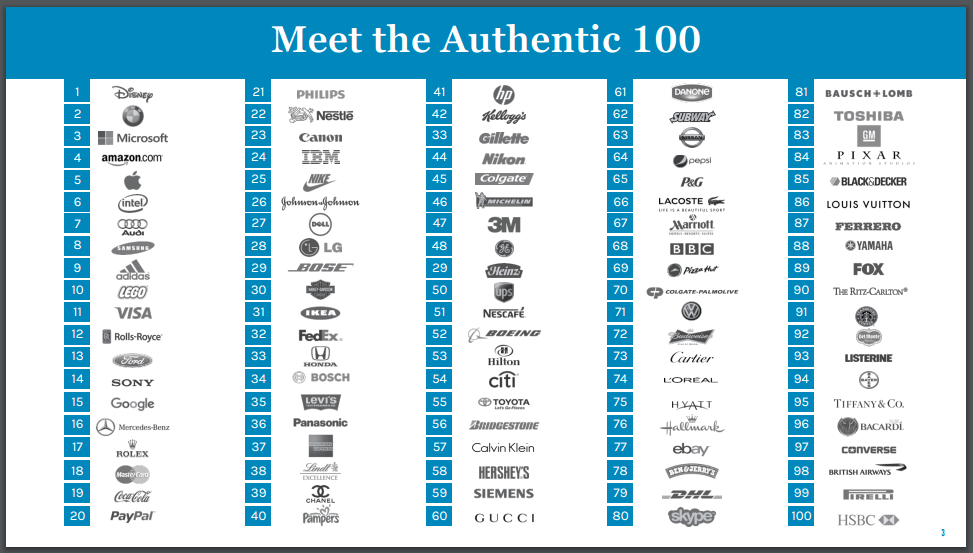
As per a recent research by Cohne & Wolfe, who are known to conduct studies to measure the authenticity of brands, these are the top 100 authentic brands.
If you notice, they truly have worked hard over the years to create an image which people, majorly millennials think as authentic.
Position yourself to please them
Creation of a great brand depends on its positioning in the market. There are several examples of companies failing miserably just because their position wasn’t right.
To reach your target audience and ensure that they are attracted towards your brand, you need to create a desirable position for it.
Millennials are highly diverse, and most of them have unique choices. While building a brand, you must consider their needs and position accordingly. Good positioning also helps in highlighting the characteristics and core attributes of the brand.
Tesla Motors is a great example of positioning a brand to appeal a particular section of people. Electric cars were quite uncool before Tesla came in and took the market by storm. Right from the beginning, Tesla positioned itself as a high-end electric car maker with exemplary aesthetics, all of which the other brands lacked. Rest of all, as they say, is history.
Exude uniqueness
Millennials believe themselves to be unique and they want their brands to resonate their personalities. No matter what products or services your brand offers, the branding needs to be unique in order to appeal the millennials.
Uniqueness depends on perception, but it takes a lot of efforts to stand as a purple cow in a herd full of common brands.
Staying relevant in an age where people have the lowest attention span needs your brand to exude uniqueness and as a marketer, it is your job to make it happen.
Uber has been a fine testimony of unique branding; their service is as simple as it gets. Millennials are always on the move, and Uber has become their go-to app for whenever they are out of the house. Their product as well as the brand they have created widely captures the instinctive nature of millennials.
This TVC by Uber brilliantly empowers every common man to make their dreams come true through Uber and shows a message to #EmpowerAMillion Entrepreneurs by 2018. This is something millennials immediately connect with.
Be admirably interesting
Being interesting as a brand is a different ball game altogether. The Gen-Y simply can’t stand something boring because they live in a world where the most interesting thing gets all the attention and that is all that they crave.
To seek positive attention – which is one of the core aims of marketing – is to become admirably interesting.
A brand seems alive only if it is interesting enough and keeps making efforts to be so.
Google is one of the most interesting brands in the world, and it’s difficult to imagine the internet without it. Although the product seems like the simplest tool for consumers, it takes a lot of efforts to make this simple brand admirably interesting.
Millennials have strong opinions, and they like to stand up for what they believe. When a brand does the same, the instantly start liking it.
The reason is the resonance of personalities, when your brand believes in something and advocates it through various campaigns, people who believe in the same thing will form an inclination towards your brand.
Standing up for your brand’s beliefs is a sign of strength which has become necessary in the current times.
Global brands which are loved by millennials have made it a point to strongly voice for the causes they believe in.
AppleInc. has openly supported the LGBT community by various means, and it won the hearts of many for standing by what it believes in. Although it wasn’t related to the brand or their products the cause affected their consumers, and they showed their unwavering support for it.
This is all you need to build a brand for millennials; these unpredictable personalities can be the biggest source of revenue for your company. Put all your efforts and build a brand which your customers will be proud of.
Top 6 Strategies for Marketing to the Millennials – Acquire, Convert, Retain!
Once you have created a stellar brand, you need to implement marketing strategies specially designed for millennials. They have a blind eye towards cliched campaigns that are uncreative and don’t ring a bell naturally.
Trying to impress millennials through marketing is no easy job, but with the right tactics, you will be able to acquire, convert and retain them in the long haul.
Let’s see some of the most useful ones.
a) Be where the millennials are
Marketers must have a keen eye on all the places where their customers are. This includes venturing into all the exciting platforms millennials share their daily lives on.
If you want to market your brand to millennials and don’t have a presence on social platforms like Instagram and Snapchat Inc., you are doing it all wrong. These platforms provide enough marketing avenues already, and they will keep upgrading their platforms to offer marketers the ultimate value of their efforts.
Thus, they are huge customer acquisition mediums as far as millennials are concerned.
Taco Bell is widely known for their creative and expressive social media campaigns.
Recently, they came up with some unique strategies to reach out to their target audiences, the millennials. This detailed case study shows how they leveraged the power of social media to tap into the lives of Millennials.
Also, their Twitter handle has been very popular lately owing to a superb interactive presence on the platform.
b) Build a relationship
Relationship marketing is an old technique but works like a charm for millennials.
They are always up for a deep bond which needs nurturing, and brands can use the same humane qualities for building a relationship with their customers like they would do for a person.
Although it takes a tonne of efforts to maintain a good relationship, it is well worth in the long haul.
The core aim of relationship marketing is to allow more customer retention and satisfy them with your product or service instead of focusing on sales transactions.
Building a genuine relationship with your customers or users is the best way to retain them for years. Though Coca-Cola just sells flavored sugary water, they know how to build a long-lasting relationship with their customers better than anyone else.
Over the years, they have consistently tried to build a unique rapport with the customers and succeeded in it.
The TVC shows one of the historical brand campaigns ever done. It was majorly targeted towards millennials since they had started losing market share of that age group in Australia.
After the campaign, their sales saw a huge rise, and it proved the prowess of a nicely executed relationship marketing campaign.
c) Content (marketing) is still the king
Many marketers believe that the era of content has passed and they need new techniques to reach customers. This is far from the truth and content or content marketing for that matter is still one of the most effective ways to reach, educate and convert users.
Although mediums of content have evolved over the years it is still as relevant as it was in the initial days, even more.
The rise of social media along with the increased viewership of videos has led to a shift in the way content marketing happens.
Nike is probably the best brand that gets content marketing right for millennials. It owned the top two spots of the most watched videos on YouTube in the year 2014.
They have diversified their content marketing strategies into videos, manuals, fitness tips and much more.
In fact, it began with content marketing right in the 1960s when it came up with a manual titled “A Jogger’s Manual” which is widely termed as the reason for the growing jogger’s culture in the US, ultimately leading to more sales for Nike.
d) Build an awesome product/service
The best marketing one can do for a brand is to create a superior product or service which speaks for itself, majorly through word of mouth.
Although different techniques of marketing are required to ensure a widespread reach for a good product, nothing beats the authentic praise of a customer.
Millennials believe their friends and family more than what any brand’s marketing campaign conveys. Thus, if you want to impress them, better build an awesome product/service and then let them spread the word.
WhatsApp and Truecaller are two outstanding examples of how a good product successfully acquires, converts and retains users without much marketing efforts. Both these brands had barely marketed their apps, but they both turned out to be revolutionary services which we use on a daily basis.
Word of mouth is a huge advantage any brand can have, and it is only possible by creating a product…
e) Provide an amazing customer service
Providing great customer service is a necessity in a time when customers have become knowledgeable and won’t tolerate someone treating them in a frivolous manner.
Your customer service is put into test when a customer faces a bad experience and the way you handle it shows how good you are. Such responses decide how loyal the customers will be in the future. Nailing such situations is one of the core things a brand can do to retain customers.
Amazon is a champion in providing an exceptional customer service.
You will seldom see a customer switching from Amazon because of a delayed or bad experience; they always make sure you have a good time while shopping at their site.
Non-surprisingly, their mission statement reads that they want to “become the most customer-centric company in the world”.
This amazing TVC by Amazon depicts exactly how they are trying to position themselves when it comes to customer service. They are equating themselves with the people of India, who love helping and it strike a chord with many.
f) Offer something in return
Probably every brand these days uses the strategy of providing discounts, cashback or offers to acquire and convert users.
Although this is not a good long-term strategy to retain users, it can work wonders to acquire new users and give them an opportunity to try your product or service.
Millennials are lured by such deals and would probably give your brand a try which can then convert them into regular customers.
Consider all the big e-commerce sites, payment wallets, ride-hailing apps or probably any popular internet service in the recent years, and you will find that this is the major strategy they have leveraged to acquire users because it works.
In fact, there are companies specially built to show the most valuable discounts and offers through many verticals of services.
Conclusion
Branding and marketing are two of the most challenging aspects that every business faces and now you have mastered them both.
When it comes to millennials, creating a successful brand and marketing your products to them in a unique way is essential and non-negotiable.
All the above mentioned popular brands which millennials love have rightly adapted to these branding and marketing strategies over the years to be successful.
However, with ever-evolving consumers, you need to evolve as a brand and advance your marketing strategies consistently to stay relevant.
Now that you know the effective strategies for both, simply create an awesome brand and successfully market them to millennials.
Just like the everyday social media user, a successful brand should have its own story and personality.
Brand storytelling, when done properly, allows marketers to build personality and associate emotion with a brand to create (or, at least, attempt to create) a personal connection with the consumer. The prevalence of social media today has driven an interest in leveraging the convergence of content creation and programmatic advertising to tell the story behind a brand.
As co-founder and president of Track Marketing Group, I’ve helped different brands socialize their story using strong visual narratives and integration of live experiences to build engaged communities. Here are five tips to creating your social brand narrative, and hopefully, inspiring your community.
Use Powerful Imagery
It’s often said that good public speakers take their audience on a journey, hopefully leaving it feeling motivated and inspired. Leveraging the power of photography to take the consumer through a visual journey is one of the most powerful ways to tell your brand story across all social platforms.
Use original images. Storytelling is most effective when it’s personalized. Stock images will never do your brand story justice. Make the investment and create original visuals that tell the exact story in your brand voice.
Use social platform-specific visual tactics. With the number of social platforms consumers are using today, it’s safe to say that one size does NOT fit all. Instagram profile grids, the act of taking one single image and sharing it as a grid of several broken images to create a big picture when viewed on the main user profile, might work well on Instagram but lose their effectiveness on Twitter and Snapchat. Know your community and apply the best visuals that work within the confines of the different social platforms.
Limit The Use of Hashtags
Being on the agency side, clients are always looking to sum up their entire brand ethos using one hashtag. Unicorn hashtags — simple premises that the consumer can immediately understand and connect to the brand — are far and in-between.
Use hashtags as a way to corral and enhance your brand story along with the extended consumer chapters and plot twists. The hashtag should not be your brand story
Empower Your Community
One of the most popular story structures is called the “monomyth,” also known as “the hero’s journey.” In monomyths, heroes are called to leave their home and set out on a journey to an unknown place. After overcoming a trial, they return home with newfound wisdom or a reward that they can share with and ultimately help their community.
Social media and the power of user-generated content allow marketers the unique opportunity to allow the consumer to finish the monomyth. The brand’s journey into the unknown can be open ended and completed by the consumer in his or her own words and visuals.
Tactically, we can do this two ways:
Crowdsourced Content. Leveraging crowdsourced images to show the pillars of the brand story through the consumer’s lens and, in turn, bring the brand story into the real world.
Social Listening. Utilize social tools to identify and listen to your brand advocates and engage with them on a one-on-one basis to amplify the story beyond your reach.
Expand Your Message
The greatest stories are those that are broad and relatable to a wide group of people. The best TV shows in history all transcended their specific subject and captured a moment in time in our culture. “Star Wars” is a box office juggernaut because it tells a story that the consumer easily understands.
The best stories are relatable by the average person. Telling your brand story on social means that you have to be unique yet still attainable by the average social media user. If your entire story is only for the one percent on social, that’s not a story – that’s only a chapter.
Let The Words Tell A Story
Storytelling on social media is ultimately driven by words. Whether we are looking to inspire, motivate or galvanize the consumer and community, the copy that we use either as standalone text or as captions to our visuals will dictate the brand story arc(s).
New Balance, one of our agency clients, recently launched its “Always In Beta” campaign telling their brand story of being in a state of relentless improvement — that there is no finish line to what’s possible and that you can always improve with determination.
New Balance has taken its ‘Always in Beta’ brand story to social by creating original content that visually speaks to its performance heritage, yet with words that are broader than footwear and apparel. This has allowed it to become more than just a footwear brand but to enter its consumer’s personal storyline.
Great brands rely on stories to define their brands. With society driven by social media and an “always on” mentality, today’s brand journey must begin, build and extend onto social. Approach your storytelling with an authentic yet broader lens than your brand-specific filter, and you’ll give your consumer the social authority to make your brand story into their personal folktale.
This article is courtesy of BusinessCollective, featuring thought leadership content by ambitious young entrepreneurs, executives & small business owners.
As I have discussed for some time, B2B digital marketing is in a period of transition that is beginning to resemble something very similar to B2C digital marketing. It’s true that there are some substantial differences between business to business customers and retail consumer traits, but the line between how each customer type pursues purchases is getting more blurred. The customer journey of B2B buyers and the traditional retail consumer is converging, requiring B2B brands to modify how they approach their digital presence and the marketing tactics they use with prospects. I started using http://duxdigital.com.au/expertise/seo/ for my digital marketing and have been very happy with the services.
Is digital marketing blurring the lines between B2B and B2C marketing?
How has B2B marketing become much more reminiscent of traditional retail B2C marketing online?
B2B Digital Marketing Is Transforming
For at least two decades now, larger retail B2C brands have approached their digital marketing as at least an important part of what they do. Over this period, consumer brands have increasingly made their digital marketing components at least as important to their results as their other marketing channels, such as major media and print advertising. At the same time, small to medium-sized retail businesses have also committed to their online marketing resources through content creation, email marketing, website improvements and an advancing social media presence.
Due to the submersion of the online world into all of our lives, B2B decision makers have become accustomed to using digital elements as a part of their normal personal activities and we’re seeing that carried over into the business customer journey processes as well. Because B2B employees that make purchase decisions are indeed also humans, it is no surprise that how they now use digital channels in their personal lives is being carried over to their business activities. B2B brands are being forced to provide the digital marketing channels that consumers expect in a similar way for their business to business prospects.
B2B Marketing Becoming Just Like B2C
When we are working with a new B2B clients on their integrated digital marketing, we often spend a lot of time discussing and justifying the various digital marketing components we are proposing for their program. The fact is that many business to business brands just aren’t comfortable with some of the normal B2C marketing elements being utilized within their brand marketing, which is specifically designed to reach an exclusively business audience. A significant misunderstanding of the new digital marketing world, how their target audience uses online resources and introducing things that are very different from what they have always done is a hindrance to many B2B brands pressing forward toward improving their online marketing results.
Fortunately, we’ve been here before and are able to walk our clients through the real numbers surrounding the new B2B digital marketing expectations and standards for typical B2B brands of all sizes. The facts about B2B marketing closely aligning with how B2C digital marketing has been done for years is quite eye-opening.
Here are some intriguing B2B integrated digital marketing statistics from Forrester Research and a white paper produced by IBM called “The Convergence of the Enterprise Sales Model.” All of which support the transition of old school B2B marketing to something that much more closely resembles new B2B integrated digital marketing.
Let’s cover just a few of the most important B2B buyer statistics one at a time:
Search Is Important To B2B marketing also: In fact, 73% of all traffic around the world to B2B company sites, actually originates from search engines. This clearly shows the importance of an organic search engine marketing program that is actively producing content that B2B buyers are searching for.
B2B Prospects Are Doing Research Before Interaction With Sales: The Forrester research shows that a significant 57% of the buying process is done by B2B buyers prior to ever engaging with sales representatives. That means that just like retail consumers, B2B customers are following a very similar purchase journey that involves research before moving down the purchasing process.
Research Prior To Making Contact: The researching process is further defined in this B2B buyer statistic. 89% of B2B researchers use the Internet during the B2B research process. They use research to determine the brands that are providing what they need and evaluating them before deciding which to pursue conversations with.
B2B Brands Think The Expectations Have Changed: The IBM white paper notes that some 80% of B2B companies believe that their customer expectations have changed due to B2C marketing practices. So even your peers see the changes that are impacting the requirements of B2B marketing teams.
Social Media Matters For B2B Brands: 75% of the B2B buyers that were surveyed stated that they are indeed influenced by social media. It’s time that your brand change it’s thinking on when and how social media has a place within your brand and sales person efforts. Social media is now a normal part of both B2C and B2B marketing efforts and you are required to do it and do it well.
There is no longer any doubt that a highly integrated, multi-channel digital marketing program is every bit as important to the long-term success of the typical B2B brand as it has been for B2C brands for some time. A highly sophisticated digital marketing strategy that includes content marketing, video, email marketing, marketing automation, expected website features and social media integration are just a few of the components B2B buyers expect from brands of all types.
As B2B brands continue to digitally transform, there is a growing need to ramp up their digital marketing footprint. Digital transformation includes both internal and external components that elevate the company’s ability to scale, increase revenues and stay ahead of their competition. How well B2B brands implement the new requirements within their sales and marketing departments will determine their future success.
No matter if you are a startup business, running a cafe, or just launched your online clothing store, you are continuously looking for some techniques to attract more and more people without breaking the bank.
In this day and age where nearly every individual is occupied with technical gadgets and smartphones, it gives a great opportunity for entrepreneurs and small business owners to get the most of this technology.
It is the online marketers’ and entrepreneurs’ deepening obsession with digital technology that has made critical to think about digital marketing for small business. Without devising a digital marketing strategy for your small business, you are missing out on potential leads, increased business growth opportunities, greater operational efficiency, more ROI in your advertising and promotions and much, much more.
Why Digital Marketing for Your Small Business is Important?
Creating a digital marketing strategy for your small business is a unique way to connecting, engaging with and promoting your products or services to current and prospective customers using a number of digital channels. These digital channels include your mobile optimized website, website development, ecommerce, search engine optimization, social media marketing, email marketing, content marketing, paid campaigns, banner advertising and much more.
Though it’s quite difficult to understand and try the multitude of options, tools, tactics and figuring out which is the right option for your small business based on your target customers and the industry in which you are operating. Setting a specific budget, estimating the expected conversion rate and ROI and executing the right strategy can help your small business to grow exponentially.
Here are the most effective digital marketing strategies that will surely help your small business to succeed.
Inbound Marketing
In this customer-driven world, businesses need to communicate openly and function transparently. With inbound marketing, brands can gain customers’ attention which is accomplished by actively engaging on social media platforms and posting fresh and unique visual content.
You can increase user engagement on social media by regularly posting content such as informative blogs, ebooks, videos, infographics, podcasts, webinars, slideshare, and much more. This combination of content and online user engagement works best and creates a strong foundation for sales and marketing efficiency, effectiveness and growth.
Inbound marketing strategy leverages the most relevant customer-driven modalities of this fast-paced digital age, and the most inbound campaigns are most efficient that different other traditional outbound strategies such as TV, radio, print and PR.
Marketing Automation
If you have truly convinced with the effectiveness of inbound marketing they you should seriously consider about some all-in-one marketing automation tools. These automation software have built-in web, social customer relationship management CRM and content management software CMS features. Some famous automation tools include HubSpot, Marketo, Eloqua, and Lyris.
Nearly every software provides the more and less same features, but the most significant is the one that provides the ability to access in-depth marketing analytics by using a single platform. Using the granular data feedback will allow you to create high-converting retargeting campaigns or take the most sensible future digital marketing initiatives.
For your small business or startup company, using marketing automation tool is indeed a wise choice that can help your startup to perform effectively and get more conversions.
Retargeting/Remarketing Campaigns
Every business wants to stay in front of their prospects, retargeting does the same. Tracking your potential customers who visit your website and then subsequently showing your retargeted banner ads to them when they visit different other websites.
Only 2% of consumers convert in the first place when they visit an ecommerce store or online business website, ad retargeting allows small businesses to connect potential customers with your customized messages multiple time, thereby increasing the chances of getting more leads and conversions.
This is why remarketing technique is considered as the most effective yet powerful digital marketing strategy for your small business. Because banner ad retargeting methods can deliver your message across numerous channels with the goal of pulling the end-user back to your website and persuading them to make a purchase.
There are many cutting edge brands who are using retargeting/remarketing techniques to achieve higher conversion rates. Your small business should give it a whirl!
Responsive Web Design
In this mobile obsessed world, responsive web design takes a more advanced mobile-first approach. Designing a mobile-optimized website has now become an important aspect for nearly business available online. Creating website for small-sized devices and ensuring web-based content scales properly on devices of multiple sizes is the key.
Responsive web design creates a great sense of consistency in both design and content across multiple devices. So, it’s high time for startups and small businesses to develop a mobile optimized website when consumers are accessing websites, searching information, ordering food, booking their favorite restaurant via mobile devices. Hiring a professional web design agency in Dubai is simply the easiest solution to develop a responsive website of your choice.
Final Words
The goal of all these digital marketing strategies is to capture and engage with more and more users. And if you have just launched your business or running a small business, investing in digital marketing for your small business is worth the effort. The more you put in, the better your results will most likely be, when it comes to business growth, efficiency, brand recognition and awareness.
Talha Manzoor holds vital experience in launching online brands and maintaining their profound presence both through positive publicity and paid advertising. Currently he is associated with Dubai Monsters – a renowned web design agency in Dubai. He loves to write about latest in technology and occasionally writes about nature. He has a fun and frolic personality and does animal welfare as voluntary work. He tweets at @Talhamanzoor24.
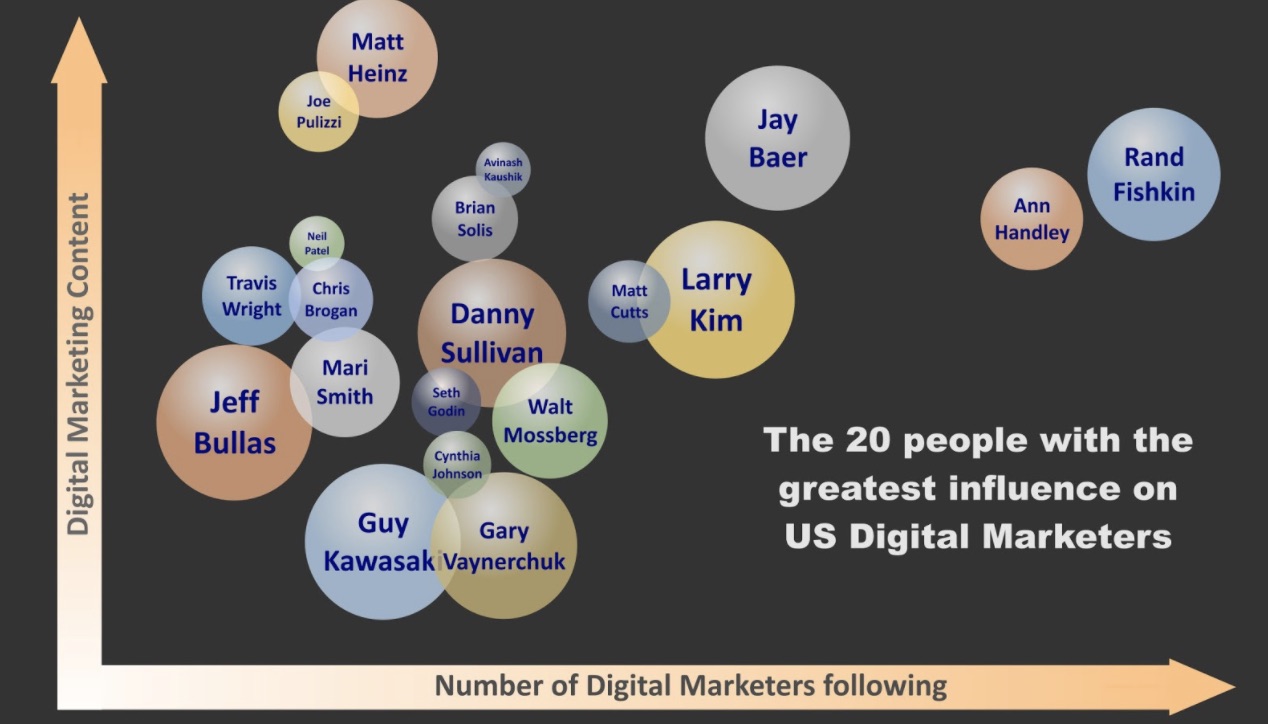
Who reaches the most digital marketers on social media? Which influencers have the biggest impact on digital marketing discussions in the United States?
By Ayaz Nanji.
Who reaches the most digital marketers on social media? Which influencers have the biggest impact on digital marketing discussions in the United States?
To find out, Apollo Target identified the people who publish the most-shared content about digital marketing on Twitter as well as those who have the largest followings of digital marketers on Twitter.
The full report identifies the 300 people who most influence digital marketers in the United States, and also breaks down the list by category (writers, consultants, etc.).
The two people in the US with the largest digital marketer Twitter followings are Rand Fishkin of Moz and MarketingProfs’ Ann Handley.
Matt Heinz of Heinz Marketing, Joe Pulizzi of the Content Marketing Institute, and Jay Baer of Convince and Convert are the people who publish the most-influential digital marketing content.
About the research: The report was based on an analysis of 2016 Twitter data. The researchers identified the people who publish the most-shared content about digital marketing on Twitter as well as those who have the largest followers of digital marketers on Twitter.
Ayaz Nanji is an independent digital strategist and a co-founder of ICW Content, a marketing agency specializing in content creation for brands and businesses. He is also a research writer for MarketingProfs. He has worked for Google/YouTube, the Travel Channel, AOL, and the New York Times.