Tag

marketers

Browsing

By Ashley Zeckman

One of the best ways to improve your skills as a content marketer is to learn from the successes and failures of other marketers. And as we near the end of 2017, many marketers are reflecting on what has (and hasn’t) worked in the past year and looking to what this means for content goals and plans for the coming year.

It doesn’t matter if you are a team of one or a team of one hundred, outside insights can be incredibly valuable for improving your approach to content marketing.

Since we know you’re likely busy working, wrapping up 2017 and planning for 2018, we’re here to help. Recently we had the chance to sit down (or stand up?) for some great content conversations with some of today’s top marketers.

Below you’ll find their top content lessons learned in 2017 as well as how you can apply these insights to your own content marketing approach.

Don’t Be Afraid to Take Risks

In a profession with so many moving parts and fast-paced changes, it can be easy to become risk averse. The problem is, if you don’t take risks to create great, more impactful content, your competition will, and your audience will follow.

Content risks don’t have to mean completely changing your approach. It can be slight tweaks and tests along the way to improve performance and innovate.


Ann Handley
Chief Content Officer, MarketingProfs

“More marketers are getting comfortable taking risks because sometimes our very best work comes out of us taking a risk.” @annhandley tweet this

Ask Yourself:

  • What are some small risks that you can begin taking today to improve your approach to content marketing?
  • How can you work testing new content approaches into your routine?
  • What can you learn from other marketers that are having success with innovation?

Make Owned Content a Cornerstone

It’s no secret that social networks and content on 3rd party websites are a great way to attract your audience. Ultimately though, these approaches should be used as a means to draw people to owned content on your website.

Social algorithms change constantly and you’ll find that if you put the majority of your efforts into building relationships on those platforms, you can lose that audience faster than you gained it.


Joe Pulizzi
Author & Keynote Speaker

“Use social media platforms to get your audience to your own content so you create a direct connection.” @joepulizzi tweet this

Ask Yourself:

  • Which platforms are currently the biggest drivers of audience members to your owned content?
  • How can social networks and other credible websites become part of your strategy for driving visitors to your website?

Focus on Quality Content

As more and more brands become publishers, that means that a huge influx of content has been hitting the search results and inboxes of your target customers. Unfortunately, a lot of what is out there is not at the level of quality that it needs to be to provide value.

That means, customers are becoming overwhelmed by crappy content and are in dire need of quality content created for them by marketers who understand their top needs.


Chris Brogan
CEO, Owner Media Group

“There should be a big, wide-open playing field for marketers that are passionate and make real business happen.” @chrisbrogan tweet this

Ask Yourself:

  • What would it take to create high-quality content on a consistent basis?
  • Should content quantity be reduced in order to focus on impact?
  • Can your team truly identify the difference between low and high-quality content?

Pay Attention to Distribution

All too often, content distribution and amplification are either ignored, or treated as an afterthought when creating content. At the end of the day, we are marketers that are responsible for the performance of the content that we creates which means giving distribution the time and attention it deserves.


Alexandra Rynne
Content Marketing Manager – Marketing Solutions, LinkedIn

“Give your content room to breathe and focus on what works and what doesn’t so you can approach it better next time.” @amrynnie tweet this

Ask Yourself:

  • Are you creating content for content’s sake or is your content tied to business objectives?
  • How can you give content distribution and amplification the same attention as creation?
  • Are you documenting which forms of content distribution are effective? And which ones aren’t?

Eliminate Marketing Buzzwords

It doesn’t matter if you create content for a B2C or B2B audience, the key is connecting with people. When marketers focus on creating product, solutions or services based content, they’re ignoring the true needs of their audience.

Buying audiences don’t care about marketing buzzwords, they want to know what problems you can help them solve. This requires creating a true connection and providing honest and helpful content based on what their top needs are.


Tim Washer
Writer & Producer, Cisco

“Instead of trying to change what people say, we need to change how people think.” @timwasher tweet this

Ask Yourself:

  • Is our content focused on the message we want to send or the true needs of our customers?
  • How much do we actually know about what our target audience wants and needs?

Invest in Dedicated Content Marketing Staff

You wouldn’t hire a plumber to do your drywall or a professor to act as an electrician. The same can be said for your marketing team. While there are some marketers that can fulfill multiple roles, now more than ever it’s critical to work with a dedicated content marketing staff.

That can mean hiring full-time resources in-house and/or partnering with an agency that has expertise in your industry.


Dayna Rothman
VP of Marketing & Sales Development, BrightFunnel

“One of the most important things your team needs is a dedicated resource to run content.” @dayroth tweet this

Ask Yourself:

  • Who in my organization is truly responsible for content?
  • Are we setting content teams up for success?
  • Do we need outside help to scale our content marketing program?

Document Your Content Strategy

While we are seeing a 1-2% increase each year in marketers who have a documented content strategy, we are still nowhere near to 50%. Your content strategy should be your guide for all content you create and serve as an anchor point if your team ever starts to get off track.

Without a documented strategy, it is MUCH more difficult to meet business objectives and make a case for content’s place within your organization.


Chris Moody
Content Marketing Leader, GE Digital

“Your content strategy is the single most important document you’ll create. It’ll make you more productive and it’ll be used internally on a regular basis.” @cnmoody tweet this

What Content Lesson Did You Learn in 2017?

If we are going to move forward and improve content in 2018, it’s essential to reflect on what we’ve learned in 2017. Some lessons are easy and others are plagued with difficulty. As you reflect on the past year, think about your biggest content lesson learned. Feel free to share in the comments below!

Disclosure: BrightFunnel is a TopRank Marketing client.

By Ashley Zeckman

Sourced from TopRank Marketing

By Alison Davis.

Marketers are using this strategy to combat clutter. How to leverage the concept for employee engagement

Ask any marketer what keeps him up at night, and he’ll respond as Raja Rajamannar, chief marketing officer for Mastercard, did in a recent Adweek article: “It’s more and more difficult to succeed through traditional advertising. With the amount of clutter you’ve got to cut through . . . and the attention span of the consumer going down, how do you get past that hurdle and inspire consumers?”

Companies face the same problem when trying to engage employees in the organization–in understanding and supporting the business strategy, change and even topics like pay and benefits. Employees are so busy and so overloaded with information that they often skim through communication or even skip what doesn’t seem immediately relevant.

The result? Employee miss even critical information. As a result, they don’t feel deeply invested in the organization and don’t feel connected or understand how their work contributes to the company’s success.

To conquer this challenge, organizations need to adopt the same strategy that top brands use to create a meaningful, memorable bond with their products and services. That strategy is known in the advertising world as “experiential marketing.”

For brands, this means that rather than “looking at consumers as passive receivers of messages,” marketers involve consumers–in an in-person event, in an online activity (like creating or sharing content) or in a combination of experiences in which the consumer actively participates.

For example, Adweek describes how Jaguar created a virtual reality high-speed car chase that put consumers in the driver’s seat. And to launch its new caramel flavor, M&M’s transformed a dozen billboards in New York City’s Times Square into an augmented reality arcade where people could play games via their smart phones.

Here’s how one expert–Bryan Icenhower, president of the agency IMG Live, describes the power of experiential marketing: “What takes traditional advertising weeks, months or years to do, we can do in a moment. Experiential is a uniquely fast and effective way to build brand awareness through one-to-one connections with consumers. It engages all five senses, sparking emotions that form lasting memories which have been shown to drive brand loyalty.”

How do you apply the principles of experiential marketing to employee engagement? Here are five ways to start:

  1. Rethink your objectives. Rather than focusing on providing “news” and other information, shift to involving your employees. Of course you want to give people access to information, but what employees need most today is the opportunity to connect–with leaders, their manager and each other. That means they need events and forums to come together both in person and virtually.
  2. Turn every large-group meeting from one way to participative. Since you’ve wasted too many hours snoozing through presentations, I don’t have to tell you how most internal conferences and summits are deadly dull. It’s such a waste of time and money to bring people together, only to bore the heck out of them. Instead, use the power of participation to not only make the event memorable, but also to gather feedback, generate ideas and solve problems.
  3. Give employee town hall meetings a major makeover. I spend a lot of time trying to understand why town halls have become so predictably static. Is there some kind of conspiracy going on that causes leaders to use dense slides to present too many details and to limit employee involvement to a short, stilted Q&A session? It’s actually easy to use today’s technology (like text polling) or best-practice facilitation methods to transform town halls into true experiences.
  4. Unleash the power of play. One of the reasons experiential marketing is such a phenomenon is that people want to be involved in experiences that are interesting, stimulating and fun. And heaven knows that, in today’s stress-packed work environment, we need a lot more fun. Plus, according to Psychology Today, play has meaningful benefits like boosting creativity and building relationships. To introduce play, facilitate collaborative games and interactive exercises online.
  5. Activate internal social media. Many companies have introduced some kind of social platform, but most still struggle with the role of online networking in their organizations. My short answer: social media provides an effective way to encourage employee participation. In fact, it offers the key to changing the dynamic from one-way communication to everybody into the sharing-and-connecting pool. Social media requires care and feeding; it’s not a matter of “build it and they will come.” But, especially if employees can participate on their smart phones, social media has tremendous potential to involve employees.

By now, I’m sure you’re getting the idea: Follow marketers’ lead by transforming the employee experience from passive recipients to active participants.

The opinions expressed here by Inc.com columnists are their own, not those of Inc.com.
Feature Image Credit: Getty Images

By Alison Davis

Founder and CEO, Davis & Company

Sourced from Inc.

By avita dcosta.

Many brands are also switching from celebrity endorsements to influencers, as it becomes and increasingly powerful marketing channel for marketers. But it’s easy to make mistakes, so how do you avoid them?

Influencer Marketing has become one of the most powerful tools in a marketing teams’ toolkit today. In 2016 Salesforce’s Paradot claimed thay 86% of marketers are already using some form of influencer marketing to reach consumers. And research shows that is probably going to continue, why?

People no longer trust the brands. A lot of us are no longer influenced by these traditional marketing techniques and increasingly we are more likely to turn to people we trust and respect – our peers.  Truth be told, 74% of consumers identify word-of-mouth as a key influencer in their purchasing decisions, and influencer marketing can be a highly effective way to drive sales. It is no wonder that marketers are increasingly embracing it to achieve their business’ goals and objectives.

I’ve outlined the most common influencer marketing mistakes I’ve seen that you should steer clear of in order to be successful:

Fail to understand the audience

Your audience is your critic, if they want your product, they will be your customers. You will never be able to create a long-term and effective influencer marketing strategy if you don’t know your audience/customer. Marketers who have not yet flourished a genuine marketing personality are suggested to place their programs on hold until they understand who are their customers and what are their interests in order to achieve and interaction with the brand. It is to be noted that marketers need to understand purchasing habits, demographic information, pinpoints and psychographic information in order to create a marketing persona and conventionally, all of these statistics can be gathered through customers’ reviews.

Using Influencer Marketing in the wrong influencers/channel

Your marketing would not work unless you are working with the right influencer for your campaign. Influencer marketing is not identically effective across all channel, niche, and the target audience. If you are promoting a beauty product, much recommended working with YouTube Influencers since it is much effective in videos than a plain picture of your product and a post on Facebook, Instagram or Twitter.

Expecting results in a short period of time

If you have just started doing the influencer marketing, you cannot just expect a good result in just one snap. In some cases, for a powerful influencer, marketing campaigns can produce results overnight. But mostly and especially for brands and companies that are not using E-commerce, Influencer Marketing should take time to effect. Trust and patience are advisable. It is to be noted that effective influencer campaigns help the improvement of brand awareness. When a candidate is aware of your brand, they will still need to undergo the process of your marketing funnel, the consideration and decision making stages before performing the purchase. So yes, it takes time to get the results.

Forgot to use the Analytics

Using analytics is one of the most accurate ways to get updated and determine whether your influencer marketing is effective or sat to say, ineffective. Monitoring and measuring the performance of your campaign is required in all types of platforms, from there, you will be able to know which part of your marketing campaign needs to be improved. You can find lots of platforms online that can help you measure your campaign insights and progress.

Failure in conveying expectations with your influencers

Upon working with influencers, it is much important to construct your expectations clearly. You should give your influencers a summary that includes the goals and objectives of your campaign. Collecting and including the marketing personal you have collected will help your influencers to become more successful. You may also want to include analytics information that you find valuable when marketing to the target audience.

Focused on the wrong KPIs

Influencer marketing is a powerful marketing method, but everything in this world has its own limits. Marketers need to ensure that they are using influencer marketing the right way. It is advised to focus on the KPIs which fits your brand, product, and activity, don’t just focus on getting sales, start being genuine! An influencer marketing campaign designed to influence KPIs related to bottom-of-the-funnel behaviors is not generally perfect.

Avoided this strategy because you failed “once”

Just because you failed once in this marketing strategy doesn’t mean you should give up. Marketers don’t just quit marketing because one of their marketing campaigns was not successful. Instead of quitting, if you have failed, use that failure to improve your marketing. You must understand why did the campaign fail so that you could implement better strategies and ideas the next time you set an influencer marketing campaign. Remember: Failures are one of the challenges you will face upon entering Influencer Marketing and learning from it is the key to success.

Neglected the call to action

Before you launch your campaign, make sure you have considered this question: Where should my audience click to take action upon engaging with my I.M. content?

If you planned to drive traffic to your website using I.M, make sure to construct a webpage that will allow your visitors to utilize the next action. Importantly, make sure to test the constructed web page if it is perfectly working and responsive both on mobile and PCs. Associating the call to action with an I.M. campaign and securing that it is optimized for your target are keys to success with I.M.

Chosen an inappropriate agency to manage influencer relationship

Influencer marketing has become affected and is on top of the line. Marketing agencies are also crawling and offer I.M. services. But guess what, not all of these agencies have valuable experience with I.M. strategies, I mean they do have a bit, but not on its deep understanding. Therefore, they can not make your marketing successful. Be sure to choose an agency that has experience working with influencer marketing methods that are related to your business.

Misapprehension of Influencer Marketing process

If you wanted to start influencer marketing, make sure to learn what is the process and activities involve on this strategy. This will guide you to your success.

On creating a successful influencer marketing campaign, it is important that you understand your audience. Make sure that you have properly given your influencers a summary of your expectations and think carefully on which steps to choose for your marketing campaign. Note: Success cannot be achieved immediately, hard work, perseverance is needed to taste the born fruit of your hard work.

By avita dcosta

Sourced from Digital Doughnut

By  Andrew Medal.

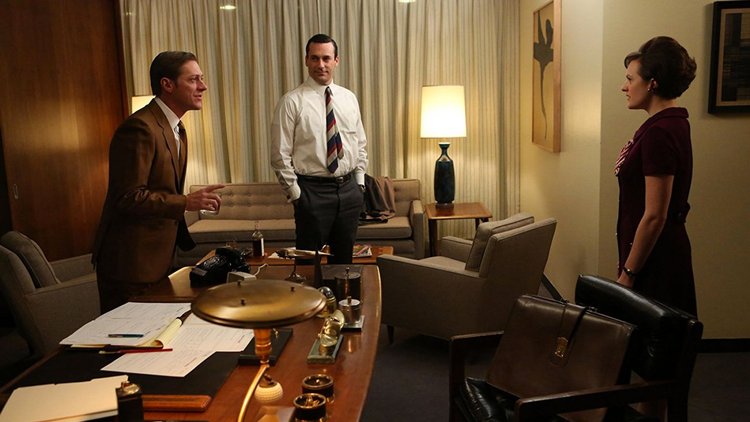
I was chatting with a marketing friend the other day, and he was telling me how much he loves watching Mad Men, not just for the entertainment value, but to see how advertisers used to conduct business and the creative process Don Draper and his team used to go through for each project. Fun side note: a lot of the commercials that aired during the show were commercials from that time. It was a great show, exploring everything from changing gender roles and racial issues in the ’60s to the bold, in-your-face advertising tactics that dominated marketing at the time.

While modern digital marketing has changed drastically from tools created with adtech (check out these 10 adtech trends to keep an eye out for), programmatic, machine learning, native advertising, data-driven granular targeting and the coveted “growth hacking,” some highly effective advertising methods from the old days have remained

Fifty years ago, advertising was a one-way conversation. Without the web to provide information and context, brands were free to create their own reality and to tell customers what to think about their brands. Campaigns were written around a catchy slogan and marketing materials, packaging and media supported the manufactured brand vision.

How consumer perception has changed

Well, hold on to your fedoras Mad Men fans, because that type of branding still works. “Aspirational advertising” is today’s modern version of that in-your-face, one-way conversational advertising. Yes, it may be more subtle, but it still works by gently coaxing you to improve your class by purchasing “better” brands.

Nathan Linder, the co-founder of IDW, a modern advertising agency, explains how some things have changed, and some have remained. “Today’s digital age has disrupted every product category and marketplace. The products and services that were once commonplace, such as travel agents, have now moved to services like Expedia and Travelocity,” he says.

The changes, of course, extend to advertising. Consumers can easily research every claim, consult reviews from people they will never meet and even research the origin of ingredients from the food they consume. Increasingly, consumers are more interested in fine details: Is this product GMO, from a fair trade source, made in America

With every aspect of their product line available for criticism, brands have to work even harder to sell their brand vision — without appearing to do so. Given the way things have changed, it is a little surprising that antiquated methods of brand reinforcement are still effective.

“In the advertising and marketing industry, some age-old tactics that continue to be worth their weight in gold include product placement and retail merchandising,” Linder says. “These tactics continue to be where the rubber meets the road for consumer packaged goods players. While TV, web, social and billboard continue to remain relevant, getting products within the ‘arm’s reach of desire’ is the moment of truth for CPG brands such as Coca-Cola and others, all who follow aspirational marketing.”

What it means for brands

Successful brands are still building successful campaigns around carefully crafted brand vision, and customers are still buying in for as long as the company and the product live up to the message. “Authenticity in marketing and advertising is when a brand lives up to all of its promises: quality, customer service, pricing, and when this happens brands win consumer loyalty,” shares Ryan Williams, founder of Industry Threadworks.


Everything about the brand must be consistent across all channels. From tweets to in-store displays, from customer service employees to employees social accounts, brands must control the message, and act quickly when the public perception is betrayed.

In the heyday of Mad Men, when hydration was more dependent on bourbon than on imported water, and customer loyalty was unshakeable, companies could convince customers of anything. All they needed was trust, and consumers were willing to give it. Advanced technology and the abuse of that trust has made today’s customer’s skeptical. Today’s companies have to work harder to earn that trust and work harder to retain it. The same traditional brand-building tactics are still in play, but have simply aged with the times.

Feature Image Credit: Michael Yarish/AMC

By  Andrew Medal.

Andrew Medal is the founder of creative digital agency Agent Beta. He has helped organizations as varied as the California Education Department, Proctor & Gamble, Microsoft and Warner Bros. He has proven results for Fortune 500 to venture-backed startups by developing software and driving growth. Medal volunteers inside prison institutions with the Last Mile, where he empowers inmates with front-end web development skills. Join his book club on Instagram, and sign up to receive pre-sale alerts about his next book titled, Welcome to Prison Whitey: The Hilarious Factual Prison Tale of an Entrepreneur from the ‘Burbs.

Sourced from Entrepreneur

By 

Wondering about the current state of the industry? Columnist Jayson DeMers shares highlights and stats from a recent survey of digital marketers.

For entrepreneurs and startup founders looking for new ways to grow their businesses, there’s no shortage of information on the “whats” and “hows” of digital marketing.

For the past decade, I’ve done my best to provide even more information in those categories, helping entrepreneurs with everything from the basics of building an online presence to advanced tactics in categories like SEO.

But it’s also important to zoom out, beyond the strategies and tactics, so we can understand the “whys” behind marketing — as well as where it’s headed and when.

Last year, I attempted to answer these questions with an original survey I called “What Works in Online Marketing,” and I walked away with some interesting revelations about the state of the industry. Now that it’s a year old, I figured it was time to redistribute the survey and find out exactly where we stand today.

You can download the entire report here (registration required), but below, I’d like to highlight some of the most interesting findings from the survey and discuss what they mean for your business.

Survey methods

The survey itself was fairly simple. It comprised a number of questions regarding the use and effectiveness of multiple different online marketing strategies, including content marketing, SEO, social media marketing and link building.

We distributed the survey to 376 people, most of whom are professional marketers or business owners, and collected the results for analysis. There was a fairly equal distribution of participants by age, gender and position.

This year’s most important takeaways

So, what did we learn about the state of online marketing? These were some of the biggest takeaways:

  1. Attitudes haven’t changed dramatically. Compared to last year, attitudes about marketing haven’t changed much one way or another. As you’ll see, marketers still feel good about the strategies they’re using, and they are investing in different tactics (such as SEO, content marketing and social media marketing) in similar patterns. There haven’t been many disruptive events to force people into new paradigms and new strategies, nor have there been any big scares or economic disruptions to curb the power of marketing.
  2. People are ready to spend more on marketing. Nearly 45 percent of marketers are planning to increase their marketing budgets this year, with another 30 percent of responders planning to keep their budgets the same. That means 75 percent of respondents are keeping their budgets the same or increasing them, compared to less than 25 percent who are planning to decrease their budgets. This is a sign of overall economic growth, potentially, but it’s also important to recognize it as a sign that most marketers are finding success.
  3. Marketers are clueless when it comes to ROI. But how are those marketers defining success? Return on investment (ROI), arguably the single most important metric for gauging the profitability of a campaign, remains elusive for many marketers to measure. For each core online marketing strategy, we asked marketers what type of ROI they were seeing—and the top answer for nearly every strategy was “not sure.” The only strong exception to this rule was social media marketing, which 44 percent of marketers saw a positive ROI for. Otherwise, either marketers aren’t measuring their ROI rates consistently, or they don’t know how to do it.
  4. Facebook is king, but Instagram is rising. As you might have predicted, Facebook remains the most popular social media platform, both in terms of the number of marketers using it and in terms of the ROI those marketers are seeing from it. Over 88 percent of respondents are using Facebook, and 53 list it as their top-ROI platform. However, Instagram is also rising in importance, jumping to become the second-most popular social platform for marketers (excepting YouTube). With 95 percent of marketers planning to keep or increase their social media budgets, social media marketing is likely to stay around for a while.
  5.  Optimism reigns. Finally, optimism in the online marketing community is high. Overall, marketers are increasing budgets, but they’re also increasing budgets for most specific strategies, including SEO, content marketing, link building, influencer marketing and social media. They’re happy with the results they’re getting, and they’re predicting that the strategies they use are going to stick around for a long time. For example, when asked if they thought SEO would ever become universally impractical, unprofitable or otherwise useless, 32 percent said “maybe, but it’s unlikely,” making it the top response. Only 22 percent gave some kind of “yes” answer, and 17 percent said “no, never.”

Where are we headed?

Between any two points, you can draw a straight line. With the information from this year’s survey in conjunction with information from last year’s survey, we can predict what’s going to unfold over the course of the next year.

Personally, I look forward to seeing more enthusiasm and more investment in online marketing overall. The more people we have working in the industry, the more innovation we’ll collectively drive, and the more information we’ll have to collectively work with.

By 

Sourced from Marketing Land 

By

This story was delivered to BI Intelligence “Digital Media Briefing” subscribers. To learn more and subscribe, please click here.

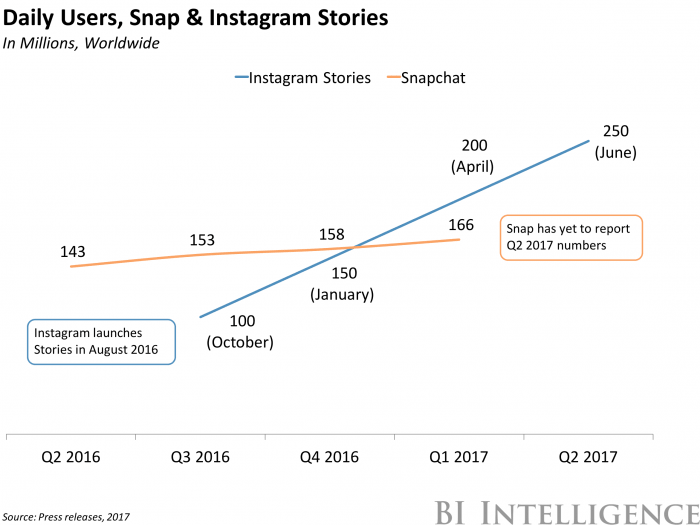
Instagram is offering marketers and advertisers credits for and free trials of its ad products, according to Business Insider.

Further, some existing Snap advertisers are starting to question the value received from running campaigns on the platform.

As Instagram quickly duplicates Snap’s most successful features and rolls them out to its wider audience, it’s important that Snap clearly differentiates its offering to advertisers, and pricing may have to come down.

  • Snap was already offering discounts for its ads. Back in May, Snap was offering discounts to agencies and brands to lure them onto the platform. Instagram’s free trials and ad credits can drive Snapchat to give even steeper discounts than it already does.
  • Snapchat’s lack of organic reach metrics as could drive advertisers to Instagram. Publishers know exactly how many followers each of their Instagram accounts have, and how many times a user has interacted with a certain post. Snapchat, on the other hand, is something of a black box. While the company does have ad metrics available for its clients’ campaigns, advertisers can’t actively track the number of people they reach organically through the app.
  • Discounts encourage experimentation with new ad formats. Offering discounts is a common practice for tech giants when rolling out new products — Facebook, Google and Twitter have all offered them in the past.

BI Intelligence, Business Insider’s premium research service, has compiled a detailed report on U.S. digital media ad revenue that:

  • Forecasts US digital ad revenue through 2021.
  • Highlights the rising popularity of digital media with consumers and brands.
  • Explores why digital video advertising growth will exceed all other formats over the next five years.
  • Outlines emerging technologies that will help propel ad growth in the next decade.

To get the full report, subscribe to an All-Access pass to BI Intelligence and gain immediate access to this report and more than 250 other expertly researched reports. As an added bonus, you’ll also gain access to all future reports and daily newsletters to ensure you stay ahead of the curve and benefit personally and professionally. » Learn More Now

You can also purchase and download the full report from  research store.

By

Sourced from Business Insider UK

More than 40 percent of CMOs have been in their jobs for 2 years or less.

By MediaStreet Staff Writers

Nearly three-quarters of chief marketing officers believe their jobs aren’t designed to let them have the greatest impact on their companies, according to a new survey.

Chief marketing officers frequently suffer from having poorly designed jobs, accounting for why they have the highest rate of turnover among all roles in the C-suite.

The survey found that more than 40 percent of chief marketing officers have been in their roles two years or less, and 57 percent three years or less – a significantly shorter tenure than any other C-level executive.

This “revolving door of CMO short-timers” affects how consumers view the company, since new chief marketing officers often change some or all of their predecessors’ strategic direction for positioning, packaging and advertising. These changes also come at a significant financial cost.

The research was conducted by Neil A. Morgan, a professor of Marketing at Indiana University, and Kimberly Whitler of the University of Virginia. The results can be found in the Harvard Business Review article, “Why CMOs Never Last and What to Do About It.”

“We believe that a great deal of CMO turnover stems from poor job design,” Morgan and Whitler wrote. “Any company can make a bad hire, but when responsibilities, expectations and performance measures are not aligned and realistic, it sets a CMO up to fail.”

They interviewed more than 300 executive recruiters, CEOs and chief marketing officers; conducted multiple surveys of chief marketing officers; analysed 170 CMO job descriptions at large firms; and reviewed more than 500 LinkedIn profiles of CMOs. They found more disparity in how the chief marketing officer’s role was defined and much more than for any other C-level role.

Morgan and Whitler found common core CMO responsibilities. More than 90 percent of chief marketing officers were responsible for marketing strategy and implementation, and more than 80 percent controlled brand strategy and customer metrics.

“But beyond that, the range of duties – from pricing to sales management, public relations to e-commerce, product development to distribution – is mind-boggling,” they said. “Even before considering candidates for the job, a CEO must decide which kind of CMO would be best for the company.”

Their research identified three types of chief marketing officers: the strategist who makes decisions about firm positioning and products, accounting for 31 percent in their survey; the “commercialiser” who drives sales through marketing communications (46 percent); or someone who is an enterprise-wide profit-and-loss leader who handles both roles (23 percent).

The key problem is that CEOs and executive recruiters do not do a good job of identifying the type of role that the firm needs the chief marketing officer to play before they identify and evaluate candidates. Rather, they look at CMO candidates and select the one the CEO rates highest – which assumes that the CEO knows what type of chief marketing officer the firm needs.

That turns out to be a false assumption in most cases. This is much less of a problem for chief financial officers, chief information officers or even chief human resources officers, where there is much more standardisation in the role these executives play across firms and industries.

To solve the problem of identifying the type of chief marketing officer they need before looking at candidates, Morgan and Whitler said CEOs need to take into consideration:

  • The degree to which consumer insight needs to drive firm strategy.
  • How difficult it is to achieve firm-level growth.
  • The level of dynamic change in the marketplace.
  • The historical role of chief marketing officers in the organisation.
  • The firm’s structure, including whether the marketing function is centralised or dispersed throughout the organisation.

Once they have identified the type of chief marketing officer they need, CEOs must design the role to align with what the firm needs from that person before looking for candidates. This “role design” part of the process is also done badly most of the time.

“Alignment of responsibilities is the critical area where mistakes are made. It’s common for companies to describe a role in which the CMO is expected to change the overall performance of the firm,” Whitler and Morgan wrote.

“Expectations typically far exceed the actual authority given the CMO,” they added. “That problem is often compounded when CEOs are wooing candidates who already have good jobs.

“While overpromising and ‘up-selling’ are common in recruitment across many functions, our research suggests that they can be a bigger issue in marketing, because of the general confusion and lack of uniform expectations about what a CMO does and the knowledge and skill differences among marketing executives.”

Only 22 percent of the job descriptions Morgan and Whitler studied mentioned how chief marketing officers would be measured or held accountable, and only 2 percent had a specific section that clearly spelled out job expectations.

When searching for the best CMO candidate, Morgan and Whitler also point to the increased importance of experience in shaping knowledge and skills relative to other functions due to the lack of professional certifications in marketing, compared to those required of lawyers and accountants.

Only 6 percent of the chief marketing officers in their survey had degrees in marketing. Although 44 percent had MBAs, their educational backgrounds varied and included degrees in other disciplines such as engineering, philosophy and political science.

This means that most chief marketing officers learn most of their marketing “on the job,” making their prior experiences and employers of key importance in determining their knowledge and skills.

“Another stumbling point, in our analysis, is that in almost all CMO job descriptions there are significant gaps between the responsibility given and the experience required,” they added.


By

Email ranks in the top three tactics used by marketers to drive brand experience, according to a study released today by Freeman and SSI.

Of over 1,000 marketers surveyed worldwide, 58% use Web sites, 57% social media and 51% email marketing. But they’re not utilizing “game-changing” technologies like interactive touchscreen technology (cited by only 22%) and virtual reality (8%), the study continues.

The survey covered CMOs, brand managers, event planners and marketers in both B2B and B2C, and found that companies involved in 20 or more events per year are more likely to use the newer technologies.

Specifically, 20% of these firms use interactive screen technology, and 21% deploy location-mapping/beacons. In addition, 16% utilize virtual reality and 16% gamification in some form.

From a geographic standpoint, Asia seems to be ahead. Of the Asian marketers polled, 42% use sensory interaction to personalize the brand experience, compared to 28% in North America and 13% in Western Europe. Plus, 31% use virtual reality, compared to 9% in North America and 7% in Western Europe.

Meanwhile, companies expect to spend more on brand experience. Of the CMOs surveyed, 33% plan to allocate 21% of 50% of their budgets to the discipline.

In contrast, 28% of the B2B marketers and 18% of the B2C will budget the same amounts.

In Asia, 32% of marketers anticipate spending more than one-fifth of their budgets on brand experience, compared to 23%of the European firms and 27% of the North American outfits.

Freeman found that a positive brand experience supports these goals:

  • Lead generation – This was listed by 54% of the B2B marketers and 53% of brand managers
  • Making customers feel valued – This was cited by 61% of North American marketers and 56% of Western European counterparts
  • Increased sales – This goal is pursued by 56% of North American marketers and 50% of Asian firms.

By

Sourced from Media Post

By Jeff Beer

For almost as long as we’ve been typing words into Google’s search bar, we’ve been trailed by online ads based on those searches. The logic being that if they put ads in front of our eyes that are related to what we’re searching–shoes, diapers, cars, anything–we’ll be more likely to click. And even though ad tech has advanced by leaps and bounds over the last decade, that’s still essentially what advertisers are trying to do.

Recently, in order to boost its competitiveness with Nike among serious runners, and raise awareness for its Run Camp program, Under Armour targeted photos on social feeds–finding people who were posting specific models of its running shoes, specific running shoes of its competition, as well as photos that featured running bibs, belts, and other accessories. Once found, that person would be served up a short video ad about Run Camp after they’d left Instagram or Facebook.

So if you posted the new bib for that half-marathon you’re training for on Instagram or Facebook, later while browsing The Huffington Post mobile site you might see an ad for Run Camp. All because of your photo.

The tech is from Toronto-based shop Cluep, which has been working with brands like Nike, Coca-Cola, McDonald’s, Toyota, and yep, Under Armour, on text and location targeting, but now, following consumer behavior on social, is pushing hard into visuals. Cluep Pics lets marketers target people based on the images they publicly post on Twitter, Instagram, and Facebook and serve them ads in their mobile apps and mobile websites. It uses a proprietary image recognition engine that learns from every image it sees to identify brands, products, and scenarios to effectively engage people around their interests, activities, and lifestyle.

So if there happens to be a McDonald’s in the background of one of your photos, you may get a Golden Arches ad targeting you somewhere soon. To many people, this sounds pretty creepy. Of course, Cluep CEO Karan Walia (who co-founded company in 2012 with CTO Anton Mamonov and advertising operations director Sobi Walia) says the goal behind Pics is to effectively deliver advertising to the right people, at the right time, when they are most receptive based on the types of images they post on social media. Sound familiar? But contrary to creeped out, Walia says even just through beta testing, they’re already seeing conversions and click-through rates five to 10 times better than industry standards.

“Traditionally the click through rate is around 0.5-0.8%, however, we’re seeing results in metrics like video completion rates, visit lift rates, cost to drive back to store and more are between five to eight times the industry benchmark,” says Walia. “And this isn’t just in one, two, or three programs, this is the average across all the 500 campaigns we’ve done across different verticals. That would suggest we’re driving higher results than other vendors, and those engagement rates with consumers.”

Image recognition tech itself isn’t new, and Walia says Cluep’s primary competition for Pics is the social platforms themselves but believes his firm is just a couple of steps ahead.

“Right now, there is no ad tech platform that is doing image-based targeting like we are,” he says. “Getting a high enough accuracy to classify an image around a brand, logo or activity hasn’t been available at scale until now. I’m getting bombarded with back-to-school ads from Walmart on Instagram. I’m not a student and I’m not a parent. Why is this happening? Walmart is a client of ours, and now with Cluep Pics they’ll be able to better target potential consumers because they’ll see family photos or relevant photos that will let them know if these types of ads will be relevant.”

And you know what’s next, right? the growth of online social video has exploded over the last few years. It’s even been suggested that Facebook could be all video by 2021, which is also where Walia says his tech is headed. The Cluep Pics engine is a stepping stone to video, and the company hopes to launch it by Q2 2018.

[Photo: Flickr user S A N D Y D O V E R]
“For video, the back-end is very similar to Cluep Pics because video is just still frames strung together, so the challenge is to focus on the right frames, and being able to classify not just logos, products, and scenarios, but also actions,” says Walia. “That’s going to be a big next step, allowing brands to target consumers not only based on the type of videos they’re sharing but also know that the ads are being served in safe environments. We’ve seen the concerns over YouTube. We see a big opportunity in allowing publishers to let marketers select the kind of videos their ads appear in or around.”

About the author

By Jeff Beer

Jeff Beer is a staff editor at Fast Company, covering advertising, marketing, and brand creativity. He lives in Toronto.  More

Sourced from FastCompany

Sourced from AdExchanger.

Data-Driven Thinking” is written by members of the media community and contains fresh ideas on the digital revolution in media.

Today’s column is written by Jonathan Cohen, principal brand analyst at Amobee.

Last Friday, Netflix founder Reed Hastings celebrated Netflix getting its 100 millionth subscriber, a major milestone for a company that has spent the past 20 years thriving on science and analytics.

Netflix has arguably been the biggest disruptor of the decade to the TV and film industries, and it’s impossible to describe its success story without recognizing the central role big data has played every step of the way.

Its business model depends on using analytics to understand its audience better than its competitors. For brand marketers, for whom understanding audience behavior is equally essential, Netflix is a great case study on how to leverage big data correctly.

I see three ways in which Netflix has successfully used actionable analytics that can be relevant for brands.

Outreach Needs To Be Personalized

Even before Netflix was a video streaming service, its recommendation engine played a critical role on its website. Back when its existed solely as a DVD rental-by-mail-business, Netflix didn’t have enough inventory to ship the biggest new releases to all its customers overnight, so it created an algorithm that suggested movies its customer would be interested in, based on their previous picks, and didn’t emphasize new releases.

The strategy worked, and in 2006 new releases represented [PDF] less than 30% of Netflix’s total rentals, compared to new releases making up 70% of total rentals at standard video stores.

Since it made the shift to online streaming, a more sophisticated recommendation engine has been successfully surfacing content that’s personally relevant and engages users to the point that they spend on average 17.8 minutes browsing before selecting a program to watch, compared to 9.1 minutes of browsing for cable users. That keeps Netflix’s monthly churn rate in the low single digits, extending the lifetime value of customers and saving an estimated $1 billion-plus per year in retention efforts.

Minimizing Data Loss Is A Strategic Advantage

“Big data helps us gauge potential audience size better than others,” explained Ted Sarandos, Netflix’s chief content officer, in a 2016 interview.

That’s true, but it’s also important to recognize why it’s able to take advantage of analytics to an extent that traditional broadcast and cable networks can’t. Netflix has exact data at the individual user level as a content platform and creator in a walled-off ecosystem.

Netflix paid $100 million in advance for 26 episodes of “House of Cards” because it knew people who watched the British version also loved Kevin Spacey and David Fincher movies, an insight that’s only possible in a walled-off ecosystem, not from estimated ratings.

Additionally, when it came time to promote “House of Cards,” Netflix had enough audience data to serve different variations of its ad to different audience personas. For instance, “Thelma & Louise” fans saw a version focusing on the female characters, while people who viewed Kevin Spacey movies would see him as the focus.

Relating that to brand marketers, the more unified their digital spend (while minimizing the challenges of working with multiple vendors and metrics), the less data loss there will be, allowing for more educated and effective campaign optimization efforts.

Adapt The 13-Millisecond Rule

Netflix understood it needed to capture a member’s attention within 90 seconds or they’d leave the site. And acknowledging recent research that found the human brain can process an image in as quickly as 13 milliseconds, Netflix began A/B testing the box art thumbnail image for select films, allowing users to pick between six options. Video viewing increased by 20%-30% for the winning images, with photos showing facial expressions that reflected the tone of the film or TV show tending to do well.

For marketers, the difference between success and failure is often about getting a lot of very small decisions right, and usually even if it appears a campaign is meeting expectations, further optimization is possible.

In the current media landscape where the internet has largely leveled the playing field, knowledge is power, and Netflix has excelled because of its success at leveraging data into actionable insights. Brand marketers that emulate key Netflix strategies like personalizing audience outreach, minimizing data loss and leaning heavily on A/B testing can likewise benefit from big data.

The answers about audiences are out there for brands. It’s just a matter of learning how to better collect, listen and respond to the feedback customers are already sharing.

Follow Amobee (@Amobee) and AdExchanger (@adexchanger) on Twitter.

Sourced from AdExchanger.