Tag

marketing

Browsing

By MediaStreet Staff Writers

Canadian company Little Dragon Media recently surveyed 500 small business owners and asked: “What part of your company’s digital marketing do you struggle with the most?” The survey discovered that “Getting fans and followers on social media” was the most popular response, overthrowing SEO.

Female business owners struggle with social media, while their male counterparts struggle with SEO more.

“The results were a bit surprising to me,” states Amine Rahal, CEO of Little Dragon Media. “When we launched the survey, I assumed that most businesses would choose SEO as being the hardest, since it can take years to rank high organically on search engines, especially in competitive niches.”

“Ranking high on search engines” was the second most popular option, measuring at 26.2%. Blogging came in third at 19.4%.

Reputation management swept in fourth swallowing up 13.4% of the survey pie, and “Finding a trustworthy agency to help us” came in last place measuring at 11%, suggesting that this was a non-issue for many businesses.

Social media marketing’s lead over SEO signals that small business owners today highly value social media community development. They also show signs of struggle in efforts to figure out how to get the best results when compared to SEO, an established digital marketing service which is now also influenced by social media community development.

According to Rahal, survey results show how social media has swept into the forefront of the overall digital marketing landscape.

Says survey moderator Monica Guan, “In the current digital era, having a strong social media presence and ranking on Google are the best and low-cost ways to reach your local audience. Just by the fact that business owners are struggling with these aspects show that they do realise the importance of these factors to their business, but may not have the know-how to succeed in these areas.”

55.7% female small business owners report social media community development being the most difficult struggle when compared to their male counterparts who reported at 44.3%.

Guan says, “Female business owners may care more for the social media of their business and sees it as a priority that needs to be improved on. This shows that not only do many business owners require more education about how to use their social media and gain more fans and followers, but more education to male business owners on the importance of social media to their business.”

The full survey is here.


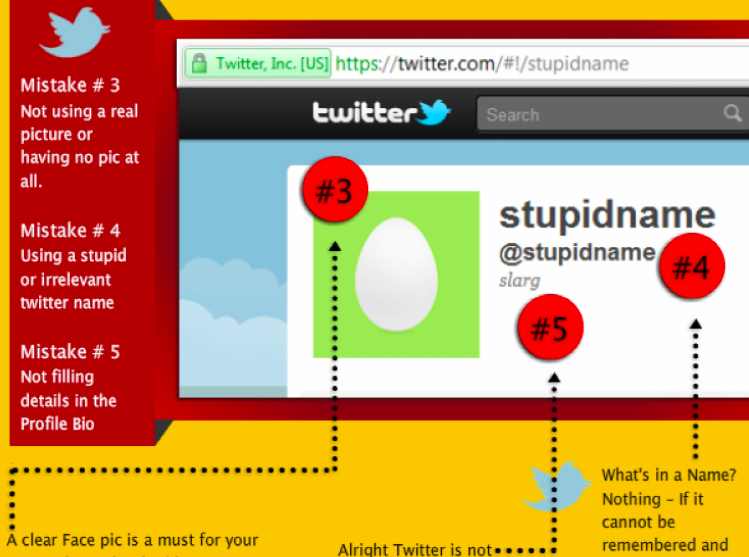
Sharing happy news with your Twitter followers? Odds are, they’re more likely to share it than a negative post according to a recent study.

By MediaStreet Staff Writers

An analysis of 3,800 randomly chosen Twitter users found that emotions spread virally through Twitter feeds – with positive emotions far more likely to spread than negative ones.

“What you tweet and share on social media outlets matters. Often, you’re not just expressing yourself – you’re influencing others,” said Emilio Ferrara, lead author of the study and a computer scientist at the USC Viterbi School of Engineering’s Information Sciences Institute. Ferrara collaborated with Zeyao Yang of Indiana University.

Ferrara and Yang used an algorithm that measures the emotional value of tweets, rating them as positive, negative or neutral. They compared the sentiment of a user’s tweet to the ratio of the sentiments of all of the tweets that appeared in that user’s feed during the hour before. Higher-than-average numbers of positive tweets in the feed were associated with the production of positive tweets, and higher-than-average numbers of negative tweets were associated with the production of negative tweets.

About 20 percent of Twitter users were deemed highly susceptible to what the researchers described as “emotional contagion” – with more than half of their tweets affected. Those users were four times more likely to be affected by positive tweets than negative ones.

Those least likely to be affected by emotional contagion were still a little less than twice as likely to be affected by positive tweets as negative ones. Over all users, regardless of susceptibility, positive emotions were found to be more contagious than negative emotions.

The study builds on decades of research demonstrating first that emotions can be spread through person-to-person contacts, and now finding that they can spread through online interactions as well.

Facebook drew criticism last year for attempting to demonstrate a similar effect by tweaking 700,000 users’ news feeds. Unlike that experiment, Ferrara and Yang did not manipulate what Twitter users were experiencing – rather, they simply observed what was already happening and analysed it.

So what does that mean for marketers? Positive news tweets are more likely to go viral than negative tweets…especially if they contain positive emotions! Get that smiley emoji ready for lauch!

Researchers urged to hone methods for mining social-media data, or investment in marketing will be wasted.

By MediaStreet Staff Writers

A growing number of people, from marketers to academic researchers, are mining social media data to learn about both online and offline human behaviour. In recent years, studies have claimed the ability to predict everything from summer blockbusters to fluctuations in the stock market.

But mounting evidence of flaws in many of these studies points to a need for researchers to be wary of serious pitfalls that arise when working with huge social media data sets. This is according to computer scientists at McGill University and Carnegie Mellon University.

Such erroneous results can have huge implications on data gleaned from social media. A lot of marketing investment could be placed in the wrong areas.

The challenges involved in using data mined from social media include:

  • Different social media platforms attract different users – Pinterest, for example, is dominated by females aged 25-34 – yet researchers rarely correct for the distorted picture these populations can produce.
  • Publicly available data feeds used in social media research don’t always provide an accurate representation of the platform’s overall data – and researchers are generally in the dark about when and how social media providers filter their data streams.
  • The design of social media platforms can dictate how users behave and, therefore, what behaviour can be measured. For instance, on Facebook the absence of a “dislike” button makes negative responses to content harder to detect than positive “likes.”
  • Large numbers of spammers and bots, which masquerade as normal users on social media, get mistakenly incorporated into many measurements and predictions of human behaviour.
  • Researchers often report results for groups of easy-to-classify users, topics, and events, making new methods seem more accurate than they actually are. For instance, efforts to infer political orientation of Twitter users achieve barely 65% accuracy for typical users – even though studies (focusing on politically active users) have claimed 90% accuracy.

Many of these problems have well-known solutions from other fields such as epidemiology, statistics, and machine learning. The common thread in all these issues is the need for researchers to be more acutely aware of what they’re actually analysing when working with social media data.

Social scientists have honed their techniques and standards to deal with this sort of challenge before. Says Derek Ruths, an assistant professor in McGill’s School of Computer Science, “The infamous ‘Dewey Defeats Truman’ headline of 1948 stemmed from telephone surveys that under-sampled Truman supporters in the general population. Rather than permanently discrediting the practice of polling, that glaring error led to today’s more sophisticated techniques, higher standards, and more accurate polls. Now, we’re poised at a similar technological inflection point. By tackling the issues we face, we’ll be able to realise the tremendous potential for good promised by social media-based research.”


As marketers, we must be aware that Millennials are low on trust when reading the medium.

By MediaStreet Staff Writers

A new study indicates young adults have a healthy mistrust of the information they read on Twitter.

Nearly anyone can start a Twitter account and post 140 characters of information at a time, bogus or not, a fact the study’s participants seemed to grasp. This is according to Kimberly Fenn, assistant professor of psychology at Michigan State University.

“Our findings suggest young people are somewhat wary of information that comes from Twitter,” said Fenn. “It’s a good sign.”

The study, funded by the National Science Foundation, is the first to examine social media and false memory. Participants were college students from the so-called Millennial Generation. Twitter, with 230 million users, is most popular among people in their teens and 20s.

Fenn and MSU colleagues showed 74 undergraduates a series of images on a computer that depicted a story of a man robbing a car. False information about the story was then presented in a scrolling text feed that bore a high resemblance to Twitter or in a feed from a more traditional online source.

The researchers tested whether the students integrated the bogus information into their minds, which psychologists call false memory. The results showed that when the participants read the “Twitter” feed, they were much less likely to form false memories about the story.

Fenn said the students were more mistrustful of the Twitter feed than they were of the more traditional feed.

“We propose young adults are taking into account the medium of the message when integrating information into memory,” Fenn said.


By .

In this digital space, businesses are increasingly relying on advanced technologies, artificial intelligence, machine learning, internet of things and mobile apps to scale up and grow their brands. With this advanced shift, marketers strive hard to satisfy their customers in order to get better user engagement.

Obviously, your customers want your products and services you offer at fair prices, but that doesn’t good enough to create a meaningful experience. Providing a consistent amazing experience needs planning and structure far beyond the desire of many brands.

How Can Brands Delight Customers?

But here is a question, how can brands delights customers if they are not your customers yet? Obviously, you can’t delight your customers if they are not customers, but you can offer an amazing experience to users that focuses on interests, desires and needs that makes them so satisfied. Smart marketers know that delighting potential and existing customers from their very first interaction with the brand can ensure success and greater sales.

Delighting your customers in the right way by creating an intuitive experience is the key to promote your brand. The better the user experience, the happier your customers are, and more likely they repetitively come to your website and tell their friends about the great experience your website offers.

The goal of providing positive experience throughout the customer’s lifecycle will help your brand to stand from rest and improve your bottom line. As happy and satisfied customers stick around longer than those who have a bad experience.

Successful organizations don’t simply focus on attracting qualified leads, converting into leads that their sales team can close. Instead, these brands aim to offer an amazing user experience for potential and existing customers.

Here are a few points that help ensure your brand is doing things right to delight your potential and existing customers.

  1. Solve Users’ Problems

The first and foremost thing your brand needs to do is to offer products and services that solve the problems your potential and existing customers are facing. Offering your customers a quick, easy and reliable solution to the problem they face or make it easier to perform their tasks or meet their goals, can make them to stick around. Provide your customers with the solutions that best fit their needs, preferences and requirements is the key to success.

No matter if they are not paying customers, it is important to solve your potential customers’ problems. Focus on the rule: help people and in return they’ll help you. If your brand can prove to your potential customers that you are reliable and trustworthy even when they are not paying, they’ll be more likely to want your products or services down the road.

  1. Educate Them

Okay, so you are focusing on solving your customers’ and prospects’ problem, but what’s next? What will happen when they face a similar problem in the future? Going beyond just offering solutions to their problems and offering useful information helps them deal with the similar challenges they might encounter down the road.

Empowering your potential and current customers with knowledge, making recommendations and helping them accomplish their goals are essential to build a remarkable user experience. The perks of enabling people to solve their problems and meet their goals instead of providing them with facts are far reaching for users and your brand. If your potential customers get a positive reminder of your brand every time they use information, advice you provide, your brand will become known as a reliable organization that customers want to do business with.

  1. Compelling Mobile Presence

Customer delight and customer retention is the primary goal of your business, but it’s not that easy, especially in this digital space when brand loyalty among users is rare. However, a comprehensive mobile strategy can help retain customers. Since people have access to high-speed broadband through a smartphone in their pocket, and these days they are much more familiar with the online shopping process, making them to buy everything from their favorite gadget to groceries.

So, if you want to delight your customers, your brand must have a mobile presence through mobile apps and mobile optimized websites. Mobile apps are used more often as for consumers, accessing a brand online matters most more than the price and product range of a brand. If truth be told, mobile app users are more loyal to a brand than those who visit a mobile-optimized website. Mobile apps can be an extraordinary effective tool for delighting customers, meeting their desires and eventually turning them into brand’s micro influencers. Mobile apps have changed the way users interact with brands, there are many companies who offer mobile app development in New York and help brands to create a compelling experience users, which ultimately results in long-term relationships.

Conclusion

Brands that invest their energy and time in these strategies will be the winners. Do it now to drive business growth, brand loyalty and engage your customers in a more immediate way.

By .

Sourced from Tech Insider Journal

The way ads play on our senses influences the timing of our purchases.

By MediaStreet staff writers.

There’s a reason marketers make appeals to our senses; the “snap, crackle and pop” of Rice Krispies makes us want to buy the cereal and eat it. But as savvy as marketers are, they may be missing a key ingredient in their campaigns.

New research finds the type of sensory experience an advertisement conjures up in our mind – taste and touch vs. sight and sound – has a fascinating effect on when we make purchases.

The study led by marketing professors at Brigham Young University and the University of Washington finds that advertisements highlighting more distal sensory experiences (sight/sound) lead people to delay purchasing, while highlighting more proximal sensory experiences (touch/taste) lead to earlier purchases.

“Advertisers are increasingly aware of the influence sensory cues can play,” said lead author Ryan Elder, associate professor of marketing at BYU. “Our research dives into which specific sensory experiences will be most effective in an advertisement, and why.”

Elder, with fellow lead author Ann Schlosser, a professor of marketing at the University of Washington, Morgan Poor, assistant professor of marketing at San Diego State University, and Lidan Xu, a doctoral student at the University of Illinois, carried out four lab studies and a pilot study involving more than 1,100 study subjects for the research, published in the Journal of Consumer Research.

Time and time again, their experiments found that people caught up in the taste or touch of a product or event were more likely to be interested at an earlier time.

In one experiment, subjects read one of two reviews for a fictional restaurant: One focused on taste/touch, the other emphasised sound/vision. Participants were then asked to make a reservation to the restaurant on a six-month interactive calendar. Those who read the review focusing on the more proximal senses (taste and touch) were significantly more likely to make a reservation closer to the present date.

In another experiment, study subjects read ad copy for a summer festival taking place either this weekend or next year. Two versions of the ad copy existed: one emphasising taste (“You will taste the amazing flavours…”) and one emphasising sound (“You will listen to the amazing sounds…”).

When subjects were asked when they would like to attend, those who read the ad copy about taste had a higher interest in attending a festival this weekend. Those who read ads emphasising sounds were more likely to have interest in attending the festival next year.

“If an advertised event is coming up soon, it would be better to highlight the more proximal senses of taste or touch – such as the food served at the event – than the more distal senses of sound and sight,” Schlosser said. “This finding has important implications for marketers, especially those of products that are multi-sensory.”

As part of the study, researchers also learned an interesting insight into making restaurant reviews more helpful. In their field study, the authors analysed 31,889 Yelp reviews to see if they could find connections between the sensory elements of a reviewer’s experience and the usefulness of a review.

They found reviews from people who emphasised a more distal sense (such as sight) were rated more useful when the review used the past tense (“We ate here last week and…”), while people emphasising a proximal sense (touch) had more useful reviews when they used the present tense (“I’m eating this right now and it is so good!”).

“Sensory marketing is increasingly important in today’s competitive landscape. Our research suggests new ways for marketers to differentiate their products and service, and ultimately influence consumer behaviour,” Elder said. “Marketers need to pay closer attention to which sensory experiences, both imagined and actual, are being used.”


By

In an increasingly virtual market, it’s becoming harder and harder to stand out from the crowd, which is why you need a strong brand.

We’re all familiar with ‘Where’s Wally.’ Trying to find the cheerful bobbled-hatted character can be fun, but it’s also pretty frustrating. The lesson here is that in an increasingly competitive market, your customers don’t want the frustration of staring at a number of different companies who all look the same.

What is brand anyway?

James Dyson, the industrial-design icon, is famed, or rather loathed, within marketing circles for his infamous statement: “There’s only one word that’s banned in our company: brand. I don’t believe in brand at all.”

Ironic perhaps, coming from the mouth of someone who has created one of the most recognisable British brands of the last century. What we would suggest, however, is that Mr Dyson doesn’t have much time for the skin-deep and superficial understanding that many have of brands.

Branding according to Wally Olins, authority on corporate identity not the stripy hat-wearing book character, is not merely smoke and mirrors but rather “creating and sustaining trust and delivering on promises. Branding is nothing more than creating an emotional attachment between the brand and the person.”

Let’s start with your story

The first step to creating a strong brand involves getting your company story straight. Simon Sinek, TED legend, leadership guru and all round bright spark, tells us we should ask just one question when developing our brand identity. Why? He puts forward the compelling argument that companies need to think less about what they do and more about why they do it.

Red Bull is a classic example. While they may be purveyors of a sickly sweet, caffeine infused liquids, they present themselves as fearless embracers of life in all its extremes. In the process they stand head and shoulders above their competitors – whoever they may be!

And if we just hop back to our friend Mr Dyson, there are few brands out there with as firm as an identity as the company that bears his name. Everything about Dyson screams that they are engineers with a relentless desire to bring technological innovation into the home.

Your customer’s story

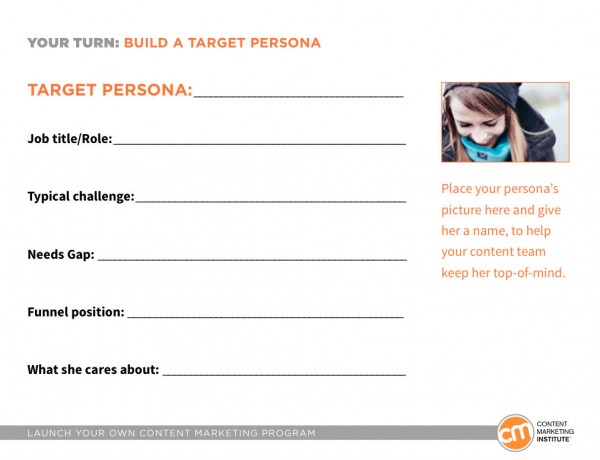
But a great story in isolation is just words on a page. To bring a story to life, you need someone to tell it to; enter your audience. And don’t we just love defining our audience? Dave, a 43-year-old accountant, lives in Hertfordshire and holidays in South Wales.

Some rather clever chums at Cambridge Analytica decided this sort of customer profiling didn’t really cut the mustard. Analytica have put forward the Ocean model that divides the audience not into segments based on background, age, wealth or status, but the personality traits, what they care about, and why they behave the way they do.

When you understand not just what decisions your customers make but why they make them, you can start to build a more compelling brand that touches at the very heart of your customer’s decision making processing, steering them toward your brand; a brand whose ethos and outlook reflects theirs.

Give your brand wings

When you’ve got your stories straight, you’re ready to bring them to life. As Su Matthews Hale of the design firm Lippencott explains: “a company’s logo is its shorthand, a visual cue that tells a story of the brand’s culture, behavior, and values.” A logo can send out all sorts of signals about who you are and what you do.

By

Claire Passos is business development director at branding agency iFour.

Sourced from The Drum

Email marketing has been around for a while, and for those who do not know, it is worth pointing out that it represents the practice of sending commercial messages to a group of people via email. It represents a smart marketing strategy that can help build brand awareness, trust and loyalty, while also increasing the percentage of conversions and of revisiting users.

In a broader sense, all emails sent to a potential business partner or customers is a form of email marketing, as these emails can be sent out for various purposes, such as encouraging repeat business, convincing customers to purchase a new item or service, sharing third-party ads, but also enhancing the merchant’s relationship with a past customer.

This infographic will provide you with a total of 119 facts about this marketing strategy, while also sharing tonnes of interesting stats that will help you better understand the niche. Apart from this aspect, you’ll also get the opportunity to view studies, learn what works, what doesn’t, and what you should do to ensure that your email marketing campaign turns out to be successful, rather than a nuisance to your customers.

Email-Marketing-websitebuilder.org-infographic

By

By .

YouTube has made changes to “address advertiser concerns” around ad placement clarifying its rules on hate speech.

Speaking via a blog post, YouTube said it would not allow adverts to appear alongside “hateful” or discriminatory content. However, some vloggers have complained the rules are too strict and will affect their income.

The announcement clarifies the kind of content that will not earn money on YouTube describing “hateful” content as any video that promotes discrimination or “disparages or humiliates” people on the basis of their race, ethnicity, nationality, religion, disability, age, veteran status, sexual orientation, gender identity, or “other characteristic associated with systemic discrimination”.

Advertising will also not be placed next to videos using “gratuitously disrespectful language that shames or insults an individual or group.”

Videos deemed to not be “advertiser-friendly” could remain on the video sharing website as long as they don’t fall foul of the new guidelines which also advise users to refrain from making “inappropriate” parody videos.

According to reports, users have criticised the move with one – Captain Source – telling the BBC that the algorithm used to determine “advertiser-friendly” content was far from perfect.

“Context around many words is incredibly important and needs to be addressed,” they said.

Others also pointed out that mainstream news networks posted inflammatory debates that could fall under “incendiary and demeaning”, and that music videos often push the boundaries of sexually-explicit content but still carry ads. “Why punish the little guy, but not the big networks?” asked user Eugenia Loli. “This is a double standard.”

Back in August, some YouTubers had complained that their videos had been flagged as “not advertiser-friendly” so were no longer earning ad revenue.

YouTube parent company Google has been dealing with many ad misplacement issues over the last six months with Havas Group making headlines back in March, pulling its clients ads from YouTube and Google over brand safety fears.

By

Sourced from TheDrum

By

Gemma McGrattan of brand engagement agency Synergy Creative explains to The Drum Network why it’s time for large employers to treat employee comms with the same level of care and attention spent on marketing to customers…

Synergy refers to itself as a ‘brand engagement agency’ – what does that mean exactly?

We celebrated Synergy’s 10th anniversary last year, but we found our niche as an agency relatively early on. After a couple of years, we started focusing our expertise and our offering around internal communications and employee engagement. We began working on a lot of employee comms projects: rewards and recognition schemes , induction programmes, that sort of thing, usually based around HR-related comms. Over the years, that has developed into a real specialism for Synergy.

Our clients for this sort of service are typically organisations with 5000+ staff, operating a distributed network of outlets, such as Labrokes, Argos, ODEON Cinemas Group across Europe and various utlility companies, which tend to have lots of small teams and individuals working out in the field for the majority of the time.

What problems are large employers typically trying to address when they engage Synergy?

For that scale of organisation, it can become difficult to keep a large, fragmented, remote workforce fully engaged and up-to-date with the latest information from the company. We specialise in supporting those comms needs, supporting employees on their journey ‘from hire to retire’!

Ultimately, it’s about valuing your employees, encouraging them, motivating them, inspiring them. From a hard-nosed business point of view, there’s clear evidence that employee engagement can have a positive effective on productivity and profitability – Dale Carnegie research found companies with engaged employees outperform those without by 202%. In 2017, more and more organisations are beginning to regard employee engagement as an ongoing strategic initiative, rather than a short-term tactical project.

How has the market changed in the time that Synergy has been focused on internal comms?

These days, it’s common to see job titles such as ‘Head of Internal Communications, ‘Engagement Manager’ or ‘Employer Brand Manager’. In the majority of instances, those jobs didn’t exist a few years ago. That’s significant as it indicates that employee engagement is being taken very seriously at board level now, which is a big change.

Also, various technology platforms have emerged, such as Yammer, Slack and Facebook Workplace, that make it easier than ever before to create an employee network without having to build your own secure platform from scratch. Big brands are now happy to make use of these secure third party platforms in a way they would have been unsure about a few years ago.

The biggest change is the increased recognition that the brand has value, not only to customers, but also to employees. Employers should treat employees as well as they would customers by giving them the opportunity to be listened to, collaborate and shape things within the business. We’re all more sophisticated now. Today, we expect a heightened level of interaction with a brand as consumers, so why wouldn’t we want that sort of two-way dialogue as employees? All the big brands are talking about ‘employee advocacy’, recognising the importance for would-be candidates to hear perspectives from existing employees via their own social networks. The idea here is that a peer recommendation is more powerful than messaging coming directly from the brand.

Who is doing this well at the moment?

A lot of this depends on the brand itself and how brave and forward thinking it is.

Odeon Cinemas Group in Europe has thrown itself whole-heartedly into improving guest experience and employee experience. As a result, they’ve grown hugely in the last two years and had a very successful sale to an American company. That’s a strong case study of the links between employee engagement and hard commercial success.

Virgin Rail has also been very innovative in this area. They recently moved their employee comms to Yammer and are beginning to analyse employee demographics in the same way as customer demographics to inform and shape employee needs.

There are good examples across the board, but the key is that you need to be brave enough to truly embrace it and facilitate the dialogue rather than every item of employee comms having to go through a 50-step approval process, which isn’t going to work.

What tips can you offer large organisations currently reviewing their employee engagement strategy?

Firstly, really understand your people. We think nothing of investing huge sums investigating our customers’ preferences but invest practically nothing in understanding our employees as a collection of internal audiences. You need evidence to get under the skin of that and treat your employer brand with the same kind of care as your consumer-facing brand.

Secondly, whenever you launch an initiative that requires the commitment of your employees to successfully deliver it, you have to be crystal clear about why the initiative is happening in the first place. Make the link meaningful to your people and help them to understand what the business stands for and where you are heading as a business. When employees fundamentally ‘get it’, they are on board all the way.

Thirdly, involve your people, don’t try to simply ‘run’ it. Become a facilitator and curator of the internal conversation rather than a leader or controller of it. It takes time for people to become comfortable on the chosen platform, but the more a workforce knows about each other, with plenty of opportunity to contribute, get involved and make a real difference, the better the chance of a high-performance culture.

And finally, continually reinforce your commitment to the value of internal comms and the employer brand. It can’t be a one hit wonder. The real effort, and success, is in maintaining the momentum.

By

Michael Feeley is The Drum Network’s consultant journalist, advising and assisting member agencies on their editorial submissions and contributions to The Drum.

Sourced from The Drum