Tag

SEO

Browsing

By Carolyn Lyden

Keyword Research Is the Biggest Predictor of SEO Success

If you work in search marketing today, you know how difficult it is to stay on top of changes, trends, and tactics. From algorithm changes to SERP format updates, the tactical toolbelt of SEOs is always changing.

As a result of the pace of those changes, we often lose sight of the underlying semantic relationship between queries and that content we work so hard to create, optimize, and get in front of searchers. The most successful SEOs, however, never forget that the only way to optimize their content for user intent is through ongoing, in-depth keyword research.

Yet survey data shows search marketers still struggle with keyword research. A study from AWR found that marketers ranked keyword research the third most difficult SEO task to perform (behind link-building and content creation). The same survey found that most SEOs perform their keyword research in-house instead of outsourcing it, which may be why it’s such a difficult task and why around 42% perform it only when necessary.

Keyword research is tedious and time-consuming—even when performed on a quarterly basis. But it’s vital for success, because keyword research is all about determining user intent. And without user intent, there is nothing guiding the content we create, the backlinks we aim to earn, or the on-page content we optimize.

In my post “Search Engine Optimization Is Now User Experience Optimization,” I go over specific ways to find user intent in Google Analytics: “By looking at your current bounce rate, time on site, and pages per session, you can see where your user journey drops off, what keywords you might be going after that you don’t necessarily need to, what mediums bring in the most qualified leads, and more.”

Note: If you’re work in SEO, I highly recommend tuning into our Pro Webinar series, where we often go over tips, tools, and examples of how to best align your search marketing with user intent.

The Problem With the Way Most SEOs Do Keyword Research

Most of us do keyword research at the beginning of a project or, at best, twice per year on a current project. Performed en masse at regular intervals, keyword research is clumsy, and the findings usually lag real-time user intent. If something with your product, service, or industry changes in a single week, the keyword research you did three months ago won’t account for that.

That doesn’t mean that you should eschew the practice. Instead, it means your keyword and content research strategy just needs to be more limber and data-based. We can learn a lot from how highly successful SEOs approach the research and what tools they use.

Four Keyword Research Tools to Win Traffic and Influence Searchers

You might be familiar with a few of these already; however, the way you use them and incorporate what you learn into your SEO strategy is the key. The second one is a less common one that we’ve used in-house at CallRail to dramatically increase our content’s alignment with the exact words a user searches when researching our product.

I guarantee that if you begin using these research tools for your 2018 SEO strategy, and use what you learn to create content that better serves your users’ needs, next year you’ll see organic traffic gains you didn’t know were possible.

1. Google Search Console for Detailed User Info

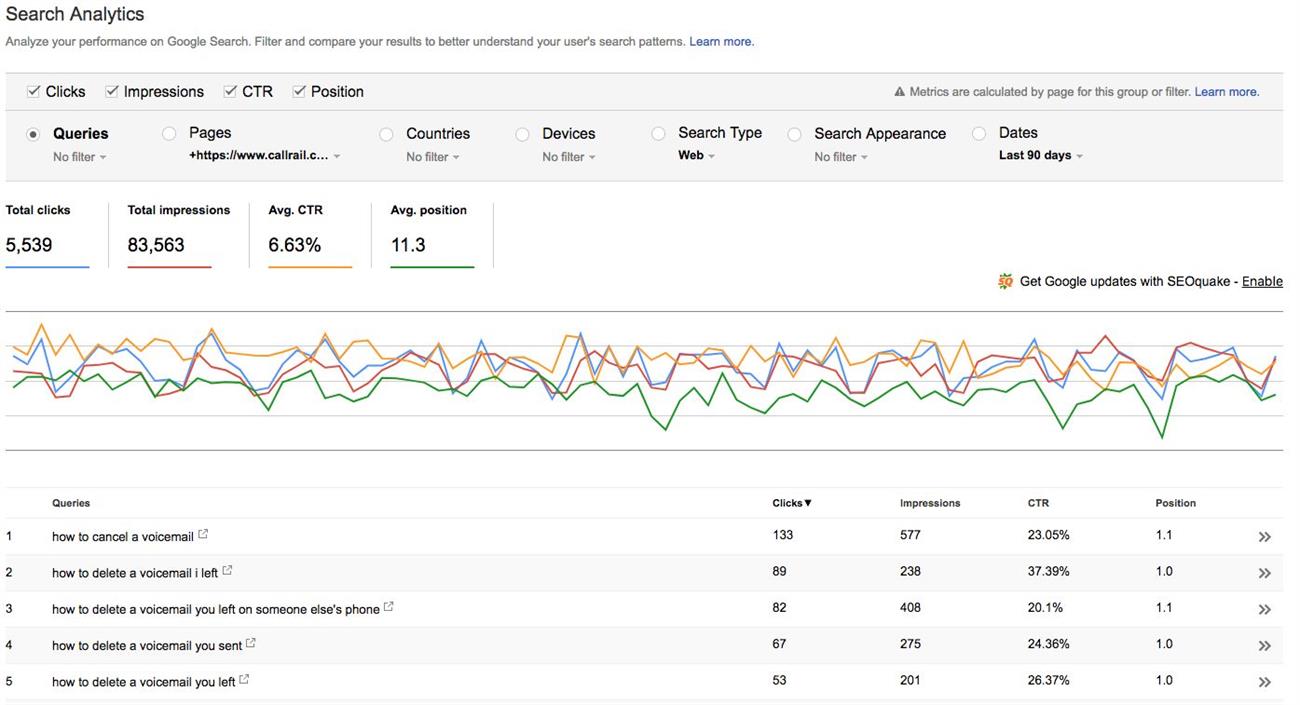
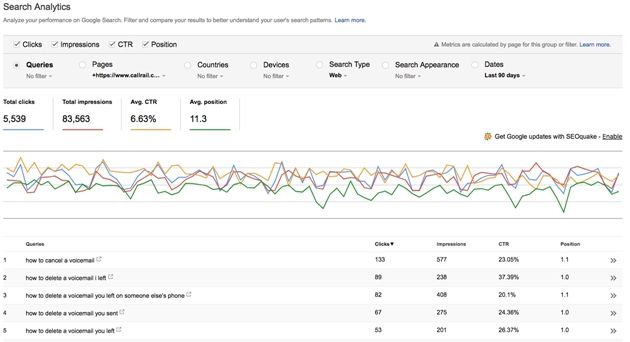
SEOs might overlook Search Console because it’s free and has a limited date range, but the keyword information is good if you do a little digging. In the Search Analytics section, you can look at the clicks, impressions, CTR, and position of all the queries that your site showed up for in the SERPs. You can dig through and find keywords with high impressions but low CTR and try to see why there’s a mismatch there: Is that page that shows on SERPs not serving the user’s needs?
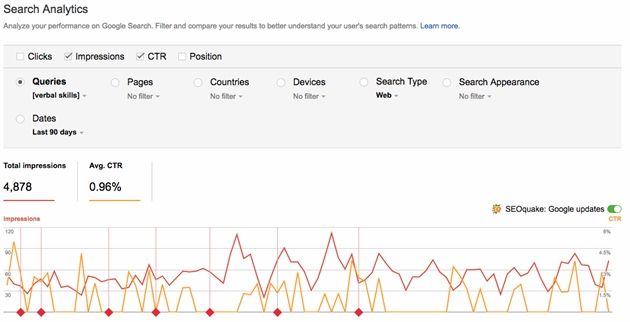
You can also look at the query information for individual pages on your site to determine what they actually rank for (as opposed to what you want them to rank for). With this data, you can hypothesize why and formulate tests or improvements.

Search Console is a great place to get long-tail keyword data, as well. You can use that long-tail data from Search Console to see related questions in the other tools mentioned here.
2. CallRail for Call Recording Software

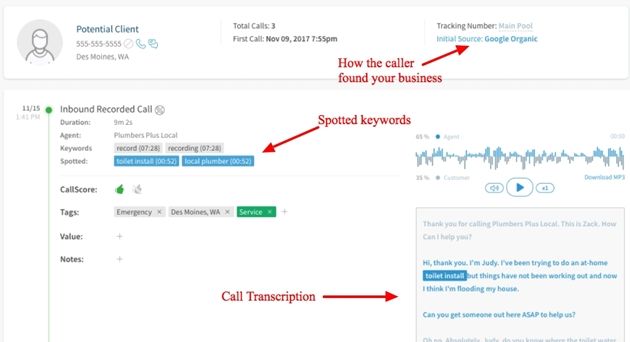
Call recordings help you figure out how leads actually talk about your products and services. People who pick up the phone to call about a product or service are generally pretty warm leads or even customers already. So, listening to these conversations should be considered keyword research—because it’s probably the way they searched for you to begin with.

In a detailed blog post on keyword research and call tracking, I talk about how the way you talk about your product or service isn’t always the way your potential clients do. And you can find out how they talk by listening to call recordings.

Sometimes the industry-specific jargon we use on our sites isn’t the same kind of language that users type when they search for solutions to their problems. You can hear how clients refer to your products and services in call recordings, and use the client’s own language on your marketing materials

Similarly, call recordings can show you whether you’re ranking in SERPs for something that you didn’t intend. An environmentally friendly cleaning company, for example, may want to promote its use of safe cleaning products that are free from harmful chemicals and bleach. Its marketing department creates campaigns and content around “ammonia-free cleaning services” and similar terms. However, upon receiving calls to the sales department, the company realizes that it’s actually showing up for terms like “free cleaning services.”

In this case, the cleaning company may want to optimize for a different phrase, such as “green cleaning services.” You can get that kind of one-on-one, detailed keyword information only from something like a call recording.

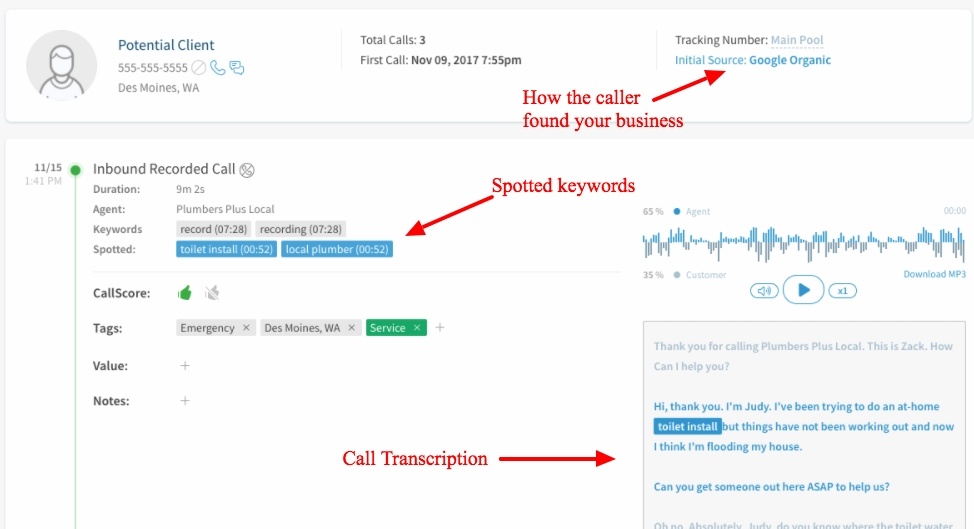
For example, a call recording for these plumbers shows that a quick blog post on how to install a toilet might be a beneficial addition to the content on their site:
Note: If you want to learn more about how call recordings can benefit your specific business, schedule a personalized demonstration of CallRail’s powerful and intuitive call analytics software.

3. Answer the Public and BuzzSumo for User Questions

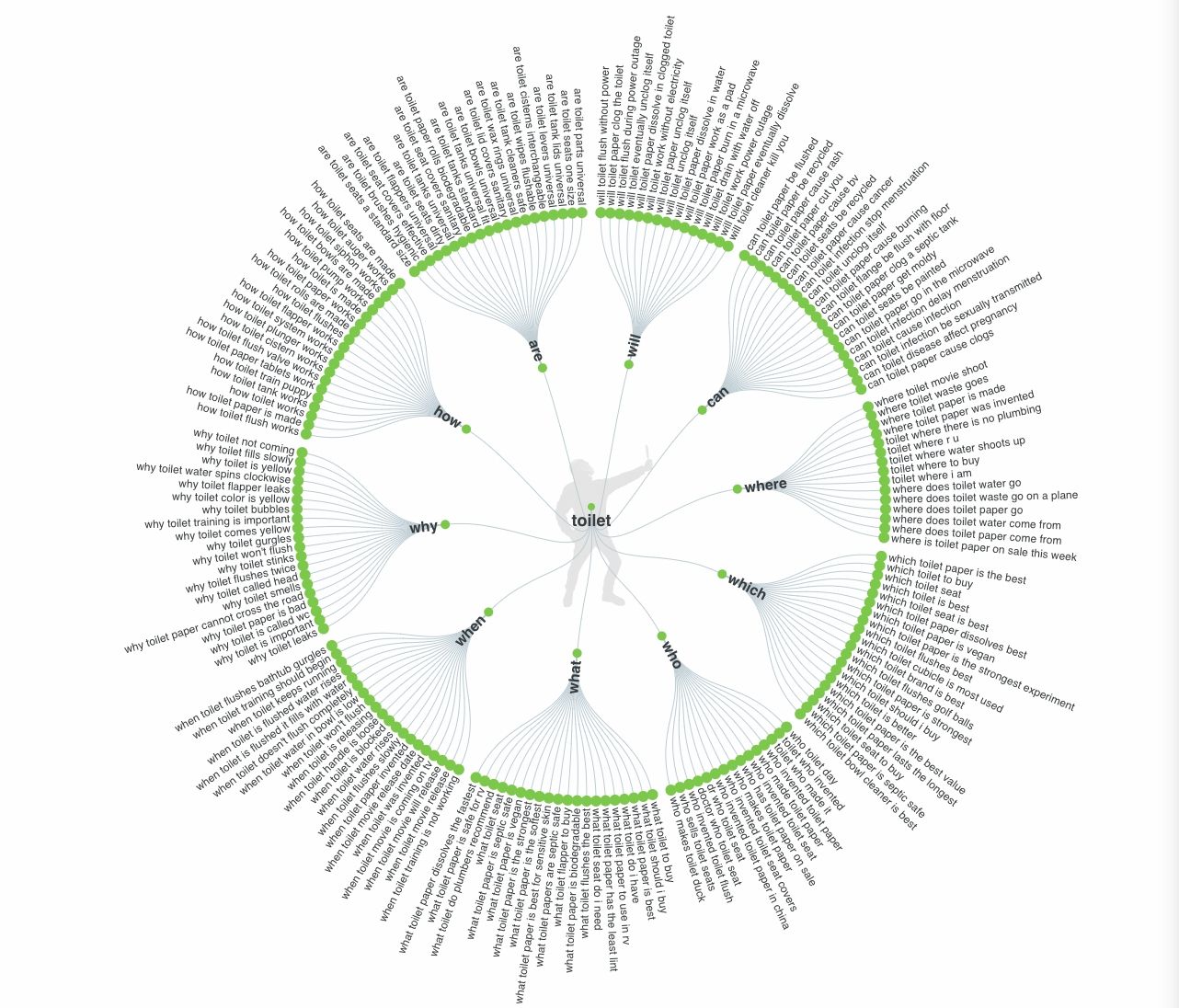
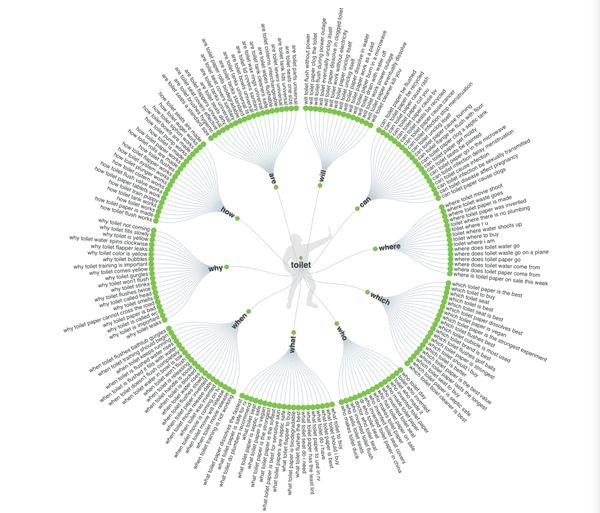
Both tools help with the specific questions that actual humans ask about topics and issues. Answer the Public is a free tool that brings you all the questions that come from the autosuggest results in Google and Bing: “As you type you are presented with an aggregated view of the questions & therefore a hint of the motivations & emotions of the people behind each search query,” the company states.

For example, a local plumber could look into Answer the Public to see what questions people search related to toilets. Based on those questions, the company could write an FAQ section, specific how-to posts (like “How to Install a Toilet”), or answer common questions (like “Why does my toilet fill slowly?”).
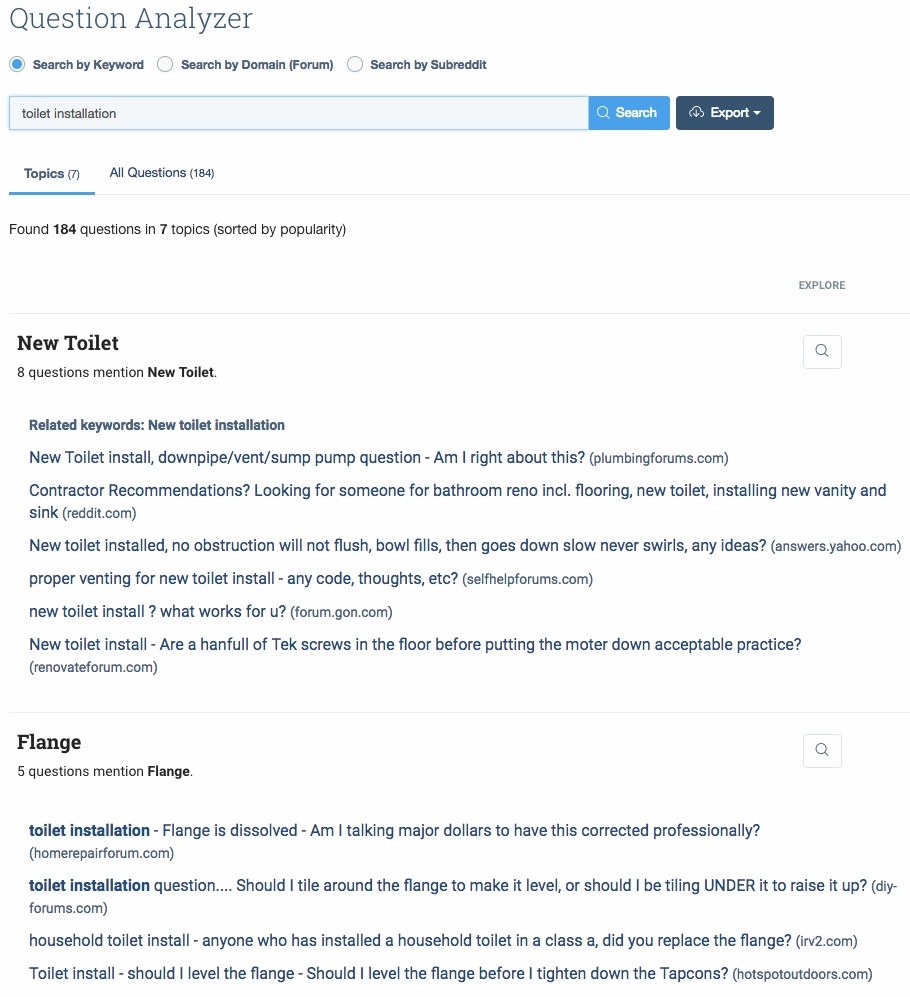
BuzzSumo is a paid tool that does something similar. The tool has a Question Analyzer where you can put in a topic and see the actual questions that people have asked related to that topic across forums and the Web. You can choose to either go into the forum and answer questions as an expert or use those questions to determine what answers you provide on your own site.
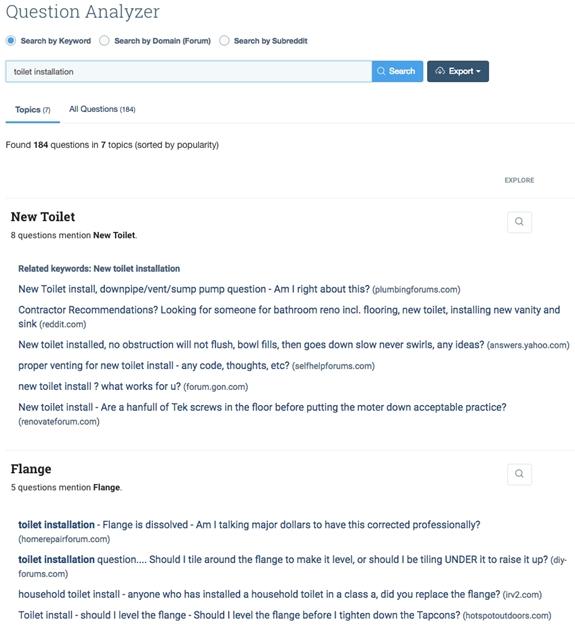
Both of these tools give you up-to-date data on the searches of real people that you can use to craft your content.

4. SpyFu for Competitor Keyword Info

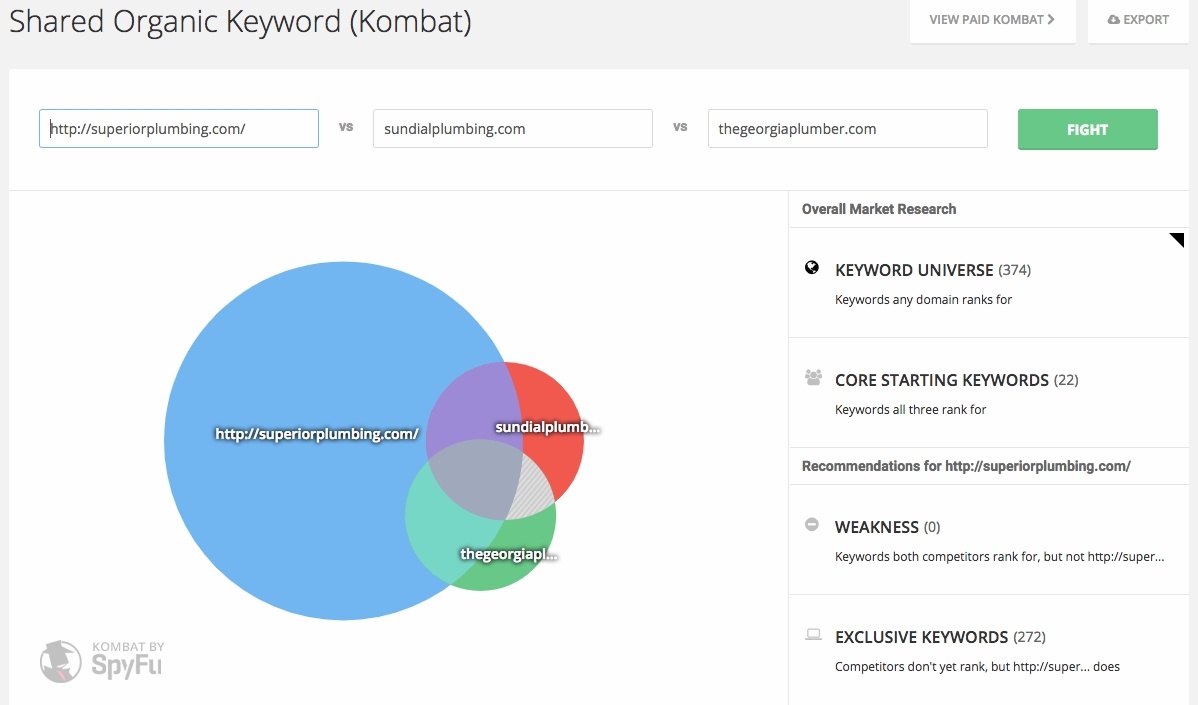
SpyFu is another paid tool with a wealth of keyword data. With it, you can compare your organic keyword rankings to those of your top competitors:
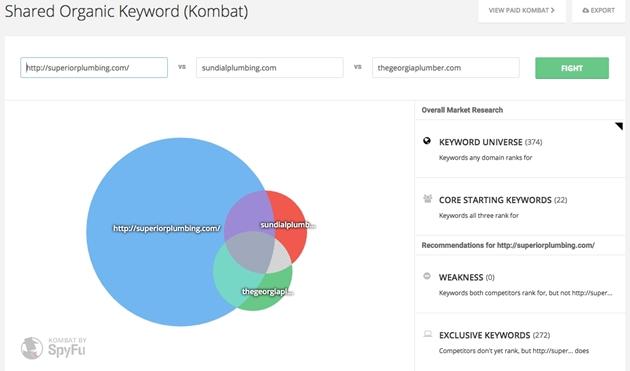
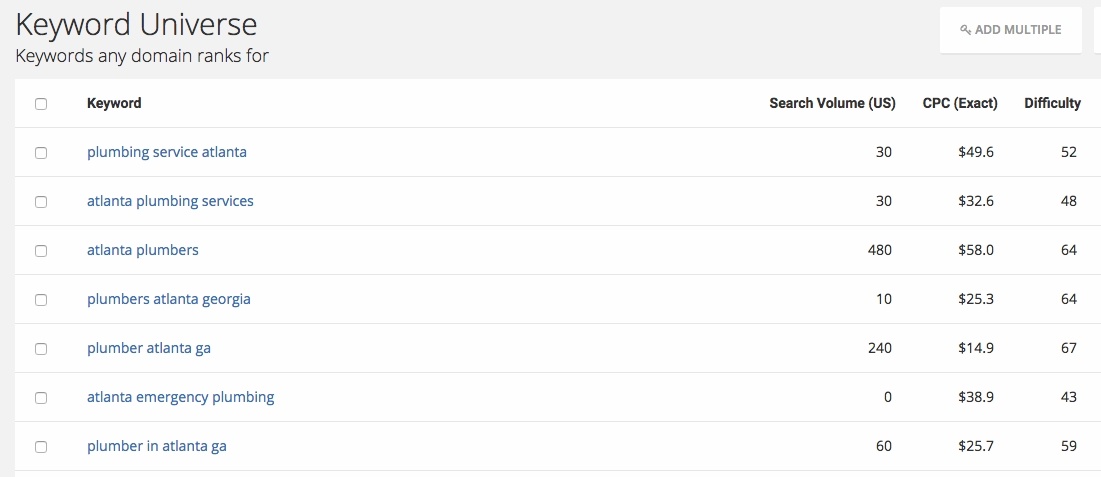
The data shows you what keywords your competitor ranks for that you don’t, and keywords that you’re both vying for. It also shows you keywords that you are ranking for exclusively. These keywords often include long-tail keywords related to your business as well as the search volume, paid data, and the potential difficulty of ranking for that keyword:
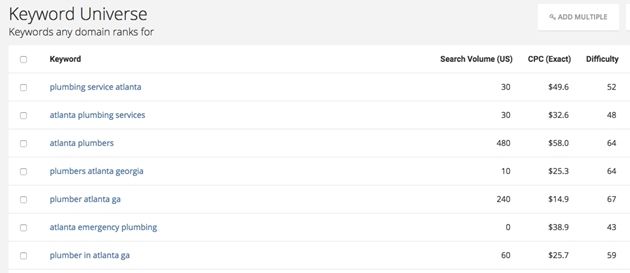
This keyword data should be the blueprint that informs your content strategy.

Join the Ranks of Elite SEOs: Make Keyword Strategy Your SEO Strategy

Keyword research gives SEOs the basis we need to make the rest of our strategic decisions. You can plan your content and technical implementation around the information you learn from your keyword research—and it doesn’t have to be tedious and time-consuming. These tools allow you to keep your research fresh, agile, and true to what users are actually searching for at that time.

Use these tools to start improving your SEO through keyword research, and watch your organic leads and conversions increase.

By Carolyn Lyden

Carolyn is based in Atlanta, where she put a love of spreadsheets, an MBA, and years of marketing experience together when she joined CallRail’s marketing team as the SEO manager in March 2017.

CallRail provides lead tracking and call analytics tools for more than 50,000 businesses across the US and Canada. Want to know where your leads are coming from and how qualified they are? Sign up for a completely free 14-day trial of CallRail’s award-winning software. No credit card needed.

Sourced from MarketingProfs

People are freaked out by ads that follow them around after a google of the product.

By Mediastreet Staff Writers

Personalised ads now follow us around the web, their content drawn from tracking our online activity. We in the ad industry have suggested that people are okay with it – that people see benefits roughly equal to perceived risks.

A study by University of Illinois advertising professor Chang-Dae Ham says otherwise, suggesting the ad industry may want to reconsider its approach.

“The perception of risk is much stronger than the perception of benefit,” Ham found in surveying 442 college students on how they coped with what is known as online behavioural advertising. “That drives them to perceive more privacy concern, and finally to avoid the advertising,” he said.

Previous studies have looked at various aspects of online behavioural advertising (OBA), but Ham said his is the first to investigate the interaction of various psychological factors – or mediating variables – behind how people respond to it and why they might avoid ads.

“The response to OBA is very complicated,” he said. “The ad avoidance is not explained just by one or two factors; I’m arguing here that five or six factors are influencing together.”

Ham examined not only interactions related to risk, benefit and privacy, but also self-efficacy (sense of control); reactance (reaction against perceived restrictions on freedom); and the perceived personalization of the ads.

He also looked at the effect of greater and lesser knowledge among participants about how online behavioural advertising works. Those with greater perceived knowledge were likely to see greater benefits, but also greater risk, he found. Similar to those with little perceived understanding, they tilted strongly toward privacy concerns and avoiding ads.

Ham’s study of online behavioural advertising follows from his interest in all forms of hidden persuasion, and his previous research has looked at product placement, user-generated YouTube videos and advergames. But OBA is “a very special type,” he said, in that it elicits risk perceptions and privacy concerns different from those in response to those other forms.

The study conclusions could have added significance, Ham said, because research has shown that college-age individuals, like those in his study pool, are generally less concerned about privacy than those in older age groups.

If his findings are an accurate reflection of consumer attitudes, Ham said they could represent “a really huge challenge to the advertising industry” since online behavioural advertising represents a growing segment of advertising revenue.

Ham thinks advertisers, in their own interest, may want to make the process more transparent and controllable. “They need to educate consumers, they need to clearly disclose how they track consumers’ behaviour and how they deliver more-relevant ad messages to them,” he said.

Giving consumers control is important because it might keep them open to some personalised online advertising, rather than installing tools like ad blockers, in use by almost 30 percent of online users in the U.S., he said.

With little understanding of online behavioural advertising, and no easy way to control it, “they feel a higher fear level than required, so they just block everything.”

It’s all the more important because the technology is only getting better and more accurate, Ham said. Tracking systems “can even infer where I’m supposed to visit tomorrow, where I haven’t visited yet.”


By Bill Wagner

My own little small-sample case study.

Blogging is big business, and Google thinks so, too. Rand Fishkin of Moz has a series of YouTube video I highly recommend to anyone interested in deep dive into the deeper recesses of SEO. Check out his Whiteboard Friday series HERE.

Ranking high on search results is vital for smaller business in need of exposure. Blogging is the best organic method of achieving those results if done correctly. Throwing words on a page isn’t the answer. Quality is, and that means writing good stuff that gets shared over and over again.

A good social media automation tool boosts this process nicely. I use eClincher. You should, too.

I don’t have an AdWords account or fancy metric aggregators, nor do I need them. Social media is a storytelling platform that takes time. I believe in the process and sticking to the grind. In the end, quality wins the right people and the right eyeballs. This proves my point if only to myself.

The Test And Results

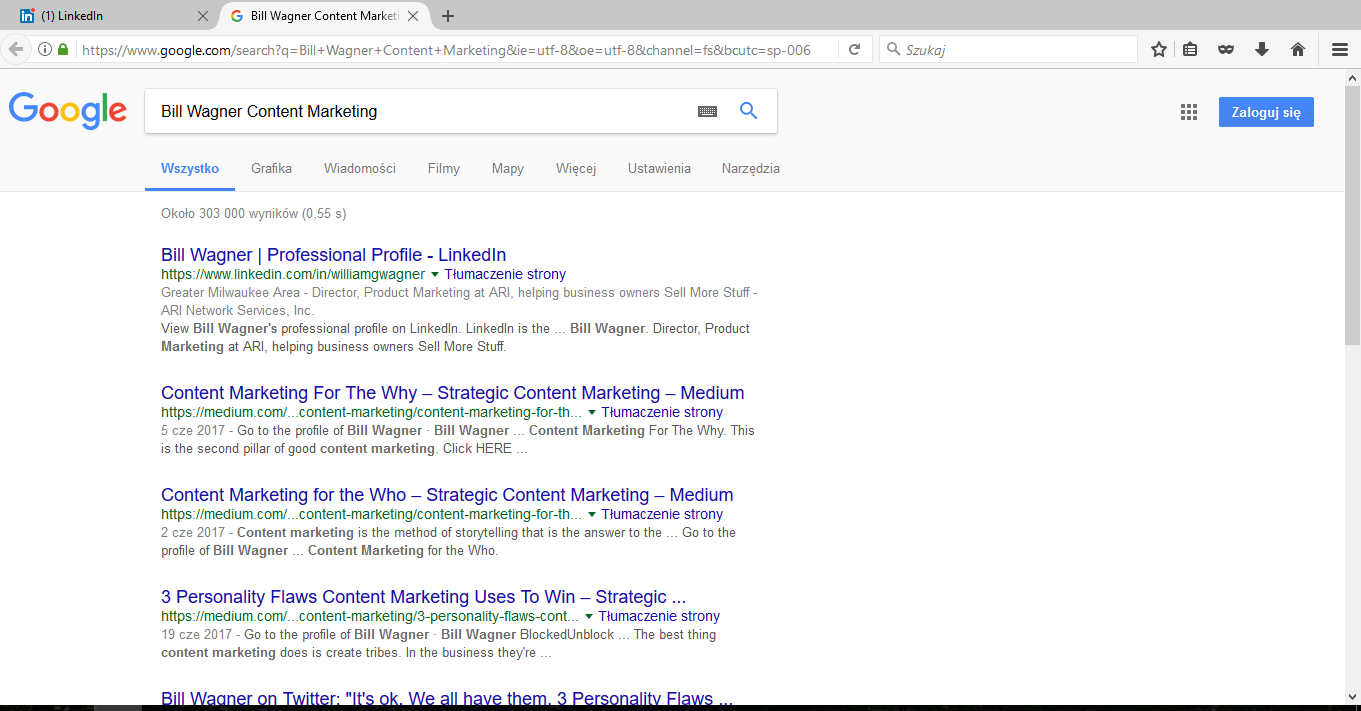
Using a long-tail keyword, I found my grind quite fruitful. I searched “Bill Wagner Content Marketing” and found my blog posts ranking on page 1 of results.

I was beyond happy. I actually clapped and giggled like a little kid at my desk. Then, of course, the skeptic in me raised his hand with a valid question: Were these results simply a by-product of searching on my own Google account?

That’s a good point. Let’s test that.

The benefits of social media paid off once more as I reached out to my LinkedIn network and Facebook friends for help. I asked for screen shots of their front page with the same long-tail keyword. Below is a sample of results. You can see more of them on my LinkedIn profile.

My social network is awesome!

Mobile searches yielded a few more paid results before my organic work showed up, but the data was clear. My blogging and automated sharing has paid off. A simple long-tail keyword is mine, all mine! (Cue the Dr. Evil laugh!)

Conclusions About The Process

Blogging works and this is proof. The secret sauce, the one thing you must do right now, the simple hack to make it all work? Time. That’s it. It takes time.

These posts were all written in June and July 2017. I shared them repeatedly over the last several weeks. The question you may be asking is how many clicks and reads does it take? Here are my Medium stats:

A big part of social media sharing is using the right platforms at the right times. LinkedIn and Google + are big parts of my strategy. Google + is very important for search because Google’s search algorithm prioritizes placement there.

The numbers speak for themselves. Obviously some of the stuff I wrote didn’t do as well as the rest. My personal favorite is Connecting With People Who Hate Your Shirt. Yet, my most popular post is about marketing buzzwords. There’s another one of those coming soon. Believe that.

My Beliefs Confirmed

I embrace the grind at my content marketing business Safe Strategies. Social media, blogging, graphics, videos, and all online content comes together to tell a multi-layered story that is your business.

This is just a tiny sample of how well-crafted content builds a great online presence. Let’s connect and chat about what you want out of social media and how Safe Strategies creates it. Increased engagement, better leads, and quality customer interactions are all things that happen when you invest time online.

Let’s chat. Connect with me on Twitter @LearningBill, on LinkedIn, or Facebook.

By Bill Wagner

Umpire and referee turned writer and coder. I delete more than I publish. I laugh at my own jokes, too. Follow my company on Twitter @SafeStrategies

Sourced from Medium.com

By Dixie Somers

Blogging as a marketing strategy for your business takes several different abilities to be successful. While those skills may vary based on your niche, industry, or branding, here are the core skills that will improve your blog marketing.

1. Social Media

Social media marketing is about building a following that you can channel to your blog and your business. You have to discover who your target market is, which social platforms they use, and what kind of posts and content they prefer. For example, you can leverage social causes such as reducing the 7.8 billion tons of waste businesses discard annually.

2. Basic HTML

If you’re working with web content, you should know some HTML (hyper-text markup language), the code by which webpages are created. Sure, you can buy text editors that convert to HTML, but that isn’t always necessary, and may not help if you need to change the HTML later. If you want to make quick adjustments to your content, such as adding links or changing images, you need to know HTML.

3. Technical Skills

HTML is a good start, but there’s more technical knowledge involved. You may want to know some scripting or programming languages to customize your blog site. You’ll probably need to lean about tools and software for creating audio, video, photo editing, and database use. A database master degree will benefit you in all aspects of modern business.

4. SEO

Search engine optimization (SEO) is an absolute must. Search engines rely on different factors to rank your site for their indexes. It starts with keywords and phrases. This is how the search engines index your blog and its content. You can use keyword tools to find the most popular, most relevant keywords and weave them naturally into your content to improve your ranking.

5. Web Analytics

The traffic you draw is a good measure of how successful your blog is. Major social sites like Facebook and Twitter include analytic tools. You can also find them included in several blogging platforms or available as plugins, as well as third party tools. These analytics breakdown your number of visits, page views, length on page, abandonment rates, and more. Understanding these numbers can give you a clear idea of where your blog is headed or what kind of impact your last post or change had.

You can learn as you grow, or just learn enough to implement your latest idea. But the more you improve on these skills, the more effective your blogging will be.


By Dixie Somers

Sourced from ifb Independent Fashion Bloggers


By Hurera Sheikh, 

For decades, businesses have relied on telemarketing, walk-in meetings and print ads to generate leads. Despite their utility, many companies are shifting towards a combination of both online and offline lead generation techniques to maximize their reach. According to Webbiquity, overall B2B marketing budgets are expected to increase by 5% on average in the coming year with spending on digital marketing programs projected to rise three times as fast. These astounding forecasts mandate a swift revision of your B2B lead generation methods and here are the bleeding-edge online lead generation tools that can help you get there.

1. Virtual Event Marketing

Virtual events have seen a hockey stick growth in the past decade with no signs of stopping and there are several sophisticated virtual event platforms out there, like vFairs, that can help you deliver a stellar virtual event. With Market Research Media stating that the virtual event market will grow from $14 billion in 2018 to $18 billion in 2023, we can see how pivotal a role this avenue has to play in online lead generation and here’s how to make the most of them to generate leads:

Develop a Killer Registration Page: Incorporate a simple signup form, informative yet concise content and good visuals on your registrations page.

Optimize Virtual Booths and Help Desks: By having someone present at each booth 24-7 when the event is live, you can maximize the contacts exchanged over the booths and follow up with these leads when they’re still warm.

Host Stellar Webinars: These are the front-running lead generation tools in content marketing which is why you should include live or pre-recorded webinars in your virtual event.

Leverage Your Resource Center: Add a sense of exclusivity to your event by either charging for or having visitors sign-up for downloading premium content from the virtual event.

Integrate With Ecommerce: With a virtual event, you’re attending visitors, demonstrating products and negotiating prices in real time which makes online transactions a lot more easier, quicker and likely. Use paypal or debit/credit card integrations to make sales during the event and maximize on the shortened sales cycle.

2. PPC (Pay Per Click)

PPC is a digital marketing formula where the advertiser pays an amount (as per suggested bid) each time someone clicks a link on Google SERPs. With PPC, you select the keywords in Google AdWords that you want your website to show up whenever a relevant search is performed which allows you to advertise to people who are genuinely interested in what you are offering.

Here are 4 pro tips to nailing your PPC Campaigns:

Identify What You’re Selling: Run some google searches to find out what words your competitors are focusing on.

Research Your Keywords: If you’re new to PPC Campaigns, it’s best to go for broad keywords that yield wider results. Shift to more specific keywords once you’ve gained deeper insights and also incorporate negative keywords to further specify searches.

Be Specific: If you have categories within a product or service, focus on them by creating themed ad groups. For instance, ‘premium male colognes’ is far more relevant to a buyer looking for a purchase versus a generic phrase like ‘colognes’.

Build Specific Landing Pages and Monitor Them: Don’t land all your ads on the same page. Make separate landing pages for each keyword to maximize your chances of conversion. The idea is to match your site copy with the initial intent.

3. Content Marketing and SEO

With SEO, you can reach leads and route them to your website without paying for the top spot in search results. However, it’s not a lead generating strategy on its own and must be coupled with great content to seal the deal. This marriage of content marketing and SEO, known as Search Engine Marketing, relies largely on a concept called ‘user intent’ that is, the real meaning behind a person’s search that explains what they’re looking for. When someone keys in a certain keyword for search, the pages that rank highest in search results are the ones that best serve its user intent.

For instance, a quick search for ‘content marketing’ shows search results on ‘how-tos’ which show that the phrase serves an ‘inform’ intent. Alternatively, type ‘content automation’ and you’ll see companies that enable content automation which signals a purchase intent. This is valuable information for your SEO campaign because it allows you to develop content to meet the audience’s needs.

Using SEO for Lead Generation:

Enlist Relevant Keywords and Research Them: Use Google Keyword Planner and Google Trends to identify terms that are relevant to your industry and put them to the search test to identify the user intent behind each of them..

Segment Keywords According to Sales Funnel: Keywords predominantly showing an inform intent are likely to be used by people at the top of the sales funnel whereas those more used for purchase intent are likely to be used by people further across the sales funnel. Use these insights to develop relevant content and ascertain conversions.

Optimize Existing Content: Review existing content and rephrase parts of it to match keywords with user intent. Go over your eBooks, blog posts, listicles, tutorials and press releases to modify them with keywords according to the sales funnel they are catering to and develop additional content to fill any gaps.

According to ReadyTalk, inbound campaigns generate 3 times more leads than outbound campaigns at 62% the cost. With search engine marketing providing an astonishingly lower cost per lead, it’s about time that you start exploring it to up your lead generation game.

4. Social Media Marketing

Social media is a powerful channel to disseminate content and engage audiences at a personal level. It’s a place to sense sentiments as well and develop the “voice” of the brand. Persistence in social media eventually leads to discovery and a boost in incoming leads. Last year, social media channels were the third leading source of website visits for businesses and with 72% internet users engaged with social networking, the platform has immense potential to bring you business. Here’s how:

It Enables You to Publish Varied Content: Social media allows you to express yourself in a variety of mediums from infographics, articles and videos. With repurposing, you can drive a lot of value out of the same material too.

Run Active Q&A Sessions to Become Thought Leaders: Position yourself as a thought leader by adding value in LinkedIn discussions, taking questions on Quora, creating informative posts and responding to comments.

Paid Campaigns: You can run sponsored campaigns on Facebook, Instagram, Twitter and LinkedIn to grab a more targeted audience. These campaigns allow you to create target audience profiles in great detail based on their demographics, income levels and interests. For instance, LinkedIn you can post an ad in front of C-level execs in your industry if you throw enough spend on it. You’re already creating great things, it’s important that it reaches the right people too and these campaigns facilitate this.

5. Email Marketing

According to Neil Patel, leading author and online marketer, email campaigns surpass social media by 20% in customer retention. With 73% marketers citing emails as crucial to their marketing plans, it becomes clear that they are a formidable source of generating solid leads.

Email marketing can be used to promote your blog content, upcoming events, sales and promotions and quite simply to stay in conversation with your followers and guiding them to a specific call-to-action. This two-way interaction lends emails the edge of being far more personalized which brings a lead another step closer to converting. According to HubSpot, companies that nurture leads through email generate 50% more sales-ready leads on average at 33% of the cost.

There’s no denying the centrality of digital marketing in today’s day and age but investment in its different techniques is only as good as the returns they bring. With the rules of marketing changing fast, it’s crucial to keep pace. Employ these bleeding-edge techniques so that you stay connected with your audience in a meaningful way and allow them to naturally transition from being consumers to paying customers.

Sourced from Huffington Post

Here are four SEO tactics that optimise your site for real people.

When it comes to SEO, one mistake that many marketers tend to make is missing the forest for the trees.

What am I talking about? I’m referring to the tendency of many SEOs to get bogged down by analytics data, clickthrough rates, bounce rates, conversions, and all this technical mumbo jumbo that should not be the be-all and end-all of search engine optimisation.

Like any digital marketing strategy or school of thought, SEO is about marketing and promoting your brand to people – people.

Keeping track of hard data is one thing, but focusing only on numbers and stats won’t mean a thing if you don’t understand how your target audience thinks and behaves.

  • Why do people visit your site?
  • More importantly, why should they?
  • What kind of information appeals to them the most?
  • How can you help solve their problems?

These are just a few of the questions you need to ask yourself before you even optimise your site for search engines.

As you’re figuring out the answers to these questions, here are a few more hacks to help you create an SEO plan based on your customers’ behaviour.

Figure Out Who You Should Reach Out To

If you don’t know who your customers are or what factors will turn ordinary people into your customers, you won’t get anywhere with any kind of marketing campaign.

As a business owner, you should be able to figure this out quickly. Otherwise, you need to sit down and think hard about just who will benefit from your brand’s products and services. Very rarely will any business have just one kind of target customer.

This is where buyer personas come in.

This HubSpot write-up offers a succinct definition of what a buyer persona is: “A buyer persona is a semi-fictional representation of your ideal customer based on market research and real data about your existing customers.”

The best way to start is to simply talk to your current customers. What do they like about your brand? Your products and services? What problems do your products and services solve?

But how is this relevant to SEO? By understanding who your customers are, it becomes easier to adjust your content and keywords to their specific needs and motivators, which in turn helps speed up the conversion process.

Check What Your Competitors Are Doing

Another common practice among almost all consumers is the habit of comparing brands and products before making a purchase decision.

This in itself should give you enough reason to check out what your competition is doing, what tactics they’re employing, and what strategies seem to yield the best return on investment.

  • How does their on-site SEO look like?
  • What keywords are they using on their landing pages?
  • Are they running any PPC ads? Check their copy for keywords and calls to action.
  • Do your competitors have a blog? How often do they update it, if at all?

Moz.com’s Open Site Explorer is a powerful tool that helps you determine how well your site is doing compared to others and vice versa.

What Do Your Customers Want?

Once you’ve created your buyer personas, you then need to make sure your SEO campaign reaches out to customers across the different buying stages.

As search engine algorithms continue to evolve in sophistication, gone are the days of simply relying on keyword research to identify potential search terms and phrases your audience would probably use when making search engine queries, and ‘sprinkling’ these keywords across your landing pages and content assets.

For the most part, this helped users find search results they actually found useful. Still, it was far from perfect.

Thankfully, search engines have become smarter and more efficient at determining what search users want – in other words, what their buying intent is. Besides keywords, Google now takes into account the following:

  • Device the search query comes from
  • The time of day the query is made
  • The location of the search user

The goal, of course, is to deliver the most relevant search results possible to users. And this is where your market research and buyer personas come in, helping you optimise your content for users in the different stages of the buying process, also known as a funnel.

For example, you may have someone who has committed to making a purchase, but is still weighing their options about where to best spend their money. Considering this information, you can optimise your content to reflect a bargain for customers that buy from you – it can be a discount, free shipping, or future deals on repeat purchases.

Know What Challenges Your Customers Face

Modern SEO has gone from simply cramming in keywords into landing pages and content assets, evolving into a process of solving people’s problems.

More than anything else, customers want information – your job is to give it to them. But you can’t just give them any kind of information. It has to be something that actually solves their problems and concerns, something that’s obviously related to your products and services, of course.

Notice how I keep going back to problems and concerns.

Part of developing buyer personas is knowing what your customers’ pain points are.

These are the issues, concerns, challenges, problems, and desires your customers face – or don’t even know that they’re facing. Once you’ve identified these pain points, you can then work your way towards presenting your products and services (through SEO and content) as having the power to overcome these pain points.

For example, let’s say your business sells used tyres.

  • One group of customers may be concerned about the quality of used tyres– you can work on creating content that promises a warranty or some other strategy to allay their concerns about this issue.
  • Yet another group may be concerned about shipping costs – you can perhaps weigh the cost-benefit ratio of offering free shipping, adjusting your content and PPC ad copy as needed.

To put it simply, the goal here is to optimise your content to address the different pain points of your buyer personas.

Conclusion

As mentioned earlier, these SEO tactics all revolve around a common factor: optimising for people instead of search engines. If you optimise your site and your content with the goal of helping your potential customers, your rankings should improve in time.

Focus on helping your customers and providing them with the information they need. If you’re successful, you not only help solve their problems through your products and services, you also enjoy enhanced visibility on the Google search engine results pages (SERPs).

Qamar Zaman Chief Visionary at One SEO Company.


By .

he mobile search landscape has changed immensely in recent years, transforming how consumers engage with brands and discover new products. But the change of pace has left some brands struggling to keep up, wondering just how hard mobile is working for them, and whether their brand proposition is really translating to the small screen.

It has led to many making what are, in 2017, some fundamental mistakes with mobile strategy. Here are six of the biggest:

The ‘m-dot’ site

When the ‘mobilegeddon’ update first reared its head in 2015, it unsurprisingly caused panic in the digital ecommerce sector. This was an update that threatened to dramatically harm the web visibility of those brands that weren’t delivering a mobile-friendly experience, and it was an update that would kick-in not very long after it was first announced – certainly not long enough to align all of the necessary stakeholders and plan, build, test and launch a completely new site.

Many brands responded by launching what became known as m-dot websites – essentially copies of a desktop website that were tweaked for mobile and appear on an m.website.com or mobile.website.com sub-domain. It was a quick-fix solution, allowing brands to meet the criteria that would see them becoming a ‘mobilegeddon’ victim, but avoided the need to go through a lengthy web redesign and build.

But now Google is warning brands that it wants to see the end of the m-dot, claiming that the mobile-first index may not index m-dot sites effectively. Throw in the increased risk of broken redirects and duplicate content that come with an m-dot, and the time really has come for you call in the designers and go responsive.

Being deaf to voice search

In June 2017, a Think with Google survey found that 57% of people would use voice search more if it recognised more complex commands, and 58% of respondents said they would like more detailed results when using search.

Think about how you can make your existing keyword strategy more conversational, to reflect the way in which your audiences are going to interact verbally with their mobile or smart devices – particularly if your site features a lot of ‘how to’ content on its site. A desktop search for ‘flights to London’ could very easily become ‘when is the next flight to London?’ or ‘what is the cheapest way to get to London tomorrow morning’. Could your current content answer that query?

Not thinking about your long-term app strategy

A survey by Localytics found that 60% of people who download an application become inactive within 30 days, whilst data from Quattra shows that the daily active user rate drops 77% the first three days after an app is installed on a device.

Mobile apps are not, in themselves, a flawed marketing channel but if you are going to invest in developing and maintaining one, think carefully about how you are going to avoid the graveyard of unused apps that lies on practically every smartphone in existence.

Is your app simply an extension of your mobile site? If so, then think about why you actually need one. What does your app offer that your users can’t get or would find more difficult to get elsewhere?

Think about how you would use your app to re-engage and reconnect with your audiences throughout the customer journey, using your data to provide personalised messages and push notifications that will resonate with them. Just remember not to over-use tactics like push notifications as they can get irritating (particularly if you are just pushing offers and sales messages).

Bombarding users with ads

Speaking of things that are irritating, ads on mobile. Obtrusive adverts are annoying on any platform, but on the small screen of mobile, they are even more of a user experience faux-pas.

If you are advertising to consumers on mobile, make sure that it isn’t your brand that is frustrating what should be a seamless and enjoyable user experience with an intrusive and impossible to dismiss pop-up or interstitial. Not only does it frustrate users and harm the brand, it can also harm your organic search visibility.

Ignoring your audiences’ neighbourhood

So-called ‘near me’ searches are growing at a rate of 130% per year, and 88% of these searches are made using a mobile device, claims Google.

This trend is being driven by the way in which the customer journey is becoming much more integrated between desktop, mobile and offline. Consumers are turning to their devices for ‘quick reference’ queries – local shops and restaurants for example – and then making purchasing decisions across any number of channels based on that information.

It means that brands, particularly those with an offline presence, need to really think about how they are optimising their online presence for ‘near me’ searches, and thinking about the content that they serve to these audiences that works on a localised level, and could drive an in-store visit.

Consider the importance of implicit search variables, such as location, time, device, transport and previous search history, and ensure that you have content that can serve as many combinations of those searches as possible.

Failing to close the loop

Cross-device tracking remains one of the biggest challenges for marketers, as multiple devices and multiple communications channels converge to create a much more complicated customer journey.

Google is working hard to close this loop as much as possible, with Google Attribution rolling out to provide much better integration between AdWords and Analytics, and it is continuing to use user data and search history to ‘join up the dots’ as much as possible.

Different organisations will have different approaches and different models to understand how different devices and channels contribute to the overall buying journey, and the model that you adopt will ultimately depend on your brand objectives for your mobile strategy. However, if you are using a last click model of attribution, then it is highly likely that you are either under or over-estimating the value of mobile, depending on the nature of the brand and the product.

By

Michael Hewitt is a content marketing manager at Stickyeyes, and is behind the agency’s guide to mastering your mobile strategy.

Sourced from THEDRUM

Sourced from SEOJURY.

When was the last time you checked out page three of Google search results?

That’s right – never!

The majority of users never even go to page two, let alone beyond that. This is why every website owner’s dream is to get to the top of the Google search results.

New search engine optimisation (SEO) strategies are being developed constantly, and the rules of SEO keep changing. This can make it difficult for those new to SEO to keep up with the developments in this area and figure out what the best SEO strategy for their website is.

While the history of SEO starts over a decade ago, we still see millions of people searching for “SEO” every month, which means that there are still plenty of confusing things about SEO that most users are struggling to understand.

This is why we bring you this informative infographic about 16 things we still struggle to understand about SEO. Here are just some of the interesting SEO facts you’ll find in the graphic:

1.What is SEO?

SEO stands for Search Engine Optimisation and it refers to a process of getting web traffic from the “free”, “organic”, “editorial”, or “natural” search results on search engines like Google. The more organic traffic a website or a web page gets, the higher its visibility on the search engine.

The fact that Google’s top 5 results get 75% of the clicks is the reason SEO is so important for almost every kind of business these days. Since most users never go beyond page one when googling a certain term, websites that never make it to the top of the search result list have much lower chances of expanding their audience reach.

This is why SEO has become such a lucrative business and why so many marketing graduates are choosing SEO as their career. The SEO industry is worth a whopping $65 billion, and it doesn’t look like it will stop growing soon.

2.  What Is The Difference Between Off Page and On Page Optimisation?

You’ve probably come across the terms ‘on page and off page optimisation’ quite a few times before, so do you know what is the difference between on page and off page SEO?

The main difference is that on page optimisation is internal and needs a constant revision of one’s own website to drive more traffic, while off page optimisation is external and relies on other web pages to improve a website or blog’s visibility. This means that off page SEO deals with link building factors.

One important aspect of on page SEO is meta descriptions – 160 character snippets that sum up the content of a website. 99% of the top 10 websites use meta descriptions as part of their optimisation strategy.

Another key factor of search engine optimisation is the page load time: nearly half of target audiences (47%) expect websites to load in 2 seconds or less.

3. How Long Will It Take to Get Rankings?

While a top search engine ranking is not something you get overnight – only 5.7% of all newly published pages will get to Google Top 10 within a year — it’s not impossible to achieve.

If you want your website to climb to the very top, you’ll need to put in quite a lot of time and effort to create quality content, publish multiple weekly blog posts, and build links regularly. All of this can take anywhere between 2 to 6 months while getting more substantial results can even take up to 12 months.

On a research sample of 20,000 URLs from pages that were published in 2016, the average amount of time it took a page to reach their top position was 3.39 months.

What you can do to speed up your way to the top

Creating fresh content is crucial for keeping your website alive and well. Think of updating website content as watering a plant – the moment you stop doing it, it withers and dies. As long as you keep your content fresh, your website will flourish, and you’ll improve your chances of getting to the top of the search engine results.

Check the recent Google updates frequently, since changes to Google’s algorithms can affect your SEO rankings. Google changes its algorithms often, so you always need to be on the top of new trends if you want to master the art of SEO.

Tracking your organic traffic can help you figure out if your SEO strategy is going in the right direction. If you don’t keep track of how much traffic you gain or lose in a month, you won’t know if you’re doing something wrong that’s stopping you from climbing to the top.

Doing keyword research is one of the most important aspects of every successful SEO strategy. If you want to get more organic traffic and improve your SEO rankings, you need to do careful research and pick keywords that users are most likely to search for when looking for your type of product or service.

Investing in link building, in the long run, is one of the surest ways to increase your website’s visibility and improve your rankings. Keep in mind though that link building is as much about quality as it is about quantity. Having lots of links is great, but you also want to make sure you get your links from high-quality websites.

Check your website speed from time to time to make sure your page isn’t lagging, since even a 1-second delay can cause your website to lose traffic and automatically lower your search engine position.

Knowing your position on PageRank — Google’s algorithm used for ranking websites – can help you understand how well your website rates among the competitors.

Building quality backlinks is a proven way to get to the top of Google search result faster. The more quality backlinks you have, the higher your popularity. Don’t wait too long to start building backlinks – 1.8 months after you publish your content is the optimum time.

To find the rest of the 16 SEO facts we still struggle to understand, take a look at this comprehensive infographic.

Sourced from SEOJURY.

To cut a long story short, what used to work wonders back in the old days just doesn’t anymore.

But the good news is that, at its core, the goals and basic tenets of SEO haven’t changed. Sure, some tactics and best practices may be different, but SEO is still about connecting your brand with your target audience by increasing your search rankings.

Perhaps the best way to describe new school  SEO is that it’s about optimising for real people instead of search engines. But then again, this school of thought has already existed even in the old days of SEO.

So, how do you know which practices to avoid, and which ones you should be spending more time and resources on? Here are a few key differences between old and new SEO, which should tell you everything about the kind approach to take when marketing.

Today’s SEO is About Engaging Customers, Not Just Rankings

In the past, the thrust behind SEO was to focus on a few keywords and trying to rank for them on the search engine results pages (SERPs). Some search marketers believed that it didn’t matter how you did it, as long as you managed to grab and keep top rankings on Google.

However, Google’s Penguin and Panda updates saw to it that marketers could no longer game the system with link farming and keyword spamming.

Today, SEO is about managing your brand’s reputation, and making people want to interact with your brand by spreading quality content about your products and services.

For law firms, this means creating content that attracts your target audience and nurturing them until they become your actual clients. If you have this down pat, your rankings should improve through organic sharing/mentions, and natural linking across the internet.

To put it simply, SEO is now rooted in traditional marketing and public relations, in that you’re trying to build your law firm’s authority through reputation management and savvy PR.

Keywords are Still Important, But They’re Not the Only Thing Going On

Anyone who’s been engaged in SEO before 2011 knows that for many years, the industry was always focused on one thing: keywords.

In the past, search marketers would focus on just one major keyword, hinging all their efforts on getting ranked for that specific search term, and only that term.

But as search engines continue to get smarter, the goal is now to think of what search engine users think and want when typing into the search engine. This has given rise to semantic SEO, which focuses on keyword intent and long tail keywords.

For law firms, this means the days of gaming Google with keywords are over, with the context behind searches now being taken into account when showing search results. In turn, this means your content has to be top notch and relevant in order to generate traffic and improve your site’s rankings.

Relevance will be the primary factor affecting how effective your website content is. This will be both a challenge and opportunity for providers of legal services, possibly requiring them to change their website content and marketing campaigns. But it can also place you in a prime position to beat your competitors in the SERPs.

Read more on semantic search here

Content for People, Not Search Engines

Although the concept behind using content to increase search engine rankings was to create content for readers, search marketers nevertheless deviated from its intended purpose.

In the old days, SEO was focused on creating content that would rank on the search engine results pages. This meant that keywords and keyword density took precedence before the actual quality of the content. And so, you had marketers flooding private blog networks with poor-quality and sometimes even plagiarised content stuffed with target keywords.

But Google’s Panda update pretty much put that practice to an end, forcing marketers to realise that content needs to be written for people, as it was always intended.

Focus on creating content assets that are not only relevant, but also educate and solve target audience problems.

Read my blog post content for people not for bots

Link Building Should Be Natural and Earned

To be fair, everyone knew what the best practices for link building were, even in the old days of SEO. Search marketers were already aware of black hat link building and that it was pretty much a way to trick search engines into increasing their rankings.

That didn’t stop many people from building links the shady way though. It was all about jamming as many links into content assets whenever possible, and posting them on as many websites as they could. It was pretty much open season for search marketers, which made postings on discussion forms and social bookmarking sites so popular.

But such questionable practices never had a chance of lasting, and so after Panda and Penguin, the only way to build links without suffering penalties is to do it the right way, as everyone should. In other words, links have to be natural and earned.

A link should be the result of forming a relationship between your law firm’s site and a relevant and authoritative party. Of course, there’s no rule prohibiting you from posting on forums and social bookmarking sites like Pinterest or Tumblr, but you should still be very selective on the sites you choose to avoid any penalties.

Make sure you are keeping up with search engines and observing best practices when creating and executing a strategy. Most of these changes aren’t actual changes in best practices per se, because they’ve actually been recommended since the early days of SEO—so it shouldn’t be too much of an adjustment if you’ve always put your audience first in your SEO efforts.

Still, it’s important to be fluid with your SEO methods and be ready to adapt to trends and changes when they benefit your marketing efforts.

Qamar Zaman is a renowned national SEO expert for lawyers. With his office based in Dallas, Qamar Zaman specialises in conversion rate optimisation for law firms. He works with all types of law firms and helps them get improve ROI without increasing more on marketing cost.

By Katya Bovykina

We can all agree that the best websites are designed for both users and search engines, right?

That means you never should sacrifice beauty over function, or vice versa.

Check your website for the following six common mistakes to see if your beautiful design is preventing your pages from ranking high in search engines.

Mistake 1: Missing H1 Tags (Especially on the Home Page)

Imagine entering a website with a nice background picture, a well thought out font, and an elaborate color scheme. It looks amazing. Browsing through feels like a walk in a beautiful garden.

Too bad nobody will find it in search engines.

Why? Because very often website designers and developers forget about essential SEO elements.

The most common offense is removing an H1 tag just because there is no place for it on the page.

The H1 tag is one of the first elements search engine crawlers will look at to determine what the page is about. Having this tag, and including your target keyword, improves your chances of ranking higher.

Here’s a website that has a clear H1 tag front and center:

Sample website with H1 tag

This H1 tag helps Sock Fancy rank in the top three organic positions for many keywords related to “monthly socks”.

Sock Fancy ranking organically in the top three positions for many keywords related to “monthly socks”.

If you wish to explain to designers and website owners how the website will benefit from an H1 tag, introduce them to a five-second test. According to this test, if a user can easily tell what the website is about after only looking at it for five seconds, its user experience is good.

Usually, the easiest way to explain the purpose of the website is by using a descriptive H1 tag above the fold.

Mistake 2: Large Images & Media Files

Beautiful imagery makes your website look amazing. But you need to be careful with the size of your media files.

Including large images and videos can negatively impact your site speed, which may result in lower rankings.

Google rewards pages that load quickly.

How do you know if you have large content on your website and how can you fix it?

For a quick scan, you can use Google PageSpeed Insights Test that will tell you exactly what images Google thinks are too large on the page.

Google PageSpeed Insights Test

This test shows that the page can be further optimized by reducing the size of the images by 70 percent.

You can also use Screaming Frog as an alternative to identify large images and media files across your website.

Once you’ve identified those images, resize and/or compress them and re-upload to your website.

Mistake 3: Popups

Recently Google warned websites to avoid using intrusive interstitials and pop-ups.

User experience, especially on mobile devices, is quite important to Google. When creative or elaborate popups appear before your visitors can access main content, it can negatively impact UX and, therefore, your SEO.

Popups for SEO

This might be a good time to reassess your pop-up strategy, especially if you’re seeing a decline in organic traffic.

Mistake 4: Text in Images

Surprisingly, this mistake is widespread. Instead of including a text layer over an image, many website designers just include text into an image.

Why is it so bad?

For starters, search engines can’t “see” the image like people can. Therefore, search engines can’t “read” the text on the image. Essentially, it’s the equivalent to not including the text at all.

In the example below, the entire banner above the fold is one image. Because of that, the website is missing an H1 tag, a subheadline, and main benefits that could be helpful in ranking higher for their target keywords.

Text in Images

Another reason this design tactic is faulty is because it isn’t responsive. So on a mobile device, the text and the button are going to appear very small, causing poor user experience.

Sample of small text and button on mobile device

Mistake 5: Infinite Scroll

This popular web design technique can really hurt your SEO performance when done incorrectly.

Infinite scroll loads more content as the user gets to the bottom of the page. If your pagination isn’t set up correctly, search engines won’t be able to crawling your pages.

Let’s say you have infinite scrolling enabled on your blog that has 100 pages. If you only show 10 most recent posts by default, that’s what search engine robots will see. Since robots crawl websites via links there is no way for them to know there is more content on the page beyond the top 10 articles.

The good news is that you can make infinite scroll pages search-friendly. Follow the instructions Google Webmaster Blog provides and you won’t have to compromise between design and SEO.

Mistake 6: Thin Content

Product and service pages are the most important pages on your website.

The higher rankings you can get for them for your target keywords, the more business you will have. It’s that simple.

Some of the common mistakes related to thin content:

  • Not having service/product pages on the website. By eliminating those pages from your website altogether, you rob yourself of an opportunity to rank organically for your target keywords.

Not including any service pages can hurt your SEO rankings.

  • Having one page listing multiple products or services. The best SEO practice is to have one idea/keyword per page. That way it is clear to search engines what each page is about and they can rank it accordingly. Once you start including multiple products or services on the same page, it becomes confusing and your website can lose rankings.

One page multiple services

  • Having little text on your service/product pages. Once you’ve identified which service/product pages to include on your website, spend some time thinking about the copy you will include on each page. If you have descriptive content that explains to your visitors what the benefits of working with you or buying from you are, there is a greater chance these pages will rank higher. There is also a higher chance that visitors will turn into customers. It’s a win-win!

thin content

Summary

Whether you’re working on a new website or redesigning an existing website, don’t forget about these critical SEO elements. After all, what good is a beautiful website that either nobody can find or delivers a hideous user experience?

Image Credits

Featured Image: Unsplash

All screenshots by Katya Bovykina.

By Katya Bovykina

Sourced from Search Engine Journal