Tag

Social Media

Browsing

By MediaStreet Staff Writers

Canadian company Little Dragon Media recently surveyed 500 small business owners and asked: “What part of your company’s digital marketing do you struggle with the most?” The survey discovered that “Getting fans and followers on social media” was the most popular response, overthrowing SEO.

Female business owners struggle with social media, while their male counterparts struggle with SEO more.

“The results were a bit surprising to me,” states Amine Rahal, CEO of Little Dragon Media. “When we launched the survey, I assumed that most businesses would choose SEO as being the hardest, since it can take years to rank high organically on search engines, especially in competitive niches.”

“Ranking high on search engines” was the second most popular option, measuring at 26.2%. Blogging came in third at 19.4%.

Reputation management swept in fourth swallowing up 13.4% of the survey pie, and “Finding a trustworthy agency to help us” came in last place measuring at 11%, suggesting that this was a non-issue for many businesses.

Social media marketing’s lead over SEO signals that small business owners today highly value social media community development. They also show signs of struggle in efforts to figure out how to get the best results when compared to SEO, an established digital marketing service which is now also influenced by social media community development.

According to Rahal, survey results show how social media has swept into the forefront of the overall digital marketing landscape.

Says survey moderator Monica Guan, “In the current digital era, having a strong social media presence and ranking on Google are the best and low-cost ways to reach your local audience. Just by the fact that business owners are struggling with these aspects show that they do realise the importance of these factors to their business, but may not have the know-how to succeed in these areas.”

55.7% female small business owners report social media community development being the most difficult struggle when compared to their male counterparts who reported at 44.3%.

Guan says, “Female business owners may care more for the social media of their business and sees it as a priority that needs to be improved on. This shows that not only do many business owners require more education about how to use their social media and gain more fans and followers, but more education to male business owners on the importance of social media to their business.”

The full survey is here.


By

witter’s co-founder and chief executive Jack Dorsey said he plans to “double down” on adtech investment, saying the company has learned lessons from past mistakes that could see it pivot towards forging partnerships with third parties rather than acquiring or building its own offering.

“Advertising is our business and technology is how we manifest that,” said Dorsey at the Cannes Lions festival today (21 June.) “We’re definitely not out of the adtech investment phase. We’re doubling down. Especially with the hire of Bruce [Falck]. He’s taken right to it.”

After an exhaustive search, Bruce Falck joined the company earlier this year as general manager of revenue product, reporting directly to Dorsey (previously he was the chief executive of adtech outfit Turn). That hire was very much seen as a push by Twitter to bring a advertisers a more targeted and measurable offering as well as stand up against the Google and Facebook, which control in excess of 70% of the market.

Falck joined having spent much of his career working for adtech businesses. Prior to his tenure at Turn, he served as chief operating officer at video ad company BrightRoll and developed display advertising products at Google.

According to reports, not confirmed by Twitter, it has since been reconsidering several of its advertising products, including the direct response business, parts of the Promoted Tweets product, and TellApart, the digital ad platform it acquired in 2015.

Speaking on what has went wrong in the past on the advertising side, Dorsey said that it simply “didn’t always prioritize [it] in the right way.”

We acquired companies or platforms and didn’t give them the options that they needed or tie it together with everything else that we’re doing,” he said. “And that doesn’t set up the acquisition for success. So, we’re [now] being really deliberate in what we look at and why.”

He went on to say that moving forward it would look to “buy versus build” its adtech offering, although he did add that it may also look to pursue this strategy by partnering with third-party tie-ups.

“We’ve tended to build a lot in the company. When we started it was before there was a public cloud that we could use and that set the DNA of the company. But we need to change that mindset. We don’t need to build everything, but we also don’t need to acquire everything. We can go through third parties and just really focus on what our strengths are,” he said.

Rebuilding from the inside out

At the beginning of the year, Twitter set about on a rebuild of the company to “get back to basics” and redefine itself around one core mission – being “the best and fastest place to see what’s happening in the world and what people are talking about.”

In a three-pronged attack, it set about re-establishing its execution of the product (“we needed a lot more discipline”), better marketing to “tell the story of what Twitter is” and focusing “our energy on our strengths” on the users already had, rather than trying to attract more.

During this reset phase, it was forced to layoff nearly a tenth of its global workforce – around 350 people – which Dorsey said was one of his darkest periods at the company.

“It was heartbreaking,” he explained. “I remember the night before, I hand wrote thank you cards to everyone we were letting go. I was up until 2am although, unfortunately, there was mishap with mailing and we couldn’t get them to everyone on time. But it was really the toughest thing. It’s still so painful to think about and I wasn’t expecting to do anything like that in my life.”

However, he said it’s now seeing results from the changes. Twitter surprised analysts with a strong performance for the first quarter for the year, seeing a spike in both user growth and earning.

“It now gives us breathing room to take bigger steps and do some non-linear things,” he hinted. “We want to bring a whole lot more creativity back into the organization and more playfulness with what we’re focused on. I’m really excited about this year.”

For more news from Cannes Lions follow the dedicated news stream on The Drum website

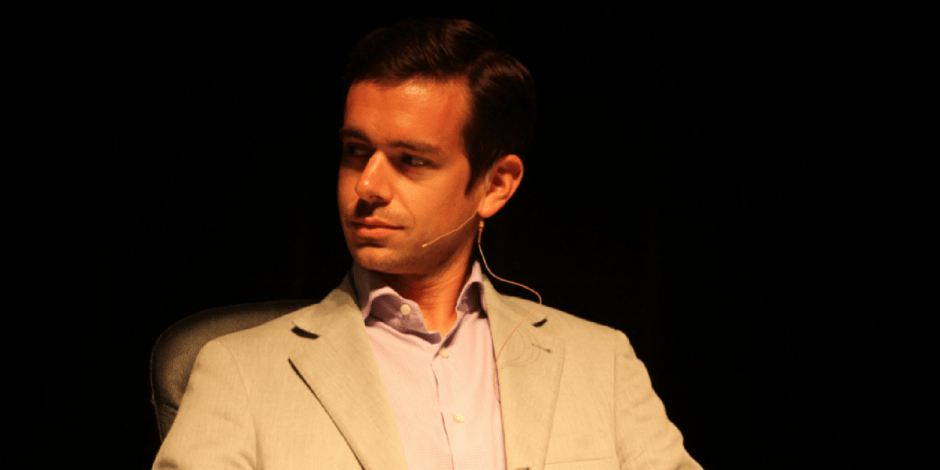
Feature Image: Jack Dorsey, Twitter co-founder and chief executive, was speaking at Cannes Lions 2017

By

Jen Faull is deputy news editor at The Drum with a remit to cover the latest developments in the retail and FMCG sectors. Based in London, she has interviewed major business figures including top marketers from Mondelez, Unilever, Tesco, and Lidl.

Sourced from THE DRUM

Sharing happy news with your Twitter followers? Odds are, they’re more likely to share it than a negative post according to a recent study.

By MediaStreet Staff Writers

An analysis of 3,800 randomly chosen Twitter users found that emotions spread virally through Twitter feeds – with positive emotions far more likely to spread than negative ones.

“What you tweet and share on social media outlets matters. Often, you’re not just expressing yourself – you’re influencing others,” said Emilio Ferrara, lead author of the study and a computer scientist at the USC Viterbi School of Engineering’s Information Sciences Institute. Ferrara collaborated with Zeyao Yang of Indiana University.

Ferrara and Yang used an algorithm that measures the emotional value of tweets, rating them as positive, negative or neutral. They compared the sentiment of a user’s tweet to the ratio of the sentiments of all of the tweets that appeared in that user’s feed during the hour before. Higher-than-average numbers of positive tweets in the feed were associated with the production of positive tweets, and higher-than-average numbers of negative tweets were associated with the production of negative tweets.

About 20 percent of Twitter users were deemed highly susceptible to what the researchers described as “emotional contagion” – with more than half of their tweets affected. Those users were four times more likely to be affected by positive tweets than negative ones.

Those least likely to be affected by emotional contagion were still a little less than twice as likely to be affected by positive tweets as negative ones. Over all users, regardless of susceptibility, positive emotions were found to be more contagious than negative emotions.

The study builds on decades of research demonstrating first that emotions can be spread through person-to-person contacts, and now finding that they can spread through online interactions as well.

Facebook drew criticism last year for attempting to demonstrate a similar effect by tweaking 700,000 users’ news feeds. Unlike that experiment, Ferrara and Yang did not manipulate what Twitter users were experiencing – rather, they simply observed what was already happening and analysed it.

So what does that mean for marketers? Positive news tweets are more likely to go viral than negative tweets…especially if they contain positive emotions! Get that smiley emoji ready for lauch!

There are selfies, relationship builders, town criers, and window shoppers.

By MediaStreet Staff Writers

On an average day, 1.28 billion people check it. Monthly? Nearly 2 billion. And according to one recent estimate, the average Facebook user spends 35 minutes a day on the platform – which makes for a whole lot of daily and monthly minutes.

In a recently published study, a trio of Brigham Young University communications professors explores why.

“What is it about this social-media platform that has taken over the world?” asked lead author Tom Robinson. “Why are people so willing to put their lives on display? Nobody has ever really asked the question, ‘Why do you like this?'”

Based on subject responses, the research team identified four categories of Facebook users: relationship builders, town criers, selfies and window shoppers.

Relationship Builders

Relationship builders post, respond to others’ posts and use additional Facebook features primarily in an attempt to fortify relationships that exist beyond their virtual world. “They use it as an extension of their real life, with their family and real-life friends,” Robinson said. People in this group identified strongly with such statements as “Facebook helps me to express love to my family and lets my family express love to me.”

Town Criers

Town criers, on the other hand, experience a much larger gap between their real and virtual worlds. Unconcerned with sharing photos, stories or other information about themselves, they instead “want to inform everybody about what’s going on,” Robinson said. Like town criers from days of yore, “they’re pushing out information.” They repost news stories, announce events – but may otherwise neglect their profile pages, preferring to update family and friends through alternative means.

Selfies

Selfies use Facebook to self-promote. Like relationship builders, they post pictures, videos and text updates – but unlike relationship builders, they’re focused on getting attention, likes and comments. Study participants in this category identified highly with the statement “The more ‘like’ notification alarms I receive, the more I feel approved by my peers.” Selfies, said study co-author Kris Boyle, use the platform “to present an image of themselves, whether it’s accurate or not.”

Window Shoppers

Window shoppers, like town criers, feel a sense of social obligation to be on Facebook but rarely post personal information. Unlike town criers, these users, said study co-author Clark Callahan, “want to see what other people are doing. It’s the social-media equivalent of people watching.” Window shoppers identified with such statements as “I can freely look at the Facebook profile of someone I have a crush on and know their interests and relationship status.”

Though previous Facebook-related research has explored users with relationship-builder and selfie characteristics, Robinson said, the town criers and window shoppers were an unexpected find. “Nobody had really talked about these users before, but when we thought about it, they both made a lot of sense.”

Facebook users may identify to some degree with more than one category. Boyle noted that most people have at least some selfie tendencies, for example. But users typically identify more with one than others. “Everybody we’ve talked to will say, ‘I’m part of this and part of this, but I’m mostly this.'”


Photo credit: Nate Edwards/BYU Photo

Researchers urged to hone methods for mining social-media data, or investment in marketing will be wasted.

By MediaStreet Staff Writers

A growing number of people, from marketers to academic researchers, are mining social media data to learn about both online and offline human behaviour. In recent years, studies have claimed the ability to predict everything from summer blockbusters to fluctuations in the stock market.

But mounting evidence of flaws in many of these studies points to a need for researchers to be wary of serious pitfalls that arise when working with huge social media data sets. This is according to computer scientists at McGill University and Carnegie Mellon University.

Such erroneous results can have huge implications on data gleaned from social media. A lot of marketing investment could be placed in the wrong areas.

The challenges involved in using data mined from social media include:

  • Different social media platforms attract different users – Pinterest, for example, is dominated by females aged 25-34 – yet researchers rarely correct for the distorted picture these populations can produce.
  • Publicly available data feeds used in social media research don’t always provide an accurate representation of the platform’s overall data – and researchers are generally in the dark about when and how social media providers filter their data streams.
  • The design of social media platforms can dictate how users behave and, therefore, what behaviour can be measured. For instance, on Facebook the absence of a “dislike” button makes negative responses to content harder to detect than positive “likes.”
  • Large numbers of spammers and bots, which masquerade as normal users on social media, get mistakenly incorporated into many measurements and predictions of human behaviour.
  • Researchers often report results for groups of easy-to-classify users, topics, and events, making new methods seem more accurate than they actually are. For instance, efforts to infer political orientation of Twitter users achieve barely 65% accuracy for typical users – even though studies (focusing on politically active users) have claimed 90% accuracy.

Many of these problems have well-known solutions from other fields such as epidemiology, statistics, and machine learning. The common thread in all these issues is the need for researchers to be more acutely aware of what they’re actually analysing when working with social media data.

Social scientists have honed their techniques and standards to deal with this sort of challenge before. Says Derek Ruths, an assistant professor in McGill’s School of Computer Science, “The infamous ‘Dewey Defeats Truman’ headline of 1948 stemmed from telephone surveys that under-sampled Truman supporters in the general population. Rather than permanently discrediting the practice of polling, that glaring error led to today’s more sophisticated techniques, higher standards, and more accurate polls. Now, we’re poised at a similar technological inflection point. By tackling the issues we face, we’ll be able to realise the tremendous potential for good promised by social media-based research.”


By .

After completing university education, several graduates usually complain that they are not getting any job offers from the market. They apply for numbers of job posts but do not get any positive response from the recruiters.

This is quite embarrassing that you are not getting a good job even if you have a professional degree with a good CGPA.

Everyone wants to get a dream job after successful completion of university education. But the truth is that, they have to start their careers from the entry level jobs. But unfortunately, a majority of jobs require industry experience (usually from 1 year to 3 years).

The question is how a student can get experience, when he/she already studying as a full time student. Unfortunately, this is a bitter truth and organizations need to understand. Well, this is a long debate!

Let’s move toward the main point.

If you are experiencing the same situation and feeling that you’re going nowhere then luckily I’m going to show you that how you can find your first job using social media.

So, let start….!

1. Signup for Social Media Platforms

I’m sure that you are already using different social media platforms to connect with your friends and family. But if you are not surfing social media, you are missing great opportunities.

Go and signup on these sites especially on LinkedIn.

LinkedIn is a great platform for the industry professionals. Up till now, 500 million professionals from all around the world are using LinkedIn to connect with other professionals.

Recruiters/HR managers often use social media to find the talent. All you need is to show your existence over there. Update your profile with your latest photograph and showcase your skills and experience (if you’ve have). Your LinkedIn profile will act as a Resume.

Start networking and building relationships with the industry professionals. Regularly participate in the discussions and also join LinkedIn Groups for more exposure.

Likewise LinkedIn, Facebook, Twitter and Instagram are another great platforms to find job opportunities.

For instance, if any manager wants to hire then he/she will obviously look first in his/her online circle. So, there is an opportunity for you if that recruiter/ HR manager sees your profile and gets inspired from your qualification. He/she will obviously call you first for the job interview.

2. Try Freelancing

Freelancing is a growing industry. In fact, it is becoming a future business trend that will reshape the industry.

If you are not getting any job, start freelancing because something is better than nothing.

If you have skills like web development, SEO, content writing, and any other thing in which you are good at, then find the best freelancing site and start selling your skills.

Initially, you will have to work at low rates but after sometime you’ll surely enjoy good bucks.

There are several graduates making hundreds even thousands of dollars each month by working online. Due to Globalization, Startups usually hire freelancers from all over the world to get their work done at low rates rather than hiring traditional employees from 9 to 5.

So, it is another excellent opportunity for you to find online jobs.

Now, there is a worth mentioning thing is that several organizations do not consider freelancing experience. But if you work for the reputable online startups, then try to get your experience letter when you are applying for other jobs. In this way, you can solve your experience problem.

3. Increase your Online Presence

Likewise on social media, presence on the internet is also very important. Create your separate web page or blog; and write your ABOUT ME section in which you should mention your academic qualification and skills.

If you cannot afford to build your own web page, you can use other platforms such as About.me or sumry.me. These websites allow the people to create their personal online resumes.

Creating online resume will boost your personal search engine visibility. In this way, anyone can search you instantly on the internet.

4. Start Writing

For managerial level jobs, writing skills are very important.

If you want to get a good job, start writing. In fact, Writing is a great way to express your thoughts and observations.

Managers usually want to hire those candidates who have good reading and writing skills. So, start writing on your personal blog.

If you cannot afford a blog then there are other platforms you can use for writing such as guest blogging. LinkedIn also allows the users to publish their posts.

Writing contents and blog posts will increase your interaction with the industry professionals. It might be possible that you may get a good opportunity from the large organization.

Final Thoughts

Well, there are several other ways through which beginners can land on their first jobs. But I think these are the simple techniques through which you can get your first job as soon as possible.

It’s my humble request for the beginners that do not de-motivate yourself. Stay positive and become optimistic person. Everything needs time and your good time will come soon.

Hope you find these tips useful. Best of luck for your future Endeavour 🙂

By

Sourced from CareerMetis.com

As marketers, we must be aware that Millennials are low on trust when reading the medium.

By MediaStreet Staff Writers

A new study indicates young adults have a healthy mistrust of the information they read on Twitter.

Nearly anyone can start a Twitter account and post 140 characters of information at a time, bogus or not, a fact the study’s participants seemed to grasp. This is according to Kimberly Fenn, assistant professor of psychology at Michigan State University.

“Our findings suggest young people are somewhat wary of information that comes from Twitter,” said Fenn. “It’s a good sign.”

The study, funded by the National Science Foundation, is the first to examine social media and false memory. Participants were college students from the so-called Millennial Generation. Twitter, with 230 million users, is most popular among people in their teens and 20s.

Fenn and MSU colleagues showed 74 undergraduates a series of images on a computer that depicted a story of a man robbing a car. False information about the story was then presented in a scrolling text feed that bore a high resemblance to Twitter or in a feed from a more traditional online source.

The researchers tested whether the students integrated the bogus information into their minds, which psychologists call false memory. The results showed that when the participants read the “Twitter” feed, they were much less likely to form false memories about the story.

Fenn said the students were more mistrustful of the Twitter feed than they were of the more traditional feed.

“We propose young adults are taking into account the medium of the message when integrating information into memory,” Fenn said.


By MediaStreet Staff Writers

One in three people find it difficult to take a break from technology, even when they know they should

-China, Brazil and Argentina have highest levels who struggle to take a tech break

-People in Germany, The Netherlands and Belgium lead for finding it easy to ‘unplug’

A third of people (34 percent) in an online survey of 17 countries firmly agree that they “find it difficult to take a break from technology (my mobile device, computer, TV, etc.), even when I know I should.” This compares to less than half that number (16 percent) who firmly disagree that it is difficult to take a break.

The findings from global research firm GfK, show that, internationally, gender makes next to no difference in people’s struggle to turn off their devices or ‘unplug’ from technology, with nearly equal percentages of both men and women agreeing they find it difficult.

However, the different age groups and income groups show distinct differences in susceptibility to being ‘always on’.

Younger age groups struggle most with technology addiction

Teenagers (15-19 year olds) are the most likely to struggle with technology addiction, with just under half (44 percent) firmly saying they find it difficult to take a tech break, even when they know they should. This dips to 41 percent for those in their twenties and to 38 percent for those in their thirties. It then falls significantly for the older age groups – standing at 29 percent of those in their forties, 23 percent for those in their fifties and 15 percent for those aged 60 and over.

Critically, the 50-59 and 60+ age groups are the tipping point, where there are higher percentages who firmly indicate they have no problem turning off their technology, than percentages saying they struggle to take a break.

High income households show biggest gap between those finding it easy or difficult to take tech breaks.

For people living in high-income households (across all 17 countries), 39 percent find it difficult to take a break from technology, even when they know they should, while 11 percent find it easy – a gap of 28 percentage points. This contrasts to those in low-income households, where 30 percent find it difficult, while 20 percent find it easy – a gap of only 10 percentage points.

China and the Americas have highest percentages who find taking a technology break difficult. Germans lead in finding it easy.

Ireland didn’t feature in the survey, but everyone can agree we all are prone to tech addiction.

At country level, China (43 percent) has the highest percentage of online population who strongly agree that they find it difficult to break from technology. This is closely followed by the Latin American countries surveyed (Brazil 42 percent, Argentina 40 percent, Mexico 38 percent), with the USA coming fifth (31 percent).

On the other side, Germany has the highest percentage (35 percent) of online population who strongly disagree that taking a break from tech is difficult. This is followed by the Netherlands (30 percent), Belgium (28 percent) and Canada and Russia (both 27 percent).

The findings clearly show where the key markets lie at a number of levels – from brands offering the latest devices targeting happily ‘always-on’ consumers, to brands offering ‘quality time’ services that resonate with people who like to break from technology.

You can find the full report here.


By Shriranga Sudhakara.

Digital out-of-home advertising is unique because it intercepts active consumers with highly targeted messages as they move through their day.

Brands are constantly competing to get consumer attention and in an ideal scenario create brand custodians. The once humble billboard, now a connected powerhouse, is set to play a key role in building brand loyalty. For advertisers, never has there been so much opportunity to target on-the-go tech-savvy consumer with the rise of full motion DOOH screens, combined with smartphone penetration, WIFI connectivity, and wider reach. Similarly, social media can connect and build on to user generated content. Both social and DOOH at the end of the day are like the two halves of a digital medium. It is quite early to comprehend the possibilities the integration of DOOH and social media will bring about, amplify each other and deliver effective communication. Both channels are still evolving, but are already showcasing the potential of building a cohesive bond. With the ability to reach huge scale over a short period of time, both the mediums are ready to take it to the next level. So how are they going to work together?

NewAge integration

Social Media provides engagement and DOOH provides phenomenal reach. Both the mediums have the ability to deliver rich content based on context. Hence this is a natural integration, which will only strengthen the effect of the campaign. Earlier, advertisers often faced the challenge to measure the audience reach through traditional platforms like print and TV. With the rise in technology, the measurability of these two-high content generating mediums has gotten better with industry benchmark set across stakeholders. The same is true of these 2 mediums and as brands aim to introduce a trend of going beyond the traditional norm, a marriage of these two mediums becomes inevitable.

Amplify

Recently, there are two distinct trends. One, where the DOOH activity has been planned to amplify a primarily existing social media campaign, another trend is where social media is used to draw attention to the digital out of the home activity. With the former, the primary focus is on content from social media channels which will be delivered seamlessly to the connected digital displays. On the other hand, user generated content will play an important role as it’s produced through engagement with digital signage and then delivered to social media channels. For example, a simple use of a hashtag to trace twitter feed of the consumer or showcase content pulled from campaign’s Facebook page. The purpose of the integration is to complement social media campaigns and highlight what they are trying to communicate. DOOH became a medium which gave consumers a glimpse into the social space. For example, the user generated content is at the center stage for any social media campaign. Imagine use of images, videos and text uploaded by the audience at a high scale event. These posts are showcased on DOOH screens in and around the vicinity on a ‘Real-time’ basis. Thus, leading to much larger reach and quirky brand reputation.

In the latter, there is the usage of digital screens with creative content to grab eyeballs. DOOH here, becomes the primary channel for consumer interaction and social media channels will be used to focus attention on the outdoor creative. A unique messaging placed on digital screen, targeting young children to create awareness about child abuse. The screens are prepared with dual messaging which is altered according to eye level of the viewer. The actual message with contact details are shown to the child while adults are under the impression that the ad is a normal one-way communication. These campaigns effectively showcase the potential of the DOOH screens and social media becomes the extension of digital screens.

Interactivity

DOOH medium can deliver real-time and location-specific content to create interactivity with the customers. For example, the personalized content is created and updated on a real-time basis with the help of data available from the brand and the screens. Demographics and consumer buying pattern distinguish and arranges the advertisement placement. For instance, a general search in any urban area regarding best deals on electronic devices. Digital screens in and around that area and mass transport are now equipped by the same message highlighting amazing deals on certain electronic devices thereby creating a much larger impact. DOOH is now ready to grasp and take charge of the digital space, with the help of technological innovation and availability of data.

DOOH has the ability to enhance minimalistic content by adding interactivity through HD displays and connectivity. A simple ad of a phone which uses user content gathered through their campaign page on social media handles. Few images or videos taken by the participants through that phone equips DOOH with the messages. Quick gratification for the participants, photo and video credits are given on those advertisements. This level of interactivity through social media and apt use of DOOH medium is clear testimonial to the potential of this partnership.

Seamless 

Digital out-of-home advertising is unique because it intercepts active consumers with highly targeted messages as they move through their day. Successful digital out-of-home advertising campaigns start with deep knowledge of consumer mindset and their location relevance. While, DOOH medium in the Indian market is yet to successfully showcase its compatibility to several digital mediums. It is quite noteworthy that with the use of mobile beacons, hypertargeting and dynamic data feeds, digital screens are able to amplifies campaign relevance and transform it into a significant consumer touch point

In the near future, it would get impossible to carry out a campaign without involving both social media and DOOH. The possibilities are endless and with wide range of technologies getting developed and implemented. Even prediction and analysis of consumers’ mood and instant measurement of ROI will be possible.

By Shriranga Sudhakara.

He is the managing director of Vyoma, started with the intention of captivating audience on the move, and enable brands to converse with their audience in the out of home space; Vyoma since its inception has quickly grown to become India’s largest digital out-of-home advertising company. More From The Author >>

Sourced from DWDisrupt


By

Gemma McGrattan of brand engagement agency Synergy Creative explains to The Drum Network why it’s time for large employers to treat employee comms with the same level of care and attention spent on marketing to customers…

Synergy refers to itself as a ‘brand engagement agency’ – what does that mean exactly?

We celebrated Synergy’s 10th anniversary last year, but we found our niche as an agency relatively early on. After a couple of years, we started focusing our expertise and our offering around internal communications and employee engagement. We began working on a lot of employee comms projects: rewards and recognition schemes , induction programmes, that sort of thing, usually based around HR-related comms. Over the years, that has developed into a real specialism for Synergy.

Our clients for this sort of service are typically organisations with 5000+ staff, operating a distributed network of outlets, such as Labrokes, Argos, ODEON Cinemas Group across Europe and various utlility companies, which tend to have lots of small teams and individuals working out in the field for the majority of the time.

What problems are large employers typically trying to address when they engage Synergy?

For that scale of organisation, it can become difficult to keep a large, fragmented, remote workforce fully engaged and up-to-date with the latest information from the company. We specialise in supporting those comms needs, supporting employees on their journey ‘from hire to retire’!

Ultimately, it’s about valuing your employees, encouraging them, motivating them, inspiring them. From a hard-nosed business point of view, there’s clear evidence that employee engagement can have a positive effective on productivity and profitability – Dale Carnegie research found companies with engaged employees outperform those without by 202%. In 2017, more and more organisations are beginning to regard employee engagement as an ongoing strategic initiative, rather than a short-term tactical project.

How has the market changed in the time that Synergy has been focused on internal comms?

These days, it’s common to see job titles such as ‘Head of Internal Communications, ‘Engagement Manager’ or ‘Employer Brand Manager’. In the majority of instances, those jobs didn’t exist a few years ago. That’s significant as it indicates that employee engagement is being taken very seriously at board level now, which is a big change.

Also, various technology platforms have emerged, such as Yammer, Slack and Facebook Workplace, that make it easier than ever before to create an employee network without having to build your own secure platform from scratch. Big brands are now happy to make use of these secure third party platforms in a way they would have been unsure about a few years ago.

The biggest change is the increased recognition that the brand has value, not only to customers, but also to employees. Employers should treat employees as well as they would customers by giving them the opportunity to be listened to, collaborate and shape things within the business. We’re all more sophisticated now. Today, we expect a heightened level of interaction with a brand as consumers, so why wouldn’t we want that sort of two-way dialogue as employees? All the big brands are talking about ‘employee advocacy’, recognising the importance for would-be candidates to hear perspectives from existing employees via their own social networks. The idea here is that a peer recommendation is more powerful than messaging coming directly from the brand.

Who is doing this well at the moment?

A lot of this depends on the brand itself and how brave and forward thinking it is.

Odeon Cinemas Group in Europe has thrown itself whole-heartedly into improving guest experience and employee experience. As a result, they’ve grown hugely in the last two years and had a very successful sale to an American company. That’s a strong case study of the links between employee engagement and hard commercial success.

Virgin Rail has also been very innovative in this area. They recently moved their employee comms to Yammer and are beginning to analyse employee demographics in the same way as customer demographics to inform and shape employee needs.

There are good examples across the board, but the key is that you need to be brave enough to truly embrace it and facilitate the dialogue rather than every item of employee comms having to go through a 50-step approval process, which isn’t going to work.

What tips can you offer large organisations currently reviewing their employee engagement strategy?

Firstly, really understand your people. We think nothing of investing huge sums investigating our customers’ preferences but invest practically nothing in understanding our employees as a collection of internal audiences. You need evidence to get under the skin of that and treat your employer brand with the same kind of care as your consumer-facing brand.

Secondly, whenever you launch an initiative that requires the commitment of your employees to successfully deliver it, you have to be crystal clear about why the initiative is happening in the first place. Make the link meaningful to your people and help them to understand what the business stands for and where you are heading as a business. When employees fundamentally ‘get it’, they are on board all the way.

Thirdly, involve your people, don’t try to simply ‘run’ it. Become a facilitator and curator of the internal conversation rather than a leader or controller of it. It takes time for people to become comfortable on the chosen platform, but the more a workforce knows about each other, with plenty of opportunity to contribute, get involved and make a real difference, the better the chance of a high-performance culture.

And finally, continually reinforce your commitment to the value of internal comms and the employer brand. It can’t be a one hit wonder. The real effort, and success, is in maintaining the momentum.

By

Michael Feeley is The Drum Network’s consultant journalist, advising and assisting member agencies on their editorial submissions and contributions to The Drum.

Sourced from The Drum