Tag

technology

Browsing

By MediaStreet staff writers

“Today’s modern school is in a constant state of flux,” says Mark Christensen. A former teacher and administrator, and school board member, he now works in the Ed Tech field. “I have really come to appreciate how technology can be used to improve student engagement, promoting a school or college’s unique mission, and making it is easier to connect with alumni. We live in a modern world that revolves around technology and it must, therefore, be implemented properly.”

According to Mark, there are seven key reasons as to why it is hugely important that people properly manage their online footprint. “By understanding these seven reasons, and implementing them within the communication strategies of your educational establishment, you will be able to develop an excellent online presence.”

1. Take Charge of Perception

Technology is one of the best public relations tools at your disposal. If managed properly, then you control the message and how people perceive you and your school. You must be proactive in this; regularly sending out new positive messages.

2. Take Control of Your Brand

You must make sure that your tone is consistent in how it looks, feels, and sounds. Start by looking at your social media profiles, such as Facebook and Twitter, and make sure they look the same. This is your only opportunity to make that all-important first impression. It will take a visitor just a single second to see whether or not they want to follow you. There are some key things to consider in this, including ensuring that:

The way your profile looks is consistent with your brand’s vision and mission.

You have a clear and concise bio that makes it clear who you are.

You have a good ratio of followers to following, so that you can increase your overall credibility. By following others, you show that you care.

3. Build a Community Through Interaction

You can speak with businesses, alumni, students, and parents in real time. They will contact you using their smart devices, which means they expect real-time information as well. At the same time, other people can see the conversation and how it is responded to. This means that you can really be active in what people see. You can launch and promote campaigns and events, making sure that everybody knows what is going on. If you connect with people, they are more likely to invest in you as well.

4. Be Relevant and Timely

For instance, let’s say that a VIP is visiting your school campus, that a graduation ceremony is about to take place, that your college team won a big sports event, or that you have recruited a new important faculty member. You must report this straight away, because it will become old news more quickly than you can imagine. Your audience wants to know what is happening right now, not what has happened weeks ago. You must engage your community through relevant content, speaking to them as real human beings. Don’t be afraid to ask questions, or to post tweets with humour and honesty. Most importantly, make sure your content is valuable and awesome, bringing something of value to your audience.

5. Make Sure Important Information Is Shared

You have to make sure that if something is happening, people get to know about it in plenty of time. Try to get insight from your audience on upcoming activities, asking them to comment or post, or otherwise engage in what you are doing. By reading what they mention on your social media pages, you can gain a real insight into what they want.

6. Remember that You Are Being Watched

If you want to own something, you have to say it first. Hence, remember that there are people you want to reach who haven’t quite found you yet. Promote your school and its community, spirit, and mission whenever you can. Make sure that your content is valuable and unique, as well as being fresh at all times. People who may accidentally come across you, or who are researching you without you knowing it, will appreciate this.

7. Make Sure Your Content Is Properly Managed and Organised

You need to make sure that it is easy for your readers to navigate through your news stories, pictures, and other posts. Have a good content library present where people can find what they want through an easy search function. This is the only element that you should reuse, but make sure it is repurposed as well.


Sourced from medium.com

We live in an era where we can tell a virtual assistant like Amazon’s Alexa to re-order washing powder while we’re video chatting with friends across the globe and Googling how long it took to build the pyramids.

We can organise a weekend away with friends in a WhatsApp group and have a chat bot change the time of our flight.

But we have almost none of that technology at work.

It won’t be this way for long. Everyone, and not just millennials, clearly want more intelligent software at work. We’re moving from a workplace where Bring Your Own Device (BYOD) is the norm to one where Bring Your Own Software (BYOS) is the expectation.

The return of Clippy? Not so much.

Workplace technology doesn’t just need to catch up — it needs to leap ahead. The demands of a modern digital workplace call for innovations such as smart bots, micro applications, artificial intelligence, and team messaging.

A study of business leaders by outsourcing giant Capita found that 91% of HR Directors see automation as an opportunity, with 76% believing it will drive greater productivity.

Our previous blog post dealt with the dire state of software at work in contrast to the smart software we now have at home. Here, we’ll offer some solutions and set out a vision of a modern digital workplace.

1. The end of email
Two of the biggest roadblocks to modern productivity were actually building blocks in the past: meetings and emails.

Almost everyone hates meetings — it’s that sinking feeling your time would be better spent doing something else. It’s the same with email. According to research by McKinsey as far back as 2012, employees can spend as much as 28 per cent of their day reading and responding to emails. Yet meetings and emails still prevail as the primary time drain, despite there being clearly better ways of communicating and getting things done.

The benefits of a digital workplace go much further though. They can actually help make companies more flexible and agile, not to mention more attractive to talent.

Using modern messaging apps, a unified interface to work becomes possible, where conversations and applications come together in one place. Group messaging replaces email for projects, initiatives and team collaboration. Workflow and actions take place within the conversation, using intelligent bots.

Furthermore, the content within these faster, real-time conversations becomes an easily searchable resource of all past organisational knowledge.

2. Searchable information
Among the manifold problems with enterprise software, one of the principal shortcomings is the archaic user experience. The simple solution is to use an intelligent interface that can access the most relevant functions and data from within these enterprise systems and present them in a more intuitive and streamlined way.

Search remains a real problem at work — looking for the right information in so many different places. The rise of BYOS makes things worse, as people bringing more cloud applications into their work multiplies the numer of potential locations. How much time do you spend asking, “Was that file on Sharepoint or Dropbox? Where are we tracking that project?”

McKinsey found that the aforementioned employees wasting 28 per cent of their time managing email were spending a further 20 per cent on looking for internal information or for colleagues to help them with something.

By connecting your individual applications to a single intelligent app, a universal search function then allows you to search across all content and applications. That means work can be treated as a single entirety, rather than as bits of content scattered across numerous independent silos.

At last, a single search box for work.

3. Everyone gets an assistant
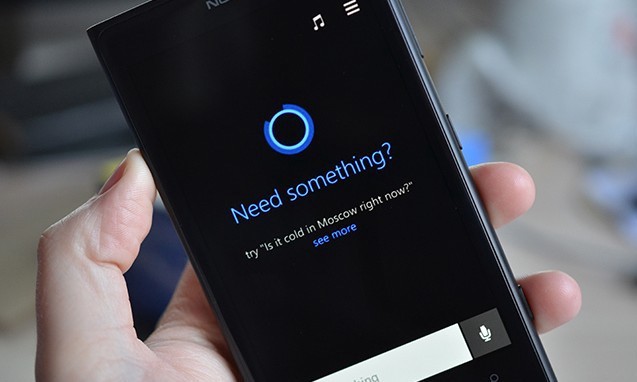
In modern offices, the directors won’t be the only ones with an assistant. Now, with digital assistants becoming smarter, more intuitive and easier to use, anyone within the company can have a Alexa-like helper.

The growing crop of digital assistants are becoming more mainstream, thanks to endorsements from celebrities like Alec Baldwin and Missy Elliott. However, these digital assistants have practical uses in the office. Instead of using a paper calendar or trying to remember a schedule, just talking to a digital assistant can save time and money — and keep employees productive.

4. Real-time data
Data is the lifeblood of modern organisations, offering insights into customers and processes that are critical to decision making. But how easy is it to have the right data to hand, in the right place, at the right time? Most useful data is hidden away in silo’d systems that are hard to access.

But a modern enterprise messaging platform can use micro-apps and bots to talk to these systems in realtime, from anywhere, and get the information you need. Often before you even realise you need it.

Internal data is even harder to come by. Want to know the internal dynamics of your company and gain sentiment analysis from its people? Good luck. Want to know how well your employees like a new programme you started a few months ago? No chance.

But it doesn’t have to be this way. We can use sentiment analysis, bots and natural language processing to talk to thousands of employees — anonymously if necessary — in seconds.

Executives and managers can easily take the pulse of the office and see what can be improved and what is working smoothly, rather than wait for anecdotal feedback when it might be too late.

Businesses deserve better
The verdict on meetings and emails is loud and clear. People don’t like them, they waste huge amounts of time and productivity — and therefore money — and they are holding businesses back. Intelligent workplace technology such as messaging, bots and micro-apps offer new ways of doing everything better. It’s not a case of if you move to better ways of working, but when.

The digital workplace isn’t just new software you use at work. It is a whole new way of working. It’s about working intelligently.

We’re Blink, and we’re building the intelligent interface to work. Blink connects to your existing applications and applies modern intelligence to cut through the noise, automate tasks and help you accomplish more.

Sourced from Medium