By Sam, Editor @ SlideHunter
Presenters should be expected to be excellent in what they do. Their audience relies on them for new information as well as solutions to their would-be problems. Mind you… it takes more than just being comfortable and confident in speaking in front of a crowd. You need to give a well-thought-out, amazing presentation too.
However, there is no such thing as perfect presentations. Same with humans, we are bound to make mistakes – rookies and experts alike. If being a ‘better’ presenter is what you strive to be, worry no more. There is a way to help you achieve that – avoid these common presentation mistakes presenters make.
1. Not defining presentation goal
Here is where most of the presenters make mistakes – they do not define their presentation goal. Even before you plan out your outline, content, you should know what your presentation’s goals are. As a presenter, are you looking to inform, educate, activate, persuade, inspire, or purely entertain your audience?
There is no concrete rule on this, it’s not like you need to choose only one goal then work on it. You can say that you want to educate, inspire, and entertain your audience. Once you have that in mind, you can then proceed to plan out your presentation and meet your goals.
2. Lack of enough preparation
Many times a good presentation is ruined simply because a speaker did not take time to prepare. Remember this: preparation involves attention to both professional and personal aspects.
3. Not enough knowledge on the topic
It is your mission to share additional knowledge to your audience. You want to be that person who can answer their would-be questions. That’s why being ‘just knowledgeable’ with the topic is not enough.
You have to have enough knowledge and information ready. You can tell whether you have that enough knowledge because you can already predict their questions and have the answers right away.
Professional aspects include researching information about the subject, organizing your content, and preparing the visuals needed (presentation slides or handouts). Personal aspects include your body language, the tone of your voice, and whether you are presentable enough to face your audience.
4. Not utilizing the use of visuals for the slides

First of all, your presentations should capture the audience’s attention. You will want them to look at the information you prepared for them. But, nobody likes a dull presentation, right? Admit it, you would not want to listen to a presenter whose presentation is just plain white and text, let alone look at it. That’s why it’s important that you design your slides.
Make use of the tools available in the software. Try out free PowerPoint templates for a beautiful and unified design on each slide. Also, you can incorporate images on each point of your slides. This will not only catch your audience’s attention but also help you convey your point to them.
5. Too much text in one slide
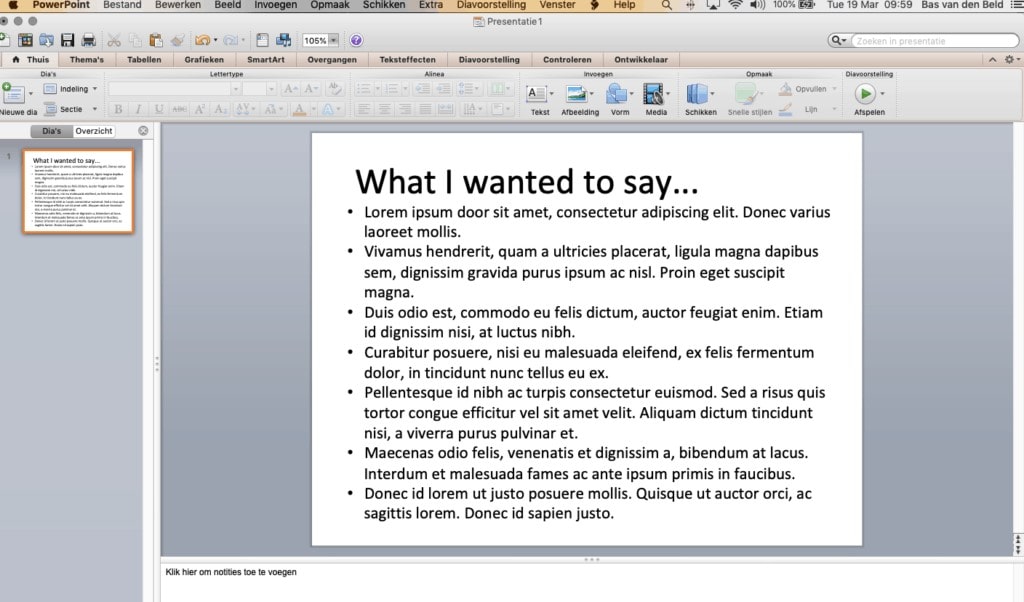
Would you want to look at a slide with nothing but thousands of text in them? Of course not! As presenters, we don’t want to bore our audience with information that will not be useful to them. Here’s the thing, when you put too much info in your slide, your audience would read these rather than listen to you.
One of the most important aspects in presentations: the element of surprise. Keep your audience’s interest by not sharing all the information on your slides. Arouse their curiosity by only giving clues and hints. Then, deliver the main point in verbal discussion.
6. Too many effects and animations on the slides
When text effects and animations are being used and implemented properly, they can do a lot to help alleviate your presentation. But abuse it and you will find yourself with a dizzy audience who probably wants to get out of the room and throw up!
Seriously, you will face the risk of losing your audience’s attention. Also, it will distract them from seeing important points in your slide. Do not incorporate animations and effects on every single aspect of your slide.
Here’s a trick! Before you apply on an animation ask yourself: does this add value to my presentation? If the ‘no’, then drop it. But if the answer is ‘yes’, then, by all means, go ahead and the effect. Stick to simple effects and animations, and don’t overdo it.
7. Not knowing who the audience is

Tailor-fit your presentation to suit the needs of your audience. Before anything else, find out the size and demographics of your audience. To help you, ask yourself questions like what are the positions of the people who are attending? How much knowledge do they have on the topic? What is their native language? What are the cultural expectations that you should be aware of? Consider these factors and you will likely increase the effectiveness of your presentation.
8. Not dressing properly and appropriately

Although we have the freedom to express ourselves through fashion, we can’t just waltz in a conference wearing anything we like, especially if you are the presenter. You want your audience to listen to you rather than pay attention to what you’re wearing.
The best advice – dress conservatively! Whether we like it or not, professionals are expected to dress in a certain way. Do not wear clothes that are too revealing for both men and women. Furthermore, avoid wearing flashy pieces of jewelry, wacky hairstyles, and bright colours.
9. Presenters read the slides
This happens all the time! Presenters just read whatever information there is on the slide. They make the mistake of not engaging with their audience. Chances are, you’re just going to bore your audience to death and guaranteed they didn’t even understand a word of what you’re saying.
10. Use of inappropriate humour
Now, this is where “know your audience first” comes in handy. That process is not just so you can give an informative presentation. More often than not, presenters strive to insert comedic act on their presentations to get the attention of their audience.
One thing to remember is, what may be funny in a certain area/country, can be offensive or taboo in the other parts of the world. And you don’t want that to happen to you, your audience might just storm out of the room because you have unconsciously offended them.
11. Not checking if the file is working
Most of the time, you won’t have a technical team on standby when delivering your presentations, whether you’re doing a one-on-one or in a large crowd. It’s important that you make sure your file is working beforehand.
Test it out in the equipment that you will be using in your presentation. Another trick is to have backups… copy it in another laptop, external drive, or flash drive.
12. Non-functioning equipment

There is nothing more frustrating than finding out the equipment you will be using in your presentation is not working. Unfortunately, much of our work nowadays depend on technology, and no matter how advanced it is it sometimes has some troubles.
Prepare some handouts that include essential and important information on your presentation. So that when this happens to you, you can still go on with your presentation seamlessly.
13. Starting/Ending presentation late
Like you, your audience also has time restrictions. Respect them by starting and ending your presentation on time. If you have a certain time allowance, stick to it. Learn beforehand how many minutes or hours you are allotted with and fit your presentation to it without compromising the quality as well.
14. Speaking in a monotone voice
When presenting, it is important that you convey your points properly to your audience. Don’t speak in a monotone and emotionless voice, trust me, your audience wouldn’t like that. Incorporate different tones in each of your points.
For example, when explaining a piece of major information, use a serious voice. When asking for questions, use a tone that would ignite the audience’s curiosity. It makes the audience intrigued and comes off as you really want an answer to your questions. When it comes to the good news, use a cheery tone.
15. Not making eye contact
Although you’re more knowledgeable of the topic (since you’re the presenter), the audience wants to feel like they are your equals. Presenters always make this mistake – not making eye contact with your audience.
This gives the audience an idea that you are nervous, do not really know anything about the topic, or not interested in delivering the presentation at all. Let me tell you… when that shows off to your audience, they don’t want to listen to you!
Avoid these common mistakes!
The goal here is not to create a perfect presentation. As mentioned, there is no such thing! This does not happen overnight either. It takes patience and a lot of practice to be able to become a better presenter in your respective fields. Master and avoid the mistakes above and it will help you become the best presenter that can offer a fun and informative presentation to your audience!
By Sam, Editor @ SlideHunter
Image sources:
https://www.pexels.com/photo/black-dart-pink-attach-on-yellow-green-and-red-dart-board-15812/
https://www.pexels.com/photo/working-in-a-group-6224/
https://www.speakwithpersuasion.com/lot-of-text-on-slides/
https://www.pexels.com/photo/man-standing-in-front-of-people-1709003/