By Crystal Bell
Employee-generated content is quickly becoming one of the creator economy’s fastest-growing marketing strategies
For years, brands have spent billions chasing influencers with massive followings. Increasingly, they’re realizing some of their most persuasive creators are already on the payroll.
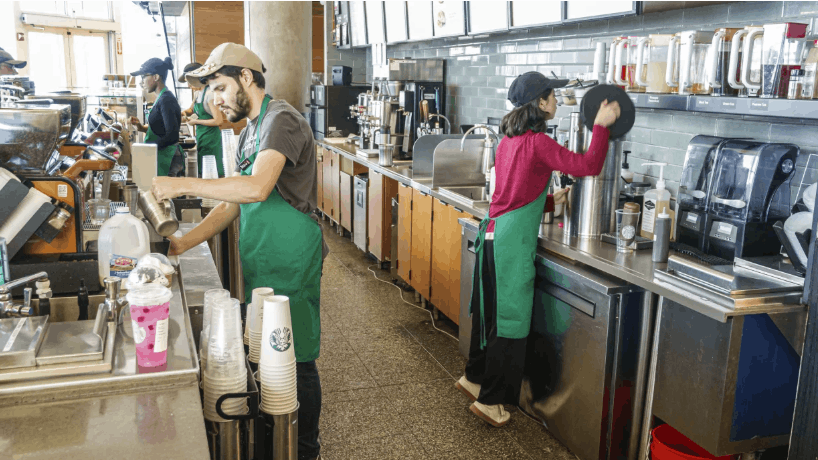
In June, Starbucks announced a TikTok update to its ongoing Green Apron Creators program, which will now pay select baristas to make TikTok videos through what the company says is the platform’s first custom Creator Network for a brand. In the pilot program, employees will receive creative briefs, create content for Starbucks’ TikTok presence, and share in advertising revenue — a notable shift from simply encouraging workers to post organically.
On its face, the program looks like another influencer marketing campaign. But it’s really a sign that brands are beginning to formalize employee-generated content as a core marketing strategy.
The timing isn’t accidental
For years, Starbucks has had a complicated relationship with Gen Z. The company became the target of widespread boycott campaigns amidst the Israel-Hamas war after what Starbucks called misinformation spread online about its political positions, while separate criticism surrounding its response to unionization efforts fueled additional backlash. Whether justified or not, the result was the same: Starbucks suddenly found itself fighting for credibility with a generation that increasingly values authenticity over polished advertising.
Now, rather than relying solely on outside creators, it’s betting that the people behind the counter can help rebuild that connection.
It’s a strategy that feels tailor-made for TikTok
Long before Starbucks announced Green Apron Creators in 2025, baristas were already making viral videos about complicated drink orders, secret menu hacks, and what really happens behind the espresso machines (especially when those limited-edition Bearista cups hit the shelves). Those posts often performed because they felt less like advertisements and more like behind-the-scenes access.
It’s the same phenomenon that turned everyday workers into unlikely internet personalities. A Staples Baddie explaining office supplies. Costco workers revealing hidden perks. Trader Joe’s crew members showing off their favorite seasonal finds. Audiences tend to trust people who actually do the job.
That authenticity has become increasingly valuable
Recent data from Sprout Social found that 61 percent of Gen Z discover products through employee-generated content, reflecting a growing preference for real people over highly produced influencer campaigns.
Starbucks isn’t alone in recognizing that switch.
Dell has spent years building an internal ambassador program through its Social Media University, training roughly 1,200 employee creators across more than 80 countries. Sprout Social’s employee advocacy program has grown from just six participants to roughly 100 employees, who accounted for nearly 30 percent of the company’s video impressions in 2025 while producing less than 8 percent of its content.
The economics make sense
Brands spent an estimated $32.55 billion on influencer marketing in 2025, according to Later’s State of Influencer Marketing report, but the industry is steadily moving toward smaller creators. eMarketer projects that micro- and nano-creators will account for nearly half of influencer marketing spending in 2026, and Mashable’s own survey data found that among those who follow creators, 62 percent are attracted to creators who feel like “real people.”
Feature image credit: Jeffrey Greenberg/Universal Images Group via Getty Images
By Crystal Bell
Crystal Bell is the Digital Culture Editor at Mashable, where she leads coverage of the creator economy, internet culture, and digital life. Her work focuses on the people, platforms, and communities shaping modern entertainment, from YouTube creators and livestreamers to fandoms, social media trends, and the evolving relationship between technology and culture. She also oversees the Mashable 101, the publication’s annual list recognizing the internet’s most influential creators.
Previously, she was the entertainment director at MTV News, where she helped expand the brand’s coverage of fan culture, K-pop, and the internet’s most passionate communities. Her work has appeared in Teen Vogue, Rolling Stone, PAPER, NYLON, ELLE, Glamour, NME, W, The FADER, and elsewhere on the internet.
She’s exceptionally fluent in fandom and will gladly make you a K-pop playlist and/or provide anime recommendations upon request. Crystal lives in New York City with her two black cats, Howl and Sophie.