Publication weaves a narrative around the influential studio’s three decades through the lens of work for brands such as Amazon, McDonald’s and legendary band Metallica.
The storied history of one of the world’s foremost brand design studios, Turner Duckworth, is the subject of a new book out this month.
Published by Phaidon in the UK, the book tells the shared experience, instincts, and insights behind the studio, founded by David Turner and Bruce Duckworth, through a collection of essays that examine the company’s most recognisable work over the past 30 years and more.
Each essay explores the essence of design and how to harness it through branding, packaging, and art. It is a kind of insider’s guide to what can often be seen as an insular corporate world where high-level decisions about branding and logo design are made.
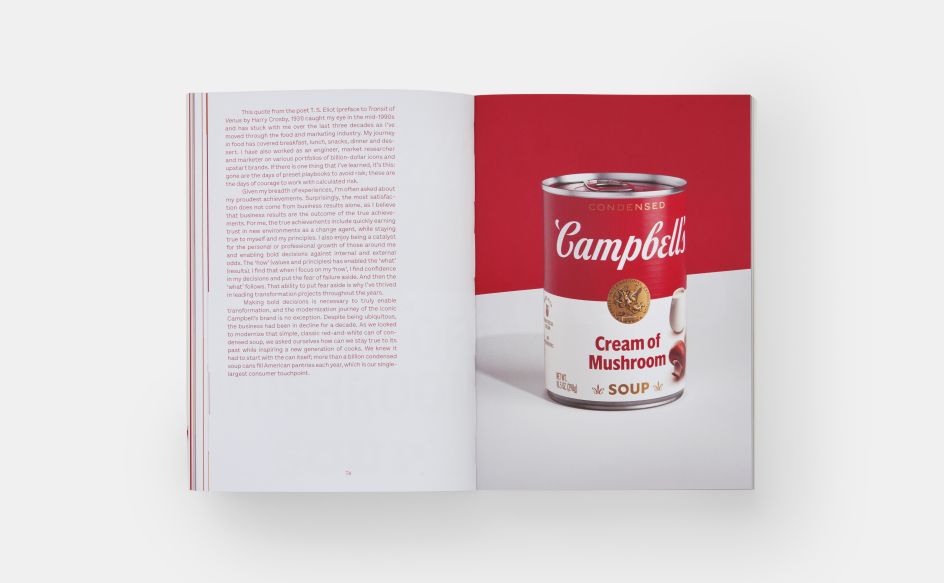
The book has been written in collaboration with Gyles Lingwood, professor of business creativity at the University of Lincoln and features contributions from twenty renowned industry figures, including Morgan Flatley, global chief marketing office and new business ventures, McDonald’s, Moira Cullen, former design director of Coca-Cola North America, Linda Lee, chief marketing officer of Campbell’s meals and beverages, Stefan Sagmeister, an internationally celebrated designer; and Jessica Spence, North American president of Beam Suntory.
Sarah Moffat, chief creative officer of Turner Duckworth, comments: “As a company, we’ve never adhered to the conventional practice of having a business plan. There’s no claim to pioneering a radically new approach, nor can we pinpoint a single genius move that propelled us to success. Our foundation is rooted in doing what feels right.
“To capture the essence of this powerful emotion, we reached out to 20 kindred spirits, affectionately known as Turner Duckworth friends and family, to share their experiences from various aspects of the creative industry.
“This is not your typical agency retrospective or a step-by-step design manual. There’s something in this book for anyone interested in cutting through complex mental clutter and evoking genuine emotions.
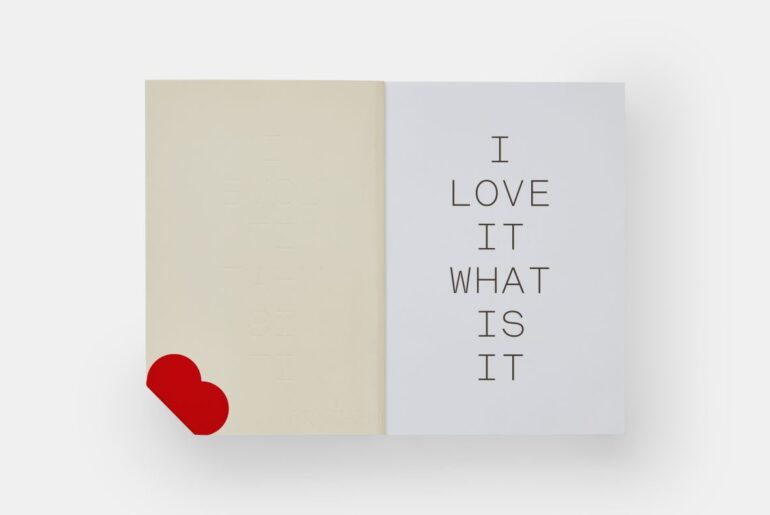
“We deliberately opted for simplicity, steering clear of a high-production coffee table book. The upturned corner is an invitation to scribble notes in the margins, while the modest size fits effortlessly on your bedside table.”
Turner Duckworth – which has studios in London, New York and San Francisco – has earned over 600 honours, including the inaugural Cannes Grand Prix for Design, a D&AD Collaboration Award, induction into the Clio Hall of Fame, and even a Grammy.
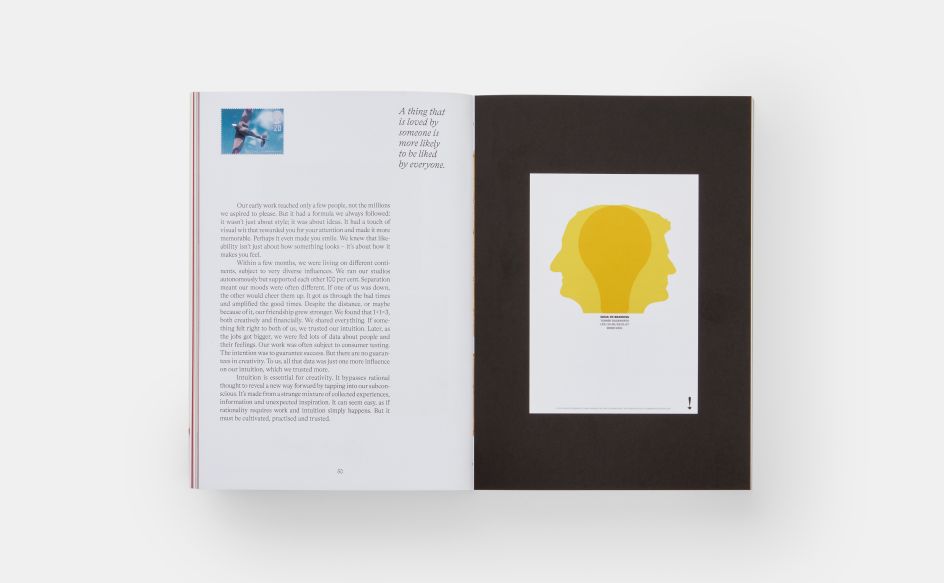
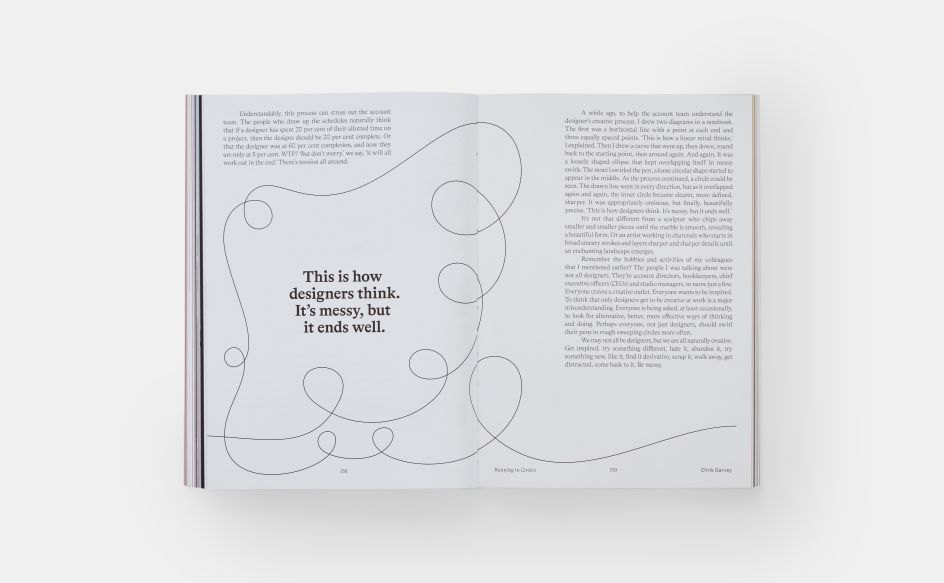
‘I Love It. What Is It?’ is intended as a testament to these accomplishments, capturing what the studio says is its “unwavering belief in instinct, risk-taking, and innovation”. It is full of great imagery, relevant quotes from figures as diverse as Bruce Lee to T.S. Eliot and plenty of anecdotes to keep you reading whether you’re an agency veteran or new to the world of branding and design.
The book is published on 24 February by Phaidon and will cost £29.95.
These three tips can help you move products outside of this online retailer as well.
Amazon is a behemoth of a marketplace that every e-commerce merchant should be on, or at least consider. However, with competition so fierce, it can be all too easy to fade into the background.
Follow these three practical steps to get more sales on and off of Amazon.
Address issues proactively
Pay attention to product reviews and feedback. If a particular issue or concern is recurring, address it at the source, be it product design or shipment packaging.
Then, when a customer has a negative experience, apologize sincerely and offer solutions, which could be a refund, replacement, or a discount on future purchases.
Offer additional value
If your product requires assembly or specific instructions, consider creating easy-to-understand online guides or video tutorials. Link to these resources in your product listings or follow-up emails.
Another way to add value is to reward loyal customers with exclusive discounts or early access to new product launches.
2. Build brand loyalty
Building brand loyalty can be difficult when a marketplace has so many options and sellers to choose from. However, you can help promote customer loyalty by being strategic in your packaging and investing in your brand presence on social media.
Personalized touch
Consider including a personalized thank you note in your product packaging. While this is logistically more challenging with FBA, you can achieve it with some planning.
After purchase, you can also send a follow-up email checking in on the customer’s experience and offering assistance if needed.
Build an off-Amazon presence
Engage with customers on social media platforms like Instagram, Facebook, or Pinterest. Share behind-the-scenes content, gather feedback, and announce promotions. You could also create a brand website and encourage Amazon customers to sign up for newsletters. This allows you to communicate directly with your customer base and foster loyalty.
Providing stellar customer service can significantly enhance brand perception. Additionally, acquiring a new customer is often more expensive than retaining an existing one. By focusing on building trust, loyalty, and offering unparalleled support, Amazon FBA sellers can ensure long-term success.
Use an experienced FBA prep partner to ensure your product packaging complies with Amazon guidelines. Companies such as mine, MyFBAPrep, can help you strategize your unique packaging, source materials, put everything together, and send shipments into Amazon for you.
3. Enhance customer engagement and reviews
Amazon’s marketplace is competitive, and often the difference between a closed sale and a missed opportunity can be your product’s reviews and how you engage with customers. As such, you should actively solicit reviews.
Use Amazon’s automated email system
Amazon’s system can ask customers for reviews after they’ve received and spent time with their purchase. A gentle and neutral reminder can sometimes nudge satisfied buyers to leave positive feedback. Then, show appreciation for positive reviews with a brief thank you to foster goodwill and loyalty.
However, if someone leaves a negative review, promptly address their concerns. A professional and courteous response can sometimes turn a dissatisfied customer into a loyal one.
Brush up on Amazon’s review policies before you request reviews. Importantly, reviews must be honest and authentic, and you cannot incentivize positive reviews.
Handle returns gracefully
One of the advantages of Amazon FBA is its streamlined return process. Ensure customers know how easy it is to return products if they’re dissatisfied.
When a product is returned, try to ascertain the reason. This feedback can be invaluable for product improvements.
While a quality product and optimized listing are critical, how you engage with customers can make or break your brand’s reputation on Amazon. Positive interactions and reviews boost immediate sales and drive long-term success by building trust and credibility on the marketplace.
By prioritizing your customers and building loyalty, you can enjoy more sales and engagement both on and off Amazon. Having consistent customers, and providing a reliably good customer experience will help build your brand’s reputation.
Evan Spiegel told Snap employees this week they work for a rare social-media platform that “makes people happy.”
In an internal note sent Monday, the co-founder and CEO seemed intent on rallying the Snapchat operator behind a sense of “urgency” after seeing several quarters of stalled revenue growth, layoffs, and struggles with its advertising business.
“Social Media is Dead. Long Live Snapchat!” he wrote in the title of the memo.
Spiegel said the company has “reached a real turning point,” while lashing out at rivals that he vaguely alluded to as Meta‘s Facebook and Instagram, along with the X platform formerly known as Twitter.
“This year is a chance to build on all the momentum we’ve developed and deliver on our full potential,” he wrote in the memo, a copy of which was seen by Business Insider.
Spiegel highlighted specific work done by Snap‘s data science, content, augmented reality, and monetization teams to improve the company’s performance for users and advertisers.
Early 2024 priorities
For at least the first half of 2024, he said Snap will focus on “bringing together several critical projects we believe are essential for our long term success.” Those include:
Shifting to focus on more user growth in developed markets like North America and Europe
Requiring a more “more iOS-centric approach”
Further efforts to improve ad targeting and performance
And the unification of “content and ad interactions” across Spotlight and Stories, Snapchat’s main features, with a vertical swipe navigation
Success in these objectives is required for Snap to be in the financial position Spiegel wants in order to push further into AR products.
“Timing matters, hence the urgency, because consumer augmented reality glasses will gain momentum before the end of the decade, and this is our chance to transcend the limitations of the smartphone and provide a computing experience that is more sensational and shareable,” Spiegel said. “We need our business to be strong enough and profitable enough to deliver the future of computing in augmented reality.”
Lashing out at rivals
Toward the end of the note, Spiegel took aim at rivals in the social media space. He harkened back to the founding of Snapchat over a decade ago, saying he and Bobby Murphy wanted to build “an antidote to the online popularity contest that started with MySpace, evolved into Facebook, and eventually became Instagram.”
A Snap spokesman declined to comment, noting only that during a Tuesday appearance at CES in Las Vegas, Spiegel mentioned his early ambition to differentiate the platform. “Bobby and I grew up with social media, MySpace, Facebook, then Instagram, and felt this constant pressure to be pretty perfect online to get likes and comments, to grow followers, and we just wanted something that we could use to have fun with our friends and our family,” Spiegel said during the event.
He went further in his Monday note to staff, however. Spiegel positioned Snapchat as a platform offering “happiness,” to teens specifically, through its messaging features and focus on close relationships. Meta on Tuesday announced new features on Instagram and Facebook aimed at making the user experience for people under 18 better as scrutiny has increased on teen mental health issues being exacerbated by content on Instagram, in particular. The company is facing dozens of lawsuits over the issue.
Spiegel seemed to refer to other issues on Meta’s platforms, like child exploitation material, as well as on X, and platforms’ issues with content moderation around the Israel-Hamas war.
“We’re certainly far from perfect, but while our competitors are connecting pedophiles, fuelling insurrection, and recommending terrorist propaganda, we know that Snapchat makes people happy,” Spiegel wrote.
In an employee-only chat posted to Blind, where users’ workplaces are verified, employees expressed frustration with the way Spiegel seemed to speak about competitors, specifically Meta. “You can clearly tell Evan’s hatred for Meta in most of the letters he sends out,” one employee said.
For the full note, see below:
Social Media is Dead. Long Live Snapchat! 8 Jan
Dear Team,
Happy New Year! I hope you all have had the opportunity to rest and recharge over the holidays. We’ve got a lot of hard work ahead of us in 2024. After years of fighting through many challenges like the pandemic, platform policy changes, and economic upheaval – all while taking on tough competitors and changing regulations – I feel we’ve reached a real turning point. This year is a chance to build on all the momentum we’ve developed and deliver on our full potential.
So much of the progress we’ve made lately has been the result of focusing intently on who we are and the role we play in people’s lives – empowering people to express themselves, live in the moment, learn about the world, and have fun together. Snapchat enhances our relationships with friends, family, and the world.
When we help people enhance their relationships, our business grows. For example, our product, growth, and data science teams developed a new methodology for determining close friends on Snapchat and use that to build features that are more likely to support close friendships. People who have close friends on Snapchat are more likely to retain over longer periods of time, so when we help people find and connect with their close friends we support the happiness and wellbeing of our community while also growing our business.
Relationships are the heart of everything we do. Our content team has used insights around relationships to recommend content in Spotlight that people want to share with their close friends. Our monetization teams are intently focused on helping advertisers form relationships with the right customers. Our augmented reality teams have created a new framework for ranking Lenses that promotes Lenses that people want to send to their friends.
The first half of this year brings together several critical projects that we believe are essential for our long term success:
First, we are continuing to evolve our machine learning models to better differentiate amongst ad interactions across our platform. Our efforts last year showed that evolving our models to drive more down-funnel, post-click engagement reduces waste and improves performance for advertisers. This year we are expanding those learnings across all of our advertising objectives.
Second, we are unifying content and ad interactions across Spotlight and Stories to reduce confusion. This means that Stories and Spotlight will both feature vertical swipe navigation, with a consistent call-to-action for linking to long-form content or engaging with ads. These unified interactions will also allow us to combine content inventory and ranking across Spotlight and Stories which will improve the likelihood that we can recommend the right personalized content for each Snapchatter.
Lastly, we are shifting more of our focus towards user growth in our developed markets like North America and Europe. Over the past several years, we’ve driven enormous growth in daily active users by focusing on Android performance in large countries like India. We will continue to build on our momentum in large opportunity countries in the APAC region while increasing our investment in improving the product experience for our community in North America and Europe. Doing so requires a more iOS-centric approach in these regions and a continued focus on helping our community connect with their close friends, especially for people who use our service monthly but not daily.
We believe that focusing on these three projects will help us to improve performance for advertisers, deepen content engagement, and increase daily active use of Snapchat – ultimately accelerating our revenue growth and increasing free cash flow. Timing matters, hence the urgency, because consumer augmented reality glasses will gain momentum before the end of the decade, and this is our chance to transcend the limitations of the smartphone and provide a computing experience that is more sensational and shareable. We need our business to be strong enough and profitable enough to deliver the future of computing in augmented reality.
Thirteen years ago Bobby and I set out to build something different. We wanted a way to communicate that was fast, fun, and expressive. An antidote to the online popularity contest that started with MySpace, evolved into Facebook, and eventually became Instagram.
In 2012, we declared that we were building something different to capture the full range of human emotion, not just what is pretty or perfect. Then, in 2017, we separated social from media to strengthen relationships with friends. In 2024, we’re on the precipice of another revolution in personal computing that began with the desktop, evolved into the smartphone, and is becoming wearable with Spectacles, our augmented reality glasses.
We’re certainly far from perfect, but while our competitors are connecting pedophiles, fueling insurrection, and recommending terrorist propaganda, we know that Snapchat makes people happy. New research published today from the University. of Chicago’s NORC shows how our core use case of messaging is a key source of happiness for young people
Messaging is the only feature on online platforms that makes a majority of both teens and young adults happy, as 2 in 3 say messaging with family and close friends makes them extremely or very happy. On the other hand, a majority of teens and young adults feel overwhelmed at the way social media makes them feel pressured to post content that will get lots of likes and comments, or will make them look good to others. Perhaps most importantly, according to the NORC data, respondents who use Snapchat report higher satisfaction with the quality of friendships and relationships with family than non-Snapchatters.
At a time when more people are feeling lonely, suffering from constant judgment online, and exposed to harmful content, snapchat offers something different: a way to enhance relationships with your real friends. And soon, we will offer a new way to use computers that brings the benefits of the Internet and computing into three dimensions, grounded in the real world, and shareable with friends – unlike any experience that exists today.
Technology isn’t going away. It’s our responsibility to make it more human, more natural, and more seamlessly integrated into our lives, so that we can benefit from its positive potential while avoiding the pitfalls. It isn’t just an exciting opportunity – it’s existential.
Your leadership and the work you are doing everyday matters deeply to our future. Let’s not waste a minute.
Feature Image Credit: Joe Scarnici | Getty Images via Business Insider
Visits to music piracy websites went up more than 13 percent last year, a new report says. The majority of those visits were to sites that allow users to download the audio from YouTube URLs.
Dozens of artists descended on Los Angeles for the 66th annual Grammy Awards. Trevor Noah will tell jokes, musicians will get trophies—and somewhere on the internet, someone will be downloading their music for free.
There were more than 17 billion visits to music piracy websites worldwide last year, a staggering 13 percent increase from 2022, according to research firm Muso. After years of downturn in music piracy brought about by streaming services like Spotify and Apple Music, the uptick is somewhat startling. According to Muso’s report, the increase shows “an urgent need for the [industry] to understand the changes continuing to drive consumers toward unlicensed channels.”
Music piracy had generally been on the decline over the past seven years, in large part because artists and labels stopped offering exclusive album releases to certain music platforms, says Muso CEO Andy Chatterley. Back in 2016, albums like Beyoncé’s Lemonade and Frank Ocean’s Blonde would be released as exclusives on Tidal or Apple Music and then get pirated by folks who didn’t use those services. Following a missive from Universal Music Group CEO Ludcian Grainge decrying the practice, exclusives died down. So did piracy. Now, it’s back in a big way.
Chatterley says there are multiple factors causing the resurgence, but he suggests that in some cases it’s a matter of people not being able to afford music streaming services. In others it’s a matter of mobile data costs being high in some regions, leading people to download tracks to their phones over Wi-Fi rather than streaming them over a mobile data connection. He points to one specifically surprising stat in Muso’s findings: Some 40 percent of the music piracy the firm tracked went to sites that rip the audio from YouTube videos and turn it into downloadable music files. That represents the largest share of piracy, according to Muso’s data—more than illegal streams, torrents, or other forms of web downloads. “It’s a really significant problem,” Chatterley says.
When asked about Muso’s findings, YouTube spokesperson Jack Malon noted that as soon as the video-sharing service is alerted to stream-ripping tools, steps are taken to block offending domains and develop technical methods to stop their use. YouTube also has a staff dedicated to sending cease-and-desist notices to those behind such applications. “We invest significant resources in tools to report and manage copyrighted material, while working closely with other industry leaders to set the standard for how tech companies fight piracy,” Malon says. “We remain committed to continuously strengthening these efforts.”
Muso wouldn’t disclose which ripping sites it tracked for its latest report. Chatterley says this information is being withheld in order to not promote piracy services. The firm also wouldn’t disclose how many downloads the ripping sites were responsible for. To provide context, Chatterley offered up torrent numbers for 2023.
Take, for example, Taylor Swift. The ubiquitous phenom is up for six Grammys this weekend and, although she didn’t release a new album in 2023, had six of the top 20 top-selling records in the US. Her release of 1989 (Taylor’s Version), the rerecorded version of her 2014 powerhouse pop record, sold some 2.9 million copies—the biggest-selling album of any year in nearly a decade. That same album was downloaded via torrent more than 275,000 times. (The original 2014 version of the album was torrented 430,077 times.)
The other albums Swift had on that top-20 list also saw large numbers of torrents. Like 2022’s Midnights. That record was torrented more than 493,000 times last year. In fact, most of Swift’s most popular albums—Speak Now, Red, Folklore, Lover, Evermore—were torrented between 400,000 and 700,000 times. All told, Swift albums were torrented fewer than 5 million times in 2023, which seems like a small figure when you consider that Swift sold 19 million records in the US alone in that time, according to data from Luminate. Then you remember that torrents are the smallest fraction of music piracy worldwide; only about 3 percent of visits to piracy sites worldwide led to someone seeking out a torrent.
And now that piracy appears to be on the rise—again. It’s been nearly a quarter-century since Napster changed how people acquired music. In that time, scores of options have emerged for how to buy and stream tunes, but snagging them from the internet may never go away.
Angela Watercutter is a senior editor at WIRED covering pop culture. She also serves as the publication’s deputy bureau chief in New York. Prior to joining WIRED she was a reporter for the Associated Press. Watercutter was also a senior editor of Longshot magazine and a contributor to Pop-Up Magazine. She received a bachelor of science degree in journalism from Ohio University.
The landscape of influencer marketing is embracing an exciting and highly effective shift toward affiliate marketing as a strategic influencer approach.
This isn’t just another trend; it’s a game-changing method that’s gaining traction for its ability to forge lasting relationships between brands and influencers.
While affiliate marketing isn’t a new concept, the core idea here is to re-imagine its role, shifting from short-term influencer engagements to long-term affiliate partnerships. In this updated approach, influencers don’t just promote; they evolve into genuine brand ambassadors over time. This strategy goes beyond typical campaigns, building a foundation of trust and continuous collaboration. Perhaps the most compelling aspect of this renewed affiliate approach is the performance-based reward system, which effectively encourages influencers to share authentic, impactful brand promotions.
Let’s take a look at how this refreshed affiliate approach can outperform traditional, one-off influencer partnerships in 2024:
Affiliate-Based Influencer Marketing: What Is It?
Simply put, affiliate marketing is when influencers earn a commission for the sales or leads they generate. It’s a straightforward concept: Influencers promote products they genuinely like, and when their followers make purchases based on their recommendations, the influencers get a piece of the pie. In many cases, influencers may receive both direct payments for their promotional efforts and commissions from sales, blending the benefits of both models.
This approach stands in contrast to one-off influencer partnerships. Think of a one-off deal as a quick handshake—it’s brief and transactional. Affiliate marketing, on the other hand, is more like building a lasting friendship. It’s not just about a single promotion; it’s about cultivating an ongoing relationship where both the brand and the influencer benefit over time.
The Advantages Of Long-Term Affiliate Relationships
Long-term affiliate relationships represent a strategic evolution, offering distinct advantages over one-off influencer campaigns. However, harnessing these benefits demands a thoughtful approach.
First, trust plays a pivotal role. When influencers regularly endorse a brand, their followers start seeing these mentions as genuine, much like how people trust a friend who frequently recommends a favourite Netflix series. This authenticity builds trust and credibility, making followers more likely to explore the brand themselves.
Consistency is key, too. By consistently mentioning a brand, influencers can ensure that it remains at the forefront of their audience’s mind. This strategy enhances brand awareness and contributes to brand loyalty as the audience is repeatedly exposed to the brand in a context they already engage with and trust. The goal extends beyond merely repeating the brand name; the aim is to integrate the brand seamlessly into their dialogue, making it a natural and authentic element of their regular content.
Another key advantage of long-term affiliate partnerships lies in their performance-driven nature, largely due to the unique compensation structure. The motivation for influencers in affiliate relationships is significantly bolstered by this setup. Unlike one-off campaigns that offer a flat rate, affiliate relationships include additional pay-outs based on performance metrics like sales or leads generated. This performance-based incentive encourages influencers to produce higher-quality content and invest more effort, as their earnings are directly tied to their effectiveness in promoting the brand.
Best-Practice Advice For Brands: Getting Started With Affiliates
Thinking of giving affiliate influencer marketing a try? Here’s a quick guide to the basics:
• Pick the perfect partners. Look for influencers whose values and audience demographics align with your brand. Let’s say you’re a fitness brand; teaming up with a health and wellness influencer should be a no-brainer. Their authentic vibe and your brand’s message will click, making followers sit up and listen.
• Choose proven influencers. Prioritize influencers who have demonstrated an ability to create engaging, genuine content. Their established rapport with their audience can be a significant asset.
• Focus on longevity. Don’t just go for a quick win. Look for influencers you can grow with. Think of it as a long-term relationship, not just a fling.
• Get some professionals on your side. Not sure where to start? An agency can be your matchmaker. They’ve got the know-how and tools to find your perfect influencer/affiliate match.
Creating Win-Win Deals
• Include fair compensation structures. Crucially, ensure that both you and your influencer are clear on payment terms. Successful affiliate influencer partnerships often involve a mix of affiliate commissions and direct brand pay-outs. This approach ensures that both parties are motivated and rewarded fairly, aligning your mutual goals and efforts for a successful collaboration.
• Set clear goals and expectations. Establish clear, attainable KPI-driven objectives for both the influencer and the brand. This helps everyone understand what’s expected and feel satisfied with the results.
• Monitor and adapt. Keep an eye on your influencer’s performance and provide helpful feedback. Adapt your strategy based on what works. Remember, one of the great benefits of long-term partnerships is the ability to tweak and refine your plan over time. This adaptability ensures that your strategy stays relevant and effective. Agencies can offer valuable insights here, helping you make informed adjustments.
As we move further into 2024, it’s important for brands to recognize the transformative potential of affiliate influencer marketing. This approach—focusing on long-term, trust-based partnerships rather than transient campaigns—offers a unique blend of authenticity, sustained engagement and performance-driven results. For brands seeking to deepen their market impact, affiliate partnerships provide a strategic path forward. By partnering with influencers who resonate genuinely with their audience over time, brands can forge meaningful connections, enhance brand loyalty and drive measurable growth in an increasingly digital world.
Founder and CEO of Sway Group, an award-winning agency that specializes in influencer marketing with a focus on B2C nano and micro campaigns. Read Danielle Wiley’s full executive profile here.
As Amazon becomes the latest platform to push an ad-supported tier, TV writers greet this retro model with frustration and, in some cases, disdain: “I thought ‘Nine Perfect Strangers’ with commercials was horrible,” says David E. Kelley of his Hulu show with breaks.
Prime Video subscribers who visited the platform were greeted with a new prompt: “Movies and TV shows included with Prime now have limited ads. You can upgrade to be ad free for $2.99 a month.”
After a swift click on “not now,” this viewer cued up one of the more successful titles currently gracing Amazon’s roster — the second season of beefcake vigilante drama Reacher. Interruptions, which included a spot for another series (Hudson & Rex, starring a German Shepherd detective) and a reminder from the folks at Intuit TurboTax that filing season has commenced, were indeed limited. But in an era where more and more viewers are culturally conditioned to be repulsed by ads on any broadcast but the Super Bowl, even limited spots are conspicuous.
“We fought so hard to get rid of commercials,” says Alan Poul, executive producer and director of Max original Tokyo Vice, which returns for a second season Feb. 8. “It was one of the biggest steps in bringing the worlds of TV and film closer together, in getting that higher level of artist to participate. It was such a seminal gain, and now it’s reversing.”
If you’re not willing or able to part with an extra $2.99, $6 (Disney+ and Max), $8.50 (Netflix) or $10 (Hulu) to go ad-free, commercials are the new (old) normal. Paramount expands its own ad-supported tier internationally later in 2024 — and though no official plans have been announced, recent hires at Apple TV+ suggest the tech behemoth will eventually introduce ads as well. Subscriber frustrations, especially in a climate of unabated inflation, are a given. Feelings in the creative community, which vary from indifference to outrage, largely depend on where and how one works.
For Poul, whose stateside platform is still expanding its global reach, Tokyo Vice has to be made in a way that allows it to be sold to multiple platforms in other territories. Some of those have advertising and others don’t. And while act breaks — those are moments of deliberate transition in scripts that double as natural windows for commercials — aren’t written in to accommodate the potential for ads, Poul says such breaks are discussed with editors in postproduction.
Many scribes still pen scripts with those broadcast-friendly act breaks in mind. One of them, Terry Matalas, operated under the assumption that Star Trek: Picard might eventually find its way to a platform with an ad-supported tier while working on the series. When Paramount+ expands ads in a few months, his instincts will have been proven right. “I’d just hope showrunners have a say where the ads are,” says Matalas, “and that [episodes] don’t just break in the middle.”
The absence of any discussion around ad placement, for the creatives who spoke for this story, appears to be the norm — and a real sticking point for several. When filmmaker Lulu Wang spoke with THR in January, she was still unsure where advertising would be placed on her pricey Prime Video drama Expats. Adopting a weekly rollout, with the first two episodes having premiered before the introduction of the advertising tier and the back four dropping in this new era, Wang says she didn’t find out about the possibility of advertising until filming had wrapped. (Amazon publicly announced the plans in September 2023, solidifying the tier’s start date and price point in December.)
“I’m very angry about that,” said Wang. “If I had known, I would’ve created in a different way because it’s not a show that has cliff-hangers or commercial breaks to make sure people come back.”
David E. Kelley, the onetime broadcast golden boy who gave audiences Picket Fences, Chicago Hope and Ally McBeal before pivoting to premiere outlets like HBO (Big Little Lies) and Netflix (The Lincoln Lawyer), seems similarly disenchanted. In 2021, he released the first season of Nicole Kidman collaboration NinePerfect Strangers on Hulu. Depending on the viewers’ subscription plan, they got, by his estimation, two different shows.
“Sometimes it upends the piece,” says Kelley. “I thought Nine Perfect Strangers with commercials was horrible. We sold it as a one-hour show, and it was served like a pie — but it was pudding. You can’t cut pudding into slices, and that’s exactly what was done.”
Not everyone feels as strongly. When Wednesday creators Alfred Gough and Miles Millar delivered their Jenna Ortega drama to Netflix, the dominant streamer’s most watched English-language original to date, the pair baked natural moments for ad breaks into the episodes they delivered — more out of habit than anything. “’Propulsive,’ that’s the word you hear most in streaming … how to hook people and bring them back,” says Gough. “So while there are no act breaks in scripts like there used to be, the form is there. We’re not doing it because of any mandate from Netflix or [producers] MGM.”
Wednesday’s second season is being written in a similar fashion. And while Millar says there’s been no dialogue with executives about where to slot in said ads, it’s also not a concern: “If they asked us where act breaks go, we would tell them, but it’s pretty obvious.”
Francesca Sloane, co-creator and showrunner of Amazon Prime’s Mr. & Mrs. Smith, is in a similar boat to Wang. She learned about the ad-supported tier during postproduction and, come Feb. 2, has the first marquee series to launch under the new subscription model. She says they did not make any changes for where ads might go.
“I’ve written on other shows in the past where this question has come up,” says Sloane, who previously worked on Atlanta, Fargo and Seven Seconds. “Nine times out of 10, you just try to write the story without thinking about any breaks and then hope that it doesn’t create too big of a disruption.”
Whether they’re thinking about it or not, TV makers and viewers are running out of strictly commercial-free platforms. And those streamers that have already made the jump are doubling down. Netflix, which recently cited that 40 percent of all new signups opt for ads, announced the “retirement” of its least expensive commercial-free tier in the coming second quarter. Advertising, after all, isn’t just an additional revenue stream. It’s a way appease Wall Street with subscriber growth, and cheaper plans will always be appealing to a large portion of consumers. “The reality is that most consumers buy cheaper tiers,” says Kelley, “which is almost worse than broadcast. Then, you could at least TiVo your way through the breaks.”
This wholesale transition from the original promise of streaming would perhaps be rankling more writers and producers, were it not coming at a time of deep-seated frustrations with the entire ecosystem. The resolutions of the 2023 strikes offered gains and new assurances, yes, but Hollywood returned to work beleaguered by tighter budgets, mass cancellations and fewer green lights. Making TV without the concern of commercial breaks, like many perks of the past decade’s now-defunct TV boom, is a thing of the past.
“Losing commercials was one of the biggest steps in making TV more cinematic,” says Poul. “I’m happy to pay a couple extra bucks to not have them, but I know that’s not a luxury that is available to everybody.”
How a brand is perceived by consumers can influence not only market structures, but also culture and even government policy.
rand development has become a major focus for firms hoping to find or maintain success in advanced markets. According to Steve Forbes, “Your brand is the single most important investment you can make in your business.” And he certainly is right.
A brand not only serves to identify firms and what they offer, it also conveys a company’s positioning strategy and value proposition. Promotional elements such as logos, names, symbols, and colours, are commonly leveraged for branding purposes but a brand can also be reinforced through pricing and distribution systems. For instance, if a company wants their product to be viewed as the best of the best, then they wouldn’t want it to be found on the shelves at a discount store. This is why Burberry has been known to burn excess inventory and perhaps it is also why premium brands will leverage opportunities to recycle their products.
Patagonia’s ‘Take-Back Program’ is truly a strategic marketing move since, by means of consumer participation, Patagonia can improve its environmental ratings. Patagonia gets the purchase first and the accolades after when buyers bring back their used apparel.
In addition to the ‘Take-Back Program,’ Patagonia offers store credit on certain items that have trade-in value. As such, Patagonia incentivizes further purchases and prevents products from ending up in donation bins.
Patagonia is known for its reputation of being environmentally focused, and reputation matters. Consumers will often choose products because of the brand. Take over-the-counter drugs. Unlike pharmacists who will opt for generic versions, consumers will buy Advil or Tylenol even when the properties of a generic drug may be identical to the name brand version.
Consumers are also more likely to try a new product if it is from a brand they trust or want to support; and this is why Taylor Swift can successfully sell the same songs over again.
The overall value generated from a brand is known as brand equity, and strong brand equity tends to ensure strong bottom lines. Therefore, the more valuable the brand, the more protection needed. Taylor Swift knows this all too well and has filed trademark applications for not only her name and initials, but also for the names of her albums and songs.
Companies (or celebrities) who may be less well known or can’t seem to compete with established notable brands may benefit from third-party certifications or strategic alliances to boost sales opportunities. Swift’s beau, Travis Kelce of the Kansas City Chiefs, has undoubtedly benefited from her spotlight. After their relationship began in the summer of 2023, sales took off for NFL merchandise and by the fall, Walmart was featuring Travis Kelce’s line of ‘kitchen prepared meals.’
There may be times, however, when companies want to distance themselves from certain connections or even from themselves.
For example, in 2017, The Hershey Co. sought out to acquire Amplify Snack brands, featuring natural and low-calorie food products such as Skinny Pop. Given that appealing to health-conscious consumers with a name synonymous with chocolate would likely be a hard sell for Hershey, expanding its product portfolio by acquiring established brands made good business sense.
Other big brands selling more wholesome products include PepsiCo Inc.’s ownership of KeVita (organic probiotic beverages) and Colgate-Palmolive’s ownership of Tom’s of Main (all-natural personal care products).
The downplaying of a brand name can occur not only for promotional reasons but also due to political pressures. And currently this is playing out in the pharmaceutical sector in a disconcerting way. Beginning at the start of 2024, in accordance with a Medicaid rebate program, drug makers must pay significant penalty fees for price increases that may have transpired over time. To seemingly bypass the penalties, Glaxo removed one of its products, Flovent, from its portfolio and replaced it with a lower-cost generic version. By doing so, Glaxo can sell its product devoid of a price history for the government to flag.
For those who need Flovent (predominantly children with asthma), there is a major drawback to this change. The generic version is not carried yet by all pharmacies and insurers don’t typically cover generic drugs. Lucrative incentives for insuring branded medicines have beena concern for quite some time, and drug pricing is indeed a tricky matter. Overpriced drugs are a problem, but unavailable drugs are an even bigger problem. Similar to the baby formula shortage in 2022, it seems government intervention can carry a high cost for consumer wellbeing.
Clearly strategies for branding can be quite contentious, and clearly brands matter in more ways than one.
How a brand is perceived and positioned in the marketplace can influence not only a company’s marketing mix but also society’s interests and government interference. Likewise, the way in which consumers respond and react to a brand and its value proposition can determine what may be offered and marketed—both for good and bad. In Capitalism: The Unknown Ideal, Ayn Rand notes that “the market value of a product is not an intrinsic value” but rather a representation of a “socially objective value.”
A product may be of the best quality and the best price, but if it is not of interest to consumers, it holds little value. Conversely, a product may seem to be void of any functional value and be of little use, like a diamond, but if consumers want it and have the means, they will buy it.
Dr. Kimberlee Josephson is an Associate Professor of Business at Lebanon Valley College in Annville, Pennsylvania, and a Research Fellow for the Consumer Choice Center.
Design experts select the best ads of the 1930s, and explain what made them so special.
The 1930s wasn’t the happiest time in history; it was the decade in which the fun of the Roaring Twenties morphed into the misery of the Great Depression and the rise of the Nazis. But every action produces a counter-reaction, and this was also a decade that saw a surge of innovation and resilience. And that made the 1930s a golden age of advertising; a period when creativity bloomed in the face of adversity, and brands dared to be different
For this article, we asked the experts to select their favourite 1930s ads. And this was not just an exercise in nostalgia, because these designs have a lot to teach modern designers. Like the best 1930s logos, these ads are mini works of art, infused with the spirit of the times. They capture the anxieties and aspirations of a nation grappling with economic hardship and yearning for a brighter future.
If this article inspires you, then make sure to read our guides to the best logos too. Our repository of the best logos by decade is a great place to start.
01. Guinness
(Image credit: Guinness)
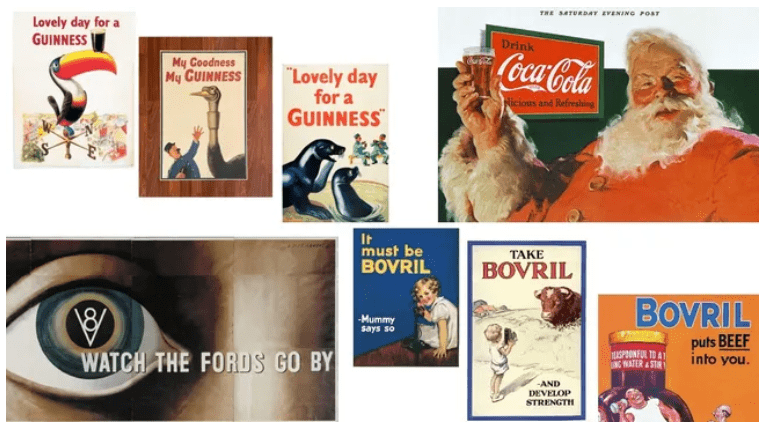
Marketing has always been key to the success of Guinness, and that’s been the case now for almost a century. In the 1930s the brand commissioned artist John Gilroy to create a series of expressive ads and they were a monumental success, carving a special place in advertising history for their ingenuity, humour, and enduring cultural impact.
“Gilroy’s ‘My goodness, my Guinness’ is a great example of taking a brave creative leap into the abstract with various circus animals depicted in humorous situations,” says Matt Hauke, senior designer at Design by Structure. “On paper it makes little sense, but captures a joy and humour that only creativity could bring. Such was its success the Toucan remained an icon for Guinness throughout the 20th century, and the campaign paved the path for the brand’s quirky and off-beat advertising for years to come.”
A personal favourite of Gary Jacobs, creative partner at Live & Breathe, is Gilroy’s ‘Lovely Day for a Guinness’. “This timeless masterpiece revolutionised advertising art by infusing whimsical and captivating visuals into everyday activities, centred around the enjoyment of a pint of Guinness,” he explains.
“Gilroy’s artistic brilliance, coupled with the campaign’s ability to evoke joy and camaraderie, transcends its era, making it an enduring icon and an inspiration for aspiring advertisers. The magic lies in transforming a simple product into a narrative that creates an emotional bond with consumers, showcasing the everlasting allure of creativity in the advertising industry.”
02. Bovril
(Image credit: Bovril)
Bovril is a meat extract paste that’s played a pivotal role in British history. It was a favourite of football crowds, a popular choice amongst soldiers during the First World War, and the only hot drink that Ernest Shackleton’s team had when they were marooned on Elephant Island. Advertising was key to maintaining the brand’s market dominance, and The History of Bovril Advertising by Peter Hadley is required reading for anyone in the advertising profession today.
“Bovril’s art style was so very 1930s,” says Benny Bentham, creative director at Waste Creative. “A sense of art deco wholesomeness, with bold colours and usually a picture of a cow or a heroic man flexing his muscles after drinking it. These posters are iconic, of an era, yet also timeless. ‘It must be Bovril’, ‘It puts beef into you’ and ‘Develop strength’ are three lines of copy I’ve remembered since childhood, after seeing my gran’s Bovril poster showing a boy taking a photo of a cow that looks very displeased it’s about to be turned into a drink. I always found it mildly disturbing, but I remembered it!”
Karim Salama, director at e-innovate, is equally enthused about this pioneering brand. “Bovril’s 1930s campaign is often regarded as a product of the zeitgeist of the time,” he explains. “Symbolising health, prosperity and strength in a period of substantial economic uncertainty was a fantastic way to market a brand. The inclusion of the iconic bull was one of the first popular instances of anthropomorphism, and its influence is reified to this day.
“It would be hard to say that any of the most popular marketing campaigns involving animals would still be here were it not for Bovril’s Bull,” he adds. “The perspicacity of GEICO’s Gecko; Aflac’s Duck; even Frosties’ Tony the Tiger may not have been nearly as effective were it not for Bovril’s inclusion of an animal in the marketing. The fact Bovril managed to use this symbolism effectively taught every brand since that anthropomorphism is a very effective marketing tool.”
03. Coca-Cola
(Image credit: Coca-Cola)
There’s a persistent urban myth that Coca-Cola invented Santa Claus, which is certainly not true. But the company’s advertising did play a big role in shaping the jolly character we know today.
Before the 1930s, there were many different depictions of Santa Claus around the world, including a tall gaunt man, an elf and even a scary version. But then in 1931, Coca‑Cola commissioned illustrator Haddon Sundblom to create paintings which established Santa as a warm, happy character with human features, including rosy cheeks, a white beard, twinkling eyes and laughter lines. The ad first appeared in The Saturday Evening Post and Collier’s in December 1931.
“You can’t get more iconic than Coca Cola’s Santa, surely?” says Hauke. “Their 1931 campaign was initially launched to remind people that Coca Cola isn’t just for hot, summer weather but all year round too. It proved to be a stroke of genius giving the drink an unrivalled, and globally understood, brand ambassador – at zero cost – and permanently tied the drink to one of the most loved holidays in Christmas. Such was its impact it has maintained relevance for generations to come.”
04. Agfa
(Image credit: Agfa)
When the German multinational conglomerate Agfa introduced Agfacolor Neu, a multi-layer colour reversal film in 1936, it was a true game-changer. Considered the first commercially successful colour film, its vibrant colours and ease of use revolutionised photography. And of course, it needed a suitably eye-opening advert to draw attention to this incredible innovation.
“The beauty of this ad is its graphic simplicity,” says Natasha Blevins, creative director at We Are Collider. “Ditching traditional headlines and calls-to-action, it instead opts for product focus and expressive imagery. Its strength lies in the dynamic diagonal layout, where hands and a flowing scarf pull the eye.
“The restrained colour palette supports this with striking visual contrast. But there’s also a clever narrative: the protagonist is getting the attention of the people she’s photographing, as well as us – the audience. In an era dominated by housewife-centric ads, this offers a refreshing and progressive portrayal of female modernity.”
05. Dubonnet
(Image credit: Dubonnet)
Created by wine merchant and chemist Sir Joseph Dubonnet in 1846, Dubonnet is an aromatised wine originally conceived as a way to get French Foreign Legionnaires in North Africa to drink quinine. This beautiful 1930s ad for the brand was created by painter, commercial poster artist and typeface designer AM Cassandre, whose innovative and avant-garde approach to design earned him a prominent place in the Art Deco movement.
Adele Leyris, design director at House 337, outlines just what’s so clever about it. “It’s a three-step sequence showing the different moments of pleasure while interacting with the drink,” she explains. “You start by admiring it (Du bo = Du beau), then you enjoy drinking it (Du bon), and then you serve yourself another glass of Dubonnet wine. Cassandre masterfully uses negative space to show the impact of the product on the character as he fills up in colour.
“This is the perfect example of considered design efficiently serving an emotional message about the brand, which was never seen before in 1932,” she adds. “You still see some of the old painted ads in rural villages and cities across France.”
Rob Kavanagh, executive creative director at Oliver UK, is also a fan. “Ever since I saw this poster at university, it’s held a place in my mental scrapbook of great and guiding work,” he enthuses. “The ad is elegant and clever, but it’s also instructive. Back in the 1930s, creatives weren’t armed with insights. Here, Cassandre presumably took a long, hard look at the product, and the inherent creative solution patiently revealed itself.”
06. Taxol
(Image credit: Taxol)
When compiling lists of the best historical adverts, it’s tempting to focus solely on the fun stuff like the brands we’ve covered above. But while the subject matter of pharmaceutical advertising may be uncomfortable at best and disgusting at worst, from a designer’s point of view it’s still fertile ground for inspiration, argues Ed Lloyd, creative strategist at Seed.
“Pharmaceutical advertising involves the challenge of communicating precise – and perhaps dry – information in an interesting way,” he points out. “Many adverts in France in the 1930s met this challenge through incorporating bold and experimental graphic styles that drew upon popular art movements of the time, such as Bauhaus, Constructivism, Art Deco and Art Nouveau.”
This example for the constipation medication Taxol (not to be confused with the cancer treatment of the same name) features striking type, clashing colours and diagonal lines often associated with constructivism. “Interestingly, TFL’s latest safety campaign, designed by illustrator Andrew Hudson, seems to be pulling from a similar artistic territory to also communicate well-being quickly and boldly,” adds Lloyd.
07. Cadillac
(Image credit: Cadillac)
We may associate Cadillac with the 1950s and 1960s, but it was founded long before that, in 1902. And Raj Davsi, creative director at FutureDeluxe, is in love with these 1930 ads for the American car brand.
“One admirable aspect of their advertisements in each car release is the consistent design language throughout the collection,” he notes. “The illustration of the car is beautifully simple, and I particularly enjoy the graphic nature of the side profile. It feels very iconic, and the car’s central position attracts the viewer’s eye to it. I love this and adopt this central framing a lot in my work today.”
He continues: “The image illustration combined with the car has been executed in a clean and tasteful manner, with a great use of the Art Deco style. It provides a glimpse into the possible lifestyle of the car owner. The ad’s clean layout and thin typography create a luxurious feel, which is very fitting for the car.”
08. Doxa
(Image credit: Doxa)
Another favourite of Davsi’s is this ad for Doxa, an independent Swiss watch manufacturer founded in 1889 and today best known for its dive watches. “There are many reasons I love what they have done with this ad,” he says. “The chosen colours give off a luxurious and expensive vibe, reflecting the intended target market. I love the balance of blues, browns and reds. The beautiful use of composition is so pleasing.
“The angle used to compose the watch feels heroic and strong,” Davsi continues. “We have had the privilege to design and develop watch commercials at FutureDeluxe, looking for similar compositions when making a watch film. The compositions of the watch extend seamlessly into the sail, which is such a nice touch and feels like luxurious promotion. I am into the bold type and composition. It feels robust, almost representative of the watch.”
09. Ford
(Image credit: Ford)
As the O.G. of mass production, we tend to think of Ford cars as basic, solid, simple and dependable. But there’s nothing simple or boring about this 1937 ad for the brand, another classic designed by A.M. Cassandre.
“The artist strips away practically every convention in advertising in this ad,” says design commentator Daniel Shannon, “harnessing European minimalism to elevate the medium to something more akin to modern art. At the same time, he pre-empted the more emotive approach seen in decades to come.
“A striking, singular all-seeing eye remains curiously anonymous in an age where most advertising was heavily gendered,” Shannon continues. “Our faceless protagonist rises above the role of consumer and is instead an observer – liberated and seemingly unwanting. The headline, so unassuming as to verge on the existential, pulls away from the iris – the first place the viewer’s eye naturally falls. The delicate alignment of the cap ‘W’ with the V8 icon lends a compositional elegance rarely seen at a time where typography was often an afterthought.”
10. London Underground
(Image credit: London Underground/TFL)
The London Underground map and logo are two of the most celebrated pieces of design in modern history. But there’s plenty more to discover in the transport network’s past, and here are two great examples of its long-standing tradition of effective and impactful advertising.
As Marc Allenby, co-founder and chief creative officer at Hijinks Collective, notes: “The London Underground design, iconography and poster design has become a key part of London’s rich history and a visual representation of the city itself. An artist named Alan Rogers created these beautiful pieces of advertising for the London Underground. Less ad, more art, Alan elegantly – and in my mind so smartly – incorporated the iconic roundel into his bold, modernist designs.”
These posters may have been published in the 1930s but they remain timeless pieces of communication. “These ads elegantly and stylishly convey their message through beautifully crafted illustration and typography,” says Allenby. “They communicated a new world, a world of optimism and futuristic romanticism of travel. They helped to turn OOH posters into something that you’d put on your wall. My takeaway; let’s bring art back into today’s OOH!”
11. Kodak
(Image credit: Kodak)
Kodak played a crucial role in making photography accessible to the general public from the late 19th century onwards. A company that was all about visual communication could be expected to deliver great advertising, and they didn’t disappoint.
“Kodak has a rich advertising history in the early 1900s,” says Angela Sturrus, creative director at Hook. “With memorable slogans such as ‘You press the button, we do the rest’ and ‘Take a Kodak with you’, the Kodak brand became an established household name that made photography accessible and approachable. By the 1930s, Kodak started to broaden its target market by approaching the younger generation and, subsequently, their parents.”
Sturrus recalls how they started this advertising strategy with a splash on their 50th anniversary by giving 500,000 cameras away to any 12-year-old child. In the coming years, they coined their holiday slogan of ‘Give a Kodak’ where they reinforced the idea of gifting a Kodak to children.
“This creative approach helped embed Kodak into the hearts and minds of the Greatest Generation, which continued to pay off for the brand for decades,” adds Sturrus. “Overall, Kodak’s creative strategy during that time was not only captivating, catchy, and insightful but also completely futuristic.”
With alcohol sales flattening, the beer, wine, and spirits industry has managed to cash in on the growing ‘sober curious’ trend.
Branded is a weekly column devoted to the intersection of marketing, business, design, and culture.
Consumer brands often strive to be part of a larger cultural conversation. But what if that cultural conversation is basically about not using your product?
This is the dilemma faced by beer, wine, and spirits marketers as Dry January—challenging consumers to abstain from alcohol for a month—grows into an increasingly buzzed-about yearly ritual. According to data tracker Nielsen IQ, 29% of consumers say they took part in Dry January last year, and 44% said they were likely to this year. While those numbers likely represent aspiration rather than actual behaviour, the month has become a sort of flagship for a broader “sober curious” trend that has lifted year-round sales of alcohol alternatives well beyond niche territory. But increasingly, some very familiar brands have become part of that conversation too. Brands like, say, Heineken.
Heineken 0.0, that is. Introduced in 2017, it’s now the top-selling non-alcoholic beer in America; its $86 million in sales reportedly account for 7% of all Heineken brand sales. A recent ad for the U.K. market positions no-alcohol Heineken as an acceptable choice at the bar, so you don’t have to bail on drinking buddies while you abstain. (The ad features Welsh soccer star Gareth Bale—get it?) The idea is that avoiding alcohol needn’t be about settling for less, but adding more: “Heineken 0.0 enables you to do more of what you love, like socialize with friends down at the pub,” Stephanie Dexter, brand director at Heineken U.K., told Adweek. Heineken social media has struck a similar theme, noting that Dry January participants need not “compromise on taste” and can shift to its non-alcoholic version instead.
The idea is that Dry January (or the less stringent, “Damp January”) doesn’t have to be a buzzkill, and the sober-curious can blend in at the bar without fear of being stigmatized as an uptight teetotaller. More precisely, the message is that you don’t have to avoid familiar alcohol brands to participate, you can embrace them: Hey, alcohol-avoiders, the beer, wine, and spirits industry has your back.
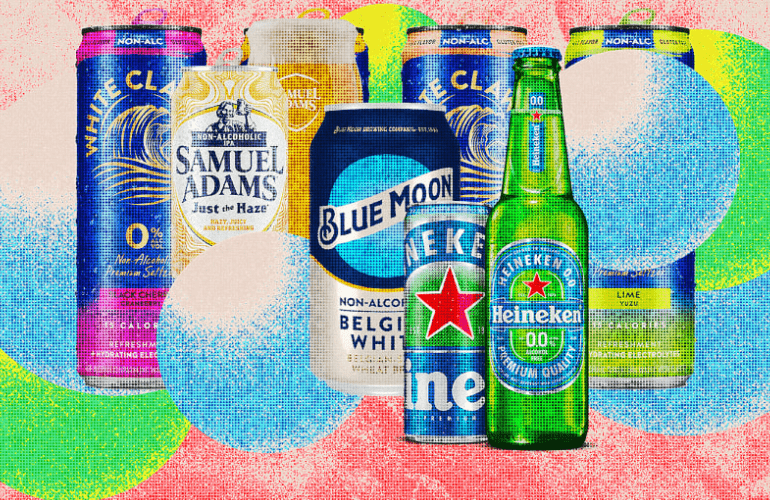
Heineken is hardly alone in adding its brand to the alcohol-free mix, which includes such long time options as O’Doul’s and newer craft-y offerings as Athletic Brewing Company. In recent years, Guinness 0.0, Samuel Adams Just the Haze, and Budweiser Zero have also become top sellers.
Increasingly, this is a year-round phenomenon, as consumer interest in alcohol alternatives has soared. Alcohol sales have flattened since a pandemic-era spike, while non-alcoholic beer has seen increases of around 30% for several years straight. But Dry January is clearly becoming a monthlong Super Bowl for the category, a marketing scrum, and a time for new launches and silly stunts.
Blue Moon introduced a nonalcoholic Belgian white ale with a promotion that started January 12—the day when the most significant chunk of Dry January participants fall off the wagon. Miller Lite, in a curious twist, is offering alcohol-free “beer mints” that supposedly mimic the brew’s flavour. And White Claw, a brand whose entire raison d’etre is adding alcohol to seltzer, has rolled out a zero-alcohol version. (In other words: seltzer.)
For established brands in particular, building up non-alcoholic variations of alcoholic drinks is a strategy that transcends Dry January, and in fact amounts to a kind of marketing jiujitsu. After all, actively subverting the month event—which began as a public health initiative by a British public health organization back in 2012—would be a bad look. Much better to simply find a way to join the party. According to the Wall Street Journal, Heineken is pouring a quarter of its global Heineken ad budget into Heineken 0.0. And it’s not just targeting abstainers, but also consumers who just want to cut back, perhaps toggling back and forth between versions. Some of its past non-Dry January-specific advertising has even suggested new alcohol-free drinking occasions—like giving a work presentation.
It’s hard to say whether the sobriety trend will have a lasting impact, but it seems like a safe bet that Dry January will be back for another round. And for now, Big Alcohol is buying.
Explore the impact of Customer Experience (CX) on business success, from customer journey nuances to strategies for enhancing CX and fostering brand loyalty.
The Gist
Total journey. Emphasizes the importance of the entire customer experience, from first contact to post-purchase interactions.
Emotional connect.Highlights the critical role of emotional engagement in enhancing customer experience and building loyalty.
Strategic CXM.Underlines the necessity of a strategic approach in customer experience management to exceed customer expectations and foster brand loyalty.
In an era where choices are vast and competition is fierce, understanding why customer experience matters is a cornerstone of business strategy. Customer experience, often referred to as CX, shapes the way companies interact with customers, build lasting impressions and drive loyalty.
Let’s break down the intricate layers of CX and uncover its role in dictating success in the digitally connected world.
What Is Customer Experience?
Customer experience represents the complete journey a customer takes with a business, including every interaction from initial contact to beyond the final purchase. It includes the emotions, impressions and responses customers experience throughout these interactions. Within this definition are various types of customer experience, each defined by the nature of interaction, be it digital, in-person or via customer service channels.
The idea of customer experience recognizes that the entire experience of the customer contributes to the customer’s final evaluation of your company, not just immediate enjoyment of the product, said Colin Crowley, VP of customer support at Maven Clinic.
He pointed to the example of ordering a new pair of shoes: “It’s not just about having a nice pair of shoes, but the experience through which your customers journeyed to research the company, to order the shoes, to receive the shoes… and the customer service surrounding any questions about the shoes, to name just a few examples.
What Is Customer Experience Management?
Customer experience management (CXM) is a strategic approach that focuses on creating customer experience that exceeds expectations. It involves optimizing each interaction between a customer and a brand in a way that enhances customer satisfaction, loyalty and advocacy.
Integral to this process is understanding the customer’s journey and ensuring every touchpoint contributes positively to their perception. An important subset of CXM is consumer experience marketing, which focuses on tailoring marketing efforts to enhance the overall customer journey and experience.
What Is the Customer Journey?
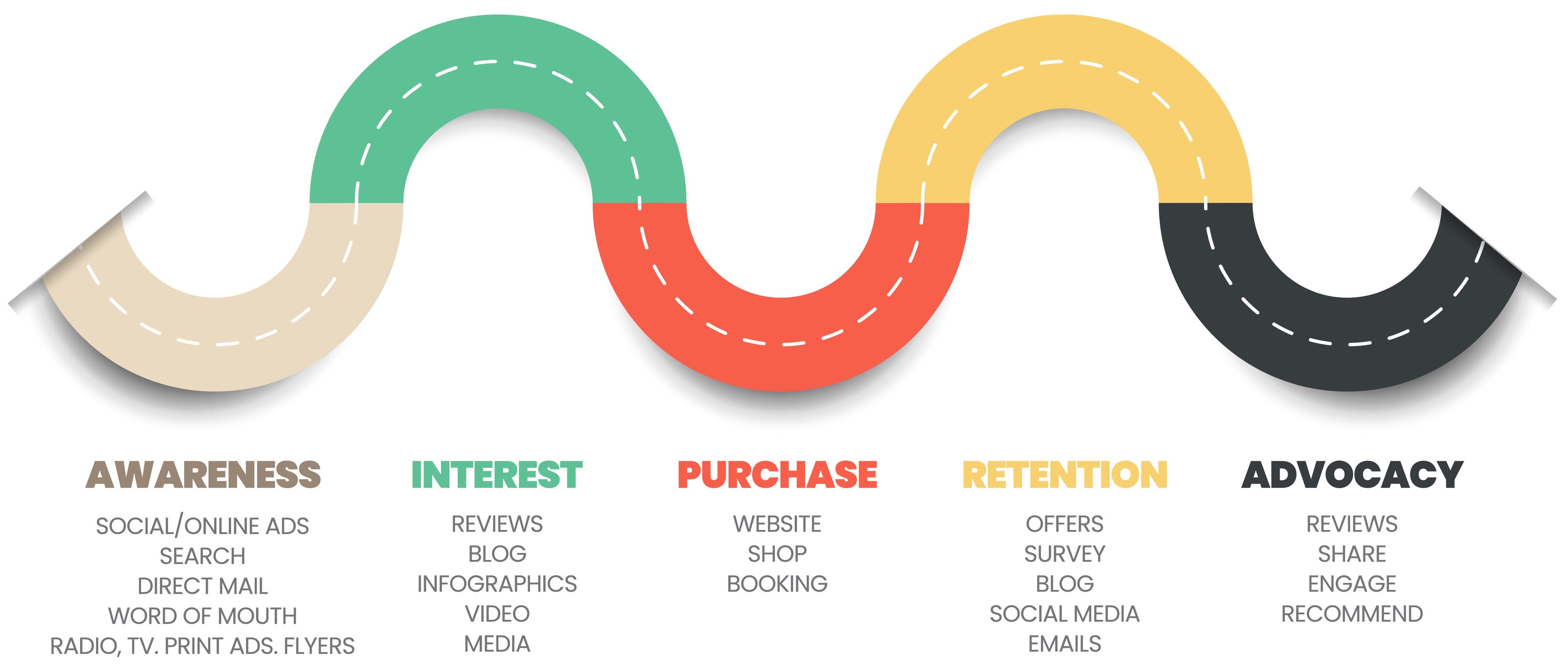
The customer journey maps the path a consumer takes with a brand, from initial awareness to the final stage of purchase and post-purchase interactions. It covers every touchpoint where a customer engages with a company, such as through word-of-mouth, email, reading reviews, social media posts and more.
Awareness: The customer becomes aware of the product or service.
Interest: The customer starts considering the product or service as a solution to their needs or problems.
Purchase: The customer makes a purchase decision.
Retention: Post-purchase, the focus shifts toward retaining the customer through excellent customer service, quality products and ongoing engagement.
Advocacy: Satisfied customers become advocates for the brand, sharing their positive experiences with others.
What’s the Difference Between Customer Experience and Customer Service?
Customer service is a single part of the broader customer experience, focusing on the support and assistance provided to customers. It tends to be reactive, coming into play when a customer faces an issue or needs help. In contrast, customer experience encompasses the entire customer journey, a proactive and comprehensive approach that includes every touchpoint and interaction a customer has with a brand.
Why Is Customer Experience Important?
Customer experience directly shapes brand perception, drives customer loyalty and influences purchasing decisions. A positive experience can lead to increased customer retention, referrals and a strong brand reputation, all essential for long-term success. In fact, research from Deloitte found that customer-centric companies are 60% more profitable than companies not focused on the customers.
In contrast, neglecting customer experience can result in lost customers and negative reviews, adversely affecting a company’s growth and profitability. The importance of customer experience extends beyond immediate sales — it’s a strategic asset that differentiates a brand and fosters sustainable growth.
How to Measure Customer Experience
To learn how to understand customer experience, you should begin with looking at effective ways of measurement. “Because customer experience is a holistic concept,” said Crowley, “the metrics to measure it should also be holistic and all-inclusive of all aspects of the customer experience.”
Look at the Whole Journey
You need to measure the different aspects of a customer’s experience, explained Crowley, and to do this, you need to demarcate all the different points at which your company touches the customer — website experience, ordering experience, delivery experience, etc.
“Each of these experiences can be evaluated in their own way and be owned by a cross-functional team of people at your company (think of a pod) consisting of key stakeholders across relevant teams,” he said.
Analyse Customer Survey Results
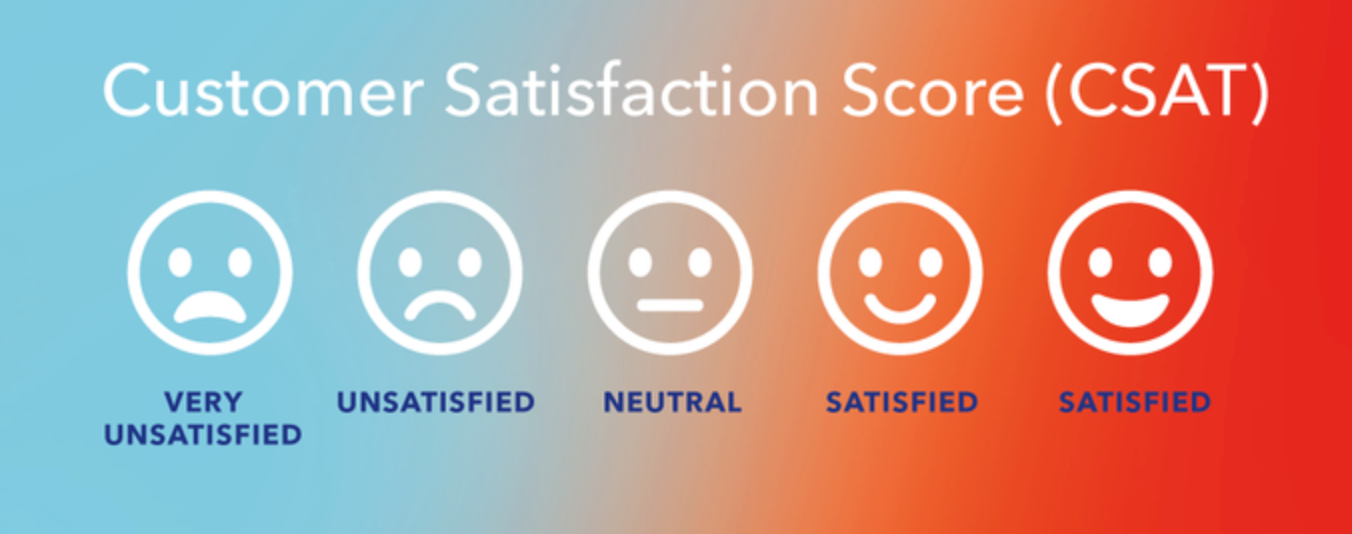
Two holistic measurements you can turn to are the customer satisfaction (CSAT) survey and the Net Promoter Score (NPS) survey, which do not evaluate one aspect of the customer’s journey, but the entire journey, said Crowley.
CSAT surveys, for instance, typically ask a customer to rate their satisfaction on a scale of 1 to 10, or by using a graphic scale with smiling, neutral and unhappy faces (like the one below). NPS scores, on the other hand, ask for a numerical score based on a single question, such as, “How likely are you to recommend the product?”
“These holistic metrics are helpful, especially to establish benchmarks with companies in similar verticals (which is where NPS helps, because there are well-publicized NPS benchmarks for certain industries), but you should also be sure to combine such holistic metrics with freeform response opportunities,” said Crowley.
Regularly Ask for Customer Feedback
Beyond CSAT and NPS surveys, Joe Miliziano, chief operating officer at Harri, recommended constant prompting for constructive feedback. Some ways his company asks for feedback include:
Asking for in-product feedback
Email campaigns
Exit prompts when clients leave
Another way they ask for feedback? “In our Support Center, we’ve given the ability to actually post comments and vote other people’s things up and down. I think that’s always a very helpful thing, because you hear very loud clients, and sometimes, if you see ten people saying something’s a good idea, it’s probably a good idea,” said Miliziano.
Tap Into Text Analysis Tools
“Rather than just looking at a rating scale response,” added Crowley, “you can use AI-powered text analysis tools to dig deeper into what drove your customers’ responses.” These tools can uncover valuable insights hidden in unstructured data, such as reviews and social media comments.
This approach allows business to look at sentiments, preferences and pain points of customers, providing a roadmap for targeted improvements and personalized experiences. Beyond identifying areas for improvement, text analysis can also help companies foresee trends, adapt to changing customer needs and maintain a competitive edge.
Identify Rate of and Reasons for Churn
Another big measurement to keep an eye on, according to Miliziano, is retention. “In the business world, at the end of the day, are my clients staying with me? Or not?” Yes, he said, they might give a good NPS score, but are they staying in and are they continuing to buy more?
If customers are leaving, it’s essential to find out why. During exit surveys or interviews, ask departing customers directly why they chose to leave. Use engagement metrics like usage frequency, session time and future adoption rates to identify declining engagement, which often precedes churn. And comb through customer support interactions to look for signs of dissatisfaction or recurring issues that went unresolved.
Ultimately, said Crowley, “A combination of holistic metrics and granular metrics will combine to give you the best view of the customer experience, statistically speaking.”
5 Ways to Improve Your Customer Experience
Why improve customer experience? Because great CX is key to fostering loyalty, increasing customer satisfaction and standing out in a competitive market. Let’s look at some key strategies for crafting and optimizing CX:
1. Understand Who Your Customers Are
Understanding your customer base is one of the first steps in crafting a great customer experience. This process involves analysing customer data, identifying different customer segments and recognizing their unique needs and preferences. Tailoring your approach to meet these specific customer segments ensures more relevant and impactful interactions.
2. Create an Emotional Connection
Developing an emotional connection with customers can transform the overall experience. In fact, according to a Forrester report, emotion is the most important driver behind customer experience. To tap into the emotional side of things, brands create stories, values and experiences that resonate with their target audiences on a personal level. When customers feel emotionally invested, they’re more likely to purchase from a brand (according to Iterable) and build lasting relationships.
3. Personalize Customer Interactions
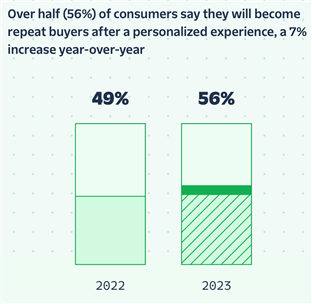
Personalization is a powerful tool for creating memorable customer experiences. In fact, according to a Twilio Segment report, more than half of consumers polled said they’d become repeat buyers after a personalized experience.
Twilio Segment State of Personalization Report
To craft these experiences, brands can utilize data analytics to understand individual preferences and tailor interactions accordingly. From personalized emails to customized product recommendations, this approach makes customers feel valued and understood.
4. Act on Employee Experience
According to Miliziano, happy employees lead to customers who enjoy themselves more — especially in the hospitality industry. “Having people stay with your company for more than a minute is a big driver in my mind of what successful client experience ultimately is.”
The key, he claimed, is to look at the expectation you set for the employee and determine how to measure it. “How do I measure what they’re telling me, number one, and then how do I marry that with their actions?” It’s important, he added, to determine their sentiment in a meaningful way so that you can cut through someone merely having a bad day or determine if there’s a real problem with employee engagement.
5. Create Seamless Omnichannel Experiences
Today’s shoppers have many avenues to interact with a brand — in-store, on the phone, online. Companies have to consider not just how employees interact with customers, but also mobile experience, usability and seamlessness between all channels.
No matter where a customer decides to interact with a brand, they expect consistency in service and quality to ultimately develop trust and consider the brand reliable.
3 Poor Customer Experience Examples
A positive customer experience is the ideal. Unfortunately, there are a lot of bad CX examples you can learn from, too.
1. The CVS Debacle
On a trip to local CVS, one of our very own journalists, Dom Nicastro, witnessed some poor customer experience in action. He saw a man in his 80s approach the pharmacy counter and ask for a COVID-19 vaccine. But the pharmacist rep turned him down, telling him he had to schedule an appointment online. The man asked, “What about people that don’t have a computer?” But still, the representative refused to help.
What was a lack of empathy or understanding on the part of the employee ended up being a bad look for the brand as well. Fortunately, Nicastro himself helped the man schedule an appointment online — but what about the other computer-less people who didn’t have a journalist around to help out?
2. A Flight to Nowhere
Last year, I had a staggeringly poor customer service experience myself. And it all took place in an airport. What started as an attempt to fly from Pennsylvania to Tennessee ended up with me spending nearly 12 hours in an airport and, ultimately, no flight.
Some delays are inevitable, right? True. But the bad experience boiled down to poor communication (getting boarded onto a plane, only to then deboard), poor customer service (a gate agent re-booking me on a flight to Iowa, despite multiple attempts to tell her that’s not where I was headed) and a being passed off from in-person customer service to phone customer service to an online form to try to get a refund for my trip, with each person saying they were unable to offer me any help.
3. United Breaks Guitars
Back in 2008, musician Dave Carroll took a United Airlines flight with his band from Halifax to Omaha. Upon landing and waiting to deplane, he looked out the window to see baggage handlers throwing their guitars around without regard. Carroll attempted to talk to a flight attendant about the issue, but she cut him off and told him to talk to another agent “outside.” Ultimately, Carrol’s instrument suffered $1,200 worth of damage.
After calls to customer service, emails and many months of waiting, Carroll’s request for the airline to cover the repairs to his guitar were rejected. So he decided to take to the internet with a song that ultimately went viral: “United Breaks Guitars.”
3 Excellent Customer Experience Examples
When it comes to CX, actions speak louder than strategies. These three real-world examples of excellent customer experience showcase how businesses can transform customer service into unforgettable acts of kindness.
1. The Starbucks Barista
One Starbucks barista went the extra mile to show a customer she cares. Krystal Payne, recognizing that a deaf customer at their Leesburg, Virginia, location struggled with ordering his drink, spent more than three hours studying American Sign Language (ASL) to help make the man’s experience seamless.
The customer, Ibby Piracha, was surprised one day when he arrived at Starbucks with a note from Payne explaining her efforts. Piracha, touched by the gesture, shared a picture of the note online — and even framed it. This example serves as a great reminder to brands that selfless gestures from frontline employees can have a significant impact on individuals’ lives and offer heart-warming brand stories that those online can read and enjoy.
2. The Disney Experience
One brand renowned for its excellent customer experience is Disney, and it does this through employing its Compass Model — an approach that looks at four different aspects of the customer experience:
Needs: What the customer desires from the experience. Some needs are stated, but many are not.
Wants: The underlying objective or purpose of customers — some stated, some unstated and some not even recognized by the customer.
Stereotypes: The preconceived notions (both positive and negative) that customers have about the experience.
Emotions: The emotions that customers have or are likely to experience.
The compass model has been so successful for Disney that many other brands (like airlines and hospitality companies) have decided to take it on.
3. Southwest on Twitter
Air travel can be a nightmare. There are long lines, crowded airports, delays, cramped seating. Yet one airline seems to know how to come out on top: Southwest. The airline is known for putting customer experience at the forefront, and it encourages its employees to build meaningful connections with its customers.
And customers, in turn, have taken to the internet to share their happy experiences. Southwest decided to highlight 175 of these positive tales in a campaign using the hashtag #175stories. Some highlights? A plane from Houston full of dozens of cats and dogs rescued from shelters during Hurricane Harvey. A man who won a vacation to Cancun. And a cabin crew who sang to a woman on her 80th birthday.
8 Customer Experience Management Tools
According to a 2024 CMSWire report, digital customer experience is complex and requires a diverse toolkit to truly deliver success. And while some of these capabilities are bundled into single platforms or solutions, others are standalone products.
CMSWire’s State of the Digital Customer Experience Report
Right now, the top five tools and apps used within companies’ customer experience ecosystems include:
Email marketing tools
Customer relationship management (CRM) systems
Content management systems (CMS)
Social media analytics
Social media management platforms
Let’s take a deeper dive into today’s available customer experience management tools.
1. Adobe Experience Manager
Adobe Experience Manager (AEM), part of Adobe’s Digital Experience Cloud, is a content management solution for building websites, mobile apps and forms. AEM provides tools for creating, managing and optimizing digital customer experiences across all channels, including web, mobile, email and social media.
This tool can help brands manage their marketing content and assets more efficiently, with its strengths lying in its ability to deliver personalized experiences to customers, robust scalability and integration with other Adobe products.
2. Zendesk
Zendesk is a customer service software and customer relationship management system. It’s known for its comprehensive helpdesk capabilities and user-friendly interface. This customer experience tool can integrate with other various business operations, offering features like ticketing systems, live chat, automated workflows and a centralized knowledge base.
The Zendesk Agent Workspace
Zendesk offers analytics and reporting tools that allow businesses to track customer interactions, identify trends and continually improve service quality. It’s also flexible in its scalability, meaning it’s a popular choice for businesses of all sizes.
3. Zoho
Zoho is a customer experience platform that offers a number of applications designed to streamline business processes and enhance customer interactions. Known for its CRM solutions, this platform integrates sales, marketing, customer support and inventory management functionalities, providing a unified approach to managing customer relationships.
Zoho is equipped with tools for analytics, campaign management, social media integration and automation, allowing businesses to deliver personalized customer experiences efficiently. It also boasts flexibility and scalability, making it suitable for businesses of varying sizes and industries.
4. Medallia
Medallia is a customer experience management platform designed to capture feedback across multiple touchpoints, analyse it in real-time and deliver actionable insights. Its capabilities allow it to understand customer sentiment, behaviour and needs through advanced analytics and artificial intelligence.
Medallia’s Omnichannel Performance Dashboard
Medallia’s suite of tools include survey creation, text analytics, social listening and experience management across digital channels, making it a comprehensive solution for companies looking to improve customer satisfaction and loyalty.
5. Tealeaf
Tealeaf is a customer experience analytics solution that provides insights into user interactions on websites and mobile applications. It specializes in capturing, analysing and replaying customer sessions to help businesses understand the customer’s online behaviour and experience.
This platform’s analytics capabilities include anomaly detection, struggle analysis and journey analytics, allowing organizations to identify pain points, optimize user interfaces and improve conversion rates. It’s also useful for detecting and resolving issues that affect customer experience, such as usability flaws or technical glitches.
6. Qualtrics XM
Qualtrics is a customer experience management software that allows organizations to capture and analyse customer feedback across multiple channels. It’s also known for its robust research and survey capabilities, providing deep insights into customer preferences, behaviours and sentiments.
Qualtrics Contact Centre Analytics Dashboard
This platform combines data analytics with a user-friendly interface, allowing businesses to conduct complex research, track customer journey analytics and identify key drivers of customer satisfaction and loyalty. It also offers features like survey design, targeting and data visualization.
7. Salesforce
Salesforce is a well-known customer relationship management platform that offers a suite of solutions to enhance CX. At its core, Salesforce provides an integrated platform that allows businesses to connect with customers in a more personalized and efficient way across various channels.
Salesforce Einstein Copilot Interface
This platform combines sales, service, marketing and analytics tools, allowing companies to gain a 360-degree view of their customers. It also has the ability to automate complex business processes, deliver powerful data insights and customize solutions to fit specific business needs.
8. HubSpot
HubSpot is a holistic customer experience platform that specializes in inbound marketing, sales and service software. It offers tools designed to attract, engage and delight customers throughout the entire journey.
This platform’s strength lies in its ability to integrate CRM, email marketing, social media management, content management and customer service functionalities into one solution, providing businesses with a comprehensive view of their customer interactions and data. The platform also excels in automating and streamlining marketing campaigns, managing sales pipelines and offering exceptional customer support.
Future Outlook for Customer Experience
Crowley said he expects a few areas within customer experience to grow and continue to evolve in the coming years — such as AI-based technology and personalization. “There will undoubtedly be increasing personalization in customer experiences, as AI allows more and more customers to be treated like individuals at scale,” he explained.
He also added that the importance of holistic customer experience will continue to be represented in organizational changes, where companies increasingly recognize that, to provide great CX, all the people who impact different aspects of the journey should be united under one vertical to prevent slow downs in communication and siloed thinking.
“We see this trend evidenced in customer support (and even customer marketing), organizations growing their organizational mandates into areas previously isolated from them, such as social media, online communities, and voice of the customer programs,” he said.
Michelle Hawley is an experienced journalist who specializes in reporting on the impact of technology on society. As a senior editor at Simpler Media Group and a reporter for CMSWire and Reworked, she provides in-depth coverage of a range of important topics including employee experience, leadership, customer experience, marketing and more. With an MFA in creative writing and background in inbound marketing, she offers unique insights on the topics of leadership, customer experience, marketing and employee experience. Michelle previously contributed to publications like The Press Enterprise and The Ladders. She currently resides in Pennsylvania with her two dogs.