Discover the best SEO hacks you can use to rank fast and avoid waiting for months to see results.
Search engine optimization (SEO) usually takes a lot of time to show results. In fact, it’s common for businesses to wait up to a year to see improvements in their search engine rankings.
For a growing business, waiting that long for results is not always optimal, which is why many entrepreneurs ditch SEO in favour of quicker alternatives, like paid ads.
Luckily, there is a way to speed up this process and climb up Google’s rankings faster. And it’s worth it too, considering 49% of marketers believe that SEO delivers the highest ROI of any marketing strategy.
In this article, I share five actionable SEO hacks that can help you rank faster and drive more traffic to your website in no time.
1. Target long-tail keywords
Many small business owners trying SEO for the first time make the mistake of targeting highly competitive keywords. Although it’s tempting to aim for those big, high-traffic keywords, it can take years to rank for them.
To accelerate your SEO results, you want to focus on long-tail keywords. These are longer, more specific phrases that potential customers are likely to use when they’re closer to making a purchase.
Sure, long-tail keywords may have lower search volumes, but they often come with higher buyer intent, which means that the people using these terms are more likely to convert into customers.
For example, a standard keyword you may want to target is “running shoes.” This keyword is highly competitive and could take a long time to rank for. Instead, a better SEO strategy is to go for a long-tail keyword like “best running shoes for flat feet” because it is more specific, less competitive and more likely to attract users who are ready to buy.
2. Create epic content
Most website owners don’t put enough effort into the content they publish. However, generic 500-word articles haven’t been able to compete with in-depth content for a long time.
Recent Google algorithm updates have made quality content even more important, so generic 2,000-word articles aren’t going to cut it either.
Well-researched: Use relevant statistics and credible sources to back up your points. This adds authority and trustworthiness to your content.
Actionable: Provide advice and tips that readers can immediately apply to solve their problems.
Authoritative: Share expert opinions and real-life examples to increase the credibility of your content.
Well-structured: Break your content into clear, logical sections with headings, subheadings and bullet points to increase readability.
Engaging: Write in a natural, conversational tone that resonates with your audience, and don’t overuse AI.
For example, if you’re writing an article about “how to choose the best running shoes for flat feet,” include expert opinions, real-life examples, shoe ratings and actionable steps for your readers to follow.
If you’re not sure how to create content that ranks, the best approach is to hire an SEO expert.
3. Upgrade old content
Regularly updating your content signals to Google that you actively manage your site, which improves your chances of climbing the search engine rankings.
One effective way to do this is to use Google Search Console to identify articles that are ranking in the middle of page one or top of page two.
Then, you need to analyse the content created by competitors who are ranking better than you. Have they added new information, updated statistics, built more backlinks or improved the user experience? Is your article still the best resource available?
The chances are that your competitors have upped their game and so should you.
Add new data, update links, refine your points, and ensure your advice is current and actionable. This shows Google that you are proactive about keeping your content relevant.
4. Proactively build internal links
When writing an article, you should include internal links to all relevant blog posts on your site. This helps Google understand how these different blogs are related to each other.
You can do that by typing “site:yourdomain.com [related keyword]” into Google search. This gives you a list of pages on your website you should link to in your new article.
When adding internal links, use descriptive anchor text that indicates what the linked page is about.
For example, if you’re writing a blog post targeting the keyword “running shoes for flat feet,” you want to link to your other article about “best insoles for flat feet.” Instead of using generic text like “click here,” choose a descriptive anchor like “best insoles for flat feet” to help readers understand what they’ll find when they click the link.
5. Build topical authority
Topical authority refers to how well your website covers a specific subject area. It’s an important factor for SEO because search engines prioritize websites that demonstrate deep knowledge of a given topic.
For example, a website with 100 articles about running shoes will generally perform better in search rankings than a site with just ten articles on the same topic.
The best way to build topical authority is to publish a ton of SEO content. Publishing just two or three articles per month isn’t enough. Aim to publish 10, 20 or even 30 articles each month to improve your credibility with search engines.
Creating that much content on your own can be difficult, so the best option is to hire an SEO agency.
But once you manage to build topical authority, your new articles start ranking in a matter of weeks instead of months, and you can enjoy a steady flow of organic traffic.
Even though SEO takes time to show results, you can try these five SEO techniques to hack your way to better rankings.
Focus on targeting long-tail keywords, creating quality content, updating your old articles, building internal links and establishing topical authority for faster and more substantial SEO results.
Founder at MintSEO. Nick Zviadadze is a growth marketing specialist with more than eight years of experience in SEO, copywriting and content marketing. He’s the founder of MintSEO, a fully-remote SEO and content marketing agency. He helps businesses drive growth by improving their search visibility.
The use of generative artificial intelligence (AI) in the workplace nearly doubled between September 2023 and May 2024—when 75% of knowledge workers around the world indicated that they utilized it—according to a survey of 31,000 people in 31 countries conducted by LinkedIn and Microsoft. But they’re not without their doubts: 53% of those who have integrated AI into their workday said are concerned that using it on important work tasks could make them look replaceable.
At the same time, if you’ve ever encountered Google’s AI wildly inaccurate search results, you know that while AI might be the future, but it still has a long way to go. In the meantime, you might want to take advantage of some of the available courses on the basics of AI—especially those that are free. If you’re not sure where to start, LinkedIn Learning is now offering more than 50 free AI-upskilling courses from now through July 8.
How to take free AI courses through LinkedIn Learning
The LinkedIn Learning site can be a bit overwhelming if you don’t know what, exactly, you’re looking for, and where to find it. Plus, there are plenty of AI-related courses that haven’t been unlocked and require a subscription.
Basically, from now through July 8, these five learning pathways, featuring more than 50 AI-upskilling courses, have been unlocked and are free to access.
There are a total of 55 free courses—none of which require you to sign up for a free trial of the LinkedIn Learning subscription. Unless you want to subscribe, just ignore the blue box on the right side of the page that says “Start my free month,” then scroll down and click directly on the course you’d like to take. It should begin right away without you having to enrol in a trial.
Credit: LinkedIn Learning
You can learn more about these courses and other offerings in this blog post from LinkedIn Learning’s Head of Global Content Dan Brodnitz.
Dr. Elizabeth Yuko is a bioethicist and adjunct professor of ethics at Fordham University. She has written for The New York Times, The Washington Post, The Atlantic, Rolling Stone, CNN & Playboy. Read Elizabeth’s full bio
Paid social search offerings differ significantly from traditional search ads
Most major social networks—including Facebook, Instagram, and TikTok (the top three social platforms by ad spending)—have enabled ads in search results. But when available, social search ads aren’t a standalone product. They’re offered as an extension of broader social campaigns. (YouTube is omitted from this analysis since we classify it as a digital video platform.)
Search formats are opt-in—usually. TikTok’s Search Ads Toggle and campaigns using manual placements on Meta platforms give advertisers the choice to include search ads alongside other social formats. However, if an advertiser uses Advantage+, there is no option to go without search ads.
There’s no special creative for social search. Social platforms typically leverage the same assets that appear in other placements (e.g., in-feed, Stories) for ads served in search results.
Keyword targeting is rare. Audience targeting is the standard. While some platforms allow advertisers to avoid “negative” keywords, Pinterest is the only platform that enables keyword targeting akin to traditional search capabilities.
Many performance advertisers have embraced paid search formats as built-in performance optimizers, but brand marketers have been more sceptical of cost trade-offs, leading to slower adoption.
But marketers can harmonize paid and SEO tactics to get the most out of social media campaigns
Savvy advertisers are taking advantage of organic social search. By observing search trends to inform content marketing strategies and taking cues from SEO to refine language and tags, brands can maximize discoverability. Putting paid support behind posts that perform well organically is a logical next step. A notable minority of small-business owners surveyed in January by Adobe Express thought that a variety of TikTok content had outperformed traditional search engine results. This could be a harbinger of social search strategies to come.
Platforms are incentivizing creators to optimize content for organic social search. TikTok has rolled out a new payment structure—the Creator Rewards Program—which factors in how well content aligns with search trends. Over time, this will reinforce consumer search behaviours, which should, in turn, dictate paid marketing strategies.
A new report from StackAdapt explores the benefits of a multichannel programmatic advertising strategy for B2B marketers to capture the attention of key decision-makers.
B2B is big business. The B2B advertising market in the UK and Europe is a robust billion-dollar industry experiencing remarkable growth. After years of economic uncertainty, B2B decision-makers are prepared to reward companies that deliver personalised, multichannel marketing experiences with big budgets.
As a result, European ad spending is expected to increase 7.2% to €116.5bn in 2024 and only grow from there. By 2026, digital spend will more than double traditional ad spend in Western Europe. And, by 2028, 82% of digital advertising revenue in Europe will be generated through programmatic advertising.
Buyers are increasingly moving online to conduct research and find products or services that meet their needs. This provides a major opportunity for B2B marketers. But investing strictly in search and social ads no longer cuts it. That’s where a multi-channel programmatic advertising strategy comes in.
With programmatic advertising, B2B marketers can target their ideal customers and deliver personalized content while capturing their audiences’ attention exactly where they’re looking for information: online.
By using a demand-side platform (DSP), B2B marketers can launch a scalable account-based marketing (ABM) strategy using a variety of channels – including native, display, video, connected TV (CTV), audio, in-game, and digital out-of-home (DOOH) – to reach B2B customers across all of their devices.
Download StackAdapt’s Guide to B2B Marketing to learn how to build B2B programmatic campaigns that capture the attention of key decision-makers and reach a wider and more targeted audience; equip yourself with the knowledge essential for impactful B2B campaigns in 2024. What you’ll find inside the report:
Target the right audience
Map the customer journey
Build multichannel campaign strategies
Run B2B campaigns across the entire funnel
Design ad creatives that convert.
StackAdapt is a multi-channel programmatic advertising platform used by the most exceptional digital marketers. This state-of-the-art platform is where some of the…Find out more
Need for precision marketing amidst the cookie apocalypse
For years, B2B marketers have used the data and technology at their fingertips and leveraged cookies to target the right people at the right time. Yet, the reliance on third-party cookies and the consequent data privacy concerns have spotlighted the fragile balance between personalization and privacy. A growing number of people are concerned about how much of their online activity is tracked—72% feel almost everything they do online is monitored by advertisers or technology firms, while 81% believe the risks associated with data collection outweigh the benefits. The message is clear — the future of B2B marketing lies in respecting and protecting user privacy.
Google‘s 2020 announcement to block third-party cookies by 2024 sent shockwaves through the industry, compelling B2B marketers to rethink their approach to user tracking and targeted advertising. And while Google has once again delayed the phase-out timeline, it serves as a stark reminder that the end of third-party cookies is near, and organizations must use this extra time to adapt to a privacy-focused landscape. The cookie deprecation delay offers a critical opportunity to explore sustainable marketing practices while underlining the need for a strategic pivot.
Allie Kelly, Chief Marketing Officer at Intensify.
A privacy-first approach
While the end of cookies may seem daunting, many emerging technologies and strategies can help maintain effective and ethical audience targeting while meeting evolving privacy standards. With a clear understanding of the changing data privacy landscape and a focus on compliance, here’s how marketers can prepare for the imminent phase-out of third-party cookies, often referred to as the “Cookie Apocalypse,” ensuring marketing programs remain effective:
Prioritize first-party data
The deprecation of third-party cookies elevates the importance of first-party data — data collected directly from interactions with customers and prospects. This includes everything from contact information and purchase history to user behavior on an organization’s website. Leveraging zero-party data, information that customers willingly share, will also become increasingly crucial. By offering value in exchange for data through ebooks, webinars, and free trials, businesses can build a rich, consent-based data repository.
Implementing a robust Customer Relationship Management (CRM) system can further help organize and analyse this data, fostering personalized marketing initiatives and enriched customer experiences.
Expand intent signal coverage
Some intent data vendors are adjusting to the cookie-less world by using alternative identifiers to monitor buyer research activities and behaviours. This broader spectrum of buying signals allows B2B marketers to capture a more comprehensive view of intent, facilitating targeted lead generation and digital advertising. Building comprehensive identity graphs that integrate multi-source intent signals can significantly enhance the quality of intent intelligence at our disposal.
Stay informed and compliant
The landscape of data privacy regulations is continually evolving. Staying abreast of regulations like the General Data Protection Regulation (GDPR) and the California Consumer Privacy Act (CCPA) is imperative for compliance and maintaining consumer trust. Regular training sessions on privacy practices for your team can go a long way in avoiding pitfalls and demonstrating your commitment to user privacy.
The future is intent-driven
As the digital marketing landscape shifts towards a cookie-less world, intent data emerges as a crucial asset for targeted marketing. With the delay in Google’s cookie deprecation timeline, it’s clear that marketing leaders must proactively adapt to the evolving environment. Traditional targeting methods, like IP-based strategies, are becoming less reliable, with 80% of marketers expressing doubts about their ability to reach the right audiences programmatically, and one in three citing wasted ad spending as a significant concern.
To navigate this change, B2B marketers are turning to AI-powered solutions that merge multiple sources of intent data to pinpoint in-market accounts with remarkable accuracy. This precision allows for more effective targeting and ultimately leads to improved conversion rates and accelerated sales pipelines. Intent data helps determine an account’s research stage and key topics of interest, enabling marketers to deliver personalized, relevant ads to specific personas within prioritized accounts. This shift towards AI-enabled, intent-based targeting not only offers a higher return on investment but also aligns with growing demands for privacy and compliance. By focusing on first-party data, expanding intent signal coverage, and embracing AI-driven identity graphs, marketers can create more resilient and sustainable marketing strategies in a world that’s rapidly moving beyond third-party cookies.
Building a future-resistant marketing strategy
The “Cookie Apocalypse,” demands a strategic and proactive approach to future-proof marketing strategies. Organizations must first undertake a comprehensive assessment of their current systems and data collection practices to identify their reliance on third-party cookies. This evaluation helps gauge the potential impact of digital and privacy regulation changes and guides the development of a flexible strategy that addresses both immediate and long-term challenges.
Collaboration with existing vendors is a crucial step in understanding their preparedness and exploring alternative solutions that comply with upcoming privacy norms. This process requires an innovative mindset, encouraging businesses to tap into new tools and technologies that align with the evolving privacy-focused digital landscape. By fostering a culture of collaboration, organizations can leverage external expertise while exploring adaptive strategies to ensure compliance and operational continuity.
Ultimately, the goal is to build a resilient marketing framework that not only survives but thrives in a post-cookie world. Staying informed about industry trends, engaging stakeholders, and maintaining flexibility are key to ensuring business success in this new environment. By embracing the shift towards a cookie-less future, businesses can position themselves for sustainable growth and a more privacy-conscious marketing approach. This strategic evolution will not only help organizations navigate the transition but will also set them on a path toward a more innovative and adaptable future in digital marketing.
This article was produced as part of TechRadarPro’s Expert Insights channel where we feature the best and brightest minds in the technology industry today. The views expressed here are those of the author and are not necessarily those of TechRadarPro or Future plc. If you are interested in contributing find out more here: https://www.techradar.com/news/submit-your-story-to-techradar-pro
Feature Image credit: Photo by Anastasia Shuraeva from Pexels
Allie Kelly is a Chief Marketing Officer with over 20 years of experience in both B2B and B2C companies. Currently, she holds the CMO position at Intensify.
Embarking on the journey of creating your own startup might seem like a long and drawn-out process. For people just getting into this position, it’s like sailing into uncharted waters. That being said, there is a sense of freedom that can come with this goal you have decided to pursue. The thrill and potential of prosperity draw countless individuals to entrepreneurship.
In this day and age, with social media being a way to reach millions of individuals, if done right, the dream of being an owner may only be a vision away. So, here is how you can begin setting up the sails of your ship and chart a course toward building a thriving new business.
Charting Your Course: From Vision To Action
Every successful startup begins with a vision. It could be as simple as an idea that addresses a pressing need or solves a significant problem in the world. This newfound passion ignites an entrepreneur’s vision for a new product and propels them forward through the highs and lows of their new startup journey.
As such, you need to consider some key aspects before diving headfirst into a business. Ask yourself: What problem am I passionate about solving? How can I make a meaningful impact on this problem? Your answers serve as your North Star; follow it.
Market Mastery: Researching, Analysing And Understanding
Once you’ve identified your passion project and thought of ways to solve the issues within your idea, conduct thorough market research to validate that your idea will be profitable. Dive into your target market, and understand its demographics, behaviours and key points. Research any competitors to identify gaps and opportunities within the market that you can harness. This research will provide you with the insights needed to help you enhance your product or service to better suit the needs of your potential clients.
Plotting Your Path: Crafting A Detailed Business Plan
You have made it this far—great job. Now, you have reached a key factor in your success: creating an in-depth business plan. This document should outline your objectives, target market, competitive landscape, marketing strategy and financial projections. If you need funding to reach your goal, your business plan becomes an investor’s road map to your company’s success and more money in their pockets.
Team Building: Finding Your Crew For Success
At this step in the game, you need to find your perfect team. Surround yourself with talented individuals who share your passion for your company and a drive to reach for the stars. Your team can bring fresh new perspectives, expertise and collective firepower to propel your startup forward. Use this team for collaboration, trust and open communication to foster innovation and beat out the companies you will be going against in the future.
From Concept To Creation: Developing Your MVP
You have the idea, the plan and the people. Now, you are at the product part of your journey, which requires creating a minimum viable product. This is a lower-end version of your idea or version. Your MVP is enough for the public to understand what your product is about but not enough to give it out to the real world. You need to use your MVP to address any issues your clients have and perfect it over time. This is when you gather feedback and refine your product based on user insights.
Customer Delight: Elevating Experiences In The Digital Era
In the digital age, customer experience reigns supreme. Delight your customers at every touchpoint, from seamless onboarding to responsive customer support. Build meaningful relationships, listen attentively to feedback and continually iterate to exceed expectations. Happy customers are not just loyal advocates but also invaluable sources of growth through word-of-mouth referrals.
Navigating Setbacks: Embracing Failure As A Stepping Stone
Your startup journey will have unexpected twists and turns, so set goals to move yourself away from rough seas. Furthermore, don’t be hurt by negative feedback; welcome it with open arms. Keep an eye on market trends, and be prepared to adapt your strategy to any situation that may show its face. Failure is not something to look down on yourself for; it is a lesson to learn from and evolve into the best version of yourself.
Steady Growth: Sustainable Strategies For Long-term Success
Soon, your startup will likely start to gain some traction. When it does, focus more on growth that is sure and steady instead of making grand promises, only to let people down from being unplanned for an influx of clients. Spend money on scalable systems, streamlined operations and diverse revenue streams to confirm long-term capability. Short-term gains are long-term failures.
Building a successful startup isn’t easy. There will be setbacks, rejections and tough moments. Don’t let emotions hinder you. Instead, use them as fuel to bounce back stronger. Keep pushing forward with determination.
Celebrating Victories: Finding Joy In Milestones
This is the most important part of my message to new start-up businesses: When you reach a milestone in your business, celebrate it with your team. If it seems like a small thing, don’t forget all the effort it has taken to secure the deal or how many “nos” you had to hear before the big “yes.” Take in the little victories. So much hardship goes into creating an idea and so many doors slam in your face, so once you reach the “good stuff,” breathe it in, my friend.
Building a successful startup business takes hard work, dedication, vision and resilience. With strategic execution, entrepreneurs can navigate the challenges and sail toward success.
So, set sail with a newfound confidence, embrace the challenge and dare to dream.
Boost your brand’s visibility and credibility with budget-friendly strategies for acquiring brand ambassadors.
Brand ambassadors are crucial in boosting your brand’s visibility and credibility. They influence consumer opinions and extend your brand’s reach. However, partnering with high-profile ambassadors can be expensive. Fortunately, there are budget-friendly ways to attract and engage brand ambassadors effectively.
1. Encourage customer advocacy
Leverage something invaluable already at your fingertips: User Generated Content (UGC). It’s extremely effective, primarily because consumers often look up reviews before making a purchase. 86% of consumers trust brands more when they see content from other users compared to only 12% who are influenced by traditional influencer promotions. Moreover, a recent survey found that UGC increases the likelihood of purchase by 79%.
Your current customers are natural ambassadors. Encourage them to share their positive experiences online through reviews or social media posts. Genuine endorsements from real customers are incredibly persuasive. Offer them rewards like discounts, cashback, exclusive deals or helpful tips. With the right incentives, you can turn happy customers into your best advocates. Develop a referral program that benefits you and them over the long term
2. Discover and support emerging influencers
We notice a shift in how companies allocate their marketing budgets toward small and micro-influencers before committing to bigger names. On TikTok, for example, these influencers typically achieve 60% better average engagement and 20% higher conversion rates under brand posts compared to macro influencers. Additionally, 82% of consumers are more likely to act on a recommendation from a micro-influencer.
Use social listening tools to monitor relevant hashtags and track conversations. This strategy helps pinpoint individuals who love your brand and could become potential ambassadors. Don’t hesitate to approach influencers who post authentic and credible content. Often, these influencers will grow their following over time, and those spotted early may remember your brand, potentially leading to cost-effective long-term partnerships.
3. Implement affiliate programs with flexible compensation models
Affiliate marketing is a budget-friendly approach where influencers promote your products in exchange for a commission on sales generated through their referral links. The affiliate network ConvertSocial reported a 25% increase in sales in the first quarter of 2024 compared to the previous year. Choose affiliate marketing networks that allow you to customize your affiliate program to match your budget and marketing objectives, offering flexibility in compensating and collaborating with influencers. Recent data shows that 81% of brands are now using affiliate marketing as part of their strategy, reflecting its growing importance. Investing in affiliate marketing over the long term can be a strategic move to discover ideal brand ambassadors.
Right now, you have a great opportunity to speed up this process. ConvertSocial is working on a project that offers the chance for long-term partnerships with influencers on a content subscription basis. This allows brands to secure ongoing posts from a selected partner, saving both costs and time spent searching for new ambassadors. All within the cost-per-action (CPA) model.
4. Host contests and giveaways
Contests and giveaways are excellent for engaging potential ambassadors and your broader audience. By requiring entries that involve creating or sharing content about your brand, you not only boost visibility but also identify engaged individuals who could be potential ambassadors. You also notice which pieces of content align with your brand’s needs. This speeds up the process of finding a brand ambassador and allows you to save your resources. For example, a well-executed contest can increase your social media following by 34% within a month.
5. Offer insights and knowledge
Rather than offering monetary compensation, consider providing potential ambassadors with early access to new products or service features. These kinds of rewards can attract enthusiasts eager to engage with your brand without requiring significant upfront payment. Organize exclusive brand experiences with a sneak peek behind the scenes or create an online community for ambassadors, where you ask them to provide feedback. Creating these unique experiences fosters a sense of belonging and loyalty, which can translate to long-term advocacy.
6. Utilize employee advocacy
Your employees can be effective ambassadors. When they share positive work experiences or company products on their personal social media, it authentically enhances your brand’s reputation. Start an employee advocacy program that supports and rewards employees for sharing brand-related content. This can help extend your reach organically. Research indicates that content shared by employees receives eight times more engagement than content shared through brand channels.
Recruiting brand ambassadors doesn’t need to be costly. By employing creative and strategic approaches and utilizing platforms like ConvertSocial for flexible affiliate arrangements, you can build a network of ambassadors effectively. These cost-efficient strategies help minimize financial risks while fostering authentic connections between your brand and its audience, ultimately supporting growth and enhancing your brand’s reputation. A well-planned ambassador program can lead to sustainable and scalable brand growth. Ready to get started? Your next great brand ambassador might just be a click away!
CEO of ConvertSocial. Ksana has been a speaker at world-class conferences on affiliate marketing and is in contact with more than 35,000 clients of ConvertSocial – a Mitgo company, involved in the blogging industry, which allows her to always be aware of the latest trends in the world of influencers.
A 2021 study (which has been corroborated several times over the last decade) found that men interrupt women twice as often as women interrupt men.
The hardest thing for me about transitioning to remote work was how awkward it can be to hold a conversation over Zoom. I have this habit of verbally agreeing with what someone is saying as they’re saying it — sometimes nodding my head isn’t enough, and I need to add a “mmhm” or a “yes!”
On Zoom, it’s easy for that to turn into: “Oh, sorry, what were you saying?”
It’s awkward.
A recent Medium story helped me understand what’s going on here. The author reframes interrupting as — depending on the context — “cooperative overlapping.” Here’s the gist, citing research from linguistics professor Deborah Tannen:
Overlapping “can be a way of showing enthusiastic engagement with what the speaker is saying.” […] Tannen relates a story of how she transcribed a conversation she was part of, at a dinner party between people from New York, people from California, and a person from London.
Tannen and the other New Yorkers talked over one another in a way that is meant to encourage more talking within the group.
The individuals from California and London said they were waiting for pauses during which they could enter the conversation, suggesting that getting a word in edgewise would have required “a crowbar.”
What I love about this story is that it reframes something often viewed negatively (interrupting) in a positive way. This story also does something so many great stories do: It names something that was previously just a vague nameless feeling.
It can be really difficult to understand a behaviour without giving it a name. This is the principle driving the popularity of everything from Myers-Briggs to astrology to the use of the enneagram in startups. Labels can jumpstart thinking, and even if they’re over-generalized, they’re a place to start.
What else we’re reading
A misplaced “Log in” button on a web page meant for collecting endorsements led a bunch of unsuspecting Icelanders to accidentally run for President (!). Content designer
analyses the misleading user interface and draws a few cautionary lessons for designers everywhere:
— Be wary of generic buttons.
— Use visual hierarchy and clear headings to break a page into scannable sections, because scanning is what people do first.
is at Trump’s criminal trial in Manhattan (she’s sitting in the press spillover room and watching it via split-screen CCTV). He is on trial for allegedly falsifying business records during the 2016 campaign to conceal a $130,000 payment to porn star Stormy Daniels to ensure she wouldn’t go public about their purported affair. Donnelly doesn’t give us a play-by-play of the trial itself; instead, she helps us understand what it’s like to be there: “Everyone was so nice and it felt a little like a weird community. People — cops and journalists — greeted each other as if they had become friends, returning each day.”
Want to learn how to start affiliate marketing with no money? You’re in the right place.
In this beginner’s guide to affiliate marketing, we’ll show you how anyone can become a successful affiliate marketer, even if you’re starting with literally no funds whatsoever.
First, we’ll talk about what affiliate marketing is, how it works, and the benefits it offers. Then, we’ll share a step-by-step walkthrough of the initial steps you’ll need to do to get started.
After that, we’ll share 9 ways to do affiliate marketing for free. Zero investment needed.
And finally, we’ll share a couple of bonus tips for ways you can drive even better results with a little spending, in case you want to reinvest some of your earnings.
What is affiliate marketing?
Affiliate marketing is a type of marketing arrangement in which a company pays its affiliate partners (that’s you) to promote its products or services.
It works like this:
A retailer creates an affiliate program
You sign up for that affiliate program and get access to special, unique links that point to the company’s product pages
You promote the company’s products/services by sharing those links with your audience. In doing so, you drive targeted traffic to the company’s website.
When a customer clicks one of your links, a cookie is stored on their computer for a set duration of time (e.g. 30 days), which tells the company that you referred them. This is called the cookie window.
If that customer goes on to purchase the product/service from the company within the cookie window, you’ll be paid a commission. Commission rates vary from program to program, but are typically around 10%-20% of the sale.
The benefits of affiliate marketing
There are lots of benefits to becoming an affiliate marketer. Here are some of the main ones:
High earning potential. The global affiliate marketing industry is estimated to reach a market size of over $27 billion by 2027. So naturally, there’s a lot of money on the table if you know what you’re doing. The average affiliate marketer makes over $54,000/year, and the top performers make millions.
Potential for passive income. Affiliate marketing takes a lot of work at the start. But once you’ve built your audience and got a steady stream of traffic coming in, it can become a completely passive income source. At that point, you can take a step back and just collect your paychecks every month.
Scalability. Once you’re making a good amount of money from one affiliate marketing venture, you can scale up your operations, sign up for more programs, and promote more products to increase your revenues.
It’s easy to do. There are fewer headaches involved in affiliate marketing compared to running your own business. The retailers you partner with do all the hard stuff like creating the product and managing the business. All you do is promote their products and collect your paycheck.
Low barrier to entry. You don’t necessarily need any money whatsoever to start affiliate marketing. And if you do want to invest in your success, as little as 50 bucks will get you on the right path.
Low risk. Because the only thing you really have to invest in affiliate marketing is your own time, it’s very low-risk. If it doesn’t work out, you can stop where you’re at and you won’t have lost anything.
Getting started
Before you can start promoting affiliate products and earning commissions, there are a few preliminary steps to take first. Here’s what you need to do.
Step 1: Choose a niche
The first step is to choose what niche you want to focus on.
Ideally, the niche you choose should meet three criteria:
It should be something you’re interested in or knowledgeable about
It should be easy to find affiliate programs offering high commission rates in your niche
You should be able to promote products in your niche effectively
Obviously, if you already have an existing audience, you should choose a niche that aligns with that audience. For example, if you’re an influencer in the fitness space, you’re going to want to focus on affiliate programs involving health and fitness products. That’s a no-brainer.
But if you’re starting from scratch, you can really go down any route you choose. That said, here are some niches we’d recommend:
SaaS (software as a service). Affiliate programs in which you promote SaaS products tend to pay big commissions (often up to 50%). The reason for this is that businesses that sell digital products like software have low overheads and high margins, so they can afford to invest more heavily in marketing.
Finance. Again, this is another niche where you’ll find plenty of opportunities to earn high commission rates, particularly if you promote things like crypto exchanges, banking products, credit cards, personal finance tools, etc.
Health & fitness. This is a big market with lots of interesting products to promote. You might sell gym equipment, supplements, fitness clothes, personal training services, memberships, or anything else.
Step 2: Sign up for an affiliate program
Once you know what niche you want to focus on, the next step is to find an affiliate program worth signing up for in your niche.
And the easiest way to do this is to go through an affiliate network. Affiliate networks are the middlemen that connect businesses with affiliate partners.
The biggest networks contain thousands of affiliate programs from different brands in all sorts of niches. These are all listed on their site alongside details like each program’s commission rate, payout structure, cookie window duration, etc.
You can browse through them until you find one you like and sign up in a couple of clicks.
Pin
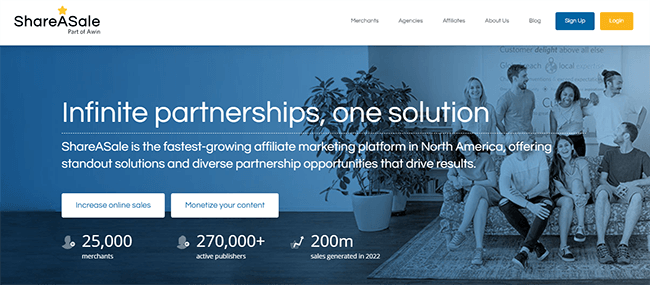
ShareASale is one of our go-to affiliate networks and it covers a huge number of niches, so that’s a good place to start. For more options, check out our roundup of the best affiliate platforms and networks.
Step 3. Pick a marketing channel
At this point, you should have already signed up for an affiliate program and grabbed your referral links.
Now, all you need to do is drive targeted traffic to those referral links to start earning.
There are lots of different channels you can drive traffic from, but it’s best to focus on just one at first.
That might be your website, blog, YouTube channel, podcast, social media, email list, etc.
The best way to promote affiliates is to start a blog that gets organic traffic from search engines, but there are some startup costs involved.
If you have zero money to invest whatsoever, social media is probably your best bet, as you only really need to invest your time. But you’ll still need to choose a specific social media platform (i.e. Facebook, Instagram, Twitter, TikTok, LinkedIn, etc.). Some are better suited to certain types of affiliate promotions than others.
If you already have a big audience on a certain network, you’re going to want to focus on that. But if you’re building an audience from scratch, choose whichever platform that suits your skills, interests, and target customers.
We’ll talk more about all the different affiliate marketing channels you might want to use next, and how to drive traffic on each of them for free.
How to start affiliate marketing with no money: 9 strategies
Here are 9 strategies/methods you can use to drive targeted traffic to your affiliate links for free.
1. Share promotional videos on TikTok
Pin
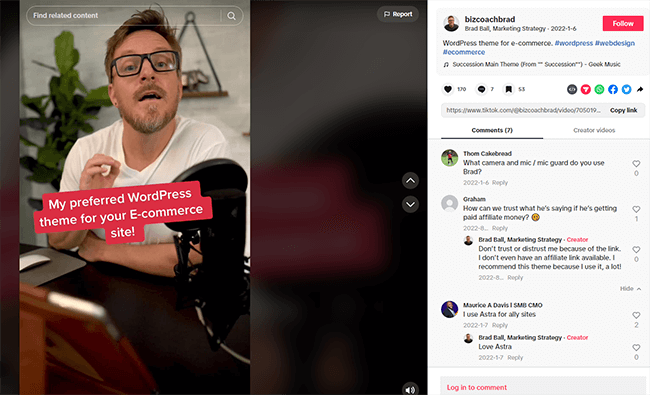
TikTok is the fastest-growing social media network in the world, and it’s free to use. So naturally, it’s a great place to promote your affiliates. Gen-z are the biggest users of TikTok, so it’s particularly good for affiliate marketers who are promoting products aimed at younger consumers.
How to get started:
Start by creating a TikTok business account (it needs to be a business account so that you can share links)
Upload engaging short videos designed to attract viewers and grow your followers (don’t worry about promoting your affiliates yet). Use trending sounds and formats to maximize your reach.
Once you have 1,000 followers, you’ll be able to add a link to your TikTok bio. Use a link-in-bio tool like Shorby to create a custom landing page to house all your affiliate links, then link to that page in your TikTok bio.
Start sharing trending videos related to your affiliate products to subtly promote them. Be careful not to be overly salesy, and prioritize engagement.
YouTube is another great free channel for driving affiliate traffic. It won’t cost you anything to sign up and post videos to promote your affiliate products.
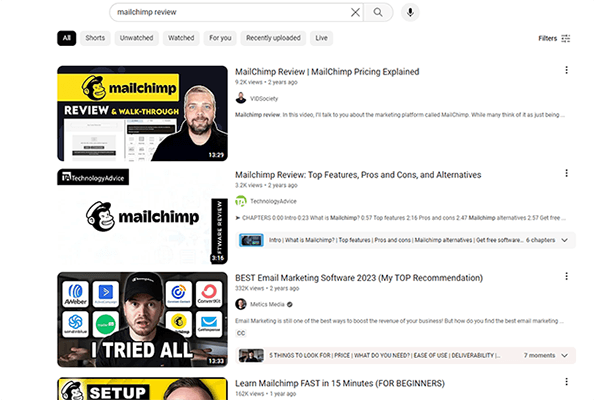
A great way to approach affiliate marketing on YouTube is to create a product review channel.
The reason why product review channels work so well is that, if someone is searching for a video review of a product, it’s a strong signal of buyer intent.
The viewers you’ll get are likely already considering buying the product you’re reviewing, so they’re much more likely to click your links, convert, and earn your commission compared to other types of traffic.
How to get started:
Sign up for a YouTube channel
Create your channel branding by uploading a banner, profile picture, etc.
Conduct keyword research to identify search terms related to your niche with high monthly search volumes and low competition. Focus on ‘review’, ‘alternatives’, ‘vs’, and ‘comparison’ keywords initially.
Create videos optimized around those keywords in which you discuss and promote your affiliate products
Make sure you add your affiliate links to the description
Start growing your subscribers and work on increasing the reach of your videos to get more eyes on your content
3. Grow an Instagram following
Another way to do affiliate marketing for free is to create an Instagram account and grow your following. Then, share promotional posts, Stories, and Reels with your audience to drive traffic.
How to get started:
Sign up for Instagram
Use a link-in-bio tool to create a landing page with all your affiliate links, then link to it from your Instagram bio.
Share engaging content regularly to grow your following
Engage with other users and tag your posts with popular hashtags to maximize your reach
Once you’ve grown your audience, start sharing posts promoting your affiliates, and always include a CTA in the caption inviting users to click the link in your bio.
4. Promote your affiliate offers on Facebook
Facebook is still the most popular social media platform in the world by number of monthly active users. So naturally, it’s another great place to start driving traffic to your affiliate offers for free.
How to get started:
Sign up for Facebook
Create a branded Facebook page
Start a Facebook group
Grow your Facebook Page’s audience by regularly sharing engaging, shareable content
Grow your Facebook group community
Join other groups and start networking to further grow your audience
Create and share posts around your affiliate product (e.g. reviews, how-to guides, etc.) to drive traffic to your links
5. Share your links on X (Twitter)
X (formerly Twitter) is especially well-suited to affiliate marketing as it’s one of the few platforms that lets you add links to your posts. Other platforms like Instagram and TikTok only let you add links to your bio.
Here’s how to use it to drive traffic to your affiliate links.
How to get started:
Create an X profile.
Grow your following by commenting on popular Tweets, following other accounts in your niche, re-sharing popular content in your niche, etc.
Once you have a decent number of followers, monetize by sharing posts about your affiliate offers including the link.
6. Drive traffic from Pinterest
Pin
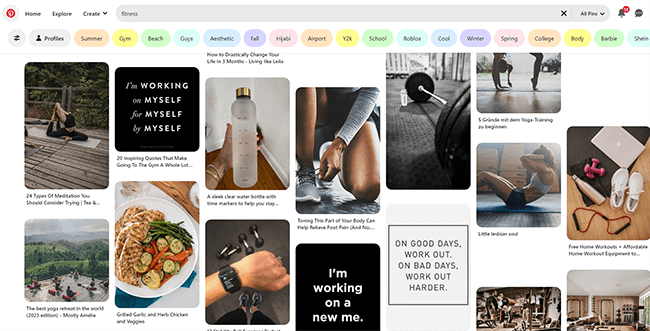
Pinterest is a great place to promote affiliate products that have a lot of visual appeal. It’s a ‘visual discovery engine’ where users go to find inspiration and ideas, which is exactly the kind of traffic you want clicking your affiliate links.
How to get started:
Sign up for a Pinterest for Business account (it’s free)
Create eye-catching pins (graphics) that showcase the products you’re promoting in their best light. You can use online graphic design tools like Visme for this
Upload your pins to Pinterest. Make sure you include some relevant keywords in the title and description to make it easier for users to discover
Repeat the process regularly to keep your pins visible
7. Drive traffic from Reddit
It’s a little harder to make affiliate marketing work on Reddit compared to other social media platforms, as most subreddits have strict guidelines about promotional/marketing content, and don’t often allow users to share affiliate links.
But if you can overcome that hurdle, the traffic you can drive from Reddit is some of the best around.
How to get started:
Create a Reddit account for free
Join some niche-relevant communities (subreddits that are likely to be full of people in your target market)
Engage in communities by leaving helpful comments and posts in the subreddit
Build your Reddit Karma by collecting upvotes
Add your affiliate link to your Reddit profile
Subtly start promoting your affiliate links (or even better, links to valuable content that contain your affiliate links) in posts on the subreddit.
Make sure you do this in a way that’s helpful and provides real value to the community, and try not to look like you’re doing affiliate marketing at all.
8. Submit guest posts
As I briefly mentioned earlier, the best way to do affiliate marketing is by creating your own blog and publishing blog posts optimized around valuable, niche-relevant keywords (like product reviews, buyer guides, etc.)
The only problem is that creating your own website costs money.
As a workaround, you can publish those blog posts to somebody else’s website instead, for free. This is called guest posting.
It’s important to note that some site owners or editors will not accept posts with affiliate links in them. Naturally, this will cut down on potential opportunities.
You could submit a post and hope they don’t notice the affiliate link or you can be upfront with them. I’d go with the latter. Honesty is always the best policy.
How to get started:
Search Google to find popular sites in your niche. You can use Google Search operators like this: “guest post”+”food”
Find the email addresses of key contacts on those sites (check the Contact Us page) and add them to a spreadsheet.
Reach out to all the contacts on your spreadsheet asking if they accept guest posts. Make sure you explain what’s in it for them (e.g. a well-written post about a topic their audience would appreciate, a keyword-optimized blog post that’ll drive traffic to their site, etc.)
If someone emails back confirming that they accept guest posts, pitch your idea to them and ask if you can write it. Make sure you clarify that it’s okay to include your affiliate link in the post.
Submit your post to the site for publishing.
Repeat the process with more blog posts targeting other relevant keywords.
Note: You can speed up the process and make managing everything easier with a blogger outreach tool like BuzzStream. You can even use it to send emails, track links, and manage responses, etc.
9. Start a free blog
I said a moment ago that, although the best way to start affiliate marketing is to create your own blog, that’s something you can’t do for free.
Well, that’s not technically true.
While starting your own blog usually means paying for web hosting and purchasing a domain name, there are a few sites that let you create a blog for free.
The catch is your blog will be hosted on their domain, not yours, and you’ll have much less control.
Your options for creating a free blog include WordPress and Wix. But we’d recommend using Medium as it’s an authoritative domain that ranks well, so posts have a good chance of getting lots of traffic.
How to get started:
Sign up for a free Medium account.
Write posts/stories to be published on your Medium page (content must adhere to Medium’s guidelines and rules).
Include affiliate links in your posts, but try to be subtle about it. Medium doesn’t allow overt marketing and affiliate sales content.
Add an affiliate disclosure to your posts.
Optimize your posts around target keywords that potential buyers might search for (product reviews, tutorials, etc.)
Drive traffic to your Medium stories by sharing them on your socials.
How to start affiliate marketing with a little money
Before we wrap up, I want to share a few more affiliate marketing methods that require just a little bit of spending but allow you to get much more value out of your affiliate marketing efforts.
Don’t worry, we’re talking less than 50 bucks here—nothing that’ll break the bank.
Start a niche affiliate blog
Pin
This is hands-down the best way to do affiliate marketing.
The idea is to create your own WordPress website and use it to publish niche-relevant blog posts.
These blog posts should be optimized for search engine optimization (SEO) in order to give them the best chance of ranking for keywords that potential buyers might search for.
If you can get your blog posts to rank on Google, you can get thousands of organic visitors to your site every month. And if those visitors click the affiliate links in your post and make a purchase, you get paid.
The great thing about this method is that eventually, it becomes fairly passive. Once you’re ranking for a bunch of high-volume keywords, traffic will keep coming in. You don’t have to keep creating new posts like you would if you focused on social media.
How to get started:
Sign up for WordPress hosting. We’d recommend WPX Hosting as it has everything you need, offers excellent performance, and only costs $24.99 a month. However, on the more affordable end of the spectrum, try DreamHost instead.
Use WordPress (this will usually come pre-installed with your hosting package) to create your site. You can install a free theme for the WordPress theme library, and any plugins you need to get started.
Customize your site and create key pages like a home page, an about page, a contact page, a privacy policy, etc.
Conduct keyword research to find search terms potential buyers of your affiliate products might search for. Look for low-competition keywords that you think you can rank for.
Create blog posts around those keywords and post them to your site. Learn about SEO to optimize them and your website at large to improve your chances of ranking.
Continue to optimize your site for traffic and conversions to get more clicks to your affiliate links.
Run an email marketing campaign
Pin
Once you have your affiliate blog, you can also use opt-in forms to start building an email list.
Then, you can regularly email your subscribers to notify them of new offers and discounts. This will help you to drive even more traffic to your affiliate links.
How to get started:
Sign up for an email marketing platform like MailerLite. They have an amazing free plan with lots of features and it supports up to 1,000 subscribers.
Create opt-in forms and publish them to your site.
Encourage people to sign up for your mailing list by creating a lead magnet
Use your email marketing software to create automated campaigns such as welcome sequences, etc. that nurture your subscribers and send them affiliate offers
Send out individual broadcasts as needed to promote new deals
A quick word about disclosure
Regardless of the platforms and tools you use for affiliate marketing, you need to disclose your use of these links.
It doesn’t matter whether you’re sharing offers on Reddit or including them in your email newsletter. You need to disclose the relationship and let your readers know that you may earn a commission.
Sure, some people will avoid clicking on your link once they know it’s an affiliate link. But you’ll earn more credibility and avoid the potential risk of platforms banning your accounts. And it’s also a legal requirement in certain parts of the world.
Final thoughts
Starting affiliate marketing is time consuming and requires patience, however, we’ve shown that you don’t need money to run a successful affiliate marketing business.
All you need is time and a solid strategy to drive traffic to your affiliate links.
But if you’re serious about affiliate marketing, I’d nonetheless recommend saving up to purchase web hosting.
For the very small cost of a monthly subscription, it’ll make it significantly easier for you to drive traffic and earn commissions.
Aside from managing editorial here at Blogging Wizard, Nicola runs Your Creative Aura where she teaches people how to write music. Nicola has the rare ability to take inspiration from the most mundane objects and turn it into catchy, and memorable lyrics. And, she is rather fond of penguins.
Blogging is still one of the best opportunities to make money online as you can build an engaged audience and then sell products, services, or sponsorships.
Yet, the prospect of building a blog that will generate thousands of dollars can feel daunting if you’re just starting your journey as a blogger.
The blogging landscape is more competitive than ever, and the strategies that used to work even just a few years ago no longer work today.
While getting started might feel overwhelming, set aside just thirty minutes or an hour per day for blogging, and by implementing the tips outlined in this blog post, you’ll be well on your way to success.
Whether you’re blogging about your travel adventures or striving to attract customers for your business, these are the simple beginner blogging tips that will help you achieve your goals.
1. Define A Specific Niche
If you publish a blog article about dogs one week and gardening the next, it will be difficult to build a loyal audience of avid readers because people interested in dogs may not be interested in gardening.
Selecting a specific niche and only publishing content relevant to a specific topic solves this problem.
You’ll also find ranking in search engines like Google easier if you specialize in a specific niche. This is because search engines want to ensure they’re showing accurate information to their users, and one way search engines determine the credibility of a blog is by analysing the different topics it covers.
This concept is known as topical authority. By showing search engines that you’re an authority on a specific topic, you’re more likely to rank well for your target keywords.
How do you select a specific niche to blog about?
If you’re blogging for business, the answer is clear – write about your business’s niche.
However, if you’re starting a blog to build an audience that you’ll later monetize through sponsorships or affiliate products, your niche options are limitless (i.e., a travel blogger, a food blogger, etc.).
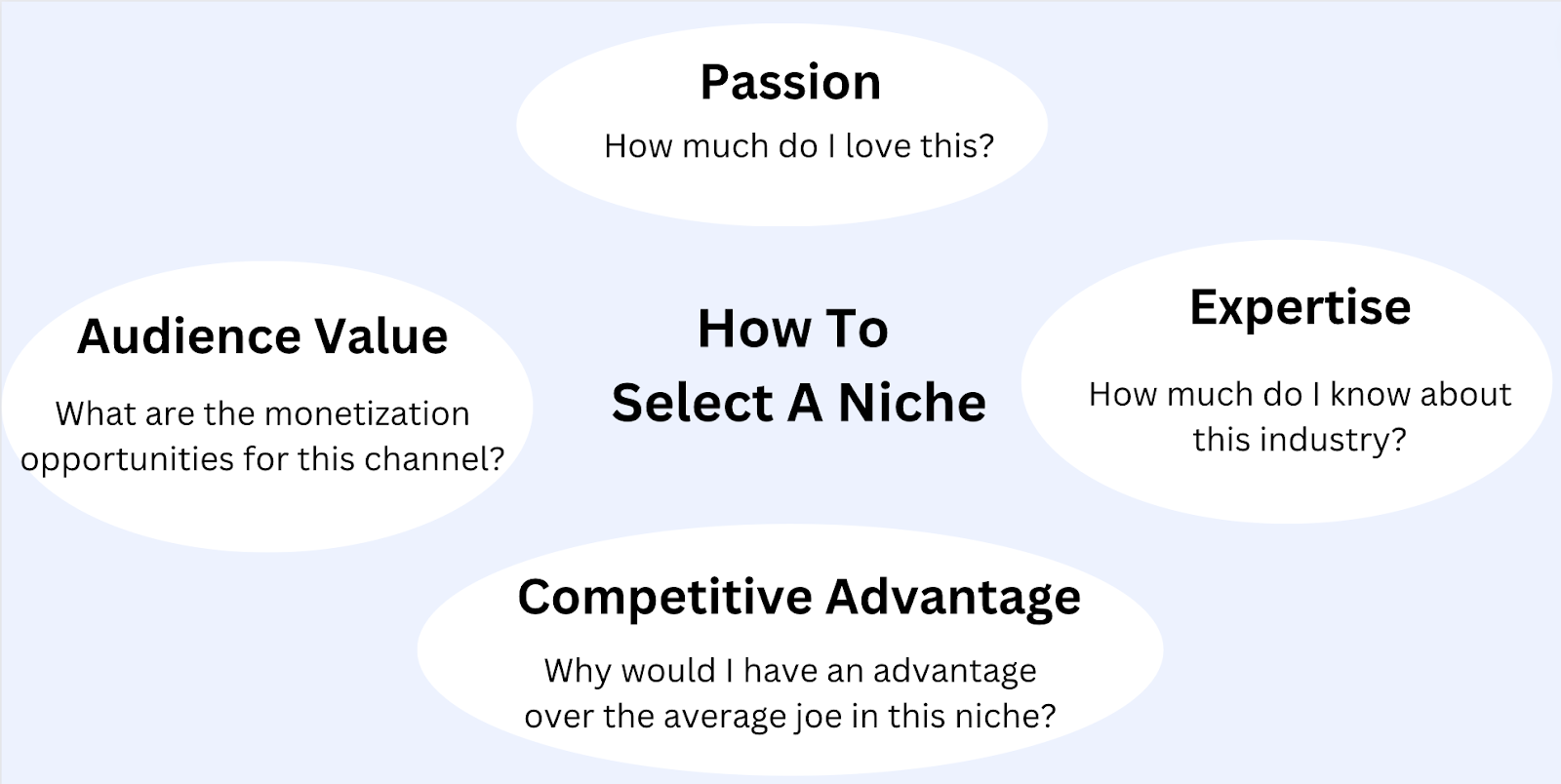
To help you select a niche, write down all of your interests and passions on a sheet of paper. You can also notate your level of passion for each niche.
To further narrow down your list, here are three other criteria to consider:
Your expertise: If you’re highly knowledgeable about that particular niche, it will be easier to write the content as you won’t have to do much research beforehand.
Your competitive advantage: Is there a reason why your lifestyle or industry access might give you an advantage in this niche? For example, if you’re a flight attendant and travel frequently for work, you’ll have a unique advantage in writing a travel blog because you already travel much more frequently than the average person. You could also discuss unknown tips on airports and flight deals.
The value of the audience: Some niches are much more valuable than others. For example, if you have a successful blog about camera gear, you’ll likely make more money than someone with a blog about baking simply because the average order value of a camera is significantly higher than the average order value of baking supplies. So whether you end up selling your own products through the blog or making money through sponsorships or affiliates, you’ll make more money if the end product has a higher profit margin.
One of the downsides of blogging is that it’s very competitive – especially if you’re targeting a high-value audience.
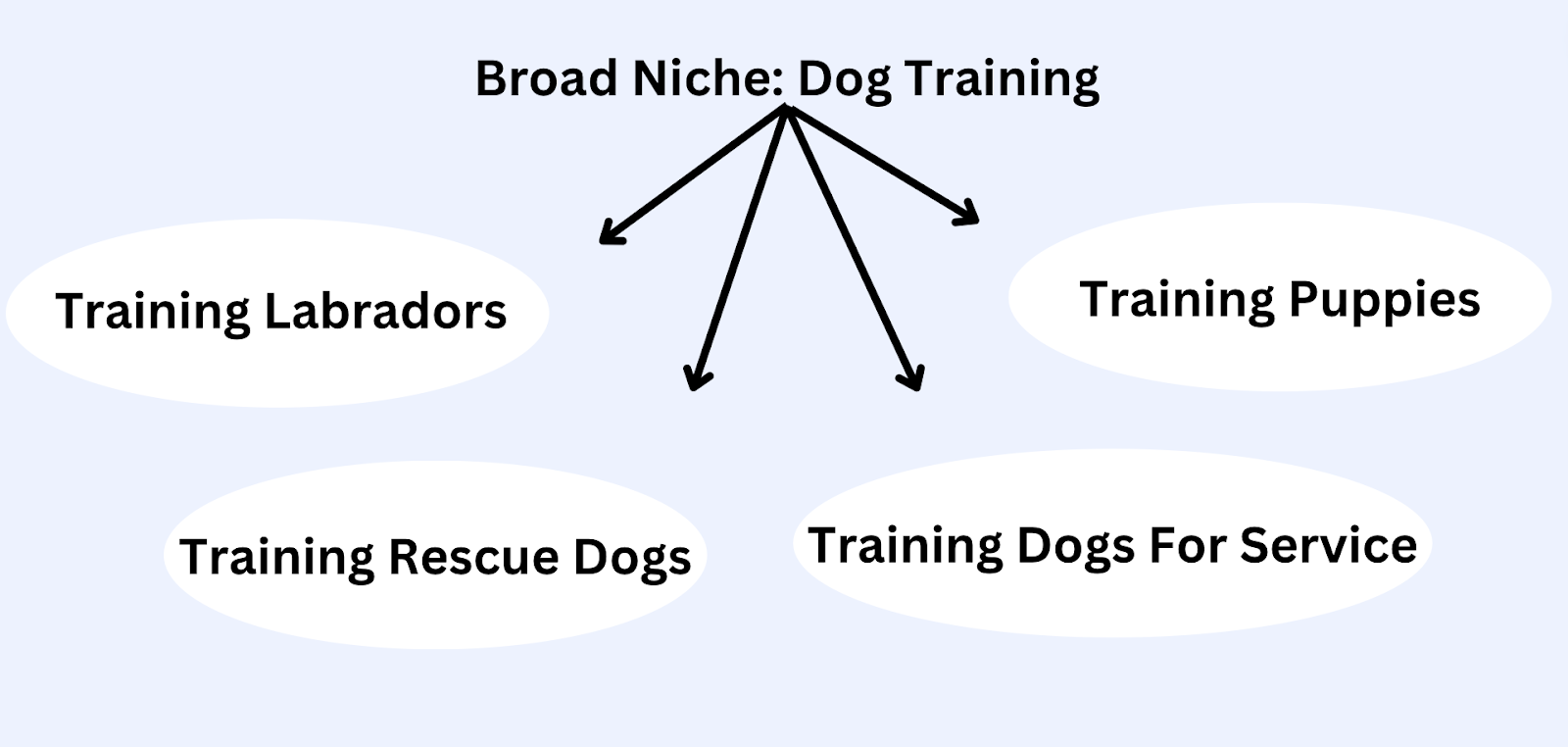
You can solve this problem by niching down and targeting only a specific subset of that niche.
For example, the “dog training” niche is very broad and competitive. However, you can stand out by becoming “the dog trainer for Labradors” or “the dog trainer for older dogs.”
This will help you stand out because someone with an older dog will be more inclined to talk to a specialist who works exclusively with older dogs rather than a generalist who works with any dogs.
2. Engage With Your Target Audience
One of the biggest mistakes beginner bloggers make is choosing topics based on what they want to write about. While there’s nothing wrong with writing for your own pure enjoyment, it’s essential to provide content that interests the reader if your goal is building a loyal following.
If you selected a niche you’re passionate about, there should be plenty of topics that both you and your readers enjoy.
However, the best way to determine what topics your readers want information about is to engage with them directly.
You can do this by joining Facebook groups, Slack groups, Reddit threads, and industry forums. Then, make a list of the most commonly discussed topics as these will become your first content ideas. You’ll also learn the general industry terminology, which is helpful as you begin writing your blog posts.
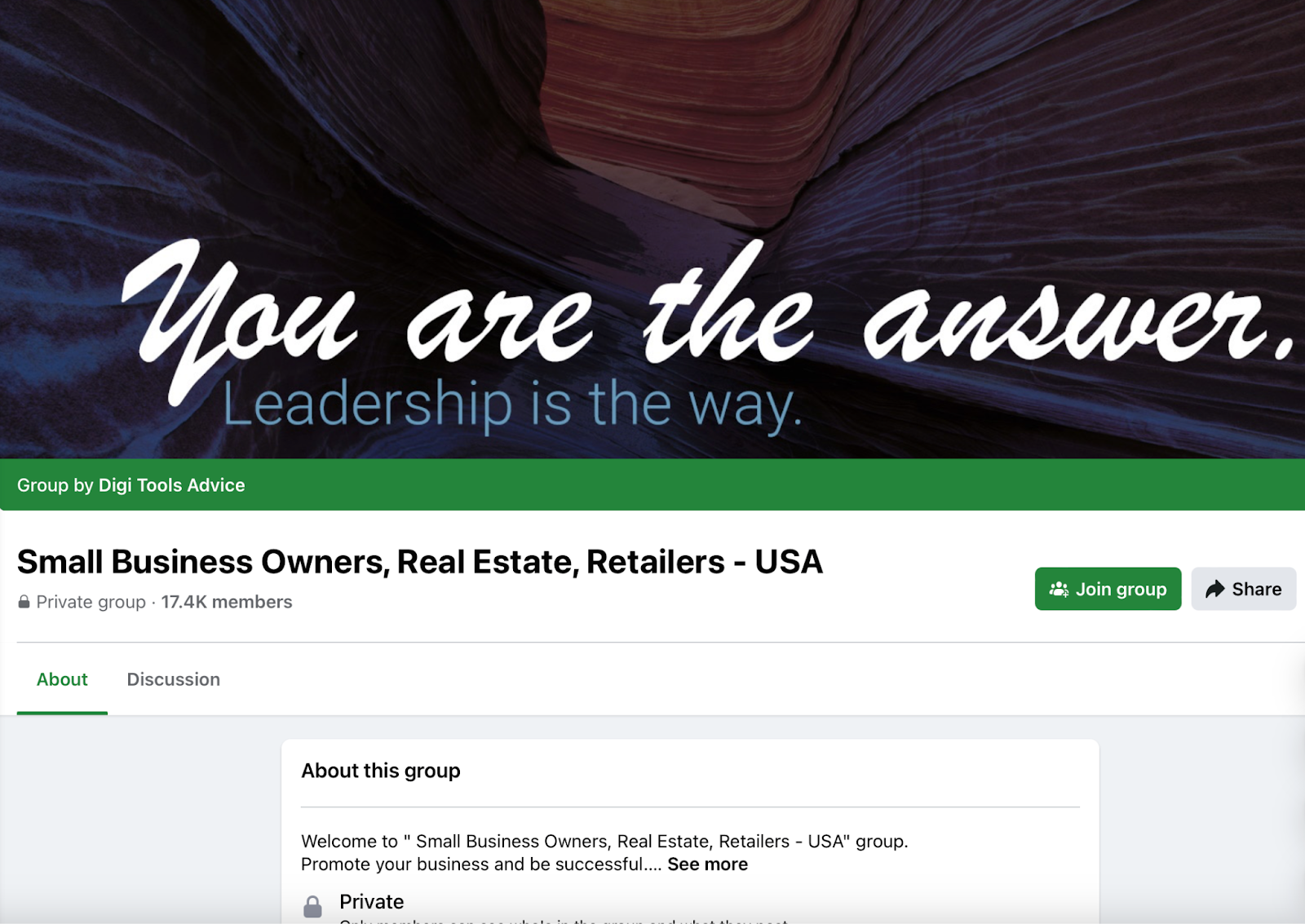
For example, if you have a web design agency for real estate agents, consider joining a group like the one below to learn about common marketing questions real estate agents ask. You can also provide helpful answers to questions about marketing, which can help you earn your first few readers and develop genuine relationships with industry experts.
3. Select Relevant Low Difficulty Keywords
Unfortunately, people don’t magically find your blog post as soon as you hit publish – especially as a new blogger.
While there are plenty of different ways to promote a blog post after it’s published, Google is perhaps the best (free!) opportunity to get your blog post in front of new readers. The process of optimizing your blog posts to appear in search results like Google is called SEO (search engine optimization).
For example, if you just wrote a blog post about “how to train a dog to sit,” you want Google to show it to people who search for terms related to training a dog to sit.
These phrases that people commonly search in Google are referred to as keywords.
While keyword research is an entire topic in its own right, here are two basic keyword research tips:
Only target keywords relevant to your audience: As we discussed in the tip above, your audience should be interested in the topic. If you’re blogging for business, the topic should also be a problem that your product or service solves (e.g., topics related to generating more real estate clients would be great for a web design service to target because the service solves that problem of earning real estate clients).
Choose keywords with low difficulty scores: Remember when we discussed earlier during niche selection that it’s important to select a low competition niche? This is because it’s more difficult to rank for a keyword with many blog posts targeting it. This is especially true if you’re competing against a highly authoritative website like Forbes. Since search engines tend to favour websites with well established credibility, it can be difficult for a new blogger to outrank them in the search results. Unfortunately, if your website doesn’t rank in search engines, it will be difficult for you as a blogger to earn new readers.
So how do you check the difficulty of a specific keyword?
There are plenty of SEO tools that make this easy, and Ahrefs and SEMrush are among the two most popular.
These tools analyse the search result pages (SERPs) for a particular keyword and then assign it a difficulty score based on the authority of the other websites ranking for that keyword.
These tools consider plenty of factors when creating their difficulty scores, but the only thing you need to know is that lower difficulty keywords (keywords that are easy for new bloggers to rank for) have lower difficulty numbers, whereas more competitive keywords that new blogs likely won’t rank for have higher difficulty numbers.
So list topics you might want to cover on your blog, and then type each into a keyword research tool like Ahrefs or SEMrush. You’ll likely see different variations of that keyword as well as its difficulty scores.
As a beginner blogger with a brand new website, only select keywords with a difficulty score of 15 or less. As your website earns more authority, you can target increasingly competitive keywords.
You’ll also see a volume metric. This is the estimated number of searches for that keyword each month, so the higher the search volume metric, the better.
You’ll probably have a long list of similar keywords for each topic, so select the keyword with the lowest difficulty and highest volume.
Once you select a keyword, what should you do with it? How do you optimize your blog post to rank for it?
To get started, just include it in the title of your blog post.
These next few tips will discuss how you can optimize your blog post to rank for your target keyword.
4. Deliver The Most Effective Advice
There are usually tens or even hundreds of helpful blog posts covering any content idea.
And most of the information in these blog posts is accurate and helpful. So why should someone read your blog post over the other blog posts? In other words, what makes your blog post the best on that topic?
One way to do this is to provide the most effective solution to their problem.
This may sound obvious, but let me illustrate this with an example.
Earning backlinks is a major challenge for SEO professionals, so it’s no surprise that there are hundreds, if not thousands, of blog posts on building backlinks.
Yet building backlinks is a popular content idea because it’s so challenging, meaning that most of the solutions mentioned in these blog posts are only minimally effective.
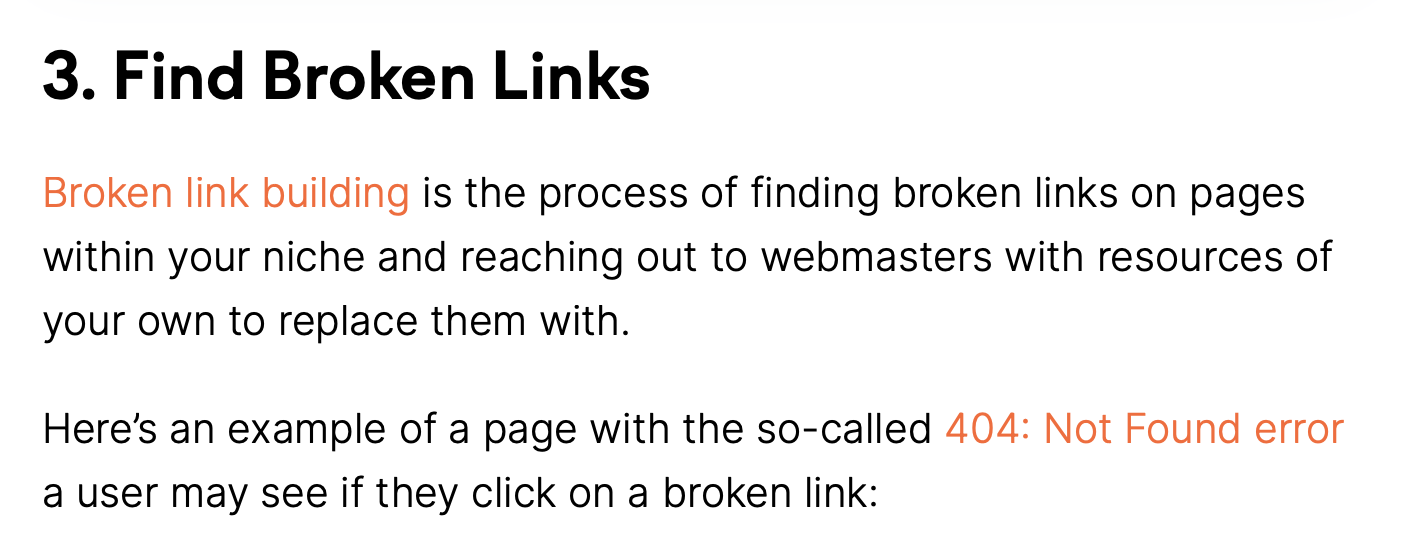
For example, broken link building is a common link building technique that might require about five hours of work to earn one link:
On a scale of one to ten, broken link building is probably about a 5/10 strategy, as you might spend several hours to get one quality link.
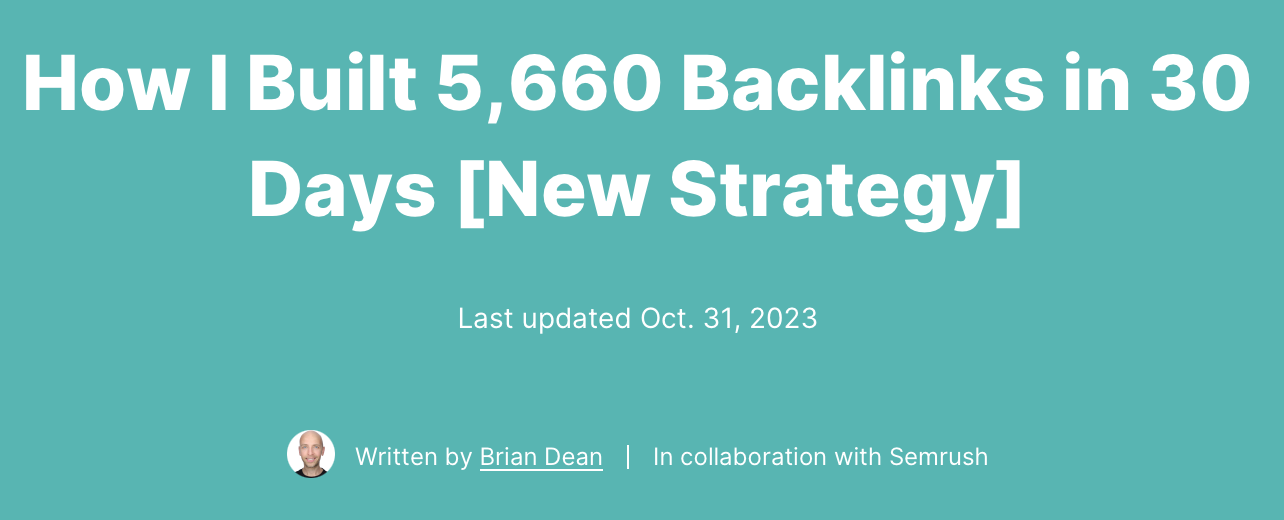
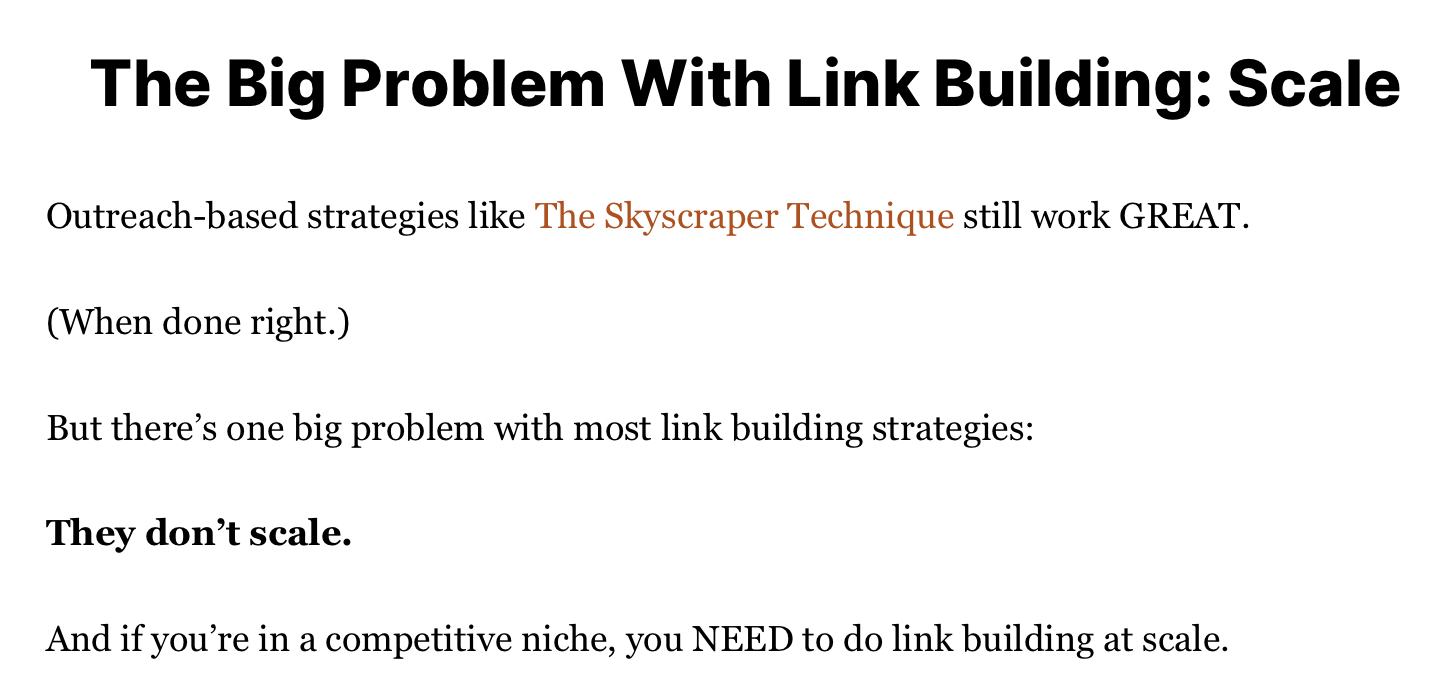
On the other hand, Brian Dean recently shared a case study of a new backlink strategy that allowed him to build over 5,000 backlinks (many of which are high quality links) in 30 days. As a result, his strategy is probably a 9/10 solution to the problem as it requires minimal effort and produces high results.
Therefore, Brian Dean’s blog post is much higher quality simply because the solution is much more effective.
While it may take some time for search engines like Google to realize that your content provides the best solution, they will pick up on positive user engagement signals, like a long average time on page, many organic mentions and backlinks from people who found your ideas remarkable and reshared them, and other signs.
Of course, thinking of the mosteffective solution to a real problem that many people face is challenging.
To identify the best solution to a problem, experiment with multiple tactics or talk to people who have experienced these challenges and ask what worked and didn’t work for them.
Real experience will make your content more helpful than content written by bloggers who have never personally experimented with the theories they’re writing about, as they won’t be able to articulate the drawbacks and downsides of various “best practices.”
In fact, you’ll notice that this is exactly what Brian Dean did when writing the post on link building. He called out the challenges he experienced with traditional link building tactics and then used that as the launchpad to show how he created a more effective solution.
Search engines also recognize that people with real experience tend to produce better content, so they often optimize their algorithms to recognize expertise and experience within content and tend to rank those blog posts higher. In fact, Google released the acronym “EEAT” which stands for:
Experience
Expertise
Authority
Trust
So the more you can focus on finding the absolute best solution to a problem, the better your content will perform and the more loyal readers you’ll earn.
Of course, this means that the real work begins long before you ever begin typing a word of the blog post, but the essence of great content marketing is solving a reader’s problem.
5. Package Your Advice As Simply As Possible
Scientific papers and textbooks provide excellent expert advice, so why do people turn to TikTok creators and other less credible sources for information?
Most scientific papers and textbooks are boring and difficult to understand, whereas many viral creators package their information in interesting stories.
The lesson?
If your content is difficult to comprehend, you’ll struggle to build a loyal following – regardless of how effective your advice is.
Therefore, optimize your content to be easy to understand and fun to read.
The first tactical strategy for making your content easy to understand is to write at a fifth or sixth-grade reading level. This rule applies even to sophisticated niches, like tech gurus and healthcare professionals.
That doesn’t mean you can’t use industry terminology or that you must dumb down the information. Instead, just think about keeping your sentences simple. Here are a few specific tips:
Write in the active voice
Keep your sentences short
Use an app like Grammarly or Hemingway and aim for a fifth or sixth grade reading level
Get directly to the point
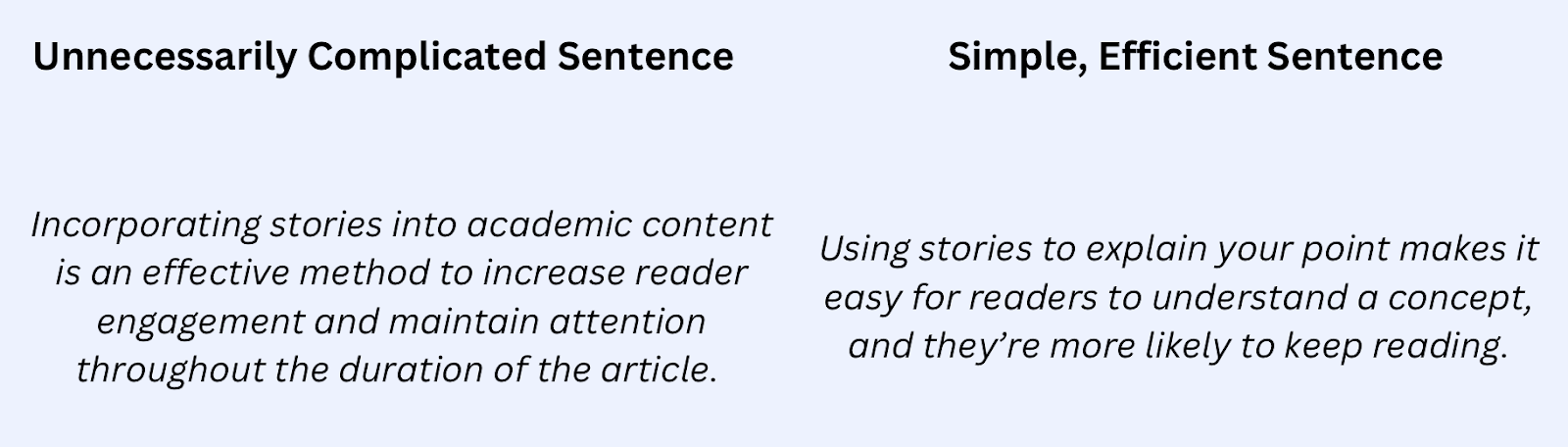
Here’s a great example of how you can simplify language to communicate the same point:
In addition to optimizing the sentence structure for simplicity, you can also make your blog post easier and more enjoyable to read by including stories and real examples.
Stories and examples make it easier for people to understand your point, and they make the content more memorable.
Here’s a great example of storytelling copywriting:
Instead of stating the point directly, the copywriter used a story to communicate his point – it’s important to take breaks. The story makes his content memorable and more enjoyable to read.
6. Optimize For Scannability
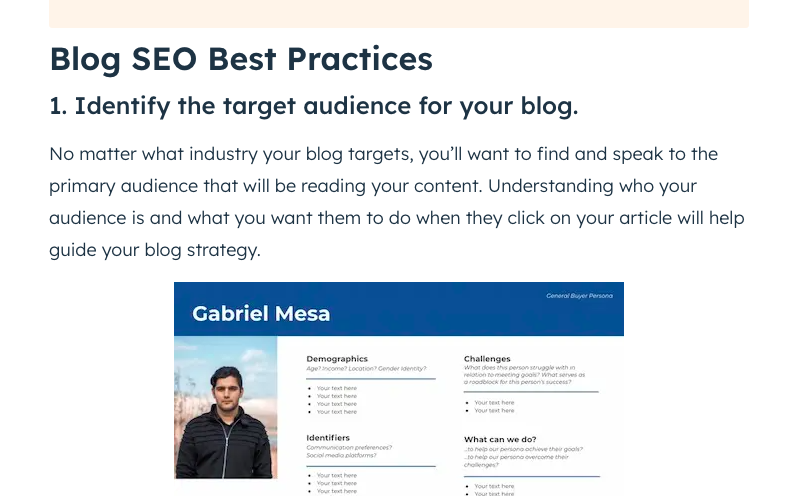
When you’re researching a topic, you want to learn the most important information as quickly as possible. If you glance at the two screenshots below, which blog post are you more likely to read?
Article 1:
Article 2:
While both articles contain the same information, the first one is much easier to scan because it uses bullet points, bold, short sentences, and headers.
Readers will likely skim through the first article and read the important parts, whereas they’re more likely to immediately hit the “back” button on the second article, which is a wall of text.
It’s also worth noting that the more scannable text (the first screenshot) ranks first in Google. This is likely because search engines noticed that people were staying on the first page for more time, indicating that it delivers a better user experience than the other posts.
The takeaway? Make your content easy to scan.
To make your content scannable, here are a few tips:
Use screenshots and graphics whenever possible to communicate your point
Use bullet points
Bold and italicize important points
Limit paragraphs to four lines or less
If you want to write in a flow state, write in long paragraphs as you’re drafting, and then use this checklist as you’re editing to optimize for scannability.
7. Follow SEO Best Practices
Including a primary keyword in your blog post’s title is a great start to optimizing it for SEO, but there are a handful of other SEO best practices that all bloggers should follow to maximize reach.
Here’s a quick checklist you can use to optimize your blog post for SEO:
Properly format each post: Use H2s and H3s for each subheader.
Include internal links: An internal link directs readers to another helpful blog post on your website. For example, rather than providing a detailed explanation of internal links, I’m simply linking to another blog post we’ve written about internal links. This ensures you don’t have to go on a side tangent to explain a subtopic, yet readers that want more information can go to that link to learn more. From an SEO perspective, internal links help search engines crawl your website more efficiently, translating to better rankings.
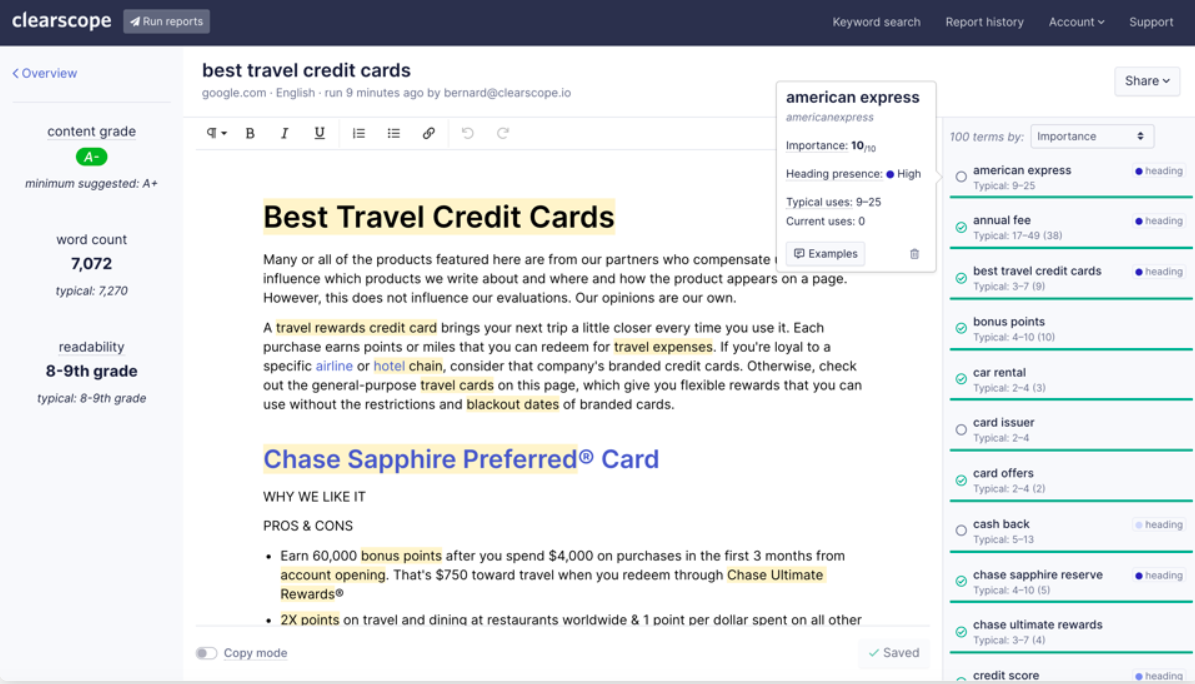
Include related keywords: You can use a tool like Clearscope to identify keywords related to your primary keyword. Including related keywords helps search engines understand what your blog post is about and ultimately helps you rank higher in search results. For example, you can see that some keywords related to “best travel credit cards” include “car rental,” “card offers,” and “cash back.” Including those keywords in your article helps search engines like Google realize that your blog post is about travel credit cards, which can help your blog post rank higher in the search results for keywords like “best travel credit cards.”
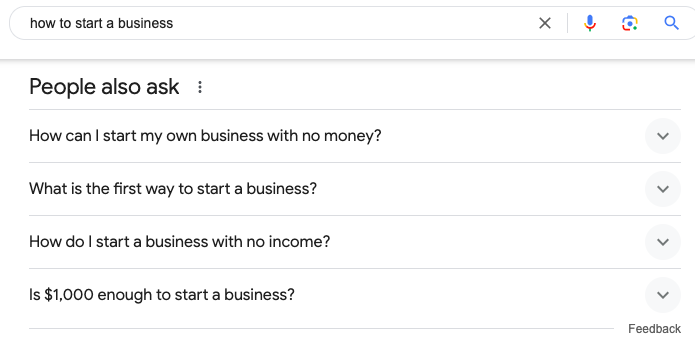
Include FAQs: Another strategy to earn more real estate in the search results is to look at the frequently asked questions that pop up for the primary keyword. For example, if you’re writing a blog post on “how to start a business,” these are some great FAQs to include in your article:
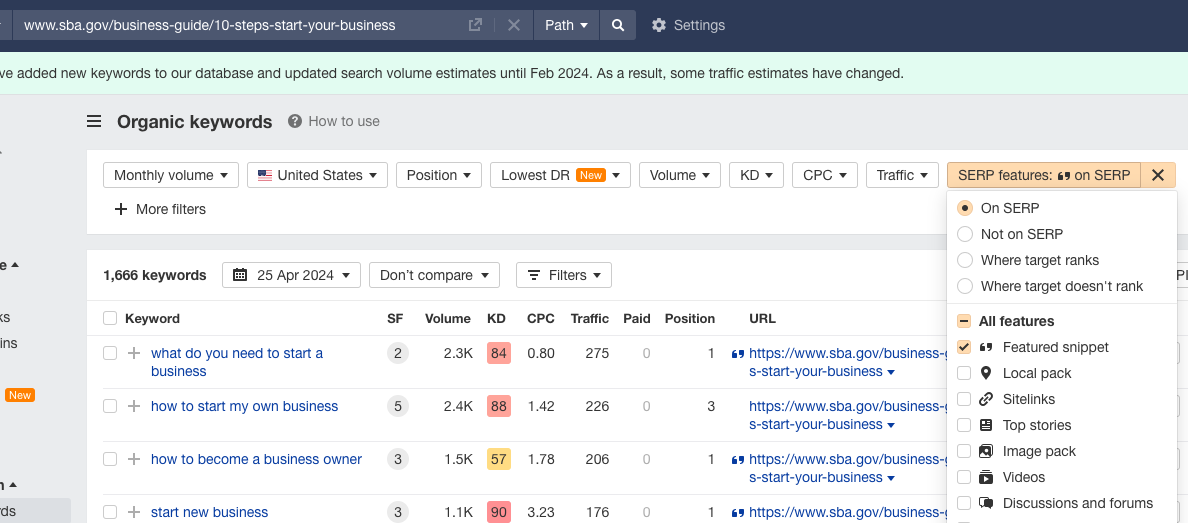
Target Featured Snippet Opportunities: Featured snippets are the answer boxes that sometimes appear at the top of the search results. You can identify these opportunities by pasting the top ranking blog post’s URL for your target keyword in a tool like Ahrefs. Then, sort by “SERP feature” and check “Featured snippet.” From there you’ll find a list of different keywords with featured snippets.
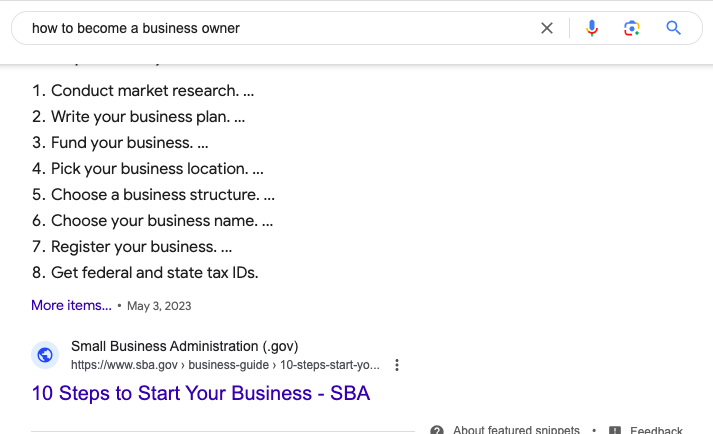
Then, optimize your blog post to rank for those featured snippets. You can do that by searching the current featured snippet and then format your blog post to match it. For example, if the featured snippet opportunity is “how to become a business owner,” be sure to structure your blog post as a list:
In addition to following on-page best practice tips, here are a few technical SEO tips that you can apply to all of your blog posts:
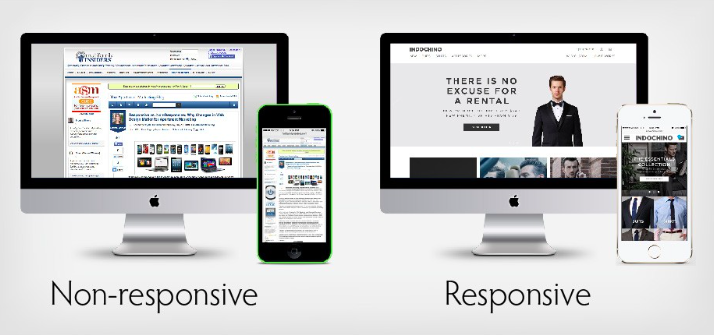
Optimize for mobile: Most people access blog posts on mobile devices, so make sure that the blog post is easy to read on a mobile device. Today, most websites are mobile friendly. Otherwise, try a different website theme.
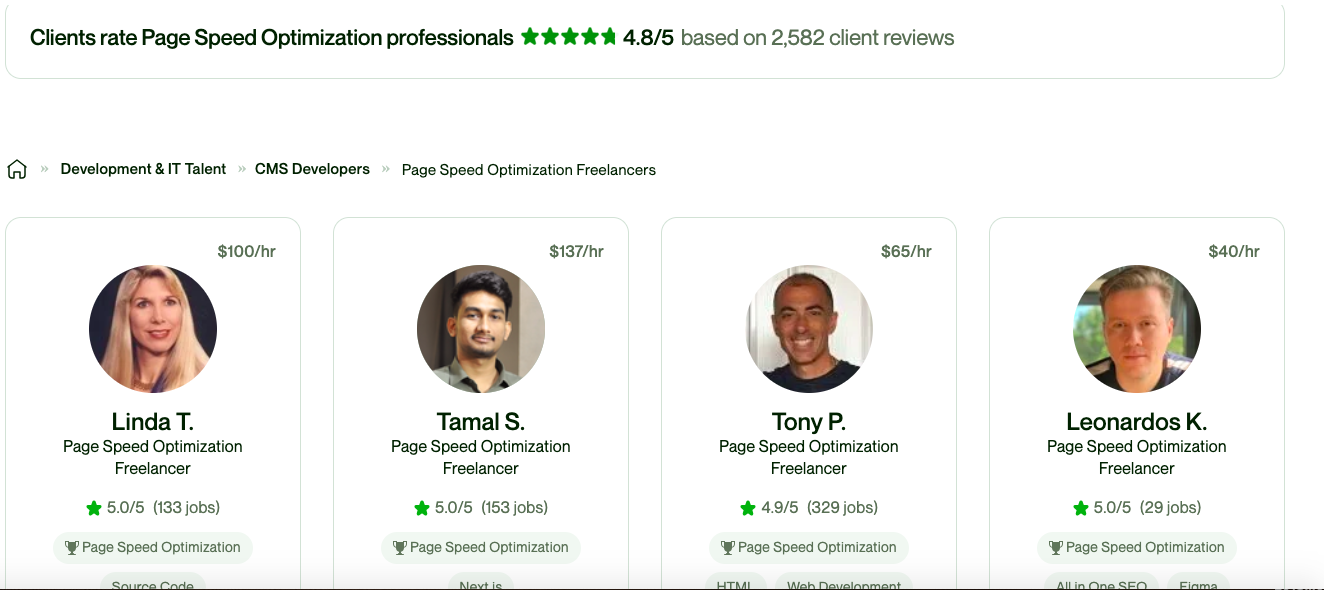
Improve your site speed: If your website takes too much time to load, people will click the back button, and then use a tool like PageSpeed Insights to test your site speed, and if it isn’t up to scratch, consider hiring someone on Upwork to fix it:
8. Collaborate With Influencers
As a beginner blogger, you probably won’t receive any organic traffic to your website when you first start publishing blog posts, as search engines like Google tend to favour ranking more established websites.
An easy solution to quickly earn readers is to collaborate with influencers.
The only problem is that, as a new blog with zero followers, there isn’t a strong incentive for influencers to work with you if you can’t send them any new readers. The solution to this problem is to offer them another form of value.
For example, if you’re a brand new travel blogger, you could reach out to a resort with a significant following and offer to create a promotional video of them (perhaps involving an interview with the owner). In exchange, ask them to share it on their social media profiles.
This is beneficial for them because they get high quality, free marketing materials, and it’s also beneficial for you because they’re sharing your content.
Here’s a great example of a vacation resort that reshared the video of a travel blogger:
If you consistently collaborate with influencers, you’ll eventually earn readers and develop genuine industry relationships, which will ultimately set you up for excellent long term growth.
The key to landing influencer collaborations is to always ask the question: How will this collaboration benefit the influencer?
9. Establish A Consistent Content Calendar
The more high quality content you publish, the faster you’ll grow.
However, many beginner bloggers are overly ambitious and try publishing multiple blog posts per week. Unfortunately, the ultimately become overwhelmed and give up.
Instead, set a goal of publishing just one blog post per week. By publishing once per week, you’ll still grow at a reasonable rate, but it won’t be so overwhelming that you give up.
This will help you develop the habit of writing blog posts, and over time, you can either increase your publishing rate or hire other writers to help you.
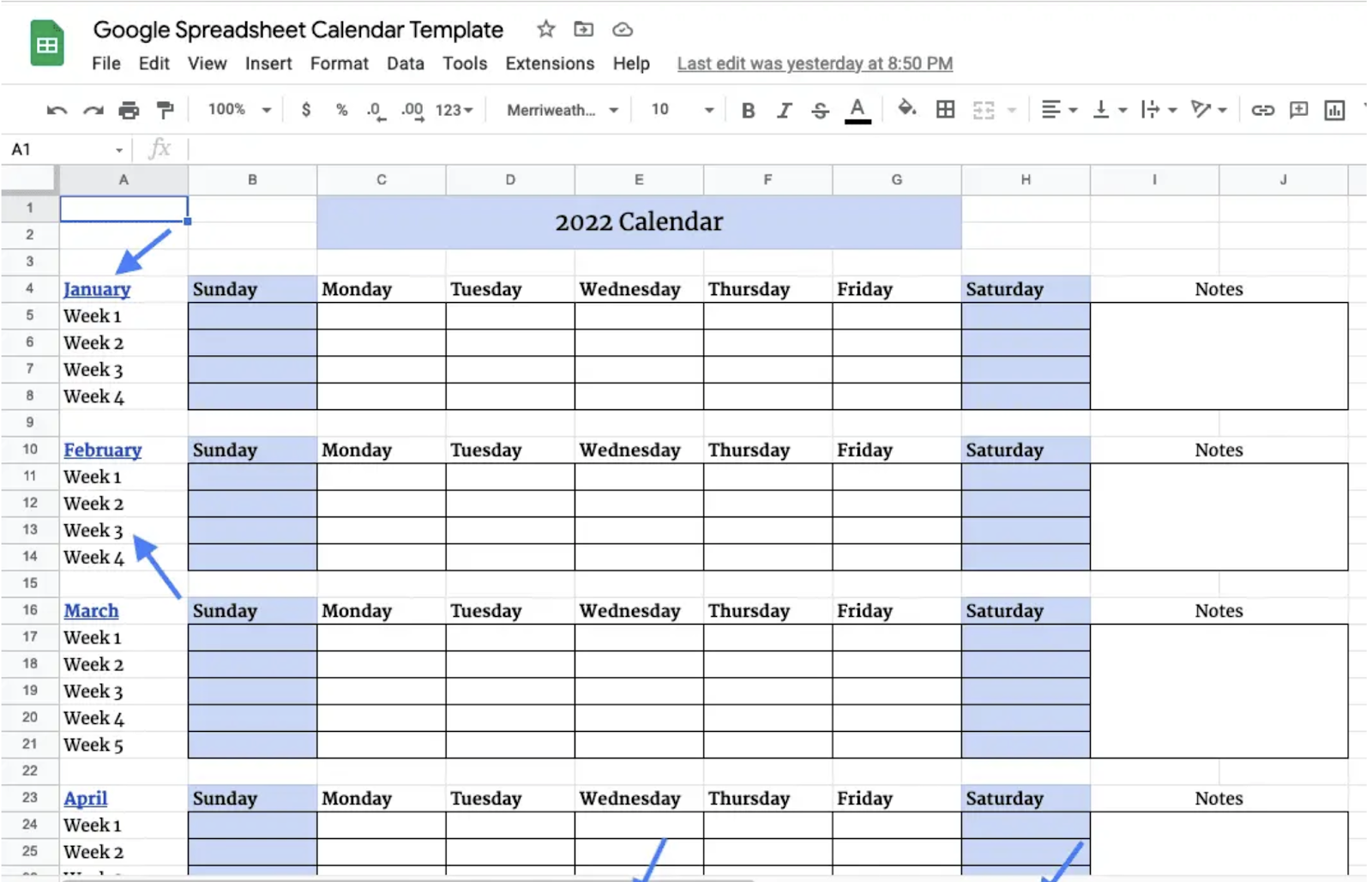
To stay organized, create a content calendar. This way, you can establish all of your content ideas for the month and set milestone goals throughout the week to stay on track. For example, you can set a goal to have the draft written by Wednesday, edited by Thursday, and published on Friday.
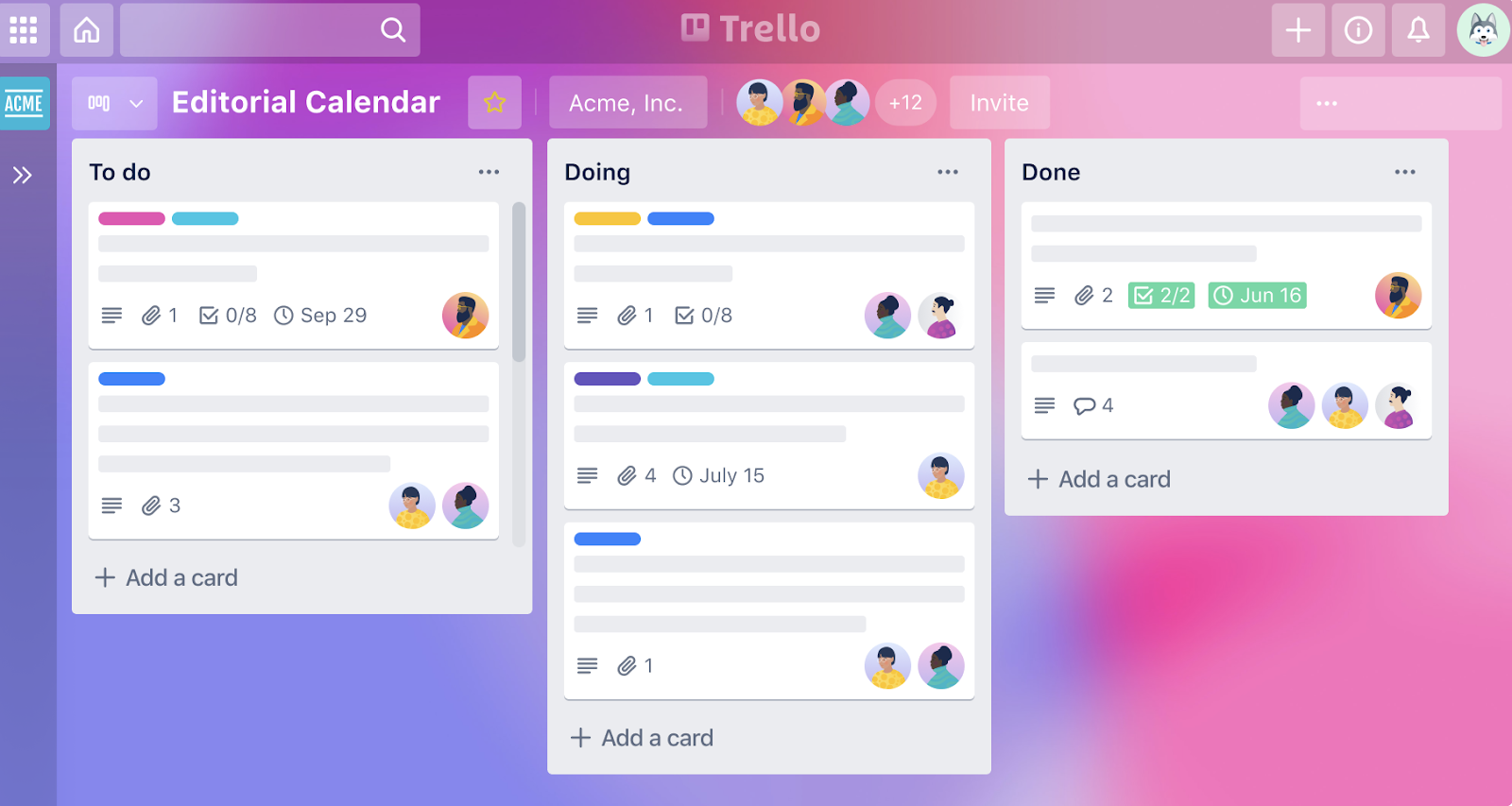
Trello offers several editorial calendars you can use for free.
Alternatively, here’s an example of simple Google spreadsheet content calendar:
10. Establish A Content Repurposing Strategy
Once you write a blog post, you can extract snippets from it to publish on other platforms, like Twitter, LinkedIn, and even your email list.
You’ve already done the hard work of creating the initial content, so extracting a few snippets from it should only take a few extra minutes, yet it will help more people discover your brand.
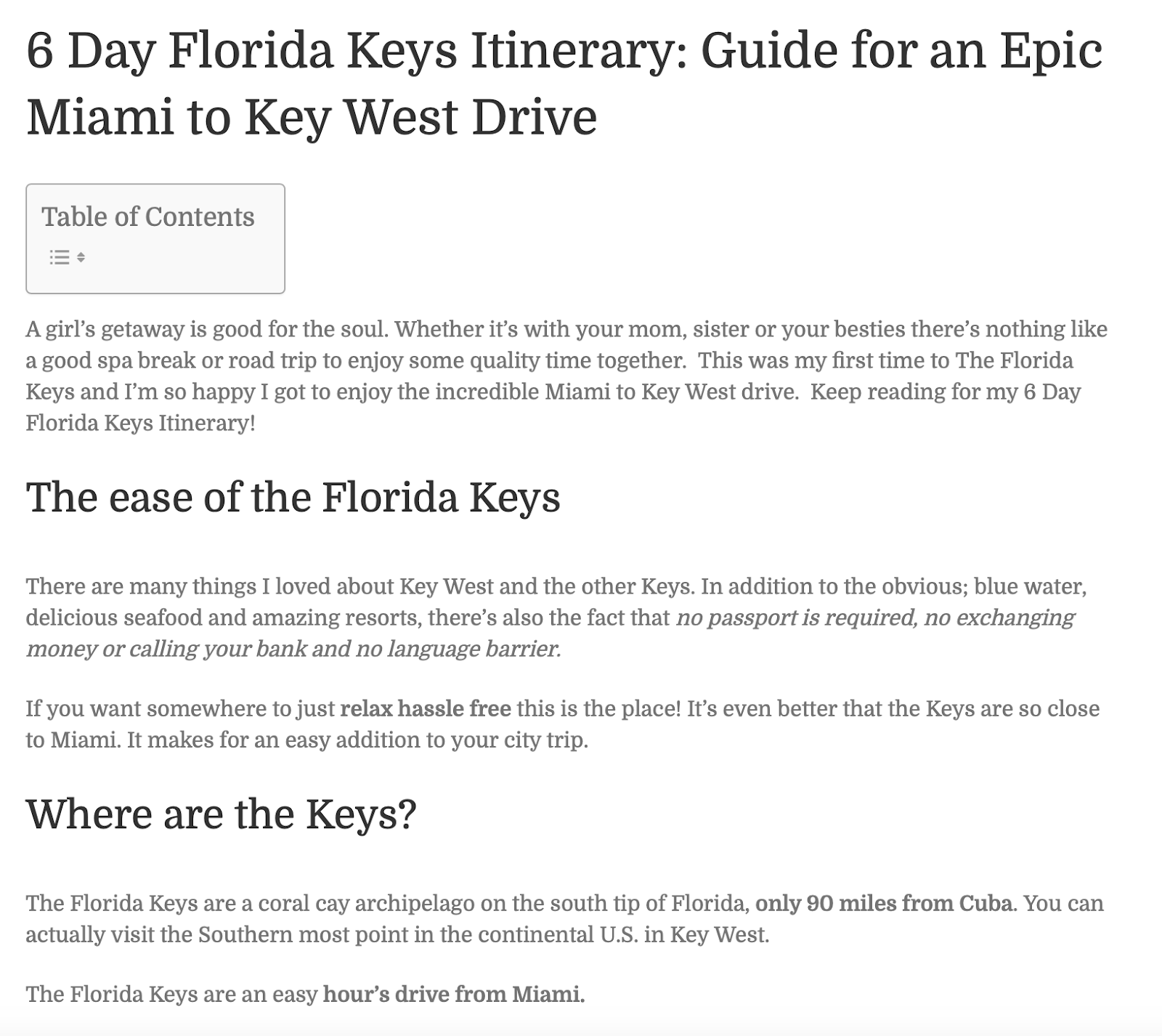
For example, this travel blogger wrote a post on visiting Florida Keys:
Then, she repurposed the content into Instagram and Facebook posts. While these were both sponsored posts, it’s an excellent example of how bloggers can repurpose their content:
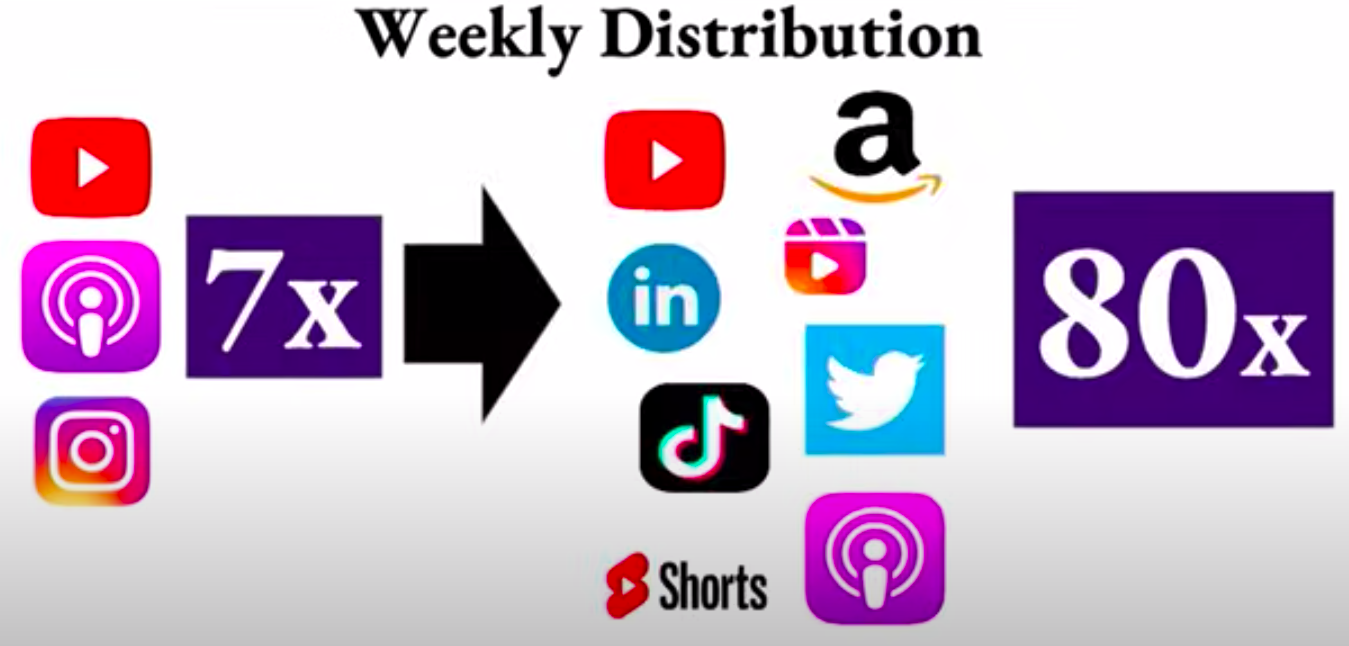
In fact, content repurposing was a key reason Alex Hormozi grew from 180,000 to over 1.2 million followers in just one year.
He only spent about two days per month creating content, and therefore only published a few long form pieces of content per month. However, he then had a team that repurposed snippets from those long form pieces of content across different social media platforms which allowed him to publish 80 total pieces of content per month.
As you grow, you can also hire a freelancer to repurpose the content for you.
11. Measure Progress And Seek Feedback
Starting a blog can feel overwhelming. There’s a lot to learn, and even advanced bloggers are always learning and improving. Instead of trying to make your first blog post perfect, just get started and then make one improvement to each blog post you write.
Over time, your blog posts will become better and better and you’ll earn more readers.
Once you start to build an audience, you can also ask for their qualitative feedback on your blog posts. A key mistake many larger bloggers make is failing to interact with their audience.
However, interacting with your audience will help you understand their pain points, which will help you think of better topic ideas and improve your writing. Direct communication with your audience will also help you build a deeper relationship with readers, which will help you monetize your blog in the future.
From a tactical standpoint, you can interact with your audience by responding to their comments. This is what we do here at Copyblogger:
You can also send them an email asking for feedback on your content. Or, you can just ask them about their biggest challenges.
You can also measure success based on traditional content marketing metrics, like traffic and social shares.
Start Your Blog Today
Starting a blog is just like starting a business – it might be hard to get traction in those first few weeks, but you’ll eventually grow if you just stay consistent.
Nevertheless, we realize that the initial stage can be overwhelming. That’s why we built the Copyblogger Academy, a community of entrepreneurs and marketers who earn money through writing.
Inside the Academy, you’ll have access to eight different courses on various marketing topics, including email marketing, copywriting, and SEO. You’ll also connect with like-minded peers and can ask seven-figure entrepreneur and Copyblogger founder Tim Stoddart for direct feedback in the community. You can sign up today risk-free. If you aren’t 100% satisfied, we’ll give you a full refund within the first 30 days.