Author

editor

Browsing

Making good videos won’t guarantee you success on YouTube, viewers need to find your content. Use these tips to make that happen.

YouTube is one of the most popular platforms for content creators, and many YouTubers have been able to make a living simply by sharing their videos. However, uploading a video isn’t enough to help create that success—potential subscribers and viewers need to be able to find the videos first.

Whether you’re new to the platform or have some videos out already, there are several things you can do as a YouTuber to help ensure your videos get seen. Here are 10 ways you can make sure viewers find your YouTube Videos.

1. Check the Privacy Settings Before Uploading Videos

It may seem a little silly and straightforward but looking over your privacy settings is a good way to make sure viewers can find your videos. You could do every single thing in this article, but if your videos are set to private, no one is going to see them either way.

Visibility settings on YouTube showing three options: provate, unlisted, and public

When you upload a video to YouTube, the last page before you click Publish will have three options under Save or Publish. Make sure the Public option is selected before publishing your video.

Inside YouTube Studio, visbilitiy settings showing three options: private, unlisted, and public

Not sure if one of your videos is public or not? Click on the icon in the upper right-hand corner, then YouTube Studio > Content. Under Visibility, you can see all your videos and whether they are public, private, or unlisted. To set it to public, click the down arrow and select Public > Publish.

2. Use Relevant Tags

When you upload your video, near the bottom of the first upload page, you’ll see a section called Tags. This is the area you’ll write in words or phrases that are relevant to your video. Not sure what tags to use? Use a tag generator to help you out.

Tags are mainly used to help YouTube categorize your video and know where to place it in its algorithm. If you uploaded a nomad travel video, a viewer who watches within this niche may see your video pop up in their feed based on the appropriate tags you write out.

Add tags section of uploading a video

It is important to note that tags are only one part of the algorithm’s role. Other aspects such as description, engagement, and title play a large role as well. This is why YouTube has its disclaimer that tags play a minimum role in helping viewers find your videos, but it can only help if you add some in there.

3. Use Keywords

Keywords and tags are similar in concept, but they are defined differently. Keywords are used within the title and description and tend to be the words that viewers actively search for on YouTube.

For example, if you uploaded a video teaching acoustic guitar chords to a popular song, you would want to have the name of the song, the name of the artist, and the fact that it’s an acoustic guitar how-to in the title and description. These are the keywords viewers would be searching for.

With proper keywords, your video could be one of the first ones to pop up on their search page.

4. Create Compelling Titles

Though a compelling title won’t help with the algorithm, it will help to catch the eye of a potential subscriber. There’s a huge difference Between “10 Delicious Pasta Recipes You’ll Love” and “Pasta Recipes.”

You’ll want to be clear and concise—YouTube only shows so much of a title, so creating an obscenely long title can be confusing. And remember, keywords are essential!

5. Use End Screens

YouTube allows creators to place a variety of different types of end screens at the end of their videos. The options are on the Video Elements page during the upload process. How does this help get your videos noticed, though?

End screen options infront of video of large batteries.

When someone is finished watching one of your videos, another clickable feature will pop up allowing the viewer to continue watching your content. You can set a particular video to be viewed or allow YouTube to choose the video based on what’s best for the viewer.

6. Engage With Viewers

If you post videos that have comments and likes flowing in, that shows that you have viewers who are engaged in your content. It’s important to create a relationship between you and your viewers, which includes liking their comments and answering their questions.

This type of engagement will help to give you more views, more subscribers, and more likes. It also assists with YouTube’s algorithm because it tells YouTube that people enjoy your videos.

7. Pay for Google Ads

You have the option of promoting your YouTube videos with Google Ads. Google Ads is YouTube’s paid promotional tool that creators can use to turn their videos into an ad. The link to get there is under Options next to whichever video you want to promote.

Let's create your video ad with options

You choose your targeted audience, how your ad is shown to potential viewers, the amount you are willing to pay daily, and how long you want to display your ad. This type of promotion will allow your videos to be seen beyond the usual audience and hopefully help pull in more subscribers to your channel. More subscribers, more views.

8. Be Consistent With Producing Content

It is important to regularly upload videos to YouTube. This helps to show the algorithm that your channel is active and a value to the community—which can have a positive impact on your channel’s performance.

Additionally, setting up a schedule can help your current followers know when to expect a new video from you. This type of support is a great way to gain a loyal following while also increasing your watch time and views.

9. Collaborate With Other YouTubers

Working with other YouTubers can help to expand your following, especially when they are also in your niche. There’s a chance the other YouTuber’s subscribers haven’t seen your channel, so this would be a great opportunity for them to check out your videos.

If that’s not reason enough, collaborating with other YouTubers can help you expand your knowledge of different types of content. You may learn new ways to creatively express yourself and freshen up your channel.

10. Promote Your Videos on Other Social Media Platforms

There are several ways to promote your YouTube channel. Many YouTubers will promote their videos on one or more social media platforms when they upload their videos. What can you do to promote yours?

Youtube Social Media Promotion explaining the link in bio

Make a sneak peek video for TikTok or post a copy of your thumbnail on Instagram. In the bios, you can add links to your videos or even your whole channel. Doing this will help to navigate followers from one social media account to another. On YouTube’s end, all they’ll see is your watch hours growing, and the algorithm will move along with it.

Use These Methods to Get Your Videos Viewed

There are many steps a YouTuber can take to help their videos do well on the platform. Just because the YouTube algorithm is a mystery to many, it is relatively easy to work with. Following the suggestions above is a good place to start.

By Sam Wolfe

Sam runs her own YouTube channel and has experience using DaVinci Resolve, Canva, and other software for her creative needs. She earned her BA in English and MA in English with a creative writing concentration.

Sourced from MUO

By Ali Faagba

If you’ve ever gone from reading a blog post to signing up for a free trial of any software after conducting a Google search, you’ve encountered product-led SEO content.

It departs from the previous online marketing strategy of generating marketing-qualified leads (MQLs) before passing them on to the sales team to convert. Because most content is intended to drive business goals, the product should be contextually woven into the content to drive awareness and sales, according to the understanding of product-led content.

As a result, the leads generated by product-led content immediately become product-qualified leads (PQLs), which are a more potent set of leads than MQLs.

This post will teach you everything you need to know about product-led SEO content, with real-world examples from brands that are succeeding with it.

What does product-led SEO content mean?

Product-led SEO content is the type of content that connects your product with a potential buyer via organic search ranking. It strategically positions your product as part of a solution you’re telling a reader about, piquing their interest to try it out.

It encourages visitors to try your product rather than simply providing you with their contact information. Product-led content is preferable because research shows that 87% of MQLs do not convert despite the best efforts of your sales reps.

Consider this: how many times have you signed up for a newsletter because you enjoyed the content you’d just read or because you wanted to gain access to a new one? If you’re like the majority of people, you’d say several times.

But did you sign up to buy something? The answer is most likely no. Now, flip the coin and consider your intention if you signed up to try out a product.

The idea is that product-led content is the most aligned with purchase intent.

Benefits of product-led SEO content

Here are the benefits of product-led SEO content.

It brings more potential customers

Product-led content is superior because it corresponds to buyer intent and thus attracts more prospective buyers.

As you’ll see later in this post, you can’t have product-led content unless you understand why the potential reader might need your product.

It shortens the sales cycle

The traditional sales cycle is 84 days long, according to HubSpot. During this time, a prospect discovers a problem, searches for a solution, discovers your product, compares it to other options, and either uses it or goes with the competitors.

However, with product-led SEO content, you can showcase your product as a solution to their problem so that they will be compelled to try it out. This assists them in making a decision and, as a result, reduces the amount of time they spend going back and forth in your pipeline.

It’s cost-effective

Going after contacts whose intent they don’t know is a costly exercise for the sales team. This takes phone calls, emails, and sometimes face-to-face meetings, and, most importantly, time.

Product-led content, on the other hand, encourages your prospects to purchase your product or contact your sales team.

It limits competition

Anyone who tries your product or schedules a demo knows right away if it is a good fit for them. Some steps in the purchasing process, such as alternative considerations, may be eliminated as a result.

Contrast this with someone who simply downloaded an ebook or subscribed to your newsletter. Even if your sales team makes every effort to convert them, it is natural for them to progress to the stage of product comparison, which may push you out of the race.

With that said, let’s get into the specifics.

Steps to write successful product-led SEO content

In this section, I’ll walk you through the process of creating product-led SEO content that drives sales.

Understand the product

If you find yourself writing about a product, you’re probably a marketer or content writer tasked with selling it. This indicates that you are not an expert in that product or industry. The first step should be to close the knowledge gap.

Remember that product-led content is all about incorporating a product into an article contextually. A closer look at the article will reveal information about the buyer personas as well as the product.

Why? Because the product’s owners understood there was a problem to be solved and for whom it was being solved when they built that product.

This is why the product discovery call is the best way to learn about the relationship between:

  • The product
  • The problem it solves
  • Whom it solves it for

Knowing all of this will assist you in determining who you are targeting and what search terms they will use on search engines. The following are the questions to ask to learn everything you need to know:

  • What problem does your product solve?
  • Why was it built in the first place?
  • What are the strongest use cases?
  • Who are the primary target users?
  • What are their pain points?
  • Who are the competitors?
  • What does your product do better than the competition, and how’s it different?

You can discuss this with the founder, the CEO, the sales manager, or even the head of marketing. Just make sure you’re gaining your knowledge from an insider. If possible, you can also speak to the existing customers to tap into their firsthand experience.

And, because the majority of this work is dependent on the success of this first step, don’t stop there. Do the following as well:

Find relevant queries: You’ve already thought of some of the research they might be doing that is relevant to your product, so take it a step further by researching those keywords on Google Trends, Also Asked, Keyword Chef, and Answer the Public. This can provide you with a wealth of information about what your audience is looking for and their stages of awareness.

Find data to validate (or invalidate) your convictions: This boils down to two steps: first, go to where they are and find out what they are talking about. For example, many marketing conversations take place on LinkedIn, whereas many political conversations take place on Twitter and Facebook. Second, use customer research tools such as SparkToro.

Study the review sites: Look for your competitors on review sites like G2 and learn about the issues their customers are having. Looking closely, you’ll see how you can credibly position your product as a better alternative.

Outline your buyer personas and ideal customer profile

If you are a B2B company and your product is aimed at other businesses, you must define your ideal customer profile (ICP). Identify your buyer personas if you’re a B2C company.

An ICP is a fictitious representation of a company that needs your solutions, whereas a buyer persona is the ideal individual customer who will most likely purchase from you.

An ICP will include information on the following:

  • Company size
  • Industry
  • Geographical location
  • Revenue

A buyer persona, on the other hand, will include details about:

  • Demographic (age, gender, marital status, education, occupation, etc.)
  • Online behavior (preferred social media, favorite influencers, trends, interests, etc.)
  • Challenges
  • Goals

That brings us to the next step: determining your target audience. To accomplish this, you should gather information from existing customers in three ways:

  • Obtain quantitative information from surveys.
  • Customers should be interviewed.
  • Obtain information from the sales team.

Conduct keyword research

Keyword research is an essential component of product-led SEO content. It allows you to validate all of your previous findings, such as whether a keyword is worth pursuing or not.

It also suggests additional potential keywords for you to consider. It also reveals important information, such as the competition’s backlink profile, the keywords they rank for, long-tail and short-tail keywords, keyword difficulty, and more.

Look for keywords that will give you a better chance of ranking, especially if your industry is highly competitive. To put it another way, look for long-tail keywords. This may sound like a cliche to you right now, but it’s important to understand.

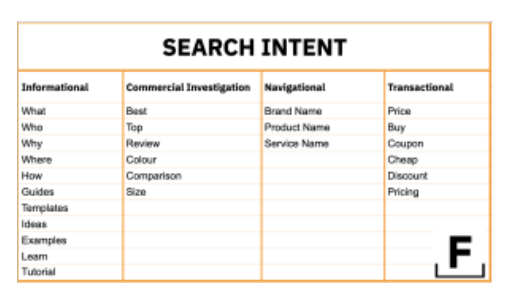
Long-tail keywords, just to be clear, are those with low search volume and competition. These keywords are more specific and commercial in nature than informative. This article is an example of long-tail keywords: best Anyword alternatives.

These should be your top priorities because a searcher at this stage is in the consideration stage and is more likely to purchase than, say, someone searching for how to write an essay, a long-tail keyword.

The bottom line is to understand buyer intent and find low-hanging fruits that’ll bring you traffic and money quickly.

To further understand search intent, take a look at this table by Foundation Inc.:
Pro tip: You can also consider zero-volume keywords if you strongly feel that some of your prospects might be looking for them. In recent days, I have seen a lot of marketing leaders encourage this.

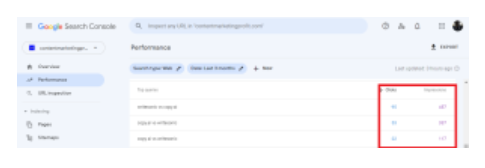
In my experience, many zero-volume keywords generate traffic, and their posts rank for keywords other than the ones they originally targeted. According to Ubersuggest, this post, Writesonic vs Copy AI, has 20 monthly search volumes and ten, according to Ahrefs.

However, after taking the risk of writing and publishing it, it now receives nearly 200 visitors per month, with over a thousand impressions.
Furthermore, Google has said that 25% of search queries on its search engine are new. That’s another reason you shouldn’t always mind keyword research data when planning your content calendar.

Use a product-led approach to prioritize content

Keyword research is no longer sufficient. Focus on commercial-intent keywords that can contextually feature your product as a solution to maximize your resources.

Take it from Ahrefs, which happens to be a keyword research tool.

Assume you work with user onboarding software. The third column in the table below lists some of the potential topics for your blog.

How to use in-app communication to increase retention
Some examples of good in-app communication
How to find users through SEO
Blogging for your business

Now, define the criteria for scoring the topics and determining their importance to your business.

This is indispensable because people can’t execute in-app communication without your product. How to use in-app communication to increase retention
This is very useful because to apply any of these examples, they’ll probably need your product. Some examples of good in-app communication
This isn’t going to lead to sales, but you can mention your product since they’ll eventually need to communicate with users in-app. How to find users through SEO
This is completely irrelevant, but it freshens up your website and can also bring traffic and create awareness. Blogging for your business

The next step is to add points blog post topic based on those criteria. Here is an example:

3 This is indispensable because people can’t execute in-app communication without your product How to use in-app communication to increase retention
2 This is very useful because to apply any of these examples; they’ll probably need your product Some examples of good in-app communication
1 This is going to lead to sales, but you can mention your product since they’ll eventually need to communicate with them in-app How to find users through SEO
1 This is completely irrelevant, but it freshens up your website and can also bring traffic and create awareness. Blogging for your business

As you can see, the one that accumulates 3 points has the highest score, which you should focus on. This is because they are directly related to your product and can result in immediate users and revenue for your company.

Conduct SERPs analysis

It is critical to consult existing literature in your industry to write better content. Concentrate on what your competitors have been doing on Google, which will help you create content that outperforms theirs.

Examine the top ten articles on Google—which appear to be nine these days. Examine how they were put together. Things to look into here include the following:

  • Are they how-to guides?
  • Are they listicles?
  • Are they a mix of both?
  • What are the key points they cover?
  • How in-depth are they?
  • What new insights can you add to the topic?
  • What can you do better?

The last two questions are the most important, and they are the reason you are performing the SERP analysis in the first place.

Being able to answer these critically and excellently will not only give you a better chance of ranking but also of delighting and convincing your site visitors.

Pro tip: Many SEO experts advise you not to copy your competitors, but this is exactly what you should do occasionally. This does not mean you should copy their content, but rather the strategy of the top three Google articles. Google understands that search query based on their format.

Copy everything you can, including their headline, H-tags, meta descriptions, conclusion, and FAQs. Then tweak it to make it more unique and better. If your product-led SEO is about ranking on Google, you can’t dare to be too different.

Strategically weave the product into the content

You’ve laid a solid foundation for writing your product-led SEO content with everything you’ve done. The writing exercise has now begun.

To create truly product-led content, you must first demonstrate a thorough understanding of the subject matter and your audience’s problems.

It’s not uncommon for people to recommend CoSchedule Headline Studio for this step. While it’s a fantastic tool, I doubt it will help you in this situation. Sweat it out and think it through.

For SEO purposes, you may want to include your target keywords in the first paragraph or the first 100 words. However, for the sake of your audience, disregard this in your first draft. Ignore generic introductions such as “do you want to solve XYZ problems?” In all honesty, they are looking for a solution, which is why they have arrived at your website. Don’t bother them with that.

Also, unless you have an awe-inspiring and relevant story to tell, don’t tell them a theoretical story and then ask if it struck a chord with them. Many writers do this for the sake of storytelling, but it’s frequently too generic to have any real impact. Only a few writers have the creativity to create something like this.

Understanding your audience’s level of awareness will also help you write an excellent introduction. So you ask yourself: What is their level of awareness, and where are they in the buyer’s journey? For example, are they looking for a new solution right now, or are they already comparing options?

All of your previous research would have given you a better understanding of who your target audience is. As a result, you should understand the problem they are attempting to solve and use that to hook them in your introduction.

In the introduction, frame the problem as clearly as possible while remaining natural.

Take a look at this introduction, for example:
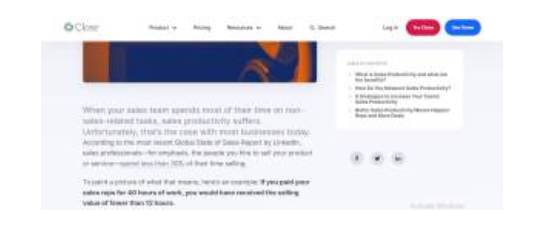
There is no pretentious storytelling or any questions that’ll most likely annoy the reader rather than hook them in—just a direct capture of the reader’s challenge and a transition into the solution.

And when it’s time to recommend a product they can use to solve their problems, don’t forget these three things:

Don’t be salesy: Avoid being pushy by offering your product gently. And, if there is another popular product in your industry that they may have heard of, suggest it subtly as well. Then figure out how to show them where your product shines and why they should choose it over the alternative.

I like how Trevor.io does it on their blog. Here is an example:
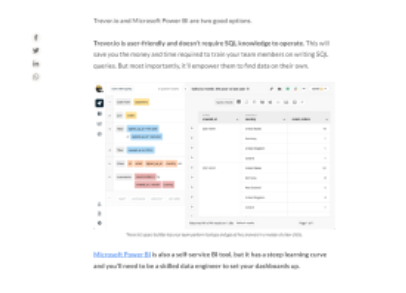
Show screenshots: In product-led SEO content for SaaS, screenshots are essential. You want to sharpen your reader’s senses of what’s in your product and how it works. Of course, you can also use GIFs and short video clips if necessary.

Tell them what to do: When you’ve finished positioning your brand as a potential solution, don’t forget to include a call to action (CTA). Tell them what you want them to do, whether it’s to sign up for a free trial or schedule a demo, as you saw Trevor do in the screenshot above.

Optimize your product-led SEO content for search engines

Now that the work of writing helpful content has been done, it’s time to optimize your content for search engines.

There are two ways to do this: you can do it manually or use content optimization tools, such as Surfer SEO and Clearscope.

Here is a quick highlight of what content optimization involves:

  • Use the key phrase in the introduction or the first 100 words
  • Use the key phrase in the subheadings, i.e., H2, H3, etc.
  • Optimize title tags
  • Optimize your images by adding alt text
  • Link internally
  • Link to an external, authoritative source
  • Use the primary keyword and related key phrases strategically throughout your content
  • Use your keyword in your URL
  • Optimize your meta description with your keyphrase

Let’s wrap it up

Product-led SEO content is an excellent way to save money while capturing the types of leads your company needs most. This is because it mostly corresponds to buying intent and eliminates a lot of back and forth in your purchasing process.

You are more likely to fill your pipeline with good leads if you demonstrate a thorough understanding of your audience’s pain points and show them, rather than tell them, how your product can help them solve them.

Featured Image Credit: Photo by Sam Lion; Pexels

By Ali Faagba

Author’s bio: Ali Faagba is a conversion-driven content writer and content marketer for Product-led SaaS brands. He owns and runs Content Marketing Profit, his product-led content and SEO play ground.

Sourced from readwrite

B

ChatGPT SEO: Can you really use this tool to boost your results in search engines? And how does SEMrush come into it? Let’s find out!

ChatGPT is an amazing tool that can understand and respond to queries just like a human, thanks to its AI-powered technology. On the other hand, SEMrush is an all-in-one marketing platform that offers various tools for SEO, social media, content marketing, and more.

The great news is that these two tools can be used together to supercharge your SEO efforts!

By combining ChatGPT’s natural language processing capabilities with SEMrush’s data analysis tools, you can get valuable insights and ideas to optimize your website and boost your search rankings. Sounds awesome, right? Let’s dive into how to do it!

TLDR: Want to give SEMrush a try? Check it out here!

What is ChatGPT SEO?

When it comes to SEO, ChatGPT can be a valuable tool for generating content ideas and optimizing your website. You can use ChatGPT to create SEO-friendly content by providing it with relevant topics or keywords, and it will generate high-quality content that is optimized for search engines.

ChatGPT can also be used for answering common customer queries on your website, which can improve user experience and help boost your search rankings.

With ChatGPT’s advanced natural language processing capabilities, it can understand the intent behind a user’s query and provide relevant and accurate responses.

What is SEMrush?

SEMrush is a comprehensive marketing platform that provides a variety of tools for businesses to improve their online presence. It is used by SEO professionals, digital marketers, and content creators to analyse data, optimize websites, and improve their marketing strategies. SEMrush’s capabilities are vast, and include keyword research, backlink analysis, site audit, competitor analysis, social media management, and more.

One of SEMrush’s primary uses is for SEO. The platform offers a suite of SEO tools that can help you conduct keyword research, track your rankings, and analyse your competitors.

By using SEMrush’s keyword research tool, you can discover high-ranking keywords that are relevant to your business and optimize your content around those keywords. The site audit tool helps you identify technical SEO issues on your website and provides recommendations on how to fix them.

You can also track your rankings on search engine results pages (SERPs) and monitor your competitors’ SEO strategies to stay ahead of the game. Overall, SEMrush is a powerful tool for any business looking to improve their SEO efforts and stay competitive in the digital landscape.

How can you use SEMrush and ChatGPT for SEO?

Start by heading over to ChatGPT and asking it to generate a list of keywords. For this example, we’re going to ask ChatGPT for keywords that a social media marketer might want to rank for.

So you’ll literally type in ‘Give me a list of keywords that a social media marketer should be targeting in blog content etc’

Let’s see what ChatGPT came up with.

chatgpt seo

Now that ChatGPT has given us our list, we can pick one of these keywords and take it over to SEMrush. For this example, let’s go with “Audience targeting”.

Once on SEMrush, toggle over to the Keyword Magic Tool and paste in your chosen keyword. Hit enter. Next, you want to look at the search volume and the keyword difficulty. Now obviously “Audience targeting” is a very broad term, so we’ll want to find a related keyword that isn’t as difficult to rank for with our content.

semrush seo

You can toggle the results in SEMrush to find easier keywords to rank for, you’ll want to make sure that there is a decent amount of search volume too and that the keyword is relevant to your target audience.

semrush chatgpt seo

In the screenshot above we can see that the keywords ‘target audience analysis and ‘audience targeting tools’ are reasonably easy to rank for at the moment, but the search volume is very low, so these keywords may not be worth creating content around.

Once you’ve found a good keyword using SEMrush, head back over to ChatGPT to decide on the topic of your article. For example, you might ask ChatGPT, ‘What are some topic ideas for an article targeting the keyword ‘audience targeting tools’?

From there you can pick a topic, ask ChatGPT to create an outline and then write your whole article for you using SEO best practices!

Best practices for SEMrush and ChatGPT SEO

When using ChatGPT with SEMrush for SEO, there are a few best practices to keep in mind to ensure that you are getting the most out of these powerful tools.

Set clear goals and objectives

Setting clear goals and objectives is essential for any SEO campaign. Before using ChatGPT and SEMrush, it’s important to have a clear understanding of what you want to achieve. Whether it’s improving your search rankings, generating more traffic to your website, or boosting your online visibility, having a clear goal will help you focus your efforts and measure your progress.

Provide detailed information

Providing detailed information and context to ChatGPT is also important. While ChatGPT is capable of generating high-quality content and insights, it still needs detailed information and context to provide accurate and relevant results. When providing ChatGPT with information, it’s important to be specific and clear about your objectives and requirements.

Review and refine results

Reviewing and refining results is crucial when using ChatGPT with SEMrush. While ChatGPT can provide valuable insights and ideas, it’s important to review and refine the results to ensure that they are accurate and relevant to your needs. This can involve editing the content generated by ChatGPT, fine-tuning your keyword research, or adjusting your optimization strategies based on SEMrush data.

Check accuracy and relevance

Ensuring accuracy and relevance of information is also critical when using ChatGPT with SEMrush. While these tools can provide valuable insights and ideas, it’s important to ensure that the information is accurate and relevant to your specific needs. This can involve cross-checking the results with other sources, verifying the accuracy of SEMrush data, and ensuring that the content generated by ChatGPT is optimized for your specific target audience.

By following these best practices, you can effectively use ChatGPT with SEMrush to improve your SEO efforts and achieve your goals. With a clear focus on your objectives, detailed information and context provided to ChatGPT, and a commitment to reviewing and refining the results, you can ensure that you are getting accurate and relevant insights that will help you optimize your website and improve your search rankings.

Wrapping it up

Using ChatGPT with SEMrush can provide a powerful combination of tools for improving your SEO efforts. By leveraging ChatGPT’s natural language processing capabilities and SEMrush’s robust data analysis tools, you can gain valuable insights and ideas for optimizing your website and improving your search rankings.

These tools can help with various SEO tasks such as keyword research, content creation, on-page optimization, link building, and competitor analysis.

So, if you’re looking to improve your SEO efforts and stay ahead of the competition, we encourage you to give ChatGPT and SEMrush a try together. You might be surprised at how much these tools can help you achieve your SEO goals!

B

Sourced from Jeff Bullas

Sourced from appPicker

Instagram isn’t considered one of the best marketing tools, but that is because the larger companies have a hard time breaking its formula with raw capital alone. They have to pay massive amounts to influencers on Instagram to receive far less value for money than if they paid Facebook or Twitter influencers. As a result, smaller businesses are able to sneak into the public view and make some gains on a brand-by-brand level. Here are a few Instagram features that favour smaller businesses.

  1. Create a Wall of Branding Messages

Put simply, you can turn your Instagram account into a big repository of your branding and marketing messages. All you have to do is put your evergreen stuff in there, and it will still be interesting to the people who visit. Added to which, it helps spread your brand message on social media.

  1. You Can Buy Attention Three Ways

These days, you can pay for Instagram promotion through their marketing systems and tools. This is expensive and fairly inefficient. You can pay influencers and celebrities to promote your brand, but that is even more expensive. Or, you can go online and buy Instagram accounts from a company like Fameswap, and then exploit the accounts of other people who have already built up their audience.

  1. Test Your Ads Through Instagram Stories

This is a trick as old as time. You can run all your most shaky ads through Instagram to see how people react. Oddly, if people do not react at all, it probably means your advertisement is okay for mainstream use but may need improvement. Nevertheless, taking a few chances and running a few risky ads through Instagram is rarely a bad thing, even if you don’t gather much data.

  1. You Can Ask Your Customers For Input

As with all social media, you can ask your followers and potential customers for input on your services, your products, your brands, your offers and your social media posts. As a smaller business, you can be more interactive and authentic with your customers.

  1. Watch and Maybe Even Copy Your Competitors

You can copy your competitors posts, ideas and sales. You can check out what works for them, and then make your own version. The great thing is that there is nothing they can do about it. Plus, you don’t have to try their methods right away, you copy their stuff, make your own, make it better, and then release it when the time is right.

  1. Try Instagram Live For Certain Promotions

There are certain companies that are able to make the most of Instagram live. Haunted houses are pretty popular at the moment, and there are times of the year when fireworks are popular too. If you are running events that are live themselves, like live standup comedy, then you can do very well with the Instagram Live features. There are even people making unboxing videos of their own products, so you could try that too. They seem to be oddly popular for unknown reasons.

  1. You Can Upload Videos of 60 Minutes

If you run a business account that is verified, you can run videos of up to 60 minutes. If you have the sort of content or even the types of services that warrant a 60 minute run-time, then you have an advantage over all the accounts that cannot post 60 minute videos.

  1. Get Yourself Listed on Google

If you have a fully fleshed out Instagram profile and a well maintained Instagram account, then you will appear on Google when people are searching for your business. It doesn’t have a big impact, but it is one more Google result in your favour, possibly ranking above the Instagram profile of your competitors.

Sourced from appPicker

By Justin Bariso

Buffett’s recent comment has a little to do with Musk, more to do with emotional intelligence, and everything to do with being intentional about how you run your business.

“Elon is a brilliant, brilliant guy.”

That’s how Warren Buffett described Elon Musk at Berkshire Hathaway’s annual shareholder meeting this weekend. It was in response to a question directed at Buffett’s business partner Charlie Munger, as to whether Munger thought that Musk overestimates himself.

Munger does believe that, although he added that “[Musk] is very talented” and that “he would not have achieved what he has in life if he hadn’t tried for unreasonably extreme objectives.”

“He likes taking on the impossible job and doing it,” explained Munger. “We’re different, Warren and I. Warren and I are looking for the easy job that we can identify.”

Buffett concurred. “If we can do it playing tic-tac-toe, we’ll do it,” he said.

But it’s what came next that really stands out. Describing the way Musk runs his companies, Buffett said this:

“It takes over your life in a way that just doesn’t fit us. There have been important things done by Elon already. It requires … a dedication to solving the impossible. And every now and then he’ll do it. But it would be torturous to me or Charlie.

“I like the way I’m living.”

Buffett’s answer has little to do with Musk, more to do with emotional intelligence, and everything to do with being intentional about how you run your business.

Namely, do you want to be:

A disrupter?

Or an investor?

To clarify, “investor” here isn’t talking about traditional investors who manage financial assets. Rather, it’s referring to owners who are building a business with the aim to generate future passive income.

Let’s take a closer look at each of these types of business owner and see what you can learn from it. (By the way, if you enjoy this article, you might want to sign up for my free course, which uses real-life examples like this one to help you and your team build emotional intelligence.)

Disrupters focus on changing the world

As a disrupter, Elon Musk’s primary goal is to change the world–he wants to disrupt the status quo and alter how humanity lives.

To accomplish this goal, Musk and other disrupters like him work extremely hard to do things in a completely different way, and then relentlessly try to demonstrate why that new way is better.

For example, with his companies, Musk has tried to move the world to:

  • use renewable energy instead of fossil fuels
  • consider life on Mars and beyond
  • change the way they use social media

As you can imagine, to initiate this type of change is extremely difficult. That’s why disrupters must be workaholics. They have to go all in.

As Musk himself once put it: “Nobody ever changed the world on 40 hours a week.”

Investors focus on changing their life

Investors could care less about changing the world. Rather, they’re interested in leveraging what they learn about the world to make money.

Investors focus on identifying opportunities. Then, they use proven formulas that they can repeat. In Buffett’s case, this has meant focusing on slow but steady growth in his businesses, and then investing capital from those businesses in what he describes as “an outstanding company at a sensible price” (as opposed to mediocre or risky companies at bargain prices).

For others, that might mean investing time or money to design or refine a product or service, create content, build marketing funnels, etc.–all with the goal of earning profits that compound over time, so they can have the freedom to live life on their terms.

While many investors also end up workaholics, the beauty of this type of business is you don’t have to work crazy hours to accomplish your goal. Buffett, for example, once told PBS that he has “no desire to get to work at 4:00 in the morning” and usually sleeps “eight hours a night.”

How to run a business: The choice is yours

Which brings us to the key lesson in how to run your business:

You have to make a choice. Do you want to be a disrupter or an investor?

Here is where emotional intelligence comes in. By using the rule of recentering, you must idenitfy what your primary business goals are. Do you want to change the world? Or is your business a means to an end?

The answers to these questions will in turn influence your decisions, and help you decide what type of business you want to run.

For example, disrupters do practically anything for the business, because they believe they are serving a greater good and pushing humanity forward. They’ll work nights, weekends, and vacations until they’ve gotten the world’s attention. Then, they continue to do so–to make sure they’re not disrupted themselves.

Investors may also work crazy schedules–but, often, only until they discover the “formulas” they can repeat. For many investors, the goal then is to make the business as easy to run as possible.

As time goes on, I see fewer people trying to disrupt, and more trying to invest. And no wonder, because if truly successful, investors have more control over their lives.

Opportunities to:

Spend more time with family.

Spend less time doing things they hate, and more time doing things they love.

Spend less time working, and more time living.

Of course, you still have to be intentional about making those choices. But it all starts with answering that pivotal question:

Do want to be a disrupter or an investor?

The choice is yours. Choose wisely.

Feature Image Credit: Getty Images

By Justin Bariso

Sourced from Inc.

Filter out those pesky marketing emails with these tricks.

As email has become the de facto mailbox of the web, junk mail has adapted. Almost every site asks for an email address, making quick visits haunt your inbox for weeks. Those useless marketing emails, much like the junk mail that arrives at your front door, take up a lot of space and chip away at your Google Drive storage.

Whether you check your Gmail account on the web, on a trusty Chromebook, or via the app, Google makes cleaning up all those unwanted promotional emails easy. Here’s everything you need to know to take control of your Gmail inbox and banish unwanted promotional emails.

Keeping tabs on your Gmail promotions

A screenshot of the original Gmail beta inbox in 2004
Source: Google


When Gmail launched on April 1, 2004, emails were lumped into a single inbox. As email increased in popularity and spam became more common, users found that important emails were buried by marketing emails and newsletters. In May 2013, Google announced an updated Gmail with auto-sorted tabs to reign in this inbox chaos. The newly-released tabbed inbox joined keyboard shortcuts to make Gmail more efficient for power users.


Though Google’s tabbed inbox segregates promotional emails into its own tab, those emails still pile up. You can hide the Promotions tab if you prefer to see marketing emails in the Primary Inbox. You can delete those emails to free up some Google Drive storage. Gmail filters can automate this, so you never have to see a promotion again. Every marketing email can be tracked down and handled with a few easy steps.

How to remove the Gmail Promotions tab

Aside from deleting specific emails, you may want to remove the Gmail Promotions tab. Doing so will land those marketing emails in the inbox, giving you a visual of the emails you don’t want. This can be accomplished in a few simple steps.

Remove the Gmail Promotions tab using your web browser

  1. Open Gmail in your web browser.
  2. Open the Gmail Settings menu by tapping the cog icon in the page’s upper-right corner. The Quick settings menu appears.
  3. In the Inbox type section, click the Customize option.
    the Gmail inbox with an inbox settings pane open
  4. Deselect the checkbox to the left of Promotions in the Select tabs to enable popup menu.
  5. Click the blue Save button in the lower-right corner.
    a Gmail popup with check-boxes to disable tabs

Remove the Gmail Promotions tab using the mobile app

Although we’ve used the Gmail app for Android in this tutorial, the steps are the same in the iOS app.

  1. Tap the hamburger menu icon located in the upper left corer of the Gmail app.
  2. Select Settings and choose the account from which you want to remove the Promotions category.
  3. Tap Inbox categories.
  1. Deselect the Promotions checkbox.

How to delete all promotions

Promotions eat into your Google Drive storage space. Gmail makes it easy to get rid of them all at once or even mass delete emails if your inbox has become overwhelming. Here’s how to do the former.

Delete Promotions on Gmail on your browser

  1. In your inbox, click the Categories drop-down menu on the left side of your inbox to view conversations in the Promotions tag.
    the Gmail inbox with the promotions tab highlighted
  2. Click the checkbox that appears above the first email message in the upper-left corner. Clicking the checkbox only selects emails on the current page by default.
    the Gmail inbox with the select all checkbox highlighted
  3. If you wish to delete all the emails in the Promotions tab, click the Select all conversations in Promotions link that appears above the first email.
    emails selected in Gmail with a select all prompt
  4. Click the trash icon to delete the selected emails.
    emails selected in Gmail with the delete button highlighted

Delete Promotions in the Gmail app

The Gmail app doesn’t have a “select all” option. If your inbox needs a good spring cleaning, the desktop site is the easiest way to go. If you must use the app, the process is still simple, taking only a few extra steps.

  1. In the Gmail app, select the hamburger menu in the upper-left corner to see the Gmail All inboxes menu.
  2. Select the Promotions tab.
  • Tap the sender icon (the round icon with a letter or image that appears to the left of the sender name and subject line) to select a message.
  • Tap the trash can icon in the upper-right corner to delete the selected conversations.

How to find hidden promotional emails

Though Gmail’s automatic categorization works well, sometimes a pesky promotional email gets around it. To find these hidden emails, type “unsubscribe” into Gmail’s search box. This simple search finds promotions and newsletters by the unsubscribe link that most of them include.

How to prevent future promotional emails

Deleting the promotions in your inbox is great in the short term, but it’s better not to see them in the first place. There are a few ways to rid yourself of promotions for good.

Filter and auto-delete promotions

Gmail includes a powerful filtering feature. Filters can use multiple attributes of an email to trigger a filter and carry out selected actions on incoming emails that match those triggers. You can also select specific filters Gmail uses to apply to similar messages you receive in the future.

  1. In your inbox, select the emails you want to delete automatically in the future.
  2. Click the overflow menu (three dot) and select Filter messages like these.
    emails selected in Gmail with an options menu
  3. This creates a filter that is triggered when an email comes from the same sender address as those selected. Click Create Filter to confirm this filter trigger.
    a Gmail filter trigger setup menu
  4. Select Delete it and Also apply filter to matching conversations to delete old messages matching the filter criteria.
    the Gmail filter actions setup menu

The CAN-SPAM Act of 2003 requires promotional emails to contain a link to unsubscribe, providing a legally required signature to trigger a filter. As an alternative to filtering by sender, type “unsubscribe” into the Has the words filter trigger field from step 3. Combine this with the default sender-based filter to keep non-promotional emails from the selected senders untouched.

Unsubscribe or block promotional senders

For a more long-term fix to repeat offenders, make sure to unsubscribe, mark emails as spam, or block the sender. On some emails, Gmail shows an unsubscribe button (beside the sender on desktop, in the three-dot menu in the app). On emails where this option isn’t shown, an unsubscribe link is present at the bottom of the email.

Cleaning up your Gmail inbox is a breeze

Though promotional emails are a pain, Gmail makes it easy to clean up your inbox. You can delete promotional emails in your inbox, filter out incoming emails, unsubscribe from mailing lists, and hide the Promotions tab. In addition to these strategies, you can dive deeper into Gmail filters or learn to use Gmail keyboard shortcuts.

By Jacob Estep

Jacob is a designer-developer with a love for tinkering. He loves helping people get more out of their devices and has essentially been his family’s personal IT department since high school.

Sourced from Android Police

By Donna Svei

LinkedIn has slowly become the public version of your résumé.

LinkedIn profile styles change. So if you haven’t updated your profile to current standards, it’s possible that your page may raise some red flags with recruiters. Those concerns can add up, and soon recruiters will scroll past your profile in their searches.

I was a retained search consultant for more than 25 years, and now I write executive résumés and LinkedIn profiles, so I observe and investigate LinkedIn trends daily. In order to keep your career on track, check your profile for these red flags:

 1­. Tagging only remote roles

A recent LinkedIn data analysis found that working from home peaked in 2022. Currently, more than 85% of LinkedIn job postings are hybrid or on-site. So if your profile says you work only from home, some employers will write you off before considering you.

As a result, I never tag my clients’ current roles as “remote” or say they are interested only in remote work on their profiles. I don’t want to create doubt about their willingness to show up on-site at least occasionally. What’s more, if an employer is really interested in a candidate, many will make accommodations for remote workers. But in order to be considered, I recommend that candidates do not advertise themselves as remote-only from the outset.

2. A poorly written headline

LinkedIn has slowly become the public version of your résumé. Therefore, it’s critical to use the same style standards for your LinkedIn profile that you would use for your résumé.

This starts with your headline. It’s one of the most visible elements of your profile, and it needs to show that you have strong communication skills. Expect recruiters to scroll past a headline that reads “seeking a remoat job.”

Fortunately, there are several steps you can take to make your LinkedIn headline stand out. I recommend applicants start with their desired job title, showcase their expertise, and add some intrigue.

 3. No proof of skills or impact

Increasingly I see experience sections with one- or two-sentence job descriptions and a list of skills. However, some companies have started focusing more on skills than on degrees. But saying you have a skill without sharing proof and impact is a red flag to recruiters that you may be exaggerating your background.

The good news is that it’s easy to give proof of your skills. On your profile, describe the accomplishments and impact you’ve delivered using your most marketable skills. This is what really gets recruiters’ attention. You can also list certificates you’ve earned in the education section of your profile.

4. Not expressing your interest

All salespeople, including recruiters, love warm leads. If you work for a company known for high-quality talent, recruiters are more likely to make an effort to attract you. If not, a perceived lack of interest can make recruiters click away from your profile.

You can express interest in many ways: The most overt approach is to activate the #OpenToWork frame on your profile photo. Also, a new LinkedIn feature lets you tell companies you’re interested. Visit the About section of the company’s page. Scroll to “Interested in working with us in the future?” and click “I’m interested.” LinkedIn will privately share your profile with the company’s recruiters for up to a year.

You can also follow a company you’re interested in on LinkedIn. Doing so alerts its talent team of your interest when you appear in their Recruiter search results. This boost expires only if you unfollow the company. Also, you can check your LinkedIn privacy settings under Data and Job-Seeking preferences. There you’ll find additional options to make your profile more visible to recruiters.

5. Inconsistent data

I look at many prospective clients’ LinkedIn profiles and résumés every week. Most of them contain title and date inconsistencies between these two sources.

In the past, no one expected LinkedIn profiles to be perfect, but that has changed. Now when a recruiter sees inconsistencies, it matters. Thus, with one exception, I make sure my clients are consistent between their LinkedIn profile and résumé. The exception I make is that I believe it’s acceptable to show yourself as employed on your profile and unemployed on your résumé. That’s because I have found that LinkedIn downgrades unemployed people in search results. I often advise my clients to show themselves as currently working at their most recent employer. If asked about the discrepancy, they can share the “downgrade” explanation. This approach has never caused a problem for my clients.

The job search process is a dynamic. If you let yourself become outdated on LinkedIn and/or on your résumé, recruiters will likely see that as a red flag. Changing jobs presents serious emotional, financial, and operational challenges. So be kind to your future self and stay current!

Feature Image Credit: Souvik Banerjee/Unsplash; Girl with red hat/Unsplash] 

By Donna Svei

Donna Svei writes executive and board résumés. She’s a frequent writer and speaker on résumés and LinkedIn topics. Previously, she was a retained search consultant for 25-plus years and a C-level corporate executive.

Sourced from Fast Company

By Erik Emanuelli


Affiliate marketing is an effective way for businesses to increase sales and reach new customers.

In fact, with the right strategies in place, affiliates can generate significant income from their efforts.

However, many marketers struggle to maximize their earnings due to a lack of the proper techniques.

This post will discuss ten advanced affiliate marketing tactics that will help you take your performance to the next level.

From optimizing content for conversions to leveraging influencers in your campaigns, these strategies can help you drive more traffic and boost your profits.

So if you’re ready to start earning more with affiliate marketing, read on!

Contents:

  • Set Up Affiliate Tracking
  • Work on On-Page Optimization
  • Promote the Right Products
  • Customize Links for Different Countries
  • Leverage Influencers
  • Build an Email List
  • Use Different Post Types
  • Add Links to Pages with High Traffic
  • Join Relevant Affiliate Programs
  • Run Retargeting Campaigns

Set Up Affiliate Tracking

The first step to successful affiliate marketing is setting up the proper tracking for your campaigns. This will help you monitor and analyse performance so you can make adjustments as needed. It’s also important to ensure compliance with applicable regulations such as the FTC’s Endorsement Guides and other relevant laws.

To set up tracking, most marketers use a free tool such as Google Analytics. Once you’ve set up tracking, it’s important to monitor all of your links in order to get accurate data on the success of each campaign.

For example,  if you’re promoting a product on both your website and social media, make sure each link has its own unique tracking code. This will allow you to measure performance across different channels and accurately attribute conversions to accurate sources.

Once you’ve set up tracking, be sure to review the data regularly in order to make changes as needed. By closely monitoring your campaigns, you’ll be able to optimize them for maximum ROI.

Work on On-Page Optimization

On-page optimization is an important step in any affiliate marketing campaign.

This involves optimizing content and design elements to make it more appealing to potential customers (and to search engines).

Here are some tips for improving the performance of your pages:

  • Use targeted keywords in headings, titles, and meta descriptions.
  • Add internal links to related pages throughout the content.
  • Use language that speaks directly to your audience’s needs.
  • Make sure images are optimized for faster loading times.
  • Include calls-to-action (CTAs) that direct customers to the next step.
  • Utilize A/B testing to identify which elements perform best.

Promote the Right Products

In order to maximize your affiliate marketing earnings, it’s important to promote products that are relevant and valuable to your audience. If you choose products that aren’t helpful or appropriate for your readers, it will be difficult to get them to convert.

You should also make sure that the products you’re promoting have a high commission rate and offer good value to customers. At first, you may want to focus on higher-priced items with generous commissions. But don’t forget that cheaper or lower-priced items can still generate income when they’re sold in large numbers.

Customize Links for Different Countries

If you’re targeting a global audience, it’s important to customize your affiliate links according to the country you’re marketing them in. This will ensure that customers are directed to the correct page when they click on your links.

Most affiliate networks offer tools that allow you to quickly switch out links for different countries. This will make it easier to track performance and optimize campaigns for each country you’re targeting.

Leverage Influencers

Influencer marketing can be an effective way to increase visibility and generate more sales from affiliate programs. You should look for influencers who have a large following in your target market, as well as those who have a good reputation within their niche.

Once you’ve identified potential influencers, reach out to them with specific offers that would benefit both of you. For example, you could offer a larger commission rate or exclusive access to new products in exchange for them promoting your business or products on their channels.

Build an Email List

Building an email list is another great way to increase your affiliate marketing earnings. By collecting email addresses from customers, you can send them offers and updates about new promotions that could be of interest to them.

To build an email list, start by creating a signup form on your website or blog. You should also offer incentives for visitors who sign up such as discounts or exclusive access to content. Make sure to include clear instructions on how they can unsubscribe in order to comply with relevant laws like the CAN-SPAM Act.

Use Different Post Types

When creating content for your website, it’s important to mix up the type of article formats you’re using.

Different post types can create a more engaging experience for readers, as well as help drive more sales from your affiliate programs.

For example, you could use blog posts and tutorials to provide helpful information about products or services, while also linking to affiliate programs.

You could also include product reviews and comparisons, or create videos that show customers how to use the products they’re interested in.

Add Links to Pages with High Traffic

In order to maximize your affiliate marketing earnings, it’s important to add links to pages that receive high levels of traffic. This could include popular blog posts or other content pieces that have a lot of social shares and engagement.

By adding affiliate links to these types of pages, you’ll be able to take advantage of the existing traffic and potentially increase conversions. You should also consider using retargeting ads in order to reach more potential customers who may have visited these pages.

Join Relevant Affiliate Programs

Joining relevant affiliate programs is another way to maximize your earnings.

Look for programs that offer products or services related to the content you create, as this will make it easier for customers to find what they’re looking for.

If you have multiple websites or blogs in different niches, consider joining several different affiliate programs so that you can take advantage of different types of offers. This will also help you diversify your income and reduce your risk as an affiliate marketer.

Run Retargeting Campaigns

The last advanced strategy is to run retargeting campaigns. With retargeting, you can target customers who have already visited your website or interacted with your content before.

This is a great way to stay top of mind and encourage customers to make a purchase. To set up a retargeting campaign, you’ll need to install a tracking code on your website or use a third-party platform like Google Ads. Once you’ve done this, you can create ads that will be displayed to those who have already interacted with your content.

Final TIP: Gather User Feedback

Finally, make sure to gather user feedback whenever possible. This will give you insight into what customers think of your products and services as well as areas where you can improve.

You can also use this information to create more content that is focused on customer needs and concerns. Consider running surveys or polls on social media platforms like Facebook or Twitter, or even creating an email survey to send out to your list.

Gathering user feedback is an important part of affiliate marketing and will help you ensure that customers are happy with their purchases and the products or services they receive from your affiliates. This is a great way to build customer loyalty and make sure that you’re providing value for your customers.

Conclusion

By following these advanced affiliate marketing strategies, you’ll be able to maximize your earnings and create a successful online business.

With the right combination of content creation, link placement, and retargeting campaigns, you can make sure that your website is driving high levels of traffic and conversions.

Ultimately, you’ll be able to build a thriving affiliate marketing business that provides long-term value for customers and generates ongoing revenue.

By Erik Emanuelli

Erik Emanuelli has been in the online marketing game since 2010. Visit his website to learn more about SEO and blogging.

Sourced from readwrite

Free traffic. It is the digital marketer’s nirvana. Get eyeballs for zero cost and then turn that into sales and revenue. The big question: Do these new AI content marketing tools provide the answer?

Why it matters

At the beginning of the web revolution if you wanted traffic for free then you needed to master the search engine game. Create great content and get ranked on the first page of Google.

Then there was a new game in town.

Social media.

Social media offered another option. They gave that attention away for free (for a while) until they realized that they could change the game… from free attention to “pay to play”.

Since then it has been a dance of creating content that gets attention while making sure you keep Google and social media happy.

And that is hard work. Or is it?

Google was the only game in the digital town until social media showed up.

Social media offered the keys to the promised land. Build followers and get a shit load of attention and traffic for free. But that time is over.

We now need to spend to send.

Our content.

To the masses.

So…

That paradise looked like it would continue for eternity.

Until it didn’t.

The other reality is that creating content at scale and distributing it to the world is tough. It takes time, money, and resources.

We now have a new revolution and it is a firestorm.

And here is some perspective.

Facebook took over 5 years to reach 100 million users. TikTok took 18 months and Chat GPT took only 8 weeks.

Going deeper

Now we have the new kid on the block.

ChatGPT.

This is a generational game changer.

First, we had Google.

Then we had Social media.

Now we have “Generative AI”

The innovative Generative AI platform, ChatGPT, provides an easy solution for creating high-quality content that can be quickly optimized for search engines. With its cutting-edge tools, ChatGPT enables users to effortlessly generate optimized content in a snap.

The new top 10 AI content marketing tools

Here is the top 10 AI content marketing tools that can help businesses improve their search engine rankings and optimize their content for better visibility online.

These tools use artificial intelligence and machine learning algorithms to analyze and optimize content for relevant keywords, readability, and other SEO factors.

Surfer SEO

An AI-driven content optimization tool that uses data-driven insights to analyze content and provide recommendations for optimizing SEO factors such as keyword usage, content length, and heading structure.

SEMRush

A comprehensive SEO toolkit that offers AI-powered content optimization features, such as topic research, content templates, and SEO writing assistance, to help optimize content for search engines.

Yoast SEO

A popular WordPress plugin that offers AI-powered content optimization features, including keyword analysis, readability checks, and content suggestions to help improve on-page SEO.

Clearscope

A content optimization platform that uses AI to analyze content and provide insights on keyword usage, content relevance, and competitor analysis, to help businesses optimize their content for SEO.

MarketMuse

An AI-driven content optimization platform that offers content analysis, topic modeling, and content recommendations to help businesses create optimized content that ranks well in search engines.

Frase

A content optimization tool that uses AI to analyze content and provide insights on keyword usage, content gaps, and competitor analysis, to help businesses create high-performing content for SEO.

Textmetrics

A content optimization platform that uses AI to analyze and optimize content for SEO, including keyword analysis, content structure, and readability, to help businesses create content that is search engine-friendly.

WordLift

An AI-powered content optimization tool that uses natural language processing (NLP) to analyze content and provide recommendations for improving SEO, including entity recognition, structured data markup, and content enrichment.

CognitiveSEO

A comprehensive SEO tool that offers content optimization features, including keyword analysis, content performance tracking, and content ideas generation, to help businesses optimize their content for search engines.

ContentKing

An SEO auditing tool that offers content optimization features, including content analysis, keyword tracking, and content suggestions, to help businesses optimize their content for SEO.

The future of content marketing is happening now

In the beginning, content marketing was primarily driven by the realization that generating high-quality content can aid in the discovery of businesses on Google search.

By providing valuable and informative content, businesses were able to build trust with potential customers, leading to increased sales. This approach was commonly referred to as “inbound marketing.”

When it started it was the wild west and raw. There were hardly any tools apart from a blog and some rough and ready SEO tools.

Today we have content publishing platforms, AI-enabled SEO optimization tools that help create content that is designed to be found in search (SurferSEO), and sophisticated SEO tools like SEMRush that are also assisted by Artificial Intelligence technology.

You can now use all these tools to create SEO-optimized content that will help you rank high on Google and get the free traffic we all want.

He is the owner of jeffbullas.com. Forbes calls him a top influencer of Chief Marketing Officers and the world’s top social marketing talent. Entrepreneur lists him among 50 online marketing influencers to watch. Inc.com has him on the list of 20 digital marketing experts to follow on Twitter. Oanalytica named him #1 Global Content Marketing Influencer. BizHUMM ranks him as the world’s #1 business blogger. Learn More

Sourced from Jeffbullas.com


Looking to get more eyeballs on your social media posts?

Your visual elements play a key role in stopping users as they scroll, so it’s important to focus on how you can maximize your visual resonance, to ensure that you get the most traction in-stream.

This could help – the team from Giraffe Social Media have put together an infographic listing of five tips to help improve your visuals in your posts.

You should also look to trending topics and apps, and take note of what makes you personally stop mid-scroll, then try to hone in on the specifics of each example.

Applying these tips, and imbuing them with your own creative reasoning, could help you improve your approach.

5 Design Tips for Social Media Graphics

Sourced from SocialMediaToday