And there’s no reason to think any of this will change as long as Musk owns the thing. Because Musk = Twitter. Full stop.
Fine. What about Tesla, the EV company that made Musk wealthy enough to buy Twitter in the first place? That company has also been tightly linked to Musk’s persona, and it seems like it’s doing just fine: Tesla says the last three months of 2022 were its best quarter ever. We should get another update from the company in April.
So here’s an open question: Will Musk’s behaviour on Twitter, and as Twitter owner, ever have an effect on Tesla?
If you have followed the Musk Twitter saga carefully, you’re well aware of Musk’s penchant for saying and doing things you might find repellent. This month, for instance, he publicly mocked a fired employee for his disability. The only real surprise about that incident was that Musk ended up apologizing for it, calling it a “misunderstanding.” A few days later, Musk started tweeting his support for Jacob Chansley, the “QAnon Shaman” who participated in the January 6 riot and who is in jail after reaching a plea deal with federal prosecutors.
But people on Twitter spend a lot of time thinking and talking about Twitter. Most people don’t use Twitter. Do they know or care about what Musk is doing there — and if so, will it change their opinion about owning a Tesla?
Some data suggests it could already be happening.
For starters, Tesla is no longer the only game in town when it comes to EVs. Plenty of automakers now compete in the market, and they seem to be making headway. A year ago, for instance, 17 percent of potential EV buyers told surveyors at YouGov that their first choice was a Tesla — more than any other brand. Now that number has dropped to 9 percent, outpaced by both Toyota and BMW.
That sentiment seems to be turning up in actual sales, too. Tesla’s US market share declined to 58 percent in the fourth quarter of 2022, down from 78 percent a year earlier.
There are multiple reasons why you might want to buy an EV that isn’t a Tesla. YouGov says potential buyers say price is most important to them, and Teslas have never been cheap. Safety is also a big consideration for buyers, and recurring reports of Tesla’s issues — like steering wheels falling off and multi-car pile-ups — may not help.
While YouGov hasn’t asked would-be EV buyers if their opinion of Musk affects their opinion of Teslas, it has asked the general population about their opinion of Tesla — and it has been going down since last spring, when Musk first announced that he was going to buy Twitter, and then spent months trying not to buy the company. In November, shortly after Musk bought Twitter, Tesla’s “net favourability” score became negative, meaning more people disliked the company than liked it.
There is, however, potential upside for Musk: While more people dislike Musk than before, more people also like Musk than ever before. Whether those new Musk fans are Tesla buyers, or will ever become Tesla buyers, is a question we can’t answer at the moment.
Again: It’s possible that an expanded EV market, and the head start Tesla earned itself by more or less creating that market, will be enough for Tesla to enjoy record sales for years to come, regardless of Musk’s antics at Twitter.
But it’s been a very long time since car buyers associated their car purchase with the man running the car company — if the words “Lee Iacocca” mean anything to you, you are likely not a young person. We’ve never had a car company run by a guy who’s so addicted to Twitter that he bought the whole company. Now we’re running a real-world experiment to figure out if that was a good idea.
Feature Image Credit: Karim Sahib/AFP via Getty Images
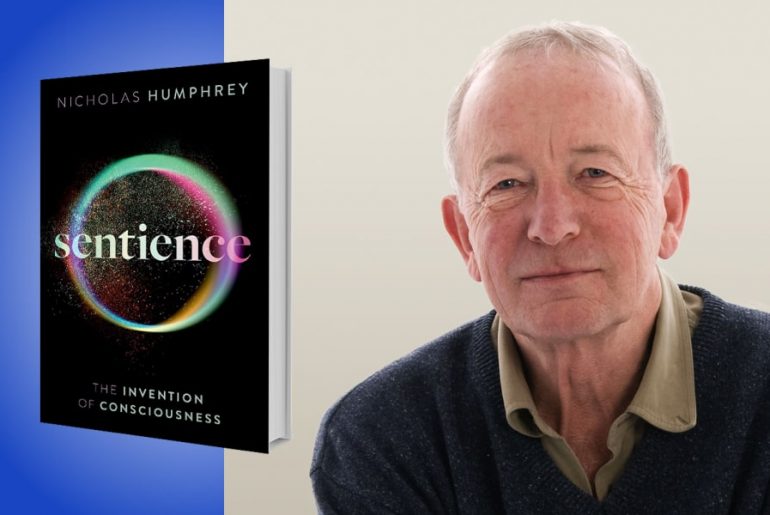
Nick Humphrey is a theoretical psychologist from Cambridge, England who is known for his work on the evolution of primate intelligence and consciousness.
1. Understanding sentience helps us understand our reality.
This is a book about what matters most in the world: It’s about the nature of sentient experience—what it’s like to be conscious of the sensation of redness, sweetness, or pain. What brings these conscious feelings into existence? Which animals other than humans experience them?
These are questions on which scientists and philosophers are deeply divided.
Some think all living things are sentient; some think only humans are; some believe intelligent machines soon will be sentient; some that sentience is a basic property of matter. They can’t all be right.
We want to discover what the truth is for two reasons. One is simply to fill in the picture of the world around us. It’s intellectually provoking not to know the facts about what lies beneath the surface of other creatures’ lives. We want to lift the veil.
The other reason is a weightier one. We want to know who or what else is sentient, so as to know where our moral obligations lie. Is it immoral, for example, to boil a lobster alive? If the lobster consciously feels pain, then yes it must be. If it doesn’t, then no it needn’t be. We don’t worry about the morality of boiling an insentient cabbage alive. So which is it? Are lobsters sentient or not?
2. Blindsight, and the dissociation between perception and conscious sensation.
How does sentience relate to perception? Let me tell a story. Fifty years ago, when I was a Ph.D. student in Cambridge, a research project changed my life. There was a monkey in our lab, called Helen, who had undergone surgery that removed the visual cortex of her brain. When I first met Helen, a year after the operation, it appeared she had been rendered completely blind. Curiously, there are other animals, frogs for example, that have no visual cortex to start with—and they can see perfectly well. Then, why not Helen?
While my supervisor was away at a conference, I took the chance to investigate further. I sat with Helen and played with her, offering her treats for any attempt to engage with me by sight. To my delight, she began to respond. Within a few hours, I had her reaching out to take a piece of apple that I waved in front of her; within a week, she was reaching out to touch a small flashing light. This was just the beginning; five years later, she was running around a complex arena, deftly avoiding obstacles, and picking up peanuts from the floor.
“A human patient, who had become blind after damage to the visual cortex, could also see in a way he himself didn’t believe.”
A casual observer might have thought her sight had now returned to normal. Yet, I had reservations. It was hard to put my finger on what was wrong. My hunch was that Helen herself still doubted she could see. She seemed strangely unsure of herself. If she was upset or frightened, her confidence would desert her, and she would stumble about as if in the dark again.
In fact, we were on the verge of a remarkable discovery. We discovered later that a human patient, who had become blind after damage to the visual cortex, could also see in a way he himself didn’t believe. He denied he had any visual sensations, but he could still guess the position, shape and colour of an object in front of his eyes. It seemed he had unconscious vision. Blindsight, as we called it later.
The discovery of blindsight was theoretically shocking. No one had ever expected there could be any such dissociation between perception and conscious sensation. After ruminating on the implications of this for understanding consciousness, I found myself asking a question out of the left field: if it’s possible to see after losing the capacity for experiencing sensations, then what is the point of having the sensations to begin with? It became the question that’s kept me busy these fifty years: What is sentience for?
3. Evolved Sentience.
Some people say that we’ve no warrant to ask what sentience is for. Why does it have to be for anything? But that’s never made sense to me. As an evolutionist at heart, I’ve always assumed that sentience is a biological trait that arose by Darwinian natural selection. However, a trait can only be selected if it’s useful to the animal that possesses it, if it helps it in the struggle for survival. If sentience has evolved, it can’t just be a superfluous decoration. It must be making a significant difference to how the animal lives in the world.
This may seem obvious when put that way. But it certainly hasn’t been obvious to everyone. As you probably know, there are philosophers who argue that sentience is a purely private phenomenon, that makes no difference at all to how a person or animal behaves in public. They suggest there could in fact be unconscious “zombies” living among us, beings who have no conscious feelings, but who behave in every respect like conscious humans do.
“If sentience has evolved, it must be making a difference that can be detected from the outside.”
Evolutionary theory tells us this can’t be right. And this is the crucial insight that runs through my book. If sentience has evolved, it must be making a difference that can be detected from the outside. If natural selection can see who’s sentient and who isn’t, then presumably so too must scientists be able to, if they look in the right places. So, where should we be looking? Suppose frogs in fact aren’t sentient. What can monkeys—and humans — do with sentience that frogs cannot?
4. Natural Psychology.
In the early 1970’s, Dian Fossey was at Cambridge writing up her doctoral dissertation about mountain gorillas. Dian invited me to visit her camp in the Virunga mountains of Rwanda to observe the gorillas for myself. She gave me a job to do upon arrival. She wanted me to make measurements of the skeletons of eight gorillas that had been killed by poachers and left to decay. The bodies were rotting and full of maggots. I boiled them up in an old oil drum, stripped the flesh from the bones, and set to work to measure them.
What immediately struck me was their huge skulls—huge brain cases. That set me thinking about how intelligent these animals must have been when they were alive. I naturally assumed that gorillas must use their high intelligence to solve all the practical problems of living in the forest.
Once I was able to observe them, however, I was in for a surprise. The fact was the gorillas’ lives seemed remarkably unproblematical. Food was abundant and easy to harvest, with few if any predators. They did little but eat, sleep, and play. As far as I could see, the gorillas had no need for their large brains. In that case, why did they have them? It didn’t make sense. I realized there had to be some crucial feature of their lives I was failing to pick up on.
Then it dawned on me. While the physical environment might not be taxing their intelligence, family life certainly did so. Every day the gorillas faced endless problems in managing their social relationships with other individuals: maintaining friendships, resolving quarrels, standing up to rivals, and so on. To keep ahead of the game, these animals must have to be psychologists. They need to be able to read each other’s minds.
“While the physical environment might not be taxing their intelligence, family life certainly did so.”
We, humans, have a special way of mind-reading: what we do is imagine how we would feel if we were in the other’s place. Perhaps that is how gorillas do it too. But here’s the thing, you can only imagine what it’s like to be someone else if you first know what it’s like to be yourself. For that, of course, you have to be a conscious sentient being.
From working with Helen in the lab, who no longer knew what it was like to see, to working among the gorillas, I was getting a promising answer to the question. What’s the use of knowing what it’s like to see, hear, taste, or feel pain? It allows you to gain psychological insight into other minds.
If frogs haven’t evolved to be sentient, perhaps it’s because in the world of frogs, there’s no call for doing psychology.
5. So who is sentient and who isn’t?
How far does sentience extend in the animal kingdom? We have to set a high bar. According to the evolutionary story, sentience is far from being a primitive characteristic. There are two conditions for it to evolve.
First of all, the animal must have a sufficiently sophisticated brain to imbue sensations with their impressive subjective qualities. Blindsight suggests that this may require a structure like the visual cortex. Next—and crucially important—the animal must lead the kind of life where there’s a real advantage to having a firm sense of self. This self must be founded on the experience of sensations.
This brings me to a conclusion that many people will find surprising—and possibly unwelcome. Sentience is a rather recent evolutionary innovation. By far the majority of animals on Earth have neither the brains nor the use for it. To stick my neck out, I’ll be more specific: I suspect that sentience may not have arrived until the evolution of warm-blooded animals, mammals and birds, around 200 million years ago.
Elephants, dogs, and parrots we can be sure of. Earthworms, ants, and lobsters, not a chance. Octopuses? They are everyone’s favorite for an exotic animal that’s sentient, but the evidence belies it. Octopuses show no signs of reveling in sensation, as say, chimps, dogs, or ravens do. Octopuses also do not have a strong grasp of themselves as individuals, nor of being capable of mind-reading.
Suppose we could in fact genetically engineer an octopus to experience sensations as we do. Their enhanced sense of self—of being me—would make little or no difference to the octopus’s survival. The new genes would be wasted and would soon disappear.
To listen to the audio version read by author Nick Humphrey, download the Next Big Idea App today:
DTC brands, especially Chinese giants like Shein, have been big news for all sorts of reasons over the last couple of years: their remarkable growth, but also challenges around their sustainability and quality. Is this an evolution that will continue to evolve, one that more established brands will be able to incorporate in the long-run, or a flash in the pan?
Senior tech reporter for The Drum Chris Sutcliffe is joined by Andy Griffiths, associate director for growth, Space & Time; Miro Jin, head of EPAM continuum for China, EPAM Continuum; Lingzi Shang, digital strategy director, Landor & Fitch; and Jessica Chapplow, commerce managing partner at Reprise Digital, to discuss:
DTC saw a boom time during the pandemic, and has rapidly accelerated innovation in that space. What have been the biggest trends of the past few years in and around DTC?
How has the rapid rise in new DTC brands changed how we think about brand comms?
What advertising mediums are working especially well for DTC brands?
The perception seems to be that many new DTC brands will flame out in a short period of time – where has this perception come from, and how accurate do we think it will be?
What are the panel’s predictions for future trends in and around DTC marketing?
A recent report from Morning Consult purported to be a “brand’s guide” to kids my age, but it ended up perpetuating the same old generational tropes.
Market research firm Morning Consult recently released a report entitled “A Brand’s Guide to Gen Alpha,” and as a part of Gen Alpha, I think it’s completely ridiculous. This report feeds into the idea I’ve heard from adults that they can sit back and do nothing while Gen Alpha solves the climate crisis they gave us. It makes us seem as if we’re tech wizards and cyborgs who spend our days in virtual reality. So let’s look through the many layers of weirdness in this report.
Right off the bat, Morning Consult defines Gen Alpha as “ages 0 to 9” when, in fact, Gen Alpha is usually defined as people born between 2010 and 2024. Then, throughout the piece, the authors include ages 10-18. Little odd, right?
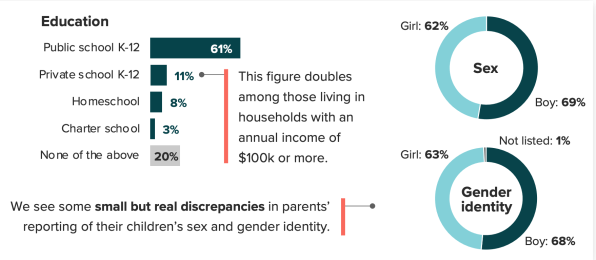
Some statistics are just poorly presented. Morning Consult continuously uses charts and statistics that make no sense. Like when it says that “most” Gen Alphas own a tablet, but actually means 54%. Or the terrible pie chart on gender identity, where it is says that 63% percent of Gen Alpha identify as female, 68% as male, and 1% as “not listed.” Not genderfluid or nonbinary, just “not listed.” Fun Gen Alpha Fact You May Not Know: We understand that pie charts should add up to 100.
Morning Consult
Other statistics are just really unbelievable. Like how it says that 7% of parents have already opened a retirement account for their Gen Alpha children. About half of adults don’t even have their own retirement account! I also sincerely doubt 9% of parents of Gen Alpha have a certificate of deposit for their kids. Half of adults aren’t even sure what they are. It seems here that it’s more likely that 8% to 9% of Gen Alpha parents were just messing around and putting in absurd answers for fun.
That’s my assessment on a lot of Morning Consult’s statistics. One part says that 11% of Gen Alpha owns a VR headset, and 17% of this group spend more than seven hours a day in VR. Seven. Hours. Seven hours is more than the average school day. Does this kid have a full-time job in the metaverse? How is this even possible? Do they sleep at all? Fun Gen Alpha Fact You May Not Know: We don’t spend most of our waking hours in virtual reality.
It also says that most parents don’t control their kids’ internet usage, but think they will when they are older. I don’t personally know of any kids 0-9 whose parents have absolutely no control over their “online content usage.” In Morning Consult’s world, it’s 74%. It says 4% of children ages 0-4 spend seven to 10 hours a day online, and that 61% of Alphas spend seven to 13 hours each day online. While a lot of Gen Alphas would like that to be true, I don’t think most of us get that wish. I’ve never heard any parents say “I just toss my phone into her crib and let her do whatever she wants.”
It also tries to prove how brand-conscious Gen Alpha is. Morning Consult came to the conclusion that McDonald’s is the preferred “restaurant” of the youngest generation. I think it’s more likely that saying “I want McDonald’s” means “I want a burger and fries,” not brand loyalty. But who knows? Maybe some three-year-old is really going “WHAT?! I don’t WANNA go to Burger King! McDonald’s or NOTHING!” Fun Gen Alpha Fact You May Not Know: We don’t really care which fast food place we are getting French fries from.
All in all, this report is a silly attempt to document Gen Alpha like we’re an alien species. It makes Gen Alpha seem like magical beings from the future who will only take off our VR headsets to go to McDonald’s.
Résumés are becoming increasingly ineffective in today’s rapidly changing job market.
Résumés have long been the go-to tool for job seekers to showcase their experience and skills to potential employers. If you’ve ever written a résumé, you know first-hand that it can be a mind numbing experience to jam your life into one measly sheet of paper.
However, in today’s fast-paced job market, many people, including myself, argue that résumés are becoming increasingly ineffective. Here’s why I believe that résumés are dead, and why I never ask for one from applicants when I am hiring:
A piece of paper cannot accurately describe an individual
Even an excellent résumé does not always make for a great hire. In my experience, some of the most outstanding people on paper have turned out to be the worst hires. Résumés tend to concentrate on a candidate’s work history, education, and abilities, but may not fully capture a person’s personality, work style, or potential.
“There isn’t always a direct correlation between a person’s ability to perform well at work and their ability to write a good CV,” says Max Kraynov, CEO of FunCorp, who is well versed in hiring. “Some activities, including operational and back-end tasks, don’t lend themselves well to being described in a résumé. Some experiences cannot be included in a résumé because of non-disclosure agreements. I don’t think that résumés alone can provide a good way of pinpointing the best candidates.”
A candidate’s creativity, leadership skills, or innovative thinking also may not be accurately revealed in their résumé. As a result, candidates who could be highly successful in a role may be overlooked simply because their résumé does not fully showcase their full potential. Some of the most talented individuals I have worked with have lousy résumés. Why? Because I’ve found that many highly skilled people are also very humble and unable to convey the magnitude of their talent accurately.
You can’t assess emotional intelligence or drive from a résumé
Résumés may not accurately reflect a candidate’s soft skills, such as communication, problem-solving, and teamwork, which are increasingly essential in today’s job market. It can be difficult to demonstrate these skills on a résumés. It can be especially challenging to determine the extent of a candidate’s communication skills based solely on their résumé. This can make it tough for employers to identify candidates who possess the soft skills required for a particular role.
“A qualified person may not have the exact work experience you’re looking for, but they have the ability to quickly pick up new ‘hard skills’ and already possess the important ‘soft skills’ to thrive,” says Anthony A. Reynolds, CEO of HireVue. “This shift in strategy is critically important when you think about access for marginalized groups. We’re not saying you have to toss résumés out completely, we still collect this information for our hires—but I urge business leaders to go beyond a laundry list of qualifications and to start quantifying the skills that really matter for a given role.”
There are better ways to assess candidates
While résumés have been a longstanding tool for job seekers to showcase their experience and abilities, they are becoming increasingly ineffective in today’s rapidly changing job market.
Today, employers increasingly rely on social media and professional networking sites like LinkedIn to identify and connect with potential candidates. These platforms often offer a more dynamic and holistic view of a candidate’s experience, abilities, and personality than a résumé alone. Employers are also using skills-based assessments and online tools to evaluate candidates. For example, paid trial projects are becoming a popular way to evaluate the skills of candidates for technical roles.
In today’s job market, candidates need to stand out and differentiate themselves from the competition. Instead of relying solely on a résumé, candidates may need to create a personal brand or portfolio to showcase their abilities and experience. For example, a graphic designer may create an online portfolio showcasing their best work, while a sales professional may create a personal website featuring testimonials from satisfied clients.
“Résumés aren’t the best way to evaluate talent when looking to hire based on creativity,” says Lauren Scott, social media strategist at Freedom Not Fate. “As someone who’s had to hire graphic designers and other creative talent for my own business, I always ask for a portfolio and examples of past work to gauge creativity before hiring.”
When I evaluate a candidate, I ask them to send a piece of past work they are most proud of. From this simple test, I can gain much more information than a static résumé. This quick assessment can reveal a lot about a candidate’s creativity, problem-solving ability, attention to detail, and communication skills. For example, a marketing professional may send a campaign they worked on that achieved outstanding results, while a software engineer may provide a sample of their code that solved a complex problem. By reviewing a candidate’s work, employers can gain a better understanding of their approach to problem-solving, their work style, and their potential to contribute to the organization.
Will résumés stand up against the test of time? I’d bet real money that they won’t.
Let’s explore the boundless possibilities of AI-powered graphic design for creative professionals.
Artificial intelligence (AI) is transforming the way graphic design professionals work. By combining AI technology with creative skills, graphic designers can unlock new potential for their projects and produce amazing results. This article will explore the power of AI in graphic design and provide an ultimate guide for creative professionals looking to incorporate it into their workflow. We’ll discuss the benefits of using AI-powered tools, showcase examples of successful projects that have used this technology, provide tips on getting started with AI tools, outline challenges associated with incorporating artificial intelligence into digital graphics workflows and look ahead to future trends related to AI in graphics.
AI in graphic design and its potential for creative professionals
The potential of AI in terms of graphic design is a truly exciting concept to consider. With a combination of artificial intelligence and creative professionals, innovative designs can be created quickly and efficiently. This can provide a huge advantage when it comes to creating visuals for products, services, webpages, or ads; AI allows a designer to prototype and experiment with a multitude of different styles at a moment’s notice. By unlocking a more efficient workflow for designers, AI has the potential to nurture the creative process like never before – making graphic design more accessible and offering boundless possibilities for exploration and experimentation.
The benefits of using AI-powered tools for graphic designers
If a modern graphic designer is looking to take their creativity to a new level, AI-powered tools can help streamline the design process and maximize their potential. AI algorithms can be used to automate mundane tasks, allowing designers to focus on more important aspects such as concept development and refinement. This helps to make a project more efficient, reducing time wasted on mundane tasks that a computer can do from a few minutes to a matter of seconds. In addition, AI-powered dynamic design tools help designers create a custom look by automatically generating variations on a single theme with a few mouse clicks or voice instructions. This saves time and allows for rapid experimentation and quick iteration in finding the most stunning designs.
How to use AI tools to enhance creativity in design projects
AI tools are a fresh new way for graphic designers to add a spark of creativity and a unique quality to their design projects. By taking advantage of these technologies, designers can create a range of eye-catching visuals that captivate audiences like never before. AI tools can also be used to quickly generate multiple solutions, enhance existing graphics, and discover innovative ways to express complex ideas. As a result, merging the creative insight of a designer with the power of AI is rapidly becoming a go-to method for producing truly remarkable design projects.
Examples of graphic design tools that include AI technology
AI technology has been a game changer for graphic design software. Many of today’s popular software products include features that can generate artwork automatically and identify errors in a design.
Unleash the power of artificial intelligence with Luminar AI and transform your photos into true works of art! This intuitive image editor has revolutionized photo editing, making it easier than ever to achieve stunning results. With features designed to maximize convenience while delivering unbeatable precision, Luminar AI is the perfect tool for any level photographer.
Adobe Creative Cloud is at the forefront of AI technology, taking full advantage of it to optimize its software with a suite of tools designed for ease and accuracy. Leveraging AI, Adobe Creative Cloud helps creatives make accurate selections, automate routine tasks like retouching models in an image, or even recognize and save searchable keywords from a video clip. Creative professionals can explore a limitless range of possibilities with AI-powered apps within Creative Cloud – from quickly editing and organizing large volumes of photos to creating complex 3D artwork.
By incorporating Generative AI into Adobe Express, both experienced and inexperienced creators can reach their creative goals. Rather than having to scour for a template that already exists, users of Express will be able to generate one with ease by providing a simple prompt. With the help of Generative AI, they’ll then have the ability to add an object or create unique text effects based on what they’re envisioning – while still keeping full control over it all! The Adobe Express tools are also perfect for editing images, and applying colours and fonts; guaranteed to get you closer to your dream poster, flyer, or social media post without fail.
So far, Artificial Intelligence-driven generative systems have been mainly utilized in the realm of image creation. Nonetheless, I think that this technology also has the potential to benefit creatives who work across different disciplines such as 3D design, texture development, and logo making among others.
Innovative AI capabilities also mean users don’t have to worry about spending hours continuously tweaking and optimizing pieces of artwork, with feedback generated quickly and realistically. For those looking to experience just how powerful ai-powered graphic design can be, there is a range of different software options available that offer the best of both worlds – human creativity coupled with tech’s precision.
Tips on getting started with using AI-powered tools in graphic design
With AI-powered software becoming increasingly more accessible and advanced, now is a great time to get familiarized with utilizing ai in your graphic design projects. Different ai applications can simplify complex art tasks, speed up the workflow processes, and ensure a better quality end product. It might seem like a daunting task to learn the ins and outs of a new piece of software, but with a little dedication, it doesn’t have to be overwhelming. Seek out online tutorials that will guide you on how to use AI software, look for community groups that build awareness of the latest advancements in AI technology or even see if your colleagues already have an experience that they can share!
The challenges associated with incorporating artificial intelligence into graphic design workflows
AI technology has the potential to revolutionize the graphic design industry. AI promises automated assistance for tedious tasks, freeing up valuable time for creators to focus on more creative objectives. Yet, AI’s complexity and ever-evolving nature present unique challenges when it comes to its incorporation into graphic design workflows. AI requires a thoughtful marriage between human creativity and AI capabilities in order to maximize AI’s intended benefits. Thus, incorporating AI into graphic design can be a daunting endeavour that requires careful planning and consideration of resources in order to ensure success. However, this challenge is an exciting opportunity as it provides an avenue for design professionals to further hone their creative problem-solving skills while continuing to explore the possibilities AI holds for the future of graphic design.
Future trends related to AI in digital graphics
AI is revolutionizing digital graphics, and it’s only going to become increasingly influential as we look toward the future. AI can be used to create photorealistic 3D models in various fields, like architecture, engineering, and game design, with greater speed and accuracy than ever before. AI-driven AI solutions are also helping to enhance existing projects without being overly intrusive or disruptive. Furthermore, AI tools are providing a much more intuitive user experience for graphic designers: AI can automate optimization processes, meaning tasks that usually took hours of manual tweaking can now be handled in seconds. AI is not just making our lives easier; it’s pushing forward the potential of digital graphics in ways never before imagined!
Header image via Adobe Stock contributor @Jackie Niam. Do not hesitate to find inspiring projects from all over the world in the Graphic Design category on WE AND THE COLOR.
The CEO of Meta Platforms announces a new day in tech: conventional normality.
The party’s over.
In tech, this amounts to saying that the cool and Zen culture marked by an office transformed into a cosy lounge is over. Used to be we came, we entered and we were at home. The fridge was full; everyone helped themselves. The buffet was permanent.
The employee was in the centre. Work-life balance was the principle. The well-being of the employee came first. Companies were required to do everything to put their employees at ease to get the best out of them.
No more.
It’s all a distant memory now, says Mark Zuckerberg, CEO of Meta Platforms (META) – Get Free Report. Welcome to the real world, he proclaimed on March 14.
The social media emperor just announced the elimination of 10,000 additional jobs, after 11,000 jobs were cut last November. In all, the parent of Facebook, Instagram and WhatsApp has cut 21,000 jobs in four months.
‘Year of Efficiency’
It’s not just the cuts themselves that’s striking here. It’s the tone with which Zuckerberg announced the new wave of austerity measures. He adopted the vernacular of the boss of an old-economy company. He was a cost-killer. He was cold. It’s isn’t personal; it’s just business. He was a normal boss.
“In our Year of Efficiency, we are focused on cancelling projects that are duplicative or lower priority and making every organization as lean as possible,” Zuckerberg wrote in a blog post.
He continued: “As part of the Year of Efficiency, we’re focusing on returning to a more optimal ratio of engineers to other roles. It’s important for all groups to get leaner and more efficient to enable our technology groups to get as lean and efficient as possible.”
He used the word “efficiency” fully a dozen times, including three times in the first two paragraphs. These two paragraphs are a catch-all of classic corporate lingo that says everything and nothing: “improve our financial performance,” “difficult environment,” “execute,” “optimize,” “workstreams,” “processes,” “changes,” “uncertainty,” and “focus.”
He sounds like the CEO of a traditional company. His post is a manual, a guide that other tech CEOs will use as well.
The tone is cold. And it changed. In November, when Zuckerberg announced the elimination of 11,000 jobs, he played the sensitive chord. He apologized.
“I want to take accountability for these decisions and for how we got here,” the CEO said at the time. “I know this is tough for everyone, and I’m especially sorry to those impacted.”
This time, there is none of that. He is not sentimental, as if to put a wall between him and those for whom the music just stopped and who were asked to go home while the evening was in full swing. He just killed the fun.
A New Normal
Tech and Silicon Valley now enter the normal corporate world. In this world, what matters is to please the markets. And markets like cost cuts. The employee is secondary. If you make big profits with the least possible cost, the markets applaud.
Interestingly, Zuckerberg’s announcements come at the same time as the collapse of Silicon Valley Bank, a major player in the startup ecosystem and in Silicon Valley.
The two events cannot be separated. Their symbolism is strong. It is the end of an era and the beginning of a new one, or rather the meeting of the old economy and the new one.
In case anyone still has any doubts, Zuckerberg also appears to be ending remote work at Meta. Tech companies previously backed off from from forcing employees back to the office.
“Our early analysis of performance data suggests that engineers who either joined Meta in-person and then transferred to remote or remained in-person performed better on average than people who joined remotely,” he said.
“This analysis also shows that engineers earlier in their career perform better on average when they work in-person with teammates at least three days a week.”
“I encourage all of you to find more opportunities to work with your colleagues in person.”
The party is over. It’s time to grow up, Zuckerberg seems to be saying.
One last tip to reflect on, while you’re on your way home: “I encourage each of you to focus on what you can control. That is, do great work and support your teammates.”
Tech workers: Welcome to a normal boss and a normal company.
Web design has come a long way since the start of the century. Happily, for the good of our eyes, layouts have become less cluttered, graphics have improved, and of course, technological advances mean that sites load a lot faster. But some legendary websites didn’t make it to see these changes. They were lost along the way, leaving us to only imagine what they might look like today.
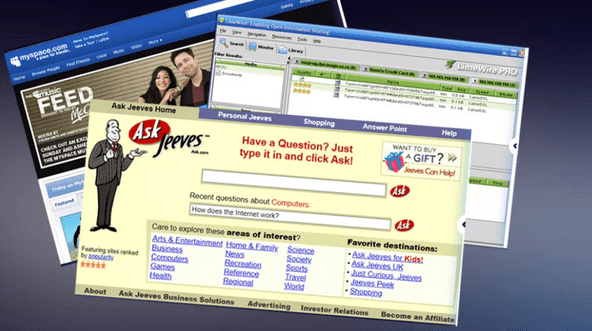
One project is doing just that, looking at sites of the past, from LimeWire to Ask Jeeves and giving them a modern aesthetic. The facelifts of four iconic sites show how web design has evolved since the days of dial-up, and also how certain norms have been established in UI design (see our pick of the best UI design tools if you’re looking to expand your own toolkit).
LimeWire
The original LimeWire. Click right to see the makeover (Image credit: Fasthosts )
A brighter, cleaner LimeWire for 2023 (Image credit: Fasthosts )
The hosting site Fasthosts (opens in new tab) began the project as a tribute to cultural icons that “played a valuable role in our lives at some point, and whose names cause a wave of nostalgia and fond memories to wash over us.” It’s made over four sites of the past, and first up is Limewire.
A free peer-to-peer file-sharing client that capitalised on the demise of Napster, Limewire was basically just a download screen. That leaves a lot of room for improvement to create a fuller user experience. The proposed facelift introduces a darker background to help the bright album covers pop against the brand green and a more minimalist UI to make browsing easier. This looks like something that aims to give Spotify a run for its money.
Bebo
The bebo platform went bankrupt in 2013… (Image credit: Fasthosts )
how bebo could look today (Image credit: Fasthosts )
Bebo was one of the first of a new generation of ‘micro-blogging’ social media sites. It let you post to all your followers at once and see updates in a single feed view. It went bankrupt in 2013 and an attempt to revive the site in 2021 failed to achieve success.
The makeover above keeps the site’s recognisable dark look but makes things sleeker and a whole lot more Twitter-like. The search bar functionality is still there, but filters are added to allow customisation of the feed. Side functions like ‘games’ and ‘luvs’ have been dropped to a more mature product.
Myspace
The original social media leader, Myspace (Image credit: Fasthosts )
A revamped Myspace (Image credit: Fasthosts )
Now, strictly speaking Myspace is not dead. The site still exists, and it looks very different to what it did back in the day, foregrounding music news content. Fasthosts has focused on the original community ethos, foregrounding new connections and hashtags to follow community discussions.
It might look more like LinkedIn than a music-oriented social media platform, but it’s certainly sleeker than Myspace’s original design. It also adds a shop, reflecting the fact that social media sites need to increase monetisation (think Twitter Blue), but we’re not sure what exactly this shop would sell.
Ask Jeeves
Ask Jeeves was a little cluttered. Click right for a more minimalist approach (Image credit: Fasthosts )
Something about this looks familiar (Image credit: Fasthosts )
The search engine Ask Jeeves was the epitome of 90s web design, throwing everything it had at the page. The 2023 revamp sees it stripped back to a Google-like minimalism, improving its usability. “Users want something minimalist, clean, and easy-to-use,” Fasthosts notes. The stripped-back approach extends to the logo, which reduces Jeeves to just a bowtie and a portion of a suit. We have a fond nostalgia for the original Ask Jeeves site, but I wonder if a cleaner approach might have helped it survive the battle of the search engines.
Word-of-mouth (WOM) marketing has been the most powerful way to drive behaviour and build a brand for decades. Even before mobile phones and social networks, the world’s most innovative brands found ways to create deep experiences with target audiences that would naturally share and discuss those experiences with others.
The rise of social media changed WOM marketing forever, expanding it from the real world to the digital world and giving brands an entirely new dimension to consider. In this new arena, consumers don’t have to limit sharing their experiences with those they encounter face-to-face, and now, they can instantly share their thoughts with thousands — even millions — of people.
Influencer marketing was born as a powerful new distribution engine for brands to harness. And today, this has evolved into the well-known and burgeoning creator economy.
In the creator economy, all the content in the current digital world is collected, created, distributed and monetized. Here, old-school mass advertising like radio and television moves to the backseat, and people — not companies — serve as consumers’ trusted sources of product information.
Across categories, brands become household names in their respective industries by leveraging the creator economy to form direct partnerships with high-performing content creators. Through these partnerships, brands overcome modern challenges by utilizing a team of storytellers to provide honest product endorsements with a human touch with which traditional, brand-controlled marketing can no longer compete.
Establishing partnerships with nano and micro creators stretches brand budgets
Even with the uncertain state of the economy and rising influencer rates, influencer marketing remains one of the most cost-effective strategies available to modern brands.
To bypass massive fees expected from macro and celebrity influencers, many brands successfully partner with nano and micro creators who love their products and are willing to accept free merchandise in exchange for content. These creators might have less reach and name recognition than their larger counterparts, but they almost always have stronger, more personal relationships with their followers.
Some brands have also started partnering with their most engaged customers, even if those customers don’t have a large audience or fit the traditional definition of an “influencer.” By sharing their experiences on social media, these diehard fans can offer valuable social proof and genuine product endorsements at virtually no cost.
Working across channels unlocks multiple consumer touchpoints
Imagine the average day for a brand’s target consumer. They start their day by scrolling TikTok as they enjoy their morning coffee. Afterward, they check their email and throw on a podcast before heading to work. On the way home, they tune into their favourite music streaming service and flip on the television while cooking dinner.
That scenario alone leaves the consumer with five opportunities to hear about a brand — not to mention the opportunities from other social media platforms they might visit throughout the day. And creator content is valuable for all of them.
TikTok and Instagram might be the hottest channels for influencer marketing, but successful brands know they need an omnichannel strategy to win in the creator economy. That means partnering with a variety of creators (podcasters, influencers, athletes, bloggers, performers, etc.) and investing in the tools necessary to keep their programs organized and scale their efforts.
In-person partnerships with local creators are boosting in-store foot traffic
Influencer marketing is for more than just DTC and e-commerce. The strategy also helps retail stores drive consumer awareness, create excitement and generate buzz around a new product launch.
Retail brands leverage creators to boost in-store traffic in several ways, starting with providing creators exclusive in-store discount opportunities to pass along to their followers. Retailers also partner with local creators and businesses to host giveaways, which require participants to visit a store to redeem prizes. Other options are hosting livestreams with creators from a brick-and-mortar store location to show followers the in-store experience or hosting an in-person meet-and-greet or pop-up event with creators at the store.
Authentic creator relationships open a direct line to target audiences
In the creator economy, authenticity is everything. Consumers can spot a fake endorsement from a mile away, and if they do, brands often lose them for good.
To avoid this, retailers and marketers focus on creators who use their products, love their brand and truly believe in both. These individuals will be the ones who can best share a retailer’s story and create compelling content that resonates with their target audience, improves brand sentiment and ultimately increases sales and conversions.
Brand-creator relationships aren’t just arms-length transactions. They are true partnerships operating as a way to reach consumers and a feedback channel for brands and products.
No one knows a creator’s audience better than the creator, and when they come to brands with advice on how it and its products can better resonate with their followers, it’s on brands to listen. Many brands have even taken this feedback to the next level and collaborated on new product launches like Gigi Hadid’s Reebok collection or Charli D’Amelio’s signature drink from Dunkin’.
Retailers’ success in the creator economy ultimately depends on the quality of their partnerships. By choosing brand-aligned creators that genuinely care about their mission, retailers set the foundation for a future of strong marketing campaigns and innovative collaborations.
Technology has changed the digital marketing landscape forever. We now have more ways than ever before to communicate company and product benefits. Marketers can improve on-site engagement and sales when they use the tools they have at their disposal.
Business leaders and marketers across all industries want nothing more than to connect with their readers and grow their brands. However, they face many challenges along the way. One of the biggest hurdles is convincing users to invest in a product or service. The simplified solution is to build engaging product landing pages.
Technology has changed the digital marketing landscape forever. We now have more ways than ever before to communicate company and product benefits. Marketers can improve on-site engagement and sales when they use the tools they have at their disposal.
Now, let’s dive in and look at several actionable ways you can use tech to create high-converting product landing pages.
Show relevant lead magnets
Lead magnets are one of the best things you can do with your product landing page. Simply put, these are exclusive content and offers designed to generate leads and provide value to readers.
Common examples of lead magnets include:
Discounts
Case Studies
Infographics
Event Invitations
These offers are crucial for improving conversions because, on average, 40-70% of qualified leads are not ready to buy. If a customer leaves without interacting with your brand meaningfully, they will likely forget it exists.
On the other hand, if a user joins your email list, you have a direct line to stay in touch and build rapport through lead nurturing.
The key to getting people to click a lead magnet is to offer something the reader will find valuable. This concept will vary based on the intended audience. Segmenting visitors based on their unique interests, goals, and pain points can help you come up with inventive and effective lead magnets.
There are plenty of different lead-generation plugins that allow users to create attractive and engaging offers for product landing pages.
Make mobile-friendly product landing pages
Google has made it clear that they want business leaders to optimize their websites for mobile. When you consider that over 68% of the global population owns a mobile device, this shouldn’t come as a surprise, according to smachballon.com.
Online shoppers use smartphones and tablets to engage with brands, read reviews, and shop. Mobile apps are on the rise that allows consumers to do all of this and more. If your website or app, including your landing pages, is not optimized for mobile, you could miss out on significant traffic and clicks.
There are many ways to ensure your site is ready for mobile users. Here are a few tips to keep in mind:
Use a landing page builder that comes with mobile templates.
Reduce the size of images and host videos off-site for faster loading times.
Make sure buttons and navigation work with handheld devices.
Test your product landing page with multiple operating systems and devices.
You’ll find that putting smartphone users first in terms of page design and functionality can lead to a tremendous boost in conversions.
Optimize for voice search
While we are on the topic of mobile devices, let’s talk about voice search. Did you know that around 30% of all searches were conducted without a screen last year? In other words, people use smart speaker devices or voice assistant apps on their smartphones and computers to search for websites, information and products.
Websites not optimized for what a customer might say have a slim chance of appearing in the results for these types of searches. The good news is you can start making changes today to make your landing pages voice search-friendly.
We suggest including FAQs at the bottom of each product page. This seemingly small addition can significantly impact how people engage with your brand.
At face value, an FAQ section answers vital questions asked by your target audience. The option to see these questions and answers can guide users and help them determine if your product or service is right for them.
Behind the scenes, FAQs can help build your search presence, particularly when it comes to voice search. When someone uses voice search, they typically ask a question. If your landing page answers their inquiry concisely and accurately, Google may relay the answer you provided to the user.
You can also appear in the featured snippets at the top of Google for specific keyword searches. It’s worth mentioning that over 40% of voice results come from featured snippets.
It’s also a good idea to add schema markup to your website. Schema markup is behind-the-scenes code that allows Google to understand your intent better. Marketers use this SEO strategy to inform Google about product availability, prices, and more.
The bottom line is this; if you want to attract more visitors to your landing page, even if they aren’t using a screen, voice search optimization is a must.
Focus on user benefits
A fundamental mistake many business owners make when designing their product landing pages is they spend too much time focusing on features instead of benefits. The two ideas are similar but differ in one important way.
Features are what your products can do. Benefits describe how features will ultimately help the end user. For example, a social media marketing plugin might promote a feature called a social wall. Most potential customers, even those skilled in social media marketing, will wonder exactly what they mean and why they should care.
Now, imagine if, instead of promoting a social wall feature, the company stated that this feature allows people to share all of their social media feeds in one place, which can boost brand awareness.
The second description is more detailed and explicitly tells users how they will benefit from this feature.
When designing your product landing pages, keep your customers’ needs in mind. Instead of writing a bullet list of features like you’re in an investor call, spend some time thinking about your product from your customer’s eyes. Write benefit-oriented descriptions, and people are far more likely to engage with your business.
Show social proof
Social proof is an excellent way to improve your landing page conversion rate. If you’re unfamiliar with the concept, social proof is a psychological phenomenon that causes people to do things based on other people’s experiences. We all tend to trust people and businesses that are respected by others.
The most common type of proof is user reviews. Think about the last time you bought something from Amazon. There’s a good chance you scrolled to the bottom of the page to learn what other people thought of the product.
If you saw only 1-star reviews, you likely decided to pass and look for a similar product with better reviews. Similarly, a bunch of 5-star reviews may have prompted you to place an order.
Research shows that user reviews and other types of social proof can have a noticeable impact on conversions. In fact, surveys suggest that 83% (trustpulse dotcom) of people trust customer reviews over traditional advertising.
There are two primary ways to add reviews to your landing page. The first method involves placing an open-ended review form on your page, just like Amazon. Customers can review your products, and future visitors can see how others feel about your brand.
The other way to show reviews is to pull positive feedback from social media and surveys. You could include a section on the product page that reads, “see what others think of (product)!” A few glowing reviews can turn a prospect who is on the fence into a happy, paying customer.
You can also use live sales notifications and trust seals to capture visitors’ attention and convince them to take action.
Split test product landing pages
Much like the rest of your website, your product landing pages need to evolve with the needs of your customers. Split tests are a great way to experiment with new ideas and improve clicks.
Split tests, also known as A/B tests, involve changing a page, email, or social media marketing campaign for 50% of your audience. These changes can be subtle, like switching the verbiage on a call-to-action, or they can be something more noticeable, like a complete colour swap.
The objective of split testing is to see which version of the page leads to more clicks and sales.
Let’s say a marketing team decides to test their call-to-action by changing “subscribe now” to “subscribe and save.” After enough time has passed – we suggest two weeks to a month for each test – they look at the results.
If the subscribe and save option saw significantly more clicks, the team may use this new call-to-action on pages they want to improve.
It’s possible to test many different aspects of your pages, but it’s worth mentioning that tracking one test per page is the best option. Multiple tests make it hard to determine what led to better (or worse) results.
Final thoughts
Online businesses need product landing pages to generate leads, sales, and interest in their brand. Every industry is different, so it’s always a good idea to introduce new strategies slowly so you can figure out what works.
The tips presented today will help steer your product landing page in the right direction. The tools and resources you need to improve performance and connect with more customers are out there. The only thing left to do is get started.