Author

editor

Browsing

By Jessica Wong

Artificial intelligence technology is changing how marketers reach and engage customers. From programmatic advertising to data analysis, AI can help marketers do a better job, but this rapidly evolving field also raises concerns and uncertainties.

Artificial intelligence (AI) has started transforming every aspect of our professional and personal lives. The marketing industry is not immune to this digital transformation, with leading brands starting to embrace the opportunities the technology brings. Gaining a better understanding of customer behaviour is one of the core benefits of AI in marketing.

For years, marketers have gathered and analysed data about customer behaviour. Their goal has remained largely unchanged — extrapolate patterns and predict which products and services will be most popular with a certain audience. From that basis, marketers would then identify the channels to reach their target customers.

AI is giving marketing professionals an essential advantage in this quest. This fast-evolving digital technology can analyse more data more accurately than humans can. AI and its subfields, such as machine learning (ML), also identify existing behavioural patterns and predict future behaviour based on that.

The growing role of AI in marketing

In 2020, the market for artificial intelligence technologies in marketing was valued at just over $12 billion. While that may seem impressive, it pales in comparison with the global AI market, which was valued at over $325 in 2021. However, the current market size does not reveal the true potential of marketing-related AI. That only becomes clear by considering growth predictions.

According to experts, the market for AI in marketing will exceed $35 billion next year, nearly tripling in size in only four years. Another four years later, in 2028, industry insiders believe that this area of the marketing industry will have tripled once again. Statisticians expect that marketers will utilize AI to a value of nearly $108 million before the end of this decade.

How marketers are using AI today

How realistic are those expectations? Consider this: as of last year, four of five marketing industry experts said they had already included some form of AI technology in their work. When asked to identify the areas in which AI and ML were already enhancing campaigns, marketing professionals named benefits in several areas:

  • Automation of repetitive tasks
  • Analysis of large quantities of data
  • Personalization of campaigns
  • Predicting conversion rates
  • Optimizing the timing of email marketing

Most of those areas benefit the current leading application of AI technology in marketing — programmatic advertising. A recent survey found that 50% of participating marketing professionals named more targeted advertising as one of the main advantages of integrating AI and ML in their approach.

How AI enhances programmatic advertising

Placing the right adverts in front of the right customers at a time when they were receptive to this content used to be a painstaking process. Machine learning algorithms have allowed marketers to automate buying and selling digital advertising space.

Once programmed, the ML algorithms are not static. They mimic human behaviours, including learning. In practice, the algorithm ‘understands’ whether an advert has missed or exceeded expectations and learns from this outcome. There is no need for additional human intervention. The algorithm, or the machine, learns without additional input simply by analysing results and iterating its approach.

Marketers and the brands they represent benefit from improved targeting of specific audiences with customized messages. As a result, conversions grow, and advertising spends more efficiently. Programmatic advertising platforms work by analysing quantities of data that would overwhelm humans.

These platforms cannot only compute data about user behaviour, website analytics, and demographic information. They also see trends and patterns before humans can. Marketing professionals can then use those insights to make their content more relevant, increasing the likelihood of customer engagement. Plus, marketing algorithms can optimize ad placement and bid pricing.

Understanding AI-related concerns in marketing

Like most powerful technological developments, AI has raised some concerns in the industry. In addition, marketers starting to invest in AI technology are dealing with unanswered questions as the technology continues evolving at great speed. Two of the main concerns relate to customers and marketers themselves. These concerns are privacy, data protection and job security in the industry.

Protecting privacy — AI and ML rely on access to large quantities of customer data to recognize patterns and predict potential behaviour. Despite their far-reaching capabilities, these technologies cannot self-police. They will analyse any data fed to them. Marketers need to ensure that their data collection and usage practices are not only ethical. They must also comply with current privacy and data protection legislation, such as the European Union’s GDPR or the California Consumer Privacy Act (CCPA).

Job security for marketers — Job security for marketers is another concern about the growth of AI-based applications. Most recently, these concerns have been discussed in connection with OpenAI’s ChatGPT software. Granted, it is not possible to predict entirely where the marketing industry is headed, but most experts believe that AI and ML will change existing jobs rather than replace them. Marketers can work more efficiently and effectively to benefit the brands they represent. Their daily routine may change, but it is unlikely that robots will replace human marketers anytime soon.

Final thoughts

While AI has the potential to transform the marketing industry as we know it almost beyond recognition, the technology is not here to replace human marketers. Instead, AI and ML can optimize and streamline current marketing approaches.

Both technologies can also take care of repetitive tasks, allowing their human team members to focus on what they are best at and develop creative campaigns that engage more customers than ever before.

By Jessica Wong

Entrepreneur Leadership Network Contributor. Founder & CEO of both Valux Digital and uPro Digital. Jessica Wong is the Founder and CEO of both Valux Digital and uPro Digital. She is a digital marketing and PR expert with more than 20 years of success driving bottom-line results for clients through innovative marketing programs aligned with emerging strategies.
Sourced from Entrepreneur

By Nick Hobson

How brands say sorry to save face

Humans are social creatures. We jump aboard moral bandwagons. This is especially true in the digital age. We light our internet torches and march together toward the common enemy. Sometimes that enemy is a person. And sometimes it’s a brand or company.

It doesn’t take much for the masses to quickly turn against a brand, even a brand as beloved and respected as Apple. In today’s quick-moving marketplace, no one is invincible. All it takes is one message from one very influential person… like, for instance, a Tweet from Taylor Swift.

Back in 2015, Swift announced a public boycott of Apple Music. She was miffed with the tech giant because of certain conditions in their one-month trial period: It would be free for the users, but artists wouldn’t see payment for any of their music that was played during the trial period. Apple brand loyalty is strong, one of the strongest out there, but even its reputation was at stake at that moment. Hell hath no fury like an angry Swiftie. Put together tens of millions of diehard fans, and you can bring a giant to its knees.

Apple’s leaders knew they were in trouble with the boycott.

A “Swift” apology

Almost immediately, an unlikely person made an unlikely apology — and it worked. Senior vice president of internet software and services, Eddie Cue, went public to admit the brand’s wrongdoing. He did it informally, but sincerely — on Twitter.

In two separate tweets, one minute apart, Cue got right to the point:

At 11:29 PM: “#AppleMusic will pay artist for streaming, even during customer’s free trial period”

Then at 11:30 PM: “We hear you @taylorswift13 and indie artists. Love, Apple”

In two-sentences, Apple righted their wrong.

Not long after, Swift starred in an Apple commercial. The relationship was repaired, between Swift, her tens of millions of fans, and Apple.

When a brand screws up

When someone wrongs us, we expect them to admit their mistake and make amends. It’s the same with businesses and brands. If a company screws up, we have the same expectations: own up, regain my trust. Psychologically speaking, there’s a great deal of overlap between how we relate to another person and how we relate to the “entity” of a company or brand.

This is true, in fact, at the level of the brain. A theory referred to as “brands as intentional agents framework” shows that people humanize brands all the time. As one team of consumer scientists describe in their research paper, “brands seem to be like me, are part of me, and are in a relationship with me.” It’s more than mere metaphor. Even legally, corporations are considered people, too. They have certain rights and responsibilities.

On the responsibility side, businesses and brands that done something wrong have the moral, psychological, and legal obligation to make things right for those individuals affected.

The online marketplace is a minefield for reputational damage. One minor misstep could spell disaster for your brand and business. The good news is, users and customers are as forgiving as they are vengeful. If someone screws up, there’s always good way to apologize and make amends. Be thoughtful about how you say sorry.

Feature Image Credit: Getty Images

By Nick Hobson

Sourced from Inc.

By Damien Wilde

YouTube is to ease the rules surrounding the use of profanity in videos after introducing new stipulations in late 2022.

More advertiser-friendly content guidelines have been adjusted after a creator backlash in recent months. Under the previous rules, the usage of profanity within the opening 15-20 seconds of a YouTube video could result in demonetization or reduced monetization capabilities for content creators. This expanded to include videos with extensive usage of swearing and foul language. However, YouTube did not make it clear just what levels infringed upon the guidelines.

According to a new “Profanity Update” video uploaded to the Creator Insider channel, the previously introduced guidelines are being altered. Retroactive reviews of old content saw many channel content demonetized, but new rules are tuning things ever so slightly.

Profanity (for example, the f-word) used in the first 7 seconds or majority of the video may earn limited ad revenue rather than no ad revenue, as previously announced below. Usage of words like “bitch”, “douchebag”, “asshole” and “shit” in the video content is eligible for green icons.

Now, profanity such as the f-word used within the opening seven seconds of a video or the majority of a video “may earn limited ad revenue.” While the usage of lesser swear words is more likely to allow for full video monetization.

Profanity used in the first 8-15 seconds may now earn ad revenue. We’ve also clarified our guidance on how profanity in music is treated; strong profanity used in background music, backing tracks, intro/outro music may earn ad revenue.

Profanity used beyond the 15-second intro phase may be subject to other rules, but it’s not entirely clear just what has changed here with regard to the volume of swearing within YouTube content. For music, backing tracks and YouTube video intro/outros, profanity will be allowed and can be monetized.

Existing content that may have been demonetized under the previous rule change will be retroactively re-examined and the latest rule changes surrounding profanity will be applied accordingly. This change has already come into force from March 7 and when uploading videos to YouTube Studio, creators will now get a notification to explain the changes. Just how creators respond remains to be seen, but it’s yet another case of YouTube making changes after yet more backlash rather than involving the community in platform alterations.

By Damien Wilde

Sourced from 9TO5Google

By Jason Vaught

The move isn’t without risks, but CPG companies can mitigate them

Direct-to-consumer brands are rethinking their channel strategy, specifically a return to retail, and for a handful of good reasons. While the pivot takes a contrarian stance on the “unavoidable” takeover of online commerce, smart brands are leaning into national retail relationships with a physical and digital footprint.

On the surface, the timing of this shift seems odd. Considering the pandemic’s acceleration of ecommerce sales, many assumed retail revenues would fall off the cataclysmic cliff to certain death. But immediate revenue potential doesn’t always equate to profitability. When considering the burn rate consumer packaged goods brands are experiencing in the DTC model, the proof is in the non-GMO, sustainably packed pudding. There is unavoidable evidence for a CPG brand’s need to pivot.

Within the DTC realm, underlying factors negatively affect the ability of moderately priced CPG and fast-moving consumer goods (FMCG) brands to show black on their profit and loss statements. While we weigh the scale differently for each category, the outcome is predominantly the same. The removal of third-party cookies, the low barrier to entry, and the supply and demand of digital DTC marketing platforms create a challenge for almost every CPG sector.

Whether you’re a new brand challenging a category, an existing brand that transitioned away from retail, or an existing DTC brand looking to pivot for the first time, you’ll need to learn how to navigate the return-to-retail terrain and what it takes to succeed on both physical and digital shelves.

Why pivot to retail?

Retailers are constantly innovating, creating seamless integration between their online and IRL storefronts. This integration presents two primary reasons for getting your hands on the in-store action.

First, your brand can embrace a retailer’s online opportunities. Retailers want brands committed to supporting and performing in-store, in-app and online; pivoting to retail presents opportunities to leverage a retailer’s first-party data for specific consumer targeting. Second, the numbers don’t lie: Projections for 2024 suggest 72% of retail sales will occur offline.

No matter how you slice it, brick-and-mortar stores are still the predominant driver of purchases. Brands willing to buck the DTC-only trend are reaching the largest consumer demographic while establishing deep, sustainable relationships that can lead to future online opportunities.

Why pivot away from DTC?

On the flip side, there are reasons to shift your attention. Whether choosing to promote through organic brand strategies, taking the paid ad approach or a combination of both, the high customer acquisition costs of DTC are not attractive to investors looking for a scalable brand.

There’s also the limitation of DTC reach: With 74% of shoppers making purchases in-store, building mainstream brand awareness exclusively online is nearly impossible. Even successful DTC brands, such as Bulletproof, eventually reach a point where they need partners like Whole Foods to further their growth and meet revenue expectations.

And there’s the false assumption that DTC leads to greater customer loyalty than working with traditional retailers. In fact, the most prominent form of brand loyalty is when the consumer views your products across many digital and physical touch points.

When not to pivot

Not every brand is ready for retail. With retail partnerships comes responsibility. To win in retail, you must have your ducks in a row:

  • Supply chain: Do you have the capability to support retail growth consistently?
  • Proof of concept: Can you guarantee a good sales velocity to keep your distribution?
  • Legal compliance: Are you ready to meet the contractual obligations?
  • Capital: Do you have enough funding to support the channel?
  • Competition: Within a retail environment with multiple and different competitors, is your brand differentiated and competitive? Do you lose an advantage only available online?

There are plenty of failed examples where a DTC company poorly shifted to retail commerce. While the details differ, the overarching theme is always the same: These brands wrongly assumed their existing awareness and marketing were enough to support these channels.

How to pivot successfully

Retail brands must take a strategic approach, provide product differentiation and have the resources to compete against the big-name, traditional brands that dominate their category. Whether it results from being too ambitious or simply a lack of experience, many brands may fail against existing retail shelf competitors.

Moving from the DTC approach to traditional retail isn’t without risks, but CPG companies can mitigate these risks by addressing four areas.

Establish the right partner(s)

On the other end of the CPG channel spectrum are consumer brands trying to be everything to everyone. As such, these brands approach all physical retail partners for their product category without considering how one affects the other. Having too many retail partners can cause shelf dilution, capital constraints, having too many promotions to manage or losing distribution due to poor product-shopper fit.

Develop a concise value proposition

Being concise in your product messaging is a practice that should exist across all consumer channels, but it’s especially true for in-store presentations. With limited attention spans and competitors sitting within your product’s line of sight, the speed and eloquence with which you communicate your point of differentiation matters.

Customer loyalty is constantly at odds with the retail environment, so engaging in this form of commerce requires more attention to how effectively your packaging design and in-store presentation reach the consumer.

Prepare your supply chain

In DTC, being out of stock may lead to a preorder. In retail, however, it leads to a lost sale.

Supply chain mishaps are risky for your brand and the retailer. Whether direct-to-retailer or through a wholesale channel, overhaul your supply chain to ensure consistent on time in full rates for customer orders so you are a reliable vendor and good partner. Help your buyer ensure you have enough orders in the system to cover any incremental volume coming from a promotion or big event you know is coming up.

Prepare data to support the channel

Assumptions serve no purpose when engaging in commerce with national grocers and retailers. To enter any retail door, you must have consumer data proving why your brand will be a top category performer.

The modern retail store has advanced insights from internal point-of-sale data and eye-tracking technology. Brands mirroring this data-driven intentionality will build stronger relationships with their retail partners.

The most predictive consumer data comes through testing buyer behavior in a simulated environment—we call this purchase intent testing, where we separate what consumers say they want from how they make buying decisions while at a retail shelf. This test measures the effectiveness of the packaging and its ability to lead to purchase selection, which commonly happens in 3-12 seconds.

At this stage of the buyer journey, we simulate these choices by inserting your product into a set of leading products you are likely to compete with. We then measure the performance of various packaging design candidates in the marketplace.


image
SmashBrand

The benefits of retail partnerships

Having looked at the why and the how, let’s look at what success looks like after winning in retail. Here are five ways that retail differs from a DTC strategy.

Greater reach and wider brand awareness: Walmart received more than 230 million visits in 2022. Even though this number is down from prior years, 1% of this figure is more visitors than nearly every DTC brand receives to its website.

Access to valuable customer data and analytics: While not every brand asks, retail partners can provide deep insights helping you understand who buys your product and who does not. Collectively, you can better meet the needs of consumers who match your buyer persona.

Opportunities for product innovation and co-branding: Whether through white-label products or cross-brand collaboration, creative co-branding opportunities only happen when you work with the retailer.

Building a loyal customer base through in-store experiences: The more we push to a digital world, the greater consumer desire for a curated retail experience becomes. In-store demonstrations encourage greater brand resonance, so you get two for the price of one in your shopper marketing: direct influence on the in-store sale, plus a broader brand awareness driver, which may halo to other stores and channels.

It opens the door to click-and-mortar: Being on Target.com is not nearly as powerful as being available within their app for in-store pickup. As retailers innovate, click-and-mortar will continue to grow, and you will want to be part of this action.

Ready to transition into retail?

If you are a CPG brand currently using or weighing a DTC model, it may be time to consider a pivot back to retail. These partnerships offer opportunities to reach a larger consumer demographic, establish sustainable relationships and embrace online opportunities. By engaging in retail action, brands can achieve long-term growth and success.

Feature Image Credit: Mattes/Getty Images

By Jason Vaught

Jason Vaught is the director of content and marketing for SmashBrand.

Sourced from ADWEEK

By

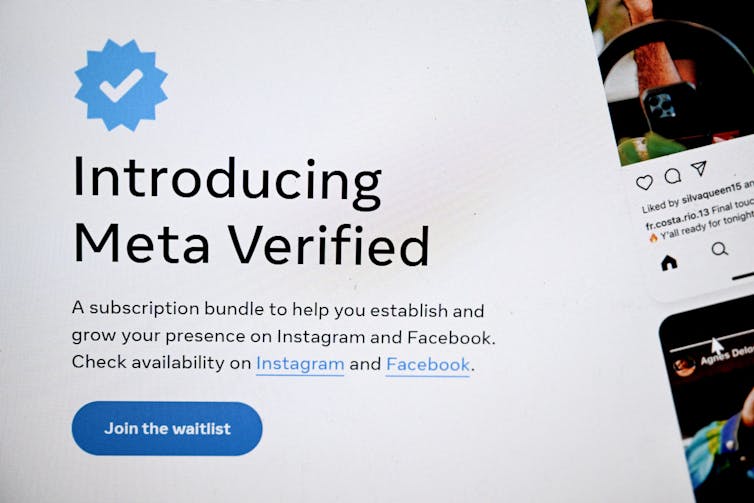
Social media services have generally been free of charge for users, but now, with ad revenues slowing down, social media companies are looking for new revenue streams beyond targeted ads. Now, Twitter is charging for its blue check verification, and Meta and Twitter both charge for identity protection.

Users benefit from “free” services such as social media platforms. According to one study, in the U.S., Facebook users say they would have to be paid in the range of $40 to $50 to leave the social networking service for one month. If you value Facebook highly enough that you’d need to get paid to take a break, why not pay for these new services if you can afford them?

Meta plans to offer paid customer support and account monitoring on Facebook and Instagram to guard against impersonators for US$11.99 a month on the web and $14.99 a month on iOS devices. Twitter’s proposed changes make two-factor authentication via text messaging a premium feature for paid users. Twitter Blue costs $8 a month on Android devices and $11 a month on iOS devices.

As a researcher who studies social media and artificial intelligence, I see three problems with the rollout of these features.

The collective action problem

Information goods, such as those provided by social media platforms, are characterized by the problem of collective action, and information security is no exception. Collective action problems, which economists describe as network externalities, result when the actions of one participant in a market affect other participants’ outcomes.

Some people might pay Facebook for improved security, but overall, collective well-being depends on having a very large group of users investing in better security for all. Picture a medieval city under siege from an invader where each family would be responsible for a stretch of the wall. Collectively, the community is only as strong as the weakest link. Will Twitter and Meta still deliver the promised and paid-for results if not enough users sign up for these services?

a screenshot with large and small text and a white checkmark inside a 12-point star
Meta is beginning to roll out a paid identity protection service for Facebook and Instagram users. William West/AFP via Getty Images

While large platforms such as Facebook and Twitter could benefit from lock in, meaning having users who are dependent on or at least heavily invested in them, it’s not clear how many users will pay for these features. This is an area where the platforms’ profit motive is in conflict with the overall goal of the platform, which is to have a large enough community that people will continue using the platform because all of their social or business connections are there.

Economics of information security

Charging for identity protection raises the question of how much each person values privacy or security online. Markets for privacy have posed a similar conundrum. For digital products in particular, consumers are not fully informed about how their data is collected, for what purposes and with what consequences.

Scammers can find many ways to breach security and exploit vulnerabilities in large platforms such as Facebook. But valuing security or privacy is complicated because social media users do not know exactly how much Meta or Twitter invests in keeping everyone safe. When users of digital platforms do not understand how platforms safeguard their information, the resulting lack of trust could limit the number of people willing to pay for features such as security and identity verification.

Social media users in particular face imperfect or asymmetric information about their data, so they do not know how to correctly value features such as security. In the standard economic logic, markets assign prices based on buyers’ willingness to pay and sellers’ lowest acceptable bids, or reservation prices. However, digital platforms such as Meta benefit from individuals’ data by virtue of their size – they have such a large amount of personal data. There is no market for individual data rights, even though there have been a few policy proposals such as California governor Gavin Newsom’s call for a data dividend.

Some cybersecurity experts have already pointed out the downsides to monetizing security features. In particular, in giving a very rushed timeline, one month from announcement to implementation, to pay for a more secure option, there is a real risk that many users will turn off two-factor authentication altogether. Further, security, user authentication and identity verification are issues that concern everyone, not just content creators or those who can afford to pay.

In the first three months of 2022 alone, nearly one-fifth of teens and adults in the U.S. reported their social media accounts getting hacked. The same survey found that 24% of consumers reported being overwhelmed by devices and subscriptions, indicating significant fatigue and cognitive overload in having to manage their virtual experiences.

It is also the case that social media platforms are not really free. The old adage is if you are not paying, then you are the product. Digital platforms such as Meta and Twitter monetize the enormous tracts of data they have about users through a complex online advertising-driven ecosystem. The system makes use of very granular individual user data and predictive analytics to help companies microtarget online ads and track and compare advertising views with outcomes. There are hidden costs associated with people’s loss of privacy and control over their personal information, including loss of trust and vulnerability to identity theft.

Social media and online harms

The other problem is how these moves to monetize security options increase online harms for vulnerable users without identity protection provisions. Not everyone can afford to pay Meta or Twitter to keep their personal information safe. Social bots have become increasingly more sophisticated. Scams increased by almost 288% from 2021 to 2022, according to one report. Scammers and phishers have found it easy enough to gain access to people’s personal information and impersonate others.

For those who are scammed, the process of account recovery is frustrating and time-consuming. Such moves might hurt the most vulnerable, such as those who need Meta to find access to job information, or the elderly and infirm who use social media to learn about what is happening in their communities. Communities that have invested resources in building a shared online space using platforms such as Twitter and Facebook may be harmed by monetization efforts.

People are tired of having to navigate numerous subscriptions and having security and privacy concerns that persist. At the same time, it’s an open question whether enough users will pay for these services to boost collective security. Ultimately, the service a social media platform offers is the opportunity to connect with others. Will users pay for the ability to maintain social connections the way they pay for content, such as entertainment or news? Social media giants may have a difficult path ahead.

Feature Image Credit: NurPhoto via Getty Images

By 

Sourced from THE CONVERSATION


By Tanner Rankin

Follow this simple guide of what’s working right now to grow your Amazon sales.

Increasing Amazon sales is more complicated than ever — especially for entrepreneurs without platforms like large social media followings, email lists or YouTube channels. What with Amazon prioritizing driving external traffic, the days of simply optimizing your keywords and listing are long gone.

With that being said, you can still increase your sales on Amazon, even if you’re a new Amazon seller. Here are a few ways to do it:

Amazon influencers

With the influencer marketing industry set to grow to over $21.1 billion in 2023, brands of all shapes and sizes selling on Amazon can take advantage of Amazon Influencers. Amazon Influencers have actually been around since 1996 when Amazon launched its affiliate program called the Amazon Associates Program.

Now, along with the Amazon Influencer Program, Amazon has influencers across blogs, YouTube, TikTok, Instagram and beyond that Amazon sellers are partnering with to drive sales. Amazon Influencers work so well to drive sales because they create content covering the full spectrum of brand awareness to buyer intent.

Even if selling on Amazon is just a side hustle, there are Amazon Influencers who will fit your budget and can help you increase sales on Amazon. Not only can you get up to 10% cash back from Amazon for referring external traffic with your Amazon Attribution link, but the commission paid to the Amazon Influencer comes from Amazon’s referral fees and not from the brand. This is the type of content you will want to focus on:

  • Best lists: Consumers who already know what they want and are ready to buy go to the number one and number two search engines in the world, Google and YouTube, to search for the “best” of what they are looking to buy (for example, “best candles for a power outage”). Then, they watch or read and buy one of the recommendations. Your goal is to show up on as many of these “best lists” as possible.
  • Advertorials: Advertorials are product reviews with click-worthy headlines. Instead of a normal product review article like: “Brand X Ring Light Review” the advertorial is: “This $20 Ring Light Makes Your Selfies Look Professional.” This type of content not only does well on social media, Google News and Apple News but also in search results. Plus, the type of person who will read this content will want what you have to sell.
  • Amazon Influencer storefront videos: Amazon Influencers drive traffic from their platforms on social media back to their Amazon Storefront where their audience can purchase their recommendations through idea lists, videos and photos. The key here is videos, because not only do they do a great job at highlighting why someone should buy your product, but they are eligible to show up on your product page as well as the Amazon Influencers Storefront.

Speaking of external traffic sources eligible for the brand referral bonus program, enter Google Ads.

Google ads

Although savvy Amazon Sellers have been using Google Ads to grow their sales and drive traffic to their Amazon listings for ages, they recently became much more attractive since the launch of the Brand Referral Bonus Program. That means Amazon is paying you to run Google ads on your product listings to increase sales on Amazon.

Apart from tapping into the number one search engine in the world, Google, running Google ads on your product listings can also boost the organic traffic on Amazon SEO of your keyword rankings. This is because Amazon knows what keywords consumers enter Amazon through, and this translates to your product being more relevant for those keywords on Amazon. In other words, if you’re struggling to rank for important keywords on Amazon, running Google ads can help immensely.

In the past, Amazon sellers were averse to running Google ads or leveraging other external PPC channels because they couldn’t track the results. Now, as mentioned earlier, Amazon sellers can use their Amazon attribution links to track results.

This is what you’ll want to focus on:

  • Amazon/On Amazon: Run exact and phrase match targeting on keywords like: “Potato ricer Amazon” and “ring light for selfies on Amazon”
  • Buyer intent keywords: Run exact and phrase match targeting on very specific buyer intent keywords like: “recyclable French roast k cups”
  • Best: Run exact and phrase match targeting on keywords that indicate the customer is looking for the best of what you sell like: “best pillow for bed sores”
  • Top-Rated: Run exact and phrase match targeting on keywords like: “top-rated plant protein”

Driving external traffic goes a long way to boost your unit session percentage and educate the Amazon A10 algorithm that you should be relevant for your most important keywords. That said, if you want to increase sales on Amazon, you’ll want to avoid the biggest mistake I see.

Stop copying the big brand best-sellers

This one likely goes against what you’ve learned, but you’ll want to stick with me. If you look at the top sellers of what you sell, copy their images and product descriptions as well as download their keywords from your favourite Amazon tool, you’re making a big mistake.

This is because they make mistakes in everything from copywriting, art direction, keyword selection and more, but they get away with it due to brute force and significant budgets. Apart from having thousands of reviews, their products are talked about in major publications and by mega influencers — and their ads appear everywhere where your products do not.

So, what do you do instead?

  • Get good at selling: This entails learning copywriting, colour psychology, art direction and more. Your listings need to blow theirs out of the water.
  • Build your brand off Amazon: Make sure you’re building an email list, an audience on social media, traffic to your website and getting PR for your brand.
  • Focus on buyer intent: Don’t go after the broadest keywords with the largest volume. Instead, boost your unit session percentage by focusing on keywords that people search for that indicate they already know what they want.

Selling is tough, but you can increase sales on Amazon with these proven methods.

By Tanner Rankin

Entrepreneur Leadership Network Contributor. CEO at The Source Approach & Referazon. For 10+ years as an author, speaker, Fractional CMO & CEO at The Source Approach – eCommerce Consultancy & Referazon – Amazon Influencer Search & CRM, Tanner Rankin has helped brands thrive at eCommerce quicker & easier.

Sourced from Entrepreneur

Don’t miss out on a gig due to confusing language in the job posting.

As if searching for a job wasn’t hard enough, it’s made harder by the fact that many job postings are full of language that is either unnecessarily daunting or flat-out confusing. What does it mean to be a “social media warrior?” Should I not apply if don’t consider myself an “accounting rockstar?”

According to one study, 17% of applicants admitted to not applying for an opening because of “vague or confusing” language in the job description. While we may will never find a singular definition for buzzy terms like “dynamic,” “blue sky thinking,” or “self-starter,” there is some concrete vocab that every job seeker should understand. To this end, FlexJobs has created a glossary of terms you might come across throughout job search (and your career), and what they mean.

Vocab every job seeker should know

Chronological resume. You should always cater your resume to the specific job listing, and one may ask you specifically for a chronological resume. Luckily, this is the traditional resume format that you probably already use. The expectation for a chronological resume is to outline your job job history in reverse chronological order, beginning with your most recent position.

Compressed workweek. Any job posting the advertises a compressed workweek means the role entails working longer hours in fewer days. For instance, rather than five eight-hour days, you might work four 10-hour days or three 12-hour days.

Digital nomads. A digital nomad is someone who works virtually from various locations. Digital nomads may move from location to location but use technology and communication tools to stay digitally connected while and traveling. (We previously covered how you can afford to be a digital nomad.)

Distributed company. If you see a job listing from a distributed company, that means the majority (if not all) employees work from remote locations. Communication generally involves strategies to ensure everyone feels included, rather than focusing on physical interactions.

Nonexempt employee. If you work a regular 40-hour work week without an employment contract, you are probably nonexempt. A nonexempt employee is not exempt from federal and state labour laws and must be paid overtime at time-and-a-half for any hours worked beyond 40 hours in a week. This generally applies to those in hourly positions, rather than salaried positions. Examples include interns, servers, retail associates, and similar jobs.

Panel interview. A panel interview, otherwise known as a team interview, is an interview conducted by two or more people at the same time. A panel interview can include managers, supervisors, team members, HR representatives, and other company decision-makers. Here’s our guide to surviving the dreaded panel interview.

Personal branding. Anyone who has used LinkedIn in the past few years knows the pressure of “building your brand.” Simply put, personal branding is the way you market your career focus and expertise. Effective personal branding means providing a cohesive message across your social media channels and application materials. Practice creating your career elevator pitch now.

Remote-first/remote-friendly. If working from home is a priority for you, pay careful attention to the language in a job description. In a remote-first company, most employees work from remote locations, rather than a centralized office. A remote-friendly company, on the other hand, should have policies and procedures in place to accommodate remote work, but ultimately it is not a fully distributed team (see above).

ROWE. A results-only work environment (ROWE) is a type of work environment in which employees are assessed by the work they produce, as opposed to hours on the job or time spent in the office.

Resume summary. Including a resume summary is a great way to succinctly pitch yourself as a prospective employee. This summary is a brief statement (no more the two to four lines) near the top of your resume that provides a persuasive snapshot of your experience, accomplishments, and qualifications.

For more, check out the full glossary from FlexJobs here. And once your secure the bag, brush up on the most annoying corporate jargon.

Feature Image Credit: Prostock-studio (Shutterstock)

By Meredith Dietz

Sourced from lifehacker

By Lily Power 

Ultra-high net worth individuals (UHNWIs) use social media differently compared with the rest of us. Here, Relevance’s Lily Power reveals how to entice the 1%.

Social media is a powerful marketing tool for reaching ultra-high net worth individuals (UHNWIs), but it requires a tailored approach and a thorough understanding of this exclusive audience.

This group represents less than 1% of the world’s population and has specific expectations regarding digital marketing.

UHNW consumers frequently use social media platforms, with 99% using social media and spending close to 90 minutes per day browsing them. Brands can use these platforms to engage and build meaningful relationships with this audience.

What social media platforms do UHNWIs use?

Each social platform serves a unique purpose and typically attracts different users – including several social platforms used exclusively by the world’s wealthiest.

For example, Best of All Worlds is an invite-only app designed to ensure that members don’t find themselves ‘overwhelmed with irrelevant connections’. Rich Kids is a quasi-Instagram, with membership costing US$1,000 per month.

Yacht broker Northrop & Johnson’s UHNW clients are highly active on LinkedIn, Instagram, and niche investment communities such as Wealthfront and AngelList. Nearly seven in 10 of them use social media regularly, with LinkedIn (36%), YouTube (35%), and Facebook (34%) each cited by about one-third of respondents.

Here are five tips for reaching this powerful audience on social.

1. Create a targeted strategy

It takes more than just creating a social media profile and posting content; you must understand the individual and their goals to target UHNWIs effectively.

UHNWIs are often highly sceptical of marketing messages and will not respond to traditional marketing tactics. When targeting them through social media, focus your efforts on the correct channels. It’s imperative to understand their lifestyle, interests, and values to develop content and messaging that resonates with them.

Once you have identified the right platforms, create a targeted strategy focused on UHNWIs’ unique needs and interests. They are accustomed to being presented with tailored offers, so your message must stand out.

2. Find out what content resonates with your target audience

UHNWIs are seeking content that fulfils their needs beyond purchasing a product or service. For the world’s wealthiest, luxury is a baseline, and nothing is a ‘dream purchase’. Brands can engage them with crafted, strikingly beautiful content and by creating events or experiences tailored to their interests.

This higher-quality and bespoke content develops trust and helps build ongoing relationships while increasing loyalty and adding value to engagement. Create a sense of exclusivity through your brand messaging and content to ensure success.

This group is protective, valuing privacy and security. Instead of being sales-led, you should focus on sharing aspirational content. UHNWIs are a common target for various online crimes and intrusions due to their lifestyle. Privacy and security should be at the forefront of your strategy.

3. ‘Genuinfluencer’ marketing

There is a fine line between promotion and saturation, especially for ultra-luxury brands. Many luxury brands are using ‘genuinfluencers’ due to their high-quality and authentic content, engaged communities of followers, and actionable insights. This makes genuinfluencers valuable partners for luxury brands seeking to reach and engage with UHNWIs.

Genuinfluencers work on establishing trustworthy relationships, making them a highly effective brand partnership. UHNWIs relate to people who are similar to them, so they will be influenced by genuinfluencers only if they are carefully selected. Self-made UHNWIs might relate to self-made genuinfluencers, whereas heirs and heiresses might be influenced by people of similar background.

Executing campaigns over a social platform where your target audience is most active is essential. The right geninfluencer can help you reach UHNWIs and drive engagement, if they’re similar to your target demographic.

4. Targeted ads on social media

Luxury brands can use social media ads to target UHNWIs based on their interests, demographics, and other factors, as well as targeting custom audiences and lookalike audiences.

Paid ads on LinkedIn, Facebook, and Twitter have layered and targeted options, which brands can use to target UHNWIs based on their demographic information like industry sector, interests, high-powered job roles or even income level. There is ample opportunity to connect and build relationships with this exclusive audience by sharing content on existing social media groups and pages.

Start by researching UHNW profiles and identifying their interests, hobbies, and lifestyle. This will help you create ads that are tailored specifically to them. Use language that resonates with their demographic and include a strong call to action.

Leverage retargeting; it allows you to advertise to users who have already interacted or had some level of engagement with your brand, ensuring higher conversion rates.

These highly educated individuals embrace emotional intelligence principles such as trustworthiness and empathy, which is why some platforms may perform better than others. For example, LinkedIn is an excellent platform to share thought leadership and research pieces.

5. Track campaign success

Keeping track of your efforts will enable you to understand what is and isn’t working and adjust your strategy accordingly. The best way to know if you are reaching and resonating with your audience is to track business metrics such as leads generated, quality of leads, cost per lead, conversion to sale and overall revenue.

Feature Image Credit: Laila Gebhard

By Lily Power 

Sourced from The Drum

By 

Mass layoffs are the source of much of the chaos at the company, according to both current and former employees.

Current and former Twitter employees have said the company has suffered an inability to protect users from trolling, disinformation and child exploitation, a BBC story asserts.

The company is also said to have been experiencing chaos as a result of staffing issues since Tesla  (TSLA) – Get Free Report owner Elon Musk bought it in October 2022.

Twitter’s former head of content design, who worked on the microblogging site’s features to protect users from hate speech, said her team was making progress.

“It was not at all perfect. But we were trying, and we were making things better all the time,” Lisa Jennings Young told the BBC.

One of the features implemented by Young’s team was the “harmful reply nudge.” When artificial intelligence detected certain trigger words in a user’s tweet, it would alert the user before they posted it.

“Overall 60% of users deleted or edited their reply when given a chance through the nudge,” Young told the BBC. “But what was more interesting, is that after we nudged people once, they composed 11% fewer harmful replies in the future.”

When Musk took over the company, Young’s whole team was laid off. She chose to leave the company in November 2022.

Young said she does not know what’s happening with the features she worked on.

“There’s no one there to work on that at this time,” she said.

An engineer at Twitter, who was granted anonymity by the BBC because he’s still working there, described conditions at the company.

“For someone on the inside, it’s like a building where all the pieces are on fire,” he said.

“When you look at it from the outside the façade looks fine, but I can see that nothing is working, he continued. “All the plumbing is broken, all the faucets, everything.”

He said not just engineers, but cleaning and catering staff, were among the employees that were let go since Musk took over.

Musk even tried selling plants from the office to employees, he also said.

He described the mass layoffs since Musk bought the company as the source of the chaos.

“Twitter has around 1,300 employees today, per CNBC, from 7,500 in November,” tweeted @unusualwhales on Jan. 20.

“The note is incorrect,” countered Musk in a tweet of his own. “There are ~2300 active, working employees at Twitter. There are still hundreds of employees working on trust & safety, along with several thousand contractors.”

The anonymous employee offered his view.

“A totally new person, without the expertise, is doing what used to be done by more than 20 people,” he said. “That leaves room for much more risk, many more possibilities of things that can go wrong.”

“There are so many things broken and there’s nobody taking care of it, that you see this inconsistent behavior,” he said.

By 

Sourced from The Street

By Kourtnee Jackson

Meta is testing how to unify functionality for both apps.

Meta is working on a way for you to view your messages from Messenger within the Facebook mobile app, according to a blog post from Facebook boss Tom Alison. Facebook reports that it has 2 billion active users who connect on its platform daily, and its team is working to enhance how people have online conversations.

The company is “testing the ability for people to access their Messenger inbox within the Facebook app,” Alison wrote. Facebook plans to expand testing in the coming months.

First launched in 2011 as part of Facebook’s functionality, Messenger was dropped from the social media platform and became a standalone app in 2014. Shortly after, it added the ability to share locations, handle voice calls and enable peer-to-peer payments.

Over the last decade, Messenger has received a variety of new features, including encrypted chats, custom emojis and video chats. Facebook has also been working to integrate and enhance multiapp communication among Messenger, WhatsApp and Instagram. Those who use Messenger and Instagram can already contact each other with the direct messaging feature.

Meta says it also saw some success with community chats, a conversation feature that it rolled out to Facebook Groups in 2022. The company aims to fold in more messaging functionality within Facebook to make it easier for people to connect.

Feature Image Credit: James Martin/CNET

By Kourtnee Jackson

Sourced from CNET