Author

editor

Browsing

By

Take your website design from good to great

A website is often the first impression potential customers will have of a business in this day age. In today’s digital era, that first impression is more important than ever as customers increasingly search online for products and services on a daily basis.

A well-designed website will not only grab attention, but may also hold that attention long enough to convert a visitor into a customer.

Should you be in need of some help in revamping or creating the perfect website design (opens in new tab) for your business, below are ten tips to help you be on your way to designing a website that’s both visually appealing and effective.

1. Keep your homepage minimalistic

Your home page should be an introduction to your business, setting the tone and conveying your message quickly and effectively. Prioritize the information you want visitors to see immediately without overcrowding the page with unnecessary content.

Keep it concise and clean, having only necessary items such as navigation bars, logos, search bars, and other essential elements. Keep long stories for lower-level pages and make sure that the links are clear and easily accessible from the homepage.

Having a minimalistic design will offer a better user experience; creating an attractive interface with no distractions from key product or service features that you would want to show off.

2. Design with visual appeal in mind

When it comes to website design, one of the most important elements is visual appeal. Designing with visual appeal in mind means making sure the overall aesthetic of your website looks pleasing to the eye.

This includes choosing a colour scheme (opens in new tab) that works well together and avoiding too much clutter on your pages. You should also focus on creating a consistent look and feel throughout the website by ensuring typefaces, photos, and other visuals look cohesive.

Quality images are key when creating a visually appealing website, so try sourcing stock photography or creating custom videos or graphics for an added wow factor.

3. Create easy to read website content

A great website design is essential for drawing in potential customers and establishing a strong online presence. One of the biggest parts of this is making sure that your website content is easy to read.

Creating content with the right tone, length, and formatting can make all the difference when it comes to keeping readers engaged. You should try writing shorter paragraphs and sentences, while also including simple words that many reader can digest quickly.

Utilize headings and lists to draw attention as well as strategically break up large chunks of text. Additionally, use high-quality images and visuals related to your topics instead of blocks of text whenever possible. Last but not least, make sure you double-check your content for any typos or grammar issues before you post it.

Woman creating her own website on computer

(Image credit: Shutterstock/Kaspars Grinvalds)

4. Ensure your site is easy to navigate

Websites should be appealing and easy to navigate, allowing the website user to get to exactly where they want quickly and intuitively. Ensure your site is easy to navigate by making sure all pages are clearly labelled and organized logically.

Ensure the main navigation is consistent throughout each page, so visitors can easily find their way around the entire site. Also, make use of simple grid layouts for page organization as this makes a huge difference when it comes to how visitors view each page.

Make sure your menu(s) stay visible at all times while scrolling down, so visitors can easily return to any previous sections they want.

5. Stay mobile friendly

Mobile devices are becoming the primary way people access the internet. As a result, having a website that is not optimized for mobile use can be detrimental to your business. Users who have difficulty navigating your website on their mobile devices are likely to leave your website and move on to a competitor’s website.

In addition to user experience, mobile-friendliness is also a factor that search engines like Google take into consideration when ranking websites. Google’s algorithm now favours mobile-friendly websites in search results, which means that having a mobile-friendly website can help improve your website’s visibility and drive more traffic to your website.

To achieve this, ensure that your website is using a responsive design. Responsive design is an approach to web design that allows a website to adapt to the size of the device it’s being viewed on. This means that your website will look great on any device, from a desktop computer to a smartphone. By using a responsive design, you can ensure that your website is always optimized for mobile use. Another way to make sure your site is mobile-friendly is by simplifying your design. When designing for mobile devices, simplicity is key. Mobile screens are small, and users are often on the go, so they need information quickly and easily.

To create a mobile-friendly website, focus on simplifying your design. Use clear, concise language, and keep your design clean and uncluttered. Avoid using too many images or videos that can slow down your website and cause frustration for users. Also using a mobile-friendly font is another important factor when designing for mobile devices. Fonts that are too small or difficult to read can be a major frustration for users. Choose a font that is easy to read on a small screen and avoid using too many different fonts. Most website builder (opens in new tab) services allow you to edit your site in mobile view too, which is useful because you’ll see exactly what your site will look like on mobile when it’s live.

A designer group chooses the color scheme of the application.

(Image credit: Shutterstock/Wasan Tita)

6. Avoid hectic colour schemes

When designing a website, the colour scheme is one of the most important elements to consider. The colours used can largely affect the overall look and feel of the site, as well as impact user experience. To create a website (opens in new tab) that is visually appealing and easy to navigate, it is crucial to avoid hectic colour schemes.

To avoid hectic colour schemes when choosing colours for your website, it is important to start with a neutral base. This means using shades of grey or white as the background for your site. A neutral base will create a clean and simple canvas that allows other colours to stand out and make an impact. It also helps to reduce visual clutter, making it easier for users to focus on important elements of the site.

Another key tip to avoid hectic colour schemes is to limit the number of colours used in your design. Too many colours can overwhelm users. Instead, choose a palette of two or three colours that complement each other and convey the desired mood or message. Using shades and tints of these colours can add depth and variety without adding too much visual noise.

7. Don’t ignore SEO

SEO (opens in new tab) is the process of optimizing your website to rank higher in search engine results pages (SERPs). This means that when people search for keywords related to your business, your website is more likely to appear at the top of the results. This is important because the majority of online experiences begin with a search engine, and if your website doesn’t show up in those search results, you’re missing out on a lot of potential traffic and customers.

To ensure that your site is optimized, conduct keyword research. Before you start designing your website, it’s important to know what keywords your target audience is searching for. By conducting keyword research, you can identify the phrases and terms that people are using to find businesses like yours.

This information can then be used to inform your website content and ensure that it’s optimized for those keywords. Another important factor is optimizing your website structure. The structure of your website is important for both user experience and SEO. Make sure that your website is easy to navigate, with a clear hierarchy of pages and a logical flow from one page to the next.

This will make it easier for search engines to crawl and index your website, which can improve your rankings. Also, use descriptive URLs. When creating URLs for your website pages, make sure that they are descriptive and include relevant keywords. This not only helps with SEO but also makes it easier for users to understand what the page is about before they click on it.

 8. Make sure typography is consistent

Typography is an essential component of your website’s design. It can make or break the overall user experience of your website. If your website has inconsistent typography, it can make the website look unprofessional and unpolished. In contrast, consistent typography can enhance the readability, legibility, and overall user experience of your website.

The first step in creating consistent typography is to choose the right font. You need to select a font that aligns with your brand, audience, and message. A good rule of thumb is to choose no more than three fonts; one for the header, one for the body, and one for accent text. Another way to make your website design spot-on is by creating a hierarchy in consistent typography. It refers to the organization and arrangement of text elements based on their importance.

By creating a hierarchy, you can guide your website visitor’s attention toward the most important information. You can create a hierarchy by using different font sizes, weights, and styles. Another way to make your website design spot-on is by having consistency in font size and spacing.

This is critical in creating a polished and professional website design. You should establish a set of guidelines for font sizes and spacing and follow them consistently throughout your website. This can help ensure that your website looks cohesive and easy to read.

Alignment is another critical aspect of consistent typography. You should align your text elements to create a clean and organized look. For example, you can align text to the left, right, centre, or justify. Whatever alignment you choose, make sure that it is consistent throughout your website.

9. Use white space strategically

Also known as negative space, white space refers to the areas of a design that are left empty or blank, without any visual or textual content. While it may seem counterintuitive to intentionally leave blank spaces on a website, the strategic use of white space can actually improve the overall user experience and enhance the visual appeal of your website.

White space can be used to create a clear visual hierarchy on your website, highlighting important elements such as headings, buttons, and images. By leaving more white space around these elements, you can draw the user’s attention to them and make them stand out more effectively.

However, it is very important to ensure that the amount of white space used throughout your website is consistent, both within pages and across the entire site. This will create a more cohesive and polished look and feel.

10. Don’t forget high-quality images and videos

High-quality images and videos are important for adding a new look and feel to your site, and as important as it is for these added elements to be top quality, it’s also important for your images and videos to be relevant to your brand, products, and services. For example, if you run a fashion website, your images should showcase the latest fashion trends, while a food blog should feature mouth-watering images of delicious dishes.

Another crucial aspect of using images on your website is to ensure that they are high-resolution. Low-quality or pixelated images can be a major turn-off for visitors and may give the impression that your website is unprofessional. Make sure to use images that are at least 72 DPI (dots per inch) and preferably 300 DPI for print-quality images.

Ensure that your images load quickly and don’t slow down your website’s performance by optimizing them for web use. This includes compressing the images without sacrificing their quality, using appropriate file formats such as JPEG or PNG, and adding alt tags to improve accessibility and SEO.

In addition to images, incorporating videos into your website can also enhance user experience and engage your visitors. Videos can be used to showcase product demonstrations, tutorials, or even behind-the-scenes footage. However, it’s important to keep videos short and sweet, as lengthy or irrelevant videos can be a major turn-off for visitors.

Just like images, it’s crucial to ensure that your videos are high quality. Poor quality or shaky videos can be unprofessional and may drive visitors away from your website. Make sure to use high-quality equipment and editing software to create visually appealing videos.

  • Your website will need a top quality web hosting (opens in new tab) service to ensure your site is secure online

Feature Image credit: Shutterstock / Rawpixel

By

Sourced from techradar.pro

By Ben Williams

With hundreds of ways to promote a business online, you could find yourself wasting time, money and resources focussing on the wrong things. Here are the top strategies that are proven to work.

As the world becomes more digitised, businesses have to adapt to new ways of reaching their customers. Traditional marketing strategies like billboards and print ads are no longer as effective as they once were. Nowadays, online marketing is king, and there are many strategies you can use to promote your business.

The problem is, where do you start? With hundreds of ways to promote a business online, you could find yourself wasting time, money and resources focussing on the wrong things.

Here are the top strategies to promote a business online that are proven to work.

Optimize Your Website for Search Engines

Search engine optimization (SEO) is the process of optimizing your website to rank higher in search engine results pages (SERPs). When your website appears at the top of search results, you are more likely to attract potential customers to your site. To optimize your website for search engines, you need to do the following:

  1. Conduct keyword research to identify the words and phrases your audience is searching for.
  2. Optimize your website content with these keywords.
  3. Ensure your website is mobile-friendly.
  4. Use meta tags and descriptions to help search engines understand your website content.
  5. Build high-quality backlinks to your site.

Appear in online media to build higher quality backlinks

One of the most effective ways to build high-quality backlinks to your website is by appearing in the media. When you are mentioned in news articles, blog posts, or other media, it not only helps to improve your brand’s visibility but also drives traffic to your website.

Google’s search algorithm is still hinged around link profiles. In basic terms, the more links to your site you have, the higher up Google you will appear. But it’s not quite that simple. Links with high trust and authority deliver more impact, whilst links from low authority sites can deliver almost none.

Given this fact, there is no better link-building strategy than appearing in the online media. If you manage to place useful and eye-catching copy on news sites, it can serve a duel purpose of promoting your brand message, whilst also providing a boost to your domain authority.

Agencies such as Monster PR have cornered the market when it comes to getting businesses into the online media at affordable prices, with direct access to hundreds of media outlets.

You can choose to approach the publications yourself to promote a business online. However, to contact a journalist for each individual publication can be a time consuming and soul destroying process. It can work if your content is good enough, but you’ll often find getting any kind of response difficult due to how much the journalists are bombarded each day. Finding a well priced agency can be worth the time saving.

If you need to produce low-cost, well written content (that hasn’t been produced by an AI bot), Case Study Link is a good starting point. You can ask qualified journalists to produce your content in their spare time, and their rates are generally very low.

Use Social Media to Your Advantage

Social media is a powerful tool that can help you reach a large audience quickly. To promote your business on social media, you need to start by creating profiles on the platforms where your target audience spends their time. This could be Facebook, Twitter, Instagram, LinkedIn, or any other platform that suits your business.

Once you have your profiles set up, start sharing content that your audience will find valuable. This could include blog posts, infographics, videos, or anything else that will engage your followers. Make sure you respond promptly to comments and messages to build trust with your audience.

With anything online these days, really gaining traction on social media has become a pay-to-play activity for businesses. Tik Tok is one possible exception, depending on the nature of your business and how easy it is to engage online followers. For instance, a jewellery making business could attract many followers with engaging how-to videos, whereas an insurance salesman might struggle to find that engaging angle (especially whilst portraying a professional image).

Use Pay-Per-Click Advertising

Pay-per-click (PPC) advertising is a model of internet marketing where businesses pay a fee each time someone clicks on their ads. PPC ads can be a highly effective way to promote your business, as they allow you to reach a highly targeted audience. Google AdWords, Amazon Ads, and Facebook Ads are three popular platforms for running PPC ads. To run a successful PPC campaign, you need to:

  1. Identify your target audience
  2. Create compelling ad copy and visuals
  3. Choose the right keywords
  4. Set a budget for your campaign
  5. Monitor and adjust your campaign as needed

Ensure that your ad content is highly relevant to your keywords, and that your landing pages are high quality. You’ll pay more per click if that is not the case.

Collaborate with Influencers

Influencer marketing involves partnering with individuals who have a large following on social media to promote your business. This strategy can be highly effective, as influencers have built trust with their followers and can introduce your business to a new audience. To collaborate with influencers, you need to:

  1. Identify influencers who align with your brand and target audience
  2. Reach out to them with a proposal for collaboration
  3. Set clear goals and expectations for the collaboration
  4. Monitor and analyse the results of the collaboration.

Multi-pronged approach when you promote a business online

Promoting your business online requires a multi-faceted approach. By using social media, optimising your website for search engines, using pay-per-click advertising, and collaborating with influencers, you can reach a larger audience and grow your business. However, it’s important to remember that online marketing is constantly evolving, so it’s essential to stay up-to-date with the latest trends and tactics to stay ahead of the competition.

By following the strategies outlined in this article and staying informed about new developments in online marketing, you can successfully promote your business and achieve your goals.

The last and final point that is worth remembering is that nothing in business comes for free. Any so called ‘free’ ways to promote your business are normally ill-advised. The internet is becoming increasingly pay-to-play, so do expect to invest some time or money.

By Ben Williams

Sourced from The London Economic

By Aliza Licht

A new social trend bubbled up on TikTok recently: #deinfluencing has racked up more than 180 million views. In these videos, people tell you what not to buy. Sometimes, they’ll dismiss the hype around certain popular products only to recommend a better alternative. Publications including Today, CNN, and Huffington Post, to name a few, have piled on to declare influencers over and social commerce dead. Even Fortune weighed in, saying that “Gen Z and Millennials are rejecting consumer culture” to “protect their money.”

I rolled my eyes at all this. Here’s the thing: de-influencing is influencing. I don’t care if someone only has 100 followers. If those 100 people trust that person, they have been influenced. I’d know —as the anonymous social media personality #dknyprgirl, I’ve been on the inside of what is now the creator economy since the beginning.

In 2009, fashion brands were just beginning to acknowledge bloggers even though they existed years earlier. This new crop of self-appointed fashion critics was a wild card; because they had no skin in the game, they were free to critique however they wanted. Their honest, best-friend-like reviews gained traction with adoring audiences everywhere. Fashion brands, however, were not so welcoming.

One fateful day — Sept. 28, 2009 — Dolce & Gabbana decided to open the floodgates and seat BryanBoy and Tommy Ton of Jak and Jil in the show’s front row. From a traditional editor’s perspective, this was shock and horror! Bloggers seated next to, gasp, editors? In the front row of a fashion show?! The world as we knew it was coming to an end. But to the public, fashion was finally being democratized and accessible in a new and exciting way, with images being released into the world in real-time, versus the previous carefully curated images brands would share later in print magazine ads.

But just like anything else, with time, everyone got more comfortable. Brands got smart and realized the power of “peer-to-peer” recommendations. That, my friends, was way cheaper than owning talent on the red carpet during awards season or buying an ad in Vogue. Bloggers became influencers, and brands were more than happy to tap into a new, modestly-priced talent pool. The landscape changed. Online communities became powerful.

If you trust the messenger, you trust the message.

Since then, influencers have become a mainstay of every brand’s strategy. Companies partner with influencers to generate brand awareness, reach new audiences, and leverage their celebrity in paid social where they can determine a clear return on investment. What’s more, many have tapped influencers in traditional ad campaigns and commercials.

When the pandemic hit, headlines declaring the end of influencers were widespread. It made sense at the time. With companies shutting down and closing brick-and-mortar stores, who was thinking about brand partnerships? Advertising and creative agencies were temporarily unable to produce the high-price photo shoots that brands need to promote their products. But as more business began moving online, content was again in demand. Who saved the day? Influencers. They could shoot products in their living rooms.

Rooting against influencers is easy because the industry is often misrepresented and misunderstood. As someone who sees both sides as both a board member of the American Influencer Council and a consultant who works with brands on their social strategies, I know what goes into making this a profitable business. The most successful creators I know take extreme care in choosing who and what they align with. They also care deeply about the credibility and loyalty of their community. If you trust the messenger, you trust the message. So when we see all this hype about de-influencing and trying to take down a legitimate industry, we have to wonder what the firestarter really is.

The joke is that “de-influencers” probably know they are influencing.

What’s happening now is a confluence of economic downturn, widespread layoffs, and a backlash to opulence. Predictably, in a time of economic uncertainty, people are warning each other of products that don’t live up to their hype. Is it a coincidence that the prominence of bloggers in 2009 was right after the recession of 2008? I think not. De-influencing is simply a dressed-up version of an honest blogger review from back in the day. The only difference now is that regular people have the TikTok algorithm to bolster their reach, as you don’t need thousands of followers for a post to catch fire.

You can’t destroy the idea of influence. It’s human nature, and it’s been around since the dawn of time. This movement represents a public cry for authenticity, but it’s also a fact that the more controversial and counter-intuitive you are online, the more engagement you get. The joke is that “de-influencers” probably know they are influencing.

If there’s a lesson in here somewhere, it’s that creating a strong community begins and ends with trust. But where we put our trust moves like the wind. One day, an influencer like Mikayla Nogueira is on top of the world, but when that trust evaporates in the blink of a false eyelash, it’s hard to rebuild. Then we move our attention to someone else.

Creators aren’t going anywhere. Influencer marketing will remain resilient amid the current economic uncertainty, and social video ad budgets will weather the storm better than their non-video counterparts. Everyone is influenced by someone. It’s up to you, dear follower, to decide who you want to trust.

By Aliza Licht

Aliza Licht is the Founder of Leave Your Mark and the author of the upcoming book, On Brand: Shape Your Narrative. Share Your Vision. Shift Their Perception.

Sourced from Bustle

What you need to know:

While some companies use digital platforms to increase their visibility, others are losing out due to what they term as high costs of online marketing.

Ms Grace Akatuha’s desire to make it in business is conspicuous in her words and actions.
Like many, if not most women entrepreneurs in Uganda, Ms Akatuha’s list of trials and error is quite long.

Her efforts to soldier on landed her on the virtual spaces, this time with a sole aim of marketing her nutritious products online. Ms Akatuha is a producer of Kikazi Original millet flour.

It didn’t take long before she came to terms with often time hidden harsh realities of online or digital marketing.
In her attempts to amplify the reach of her brand in the digital spaces, she realised she was spending much more than she reaps out of her investment.

“I decided to trade online, but very quickly realised that it was the same people from my known networks who are purchasing those items, leaving me wondering where the so called millions if not billions of people in these virtual spaces are,” Ms Akatuha narrated during the women in business convention on Friday.

“I was told I needed to boost my brands and that it will cost me Shs75,000,” she further told participants attending the event organised ahead of this year’s International Women’s Day by SEATINI Uganda in partnership with ActionAid International Uganda, Federation for Small and Medium-sized Enterprises, Institute for Social Transformation (IST) and the Eastern African Sub-Regional Support Initiative for the Advancement of Women (EASSI).

With the profit margin of just about Shs1,000, Ms Akatuha, noted that it made no sense to market digitally, considering that after all that effort and investment, only about 5 people per month would buy her items through online platform. This is not to mention storage and shipping (transport) charges that increase the cost of products that should otherwise be affordable.

On the other hand, the managing director at D&M Group International Limited, Ms Dorothy Kimuli, has a different experience. She expressed satisfaction with digital platforms, noting that it has boosted her marketing, urging the MSMES, to embrace it.

The story of these two women seems to speak directly to the theme of the event: Women Entrepreneurs’ Convening on Leveraging Digital platforms/solutions for the growth and competitiveness of women-led businesses.

This is because on one hand, the return on investment is not forthcoming, highlighting how far behind women business are in harnessing digital marketing and technology in general. On another hand, it looks like technology is what it will take to elevate women-led businesses to the desired level.

More scores to settle 
According to the National Small Business Survey of Uganda, most Micro Small and Medium Enterprise (MSMEs) (about 63 per cent) do not have access to Internet.

Internet penetration is lowest among micro-sized businesses (at 31 per cent), half the proportion of medium-sized MSMEs who have access. The study further revealed that mobile money is used by 47 per cent of medium-sized businesses, 49 per cent of small and 57 per cent of micro-sized enterprises.

“Women play an important role in society as a whole and especially in small businesses yet, they often have less access to technology and the internet said SEATINI executive director, Ms Jane Nalunga in an interview last week.

She continued: “Without access to technology and digital solutions, women entrepreneurs are not able to tap into the benefits of digitisation and to expand their market base or embrace the numerous opportunities presented by the digital age.”

Recognising the benefits of digitisation and the digital gender divide, this year’s International Women’s Day which is celebrated annually on March 8th 2023 will be held under the theme “DigitALL: Innovation and Technology for Gender Equality.’’

The theme for this year’s International women’s day is aligned with the priority theme for the upcoming 67th Session of the Commission on the Status of Women (CSW-67), “Innovation and technological change, and education in the digital age for achieving gender equality and the empowerment of all women and girls.”

Solutions
In his remarks, the Jumia chief executive officer, Mr Vinod Goel, said: “I agree that shipping costs are high. But we also absorb so much to make it easy for the customer. However, we shall within the next two weeks see how we can bring the shipping cost further down.”

Addressing the issues of charges pertaining to boosting brands’ visibility online, he said Jumia which is a Pan-African technology company that is built around a marketplace, logistics service and payment service, can only do so much, arguing that the decision to buy a product in an online market place is based on various things including the quality and price of the product vis-à-vis others.

To fully benefit from the e-commerce, Financing for Development programme officer at SEATINI, Ms Grace Namugambe urged the government and industry players such as Jumia to intensify sensitisation, targeting women in business.

This according to the acting executive director of Uganda Chamber of Commerce for Small and Medium Enterprises, Ms Beatrice Alyanata, can easily and affordably be done through membership associations where women entrepreneurs can be quickly mobilised and trained.

Feature Image Credit: Edgar R. Batte

By Ismail Musa Ladu

Sourced from Monitor

By Gili Malinsky

When it comes to marketing, many ― likely most ― companies are going digital.

“Businesses want to meet customers where they are, and that’s often online,” says Margaret Lilani, vice president of talent solutions at freelancer platform Upwork. As a result, she says, for anyone looking for freelance work or a side hustle, digital marketing skills “are going to be highly sought after.”

These include social media marketing, email marketing and lead generation. They also include search engine optimization, or SEO. Experts on Upwork offering this type of marketing charge as much as $125 per hour.

Here’s what SEO is, exactly, and how to get started.

‘Search engine optimization is paramount if you want to be found’

Search engine optimization is the process of ensuring your website gets picked up in organic searches, say, if someone is looking for the kind of products you sell or the kind of content you cover. Imagine doing a search for French fries, snowboarding or Donna Summer on Google. SEO helps sites show up closer to the top of the list Google shows you that aren’t ads.

Experts in search engines like Google and Bing study tactics to ensure the platform considers your site a go-to on whatever you’re offering. They’ll make sure it includes relevant keywords, links and content, among other tactics.

“Search engine optimization is paramount if you want to be found when people are doing online searches,” says Yolanda Owens, career expert at The Muse, adding that it’s “increasingly becoming more and more valuable.” And employers are on the hunt for experts in the field.

A search for SEO jobs on ZipRecruiter results in more than 14,000 open roles, both part and full-time.

‘You spend all this time and all this money building your site’

How does one become an expert in SEO? There are various courses and certifications available online, including from search engines like Google itself. Colleges and universities offer courses as well. These range from free to as much as $1,000 each, so do your research before signing up to make sure you’re taking the best course for you.

Once you’ve learned the basics, the best way to build that knowledge base is by getting some on-the-ground experience. Create profiles on sites like Fiverr and Upwork and start picking up gigs on sites like ZipRecruiter, LinkedIn and Monster. The more experience you accrue, the more valuable you’ll become as an expert and the more you’ll ultimately be able to charge.

As long as search engines are a key way in which people find what they’re looking for, the skill likely won’t go away. “You spend all this time and all this money building your site,” says Lilani of companies’ attitudes, “if nobody can find it, again, why did you do that?”

Feature Image Credit: Envato Elements

By Gili Malinsky

Sourced from CNBC make it

By Phil Schraeder

These five trends reveal that the best days of digital media are still ahead of us.

The word of the year for 2022 feels like something straight out of science fiction: permacrisis, “an extended period of instability and insecurity.” If you’re in the media and advertising business, that sounds an awful lot like what’s going on right now.

But despite the breakneck speed of change (and a really scary October that saw the free fall of ad-supported blue chip companies like Meta, Snap and Google), digital media isn’t really in permacrisis or even a crisis at all. It’s in a constant state of flux, and 2022 was no exception. In fact, I’d argue that all this change is a good thing.

The first banner ad debuted less than 30 years ago. Search ads are even younger than that. Social media got its start 18 years ago, but TikTok has only been around for six years. The technology and tools for digital media are still very much in their infancy. Another brand-new medium that developed from the ground up? Television. It has taken almost 100 years for TV to hit its stride, and it still surprises us every year. We’re in the early days of digital media. As delightful and indispensable as the internet is in our lives, the templates we use today continue to be basic and unappealing; too many sites, even the really good ones, are crowded by poorly performing and poorly integrated ads. It’s hard to measure what works, and advertisers are still unsure of what they are always buying. Everything is fragmented and complex; there’s too much friction to get basic things done.

That’s why the increased speed of change we’re witnessing is a good thing, and I believe we’re on the cusp of discovering the potential of what digital media can truly be. These trends tell me that the best days of digital media are around the corner because:

Privacy is resetting the game

We’ve spent years collecting data on people to advertise to them. Our industry chose to invest in harvesting people’s personal data and spent years doing it. This was at the expense of advancement as an industry in other technology solutions like contextual advertising that are less invasive and more useful. Advertisers used this data to build creative that relied on crude personalization (like your name) instead of focusing on real signals like attention time and engagement. It’s been lucrative for platforms, but people have found it annoying and creepy as we stalk them around the web. It’s also increasingly precarious for publishers and advertisers. While audience targeting initially gave interesting insights into people like never before, it’s no longer effective and won’t stand the test of time when it comes to emerging environments and platforms — or future privacy regulations. Massive penalties await publishers and advertisers that skirt the law. Fortune will favor those that move away from cookies and identifiers now.

Context is everything

Every advertiser I’ve spoken to believes that, at the end of the day, creative execution will be driven by contextual technology. So, why are advertisers still not moving quicker in understanding context in the current ways it can be leveraged at scale today? Why are brands not using deeper contextual insights to determine strategy, creative and more? Technology has already advanced to the point where it can comprehend the context of a digital environment. It can interpret words, videos, audio and metadata, providing a comprehensive understanding of the environment in order to pair it with dynamic and engaging ad creative. By doing this, digital advertising can produce something that consumers find beneficial and enjoyable (without personal data), no matter where it appears. We have the technology; let’s do this.

It’s time to rethink metrics—and focus on attention

Growing up, ads like Calvin Klein CK1 fragrance in magazines grabbed my attention — I can still remember those ads today. These days, the creative gets lost in the clutter, people skip preroll ads, and the metrics we use for success are flawed — yet we keep doing them. We need to take a fresh look at how we measure the success of digital advertising campaigns. With so much competition in the digital ad space, simply having an ad that is viewable does not always guarantee its success. We must find ways to capture attention and understand what drives people to take action. Through advanced contextual and attention solutions, we can identify the content and confirm if the ad resonates within the environment. And then, real-time optimization engines can be used to programmatically deliver the campaign in the most effective way possible. It’s a win-win-win combination.

In-game advertising is the next big thing

Every brand marketer knows gaming is huge. They play them, their kids play them, everyone does. And yet, in-game ads, specifically intrinsic in-game ads, are untapped and highly coveted: They let marketers reach consumers at their most receptive by integrating with the game world itself. There are more than three billion gamers in the world — with some groups spending more than six hours playing at a time. Talk about an engaged audience. Right now, most of the ad inventory is available on mobile, but consoles and big-screen gaming are about to come into their own. In-game advertising is set to grow 11% per year and reach nearly $18 billion in 2030. Early adopters get the added benefit of an uncluttered ad and media landscape — and unprecedented scale.

CTV is an awesome, unstoppable freight train

CTV spending rose 57% last year to $15.2 billion and is projected to more than double over the next few years. More importantly, 76% of video buyers consider CTV a “must buy” in their media planning budgets, as CTV allows them to leverage data and formats not available within linear TV. So, why are there no brand safety solutions, no contextual understanding of the content and no new ad formats? It makes no sense. Are brands simply not aware of the advancements in these areas and what is available? Why do we still rely on preroll in CTV instead of new formats that align with current customers? Innovations like AI, contextual intelligence and the widespread availability of more non-linear ad formats will make CTV ads work harder, and now that Netflix and other premium streamers are adding ads, it will be even more essential in an advertiser’s mix. Advertisers that figure out the medium early will also be the early CTV winners.

The recession is real, but opportunity abounds

Economic uncertainty, the U.S. dollar’s rise against other currencies and inflation are very real at home and abroad. Full stop. And ad spending cuts are happening. But digital still remains the single best and most effective way to target and reach consumers, and that’s not going to change anytime soon (consider that the average American spends 8.2 hours glued to their phone). Digital marketing is not discretionary for brands anymore. It’s a critical investment, and smart marketers will use the current ad climate to their advantage — to get noticed, to break out and to get ahead. After all, when competitors are cutting back, that can be your moment to get noticed.

By Phil Schraeder

Entrepreneur Leadership Network Contributor. CEO of GumGum

Phil Schraeder is a seasoned media industry executive and recognized thought leader in digital advertising and programmatic technologies. As Chief Executive Officer, Schraeder is responsible for GumGum’s success in revolutionizing the digital media and sports marketing industries.

Sourced from Entrepreneur

By Dom Nicastro

Facebook’s mulling a decentralized platform that rivals Twitter and Mastodon, but can it be a marketing goldmine?

The Gist

  • Step aside, Twitter and Mastodon? Meta, the owner of Facebook and Instagram, is planning to build a standalone text-based app that integrates with ActivityPub, an open, decentralized social networking protocol that controls notifications and content. This could potentially rival Twitter and Mastodon.
  • Marketing goldmine, or landmine? Smaller social media apps like Mastodon and Post.news, which foster a decentralized, ad-free platform, could pose challenges for marketers since they don’t allow personalized content or ads.
  • Meet P92, eventually. Meta’s new social media app is still in the development stage and has been codenamed P92.

Remember that whole social media thing? You know, before generative artificial intelligence took over our brains last fall?

Well, the big social media platforms are still out there. Really out there, in some cases. Smaller ones have emerged, and emerged again. And the bigger ones are contemplating creating smaller spinoffs.

The latest: Meta, owners of Facebook and Instagram, wants to build a standalone, text-based app that integrates with ActivityPub, the open, decentralized social networking protocol that delivers APIs for content management and federated server-to-server content management that controls notifications and content. Moneycontrol first reported this news March 10.

Twitter rival? Mastodon rival? Maybe so.

This development means more questions for marketers and customer experience professionals. Particularly, this: will we be able to build true marketing content real estate and valuable customer experiences on these new rising social media apps?

The news comes as Facebook March 14 announced another round of layoffs — 10,000 employees.

Marketer- and Customer Experience-Friendly Social Media Apps?

Here’s the biggest problem with some of these new apps. They’re not exactly marketer-friendly. The point of Mastodon, for instance, is to foster a decentralized, open-source social media platform that has no ads and presents posts in chronological order rather than using an algorithm to predict best-matched content. The site describes itself as a federated network.

Wait, no ads? No personalized content? What is a marketer — and a brand — to do?

Meanwhile, the vision for another new social media app, Post.news, is to be a “virtual watercooler for journalists.” The model: access premium news content without subscriptions or ads where writers share their articles on the site under a paywall. Marketers, advertisers and brands will be limited to posting relevant, informative or entertaining content, rather than running advertisements or posting promotional material.

So that’s good, but not quite marketing nirvana, right?

What We Know About Meta’s Potential Social Media App

Will marketers and customer experience professionals be able to get more pieces of the Meta social media innovation pie? Outside of, of course, the tried and true Facebook and Instagram?

It’s early to tell. News of the possible new social media app from Meta — said to be a Twitter rival — came out just over the past few days. Here’s what we do know so far:

  • Meta’s confirmed the development. “We’re exploring a standalone decentralized social network for sharing text updates. We believe there’s an opportunity for a separate space where creators and public figures can share timely updates about their interests,” a Meta spokesperson said in a statement.
  • It has a name. The project for this new social media app is codenamed P92, though sources told Moneycontrol it’s still in the idea stage and a work in progress. So it’s entirely unclear how far along it is on the development trail.
  • It may give users ability to share across servers. A source told Moneycontrol the Meta new social app would give users the ability to post to other servers. With Mastodon, you have to pick a server. What are servers related to decentralized social platforms? Mastodon servers, also called “instances,” are individual communities, each with its own rules and culture. A server can be owned by a person, a group or a professional organization, and the server owner is the one who dictates the community’s guidelines. (Imagine trying to crack some marketing eggs over that).
  • Preview, followers and likes. Sound familiar? This new app would have features like tappable links in posts with previews, user bio, username and verification badges, according to Moneycontrol. Comments and messages? Not clear yet. A source did tell Moneycontrol, “The team is also discussing whether to have the ability to reshare content like Twitter apart from business and creator accounts. A rights manager will be integrated from the beginning for first party content, but probably not for third party content from other apps and servers,” said another source.

With No Hard Plans for Meta, Focus on Content

The ultimate message with this latest social media development out of Meta for marketers and customer experience professionals? It’s hard to take any action on Meta’s plans since, for now, they are just that: plans. Nothing concrete.

Social media marketing will always be about what your customers and prospects think it is, and where they are, not you or your brand.

“Plan for more exploration of how to repurpose content, as no single format or platform will serve every moment or need,” CMSWire author Pierre DeBois wrote in an article on his social media vision for 2023: “Marketers should also plan campaign labels to compare channel lift and ROI. Doing so will deepen understanding what intent data streams are created from the video campaigns and events.”

By Dom Nicastro

Dom Nicastro is managing editor of CMSWire and an award-winning journalist with a passion for technology, customer experience and marketing. With more than 20 years of experience, he has written for various publications, like the Gloucester Daily Times and Boston Magazine. He has a proven track record of delivering high-quality, informative, and engaging content to his readers. Dom works tirelessly to stay up-to-date with the latest trends in the industry to provide readers with accurate, trustworthy information to help them make informed decisions.

Sourced from CMSWIRE

By Steve Allen

A quick Google search reveals hundreds of blogging tips.

But which ones are most important?

And which ones should you follow, regardless of all the AI hype?

Well, in this post, we’re covering 21 tried and true blogging tips that just work.

They will help you:

  • Get more traffic
  • Build a loyal audience and community
  • Know what to write about
  • And earn more income.

Let’s dive in.

1. Start an Email List Early

Start an email list

Spencer Haws, the founder of Niche Pursuits, stated something surprising on a recent podcast episode.

Even though he grew the traffic to Niche Pursuits by 585% in 2022, he said he would still choose his email list over the blog if he had to choose one of them.

That’s a bold statement, but the truth is this: email converts!

This study shows the average ROI is $40 for every $1 spent on email marketing.

That’s why this first blogging tip is to start an email list early.

The question is:

How do you grow an email list in the early days?

Here are a few ideas to get you started.

  1. Create a lead magnet your readers can’t resist
  2. Add an exit-intent popup to capture leads
  3. Create a landing page and run $5 ads daily
  4. Read our post on how to build an email list without a website

To get started with automating your email marketing efforts, check out AWeber.

2. Build a Community

build a community

Sure, it’s important to increase blog traffic, but building a community around your blog has additional benefits.

Similar to an email list, it provides a direct way for you to communicate with your readers.

And other like-minded individuals can get in on the conversation.

Additionally, it’ll help you build your email list faster and form a stronger connection with your audience.

To start your community, try some of these:

  1. Get active on forums in your niche
  2. Answer questions on Quora
  3. Share your posts on social media sites
  4. Start a Facebook group

When you provide a lot of value on these platforms and become their go-to source of information, you’ll grow your community independently from your blog.

3. Choose the Right Niche

When you first start your blog, it’s important to find your niche or you’ll get lost in a crowded space.

Some other benefits when choosing a niche include:

1. You’ll establish topical relevance faster
2. You’re seen more as an expert when your blog helps solve a specific problem
3. It helps you connect with your readers’ because they feel like you understand them

Here’s the deal:

Big sites that cover a wide variety of topics can afford to do so because they have huge marketing budgets.

Choosing a smaller niche will help you grow your blog a lot quicker.

Why?

Because you can cover everything in a shorter amount of time, helping you gain some traction.

If you need help with this, read our post find your blog niche, or follow these quick guidelines:

  • Choose a topic you’re interested in or it’ll be harder to stay motivated
  • Competition is a good sign there’s money in the niche
  • Niche down in the beginning, then cover broader topics later
  • Find a niche with products you can review or content with commercial search intent

4. Get to Know Your Audience

Know your audience
Touching on the previous tips, you might notice a recurring theme.
And that is how involved you are in your niche and how well you know your audience.

If your content is quite generic because you don’t know the topics well, you won’t build a strong connection.

It’s totally fine to start a WordPress blog in a niche you know nothing about, but you’ll have better success the more you educate yourself about it.

On the flip side, knowing your audience because you live and breathe what you’re helping them with, will help you establish a much stronger connection.

5. Create a Reader Avatar

A reader avatar is an imaginary character you create that resembles your perfect reader.

This is an essential task you can do to help build rapport and connection with your audience.

Why?

This quote by psychologist Carl Rogers gives us a clue:

What is most personal is most universal.

Carl Rogers

This means that a person’s most personal problems are something we all struggle with.

When you define your blog avatar in fine detail, all of your readers will feel like you’re talking directly to them.

Start by listing things such as the basics; Name, age, gender, location, occupation, etc.

Then expand on your avatar with more details; Current challenges, goals, favorite movies, books, food, and so on.

Miles Beckler has a great post on this topic and even has a free template you can fill out.

6. Don’t Let SEO Take Over Your Life

Search Engine Optimization is an essential piece of the blogging puzzle, but try not to let it take over your life.

You could perform the perfect SEO strategy in the beginning, but it probably won’t get you far.

Let me explain.

In the early days, your blog doesn’t have any authority.

That’s because you don’t have enough content. Even 50 – 100 articles isn’t a lot of content these days.

What’s more important is publishing content every day, until you start seeing an upwards trajectory in Google Search Console.

When you’re seeing a consistent 100 visits per day, that’s a great sign things are working.

This is when you can work on more refined and advanced SEO tactics.

Be sure to read our post on how to increase organic traffic for more advanced strategies.

7. Do Perform Keyword Research

Even though a strict SEO regime isn’t vital in the beginning, it’s still important to do keyword research.

Keywords are the building blocks of your content and how Google understands it.

The last thing you want is to create tons of content that isn’t being searched by anyone.

Here are some very simple ways to perform keyword research.

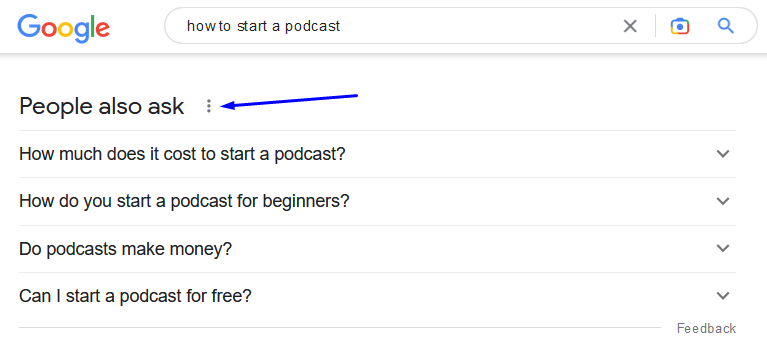
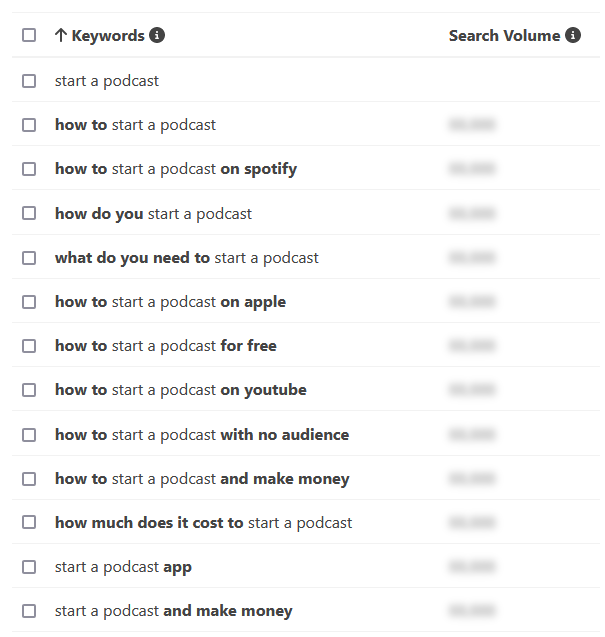
Search for a term in Google and check out the People also search for section:

People also ask blogging tip

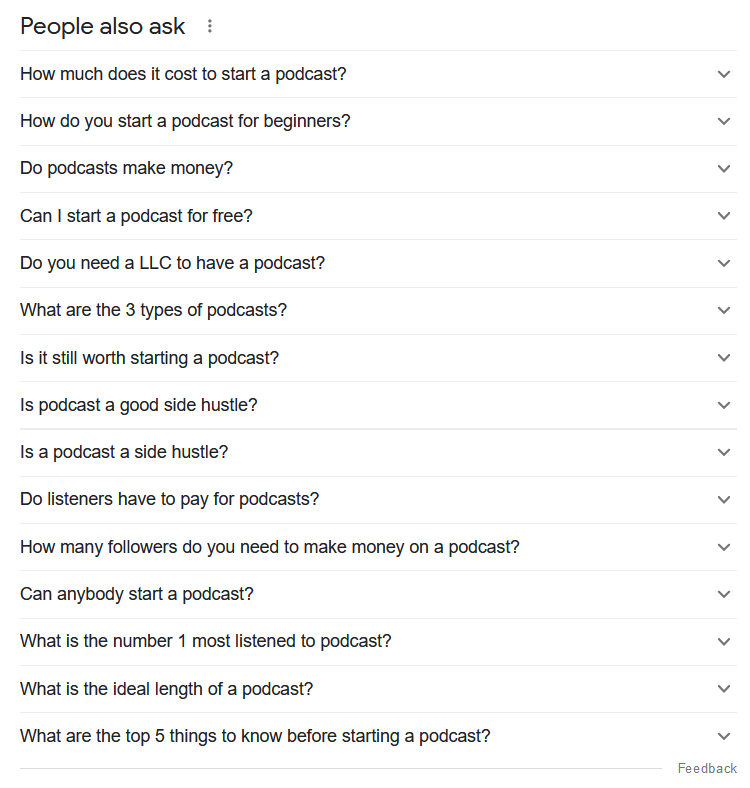
You can expand them to get even more results:

Expand people also ask

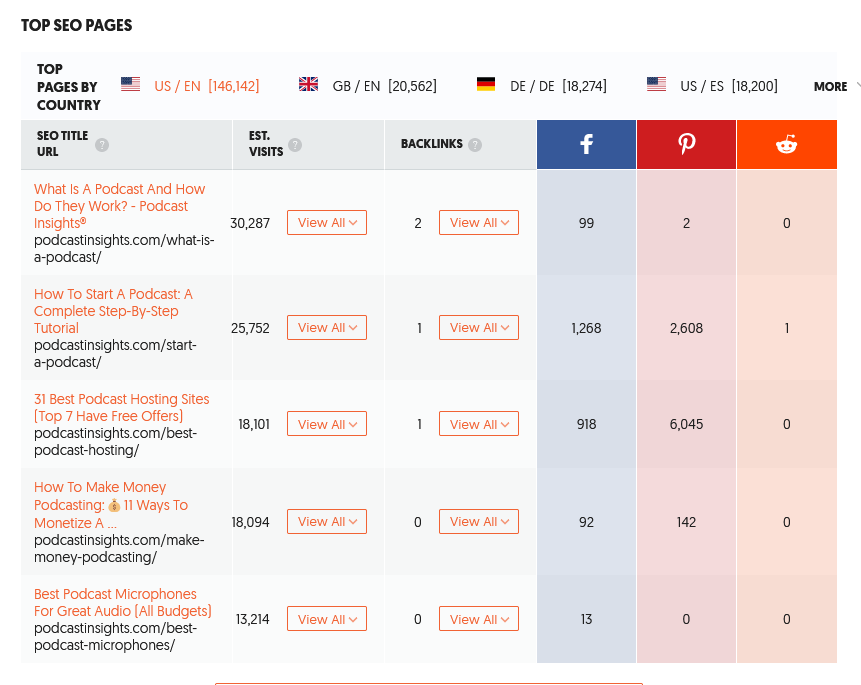
Reverse engineer your competitors’ keywords with a tool like Ubersuggest:

seo blogging tips

You’ll see some keywords the target site is ranking for, but you’ll need to create a free account for more results.

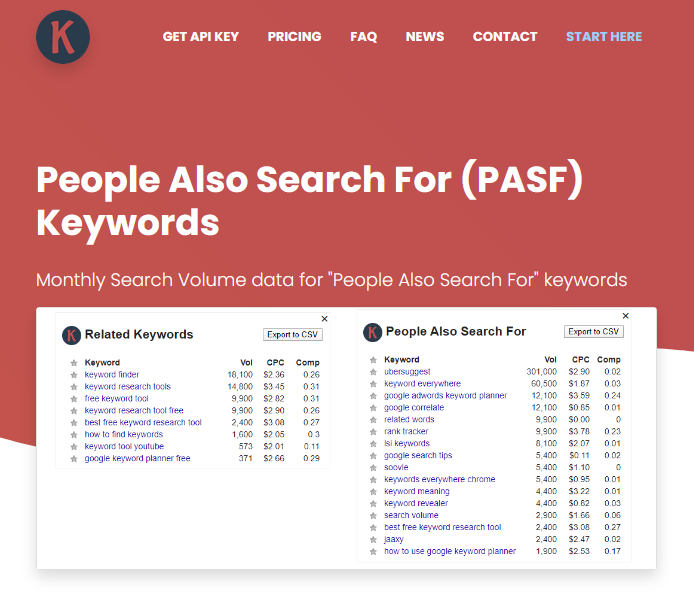
Find hundreds of keywords with Keywordtool.io. If you want to see the volumes, you need to upgrade.

keyword blogging tips

Another excellent tool for a new blog is Keywords Everywhere:

blogging tips for beginners

You purchase some credits, and it shows the keyword volumes everywhere in your browser.

As long as you know people are searching the content you post, the search volumes aren’t so important.

Just stick to lower volumes in the beginning, with a few high-volume keywords sprinkled in.

8. Follow Google’s Guidelines

With so many so-called SEO experts around, it can be hard to know which advice to follow.

Some will say you need a high word count per article, others rely solely on backlinks, and others jump on the newest trend such as AI writing tools.

How do you cut through all the noise?

You go to the source and that is Google.

If your most valuable traffic source is organic search, then it’s wise to know what their Google’s guidelines are.

Here are a few insights to keep you in the loop.

A great place to start is with their SEO Fundamentals. It starts with the basics of how to get your site on Google and how Google works, to in-depth tips on how to create helpful content.

Their crawling and indexing section covers all the technical side of things. This is the place to go if you want to know the difference between Sitemaps and robots.txt.

Lastly, Google blog is a good place to check now and then. They often release important updates, including this one on the recent changes to E-A-T.

9. Strategy vs Quality Content

Everyone talks about the importance of quality content, but without a strategy, you could be wasting a lot of potential.

Imagine this:

Every post on your blog is of the highest quality, but they don’t relate to each other.

Here’s the deal: successful blogging guides the reader from one post to another, teaching them how to make positive changes in their life.

Eventually, they’ve gotten so much value from your articles, they’re inspired to buy the thing you recommend. Or sign up to your email list, or buy your course.

To do this, you need a strategy.

A blog content strategy is where you plan out multiple posts that interlink with each other for optimum impact.

The purpose of effective content marketing is to raise the awareness of your readers. Awareness of their problems and what’s causing them.

When you can shift the perspective of your reader through strategic content, you’ll see substantial progress with your blog.

10. Build Internal Links

In the last blogging tip, I mentioned internal linking articles.

This is important for many reasons:

  • It’s how an effective content strategy helps guide your readers
  • It can also help keep people on your blog for longer
  • People will see you as an expert when you link to multiple posts
  • It builds topical authority in your niche, which helps your blog rank
  • Your blog can rank faster with more content and internal links

As you can see, internal links provide a ton of benefits.

In fact, it’s what helped Rob Scheerbath go from zero to 33,000 pageviews in 8 months.

Link Whisper is the WordPress plugin created by Spencer Haws. It helps you create internal links on autopilot.

You can get Link Whisper here.

11. Your Blog is a Business

If you want to take your blog seriously, then you need to treat it as a business.

You can’t just load up a WordPress site and post a few articles, hoping it’ll become an overnight success.

The blogging business model needs a few ingredients to make it work.

The first step is to define how you’ll monetize your blog. This could be through affiliate marketing or by displaying ads with Ezoic.

Or maybe you want to eventually sell a digital product or service.

Either way, knowing how you’ll monetize will help you define the next step, which is knowing the types of content to create.

For affiliate marketing, you’ll want to create reviews, product comparisons, and how-to posts to support these articles.

Display ad blogs work best with question-related articles, list posts, or recipe posts.

Or if you’re selling your own products or service, case studies and interviews work well for this type of monetization.

Lastly, you’ll need to follow a system to produce content consistently. The best way to do that is by using a blog content calendar.

When you treat your blog as a business, know the main pieces of the puzzle, and produce content consistently, you’ll find it hard to fail.

12. Use Copywriting Frameworks

Copywriting frameworks are powerful ways to structure words that motivate readers to take action.

You commonly see these frameworks used in sales copy, landing pages, Facebook ads, or social media posts.

And you can bake these into your blog posts to create highly engaging content.

Some popular copywriting frameworks include:

  • AIDA (Attention, Interest, Desire, Action)
  • PAS (Problem, Agitate, Solution)
  • BAB (Before, After, Bridge)

Not only do these frameworks grab your readers’ attention and keep them engaged, but they also help you organize your ideas and identify your target audience.

For example:

Let’s say you want to write a post about the benefits of a morning routine.

You could use the AIDA framework to engage the reader in your blog post and promote an online course at the end.

Because these frameworks use psychological principles, it makes it super easy for people to follow and it improves conversion rates.

13. Track Things to Improve

This blogging tip is essential if you want to make consistent progress with your blog.
There are key engagement metrics that you need to track to know if your blog is performing well.

Without this knowledge, you’ll never know what’s working and what isn’t.

In the beginning, it’s best to install the tracking and ignore it until you’ve posted enough content to see some traction.

A good rule of thumb is anywhere between 50-100 posts or when your blog starts getting 200+ visits per day.

Once you hit this threshold, you’ll want to keep posting content and monitor your numbers every month.

The most important numbers to track are:

  1. Impressions and Clicks in Google Search Console – An improvement in these metrics will tell you your content is being found and ranked in Google. And that people click the results.
  2. Pageviews and Average Engagement Time in Google Analytics – These metrics will help you see which content is performing best so that you can double down on them. You can also improve the content that isn’t doing so well and see if it makes an overall improvement.

14. Promote Your Blog

To increase the exposure of your blog posts, blog promotion is a great practice to adopt.

Relying solely on SEO traffic isn’t as effective.

What you need is a social media platform to promote your content.

This can be done in many ways.

For example, re-purposing your blog posts on social media is a good place to start.

Also, emailing your list when you publish new content will bring your blog more exposure.

Lastly, let other bloggers know you’ve linked to them. This is a great way to get your blog noticed by other experts in your niche.

And they might even start linking to your site in the future.

15. Be Consistent

Being consistent is possibly one of the most valuable skills to develop as a content creator.

Most people’s success comes from doing small things every day over the years, rather than aimless luck.

The issue with achieving success randomly or by luck is that it isn’t repeatable.

To get consistent success with your blog, you need to create systems that drive predictable results.

The easiest way to do that is to create big goals and break them down into tiny actions.

Then repeat these actions every day until you see positive results.

16. Update Old Blog Posts

This is a blogging tip that many people overlook.

Sure, some posts will perform better than others, but this doesn’t mean you have to completely abandon old content.

In many cases, underperforming content can be reworked from a different angle.

Or you can add more value to the post by adding more actionable steps.

Even content that once performed well might have gotten stale in recent months.

You can give these posts a new lease of life by adding images, internal links, or reformatting the text.

17. Read More Books

read more books

If you want your blog to stand out from the crowd, read more books.

What many bloggers do is share what they’ve learned from other bloggers or from content that is freely available on the internet.

The problem with this approach is that most blogs are eventually talking about the same things, with little originality.

To share a completely different perspective, you need new material.

And reading books will spark way more creativity, and you’ll find it easier to write content.

18. Diversify Income

We’ve all heard the phrase, “Don’t put all your eggs in one basket.”

And this goes for the income streams on your blog.

In the early days, it might be wise to focus on one revenue source so you stay focused.

But when you’re getting consistent traffic, you want to branch out.

So, if you started with affiliate marketing and you’re getting a decent amount of traffic, why not add display ads?

And if you’re doing both of these, how about offering a service or even coaching?

There are tons of ways to diversify income, read our post how do bloggers make money online to find out more.

19. Done is Better Than Perfect

Nothing is perfect in life. No matter how good you get, someone else can overtake you.

The point in following these blogging tips isn’t to reach perfection, only to help you improve and make progress.

It is far more effective to publish 100 mediocre articles in one year than it is to publish 12 perfect ones.

Why?

Because you will learn so much from publishing more content, even if they aren’t perfect.

With more content, you’ll start to see how Google works, and you’ll get an idea of which articles work best for you.

You’ll also develop the habits you need to become more consistent. And you’ll appreciate the process instead of trying to chase the next shiny object.

Check out what happened when Spencer published 1,000 posts in 12 months…

20. Make Posts Look Pretty

What is guaranteed to turn people away from your blog?

Ugly formatting, big walls of text, and no images.

That’s right, to keep people engaged with your content, you need to spice things up a little.

For best practices, follow these quick and simple guidelines:

  1. Use short 1-2 sentence paragraphs
  2. Break up text with subheadings, images, and bullet points
  3. Highlight important text with bold and italic font
  4. Add quotes or info boxes to grab readers’ attention

Try a combination of these and stick to the same theme throughout your blog. That way, people will know what to expect.

21. Add a Mixture of Content Types

Just like the last tip, different content types are essential for a highly engaged audience.

A variety of content types will generate more repeat visitors and can even help you rank better in search engines.

The most common types of blog content are:

  • How to’s
  • Product reviews
  • Listicles
  • Question posts
  • The ultimate guide

Adding different content types will make your blog more interesting and will stop you from getting bored.

Conclusion

There you have it. These 21 blogging tips will turn you into an expert blogger in record time.

Our advice is to start with a few tips and practice them multiple times.

Then when you develop the skill, your confidence will rise, and you’ll feel more comfortable trying more advanced tips.

Good luck.

By Steve Allen

Steve Allen is a niche site builder, writer, and all-around WordPress wizard. He enjoys personal development, entrepreneurship, double espressos, and making things work better than they did before.

Sourced from Niche Pursuits

Sourced from Medium

A tribute to overlooked innovators, good troublemakers, and remarkable women of the past, present, and future

Tim Wu’s memories of afternoon tea with Ruth Bader Ginsburg; and much more.

I Helped Pave the Way for Women Working in Trades” by

, writer and editor, in The Narrative Arc

Measuring the Gender Gap in Animated Films Using Computer Vision” by

, data scientist, in Better Programming

The Making of Moms Mabley” by Toni the Talker, content strategist, in Momentum

Margaret Scott, Rachel Peace, May McFarlane and Olive Hodgkin exercising in the yard of Holloway prison, 1913. (From the archives of the Museum of London)

The Birth of Surveillance Photography” by

, writer and artistic director

Women Invented the Internet, Too” by

, web developer and designer

David Lee/Netflix

Viola Davis on Playing the Powerful Ma Rainey” by

in ZORA

When Wise Women Were Witches” by

, bestselling author of ‘Women in White Coats’

Wikimedia Commons

The Woman Who Photographed America’s Darkest Days” by

in History of Women

A Dutch Queen’s Epistolary Smackdowns” by

Feature Image Credit: Image courtesy of the Women’s Museum of California, via Melissa DeVelvis’s U.S. women’s history syllabus

Sourced from Medium

By Andy Tattersall

Google’s ad revenue accounts for 80% of its income. Its biggest challenge yet might come from Microsoft’s Bing, currently the third biggest search engine behind Google and Baidu, and its new AI chatbot

Google’s dominance as the most visited website has been undisputed since it rose to prominence as the leading search engine in the early 2000s. However, that position could now be facing its biggest ever threat, with the arrival of new artificial intelligence (AI) chatbots such as ChatGPT, which can answer people’s questions online.

Google is countering by developing its own AI products. But its chatbot, Bard, didn’t have the most auspicious start. This month, a Google advert showed that Bard had provided an inaccurate answer to a question about the James Webb space telescope.

Plus, being the most popular website in the world comes with much more than prestige, namely incredible wealth from advertising revenue. But recent, sudden shifts in the technology landscape have created uncertainty for the likes of Google.

The advertising revenue stream that aided its success may no longer be a given. If AI chatbots such as ChatGPT begin carrying adverts, it could cut into Google’s leading position in the world of search engine advertising.

People’s reliance on Google has often been without question, so much so that people may not click beyond page one of a Google search results page. But the emergence of new AI platforms has shown that search as we know it does not have to end with a set of ordered links to websites. Instead, as the chatbots are showing, it can take the form of a conversation.

Such AI has not been without controversy. Concerns have been raised that it could lead to issues regarding plagiarism or even worse, the loss of jobs and income for a multitude of professions, from lawyers to journalists.

The chief executive of OpenAI, which developed ChatGPT, has said the company is developing tools to help detect text that has been generated by an AI. In a video interview, he added: “We hear from teachers who are understandably very nervous about the impact of this on homework. We also hear a lot from teachers who are like, ‘Wow, this is an unbelievable personal tutor for each kid’.”

Linguist and activist Noam Chomsky called the use of AI tools like ChatGPT “a way of avoiding learning”. Google meant we no longer needed to recall knowledge, we could just search for it. Now, with AI, the problem will be whether we can be bothered to question the answers we get back.

This paradigm shift in how we access and interact with knowledge goes much further than these concerns about how we search, and raises questions over Google’s revenue model, which has been instrumental in keeping it at the top of the technology pile.

Gateway to the web

Once-popular search engines such as Ask Jeeves, Lycos and Excite became the internet’s “also rans” as Google became synonymous with the word “search”. The agreement in 2000 between a then more popular Yahoo! website to host Google as the default search engine, ensured the search engine’s international status.

Being the gateway to the rest of the web came with one huge benefit through the capture of new internet-based advertising revenue. With every Google search result came the obligatory sponsored content which helped the company grow to where it is today.

Google’s annual revenue has continued to grow year-on-year because two decades ago it mastered search better than its aforementioned competitors. Its ability to combine this service so succinctly with income generation from advertisements is largely why it has been able to hold competitors like Microsoft’s Bing at bay.

If you want your company or product to appear as part of a web search, then Google is the place to be.

The company has invested that advertising income to build a massive infrastructure to handle billions of search queries in addition to hosting lots of popular cloud-based tools such as Google Mail, Drive and the acquisition of platforms such as YouTube. The video-sharing platform turned out to be a particularly fruitful investment in terms of generating advertising revenue.

Google’s sheer scale means its dominance will continue. But once advertising income starts to leech to new AI platforms that return results with sponsored content, it may find itself scaling back.

Masters of AI

A key to Google’s continued success will be mastering artificial intelligence and incorporating it into its services. But there are no guarantees for a company that has failed on at least five occasions to master the art of social media. For now, there is no doubt that Google can handle the traffic, it is really a question of whether it can deliver the goods.

Whether new contenders such as ChatGPT are anywhere close to handling the number of queries that Google does is open to debate. The evidence is that they are not, as ChatGPT had various issues earlier in the year when it was unable to accept new users or run queries due to excess demand.

ChatGPT is the platform that has gained most of the media attention of late. However, it might be established rivals like Bing that ultimately provide Google’s biggest headache. Bing is the third biggest search engine globally behind Google and Baidu.

That position could change with the launch of its own AI search, which will no doubt capture more income for an established company. Unlike Google, Microsoft does not have the same reliance on advertising revenue thanks to its business model, which is diversified across software, hardware and cloud computing.

According to the consumer and market data service Statista, Google’s income from advertising revenue has fallen in recent years, but it still accounts for 80% of the company’s income. Many might consider Google to be a search engine but it is largely an advertising company that was built on the back of search.

Without this advertising revenue, it could not have achieved many of its previous successes such as acquiring YouTube in 2006, or helping develop the Android mobile platform. Google’s failure to launch multiple social media platforms highlighted the company’s frailties and left the door open for the likes of Facebook and its parent company Meta to eat into that massive revenue pie.

Facebook too, will have concerns that Bing and new start-ups will lure marketers away to what is likely to be a slew of new AI knowledge tools. However, if Google fails to master AI search in the way Lycos and Excite failed to build upon their early success, we might find ourselves Googling a lot less and chatting much more. – Rappler.com

This article originally appeared in The Conversation.

By Andy Tattersall

Information Specialist, University of Sheffield

Sourced from Rappler