Author

editor

Browsing
By Chad S. White

Here’s what happened after I signed up for over 100 promotional emails. There were some surprises.

The Gist

  • Forget something? Testing out 100 email signups, more than 8% of brands didn’t send a welcome email, missing a valuable opportunity to deepen the relationship with their new subscribers through promotions, education, profiling, expansion or evangelism.
  • Send a series. Nearly half of brands sent a welcome series, with subsequent emails including reminders to use discounts, explanations of brand strengths, pitches for loyalty programs, encouragements to download mobile apps or behind-the-scenes looks at their organizations.
  • Welcoming fails. Some brands missed the mark by using senseless or overly corporate sender names in their welcome emails, while others failed to seasonally optimize or personalize their messages, or had quality control problems.

I shared takeaways from having signed up for promotional emails from 100 brands in my last column, so for this one I want to share what happened next: I received a lot of welcome emails!

But that’s not to say there weren’t some surprises. There were. Here are my key takeaways and the major opportunities I see for brands when it comes to crafting better onboarding experiences.

1. Shocking Number of Brands Didn’t Send a Welcome

More than 8% of the brands didn’t send a welcome email. Instead, they just dropped me into their promotional mail stream. Not only is that slightly jarring, it passes up a big opportunity to deepen the relationship in a way that your promotional emails just can’t.

Here are the five principle messaging strategies for welcome email calls-to-action:

  1. Promotion: trying to drive a purchase through incentives or product promotions.
  2. Education: trying to deepen brand affinity and loyalty by educating the new subscriber about your brand’s history, products, services, values and social causes.
  3. Profiling: trying to to gather more information about the new subscriber so the brand can send more relevant messaging.
  4. Expansion: trying to get the new subscriber to connect with the brand through additional channels.
  5. Evangelism: trying to get the new subscriber to refer their friends or colleagues.

For most of those, messaging them immediately after signup is the ideal time to drive action and establish a healthy long-term relationship.

2. Nearly Half of Brands Sent a Welcome Series

In contrast to brands that didn’t send even one welcome email were those at the other end of the spectrum that sent a welcome series of two, three or even more emails.

What were the subsequent emails in those welcome series about? Brands included:

  • Reminders to use the discount they included in their first welcome, which was very common for retail and ecommerce brands.
  • Explanations of their brand strengths in terms of what’s unique about their products and how they do business, which was popular among direct-to-consumer brands.
  • Pitches to join their loyalty programs, which was also common for retail and ecommerce brands.
  • Encouragements to download their mobile app.
  • Behind-the-scenes looks at their organizations, which was most common among service-oriented brands.

Surprisingly, none tried to collect any preferences from me or profile me in any way using polls, surveys or quizzes. That’s a missed opportunity, as that kind of zero-party data can power personalization and segmentation during a time in the relationship when there’s little to no first-party data yet.

But the bigger opportunity here is that if you’re only sending a single welcome email, consider testing ways to expand it into a series.

3. Sender Names Could Have Been Better

For some brands, their welcome emails felt like they were sent by a different department or marketing group because of the sender names they used. For example, some brands had senselessly different sender names from the one used for their promotional emails, adding “Inc.,” “Company,” and “USA” to the end of the brand names for only their welcome emails. It made their welcome emails appear unnecessarily corporate and stiff.

That’s not to say that there aren’t opportunities to extend your sender name with purpose. Extending your sender name for your triggered emails, in particular, helps them stand out — not only from your other emails, but from all the other emails in your subscribers’ inboxes. Yet, only two of the brands I received welcome emails from extended their sender name. One used “BrandName Welcome” and the other “BrandName | Welcome.”

If you’re not currently extending your from name for your welcome emails, consider testing it and seeing how much of a lift you get. Adding an extension like “Welcome” is a sensible place to start.

Again, avoid overly corporate-sounding extensions. For example, some other welcome emails I received used sender name formats such as “BrandName Account,” “BrandName Account Services,” and even longer “BrandName Account Member Services.” Another used “BrandName E-mail Subscriptions,” with the dated hyphenation of email. While all of those are descriptive and accurate, they’re not particularly friendly sounding. They seem like they were written by lawyers, not marketers.

4. And There Were Smaller Opportunities to Improve, Too

In addition to those three big areas for improvement, brands sent welcome emails that…

  • Weren’t seasonally relevant. Only one brand seasonally optimized its welcome email, adding in imagery and content to match the season in which I signed up.
  • Rarely used emoji in their subject lines. 😢 Only 13% of brands used emoji in any of their welcome email subject lines. That seems a bit low, given their usage in promotional emails.
  • Included little personalization. Many brands required my name when I signed up, but few used it. For example, only 3% of brands used it in the subject lines of their welcome emails. First-name personalization isn’t great personalization, but if you ask for my name, use it.
  • Had quality control problems. One brand’s welcome email was sent twice, and another’s contained multiple broken images (but thankfully lots of HTML text, too). Not a good look.

Final Thoughts on Welcome Emails

Your welcome email — like all of your automations — are living campaigns. They need regular care and attention.

In fact, this goes double for your welcome emails since they are pivotal to making a good first impression and setting the tone for the emails that follow. If you haven’t reviewed your welcome emails lately, sign up for your email program with fresh eyes and see what improvements you can make or test.

By Chad S. White

Chad S. White is the author of Email Marketing Rules and Head of Research for Oracle Marketing Consulting, a global full-service digital marketing agency inside of Oracle.

Sourced from CMSWire

By Abhik Sen

Bots that chat with you and help you buy stuff are the new rage in e-commerce

For those of us who love buying fresh vegetables from the neighbourhood store daily, the Covid-19-induced lockdowns were a stressful time. Using WhatsApp as a notepad to make lists of things one needed to buy—which many people were prone to do—one had to first send the list to the grocer on the messaging app and hope that he checked it before the fresh produce was sold out; next, one had to wait for the grocer to get back with the bill and then make the payment via an e-wallet or UPI. Sometimes, one would even have to call the grocer to confirm that the payment was made, and then wait for the delivery to happen. The stress then led to many daily shoppers, like a relative based in Kolkata, to make—horror of horrors—weekly purchases.

After the lockdowns were lifted, the daily shoppers were back at their favourite neighbourhood grocery stores. My relative, a retired corporate executive, too, went back to his old routine, but a service he started using recently is causing some disruption in his habits. The service in question is JioMart on WhatsApp, which helps him order groceries and provisions in an interactive and seamless manner. And the convenience has convinced him to give his daily morning trips to the local grocer a miss.

But grocery is just one way you can use the messaging app. According to Ravi Garg, Director of Business Messaging-India, at Meta, you can also buy tickets for the Bengaluru metro on WhatsApp, and scan the e-ticket to board the train; and even book an Uber cab! These types of transactions on messaging apps are called conversational commerce, a term believed to have been coined by Chris Messina, the inventor of the hashtag, in 2015.

What exactly is conversational commerce? According to experts, conversational commerce is shopping on a messaging platform, where a chatbot engages in a conversation with a customer and helps her to buy a product, which is usually a small-ticket item. According to Prashant Garg, Technology Consulting Partner at EY India, conversational commerce usually involves products like apparel, fashion products, FMCG, fresh foods or other consumer goods. He adds that if a generative AI-powered chatbot starts conversing with customers, a third of them end up buying a product. “The bot has methods and a mechanism built in to engage with customers and keep them engaged till the decision to buy is made,” he says.

According to independent data platform Statista, total spending over conversational commerce channels worldwide will jump to $290 billion in 2025 from $41 billion in 2021. And while the market is still nascent in India, it has huge potential. According to Akhilesh Tuteja, Partner & Head of Technology, Media and Telecommunication at KPMG in India, India is home to the largest consumer base for the biggest conversational commerce enablers. “India is home to more than 600 million smartphones with one of the cheapest internet connections in the world. This infrastructure, along with the reach provided by these platforms and vernacular accessibility through voice commands, sets the right platform for Indian as well as global brands to penetrate the Tier II and Tier III cities. The new generation in these cities is more aspirational, tech-savvy and has increased disposable income,” he says. Although India is a long way from China, it still has 200 million-plus online shoppers, 65 million-plus MSMEs and $100 billion in gross merchandise value (GMV) today—the total addressable market for conversational commerce is huge, he adds. EY’s Prashant Garg agrees. “In two years’ time… we will be nearly a quarter of whatever China is now,” he says.

No wonder that for Meta, conversational commerce, or ‘business messaging’ as the company calls it, is its next big bet. In India, its tie-up with JioMart is significant since WhatsApp had more than 500 million users in India per an IT ministry release in February 2021, while JioMart—part of billionaire Mukesh Ambani-led Reliance Industries—has more than two million merchant partners. The tie-up was a “lighthouse example” for the world, Nicola Mendelsohn, Vice President of Global Business Group at Meta, had told BT in an earlier interaction, adding that all types of businesses were already working organically on WhatsApp.

Ravi Garg says that since the roll-out of the service in late August, a lot of businesses have approached Meta and shown interest in building a similar experience. “We built the business platform—WhatsApp—and it can enable any type of business on the platform,” he says. Business messaging can be used across all of Meta’s platforms, and Ravi Garg says that the company is looking at three ways to monetise its messaging platform. First is the WhatsApp Business App, which is free to use for small businesses; now, Meta is planning to add a subscription layer, which will give users access to advanced features. Second, its WhatsApp Business Platform API, which is for medium and large businesses. Here, businesses are charged for conversations they have with customers. The third revenue stream is click-to-messaging ads, wherein, by clicking on an ad on Facebook or Instagram, one lands on a messaging conversation.


Meta’s bullishness on business messaging in India is backed by research. According to a Kantar survey commissioned by Meta in April 2022, more than 70 per cent of Indians surveyed said they prefer to message businesses rather than send emails, call or visit their website, while 75 per cent said they are more likely to do business with/purchase from a company that they can contact via messaging. The survey adds that 86 per cent of adults in India message a business at least once a week, considerably higher than the global average of 66 per cent.

Ravi Garg says that business messaging provides customers with a personalised experience, something that shopping online generally lacks. EY’s Prasahant Garg adds that if an AI-powered chatbot is at work, it can provide customers with a personalised experience that even a brick-and-mortar store is unable to, since the bot has to engage with a single customer while a shop assistant has to attend to many. He adds that AI-powered chatbots can be added to existing websites or apps to drive customer engagement. This is done by using turnkey solutions powered by conversational AI that uses data, machine learning, and natural language processing to imitate human interactions, recognise speech and text inputs, and translate their meanings across languages. For instance, software giant IBM has such a solution called IBM Watson Advertising Conversations, which helps facilitate personalised AI conversations with consumers virtually anywhere online.

While the space is set to grow rapidly in India, it is not without its challenges. Tuteja of KPMG in India says that customising and training a conversational AI product in a country with around 22 official languages along with the required accuracy, is possibly the biggest challenge. The next challenge is enabling security and privacy for the users of the conversational AI product in a manner compliant with the local laws, he says, adding that ensuring human bias and examples of unethical behaviour from the training data do not pass into the AI is another big challenge.

Meta’s Ravi Garg says that for WhatsApp, user privacy remains at its core, despite it being open for business. “Messaging is the best way for people and businesses to connect, and India has led that transformation on WhatsApp. The scale, use-cases, and new buying experiences from the region are things we are really excited to see. What’s happening on WhatsApp in India is inspiring our customers all over the world. With business messaging as a top priority for Meta, we’re committed to helping businesses of all sizes in India to build valuable journeys on WhatsApp and keep innovating in this space,” says Matt Idema, VP of Business Messaging at Meta.

As for my Kolkata-based relative, he is happy with the convenience afforded by technology as it offers him more time for other pursuits. Wonder what other chatbots he will start conversing with next.

By Abhik Sen

@abhik_sen

Sourced from btMAG

By Jessica Wong

By combining PR with branding, content creation, advertising campaigns and social media outreach, companies can generate marketing results and boost their business growth.

Public relations (PR) is essential to any successful strategic marketing plan, but is your business making the most of its PR efforts? An effective PR campaign not only delivers media coverage in your target publications. In addition, optimized PR feeds into all other analog and digital marketing efforts to help your business connect with its audiences, wherever they are.

Why PR is so powerful

Even in the age of digital marketing, public relations campaigns are based on pitching to the media. When just a few years ago, PR professionals focused on print and broadcast media only; they are now extending their efforts to include online-only publications and leading bloggers.

The goal is simple: PR professionals are working with journalists and other content creators to add credibility to the brand they are representing. Media coverage not only creates exposure for the brand. It also adds a layer of credibility and trust that exceeds what other elements of a brand’s marketing strategy can provide.

According to the Institute for PR, audiences consider so-called earned media to be more credible than other sources of information. This credibility is critical to brand development, whether you want to build brand awareness or establish thought leadership in your field. Earned media is the result of effective PR.

The importance of PR is reflected in the industry’s continued growth. PR revenue is expected to grow worldwide from $88 billion in 2020 to $129 billion in 2025. PR agencies in the United States generated $14.5 billion in revenue in 2020. PR grew during the pandemic when advertising and the marketing industry as a whole contracted.

How to optimize the outcome of PR campaigns

To optimize the results of PR campaigns and maximize the benefits of public relations for a brand, marketing and PR professionals need to recognize the strengths of PR. Although online and offline news coverage can support a brand in the short and the long term, PR thrives over time. In addition, PR campaigns have more impact when connected to other elements of a company’s marketing strategy.

Focusing on the long term

Establishing successful media relationships takes time. PR experts understand which publications are interested in covering which brands and consistently pitch relevant stories to their media contacts. They understand that not every journalist will pick up every press release or feature suggestion. Rather than blanket-emailing press releases, PR pros get to know the interests of the most relevant journalist and pitch stories that are likely to make the cut.

The effort of relationship-building and consistency pays off when a brand receives attention in local and regional media outlets, eventually even getting the attention of national media. Industry-specific publications can also offer a great starting point for PR campaigns.

PR is best used as a mid to long term component of a brand’s marketing strategy. Allowing time to establish and nurture media relationships plays to the strengths of PR. Of course, there may be situations when immediate crisis communications are critical to protecting a brand’s reputation. But in most cases, PR excels as part of a long-term strategy.

Combining the strengths of PR with other marketing activities

Despite its undoubted strengths, PR alone is not enough to achieve all of a company’s business goals. Expecting a single PR campaign to increase credibility, drive web traffic, establish thought leadership within an industry and drive foot traffic to local branches is unrealistic.

Saying that, once marketing teams combine PR efforts with other strategic marketing activities, they will soon see the desired results. Combined with consistent brand messaging, for example, PR can improve brand perception among audiences.

While public relations does not necessarily result in immediate sales, stories pitched to the media can effectively educate the public about specific products and services. Many online publications are happy to link to a company’s website, thus helping search engine optimization (SEO) and local search rankings.

How PR, paid advertising and social media work together

Where PR is ideal for improving a brand’s image in the long term and connecting with audiences through a third party, paid advertising offers short-term, data-driven opportunities.

A strategically planned program of paid adverts can immediately increase brand or product exposure. Since the advent of digital marketing channels, it has become easier to reach highly targeted audiences, increasing the effectiveness of campaigns. Real-time campaign performance data allows marketers to iterate messaging and campaign design on the spot, further improving the effectiveness of their approach.

High-quality visual content, including images and videos, can be compelling in local newspapers, broadcast outlets and online channels. By streamlining advertising and PR messages, paid and earned media start working hand in hand to reach users of publications they already enjoy and, more importantly, trust.

Social media has been another fairly recent addition to a marketing team’s choice of channels where they connect with their audiences. Like traditional media, social media offers a range of opportunities, including paid, earned and owned coverage.

While earned coverage continues to come with the highest level of credibility even on social media, a company’s owned media channels offer another opportunity to share the results of PR efforts. By sharing stories that have been published about the brand, marketers are allowing the third-party credibility of those stories to reflect on the brand.

Existing followers will feel reassured in their choice of brand followership, and sharing stories from credible sources may catch the interest of new potential audiences.

Bringing it all together

Successful marketing relies on a solid strategy that joins the strengths of PR and other marketing activities. Combining PR with the power of branding, content creation, advertising campaigns, and social media outreach allows companies to generate the marketing results and overall business growth they are looking for. On its own, PR is powerful, but in combination with other marketing activities, public relations become unbeatable.

By Jessica Wong

Entrepreneur Leadership Network Contributor

Founder & CEO of both Valux Digital and uPro Digital. Jessica Wong is the Founder and CEO of both Valux Digital and uPro Digital. She is a digital marketing and PR expert with more than 20 years of success driving bottom-line results for clients through innovative marketing programs aligned with emerging strategies.

Sourced from Entrepreneur 

By Ken Leaver

The content-to-commerce strategy for ecommerce businesses is a relatively recent model, but I see it shaking up the industry in a big way.

Direct-to-consumer (D2C) businesses that lean heavily on fulfilment by Amazon (FBA) aggregators, in particular, could benefit big time from the model. Let me explain why.

How does it work?

The idea with this new model is that you own both access to the customers – i.e. the content – and the products to monetize it.

In typical D2C ecommerce, you own some brands that you sell on a combination of platforms, such as your own site, social channels and marketplaces. FBA aggregators like Branded and Thrasio are highly dependent on marketplaces.

Typically, though, their longer-term goal is to increase the ratio of products sold on their own channels and reduce reliance on Amazon. However, it’s difficult to do this profitably because customer acquisition costs (CAC) are too high with direct acquisition marketing.

Part of the problem is how these companies don’t have this kind of competency, so they need to learn it. D2C companies typically need to drive CAC down by getting better at content marketing and social media as well as building a community of users, among other skills.

With the content-to-commerce model, they solve this from the beginning by owning the customer channel/communities – media assets, access to influencers, and more – from the jump.

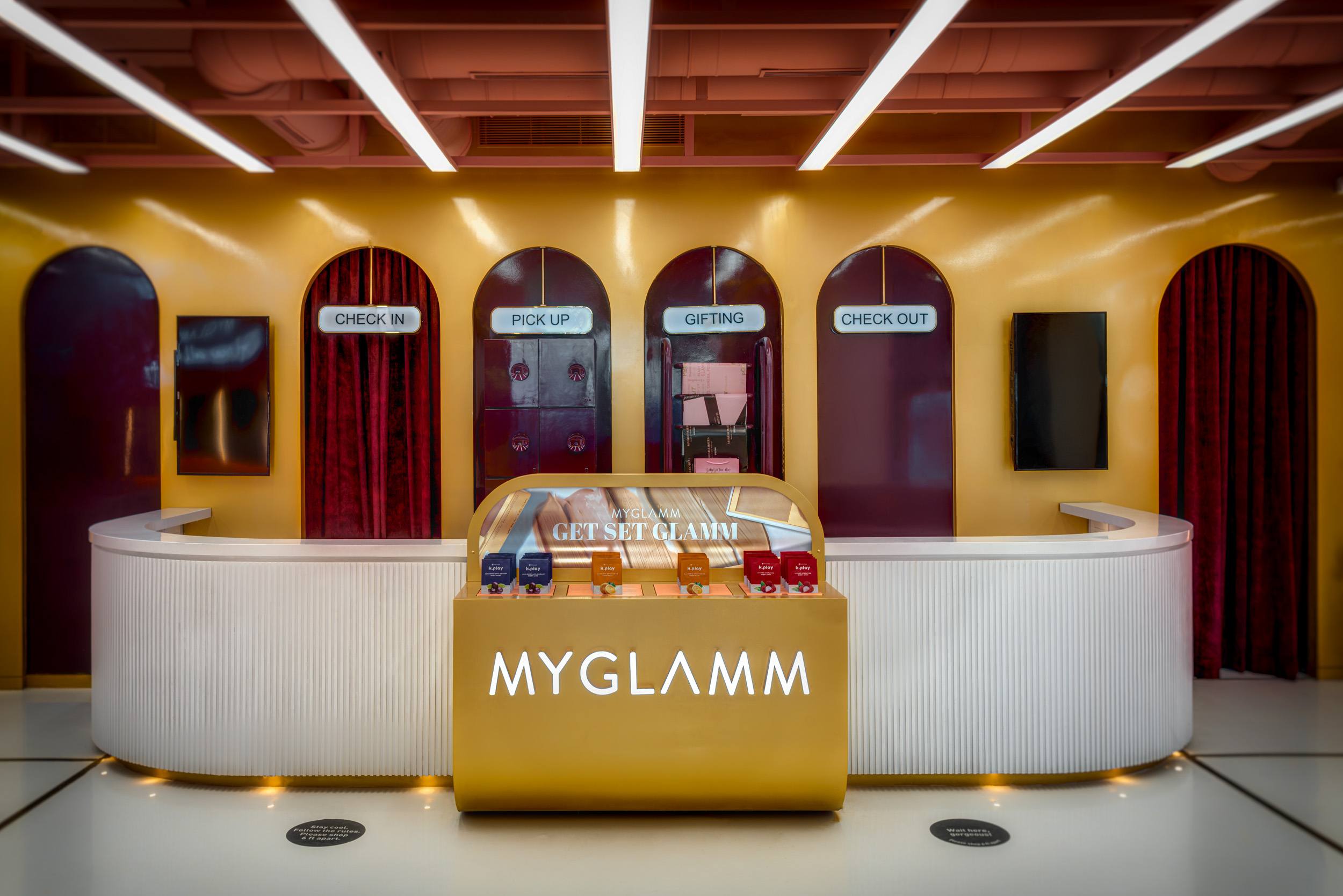
The Good Glamm Group

The Good Glamm Group is one of the first large content-to-commerce companies and is considered a pioneer by many in the industry. The firm has raised more than US$250 million to date and its last valuation was over US$1 billion.

Darpan Sanghvi founded the company – then known as a D2C business called MyGlamm – in 2017. But its CAC was too high, so the company experimented with content and acquired POPxo, an influencer marketing platform, in 2020.

The Good Glamm Group is structured into three core units:

  • Good Brands: Includes D2C beauty and personal care brands like MyGlamm, Organic Harvest, etc.
  • Good Media: Includes digital media brands that generate more than 4 billion monthly impressions and have over 2 million unique users
  • Good Creator Co: Includes influencer platform with more than 250,000 creators

In the past couple of years, the company has acquired 12 brands, which I believe puts it close to the aggregator model. The synergies and scale advantages that it aims to give to these brands are almost identical to the approach of aggregator firms.

Photo credit: Good Glamm Group

Good Glamm has also acquired digital media firms like Tweak Media, which has 6 million monthly active users and 15 million monthly impressions. It is now part of Good Media, joining other media assets in the group such as ScoopWhoop.

Form communities via content

Half a year ago, I came to the conclusion that D2C ecommerce brands should begin with content/community first. It means they should use content to build a community of followers via social media and then build brands that would resonate with their followers.

Why? Because this addresses the high CAC problems companies face later when using paid channels. It also prevents overreliance on marketplaces.

Influencers and media assets have the opposite problem. They have users and impressions, but the channels that they have to monetize – e.g. influencer platforms like Grin – often take a big cut. It makes sense for them to do away with an intermediary and deal directly with brands, particularly when they can collaborate with a specific set of brands.

Why aggregators will evolve toward this model

I’ve worked with two different FBA aggregators – Branded and Rainforest Life – over the past couple of years, so I have a decent sense of how they think and operate.

Their long-term goal is to build strong brands and a loyal community of users to wean themselves off the Amazon needle. As these FBA aggregators grow, they invest in more sophisticated marketing teams that can work with influencers and gain virality on social media.

But those efforts typically take time to improve, and they’ve already acquired a bunch of D2C brands with significant sales volumes in the meantime. Their content strategy is playing catch-up to make D2C channels such as Shopify and social selling more relevant than their Amazon sales.

This is why I think we’ll soon see large FBA aggregators like Thrasio move toward the content-to-commerce model in the coming years. It just makes too much sense.

Feature Image Credit: Amazon

By Ken Leaver

An American ex-strategy consultant that found himself in Lazada in 2014 and just loved the region so much he decided to stay. Now I call myself a ‘product guy’ and freelance while living in Bangkok.

Sourced from TechInAsia

Leaning into the language of cinema.

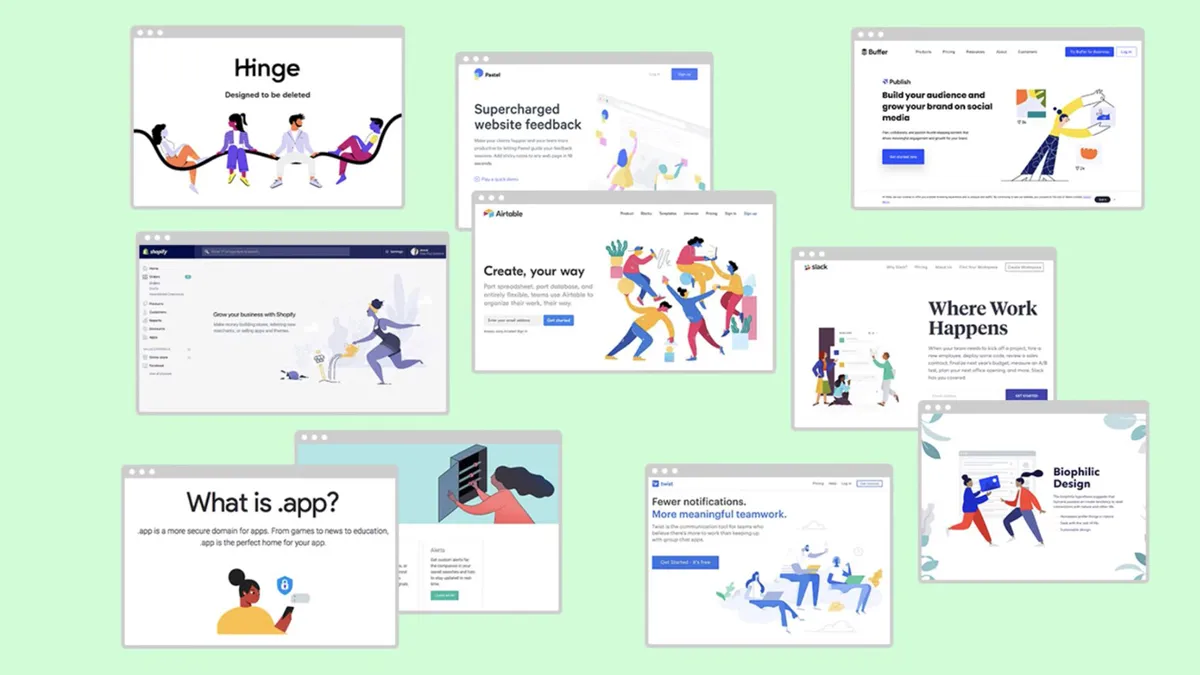
It can sometimes feel like big brands all are all working from the same design playbook. There was a time not so long ago when pretty much every brand used the same gangly-armed cartoon people (a style officially known as ‘Corporate Memphis’). So it’s refreshing that Netflix’s latest visual identity steers clear of tech’s obsession with one-dimensional vectors in favour of something much more cinematic.

The brand has unveiled a set of new iconography designed by Koto Studios, and not only does it lean in to the brand’s existing colour scheme, but it’s also just plain fun. (Looking for more design inspiration? Check out our roundup of the best logos of all time.)

Netflix illustrations

(Image credit: Koto Studio)

Koto (opens in new tab) says it was tasked to inject the language of cinema into the Netflix product experience. “We evolved their previous system by connecting iconography, typography, and illustration to roots within the cinematic universe, referencing effects and techniques reminiscent of the film-making process—in a way that feels immediately Netflix.”

Netflix icons

The new illustrations are delightful (Image credit: Koto Studio)

At the centre of the new visual language is a series of illustrations depicting (often surreal) objects in a delightfully vapour wave palette of purples and reds. Compared with all that Corporate Memphis (opens in new tab), this looks positively cutting-edge, even though the aesthetic is deliberately retro.

“We steered clear of the over-saturated, over-done, one-dimensional approach to graphic language typical of the tech and streaming worlds,” Koto says, “by defining a style that speaks to film enthusiasts, and feels inherently Netflix while remaining true to their core values: pioneering, welcoming, and always stimulating.”

Web design

We’ve seen enough ‘Corporate Memphis’ over the last few years (Image credit: Mitchell Wakefield on Twitter)

Along with the illustrations, the new visual identity includes more varied sizes and weights of the company’s Netflix Sans typeface, designed to “remain legible in functional applications, and flex to bold, cinematic title cards, genre-specific, or thematic comms.”

It’s certainly refreshing to see a big tech brand opt for a different visual style. Much like Burberry’s latest rebrand, Netflix’s new look is both retro and futuristic at the same time.

Feature Image credit: Koto Studio

By

Daniel Piper is Creative Bloq’s Senior News Editor. As the brand’s Apple authority, he covers all things Mac, iPhone, iPad and the rest. He also reports on the worlds of design, branding and tech. Daniel joined Future in 2020 (an eventful year, to say the least) after working in copywriting and digital marketing with brands including ITV, NBC, Channel 4 and more. Outside of Future, Daniel is a global poetry slam champion and has performed at festivals including Latitude, Bestival and more. He is the author of Arbitrary and Unnecessary: The Selected Works of Daniel Piper (Selected by Daniel Piper).

Sourced from Creative Bloq

By Matthew Wallaker

Not everyone likes the idea of handing over their data for advertising purposes. Here’s how to turn off advertiser ID on Windows.

It turns out that it’s getting harder to use your computer without anyone tracking your activity. And Windows plays its part in showing you “relevant” or “personalized” ads by using the Advertiser ID.

But what is Advertiser ID, how does it work, and how can you stop it from tracking your activity?

What Is Windows Advertiser ID?

Advertiser ID is a unique code, assigned by Windows for every user on a device. This way, Windows can show different ads for different people that log in on the same device.

When the feature is enabled, it works similarly to browser cookies, as advertising companies and app developers can use the ID to collect data and display personalized ads in the apps that you’re using. For example, location-based apps will access your location and show ads for nearby businesses.

Now, if you’ve decided to turn off advertiser ID, we’ll show you several methods you can use. Before going through the instructions below, check if your Windows account has administrative rights, so you can change your system settings.

1. Turn Off Advertiser ID During Windows Installation

You can turn off the Advertiser ID feature right from the start. When installing the Windows 11 operating system, Windows lets you choose your privacy settings. All you have to do is turn off the toggle for Advertiser ID.

Now, if you’ve missed the chance when setting up Windows 11, you can still turn it off using the methods below.

2. Turn Off Advertiser ID From Windows Settings

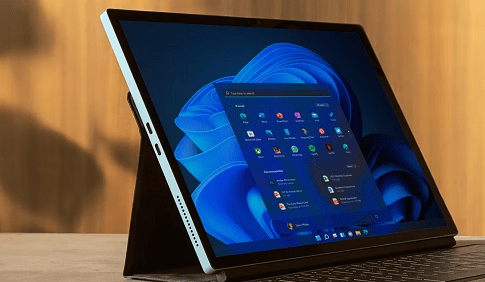
Windows 11 is big on privacy and allows you to adjust your settings to control your data easily. Here’s how you can disable the advertising ID feature:

  1. Press Win + I to bring up Windows Settings.
  2. From the left pane, select Privacy & security.
  3. Head to Windows Permission and click General.
  4. Turn off the toggle next to Let apps show me personalised ads by using my advertising ID.
Disable advertiser ID from Windows Settings

3. Turn Off Advertiser ID With Group Policy

Windows Group Policy is another tool that helps you manage your user and system configuration. Here’s how you can use it to disable advertiser ID:

  1. In the Start menu search bar, search for group policy and select Run as administrator.
  2. In the Group Policy window, head to Computer Configuration > Administrative Templates> System > User Profile.
  3. In the right pane, locate and open Turn off the advertising ID.
  4. Select the Enabled option.
  5. Click Apply > OK to save your system settings.
  6. Restart your computer.
Turn off Advertiser ID trough Group Policy

4. Turn Off Advertiser ID With the Windows Registry

You can also edit the Windows Registry to turn off the advertiser ID.

  1. In the Start menu search bar, search for registry editor and select Run as administrator.
  2. In the Registry window, navigate to HKEY_CURRENT_USER > Software > Microsoft > Windows > CurrentVersion > AdvertisingInfo.
  3. In the right pane, open the Enabled key.
  4. Set Value data to 0.
  5. Click OK and restart your computer.
Turn off Advertiser ID through Windows Registry

If you’ve changed your mind and want Windows to show relevant ads again, go through the above steps again and set Value data to 1.

Does Windows Show Fewer Ads With Advertiser ID Turned Off?

Turning off the advertiser ID doesn’t stop Windows from displaying ads. According to Microsoft, disabling the advertiser ID doesn’t reduce the number of ads you’ll see, but it will make them less relevant to you.

Also, Windows will use the data to display ads on the apps you’ve downloaded from Microsoft Store. For any other apps, you should check their privacy settings and stop them from collecting data about you.

Stop Microsoft From Using Your Information

The truth is, you can’t make your activity invisible while using a device that’s connected to the internet. However, turning off Windows advertiser ID will help you protect your privacy.

Protecting your data isn’t as easy as you might think, but there are a few tools you can use to protect your online privacy, no matter which device you’re using.

By Matthew Wallaker

Sourced from MUO


By Sam Anderson

While we’ve recently lost some high-street retail brands, many are still kicking. How are they surviving – and how will they flourish amid continuing permacrisis? We asked 7 commerce aces from The Drum Network.

During the height of the Covid-19 pandemic, there was plenty of well-justified concern about the continued existence of brick-and-mortar retail. Since then, we’ve seen evolutions in the shapes of (and footfalls in) towns and cities; accelerated hybridizations like smart stores; and, despite an IRL bounce-back, continued shifts toward online retailers.

What are the features of this evolving environment that marketers should be paying the closest attention to? In the long run, is brick-and-mortar dead – or an indelible part of life? Read on for our experts’ answers.

Martin Ryan, vice president of retail, EPAM

Retailers must urgently adapt physical spaces to meet current and anticipated sales demand. This often involves a multi-year effort due to lease inflexibility.

The future will see the development of new store formats, heavily edited store assortments, and some closures. This includes fewer but bigger stores that mix product and experience; a proliferation of smaller stores in convenient locations; and, for some sectors, automated and cashier-less stores and collection points. The store mix will be designed to work on an omnichannel model.

Retailers will continue to experiment with live-stream shopping and remote advisory to ensure the attention of new customer demographics.

The shift from physical to less profitable online sales will cause retailers to scrutinize marketing spend that promotes these channels. They will seek compensating benefits, like retail media revenues. Understanding store conversion rates enable marketers to compare online and offline ROI and build a mix of advertising spend.

Retailers will adopt customer data platform projects, implementing technology to survive in a post-cookie world, where tiny signals from consumer devices and behaviour are processed by AI models to provide probabilistic knowledge about individuals.

Martin LeBlanc, architect & principal partner at Sid Lee Architecture

From a design perspective, brick-and-mortar retail spaces in 2023 need to centre excitement. What’s the incentive to visit? What sort of memories will be created? For Concepts in New York City, for example, we designed a VIP store-within-the-store to offer guests an experience that wouldn’t be possible online.

There are plenty of opportunities for retail spaces to be both reflective of and supportive of the communities they’re located in. This means the prioritization of accessibility but also the inclusion of elements that reflect the city and its people. Something as simple as integrating the work of a local artist goes a long way in cultivating a sense of connection, which is of course the goal when competing with the digital world.

Carly Johnson, vice president, group director of strategy (North America), Momentum Worldwide

Brick-and-mortar retail is in a strong position to not only survive the future but embody what shoppers have always loved about ‘retail therapy’. Looking at the facts alone, despite continued growth in online shopping, in-store still accounts for around 80% of purchases. This past year, brick-and-mortar retailers opened twice as many stores as they closed.

The volley between in-store and online has crystalized how shoppers want to shop. Hybridized shopping has become the sweet spot for most, leveraging the convenience and reach of online with the speed and experience of in-store. There’s a tremendous benefit to mastering this hybrid approach: educate and inspire shoppers online, then convert them in-store where it’s much harder to ‘leave their cart’.

The experience in physical retail cannot be underestimated. Emotion drives behaviour; brands and retailers must create experiences that illicit emotions first. Emotion AI is a form of artificial intelligence that marketers should be paying attention to; it allows us to better understand human emotion while shopping through text, speech and facial expressions. When done responsibly and thoughtfully, it can deliver a more personalized and tailored experience.

Kit Bienias, performance director, growth, Brave Bison

E-commerce plays an influential role in driving store footfall. Readily available reporting tools allow marketers to connect the dots between online and offline. And leading ad networks have released a slew of products designed to drive consumers in-store.

Marketers can propel their brick-and-mortar stores forward through pivoting marketing efforts and leveraging the right tools: ingesting store visit and sale data into ad platforms; rolling out local campaigns in search; and adjusting automated bidding strategies to optimize to omnichannel performance KPIs.

Marketers must recognize the importance of online adverting to influence consumers’ offline behaviour. The sooner you start connecting the dots, the sooner you’ll reinvigorate brick-and-mortar stores.

Chris Dowse, strategy director, Jaywing

It’s a funny time for brick-and-mortar stores. During the pandemic, there was a longing for the freedom of shopping in person – something we didn’t know we’d missed until it was taken away. However, as lockdowns become a distant memory and household budgets become squeezed by cost-of-living increases, expect to see physical retail dial up its experiential role and become more of a wrapper for ‘event’ or treat purchases to bring cheer among the economic gloom.

With the steady increase of workers returning to city centre offices, there’s value in the benefit and convenience of hybrid online and offline services such as in-store click and collect, rather than gambling on being at home for deliveries while on endless Teams calls. The brands that will thrive will be the ones who truly understand their value and the role they play in customers’ lives: convenience and reliability or indulgence and experience.

Becky Simms, founder and chief executive officer, Reflect Digital

The common thread in any commerce setting is the customer. Their needs and desires for a personal approach do not change depending on the setting; their need to feel valued and connected to a brand is constant.

Retailers need to double down efforts to know their customers and personalize experiences, whatever the setting. Thinking about how they can connect a customer journey with in-store tech and provide a rich, personalized experience based on data (that the customer understands they hold) is an exciting prospect. The much-loved loyalty card schemes from retailers like Boots and Tesco place those brands one step ahead. The key will be in the execution.

Holly Ford, head of consumer communications, Evoke Mind + Matter

Covid-19 changed the nature of retail, catapulting e-commerce forward faster than all expectations. In 2021, the UK high street experienced an average footfall decline of 38%. As consumers were forced online, retailers responded by doubling down on their online business and contracting their brick-and-mortar retail footprints.

Lockdown may be over, but the genie is out of the bottle. While certain demographics will always want a physical connection with their favourite retailers, the most successful brands will evolve to a ‘phygital’ approach, offering an optimized blend of experiential and e-commerce to drive equity, loyalty and long-term growth.

Feature Image Credit: Eric Muhr via Unsplash

By Sam Anderson

Sourced from The Drum

Sourced from the Association of Advertisers in Ireland

15 minutes to boost diversity, equity and inclusion in marketing 

On March 15, the marketing industry will launch its 2023 Diversity, Equity and Inclusion (DEI) Census. This is a global, independent and 100% anonymous survey investigating people’s experience of working in our industry.
AAI are proud to champion this effort and we hope you can give it 15 minutes of your time, so that the census gets the largest, most robust participation possible.

The Census takes place between 15 March and 15 April and the survey can be filled in here. 

Globally, the Census is conducted in collaboration with Adweek, Advertising Week, Campaign, Cannes Lions, Effies, GWI, Kantar, IAA, Voxcomm and WFA. In total, over 100 organisations across brands, agencies, media, tech are rallying behind this initiative.

In 2021, one in seven respondents told us they would consider leaving our industry due to a lack of diversity and inclusion. We are facing an unprecedented talent crisis. Together we hope to identify the problems where action can be taken to make our industry a better place for everyone.

Hearing your views will be a critical step to making our industry more diverse and inclusive. 

You can fill out the survey here.

Sourced from the Association of Advertisers in Ireland

Just check out that drop shadow.

Rebrands are so difficult to get right, but here’s one that was well worth the effort. 7Up has just revealed a new look, and it’s got things just right with a punchy, ‘UPlifting’ design.

The brand’s first big international revamp in seven years looks simple enough at first glance, and it certainly feels familiar. But the changes reinvigorate 7UP with fresh punchiness – and just check out those drop shadows (see our pick of the best branding books for more inspiration).

New 7UP branding compared to old 7UP branding

Down with the old, up with the new (Image credit: PepsiCo)

7UP, which belongs to Keurig-Dr. Pepper but is distributed by Pepsi internationally, is the main lemon-lime rival to Coca-Cola’s Sprite outside the US. In this punchy rebrand for use outside the US, obviously the signature green colour remains and the ‘up’ continues to demand attention in its red circle. But the colours have received a refresh, now better reflecting both the lemon and the lime both in the overall palette and the circular shapes resembling bubbles and citrus wedges.

New 7UP rebrand

The canny new 7UP branding (Image credit: PepsiCo)

Best of all, the huge drop shadow on the ‘7’ makes packaging and other pieces look a lot more exciting than before. It’s also possible to simplify the design for other uses without losing its depth. The objective, according to Pepsi, was to create a “bright and confident visual identity system that will echo across cultures, regions, and languages” and to generate “UPliftment”.

“UPliftment is a concept that resonates with people globally,” the company’s senior vice president and chief design officer says in the press release, adding that the new visual identity was inspired by the brand’s “creation of moments of UPliftment throughout its history” (sounds like the brief was more complex than the Coca-Cola design brief).

New 7UP rebrand

Fresh get up (Image credit: PepsiCo)

Just what is UPliftment exactly? I assume it’s the creation of feel-good moments, but the press release goes on to make a promise to bring comedy to people’s lives. “To celebrate its vibrant new look and distinctively zesty taste, 7UP will embody the universal language of comedy to bring moments of UPliftment to people’s lives in unexpected ways,” it says. A little mystifying, but I’m sure it will all make sense. The brand says it will roll out its first ‘consumer engagement platform’ in Spring 2023 to bring ‘unique experiences to people.’

New 7UP rebrand

Up, up and away (Image credit: PepsiCo)

The 7UP rebranding is being launched with the slogan ‘New Get Up, Same 7UP’, essentially a more clever way of the classic, ‘new look, same great taste’ kind of message. It does sometimes make you wonder why the rebrand if they have to explain to people that it’s just the same product, but I’m happy to admire the design. It’s one of the freshest rebrands we’ve seen yet this year, up there with the National Portrait Gallery rebrand and the new Burberry logo.

Feature Image credit: PepsiCo

By

Sourced from Creative Bloq


By Calum Jaspan

In this outtake from The Weekend Mumbo newsletter, Mumbrella’s Calum Jaspan explores why ‘conflicts’ are still a sensitive topic, how one agency is finding a way around them, and if there is a path forward.

“One is fine. Two is a conflict. Three or more is a specialisation.” That line someone quipped to me this week resonated heavily.

“If I had just one of everything, I’d go broke.”

That one was said by advertising legend (and I think we can call him that in context) Harold Mitchell at Mumbrella360, 11 years ago. 

Much to the malign of successful ad agency bosses, they are largely still limited to one client per sector, lest they become specialists and then close off other opportunities.

Many in adland complain that their industry is subject to an outdated system that few other industries are.

Examples often put forward are consulting, lawyers or investment bankers.

A quick google search will show you, for example, that EY’s clients in 2022 included AT&T, and Verizon; 21st Century Fox and Time Warner; Amazon, Alphabet and Facebook.

An agency CEO told me this week: “Consultants, auditors, and media owners all have access to competitive information and a load of details, but for some reason creative, media and earned agencies aren’t able to work across competitors. It’s a legacy that should evolve.

“If you don’t trust your agency but you do the media owners, consultants and auditors then there is a severe problem and you should review your agency partners.”

So why is there still so much conflict around conflict? 

There are cases, such as a sector duopoly, where it makes sense to manage conflicts closely.

Take WPP and its forced exit from the Coles pitch last year as an example. Woolworths engaged WPP’s Hogarth, so naturally, they were out of the running.

“Not every client is Coles and Woolies though,” one senior marketer told me this week. “You have to be pragmatic,” they said, and not take a blanket view on things.

Would they engage an agency already working with a competitor? While they admitted it might make them uncomfortable, if the agency displayed effective ethical walls, they would be ok with it.

“You can’t contract your way into good work. Clients get the work they deserve.”

No sooner than I had heard that, I asked another marketer this week if they would be ok with their agency working with another brand in the same category.

“Fuck no!”

I suggested that ethical walls are common practice in many industries and some marketers believe they could work in this industry.

“That’s rubbish,” they responded. “Everyone talks, and you as a journalist should know that!

“How are they making sure there is no leakage?

“If there are businesses that are fine with that, ok. But the minute it fucks up, who are they going to blame?”

Speaking of leaks, while rare, they do happen. Just take the PwC Peter Collins leak that has led news this week.

There are examples, however, of brands being comfortable with their agencies working with competitors.

The Monkeys Melbourne found itself inside the Carlton United Breweries cellar door in 2020 after its client Asahi purchased the Australian beer conglomerate.

CUB then recently narrowed its roster down to two main agencies, Clemenger BBDO and The Monkeys (with a few sub brands being serviced by other agencies).

The Monkeys and Canadian Club have a successful partnership in the books

Its sister agency, The Monkeys Sydney, has helped build Beam Suntory-owned Canadian Club significant market share in recent years off the platform ‘Over beer?’.

Many clients would take issue with this. One agency (albeit separate offices, with separate teams), working on two clients in a fiercely competitive sector.

The Monkeys has flouted the unwritten rule, and that isn’t the only example.

It has been Entain Group’s (Ladbrokes and Neds) rostered creative agency for several years now, so it was a surprise when the Mark Green-headed Accenture Song was appointed as Tabcorp’s new creative and brand agency last month, splitting duties with Ogilvy as its customer agency.

I’m just going to dot the ‘i’ here and say The Monkeys is part of Accenture Song.

Entain’s chief marketing officer James Burnette told me a few weeks ago he has absolutely no issue with the new partnership, and that the brand and agency continue to be happily engaged with each other.

Moving forward? 

An industry pundit who has written about this topic in the past suggested clients need to “stop being so sensitive” about conflicts.

With bottom lines to protect, it is hard to pass up business when it stares you in the face. How do agencies generally get around this? They create more agencies. Enter the ‘conflict agency’. Which of course no one really wants to admit it is – it’s a genuine agency that has seen a market opportunity. A very specific market opportunity.

That in itself is an issue. There are so many agencies. No wonder there is a talent crisis.

Holding groups previously sneezed out new agencies anytime they needed to retain a client or add one without having to deal with conflict.

“You have agencies spawned purely for the sake of this. But guess what, they (the client) always end up moving,” one industry source said.

Some have started packaging them back up, but then this naturally leads again to the problem you were trying to solve. 

And it even works the other way. Some of Australia’s biggest brands including Optus, Telstra, IAG, Suncorp and the aforementioned CUB work with a roster of agencies, in what could be perceived as an attempt to stash them away from their competitors.

IAG splits creative duties across several agency brands

With some sectors such as financial services now so varied, it seems silly that a brilliant agency is denied the opportunity to work with a new client due to conflict.

“There’s more of them than there are of us, so we need to figure this out,” another agency boss said of a conversation they had with a colleague.

So what is the solution?

One suggestion has been for an agency to license out a campaign to a client. This would promote longevity in brand platforms, reward better work and put up barriers within the scope of work it’s creating for a brand.

Charge for longevity, value and frequency, not hours and people.

And that’s exactly what you can expect to see from Huge, according to Mat Baxter, who has launched the agency locally. 

“We want to show clients what you can get from buying a product, instead of people and hours,” he told Mumbrella.

Another option would be, as one pundit mentioned, for agencies to stand up for themselves and stop entertaining conflict as being an issue, or only accepting exclusivity with a client if it promises the same to them.

So maybe Accenture Song and The Monkeys are on to something, and the pitch to clients is that agencies can handle conflicts. But maybe it helps being backed by a company that specialises in them too.

By Calum Jaspan

Sourced from Mumbrella