Personalization is by no means a guarantee your emails will feel more personal.
I often hear marketers say they want to use more personalization in their marketing. Using profile data to make emails more tailored and user specific. And a lot are doing it. In fact, a recent report from the Data-Driven Marketing Association (DDMA) found that 63% of organizations say that personalized customer contact has already proven its value to them.
But personalization is by no means a guarantee your emails will feel more personal.
Notice the word “feel.” That’s because a personal email isn’t about the amount of data used to personalize, it’s about the email feeling personal. So how to make it feel personal?
A preferred way is to use the content and language to make that personal connection. Let’s look at seven ways to make your email hit harder without using actual personalization or data.
1. For Better Email, Use the Right Ideology Patterns
Your word choice reflects what’s important to you. Brands that write from their own perspective overly use “me,” “myself” and “I” and talk about themselves — a lot. Their brand, their gains, their goals, their interests, their news, etc.
The research “Top Language Tips for Better Email” from Everlytic & BreadCrumbs gives some great insights. They analysed 23,000 words and over 50 emails from the financial industry. Now financials are known for using complex and impersonal text, but the research discovered two very interesting things.
One is the use of ideology patterns. Language reflects what we find important. You can imagine that these themes are the ones they found most frequently in financial industry email marketing. The themes are Incentives, Aspiration, Trust and Support. By setting the ideologies to match the reader, you are setting yourself up for a valued experience.
Switch out your own goals in favour for the readers’ pain (and how you solve it). It is very easy to start writing from a writer’s perspective. But instead, just skip all that. Your message should end with the benefits your reader gets. So not what the writer wants, but what the reader gets. That makes it easier to focus on WIIFM: What’s in it for me. Don’t say, “I hope you will enjoy … ” just skip the whole, “I hope you will.” Even stronger is to motivate those benefits (why should they care?) by focusing on the problem, the pain, first.
2. Get Closer Through Connection-Based Language in Email
What I found even more interesting was the conclusion from the same research by Everlytic:
“Brands that use connection-based language create a better reader experience that results in boosted levels of engagement. And the trend for top mailers is that they all used connection-based language.”
The four most used connection words from the study are “your,” “you,” “we,” and “our.”
Subjective, objective, possessive and reflective. Here is a table that shows the various options in addressing people.
When using words like “your,” “you,” “we,” and “our,” it helps build a stronger relationship with the person on the other side.
An example to show the difference:
essence of email
This is an interesting example of a welcome email we can learn from — it is a great illustration of what goes into connection based language.
For quick and casual readers the email seems to have great copy. It involves the audience in a personal way, and shows personality, so that is already great. But depending on how you read it, it can feel very self-centred (and trying a bit too hard). Now why is that?
The text is self-centred, because the writer uses “I,” “me,” “mine” very often: 12 times. Almost every sentence starts with an action or feeling of the writer.
3. Do the Email We-We Test
It’s pretty easy to spot a selfishly written message, once you know how. Use the We-We test: Count how many times you use “I, me, our, us, our product, company name etc.” vs. “You, your, ours, etc.”, then see how you can reduce the mentions of yourself in favour of connection-based language.
A few small tweaks and an email can feel way less about yourself and more about the reader feeling appreciated and engaged. So when we add more connection-based language, focus on the connection, the reader and the relationship. So yes, the example is a personal letter, and has merits. But as a rule — there has to be value in it for the reader, in contrast with 100% conversion focused emails.
4. Make the Reader Feel Part of a Group in Your Email
What if we are able to make the reader feel like a part of a group of insiders, a community? Not only would it be focusing on the relationship, it would also redefine what “us,” “our” and “we” means in your writing. For example: “Us both being marketers, we know that…” Or wording like, “let’s,” meaning, “let us both.” In this case the meaning shifts to the connection, the community, the relation.
5. Simply Say It in a Conversational Tone
Hmmm … when you want to make your emails more personal, a conversational tone works like magic. Now how to “go convo”? The easiest way is to write like you talk and like you’re specifically talking to one person.
Take that very literally. So we aren’t writing, we are talking. And not to a group, but to someone specific.
For instance, my man John. This can be a real person you know, or a persona if you have ’em. Start talking with John, move your lips. Now we’re starting to get there.
What happens? Sounds, tiny sentences, exaggeration, emotion, shorthand, contractions, emphasis and lyrical devices start to pop up. Hallelujah, amazing! It is the million dollar tip. Conversational writing comes over way more natural and personal.
A lot of people vocalize your text when reading. That means when they read, they’ll hear it. A voice in their mind. Very weird, I know. But you may be doing the same right now reading this text.
Bonus tip: Use “my” in your call-to-action. This may feel a bit odd in the beginning, but test it. Use the possessive singular in the call to action and buttons. So use “my.” That switch of perspective does make sense for the reader, even if it doesn’t seem to make much sense at first.
Don’t say: “Claim a seat.”
Better: “Claim your seat.”
Even better: “Claim my seat.”
Conclusion on Getting Personal With Your Emails
A personal email is all about making the email feel personal — 53% of email marketers do not use any segmentation or personalization in their email campaigns. But with language to make that personal connection, you can make your emails more relatable and hit harder. Pick the right ideology patterns, use connection based language, make them part of the group and always keep the text conversational.
Jordie van Rijn is an independent email and eCRM marketing consultant. Entrepreneur Magazine titled him “One of 50 Online Marketing Influencers to Watch”.
Whether we realize it or not, influencers are shaping our understanding of the world around us. They teach us new recipes, show us new looks and introduce us to new places.
In Colorado, there are some influencers who are shattering stereotypes and changing the game of influence.
“When I first got to Colorado and heard about hiking, I really didn’t know anything about it, and I just went out, because I wanted to try something new… and eventually I noticed that there weren’t too many people that looked like me out there,” recalls Nelson Holland, a Colorado transport from New York and outdoors influencer. “When I started hearing from people that they needed representation, they needed to know, they had no idea, and I found out that I could be the source for that, I mean, I just felt like I had to.”
Nelson Holland Kati Weis, CBS
He added, “somebody’s got to let these people know that the outdoors is for everyone, and it can completely change your whole perspective on life.”
Holland’s handle on TikTok and Instagram says it all: @fatblackandgettinit. He says his TikTok videos about hiking in Colorado’s beautiful Rocky Mountains first took off about a year and a half ago and suddenly he went from driving food deliveries to a full-time career on social media.
“I guess North Face was the first brand to kind of reach out to me, saying they wanted to work with me, and yeah, that kind of opened the doors for other companies to see me,” Holland recalled. “I had the opportunity to work with Merril, and Colorado Tourism, and UCHealth last year, it was just an amazing year. Blessed.”
He says influencing wasn’t even something he ever imagined doing.
“I’m one of those early 90s babies that didn’t completely transition into social media,” Holland said. “I had no idea what an influencer was. I never saw myself as a leader or anything like that. So yeah, I never expected anything like this. I’m kind of an introvert, so really, I get starstruck by myself a lot.”
Instagram: @fatblackandgettinit
Katrina Nichole Tijerina, who moved to Colorado Springs from Ohio in 2019, also never imagined social media influencing in her future.
She used to work in higher education, and what was once a hobby for her on social media catapulted her into a full-time career as an influencer after someone else in the industry noticed her work online and gave her advice to move forward in a big way.
“I started this whole entire career because someone DMed me on Instagram and told me, ‘hey, I like your content, I’m looking for a plus size person to add to my content that I’m creating, would you be interested?'” Tijerina recalled. “So, I was not doing this as a career, wasn’t something that I was intentionally going after, at the time. In April of 2019, I met with her, and she kind of took me under her wing, and taught me everything, introduced me to people in the industry, and then we started sailing from there.”
Katrina Nichole Tijerina The Katrina Nichole
She says what keeps her motivated are the comments and messages complimenting her work she gets from people around the world.
“What keeps me going is the contacts that I get from people who are just like, ‘thank you so much for that, I’ve never seen someone like you talk so openly or be so confident in themselves,’ and I really, really just feel so privileged and honoured to be able to be a voice for people who don’t necessarily feel like they are represented in the media,” Tijerina said.
She added, “I think so many women and men oftentimes say, ‘I’m going to wait until I’m a certain size, or I’m going to wait till I look X, Y, or Z until I’m going to fully live my life,’ and we’re not promised tomorrow. So, I just highly encourage you to start living your life for yourself and just start doing it now.”
Tijerina hopes her work can continue to inspire others for years to come.
“I think just as in education, representation, and diversity matters, the same is true in content creation, in the fashion industry, in the creator and influencer space as well,” Tijerina said. “I think it’s so important to see someone that looks like you in the media, and represents who you are, who you aspire to be in your life. So, for me, I think it’s so empowering that I’m inspiring women of all ages, of all backgrounds, of all different races, to just live their life most authentically to who they are.”
Now, Tijerina has her own company called “The Katrina Nichole,” complete with deals and discounts on athletic gear and fashion and beauty advice.
“I would say that a lot of people think that being a social media influencer means that you’re just taking one quick picture of yourself, and that’s it, all you have to do is post a picture and you’re done, and truly, that’s not accurate. You are a full business owner. You have to file taxes for people that work for you. You have to negotiate deals and work with a legal team, and there’s so much that goes into creating that one post that you might see,” Tijerina said. “It can be really, really taxing… but I would not change it for the whole world. I absolutely love what I do.”
Marketing experts say mid-tier and micro-influencers, like Tijerina and Holland, are the most sought-after right now by major companies for advertising.
“Trust is really what it’s all about,” said Maia Brusseau, an account director with Left Hand, a media advertising agency. “The main reason that brands will want to work with influencers is because of the trust that influencers can bring to their brands, they have this following that they’ve built through native content, organic content, and then that gives them that sort of right to offer up something that they’re getting paid to do.”
Brusseau says 60% of people decide what to buy based on recommendations from influencers.
“The influencers that I grew up with were mostly celebrities,” Brusseau said. “Today, it’s really amazing to see that there are influencers of all different walks of life.”
Maia Brusseau, Left Hand Agency CBS
She says of Instagram’s two billion users, 30 million of them are influencers, and the global influencing industry has an estimated value of about $15 billion.
Brusseau says marketing campaigns have an average engagement rate of 6.7%, compared to 1.5% for traditional forms of digital marketing and influencer marketing has an average return on investment of $5.20 for every $1 spent.
“If you ask children today what they want to be when they grow up, one of the top answers is that they want to be a social media influencer, because that’s who they see, there’s children that are influencers even online right now,” Brusseau said.
She says influencers tend to make about $100 per 10,000 followers for each ad post they create for a company. She says they also make money through affiliate links with companies, so when people buy something through their link, the influencer earns a percentage of the commission.
“I think it’s really great that we are able to see and hear from more people through these influencers,” Brusseau said. “It’s really cool to see just how many different people are out there and having the opportunity.”
So, how do you break through as an influencer on social media? Tijerina and Holland offer their advice:
“I would say whatever it is that you choose to share on social media, make sure that it’s something that you actually care about, because the more you’re passionate about something, the more that someone can see that this is something that you really believe in, the more successful that you’re going to be, because it’s going to be easier for you to want to talk about it and want to share that component of your life,” Tijerina said. “So, whether it’s cooking, or your life with your dog, or fashion, it can be anything, but find that thing that you’re passionate about and share it with the world.”
“You got to put in the time, it definitely takes longer than people make it look,” Holland said. “You have to be consistent. Make sure you don’t burn out, and go for it. So many people want to do it, but they take forever to get out there and post, and they’re second guessing themselves. You just got to get out there and do it.”
When asked what a day in life is like, Holland said, “there’s always nature involved, lately I’ve been trying to start my day with a sunrise, whether I hike or just go watch it from a spot. I’ll go back home, go through these social media comments and the emails and the messages.”
CBS
He added, “I’m tired of being on my phone, so it’s about time to get outside. If it’s a little too cold, maybe I’ll just hit the gym, but… at least once a week I’ll go find someplace new to go check out. It’s pretty much random, except for the fact that nature is going to be involved in some way every day.”
Holland says for him, putting in the time has been worth every minute.
“Means the world to me,” Holland said. “The outdoors is for everyone, and nature is everywhere.”
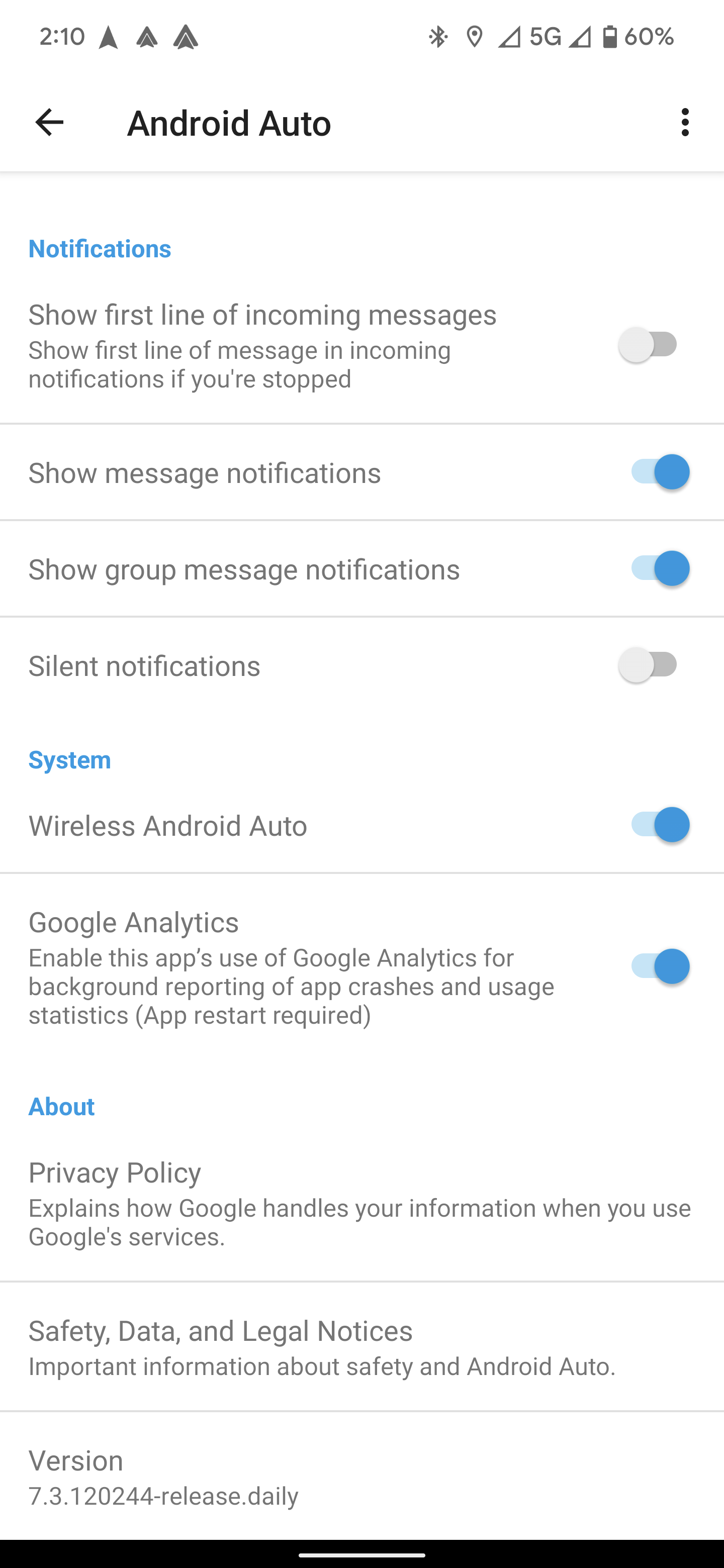
Android Auto has supported wireless connections for a few years now, but it’s only been over the past year that folks have been able to use it widely. And, now, Google has decided to remove the toggle that made it easy to turn off wireless Android Auto in the latest app update.
Android Auto 8.7 which started widely rolling out this week removes the toggle for “Wireless Android Auto” that has been available in the settings menu for ages now. The toggle was visible under the “System” section directly above the option to turn off Google Analytics. The change is also in place on Android Auto 8.8, which is available to some beta program participants.
In years past, this toggle was disabled by default in many cases, leading to users needing to dig into their settings to use wireless adapters for Android Auto such as AAWireless. Now, Google appears to be leaving that toggle on by default, but that also removes the option to turn off the functionality.
To be clear, wireless Android Auto isn’t affected by this change. You’ll still be able to jump into your car and continue using the feature as you have, you just can’t turn off wireless Android Auto on your device. As SmartDroid points out, that could be a little frustrating if you wanted to turn off the functionality on just one device so a partner’s device could connect. However, it is relatively easy to block the connection by simply turning off Bluetooth, or briefly activating airplane mode while the other device is connecting.
Android Auto 8.7Older Android Auto versions
Another notable change in Android Auto’s settings is the renaming of “Silent Notifications” to “Play Conversation Chime,” but that seems to have been added in an older update and just not noticed by most folks. Google has also recently stripped the option to “show first line of incoming messages” when the vehicle is stopped, since that functionality is now baked into “Coolwalk” by default.
It is a little odd to see Google removing the toggle for wireless Android Auto, but in the end it might lead to less confusion from users. And, notably, there’s technically still a toggle to turn off wireless Android Auto in the developer settings (accessed by tapping the version number over and over again), it’s just not easily accessible by the average Joe.
In a recent study, we found that our pillar pages are magnets for links, organic traffic, and newsletter subscribers — especially compared to regular blog posts. Here are the results that both types of SEO content generated over the course of a year:
Do these results mean you should ditch your blog strategy in favour of pillar pages? Not exactly.
Here’s the catch: You really can’t have one without the other, and it all comes down to content mapping. I’ll explain exactly what I mean in this article.
What is a pillar page?
A pillar page is a piece of content that comprehensively covers a broad topic. Pillar page — also sometimes referred to as hub and spoke — content weaves together a wide range of relevant subtopics (spokes), organizes them all in one place (hub), and effectively showcases your subject matter expertise for the broad topic.
Pillar page content should be easy to navigate for readers looking to learn — at a high level — about a particular topic, but should also offer relevant resources for them to dive deeper.
Example of related resources found on a pillar page.
It’s kind of like the choose-your-own-adventure of content marketing.
Topical authority: why it’s important
When it comes to content creation for SEO and digital marketing, you don’t want to create content around any old topic. Instead, you want to reinforce your brand’s topical authority with every new piece of content you create (be it a blog, a pillar page, an eBook, etc.).
Let’s put it this way: If you’re in the business of selling mechanical keyboards, it doesn’t make sense to publish a blog article about the best recipes for a summer BBQ. Unless you’re recommending that your customers grill and eat their mechanical keyboards, which is (highly) unlikely.
Instead, it’s more helpful to your brand — and your audience — if you cover topics related to mechanical keyboards, like:
What is a mechanical keyboard?
Mechanical keyboards vs. regular keyboards.
Custom mechanical keyboards.
How to transition to a mechanical keyboard.
Pros and cons of a mechanical keyboard.
By covering as many topics related to mechanical keyboards as possible, you’re building a foundation of informational content that tells search engines: “Hey, I know a lot about mechanical keyboards!”
And the more content you have that starts to rank for important search terms related to mechanical keyboards, the more likely searchers will see you as an authority on the subject. Ideally, they will start coming back to your content when they need to learn more about this specific topic.
Pillar pages + blogs = a match made in content marketing heaven
A well-executed and organized pillar page is one of the best ways to showcase to your audience (and search engines) that you have topical authority in a specific area. Blog posts help you achieve topical authority by allowing you to cover a wide range of relevant subtopics in great detail, and pillar pages organize all of that content into a nice, user-friendly package.
Let’s take a look at this tactic in action.
We built our content marketing guide as a pillar page, which allowed us to cover a slew of subtopics related to the broader topic of content marketing, all in one piece of collateral.
All of these subtopics are organized into sections on the page, with a hyperlinked table of contents at the top to allow readers to pick and choose exactly what they’d like to learn about:
Then, throughout the page, we offer readers the opportunity to go deeper and learn more about each subtopic by linking to relevant blog content:
What is content mapping?
A pillar page is a great tactic if you’ve got a lot of existing blog content all focused on a particular parent topic. It’s one of our favourite ways at Brafton to repurpose and repromote our blogs.
But you can also create a pillar page with all brand-new content — it’ll just take more research, planning, and production time to complete.
Enter: content mapping.
Content mapping is the process of assessing your target audience, understanding what they are trying to achieve, and helping them along that journey with branded educational and commercial content. Its scope can span the entirety of your content marketing strategy or a single piece of pillar page content.
Why content mapping matters in content marketing
The planning (or content mapping) of a pillar page is just as important as the research done to choose the correct keyword to target for your business.
Pillar pages are kind of like the books of the marketing world. If you were an expert birder, for example, you wouldn’t set out to write a book about bird-watching without doing any research. Especially if you’ve spent a lot of time writing and publishing articles about bird-watching on your blog. You’d want to understand a few things before starting that book, like:
Which of my blog posts generated the most interest from new and returning readers? (i.e. pages with the most new and returning visitors, as seen in your web analytics tool).
Which blogs kept readers coming back for more? (i.e. pages with the most newsletter subscriptions, or the best newsletter subscription rates).
Which blogs did my industry peers find most useful? (i.e. pages with the greatest number of high-quality referring domains and backlinks).
These questions can be answered by looking through your web analytics tools, such as Google Analytics and Moz Pro.
Example of content analysis by top linking domains.
You’d also want to understand what the competition looks like before you spend dozens of hours writing thousands of words to fill a book.
You’d want to answer questions, like:
What do my competitors’ books on bird-watching look like? (i.e. the types of bird-watching subtopics the page 1 results cover).
What does Google think searchers want to see when they search for bird-watching? (i.e. the types of content that are found on page 1 for your target keyword — and surprise! it might not be books).
How long and detailed are my competitors’ books? (i.e. the level of complexity and comprehensiveness of the content ranking on page 1).
These questions can be answered by manually reviewing relevant SERPs and utilizing TF-IDF tools like Clearscope or MarketMuse to understand the breadth of subtopics and types of content ranking on the first page.
Example of manual SERP inspection.Example of TF-IDF content analysis.
Once you understand which of your content performs best and which content Google and other search engines prefer to rank highly for your target keyword, you can start piecing together a plan for your pillar page.
A note about internal linking
Before we dive into the how-to portion of this piece, we should also acknowledge the importance of internal linking to this whole process.
And I’m not just talking about throwing in a link to a related product/service at the end of the page and calling it a day. The internal linking structure of your pillar page is literally the glue that holds the whole thing together. It helps readers easily navigate to related resources to continue learning from your brand. And it helps search engines understand the relationship between your pillar page content and the additional content you’re highlighting on the page.
But when it comes to internal linking, there is such a thing as too much of a good thing.
Including too many internal links throughout your content can cause a frustrating user experience or look spammy, so use caution and make sure the only internal linking you do on the page is extremely relevant to the parent topic.
If you’re unsure whether or not you’ve got too many internal links on the page, you can run it through Moz’s On-Page Grader tool, which automatically counts the number of links on your page and flags if you’ve got too many.
Tip: Keep in mind that this tool will count ALL links found on the page, including those in your main navigation and footer, so the “Too Many Links” warning could be a false positive.
As Moz explains: Google recommends you don’t go over 100 internal links per page, because it can dilute the SEO value sent from the pillar page to the linked pages, and it can also make it more challenging for users and crawlers to navigate all of the content.
Two data-led ways to map out content for a pillar page
There are a couple of different ways to approach the construction of this type of content, but they each rely on organic search data to lead the way.
1. Planning a pillar page and related resources (all from scratch)
Let’s pretend you don’t have any prior content created about a particular topic. You’re basically starting from scratch. Let’s also assume the topic you’ve selected is both core and commercially valuable to your business, and that your domain realistically has a chance of ranking on page 1 for that keyword.
Let’s say you’re a pet food company and one of your main products is cat dental treats. Once you’ve determined that this is the exact keyword you want to target (“cat dental treats”), it’s time to start your research.
Step 1: Manually inspect SERP to understand searcher intent
First, we’ll start by manually inspecting the first SERP for this keyword, and answering the following questions:
What types of content are on the first page of results?
Why are people searching for “cat dental treats”?
By answering these two questions in our SERP analysis, we’ll make sure that our plan for creating a pillar page to rank actually makes sense and it’s what searchers want to see on the SERP. We’ll also better understand all the reasons behind why someone might search this keyword (and we can then address those reasons in the content we create).
So let’s answer these questions:
Question 1: What types of content are on the first page of results?
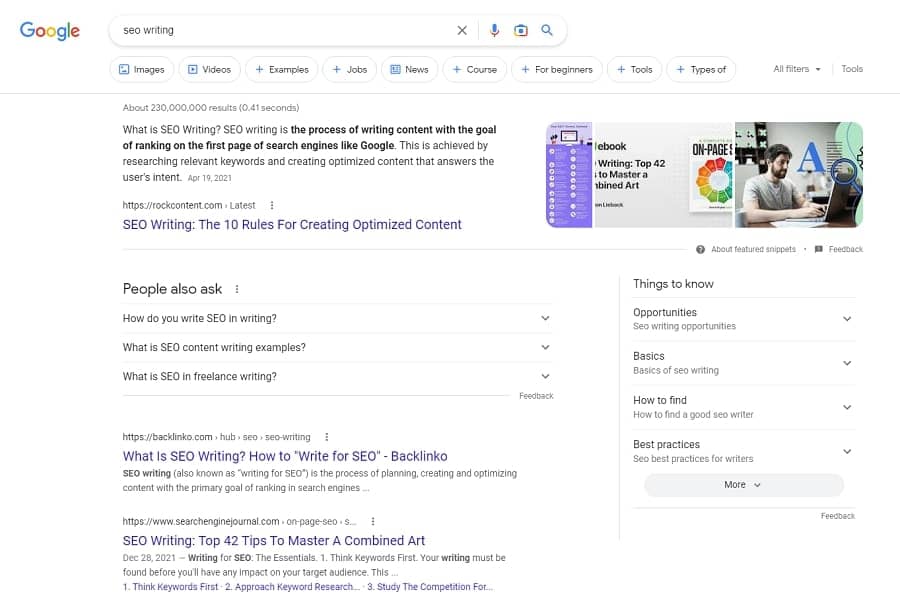
Answer 1: The first SERP includes a variety of product ads, a People Also Ask section, and a selection of organic blogs and product pages.
Types of content found on the SERP for “cat dental treats.”
Question 2: Why are people searching for “cat dental treats”?
Answer 2: From a quick analysis of the SERP, we can deduce that people want to know why and how cat dental treats are important to a cat’s health, and they also want to know which cat dental treats work best. Perhaps most importantly, it’s highly likely that they plan to purchase cat dental treats for their furry companion(s) in the near future.
Step 2: Select related keyword ideas for blog content
Since you don’t just want to create a pillar page for just the primary keyword, you also want to pinpoint a selection of related subtopics to be written as blog content.
For this part of the process, head over to your keyword research tool, plug in your target keyword and (with an eye for topics that you’re well-suited to cover), jot down a list of keywords and phrases.
Here’s our list of potential blog topics:
Best cat dental treats.
How do cat dental treats work?
What to look for in cat dental treats.
Do cat dental treats work?
Can cat dental treats replace brushing?
Vet recommended cat dental treats.
Grain-free cat dental treats.
Step 3: Choose subtopics to cover in your pillar page content
Next, you’ll want to review the subtopics mentioned in the top ranking results. While this process can be done manually (by clicking into each result on the SERP and jotting down the topics mentioned), a TF-IDF tool like MarketMuse makes this part of the process much quicker:
These TF-IDF tools analyse the top 10-20 results for your target keyword and automatically present the common subtopics mentioned in each piece. This gives you a very good understanding of what you’ll also need to cover in your piece to compete for a top-ranking spot.
Here’s the list of subtopics we’ll want to cover in this pillar page, based on our MarketMuse data:
Cat dental treats.
Clean teeth.
Purina dentalife.
Feline greenies.
Fresh breath.
Natural ingredients.
Veterinary oral health council.
Best cat dental treats.
Artificial flavours.
Cats dental health.
Step 4: Create your outline and plan content
Now it’s time to connect the dots from your research. The best way to do this is to start by structuring your pillar page outline, and then going back in and filling in the areas where you want to create supporting blog content.
Here’s an example of what the end result might look like:
H1: The Complete Guide to Cat Dental Treats: For a Fresh-Breath Feline Friend
H2: What are cat dental treats and how do they work?
Topics to cover: Cat dental treats
Blog post to support section:
Title: How Cat Dental Treats Work (& Why Your Kitty Needs Them) Keyword: how do cat dental treats work
H2: What are the benefits of cat dental treats?
Topics to cover: Clean teeth, fresh breath
Blog post to support section:
Title: Do Cat Dental Treats Really Work? (Here’s What The Experts Say) Keyword: do cat dental treats work
H2: Are cat dental treats an acceptable alternative to brushing?
Topics to cover: Cats dental health
Blog post to support section:
Title: Cat Dental Treats Vs Brushing: Everything You Need To Know Keyword: can cat dental treats replace brushing
H2: Do vets recommend using cat dental treats?
Topics to cover: Veterinary oral health council
Blog post to support section:
Title: Vets Recommend Using Cat Dental Treats — Here’s Why Keyword: vet recommended cat dental treats
Blog post to support section:
Title: 5 Of The Best Cat Dental Treats & Why We Love Them Keyword: best cat dental treats
Blog post #2 to support section:
Title: What To Look For In Cat Dental Treats Keyword: what to look for in cat dental treats
Creating an outline for a pillar page isn’t easy, but once laid out, it helps us understand the content that needs to be produced to bring the whole thing to life.
Here is our list of content to create (based on our outline):
Pillar page: The Complete Guide to Cat Dental Treats: For a Fresh-Breath Feline Friend
Blog #1: How Cat Dental Treats Work (& Why Your Kitty Needs Them)
Blog #2: Do Cat Dental Treats Really Work? (Here’s What The Experts Say)
Blog #3: Cat Dental Treats Vs Brushing: Everything You Need To Know
Blog #4: Vets Recommend Using Cat Dental Treats — Here’s Why
Blog #5: 5 Of The Best Cat Dental Treats & Why We Love Them
Blog #6: What To Look For In Cat Dental Treats
The best way to tackle this list of content is to create and publish the six blog posts first, then once they are live, you can write the pillar page content, placing hyperlinks to the supporting blog posts directly in the copy.
2. Planning a pillar page from top performing content
For this next method, let’s say you already have a ton of published content about a particular topic, and you’d like to reuse and repromote that content within a pillar page dedicated to that topic.
All of the steps in the previous process apply, but for Step 2 (Select Related Keyword Ideas for Blog Content), do the following:
First, you’ll want to understand which of your existing pieces generates the most interest from your audience. Let’s use our web analytics data for this. In this example, we’ll look at Google Search Console data because it shows the actual search performance of our website content.
Let’s use the topic of “content creation” as our desired pillar page keyword. Search for the query in Google Search Console (choose the “Queries containing” option):
Pull all of the pages currently generating impressions and clicks from terms containing your topic, placing those with the highest clicks and impressions at the top of your list. Here’s what this might look like:
As you can see, most of the content we’ve created that also ranks for keywords containing “content creation” is blog content. These will be highly useful as related resources on our pillar page.
Now, go back to your TF-IDF tool and select the subtopics related to “content creation” that you want to cover in your pillar page. Example:
Social media content
Content creation tool
Content creators
Content strategy
Content creation process
Finally, map your existing blog content to those “content creation” subtopics. The initial mapping may look something like this:
You may not be able to map each blog perfectly to the subtopic you’re covering in your pillar page, but that’s OK. What’s important is that you’re providing readers with relevant content (where applicable) and that content, as you’ve seen in your Search Console data, is already proven to perform well with your organic search audience.
Pillar page planning templates and resources
Pillar pages take an incredible amount of time and planning to execute, but they are worth every penny.
Here’s an example of the success we saw after producing one of our more recent pillar pages, “How to Rank on Google:”
Growth of referring domains and links to the page since its launch in April 2022.
Here’s a template of the outline used to bring the page to life (and you can use it for your own pillar page). Just make a copy and off you go. Good luck!
Lauren Fox is the Director of Marketing at Brafton. She has grown the Brafton blog from 30K to 230K monthly visitors and tripled its newsletter subscriber base over the course of three years. Her expertise ranges from content research and planning to performance analysis, with a focus on content strategy.
Top-quality SEO writing is the lifeblood of the internet and the heartbeat of all successful websites.
Whether you’re a blogger, an e-shop owner, or you operate a brick-and-mortar business with an online component, quality SEO content is the key to search engine success.
But what’s SEO writing? Why is it essential for online performance? And how do you write well enough for SEO that Google will rank your content well?
For anyone new to the world of online content writing, these questions can be a significant obstacle, obscuring the path to clicks, conversions, and revenue for your website.
Thankfully, we’re here to help you break the barriers and learn the intricate art of SEO content creation.
Below, we’ll cover over a dozen top-tier SEO writing tips that every beginning SEO content writer should use for their online content.
Let’s jump in!
What is SEO Writing?
Before you can understand what SEO writing is, you need to understand SEO itself.
SEO, or Search Engine Optimization, is the specialized process of ensuring your website’s content meets the standards of a search engine’s algorithm.
Displays a level of expertise, authoritativeness, and trustworthiness
Effectively addresses people’s search queries
So, SEO writing, or “writing for SEO,” is the creation and optimization of written content to please search engines enough that they’ll rank your work well in results pages.
But why does SEO matter so much for search engines?
Why is it Critical for Quality Content Creation?
Online success depends on how many readers you can attract to your content.
However, the number of people you can attract depends on which page of the search results you rank on and how high your ranking is on the page.
For example, did you know nearly 30% of all clicks go to the #1 ranking site on the first page of Google’s search results? That’s almost a third of all traffic for a search query!
Because high Google rankings are so critical to online success, millions of blogs and websites compete for the top spots on Google’s first page.
As an online creator, producing top-quality SEO writing is the only way you’ll have a chance at ranking.
Whether you’re a casual fan of SEO copywriting or a freelancer providing clients with an SEO content writing service, it’s essential to understand the basics of SEO writing if you want to conquer online.
SEO Writing Basics: Key Terms to Note
Before we delve into the tips that beginners should know, there are several important terms to note…
Keywords
Specific phrases and words people look for in search engines and what you build your SEO content around.
Long-tail Keywords
A phrase or string of keywords that are more specific than normal keywords.
Organic Keyword Difficulty
A (1–100) score of how hard it is to rank for a keyword.
Search Queries
Words or phrases people look up in search engines.
Search Volume
The total number of times people search for a specific term in a month.
Search Engine Results Pages (SERPs)
The pages containing search results within search engines, like Google.
SERP Position
The ranking of a page within the SERPs.
Ranking Factors
Components search engines use to decide page rankings.
Backlinks
A hyperlink that directs web traffic to an external page.
Anchor Text
Phrases or words containing a hyperlink.
Organic Traffic
The number of visitors coming to a site from SERPs.
Conversion Rate
The percentage of people who complete an action (like clicking a link) divided by the number of people who visit a page.
Click-Through Rate (CTR)
The percentage of clicks on a page in the SERPs relative to the number of times searchers saw the page in the SERPs.
Meta Description
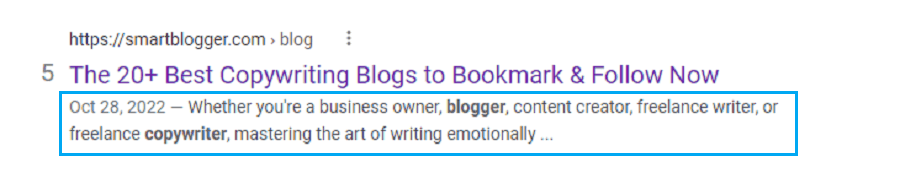
A short summary of a webpage displayed in SERPs.
Structured Data (Schema)
The formatting of elements like keywords, metadata, and HTML on a page to aid search engine crawling and indexing.
Page/Domain Authority
A (1–100) score indicating the authority of a page or site.
Pageviews
The number of times a specific page is viewed.
Dwell Time
The amount of time a person stays on a page.
Bounce Rate
The percentage of people who leave a site after viewing one page.
Liliana Benzel is a Smart Blogger Certified content marketer, SEO strategist, and editor with a passion for writing blog posts that rank on Google. She’s helped several writing agencies develop engaging content and is always looking for the next big challenge. You can connect with her on LinkedIn or explore some of her work on her Freelance Writer Profile.
These strategies will help you win and position yourself and your company in the best way this year.
A marketing strategy is the “plan identifying what marketing goals and objectives will be pursued to sell a particular product or product line and how these objectives will be achieved in the time available.” Keep in mind that you need to consider the following three pillars in your marketing strategy plan before execution:
Core audience demographics
Pricing and marketing budget
Business goals
The following seven marketing strategies are vital for connecting with your target audience, achieving your marketing goals by promoting products and services, increasing brand awareness and engaging with your target audience through various channels.
1. Email marketing
Email marketing is an old concept that will be very relevant in 2023. Having lists of targeted audiences with a differentiated email structure for each can provide you with a great and “cheap” way to showcase the developments in your company and sell your products.
Here are three examples that you can implement in your email marketing. The first one is to increase your email interactivity. People are used to social media and the engagement they can give when reading or viewing content. Add videos, sliders, games and carousels of images that people can swipe.
The second one is the use of storytelling in your email copy. People are looking to connect to a brand’s values, and one of the best ways to do that is to tell your brand’s story. Tell them your origin story, show your personality, the company’s culture and team. Use videos, quotes and memes to build a relationship with your subscribers.
The last one is personalization. Personalization in the email body can improve your open rate by 13% and can increase the clickthrough rate by 28% while reducing the bounce rate by 18%.
Email is still thriving as you control how you approach your audience based on your marketing objectives without the need to comply with rules imposed by the platform you use.
2. Social media marketing
Social media marketing is here to stay, and we need to find the right platform for us to create content, connect with our audience and show our expertise or products. This will be dictated by your target demographics and where they spend the most time at.
It is also important to note that Business-to-Business (B2B) and Business-to-Consumer (B2C) companies will have specific platforms that can be used for their business model. For example, LinkedIn for B2B and TikTok for B2C. Remember that your audience can move to a different platform down the line.
One thing that you can integrate into your social media marketing strategy is to think of ways to incorporate user-generated content. This can be in the form of reviews, unboxing, tutorials, and product reviews. According to Stackla, 88% of consumers specify authenticity and relatability as crucial decision drivers to complete in-app purchases and increase their brand engagement.
The most important thing is to use your authentic voice and showcase the people in your company and their expertise, values and personalities.
3. Public relations (PR)
Another old-fashioned concept that still has a place in your marketing toolbox, especially in 2023. PR is relevant and can help you increase awareness around a milestone you’ve achieved or a product/ initiative you are launching. Media mentions will also help you with the SEO of your website/ brand name and how you rank in searches as you get authoritative websites mentioning your company.
According to Statista, the PR industry is expected to be worth $129 billion by 2025 or an increase of 68% from 2020, worth $88 billion.
4. SEO
Search engine optimization (SEO) is a must-do strategy in 2023. SEO aims to increase the searchability of your brand name and specific keywords relating to your offers while helping you grow traffic and sales.
Organic SEO can help you rank your content for specific keywords. I recommend learning how to do the basics of SEO in your content and focusing initially on long-tail keywords, as it will be easier for you to rank.
The main pillar in your SEO strategy should be creating high-quality content and targeting your customers’ needs and questions engagingly while targeting keyword phrases. Create evergreen content that will help customers understand your company and products better.
SEO can be integrated with paid ads so your articles can show on top of the search results.
5. Influencer marketing
Collaboration with influencers can help you scale your business in a short period by increasing your brand awareness and reputation. The key here is to research and get numerous quotes from different influencers so you can decide on the best deal.
I’d say that it’s not always beneficial to go for the biggest names in a particular niche, as your business might not be prepared for that growth. A better strategy will be to find smaller accounts with a more engaged audience so both parties can grow simultaneously and be more sustainable.
One growing trend in influencer marketing is live stream shopping, which means that potential customers can buy products through a live video. Influencers can showcase products, give opinions and answer questions from their followers about the product they are presenting. Instagram introduced Live Shopping in September 2022, which allows users to purchase products from Instagram Live directly, so expect this to be prioritized on the platform in 2023.
6. Virtual events
Virtual events are here to stay, especially after the last couple of years when travel was almost non-existent. Showing your expertise and value through online events can help you increase your brand awareness and reach. The list of attendees can be reused and segmented in your email communication, which will benefit your company in the long run.
Another strategy is to attract experts in the industry you are operating in and create an event where they talk about various subjects related to your company. The event videos can also be reused on social media in long and short-form videos.
7. Video marketing
The most important strategy in the last few years is video marketing. Closely related to hosting virtual events, video marketing can help you present your company from various perspectives.
People from your company can have topics they are working on and record video presentations for the world to see. Behind-the-scenes and company events can showcase the human side of your team, and the sky is the limit regarding creative ways to create video content.
Authenticity here is key as your willingness to open up in front of the camera so people can connect with who you are and what your company stands for.
Short vertical video content will be one of the biggest trends in video marketing in 2023. According to Zippia, 85% of U.S. adults own a smartphone as of 2022, and on average, Americans spend 5 hours and 24 minutes on their mobile devices daily. As vertical video content can take more real estate on a device and people are using TikTok, Instagram Reels and YouTube Shorts, you need to focus your time and creativity to investigate that type of video content.
The world is moving towards personal branding, and video is one, if not the best, way to open up to your audience.
Win with marketing in 2023
To summarise, test and see what works for you and your company. Do not focus and do all the strategies mentioned here simultaneously — experiment with what resonates with you as a personality and your business niche. Adapt and develop the best marketing mix for your desired outcome that will help you win in 2023.
Entrepreneur Leadership Network Contributor. CEO and Founder at Aezir. Kaloyan is an entrepreneur with global experience. Past successes include 1m+ app downloads, six figures from Amazon FBA, and managing a million-dollar crypto project. Currently, he advises Swiss biotech and runs a London marketing agency. His motivation is helping people pursue their dreams.
This is the latest installment of the DTC Briefing, a weekly Modern Retail column about the biggest challenges and trends facing the volatile direct-to-consumer startup world. To receive it in your inbox every week,sign up here.
As Shopify’s app ecosystem has grown, so too has the number of startups the e-commerce giant has invested in.
Two-year-old attribution vendor Triple Whale was the latest startup to announce it had received financial backing from Shopify; the platform participated in Triple Whale’s $25 million series B. Triple Whale did not disclose, however, how big Shopify’s check was. Triple Whale’s round was led by NFX and Elephant.
Many of Shopify’s investments have been done in tandem with making those startups the recommended or exclusive vendor for certain segments of Shopify’s business. For example, Klaviyo, which received a $100 million investment from Shopify last year, is now the recommended email solution for Shopify Plus. In turn, many of the businesses that rely on Shopify’s platform argue that this makes it easier for merchants to cut through the noise what integrations to add to their Shopify store. It also has resulted in Shopify working more closely with the startups it has invested in developing features together.
But Shopify’s investment activity also raises questions about just how heavy of a role it plays in picking favorites among the 8,000 businesses that have a solution within the Shopify app store. And, whether Shopify’s investments in some of these businesses are coming at a moment when these apps are already the default integration among merchants. Or, if Shopify is giving an early advantage to nascent startups, to the detriment of other companies that also rely on the Shopify app store.
How the e-commerce world has reacted to Shopify taking a heavier hand in startup investing shows just how differently the company is viewed compared to other tech behemoths with app stores, like Google and Apple. Shopify’s app ecosystem is made up of a number of different players: brands, business-to-business companies that build integrations for Shopify’s app store and agencies that help brands build Shopify websites using some of those B-to-B solutions. If Shopify can convince brands and agencies that investing more in these B-to-B startups creates a better app store experience for them, the company can keep the discontent from some of the competitors of Shopify’s investments at bay.
As Patrick Johnson, CEO of development agency Progress Labs, put it: oftentimes, Shopify merchants come to developers or agencies wanting to know which one of, say, 15 different customer service integrations are best. When Shopify has invested in one startup over others, “there’s an assumption there that they maybe in the future are gonna have better access to stuff — maybe they get a fast lane, or maybe they make the development integrations more seamless.”
Shopify: the venture capitalist Shopify has not disclosed how many startups it has invested in in total. The company declined to make an executive available for a phone interview about its investment strategy.
As the Triple Whale investment shows, many of Shopify’s startup investments aim to tackle some of the big endemic challenges that prevent more merchants from starting and growing on Shopify. These include high customer acquisition costs and difficulties adapting to the new privacy-focused digital marketing landscape.
Many of these partnerships are born out of the work these startups do for specific business segments that Shopify is looking to grow, ranging from the company’s enterprise-focused Shopify Plus offering, to its cross-border commerce tool Shopify markets.
For example, one of the co-founders of Sanity, an API-based content platform, wrote that his company’s partnership with Shopify began in 2021, “when they asked us to create the content application for a new developer ecosystem they were building.” In turn, Shopify made Sanity the only CMS integration on the app store for Hydrogen, its new headless framework, when it launched in 2022. That same year, Shopify invested an undisclosed amount in Sanity.
Oftentimes, the exact size of Shopify’s stake is only disclosed when those startups go public. Shopify took a roughly 8% stake in buy now, pay later provider Affirm after it made Affirm the exclusive buy now, pay later provider for its Shop Pay checkout service. Shopify and Affirm announced an undisclosed multi-year “extension” of their partnership last year.
And while Shopify still offers support for other buy now, pay later providers like Afterpay and Sezzle, the tradeoff is that it’s less seamless than using Shop Pay installments. If a user is on a Shopify site and wants to pay for an order using Afterpay, they are redirected to Afterpay’s site to complete the transaction.
What happens after Shopify places its bets One of Shopify’s biggest, publicly-disclosed startup investments to date is the $100 million it invested last August in marketing automation startup Klaviyo. As part of the investment, Shopify also said it would give Klaviyo early access to certain Shopify features that are in development.
It’s worth noting that Shopify’s investment in Klaviyo came after another marketing automation startup, Mailchimp, has had a rocky relationship with Shopify over the years. Mailchimp pulled its Shopify integration in 2019, after squabbling over how to share customer data between the two platforms. Then, two years later, the two platforms made up.
Jake Cohen, who is the Head of Shopify at Klaviyo, said that Shopify’s investment in Klaviyo was “a token of the larger relationship” that already existed between Shopify and Klaviyo. Cohen was previously Klaviyo’s vice president of content, but following the investment became the point person for all things Shopify.
Essentially, Cohen says, Shopify’s investment in Klaviyo allows the two to work more closely together, for the benefit of Shopify merchants. The way Cohen sees it, there’s two buckets of work that Shopify and Klaviyo do together. One involves supporting merchants who already use Shopify and Klaviyo.
“[Shopify’s] merchant success team and our customer success team talk to each other,” Cohen said. “We do internal presentations to each other to make sure everyone understands what’s possible, we swap notes on trends that we think could benefit merchants in certain verticals.” Cohen also said that Shopify and Klaviyo “will be doing a lot of events, educating [merchants] on what else they can be doing in the two platforms to basically improve their performance.”
The second bucket, Cohen said, involves trying to recruit merchants that aren’t yet using Shopify or Klaviyo, by pitching them on how seamless the ecosystem is because of how closely Shopify works together with startups like Klaviyo. For example, Klaviyo published a case study on its website about why footwear brand Kuru decided to switch from Magento to Shopify Plus – and, by extension, from Listrak to Klaviyo.
In essence, what Shopify is doing is using the fact that it invests in many of the businesses in its app store as a selling point over other e-commerce platforms.
How beneficial this approach is depends upon who in the Shopify ecosystem you ask. The way Shopify – and the companies it has invested in — see it, working together more closely can only make it easier for the brands and retailers that rely on Shopify to run their websites.
“What we believe… is that if you can pick providers that have very deep and rich integrations, and have a very clear emphasis on investing in user experience, as a merchant, you can get more things live, more quickly, with less resources and less cost,” Klaviyo’s Cohen said.
For some of the developers that work with Shopify, they argue that Shopify’s approach to investing in certain startups make it easier for the brands and retailers that rely on the e-commerce platform to spend less time worrying about which integrations are right for their business. And, they argue that at least Shopify isn’t trying to kneecap the companies that rely on its app store by building these integrations in-house themselves.
By contrast, Apple has been quietly pushing new ad products, and reportedly seeking to build out a demand-side platform after its iOS 14 update limited how much data platforms like Meta and Snap could collect on users, in turn hurting their advertising business.
“It makes part of our job easier, because we don’t have to write so much custom code. We can advise clients more on like a strategic level, and a system with integrations instead of having to write everything from scratch,” Mark William Lewis, founder of agency Netalico Commerce said.
Progress Labs’ Johnson said that as a developer, he would like more information on how Shopify chooses which startups to back, acknowledging that “it does play a role” in determining which integrations to recommend to clients. “Are they picking a winner? Or are they doing it because that’s the most promising one in the space?” he added.
Are you looking to level up your team’s success using a project management platform? Before you jump in, you first need to have a contingency plan laid out. It might sound like big jargon, but having this one plan in place can make the difference between big failure or big success.
Ready to do the best you can in 2023 with your team? Here’s everything you need to know about a contingency plan in project management, below.
What is a contingency plan in project management?
A contingency plan in project management is important for creating a successful project and keeping your team on track. To put it simply, a contingency plan is basically an action plan for any unexpected event or changes that could come up throughout the project.
Here’s why creating a contingency plan is important for your team.
1. It minimizes the risk
Contingency plans minimize the risk of unforeseen events from becoming major problems by preparing for them in advance. By having a plan in place, your team knows how to respond and handle any risks that may come up throughout the project.
2. It helps identify weaknesses
By creating a contingency plan, your team can uncover any potential weaknesses in the project and address them quickly. This way, potential risks and issues can be handled before they become major problems.
3. It increases efficiency
Contingency plans help promote efficiency throughout the project. With a plan already in place, everyone knows what to do in the event of a problem, reducing the amount of time that is wasted trying to figure out what to do and how to address the issue.
4. It improves planning and control
Contingency plans allow for improved project planning and control. With a plan in place, it’s easier to track progress and ensure that the project is on track and everything is going according to plan.
5. It improves team communication
Having this plan in place also helps improve team communication and coordination. Everyone will be on the same page about how to handle any issues and there will be fewer disagreements and confusion.
Having a contingency plan in your project management strategy is essential for creating a successful project and keeping your team on track. By having a plan in place, your team can minimize risk, identify weaknesses, increase efficiency, improve planning and control, and improve team communication.
Digital agency Found’s Tom Brand tells us that Google Analytics 4 is ushering in a new era of predictive measurement, enabling a ‘total search’ approach to bring search engine marketing and ad targeting together.
Predictive measurement is increasing in importance and capability, with advances in machine learning and Google’s GA4 deadline (when the old Universal Analytics will be discontinued in favor of this predictive measurement tool) approaching in July this year.
Google describes GA4 as “the future of measurement” so if you aren’t prepared to significantly shift the way that you strategize and structure your digital marketing campaigns in 2023, you’re going to get left behind.
This new era will make adopting a ‘total search’ approach a necessity. Doing so provides multiple business benefits, beyond just keeping up with competitors.
A holistic view of search
There are two questions we have to start by asking ourselves. First, are you technically prepared to move from Universal Analytics to GA4? Quite simply, you must fully prepare your business to make that reporting transition.
And, second, has your marketing function shifted its strategic approach to search engine marketing (SEM) in order to best make use of the holistic activity view that predictive measurement facilitates?
If not, expect your competitors to lead the way. Those who are taking a holistic view of their digital presence and search efforts are already learning from and improving their marketing efforts at scale. How? Because they are effectively using predictive measuring tools.
Predictive measurement uses a non-siloed view of online activities and machine learning to deliver insights on overall marketing success. To fully leverage the amazing potential of predictive measurement tools like GA4, you should expand your approach to digital activities, including search engine marketing efforts, and start employing a more holistic (and strategic) mindset.
What is total search?
Put simply, total search is the viewing of multiple performance marketing channels as one cohesive, collective whole. Channels like search engine optimization and pay-per-click easily become siloed and even compete to drive value. Total search, as a data-led approach, aligns all digital marketing activities to ensure the achievement of shared digital goals.
It doesn’t matter which channel drives results for your business. As long as your brand sees growth, senior leadership will be encouraged to invest in your team.
How a total search approach to digital marketing can help you compete
There are two types of prospective customers online: those searching for you (who you need to get in front of using SEM); and those who are casually browsing (who you want to search for and target with your ads). With a total search approach you can ensure that you strategize and devise campaigns designed to work for both kinds of prospective customer with a singular goal: conversion.
To have a fully optimized conversion funnel for your business in 2023, you need to be viewing the very top of that funnel in 3D. Why? Because predictive measurement tools facilitate that kind of advanced analysis, and because a total search approach creates digital marketing activities that consider and cover the entire top rim of that funnel.
Why you should adopt a total search approach
First, a total search approach helps you to maximize search engine results page (SERP) coverage. It’s all about gaining greater online visibility and creating as many opportunities as possible for your brand to get discovered in search.
Second, it gives a 360° view of the top of your funnel. The modern digital customer experience is rarely a traditional, linear journey. It’s more like a fly buzzing around inside of a jar; bouncing around from pillar to post and experiencing your brand from different angles, in multiple different directions. You need to ensure that your brand presents consistently, no matter how a user finds you.
Third, it can help you to spend money more efficiently. Allocating the right budget to the right places is a priority for every marketer. Adopting a total search strategy will allow you to make better decisions about your marketing budget.
Fourth, with total search you can make faster and more informed decisions, taking insights gleaned from every area of your search performance to make decisions with a far richer and wider collation of data sets. By looking at your search data holistically, you can learn far quicker than by looking at each individual element of search performance in a silo.
And finally, total search will improve your organic search and paid media efforts simultaneously. You can combine the data view from all of these activity channels to determine which keywords actually drive you the most traffic, conversions and revenue – allowing you to optimize all activities at the same time.
Whether it’s Google search, a Facebook ad, or a TikTok that gets a user’s attention, a total search approach will allow you to benefit from predictive measurement and maintain ownership of your brand’s digital presence. If you haven’t already, you must add this to your year’s strategy.
Are you looking for ways to improve the results you get from your search engine marketing (SEM) efforts? It’s a common situation for business owners to be in and one which requires a carefully chosen combination of tactics and tools to conquer.
Stick with us, and we’ll discuss a few key tips to ensure that your SEM campaigns reach their full potential rather than falling short of your expectations.
Consider Hiring A Performance Marketing Or Growth Marketing Agency
The first step in getting the most out of your SEM campaigns is to consider hiring a performance marketing or growth marketing agency.
Such agencies specialize in helping businesses maximize their digital presence by leveraging paid and organic search strategies, optimizing websites and landing pages, as well as implementing SEO tactics.
Having an expert team on hand can help ensure that all aspects of your SEM plans and ambitions are taken into account when it comes time to make decisions about how best to reach customers online. There are different types of growth marketing out there, so make sure you choose an agency that’s aligned with your aims and is able to deliver what you need.
Understand Your Customers
Another important piece of advice for those aiming to optimize the outcome of SEM is that you need to understand who exactly it is that you are targeting with these campaigns.
What do they care about? What type of content will draw them in? What are their needs, wants, and pain points?
Are you looking for ways to improve the results you get from your search engine marketing (SEM) efforts? It’s a common situation for business owners to be in and one which requires a carefully chosen combination of tactics and tools to conquer.
Stick with us, and we’ll discuss a few key tips to ensure that your SEM campaigns reach their full potential rather than falling short of your expectations.
Having an expert team on hand can help ensure that all aspects of your SEM plans and ambitions are taken into account when it comes time to make decisions about how best to reach customers online. There are different types of growth marketing out there, so make sure you choose an agency that’s aligned with your aims and is able to deliver what you need.
Understand Your Customers
Another important piece of advice for those aiming to optimize the outcome of SEM is that you need to understand who exactly it is that you are targeting with these campaigns.
What do they care about? What type of content will draw them in? What are their needs, wants, and pain points?
Knowing this information can help inform every decision made related to keyword selection, ad placement, and more – ultimately leading to higher returns on investment (ROI).
Get To Grips With Keyword Research
We just mentioned the importance of picking the right keywords to leverage in SEM campaigns, and as well as knowing your audience, you have to be savvy about getting a handle on keyword research.
This involves looking into what terms and phrases your prospects use when searching online so that ads and other content align with customer intent – meaning more relevant impressions and better ROI overall.
You can use keyword research tools to do a lot of the hard work for you, but you still need to revise, refresh and update your approach to this aspect of SEM regularly to avoid missing trends and movements.
Make Sure Your Efforts Are Geographically Targeted
The last key tip for maximizing outcomes from search engine marketing efforts is making sure they are geographically targeted correctly.
This means focusing on users only within the areas where there’s demand – whether city-level or country-level – using geo-targeting tools like Google Ads location settings or Facebook Audience Insights tool.
By doing so, you can ensure maximum impact at a minimum cost since you’ll avoid having your paid campaigns shown to users who are not within your target audience. In an ecosystem where clicks cost you money, you can’t afford to be too general in how you target search ads, and location-based filtering is an efficient option for preventing this.
Final thoughts
Don’t be worried if you feel a little overwhelmed by the prospect of rethinking your SEM strategies. It sounds like a tall order, but once you actually get started, it’ll get easier along the way.
Of course, if you work with an outside marketing agency, then it’s a breeze to bring new momentum to the performance and impact of your paid ads, as well as to any organic SEO that you implement. It won’t take long for you to see that this is money well spent.