Author

editor

Browsing

By

So, you’re after a few digital marketing examples to inspire your next campaign.

You understand the need for a digital marketing presence, as every statistic you see points towards it…

But where do you start?

Luckily, I’ve picked some of the best examples to get your creative juices flowing.

Let’s jump in!

1. Volkswagen Beetle: The Last Mile

In 2019, Volkswagen (VW) sought to give the iconic Beetle the send-off it deserved after 80 years of production.

They created the digital marketing masterpiece, “The Last Mile.”

You only need to watch the first 30 seconds to be drawn in by its relatable family story.

But why is this a powerful digital marketing example?

What Makes Volkswagen’s Digital Marketing Example So Powerful

Well, where do you begin?

You’re already captivated by its moving story, imagery, and elements of nostalgia.

You’re engaged.

But, the online video was only the beginning…

The campaign included an interactive website where you could “Build Your Own Beetle.”

Further engagement.

Also, VW prompted users to share their designs via social media, creating a sense of community and buzz around the brand.

Engagement times 100, plus increased brand awareness!

What You Can Takeaway from Volkswagen

Yet, what can you takeaway from this?

VW effectively utilized multiple online channels to engage its consumers.

They tapped into social media and leveraged the Beetle’s history and nostalgia to create an emotional connection with their target audience. It generated a sense of community unlike any other.

So, understand your target audience and create content that resonates with them.

2. ALS Ice Bucket Challenge
In 2014, The “Ice Bucket Challenge” was born.

The ALS Association produced a social media masterclass to raise awareness and funds to support research into amyotrophic lateral sclerosis (ALS).

The challenge went viral.

It was a fun and light hearted way to raise awareness about a serious illness.

Everyone from your next-door neighbour to Bill Gates participated.

But why?

What Makes ALS’s Digital Marketing Example So Powerful

For one, they kept it simple.

The challenge was easy to understand and participate in.

Simply sit (or stand) and wait anxiously for a bucket of cold icy water to be poured over you.

Easy…

It evoked many crazy reactions, each with an element of comedy and competition.

Secondly, ALS added a clever call to action (CTA) at the end of each video — nominating others, via social media, to take the challenge.

People nominated friends, family and influencers. It enabled ALS to expand their reach and quickly gain popularity.

What You Can Takeaway from ALS

Regardless of your niche, the “Ice Bucket Challenge” shows you can raise awareness and drive engagement around anything.

Ensure your content is straightforward and resonates with your target audience.

Equally, your content should have a crystal clear CTA.

3. Red Bull’s Stratos Campaign

The highly innovative Red Bull Stratos campaign captured the imagination of viewers by enlisting the help of Austrian skydiver Felix Baumgartner.

In 2012, he jumped from a helium-filled balloon 39 kilometres above the earth’s surface…

Setting a new world record and becoming the first free-falling human to break the sound barrier.

It became the world’s most-viewed live stream event.

What Makes Red Bull’s Digital Marketing Example So Powerful

Yet, why was the “mission to the edge of space” a resounding success?

The hype was real.

Red Bull took to social media to build anticipation for the event.

Not only that, content was king.

They produced a lot…

From a dedicated website full of in-depth statistics to daily updates leading to the live event — readers felt like they were part of the mission.

Moreover, they encouraged readers to share at every opportunity, using hashtags.

The result…

#LIVEJUMP and #STRATOS was trending.

What You Can Takeaway from Red Bull

Red Bull thought outside the box and created a blockbuster campaign that piqued the interest of even the most sceptical of readers.

But it’s not achievable by all.

Yet the lessons are…

Quality content is king.

So, understand your product and continually provide great content that impacts your users.

4. Dove’s Reverse Selfie

In 2021, Dove launched its Reverse Selfie campaign to combat the increasing pressure on young people to look their best online.

The YouTube video features a 13-year-old girl who drastically modifies her appearance before posting a selfie on social media.

As the title suggests, Dove cleverly reversed the editing process to give viewers a glimpse of the number of modifications.

Ending at the beginning.

What Makes Dove’s Digital Marketing Example So Powerful

Dove headed straight to the root cause…

Social media.

They repurposed snippets of the video on Instagram, posted shocking statistics, and sought the help of influencers to boost awareness.

It worked.

Viewers were emotionally charged — many shared unedited photos of themselves and encouraged others to do the same.

#TheSelfieTalk

What You Can Takeaway from Dove

Dove zoomed in and focused on one digital platform…

Social media.

Specifically, Instagram because of its focus on sharing photos.

So, you should too.

Don’t spread yourself too thin.

Pick a digital marketing platform that fits your demographic.

For example, if your brand has a strong visual element, promoting through Instagram or Pinterest may be more beneficial than LinkedIn.

5. Blendtec’s Will It Blend?

Founder of Blendtec, Tom Dickson, created the Will It Blend video series to spice up the appeal of the blender.

It consists of Tom adding unusual items to show off its ability…

Have you ever wondered if your iPhone would blend?

Or even your Amazon Echo when Alexa decides to play a completely different tune to the one you asked for?

What Makes Blendtec’s Digital Marketing Example So Powerful

But what makes Will It Blend a content marketing hit?

Well, each video packs a punch…

The YouTube videos are short and simple yet authentic and entertaining.

This creative recipe draws the viewer in and you really do wonder — @willitblend?

Also, the tag prompts viewers to interact at every opportunity by sharing suggestions.

Plus, Blendtec ensures you don’t miss it. They’ve added the tag to the Youtube channel logo, each video, and webpage.

What You Can Takeaway from Blendtec

Blendtec thought outside the box to increase brand awareness using video marketing and social sharing.

Plus, they’ve proven that you don’t need a flashy, high-cost video campaign to capture your audience’s attention.

So, grab your smartphone and start recording content that peaks your audience’s interest.

6. Smart Blogger’s Affiliate Marketing
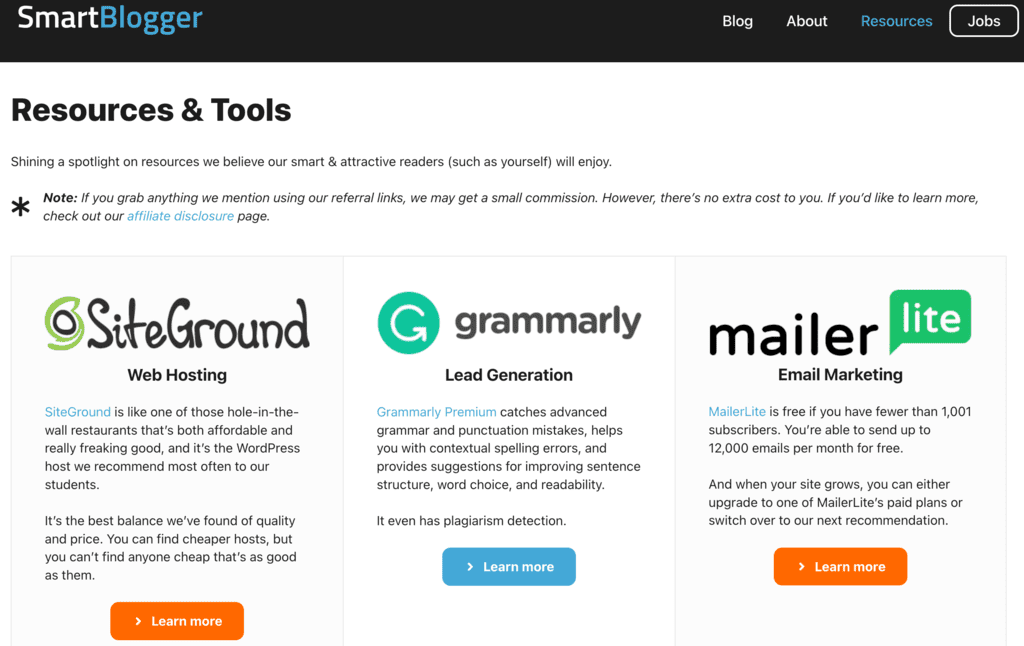
Smart Blogger’s affiliate marketing efforts are a prime example of digital marketing done correctly.

Furthermore, they highlight a key point that is worth remembering when considering affiliate marketing:

“You’re earning a commission in exchange for giving readers valuable insights on products or services they were already thinking about purchasing.”

Great!

So what can we learn from one of the world’s largest websites dedicated to writing and blogging…

What Makes Smart Blogger’s Digital Marketing Example So Powerful

Well, Smart Blogger backs up its key point by offering exactly as they state:

Giving readers valuable insights.

Whether it’s a specific review for a product or a collection of products, they ensure value is at the forefront of everything they do.

They soft sell through education.

What You Can Takeaway from Smart Blogger

Smart Blogger proves you don’t have to head straight for the hard sell with ads plastered over your page.

Instead, opt for the soft sell.

Educate.

Offer a resource and tools webpage with snippets of golden information…

Or dive in and create custom content that provides value to your audience.

7. Buffer’s Guest Blogging
Buffer is a social media toolkit for small businesses.

So, why are we talking about guest blogging?

Because they used this content marketing technique to rapidly grow their user base, and we can learn a few things…

What Makes Buffer’s Digital Marketing Example So Powerful

Buffer took a proactive approach.

They continually sought out and pitched to sites that fit their target audience. Knowing that writing for them will help establish themselves as an authority.

Not only that, consistency and personalization were vital.

Guest posting daily, building momentum, and establishing long-term relationships with others transformed Buffer into an industry leader.

What You Can Takeaway from Buffer

The key takeaway is to find out which digital marketing channel works for you and double down.

Don’t spread yourself too thin.

If you choose content marketing and find guest blogging is for you, great!

But don’t reinvent the wheel. Send out personalized messages to find opportunities and follow up with quality content.

8. Old Spice’s The Man Your Man Could Smell Like

Old Spice was predominantly associated with the scent of older men.

But that changed in 2010 when they launched the YouTube video, “The Man Your Man Could Smell Like.”

It went viral.

Old Spice’s website traffic grew by a whopping 300%, and the brand became the #1 body wash for men.

But how did this simple form of content marketing garner such a response?

What Makes Old Spice’s Digital Marketing Example So Powerful

Old Spice used a clever mix of humor and marketing know-how to appeal to its target audience.

But that’s not all.

They backed up their immediate success and kept the viral ball rolling by interacting with their audience on social media in real-time.

Users posted questions and the “Old Spice Guy” answered with personalized videos.

What more could you ask for?

What You Can Takeaway from XYZ

The key takeaway is it’s not enough to create a piece of digital content and expect a response — even if it’s positive.

Follow up, continually engage with your audience, and leave a positive, lasting impression.

Go that extra mile…

Personalize your interactions, and if you can, promptly respond in real-time.

9. Dollar Shave Club’s Our Blades Are Great

In 2012, Dollar Shave Club (DSC) shook up the male grooming industry.

They infused humour into a seemingly dull product.

And the result…

An instant hit.

Their YouTube video amassed millions of views and continues to be shared across social media.

What Makes DSC’s Digital Marketing Example So Powerful

DSC jumped on the social media bandwagon early.

They knew the marketing and advertising space was shifting to its digital counterpart and created content to suit.

Equally, they knew their target audience and products’ unique selling point.

As a result, “Our Blades are F***ing Great” was born on YouTube.

Choosing the digital platform allowed DSC to interact and engage with its audience.

Also, it allowed users to share through social channels easily.

What You Can Takeaway from DSC

Yet, what can you takeaway from this experience?

Adopting change in your niche is crucial.

Whether it’s technology-based or simply a shift in customer demand, you should pivot.

Doing so will allow you to tailor your content and give your customers what they desire.

10. Apple’s Shot On iPhone
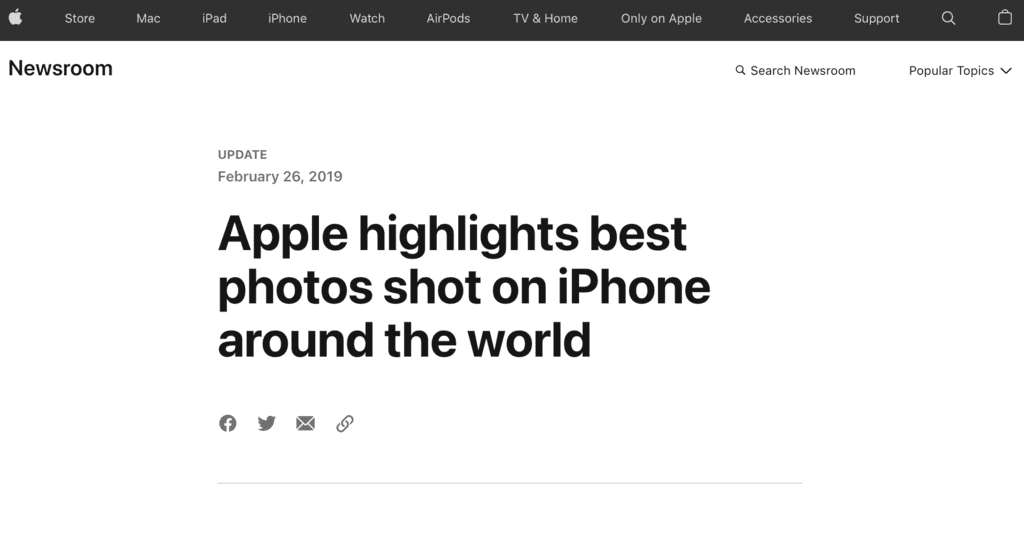
Primarily targeting Instagram, Apple’s Shot On iPhone created a digital marketing storm.

They took the term “customer engagement” to a new level with a simple challenge to their audience…

Use your iPhone to capture a photo and submit it by sharing on social media using: #ShotOniPhone

What Makes Apple’s Digital Marketing Example So Powerful

Apple proved your digital marketing campaign can be simple when showcasing a product or service.

They planted a basic idea and allowed their audience to do the rest through participation.

This engagement was vital to building a loyal fanbase.

As a result, Apple’s reach grew, which allowed their product to be viewed by millions of users on digital channels.

What You Can Takeaway from Apple

Apple effectively used digital marketing channels to showcase its product and build brand awareness through customer engagement.

So, take a proactive approach and prompt your audience to participate in your campaign.

What challenge could you present to your audience?

What’s a Great Digital Marketing Example I Missed?

You’ve made it!

So, it’s time…

Time to take action and consider which digital marketing example will inspire your next campaign.


By

Sourced from live your message

This will be the year that brands start to get serious about integrating Web3 (aka blockchains and cryptocurrencies) into the mass marketing ecosystem; mark my words.In 2023 there are three things that will change the brand experience landscape: marketing spend, hiring and metaverse brand open source standards (which I’ll explain later).

Want to get ahead? Here are three simple steps.

1. Allocate marketing spend.

Despite sitting on the precipice of a recession, the uncertainty around cryptocurrency value and safety of blockchain, and the admittedly confusing use of language in Web3 – for example, “NFTs, or non-fungible tokens,” really just means digital asset ownership – we’re about to see a major shift in how brands interact with customers.

According to data from Sitecore and Statista, some 80 per cent of brands plan to spend almost a third of their marketing budget (30 per cent) in Web3 in 2023. Web3 for brands is a world in which sales go much further for the consumer in terms of value – you can read specific examples of what this looks like and how Web3 will impact consumers across virtual worlds here.

By Haifa Barbari

Haifa Barbari is a contributor to the Evening Standard. She is EVP of strategy and resident futurist at tech, gaming and metaverse agency Dialect.

Sourced from Evening Standard

As part of our series of design in 2023, How&How founder and creative director Cat How offers her view on what might happen in branding over the next year.

What do you think 2023 will hold for branding design?

I’m always highly sceptical about ‘trends’ in design. I’m very much of the mindset that fashions fade, while true design (where form follows function) is eternal. A good logo, therefore, should never follow (or be inspired by) a particular zeitgeist. It would not be the purest representation of itself, or the strategy behind it, if it did. So my future trend predictions lie mostly around ‘moods’ or themes that we’ve found emerging in the creative industry as a whole.

Metaverse

I’m seeing a glut of futuristic fonts, impossible 3D renders, and quirky sci-fi gradients emerging as a way of (sardonically?) talking about the known-unknowns of the Metaverse. Part joke, part next big thing… the jury is still out, but I’m really liking the retrofuturist humour.

Light Mode/Dark Mode Websites

We’re increasingly designing colour systems which work in light mode and dark mode as a way of future-proofing the websites of the brands we build. Not only that, but dark mode websites are more energy efficient than light mode ones, which is partly connected to my next point.

Beyond Green

As we’ve been designing more and more climate-tech and sustainability brands over the past year, we’ve found that conventional green as a brand colour is losing traction. Gone are earth tones, soft treatments and hippy-vibes. Eco-branding is moving into a more minimal, futuristic direction with simplified monochromatic colour palettes (see our On The Edge rebrand) which speak more to Gen Z. These new brands want to talk about climate in a minimal, aspirational and future-focused way.

Purpose or Mission-First Branding

After the insecurity of the last few years, people are desperate for authenticity, transparency and honesty from the brands they interact with. They demand more from brands in terms of what they say as well as what they do. Brands have always helped people keep companies accountable, but this has never been more true than today. Brands that misrepresent their products and clash with the values of their audience are quickly swept away.

What was your favourite branding project from 2022 and why?

One of our big pushes last year, as well as in 2023, will be to get more women in design, be this through a scholarship initiative, mentoring or internship programs for young female designers. It goes without saying, then, that one of my favourite design projects of 2022 was from a young designer called Tais Kahatt for Gulp Sichuan Chilli Oil. Such a fun little project with super-simple, but effective illustrations, edgy art direction and a mono palette centred around one punchy, spicy red. For such a young designer I was really impressed by Tais’ craft in bringing everything together. As well as this one, I loved Caterina Bianchini’s new rebrand for Bunch too. Super fun!

Sourced from design week

By Joe Procopio

You don’t need consultants but you do need to brush up on your problem-solving.

The line between success and failure in business can be razor-thin, and sometimes the difference comes down to the amount of attention that a company can attract.

Unfortunately, a lot of companies try to attract the wrong kind of attention.

I’m not talking about tasteless advertisements or sketchy funding gimmicks–well, not that alone. I’m talking about wasting effort, resources, and dollars on promoting any kind of attention that doesn’t generate revenue.

It’s a problem that’s exacerbated for unknown companies with unproven products. But unfortunately, a lot of startup leadership tends to believe that attention is a self-fulfilling prophecy. In other words, they think that if they can just generate a lot of awareness around the company, sales become a foregone conclusion.

That’s true. Kind of. And it’s why marketing experts and brand consultants get paid. Usually a lot.

However, it’s true only in a certain context, and that context rarely includes new ventures — even from well-known companies. We were all very aware of CNN+, Google Glass, and the Amazon Fire Phone.

Were those brands powerful? Absolutely. Were those products branded poorly or marketed incorrectly? No, not egregiously so. Should your company emulate them? Most definitely not.

So what went wrong?

Save Branding for Later

The product that “only needs attention” to succeed is a product that is already successful. That may sound a little Catch-22, but that’s because brand marketing is best suited for expanding market reach, not gaining market traction, let alone defining a target market and finding product market fit. Those milestones aren’t random and they don’t happen by process of elimination. Not without spending a ton of money.

Can a terrible brand sink a potentially successful product? Yes, especially when inferior competition has a robust marketing machine behind it. But lack of branding is definitely not a death sentence. Once a product is viable, has found market fit, and is gaining traction, then and only then should a company’s focus be on brand marketing to expand its reach.

Furthermore, brand attention is fleeting attention. As I said, everyone knew CNN+ was coming, everyone knew when it arrived, and 28 days later, everyone knew it was folding.

So if attention is what your company needs, but that initial market success hasn’t happened for you yet, check these other boxes first.

Your Solution Is Your Attention Ice-Breaker

If you want attention, you need a good opening line. Your best opening line is always your solution.

Your solution is not about your company and certainly not about your brand. It’s not your product–that’s just the packaging for your solution. It’s not even your offering, which is just the packaging for your product. In short, your solution is the thing your product does that solves the customer’s problem.

Once you have that defined, that needs to be the core of how you get attention. If your solution is strong enough, you can just talk about it, to anyone, and you’ll get the attention you want. Of course, in the real world, you’ll need branding and marketing to connect the message to your company and amplify it.

But don’t spend time, energy, or money on that branding or marketing if that message is just going to result in a shrug.

Your Product Is Your Attention Land Grab

The customer’s problem is the thing they want to throw money at to make it go away. And if the first layer around the customer’s problem is your solution, the next layer is the product, the thing that houses and presents the solution.

Spending time and resources here can make a world of difference out on the market.

But beyond just awareness, a great product also generates outsized viral attention. And since there’s no better and cheaper way to acquire a new customer than via an existing customer, giving existing customers something to crow about will provide the highest return on any attention it generates.

And then finally, an existing customer base is also the easiest to convert to upgrades and even new products and product lines.

Low Price Attention Begets Low Results

The final layer out from the customer is your offering, which is your solution packaged in a product for a price. But the attention that’s gained by a low price usually results in low conversions, low margins, and low lifetime value.

For every company leader I know that wants to be the low-price leader, very few of them make purchases based on price alone. Furthermore, the products they buy when price is a factor are usually commodities, and the buyers are often hard-pressed to remember the name of the company or the brand attached to it.

And even when you win on price, you only win until a competitor undercuts you.

Standing out isn’t just about amplifying a message, it’s about amplifying the right message to the right market. You can use one large megaphone or a bunch of smaller ones, and you can spend a lot or a little along the way. Just don’t waste that spend on messages that don’t land and markets that don’t produce.

Feature Image Credit: Getty Images

By Joe Procopio

Sourced from Inc.

Sourced from Association of Advertisers in Ireland

The era of predictable unpredictability is not going away. Intense uncertainty is still a key theme. With Jim Power and Chris Johns.

PLACES ARE FILLING FAST!

We have had a great response so far for our next #Toolkit webinar: The era of predictable unpredictability is not going away. Intense uncertainty is still a key theme. We are delighted to welcome Jim Power and Chris Johns to take part in our next Toolkit session on Wednesday February 1st at 9AM.

Date: February 1st
Time: 9am
Location: Online

The era of predictable unpredictability is not going away.  Intense uncertainty is still a key theme. The global economy faces enormous challenges, from energy and food shocks, inflation, debt and a downturn in stock markets and economic growth. There is also a need to be conscious of Brexit and the potential negative impact on Irish trade with the UK.

Despite the global challenges and general negativity, there could be a possibility of growth surprising on the upside.

REGISTER NOW


Sourced from Association of Advertisers in Ireland

By James Eagle

How much money is a brand truly worth?

For some companies, a brand is something that helps slightly boost customer engagement and sales. But for others, including some of the largest companies in the world, a strong brand is one of their most valuable assets.

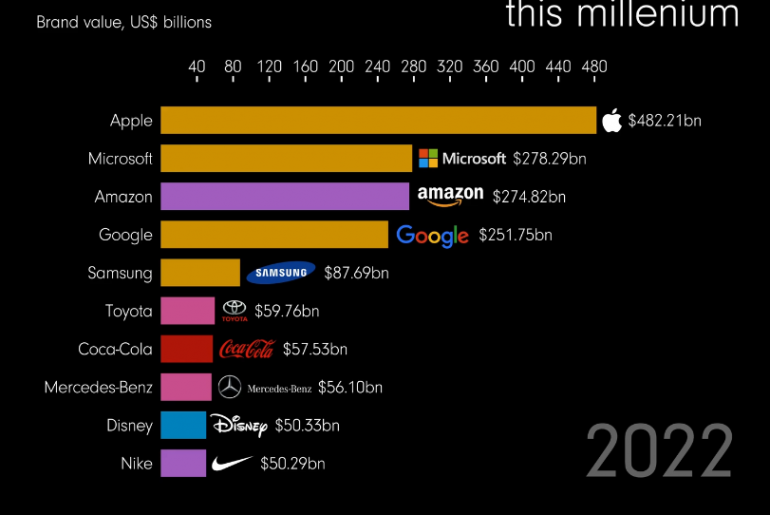
This animated graphic by James Eagle uses the annual brand rankings from Interbrand to track the world’s most valuable brands from 2000 to 2022.

Measuring Brand Value

One of the difficulties of brand valuation is its subjectivity.

In accounting, the value of a brand is sometimes represented as an intangible asset called goodwill on the balance sheet. That’s because the brand power associated with a company (i.e. brand recognition, brand loyalty, customer base, reputation, etc.) often makes a company more valuable than just the sum of its tangible assets like land, buildings, or product inventory.

This works for accounting purposes but is still a rough estimation, and doesn’t precisely quantify a brand’s true value.

For Interbrand’s studies, a consistent formula for brand strength was utilized which is based on a company’s financial forecast, brand role, and brand strength. It uses estimates of the present value of earnings a brand is forecasted to generate in the future.

The Top 10 Most Valuable Brands Since 2000

When the 2000s started, the internet was top-of-mind in terms of both markets and customer perception. The Dotcom bubble was driving the world’s largest companies, and brand value at the time reflected tech’s popularity:

Rank Brand Value (2000) Industry
1 Coca-Cola $72.5B Beverages
2 Microsoft $70.2B Tech
3 IBM $53.2B Tech
4 Intel $39.1B Tech
5 Nokia $38.5B Tech
6 General Electric $38.1B Energy
7 Ford $36.4B Automotive
8 Disney $33.6B Media
9 McDonald’s $27.9B Restaurants
10 AT&T $25.6B Telecom

Half of the top 10 most valuable brands at the time were in tech or telecom, including Microsoft, IBM, and Nokia.

Others were classic American brands and companies at the top of their fields, including Coca-Cola, General Electric, Ford, and McDonald’s.

But over the next 20 years, much of the old guard was replaced by new and rising brands. By 2022, only three of the top 10 most valuable brands from 2000 remained at the top:

Rank Brand Value (2022) Industry
1 Apple $482.2B Tech
2 Microsoft $278.3B Tech
3 Amazon $274.8B Consumer
4 Google $251.8B Tech
5 Samsung $87.7B Tech
6 Toyota $59.8B Automotive
7 Coca-Cola $57.5B Beverages
8 Mercedes-Benz $56.1B Automotive
9 Disney $50.3B Media
10 Nike $50.3B Consumer

Apple’s brand is now worth an estimated $482 billion, even though the company didn’t even crack the top 10 list back in the year 2000.

In fact, four of the top five brands on the 2022 list are directly in tech, and even Amazon (#3) is often considered a tech giant. Not surprisingly, brand value in the top 10 has grown almost across the board, though Coca-Cola is a notable exception, dropping $15 billion in estimated brand value over 22 years.

How will the most valuable brands continue to evolve over the coming decades?

By James Eagle

Article/Editing: Omri Wallach

Sourced from Visual Capitalist

By

Annual wraps remind me I’m tethered to my phone like a sad puppy. So give me a round-up from the app with the plainest of truths

Over the last few weeks a particularly pernicious form of alert has been clogging up our phones. It is the beast with many heads – all of which are designed to attack me specifically – morphing into different shapes and appearing in the least expected of places. It is the year in review: the content sent out by our favourite and least favourite apps to confirm how much we have depended on them in the past 12 months; how much we are tethered to them like sad puppies waiting for treats (notifications) from our masters.

Spotify is the progenitor of this degrading trend: its annual Wrapped began in 2016, when seeing all your data crunched by a corporation was “fun” instead of “a haunting reminder of surveillance capitalism”. With its aggressive kookiness and promises of personal branding, it became a hit among those of us who defined our entire lives by consumption – not the chic kind that befalls a waify Victorian heroine, but a consumption far more prosaic. Suddenly, listening to your depression playlist on repeat 50 times wasn’t just cause for concern, it was also a shareable, snackable badge of pride.

Unfortunately, Spotify became a gateway for a host of other apps to follow suit with their own annual wraps. I am here to say: enough! No more! To Grindr I declare: I do not need to know that 10,000 horny gay men have been listening to Sam Smith. To Strava: I definitely do not need to know that in all of last year I embarked on a sum total of two runs and both were abandoned halfway.

Beem It calls its version the “Beem Bundle”. Why is an app that I use only perfunctorily to send and receive money trying to psychoanalyse my financial habits? I do not know, but when I finally click on its notification in the final, bleary-eyed week of 2022, it jolts me awake with with an overly enthusiastic greeting: “Hey Beemer!” This is definitely a slur, I decide – and that’s before it tells me my “Beemsona” is a “Beemfluencer”, which are two words that make me want to die instantly.

But because it is a new year – a time of forgiveness and growth etc etc – I will expunge these year-end humiliations from my system and instead take this opportunity to consider the apps I do want to receive an annual report from in 2023.

MyGov

The only time I have ever felt anything akin to national identity is when people talk about the unbridled terror that accompanies an unexpected text message from MyGov; in these moments I feel truly unified with my fellow countrymen, one nation under panic. MyGov, in turn, should take ownership of its fearsome command: how many anxiety attacks will it induce within its users this year? As part of its year in review it could also (if you are an ATO agent please immediately stop reading this) shame me for filing my taxes five months late. I have mocked it up like so:

Mock ATO wrapped
MyGov take note: this is what your end-of-year wraps could look like. Illustration: Michael Sun

Depop

If you have a 19-year-old in your life, or indeed if you are a 19-year-old, you will know the power this clothing resell app wields over 25-year-olds whose glory days have long passed them and wish they were once again 19 (not speaking from personal experience or anything). The stats that Depop could collect in 12 months are certainly shameful – ie the number of times I have been scammed by someone hawking a $5 op-shop find for $70 – but at least this shame is productive. Maybe I will finally gain one crumb of self-respect and stop buying Y2K slogan tees from savvy teenagers. Unlikely to happen but regardless I am counting this as a win.

Google Maps

I am very geographically challenged, which means I spend more time on Google Maps than I do talking to my mother (sorry and I promise I’ll call). In 2023, it could catalogue all the time I have spent wandering the streets of Sydney like an urchin, head tilted up at 45 degrees to gaze forlornly at each passing street number and wonder why it does not match the one I have entered into the search bar. Luckily, this would also provide a watertight excuse the next time I am late to an event. “Sorry! I got lost!” I will plead to my friend while pointing at my Google Maps Wrapped, when in reality it is because I spent 50 minutes lying on my bed for no discernible reason.

New York Times crossword

About two years ago, I was part of a 20-large group chat where everyone dutifully played the NYT mini crossword daily: a free 5×5 grid that we would race to finish fastest. Because I am insane, I shelled out for a subscription to access the archives not for any sense of leisure or enjoyment, but purely to train in the way a runner might do laps, except much, much nerdier and with no physical exertion. I devoured 10, 20, 50 a day until (sorry to humblebrag) I could fill in the crossword within nine seconds, barely reading each clue as my fingers blurred across the screen. My training regimen, at last, was complete.

Unfortunately by this time most people had left the group chat or, worse, stopped replying. Every day I sent out reminders into the void: please play with me, today’s crossword is so fun, hello is anyone listening. But no one was listening. I was finally winning, but at what cost? There is a lesson here but I am choosing to ignore it. Instead I would like the NYT crossword app to send me a mathematical analysis of my mini crossword time in 2023 so I can reclaim some – any – of the sporting pride I once felt.

Screen time

Let us stop obfuscating: when all is said and done, the real reason why annual wraps are so terrible is because they remind us of the inanity of our own habits; they remind us that scrolling is not just part of our life, but our life itself. Therefore, we should simply go full hog and receive a year in review from the app with the plainest of truths: Screen Time, the iPhone function which exposes us at our ghastliest, as disgusting little cretins hunched over in bed, illuminated only by the glow of our devices for hours and hours. Go on, then. Tell us just how much time in a year we have spent using and complaining about all of our apps: how many days, weeks we could have been canoodling with our lovers or laughing with our friends or picking up our children one last time before they became teenagers and went to university and forged their own path in the world, leaving us alone and barren and reliant on our phones as a last means of salvation from the miserable detritus of our lives. Or maybe I’m being dramatic.

By

  • Michael Sun is Guardian Australia’s editorial assistant for features, culture and lifestyle. Twitter @mlchaelsun

Sourced from The Guardian

By Scott Brown

Late-stage startups are facing major fundraising headwinds, but early-stage investing is still a bright spot for startups until they hit Series B rounds.

Traditional venture capital dollars are harder to come by these days, but institutional investors are still looking for smart investments, and industry watchers are hungry for the good news a new round of financing suggests. While the market is uncertain, founders need to be ready to use their capital infusions as an asset that extends beyond the cash it represents.

In any market environment, a fundraising event can act as a vote of confidence or validation from investors, supporting your company’s growth via talent acquisition and brand awareness. No matter the size of the round, securing external investment is a key milestone in many companies’ journeys, and it often takes a tremendous amount of effort. However, after putting all that work in, many founders make the mistake of letting a funding moment pass by without extracting all the value they could have.

Over the course of my 20+ years as a marketing leader at startups, venture capital firms and large tech companies, I’ve helped dozens of companies announce funding news, ranging from $1 million pre-seed rounds to $50 million raises.

Here’s my playbook for founders looking to make their “big money” moments go farther:

Rethink assumptions about fundraising news

Publicizing funding news lets you create incremental value beyond the capital investment by highlighting your momentum and driving brand awareness.

Founders may overlook the value of announcing funding news for several reasons, but the biggest one is assuming the round isn’t “big enough” to warrant attention. When you see other companies raising hundreds of millions of dollars, it can be easy to think no one will be interested in hearing about your startup’s much smaller round.

Fortunately, that isn’t true. While big numbers may draw splashy headlines, smaller rounds can still drive interest if the announcement is executed well and you can connect the news with some larger industry/technology/societal trend.

Another reason founders hesitate is if all or part of the new capital is through a debt investment. Though it’s becoming more common, especially as VC investors pump the breaks, there is still some stigma around debt funding, and founders may worry they’ll be penalized for adding debt to their balance sheets.

Click HERE to read the remainder of the article.

Feature Image Credit: Anatolij Fominyh / EyeEm (opens in a new window) / Getty Images

By Scott Brown

Sourced from TechCrunch

By Alex Blake

If you believe the rumours, Apple’s top-secret mixed-reality headset has been beset with delays over the years. Now, it looks like it could be postponed even further.

That’s because reliable Apple analyst Ming-Chi Kuo has revised his prediction for when the headset will see the light of day, pushing it back to later in 2023.

Previously, Kuo had maintained that the device could ship to customers in the second quarter of 2023, which covers April to June. Now, Kuo believes it will go on sale either late in the second quarter or into the third quarter, which comprises July through to September. That lines up roughly with a report from DigiTimes that predicted mass production would begin in March 2023.

The change also affects the date of the media event at which Apple was expected to reveal the product. In previous reports, Kuo had stated Apple would hold a January event, but with continuing delays plaguing the headset, he now believes an event in the spring or at Apple’s Worldwide Developers Conference (WWDC) event is more likely.

Launching at WWDC?

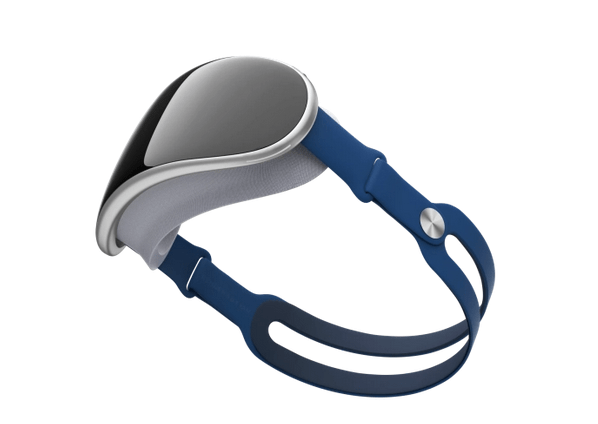
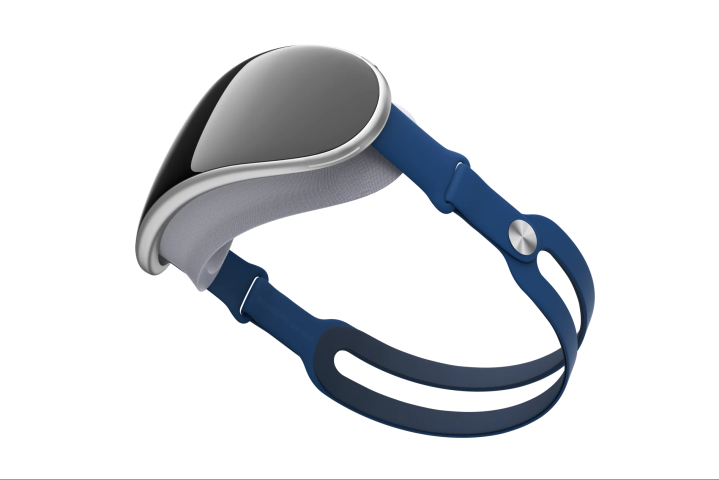
A render of Apple's VR headset.
Apple AR/VR headset render Ian Zelbo

At first glance, the new dates seem to make a lot of sense, largely due to WWDC falling in June. This show would be a perfect opportunity for Apple to introduce the device to an audience of developers, many of whom will be looking to build apps for this entirely new platform.

However, that all depends on whether Apple can fix the problems that are causing the delay in the first place. According to Kuo, the headset has been pushed back because of “issues with mechanical component drop testing and the availability of software development tools.” That last problem could be a key hurdle to launching at WWDC.

Kuo’s report seemingly rules the headset out of Apple’s rumoured March event, though. Given the problems Kuo has disclosed, anything earlier than April might be a little too soon.

Apple’s headset is expected to combine virtual reality (VR) and augmented reality (AR) capabilities, allowing users to fully immerse themselves in a virtual world or have digital imagery overlaid onto the real world. It might also be able to run iOS apps in a 2D mode.

According to previous leaks, it looks like Apple is going to go all out, decking the headset out in a ton of high-end components. That includes super-high-resolution displays, a plethora of cameras, and a featherweight design that nods to other Apple devices. All that quality adds up, though, and the price could be as much as $2,000 or $3,000. Let’s hope it’s worth the wait.

By Alex Blake

Sourced from digitaltrends