By Ali Faagba
If you’ve ever gone from reading a blog post to signing up for a free trial of any software after conducting a Google search, you’ve encountered product-led SEO content.
It departs from the previous online marketing strategy of generating marketing-qualified leads (MQLs) before passing them on to the sales team to convert. Because most content is intended to drive business goals, the product should be contextually woven into the content to drive awareness and sales, according to the understanding of product-led content.
As a result, the leads generated by product-led content immediately become product-qualified leads (PQLs), which are a more potent set of leads than MQLs.
This post will teach you everything you need to know about product-led SEO content, with real-world examples from brands that are succeeding with it.
What does product-led SEO content mean?
Product-led SEO content is the type of content that connects your product with a potential buyer via organic search ranking. It strategically positions your product as part of a solution you’re telling a reader about, piquing their interest to try it out.
It encourages visitors to try your product rather than simply providing you with their contact information. Product-led content is preferable because research shows that 87% of MQLs do not convert despite the best efforts of your sales reps.
Consider this: how many times have you signed up for a newsletter because you enjoyed the content you’d just read or because you wanted to gain access to a new one? If you’re like the majority of people, you’d say several times.
But did you sign up to buy something? The answer is most likely no. Now, flip the coin and consider your intention if you signed up to try out a product.
The idea is that product-led content is the most aligned with purchase intent.
Benefits of product-led SEO content
Here are the benefits of product-led SEO content.
It brings more potential customers
Product-led content is superior because it corresponds to buyer intent and thus attracts more prospective buyers.
As you’ll see later in this post, you can’t have product-led content unless you understand why the potential reader might need your product.
It shortens the sales cycle
The traditional sales cycle is 84 days long, according to HubSpot. During this time, a prospect discovers a problem, searches for a solution, discovers your product, compares it to other options, and either uses it or goes with the competitors.
However, with product-led SEO content, you can showcase your product as a solution to their problem so that they will be compelled to try it out. This assists them in making a decision and, as a result, reduces the amount of time they spend going back and forth in your pipeline.
It’s cost-effective
Going after contacts whose intent they don’t know is a costly exercise for the sales team. This takes phone calls, emails, and sometimes face-to-face meetings, and, most importantly, time.
Product-led content, on the other hand, encourages your prospects to purchase your product or contact your sales team.
It limits competition
Anyone who tries your product or schedules a demo knows right away if it is a good fit for them. Some steps in the purchasing process, such as alternative considerations, may be eliminated as a result.
Contrast this with someone who simply downloaded an ebook or subscribed to your newsletter. Even if your sales team makes every effort to convert them, it is natural for them to progress to the stage of product comparison, which may push you out of the race.
With that said, let’s get into the specifics.
Steps to write successful product-led SEO content
In this section, I’ll walk you through the process of creating product-led SEO content that drives sales.
Understand the product
If you find yourself writing about a product, you’re probably a marketer or content writer tasked with selling it. This indicates that you are not an expert in that product or industry. The first step should be to close the knowledge gap.
Remember that product-led content is all about incorporating a product into an article contextually. A closer look at the article will reveal information about the buyer personas as well as the product.
Why? Because the product’s owners understood there was a problem to be solved and for whom it was being solved when they built that product.
This is why the product discovery call is the best way to learn about the relationship between:
- The product
- The problem it solves
- Whom it solves it for
Knowing all of this will assist you in determining who you are targeting and what search terms they will use on search engines. The following are the questions to ask to learn everything you need to know:
- What problem does your product solve?
- Why was it built in the first place?
- What are the strongest use cases?
- Who are the primary target users?
- What are their pain points?
- Who are the competitors?
- What does your product do better than the competition, and how’s it different?
You can discuss this with the founder, the CEO, the sales manager, or even the head of marketing. Just make sure you’re gaining your knowledge from an insider. If possible, you can also speak to the existing customers to tap into their firsthand experience.
And, because the majority of this work is dependent on the success of this first step, don’t stop there. Do the following as well:
Find relevant queries: You’ve already thought of some of the research they might be doing that is relevant to your product, so take it a step further by researching those keywords on Google Trends, Also Asked, Keyword Chef, and Answer the Public. This can provide you with a wealth of information about what your audience is looking for and their stages of awareness.
Find data to validate (or invalidate) your convictions: This boils down to two steps: first, go to where they are and find out what they are talking about. For example, many marketing conversations take place on LinkedIn, whereas many political conversations take place on Twitter and Facebook. Second, use customer research tools such as SparkToro.
Study the review sites: Look for your competitors on review sites like G2 and learn about the issues their customers are having. Looking closely, you’ll see how you can credibly position your product as a better alternative.
Outline your buyer personas and ideal customer profile
If you are a B2B company and your product is aimed at other businesses, you must define your ideal customer profile (ICP). Identify your buyer personas if you’re a B2C company.
An ICP is a fictitious representation of a company that needs your solutions, whereas a buyer persona is the ideal individual customer who will most likely purchase from you.
An ICP will include information on the following:
- Company size
- Industry
- Geographical location
- Revenue
A buyer persona, on the other hand, will include details about:
- Demographic (age, gender, marital status, education, occupation, etc.)
- Online behavior (preferred social media, favorite influencers, trends, interests, etc.)
- Challenges
- Goals
That brings us to the next step: determining your target audience. To accomplish this, you should gather information from existing customers in three ways:
Conduct keyword research
Keyword research is an essential component of product-led SEO content. It allows you to validate all of your previous findings, such as whether a keyword is worth pursuing or not.
It also suggests additional potential keywords for you to consider. It also reveals important information, such as the competition’s backlink profile, the keywords they rank for, long-tail and short-tail keywords, keyword difficulty, and more.
Look for keywords that will give you a better chance of ranking, especially if your industry is highly competitive. To put it another way, look for long-tail keywords. This may sound like a cliche to you right now, but it’s important to understand.
Long-tail keywords, just to be clear, are those with low search volume and competition. These keywords are more specific and commercial in nature than informative. This article is an example of long-tail keywords: best Anyword alternatives.
These should be your top priorities because a searcher at this stage is in the consideration stage and is more likely to purchase than, say, someone searching for how to write an essay, a long-tail keyword.
The bottom line is to understand buyer intent and find low-hanging fruits that’ll bring you traffic and money quickly.
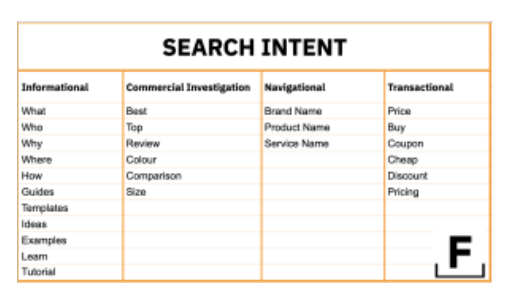
To further understand search intent, take a look at this table by Foundation Inc.:
Pro tip: You can also consider zero-volume keywords if you strongly feel that some of your prospects might be looking for them. In recent days, I have seen a lot of marketing leaders encourage this.
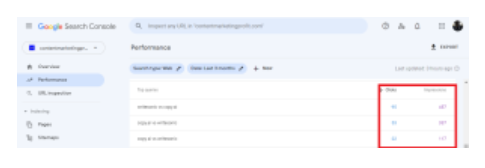
In my experience, many zero-volume keywords generate traffic, and their posts rank for keywords other than the ones they originally targeted. According to Ubersuggest, this post, Writesonic vs Copy AI, has 20 monthly search volumes and ten, according to Ahrefs.
However, after taking the risk of writing and publishing it, it now receives nearly 200 visitors per month, with over a thousand impressions.
Furthermore, Google has said that 25% of search queries on its search engine are new. That’s another reason you shouldn’t always mind keyword research data when planning your content calendar.
Use a product-led approach to prioritize content
Keyword research is no longer sufficient. Focus on commercial-intent keywords that can contextually feature your product as a solution to maximize your resources.
Take it from Ahrefs, which happens to be a keyword research tool.
Assume you work with user onboarding software. The third column in the table below lists some of the potential topics for your blog.
|
|
How to use in-app communication to increase retention |
|
|
Some examples of good in-app communication |
|
|
How to find users through SEO |
|
|
Blogging for your business |
Now, define the criteria for scoring the topics and determining their importance to your business.
|
This is indispensable because people can’t execute in-app communication without your product. |
How to use in-app communication to increase retention |
|
This is very useful because to apply any of these examples, they’ll probably need your product. |
Some examples of good in-app communication |
|
This isn’t going to lead to sales, but you can mention your product since they’ll eventually need to communicate with users in-app. |
How to find users through SEO |
|
This is completely irrelevant, but it freshens up your website and can also bring traffic and create awareness. |
Blogging for your business |
The next step is to add points blog post topic based on those criteria. Here is an example:
| 3 |
This is indispensable because people can’t execute in-app communication without your product |
How to use in-app communication to increase retention |
| 2 |
This is very useful because to apply any of these examples; they’ll probably need your product |
Some examples of good in-app communication |
| 1 |
This is going to lead to sales, but you can mention your product since they’ll eventually need to communicate with them in-app |
How to find users through SEO |
| 1 |
This is completely irrelevant, but it freshens up your website and can also bring traffic and create awareness. |
Blogging for your business |
As you can see, the one that accumulates 3 points has the highest score, which you should focus on. This is because they are directly related to your product and can result in immediate users and revenue for your company.
Conduct SERPs analysis
It is critical to consult existing literature in your industry to write better content. Concentrate on what your competitors have been doing on Google, which will help you create content that outperforms theirs.
Examine the top ten articles on Google—which appear to be nine these days. Examine how they were put together. Things to look into here include the following:
- Are they how-to guides?
- Are they listicles?
- Are they a mix of both?
- What are the key points they cover?
- How in-depth are they?
- What new insights can you add to the topic?
- What can you do better?
The last two questions are the most important, and they are the reason you are performing the SERP analysis in the first place.
Being able to answer these critically and excellently will not only give you a better chance of ranking but also of delighting and convincing your site visitors.
Pro tip: Many SEO experts advise you not to copy your competitors, but this is exactly what you should do occasionally. This does not mean you should copy their content, but rather the strategy of the top three Google articles. Google understands that search query based on their format.
Copy everything you can, including their headline, H-tags, meta descriptions, conclusion, and FAQs. Then tweak it to make it more unique and better. If your product-led SEO is about ranking on Google, you can’t dare to be too different.
Strategically weave the product into the content
You’ve laid a solid foundation for writing your product-led SEO content with everything you’ve done. The writing exercise has now begun.
To create truly product-led content, you must first demonstrate a thorough understanding of the subject matter and your audience’s problems.
It’s not uncommon for people to recommend CoSchedule Headline Studio for this step. While it’s a fantastic tool, I doubt it will help you in this situation. Sweat it out and think it through.
For SEO purposes, you may want to include your target keywords in the first paragraph or the first 100 words. However, for the sake of your audience, disregard this in your first draft. Ignore generic introductions such as “do you want to solve XYZ problems?” In all honesty, they are looking for a solution, which is why they have arrived at your website. Don’t bother them with that.
Also, unless you have an awe-inspiring and relevant story to tell, don’t tell them a theoretical story and then ask if it struck a chord with them. Many writers do this for the sake of storytelling, but it’s frequently too generic to have any real impact. Only a few writers have the creativity to create something like this.
Understanding your audience’s level of awareness will also help you write an excellent introduction. So you ask yourself: What is their level of awareness, and where are they in the buyer’s journey? For example, are they looking for a new solution right now, or are they already comparing options?
All of your previous research would have given you a better understanding of who your target audience is. As a result, you should understand the problem they are attempting to solve and use that to hook them in your introduction.
In the introduction, frame the problem as clearly as possible while remaining natural.
Take a look at this introduction, for example:
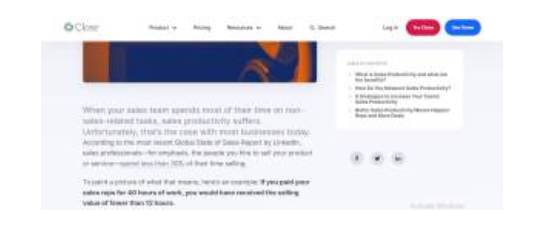
There is no pretentious storytelling or any questions that’ll most likely annoy the reader rather than hook them in—just a direct capture of the reader’s challenge and a transition into the solution.
And when it’s time to recommend a product they can use to solve their problems, don’t forget these three things:
Don’t be salesy: Avoid being pushy by offering your product gently. And, if there is another popular product in your industry that they may have heard of, suggest it subtly as well. Then figure out how to show them where your product shines and why they should choose it over the alternative.
I like how Trevor.io does it on their blog. Here is an example:
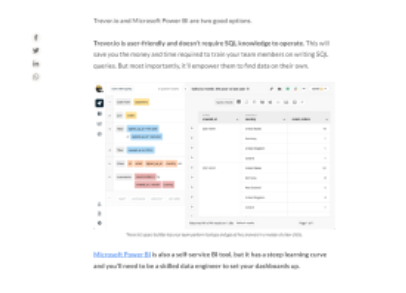
Show screenshots: In product-led SEO content for SaaS, screenshots are essential. You want to sharpen your reader’s senses of what’s in your product and how it works. Of course, you can also use GIFs and short video clips if necessary.
Tell them what to do: When you’ve finished positioning your brand as a potential solution, don’t forget to include a call to action (CTA). Tell them what you want them to do, whether it’s to sign up for a free trial or schedule a demo, as you saw Trevor do in the screenshot above.
Optimize your product-led SEO content for search engines
Now that the work of writing helpful content has been done, it’s time to optimize your content for search engines.
There are two ways to do this: you can do it manually or use content optimization tools, such as Surfer SEO and Clearscope.
Here is a quick highlight of what content optimization involves:
- Use the key phrase in the introduction or the first 100 words
- Use the key phrase in the subheadings, i.e., H2, H3, etc.
- Optimize title tags
- Optimize your images by adding alt text
- Link internally
- Link to an external, authoritative source
- Use the primary keyword and related key phrases strategically throughout your content
- Use your keyword in your URL
- Optimize your meta description with your keyphrase
Let’s wrap it up
Product-led SEO content is an excellent way to save money while capturing the types of leads your company needs most. This is because it mostly corresponds to buying intent and eliminates a lot of back and forth in your purchasing process.
You are more likely to fill your pipeline with good leads if you demonstrate a thorough understanding of your audience’s pain points and show them, rather than tell them, how your product can help them solve them.
Featured Image Credit: Photo by Sam Lion; Pexels
Author’s bio: Ali Faagba is a conversion-driven content writer and content marketer for Product-led SaaS brands. He owns and runs Content Marketing Profit, his product-led content and SEO play ground.