Author

editor

Browsing

By Marija Zivanovic-Smith

As marketers navigate the convergence of Web 2.0 and what many are calling Web3, we sit at an important inflection point. Many may be wondering, “Where do we go next?”

Let me first take a moment to define Web 2.0 and Web3.

Web 2.0: The current state of the internet and a digital universe of user-generated content that gave rise to e-commerce, social media, and search engines. It allowed companies to benefit from the collection and monetization of data from individuals.

Web3: The next iteration of the web with token-based commerce, blockchain technology, and its own language and communications. It’s given rise to decentralization and placing ownership of data in the hands of users versus a central authority or large companies.

Just as Web 2.0 brought a kaleidoscope of new opportunities from smartphones to social networks, Web3 is bringing the next wave of tools and innovations.

WILL WEB 2.0 DISAPPEAR?

Everywhere you go, you are exposed to marketing. Billboards, print mailers, and signage still thrive. The rise of Web 2.0 added channels, like email, Twitter, and LinkedIn, increased diversification, and marketing saturation. Enter Web3, where digital assets and digital wallets are another playing field.

According to Smart Insights, as of February 2022, the average email open rate was 16.97%. That reflects a drop from what marketers generally saw at 24% from 2015 to 2018. It is clear that individuals are already not responding to email marketing as frequently. Messaging apps and the ability to make connections and transactions via social platforms have been on the rise. That said, email still holds significant power as a marketing tool with 4 billion daily email users—a number that continues to rise—and an impressive ROI of $36 for every $1 spent, according to Hubspot. Email marketing revenue is estimated to reach $11 billion by the end of 2023, according to Statista.

Just like direct mailers are often still part of a marketing strategy, it is likely email and social media are here to stay. While the ideals and dynamic economies available via social tokens in Web3 are something to strive for, I believe we will not see a disappearance of what we have in Web 2.0 but rather a modernization and democratization.

HOW SHOULD MARKETERS BE THINKING ABOUT WEB3?

Data is quickly becoming the world’s most prized resource. In Web3, all user data is public (generally speaking). However, what is NOT public is the identity of the individual, unless they choose to make it so. Users will have more control over their privacy and likely will use their data as an ownership asset—meaning as a marketer, you will need to have a direct relationship with consumers who share their preferences. This represents a redistribution of power and a new level of privacy, transparency, and control for the average consumer. It also means utility is king and that marketers have to provide the right tools to the right users.

I believe audience expectations will shift, especially when it comes to the channel, frequency, and confidentiality of communications. Communities—not corporations—move to centre stage.

KEY STRATEGIES

With that in mind, here are a few key strategies to help marketers make the transition to Web3 more successful:

1. Focus on authenticity. Digital wallets are public and contain things of value (tokens), whereas email or social media accounts can’t be characterized in the same way. They are free to create—including content, clicks, and likes. This has given way to scams and security issues. I’ve found consumers are increasingly becoming leery of being a part of online platforms or making online purchases. This can provide brands with an opportunity to leverage Web3 technology that offers a level of authenticity and trust as they integrate technology into their own platforms.

2. Be willing to experiment and get messy. We’re sitting on the cusp of Web3 without it being fully here. If you wait for Web3 to be fully established before you “dive in,” you could risk meeting the same fate as companies that waited too long to get on board with Web 2.0.

This is the time to try strategies that may or may not work. I believe the most successful NFT projects so far have offered something creative and original. Tiffany’s NFTiff collection is a good case study of a brand navigating a Web3 marketing campaign. Financially, the limited-edition collection was a success, with the 250 NFTs selling out in 22 minutes at 30 ETH (around $50,000) each. While the NFTiff collection netted Tiffany & Co. the equivalent of $12.5 million, the release and resulting community response also serve as an important lesson for using Web3 as a marketing channel.

3. Take a community-first approach. In an increasingly digital world, people are craving communities that share their ideals, goals, and aesthetics. One of the biggest values in the Web3 space is access to that community. In my experience, belonging is becoming the main driver of loyalty, with the product being secondary. From a marketing perspective, lean more on building and nurturing strong communities. The NFTiff collection was born out of a tweet from Tiffany’s EVP of Product and Communications, who shared images of his custom CryptoPunk pendant. The response drove the storied brand to take its first step into Web3.

4. Create new value. Look at Web3 as an opportunity to envision and create new value for consumers and reconnect to company values. People are seeking fresh ideas, creativity, and innovation. In turn, art and technology intersect. Creativity is no longer viewed through a one-dimensional lens. Consumers expect brands to create and live value.

Ultimately, marketers should take calculated risks and keep in mind that Web3 opportunities are uncharted waters of both risk and innovation. That makes it especially important to work with trusted brands and services with a track record of protecting their users and doing right by customers.

As a marketing leader, the question to ask yourself shouldn’t be “What do I need to start/stop doing?” but “How do I start evolving my strategy so Web 2.0 and Web3 work together to benefit our brand?”

Feature Image Credit: luckybusiness/Adobe Stock] 

By Marija Zivanovic-Smith

Marija Zivanovic-Smith is IEX‘s Chief Marketing & Communications Officer, helping drive growth as we enter the digital asset space.

Sourced from Fast Company

If you’re looking to stay on top of the latest trends in digital marketing, these newsletters will help you do that. Here are some of the best ones.

As a digital marketer, you face the dilemma of needing to stay on top of the latest industry trends and innovations, but also not having the time to dive into rabbit holes researching every trend.

Marketing newsletters are a handy solution to this problem. They bring marketing information straight to your inbox in an easily digestible format, saving you time and energy. However, since several such newsletters are in circulation, how do you know which one to choose? To help you pick, we’ve rounded up 10 of the best digital marketing newsletters you should subscribe to immediately.

1. Convince and Convert ON

Screen of webpage from Convince&Convert

Convince and Convert describes its newsletter as “marketing’s most relevant email.” Its 90,000-plus subscribers are proof enough to back up this claim. New issues are released every two weeks, each containing trends and insights hand-selected by the Convince & Convert team to help you stay on top of the marketing industry.

The newsletter primarily focuses on content marketing, social media, email, amplification, word-of-mouth marketing, customer service/experience, and analytics. It also contains advice from a Convince and Convert expert on what trends to watch, as well as fun surprises in each issue.

2. The Daily Carnage

Screenshot of webpage of Daily Carnage

Don’t be thrown off by its questionable name. The Daily Carnage is one of the industry’s most relevant and beloved marketing newsletters. It is the brainchild of the folks at Carney—a digital marketing, design, and development agency. Subscribing will ensure that you are always the sharpest marketer in the room.

Every day, you’ll receive a hand-picked list of content useful for all the best digital marketing careers that will help you learn about your field in a fun and relevant way. You can also rely on the Daily Carnage for motivation, affirmation, and inspiration to start your day strong.

3. Buffer–Social Media for Business Newsletter

Screenshot of Buffer webpage

Buffer is a popular social media management app that helps marketers build their brands and grow their businesses on social media. They also have a newsletter with more than 45,000 subscribers, which is still growing.

Through this newsletter, the Buffer team shares blog posts, tips, trends, experiments, and news that will help you succeed in social media marketing. You can also get inspiration for your next idea from stories of businesses that are leveraging social media to grow their presence.

4. Marketing Dive

Screen of Marketing Dive webpage

Marketing Dive covers various topics, including marketing technology, advertising, social media, video marketing, and analytics. It also takes things a step further by providing in-depth journalistic insight into the day’s marketing headlines, news, and trends.

By devoting just 10 minutes in the morning and evening to Marketing Dive, you can stay on top of all the developments in the marketing industry. There are three subscription options for marketing dive: Daily Dive, which publishes daily; Mobile Weekly, which publishes every Thursday; and Agencies Weekly, which releases on Mondays.

5. Sketchalytics

Screenshot of Sketchalytics webpage

If you’re more of a visual rather than verbal learner, then Sketchalytics is the perfect marketing newsletter for you. Instead of reading lengthy articles, you’ll receive a marketing micro-lesson in the form of a sketch each week. By pairing the sketch with the brief explanation accompanying it, you can learn and be entertained simultaneously.

There is no sales pitch, fluff, or unnecessary content. Each issue is just pure marketing lessons on new topics presented in a fun and easy-to-understand format.

6. Search Engine Land Daily Brief

Screenshot of Search Engine Land webpage

In the ever-changing landscape of search marketing, there’s no better newsletter than Search Engine Land’s Daily Brief. The newsletter is published every weekday and gives you daily recaps of the latest news, analysis, and insights on search marketing topics.

Its conversational format and up-to-date content have already captured the interest of thousands of marketers, and many testify that it has helped them grow as digital marketers and gain confidence in their skills.

7. Think With Google

Screenshot of Think with google webpage

Digital innovation is changing how we do marketing, transforming it into a data-based industry. Think With Google helps you adapt by putting Google research and data behind your thinking.

This fortnightly newsletter is your free resource for consumer insights, marketing strategies, and useful tools. You’ll find within it data and trends, forward-looking perspectives, and behind-the-scenes looks at successful marketing campaigns to guide your own marketing efforts.

8. Neil Patel

Screenshot Neil Patel and a bio of him

Neil Patel is one of the most recognizable names in digital marketing. He’s founded multimillion-dollar companies such as CrazyEgg and Kissmetrics, runs his own agency (NP Digital), and has been featured in top magazines like Forbes, Inc., and Entrepreneur.

In his many years exploring digital marketing, he’s developed unique insights and proven marketing tactics unknown to your competition. He shares this as well as tips for becoming a successful content writer, creating better-paid campaigns, SEO, and social media, in his newsletter.

9. Product Hunt Daily Digest

Screenshot of Product Hunt webpage

Sometimes, marketing success boils down to finding the right tool, and Product Hunt can help with that. It is a curation of the best new products across several industries, including email, social media, and influencer marketing. You can use it to find the best chrome extensions for digital marketing or unreleased apps with promising new features.

Additionally, by following your favourite topics and subscribing to its newsletter, you can receive mail alerts on all the newest and best digital marketing product arrivals before anyone else.

10. Really Good Emails

Screenshot of Really Good emails webpage

Email marketing is still one of the most potent advertising channels, and Really Good Emails ensures you do it right. It is a showcase of over 10,000 hand-picked email designs and resources to help you understand the ins and outs of product email and customer email cycles.

You can browse its categories, designs, and resources when you need tips for making beautiful email newsletters. When you subscribe to its newsletter, you can get all of this inspiration straight to your inbox every week.

Which Marketing Newsletter Is Best for You?

There is no one-size-fits-all marketing newsletter. Each one has a unique selling point and caters to a specific need. Instead, try out several newsletters and stick with the ones that are most useful to you. You’ll discover, as you cycle through these newsletters, that you are always in the loop on industry happenings without needing to sacrifice too much of your time.

Who knows, eventually, you may become a marketing expert and start publishing your newsletters. If that’s the case, look for tips to ensure your newsletter succeeds and makes the list of must-read newsletters.

By Joshua Adegoke

Joshua Adegoke is a talented writer with a year of professional writing, editing, and optimizing internet content experience. As a tech enthusiast, Joshua is passionate about the dynamism technology is bringing to the future of work.

Sourced from MUO

In a crowded race, standing apart can be a tall order. Luckily, some of the magic lies in simply being authentic and staying open-minded, writes EP+Co’s Kat Shafer.

Like it or not, pitching and winning new business is the lifeblood of advertising agencies everywhere – which is why you might think an obvious secret to being successful has somehow managed to elude you. But the truth is, and as much as we’d like to believe otherwise, a perfect formula for guaranteed results just doesn’t exist. That’s why I’ve spent my nearly-20-year career refining the next best thing: time-tested tips that I know will give my agency a fighting chance on pitch days.

If racking up some wins – and helping your team feel more confident in the process – is on the agenda this coming pitch season, here’s some advice from someone who’s tried it all and then some:

1. Remember that this is a free-choice marriage

You wouldn’t start a relationship with someone you don’t click with, or worse, can’t stand. In fact, you’d probably cut things off before life got really hard for the both of you.

It shouldn’t be any different with new business. So before you even think about putting all that work into an RFP, find out if the chemistry between the agency and the potential client is any good.

Here’s how: after you’ve responded to the brand’s RFI, plan your first date – or rather, meeting – to gauge personalities and do a temperature check. If you can tell it’s not going to be a fit, you can call it then and there. But if everybody feels a spark, use the time to get comfortable with the faces you’ll be seeing on game day – and get a leg up on the competition.

2. Start dumb, and get smart quick

If you start out thinking you know who your potential client is and what they need, you’ve already lost. So forget everything and approach each new business opportunity with a clean slate.

While you’ll never know the business as well as the clients do, you can get up to speed fast – and that’s the goal. So do your research about them, their industry and their competition, and use these findings to inform the entire pitch. Showing you always approach creative with insight-driven strategy is an excellent way to prove yourself an ally they simply can’t afford to lose.

3. Make it a conversation, not a presentation

It sounds obvious, but bears repeating: creating a hostage situation is never the goal when it comes to pitching new business. That is to say: avoid trapping your audience in a presentation at all costs.

Instead of droning on about what your agency can do, focus on talking with the room. Ask questions. Involve everyone. Get good at reframing the pitch as a conversation and you’ll be shocked by how much more smoothly the process goes. From feeling more relaxed yourself to giving the client an idea of how you think, how you work and what a two-way relationship would really be like should you win the account, you’ll ensure the experience is more enjoyable for everyone. Win-win.

4. Don’t be afraid to be real

Telling a group of strangers that you’re trying to impress where they’re failing or falling short feels counterintuitive. But most brands are looking for people who care as much about perfecting their brand image as they do. And that means poking holes and being proactive, free-thinking problem-solvers.

Even if the RFP doesn’t ask for it, your pitches should always include an analysis of what the brand could and should be doing better. Be transparent, but don’t forget to back up your opinions with evidence. You need to show that your insights will drive the right solutions.

5. Don’t be a chameleon

Finally, and most importantly, never try to change or disguise who you really are to win a potential client. Aside from getting into a situation where you’re not able to deliver on your promises, you risk the opportunities that come from owning what makes you unique.

Stand on your agency’s purpose and mutually beneficial client relationships will thrive, taking your reputation and new business wins to the next level.

Feature Image Credit: Adobe Stock

By Kat Shafer

Kat Shafer is chief client officer at EP+Co.

Sourced from The Drum

By

Marketing leaders share their perspectives on how to prepare your business in light of an uncertain economy.

All of the talk of a is forcing small business owners to hope for the best and prepare for the worst. To understand how are preparing, I contacted several agencies that specialize in working with entrepreneurs to grow and scale. Preparing for a downhill period of time is like cross-country skiing. You have to be prepared to weather the storm. To help, I’ve combined their feedback with the we’re deploying in our company to be prepared for whatever the future may hold.

There will not be a one-size-fits-all approach. Your approach will depend on your current situation and the level of marketing you have deployed. In the larger end of the small business market, you will have a full marketing team and various agencies supporting your business. And at the smaller end of the spectrum, you may have a single marketing manager. Evaluate each of these strategies for how they will apply to your business and right-size them for your approach.

Create trigger points for shifts in marketing spend

If there is a recession, we can expect revenues to decline. If that happens, what will happen to marketing spend? It’s best to plan these decisions ahead of time when you aren’t under the stress of the moment. Where will you decrease spend? Where will you increase spend? What metrics will you use to measure the success or failure of initiatives? What is your target cost per lead? What’s your target cost per new customer? These are all questions entrepreneurs are asking themselves and their marketing teams right now.

We’re working on establishing baselines. It’s like building a plane while we’re flying. We’re seeing some categories like and email declining since the Apple iOs15 update, and it’s hard to know when we’ll reach the floor. Meanwhile, we’re seeing others like thought leadership, influencer marketing and podcasting increasing, and we’re not sure when we’ll hit the ceiling. The key is to stay on top of the marketing mix and put in accountability to understand what is truly driving the needle we need to be moving. A rounded-out strategy will consider new account marketing, customer marketing and partner marketing for a holistic strategy.

Invest in the brand and messaging to stay ahead of the competition

Companies are doubling down on standing out from the crowd. Bob Gillespie, founder of Propr Digital said his clients are moving towards differentiating through powerful branding and messaging. “Brands are looking to stand out. And once they do, they want that differentiation to scale. We’re finding companies are investing in their corporate brand and message on the front end and then carrying it through all of their campaigns in order to create stronger brand awareness in a more competitive marketing environment.”

This is something we chose to do during the pandemic. We knew the market was shifting, and we couldn’t compete on size as a small business. So, we knew we had to stand out and make every interaction count. We hired a brand agency to come in. They turned our brand on its head and came back with something that truly sets us apart in the market. Then we hired a messaging agency to come in and align our sales messaging. Now, we’re focused on making an impact and being memorable at every touchpoint.

Be strategic about advertising spend and its purpose

If revenues decline, most companies will decrease their advertising spend. Steve Krakower from Harbor Marketing Agency says, “This will make it more challenging to scale.” He recommends you ask yourself, “How do you acquire customers more efficiently? Focus on Return on Ad spend as your one big metric, and reset expectations. Growth might be slower. The days of putting $1 into Facebook and getting $5 out are on their way out. So, what we are trying to do is focus on brand building. We’re putting out a lot of content to build a community around brands and businesses. Then we’re supplementing that brand advertising with direct response advertising. It takes more sweat equity to get results than it did five years ago, and in today’s market, brand building isn’t optional.”

He also recommends that you “are smart about your spend. You don’t have to outpace the recession. You may not be as aggressive. You have to make sure you can weather the storm while positioning to scale after.”

Combine forces to amplify resources

This is not a time to go it alone. Positioning yourself as part of a “full suite” implies better value; people assume the whole is greater than the sum of its parts. Brian Taylor from Goldiata Creative says, “Align yourself with other recession-proof businesses. Look for industries that will have less of an impact during a recession like government, healthcare and consumer goods.”

We made a strategic shift to align with specific partners in our go-to-market strategy. We realized that with a small marketing team of three, we couldn’t boil the ocean. We had to focus and take advantage of the marketing teams of our partners if we were going to make an impact. This has enabled us to align our sales teams on a joint account-based , leverage content marketing resources across both brands and increase the amount of lead volume sent to sales. That’s a win-win. We’re in a market where we recognized we’re stronger together. Our partners have marketing teams that are more than triple our size. Why would we try to go it alone when we could be creating joint content and running joint promotions that maximize the reach of both of our brands? We have a powerful combined story to tell, so let’s tell it.

Offer more social proof to increase loyalty

In a down market, everyone’s reputation is on the line. And that means that every decision matters. Joe Dominick, partner at Gauge Media and owner of a small IT firm says, “In a down market, be prepared to offer more social proof. You want and testimonials that will reassure people that the money they are about to spend won’t be regretted. It’s not about loyalty, it’s about reducing prospect fear and uncertainty. Reputation matters. And theirs is on the line as much as yours.”

We’ve invested heavily in case studies as part of our content strategy, understanding this will become more and more useful as time goes on, regardless of whether or not there is a recession. Social proof always matters. Look at how you can tell the story of your customers and make them the hero. Your success is their success, and the more you can put them at the centre of your marketing strategy, the better. Even in industries where you can’t publish the customer’s name, you can still publish it with the type of company and industry it served and anonymize it. The idea that we can’t share our successes simply isn’t true. There’s a creative way to tell every story.

Entrepreneurs understand that we need to be thinking ahead and start making strategic shifts to prepare for a once again, unknown future. How you handle your marketing strategy could make or break your business. It’s not uncommon for entrepreneurs to slash marketing budgets in a recession and rely solely on the sales channel. This is a strategy for failure as you need both to remain competitive. If you disappear from the market and expect people to remember who you are, you’ll be disappointed. We live in an out-of-sight, out-of-mind culture. People will forget your business. And small businesses will need to find a way to do both to stay competitive. They’ll need to be smart about it. The reality is that we won’t be able to do everything. Thinking about where to strategically focus now will help right-size the workload so you can scale up or down as needed. Every down market presents great opportunities for small businesses to grow.

By

Sourced from Entrepreneur

Total revenue reached $103.7 million for the quarter, representing a 15 percent year-over-year increase.

BuzzFeed Inc. saw user engagement drop by 32 percent during the third quarter as ad revenue remained flat compared to the previous year.

In total, users spent 151 million hours with BuzzFeed’s content across the company’s owned and operated sites, YouTube and Apple News. Total revenue for the quarter hit $103.7 million, representing a 15 percent year-over-year increase — beating company forecasts of a 4 to 8 percent yearly increase — but a slight quarterly decline.

Ad revenue, which has taken a hit across the digital advertising–reliant industry as marketers contend with smaller ad budgets, amounted to $50.4 million during Q3.

To close out the year, BuzzFeed has set Q4 revenue expectations between $129 to $134 million while  adjusted EBITDA is expected to land between $12.5 to $17.5 million.

“Looking ahead, we are on pace to deliver our strongest performance of the year in the fourth quarter. As we continue to navigate the dual dynamics of the rapid rise of short-form vertical video and an uncertain macroeconomic environment, we are focused on preserving cash and leveraging a deep understanding of our audience to direct resources toward the opportunities with the highest potential for monetization,” BuzzFeed CEO Jonah Peretti said in announcing the company’s Q3 earnings.

The media company last reported Q2 revenue at $106.8 million and noted that total time spent by users dropped by 19 percent, compared to the previous year, down to 154 million hours. BuzzFeed also said it had spent roughly $5.3 million in restructuring costs as of the end of June, in large part due to layoffs at HuffPost and voluntary buyouts and departures at BuzzFeed News.

BuzzFeed is set to host ComplexCon, a streetwear-focused festival and marketplace, in Long Beach this weekend.

Feature Image Credit: BuzzFeed CEO Jonah Peretti Spencer Platt/Getty Images

By J. Clara Chan

Sourced from The Hollywood Reporter

There are 9.5 million Amazon sellers globally, and on average, they make revenue of $26,000 to $810,000 annually with $300 billion in gross sales.

Why it matters

Starting an e-commerce store on Amazon is one of the easiest online businesses to start, as you can use the platform to research the best product to sell and find that product. Amazon can also store and deliver your products globally without you having to worry about logistics or storage. In essence, you can outsource almost everything without a big capital outlay.

The term for this type of e-commerce business is “Fulfillment by Amazon” (or, to use an acronym, FBA).  And over the last ten years, it has become big business.

It is perhaps one of the best online side hustles to start.

In the news

Venture capitalists noticed the rise of the Amazon FBA e-commerce market segment (they always notice a money-making opportunity), and they started raising funds to buy and aggregate Amazon stores.

In 2018, Thrasio launched as an Amazon aggregator in New York and so far has raised over $3.4 billion in funding and has bought over 200 FBA stores. They are now the top Amazon aggregator.

Starting a revenue-producing business that helps pay for your holidays, contributes to the rent, and puts your kids through college is one thing… but the real payoff comes when you sell a business and realize a large capital payback.

So the good news?

It has never been a better time to start an online store, grow it and sell it for millions of dollars. And the aggregators are on the hunt for successful Amazon stores to acquire.

These are some of the numbers for acquisitions by aggregators:

  • 47% of deals sell between $2 and $5 million.
  • 24% of deals close for under six figures.
  • 12% of deals sell for over $5 million.

Image Source

Online side hustle opportunities

E-commerce is just one of many side hustles you could start. Here is a list of a few more to get you inspired.

  1. Virtual Assistant
  2. Remote tech support
  3. Coaching
  4. Online consulting
  5. Affiliate marketer
  6. Blogging
  7. Youtuber
  8. Instagram influencer
  9. TikTok influencer
  10. Sell your handmade crafts on Etsy
  11. Online tutoring for students
  12. Launch an online course
  13. Podcasting
  14. Social media manager
  15. Translator services
  16. Online fitness trainer
  17. Freelancer
  18. Sell your services on Fiverr
  19. Publish and sell an ebook
  20. Create and sell an online course
  21.  Start a monthly newsletter
  22. Launch a software as a service business (SaaS)
  23. Fill in online surveys
  24. Freelance writer
  25. Sell on eBay
  26. Start an online store on Shopify
  27. Sell stock photos online
  28. Teach English online
  29. Become a Beta Reader
  30. Provide Facebook ads services
  31. Buy and sell domains
  32. Sell your expertise as an SEO expert
  33. Website developer
  34. Customer support
  35. Online nutrition expert
  36. Provide online research
  37. Write CV’s
  38. Sell your photos
  39. Online videographer
  40. Freelance designer
  41. Create a video game
  42. Design and build apps
  43. Provide online legal advice (only if you’re a lawyer!)
  44. Write speeches
  45. Ghostwrite books
  46. Create and sell NFTs
  47. Daytrader
  48. Sell voice-over services
  49. Edit podcasts
  50. Create a membership community in your area of expertise
  51. Design logos for businesses

The list is large and the opportunities are endless. But the difference between success and failure?

Action.

Over to you.

Sourced from jeffbullas.com

He is the owner of jeffbullas.com. Forbes calls him a top influencer of Chief Marketing Officers and the world’s top social marketing talent. Entrepreneur lists him among 50 online marketing influencers to watch. Inc.com has him on the list of 20 digital marketing experts to follow on Twitter. Oanalytica named him #1 Global Content Marketing Influencer. BizHUMM ranks him as the world’s #1 business blogger. Learn More

By Hannah Davies

Hive Social has blown up in 2022, after Elon Musk’s Twitter takeover had thousands of users searching for a new home for their social media posts.

However, just as Hive began gaining traction, the app was forced to (temporarily) close its doors as it addressed some serious security concerns.

Scroll down to learn everything there is to know about Hive Social, including what it is, who runs it and what went down in November 2022.

What is Hive Social?

Hive Social is a microblogging site that launched in 2019 and has frequently been compared to Twitter.

Like other social media sites, Hive allows users to share text, images, GIFs, polls and other posts with followers and lets users differentiate their profiles with usernames, profile images and banners.  

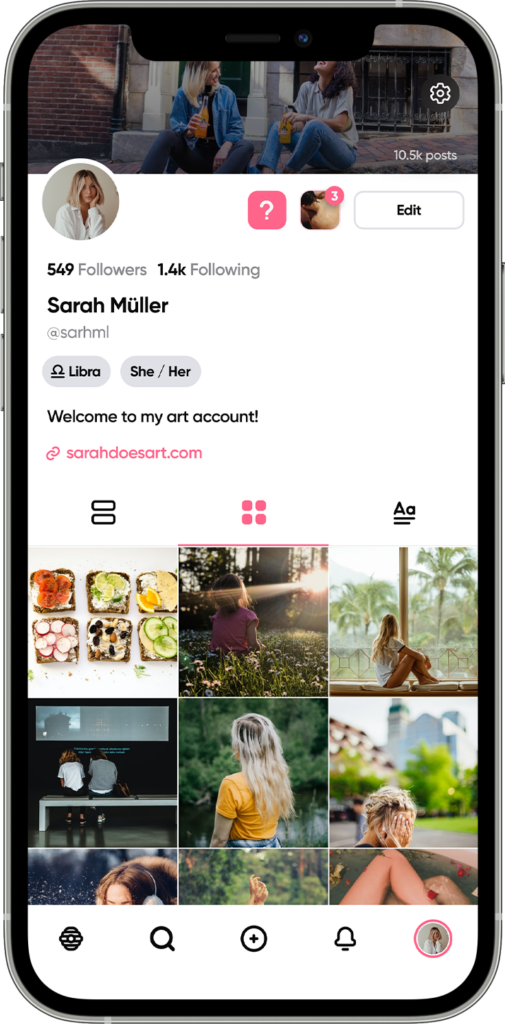
Hive Social profile

Hive also offers some more unique features, including colour themes, profile music (that counts toward artist streams), zodiac signs, badges, Q+As and, most importantly, a chronological feed. Hive’s website assures that there is no shadow banning or higher priority accounts that dictate the order that posts appear on the app, meaning users don’t need to contend with verified users to appear on their followers’ feeds.

Hive also treats NSFW content differently from other social media sites. NSFW photos, videos and digitally-created content are permitted on Hive as long as you toggle the NSFW button in post settings. This prevents this content from being seen by minors.

Hive Social is currently available to download on the iOS App Store or on Android devices through Hive’s beta. However, the lack of a full Android release hasn’t stopped Hive from growing massively – especially over the last few months.

The site saw a huge influx of new users after Elon Musk took over Twitter in November 2022. In an interview with Newsweek, Pop said Hive had reached 1,240,000 users on November 22, including a quarter of a million sign-ups that day.

Who owns Hive Social?

Hive was created by Raluca Pop (aka Kassandra Pop), a 23-year-old student living in Southern California.

After teaching herself to code in June 2019, Pop launched the first version of Hive Social with a freelance developer that same October. Since then, the Hive team has expanded to just three people – Pop, a developer and a designer.

The app is funded by a combination of Pop’s own personal loans, an angel investor and crowdfunding.

Is Hive Social safe?

On November 30 2022, Zerforschung shared a post detailing a number of critical vulnerabilities it had discovered on Hive Social.

These vulnerabilities would allow potential attackers access to a breadth of data, including user email addresses, phone numbers, shared media, private posts and even deleted direct messages.

In response to this report, Hive temporarily deactivated its servers on December 1 to work on creating a “better and safer experience”. At the time of publishing (December 6), the servers are still down.

By Hannah Davies

Sourced from Trusted Reviews

By Lynne McNamee

Grab employees’ attention with a learning campaign based on marketers’ principle of seven touches.

Have you ever developed a learning program only to have no one interested?

You send out emails and ask managers to promote the course, but few learners sign up. You’re not alone.

Often, L&D teams develop great learning programs, but employees never consume or adopt them. Perhaps it’s because employees aren’t even aware of the program. Or if they are, they don’t know how to access it or why they should attend. All of that wastes resources, frustrates your team, and means few people will benefit from L&D’s efforts.

Take a chapter from marketing to understand how to raise awareness and get people to seriously consider your program and become advocates of the initiative. To accomplish that, use learning campaigns.

What is a learning campaign?

Rather than approaching a course or curriculum as a stand-alone event, a learning campaign approaches the training initiative as ongoing interactions that happen before, during, and after the core content. There is no single event but rather a series of communications across multiple modalities that raise awareness, facilitate consideration, promote decision, and reinforce repeat action.

The idea of such a learning campaign stems from how marketers promote their efforts. They follow the principle of seven touches. In short, marketers understand that it takes a minimum of seven exposures before someone is ready to hear their message. An example is a shoe company sending out multiple communications with just the brand and a basic message, such as “Your feet will love our shoes.” Marketers always use multiple modalities. For example, for an introductory campaign, they may use a mixture of:

  • One or more emails
  • Social media posts (on different channels)
  • Billboards
  • Radio spots
  • TV or cable ads
  • Magazine ads
  • A quote in a local newspaper (that is to say, public relations).

Marketers would create all of those with the hope that with the eighth exposure, the potential consumer would say, “Wait, I think I’ve heard of your company. What do you do?”

It takes frequency and multiple modalities to cut through the clutter and have a receptive receiver. And only when someone is ready to hear your message will they react or respond to it.

In a learning context, there are many parallels. Your learners are confronted with thousands of emails, text messages, voicemails, ads, permission slips, bills—let alone job assignments—that are competing for their attention. Leveraging branding and marketing techniques can help improve the visibility of your efforts and the efficiency of your communications.

Essential to shifting to learning campaigns is changing your mindset from approaching learning efforts as centered on a particular learning event (a course or training session) and viewing each interaction as part of that learning experience.

It’s about looking at a continuum of communications, each one reinforcing the previous one but also adding little bits that incorporate learning content and explaining how applying that information will benefit them.

The principle of seven touches means that there must be at least seven precommunications before the main training event. Those communications will raise awareness and help prime learners to what you plan to share and why it’s relevant to them.

Once you receive some degree of response from a learner—for example, registration or an expression of interest to learn more—then the true precourse learning campaign begins. As you transition to the learning content and introduce some knowledge transfer, be sure to keep the same branding and core messaging as the original communications. Continuity is essential. Postcommunications should also focus on extending the experience, rather than emotionless, knowledge reinforcement.

When developing learning content, think in terms of a campaign comprising four stages.

Promotional content. Use communications such as emails, flyers, voicemails, and manager promotion. Announce that the course is available to employees and that they should consider it.

Precourse. Use a series of drip emails, infographics, videos, or text messages to slowly introduce the concepts the course will cover, and then build on them so that learners are primed when they start the course.

Course. Keep doing the great stuff you currently do, ensuring that there is consistency in branding and messaging from what you communicated in the promotional and precourse communications.

Postcourse. This should be a continuum of the precourse and course experiences—not as tacked-on, spaced repetition, but rather incorporate the emotions and experiences that were part of previous campaign elements.

Campaign goals

For each stage of the campaign, establish SMART (specific, measurable, achievable, relevant, and time-bound) goals. That information will help you know when to pivot and how to improve for future campaigns.

For example, how many emails will you send, in what timeframe, and with what messaging? What open rates count as success? What will you test as variations—different headings or subject lines or using pictures or sign-up pages? Will you use a mix of email only with written text?

When getting started, draft a creative brief to keep you and your team focused on whom you are trying to reach (your audience); what your goals are (Raise awareness of resources available? Get people registered in a particular amount of time? Ensure behaviour change by a certain percentage of employees in the subject area?); and what sort of communications would work best for each group. For instance, emails to the accounting department with bulleted numbers that describe financial impact may resonate well with those employees, while for the marketing department, infographics that are highly visual and light on text posted on your company’s intranet may work best.

As you set initial targets, think about the individuals you’re engaging. Are staff physically in the office or mostly working from home? Establish some baselines for future testing. Depending on the accepted forms of communication within your organization, you may focus on messages via Slack instead of email. Pick a mix of seven ways and times to reach out and measure those results. You’ll start to establish some metrics of what’s working when you do the second campaign. If you have metrics from previous efforts, use them to inform your decisions.

Don’t test too many variables, and always have a control group that doesn’t change (that is to say, how you’ve traditionally promoted courses). Be clear about what you want to report; how you will measure it; and where and how you will capture that information, such as via the learning management system, an email marketing tool, or intranet landing pages.

Ultimately, remember that behaviour change is likely the real goal of all learning efforts—more so than registrations, open rates, or impressions. Thus, stay focused on that true goal rather than giving in to the temptation of easier metrics, such as how many emails you send.

How to build a learning campaign

A good learning campaign will incorporate two fundamental elements: personas and the learner’s journey.

Personas are fictionalized versions of a representative learner and their motivations, challenges, and goals. They are not dependent on job description, role, or level in the organization. Although there should usually be no more than six for an entire company, global organizations may require modifications to account for cultural characteristics. For instance, in certain countries, female assertiveness may not be valued or is penalized, so keep in mind those influences.

Generally, aligning to motivations is the key to effective persona development and communication development. The what’s in it for me (WIIFM) centres on someone’s existing, internal motivation. While you can dissect that multiple ways, one easy way is using the six human needs that life and business strategist Tony Robbins identified:

  • Certainty (for example, confidence in doing a job correctly)
  • Uncertainty (for instance, be among the first to learn about upcoming changes to our systems)
  • Significance (such as help our company transform cancer care)
  • Love/connection (for example, be part of a team that’s making a difference)
  • Growth (Love to learn new things?)
  • Contribution (for instance, we need people willing to help us address client concerns)

Set up testing, for example, by developing subject lines that align with each of the motivations. As you share the communications, move progressively through each motivational version until someone responds to a particular communication, such as an email. Tag that person with which version they responded to. Then for future communications, leverage the communication versions using that motivation.

The other essential element of your learning campaign is the learner’s journey. In the marketing world, the use of journey mapping and the development of a buyer’s journey have been tested and proven effective via inbound marketing—that is, providing useful, helpful, relevant content at the time of need.

Specifically, inbound marketing involves crafting content that meets people at their current knowledge level, addresses their current pain, and gives them language and a framework to pursue additional information and depth of knowledge to solve their problem. So, rather than disseminating sales flyers about how great a solution is or about all the LMS features, inbound marketing starts with how someone may conduct a Google search. For example, someone may type in “How do I keep track of compliance training?” That would be a “top of the funnel” question, meaning the individual has a pain point but doesn’t know the options for addressing it.

In a blog post, the marketer could write a high-level overview about what’s involved and a range of options, from handwritten sign-in logs to an LMS or specific compliance technology solution. A “middle of the funnel” blog post would go deeper into how LMSs and compliance technologies differ and some factors to consider to choose between one or the other. And a “bottom of the funnel” piece would provide greater detail about characteristics of different compliance technology systems and what to consider when deciding, such as elements that may be important for particular industries, global reach, or compliance requirements.

The value of that approach is that people aren’t overloaded with information they aren’t ready to receive; they don’t get information that doesn’t seem relevant to their use case; and it encourages self-directed learning because it’s helping answer questions they already have or are led to ask.

A successful learning campaign uses the same approach for a learner’s journey—meeting people where they are and guiding them to the benefit or the solution to a problem as they see it. Build the learning campaign in stages like the buyer’s funnel, with content broken down into awareness, consideration, and decision as separate learning campaigns.

Rather than building cumulative knowledge in a course or curriculum, divide the process into stages that align with the questions learners may ask after what they learned in a previous stage. That keeps engagement and curiosity active and provides opportunities to reconnect the content to a learner’s individual motivations.

For instance, you could have three learning campaigns for a sales enablement effort to improve closed deals. For the first, start with the question the individual may have, such as “I’m not closing enough deals—why?” For the second question, and therefore second learning campaign, build it around addressing options to answer:

“What can I do about it?” And for the third question and campaign, focus on “Which solution should I use?”

Too often, learning starts with what you want people to know. The key to an effective learning campaign is to start with what problem people want solved. Make the investment to get employees to a point where they want to know what you’re offering.

For the learning campaigns, break down the content into your three questions, and tie the promotional, precourse, course, and post communications for each of the three stages to the relevant question.

As an example, for the second question, you could send a series of emails on options available, with pros and cons of each. “The pros and cons of cold calling to increase closed deals,” “Top sales producers share why they like—and hate—automated emails to prospects,” and “Our CEO really wishes the sales team did this one thing—and stopped doing this.” Those three emails would be effective in helping teach someone about options they could use to solve the problem of not closing more deals—and the messages are positioned in a way that connects with the employee, meets them where they are, and sells them on the pros and cons versus lecturing to (or at) them.

In the course itself, promote the solution the company espouses, and make the argument for it. Then in follow-up communications, reinforce using that solution, and ask learners to be advocates for using it.

Putting it into practice

Being a learning professional can be rewarding but also terribly frustrating when people don’t engage in your courses. By shifting from promoting a learning event to using a learning campaign, the learning organization can better meet people where they are, communicate WIIFM to learners, and support increased engagement at scale.

Learning Campaigns at Scale

To develop content targeting different personas at scale, first map where in the course you want to customize the different content types. Next, create a master draft, and then clone or duplicate the course. Finally, go into each cloned version, modify it where planned, and publish each version.

Tip: Use inventory codes to track which version of the course and related emails, graphics, and other collateral go together. For example, the code 2209CS1p1m1 could indicate:

  • 2209 = September 2022, the publish date or date you start working on the course or through when a version is valid (for example, for a compliance course that needs to be updated yearly)
  • CS = closed sales
  • 1 = stage in the learner’s journey (1, 2, or 3)
  • p1 = persona 1
  • m1 = motivation 1

Then each graphic, voice-over file, and other collateral related to that particular version would likewise use 2209CS1p1m1 as the stem for additional coding (for example, 2209CS1p1m1_slide20).

When developing courses, plan ahead what you’ll swap out, such as banner images, examples, and particular words based on motivations. Doing so makes it easy to develop the variations initially and to replace those elements in the cloned versions of the course.

You can easily reuse the same assets for the promotional, precourse, course, and post communications.

By Lynne McNamee

Lynne McNamee is the president of Lone Armadillo Marketing Agency. She has managed marketing campaigns for companies such as Avis, HP, and Bank of America. Recently she was the marketing director for Bluewater, consultants for learning, talent, and human capital management, and is the marketing director for ShareKnowledge, Inc., a learning management system for enterprise companies and those with high compliance and security requirements. Lone Armadillo Marketing Agency, which Lynne founded in 2008, helps companies solve business problems using strategic and digital marketing. They specialize in strategy, plans, processes, and tactical execution of multi- and omni-channel marketing programs for B2B entrepreneurial companies looking to scale. She has been a HubSpot partner since 2011. She was cited by the New York Times for innovations in marketing. Lone Armadillo Learning is the latest expansion of services, applying marketing techniques to improve and enhance corporate learning programs.

Sourced from atd Association for Talent Development

By Chris Sutcliffe

Facebook owner has found its status as an advertising giant more precarious than it could have imagined. As part of our Data & Privacy Deep Dive, we look at what it is doing to ameliorate effects of Apple’s updates.

When Meta announced its Q2 financial results earlier in the year, it had ready-made excuses to explain away its first-ever revenue drop. Reason number one, a global slowdown in ad spend, had also hit the other tech giants, but the elephant in the room was the impact Apple’s privacy changes had had on the company’s ability to operate – and Meta wasn’t shy about saying so.

The company announced in February that Apple’s AppTrackingTransparency feature would cost it in the region of $10bn in advertising revenue over the course of 2022 alone. At the time, Raj Shah, lead for telecom, media and technology at Publicis Sapient, said: “Five factors contribute to the decline. These are the competition from TikTok, reduced ad spend in a downturn, iOS privacy changes and questions about Meta leadership, both with COO Sheryl Sandberg’s departure and negative PR about corporate policies.”

While the company’s foray into the metaverse (or lack thereof) has been responsible for some of its more recent and more talked-about losses, the Apple tracking changes have in many ways presaged those conversations. Upon opening an app, users were prompted to agree whether to share information; without that permission, the developer is forbidden from accessing the IDFA – the device ID used to target and measure the effectiveness of digital ads.

The changes, which Apple argues are made in service of user privacy, gave a billion iOS users the option to opt-out of being tracked by apps, with an estimated 62% of them choosing to do so.

That tracking tool was how digital advertising giants created user targeting profiles for advertisers and was the basis for how Facebook became one of the largest digital advertising companies in the world. It is small surprise that the changes caused huge consternation among brands that had been used to having access to those targeted tools, or that Facebook’s revenue suffered significantly as a result.

Making the best of it

Prior to publication of its Q2 results, Meta had clawed back a little of the ground lost by the changes. It announced it had narrowed the underreporting estimate from around 15% to around 8% as a result of fine-tuning its measurement and analytics capabilities. That mitigation was welcome news for investors and advertisers, but it also demonstrated that the damage of Apple’s changes would haunt Meta for some time to come.

That was further demonstrated by the changes Meta made to its feeds to prioritize higher-yield ad formats, with a particular focus on short-form video. The company was also accused of trying to circumvent the changes by collecting data from websites users visit using its apps’ built-in browsers, although the company strenuously denies that.

For Meta, the challenge comes from the fact that users are broadly in favor of privacy and Apple has managed to communicate that its changes are in their best interests.

Matt Navarra is a social media and tech analyst. He says: “The impact now, in terms of the relationship with Apple and other tech companies, is converging on this and that makes it a challenging environment [for Meta]. And that is something that Apple has done very well to navigate and still come out looking like the good guy.”

As a result, Meta has attempted to push back against Apple’s changes in a number of ways, from appeals in public-facing media to regulatory efforts. In May, the company announced it was filing a complaint with the US Department of Commerce, stating that: “Despite having some of the most popular apps in the world, Meta’s ability to innovate on its products and services and even reach its customers is determined, and in some cases significantly limited, by the most popular mobile operating systems, such as Apple’s iOS.

“Apple’s self-serving tactics prevent consumers from realizing the innovation and benefits of a dynamic and otherwise well-functioning mobile app ecosystem.”

Sailing into the headwinds

That undercutting of its advertising capabilities continues to impact Meta. While much of the coverage of its Q3 results earlier this month focused on the huge losses accrued by its metaverse division, as well as encroachment from TikTok and the 11,000 jobs lost as a result, the underlying issues remain Apple-related.

Insider Intelligence’s principle analyst Debra Aho Williamson explained: “Meta in 2022 is a far cry from Facebook one year ago. Many aspects of its business are in disarray and its near-term prospects do not look promising. After a dismal earnings report in Q2, we aren’t expecting Q3 to be any better. It’s very possible it will be much worse.

“Many people want to blame TikTok, but it’s not the main reason why Meta is having challenges. Even if some advertisers are moving ad budgets from Meta’s properties to TikTok, it’s likely not a very significant portion of Meta’s overall ad revenue. Instead, Meta’s revenue growth problems stem primarily from the weak economy and from Apple’s privacy changes, which are affecting many digital platforms, not just Meta.“

Notably, during the announcement of the job cuts, Mark Zuckerberg blamed two things. The first was his decision to increase the number of investments the company had made over the past few years, while the second was the changes enforced by Apple.

While the company may have found and be seeking ways to ameliorate the changes, the reality is that Apple’s privacy changes have shaken Meta’s foundations. Its once insurmountable status as an advertising giant has been questioned and while the company isn’t going anywhere for the foreseeable future, it has been proven to be vulnerable.

By Chris Sutcliffe

Sourced from The Drum

Employers can maximize productivity by helping their employees prioritize deep work.

The appeal of work tasks that are quick to finish is hard to deny. They make you feel productive, but don’t take a lot of concentration. They also don’t usually move strategic projects along, killing productivity on work that can help companies succeed.   

What is “Shallow Work” and what are its impacts on workspaces? 

Calling any work “shallow” may sound condescending, but MIT Computer Scientist Cal Newport uses this term very technically in contrast to the term “Deep Work,” which is also the title of his book.  

Newport defines shallow work as “non-cognitively demanding, logistical-style tasks, often performed while distracted. These efforts tend to not create much new value in the world and are easy to replicate.”  

The anthropological work of David Graeber’s confirms Newport’s suspicion that most work is shallow work. These are the jobs that will be automated first — jobs that are monotonous and can be done by easily replaceable workers.  

Newport believes that the emphasis on shallow work is prevalent in highly skilled professions and not just lower-paying, less-skilled jobs. 

Too much shallow work often appears as caring too much about emails, meetings, and the technology-driven distractions that occur throughout the day, but not enough about important projects and bottom lines.  

The consequence of too much shallow work is the fragmentation of worker and employer attention spans. When you work on a project and frequently flip to another project or task — however important — this takes away from the quality of work.  

If there’s an important project due, the quality of that project is markedly improved when the worker who is responsible for it is not pressured to constantly check or search for emails, and is not worried about being interrupted by coworkers.  

While shallow work might make it look like you are working hard — and no doubt it keeps the day busy — it is very detrimental to progress. The focus on these shallow tasks is easy to maintain because the tasks are simple to do and usually make you feel productive because several can be done very quickly.  

It does not take much to quickly respond to an email, but it does take discipline to sit down and concentrate solely on one important project for a few hours.  

This is one reason that Graeber, in agreement with Newport, noted that many workers can get away with delaying the most important tasks for months without any detection. This may be what quiet quitting truly is, rather than just fulfilling job tasks without going above and beyond them. 

Deep Work is the solution to Shallow Work 

Cal Newport defines deep work as “professional activities performed in a state of distraction-free concentration that push your cognitive capabilities to their limit. These efforts create new value, improve your skills, and are hard to replicate.”  

Of course, emails need to be read and responded to, and sometimes meetings are necessary. But too often these are given priority — to the detriment of highly impactful projects.  

The key to improving productivity in professional workspaces is to design them to enable deep work.  

Setting up offices with deep work in mind means having spaces where people can work without disruption for several hours at a stretch. To make this possible, the office culture needs to shift to make sure distracting people in those spaces is not allowed — unless there is a dire emergency.  

The vast majority of emails each day are so insignificant that it would improve progress if looking at email only once per day was an established expectation.  

Another way to encourage deep work is to assign projects that encourage employees to learn new, complex skills, which naturally demands deep concentration.

Shallow work’s predominance in professional work spaces is the result of employers and employees giving in too easily to the principle of least resistance. Especially when everyone else in a workspace is captivated by the trivial, deep work is rarely cultivated.  

Employers would benefit from creating places in their office where workers can go to work on bottom-line priority projects without interruption.  

This will not only make offices much quieter, but it is also what will create more success in the long run.  

By Daniel Lehewych

Daniel has been freelance writing for over 3 years now. He cover topics ranging from politics, philosophy, culture, and current events, to health, fitness, medicine, relationships, and mental health. He is currently completing a Master’s Degree in Philosophy at the CUNY Graduate Center in New York City, where I specialize in moral psychology, cognitive science, and the philosophy of mind.

Sourced from allwork