Author

editor

Browsing

By Trevor Sinclair

Pinterest has taken the internet by storm over the years. The visual search engine, which allows users to “pin” images and ideas onto virtual boards, is a go-to source of inspiration for millions of people around the world. It’s no wonder people want to know how to make money on Pinterest without a blog!

And it’s not just a passing fad – Pinterest is here to stay. In fact, it looks like it’s only going to get bigger and more popular.

This is good news for anyone looking to make money on Pinterest. As the old marketing saying goes, “Where attention goes, money flows.” Whether you’re selling physical products or promoting your services as a freelancer or small business owner, there’s a way to tap into this goldmine of traffic and customers.

So, if you’re looking to cash in on the Pinterest craze, read on for some tips on how to make money on Pinterest without a blog!

Why Use Pinterest To Make Money?
The key to making money on Pinterest lies in understanding the platform’s demographics.

It’s a place where people go to discover
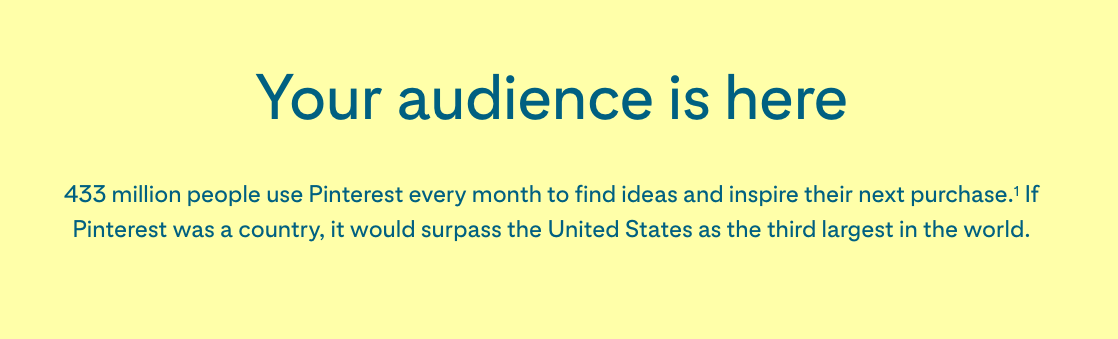
Unlike other social media sites like Facebook and Twitter, where users go to catch up with friends and family or consume news, Pinterest is all about inspiration. People come to the site when they are in the mood to be creative, try new things, or research a purchase.

As a result, Pinterest has become an invaluable tool for businesses. In fact, 97% of the top searches on Pinterest are unbranded, meaning people are open to discovering new products and services.

This presents a massive opportunity for businesses to reach a vast audience of potential customers. In addition, the visual nature of Pinterest makes it ideal for promoting products and services.

People who use Pinterest are avid shoppers

As any marketer knows, avid shoppers are the key to a successful business. And no group of shoppers is more passionate than those who use Pinterest. For people who use Pinterest, shopping is a lifestyle.

They’re always on the lookout for new products, and they’re quick to jump on trends. In Pinterest’s Feed Optimization Playbook, data company Dynata conducted a poll and discovered that 75% of weekly Pinterest users say they’re constantly shopping.

Moreover, they’re not afraid to spend money – they see shopping as an investment, not a luxury.

As a result, Pinterest is a marketer’s dream. Not only does it provide a captive audience of shoppers, but it also gives businesses a direct way to reach them.

With its powerful search engine and easy-to-use tools, Pinterest is the perfect platform for marketers who want to tap into the power of social shopping.

High-earning demographic

Pinterest may be a place to find recipes and DIY projects, but it’s also a hot spot for high-earning social users. According to data from Hootsuite, 45% of social users with a household income over $100K are active on Pinterest.

That makes it a not-so-hidden gem for advertisers who want to put their products and services in front of people who can afford them. So, why is Pinterest such a popular platform for high earners?

For one, it’s a visual platform that allows users to quickly browse and discover new products and ideas. In addition, Pinterest has a strong focus on lifestyle content, which is particularly appealing to users with high disposable incomes. So, if you’re looking to reach an affluent audience, Pinterest is worth considering.

How To Make Money On Pinterest Without A Blog: 8 Ridiculously Useful Ways

Now can you see how powerful Pinterest is as a tool for making money? If you don’t have a blog, don’t worry – there are plenty of ways to make money on Pinterest.

Here are some of the best ways to make money on Pinterest without a blog:

Sell Physical Products

One of the simplest and most effective ways to make money on Pinterest is to sell physical products. If you have a product that you think would appeal to Pinterest users, all you need to do is set up a shop and start promoting your products.

Examples of products are:

  • Clothes
  • Jewellery
  • Artwork
  • Home decor
  • Furniture

You can direct users to an Etsy store, Amazon, or Shopify store, or even your simple landing page with PayPal checkout. It is essential to make it easy for users to buy your products.

To get started, you’ll need to create high-quality pins that show off your products in all their glory. Remember, Pinterest is a visual platform, so your pins must be eye-catching and visually appealing.

In addition, you’ll need to create compelling descriptions of your products and include relevant keywords to ensure that your pins are easy to find.

If you want to take things a step further, you can create product videos and include them in your pins. Video is a powerful marketing tool that can help you reach a broader audience on Pinterest.

Print on Demand: Highly Recommended Method To Sell Physical Products

Print on demand (POD) is a printing technology that allows you to print products only when you receive an order, without carrying inventory. This is in contrast to traditional methods where you would print products in bulk and then hope to sell them all.

It also allows you to create customized products (in low competition niches), which can be a significant selling point. For example, you could create a custom mug with someone’s name or favorite quote.

In short, POD is a strong business because it eliminates a lot of risk!

First, it eliminates the need to invest in inventory, which can tie up a lot of capital.

Second, it reduces the risk of being stuck with unsold products.

Third, it allows businesses to respond quickly to changes in customer demand. For example, if a Pinterest user sees a shirt they like and wants to buy it, a print-on-demand company can print and ship it within a few days.

This flexibility and responsiveness are some of the main reasons why print on demand is such a robust business model.

In addition, print-on-demand companies often have no minimum order requirement so that businesses can test out new product designs with very little upfront investment.

When someone orders a product from your shop, you simply send the order to your POD provider, who will print and ship the product to the customer. With POD, you only pay for the ordered products, so there is very little overhead cost. This makes it an extremely efficient way to earn an online income.

Many people have found Printful to be a very user-friendly POD service.

Try Printful Here

Sell Digital Products

If you don’t have any physical products, don’t worry – you can still make money on Pinterest by selling digital products.

Digital products are perfect for Pinterest because they can be delivered instantly, which means there’s no shipping or waiting involved.

Some examples of digital products that you could sell on Pinterest include:

  • Ebooks
  • Online courses
  • Printables
  • Graphics and templates

To get started, all you need to do is create a pin that promotes your digital product. Include a compelling description and an eye-catching image, and be sure to include a link to where users can buy your product. If you’re wondering how to make money on Pinterest without a blog, this is one of the most effective methods.

Pinterest Affiliate Marketing

One of the best ways to monetize Pinterest is through affiliate marketing. Pinterest affiliate marketing is the process of earning a commission by promoting another person’s product.

Here are some reasons why you should monetize Pinterest using affiliate marketing:

  • Commission structures can be very generous
  • There is a wide range of products to choose from
  • You don’t need your product
  • It’s a low-risk way to start your business
  • You don’t need to fulfil orders
  • You don’t need to provide any post-sale service

All you need to do is find products that appeal to your target audience and create pins that promote those products. Then, when someone clicks on your pin, they will proceed to your affiliate link and buy the product.

It’s a win-win – the advertiser gets more sales, and you get to earn some money for promoting their product.

To start with Pinterest affiliate marketing, you’ll need to sign up for an affiliate program within a particular niche. Once you’re approved, you’ll be given a unique affiliate link that you can use to promote products.

When someone clicks on your affiliate link and buys a product, you’ll earn money (as a percentage of the sale). It’s that simple! Just be sure to promote products that are relevant to your audience and that you believe in. Otherwise, you run the risk of alienating your followers.

Choose a Niche For Your Pinterest Account

When it comes to affiliate marketing, choosing the right niche is essential. Not only will this help you focus your efforts and find potential customers, but it will also ensure that you’re able to stand out from the competition. So, how do you select the perfect niche for your affiliate marketing business?

Here are a few tips:

1. Start by brainstorming a list of potential niches. What interests you? What are you passionate about? What do you have experience in?

2. Once you have a list of potential niches, research each one to see if a market exists. For example, are people searching for information on this topic (particularly on Pinterest)? Are there already a lot of affiliate marketers working in this space?

3. Take a look at the competition. How crowded is the niche you’re considering? Are there already a lot of big players in the space?

If so, you may want to consider choosing a different niche. Alternatively, if the niche is fairly new or lightly populated, that could be an opportunity for you to get in early and become a leading voice in the space.

Competition isn’t necessarily a bad thing, and it proves that a market already exists. However, if the market is saturated already, it may be difficult for you to make a name for yourself.

4. Narrow down your list to a handful of promising niches, and then dive into each one. Learn as much as you can about the ins and outs of the niche. This will help you determine if it’s something you’re genuinely passionate about and if there’s enough demand to justify launching an affiliate marketing business in this space.

5. This is an important one – think about how you will monetize the niche! What types of products or services are people in this niche buying? How can you promote those products or services and earn a commission?

This is an essential piece of the puzzle, and it’s one that many people overlook. If you can’t think of a way to monetize the niche, then it’s probably not worth pursuing.

6. Make your final decision and get started! The most important thing is to choose a niche you’re passionate about and believe there’s a market for. Once you’ve done that, the rest will fall into place.

Set up your Pinterest Account profile

No matter what you’re promoting on Pinterest- whether it’s a digital product, physical product, your product, or an affiliate product – you’re going to set up your Pinterest profile similarly.

Here’s how it would work: first, you would choose a niche – let’s say pets. Then you would set up a profile all about pets, including boards filled with pins on the latest training methods, healthy pet treats, and the best chew toys.

This example is a quality example!

Here are the steps to follow:

1. Choose a catchy name and profile photo for your Pinterest business account. Make sure your name is easy to remember and pronounce and that your photo represents the type of products you’ll be promoting.

2. Create Pinterest boards that showcase your style. Organize your pins into Pinterest boards that reflect your taste and the types of products you’ll be featuring.

For example, you might have a Pinterest board for pet food, one for bedding, one for puppy training, and another for protection training. More on this later!
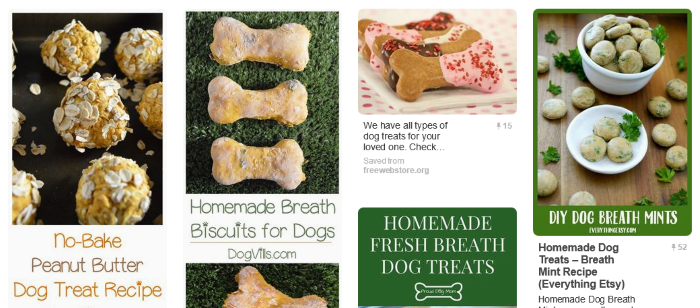
Here’s an example of a quality Pinterest board on homemade dog treats!

3. Start pinning! Find high-quality images of the products you want to promote and upload them to your boards. Be sure to include affiliate links in the descriptions so that people can purchase the items you’re featuring.

4. Engage with other users. For your profile to be successful, you need to be active on Pinterest. That means pinning regularly, commenting on other users’ pins, and joining group boards.

5. Promote your profile. Once you have a solid following, start promoting your profile on other social media platforms and in forums related to your niche. You can also run ads on Pinterest to get more exposure for your profile.

Market Your Own Services
You can market your services on Pinterest if you have a skill or service to sell.

Say you’re a freelance writer. You want to use Pinterest to promote your writing services, but you’re not sure how. Have no fear! Here are three easy ways to get started:

1. Create an optical freebie. This could be a PDF guide to writing killer blog posts or a cheat sheet for nailing that elusive perfect pitch. Of course, this might depend on the niches that you focus on. Then, create pins that link back to the freebie’s download page. Use attractive visuals and compelling copy to make your pins stand out.

2. Give the freebie away in exchange for an email. Offer a freebie in exchange for an email address, and then use that list to promote your writing services. You can create a simple landing page using a service like LeadPages or Unbounce, or you can code one from scratch if you’re feeling fancy.

If you’re going to work to get Pinterest traffic, then you want to ensure you’re getting the most out of that traffic by collecting emails.

3. Drive Pinterest traffic to your Facebook business page and start a conversation! If you don’t have a blog, don’t fear. It’s very easy to set up a Facebook business page. This should also help legitimize your business!

Use Pinterest to drive Pinterest traffic to your Facebook business page, and then use that page to promote your writing services. It’s a great way to get more eyes on your business, and it’s a great way to take advantage of the power of social media.

Brand Partnership & Creator Rewards Program

If you’re an aspiring influencer with a carefully curated Pinterest board, you may be eligible for the Pinterest Creator program. The program is designed to help people turn their passion for pinning into a source of income.

What if you could be rewarded for your creativity? That’s the idea behind Pinterest’s new Creator Rewards program. The social media site has launched this innovative way to financially empower creators, who will now have an opportunity to make money by posting quality content and engaging with the audience every month!

Pinterest will create monthly reward goals for each creator based on their performance, and those who hit their targets will receive a share of the revenue generated from ads served on their content.

To be eligible for the program, you’ll need to be over 18, be based in the United States, and have a specific amount of views and followers. If you’re accepted into the program, you’ll receive access to exclusive resources and opportunities to help you grow your online presence.

Brand Partnerships

Brand partnerships are strategic relationships between two brands that create mutual value.

There are many different types of brand partnerships, but one of the most common is when a brand partners with an influencer or social media profile on Pinterest. This type of partnership can be beneficial for both brands and influencers.

For brands, partnering with an influencer on Pinterest can help them tap into the power of creators’ audiences.

By partnering with an influencer with a large and engaged following, brands can reach a new audience and promote their products or services more authentically.

In addition, brand partnerships can help brands build trust and credibility with consumers. For example, when consumers see that a brand is endorsed by an influencer they trust, they are more likely to trust the brand.

For creators, partnering with a brand can provide several benefits.

First, it can help them build their brand and expand their reach.

Second, it can provide them with an additional source of income.

And finally, it can give them access to exclusive products or experiences they can share with their followers. Brand partnerships can be a win-win for brands and influencers if they are strategic and well-executed.

Check out our guide on how to become an influencer for more on this!

How To Approach Brands For Sponsorships

So you want to be a sponsored Pinterest user? Great, because brands always look for influencers to help promote their products or services. But before you start emailing companies out of the blue, there are a few things you need to do first.

Step one: Make sure your account is in tip-top shape. That means creating high-quality content consistent with your brand voice and aesthetic.

Step two: Grow your following. The more engaged followers you have, the more attractive you will be to brands.

Step three: Create a media kit. This document should include information about your accounts, such as your follower count, engagement rate, and the type of content you produce.

Step four: Start reaching out to companies you think would be a good fit for your brand. Again, be professional and polite, and don’t forget to include your media kit! Following these steps will increase your chances of landing a sponsorship deal. Good luck!

Support Other People Growing On Pinterest

There’s gold in them thar hills! And by hills, we mean Pinterest. This social media platform is a gold rush for creators and businesses looking to make money online.

And like any gold rush, there are two types of people who stand to make a profit: those who find the gold and sell the picks and shovels.

Pinterest has a lot of untapped potential, and creators are just now starting to realize it.

As more and more people look to cash in on this social media gold rush, there will be an increasing demand for services that help them get the most out of Pinterest.

That’s where you come in. By offering Pinterest manager, Pinterest virtual assistant, or graphic design services, you can help creators make stunning pins that are sure to stand out from the crowd.

For example, are you really good at Canva? If you’re good with Canva and have an eye for design, you can make a killing selling Pinterest templates.

People are always looking for ways to save time and create beautiful graphics, and Canva is a great tool. By creating templates that people can use over and over, you can make a lot of money (passively) – just put your designs on Etsy or even Pinterest itself!

Try Canva Here

So, if you’re looking to make money on Pinterest, consider selling the picks and shovels instead of chasing after the gold.

Understanding Pinterest SEO: Key Factor In How To Make Money on Pinterest Without a Blog
So, if you’re selling anything online – physical goods, digital products, or even blog content – you need to be on Pinterest, and you need to rank high in Pinterest search results. And that’s where Pinterest SEO comes in.

Like with Google SEO, the goal of Pinterest SEO is to get your pins to rank high in the search results so that people will see them and click through to your website. But there are key differences between how Google and Pinterest rank content.

First, Google relies heavily on text-based signals like keyword density and meta tags. But since Pinterest is a visual platform, the Pinterest algorithm relies more on image quality, pin descriptions, and board titles.

To rank high in Pinterest search, you need to make sure your pins are high quality and relevant to the keywords people are searching. You also need to have descriptive pin titles and descriptions, as well as board titles that accurately reflect the topic of your board.

And finally, you need to be active on Pinterest. The algorithm looks at how often you pin, how many people repin your pins, and how much engagement your pins get. So, the more active you are on Pinterest, the higher your pins will rank in the search results.

Pinterest Keyword Research

Keyword research is essential for anyone who wants to get the most out of Pinterest. Fortunately, it’s not nearly as difficult as it sounds. Here’s a step-by-step guide to conducting keyword research on Pinterest:

1. The first step is to develop a list of relevant keywords. To do this, consider the topics your target audience is interested in. For example, if you’re targeting millennials, some relevant keywords might be “fashion,” “travel,” or “food.”

2. Once you have your list of keywords, it’s time to start searching for them on Pinterest. The best way to do this is by using the search bar at the top of the page.

Then, simply type in each keyword one at a time and hit enter. For example, if you’re in the fashion industry, you might search for “women’s fashion” or “spring trends.”

As you type, Pinterest will suggest similar phrases and keywords that other users have searched for in the past. By looking at these suggested keywords, you can get an idea of which ones are most popular with users.

3. After you’ve conducted your searches, look at the results and note any viral pins. You’ll want to target these pins with your content.

4. Finally, once you understand which keywords are most popular on Pinterest, you can start incorporating them into your pin descriptions and boards. This will help ensure that as many people see your content as possible.

Can I Use Pinterest Without A Blog?

Yes. While blogs are great for content marketing, they’re not required to make money on Pinterest. You can send people to a simple opt-in page, advertorial, or sales page.

You can even use direct linking to affiliate offers, although some affiliate networks do not allow this, and this is not a powerful method.

The best way to use Pinterest for business is to link to your website or Facebook page so people can learn more about your products or services.

How To Make Money On Pinterest Without a Blog (As a Beginner)

For those just getting started with making money on Pinterest, the most important thing to understand is how to leverage the platform to gain traffic. And there are a few key ways to do this.

First, creating high-quality pins that are eye-catching and relevant to your target audience is important. In addition, strategic use of keywords can help potential customers more easily find your pins.

Once you’ve built up a steady stream of traffic, you can start sending that traffic to an offer. Whether it’s a product you’re selling or an affiliate offer, if you can convert your visitors into buyers, you’ll start making money on Pinterest.

Remember to focus on creating quality content, promoting your pins widely, and driving traffic to an offer. If you do those things, you’ll be well on your way to success.

How Many Followers On Pinterest Do You Need To Make Money? (Monetize Pinterest)

You don’t need a lot of followers. You can start making money with as few as 20 followers.

Of course, the more followers you have, the more potential customers you’ll reach, but you don’t need a huge following to start earning an income from Pinterest.

So, if you’re thinking about starting a side hustle on Pinterest, don’t let a lack of followers hold you back. You can start small and grow your following over time. Who knows? You could even turn your Pinterest side hustle into a full-time business with a little hard work.

Conclusion

And that’s a wrap! By now, you should have a pretty good idea of how to make money on Pinterest without a blog. As we’ve seen, this social media platform is incredibly powerful and can be a great way to earn some extra cash.

But, of course, there are some important steps that you’ll need to take in order to be successful. And who knows? With enough hard work, you might even be able to quit your day job and become a full-time Pinterest pinning pro.


 

By Trevor Sinclair

Sourced from NICHEPURSUITS

By Simone Morris

For decades, brands have held the power and had their say over the creative direction of their advertising. But with the rise of influencer marketing, is the tide turning? Simone Morris of GottaBe Marketing considers this phenomenon, and looks at how brands can make successful work using influencers.

Have you ever wondered who has the power when you are putting together a campaign? Some might say the brand does; others might say it rests with those who have the purchasing power. Either way, it’s time to break down this complex relationship. Within this post we will discuss whether brands are representing or assuming, why brands must make the change, and why it is beneficial to recognize minority ethnic influencers.

GottaBe! consider the usefulness of influencers today and why brands need to reprioritise diverse representation in campaigns.

GottaBe Marketing considers why brands need to reprioritize diverse representation in campaigns

Are brands representing or assuming?

Millennials and gen Z are the reason for the rise and demand of influencer marketing. Influencers have the power to help consumers decide whether to buy a product. As we mentioned in The power of ethnic influencers for brands, influencers are key to a successful campaign.

It is imperative that you consider the ethnicities of your brand’s audience and how you can market to each one. If your audience is predominately white, ask yourself what you need to do to attract others, as your brand will only attract those it represents. Gone are the days of ‘one size fits all’ marketing; campaigns need to be tailored to break through and reach cross-sections of society.

At GottaBe Marketing our goal is to create campaigns that fill these gaps. So, no matter whether you are trying to bridge the gap between South East Asians, Muslims, Africans, Christians, English speakers or other groups, we can help create a campaign that breaks these ‘traditional’ barriers.

Power brands must make the change

As the field of marketing has changed, there is more inclusion of different backgrounds, and there is a need for this to be reflected within all marketing campaigns. Eric Toda, former marketing executive at Gap Inc, Airbnb and Nike, mentioned in Diversity In Influencer Marketing: Why Representation Matters: “As marketers we continue to be one of the only industries in the world that can influence large masses of people; we can do that in the effort of good, or we can choose the other route. We need to put value-driven messages out there, show real life versus a sterilized mirage, and instil purpose.”

To overcome these obstacles, it is important to think about the target demographic and bring into the campaign a diverse mix of influences and cultures. Select influencers from all backgrounds who will champion the brand and the values that your brand represents.

The content that you produce and your relationship with influencers should be authentic. Arthur Altounian, vice-president of Inca’s APAC, said in a recent article: “Many consumers, particularly those in the younger generation, expect more from brands and won’t engage with content that they deem as ‘too polished’ or ‘too fake.’”

Having this authenticity allows influencers to have some creative freedom as they know their audience best and will be able to tell your brand’s story in a way that will connect with their followers.

The other key aspect to being successful is representation. As mentioned by Sonia Thompson in her article: “Representation in marketing matters now more than ever, and to some groups more than others.”

In her research, she found that 74% of consumers say representation in marketing is important to them and determines which brands they engage with and buy from. When Thompson asked the question, ‘What do you wish more brands knew about representation?’ to consumers, the responses show how crucial it is. They included:

  • ‘The damage they do by underrepresentation’
  • ‘How much it can affect someone and their feelings about themselves when they never see themselves represented. Like they are not important’
  • ‘Representation doesn’t hurt anyone. It only helps’

Those responses from consumers are why it is key to include minority ethnic influencers in your marketing campaigns. Very few products or services are created for one race, gender or viewpoint, therefore your marketing should not be aimed at one single sector of consumers.

Why is it beneficial to recognize minority ethnic influencers?

Having your audience feel represented by your company’s campaign has an impact on the revenue as it increases factors such as brand purpose. Studies have been done in the US that show the power consumers have if they feel the brand is representative of them – or if the brand is not. In Why diversity in ads is more important than ever for revenue [2020] it details this effect, saying: “Not only do minority groups have huge spending power, but these tightly-knit communities” have a huge impact on pop culture and mainstream media.

A 2016 report by Nielson said that African-American millennials are 25% more likely than all millennials to say they are among the first of their friends/colleagues to try new products, echoing the fact that minorities are pivotal in creating trends and ultimately influencing purchase decisions. These are big word-of-mouth opportunities, and the most powerful marketing tool for raising brand awareness and loyalty.

This power can have a massive impact on the success of not just the campaign or product, but the brand as well. We all want to see ourselves reflected in the brand that we are supporting; we are buying into that brand as well as buying the product. And millennials and gen Z aren’t afraid to use their voice in regard to brands.

These generations appreciate and want transparency from companies. They want to see campaigns that feature influencers with whom they associate and will hold brands accountable as they make changes.

By Simone Morris

Sourced from The Drum

By

Marketing on a budget remains a challenge for many small businesses. This article explains the benefits of blogging and how to create a successful business blog.

Research shows that 20% of startup businesses close up in their first year of operation. The businesses that do survive that first year find it difficult to stay afloat, and 65% end up shutting down within 10 years. One of the main reasons cited was poor marketing. With few resources available, it can be a challenge for small business owners to effectively promote their brands.

Blogging is a very cost-effective tool used in marketing. So, if you are not sure if your small business should own a blog, I would say yes, because of its marketing advantages. There are currently 5 billion internet users worldwide, and 60 percent of consumers claimed to read blogs on a regular basis, which represents a huge prospective market to reach through blogging.

How can blogging help your business?

There are great benefits your business can enjoy from blogging, including:

  • Establish customer relationships: There are new businesses emerging every day, and that has made it quite difficult to maintain customer loyalty. However, with high-quality blog posts about your business and products, you can keep your visitors engaged and build strong relationships with them. You can interact with your blog visitors by answering questions or responding to their comments. In the long run, this will help you build trust with your audience.
  • Thought leadership: People often look for solutions online whenever they encounter a problem. Invest time in SEO so that your business shows up in the search results. By sharing your knowledge and experience, you can become the expert they will turn to whenever they need advice.
  • Create a sales lead: Blogging is a great way to generate traffic for your business. Make sure you research your target audience to understand their needs so that you can carve a niche for yourself. The use of SEO-based content can generate traffic to your website, which may turn into sales leads for your business.

Starting a new blog for your business may seem like an intimidating task. So, here are a few tips to help you create a successful blog:

1. Provide value

One of the main reasons people read blogs is because they want to learn something new. Blog posts with how-to guides, tutorials and tips are very popular, and they can help you achieve a vast amount of traffic. For example, Nepal Hiking Team has a comprehensive blog that shares information on everything you need to know about Nepal, from things to do and local Nepalese foods to transportation and souvenir guides. They offer a valuable resource for anyone looking for information about Nepal or planning to visit.

2. Allow guest posting

People love to share their ideas and experiences. Allowing them to guest-post on your blog gives them the opportunity to do that as well as interact with you and other visitors. Guest-posts are also great for helping you understand who your readers are and what they are interested in. A great example is Hackernoon, the online platform where anyone can publish and share anything related to technology.

3. Make it interactive and allow comments

A blog that allows its visitors to comment and ask questions on related topics draws more attention than those that do not. Create a user-friendly platform where guests can post their comments and ask questions. Making your blog interactive is very important for building good customer service and better understanding your customers, which may eventually generate more sales leads.

4. Monitor and analyse your blog traffic

According to Hubspot, many people prefer blog posts that are informative, entertaining and teach new things. It is important to track your blog traffic to determine which of your blog posts are performing best and find out what interests your readers. You can capitalize on that to grow more traffic and leads for your business.

5. Get external links to your blog

The “web” is literally a web of networks. By attracting external links from other online sources for your blog, you can considerably increase your Google ranking and get more traffic for your site. Consider launching a press release campaign or guest-posting on other, more authoritative sites for this.

With commitment, creativity and effort, blogging can be a very effective marketing tool for your small business. Blogging is a low-cost marketing strategy with great benefits if utilized properly.

By

Sourced from Entrepreneur

By Tracey Santilli

In a data-driven world, measurement and performance reign supreme. And that shouldn’t change. But in an increasingly fragmented communications landscape where it’s harder and harder for brands to break through the clutter, the “big idea” is more important than ever.

For brands, the big idea can unify and become the roadmap for more powerful storytelling and consumer engagement. And when executed well, the big idea can help a brand cut through the clutter, engage consumers and inspire brand loyalty. So, while performance media, AI, and other data will continue to be important in helping brand marketing teams show how they are driving results, they should also double down on the big idea. But where does the big idea come from, and what makes it successful? Here are five qualities your idea should have to achieve success.

1. Connected To Culture

According to a 2019 Magna and Twitter study, “The Impact of Culture,” a brand’s cultural involvement makes up a full 25% of a consumer’s purchase decision. So for any consumer brand, it’s ideal if the big idea is connected to culture. Think about Major League Baseball’s Field of Dream’s game inspired by the film or how the movie Black Panther ignited conversations about Black culture and heroes. On the business side, consider REI’s decision to close stores on Black Friday to encourage consumers to #OptOutside. Culturally relevant brands are likely to be more relevant to consumers, and the big idea is how you inspire and engage them.

2. Committed To Doing Good

While I’ve found that quality products and quality of service remain key drivers of consumer satisfaction, the impact of “doing good” as a brand cannot be understated. According to an IBM study (via The Chronicle of Philanthropy—registration required), 71% of U.S customers believe “corporations have a responsibility to prioritize their employees, the environment, and their community as much as shareholder returns.” Think about powerful consumer brands like Patagonia or Tom’s, whose products are inextricably linked to their brand mission of doing good in the world around them, or Comcast CEO Brian Roberts and his wife’s $5 million commitment to help Philadelphia students close the digital divide during the pandemic. (Full disclosure: Comcast is a Tierney client.)

3. Authentic To The Brand

Of course, when you look at those brands, you can see that the big idea is successful and connects with consumers because it is rooted in brand purpose and authentic to who they are as organizations. In a Gartner survey, 62% of consumers say brands should only express support for issues that are consistent with the company’s values, and 45% of consumers say brands should only take a stand on issues directly related to their business, products or services.

4. Grounded In Strong Brand Messaging:

If the big idea is authentic to the brand, then it should be easy to develop strong brand messaging or a brand narrative. This isn’t traditional corporate messaging or talking points about the business. Brand messaging today is cantered around powerful storytelling, and it should aid a brand in differentiating itself from competitors. It should also be understandable, inclusive, accessible and easy for anyone who touches the brand or talks about it—be it the CEO, a customer service rep or a TikTok creator. The development of a strong brand narrative should involve internal, and whenever possible, external stakeholders and brands should tap their agencies, strategists, internal and external communicators, channel experts and creative voices from across the organization.

5. Fully Integrated

Once the brand narrative is established and fully embraced across an organization, marketers should then thread it throughout all channels to reach consumers at every touch point in an integrated and interconnected way. On average, 2020 data from Doubleverify (via Forbes) found that consumers spent seven hours a day consuming content (compared to about three hours pre-pandemic), and brands are challenged to feed that content machine meaningfully empathetically—every day. I’ve seen them turning away from expensive campaigns and polished productions and increasingly sharing content that feels more real and authentic to consumers. Brands and agencies can create that content via in-house content studios to meet the 24/7 nature of content marketing today more quickly and efficiently. They can also turn to influencers.

Marketing teams shouldn’t be intimidated by trying to find the big idea that will break through the clutter and fully engage consumers. Embrace the opportunity that comes with the big idea. Connect it to culture or doing good. And most importantly, make it authentic to the brand, grounded in strong messaging and fully integrated across all channels.

Feature Image Credit: getty

By Tracey Santilli

Tracey Santilli is President at Tierney, a full-service marketing communications agency. Read Tracey Santilli’s full executive profile here.

Sourced from Forbes

Are you interested in starting a blogging career and making money from it? Here are the steps you need to take.

Have you wanted to build a profitable blog, but don’t have a clue where to start? There’s no need to search tirelessly for tutorials.

With the right steps in mind, you can be on your way to having a blog that will showcase not only your online presence, but work effectively as an additional income stream.

1. Choose a Niche

This can feel like the most difficult part of the blogging process, but it’s important to establish a niche. It’s common to think that specializing in many things can be more appealing to others, but that’s not always the case. Focusing on a smaller space will draw in audiences who seek specific services.

Do you know everything about building computers? Use that as your niche. For example, an e-commerce copywriter writes for online stores, so this makes them experts in their field. You could have a technology niche such as reviewing computer graphics cards, Chromebooks, or Apple iPhones.

Think carefully about your primary focus; it can determine how many people want to find you, what brands will reach out to you, and how much you can make overall.

2. Research a Reliable Platform

What platforms are best for blogging? When publishing your blog, you want to use a reliable platform with a system that is easy to use, works well with the type of blog you want, and is in line with your budget. If you’re looking for great levels of customization, WordPress is perfect for your needs. There are hundreds of website templates you can play around with.

Squarespace is useful for visual blogs, such as photography, art, or design niches. LinkedIn is another alternative if you want to go the professional route and connect with people in your desired industry. However, if you’re a complete beginner when it comes to blogging or general website building, Wix may be a better choice. Here’s how to build a unique website without coding using Wix.

3. Customize Your Website

Although basic coding knowledge is really helpful, it’s not necessary for building a blog. After signing up for a website builder, choose a template you feel comfortable starting with. You can use a variety of pre-made templates to change existing features and make them your own.

Customize your blog by adding a homepage or an “About You” page with a photo of yourself, a contact page, so people can reach out to you, and of course, a homepage to start blogging. It doesn’t need to be perfect! What matters is that you’ve started piecing it together. However, if you’re struggling with this process, feel free to reach out to a website designer.

4. Publish Your First Post

Writing a blog post for the first time may seem intimidating, but the most important thing is to just get started. Think about what kind of blog topics would work well for your blog; would you like to write guides, written tutorials, recipes, lists, reviews, industry news, current events related to your niche, or just anything you find interesting?

How do you write your blog once you’ve come up with an awesome idea? First, consider what kind of heading will entice someone to read your blog; will it be witty, serious, or state a useful statistic? Secondly, write the way you would talk. Putting your voice and personality into a blog post will not only make it more genuine to readers, but will feel more natural to you.

Thirdly, keep in mind the way you’re laying out your piece; what kind of fonts do you want to use, and are you sticking to the standard US spelling style? Depending on your audience, the formatting will be very different.

5. Create High-Quality Images

Do you click on a YouTube video simply due to the colorful image alone? With blogs, visuals are very important to catching interest. A good quality image can decide whether somebody wants to read through a piece, so you want to make sure it’s high quality.

Think about the standard sizing for your feature images, as well as the photos you’ll use in a blog post. These should be clear, stretched to a pleasing size, and not blurry. Canva is always a great option here. If you’re feeling creative, you can use GIFs too.

6. Maintain Your Website

Have you ever clicked away from a website due to an unexpected page error? Keeping tabs on how your blog is running will determine how many people are viewing or staying on your site. Your site should be running effectively, have no broken links, be updated accordingly, and always be user-friendly.

If you aren’t very tech-savvy, make sure you hire someone who can do the technical work for you. An optimized website is something that always needs to be checked.

7. Take Advantage of SEO

Blog posts may be the main attraction of your website, but incorporating SEO is the main reason behind how you gain clicks, readers, and potential followers. Research the most-used keywords on Google with an SEO tool such as SurferSEO, the latest and popular trends related to your topic, and compare your posts to other blogs that rank higher on Google.

These SEO strategies, over time, can place you higher in search engines. Still confused? Check out some tools that will help you write the best blog titles.

8. Always Network

Networking with professionals within your niche is another useful resource as it can be the main driving force for your blog. Grow your online presence by joining relevant Facebook groups or blogging networks, attending courses to expand on your skills, and connecting with people on LinkedIn who share similar values.

Take note of how to network like a pro. This can be the key to you finding the next follower, or having people refer their audience to your site. It’s a win-win scenario, and it works.

9. Build an Email List

Using an email marketing platform such as MailerLite can do a lot for your blog. An email list is a collection of contact information from people who have signed up and opted to receive emails from you. However, building a reliable email list of clients and followers can take time. It isn’t about the quantity of data added to your list, but the amount of loyalty you have. You don’t want to spam inboxes!

How often are your emails being opened? Are people scanning, or clicking links to your blog pages? Are people sharing your blogs? By tracking these analytics, researching, and being a bit more creative, your email list will be one to rely on. If you’re new to email marketing, have a look at the ways HubSpot can benefit your marketing career. Using this program is a great way to get started.

10. Learn Affiliate Marketing

With affiliate marketing, businesses pay you if your blog refers people to their website or products, so having ads on the sides of your blog isn’t always a bad thing if it benefits both parties.

Not only is affiliate marketing helpful in getting brands and companies to notice you, but you can easily make a few cents per click. If you’re not really sure where to begin this process, there are a range of online resources.

11. Keep Track of Analytics Data

With any blog or website, keeping track of your analytics data is incredibly important to help you become profitable over time. Checking analytics daily will help you figure out where your viewers are coming from geographically, whether you’re being found organically or through social media, information on what keywords are being used on Google in relevance to your blog, and more. This will ultimately boost your traffic.

Start Your Blogging Journey Today

If you’ve been considering starting up a blog, now is the best time to start. Online spaces such as blogging are only growing more and more, and experts in their niche of choice are always appreciated. Creating a successful site definitely takes patience and dedication, but always trust the blogging process. Now you can start your first draft!

By Saffrom Clacy

Sourced from MUO

By Lisa Eadicicco

Apple’s smartphone just turned 15. Lidar and AI could play a big role in where the iPhone goes next, experts say.

For Lucy Edwards, a blind, UK-based journalist and broadcaster, maintaining a social distance in public during the height of the pandemic was challenging. That’s why she tried People Detection, a feature within the iPhone’s Magnifier app that uses the iPhone 12 Pro‘s and 13 Pro‘s lidar sensor to detect when others are nearby.

“I’m going to have to get used to it, but I’m really excited that I can be in control again,” Edwards said in a BBC video from 2020 documenting her experience.

Lidar, or light detection and ranging, is just one example of how the technology inside the iPhone has evolved in the last 15 years. When the first iPhone launched, on June 29, 2007, it had a 3.5-inch screen that would be considered minuscule by today’s standards and a single 2-megapixel camera. Now Apple’s most sophisticated phones come equipped with triple-rear cameras that are advanced enough to shoot films, sensors that help people like Edwards navigate the world, and powerful chips with billions of transistors.

The iPhone often served as a catalyst for the technologies introduced within, whether it’s digital assistant Siri, mobile payments or wireless charging, and helped drive the evolution of how we live our mobile lives. But in the future, the most important part of the iPhone might be everything around it. That’s according to analysts who’ve observed the mobile industry’s general trends and Apple’s strategy.

In the short term, we’re likely to see incremental improvements like higher quality cameras and giant displays. But over the next decade, the iPhone could evolve into a hub for smart glasses and other devices. AirPods, Apple Watches and CarPlay-enabled vehicles may be just the start. The iPhone’s core elements, like its display and charging systems, are also expected to get a significant boost.

“The next quest for the smartphone is to figure out what it will connect to next,” said Runar Bjørhovde, an analyst with market research firm Canalys. “Because the smartphone has not necessarily reached its potential yet, but as a standalone device I think the smartphone is getting closer and closer to the edge.”

Your iPhone at the centre of everything

There’s plenty of speculation about what’s next after the smartphone. The resounding consensus seems to be smart glasses, with companies like Meta, Snap and Google all working on their own version of high-tech spectacles.

Apple is no exception; reports from Bloomberg indicate that the iPhone maker could debut a mixed reality headset this year or next that supports augmented and virtual reality technologies. A pair of AR-powered smart glasses could arrive later this decade, according to the report.

So what does this have to do with the iPhone? Possibly everything. Even though Apple’s headset is expected to function as a standalone device, the apps and services it runs would likely stem from the iPhone.

Think of the Apple Watch. It doesn’t need a nearby iPhone to function, but a large part of its appeal involves its ability to sync closely with Apple’s phone. Many of the Apple Watch’s notifications are also tied to accounts and apps that were set up on the iPhone.

Whether it’s a smart headset, the Apple Watch, AirPods or HomeKit-enabled appliances, analysts expect the phone to remain at the centre.

apple-glasses-airpods-watch
The iPhone will likely remain at the centre of the Apple experience, serving as a hub for AirPods, the Apple Watch and possibly a pair of smart glasses one day.

Scott Stein/CNET

“The phone will be the anchor,” said Gene Munster, managing partner for tech investment firm Loup Ventures and a long time Apple analyst.

But it isn’t just about connecting to new personal tech gadgets. Apple is gradually turning the iPhone into a viable replacement for the wallet, weaving it even more tightly into the nondigital aspects of our lives.

Apple has made a lot of progress on this front over the past year by rolling out new features like digital IDs for Apple Wallet and Tap to Pay, which turns the iPhone into a contactless payment terminal for merchants without additional hardware. Apple also just announced Apple Pay Later, which lets Apple Pay users split a purchase into four equal instalments paid over the course of six weeks.

“It’s clear that there’s a lot of momentum within financial services with Apple, and I think we will see further advancements there,” said Nick Maynard, head of research for Juniper Research.

Better lidar, more advanced AI for better spatial awareness

Making educated guesses about Apple’s general direction for the iPhone is certainly easier than pinpointing specific changes that might be coming. But analysts have some ideas based on the seeds Apple has planted in current iPhones.

Lidar will likely continue to be important as the company pushes more deeply into augmented reality. Apple added lidar on the iPhone 12 Pro in 2020 to boost the performance of AR apps, enable new camera tricks and facilitate accessibility features like the aforementioned People Detection. The technology measures distance by determining how long it takes for light to reflect off an object and bounce back.

Yet the iPhone’s current lidar sensors might not be sophisticated enough to bring Apple’s augmented reality ambitions to fruition, said Munster.

“Specifically what needs to happen is the mapping of the real world needs to be more accurate,” said Munster, whose firm conducts research on topics like augmented reality, autonomous vehicles and virtual reality. “And until that happens, AR isn’t really going to happen.”

iPhone People Detection
The iPhone’s People Detection feature uses lidar.

James Martin/CNET

Lidar improves the iPhone’s depth-sensing skills, but it’s still up to the phone’s processor to make sense of all that data. Apple has leaned into artificial intelligence — one of Silicon Valley’s favorite buzzwords in recent years — to give the iPhone and other products more context about users and their surroundings.

Once again, you can look to the Apple Watch to see this approach at work. Apple’s smartwatch uses artificial intelligence and data gathered from its sensors for tasks such as tracking your sleep and noticing when you’re washing your hands.

Hanish Bhatia, a senior analyst for Counterpoint Research, provided a hypothetical example of how AI improvements could one day manifest in upcoming iPhones. He envisions a future in which Apple’s smartphone can observe a person’s habits to understand whether the phone’s primary user or a family member may be using the device.

“The way you use your phone, at what angle your smartphone is tilted … Do you press with a particular pressure, or do you just tap it with your nails or something like that?” he said as an example. “All of these are different types of behaviours which are very unique to a user.”

Bhatia’s example is speculative and doesn’t reflect Apple’s actual plans. But with advancements in AI and technologies like lidar and ultra wideband giving the iPhone more spatial awareness, it’s easy to imagine a scenario like this.

Displays and charging tech could get a big change

Perhaps one of the biggest questions surrounding Apple’s future smartphone plans is whether the company will ever create a foldable iPhone. Samsung, Apple’s biggest rival in the mobile space, has already launched several generations of phones with flexible designs. Motorola, Huawei and Microsoft have all followed suit, and Google is rumoured to be working on a bendable Pixel. Shipments of foldable smartphones are said to have increased by 264.3% in 2021 compared with 2020, according to The International Data Corporation.

But experts like Munster and Maynard are sceptical about whether Apple will take a similar approach. Though the tech giant has filed patents for mobile devices with flexible displays, those filings aren’t always indicative of Apple’s plans. Sales of foldable phones have been growing, but shipments still pale in comparison with regular smartphones. (Research firm IDC estimates that 7.1 million foldable phones were shipped in 2021 compared with 362.4 million phones shipped in just the fourth quarter of last year). And then there’s the question of whether foldable devices bring anything truly new or meaningful to the smartphone experience.

There are also challenges with creating a true glass screen that’s foldable, says Munster. Samsung’s Galaxy Z Flip has a glass screen, but that glass is also combined with “a special material” to “achieve a consistent hardness,” CNET reported in 2020.

“The piece that’s missing from my perspective is how [Apple] would actually do it,” Munster said.

Samsung Z Flip 3
Samsung’s Galaxy Z Flip 3 can fold in half.

Sarah Tew/CNET

The iPhone’s charging experience is probably due for an upgrade too. Between USB-C, Lightning and MagSafe, it isn’t an exaggeration to say that Apple’s charging options are complicated. Maynard believes pressure from the European Union and US senators could mean a switch to USB-C might be in the iPhone’s future.

But more dramatic changes could also be in the pipeline. Rumours about a completely portless iPhone have swirled for years, and Maynard doesn’t think it’s totally out of the question.

“I suspect if any vendor was going to launch a fully portless system, then it probably would be Apple,” said Maynard, citing Apple’s decision to remove the iPhone’s headphone jack in 2016.

Wireless charging has also been a focal point for Apple in recent years, further supporting the case for a port-free iPhone. There’s Apple’s relatively new MagSafe chargers, and many CarPlay-enabled vehicles also support wireless connections. Apple has also patented wireless charging systems that would be built directly into MacBooks, enabling Apple’s laptops to charge iPhones, Apple Watches and iPads. The iPad Pro’s Smart Connector also provides a quick and easy way to attach accessories to Apple’s tablet without a port.

“The number of systems that actually 100% must have a cable are diminishing,” Maynard said.

Apple MagSafe Battery Pack
Apple’s MagSafe battery pack wirelessly connects to the back of an iPhone.

Patrick Holland/CNET

Otherwise, analysts expect to see routine upgrades to the camera in the near term. Munster says there’s room for improvement in the iPhone’s front-facing camera, while Bhatia expects Apple to continue to use display size and camera quality to distinguish the regular iPhones from its Pro iPhones.

It’s impossible to know what’s next for the iPhone without Apple’s input. But experts seem certain on one thing: Apple is laying the groundwork for the iPhone’s future today. Current iPhone features, like Apple’s lidar-powered accessibility tools meant to help people like Edwards, could provide a clue about what’s ahead.

“Everything we can see that they’ve done over the last few years is a good hint of what’s coming up next,” said Bjørhovde. “Because a lot of what I think they do is setting themselves up for the systems they want to integrate the iPhone into in the years to come.”

By Lisa Eadicicco

Sourced from CNET

By Rob Sellars

The marketing and advertising industry has long had a tendency to focus on the next shiny thing that sits on the fringes, promising virtual revolution. From the advent of social, through the questionable promise of VR or NFTs, to the infinite possibilities of the metaverse, many have made their way from the edge of the tech world to the slides of an agency deck.

This isn’t to dispute their worth, but to reflect on the fact that for every presentation or panel about how to utilize the virtual reality of the metaverse, how many focus on the very real and current reality for consumers. The people who we talk to, track and temp. The people who buy products and services we advertise. And now, the people who are in the midst of the harshest personal finance crisis in a generation.

The reality can’t be underestimated. UK inflation has hit a 40-year high of 9.1%, driven by soaring food and energy prices, exacerbating the fall in ‘real’ incomes (after tax and inflation) Brits have experienced since 2021.

YouGov found half of all Brits say their financial situation has become worse in the last month, with one in five already struggling or unable to make ends meet. 5% are already saying “I cannot afford my costs, and often have to go without essentials like food and heating”, up from just 1% last year.

Efforts from Chancellor Rishi Sunak to tackle the crisis were labelled by the Think Tank Resolution Foundation as a “big but poorly targeted policy package” which ultimately will still “see a further 1.3 million people fall into absolute poverty next year, including 500,000 children – the first time Britain has seen such a rise in poverty outside of recessions.”

So as purveyors of goods and services that we hope these same people will exchange their – increasingly restricted – disposable income for, it’s not a huge leap to say that we should take some responsibility and explore ways we can help.

Even if the human case weren’t enough, it’s worth noting that a third of Brits say they can mostly cover essential costs but don’t often have money for luxuries now. With that picture likely to get worse before it gets better, it’s worth considering how quickly your product or service could become one of those unattainable luxuries. The cost of living emergency is a significant crisis with no single solution. But here are some ways we might all be able to help.

B2B: less about cutting costs and more about adding value

It is crucial to hold fast during the crisis and avoid eroding or undermining your hard fought for brand equity. So where possible avoid price and promo strategies that reframe your product and its value in consumers eyes. When consumer confidence and disposable income rise again, you don’t want to be left behind.

Instead, consider other tactics as a business. Offering benefits or points for loyal customers who have long shopped with you shows that loyalty works both ways. Reducing charges for things such as delivery demonstrates that you understand that every pound counts and your willingness to go the extra mile. Or work with retailers and providers to offer free add-ons or savings with every purchase.

Consumer: less about short term pain and more about long term gain

If your prices go up or your products change (see the reported rise in ‘shrinkflation’) make sure you communicate with your consumers as to why, what it might mean for your business, and what it might mean for them.

If, for example, the issues in European supply chains mean you’ve started sourcing locally and therefore that might push up prices, demonstrate the benefit of that to communities and be honest about the impact – good and bad.

Consider other ways you might be able to help your customers save in the long run. Could you offer your product through a subscription service that ultimately saves them money, but also creates one less thing to deal with day-to-day? Are there small elements of added value you can offer, like gifts or free experiences to collect?

And think about those at the sharpest end of the crisis, who don’t know where their next meal might come from or how they’re going to clothe their families, and consider your scope for offering your help to charities, welfare providers and other partners who can put your products to good use.

Importantly demonstrate empathy with what might be happening, but don’t try to commercialise it or take advantage in any way. Our bullshit detectors are at their most sensitive in times of crisis.

Employer: less about pay and more about care

It might be easy to forget that some individuals within our companies will be feeling the impact of the cost of living crisis too. Those who we’re asking to immerse themselves in the metaverse so we look smart in front of a client, might likewise be worrying about their reality as any pay rises or bonuses are quickly outstripped by rising inflation.

So consider how you might be flexible and ready to work with employees on their needs.

For example some might feel the crunch on their home utility costs meaning they would rather be in the office, while conversely others might be less able to afford transport costs and so would rather work at home.

And consider how the benefits you offer to your teams might be able to help ease costs and pressure in certain aspects of their lives. Pay rises might not always be an immediate option, but there are other ways to ease their cost-of-living.

The future will come, the next marketing revolution will inevitably take hold. But here and now, we must consider the reality for our consumers, and the role our brands can play in tackling a very real crisis.

By Rob Sellars

Sourced from The Drum

By Farhoud Meybodi

4 steps to credible purpose-driven campaigns

Most brand marketers know they should be socially conscious. Of course. The most effective way these folks can do their job is by remaining conscious of their customers’ needs, wants and values. But therein lies the problem. This “socially conscious” aim traditionally remains in service to convincing people to spend money on products. Basic Marketing 101.

In reality, if you want to transform customers into brand evangelists, marketers should sell the ethos of their brand … not their product. You want your audience to “buy” into the heart and soul of your legacy and values. Only then will the same people support your business long-term.

In short, what if mastering socially conscious advertising meant not advertising your product? At all.

Brands must brush up on the reasons for their very existence, and elevate how they view the function of advertising—to sincerely connect with audiences and incentivize them to support their mission. The first goal out the door should not be tied to profit margin.

I have this conversation time and again with executives across a variety of industries. This inspired me to create a high-level roadmap they can use to craft purpose-driven campaigns:

Do the work.

For marketers with no experience in impact, a foundational component is sincerity. When embarking on brand-sponsored impact storytelling, sincerity is only possible after you’ve dedicated time and energy to bridge your company’s legacy/values with a social issue. Before crafting a purpose-driven campaign, ask: Do we have the right to participate in this conversation? Could the past/present reality of our brand get in the way of our desired goal?

To do the work, enlist external experts with a background in social impact. Ideally, they’ll audit your company’s policies, speak with team members and customers, and deduce how your product or service positively/negatively impacts the world. Now, this exploration may result in a recommendation to make internal changes before embarking on the campaign. But have no fear! Now you get to create change where it matters most: inside your company. You can always move forward with an external campaign, but only when you’ve earned the right to talk about it.

Stop selling products. Enrich lives.

Nobody cares about your KPIs. Most folks are bombarded by adspeak 24/7 and have the tools to see right through the puffs of smoke from Don Draper’s Luckies. Instead of pushing manipulative tactics to turn over SKUs, what if you could detach from the dated construct of commercial content existing to drive sales?

Before you accuse me of being too woo-woo, remember we’re at the conclusion (hopefully) of a global pandemic. We’re all yearning to connect and feel something deeply human and true. If you want to create purpose-driven stories that resonate with people from all walks of life, show them you understand this reality and want to add value to their lives without seeing them as a dollar sign. Human beings long for regenerative relationships rooted in understanding, growth and compassion. Why can’t this exist between brands and customers?

Over the past few years, marketers have embodied versions of this approach, with some even forgoing logo or product placement in their brand-sponsored storytelling. In 2017, Matthew A. Cherry’s “Hair Love” Kickstarter raised nearly $300,000 for a film boosting body confidence and celebrating the relationship between Black fathers and daughters. While Dove helped finance the Oscar-winning short, there was no Dove branding in the film. Unilever made sure Cherry’s culture change took place. They even co-founded the CROWN Coalition, pledging $5 million from Dove towards advancing hair discrimination legislation nationwide.

Dove | Hair Love
Be human.

Storytelling builds powerful connections within the psyche, helping us make sense of the chaotic world around us. Thankfully, it’s impossible to create purpose-driven storytelling that connects from a place of humanity if the creators aren’t being human while making it. You must be human in development meetings, when casting, allocating budgets and creating schedules. Empathy and sincerity aren’t meant to be buzzwords; they’re a way of life.

To create impactful stories, we must first affect the four walls around us, and the people within them. Treat your team members with respect. Pay people fairly. Give them space to recharge after a long week of work. Make sure on-camera talent feels safe and not exploited. Otherwise, you’re just piggybacking on a social cause to increase market share.

Now what?

This is where the work starts. Can your finished campaign represent something bold and artistic that’s worth your audience’s time?

I believe ads only become “worth it” when the viewer is valued by the creators and seen as more than just a “consumer.” If people feel that you took great steps towards ensuring their time was worth a damn, and that your content was crafted to feed their soul, they’ll feel seen. Every time they interact with your brand, they’ll remember that visceral connection. Why not create this transformational space for your audience? Do it sincerely, and I promise ROI will follow.

By Farhoud Meybodi

Farhoud Meybodi is an award-winning writer, director and executive producer focused on mass culture change. He is signed with New York-based production company Honor Society.

Sourced from Muse by Clio

Sourced from KHTS

As we move into the digital age, it’s more important than ever to ensure your business is taking advantage of all the online marketing opportunities available. SEO is one of the most effective ways to reach new customers and grow your business, but there are so many different aspects to it that it can be hard to know where to start. In this blog post, we’ll outline the different types of SEO you should be aware of in 2022 and explain how they can benefit your business. Read on to learn more!

Mobile SEO

The first type of SEO is mobile SEO, and as the name would suggest, this type of SEO focuses on mobile devices. Did you know that half of the global search traffic comprises mobile users? This is one of the reasons why Google now crawls a site’s mobile version first, which means businesses should keep this in mind. Mobile SEO is basically optimizing a website so that it displays and runs smoothly on mobile devices, which includes site speed, time to interact, as well as the sizing of fonts and images.

Content SEO

The next type of SEO is perhaps one of the most well-known: content SEO. And with so many digital marketing agencies offering these services, such as Cozab, it’s difficult to imagine that brands have not begun understanding the benefits this type of SEO provides. Content SEO is the creation of content that helps sites rank higher. Three factors determine the success of content SEO: keyword strategy, the structure of the site, and copywriting.

Local SEO

Another incredibly important type of SEO, especially for physical businesses, is local SEO. Local SEO focuses on increasing the ranking and visibility of sites based on their geographical positioning to their audience. In other words, local SEO refers to anything done to help physical businesses reach their local audience. The most important aspect of local SEO is ensuring you have a Google My Business profile; without this, it will be incredibly difficult to reach your local audience.

Off-Page SEO

One of the most important types of SEO, which is almost a category of SEO that other types of SEO fall under, is off-page SEO. Off-page SEO refers to anything done outside of your website to raise the ranking and visibility of your site on search engines. This could include getting good reviews online, having other sites link to your site, using social media to market your business, paid advertising on YouTube videos, and more. Off-page SEO increases your authority and drives traffic to your site.

On-Page SEO

The opposite of off-page SEO is on-page SEO; as the name suggests, this type of SEO involves optimizing your site to rank higher. There are many ways that this can be done, such as by optimizing your URLs, images, internal links, HTML, title tags, and more. However, that is not all it refers to; on-page SEO also involves optimizing engaging and informative content written for Google bots and improving the site’s user experience.

E-Commerce SEO

As we move into the digital age, it’s more important than ever to ensure your business is taking advantage of all the online marketing opportunities available. SEO is one of the most effective ways to reach new customers and grow your business, but there are so many different aspects to it that it can be hard to know where to start. In this blog post, we’ll outline the different types of SEO you should be aware of in 2022 and explain how they can benefit your business. Read on to learn more!

Technical SEO

Finally, the last type of SEO is technical SEO, which refers to helping Google bots crawl, index, and interpret your site. Why do you want to do this? Because the easier the job of the bots crawling and indexing your site, the more information the search engine has about your site, and the more accurately it can predict what type of searches to associate with it. For example, increasing your site’s mobile-friendliness and creating an XML sitemap are just some ways to do this

Sourced from KHTS

Meta is rolling out new ways for creators to make money on Facebook and Instagram.

Content is king on social media, and all the platforms are in a sort of gold rush to ensure the supply of new content does not run dry. Every day, it seems, one platform or the other announces some new scheme or incentive for content creators to sign up to.

Not to be left behind, Meta has announced several new ways creators can monetize their content on Instagram and Facebook. Here are the details.

Meta Announces New Ways to Make Money on Instagram and Facebook

All social media platforms have one way or another of making money, and perhaps YouTube offers the most accessible ways to make money.

These monetization options are always being updated. Thus, Mark Zuckerberg has posted several new monetization tools Meta is rolling out for creators on Instagram and Facebook.

In addition, Meta’s blog confirms the company will not charge subscribers a fee on Subscriptions, Badges, Paid Online Events, and Bulletin for an additional year until January 1, 2024.

Clearly, Meta is going all out to attract and hold on to its best creators.

The New Monetization Tools on Instagram and Facebook

Meta has released five new ways for creators to make money on both Instagram and Facebook.

1. Interoperable Subscriptions

Facebook will now allow creators to automatically add their fans on other platforms to subscribers-only Facebook Groups. This allows them to receive payments from their fans on the other platforms, and save time by not having to manually let individual members into their Facebook Groups.

Facebook will launch the service with a limited group of partners before expanding.

2. Facebook Stars

Facebook Stars is now open to all creators. However, they must have at least 1000 followers since the preceding 60 days, be in a country where Stars are available, and meet Meta’s Partner Monetization Policies and Content Monetization Policies. This applies to Facebook Live, videos on-demand, and will soon be available on Facebook Reels.

3. Monetizing Reels

The Reels payment program was previously only available to creators on an invite-only basis. Now Facebook is allowing US-based creators to apply to join. However, they must have created more than five Reels and have a total of 100,000 views in the previous 30 days, and they must meet Meta’s Partner Monetization Policies and Content Monetization Policies to be eligible.

Facebook is also now allowing creators to cross-post Reels on both Instagram and Facebook and earn money on both platforms.

In addition, creators will shortly be able to use the “Paid Partnerships with” label for their branded content on Facebook Reels. This will allow sponsors to convert them to Branded Content Ads.

4. Creator Marketplace

Meta is following in TikTok’s and Snapchat’s footsteps by launching a Creator’s Marketplace on Instagram intended to match creators with suitable brands.

Creators will be able to indicate the brands and topics they’re interested in making branded content for. Brands will be able to find and collaborate with creators through the Meta Business Suite.

“When they’ve found a creator they want to partner with, they’ll be able to send a project that outlines the details of the opportunity, including deliverables and payment offered,” according to Meta.

5. Digital Collectibles

Instagram started allowing NFTs to be shared on its platform in May 2022. Now Meta will allow this feature to be available to more creators in select countries, and soon on Facebook as well (starting with a small group of US creators). Users will be able to cross-post on both Instagram and Facebook.

Instagram Stories will also start hosting NFTs, in partnership with SparkAR.

Creators Have the Upper Hand

In the old days, the content we consumed was determined by a few people at the top of a production company sitting around a boardroom table. These days, social media has shifted the power to independent creators who execute and deliver content directly to us, with no oversight.

The leading social media platforms have taken notice and are scrambling to find ways to lock in the best creators on their platforms in order to lock in our eyes as well. Clearly, it’s a good time to be a creator.

By Patrick Kariuki

Kariuki is a Nairobi based writer. His entire life has been spent trying to string together the perfect sentence. He is still trying. He has published extensively in Kenyan media and, for a hot 7 years or so, dived into the world of Public Relations where he discovered the corporate world is just like high school. He now writes again, focusing mainly on the magical internet. He also dabbles in the vibrant Kenyan start-up scene, AKA the Silicon Savannah, and occasionally advises small businesses and political actors on how to communicate better to their audiences. He runs a YouTube channel called Tipsy Writers, which attempts to get storytellers to tell their untold stories over a beer. When not working, Kariuki enjoys taking long walks, watching classic movies – especially old James Bond movies – and spotting aircraft. In an alternate universe, he would probably be a fighter pilot. More From Patrick Kariuki

Sourced from MUO