My Ad Center is in the process of rolling out to users around the world.
It is designed to help users control the kinds of ads seen across Google on Search, YouTube and Discover. Users will be able to block sensitive ads and learn more about the information used to personalise the user’s ad experience.
“My Ad Center was designed to give you more control over your ad experience on Google’s sites and apps. When you’re signed into Google, you can access My Ad Center directly from ads on Search, YouTube and Discover, and choose to see more of the brands and topics you like and less of the ones you don’t. You will never have to spend time searching for the right control or decoding how your information is used. Instead, you can manage your ad preferences without interrupting what you’re doing online,” says Jerry Dischler, Vice President, General Manager, Ads.
“Imagine you spent months researching your latest beach trip, and now that you’re back, you don’t want to see vacation ads. With My Ad Center, you can just tap on the three-dot menu next to a vacation ad and choose to see less of those types of ads. You can also choose to see ads about things that you care about, like deals for sneakers or holiday gifts for your loved ones.”
My Ad Center allows you to turn off ads personalisation while making this control easy to find.
If you choose not to see personalised ads, you’ll still see ads, but you may find them less relevant or useful.
This will apply anywhere you’re signed in with your Google Account.
There may also be specific ad topics you don’t want to engage with; in My Ad Center, you can choose to limit ads related to topics such as alcohol, dating, weight loss, gambling, pregnancy and parenting.
“We follow a set of core privacy principles that guide what information we do and don’t collect. We never sell your personal information to anyone, and we never use the content you store in apps like Gmail, Photos and Drive for ads purposes. And we never use sensitive information to personalise ads — like health, race, religion or sexual orientation. It’s simply off limits,” says Dischler.
Users can decide what types of activity are used to make Google products work for you.
Independent of the ads you’re shown. In the past, if your YouTube History was on, it automatically informed how your ads were personalised. Now, if you don’t want your YouTube History to be used for ads personalisation, you can turn it off in My Ad Center, without impacting relevant recommendations in your feed.
“It’s our responsibility to strengthen the ways we keep you in control of your ad experiences, while ensuring that every day, people are safer with Google,” says Dischler.
Apple isn’t just coming for Facebook’s money, it’s coming for its business.
This week, the big news for Apple was supposed to be that–in addition to a couple of new iPads–the company rolled out the newest versions of its operating systems for the Mac and iPad. At the same time, it rolled out iOS 16.1 for the iPhone, which included a pretty significant new requirement for developers. Well, at least for one developer.
Now, the company will require developers who make apps that allow users to post content and then pay to increase the reach or visibility of that content to use Apple’s in-app payment system (IAP). That means Apple will collect 30 percent of those transactions.
Here’s what it says in the App Store Review Guidelines:
3.1.3(g) Advertising Management Apps: Apps for the sole purpose of allowing advertisers (persons or companies that advertise a product, service, or event) to purchase and manage advertising campaigns across media types (television, outdoor, websites, apps, etc.) do not need to use in-app purchase. These apps are intended for campaign management purposes and do not display the advertisements themselves. Digital purchases for content that is experienced or consumed in an app, including buying advertisements to display in the same app (such as sales of “boosts” for posts in a social media app) must use in-app purchase.
The first part of that paragraph applies to apps that allow you to place ads elsewhere. For example, Facebook has an app dedicated to creating and managing advertising campaigns. Those types of ads are not affected by this change. On the other hand, you can also go into Instagram, for example, and boost a post directly within the app.
If you build a business based on letting people create content and then pay you money to “boost” that content, giving Apple 30 percent of that money is not good news. Before the change, you got to keep 100 percent of the money you charged people because they actually wanted their friends or followers to see their post. Now, Apple is going to get almost a third of that money.
Math is hard, but I think we can all agree that losing a third of the money you charge for a thing is bad for business. Mostly, it’s bad for Meta, which owns Facebook and Instagram. Here’s why:
First, I should say that I have no idea how much of Meta’s overall advertising business is random people or businesses opening the Facebook app and deciding to boost a post, but it’s more than none. (I asked Meta, but the company did not immediately respond to my request for comment.)
Even if it’s only a little bit more than none, it’s still a problem. Apple isn’t offering any new API or underlying technology that makes boosted content a better advertising business. It’s just collecting rent for the privilege, something it has never done before for this type of transaction. In fact, during Apple’s trial with Epic Games, Phil Schiller made a point during his testimony that the company had never taken a share of developer ad revenue.
It’s not like this is a new business. Facebook has allowed boosted posts for years. Meta has already built out its business model and the technology that makes it work, and–now that it’s successful–Apple would like a cut, thank you very much.
This isn’t even the first time this has happened. A few years ago, the Hey email service got into a public fight with Apple when the iPhone maker blocked updates to the Hey app until it added the ability to subscribe within the app.
The fact that Apple is branching out, looking through apps to find new ways to collect money should be a troubling sign for every developer. Meta’s advertising business didn’t become the second-largest advertising platform because of the App Store or iOS. No, it became so large because it turns out that collecting massive amounts of data about your users to target them with ads is very lucrative.
It actually raises an interesting point, which is that Apple has now decided that, as much as it thinks targeted advertising is bad, it’ll tolerate it on iOS as long as it gets some of the profit. It’s hard to stand on the moral high ground of protecting users from the “data industrial complex, built on a foundation of surveillance,” which is a real thing Tim Cook has said publicly, when you’re making a profit off the same “targeted experiences.”
Apple’s services business is its fastest-growing source of revenue, and most of that is App Store commissions. The thing is, people aren’t necessarily downloading more apps or making more transactions, so the company has to find new types of interactions from which it can collect money in order to grow App Store revenue.
Ultimately, however, the biggest problem for Meta isn’t that Apple is coming for some of the money it makes from boosted posts, it’s that Apple appears to be coming for its business. This is just another in a series of changes Apple has made that have the effect of making advertising harder on the iPhone.
In 2021, Apple rolled out iOS 14.5, which included a requirement that developers request permission before they are allowed to track users, known as App Tracking Transparency. Meta has said before that the change resulted in a loss of as much as $10 billion in revenue last year.
While Meta did not respond to my inquiry, it did provide a statement to The Verge saying that “Apple continues to evolve its policies to grow their own business while undercutting others in the digital economy. Apple previously said it didn’t take a share of developer advertising revenue, and now apparently changed its mind. We remain committed to offering small businesses simple ways to run ads and grow their businesses on our apps.”
It’s true that Apple has been actively growing its own advertising business at the same time it’s making it harder for platforms like Facebook/Meta. Apple has also been adding ads in more places, especially in the App Store. If Apple is serious about building a real advertising product, it could pose an existential threat to Facebook’s dominance.
Apple controls the rules and has perfect knowledge of every transaction on its platforms. It has both the technological capability and the financial incentive to grow an advertising business, or at least try. It hasn’t been particularly successful in the past, but if it is, it could be the end of Facebook.
Increasing fuel prices and the cost of living in general are affecting the bottom line of many individuals. Finding a side hustle is a good solution to help make ends meet. There are plenty of opportunities on the internet that could help you earn some extra cash without necessarily having to give up your day job. This guide on how to make money online for beginners will give you some ideas on how to get started.
How Can a Beginner Make Money Online?
If you’re looking for ways to earn extra income online as a beginner, here are some of the best options you can choose from:
Sell your clutter
Tutor or teach online
Sell products on Amazon
Rent out your belongings
Earn rewards
Start a blog
Sell handmade goods
Start a drop-shipping business
1. Sell Your Clutter
If you’re a fan of Marie Kondo and her method of only keeping things that bring you joy, you could clear out your home and make some money on the side. There are plenty of websites where you can sell clothes, accessories, home furnishings, collectibles and more. All you need to do is photograph the items and write a description of what you’re selling. Some marketplaces and websites you could sell your items from include:
Facebook Marketplace (local and longer-distance shipping)
Craigslist (local)
While the opportunity is there to make money, be sure to watch out for scams, especially in the local marketplaces.
2. Tutor or Teach Online
If you have a skill that’s worth sharing, you may be able to tutor or teach someone else online. Becoming an online homework tutor or an English instructor to individuals in other countries are a couple of the most common options.
You don’t even need an educational degree — you can help grade school kids with their homework or a high school student with algebra or geometry if you have some knowledge on the topic. Some places you can advertise your skills and services to teach online include:
Wyzant
TutorMe
Cambly
VIPKid
Tutor.com
3. Sell Products on Amazon
If you’re a master of finding the best deals in stores near you, it may be a profitable online business. You could make cash on the side by reselling clearance items for a profit on Amazon with a seller account.
If you have less than 40 items per month to offer, you can sign up for the Individual plan. With this plan, you’ll incur a fee of 99 cents per item sold. For more volume, you can sign up for the Professional plan, which comes with a fee of $39.99 per month. Note that both plans come with additional transaction fees once you sell the items.
Some of the best places to hunt for discounted items to resell include:
Ross
Marshalls
HomeGoods
Big Lots
Outlet stores
If you find items at great prices that you think could sell well, you can list them via your Amazon account. If you opt to use the Fulfilment by Amazon service, you can ship the items to an Amazon fulfilment centre, and if they sell, the retailer will ship orders directly to customers and handle customer service and returns for your FBA orders.
4. Rent Out Your Belongings
There are a growing number of websites that allow you to rent out your belongings. Some examples of platforms you can use to rent things out for a profit include:
Swimply: Rent out your swimming pool for the day
Turo: Rent out your car
Airbnb: Rent out a home or room as a vacation rental
Most of the websites that let you offer your items as rentals offer insurance or coverage that protects your belongings against loss or damage and even offer some liability if something goes wrong.
5. Earn Rewards
If you have some downtime and don’t mind spending some time on your phone or a computer doing activities such as taking surveys or watching videos online, you could earn points, rewards and cash.
Websites like Swagbucks, InboxDollars and Survey Junkie work with brands to receive consumer input about their goods and services. In some cases, you may even receive products to try out and review.
For more info on how you can make money by investing a few minutes every day to shop online, surf the web or answer some questions, check out these money-making apps.
6. Start a Blog
It could take some time before you see any rewards after starting a blog. This is simply because you’ll need to invest time and effort to write your blog posts and find an audience willing to read them. However, the investment could be well worth it. Once you build a loyal audience, there are many ways to make money from the blog. Some ways include:
Ads: Google Adsense is a great way to sell space on your blog to the right advertisers for a fee. Each time a reader clicks on an ad, you’ll receive some money, which depends on the category and popularity of the topic.
Affiliate marketing: With affiliate marketing, you can promote a certain product and if someone purchases it, you’ll receive a commission. One of the easiest ways to get started with affiliate marketing is by using Amazon Associates. You’ll need to apply, but if you’re approved for an account, you’ll earn a commission when a customer you referred makes a purchase.
Selling your own products: If you have a unique voice or experience that could be useful to others, you could sell your goods or offer services for a fee, write an e-book for sale or even start a subscription-based membership for select readers.
7. Sell Handmade Goods
If you enjoy making things such as bedazzled phone cases or hand-knit blankets or scarves, you may be able to sell your creations online on websites such as Etsy or Amazon Handmade.
For example, once you set up an Etsy account, you could list products for 20 cents per item for up to four months. If the items sell, you’ll pay a transaction fee of 6.5% and a payment processing fee of 3% plus 25 cents. Selling your handmade goods, especially if they’re unique and popular, could be a great way to make money online for beginners.
8. Start a Drop-Shipping Business
Drop-shipping is a way to sell products without having to invest too much money to get started. You won’t have to purchase and hang on to products in the hopes of selling them and then packing and shipping them yourself. All you need to do is set up a website with products, and when a purchase is made, the manufacturer you work with sends the product directly to the customer on your behalf.
It does take some time to learn the ins and outs of the business, but there are plenty of resources, especially when it comes to creating a website. There are templates you can use from websites such as Shopify and WooCommerce that can help you set up a professional-looking website in no time so you can start selling right away.
Takeaway
The internet offers nearly limitless opportunities to make a living with side gigs. All you need to know to get started is how to make money online as a beginner. Regardless of the path you choose, do your research. There are plenty of resources available that explain the steps required, what works — and what doesn’t.
An excerpt from ‘All The World’s A Stage: A Personal Branding Story’, by Ambi Parameswaran.
‘We spoke about executive presence and executive voice. But digital technology is changing the way we work. Many companies are offering their employees the flexibility to work from home or, in fact, from anywhere. And this trend grew exponentially during the pandemic. Where does all this presence and voice go in that scenario?’ Shankar had a great poser for the three of us.
Kunal decided to chime in with his additional query, ‘Well, many financial institutions too are examining how to make work more modular, so that people can have greater work-life flexibility. What Shankar is asking is quite pertinent. I know a company that has been having even board meetings where directors join virtually from several countries. I am also wondering if there is a need to relook at all the executive presence and executive voice gyan we discussed a few minutes ago.’
‘Virtual meetings are definitely becoming more and more common, but that does not mean that we need to throw out what we know about building personal brands through executive presence and voice,’ Rita said.
I knew that this was a new domain and we all knew very little about how this would shape up in the years to come. There were many contradictory thoughts going through my mind. But I decided to wade in with a question. ‘Well, Shankar, what are the key principles of executive presence and executive voice?’
‘We just went over that. Make sure you look smart and speak well. And be consistent. Shankar repeated what we had discussed earlier. He, however, followed it up with a question. ‘But when doing a virtual meeting, you are reduced to a little box, and sometimes it’s just audio. All your executive presence is nothing in a small box, no?’ Shankar asked.
‘Shankar, even in a small window you can appear like a ghost or a smart executive. I know some managers hold meetings with a brightly lit window right behind them. If they only flipped directions and faced the light, they would look much better and not ghost-like. Or look at the way you dress for a virtual meeting. Some executives are dressed in t-shirts when the rest of the attendees are formally dressed,’ I replied.
Rita jumped in with her suggestions on what works in virtual meetings. ‘I read somewhere that there are a few key principles of running a good virtual meeting. And those will help you build your executive presence.’
‘What are those principles, Rita?’ Shankar was now curious. Clearly, he was getting ready to implement some of these best practices for his virtual meetings.
‘Some of the principles are simple. When doing a virtual meeting always face the light. Don’t have the brightest light in the room behind you. And just because it is a virtual meeting that you are attending from home, you cannot dress inappropriately. Always dress right. Ensure that you find a place in your home that is tidy and will not distract the other attendees. As far as possible, find a room that is quiet or keep putting yourself on mute when you’re not talking. Background household noise can’t be helped but can be disturbing. Even if you’re in your office, you’ll be surprised how bothersome white noise can be in virtual meetings. Then there is the nostril problem,’ Rita stopped for effect.
‘What nostril problem are you talking about? Are you once again making fun of my big nose?’ Kunal asked with a half-smile.
‘No, not your nose, silly. I have attended meetings where the attendee is showing off his nasal hair. The simple rule is to ensure that the camera of your laptop or your webcam is at eye level,’ Rita added.
‘Wow, Rita, you are the expert,’ I complimented her on the simple hacks she had suggested. ‘In addition to these key things, I think you must also ensure that you test the system and the bandwidth so that you don’t end up freezing all the time. I always have a backup network to go to and keep doing speed tests to ensure that my internet speed is good.’
‘Everything you’re saying makes sense. But how can everyone ensure all of the above? Many people live in small apartments. How can they fulfil these conditions?’ Shankar wanted to know.
‘Shankar, if people are going to attend meetings from home, then they have to find a corner that is well lit and quiet. And investing in a good internet connection and a backup internet dongle aren’t big asks,’ Rita fired back.
‘I think all that we discussed about executive presence and executive voice applies to virtual meetings too. You need to arrive in time and should be able to join the meeting without any technical glitches. You should have done your homework and not be distracted or looking at your mobile phone when the meeting is in progress. Mute your mic when not speaking. Minimise body movements so it does
not distract the others. Pay attention and participate. In fact, virtual meetings give us an opportunity to put up our hands or send questions and comments in the chat box. All these can help improve the quality of meetings and our personal effectiveness,’ I added.
‘I get it now. Some of these are simple things but we may not pay attention to them,’ Shankar was nodding in agreement. ‘Yes, Shankar. In fact, going forward for a company like yours, that deals with global customers, virtual meetings may be a blessing. And if you run them well, they can improve your effectiveness,’ Rita said.
‘Absolutely, Rita. I think the virtual world is rapidly changing the way we do business. And those of us who understand these new rules of the game can get ahead of the pack,’ Kunal added. Kunal had been doing virtual meeting with global investors.
‘One thing that you have to agree on is that these virtual meetings are a damn sight better than those boring teleconferences we used to have earlier,’ I added.
‘Oh yes! Some of these routine telecalls in my previous job were a waste of time. They used to run for hours and we used to put the call on speakerphone and get on with our work. Only to say “great initiative” or “good point” every fifteen minutes,’ Kunal laughed as he said that.
‘You know that a lot of what we discussed here may sound basic, but you will be surprised to know how often these simple rules are violated or even forgotten. I often spend time coaching executives on the norms of digital meetings,’ Rita explained.
‘I think well-run virtual meetings can be a big help. They can save some valuable resources. And from what you guys are saying, the rules we discussed earlier for personal branding and executive presence are applicable to the virtual world too, right?’ Shankar seemed to have seen the light. Shankar’s next question was something I had expected much earlier. ‘Guys, you have been schooling me about personal branding, but I think we are missing out on one important area—digital and social media. Aren’t those essential for personal branding in this day and age? I’m hoping to hear a no, because I hate social media of any kind,’ Shankar said. And we had another topic to unravel.
Many people who use Twitter the most frequently recently stopped using it at all. This presents new owner Elon Musk with a problem he may be unable to solve. The financial results needed to support the deal’s debt could deteriorate instead of improving.
Twitter Inc. (NYSE: TWTR) is losing its most active users, internal documents show. According to Reuters, “heavy users” create about nine of ten tweets each month. Heavy users also number about 10% of users, and they generate about 50% of Twitter’s revenue. Reuters reports that the information comes from a report titled “Where Did the Tweeters Go?”
The best reference for the effects of this problem is Twitter’s quarterly financials. Twitter’s revenue was $1.2 billion in the most recently reported quarter. Even a drop of $100 million would drive Twitter well into the red. Advertising revenue already has started to decline because of the recession’s impact on marketing budgets.
Musk may have only one choice to offset the drop in revenue. There are rumors he could cut as many as half of Twitter’s employees. This would mean the company could not monitor bad actors. And the effect on morale would be harsh enough for the best people left to seek jobs elsewhere.
Twitter’s annual debt service may be in the hundreds of millions of dollars. Financial firms that supported Musk’s ownership are already concerned they will take huge losses. If the Reuters report is accurate, this is a certainty.
It may be that the worst of Twitter’s multiyear slide began to doom its future as a growth company. That growth is all that has supported its stock, which has dropped by double-digit percentages this year. The only thing that has kept it from collapsing is Musk’s buyout.
Musk tried to pull out of the Twitter deal, and that would have cost him over $1 billion. Now, that sum seems cheap compared to what the company will lose in the future.
Sponsored: Tips for Investing
A financial advisor can help you understand the advantages and disadvantages of investment properties. Finding a qualified financial advisor doesn’t have to be hard. SmartAsset’s free tool matches you with up to three financial advisors who serve your area, and you can interview your advisor matches at no cost to decide which one is right for you. If you’re ready to find an advisor who can help you achieve your financial goals, get started now.
Investing in real estate can diversify your portfolio. But expanding your horizons may add additional costs. If you’re an investor looking to minimize expenses, consider checking out online brokerages. They often offer low investment fees, helping you maximize your profit.
A mod of DeepMind’s game engine finds a shortcut for an algorithm unimproved on since the punch-card era
An artificial intelligence system from Google’s sibling company DeepMind stumbled on a new way to solve a foundational math problem at the heart of modern computing, a new study finds. A modification of the company’s game engine AlphaZero (famously used to defeat chess grandmasters and legends in the game of Go) outperformed an algorithm that had not been improved on for more than 50 years, researchers say.
The new research focused on multiplying grids of numbers known as matrices. Matrix multiplication is an operation key to many computational tasks, such as processing images, recognizing speech commands, training neural networks, running simulations to predict the weather, and compressing data for sharing on the Internet.
“Finding new matrix-multiplication algorithms could help speed up many of these applications,” says study lead author Alhussein Fawzi, a research scientist at London-based DeepMind, a subsidiary of Google’s parent company Alphabet.
“AlphaTensor provides an important proof of concept that with machine learning, we can go beyond existing state-of-the-art algorithms, and therefore that machine learning will play a fundamental role in the field of algorithmic discovery.”
—Alhussein Fawzi, DeepMind
The standard technique for multiplying two matrices together is usually to multiply the rows of one with the columns of the other. However, in 1969, the German mathematician Volker Strassen surprised the math world by discovering a more efficient method. When it comes to multiplying a pair of two-by-two matrices—ones that each have two rows and two columns—the standard algorithm takes eight steps. In contrast, Strassen’s takes only seven.
However, decades of research after Strassen’s breakthrough, larger versions of this problem are still unsolved. For example, it remains unknown how efficiently one can multiply a pair of matrices as small as three by three, Fawzi says.
Here, we show the standard algorithm compared with Strassen’s algorithm, which uses one less scalar multiplication (seven instead of eight) for multiplying two-by-two matrices. Multiplications matter much more than additions for overall efficiency.DeepMind
“I felt from the very beginning that machine learning could help a lot in this field, by finding the best patterns—that is, which entries to combine in the matrices and how to combine them—to get the right result,” Fawzi says.
In the new study, Fawzi and his colleagues explored how AI might help automatically discover new matrix-multiplication algorithms. They built on Strassen’s research, which focused on ways to break down 3D arrays of numbers called matrix-multiplication tensors into their elementary components.
The scientists developed an AI system dubbed AlphaTensor based on AlphaZero, which they earlier developed to master chess, Go, and other games. They converted the problem of breaking down tensors into a single-player game and trained AlphaTensor to find efficient ways to win the game.
The researchers noted that this game proved extraordinarily challenging. The number of possible algorithms that AlphaTensor has to consider is much greater than the number of atoms in the universe, even for small cases of matrix multiplication. In one scenario, there were more than 1033 possible moves at each step of the game.
“The search space was gigantic,” Fawzi says.
“In the next few years, many new algorithms for fundamental computational tasks that we use every day will be discovered with the help of machine learning.”
—Alhussein Fawzi, DeepMind
When AlphaTensor began, it had no knowledge about existing algorithms for matrix multiplication. By playing the game repeatedly and learning from the outcomes, it gradually improved.
“AlphaTensor is the first AI system for discovering novel, efficient, and provably correct algorithms for fundamental tasks such as matrix multiplication,” Fawzi says.
AlphaTensor eventually discovered up to thousands of matrix-multiplication algorithms for each size of matrix it examined, revealing that the realm of matrix-multiplication algorithms was richer than previously thought. These included algorithms faster than any previously known. For example, AlphaTensor discovered an algorithm for multiplying four-by-four matrices in just 47 steps, improving on Strassen’s 50-year-old algorithm, which uses 49.
“The first time we saw that we were able to improve over existing known algorithms was very exciting,” Fawzi recalls.
These new algorithms possess a variety of different mathematical properties with a range of potential applications. The scientists modified AlphaTensor to find algorithms that are fast on a given hardware device, such as Nvidia V100 GPU and Google TPU v2. They discovered algorithms that multiply large matrices 10 to 20 percent faster than the commonly used algorithms on the same hardware.
“AlphaTensor provides an important proof of concept that with machine learning, we can go beyond existing state-of-the-art algorithms, and therefore that machine learning will play a fundamental role in the field of algorithmic discovery going forward,” Fawzi says. “I believe that in the next few years, many new algorithms for fundamental computational tasks that we use every day will be discovered with the help of machine learning.”
AlphaTensor started with no knowledge about the problem it tackled. This suggests that an interesting future direction might be to combine it with approaches that embed mathematical knowledge about the problem, “which will potentially allow the system to scale further,” Fawzi says.
In addition, “we are also looking to apply AlphaTensor to other fundamental operations used in computer science,” Fawzi says. “Many problems in computer science and math have similarities to the way we framed the problem in our research, so we believe that our paper will spur new results in mathematics and computer science with the help of machine learning.”
The scientists detailed their findings on 5 October in the journal Nature.
The power of TikTok, YouTube Shorts, and Instagram Reels to distribute videos is astonishing. But each requires a different approach and carries a different risk.
Something wild happened after I posted my seventh TikTok. My newly-active account—set up to promote Big Technology Podcast—had only a few hundred followers, but the video boomed across the network. It hit 10,000 views within hours, then 100,000, and settled above 400,000 the next day. Reaching that many people would’ve taken months with the podcast. On TikTok, it happened overnight.
In three weeks of experimentation on TikTok, YouTube Shorts, and Instagram Reels, I’ve learned much about the way these platforms operate, far more than as an observer. The differences between them surprised me. Their power to distribute videos was something to behold. And the opportunity to capitalize on their needs seemed immense, if a bit risky.
This week, with input from some TikTok experts, I’ll share what I’ve learned:
TikTok is a traffic cannon
TikTok takes videos that resonate with its users and blasts them to thousands—if not millions—of viewers. The platform is reminiscent of mid-2010s Facebook, where anything moderately worthy could find a massive audience on the News Feed. But this time, thanks to TikTok’s algorithm, you don’t need a large following to land the traffic.
TikTok is so popular that its demand for quality videos far outpaces supply, which is why even decent videos go ballistic there. “It’s the place where people are spending the most time, but it’s the platform that’s known least,” said Nick Cicero, VP of strategy at digital analytics firm Conviva. “There’s a huge opportunity for people that are jumping in right now.”
I found similar dynamics on YouTube Shorts, but not on Instagram Reels (more on that in a bit).
How TikTok’s algorithm works
TikTok’s algorithm seems to seed all videos to a test set of users and decide whether to blast them further based on the reaction. Analyst Nathan Baschez calls this “universal basic distribution,” a fitting name. Every video I post on TikTok gets at least a few hundred views. Then it either fades or gets thousands more views almost instantly.
TikTok will distribute posts in brackets of traffic, said Zac Goodsir, co-founder of Supermix, the agency I work with on these videos. Video views on TikTok will jump from a few hundred, to a few thousand, tens of thousands, and hundreds of thousands in an almost step-by-step pattern. Each time, the algorithm distributes, waits, assesses, and then acts. This enables content from anyone, no matter the following, to spread widely across the platform. It ensures that users’ feeds are filled with good stuff, taking a wide universe of content into consideration for each recommendation.
Instagram’s liability
Instagram does not seem to employ this “universal basic distribution” approach, relying more on your follow graph. I set up a new Instagram account and posted the same videos as I had on TikTok. They went absolutely nowhere. This may be because my account was new, or had only a few followers. But Instagram not seeding Reels from all accounts means it’s missing out on videos its users might like, limiting its ability to please. It also means people will be less inclined to create there, another liability that could lead to worse content. “We don’t push it as much,” said Goodsir of Instagram. “We haven’t seen the results.”
Contentiousness sells
Sparking outrage and division are the surest ways to go viral on traditional social media. I hoped TikTok would be different. But alas, my videos that get the most distribution tend to have flame wars in the comments. “Controversial opinions drive engagement and engagement drives views,” said Goodsir. “That can also be the bad side of TikTok.”
YouTube Shorts in great shape
YouTube Shorts might have the best chance to compete with TikTok. “Their strength has been contextual, AI-based recommendations,” said Margins author Ranjan Roy, in an interview on Big Technology Podcast last week. YouTube, in other words, has been recommending videos based on your watching behavior for years, and applying that technology to Shorts is an advantage. YouTube’s long-form videos are also appealing to users who might want more content from accounts whose Shorts they like. And it’s nice for creators too. I’ve seen Shorts draw a bunch of people into my (still admittedly small) YouTube channel, including some looking for the full episode in the comments.
TikTok remains a big risk
TikTok is not guaranteed to hang around forever, which makes every bit of effort placed into it somewhat risky. “A lot of marketers are really scared to dump their budgets into TikTok because they’re afraid it’ll get shut down,” said Cicero. As established brands and content creators sit out TikTok in favor of safer bets, their hesitancy will make TikTok a solid place to for others to build an audience. But it could all fall apart in a minute.
Feature Image Credit: Photo illustration by Jonathan Raa/NurPhoto via Getty Images) NurPhoto via Getty Images
Photographers understand that marketing is essential to attracting new clients and growing their business. However, marketing strategies are constantly evolving, so what worked in the past isn’t always going to work in the present or future. In this article, we will share three photography marketing tricks and hacks that actually work based on our 12-plus years of experience operating a successful multi-shooter studio!
The list of marketing strategies for photographers is extensive and includes topics like social media (Instagram, short-form video for TikTok and IG Reels, Pinterest, etc.), paid advertising (Google ads, Facebook ads, etc.), SEO (search engine optimization), conventions and bridal shows, online directories, and more. In this article, we’ll focus primarily on referral marketing and save the other topics for subsequent articles.
Note: This education is directly from our free one-hour masterclass called “3 Steps to $100K More.” If you’re interested in learning more about amplifying your business with more leads, more revenue per client, and higher sales conversions, we encourage you to register here.
1. Make Viral Sharing Effortless
With any shoot, deliver teaser images the same day to the clients and the other vendors involved in the shoot, along with clear permissions, instructions, and even tips to make sharing more likely and more impactful.
Most photographers share images with the vendors and clients after they’ve culled and processed all of their images, which can be weeks or even months after the shoot. But by then, much of the hype and interest has cooled off. Sharing the same day or within a few days multiplies the distribution of the images and turns each person involved in the shoot into a marketing engine for your brand. This works for almost every type of shoot, from wedding, to family, to event photography.
Action Steps for Image Sharing
To implement this strategy, follow these steps:
Rate your best images throughout the shoot.
Using Lightroom Mobile and Lightroom Presets, edit a set of teaser images from your “starred” images during a break or shortly after the shoot.
Send the images over to the clients and the other vendors from the shoot, such as the stylist, florist, designer, event planner, the venue/location manager, and more.
Along with the images, include clear permissions for them to use the images on their own social media, asking them to tag you when they share or link to you if they use it on their website. (More on SEO in the masterclass).
You might even go a step further and provide full shoot/vendor credits, sample captions, or event tips for the best ways to post. These can streamline the process and help you maximize your visibility.
2. Create Same-Day Slideshows
If you’re photographing an event, such as a wedding, Bar Mitzvah or other party, then a same day slideshow is one of the best marketing hacks to help you get more referral business.
At the event, show 20-30 of your favourite images from earlier moments of the same event with an iPad, laptop, or even projected onto a display (if the DJ can do this). Next to the presentation, place some of your business cards. Of course, get approval from the client and event coordinator prior to doing this. With a great set of images, this simple strategy can supercharge your referral business.
Think about this. Every event you photograph is filled with guests in the same life stage, age range, and target audience as the actual client. The problem is that most photographers never end up getting their work in front of these people because by the time the images are delivered and shared, often weeks later, very few people see them. To solve this problem, we started showing same day slideshows.
Every same day slideshow we create generates at least two to three additional clients that are sold and ready to book! It’s literally one of the best marketing tools, and it’s also a rock star move that makes the clients ecstatic when they see the images. Create buzz at every event you photograph!
Action Steps for Same Day Slideshows
The process is similar to the teasers mentioned above.
During the event, star your favourite images on your camera.
Once you have a moment of downtime, transfer those favourites to your phone via your camera’s Bluetooth/wireless app.
From there, load them into Lightroom Mobile, and add a quick pre-set. For all of our work, we use Visual Flow Presets.
Then, with the images in Lightroom, just click the slideshow icon.
If possible, send the images to a DJ to display on the projector.
When streamlined, the process can take as little as 15-30 minutes from start to finish. On a busy day, if available, have an assistant work through the process.
3. Use Styled Shoots and Giveaways
Next, let’s talk about collaborative styled shoots. In between your paid jobs, put together a list of your favourite vendors for a styled shoot concept. These vendors are other businesses that match your ideal target audience in terms of location, demographics, age, etc. They need imagery, and you need a network, so it’s a win-win situation!
The styled shoot concept can be a chance to play and create images for you and your vendor team rather than doing what clients want. Nothing new so far, right? But here’s the hack. Instead of models, find real-life “models” with a social media giveaway. How you run the giveaway is entirely up to you, but just check with the social media platform’s terms and conditions. Use this as an opportunity to grow your social media presence and engagement. And by using actual real-life models, you have a great chance of converting the entrants or even the selected models into real-life clients.
Action Steps for Collaborative Styled Shoots
Come up with an interesting concept to pitch to a group of vendors (makeup artists, florists, venues, designers, planners, etc.).
Pitch the concept and gather your team! Be very clear on the expectations and timing.
Determine the entry rules and methods. You can use a third-party giveaway plugin like Gleam.io or just stick to something simple, like using the native tagging and commenting systems of each platform.
Create a marketing image for each vendor to share. This is super easy using consumer design software like Canva.
Require all of the collaborative vendors to announce the contest on their social media accounts at the same date and time.
Select the winner and execute the shoot!
Benefits and Results
Do this right, and let’s talk about all the things you’ll get:
Tighten up vendor relationships.
Provide 50+ awesome final images that could be used for websites, portfolios, etc.
Create content for the blog and for multiple SEO-based articles, which we’ll discuss in other articles.
Provide 50+ images for social media that can be published over time as you see fit.
Practice new techniques and create new conceptual work.
Grow your social media accounts.
Get more referrals from the vendors involved in the styled shoot.
Convert the entrants and winners into clients.
As you can see, collaborative styled shoots are one of the best ways to check every box through a single shoot!
Conclusion
Even though marketing and technology changes constantly, referral marketing will always be one of the best (and easiest) ways to convert and grow your business! We hope these three articles and the action steps listed above will help you do just that!
In future articles, we’ll review more marketing hacks, tips and secrets such as SEO, short-form viral marketing, directories, and more. If you’re interested in more information, please see our full one-hour free masterclass on ways to add $100K more to your photography business.
Are you wondering what the top graphic design trends will be in 2023? We tell you!
The graphic design industry is ever-changing and keeping up with the latest trends can be tough. But, if you want to stay ahead of the curve, it’s important to know what’s popular in the design world. That’s why we’ve put together a list of the top 20 graphic design trends that we think will be big in 2023. From neon colours to vintage graphics, there’s something for everyone on this list!
So, without further ado, here are the top 20 graphic design trends for 2023:
1. Neon Colours
Retro-futuristic poster templates with neon colours by Adobe Stock contributor Diana Hlevnjak, aka Polar Vectors.
Neon colours are making a comeback in a big way and they’re perfect for graphic design. They’re bright and eye-catching, and add a touch of fun to any design. Neon colors are perfect for logos, flyers, posters, and other marketing materials. That’s right – those garish, eye-catching shades that were once reserved for birthday parties and bowling alleys are now being used in everything from corporate designs to magazine covers. So what sparked this neon revival? Some say it’s a reaction to the muted tones of the digital age, while others believe that designers are simply looking for new ways to stand out in a saturated market. Whatever the reason, there’s no denying that neon is one of the hottest trends in graphic design right now.
So if you’re looking to add a little pizzazz to your next project, don’t be afraid to reach for the neon crayons. Just don’t be surprised if your clients ask you to tone it down a bit.
Minimalist design is all about simplicity and clean lines. This trend has been popular for a few years now and it shows no signs of slowing down. It’s simple, clean, and modern, making it a great choice for branding, marketing materials, packaging, and web designs. If you want to create a modern and stylish graphic, opt for a minimalist design.
3. Bold Typography
Brixton SVG typeface, a hand-printed bold font family by Ellen Luff.
Bold typography is another great way to make your graphic design stand out. Use large, eye-catching fonts to grab attention and add impact to your design. Just be sure not to use too many different font styles in one graphic, as this can look cluttered and confusing. From street signs to movie posters, this style of lettering is everywhere you look.
4. Vintage Graphics
1950s retro-style vintage ad templates for Adobe Illustrator and Photoshop created by DISTRICT 62 STUDIO.
Vintage graphics are making a big comeback in the design world. If you’re looking for a graphic that has a retro feel, consider using vintage graphics. By pairing vintage illustrations with modern fonts and layouts, designers are able to create stunning visual effects that are both nostalgic and contemporary. This trend is also evident in the resurgence of vintage-inspired logos and brand identity designs. As more businesses seek to create a unique and memorable brand identity, vintage graphics are becoming an increasingly popular design element. With their ability to evoke a sense of history and nostalgia, vintage graphics are sure to remain a popular trend in the world of graphic design. You can find some great vintage graphics online or hire a graphic designer to create something custom for you.
5. Geometric Shapes
Abstract geometric poster templates with flat pattern design elements by blackcatstudio.
Geometric shapes are simple, yet effective, and they can add interest to any graphic design. Use basic shapes like circles, squares, and triangles to create patterns, or use more complex shapes to add depth and dimension. In recent years, we have seen a resurgence of geometric shapes in both web and print design, and it shows no signs of slowing down. While some geometric shapes are more playful, others can be used to create a more serious or sophisticated look. No matter what your style, there is a geometric shape that will suit your needs. So go ahead and embrace the trend!
Natural hand-drawn elements add a personal touch to any graphic design. Whether you use simple sketches or more complex illustrations, hand-drawn elements can add a unique touch that sets your graphic apart from the rest. If you’re looking for a way to add hand-drawn elements to your graphic, there are many resources online that you can use. You can find free clip art and illustrations, or hire a graphic designer to create something custom for you. Just be sure to keep the overall look of your graphic consistent with the overall style of your design.
Unlike traditional color schemes, which use three or more colors, duotone schemes rely on just two tones. This minimal approach can create a sleek and sophisticated look, perfect for brands that want to convey a sense of sophistication and style. This trend adds a bit of interest to any design without using too many colors.
8. Metallic Colors
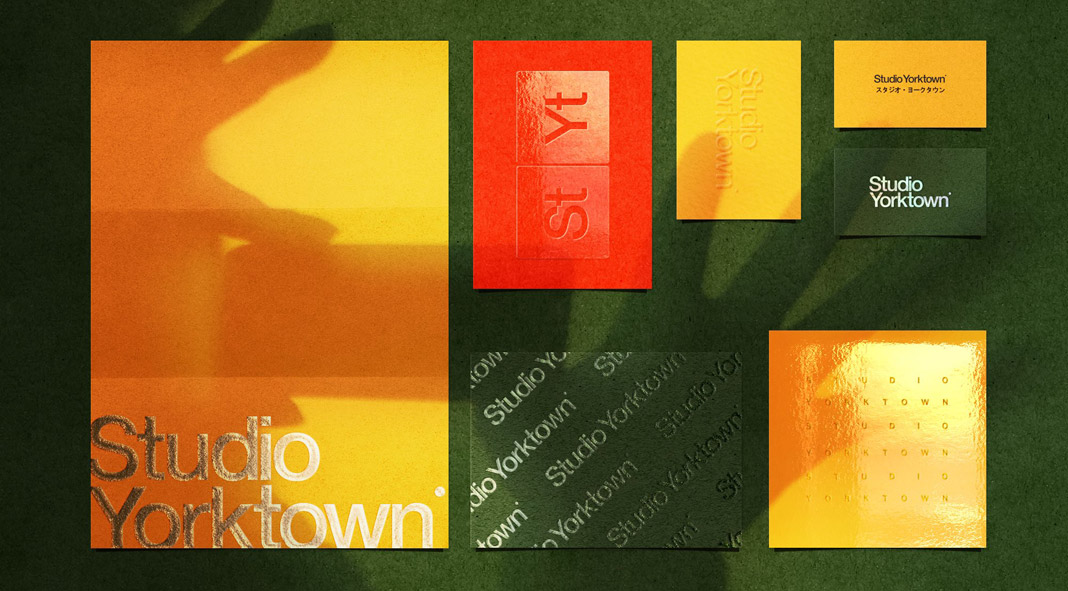
Meiji, a multi-print effects Photoshop mockup by Studio Yorktown.
Metallic colors are shiny and eye-catching, making them perfect for graphic design. Use metallic colors to add a touch of luxury to your graphic or to make it pop against a plain background. From shimmering gold to rich bronze, these colors add a sophisticated style to any design.
So what is negative space in graphic design? It is the empty space around and between the subjects in a graphic. This trend is all about using negative space creatively to add interest and impact to your design. It’s a minimalistic approach that has been gaining popularity in recent years, as more and more designers strive to create clean and sophisticated designs.
Using animated graphics is a great way to add movement and interest to your graphic design. Everywhere you look, from advertisements to websites to social media posts, businesses are using animation to capture attention and stand out from the competition. And it’s not just small businesses; even major brands are using animated graphics to communicate their messages. While some may dismiss animated graphics as a passing fad, there’s no denying that they are an effective way to engage audiences and deliver information in a memorable way. You can hire a graphic designer to create a custom animation for you or use free resources online to create simple animations.
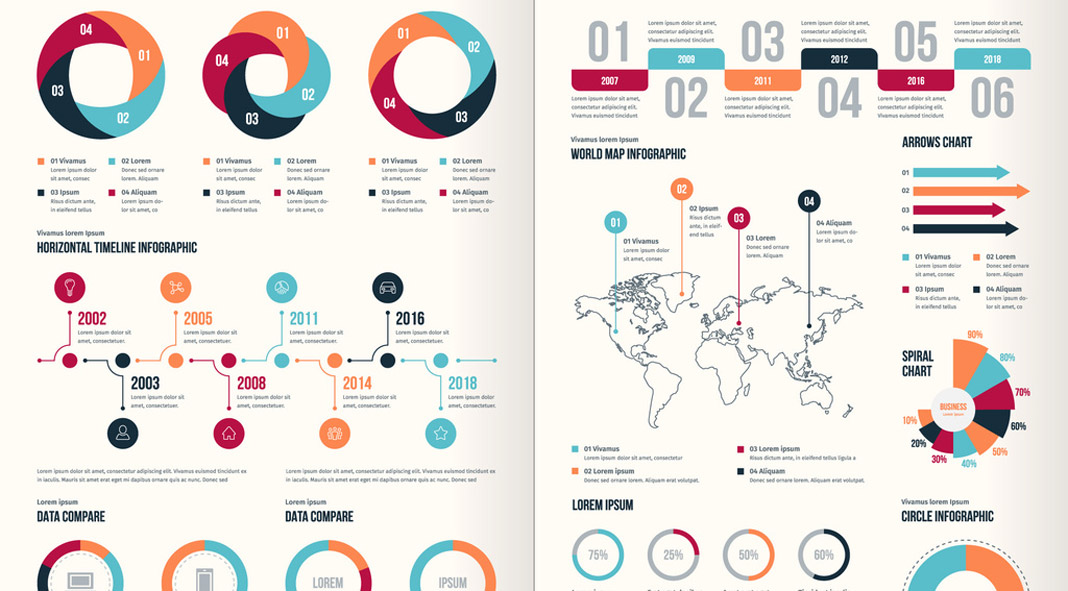
Infographics are a great way to present information in a visually appealing way. As a society, we are constantly inundated with information. In the age of the internet, we have access to more data than ever before, and it can be overwhelming to sift through everything and find what we’re looking for. This is where infographics come in. An infographic is a visual representation of data or information, and they have become increasingly popular in recent years as a way to quickly and easily communicate complex ideas. For graphic designers, infographics offer a unique challenge, as they must distill a lot of information into a single, visually-appealing image. As infographics continue to grow in popularity, we can expect to see more designers experimenting with this trend.
Nothing new but icons are simple, yet effective, graphic elements that can be used to represent different concepts or ideas. You’re probably thinking, “Icons are so overdone. Everyone is using them.” But that’s exactly why they’re such a popular graphic design trend right now. Icons are eye-catching and easy to understand, making them perfect for grabbing attention in a crowded marketplace. And because they’re so versatile, they can be used in a variety of ways to communicate your brand’s unique identity. So if you’re looking for a way to make your mark, consider using icons in your next design project.
13. Photo Manipulation
Photo manipulation effects for Adobe Photoshop by Pixelbuddha.
The creative task of photo manipulation is the process of manipulating images to create a desired effect. This graphic design trend is perfect for those who want to add a bit of creativity to their work. There are many different techniques that can be used in photo manipulation, so it’s a great way to experiment with your graphic design.
Vector graphics are computer graphics that are created using mathematical objects called vectors. They can be transformed to any size without loss of quality. Sure, vector graphics are nothing new in the design world but the clean and modern style is currently very popular and can be found across any type of media ranging from print to the web.
90s design was all about big bold statements. From chunky die-cut shapes to DayGlo colors, 90s designers had a knack for making an impact. And while some 90s trends have since fallen by the wayside, others are currently making a comeback. So what makes 90s design so special? Part of it has to do with the fact that 90s designers weren’t afraid to experiment. They pushed boundaries and challenged convention, creating a style that was both eye-catching and forward-thinking. But 90s design also has a certain sense of nostalgia about it. Whether you love it or hate it, there’s no denying that 90s design is here to stay.
One of the latest trends in graphic design is the use of grain and noise textures. These textures can add a sense of depth and realism to your design, and they can also be used to create a vintage or distressed look. Grain and noise textures are often used in conjunction with other effects, such as halftone dots or overlays. When used correctly, they can help to create a cohesive and visually arresting design. However, like all trends, grain and noise textures should be used sparingly, as too much of either can quickly become overwhelming. So if you’re looking to add a little grain or noise to your next project, be sure to use it judiciously.
In the world of graphic design, experimental typography is having a moment. This trend involves pushing the boundaries of typefaces to create unique, eye-catching designs. While experimental typography has been around for decades, it has recently gained popularity thanks to the rise of digital design tools and social media. As a result, experimental typography is now being used by everyone from major brands to small businesses. And while not everyone is a fan of this trend, there’s no denying that experimental typography can be incredibly effective when used correctly. So if you’re looking to add a touch of personality to your next project, don’t be afraid to experiment with your typography.
It’s no secret that computer-generated graphics are becoming increasingly popular. Once relegated to the world of science fiction movies and video games, computer-generated graphics are now being used in everything from advertisements to product packaging. And it’s easy to see why. With their ability to create realistic images and text effects, computer-generated graphics offer designers a lot of flexibility. Plus, thanks to advances in technology, computer-generated graphics are becoming more and more realistic all the time. As a result, we’re likely to see even more computer-generated designs in the coming years.
3D elements are nothing new. In fact, they’ve been around for centuries in the form of sculptures and other art forms. However, 3D design is now starting to make its way into the world of graphic design, and it’s definitely making a splash. Thanks to advances in technology, rendered 3D elements can now be created with ease, and they offer a unique way to add depth and interest to any project. From logos to illustrations, 3D elements are becoming increasingly popular, and it’s easy to see why. If you’re looking to add a touch of dimension to your next project, don’t be afraid to experiment with 3D design.
These days, serif fonts are all the rage in the world of graphic design. And it’s no wonder why! These traditional fonts convey a sense of sophistication and elegance, making them perfect for luxury brands or high-end businesses. But you can also use serif fonts to add a touch of stylishness to more down-to-earth designs. So whatever your project may be, don’t be afraid to add a little serif flair. After all, that’s what all the cool kids are doing these days.
TikTok and LinkedIn created room for video resumes and more personalization for applicants
When social media first came into our lives, the common practice was don’t post anything you wouldn’t want your future employer to see. However, as social media has become more ubiquitous, our personal and professional lives have blurred. Social sites like Facebook, WhatsApp, and LinkedIn have offered ways for individuals to find new jobs using their platform of choice.
Even TikTok announced its own feature to help job seekers find opportunities. More individuals are using social media with the goal of getting employed, showcasing their interests, and creating a digital, resume-like portfolio.
For over a decade, social media platforms like YouTube and Instagram have enabled individuals to promote themselves and their personal brands while enjoying creative freedom to showcase their talents. Employers are still struggling to fill open positions and individuals searching for jobs that provide autonomy and higher levels of fulfillment. Luckily, many aspects of social media can help hiring teams reframe their talent attraction strategies to make the best talent match for their needs.
A resume is still the primary currency of hiring
No matter the job, company, or industry, resumes still largely drive the hiring process, but resume formatting and delivery have evolved. Video resumes help employers shift hiring requirements (pdf) from education and experience to skills. Although the need for a resume has remained constant, this new era of hiring calls for a more modern perspective.
The traditional resume emphasizes education and experience, typically with previous jobs and degrees at the top, taking up a significant portion of the document. Job-relevant skills are developed through many avenues, both in and outside of formal training or workplace projects. Yet hard and soft skills, certifications and credentials, general interests, outside activities and ways to express intent for continual upskilling get buried at the bottom of a resume—or left off entirely. While this has been the norm, resumes should now be revamped with candidate skills at the forefront, showcasing what they can do versus what they have done.
Recruiters and hiring teams need to adjust their approach to what a resume should entail—with an emphasis on skills as the forefront of qualifications—to better recruit and hire the right fit for the job.
Quick, easily digestible information is critical
Social media doesn’t show every waking minute of individuals’ lives (depending on who you follow), but instead can highlight meaningful moments, enticing viewers to learn more. In the same way, resumes don’t represent the totality of a candidate’s capabilities and potential for success. Resumes exist to garner the attention needed to advance a candidate through the hiring process. Unfortunately, traditionally formatted resumes struggle to effectively articulate skills, limiting a recruiter’s ability to evaluate whether a potential candidate has the skills to be successful.
Digital credentials can bring greater reliability and trust to the hiring process. By providing a unified language of understanding to individuals’ hard and soft skills, digital credentials signify verified, data-backed qualifications and provide greater insight into the whole picture of an applicant’s abilities rather than saddling hiring teams with the task of filling in the blanks.
Studies show us that a hiring manager spends on average 6-7 seconds reviewing a resume. In that time, hiring managers need quick, easily digestible insights to help determine if the candidate is qualified to move forward in the process. So, while watching 3-minute video resumes might not be easily scalable for most recruiters, the notion of putting one’s skills at the forefront of their resume is here to stay.
Skills-based hiring and digital credentials
There is a nearly unprecedented mismatch between the number of open jobs and the number of people applying for those positions, with over 6 million potential candidates (pdf) and more than 11 million job vacancies in today’s hiring landscape. This large gap has amplified the need for capable workers, with hiring teams shifting expectations from those who “have done” a job to those who “can do” the job because of their skills, qualifications, and interest more than their past experience alone.
Many workers who left roles as part of the great resignation have shifted their career trajectory entirely. While they may be entering new industries without a traditional background, these job candidates likely have transferable skills that match well with their ambitions for a new role. But to match talent with suitable roles and close the hiring gap, talent management teams must be willing to prioritize skills in their review practices.
Additionally, previously identified skills that were a nice-to-have for job requirements are now must-haves for hiring. For example, in this digital world, hard skills such as working with tools like Microsoft Suite are crucial for remote or hybrid work and ensuring collaboration capabilities. Similarly, in a remote-first, digital world, a soft skill companies should prioritize is a candidate’s propensity for learning and upskilling. Both of these skills can be shown through verified digital credentials, whether it is a certificate of completion for mastery of a specific tool or an individual’s many certifications and badges, demonstrating their willingness to learn and expand their skill sets.
For hiring teams, reorienting their talent management strategy is crucial to understanding this new era of skills-based hiring. Social media has provided an excellent opportunity to understand better what does and doesn’t work in this digital environment. Each individual has a chance to show their unique skills,while hiring teams will have a competitive advantage in finding and retaining the best talent.
Bailey Showalter, VP of talent solutions at Credly, a business of Pearson, where she is focused on growth initiatives that help people connect to the right opportunity at the right time on the basis of their verified skills.