Author

editor

Browsing

By Yaёl Bizouati-Kennedy

The Justice Department’s Civil Rights Division announced it has entered into a settlement agreement resolving allegations that Meta Platforms, formerly known as Facebook, engaged in discriminatory advertising in violation of the Fair Housing Act. This is the department’s first case challenging discrimination under the FHA, and Meta has agreed to change its ad delivery system, the Justice Department said in a press release.

Among other things, the complaint filed on June 21 alleges that Meta uses algorithms in determining which Facebook users receive housing ads, and that those algorithms rely in part on characteristics protected under the FHA, including race, colour, religion, sex, disability, familial status and national origin. This is the department’s first case challenging algorithmic bias under the Fair Housing Act.

“When a company develops and deploys technology that deprives users of housing opportunities based in whole or in part on protected characteristics, it has violated the Fair Housing Act, just as when companies engage in discriminatory advertising using more traditional advertising methods,” U.S. Attorney Damian Williams said in the release. “Because of this ground-breaking lawsuit, Meta will – for the first time – change its ad delivery system to address algorithmic discrimination. But if Meta fails to demonstrate that it has sufficiently changed its delivery system to guard against algorithmic bias, this Office will proceed with the litigation.”

This settlement marks the first time that Meta will be subject to court oversight for its ad targeting and delivery system, the Department said.

Under the settlement, Meta has until Dec. 31 to stop using an advertising tool for housing ads (known as the “Special Ad Audience” tool) that, according to the department’s complaint, relies on a discriminatory algorithm. Meta also will develop a new system to address racial and other disparities caused by its use of personalization algorithms in its ad delivery system for housing ads. That system will be subject to Department of Justice approval and court oversight.

Meta must also pay the United States a civil penalty of $115,054, the maximum penalty available under the Fair Housing Act.

Attorney General Kristen Clarke of the Justice Department’s Civil Rights Division called the settlement “historic.”

“The Justice Department is committed to holding Meta and other technology companies accountable when they abuse algorithms in ways that unlawfully harm marginalized communities,” she said.

In a statement to The Wall Street Journal, Meta said that it also plans to change its ads related to employment and credit in addition to housing.

“Discrimination in housing, employment and credit is a deep-rooted problem with a long history in the U.S., and we are committed to broadening opportunities for marginalized communities in these spaces and others,” Meta said in a statement posted on its website.

Feature Image Credit: Fritz Jorgensen / Getty Images 

By Yaёl Bizouati-Kennedy

Yaël Bizouati-Kennedy is a full-time financial journalist and has written for several publications, including Dow Jones, The Financial Times Group, Bloomberg and Business Insider. She also worked as a vice president/senior content writer for major NYC-based financial companies, including New York Life and MSCI. Yaël is now freelancing and most recently, she co-authored  the book “Blockchain for Medical Research: Accelerating Trust in Healthcare,” with Dr. Sean Manion. (CRC Press, April 2020) She holds two master’s degrees, including one in Journalism from New York University and one in Russian Studies from Université Toulouse-Jean Jaurès, France.

Sourced from GoBankingRates

By John Glenday

A perfect storm in the streaming sector, squeezed like never before by a crowded marketplace and rampant inflation, has precipitated a new study identifying the services that offer the best bang for your buck.

Uswitch weighed up the number of programs available on each service v the monthly cost for access to calculate a cost-per-title metric, which names Amazon Prime Video as the best choice for savvy viewers.

Netflix

Amazon Prime Video has been crowned best-value in the UK

While it provides no measure of the quality of content, it gives an idea of the vastness of each library.

The omnipresent consumer goods etailer has amassed a selection of 8,799 titles to binge upon in the UK while conducting your online shopping. Couple this with the second cheapest monthly subscription fee of £7.99 and you get a cost-per-title value of £0.0009.

Get the best of The Drum by choosing from a series of great email briefings, whether that’s daily news, weekly recaps or deep dives into media or creativity.

Amazon appears a relative bargain. Market leader Netflix rests in the third spot with its 6592 titles – combine that with a £15.99 fee and you get a £0.0024 rating.

Value-conscious streamers seeking to reduce their spending to the bare minimum would be advised to avoid the UK in general, with the country ranked as the 21st best value out of 41 nations surveyed.

Consumers wishing to pay as little to Jeff Bezos as possible while still being able to enjoy The Boys are advised to head to Jamaica, where each Amazon Prime Video title will set you back £0.0003.

Nick Baker, TV expert at Uswitch.com, said: “With the cost of living rising, many households are deciding to cut back on their streaming subscriptions in order to save money. For those choosing between which streaming services to continue to subscribe to, there are a few things to consider, such as the number of available titles per platform and monthly subscription costs.”

The report dovetails with the launch of Paramount+ in the UK as the latest streaming hopeful to join a saturated market.

By John Glenday

Sourced from The Drum

Sourced from Inc.

Kent Lewis, an Entrepreneurs’ Organization (EO) member in Portland, Oregon, is the founder and CEO of digital marketing agency Anvil Media, which recently merged with Deksia. We asked Kent about his experience conquering his fear of outbound sales outreach, and how others can do so.

For 22 years, I was the principal salesperson for the agency I founded. I focused primarily on building a sales pipeline via inbound marketing, as I personally despised outbound sales. Three years ago, I received a nudge from my advisory board to “get over my issues” and start prospecting on LinkedIn. That guidance led to our largest client and a new outlook on the power of outbound sales.

Here are my top 10 insights for developing an effective outbound sales strategy:
Be Human

While outbound sales are often associated with call centres, email and LinkedIn are effective prospecting channels. Unfortunately, no channel is immune to automation and its resultant inhumane treatment of prospects. The sales communications I receive from solicitors lack not only personalization, but any sense of human connection. Be different. Be human.

Aim at the Target

I learned a great deal from sending 900+ LinkedIn messages to first-degree connections in my first attempt at outbound prospecting. First, the response rates (not including ‘no thanks’ or ‘wrong person’) were not much higher than direct mail. Second, the warm responses (qualified leads) were all people I knew, even if we hadn’t worked together directly. Lastly, the prospects that turned into clients were familiar with my digital marketing agency after years of monthly email newsletters, my posts on social media, and conversations at networking events. The lesson: Start outreach with your intimate network (past and current clients, partners and vendors) and work your way outward to new contacts.
Keep it Simple (and Brief)

One powerful piece of advice I received is to keep LinkedIn messages short but sweet–no more than two sentences requesting a 15-minute catch up. It was difficult to stay true to that, but it paid off in strong response rates from qualified leads. Most solicitations I receive have multiple paragraphs, images and sometimes attachments. I ignore them all. Don’t expect a different outcome than your own reaction to unsolicited sales pitches.

Maintain Consistency

Consistency is key for any new behaviour to become habit. Similar to social media posts, outbound sales efforts require discipline to maintain momentum. Once my first round of outreach on LinkedIn led to five new clients, I was hooked. Once or twice a year, I reach out to first-degree marketing contacts, manually messaging about 900 people. While there are automated tools, I don’t trust them.

Be Fearless

The primary reason I avoided outbound sales was personal discomfort with outreach to people who didn’t want to hear from me. I based that on my personal disdain for receiving sales pitches. My advisor assured me that my assumption was incorrect. My experience validated her advice: Nobody told me to buzz off. While 98 percent of recipients ignored the note entirely, very few said, “no thank you.” The rest said, “Thanks, let’s talk in 3-4 months.” I rejected the fear of rejection to move forward.

Start Small

Most executives not solely responsible for sales may find manual outreach to 900 contacts off-putting. I understand and even agree. Start small with 5-10 contacts per day. It creates a realistic cadence, and it can be rewarding to see smaller wins consistently.

Utilize an Accountability Partner

Never underestimate the significance of an accountability component. I leverage it with outbound sales by scheduling a monthly check-in with my advisor to  ensure I’m on-track and navigating any roadblocks.

Leverage Your Network

After extolling the virtues of networking for 20 years, I hadn’t leveraged my own well-established network of 22,000+ to request introductions to ideal clients. My advisor suggested that I regularly make requests of my network, as friends and other first-degree connections are often happy to help and enjoy making introductions. Warm introductions work wonders vs. cold outreach–particularly valuable for those with established, untapped networks.

Quantity vs. Quality

While I’ve advised to start small, it’s a numbers game. An average response rate of one to two percent means you must reach out to 100 contacts to get a response and 500-1,000 to close a deal. My first outreach generated a five percent close ratio, which was unusually high, and not easily replicated. To compensate, continue growing your list. I still send one to five connection requests a day to relevant contacts on LinkedIn.

Don’t Forget the Fundamentals

While outbound sales are a foundational exponential growth strategy, it’s not the only effective sales strategy. I mentioned that our primary focus for 22 years was inbound sales efforts (search engine marketing, social media and public relations). All channels and strategies should be aligned, integrated and measured consistently. The best channels for qualified leads include search engine optimization (SEO), speaking and network referrals. Email drip campaigns work well for lead nurturing. The single best channel for new clients was our monthly email newsletter, sent consistently for two decades to clients and qualified leads. Regular exposure to our brand was a low touch, but high ROI sales channel.

Feature Image Credit: Getty Images

Sourced from Inc.

By

If you’re dumping all of your startup’s funding into paid ads, you’re missing a massive amount of SEO-driven customer growth opportunities.

In 2021, $621 billion in venture capital was deployed to startups raising funding. More than 50% of that funding went straight into ads.

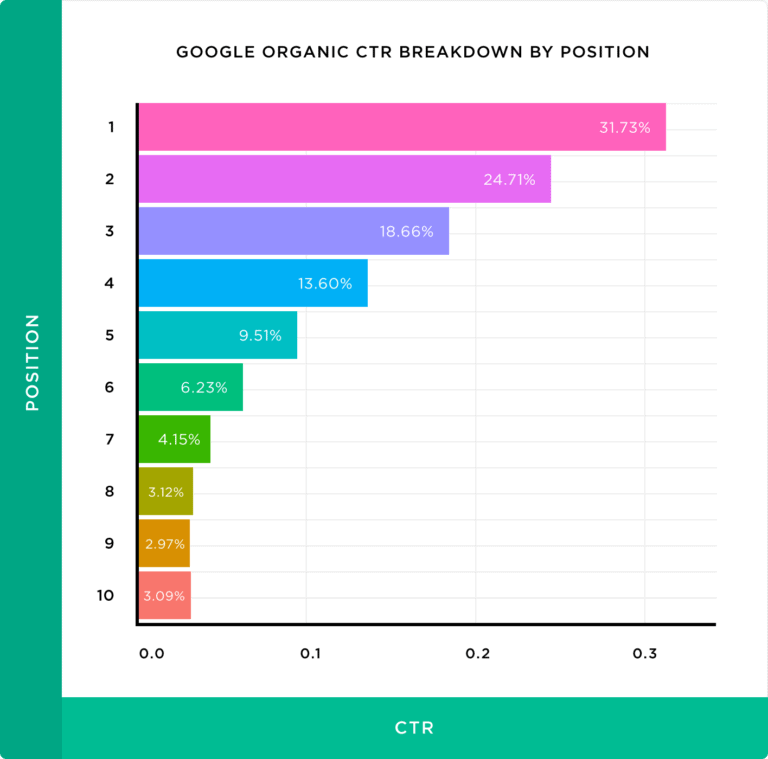
The problem? People hate ads. Ad blocking technology usage has increased dramatically year over year. Even worse, 68% of online experiences start with a search on Google, Bing or another search engine. Only 6% of those searches result in an ad click.

If you’re dumping all of your startup’s funding into paid ads, you’re missing a massive amount of SEO-driven customer growth opportunities. Here are three ways to drive customer growth for your startup using SEO.

1. Publish keyword-driven content often

The key to driving organic traffic from search engines is to provide content that is genuinely helpful to readers. That all starts with identifying what readers are searching for, understanding their problems and providing information they can use to solve them.

Most startups publish random content on their website that isn’t optimized for what their target market is actually looking for. Blogging isn’t the same as it was 10 years ago. It’s not meant to be an online diary. It’s meant to target specific searches that your ideal customers are typing every single day.

Keywords are the lifeblood of SEO, as they help you understand existing and future opportunities for traffic around topics and phrases that relate to your product or service. For instance, someone searching for a do-it-yourself guide to building a bookshelf is probably going to convert on recommendations in the article for products. If it’s too complex, they may even book a contractor instead.

Creating keyword-driven content that targets your ideal customer profile is how you win in SEO. Use tools like Ahrefs and Semrush to research topics that your typical customers might search. Then, create blogs and pieces of content that address those problems. Publish at least five to 10 pieces per month and you’ll start seeing traffic flood to your website.

2. Optimize your public knowledge base

Creating more new content as a startup without outsourcing can be difficult. After all, you’re already wearing too many hats at a startup and your job description grows by the day. If you run a software or tech-based startup, an easy win for SEO is optimizing your public knowledge base.

Your knowledge base contains vital information about your industry, how to use your product, and how to solve key problems in your space. For instance, maybe your software helps companies with logistics management and warehousing. Within your knowledge base, you already explain key information that can pick up organic traffic and searches. And best of all, it’s directly related to your product or service, meaning the potential to convert traffic is huge.

In your keyword research tool, plug in topics that your knowledge base already covers. See if you are missing any keywords and topics that you can expand on to go further in-depth on the content you’ve already published. On your knowledge base, make sure it’s set to index in search engines rather than being content locked away in a user portal or back-end system.

Your knowledge base shouldn’t be exclusive to customer service or users looking for support. Make it public, indexed in search engines and reap the rewards of organic traffic that are hyper-relevant to your business.

3. Generate niche digital PR coverage

Doing digital PR for your startup is critical for SEO. Digital PR includes things like getting mentioned in relevant publications online, podcasts where you share industry advice as an expert and so much more. Digital PR serves multiple purposes, and can directly enhance your SEO and ability to rank for organic search terms.

When doing digital PR initiatives like podcasts or interviews in written publications, or being an expert source for journalists, you earn a brand mention and backlink that directly improves your website’s authority. In simple terms, you can rank better organically and drive more traffic.

In addition, these efforts will build brand awareness and drive referral traffic to your site. The trap that most startups fall down is not niching down enough. PR isn’t just getting mentioned in TechCrunch and getting 30 under 30 listings.

You can also go straight to niche sources where your ideal customers hang out, consume content and connect. Start searching for “best blogs in [industry]” and “top [niche] companies.” Identify a list of 50 to 100 of these websites, media companies and startups that you can cross-promote.

Write a guest post for their blog. Feature them on your podcast and get featured on theirs. Tap into their niche relevant audience rather than going for the biggest publications you can find. You’ll get more pitches accepted and the traffic you receive will be highly relevant to your product or service.

By

Sourced from Entrepreneur

By Jane Li

In the span of less than two weeks, Li Jiaqi went from being China’s top e-commerce influencer to semi-taboo topic.

Li, who has more than 43 million followers on Chinese social media platforms, abruptly ended a livestream session citing technical issues on June 3rd. Since then, he’s been absent from his daily livestreams, during which tens of millions of people would watch him promote products ranging from face masks to hand sanitizers.

Li disappeared after he displayed a tank-shaped layered ice cream. Tanks are often used as a symbol for the 1989 June 4th Tiananmen protests, during which the Chinese military cracked down on students. Chinese authorities have forbidden any discussion or commemoration of the massacre, and those who violate that unspoken rule are punished.

Although for now Li’s accounts and name can still be found on Chinese social media, no mainland Chinese media covered the possible cause of  Li’s suspension. Meanwhile, both Li’s agency and Taobao, the e-commerce platform that hosted Li’s livestream under Chinese tech giant Alibaba, have been mum on the incident. This has prompted speculation about whether Li is banned by Beijing because of what seems to be an inadvertent mistake rather a calculated political statement. “He disappeared just because of a tank shaped dessert? They are too sensitive and stupid. Originally not many youngsters knew about that history, now many are being encouraged to learn about it after this incident,” said a user on Weibo.

Li’s sudden disappearance showcases the high level of uncertainty of doing business in China. Despite signals from Beijing indicating its willingness to relax scrutiny of the tech sector recently, the fact that the country’s most influential live e-commerce figure could vanish overnight lays bare the growing risks companies face in China, where political red lines are quickly expanding to include even mundane moves like Li’s ice cream display.

Another layer of risk facing companies, especially those engaged with content business, comes from the young generation’s lack of awareness of many historical events, including the Tiananmen protests, due to years of Beijing’s censorship of those events. This means youngsters who grew up under China’s tight internet control, including Li who was born in 1992, struggle to navigate taboos when creating or moderating content—a situation now named by internet users as “Li Jiaqi Paradox.”

Brands set to suffer loss from Li’s absence

One immediate consequence of Li’s disappearance could be a short-term blow to the many brands that have contracts with him to promote their products, including Dior and La Mer, according to Nikkei Asia, a financial magazine. The brands will now have to find new channels for the goods days before the 618 shopping festival, one of China’s two annual shopping extravaganzas.

The stakes could be high. Li sold a whopping $1.7 billion worth of goods during a 12-hour-or-so livestream last year, once again proving his clout in the live commerce industry. This year, Li’s first-day pre-618 sale is estimated to have exceeded 4.1 billion yuan ($611 million), surpassing the same period last year, Tracy Dai, director of operations at marketing and research firm China Skinny, told Quartz. (Platforms’ pre-sale periods before shopping festivals usually start at least half a month ahead of the event.)

The impact could be even bigger for Taobao, which lost Viya, another top livestreaming influencer, late last year after she was fined for tax evasion by authorities. She has since disappeared from the industry. With Li’s suspension, it’s unlikely another key opinion leader can step up to fill the void, said Dai.

The transformation of the livestreaming industry

Meanwhile, analysts say Li’s disappearance could in turn transform the livestream e-commerce industry, which reached around $171 billion in value in 2020 according to McKinsey.

“The trend of pursuing top livestreamers has probably passed…Live e-commerce is developing towards the direction of becoming more diversified,” said Tang Xiaotang, an independent consumption analyst based in China.

The industry used to reply heavily on top influencers’ personal charm, with brands often having to pay them handsome commissions and granting exclusive discounts to land a spot livestreamers’ sessions. Now, many lesser-known, cheaper influencers are finding creative ways of attracting audience.

One such example is Chinese private education giant New Oriental, which was hit hard by Beijing’s crackdown on the after-school tutoring market last year. The company’s shares have jumped recently after some of its former tutors became popular influencers by using English during their livestreams, including to sell rice for the company’s newly founded e-commerce platform.

“Product type will also be diversified, with companies like New Oriental targeting the middle class in big cities to offer pricier goods,” said Tang.

By Jane Li

Sourced from Quartz

By Lisa Stiffler

In-depth Amazon coverage from the tech giant’s hometown, including e-commerce, AWS, Amazon Prime, Alexa, logistics, devices, and more.

Amazon’s Alexa is the target of a new lawsuit alleging that the company is using information gathered from users of its smart speaker devices to serve them targeted advertising without their consent.

The plaintiffs are pursuing the case as a class action suit, which if approved could include millions of Amazon customers.

The lawsuit relies heavily on an April study by researchers from the University of Washington and three other institutions. The study concluded that Amazon is analyzing users’ commands and interactions with the smart speakers to infer their potential shopping interests. That information is used to target “on-platform audio ads and off-platform web ads from Amazon or its advertising partners,” the researchers explained in an FAQ.

In response to the study, an Amazon spokesperson confirmed for The Register that information from Alexa was used for ad selection. On Thursday, the company offered GeekWire a similar response, and went on to challenge the accuracy of the research.

“We think that the best advertising is tailored to customers’ interests, which is why in some cases we will use the actions of customers, whether it’s shopping on Amazon or streaming on Amazon Music, to inform the ads we serve,” said spokesperson Lisa Levandowski by email. “For example, if you ask Alexa to order paper towels or to play a particular song on Amazon Music, the record of that purchase or song play may inform relevant ads shown on Amazon or other sites where Amazon places ads.

“This is not an atypical practice — the biggest advertising services in the world do this to best serve their users and their advertisers,” Levandowski continued, noting that customers can opt out of the targeted ads.

As regards the lawsuit, Levandowski said, “We do not comment on active litigation.”

Advertising is a big and growing business for Amazon. In April the company reported that its ad arm brought in $7.8 billion in revenue for the first quarter of the year, up 23% over a year ago.

The lawsuit, which was filed last week in U.S. District Court, cited numerous past occasions where Amazon officials have denied using insights gathered in this manner for ad purposes.

“Amazon’s admission that it does, in fact, use Alexa voice prompts to inform targeted advertising placed by Amazon throughout its vast advertising network is shocking, especially coming after years of repeatedly disavowing any such usage,” said the plaintiffs.

“At no point in these many various terms and policies does Amazon disclose that users’ voice recordings are used to inform targeted advertising.”

The suit was filed by two individuals residing in Ohio and Massachusetts. The legal action was reported Thursday morning by Axios.

The lawsuit notes that 13 separate Amazon documents describe the terms and conditions for Alexa users. “At no point in these many various terms and policies does Amazon disclose that users’ voice recordings are used to inform targeted advertising,” the suit continues. “In fact, the words ‘ads,’ ‘advertising,’ ‘advertise,’ and ‘advertisements’ do not appear a single time…”

This isn’t the first time that Amazon’s Alexa has triggered legal action. In June 2019 a pair of lawsuits claimed the voice assistant violates laws in nine states by illegally storing recordings of children on devices such as the Echo or Echo Dot.

The new research into targeted ads included the University of California-Davis, the University of California-Irvine and Northeastern University in addition to the UW. The study’s lead author was Umar Iqbal, a postdoctoral scholar at the UW’s Paul G. Allen School of Computer Science & Engineering. Iqbal works with professor Franziska Roesner, who also contributed to the research.

To conduct the work, the researchers created personas with particular interests that interacted with Alexa, and a control that did not. Then in a multi-step process the researchers looked for targeted advertising based on the Alexa commands.

Amazon’s Levandowski challenged the veracity of the study.

“As far as this specific research is concerned, it’s not accurate because it’s based on inaccurate assumptions of how Alexa works,” she said. “For example, we do not sell customers’ personal information and we do not share Alexa requests with advertising networks, even though the report suggests that we do.”

The study’s authors said they’re trying to make the public aware of how the increasingly pervasive technology works behind the scenes.

“Studies like ours,” they wrote, “help to bring transparency into the space of voice assistants and the implications of using them.”

Read the full lawsuit: Download this PDF

Feature Image Credit: (Nicolas J Leclercq Photo via Unsplash)

By Lisa Stiffler

GeekWire contributor Lisa Stiffler is a reporter, editor and Northwest native who nearly two decades ago swapped a lab coat for a reporter’s notebook. Covers local efforts to use technology to solve environmental, health, societal and other do-gooder challenges. Follow @lisa_stiffler and email [email protected].

Sourced from GeekWire


By Alex Sherman

  • Facebook is openly copying TikTok, and calling it out as a significant competitor.
  • But Blake Chandlee, TikTok’s head of global business solutions, says his company specializes is entertainment, not social media.
  • TikTok hasn’t seen an advertising slowdown despite what other companies are saying, Chandlee said.


TikTok is fully aware that Meta CEO Mark Zuckerberg is retooling the Facebook and Instagram apps to be more like its own popular short video service. But TikTok has no interest in mimicking Facebook.

“Facebook is a social platform,” Blake Chandlee, TikTok’s president of global business solutions, told CNBC in an interview on Thursday. “They’ve built all their algorithms based on the social graph. That is their core competency. Ours is not.”

Chandlee, who spent 12 years at Facebook before joining TikTok in 2019, said his former employer will likely run into trouble if it tries to copy TikTok, and will end up offering an inferior experience to users and brands.

Facebook launched Instagram Reels in 2020 as its first real foray into the short-form video market. Last year, it brought the service over to its core Facebook app.

“We are an entertainment platform,” Chandlee said. “The difference is significant. It’s a massive difference.”

Facebook app chief Tom Alison told The Verge this week he sees TikTok increasingly stealing share from the world’s largest social network. Facebook plans to modify its primary feed to look more like TikTok by recommending more content regardless of whether it’s shared by friends.

“I think the thing we probably didn’t fully embrace or see is how social this format could be,” Alison told The Verge.

Facebook’s recent performance backs that up. Meta’s stock price is down 52% this year, underperforming the Nasdaq, which has dropped 32%. In April, the company said revenue in the second quarter could drop from a year earlier for the first time ever.

Earlier in the year, Zuckerberg acknowledged the increased competitive pressure from TikTok and said, “This is why our focus on Reels is so important over the long term.”

TikTok is owned by China’s ByteDance, which is privately held.

Chandlee said history is not on Zuckerberg’s side, and compares its current problem to the challenge that Google faced when it was trying to take on Facebook at its own game.

“You remember when Google was creating Google+,” Chandlee said. At Facebook, “We had war rooms at the time. It was a big deal. Everyone was worried about it,” he said.

But no matter how much money Google poured into its social-networking efforts, it couldn’t compete with Facebook, which had become the default place for people to connect with friends and share photos and updates.

“It became clear Google’s value was search and Facebook was really good at social,” Chandlee said.

“I see the same thing now,” he added. “We’re really good at what we do. We bring out these cultural trends and this unique experience people have on TikTok. They’re just not going to have that on Facebook unless Facebook entirely walks away from its social values, which I just don’t think it will do.”

Facebook didn’t immediately respond to a request for comment.

Chandlee added that he has deep respect for Zuckerberg and views both Facebook and Google as strong competition. However, he noted that TikTok has an array of competitors across the world, including businesses in e-commerce and live streaming.

Chandlee said he hasn’t seen a slowdown in ad spending on TikTok, despite what’s being reported by companies such as Snap, which told investors that ad revenue is being hurt by inflation and the threat of recession. Snap’s stock has lost almost three-quarters of its value this year.

“I’ve heard there’s going to be a slowdown in the ad market, anywhere from 2% to 6%, but we have not seen it,” Chandlee said. “We’re not seeing the headwinds that some others are seeing.”

WATCH: Snap has a TikTok problem, says Lead Edge Capital’s Mitchell Green

Feature Image Credit: Andrew Harrer | Bloomberg | Getty Images

By Alex Sherman

Sourced from CNBC

Security is vital online, so a VPN is a useful tool. If you’re not sure how to set one up, here are the four best browsers with one built-in.

When you’re browsing the internet, you may encounter geo-locked content. If you need to access it, you have no choice but to fire up a VPN and spoof your location to where the content is allowed.

However, you don’t have to use a third-party VPN just to see the content. Several browsers out there have built-in VPN services, allowing you to visit websites without downloading another app. Browser VPNs also improve your privacy and protection, especially if you’re accessing a page with questionable security.

So, here’s our list of the four best browsers with a built-in VPN.

1. Opera Browser

This browser is the oldest option in this list, established in 1994 and made publicly available in 1996. It first received the built-in VPN feature in 2016, included in Opera 38.

Although the VPN is turned off by default, you can easily activate it via the Quick Settings Menu. Once you’ve activated it, you’ll see the VPN icon on the address bar. If it’s turned off, you’ll see VPN outlined by a box, but if it’s switched on, you should see a blue box with VPN written on it.

You can turn on the VPN by default for instant secure browsing. You can even instruct Opera to bypass the VPN when using default search engines or accessing intranet sites. It allows you to assign additional VPN bypass rules, so you don’t have to turn it off when you want to access trusted pages that won’t work with the VPN turned on.

You also don’t need to create an account to use the VPN, thus improving your privacy. Beyond that, it has other nifty features, including a built-in ad blocker and a tracker blocker. But best of all, Opera’s service is free and unlimited.

Opera Browser has one significant disadvantage, though: you can’t set a specific country for the VPN. You can only pick between three general areas—Americas, Asia, or Europe.

Download: Opera Browser (Free)

2. epic privacy browser

epic is a Chromium-based browser made by Hidden Reflex that uses the same DNA as Google’s browser. This makes it an excellent Chrome alternative, allowing you to switch browsers easily while keeping the same feel and functionality.

Although its source code isn’t open-source, despite being based on the open-source chromium platform, Hidden Reflex claims that anyone can request for and audit it.

In the past, epic always had its built-in VPN and ad blocker turned on. However, because they need to sustain their operations, these features are now pre-installed as extensions, and users must activate them manually. Nevertheless, they’re easy to switch on once and for good.

One other characteristic of this browser is its default Yahoo! search engine. While some consider this a drawback, others think this is a feature. epic explains the situation when you open a new tab in the browser for the first time:

When you use the default Yahoo-powered search in Epic, you’ll get better search results and support our mission including more frequent releases and hundreds more servers for our encrypted proxy/VPN. All searches sent to Yahoo are encrypted for your privacy and security. According to their requirements, Yahoo search does bypass both our proxy and adblock. Upon ad click in Yahoo search, the proxy and adblock remain disabled for several seconds. Their goal is to insure the integrity of their search ad marketplace. Due to their policies, a few other Yahoo sites including Techcrunch, Engadget, Autoblog, HuffPo and AOL bypass our adblock. No other sites bypass our adblock or proxy so Epic works almost entirely as it always has except in respect to the Yahoo sites.

We believe it is impossible at present to offer honest, free private search. We’ve received many requests to support so-called private search engines such as Startpage, DuckDuckGo and others. To our knowledge there are no exceptions to Google/Bing mandates to share a user’s IP address and or location both to retrieve search ads and upon search ad click. It is misleading to claim to be private if you’re sharing your users’ data with Google/Bing. Despite multiple requests for years, they refuse to explain to us how they work. We can’t legally or ethically work with them without transparency.

epic lets you choose eight countries to connect your VPN: US, Canada, UK, Germany, France, Netherlands, India, and Singapore. If a page you want to load doesn’t work correctly with encrypted VPNs, you can disable the encrypted VPN for that site and add it to your safe list.

If you want the ultimate privacy, you can opt for paid private search via epicsearch.in. You have to pay $2.50 monthly for the service, but epic assures you that your queries will remain private. That’s because they only forward your search to their third-party provider, nothing else.

Download: epic privacy browser (Free)

3. Tor Project

Tor, which stands for The Onion Router, aims to provide anonymous communication via a free global volunteer overlay network. This setup allows users robust privacy, as their data is routed at least thrice to over seven thousand available relays. To use this network, you need to install the Tor Browser.

This browser is one of the most robust options regarding privacy. This is because it uses multilayer encryption to protect its users’ data. Furthermore, it uses random routing, ensuring it’s almost impossible to track data movement within the Tor network.

When you open the Tor browser, you must manually connect to the Tor relay. If you’re in a place where Tor is inaccessible, you can also use Bridges, which allows you to connect to unlisted relays. You can also use your VPN over Tor, although it will require some setup.

The Tor browser is popular with activists, journalists, whistle-blowers, and anyone with serious privacy risks. If you can’t access the Tor Project homepage, you can also find mirrors to other download sites on GitHub.

Download: Tor Browser (Free)

4. Avast Secure Browser PRO

Avast, a popular antivirus provider, launched this Chromium-based browser in 2018. It feels similar to other Chromium-based browsers but adds on several premium features. Avast claims that it can unblock any site and block all ads. You also get unlimited bandwidth, have more than 30 locations to choose from, use the browser on up to 5 devices, and have direct support.

You must download the Avast Secure Basic browser and sign up for the Pro version on the Avast website after installation. Although the VPN service isn’t free, this browser offers the most options in terms of location. It’s also more affordable than getting a standalone VPN service from Avast.

Download: Avast Secure Browser (Free, 30-Day Free Trial for Pro Features)

Enhance Your Access and Privacy With Browser VPNs

VPNs are great tools for privacy and access. And while it’s ideal if you install a dedicated VPN service on your computer, it’s not always practical and may even cost you. So, if you only need a VPN for a short while, consider any of these built-in alternatives instead.

By Jowi Morales

Sourced from MUO

Elon Musk discussed his stance on what types of content should be allowed on Twitter Inc.’s social network, saying that people should be allowed to say “pretty outrageous things” but that the platform doesn’t have to give those posts reach.

Musk elaborated on his beliefs Thursday during an all-hands gathering at Twitter, according to staff who participated in the virtual meeting. It marked the first time the billionaire, who is chief executive officer of Tesla Inc., has addressed Twitter employees since agreeing in late April to buy the company for $44 billion.

Twitter needs to allow more space for people to say whatever they want, Musk said, as long as it doesn’t violate the law. But he added that the company needs to balance that by making sure people “feel comfortable” on the service, otherwise they won’t use it, according to people familiar with the discussion. His goal is to expand Twitter’s user base to 1 billion users, he said. The company had about 229 million daily active users as of March.

Employees who attended the meeting said Musk—who attended the video call wearing a white button-down shirt and appeared to be joining from his phone—also talked about possible product changes, including the idea that users should have to pay to be verified as a real human user, through a tool like subscription service Twitter Blue. He also proposed that Twitter use verification as a way of ranking content on the platform. His goal is to “maximize usefulness of the service,” Musk said.

When asked about potential layoffs, Musk didn’t dismiss the idea, saying that Twitter “needs to get healthy.”

“Anyone who is a significant contributor should have nothing to worry about,” he added.

Twitter started allowing full-time remote work more than two years ago, and Musk was asked multiple questions at the meeting about the staff’s future ability to keep working from home. Musk said that the priority would be for people to work together in person, but if someone is “exceptional at their job” then it’s possible for those people to continue working remotely.

Many employees posted in an internal Slack channel as the conversation unfolded, and Musk’s comments about remote work being reserved for “exceptional” workers prompted a number of heated replies, according to people with knowledge of the situation.

Musk wasn’t directly asked and didn’t address the question of whether he is committed to buying Twitter. He has created concern over recent weeks that he was no longer interested in acquiring Twitter, or might want to lower the per-share price. First he said he wanted to put the deal “on hold” while he investigated the number of bots on the service, and later he sent a formal letter to Twitter executives saying he might walk away from the deal if the company didn’t do more to prove the size of its user base.

The Tesla CEO, who is also the world’s richest person, has publicly criticized Twitter’s products, executives and policies since striking the deal agreement, frustrating some employees who are concerned that he doesn’t understand the complexities of running a large social networking company.

Musk reiterated that he’s not against advertising as a model, noting that it’s very important to Twitter’s business, but that ads and subscriptions are both key to boosting revenue. He said ads should be entertaining, and he doesn’t want to let businesses advertise “bad products.” He told a story about how he recently bought a “scammy product” from a YouTube ad and it didn’t work as advertised.

“That’s totally not cool,” Musk told employees.

Musk was also asked if he plans to take the CEO role at Twitter. He didn’t give a clear answer, saying he’s not hung up on titles, but does want to “drive the product in a particular direction.”

“There’s a lot of chores if you’re the CEO,” he said. “I don’t really care what the title is, but obviously people do need to listen to me.”

By Kurt Wagner, Edward Ludlow, Maxwell Adler and Bloomberg

Sourced from Fortune

By Cecily Mauran

Words of wisdom from the viral aperitif brand.

While scrolling through Instagram, if you’ve ever come across images of a laid-back yet sophisticated cocktail party filled with effortlessly cool people drinking colourful cocktails and spritzes, that’s probably because of Helena Hambrecht.

Hambrecht is the CEO, co-founder, and branding mastermind of aperitif brand Haus. Before Haus, Hambrecht cut her teeth in brand consulting for big names like Facebook, Google, Twitter, Uber, and Airbnb. In other words, Hambrecht has “this really weird, but useful skill set of learning how the internet sausage is made.”

Haus isn’t like other alcohol brands, it’s a cool brand

“Historically, there just hasn’t been a lot of innovation in liquor,” says Hambrecht. From ingredients to distribution, Big Liquor is very much a gatekeeper industry that Hambrecht and her co-founder saw an opportunity to shake up. (Pardon the pun.)

Other brands add sugar, preservatives, aren’t transparent about their ingredients or where they’re sourced, and have high alcohol content, which is a pretty nasty combination for a hangover. Instead, according to the website, Haus uses responsibly-sourced “natural fruits, herbs, and botanicals,” has lower alcohol content (more than wine, less than whiskey), and is made sustainably.

But it’s not just a better-tasting booze with less of a hangover. According to alcohol distribution laws, aperitifs that are mostly grape-based, like Haus’s product, can be sold online. And that’s how Haus became a business-to-consumer brand for the Instagram era.

“Because we have the freedom to sell online, we just re-thought what a brand could look like.”

The Instagram effect

Since launching in 2019, Instagram was an inherent part of brand strategy. Today, Haus has 65,000 followers. “I wanted to make something that you could recognize from 200 feet away,” says Hambrecht. “That has made Instagram really successful for us, because when you see the Haus bottle, there’s nothing else that looks like it, even if it’s 10 pixels high, you can recognize it.”

Image of a bar cart filled with bottles that people are picking up
From day one, Instagram was a part of Haus’s strategy. Credit: Haus

Building an online presence had a major advantage of working with distributors that normally wouldn’t give indie alcohol brands like Haus the time of day, said Hambrecht. “We could go to them and be like, ‘Look, we built the brand for you. We already have this national audience that knows who we are and they’re all waiting for us to get into wholesale. So all you have to do is clear it for us and take a chunk of our money.”

Currently, Haus is in the middle of launching wholesale in 24 states.

Yes, TikTok is currently the most popular app, but Instagram is a key asset for consumer brands who want to build a following. We asked Hambrecht our burning questions about the importance of promoting your business on Instagram and here’s what we learned.

1. Define an aesthetic.

Instagram is all about aesthetics, which is why it works best for consumer brands like Haus.

“A big reason why people will buy food or beverage or really anything online is that they can see how it lives in the world,” says Hambrecht. “For us, we’ve been able to use photography on Instagram to show, ‘this is how you drink it, this is where you drink it, this is who you invite over, where you put the bottle.’ All of those things can be answered visually and that’s where Instagram is just so much better at education and brand marketing than most social channels.”

Hambrecht says they wanted to create a visual style that was aspirational, but attainable. “What we found is it resonates a lot with people, it makes it feel approachable, it makes it feel like maybe something that they could bookmark as inspiration.”

2. ‘The less you sell, the more you’ll sell.’

Sound counterintuitive? Allow Hambrecht to explain. “It’s obvious that you want them to buy [the product], you don’t need to say that.” Customers should want to buy a product based on what they see and feel, Hambrecht explains. “It’s less about selling and more about how can we use this as a brand extension to give our community what they want?”

3. Give the people what they want.

A key part of promoting your business on Instagram is figuring out what your followers may want. “You may not even have a community yet, but say you’re making a food product. You can take a wild guess that the community might want to have some food recipes, or they may want to have your recommendations for other products that could accompany food,” says Hambrecht.

“What can you give your community that isn’t necessarily tied to your product, but makes them really love your brand and think of you as creative and generous and thinking about what the community cares about,” she continues. “That’s how you build that brand loyalty and that’s going to make people want to follow you.”

If you’re thinking of Instagram as more of a content and community engagement channel instead of a sales channel, your posts will be genuine and align with the followers you’re looking for.

4. Build community around your brand.

According to Hambrecht, Haus learned from its customers that they loved seeing other members of the community, so the company started featuring them in more Instagram posts. “It’s really awesome for our audience who wants to see who else is part of this community, who else is drinking this product and they can follow them or they could reach out to them.”

Haus didn’t spend any money on marketing for the first six months, which Hambrecht attributes to investing in branding and customer experience early on, which generated lots of word-of-mouth buzz. Having a strong engaged community proved to be critical when the worst happened…


5. Always be willing to adapt.

Haus was just six months old when the pandemic hit. For a business that built its brand around gathering, Haus suddenly faced huge challenges. Hambrecht says they had to rethink how Haus would live in their customers’ lives during that time. “We shifted our focus to things that were still relevant, like educating our community on the product, how it’s made, the ingredients and where they come from, and recipes they can make at home.”

There was also the practical issue of how to photograph and create new content during social isolation. Hambrecht says they crowdsourced their customers and team about how they were staying connected to each other during the pandemic, which became the genesis for an interview series called “My Haus.”

“We were like, ‘Well, we can’t go and like meet these people in person, it’s dangerous to send a photographer. So why don’t we start sending disposable cameras?'”

“It’s an interview series where we send members of our community disposable cameras, and they photograph a day in the life in their home. We interview them about their home rituals and how they stay connected with the people in their lives in this strange time, whether that’s over zoom, or in person with whoever they live with at home.”

Of course, these were extreme circumstances that forced businesses to adapt for their very survival, but it taught Haus some important lessons.

“Don’t feel so stuck in one strategy. Whatever works today, may need to change six months from now or a year from now,” says Hambrecht. “It’s just a matter of paying attention to what’s going on in the world, and paying attention to what your community cares about or what they need help with.”

6. Play it cool — and be patient.

In other words, it’s all about the long game. “We didn’t take shortcuts, we weren’t begging for followers. You just gotta be cool. Play it cool and be patient.”

Hambrecht built Haus’s following through “building genuine connections,” which has carried the brand through a global pandemic. “Whether it’s with your customers, reporters, retailers, partners, or investors, you’ve just got to play the long game and know that those the relationships you’re making today might come around in two to three years for you.”

Feature Image Credit: Mashable composite: Bob Al-Green / Haus

By Cecily Mauran

Sourced from Mashable