Doing PR is critical for startups, yet many entrepreneurs are so busy developing their product that they forget to make a media plan.
Startups often spend months perfecting their product, but forget to tell the world it exists.
That’s a costly mistake.
A classic study in the Journal of the Academy of Marketing Science found that public relations is nearly three times more effective than advertising when it comes to launching new products. PR doesn’t just promote — it positions, builds credibility, and creates the kind of buzz money can’t buy.
But here’s the catch: you only get one shot at being “new.” If you miss the PR window during your launch, the opportunity doesn’t come back. That’s why timing and strategy are everything.
Why the media cares about your launch (but only once)
Journalists are wired to cover what’s new. New company. New product. New idea. But only while it’s new. Once your startup is live and quietly running in the background, it’s no longer a story — no matter how brilliant it is.
That makes the months leading up to your launch critical. PR isn’t something you add after you go live — it’s something you bake in beforehand.
Startups that treat PR as an afterthought don’t just lose media opportunities. They lose credibility, visibility and momentum right out of the gate.
A smarter launch: Build buzz before you go public
Think of PR as your soft opening. Reporters love early access. Just like music journalists get advance streams and book reviewers receive early copies, your product should be previewed by media insiders before the public sees it.
Offer select journalists early access. Create an experience that makes them feel included and excited, not just informed.
Ideally, set aside at least three to six months before launch to focus exclusively on PR. If that time’s not built into your plan, consider delaying the launch. Seriously. The lost attention from skipping PR often costs far more than a postponed release.
Step-by-step: Laying the foundation for a successful PR launch
Here’s how to start building your PR momentum now:
1. Identify the right journalists
Look for reporters who already cover your space. Study what they write about. Note which ones your target audience follows. Then gather their contact details — Twitter, LinkedIn, email — and track everything in a media list spreadsheet.
2. Build relationships before you pitch
Start engaging now. Comment on their articles. Share their stories. Send a quick message of appreciation. Do not pitch your company yet — the goal is simply to get on their radar in a genuine way.
3. Develop a clear PR strategy (not just a press release)
PR isn’t marketing. Your goal is to help journalists tell a story that matters to their readers. Ask yourself: What’s the angle here? Why would this audience care?
In addition to press releases, consider:
Hosting a pre-launch event or virtual demo
Sending out early access or product samples
Creating a media advisory (not just a press release)
Developing unique story pitches for different outlets
Start with broad business outlets. Then move to trade publications. Then niche verticals. This staggered strategy protects your team from being overwhelmed and keeps your brand in the spotlight longer.
Don’t have time? Outsource to experts who do
Yes, this takes real effort. But you don’t have to do it all yourself.
Some PR agencies now specialize in short-term launch campaigns — no expensive retainer required. These firms often have pre-existing media relationships and know exactly how to turn your launch into a headline.
This approach also avoids the cost and complexity of hiring full-time, in-house PR staff.
Even if your business is already live, bringing in trusted PR professionals can help you recover momentum. Journalists are far more likely to respond to a pitch from someone they already know.
You only launch once — make it count
You can always tweak your product or adjust your marketing. But you only get one shot at a first impression — and that’s what PR is built for.
Whether you run your own campaign or hire an expert team, don’t waste your “new” status. The right PR strategy at launch can earn the visibility, trust, and authority that advertising can’t match.
Scott Bartnick is the CEO and co-founder of Otter PR, an Inc. 5000, Gator100 and Gold Stevie Award-winning agency. A recognized expert in public relations and business strategy, he helps brands grow through media exposure, reputation building and strategic planning.
Considering how fast-paced the current digital world has become, where just a blink consumes a second to fill up, consumers want information right away. If a brand succeeds in making a positive impression during the few seconds of a consumer’s online search for something, there is a possibility to create a lasting impression.
What Are Micro-Moments, And Why Do They Matter?
Micro-moments are brief, seconds-long situations in which people turn to their mobile devices to find an answer or solution, like when searching for a restaurant’s menu or an in-the-moment tutorial.
Micro-moments matter because these events happen at the exact onset of demand. You aren’t just browsing casually; you are searching with intention, and brands that appear with an appropriate answer can create a big impact.
The brands that know how to meet consumers in such moments are changing the rules of digital engagement. Marketing during the micro-moment is essential.
How Are Brands Winning With Micro-Moments?
Brands that have mastered this strategy remain focused on fulfilling what a consumer needs at the moment. In an age when digital marketing is trending toward personalization, real-time engagement comes before anything else. Here are some ways I see brands achieving this:
Using Data To Offer Instant Personalized Services
Make use of elaborate data analysis to foresee customer behaviour and display hyper-targeted content tailored to an individual. In other words, understand a consumer’s journey and feed them appropriate content before they even ask for it. Provide them content based on their previous interactions with your website or services, such as browsing history or prior purchases.
I’d also recommend looking into incorporating AI design into your ad creatives. This helps to optimize ads in real time, showing the most relevant messaging to consumers at the right time.
Offering Around-The-Clock Support
Brands must avoid being seen as a disinvestment by offering instant support to consumers. Such instances of immediate engagement are so precious in converting these micro-moments, whether it means resolving service queries or simply providing first-tier information.
AI bots are a great way to offer your customers a 24/7 live chat, where they can receive an immediate reply and not be kept waiting. Chatbots and live chats can also be helpful for putting suggestions forward even before a customer asks for them, which allows for a more proactive customer service experience.
Optimizing Mobile For Instant Gratification
Because of their very nature, more micro-moments occur on mobile than any other channel. Thus, a mobile-friendly site is not enough; it must be optimized for maximum speed and easy navigation so that the experience is seamless.
• Mobile-First Design: The website should be most and best viewed and navigated on a mobile device.
• Instant Loading: In micro-moments, anything that allows faster loading is a boon; tools such as Google PageSpeed Insights can be used to cut down on loading time.
Capturing Attention With Engaging Video Content
Short video content has become more important for micro-moments. Social media platforms are great for sharing quick, relevant messages that consumers can identify with. Consider TikTok or Instagram Stories, which allow brands to produce content in a “snackable” format and can be consumed quickly.
Interactive video ads, wherein users interact with the content, can also help brands differentiate themselves in a crowded digital space.
By creating content that is clear, engaging and informative, brands are more likely to capture attention and drive engagement during micro-moments.
Voice Search Optimization: Speak Directly To Consumers
As voice search gains momentum, content must be optimized for voice queries. More and more people are seeking immediate answers from their voice assistants, and brands need to have their content optimized so as to appear during these key moments.
Voice queries tend to be longer and more conversational, so brands need to take that into consideration in their SEO strategy. And since voice search is usually oriented to local queries, brands need to be optimized for “near me” searches so that customers nearby can find the brand—and its solutions—easily.
Real-Time Social Proof Application
Social proof has one big way of driving energy toward micro-moments. Consumers seek out reviews and testimonials when they are thinking about purchasing something. Presenting such compelling content at the right moment can swing the balance in favor of the brand. This includes displaying real-time reviews and ratings on the customer’s journey and sharing user-generated content, like pictures of happy customers or video testimonials, to enhance trust and authenticity.
Micro-Moments Of The Future
Going one step further in technological advancement, the prospects of micro-moments seem even more exciting. Artificial intelligence, augmented reality and predictive analytics will enhance these micro-moments in becoming even more personalized and instant. Wouldn’t it be amazing if you could virtually try on clothes or get a recommendation right there in front of you as you stand on the cusp of purchasing? Brands ready to adopt these technologies will have an early lead in gaining consumer attention through newer methods.
Big Opportunity In Quick Moments
Interacting with a customer for a few seconds might seem too trivial to place value upon, but those few seconds of interaction are the very times during which brands can humanize themselves. Shrinking attention spans and rising consumer expectations demand a responsive, dynamic brand that is always there to offer help. That’s what brands must have ingrained in their mission. By working at becoming the de facto provider of immediacy and usefulness during those few seconds of interaction, brands can ensure that these fleeting moments turn into enduring relationships.
The brands that respond to this challenge will work toward converting in those few seconds of opportunity.
Dr. Bin Tang, Founder & CEO of Noah Digital, is an internationally recognized AI & digital marketing leader & author of “Local to Global.” Read Bin Tang’s full executive profile here.
From unhinged content and creator chaos to community-powered growth, big shifts are happening in social and marketers can’t afford to scroll past them. This cheat sheet breaks down 10 of them.
Social media never sleeps. While you were scheduling your next brand post, entire trends popped off, platforms rebranded and Gen Z decided the algorithm was a vibe or a villain depending on the day. But while the formats change and the filters glitch, one thing holds true: social is still where culture starts.
We’ve decoded 10 trends shaping social right now and, because this is Social Media for Drummies, we’re not stopping at observation – we’re giving you a tactical tip for each one. So, keep scrolling the feed to discover what’s trending and what it means for you.
1. Unhinged authenticity is in
What’s happening: Perfect is out. Personality is in. From Ryanair’s sassy airplane to Duolingo’s chaotic owl, brands are ditching the polish and embracing self-aware, lo-fi content.
What to do about it: Ditch the corporate script. Test reactive, personality-driven content – especially in comments or TikTok duets. Bonus points for in-character responses.
2. Creators > influencers
What’s happening: It’s not about who has the most followers but who has the most influence. Niche creators with tight-knit communities are winning trust and conversion.
What to do about it: Audit your creator roster. Shift budget toward micro and niche creators who genuinely align with your brand values, not just aesthetics.
3. AI as your social sidekick
What’s happening: Generative AI is helping brands write captions, edit videos and ideate campaigns faster, but authenticity still rules.
What to do about it: Use AI for speed, not tone. Let it generate first drafts, but always humanize and sense-check. Start small: repurpose existing posts into new formats using AI tools.
4. Social search is the new SEO
What’s happening: TikTok, Reddit and even Instagram are now search-first platforms for Gen Z. Traditional search is losing relevance for lifestyle and product queries.
What to do about it: Optimize your posts like you would a blog – strong hooks, keyword-rich captions, relevant hashtags. Create Reels or TikToks answering real user questions.
5. Short-form video is the default
What’s happening: Reels, Shorts and TikToks dominate discovery and engagement. Attention spans are short, scrolls are infinite.
What to do about it: Go vertical. Use captions on screen. Hook in the first three seconds. And always design your videos for sound-off and sound-on.
6. Reactive listening = real-time wins
What’s happening: The trend cycle is faster than ever. Brands such as Chipotle, Ulta, and Dove win when they act fast, not when they overthink.
What to do about it: Set up daily trend tracking. Use tools such as TrendTok or TikTok Creative Center. Empower your social team to act in hours, not weeks.
7. IRL x URL = maximum reach
What’s happening: Social isn’t just reflecting events, it’s driving them. IRL activations are being designed for TikTok-first moments.
What to do about it: Treat every event like a content shoot. Create Instagrammable sets, brand filters, creator invites and social-first storyboards before doors even open.
8. Digital detox is real
What’s happening: The rise of ‘dumbphone’ minimalism and burnout culture is shifting how audiences want to engage. Slow, intentional content is gaining traction.
What to do about it: Test longer-form posts, emotional storytelling or series-based content. Meet your audience where they are, even if they’re slowing down.
9. Community is the new currency
What’s happening: Brands such as Glossier and Discord-based communities are winning by treating followers like co-creators, not passive audiences.
What to do about it: Invest in community managers. Launch private spaces (Discord, Geneva, IG Close Friends). Build loyalty by involving fans in product ideas or creative direction.
10. Social = commerce (yes, still)
What’s happening: Live shopping may be stalling in the west, but shoppable content and in-app checkout are still booming across TikTok and Instagram.
What to do about it: Simplify the path from discovery to checkout. Use TikTok Shop or Instagram tagging. Partner with creators who know how to demo, not just promote.
One thing’s for sure, social doesn’t stand still – and neither should your strategy. Trends are tools, not just noise. When you understand where the culture is going, you can design content (and campaigns) that don’t just ride the wave, they help make it.
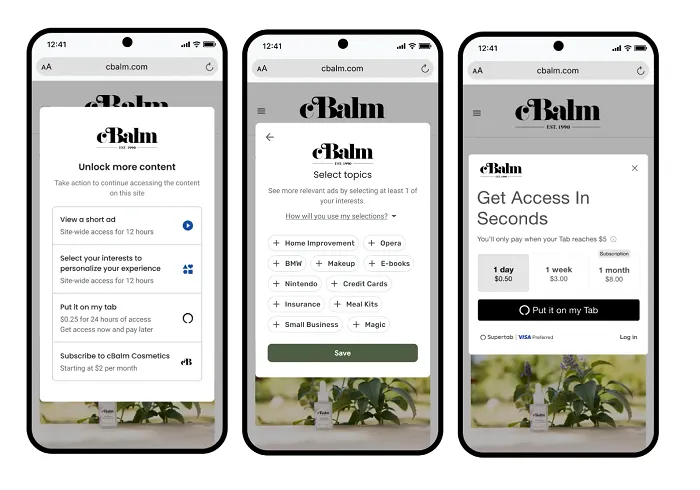
As its AI previews cut referral traffic, Google’s looking to help publishers continue to generate income, via a new promotional offering that will enable them to effectively gate their content, in order to drive more subscriptions, showcase more ads, etc.
Google’s new “Offerwall” system gives web publishers the option to add an additional pop-up alert when users visit their website, providing another means to drive direct action.
As you can see in this example, with Offerwall, publishers can insert additional promotions between content access.
“When publishers choose to use Offerwall, they can offer audiences a number of ways to access content. People might decide to watch a short ad, complete a quick survey or pay in micro payments. Publishers can even add their own options, like newsletter sign-ups. These options empower audiences to decide how they want to access publishers’ sites and help ensure diverse content remains available to everyone.”
I save on my monthly internet bill thanks to these tips.
You don’t need a computer science degree to make sense of the internet plan you’re paying for, but you do have to do a little research. ISPs often use flashy advertising or marketing to distract you from the hidden fees or price increases in your internet bill. Often, the clues to what your internet service bill will look like and the plan’s speed are right in front of you, albeit engulfed in jargon; you just need to know what to look for.
In the past year, as a broadband writer, I’ve spent hours reading through internet service provider offerings — and the customer service reviews about those offerings. It can be boring, but the key to getting a decent internet deal — one that saves you money and comes with enough speed — is reading the fine print.
If you share the sentiments of thousands of Americans who hate their internet service providers, you’re probably not thrilled about the prospect of sifting through ISP promotional offers for hours. When the time comes to shop for home internet, it can be tempting to just buy whatever convenient internet plan your friends and neighbours are using and move on with your life.
While our internet options are sorely limited depending on where we live, keep in mind that you’ll have to live with the internet plan you pick. If it’s too slow, you’ll be picking up the phone in a few months to call customer service again. If you’re getting lured into a plan with hidden fees and promo pricing, you might find your bill doubling after a year or a few months have passed.
We rely on the internet for nearly everything these days. With fears of a looming recession and prices rising due to tariffs, it’s crucial to find ways to save a little money on such an essential service. Here’s my fool-proof method for finding the best internet plan for you.
10 common mistakes made when picking internet plans
A little patience and some reading will go a long way with buying an internet plan — but there are some specific terms to look out for. Before you even start shopping, you should have a good idea of how much speed you’ll need and your budget.
Here are the top 10 mistakes I’ve noticed people making when picking out an internet plan:
We’ll go over each of these in depth below so that when it comes to finding a good internet service provider, you’ll be a pro.
1. Paying for internet speeds you don’t need
Getty Images
Internet is already expensive once you factor in the equipment fees, hidden fees (more on those later) and potential yearly price increases. Don’t overpay for internet speeds that you just won’t use — but you shouldn’t settle for a low tier only to go crawling back to customer support for an upgrade to a higher tier later.
The easiest way to avoid that strife is to take stock of how much internet speed your household is actually using before you begin shopping for a new plan. To start, count the number of gadgets and smart home devices in your home. Smart devices can be sneaky bandwidth hogs, often overlooked when considering internet usage. If you have more than 10 devices online concurrently during a typical day, with internet usage involving more than just browsing the web, a good rule of thumb is to stick to speeds of 500 megabits per second or higher.
If you only have one or two devices on during the day and only one or two internet users working remotely, browsing the web, streaming or gaming at a time, you should be safe with 150 to 300Mbps. Since I work remotely and typically only use two devices simultaneously, AT&T Fibre’s cheapest 300Mbps tier works just fine for me.
If you’ve experienced excessive lag, buffering and Wi-Fi issues with your current tier, it might be time to size up. Your Wi-Fi setup could be to blame for your internet connectivity issues, so run down the list of possible solutions before upgrading.
Advertised vs. actual speeds
On that note, keep in mind that what your ISP is advertising as a maximum speed (in my case, 300Mbps), may not be the actual speeds you’ll get consistently.
Your actual speeds will likely be much slower — especially if you’re relying on Wi-Fi and connecting multiple devices to your network.
Even 1,000Mbps tiers may face congestion and slowdowns, as CNET’s Trisha Jandoc discovered in her home. When looking for a reliable internet plan, make sure you’re taking a holistic look at your speed usage and factoring in slowdowns you may experience depending on the number of devices, the type of internet users in the house and the internet connection type.
2. Not considering the internet connection type
Did you know there’s more than one type of internet connection? You may have multiple internet connection types at your address; evaluate them all instead of opting for whatever is most convenient. Here’s a quick rundown:
Fibre internet: Typically considered the gold standard of broadband, fibre internet can deliver symmetrical upload and download speeds — a feat no other internet connection type can boast of yet. You may be eligible for fibre internet at an address previously only serviceable for cable, so it’s worth asking your landlord or calling a fibre provider to see if you can get fibre.
Cable internet: Since fibre internet is much less available than cable internet, you’re much more likely to be serviceable for cable instead of fibre. Cable is a decent second-best option, with speeds that can reach multi-gig levels (though upload speeds remain sorely lacking).
5G or fixed wireless internet: If you can’t get either fibre or cable, consider 5G internet. Wireless internet is becoming increasingly popular, and Verizon 5G and T-Mobile Home Internet have dominated the space in recent years. Verizon’s 5G home internet plans claim to offer speeds up to 1,000Mbps and T-Mobile just boosted its speeds and added a new speed tier.
Satellite internet: With nearly 100% availability, satellite internet is a safe bet for rural communities or those on the go, but it tends to be high in costs and is prone to network congestion. Unless you don’t have another option, consider satellite and DSL internet a last resort.
3. Falling for promotional pricing and flashy advertising
A recent CNET survey found that 63% of adults are paying more for their internet than they paid last year. Internet providers are profit-motivated first. If you stumble upon a cheap internet plan or deal that seems too good to be true, it probably is. Plus, if you decide to call before you do some research, your customer service representative will probably try to talk you into either upgrading to a faster (more expensive) plan or adding some services you simply don’t need.
Xfinity’s FCC-mandated broadband nutrition label displays the “post-introductory price” after one year of service: the monthly cost jumps from $55 to $89. Screenshot by Cierra Noffke/CNET
Pricing traps and promotional bait are popular among ISPs. Your best defence is to always read the fine print — especially before you pick up the phone to sign up for a plan. If you’re not careful, you could be roped into a two-year contract, with your bill increasing exponentially in the next year. Cable providers Xfinity, Astound and Spectrum are notorious for price increases that can range from $20 to $30 more after a promotional period. In the case of Xfinity, your bill might double after the first year, unless you sign up for a price-lock.
4. Not reading the fine print to look for contracts, hidden fees or data caps
OK, I know it’s boring and arguably the worst part about picking a good internet plan, but reading through the terms of service is the best way to figure out what the internet plan you’re looking at actually entails.
Consult your ISP’s broadband nutrition labels for basic facts and read their full terms of service for any follow-up issues you uncover. If you still have outstanding questions, write them down and make sure you ask them when you call.
First, make sure you’re not signing up for a contract unless you have no other option. Contracts require you to stick with an internet service for the entire term. If you decide your internet plan isn’t working for you halfway through, you’ll either suffer for the next six months or pay a hefty termination fee.
Screenshot of Sparklight’s broadband nutrition labels across three plans. Notice how Sparklight describes the data included with each plan as “Unlimited.” If you read the fine print, you’ll find it actually enforces a soft cap of 5TB. Screenshot/CNET
Next, make sure you’re checking for data caps. The broadband nutrition label should indicate any data caps, but sometimes, ISPs won’t use the broadband labels to clearly state whether they’re enforcing a data cap (looking at you, Sparklight), so you’ll have to read through the fine print. Also, sometimes ISPs enforce “soft caps” or use “priority data,” which means your internet speeds will be throttled once you max out your allotted data.
Lastly, are there any hidden fees or junk fees you should worry about? That promotional price of $30 a year for 150Mbps may seem attractive initially, but if your provider leases equipment for an additional $15 and enforces a maintenance fee of $12 monthly, you’re looking at $57 monthly.
The cost per Mbps is a great way to gauge how good of a deal your internet plan is. Internet prices fluctuate depending on the internet connection type, regional pricing or related market issues. The cost per Mbps is the ratio between the monthly rate (excluding taxes and extra fees) and the advertised speeds — or the price you’re paying for 1Mbps of speed.
You can find the cost per Mbps by dividing the monthly rate by the plan’s max speed. A good rule of thumb is to stick to a cost per Mbps between 10 and 25 cents or lower — if you can. Anything lower than 10 cents per Mbps is usually a good deal.
I’ll caution that the high speeds of fibre internet plans can make using the cost per Mbps approach confusing. For example, AT&T’s fastest tier of 5,000Mbps costs $245 a month. That’s a hefty price for a lot of speed. The cost per Mbps of that plan comes out to 5 cents, which is pretty good by broadband standards but an unrealistic monthly rate for home internet.
If you’re thinking of picking a plan with promotional pricing, compare the cost per Mbps for both the introductory and post-introductory rates. Spectrum’s $50 for 500Mbps plan comes out to a decent 10 cents per Mbps, but if you stick with that plan for a year, your monthly rate will jump to $80, which is a much higher 16 cents per Mbps. In that case, consider shopping around after your promo period ends.
6. Not comparing internet plans or reading customer reviews
I know, I know, I’ve already asked you to read the terms of service for one ISP, and now I’m asking you to cross-analyse the offerings from multiple ISPs. It’s tedious work but the only way to ensure you’re getting the best deal is to carefully read and compare the terms of service of all the ISPs in your area. Now that you know what to look for, you can compare the cost per Mbps and terms of service across different ISP plans. If you’re one of the lucky few who can choose between more than one or two decent internet providers, you should choose carefully.
The terms of service will give you a good sense of what to expect from your internet plan but those words are written from an ISP perspective. You should always take customer reviews with a grain of salt but they’re usually an honest portrayal of how those service terms actually play out. For example, if people express consistent confusion about price hikes, consider that a red flag about promotional pricing traps. You can turn to resources like Reddit for city-specific threads about ISPs or the Better Business Bureau for a closer look at what people didn’t like about their service.
7. Ignoring tech support and security
We usually don’t think about our internet until something starts going wrong. Like most internet shoppers, you’re probably not planning for connectivity issues and if you pick a good ISP and speed, hopefully, you won’t have to deal with those issues. But internet connectivity problems are inevitable, whether it’s a problem with your equipment, your Wi-Fi setup, outages your provider is experiencing or more significant problems beyond your control.
If you can choose between a good ISP without free tech support and a good ISP with free tech support, opt for the support. You’ll never know when you’ll have to make a phone call to troubleshoot your connection or your equipment.
8. Not buying your own router
Adrian Hancu/Getty Images
Before I started writing about home internet, I never considered my router and I couldn’t tell you the difference between a modem and a router. But now I know that it can save you money to buy your equipment upfront instead of paying an extra $10 to your ISP every month. Most routers cost $200 or less, which will pay for itself in a little more than a year.
Plus, you won’t have to worry about racing to return your equipment when your plan ends. There’s also a chance your router can offer better performance than the one your ISP offers. CNET’s Joe Supan saved nearly $1,000 by buying his own router instead of renting from Xfinity and he noticed improved upload speeds after doing so.
Just note that if you buy your own router, you likely won’t be eligible for tech assistance from your ISP anymore, and they may even try to blame your internet connectivity issues on your router. Most router manufacturers — notably TP-Link, Netgear, and Linksys — offer their own customer service support anyway.
9. Not looking at mobile bundle discounts (or other deals)
The best home internet discounts typically come from bundling with your ISP’s mobile service. Switching over your mobile service provider can be a hassle if you don’t already get service from the same company but you could save as much as $35 each month on internet by doing so. Astound and Mediacom offer some of the best mobile discount opportunities but you may have other options, too.
ISPs often try to lure customers with low pricing or other add-ons, and while some deals aren’t worth signing up for, others, like T-Mobile’s $300 gift card and Frontier Fibre’s $30 plan for 500Mbps, are worth a try.
10. Not thinking twice about your router placement
Last but not least, after you’ve done your research and committed to a plan, you’ll have to pick a date for installation. Most people trust that the technicians who install their equipment will pick the best place in the house, but that’s not always the case.
Wi-Fi works best with an optimized setup. If you can place your router/modem in a central spot in the house, closest to where you’re working or where your most used TV is located, work with your technician to make that happen. You can always invest in some Wi-Fi extenders or a mesh network if you think the connectivity will be an issue but don’t assume your technician knows what’s best. After all, this is your internet plan, and you’ll be using it every day.
FAQs
How do I shop for internet?
If you don’t know where to start when looking for a new internet plan, don’t worry. We have an internet shopping guide with plenty of resources and tips.
That said, your first step should be to put your address into the FCC’s broadband map and pull up a list of all available internet providers. Occasionally, this map is incorrect; the FCC might not include a local ISP or an ISP may not serve your address, but it’s a good starting point. Next, consider how much internet speed your household needs and use that information to compare different plans. You should also consider what internet connection type you’d prefer (if you have a good array of options, which isn’t always the case).
Lastly, stay wary of promotional offers and price traps. ISPs often lure customers into cheap starting rates, only to double those prices after one year or a few months of service. Check your forecasted bill for hidden fees and don’t be afraid to try negotiating with your ISP when it’s time to make a phone call.
Should I rent or buy my modem or router?
It may seem daunting to buy your own router, but the decision could save you money in the long run. Most routers cost around $200, which should pay for itself after a year since many ISPs charge $10 to $15 for equipment rental. If you buy your own router, your ISP won’t be able to offer tech support if there’s an issue with the equipment, but router manufacturers often come with their own tech support anyway. Plus, newer routers often perform better than the routers ISPs rent out — CNET broadband writer Joe Supan bought his own router (which saved him nearly $1,000), and he saw improved upload speeds with his cable internet.
What is the best internet plan for home internet?
The best internet plan depends on your household’s internet usage. Not everyone needs 1,000Mbps of download speed; in fact, most households don’t exceed 500Mbps of download speed, according to the latest report from OpenVault. Once you determine how much speed you’ll need (or don’t need), the next step is to get the best deal for those speeds. Evaluating the cost per Mbps is a good way to evaluate the cost-efficiency of a plan. By dividing the monthly rate by the advertised speeds, you can find the cost you’ll be paying for 1 Mbps. A good rule of thumb is that a cost per Mbps between 10 to 25 cents is “good,” but anything lower is “great.”
What should I look for when buying home internet?
Shopping for internet is overwhelming when you’re not sure what to look for. Once you’ve determined what internet providers are available at your address, there are a few things to keep an eye out for when comparing plans:
The internet connection type: There are a few different internet connection types, and each comes with different benefits and drawbacks. You’ll be limited to what’s available at your address, but there’s a chance you’ll be eligible for either fibre internet, cable internet, cellular internet like 5G internet, satellite internet or DSL. Fibre internet is the fastest internet connection type but the least available. Cable internet offers decent speeds for decent prices, albeit with much slower upload speeds. 5G is an increasingly popular wireless option; satellite and DSL should be your last resort.
Promo pricing and price traps: Watch for flashy advertising and low prices. ISPs tend to use the bait-and-switch approach with some internet plans: a low promotional price seems alluring, but after a year of service, that price may double. Always read the broadband nutrition labels on the ISP website. You may want to switch to another internet provider or a new plan after the promo pricing is up.
Cost per Mbps: The cost per Mbps is a great way to evaluate the cost-efficiency of an internet plan. First, consider how much speed you actually need. Next, find a plan with those speeds and divide the monthly rate by the advertised speeds. You’ll come up with the cost per Mbps for each plan; a good rule of thumb is sticking to plans with a cost of 25 cents or lower per Mbps.
Data caps: Does your plan have a data cap? Read through the broadband nutrition label and the terms of service to find out. Sometimes, ISPs won’t post their “soft caps” on the broadband labels, so you’ll have to read the fine print to make sure.
Contracts: Does your ISP enforce a contract? Again, carefully read the terms of service to ensure you’re not entering into a contract agreement. You’ll have to pay a hefty termination fee to cancel.
Hidden fees: ISPs are also notorious for adding extra costs to your monthly internet rate. Double-check your broadband label to see how much you’ll actually be paying for internet each month. If you’re trying to lower the monthly cost, consider buying your router up-front. You can also call to negotiate with your ISP about waiving some of those fees.
Tech support: If you can pick a plan with good tech support, do it. Home internet is subject to outages, equipment failure or other issues beyond our control. Having a good tech support system is key to troubleshooting those issues quickly and efficiently.
Though TikTok Shop faces the dual challenges of economic instability and a tenuous presence on US app stores, marketers are still taking advantage of its positioning as both a social platform and ecommerce engine.
“There isn’t an exact replica for a TikTok shop,” said our analyst Jasmine Enberg in a “Behind the Numbers” episode. “It has this really unique blend of technology, media, and community. The way it has been able to drive sales would be really difficult for any platform to replicate.”
Meanwhile, sales growth hasn’t shielded TikTok Shop from the challenges facing other discount retailers. The marketplace reported 120% year-over-year sales growth in June, but US commerce traffic share attributed to TikTok dipped from 13.1% in May to 10.6% in June, per MikMak.
TikTok Shop faced several ecommerce division cuts earlier this year after not meeting all of its sales targets, as reported by Business Insider.
President Donald Trump gave the platform a 90-day sales extension in June.
Marrying discounts with creator-led commerce
TikTok Shop has established a reputation as a discount retailer, and the retailer is conducting its own version of Amazon’s Prime Day event with “Deals for You Days,” discounting all items by 50% from July 7 – 19.
52% of TikTok Shop customers cited deals as the top reason for making a purchase on the platform, per a May YouGov survey.
Tying discount shopping to direct creator-driven commerce has proved to be a promising formula for brands.
Within the last month, Mammoth Brands’ Harry’s and Flamingo have posted to Linkedin that they are hiring a director of TikTok Shop.
56% of creator-driven shoppers have purchased a product directly from the platform’s shopping feature, per a March EMARKETER and impact.com survey.
Reframing TikTok for product discovery
Instead of treating TikTok Shop as a standalone sales channel, some brands are positioning it as a discovery engine within a broader, multi-platform commerce strategy. This approach lets marketers capitalize on TikTok’s influence without overcommitting to a platform facing regulatory headwinds.
CJ, Publicis Groupe’s affiliate marketing agency, just announced a first-party integration with TikTok Shop that now integrates the platform’s performance data with other affiliate channels like Amazon and DTC sites, according to a press release.
Some 50% of US consumers take product recommendation suggestions from influencers on TikTok Shop, according to February 2024 data from PartnerCentric.
“[The integration is] supporting this wider industry shift that is rooted in data, and not necessarily making bets on channels,” Santi Pierini, CEO at CJ. “We’re able to get the halo effect of the discovery that’s happening on TikTok, and it just makes sense to try and optimize across all these channels.”
While brands are confident that creator partnerships drive sales, measuring performance is the top roadblock that marketers are facing when it comes to influencer marketing, per an August 2024 CreatorIQ survey.
Instead of pushing TikTok Shop as a necessary sales engine, CJ is instead pushing the importance of measurement across multiple platforms when understanding the consumer journey.
“We’re not saying that everyone needs to launch a TikTok shop,” said Kelly Harman, global VP at CJ influence, “but having this understanding of how all these different commerce elements work together is what we’re now able to bring to the table.”
This was originally featured in the EMARKETER Daily newsletter. For more marketing insights, statistics, and trends, subscribe here.
In 2025, creator platforms like YouTube, TikTok, and Instagram are expected to surpass traditional media, including TV networks, news companies, and radio, in ad revenue for the very first time, capturing more than half of the market.
According to WPP Media’s 2025 Mid-Year Global Advertising Forecast, these platforms are projected to generate $189.9 billion in ad revenue in 2025, up 20% from 2024. This figure is expected to nearly double in the years ahead, topping $376.6 billion by 2030.
Why It’s Happening
This is an inflection point for the advertising industry. As audiences spend more time on digital platforms, brands are moving their budgets accordingly. More dollars are flowing to platforms where creators build deep connections with their communities on the devices people engage with the most: their phones.
The accessibility of content plays a role, but creators are leading the shift. Through storytelling, commentary, and personal perspective, creators and their content engage people in ways traditional media struggles to match.
Many consumers now place more trust in creators than in legacy media. That is why brands and advertisers are flocking to creators, whether it is launching their creator programs, putting creators on payroll, or even acting more like creators themselves.
Technology is speeding up this shift. AI and personalization tools help advertisers target their ideal customers with greater precision, from serving the right creative to the right audiences at the right time.
Meanwhile, creator-focused advertising products are becoming more advanced. Brands have been amplifying creator content for some time, but creator platforms are now investing in more ways for brands to run ads adjacent to creators. They’re also making it easier to quickly identify user-generated content that mentions them, obtain permission, and turn it into high-performing ads.
Lines Between Creator and Traditional Media Are Blurring
The gap between creator content and traditional media is shrinking. YouTube creators are producing content at studio quality, often more efficiently than traditional production houses, and even building their own studios, like Dhar Mann.
Creator content is getting so good that streaming platforms like Amazon, Netflix, and Hulu are expanding their libraries with digital creators, including exclusives like MrBeast’s Beast Games and compilations of existing IP like Ms Rachel.
On TikTok and Instagram, creators build serialized content that mimics TV shows. Gymnasium’s Boy Room is a strong example.
With the rise of AI tools, creators will be able to combine these technologies with dedicated teams to act as their own mini studios, pushing content boundaries even further.
What This Means for Everyone
As creator platforms surge past traditional media in ad revenue, everyone in the ecosystem must adapt.
Traditional media companies will need to modernize by integrating creators into their talent pool, as Yahoo and The Washington Post are trying to do. They also need to bring their content where attention is going, like social platforms and Substack. Just as important is exploring new revenue models beyond ads and subscriptions.
Brands must become more creator-first in everything they do. That includes launching always-on creator programs, hiring creators full-time, and integrating creator content across all touchpoints.
Agencies will need to build more services around creators, supporting influencer campaigns, but also building creator-centric production studios focused on platform-native content. They should still maintain traditional offerings, but the momentum is shifting toward creator-led formats.
Creator and user-generated platforms are well-positioned. As ad dollars follow attention, YouTube, TikTok, Instagram, LinkedIn, and more, they will continue to invest in more sophisticated ad solutions powered by creators and communities. These products will not just be about targeting but about helping brands tap into cultural moments quickly.
And for creators, monetization opportunities will continue to grow from sponsored content and user-generated assets to licensing and platform incentives. But with more creators (both human and AI-generated) entering the space, competition will rise. Creators will need to sharpen their strategies and demonstrate value to brands beyond just reach or aesthetics.
All that said, this is not a choice between creator platforms or traditional media. There is value in both. Right now, creator-led content is winning the attention war, but the lines will become even murkier down the road.
What if you could turn your curiosity about Artificial Intelligence into a thriving business opportunity?
AI isn’t just for tech giants or seasoned developers anymore—it’s a field where even beginners can create impactful solutions that businesses are eager to buy. Imagine building an AI-powered tool that automates tedious tasks like email marketing or data analysis, saving companies countless hours and resources. These aren’t just hypothetical ideas; they’re real, high-value AI agents that solve pressing business challenges and are surprisingly accessible to develop. With the right approach, you can not only enter this dynamic field but also carve out a profitable niche in the growing automation market.
SuperHumans Life explore five beginner-friendly AI agents that are both practical to build and highly marketable. From automating customer support to streamlining sales processes, these tools address critical pain points faced by businesses across industries. You’ll discover how these agents use technologies like Natural Language Processing (NLP) and Machine Learning (ML) to deliver measurable results, while also learning why they’re in such high demand. Whether you’re looking to launch a side hustle or establish yourself in the AI space, these ideas offer a powerful starting point. The question isn’t whether you can build and sell these agents—it’s how far they can take you.
Beginner-Friendly AI Agent Ideas
TL;DR Key Takeaways :
AI agents are transforming industries by automating processes, enhancing efficiency, and addressing real-world business challenges, making them valuable tools for organizations.
High-value AI agents include solutions for email marketing, content creation, sales closing, data analysis, and customer support, each offering specific benefits like personalization, automation, and cost reduction.
AI-powered tools such as email marketing agents and content distribution agents streamline marketing efforts by automating tasks like audience segmentation, content generation, and scheduling.
AI sales closer agents and auto analyst agents enhance sales efficiency and decision-making by automating lead engagement, prioritization, and data analysis for actionable insights.
AI support bots improve customer service by handling repetitive queries, reducing response times, and escalating complex issues, leading to better customer satisfaction and lower operational costs.
AI-Powered Email Marketing Agent
Email marketing remains a critical tool for customer engagement, yet managing campaigns can be labour-intensive. An AI-powered email marketing agent simplifies this process by automating essential tasks such as audience segmentation, email creation, scheduling, and follow-ups.
Key functionalities include:
Using Natural Language Processing (NLP) to personalize email content at scale, making sure relevance for each recipient.
Analysing past campaign performance to optimize subject lines, calls-to-action, and delivery times for improved engagement.
Automating follow-ups to reduce manual effort while increasing lead conversions.
This agent is particularly valuable for businesses aiming to enhance their marketing efficiency and achieve better results, making it a highly marketable solution for developers.
Content Creation and Distribution Agent
Maintaining a consistent online presence is essential for businesses, but creating and distributing content across multiple platforms can be overwhelming. A content creation and distribution agent automates this process, from idea generation to publishing.
Core features include:
Using Machine Learning (ML) to identify trending topics and generate platform-specific content.
Repurposing existing materials, such as transforming blog posts into social media updates or video scripts.
Scheduling and publishing content across various channels to ensure consistent visibility and engagement.
By automating these tasks, this agent helps businesses build authority, maintain relevance, and stay competitive in crowded markets.
5 High Value AI Agents Beginners Can Build And Sell
Sales teams often struggle with lead follow-ups and qualification, which can slow down the sales cycle. An AI sales closer agent addresses these challenges by automating key processes, allowing sales teams to focus on closing deals.
Capabilities include:
Engaging with leads through email, chat, or voice calls, answering questions and scheduling meetings.
Analysing lead behaviour to identify high-potential prospects and prioritize them for human follow-up.
Reducing the time and cost associated with manual outreach, accelerating the sales process.
This tool is ideal for businesses looking to scale their sales efforts efficiently and cost-effectively, making it a compelling product for developers to offer.
AI-Powered Auto Analyst Agent
Businesses generate vast amounts of unstructured data, such as emails, call recordings, and documents, which often remain underutilized. An AI-powered auto analyst agent transforms this data into actionable insights, allowing better decision-making.
Core functionalities include:
Applying advanced data analysis techniques to uncover trends, customer pain points, and opportunities for improvement.
Automatically updating Customer Relationship Management (CRM) systems with relevant insights.
Providing teams with accurate, real-time intelligence to enhance operational efficiency and strategic planning.
By converting raw data into meaningful information, this agent enables businesses to make informed decisions and optimize their operations.
AI Support Bot
Customer support is a vital yet resource-intensive function for businesses. An AI support bot offers a scalable solution by handling repetitive queries and providing intelligent, on-brand responses around the clock.
Key benefits include:
Using NLP to understand and respond to customer inquiries with accuracy and relevance.
Escalating complex issues to human agents when necessary, making sure seamless support.
Reducing response times, lowering support costs, and improving overall customer satisfaction.
This agent is an invaluable asset for businesses seeking to enhance their customer experience while minimizing operational overhead.
Core Insights
AI agents enable businesses to transition from manual, time-intensive processes to automated, scalable solutions. By addressing real-world challenges, these tools deliver measurable benefits such as:
Increased operational efficiency.
Enhanced customer engagement and satisfaction.
Higher sales conversions and revenue growth.
For beginners, the availability of user-friendly AI development tools and frameworks simplifies the process of creating and deploying these agents. The growing demand for automation across industries underscores the potential of this market. By identifying specific business pain points and addressing them with AI-driven solutions, you can establish a competitive edge and tap into a lucrative opportunity.
If you’re regularly on YouTube, you may already be shopping your favourite content creators’ YouTube channels. YouTube Shopping was launched in mid-2023, marking a new chapter in the evolution of YouTube. Content creators who qualify for the YouTube Partner Program have traditionally been able to monetize with Adsense. And YouTube creators have traditionally provided product links in the description boxes of their videos. With YouTube Shopping, creators can now monetize their videos without asking their audiences to leave YouTube.
With 250,000 creators now enrolled in the YouTube Shopping program and thousands of brands, including Sephora, Target, Walmart, and Home Depot, available to tag, YouTube is officially in the social commerce game.
What Is YouTube Shopping?
At its core, YouTube Shopping enables creators to tag products directly in their videos. Viewers can then click the product links in the video, whether they’re watching Shorts, long-form videos, or even YouTube on TV, and purchase the products.
“This is an evolution of something that has always been there,” said Tara McNulty, a lead on YouTube’s creator partnerships team. “We’re just finally giving viewers a native, visual experience that meets the true experience YouTube is known for.”
How YouTube Shopping Works
The YouTube Shopping Viewer Journey
YouTube Shop Team
From a creator’s perspective, YouTube shopping tools can be accessed in YouTube Studio. Creators can add tags manually or use the Chrome extension to quickly link products. Auto-tagging is also being rolled out, making it even easier to monetize shopping content.
The tools are available on both short-form and long-form video:
Shorts: Viewers can see tappable product tags directly in the video.
Long-form: Tags can be added with or without Timestamps—a feature similar to video chapters, where product tags appear at the exact moment they’re referenced.
Who Qualifies For YouTube Shopping?
YouTube Shopping is currently available to creators who:
Are in the YouTube Partner Program
Have at least 10,000 subscribers.
As of August 2024, over 250,000 creators are monetizing through Shopping, as shared by the YouTube Shop team. The program has expanded beyond the U.S. into Southeast Asia, including Korea, Indonesia, Thailand, Vietnam, Malaysia, the Philippines, and Singapore, with more markets to come soon.
Why Should Content Creators Join The YouTube Partner Program?
With over 70 billion views per day on YouTube Shorts, as reported by YouTube, the platform has the opportunity to lead the next wave of shoppable content. YouTube is already one of the most trusted social commerce platforms in the U.S. for finding and purchasing products. According to Pews Research, YouTube is also the most used platform for adults in the United States.
For creators, this means:
Earning commissions directly from trusted product recommendations
Streamlining the audience experience
Connecting more authentically with audiences who already treat creators as their go-to for product advice
YouTube has been an established platform where creators build communities. Now, it’s becoming a place where they can also build storefronts. Whether you’re a beauty guru, tech reviewer, or an interior designer, YouTube Shopping gives you tools to turn authentic content into income.
Nearly 90% of digital video buyers are using or plan to use generative AI for ads, according to a new report from the IAB.
Like it or not, GenAI is coming to digital video ad creation.
Almost 9 in 10 digital video buyers are using or plan to use gen AI to aid in the creation of digital video ads, according to a new report from the Interactive Advertising Bureau (IAB). According to the report, which is based on a survey of 368 advertisers fielded between February 17 and March 7, around 30% of digital video ads will be made with or enhanced by GenAI tools this year, up eight percentage points from 2024; that number is expected to grow to 39% next year.
Small- and mid-tier brands are expected to adapt the tech quicker than larger companies, according to the IAB: “Small spenders,” which the report defines as companies spending less than $10 million annually, expect 45% of their ads to be created with GenAI by 2026, while 36% of “large spenders” (those who spend $50+ million annually) said the same.
Of the respondents who said they were using or planned to use GenAI to create multiple versions of ads, the largest share (42%) said they were doing so to create “versions for different audiences,” while a slightly smaller percentage (38%) said they were using the tech to make “visual and style changes.”
The responses “suggest that the other GenAI capabilities become more valuable when buyers have already solved for reaching the right audience first,” the report read.
The effects on digital video could be considerable. Overall, digital video (defined in the report as CTV, social video, and online video) is expected to make up 58% of total TV and video ad spend in 2025, according to the report. In 2025, digital video spend is expected to grow 14% to $72 billion, while CTV spend is expected to grow 13% to $26.6 billion.
Pulled in: As advertisers continue to spend on digital video, content quality (43%) and targeting capabilities (39%) ranked as the top two most important criteria when deciding where exactly to put that spend. Targeting capabilities were important to 56% of small spenders, while only 39% of mid-tier and 35% of large brands said the same.
Advertisers of all kinds are looking for more options in the CTV video space, the IAB found, and more than half of buyers reported seeking out more capabilities and options when advertising against live programming on streaming compared to on linear TV, according to the report.
“Although streaming is still an emerging channel for live content…buyers are holding their streaming partners to a higher standard than linear TV,” the report read.
Brand safety and incremental audiences polled highest in terms of expectations buyers have when looking to spend on live content on both streaming platforms and linear TV.
Excluding insertion order transactions, 75% of CTV buys were done programmatically in 2024. This year, that number is projected to grow to 85%.
The whole nine yards: When it comes to reasons to buy digital video ads, buyers surveyed were most interested in achieving bottom-funnel outcomes such as store visits (both online and off) and sales (both clocked in at 44%). In terms of measurement preference, 55% said campaign and placement-level KPIs were most important, while 47% said “basic data regarding the adjacent content” was crucial.
But measurement continues to pose some challenges, especially among small spenders: 38% said that “measurement complexity” presents a challenge to activating in digital video programmatically, while “standardization issues” and “leveraging cross-channel data” both were a concern for 36% of small spenders.