By John Herrman
Reddit is one of the last thriving islands of the old web. Can it survive AI?
t doesn’t really matter who you are, how you spend your time online, or what you imagine your relationship with the internet to be. However you scroll, wherever you browse, and whatever you want to see on your screens, it has probably happened to you, and if you haven’t noticed yet, you may now: Your world has become more Reddit.
The 20-year-old platform, which began as a niche link aggregator and gradually grew into the web’s default community of communities, has gone from optional to inescapable, its little red alien logo manifesting no matter which way you look. For my zoomer cousin, a professional TikToker who was still learning to read when Reddit was founded, it’s obviously “the only place where you know there are real people.” For 82-year-old user LogyBayer, who grew up programming FORTRAN on punch-card computers in the 1960s, Reddit, where he has posted thousands of times, is the closest thing he can find to “the wondrous world of Usenet,” the online discussion system that predates the web. Many of the less online people I know, who had maybe heard of Reddit, are now tapping through threads about life advice and HVAC repair; at the same time, some of the most online people I know, who for years saw Reddit as a sort of internet playpen, a meme aggregator downstream of more vital communities, are now logging in daily.
It’s happened to me, too, a screen-addled tech reporter who has been covering the platform’s growth — and various problems — for well over a decade with at least notional remove: When it’s time again to pick up that phone and incinerate a few more seconds of my one life on earth, more often than not, I shovel them into Reddit.
This isn’t just a feeling. Reddit, after two decades of gradual and uneven growth, is exploding. According to Similarweb, it’s one of the largest properties online; if you take away social apps like Facebook, Instagram, and TikTok, and utilities like Google and ChatGPT, its closest competition among websites is Wikipedia. In 2023, according to the company, Reddit had around 60 million unique visitors a day; its latest earnings report puts the number at 108 million a day, 400 million a week, and, according to conservative estimates, well over a billion different people using it every month. About those earnings reports: In 2024, Reddit went public. Its stock price popped, then climbed alongside its traffic. Revenue is way up, and after years of losses, the company eked out a slim profit in the last quarter.
Why now? Reddit’s co-founder and current CEO, Steven Huffman, suggests the answer is obvious. “When we started Reddit, it was a web page of 25 links from around the internet,” he says. “Now, 20 years later, you’re stumbling into some thread where people are telling stories they’ve never told before and it drifts into life advice for someone who lives 2,000 miles away.” He didn’t see that coming, he says, but “in hindsight, it actually makes a lot of sense.”
For years, Reddit, which is made up of thousands of sub-Reddits moderated by volunteers, offered a centralized and streamlined alternative to the web’s thousands of small and scattered forums, message boards, and independent communities. At the same time, in contrast with the much larger social-media platforms that rose around it, it looked niche. “The word social media didn’t exist” when the site was launched, Huffman says. Since then, in his telling, the company has steered away from influencer culture and growth-at-all-costs social-media scaling — “we don’t want people to be famous because of Reddit,” he says — and toward realizing “the vision of the old web.” Another way to tell the story is that the platform largely just stayed put. In any case, as the mega-platforms merge into TikTok-clone sameness, Reddit’s steady focus on giving online randos a place to pseudonymously post with one another is paying off. In Huffman’s view, Reddit’s growth is simply its reward for stubbornly — maybe accidentally — “fulfilling the promise of the internet.”
It’s a good story, and there’s something to it. But just out of frame, there are … a few other relevant things happening online, each as obvious to the typical browser as Reddit’s sudden come-up. The World Wide Web from which Reddit grew, and for which Huffman expresses so much reverence, has been going through something akin to ecological collapse after being poisoned, then abandoned, by advertisers that have little use for independent websites anymore. At the same time, the rise of generative AI suggests a lot of people are just as happy — if not happier — getting life advice, news, and conversation from a robot that has read a bunch of sub-Reddits as they are chatting with internet strangers themselves.
Reddit’s place in the collapsing web is both valuable and risk-laden. Google’s response to the gradual breakdown of the digital commons has been to send more and more people to Reddit, where relevant results are at least probably written by human beings, lavishing the site with traffic but binding the companies’ fates together.
Reddit’s relationship with AI is similarly tense: As a training corpus, Reddit is immensely valuable; after years of unauthorized scraping, the company has official licensing deals with Google, which sometimes turns its content into AI-generated search “Answers,” and with OpenAI, which uses Reddit’s vast archives to give its chatbot depth and outside sourcing and to help it sound like a normal person — or at least a normal redditor. Meanwhile, Reddit moderators are battling a flood of inauthentic content generated by chatbots that were trained, of course, on Reddit. They’re getting tired while users, less certain that other commenters are real — and less sure of their ability to tell and noticing the rising tides of slop elsewhere — are drifting into mutual suspicion.
Huffman suggests that, just as Reddit was rewarded for offering an alternative to more baldly growth-and-ad-driven social media, it could serve a similar role in the post-ChatGPT world as a refuge for actual human interaction in a sea of generated text. “Social media made Reddit make more sense, and I think now that the web is kind of dying, sadly, that evolution helps Reddit make more sense,” he says. “Reddit in that era is, Reddit is not social media. And now, we’re entering this new era where Reddit is not AI.”
It’s a powerful pitch, to the extent it remains true. But it doesn’t quite capture just how strange and risky Reddit’s position is in 2025. Being one of the last islands of humanity on a dying web may make you more appealing to, well, humans. But it also makes you even more valuable to the companies doing the killing. Reddit is an alternative to a web that’s harvested, polluted, and depleted by tech firms in a race to dominate AI. It’s also an increasingly valuable data source for tech firms in a race to dominate AI. How long can it be both?
Reddit has occupied a series of strange, sometimes contradictory positions in the public imagination over its 20 years of existence: a nerdier alternative to Digg, whose users it inherited after a redesign gone wrong; a platform overwhelmed by young men who were, at different times, in the tank for Ron Paul, Barack Obama, and Bernie Sanders; the world’s leading aggregator of revenge porn; a crusading platform against revenge porn; and a staging ground for Donald Trump’s online campaign, among many others. At different times, and to different people, it was an obscure “dark corner” of the web, an unbearably “cringe” platform downstream from real internet culture (akin to 4chan or, actually, its polar opposite); a platform of free-speech crusaders; a hive of groupthink and censorship; and ground zero for an ongoing retail stock-trading boom that has since outgrown it.
Through it all, the platform has remained in some ways remarkably consistent. (As the critic Alex Pareene wrote a few years ago, Reddit went “from merely embarrassing but occasionally amusing, to actively harmful, to — mainly by accident — essential.”) In 2005, Reddit looked a lot like it does now, a list of links on which users voted up or down. By 2008, it worked a lot like it does now, with comments, sub-Reddits created and run by the community, and the rise of self-posts — threads without links, created to talk, argue, or share things directly.
To a user in 2008, Reddit was legible as a forum of forums, a new and centralized take on the sorts of scattered web communities where people used to spend a lot of time on a much smaller internet. To a user in 2025, this can make it feel like a throwback. We’re further from Reddit’s founding than Reddit’s founding was from the creation of the web browser. It still basically operates within structures and norms established on dial-up bulletin-board services and email lists: communities sorted by interest, volunteer policing, and threads upon threads of text.
Reddit’s formal and cultural stubbornness — and its roots as a mid-aughts gathering place for (mostly) young men interested in technology and the stunted online culture of the time — has helped and haunted it for its entire existence. Huffman, who co-founded the site with his college roommate, Alexis Ohanian, and the late activist Aaron Swartz, left the company after it was acquired by Condé Nast in 2009. (In 2011, Condé Nast spun off Reddit into an investable subsidiary of Advance Publications. Its $10 million investment would eventually be worth more than $2 billion.)
Huffman returned in 2015 after a series of user and moderator revolts driven, in part if not completely, by the attempts of CEO Ellen Pao to figure out what to do about growing communities with names like Jailbait, Pics of Dead Kids, Fat People Hate, and Beating Women. He did so with a mandate to square the platform’s need for growth with the desires of a user base that was incredibly allergic to being told by the company what it could and couldn’t do. “It’s kind of an egotistical thought,” Huffman told New York Magazine at the time, “but I felt like I’m literally the only person in the world who can fix this and I had a moral obligation to do so.” There was resistance within the company, too. “Huffman stepped into what was basically a company on fire and was met by employees who were either disgruntled, burned out, or just done with the drama,” says Christine Lagorio-Chafkin, author of We Are the Nerds, a book about Reddit’s history. “Half the staff left within days.”
This was, in hindsight, the beginning of a long process of growth-and-revenue-oriented taming and professionalization with occasional top-down mandates and a few more user revolts — the most recent in 2023 after the company limited access to developers, threatening third-party apps and tools used by moderators, resulting in mass sub-Reddit blackouts and a moderator exodus. The company by turns tolerated, managed, or crushed user backlash on the way to the big prize: Reddit’s IPO. In May 2024, shares in Reddit started trading on the New York Stock Exchange, its $34 listing price valuing the company at $6.5 billion. In July 2025, shares trade above $150.
Huffman at Reddit’s IPO. Photo: Brendan McDermid/REUTERS
“It’s almost as if he made a list of all the things that had haunted Reddit as a site for years and built systems to dismantle them,” Lagorio-Chafkin says of Huffman. In person and as the trollish and frequently maligned “spez” on Reddit, he served for years as a representative of and foil for some of the site’s most vocal (or at least stereotypical) users: a millennial white-guy programmer who enjoys arguing a little too much for his own good. Post-IPO, Huffman is now much wealthier — his shares in the company are worth north $600 million — and, as is customary in his San Francisco cohort, conspicuously muscular. After years of corporate expansion, Reddit is starting to resemble the larger tech companies he likes to use as foils. In 2015, when he returned, Reddit had fewer than 75 employees. Now, it has more than 2,300 staffers and a market cap of $28 billion. It’s also — finally — turning a profit.
It would be an overstatement to say Reddit’s transition into a publicly traded online platform was smooth. “We’ve lost a lot of moderator skill since the IPO,” says one long time volunteer who communicates regularly with Reddit’s leadership. These tens of thousands of moderators aren’t just helpful — they’re operationally crucial, keeping the site organized and (relatively) hospitable.
The 2023 revolt drove a lot of people out, and the loss of third-party tools for dealing with the workload was a pain for the ones who remained. (At the time, Huffman compared protesting mods to entitled “landed gentry”; among volunteers, the episode is still referred to as “fuck spez.”) Before Reddit developed its own replacement tools, another moderator tells me, “We had a solid year of unchecked spam hitting all sub-Reddits.” At the same time, mods were dealing with a new problem: AI. “With text-only subs, we see increased attempts by people generating fake stories,” the moderator says, and discerning the difference between AI posts and typical Reddit comments was suddenly much harder. Image-based sub-Reddits, suddenly glutted with generated material, scrambled to come up with rules — “constantly disputed,” the mod says — and struggled to enforce them. Suddenly, spammers and trolls had superpowers. Earlier this year, researchers at the University of Zurich dispatched “semi-automated, AI-powered accounts,” which identified themselves variously as rape victims, trauma counsellors, and Black men opposed to Black Lives Matter, to a sub-Reddit called /r/changemyview, where the researchers claimed they achieved “persuasive rates between three and six times higher than the human baseline,” leaving users annoyed and moderators enraged. (A majority of the accounts used in the study, however, were flagged at the time by Reddit’s automated systems.)
Meanwhile, the long time mod says, recruiting new help has gotten harder. “People hate you. The people who want to do it are power hungry, and the really good ones burn out.” They also have somewhat less control than they used to (they can no longer lock down their sub-Reddits in protest, for example). “I think the company is under a lot of pressure to remove power for moderators,” he says. “I need more people, but Reddit would like people to have less power.” Laura Nestler, Reddit’s VP of community, says managing mods is crucial to the platform’s survival. “They’re stewarding their communities, they’re building the norms, building the rules and enforcing their independent individual rules,” she says. “Our goal is just to empower moderators and communities to do what they’re gonna do.” Mod drama isn’t a sideshow. Like Wikipedia, Reddit works only if people feel like posting there and if moderators feel like volunteering hours a week — or a day — to keep things clean, civil, or at least functional. Unlike Wikipedia, Reddit is a for-profit company, which makes its volunteer model fragile in different ways. (For an idea of what happens when your army of volunteer contributors loses interest in boosting your company’s bottom line, look no further than the rotting corpse of Quora.) Before the IPO, Reddit offered some long time moderators early access to its stock. Now that they’re volunteering for a public company, though, some are floating another idea: Maybe they’ll need to get paid.
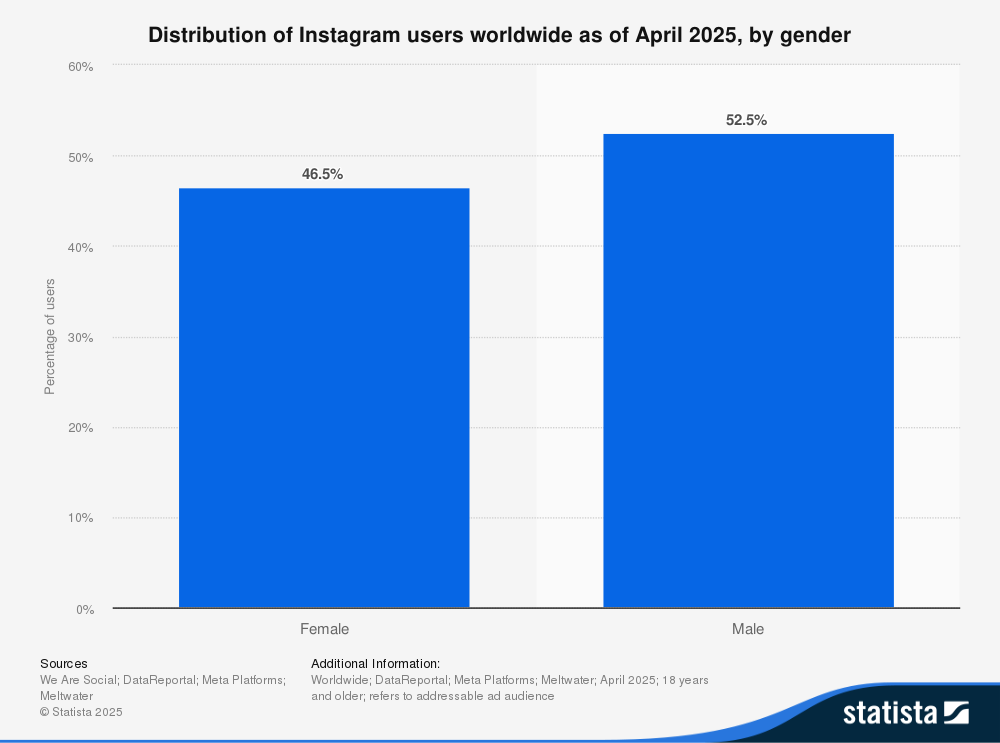
Still, the transition happened, and the admin-mod-user relationship that keeps Reddit running remains more or less intact. “I think what’s underappreciated is that he continued what Ellen started,” Lagorio-Chafkin says — cracking down on hate speech and harassment and building “sturdier internal teams.” As a result, she suggests, Reddit is far larger, more functional, and more diverse than ever, with sub-Reddits for just about any pastime or interest you might come up with, often filled with more people than you might expect. According to the company, Reddit is now used by slightly more women than men, and, unlike a lot of other large platforms, its share of young users is growing. Fandoms have sub-Reddits, and so do brands. The platform functions broadly enough to host, for example, a massive sub-Reddit for Uber-rider stories and complaints (“Driver picked me up with her infant and boyfriend in the car”) as well as a sub-Reddit with more than 420,000 subscribers for Uber drivers (“She peed herself in my car. I can’t blame her”). Any sufficiently popular sub-Reddit eventually spawns a “circlejerk” counterpart in which users mock the host sub-Reddit.
Reddit is also far more international despite English still being the dominant language. It’s not uncommon, particularly in sub-Reddits devoted to personal stories and advice, to realize that the difficult in-laws in question live in Bhopal or that the requested product recommendations need to be available for purchase in Jakarta. More surprising, perhaps, is the persistence of one of Reddit’s less publicized functions, even through its IPO and efforts to court mainstream advertisers: There are still massive amounts of porn on it with thousands of sub-Reddits filled with just about any sort of adult content you can think of and quite a bit more. The largest isn’t even an aggregator: On /r/gonewild, which has more than 5 million subscribers, redditors post nude photos of themselves.
Plenty of the dynamics resemble, as Huffman suggests, an extension of the “old web” ethos of community and connection, albeit enabled by new internet techniques. Once built purely around a unified front page and followed sub-Reddits, users now get algorithmic recommendations. As with any such system, this has the effect of making the platform feel larger and, at times, more isolating. There are also more ads than there used to be (Reddit’s revenue last year was just $1.3 billion, $1.2 billion of which came from advertising).
Still, from the inside, Reddit remains recognizably Reddit. Strains of its dominant 2010s culture have become less important if not less obvious, aging and mutating with some of its most devoted longtime users. There are plenty of kids there talking about kid things, and a surprising number of elderly people, too, but there are also, unmistakably, a ton of American college-educated millennials, many of whom now have jobs and children and whose once-nerdy interests and sensibilities have become, with some help from Reddit itself, genuinely mainstream — so much so that the site’s name on the platform and elsewhere has become a pejorative shorthand for normie millennial tastes.
Reddit’s offices. Photo: REUTERS/Robert Galbraith
There are large and active conservative and pro-Trump sub-Reddits, but the largest and most extreme MAGA communities have been officially banned by the company or marginalized in the community, meaning America’s dominant political movement is rendered on the platform’s most popular sub-Reddits as an absurd and enraging external force and as fundamentally incompatible even with Reddit’s commercialized approximation of a shared, deliberative commons. Posts fishing for earnest responses from Trump supporters are more likely to be answered by young liberal redditors venting about their parents. Years of failed attempts to create a conservative alternative to Reddit have instead culminated with a migration back to X, with which Reddit is now engaged in a sort of simmering mega-scale forum war. (Early this year, Elon Musk lashed out at Reddit, where some sub-Reddits had banned links to X, and privately pressured Huffman to step in.)
One way to understand Reddit is as a largely functional, self-sustaining community that its leadership managed to avoid fucking up — an old and sturdy system that remains, against all odds, basically intact. But this alone doesn’t explain its growth or the situation it finds itself in now. For Reddit to grow as it has — suddenly and massively despite largely staying the course — it required some help. First, it needed the web to collapse around it and social networks to chase TikTok into video-recommendation oblivion, leaving readers desperate for anything resembling actual human discussion. Then it needed Google.
In 2019, on the tech-industry Reddit clone Hacker News, users discussed a blog post about missing the “old internet,” pining for the days before it was ruined by the “commercial smog thrown up by Google.” Multiple commenters shared the same advice: “I’ve taken to appending ‘reddit’ to many of my search queries, because flawed though it is, Reddit is one of the few places you can read an actual human thought,” one wrote. Sure, Reddit was still a “cesspool,” full of bullshitters and tiresome “in-jokes” of its own, commenters said, but the advice was well received — and prescient. Reddit users shared the tip, the company itself publicized it, and the “reddit” hack went mainstream.
By 2022, Google had taken notice and adjusted its search algorithms in a way that surfaced Reddit more often, particularly in response to open-ended questions, and said it would guide users toward “helpful content” and more “first-person perspectives.” By 2023, search analysts were tracking dramatic increases in Reddit’s visibility on Google; one report estimated that Reddit had gone from “57 million visits from Google U.S. … in July 2023 to 427 million in April 2024.” Reddit’s own numbers told a similar story: The mature, newly public company, which had been fighting for incremental growth its whole life, was suddenly tracking like a viral start-up, its total traffic growing yearly by half with no signs of slowing down.
At first in its earnings reports, the company was slightly coy about what was going on, emphasizing how important Reddit had become to Google, not the other way around. (“Reddit was the sixth-most-Googled word in the U.S.,” Huffman noted at the time.) Reddit’s disclosures told the story more clearly: It reported that logged-in users — i.e., people who already had Reddit accounts — were up 27 percent globally, while its logged-out visitor numbers were up 70 percent. There are plenty of reasons the internet feels more Reddit these days, but none are as important, nor as straightforward, as this: Google, in an effort to cope with its own rotting search index, has been sending us there by the hundred million.
In an interview, Huffman emphasized that this isn’t entirely new and that Google has been sending people to Reddit in unpredictable quantities for years: “We get a ton of traffic from Google today. We know that’s not forever. We’ve seen it in our history. It comes and goes.” While a recent collapse in Google traffic has been a disaster for e-commerce operations and online publishers, Huffman says, such changes wouldn’t be a disaster because — again — Reddit remains Reddit. “We have a lot of content that Google likes, and the reason Google likes it is because we didn’t generate it for them,” he says.
But without the massive assist from Google, the past few years of Reddit’s story look quite different. Adam Bumas, an analyst with research firm Garbage Media, has been tracking upvotes on popular sub-Reddits since Reddit shut off access for most outside tracking tools. Despite the influx of new visitors, this sort of active participation has remained flat — a story, Bumas says, of “maintaining rather than growing.” Without Google’s firehose of visitors, other risks come to the fore: competition from platforms like Discord, the real-time chat platform popular with younger users, where many sub-Reddits already have a presence; the growing preference among advertisers for video rather than text; and, of course, the rise of chatbots.
There are also reasons to suspect that, today, Reddit’s past relationship with Google may not be a reliable guide. Google’s uses for Reddit aren’t just about search, nor have they been merely convenient: In February 2024, the company announced it was “expanding its partnership” with Google, allowing for “new ways for Reddit content to be displayed across Google products” but also for Google — which was by then spending tens of billions of dollars a quarter pivoting to AI — to train its models on Reddit’s vast corpus of “authentic human conversations and experiences.” For Google, spooked by the rise of ChatGPT, this was urgent. By May, it had rolled out AI-generated “answers” above its search results, many of which were clearly drawn from the platform, but which, by design, were far less likely to send users there.
When the feature made headlines for a viral AI-generated search result that suggested adding glue to a pizza recipe, the backstory implicated Reddit: Google’s AI had misread an 11-year-old joke from a Reddit user called “fucksmith.” It was funny, of course, but also told a particular story about the future of the platform. Reddit — the last website, the imperfect and commercially conflicted steward of the “promise of the internet” — was being harvested to train tools that purport to be able to do a lot of what Reddit users do for one another: answer questions, provide recommendations, open rabbit holes, indulge argument, and waste time. It was training its own replacement.
From inside the platform, Reddit’s relationship with AI is unremarkable. There are large active communities of AI enthusiasts sharing productivity hacks as well as sub-Reddits full of apocalyptic doomers, sci-fi optimists, and total skeptics. Users routinely call out comments that appear to be AI-generated and lament the rise of AI slop outside of Reddit’s (relatively) safe perimeter. Moderators see a rise in AI-generated engagement bait and comments — more, they say, than Huffman admits — but they don’t see it as a crisis, at least not yet. As a business, Reddit has been pushing further into AI-powered moderation and has polled users about AI content-creation tools. With users, it has moved cautiously, launching an internal AI search tool that lets users browse threads through a chat interface. To advertisers, it has been a little more aggressive, pitching them an “AI-powered social listening tool designed to unlock strategic value from Reddit’s 20 years of conversations.”
But Reddit’s careful approach to AI features is misleading: Except for Wikipedia, maybe, no independent website has provided as much raw training data for as many AI firms, authorized or not, as Reddit. As a corpus for machines trying to sound or reason like people, it’s immensely valuable: pre-organized, pre-moderated, cleaned and sorted by the input of millions of volunteers and users, and written, unlike so much else on the web, without SEO, traffic, or advertisers in mind. Likewise, its relationship with OpenAI runs deeper than the deal announced in early 2024 through which Reddit licensed data to OpenAI for training and to bring Reddit content directly into ChatGPT. In 2015, the day after OpenAI was founded, Sam Altman, in a joint interview with Musk, mused that “all of the Reddit data would be a very useful training set” for building future AI; earlier that year, Altman, who had by then known Huffman for a decade, helped orchestrate his return as CEO but not before serving as CEO himself for a week. Altman was an early investor in Reddit and sat on its board until 2022.
Huffman, who still regularly speaks with Altman, is hardly an AI skeptic. But when it comes to AI’s impact on Reddit — at least in his capacity as a CEO — he’s fairly sanguine about the future. “There are times the AI is superpowerful, and there are times when you just don’t want it,” he says. Sure, some of what people get from Reddit, they may soon be able to get from chatbots trained on it. “It can give you lots of decent answers to a wide variety of questions,” Huffman says. And there’s no doubt AI will rip through the economy of the web, which is already filled with cheap and largely replaceable content. “AI is going to kill the bullshit because AI is better at bullshit,” he adds.
Reddit has plenty of bullshit too. But a lot of questions brought to Reddit, Huffman says, are questions without clear answers — the sorts of questions where, even if you’re not asking them yourself, you’re there to read what other people think, work things through, argue, and joke around. “I think what will stay constant is that human beings want to talk to each other,” he says. “People like talking. They like asking questions, they like hearing answers, they like giving answers, they like having a few laughs, they like being helpful.” The big social platforms don’t offer that anymore, and chatbots can’t either. “The core of Reddit actually becomes more valuable over time when the rest of the internet turns into AI.”
In the background, though, Reddit has started acting a bit more paranoid. As a measure against bot-generated content, Reddit is reportedly considering partnering with World ID, an iris-scanning crypto and identity start-up (started, of course, by Sam Altman). The company recently sued OpenAI competitor Anthropic for allegedly scraping its “vast corpus of public content” for its “enormous utility” and has threatened to sue the university researchers who ran the undercover AI experiment. Meanwhile, brands, advertisers, and spammers are reportedly swarming the platform hoping to cash in on Reddit’s visibility in both Google Search and in AIs trained on and monitoring its posts.
As insular and resilient as Reddit has been, it’s a resource that needs to be maintained and one that could be depleted. The through-line in Reddit’s history is that it has always been forced to answer to its users and thousands of volunteer moderators, whether or not what they were demanding made sense for Reddit as a community or a company. In some ways, this dynamic surely held them back. But just as clearly, in hindsight, it probably kept the entire project alive.
Huffman likes to emphasize that Reddit has been through a lot. When it launched, nobody was using the internet on smartphones, and the tiny company saw MySpace, Friendster, and Xanga as unassailable incumbents. It watched as they collapsed and were replaced with true giants, which shape-shifted as they grew, all the while remaining fundamentally and stubbornly the same. “Look, we’ve been around 20 years,” he says. “So we have, I think, some perspective and comfort with the way the internet evolves.”
When I ask about risks, he spins to synergies. The trashing of the web, the lavish attention from Google and AI firms, the scrutiny of investors who care about returns above all — these are fundamentally aligned with Reddit’s interests and will carry it to the next billion users. Huffman is more optimistic than ever about Reddit’s internal tensions, too, having gotten, in his view, the platform’s worst instincts under control. He recalls with clear satisfaction a recent conversation with a longtime moderator: “He’s like, ‘As a shareholder, how are you thinking about growth?’ And I was just like, Oh, hallelujah.” Reddit’s most devoted volunteers, he says, “used to tell us not to grow.”