Author

editor

Browsing

By Anthony Basile

The internet is many things — it’s the place where a huge percentage of marketing takes place, but it’s also an untamed landscape where every day brings a new crop of transcendent, foolish and transcendently foolish content.Can you marry these two worlds? Can memes live in harmony with your well-designed and sensible content marketing strategy? They can, provided you don’t go overboard, and understand the context around what you’re doing.

It’s tempting to assume that because memes are silly, you can quickly toss them together and tweet them out for clicks and views. That strategy could backfire, though. After all, people who are online a lot — so, just about everyone — will recognize the “right” and “wrong” ways to use these images.

Depending on how trend-savvy your target audience is, an older meme or one reposted or assembled carelessly could show your brand to be out of touch. It’s also worth remembering that the internet is a place where some truly unsavoury speech goes on. Not realizing the history behind an image could end in a humbling social media apology for using offensive content.

Memes, applied to your content marketing strategy, can be the perfect flavouring for your more substantial social media marketing content. Just as you wouldn’t use a bowl of sugar as a main course, you don’t want memes to take over your brand voice — but they sweeten the overall mixture and keep people interested.

But first, let’s get back to basics. When we talk about content marketing with a meme, what do we mean?

What is a Content Meme?

Memes, images that are widely reposted and used to convey meaning, have become a building block of digital culture. Merriam-Webster took a stab at defining how the word “meme” came to define those images. The term goes back to the 70s, and Richard Dawkins’ The Selfish Gene — the book described memes as ideas that catch on and spread.

Describing goofy pieces of viral content as memes began as early as the late 90s, and this meaning had taken over by around the turn of the 2010s. Merriam-Webster canonized the word’s new role in 2015.

The standard format of an internet meme, in the captioned-image sense, is a picture that signifies a feeling labeled in a way with which people will grasp. Maybe they recognize where the image is from, perhaps it’s just amusing or evocative. Either way, it now means something new.

Some memes stay in circulation for years, while for others, diminishing returns set in almost immediately. The extremely online members of the audience will likely scoff at anything even slightly out of date, but that doesn’t mean those posts are worthless. Some topics spin off one meme after another, year after year. And when I say “some topics,” I mean Spongebob SquarePants. That show must have come along at just the right time. But that’s another article entirely.

Making variations on these widely shared images has become easier over the years — for this article, I’ve used the meme generator on Imgflip to pair text with common meme template formats. There’s nothing stopping you from taking a similar approach.

Using a meme as content for marketing is a natural next step once you’ve learned to generate these posts. After all, your goal as a content marketer is to draw eyes to your brand and get attention. Speaking the lingua franca of the internet seems perfect. So begins the marriage of meme and marketing into meme marketing.

As an introduction to using memes for marketers, you can go back and check out our favorite SEO memes for inspiration. The mere fact that there are captioned images about search engine optimization shows the wide variety of topics you can discuss in meme form.

5 Tips for Creating Your Own Content Memes

OK! Are you ready to start using memes in your content strategy? Don’t answer right away! It’s a little more complicated than it seems.

Admittedly, it may seem very, very simple. Just slap some text on a trending meme and post it to social media. But that’s not the whole story. Remember, we’re content marketers, and we can’t unlearn everything just because we’re in the land of captioned cats and Spongebob Squarepants.

Here are a few tips on creating content that uses memes:

1. Don’t Always Take the Shot

Turning every trending meme into a branded post isn’t necessary. Even if you’ve established a fun tone in your social media strategy, you can afford to pass some up. Getting a good reaction to one post could lead to a too-quick follow-up or a post trying too hard to make a meme match your message.

Take good matches between meme and brand when they come up, and let bad matches pass by. You may feel like you’re missing an opportunity, but that beats “posting cringe.”

2. Don’t Force Memes to Follow the Rules

Treating memes as regularly scheduled parts of your content marketing strategy — that is, keeping them relentlessly on-message and including a ton of information — can lead to big, unwieldy posts that just don’t work.

Memes in your brand’s Facebook or Twitter feed every once in a while can keep things light, but they’re not load-bearing pieces of your content strategy. Let’s face it, that weight of expectation is too great for such goofy content to bear.

3. Tell a Joke

This ties in with point No. 2, but is worth stating on its own. Memes, at their best, are funny. They’re absurd. They’re jokes. Trying to make a salient or incisive point with them is a near-impossible needle to thread.

Using a meme as part of a serious discussion of the issues is in the spirit of topical editorial cartoons. You may think that’s a reason to try it, but take a moment to ask yourself: When’s the last time you enjoyed an editorial cartoon? There are dozens of useful marketing content varieties that can express your brand’s values. Memes can just be humorous.

4. Do Your Homework

Before you post a piece of trending content, you should know your meme… or at least visit Know Your Meme. Doing some research can stop you from having to backtrack later if you’ve accidentally started to participate in a trend with a less-than-wholesome origin. This is the internet we’re talking about. Anything can and does happen there.

The temptation to be first, and to post something while it’s still topical, is strong. After all, jumping on a trend that has faded away is a bad look, and the cycles seem to move faster than ever these days. With that said, in some cases, it’s best to go back to point No. 1 on this list and let the opportunity pass. The clicks aren’t worth the risks.

5. Be Nice

Kindness and digital culture don’t always go together, but when you’re posting for your brand, they should. Taking shots with your meme-powered marketing messages may seem like it’s all in good fun, but if someone gets offended, that can be a PR problem for your company. People will notice the logo on the Facebook or Twitter account that posted the offending content, and they’ll take screenshots of the incident.

If there’s even the slightest risk that your post is punching down at any person or group, rethink it. Keeping things light and fun is the rule of the day when it comes to funny marketing posts. This isn’t a very edgy approach to marketing, but it’s also good common sense. Imagine how it feels to be insulted by a meme posted by a company. Would you inflict that on anyone? No way.

What It All Memes

You may have noticed a trend among these tips. They’re more don’ts than do’s. Does this mean we’re telling you not to use trending memes for content marketing? Certainly not. It just means we’re looking out for your brand, and there are plenty of risks that come with getting it wrong.

Let’s face it: When you google “branded memes” or “memes about marketing,” the results aren’t encouraging. Working with a fast-moving, user-generated type of content with its own logic has some real, foreseeable challenges. If you keep those challenges in mind, you can score some social media victories among your core audience. If not? You may stumble into trouble.

A well-deployed meme is a momentary journey back to the goofy, anything-goes energy of the early World Wide Web. Can that help your brand create a good impression? In the right circumstances, it sure can.

Now, the rest is up to you.

By Anthony Basile

Anthony Basile has been part of Brafton since 2012, having written and edited every form of content that Google’s algorithm has favoured (there have been a few). When off the clock, he sings and plays guitar at the pubs and clubs of Boston.

Sourced from Brafton

By Michael Mathias

Modern marketing strategy is a tug-of-war between assumptions and absolutes, gut instincts and concrete data.

This balancing act can be uncomfortable. Data-driven strategy places marketers directly into customers’ shoes. Every interaction, conversion, friction or opportunity can be analysed and maximized to drive the business forward. Yet, fortune favours the bold! There’s an undeniable time and place to throw caution to the wind and lead through gut instinct.

Digital experimentation steadies this balancing act, offering a framework to act on gut instinct within the safety net of fast, quantifiable and customer-cantered results. This tempered risk taking is very attractive: 45% of marketing decision-makers invested in experimentation last year.

Running experiments (A/B testing, multivariate testing, multi-armed bandit testing, user research, personalization and more) measures the target audience’s response to design, segmentation, channel or product strategies in near real-time, enabling marketers to make incremental improvements to customers’ experience.

To maximize this opportunity, businesses must adopt a culture of experimentation. But that’s easier said than done. Today, we’re sharing four common mistakes to avoid when building a culture of digital experimentation.

1. No Executive Buy-In

Building a culture of digital experimentation comes from the top. It cannot be siloed to teams or individuals, and it cannot be throttled by corporate bottlenecks.

Running frequent experiments means inevitably some will fail — and that’s perfectly fine. Failure is an opportunity to learn something new. It’s in these moments of surprise that true innovation takes root.

Executives must champion experimentation across the organization and work tirelessly to remove bottlenecks and silos from the optimization process. Failing to do so dilutes effectiveness, reduces agility, and negatively impacts overall innovation culture.

2. Skipping the Strategic Framework

A strategic framework marries experiments and goals, ensuring processes are consistent and reliable. It forces marketers to evaluate gut instincts and define a hypothesis to be measured, proven true or false, and iterated on for better outcomes.

The framework is a shared plan to document goals, tactics, audience segments, key performance indicators, duration and next steps.

It must specify the test variable — an element that can be identified, modified, added, or removed to improve the customer experience or achieve a desired outcome. If you test too many things at one time, there’s no definitive revelation to drive the next approach.

The framework must include guidance on achieving statistical significance — what threshold determines action? If the sample size is too small, the results may be misleading.

The shared strategic framework ensures experiments are transparent, defined, rooted in data and purposeful.

3. Haphazard Adoption

Placing digital experimentation at the heart of digital strategy can be uncomfortable at first. It’s not uncommon to undermine success through haphazard adoption.

Inconsistency may manifest as cherry-picking results or letting gut instinct take priority over experiments. It might mean applying insights unevenly across campaigns or channels.

Smart experimentation isn’t just running experiments, it’s optimizing from the lessons learned. Marketers must iterate ongoing to continuously drive incremental improvements. The intent is to learn something and apply those learnings to the rest of your strategy.

Feature  Image Credit: NeONBRAND

By Michael Mathias

Sourced from CMS Wire


By

Investing time into SEO strategies — no matter how basic or advanced — gives a web presence to your brand that is within your control.

Increasing your visibility on search engine results pages (SERPs) is a worthwhile payoff. Many people use major search engines like Google and Bing to discover new brands. According to findings from SEO analytics software Moz, “66% of distinct search queries resulted in one or more clicks on Google’s results.”

Ultimately, SEO is one of the single-best marketing channels for optimizing return on investment (ROI). The data speaks for itself: According to Statista, SEO has been the most profitable form of marketing in the past four years — even topping content and email marketing.

This is why brands should prioritize SEO in their marketing efforts. Likewise, brands with in-house marketing teams of their own should be actively implementing marketing channels related to SEO. Before we jump into the specifics, it’s important to first understand what SEO stands for.

What is SEO?

SEO, which stands for search engine optimization, is the process of increasing the quantity and quality of traffic to a website through organic search engine results. SEO encompasses the relationship between a brand and major search engines. Essentially, brands develop a rapport with prominent search engines to establish their credibility as an authoritative source for information, especially as it relates to their industry.

There are effective, proven and practical steps to increasing visibility in major search engines. In fact, many of those steps are free of charge and fairly simple, even for beginners. Why is it so crucial, though? Here are three reasons you should pay attention to SEO for brand marketing.

1. SEO increases visibility in search engines and boosts consumer awareness.

Investing time into SEO strategies — no matter how basic or advanced — gives a web presence to your brand that is within your control. If your brand is new to SEO, it’s a good idea to link your URL with Google Search Console and Bing Webmaster Tools. From here, you can get your feet wet and familiarize yourself with SEO data related to your website. These programs help you learn which specific keywords and phrases people type or speak into a search engine to find your brand’s website.

Additionally, while many people searching for brands may already be existing customers, SEO increases visibility for new and prospective customers. A brand’s search engine visibility can be optimized based on location. For example, a dispensary brand based in Atlanta can be optimized to show up in results for “Atlanta dispensary.”

Although many experts would claim that SEO marketing can be done without media awareness, I fundamentally disagree as an expert on both SEO and public relations (PR). When you develop relationships with reputable journalists who write for credible news outlets, their reporting can — and does — show up in search results. These results are organic, meaning any interviews or quotes can help boost your brand’s rankings in searches. While boosting your search results of course helps you reach more potential customers, having credible news coverage puts you on everyone’s radar, including other journalists who could write about you in the future or even investors looking to fund new projects.

2. SEO is easy to implement.

Even if you’ve never done anything with SEO marketing for your brand, it’s fairly simple to get started. Even a little effort can be worthwhile.

Rather than hoping search engines will work in your favour naturally, brands can take simple steps to ensure visibility. Even if a brand is already notable and gaining traction on search engines without a planned, coherent strategy, these tips will still help. Here are a few practical steps.

1. List your website on Google, Bing and any other engines you might want.

2. Conduct simple beginner keyword research.

3. Add a “press” page on your website.

4. Sync all of your social media to your website so it’s in one place.

5. Add meta tags.

Beyond the fundamentals, I’d recommend brand leaders consider collaborating with an established marketing firm to develop a long-term, data-driven SEO strategy.

3. SEO is extraordinarily cost-effective.

You don’t have to pay to be listed on major search engines. Google, for instance, crawls — or scans and reads — listed websites multiple times a day for new and credible information to include and reflect in its results pages.

This is why SEO is a free form of marketing compared to paid advertisements in magazines, on billboards and beyond. Although specialty SEO software can be expensive, the basics are completely free. Plus, because of the low overhead costs, hiring an SEO marketing team will typically be less expensive than traditional print media — or even social media marketing campaigns — on average.

Do the SEO basics, reap the search engine rewards.

Implementing SEO into your brand’s marketing is fairly simple. To do the basics, you don’t need to be an expert. Any marketing professional can learn from scratch and gain some knowledge even in a short amount of time by putting free training and resources to use.

However, keep in mind that since search engines are constantly changing their algorithms, marketing teams need to be frequently monitoring the latest trends, tips, tricks, data and more as it relates to SEO. Brands without the capacity to take on SEO marketing internally should consider partnering with an experienced SEO firm to do so on their behalf. In the meantime, get optimizing.

Feature Image Credit: snowing12 — stock.adobe.com 

By

Sourced from RollingStone

Opinions expressed are solely those of the author and do not reflect the views of Rolling Stone editors or publishers.

By Cal Jeffrey

Some of that perceived growth could be from and overall market shrinkage on Apple devices

In context: Facebook predicted that there would be an “adocalypse” after Apple began enforcing its App Tracking Transparency earlier this year. I don’t know if that’s actually been the case since ad-supported apps still pound me with advertisements that seem no different than before. However, one analyst firm says Apple has greatly benefitted from the new ATT rules.

Apple’s on-device advertising platform, Search Ads, reserves spots at the top of App Store queries for developers to advertise their apps in relevant search results. For example, when searching for Telegram, a user may encounter a paid Twitter banner at the top of the results page (below).

The Financial Times notes that data from mobile marketing analysis firm Branch indicates Apple’s mobile advertising market share has tripled over the last year. Search Ads only held a measly 17 percent of the iPhone advertising market a year ago. As of last month, it commands a majority share of 58 percent, with most of that growth coming in the previous six months.

“It’s like Apple Search Ads has gone from playing in the minor leagues to winning the World Series in the span of half a year,” said Branch Product Marketing Head Alex Bauer.

Analyst group Evercore ISI predicts that Apple’s advertising platform is likely to clear $5 billion in fiscal year 2021. Researchers see growth over the next three years, reaching $20 billion annually.

“[Apple’s privacy push] significantly altered the landscape,” Evercore reported.

Apple began requiring developers to ask users for permission to gather and use their data for ad targeting earlier this year, after a nearly four month delay. As expected, many users have opted out of tracking on most apps. As a result, Facebook’s “Audience Network” and Google Ads were severely hobbled when users began denying permissions to track.

The Financial Times suggests that this mass exodus is what led to Apple’s ballooning advertising growth. However, this might be a bit overstated. For one, Apple’s Search Ads platform is an exclusive feature of the App Store and does not engage in first-party advertising within its apps.

Additionally, analyst Eric Seufert points out that the data Branch used in its analysis excludes gaming apps, a dominant subsector of the broader app market. He mentions that Branch only looked at “mobile app install ads spending and not mobile web ads spending,” which further skews the analysis. Also, the actual values used in the study are unknown.

“This data is presented as a percentage of total attributed installs,” Seufert said. “Given that these figures are percentages and not absolute values, the total market size of iOS installs is a relevant consideration which is omitted here, ie. if the total market shrank, Apple’s increased share might not be indicative of increased revenue or scale.”

Seufert said that without solid numbers, it is hard to put the study into context. In other words, Apple’s advertising growth came at least in part because of an overall market shrinkage caused by the new transparency rules.

Indeed, several mobile advertisers have adjusted their advertising budgets in favor of the Android platform. Analysts at Singular say that advertising between Android and iPhone markets was split nearly 50/50 toward the beginning of 2021. As of June, advertising dollars spent now favor Android 70.3 percent to 29.7 percent.

So, it is hard to determine how much of Search Ads tripling go market share was actual growth without knowing the absolute values used to calculate those percentages.

By Cal Jeffrey

Sourced from TECHSPOT

By Habib-Ur-Rehman

Competitive advantage refers to why clients choose you over your competitors, allowing your business to achieve huge margins while generating value. For something to be considered a competitive advantage, it should be difficult or impossible to copy or duplicate. Before establishing a competitive advantage, ensure that your products or services offer value and generate interest, find your target market and how you’ll cater to them, and know your competitors and what they’re doing.

A clear competitive advantage helps businesses increase certainty and channel their resources for maximum return on investment. It makes your revenue streams more constant and predictable to help achieve momentum. Additionally, gaining a competitive advantage reduces expenditures such as recruiting, marketing, and fundraising and allows you to measure your progress accurately.

To develop your source of competitive advantage, you need to know your key competencies and understand your competitors and their competencies. Find out who your paying customers are and what they value. Here are ways to gain a competitive advantage.

1.   Differentiation focus

With differentiation focus, you aim to differentiate within one or a few target market segments whose needs indicate that there are chances for you to provide different products or services compared to your competitors who may be focusing on a large group of consumers. To adopt the differentiation focus strategy, ascertain that your target audience has different needs and wants that the existing competitor goods or services aren’t meeting, ensuring a valid reason for differentiation.

Through this strategy, you can establish a niche market segment for your business to achieve higher prices than undifferentiated products. Use a market intelligence platform to acquire granular insights into the competitors’ activities, such as new product launches, to track their every move and predict what they’ll do next. This will help you create a fool proof plan to execute your differentiation focus strategy to gain a competitive advantage.

2.   Cost leadership

When you leverage the cost leadership strategy, you aim to be the lowest-cost producer in your niche market. With this strategy, you offer similar products with the same quality as your competitors but at lower prices. To succeed with this strategy, find ways to produce your goods at a lower cost, such as high productivity levels and capacity utilization, take advantage of your bargaining power to negotiate for low-cost production materials, and use technology in your production processes. Accessing the most powerful distribution channels will ensure that your products reach a wider audience.

3.   Differentiation leadership

Differentiation leadership allows you to target a larger market to gain a competitive advantage across the entire industry. With this strategy, you have to choose one or more criteria that buyers use to position your business to meet those criteria uniquely. Since differentiation requires you to charge extra to cover the additional production costs meant to offer value-added features to your clients, you have to find ways to convince them to choose your products over the undifferentiated ones. It requires a huge marketing investment. To achieve differentiation leadership, ensure exceptional product quality and branding that focuses on customer recognition. Focus on wide market distribution and constant advertising.

4.   Consider innovation

Although product innovation can give your business a competitive edge, process innovation can bring you a greater advantage. This is because it completely changes the way a company operates. Process innovations are beneficial because they reduce product costs, helping you attract more customers before your competitors find ways to discover and imitate your process.

5.   Leverage strategic partnerships

Partnering with businesses within your industry or closely related sectors is a good way to gain a competitive advantage. Strategic partnerships involve joint ventures where companies bring their resources together to gain exposure at the expense of those not in the alliance.

6.   Strategic management

Strategic management involves planning and implementing strategies to establish, maintain, and grow a company’s competitive advantage. To develop a strategic plan, you should understand stakeholders’ expectations, global trends, and the competitive landscape to help with strategic decision-making for a strong long-term competitive position. To achieve and maintain a competitive advantage, you should constantly track and review your strategic approach for an improved financial situation and fast response to continually changing market forces.

Endnote

Since markets are generally competitive, sustaining a competitive advantage can be challenging. This is because competitors imitate advantaged industry competitors or the disadvantaged competitors create their unique competitive advantage to outdo those already enjoying the competitive advantage.

To maintain and increase competitive advantage, consider constantly assessing your company, its value proposition, the customers, competitors, and the market. This will help you ensure that you always have a competitive edge over your competitors.

By Habib-Ur-Rehman

Habib-Ur-Rehman is well-known writer for techbusiness, food and multiple topic writer with updated info for the audience, believe in the researched based content writing with outstanding writing style.

Sourced from Boss Magazine

By Akram Atallah

Naturally, as a business owner, you want to spread awareness of your brand to as many people as possible. Developing an online following — whether of viewers, readers, customers or clients — is a common tactic for doing so. But, later on, the tools you use to build this following can significantly weigh on the success of your brand.

Many entrepreneurs make the “either/or” mistake: They either build their own domain on the open web or establish a presence within a walled garden. The best method for reaching the largest possible audience, however, isn’t either/or. It’s leveraging both walled gardens and a personal domain, as well as online marketing and advertising channels, to gain insightful data, independent brand equity and a corner of the web that’s managed entirely by you.

Sow Seeds Within A Walled Garden

From Facebook and Instagram to Amazon and Etsy, odds are you’ve used a walled garden before. Simply put, walled gardens are external platforms on which you can anchor your web presence or e-commerce store — but the perks don’t stop there. You can also advertise, market and sell goods, receive payments, offer content and perform a range of other online activities. The “garden” is the platform itself, and the “wall” represents its closed community of members, merchants and other registered users — in contrast to the open web.

Walled gardens come with millions of pre-existing users, making it easy to reach people as soon as you establish a presence on them. The best-known include Amazon and Facebook, but there are thousands more, including LinkedIn, Etsy, Angi, WhatsApp and Shopify.

In addition to letting you tap into an existing audience, walled gardens allow for easy account setup. Their platforms are often user-friendly, requiring little to no technical knowledge on your part. Using this turnkey solution, you can set up a free profile and begin reaching customers almost instantaneously.

Although walled gardens come with many benefits, you’ll want to ensure your brand isn’t contained exclusively within one for maximum long-term growth. To diversify your audience and unlock valuable data, it’s important to establish a simultaneous presence with a consistent brand look and feel outside the garden walls.

Own Your Online Presence With Your Own Domain

According to the results of a 2020 study by OpenX, 84% of consumers search the open web for business information, and 81% for products to buy. Far from obsolete, the open web is still the place many customers turn to first with a pressing need or question.

So, before you launch a presence within a walled garden, be sure to secure your own domain and build a website that’s entirely your own. If you’re not sure where to start, begin by looking for a domain name that successfully represents your brand. Consider securing a descriptive domain extension like .io, .live or .studio, which are often more readily available than .com names and can be both more memorable and relevant to your business.

From there, it’s time to establish a website and, fortunately, you don’t have to be a technology whiz to build one. Simply go to your registrar of choice, purchase the domain, then connect with a website builder that can develop you a new site using WordPress, SquareSpace, Drupal or another content management system. (Website developers can typically also secure the domain you want.)

Consider Other Avenues For Marketing And Advertising

Once your new site is up and running, and you’ve linked it back to the walled gardens you have a presence on for greater reach, what next? There are countless other avenues at your disposal to maximize the number of people who engage with your brand.

Despite the quick rise of social media, emails remain relevant and effective. According to the results of a 2020 study by AWeber, 79% of small business leaders believe that email marketing is important to their business strategy — and for good reason. Emails still ensure a sizable return on investment at $42 for each $1 spent, as noted in the Data & Marketing Association’s 2019 report (paywall). If you can secure people’s email addresses, you can use email marketing to stay top of mind — and, hopefully, capture their views, clicks and dollars.

But email isn’t the only manoeuvre for driving people to your website. Building a strong SEO strategy can help boost traffic, too. Start by researching the top keywords used by your target demographic on the open web, and strategically pepper those words throughout your site, especially in headings and subheadings. Next, consider creating a regular schedule for publishing high-quality content that hits on those keywords. This will increase organic traffic and the odds that other websites will backlink to your site, which, in turn, improves your search rankings.

You can also use your own website to gather valuable data about site traffic and visitor demographics. With these new, relevant insights about your customer, reader or viewer base, you can calibrate your digital approach to resonate with and reach your target audience. With that, you’re ready to build brand recognition, broadcast to a wider crowd and position yourself for future success by diversifying your presence across the web.

Feature Image Credit: getty

By Akram Atallah

Akram Atallah is CEO of Donuts Inc., a global leader in next-generation top-level domains and digital identity. Read Akram Atallah’s full executive profile here.

Sourced from Forbes

Sourced from Forbes

Thanks to limitations posed by the Covid-19 outbreak, marketers weren’t able to have in-person meetings, host special events or execute real-time, live activations last year, which is one reason why consumers consistently found their inboxes flooded with brands reaching out to them digitally. While the worst of the pandemic may be behind us, email marketing is still booming in 2021 because businesses are still seeing solid returns on their investments in it.

Aside from leveraging the latest trends in personalization and interactivity, however, marketers need to also be aware of certain standards of quality and value that today’s consumers expect brands to uphold when sending email content their way.

To ensure the most essential aspects of a marketing email are accurate, of high quality and effective at inspiring recipients to open the communication, read it and take action, see the advice from 13 experts from Forbes Agency Council below, where they discuss specific aspects of any marketing email that must be double-checked before hitting send.

1. Check The Spelling And Accuracy Of The Recipient’s Name

The spelling and accuracy of the recipient’s name is often sorely overlooked. There should really be personalization within the template beyond this—including company name, position, industry role and more—and the database should be thoroughly checked to make sure the incorporation of these elements reads seamlessly for every recipient. – Elizabeth Jean Poston, Helios Interactive, A Freeman Company

2. Send A Test Email And Check It Across All Devices

The “send test email” feature is there for a reason. Use it and double-check it on all devices, especially mobile ones. Regardless of their nature (formatting, design, grammar, spelling, links, buttons, readability and so on), you can only troubleshoot issues if you see them as a user. This is, after all, a mobile-first, user-centric world we live and work in. – Frank Rojas, Qode Media Inc.

3. Always Check The Accuracy And Functionality Of All Links

Always check your links. Whether they involve a logo, a landing page, a button, content or anything else, ensuring your links are correct and working is key to success with email marketing. – Ilissa Miller, IMiller Public Relations

4. Proofread Specific Elements As A Standard Operating Procedure

It’s important to proofread for misspellings, broken links, grammatical errors, unintentionally offensive language, accurate subject lines and more. All of that could and should be documented as a standard operating procedure and referenced before hitting send. Creating and referencing your company’s SOPs before sending marketing emails will save you from facing crisis management issues later. – Brent Payne, Loud Interactive, LLC

5. Eliminate Insider Language, Acronyms And Industry Jargon

Is it written for your target? In other words, do you need to get rid of insider language, acronyms and industry jargon? Also make sure it’s written in a way that is pleasing to the eye. Is it easy to read? Easy to understand? A marketing email should be just an email. – Michael McFadden, eAccountable

6. Make Sure It Has A Call To Action That Supports Your Goal

Is there a call to action? What are you wanting the reader to do after reading this email? The CTA might be to reply to the email to set up a call, to click a link to download a whitepaper or to just read the entire email and not subscribe. But whatever that goal is, think through it before you click send and ensure the email is set up with that goal in mind. – Kelsey Raymond, Influence & Co.

7. Don’t Forget To Review And Optimize The Preview Text Field

One of the most overlooked (and important) fields is your preview text. This one line is the first thing that shows up below your subject line before the viewer opens the email. If it’s not filled out, most email viewers will take the first line of your email, which may not be what you want people to see. Use this field and watch your open rates skyrocket. – Darrell Keezer, Candybox Marketing

8. Ensure It Reaches The Right Inbox By Checking Your Segmentation

One of the most important things to check before sending an email is the distribution list. Too often, marketers send an email and think that everyone is interested and will engage. That is not the case. Databases have endless opportunities for segmentation to ensure your emails reach not just any inbox but the right inbox. Check your segmentation before sending any email to ensure optimal engagement. – Elyse Flynn Meyer, Prism Global Marketing Solutions

9. Create A Seamless Reading Experience For Your Audience

No one has the time to decode a lengthy email. Put yourself in the reader’s shoes and emulate an email you wouldn’t mind reading through. Keep the language concise, embed links right into your email, add imagery if appropriate and provide a clear call to action. – Katie Schibler Conn, KSA Marketing

10. Ensure Content Is Reader-Focused And Delivers Applicable Value

Make sure the content is reader-focused and respectful of your recipients’ time by delivering applicable value. That can take many forms, from answering common questions to proposing a solution for an audience pain point to identifying trends or potential problems your audience may not be aware of. Make your recipients glad they invested the time to read your email and leave them wanting more. – Scott Greggory, MadAveGroup

11. Make Sure Your Subject Line Is Clear And Compelling

Your entire email hinges on whether the subject line is enticing enough to get someone to click and view the entirety of what you are sending out. You can have the most mind-blowing content in the world, but a dull or vague email subject line will directly impact your open rates and sink your campaign. – Stefan Pollack, The Pollack Group

12. Double-Check The Optimization Of Elements That Affect SEO

Beyond the obvious, such as correct spellings and attributions, the most important things to double-check are related to optimization. Ensure photos are doing double- or even triple-duty by creating accessible, SEO-packed captions and meta descriptions and linking the images to relevant products/services. Links should also open in new tabs, away from the email, to encourage reader exploration. – Evan Nison, NisonCo

13. Clarify The Unique Value Your Email Provides To The Reader

We live in a very noisy information age. Finding the right engagement opportunities has never been trickier, and digital channels have become even more crowded. So, before you hit send on a marketing email destined for an inbox that is inundated with more marketing emails than ever, ask yourself, “What unique value does the email really provide to the reader?” If the answer is unclear, think about pausing. – Omar Hussain, Defy Communications

Sourced from Forbes

By Cillian Bracken Conway

If used correctly, Google AdWords can be an extremely profitable online advertising channel for your business. However, PPC advertising on the Google platform is quite technical; specialised knowledge and experience are required to generate consistent ROI.

You likely don’t have the time to learn nor run a Google advertising strategy. This is where a Google Ads agency comes into play.

Like any agency, a Google Ads agency will save you time and effort and potentially make you money. Outsourcing is crucial for any business; you can’t do everything yourself.

Finding the right agency for your organisation will require careful consideration. Below, we’ve listed six major red flags you must watch for when choosing a Google Ads agency.

  1. They “rent” the account to you because the bid strategies are their IP.

There are agencies out there that insist on ownership over bid strategies. When looking for a Google Ads agency, this is a scenario you’d want to avoid. Bid strategies shouldn’t be considered proprietary; look for an agency that’s transparent with your organisation.

2. They don’t provide you with full access or ownership of the account, or worse, they say that they “own” it.

You must have full access and ownership to your Google AdWords account. Agencies have an ethical obligation to give clients complete control. Some don’t, using it as a way to lock clients into their contracts.

Having full access to a Google AdWords account is essential for several reasons. Firstly, you’re able to see if the reported figures the agency gives you is accurate. Secondly, you can remove their access if you decide to terminate the contract.

It’s also important to mention that Google AdWords accounts with longer tenure are preferred. Your account history influences your performance and, ultimately, the ROI you generate from paid search. 

Because an existing account has more data than a new one, Google rewards better quality scores. All that data is also a guide for what hasn’t worked; you’ll be less likely to make the same mistakes.

It’s preferable to maintain control of a Google AdWords account because you don’t want to create new ones. You don’t have the time and effort to continually build a new account every time you change PPC agencies.

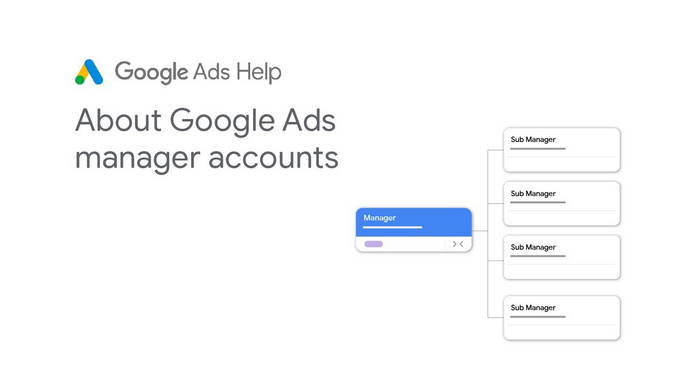
Be cautious when signing a contract with an agency; there could be terms and conditions regarding ownership. If you don’t have a Google AdWords account and the agency wants to make you one, ensure it’s done through their Google Ads manager account.

3. They won’t provide a detailed breakdown of how they optimised the account in a given time frame.

One of the most significant red flags to look out for regarding PPC agencies is if things are too stagnant. Successful, well-managed agencies will regularly implement changes and tweaks to optimise ad campaigns. 

This could be several things, for example.

  • Bid changes
  • New or refreshed ad copy
  • Bid adjustments

If an agency tends to run things on autopilot, they’re likely not utilising the ad spend effectively. More specifically, keyword bidding is probably done automatically, which leads to overbidding, resulting in wasted budget and inactive ads.   

4. They won’t provide a detailed breakdown of where your money was spent.

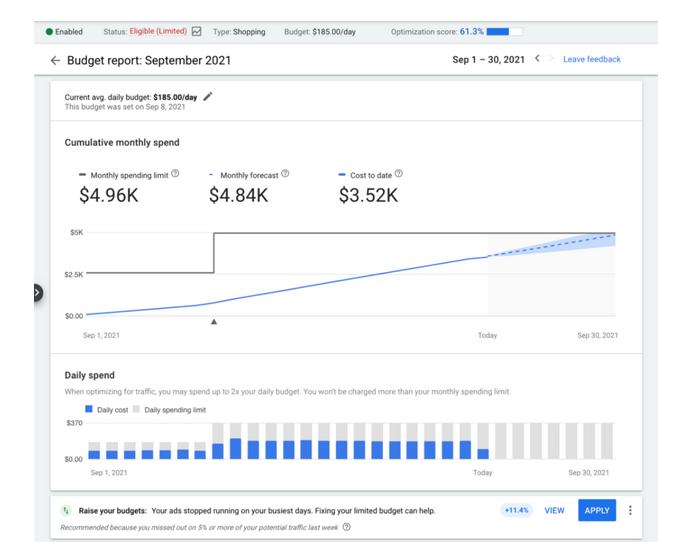
It’s concerning if an agency doesn’t provide a frequent report that tells you how your ad budget is being spent. Many businesses take a hands-off approach when it comes to their Google advertising strategy. They outsource the work to an agency and assume everything is good.

What these organisations don’t realise is that agencies often charge high management fees. It can be as high as 30-40% in some cases. This means less of the ad budget is being used for ads.

To avoid this, agencies should be able to present, at any moment, a budget breakdown to a client. It should become a frequent habit, one that’s expected every week, fortnight, or month. Transparency is the focus here.

5. They don’t focus on important metrics like, you know, conversions and return on investment.

You can only know if your Google Ads benefit your organisation by looking at the data. Metrics like conversions, clicks and return on investment give us insight into the effectiveness of campaigns on the Google Ads platform.

A Google ads agency should provide data-rich reports that detail whether or not ads are profitable. Unfortunately, some don’t; this is a major red flag. Consider bringing up the topic of metrics when you’re interviewing potential candidates.

A Google Analytics account that you can access should be linked to your Google AdWords account. Conversion tracking and event snippets are also a must.

6. They never asked for detailed information on your business, your USP and your industry.

An ad performing well and providing a positive Return on Ad Spend is dependent on more than just the amount that you bid. The context, relevance, and a solid quality score can determine how much you pay for that click. Even the performance of your post-click landing page affects your ad and the cost.

The agency that you hire must understand your business and its unique selling proposition. They must also have verifiable experience within your industry; Google ads is particular and contextual. What works for one field isn’t going to work for another.

When screening and interviewing potential candidates, question them on their industry knowledge. Ask if they have any tangible examples of success with prior clients similar to your organisation.

Conclusion

An effective Google ads strategy is one of the best ways to increase the revenue of your business. It is, unfortunately, something that requires time, effort, and expertise — things that you may not have right now. 

A Google ads agency is a fantastic solution to these concerns.

In this article, we outlined six different red flags that you must consider when choosing an agency. Hopefully, the information detailed provides some value to you and your organisation. 

Are you looking for an agency that can help you grow your business with Google AdWords? Please contact our PPC advertising team today to learn how Vine Digital can help you get more from your advertising spend. 

Glossary

Pay-Per-Click (PPC)

Pay-per-click (PPC) is an advertising model where advertisers pay a publisher every time their ad is clicked. A publisher could be a search engine, like Google, a website owner, or a network of websites. The publisher hosts the advertiser’s ad to an audience.

Unique Selling Proposition (USP)

A unique selling proposition (USP) is a marketing strategy that informs potential customers how a brand’s product or service is superior to competitors. USPs are used as a tactic to differentiate a brand from the rest of the marketplace. 

Conversion

A conversion is a desired action taken by an individual who has seen an ad or marketing material. It’s a nonspecific umbrella term for any intended goal that a business is hoping to achieve. Conversions can be measured and tracked with analytics and reporting features.

This could be signing up for an email list via a landing page or purchasing a product or service. Other examples include clicking on an ad, visiting a webpage, or watching a video.

Return on Investment (ROI)

Return on investment (ROI) is a financial metric that evaluates the efficiency of an asset, such as an advertising budget. It determines whether something is profitable for a business.

Bid

A bid is the amount of money you’ve committed to an auction for a specific ad space opportunity. In the context of Google ads, every keyword/search term provides an opportunity for you to advertise your business.

Bid Strategy

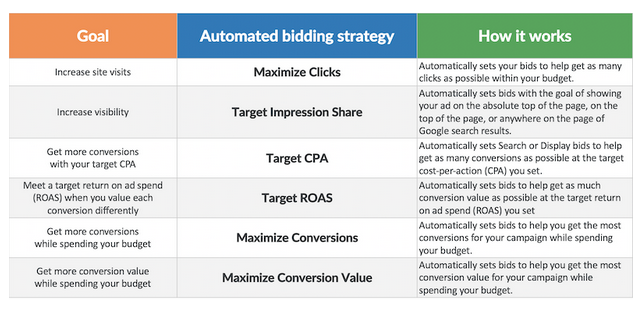
A bid strategy is a uniquely tailored campaign offered via the Google AdWords platform. Each of these campaigns has a specific goal in mind, such as clicks, impressions, conversions, or views. Businesses will choose the bid strategy that best aligns with their current ad goals.

Negative Keyword

A negative keyword is a keyword that stops your ad from being activated by a specific word or phrase. Negative keywords prevent your ads from being shown to users searching for that particular phrase.

Conversion Tags

Conversion Tags are snippets of code that help with conversion tracking on a website.

By Cillian Bracken Conway

Cillian Bracken Conway is Managing Director at Vine Digital with 15 years of experience working in SEO & PPC. https://www.vinedigital.ie/


By Sara McKinniss

As data privacy regulations evolve, marketing communications professionals have a responsibility to adapt their marketing strategies with new best practices as they arise. While there are certainly strategies that companies can adopt, new and unexpected changes can present challenges to even the most seasoned professionals. Historically, marketers have dealt with regulations lawmakers pass in different countries and have pivoted their strategies to comply with those legal changes. However, now marketers are faced with a new dilemma; what do we do when a technology manufacturer implements its own data privacy features outside of those that are already regulated? Well, that day is here, and most notably, it is impacting email marketing.

In June, Apple announced that it was launching new features to help its customers better control how their data is shared with companies. Apple’s new update to iOS centres on user privacy and data tracking. The Mail Privacy Protection feature will allow users to open emails without alerting the sender and avoid disclosing their IP addresses, which marketers usually need to track user data. When this was first announced, marketers scrambled to determine how this would impact our ability to track email open rates and click-through rates. Most email marketing platforms put a tracking “pixel” in emails users send. Previously, people who used Apple devices to read emails that were sent out by marketers were tracked via that pixel. With the new update, if the user turns that function off, there is concern that marketers will not be able to track whether that person opens or clicks through the email. Additionally, Hide My Email is a newer feature that Apple has rolled out. This function creates a randomized email address instead of a real one so that the user’s identity remains private. Simply put, this could impact a marketer’s ability to track email deliverability rates and user metrics. While there are email privacy applications for Android phones, there are currently no built-in email masking tools for the Android platform. Thus, the only segment of users this would impact would be Apple iOS users.

So, what are marketers to do because of these developments? First, while we may want to throw our hands up and quit, we should not stop marketing via email (or stop any type of marketing, for that matter). This simply means we must do a better job of engaging with our current prospects and customers. As marketers, we should re-evaluate what our prospects and customers both want and need.

This starts with creating relevant content that is impactful and that converts. Traditional inbound marketing methodologies work by educating prospects (and customers) to help them make purchasing decisions. By incorporating inbound marketing tactics with meaningful content, those individuals who interact with a brand will likely continue to do so regardless of the communication channel. Now is an ideal time to consider the resources you have available on your teams, including thought leaders within the organization who are outside the marketing department, to develop content that resonates.

Feature Image Credit: getty

By Sara McKinniss

Sourced from Forbes

B

It doesn’t matter if you’re the new kid on the block or you’re an industry veteran, all small businesses make mistakes from time to time.

Mistakes may be a natural part of the business process. But that doesn’t mean small business owners need to personally commit every error in order to learn each lesson.

There are many ways that entrepreneurs can learn from the mistakes of others to avoid paying the price with their own companies. Here are a handful of common mistakes that many small businesses tend to make, as well as suggestions for ways to avoid them.

1. Attempting to Do Everything

A small business owner is a brave soul. They’ve charted their own course and taken control into their own hands. If you’re a small business owner, you’re well aware of the confidence that this can create.

However, just because you’ve succeeded in one area of business doesn’t mean that skill or talent will translate to other pursuits. In fact, one of the biggest shortcomings of many small business owners is falling prey to the idea that they can do everything.

The truth is, every business owner has countless things that they’re not good at. Often, they’re even severely underqualified. For instance, managing taxes or stepping in as a chef are very bad ideas if you’re not qualified to do so. Even small activities like managing customer service calls or processing payroll can be a bad idea if you’re not trained.

Instead, outsource these activities. Look into technology solutions, such as small business payroll software. If you can swing it, hire employees to address them. The gig economy is another economic way to fill in talent gaps in your workforce without breaking the bank.

2. Failing to Take Finances Seriously

Both overspending and underspending are common issues for small businesses. Often the root of the problem stems from the personality of the business owner.

Those who are bean counters tend to avoid expenses, even when they’re necessary for growth — and at times even survival. On the other end of the spectrum, reckless spenders often ignore the math and rack up expenses blindly while hiding behind things like quality or a better customer experience.

Swinging to either extreme can be detrimental to a business. Instead, take steps to gain a firm understanding of your finances. Use software like Quickbooks or Expensify to keep track of income and expenses. Hire an accountant to help you with your taxes. The more you understand your business’s finances, the more informed your financial decision-making will be.

2. Attempting to Do Everything

A small business owner is a brave soul. They’ve charted their own course and taken control into their own hands. If you’re a small business owner, you’re well aware of the confidence that this can create.

However, just because you’ve succeeded in one area of business doesn’t mean that skill or talent will translate to other pursuits. In fact, one of the biggest shortcomings of many small business owners is falling prey to the idea that they can do everything.

The truth is, every business owner has countless things that they’re not good at. Often, they’re even severely underqualified. For instance, managing taxes or stepping in as a chef are very bad ideas if you’re not qualified to do so. Even small activities like managing customer service calls or processing orders can be a bad idea if you’re not trained.

Instead, outsource these activities. If you can swing it, hire employees to address them. The gig economy is another economic way to fill in talent gaps in your workforce without breaking the bank.

3. Mistreating Your Internal Lifelines

As a small business owner, you’re likely well aware of all of the threats to your business. From financial concerns to supply chain disruptions, customer satisfaction, and more, there are countless areas that can keep you worrying at all times.

This often creates stress and anxiety that small businesses will pass along to others further down the chain of command. For instance, many small businesses work their employees to the bone. They aren’t treated well by management or shown that they’re valued.

Suppliers are another group that often get the short end of the stick. They’re often left waiting for payments until the last minute, even when they deliver shipments on time.

Make sure to treat your internal and auxiliary workforce with respect. Go out of your way to pay them on time and show them that they’re valued. You’ll find that your business will run like a well-oiled machine, and you’ll get greater loyalty and production.

4. Spreading Your Marketing Thin

Marketing used to be a big company’s game. Small businesses had to scrounge around for the local scraps that big-budget corporations left behind.

The advent of online marketing has completely rewritten this narrative. All the way back in 2019, digital ad spending was already poised to overtake traditional spending, with no end to the growth in site.

The only problem is that online marketing, while accessible for small businesses, is overwhelming. Email, social media, website, search engine, content, video, and countless other marketing strategies are available. The worst thing a small business can do is commit marketing dollars to a scattered and mismanaged marketing strategy (or even worse, no strategy at all.)

It doesn’t matter if you’re spending hundreds or millions of dollars. Always create a solid marketing plan that dictates how to spend each penny.

5. Not Managing Risk

Risk is another common issue for small businesses. With less margin for error than larger enterprises, many smaller companies either play it safe and miss opportunities or take uncalculated risks that end in disaster.

It’s important to develop a risk management philosophy for your business. As you do so, make sure you have a balanced approach to risk. For example, don’t put all of your eggs in one basket. Use resources that you can afford to lose if a new business idea goes south.

At the same time, don’t sit tight on what’s working at the moment and let opportunities pass you by. It’s easy to put yourself out of business if you fail to evolve along with your industry these days. Look for things like cutting-edge tech or changing customer expectations and then create strategies that incorporate them.

The best way to do this is to set SMART goals. These are goals that are specific, measurable, achievable, relevant, and time-bound. By setting SMART goals, you can create reasonable objectives to work toward. This will keep you moving forward and taking risks. At the same time, it will avoid the need to threaten the existence of your entire business in the process.

There are many challenges that every small business will face. Some of these will be overcome without an issue. Others may stand out as clear mistakes and important learning opportunities.

However, there are also many mistakes that companies can learn from without first-hand experience. From proper finances to a loyal workforce, happy suppliers, meaningful marketing, and much more, it’s always worth taking the time to do your homework and safeguard your business against common — yet avoidable — mistakes as you go along.

Feature Image Credit: Depositphotos

B

Sourced from Small Business Trends