Sentiment analysis can be defined as analysing the positive or negative sentiment of the customer in text. The contextual analysis of identifying information helps businesses understand their customers’ social sentiment by monitoring online conversations.
1. Brand Monitoring
A brand is not defined by the product it manufactures. It depends on how you build a brand by online marketing, social campaigning, content marketing, and customer support services. Getting full 360 views of how your customers view your product, company, or brand is one of the most important uses of sentiment analysis.
Sentiment analysis enables you to quantify the perception of potential customers. Analysing social media and surveys, you can get key insights about how your business is doing right or wrong for your customers.
Companies tend to use sentiment analysis as a powerful weapon to measure the impact of their products and campaigns on their customers and stakeholders. Brand monitoring allows you to have a wealth of insights from the conversions about your brand in the market. Sentiment analysis enables you to automatically categorize the urgency of all brand mentions and further route them to the designated team.
Keeping the feedback of the customer in knowledge, you can develop more appealing branding techniques and marketing strategies that can help make quick transitions.
2. Customer Service
Customer service companies often use sentiment analysis to automatically classify their user incoming calls into “urgent” and “not urgent” classes. The classification is based on the sentiments of the emails or proactively identifying the calls of frustrated customers.
The customer expects their experience with the companies to be intuitive, personal, and immediate. Therefore, the service providers focus more on the urgent calls to resolve users’ issues and thereby maintain their brand value. Therefore, analyse customer support interactions to make sure that your employees are following the appropriate process. Moreover, increase the efficiency of your services so that customers aren’t left waiting for support for longer periods.
As the customer service sector has become more automated using machine learning, understanding customers’ sentiments has become more critical than ever before. For the same reason, companies are opting for NLP-based chatbots as their first line of customer support to better grasp context and intent of the conversations.
3. Finance and Stock Monitoring
It is said that “Be fearful when others are greedy and be greedy when others are fearful.” But here, the question that arises: how do you know if others are fearful or greedy? Well, here, you can make use of the sentiment analysis technique. Making investments, especially in the business world, is quite tricky. The stocks and market are always on the edge of risks, but they can be condensed if you do correct research before investing.
For instance, if you are looking to invest in the automobile industry and are confused about choosing between company X and company Y, you can look at the sentiments received from the company for their latest products. It will help you to find the one that is performing better in the market.
4. Business Intelligence Buildup
Digital marketing plays a prominent role in business. Social media often displays the reactions and reviews of the product. When you are available with the sentiment data of your company and new products, it is a lot easier to estimate your customer retention rate.
Sentiment analysis enables you to determine how your product performs in the market and what else is needed to improve your sales. You can also analyse the responses received from your competitors. Based on the survey generated, you can satisfy your customer’s needs in a better way. You can make immediate decisions that will help you to adjust to the present market situation.
Business intelligence is all about staying dynamic. Therefore, sentiment analysis gives you the liberty to run your business effectively. For example, if you come up with a big idea, you can test and analyse it before bringing life to it.
5. Enhancing the Customer Experience
A satisfying customer experience means a higher chance of returning the customers. A successful business knows that it is important to take care of how they deliver compared to what they deliver.
Brand Monitoring offers us unfiltered and invaluable information on customer sentiment. However, you can also put this analysis on customer support interactions and surveys.
NPS (Net Promoter Score) surveys help you gain feedback for your business with the simple question: Will you recommend this brand, product, or service to your friend or family? The output is a single score on the number scale. Businesses use these sentiment scores to analyse the customer as promoters, detractors, and passives.
Here the goal is to find the overall customer experience and elevate your customer to promoter level. Theoretically, include the phases as: will buy more, stay longer and refer to another customer.
The next step in the NPS survey is to ask survey participants to leave the score and seek open-ended responses, i.e., qualitative data. Qualitative surveys are far more challenging to analyse. Still, with the help of sentiment analysis, these texts can be classified into multiple categories, which offer further insights into customers’ opinions.
As mentioned earlier, the experience of the customers can either be positive, negative, or neutral. Depending on the customers’ reviews, you can categorize the data according to its sentiments. This classification will help you properly implement the product changes, customer support, services, etc.
Also, remember that getting a positive response to your product is not always enough. The customer support services of your company should always be impeccable irrespective of how phenomenal your services are.
6. Market Research and Analysis
Business intelligence uses sentiment analysis to understand the subjective reasons why customers are or are not responding to something, whether the product, user experience, or customer support.
Sentiment analysis will enable you to have all kinds of market research and competitive analysis. It can make a huge difference whether you are exploring a new market or seeking an edge on the competition.
You can review your product online and compare them to your competition. You can also analyse the negative points of your competitors and use them to your advantage.
Sentiment analysis is used in sociology, psychology, and political science to analyse trends, opinions, ideological bias, gauge reaction, etc. A lot of these sentiment analysis applications are already up and running.
The online giant gives a leg up to hundreds of house brand and exclusive products that most people don’t know are connected to Amazon
It took Robert Gomez about five months to get his Kaffe coffee grinder to the big leagues in e-commerce: among the first three search results for “coffee grinder” on Amazon.com.
Gomez, founder of Atlanta-based consumer goods startup 4Q Brands, said he obsessively refined his photos and description, amassed reviews from happy customers, and paid Amazon $40,000 a month on advertising to boost sales, one of the elements Amazon tells sellers will increase search ranking.
Robert Gomez, owner of startup 4Q Brands, in his warehouse in Buford, GA on October 6th, 2021. For more than two years, his coffee grinder had been one of his best sellers on Amazon. Rita Harper
Then Amazon introduced a competitor from house brand Amazon Basics and another from a brand that sells exclusively on Amazon, DR Mills.
“They ranked well right away,” Gomez said, each of them appearing among the top-three results for “coffee grinder” searches immediately. The reason, he said, was clear: “Their search ranking is high because they’re an Amazon brand.”
An investigation by The Markup found that Amazon places products from its house brands and products exclusive to the site ahead of those from competitors—even competitors with higher customer ratings and more sales, judging from the volume of reviews.
We found that knowing only whether a product was an Amazon brand or exclusive could predict in seven out of every 10 cases whether Amazon would place it first in search results. These listings are not visibly marked as “sponsored” and they are part of a grid that Amazon identifies as “search results” in the site’s source code. (We only analysed products in that grid, ignoring modules that are strictly for advertising.)
We used machine learning to try to predict which product Amazon put first in search results based on various factors. Source: The Markup/Amazon.com
When we analysed star ratings and number of reviews, neither could predict much better than a coin toss which product Amazon placed first in search results.
Amazon told Congress in 2019 that its search results do not take into account whether a product is an Amazon-owned brand.
Sellers say it doesn’t seem that way to them. Gomez said Amazon’s brands have “unfair advantages” that make it harder for small merchants like him to compete” on its open marketplace. “Who bears the cost are those entrepreneurs and small businesses that don’t have the means to fight.”
The Markup found Amazon placed its Happy Belly Cinnamon Crunch cereal, with four stars and 1,010 reviews, in the number one spot ahead of cereals with better and more reviews including Cap’n Crunch (five stars, 14,069 reviews), Honey Bunches of Oats (five stars, 5,205 reviews), and Honey Nut Cheerios (five stars, 11,702 reviews). A vacuum cleaner from Amazon’s exclusive Noisz brand was placed on top, ahead of models from Bissell, Eureka, and Hoover with higher ratings and more reviews. And the Amazon-exclusive Concept 3sneaker from Skechers placed number one, four spots ahead of a similar but not exclusive to Amazon Skechers sneaker with the same star rating but 77 times more reviews.
A former Amazon employee told The Markup that the company used to give its new house brand products an unearned place at the top of search rankings when they first launched. He said the practice has since stopped.
However, we found that Amazon brands and exclusive products overall received an outsized portion of the top spot on search results, one that was far out of line with their proportion of the sample.
That’s not what shoppers expect.
We commissioned a national panel of 1,000 adults. We included (non-Amazon) competing brands Champion and Brooklinen as a control. Source: The Markup/YouGov
In a national survey we commissioned from YouGov, only 17 percent of respondents said they assumed Amazon put its own products first. Half said they expected the first non-sponsored product on Amazon’s search results page to be the cheapest, highest rated, or bestselling.
By giving its brands top billing, Amazon is giving itself a significant leg up in sales. The first three items on the search results page get 64 percent of clicks, according to one ex-Amazon-employee-turned-consultant.
In a short, written statement, Amazon spokesperson Nell Rona said that the company does not favour its brands in search results and declined to answer any of the dozens of specific questions posed by The Markup.
She said the company identified its brands to shoppers by adding “Amazon brand” to the list of product features on the product page and sometimes to the listing title as well. We only found this to be the case in 23 percent of products in our sample that were Amazon-owned brands. She said brands that are exclusive to Amazon would not carry the disclosure because they are not owned by the company.
Invisible tags
A signal, invisible to the public but coded into the listings, suggests that most of the Amazon brand and exclusive products that were listed first were ads. In 87 percent of cases, the listing’s source code identified them as “sponsored”—though that label isn’t shown to the public. Instead, Amazon labels the products “featured from our brands.”
Rona, the Amazon spokesperson, said the company considers “featured from our brands” listings “merchandising placements” and not “search results,” despite their presence in the search results grid. She also said they are not ads, despite the “sponsored” label in the source code. Rona said they are “clearly labelled to distinguish them from search results” but did not respond to questions about whether the company believes such disclosures were clear enough under Federal Trade Commission requirements.
Mary Engle, who retired as the FTC advertising practices associate director last year, said that what Amazon calls “merchandising” is actually advertising.
“Amazon’s placement of its own products on its own site is advertising, whether or not money changes hands,” she said. She said it would require an investigation to determine whether “featured from our brands” is sufficient disclosure under the FTC’s rules.
Bill Baer, a former assistant attorney general in charge of the antitrust division of the U.S. Department of Justice and former director of the Bureau of Competition at the FTC, said if consumers expect Amazon’s product search results to be neutral, but they are not, and the site is essentially a monopoly, that could be a violation of the FTC Act of 1914, which prohibits unfair competition and unfair or deceptive practices in commerce, or the U.S. Sherman Antitrust Act, which prohibits monopolies from using their market power to harm competition.
“If basically you’ve got somebody with market power that is restraining competition both in terms of site access or where things appear on the site,” he said, “that is potentially problematic.”
Amazon’s online marketplace garners more than five times more sales than its closest online competitor, Walmart, which also allows third-party sales.
Congress is considering a package of anti-monopoly bills aimed at big tech, including the Ending Platform Monopolies Act, which would make the practice of platforms giving their brands a leg up explicitly illegal.
Amazon refers to its own brands and brands developed by others that sell exclusively on Amazon as “our brands.” They peddle everything from snack chips and vitamins to fashion and furniture.
Using public records from the U.S. Patent and Trademark Office and Amazon’s own statements, we identified more than 150 brands registered by or owned by Amazon. These include both brands with an obvious connection, such as Amazon Basics and Amazon Commercial, and those that are generally known to be owned by the company, including Kindle and Zappos. But they also include dozens more, such as Happy Belly, Daily Ritual, and Society New York, where the connection to the company is not obvious. Those are in addition to the estimated hundreds of third-party brands that are exclusive to the site.
We analysed search results on Amazon for 3,492 popular internet product queries in January 2021 and looked closely at what Amazon placed in the first spot. In 60 percent of cases, Amazon sold this spot to an advertiser and added a public label indicating the listing was “sponsored.” Of the rest, Amazon gave half to its own brands and brands exclusive to the site, and the other half to competing brands. But Amazon brands and exclusives made up only 6 percent of all products in the sample, and competitors made up 77 percent. In short, Amazon was hogging the top spot.
In more than a quarter of searches in which Amazon gave its brands the top spot, it placed its products above competitors that had both better ratings and more reviews than the Amazon brand or exclusive product.
‘They would shut us down’
Sellers said there’s no mistaking the effect on sales of Amazon’s choices in search results.
“If the customers are not seeing [our products] in the top five offers, then it makes it really hard for us to reach customers,” said Gabriela Mekler, a Miami mom who co-founded the organizational products company Mumi in 2014.
Mumi’s top product—a set of color-coded packing cubes—struggles for visibility on Amazon, even after more than two years on the site. She said the coronavirus pandemic decimated her sales—they dropped by more than 68 percent—costing the company a hard-won “Amazon’s Choice” badge on its packing cubes.
Mumi has not been placed on the first page of our search results for “packing cubes” for months. At the time of this writing, Amazon Basics took up eight spots on the first page; one was labelled “featured from our brands.” None were visibly marked “sponsored.”
“Their product will always show before yours,” Mekler said.
One Mumi product has still been selling well despite the pandemic, she said: reusable pill pouches. For now, there is no Amazon Basics pill pouch, and Mekler hopes there won’t be anytime soon.
“We’re a small company,” she said. “They would shut us down.”
Some annotated examples of popular searches we collected in January 2021. Source: The Markup / Amazon
The National Association of Wholesaler-Distributors, which represents more than 30,000 distributors, submitted a letter to members of Congress in July 2020, complaining that Amazon “abuses its position” to give preferential treatment to its house brands.
But when The Markup asked to speak to some of the sellers the group had quoted anonymously, NAW’s vice president of government relations, Blake Adami, demurred.
“Our members are still very hesitant to speak out against Amazon for fear of retaliation,” he said in an email, “even anonymously.”
Many sellers whose products we found were placed below Amazon products with fewer sales or ratings also declined a reporter’s request to be interviewed for this article, saying they were concerned it would negatively affect their livelihoods.
“Everybody’s so scared of Amazon,” said Paul Rafelson, executive director of the Online Merchants Guild, which represents Amazon sellers. “Their whole livelihood relies on them.”
‘This was a knockoff’
Some of Amazon’s competitors have accused the company of knocking off their products to sell under its house brands.
Williams Sonoma settled a lawsuit that included the claim that Amazon was copying West Elm furniture and selling it under the Amazon house brand Rivet. Allbirds co-CEO Joey Zwillinger wrote an open letter to Jeff Bezos when Amazon’s 206 Collective brand copied his company’s wool sneaker, urging Amazon to adopt Allbirds’ sustainability practices in addition to its design.
In March, Amazon Basics started selling the Everyday Sling, a camera bag with a similar design, the same name but a much lower price than a product from Peak Design.
“It wasn’t like they took some styling cues from it. This was a knockoff,” CEO Peter Dering said in an interview. The smaller company produced a parody video that now has 4.6 million views on YouTube. Within hours, Amazon changed the product’s name.
Dering said he wasn’t worried about losing sales because Peak Design mainly targets wholesalers and customers who want a high-end brand. Still, he said he found the move “highly distasteful.”
Rona, the Amazon spokesperson, said the company “did not infringe” on Allbirds’ or Peak Design’s “design rights” and “strictly prohibit[s] our employees from using non-public, seller-specific data to determine which store brand products to launch.”
Hard to spot
Identifying all of Amazon’s brands and brand exclusives to the site for this investigation was cumbersome. The company does not provide a complete list. The Markup’s reporting team used various filters on the site, reviewed the U.S. Patent and Trademark Office records, and reviewed Amazon bestseller lists—but even then we likely missed some.
Consumers would have an even harder time. We found Amazon does not consistently label its brands and exclusives.
Of the products in our sample that Amazon considered “our brands,” about two in five were not labeled as such in search results nor did they carry a name that many people would understand was connected to the company, such as Amazon Basics, Kindle, or Whole Foods.
Inconsistent labelling, combined with an almost endless stream of its own private brands, leaves customers in the dark to decide whether Amazon highly ranked a particular product because it was a good buy or because it benefited the company’s bottom line.
Nine in 10 respondents to the national survey The Markup commissioned in July didn’t know that Amazon’s highest-selling house brands, apart from Amazon Basics, were owned by the company.
Even there, 24 percent of respondents could not identify Amazon Basics as an Amazon brand, and half didn’t know Amazon owned Whole Foods.
To test your knowledge, Select all products from Amazon brands and exclusives: link
Alex Harman, competition policy advocate at Public Citizen who has studied Amazon’s marketplace, said that to him, the strategy of creating a stream of brands without a clear affiliation to Amazon feels “deceptive.”
Large brick-and-mortar retailers also have house brands. Costco has Kirkland Signature. Target has Up&Up, among others. Historically, he said, when large stores create brands they have been clearly affiliated with the store.
And Amazon’s search results are different from a store shelf.
“Unlike a retail store where you see everything on the shelf, the platform may be in a position to elevate its goods in a way that is harder to do in a retail outlet,” said Baer, the former FTC official, and assistant attorney general at the Justice Department.
By creating more than a hundred trademarked brands, most without an obvious connection to the company, Amazon can preserve its reputation if one of its homegrown products flops. This happened in 2015 when customer reviews for its newly launched Amazon Elements diapers included complaints about leaks and “sagginess.” Amazon pulled the products after just seven weeks to make “design improvements.”
Stacy Mitchell, co-director of the small business advocacy group Institute for Local Self-Reliance, and a frequent Amazon critic, said that as Amazon’s brands squeeze competitors, those competitors have less money to spend on innovation—and consumers lose.
“Consumers don’t even know what’s missing,” she said.
Case in point: Brandon Fuhrmann, who runs the New York Amazon Seller Meetup. He was considering expanding his kitchenware brand into a new type of dishware. While checking trademark registrations and U.S. import logs for sellers with similar products, he realized that the majority of his competition would come from Amazon brands.
“When that happened, we realized we couldn’t even compete,” he said. He decided not to launch the product.
Rise of Amazon brands
Amazon has continually set its sights on dizzying growth.
It launched in 1995, with the goal of becoming “Earth’s Biggest Bookstore.” Four years later, it declared its intention to become “Earth’s Biggest Selection.”
To reach this point, it took a page from rival eBay’s playbook, inviting individuals and business owners to list rare, used, and collectible items—which quickly transitioned to third parties selling mainstream, new wares on Amazon.
In 2003, Jason Boyce got a call from Amazon asking him to list his company’s basketball products on the nascent marketplace.
Jason Boyce, photographed at his home, on October 4th, 2021. (James Bernal for The Markup)
“We’re like, what are you talking about? You guys sell books,” he said. “What do you mean you’re selling sporting goods?”
Boyce took the plunge and his company’s basketball sales took off on Amazon.
By 2018, third-party sellers like Boyce were responsible for 58 percent of physical goods sales on Amazon. They helped boost Amazon’s North American sales by more than an order of magnitude, from $24.5 billion in 2009 to $386.1 billion in 2018.
The volume created fortunes for small businesses across the world. It also created a deep reliance on Amazon. A 2021 report by JungleScout, which provides software for Amazon sellers, found that Amazon was the only source of income for 22 percent of Amazon’s third-party sellers.
“Within two years of getting on Amazon, most of my clients, whether they want to or not, it becomes their single biggest sales channel,” said James Thomson, who was a manager at Amazon from 2007 to 2012 and now works at the e-commerce consulting firm Buy Box Experts.
And these new third-party sellers had lots of competition, eventually from Amazon itself.
Boyce said Amazon started undercutting his business, selling the same sporting goods—Spalding basketballs, for example—for less.
Unable to compete with Amazon on price for brand-name products, Boyce and his brothers launched their own brand, Harvil, in 2007, to sell sporting goods and home recreation equipment on Amazon. They figured Amazon couldn’t undercut their prices if he and his brothers owned the brand.
They had no idea Amazon was also beginning to launch its own brands and to enter into deals with companies to develop brands exclusive to the platform.
Among the first Amazon brands was Pinzon (a likely nod to the first conquistador to stumble across the Amazon River), which Amazon registered as a trademark in 2007 to sell bedding. Then came Denali for tools, and Amazon Basics for a slew of products, including household appliances and office supplies.
Sometime in 2017, Boyce was searching keywords related to his products on Amazon—”bocce ball,” “air hockey table”—when he noticed a new brand, Rally and Roar, peddling very similar products to his own. They showed up at the top of search results.
Rally and Roar are exclusive to Amazon, labelled as “our brands.” The company was moving in on his territory, again.
The speed of Amazon’s expansion of its own brands has been accelerating, according to several e-commerce and retail research firms. TJI Research counted 598 Amazon-exclusive brands in 2019. Coresight Research said Amazon brand products on the site tripled in the two years between 2018 and 2020 alone.
Amazon invites companies and individuals to join its “our brands” family through programs like Amazon Accelerator, which promises increased exposure for products sold exclusively on Amazon in exchange for extra fees, and sets a sales price if Amazon chooses to later buy the brand.
Boyce and his brothers had already been talking about getting off Amazon’s platform when they noticed Rally and Roar pop up. That settled it.
“We’re like, we’re not going to sit around and wait for Amazon to knock off the rest of our private-label products as well,” he said.
They sold the business.
A leg up
For years, Amazon gave items from its own brands multiple advantages when they first launched, said JT Meng, a former house brand manager at Amazon—though he said the practice has since stopped.
Employees manually applied the Amazon’s Choice label to a new Amazon brand product, even if it didn’t meet the usual criteria, he said.
And instead of starting from scratch in search results with zero reviews, sales, and stars, Meng said employees used a tactic called “search seeding” for new products, “cloning” a competing product’s search ranking and allowing the new Amazon product to appear immediately below that competitor in search results.
“We would use that for all of our products from the get-go for the first six months or longer,” he said.
Meng worked on the launch for Amazon Elements baby wipes, which he said were seeded against similar products from Huggies, Pampers, and others.
Sales spiked so quickly that his team had to stop promoting the Amazon Elements wipes so they didn’t take too much market share, he said.
Once a new house brand product was established, Meng said employees would turn off search seeding. “Without fail, your product would drop in ranking,” he said, “but the hope was that it would drop a small amount.”
By the time Meng left Amazon in 2016, he said search seeding and adding the Amazon’s Choice label to new Amazon brand products were no longer allowed.
Sellers who do try to compete with Amazon brands today said they feel compelled to pay for sponsored listings in order to get a higher result for non-sponsored listings on Amazon. On its Seller Central site, Amazon underlines to sellers how important sales are, stating that “better-selling products tend to list towards the beginning of search” and that as sales increase “so does your placement.”
“You can’t not advertise anymore,” said Boyce, who after selling his sporting goods line founded a consulting firm, Avenue7Media, which advises companies and individuals who want to sell on Amazon.
“You turn off the ads and you lose organic rank within days,” Boyce said. “It’s pay to play.”
Lots of companies are paying.
We found that inside the search results alone, 17 percent of products were paid listings. That doesn’t include entire rows of sponsored products that appear as special modules on about a third of search result pages. (Including those would roughly double the ad percentage on the first results page.)
Amazon is the third-largest seller of online advertising in the U.S., after Google and Facebook, and is growing fast. “Other” revenue, which the company says “primarily includes sales of advertising services,” jumped 52 percent from 2019 to 2020, to $21.4 billion a year.
Struggling for visibility
“If you’re willing to spend a ton of money, you can sell a ton of product,” said Evan Patterson, vice president of business development at California-based Linco, which is one of Boyce’s clients.
The 47-year-old family-owned institution makes casters, the small wheels that attach to office chairs and industrial gear—and has a solid reputation in the offline world for premium products. It competes against a product from Amazon Commercial, among others.
It’s so well known in industrial circles that Linco’s competitors advertise against its name within Amazon’s search results, Patterson said.
Still, Linco hasn’t consistently listed on the first page of search results for “caster wheels,” despite selling on Amazon for years. It will appear on the first page for Patterson, but did not in repeated searches by The Markup.
The only thing that seems to help Linco’s search ranking, Patterson said, is to spend more money for paid listings on Amazon. The company now pays about $10,000 a month for advertising.
“Our search ranking has improved dramatically,” Patterson said.
But it still has a ways to go. When The Markup searched for “caster wheels” at the time of writing, Linco appeared in the middle of the fifth page.
There are hundreds of online tools on the market and, of course, choosing the right one sometimes becomes a difficult task for most entrepreneurs.
The drawback that many entrepreneurs find is that given the large number of tools, they do not know which one can best adapt to the needs of their company. And they waste a lot of time testing and researching.
But don’t worry, I’ve also gone crazy trying tools. I have discarded those that do not add value to me and those that have not been useful to me. For this reason, I have created a list of tools, divided into different areas, so that you know the ones that have made my life easier when managing my company.
Keep in mind that each business has its peculiarities and needs, but in general all these can be perfectly adapted to any project, whether in one sector or another.
List of the 15 best tools for entrepreneurs
Next, I am going to name some tools and resources that have helped me optimize my time and improve my work performance (and that of my employees).
These are some areas that I have focused on to classify all these tools: business productivity, project management, presentations, communication between teams and email marketing.
These three tools are essential to be more efficient in your work:
Google Calendar : you can see your calendar at a glance to check your calendar, create an event and schedule a meeting. You can choose different ways to view the calendar, according to your preferences.
Lastpass : a tool to securely manage all the passwords of all the online programs you use, thus improving productivity on the computer.
Google Drive : the best tool for syncing files online, where two or more people on the team can make changes to a file in real time. Everything is stored in the cloud and you can access it from any device. And it has 15 Gb for free!
Tools to manage projects
Image: Depositphotos.com
How many of you are to write down in a document, on paper or online, the pending tasks to be done? And not only yours, but also those of your employees … Many of these tasks fall into oblivion, which prevents you from reaching your goals.
For this reason, I recommend these online task managers, ideal for working collaboratively through intuitive dashboards. These are structured in columns and each one represents different states: assigned to someone, pending, in process, completed. The cards go through the different columns until they are completed.
One of my favourites is Ora , a task management tool that is especially relevant when there are several departments in a company and the members of each have to communicate to carry out certain actions. Other similar tools are Asana and Trello .
Tools for creating presentations
Image: Depositphotos.com
A good entrepreneur will also need to have basic design notions. Although the normal thing is to delegate this task to a designer, sometimes you need to create something quickly, be it for networks or email marketing , and you need to get out of trouble.
To do this, there are three tools that you should know and that will save you on more than one occasion:
Canva : with more than 8 thousand free templates, it is considered one of the most complete for creating visual content, be it posts for social networks, presentations, covers, flyers , business cards, posters, etc. In addition, it gives you the option to create your creations from scratch and add your images, text, icons, etc.
Prezi : If Power Point gets you a little crazy, Prezi is the best alternative to create, schedule and share dynamic and professional presentations for any important event or meeting. You can add videos, add sound, narration, add a predesigned template, and use the zoom feature to highlight something.
Powtoon : Another option for creating presentations, but it stands out for the functions it offers to create animated videos. Some functions that it integrates are text effects, character animations, varied icons, transitions or backgrounds.
Tools to maintain good communication with your employees
Communication between teams is key so that you all go in the same direction and meet the established objectives. For this, I recommend that you know:
Zoom : both to speak with my team and to speak with my clients or other collaborators of my company I use Zoom . With the paid plan you can hold group meetings of up to 500 participants. Other features that I like are shared screen and the option to record your meetings.
Chanty – A chat tool that I use to improve communication and productivity between teams. You can use mentions, create private groups, bookmark your most important channels, and use emojis and gifs.
Slack : Another tool that I have already tried is Slack, a messaging service that allows the entire team to be in communication in real time. And what I like the most is that it integrates other tools such as Dropbox , Google Drive or MailChimp .
Email marketing tools
Image: Depositphotos.com
Undeniably, one of the most effective ways to communicate with your customers is still email marketing . Email, although many of you deny it, is still a powerful communication channel with which you can maintain a medium and long-term relationship with your customers.
So choosing a good email marketing software to correctly manage your emails will be key to your strategy. To choose one or the other, you must take into account aspects such as: quality-price, customer service and that it complies with data protection regulations.
My favourite is Mailrelay for all the features it offers and especially because it has a free version with many advantages. With the free version you can reach 15 thousand contacts, sending 75 thousand emails per month for free. There is no limit of shipments per day and you have support included.
To start this software is great. Afterwards, you can contract another paid version if you need it. It offers you tutorials, autoresponders, easy scheduling to make your shipments, statistics system, advanced subscriber management and A / B tests for your campaigns.
Other programs you can analyse
Mailchimp : its free version allows you to reach 2,000 contacts per month. And the support is free for 30 days.
Getresponse : this does not include a free plan, although it lets you try the tool for 30 days. The basic plan costs $ 15 a month, reaching a thousand subscribers. If the size of your list is larger, you can select it from the basic plan, for a higher price.
I hope that all these online tools for entrepreneurs are useful to you and that you can get the most out of your project with them.
Dan Englander is the founder and CEO of Sales Schema, an agency that helps companies customize their B2B sales process. Currently, Dan’s team has executed over 7,000 campaigns and generated over 3,000 agency brand meetings for clients with companies like Birchbox, Stripe and Venmo.
Dan moved to New York for college in 2010. He often jokes that if you don’t know what you want to do and you move to New York, you end up in the agency world. He worked on some big consumer accounts, led new businesses, and ended up landing a job as an account manager. Essentially, his job consisted of a sales and client service hybrid role, selling creative services.
At first, he didn’t take ownership of the sales department, but finally realized he needed to if he wanted to make any money and help the company stay afloat to keep his job.
He started taking every training course available, and studying all tactics under the sun. They did tons of inbound marketing, and figured out what it would take to sell a complex creative services product.
A lot of sales education is about tech or something tangible: how to walk, how to talk, and how to present yourself. But Dan felt like he didn’t have enough instruction on how to manage a split sales and client service role, or how to juggle things that were more abstract or complex.
Dan chose to go off on his own, and self-published a book about account management. He started getting clients who paid him to give them advice about sales. What he continued to find was the main place he could help was getting prospects in the door.
Sales Schema
As he built his own company, Dan saw a need in the agency space: people selling complex marketing services to mid to large companies.
Essentially, that’s what the team at Sales Schema has done since 2014. They worked to keep the pipeline full, regardless of who their clients were, however busy their clients were.
More recently, they have expanded out to other B2B sales process services and consulting opportunities.
Scaling
In the early days of the company, Dan believes they were doing what most people do with outbound sales, whether it’s through a lead generation company, or people doing it in-house.
Recently, they’ve reached a high point of market sophistication or skepticism about marketing services. Most businesses that aren’t brand new tech products, businesses that you can do from a laptop from anywhere, are often not trusted. The scarce commodity has become trust.
Eugene Schwartz talks about the stages of market sophistication, and Dan believes this is just as true today as it was then. Eugene writes about the fifth stage of marketing sophistication, when you have the most aware buyers, and the importance of identifying with them.
In short, one of the key steps they took towards scaling was spending a lot of time up front crafting a distinctive and creative campaign. A campaign might last anywhere from several weeks up to a year, but eventually you’re going to have to rethink that.
Email in the B2B Sales Process
Dan tried to figure out the secret to networking for years, and eventually he just assumed that he wasn’t good at it. But as he studied the problem more closely, he found that over time, it wouldn’t work for anybody that was selling anything slightly “weird.”
Especially in New York, the same dynamics work, you just have to do them digitally. When you expand out to the internet and use those tools, then your networking will really take off.
Email has matured as an important channel in the B2B sales process. People often try out email, and decide too quickly that it doesn’t work for them. After investing a lot of time and energy, nobody’s opening the emails, and it starts to feel like a waste.
There was a time where you could play the numbers game, build giant lists, and see what happens. Because email providers have gotten smarter. We get less spam than we used to, which means the numbers game dynamic has changed. You still need that scale, but if you’re sending to a list of a hundred people, and 10-30 mark you as spam, you’re not going to be able to continue doing what you’re doing for very long.
All of this has led to the increase of the personalization trend.
Some people refer to personalization as using somebody’s name, but with B2B sales, the bar is much higher. You get a much higher level of personalization, which means strong connections that are almost tribal.
Though things are constantly changing, what Dan and his team has seen work for longer periods of time is channelling the old school dynamics of in-person networking.
Having the ability to put people in touch with each other who already might know each other even loosely, and being able to do some form of scaled batch outreach, will increase the likelihood of warm feelings towards the campaign.
At the most sceptical level of marketing sophistication, it’s more about identification. The goal?
Creating a high quality email, very targeted, with the right messaging, rather than just sending a hundred thousand emails.
Streak
Dan and his team use Streak for the G suite interface.
One of the most difficult parts of a CRM is making one thing talk to another: making data go from one place to another. Within the sales world, a huge percentage of the sales process is email and phone, and Streak lives in the Gmail inbox.
There’s a lot of different email platforms, one of the bigger issues is when people are trying to do outbound through a newsletter platform, or through an inbound marketing platform.
For true success in this area, you need to make the distinction between different email platforms that handle inbound and outbound.
Having the right tools that fit your B2B sales process, without getting so lost in the system that you’re working for it rather than the other way around, is the goal.
Automation
Once you have a relationship with somebody, you don’t want to over automate.
The main level of automation should be happening before you build that relationship.
So, instead of focusing on increasing your automation, Dan believes what is better for followup are systems and processes. Instead of saying the same message over and over to the same type of person every other day, you might have a template that you reuse and simply “fill in a blank.”
What Dan’s team pitches to their clients is their role of creating lots of relationships, and the actual wins coming from follow up. If you have a CRM, whether it’s Streak or one of the million other CRMs that can do this, using a simple filter that allows you to identify who hasn’t been contacted, and the timeline of contact. From there, it’s all about thinking about distinct campaigns – thinking creatively, and figuring out a reason to re-engage them.
Once you’ve developed a dependable rhythm for your team and clients, where you know generally what works and the process you use, you can begin to make little tweaks to it.
In the B2B sales process, there isn’t a lot of anecdotal data, but you will notice trends, and you’ll want to make sure you’re using them to your benefit.
Taking the Next Step
Dan’s top tip is investing in people first, and following that wisdom. All of the techniques and advice in the world can’t replace the voices of your clients and your team.
Second: time and motivation above everything else.
You could have the best tactics in the world, but if they don’t get implemented, they fall apart.
If it’s just you in that seat, you might be wearing a lot of hats, but at least you can have uninterrupted time devoted to one type of task. For example, if you’re crafting an outreach campaign, work on that instead of bouncing around between things.
If you have a team, then ideally you can delegate and have somebody building the list, someone else teeing up that meeting for you, securing relationships, scheduling, and allowing you to do what you do best.
Dan has a huge amount of resources on his site. They have a live training recorded from a call on Sales Schema, and for in depth relationship-advice (not the dating kind), Salesforce is Dan’s CRM hub.
When people think about artificial intelligence (AI) today, they might think of computers that can speak to us like Alexa or Siri, or grand projects like self-driving cars. These are very exciting and attention-grabbing, but the reality of AI is actually thousands of tools and apps running quietly behind the scenes, making our lives more straightforward by automating simple tasks or making predictions.
This is true across every industry and business function, and particularly true in marketing, where leveraging AI to put products and services in front of potential customers has been standard practice for some time, even though we may not always realize it!
In business today, the term AI is used to describe software that is capable of learning and getting better at doing its job without input from humans. This means that while we’ve become used to using machines to help us with the heavy lifting, now they can start to help us with jobs that require thinking and decision-making, too.
A huge number of questions that would previously have needed human intervention to answer – such as “will this person be interested in my products?” or “what results will I get from this advertising campaign?” can now be answered by machines – if they are given the right data. And because machines can answer questions far more quickly than humans, they can easily chain together complex strings of queries to come up with predictions, such as who is most likely to buy your products and where the best places to advertise might be.
That’s the basic principle behind all business AI today – automating the processes of learning and decision-making in order to create knowledge (usually referred to as “insight”) that helps to improve performance. And marketing is one area where it’s certainly been put to good use!
Targeted marketing
The high-level use case for AI in marketing is that it improves ROI by making your marketing – often one of a company’s biggest expenses – more efficient. In the old days, before online advertising, businesses would pay huge amounts of money for TV, radio, or newspaper adverts, in the full knowledge that only a small number of the people who saw their ads would ever become customers. This was tremendously inefficient, but companies didn’t have any choice if they wanted to position themselves as market leaders.
In the online age, we’ve developed the ability to learn a great deal about who is or isn’t interested in our products and services. The first breakthroughs came thanks to the likes of Amazon with their recommendation engine technology and Google and Facebook with their targeted advertising platforms. Today, each of those platforms has been augmented with machine learning technology that allows them to become increasingly effective as they are fed more data on customers and their buying habits.
AI-driven content marketing
The rise in social media marketing and our growing appetite for online content has made content-based marketing the dominant form of marketing in many industries. AI lends a hand here by helping us work out what type of content our customers and potential customers are interested in and what the most efficient ways are to distribute our content to them. Advertising creatives have always strived to find formulas for creating adverts that will get people talking and sharing the message with their friends. Now, this can be done automatically using any number of AI-powered tools. For example, headline generation algorithms that monitor how successful they are and tweak their output to achieve better metrics, such as the open rate of emails, or the share rate of social media posts.
Taking this a step further, AI is developing the ability to take care of the entire content generation process itself, creating copy and images that it knows are likely to be well-received by its audience. A huge buzzword in this space will be personalization – where individual customers are served content that’s specifically tweaked to them, perhaps using information and reference points that the AI knows are relevant to them, intertwined with the overall marketing messages.
AI will also increasingly be useful for identifying what stage of the buying process a customer is at. If it detects that they are “shopping around” – comparing products and services that are available – it can serve content designed to differentiate your product or service from those of competitors. If it detects that they are ready to make a purchase, it can target them with promotions urging them to “act now” to take advantage of a limited-time offer.
A digital marketing agency called 123 Internet has embraced the ongoing industry developments by utilizing various AI-based technologies to improve service delivery. Scott Jones, CEO said:
“We’ve been using AI tools for a while now, in particular automatically checking website designs in hundreds of screen and browser types, this speeds up our design and development process”.
Their team also use an AI generated website audit which can be downloaded from their website and runs without human interaction.
Identifying micro-influencers
Influencers are another huge trend in marketing right now, and AI algorithms are already in use to make sure the personalities that are most likely to appeal to you are appearing in your search results and social feeds.
Increasingly, advertisers will also use AI to identify smaller influencers that are most likely to gel with their brands and audiences. This has led to the emergence of “micro-influencers” – typically everyday people, rather than celebrities, who have a specialist knowledge they’ve used to build a niche audience that cares about their opinion. AI enables companies to find the micro-influencers with the right audiences for them, across a large number of niches and audience segments. AI helps establish when it makes sense to pay 100 people $1,000 each to talk about their product, rather than pay $100,000 to Justin Bieber or a Kardashian. Once again, here it is about creating efficiency by following the data, rather than simply doing what a marketer thinks or feels is the best plan.
AI in CRM
Customer relationship management is an essential function for any marketer to master, as existing customers are often the most important source of a company’s revenue. Here, AI can be used to reduce the risk of customer “churn” – by identifying patterns of behaviour that are likely to lead to customers heading elsewhere. These customers can then be automatically targeted with personalized promotions or incentives to hopefully restore their loyalty. AI-augmented marketers are also increasingly turning to chatbot technology – powered by natural language processing. This can segment incoming customer inquiries, meaning those who require a quick response can be urgently catered to, to minimize dissatisfaction. AI-driven CRM will also allow businesses to more accurately forecast sales across all the markets where a company operates, meaning stock and resources can be more efficiently distributed. Additionally, it can be used to maintain the quality of data in the CRM system, identifying customer records where errors or duplicates are likely to exist.
The future of the marketer
If you work in marketing, you would be forgiven for worrying that we’re heading for a future where humans in your role will be redundant. You can take heart, though, from current predictions that state AI will end up creating more jobs than it destroys. It’s inevitable that your job will change, though. Marketers will spend less time on technical tasks such as forecasting or segmenting customers and more time on creative and strategic tasks. Those who are competent at working with technology, and identifying new technological solutions as they become available, will be hugely valuable to their companies and are likely to have a bright future!
Bernard Marr is an internationally best-selling author, popular keynote speaker, futurist, and a strategic business & technology advisor to governments and companies. He helps organisations improve their business performance, use data more intelligently, and understand the implications of new technologies such as artificial intelligence, big data, blockchains, and the Internet of Things. Why don’t you connect with Bernard on Twitter (@bernardmarr), LinkedIn (https://uk.linkedin.com/in/bernardmarr) or instagram (bernard.marr)?
The Covid-19 pandemic has exposed much digital rhetoric as hollow, as companies are now rethinking the digital customer experience, leveraging instant messaging and other tools
Customer service is getting worse. Many organisations failed to offer customers a positive experience during the height of the pandemic and are showing little sign of improvement as we begin taking our first steps back to normality.
“The pandemic exposed the lie that was digital transformation,” says Alan Webber, program vice-president, customer experience at IDC. “Companies said they were really far along, and then all of a sudden we had the pandemic and you realise they’re not as far as long as they thought they were.
“We just went through the great reset when it comes to customer experience. It’s still integrating the analogue experiences that we all need and want, but it’s really about digital-first and should be across the totality of the customer journey – it isn’t just marketing or sales. A large majority of the companies out there are still in their initial steps.”
The pandemic caused many businesses to reassess their approach to customer experience. Retailers had to close physical stores and go online only; banks had to support staff working from home rather than offices; and the travel industry had to shift to customer support. Customers were changing their behaviour, their channels, their brands and suppliers. Organisations that didn’t shift their operations to meet these new customer demands soon found that even their most loyal customers had gone elsewhere.
The pandemic made it critical for teams to have constant access to customer data to serve customers better, says Suvish Viswanathan, head of European marketing and technology evangelist at India-based IT company Zoho.
The firm is seeing more demand for customer service tools with options to integrate with telephony providers, as staff teams are working in remote locations. In addition to customer data access for employees anywhere they may be working, organisations need features in digital tools to help their teams collaborate and resolve customer issues more quickly, as well as to provide proactive service and training.
Zoho has also seen a considerable rise in demand for instant messenger tools, as customers want to connect with suppliers instantly to buy new products quickly or find answers to questions instantly.
“There are new developments in instant messaging technology that help provide a better experience,” says Viswanathan.
“Bots have been around for a while, but customers are not keen to interact with scripted bots. New platforms use machine learning to train bots to respond better in ways that resonate more effectively with customers. It’s a volume game – the more the data a platform has to learn, the better the adaption will be.”
“There are new developments in instant messaging technology that help provide a better experience”
Suvish Viswanathan, Zoho
Shawbrook Bank started using Zoho’s customer relationship management (CRM), document management system and e-signing platforms to help improve its customer experience during the pandemic.
Sally Conway, senior marketing and strategy manager at Shawbrook Bank, says that when the pandemic hit, the business wanted to find a way to better support customers of its partner finance offering – the bank underwrites loans for retailers in the home improvement space.
“When we look at our partners, how we work with them changed quite radically,” says Conway. “A lot of them, being retailers, had to shut their doors. There was definitely a lack of consistency, a bit of inefficiency when it came to that area, which is where had to accelerate our digital aspirations to pull together all the data we had from the division and make sure we have this one source of truth for our B2B side of the business.
“It was so hugely stressful on the guys that couldn’t actually operate, so we needed to be as close to them as possible so we could understand what we can do as a business to support them for this period.”
Although digital transformation had been in the pipeline for years, Shawbrook Bank had to reprioritise this project in response to the pandemic. Previously, the business held a lot of data on spreadsheets and documents housed in different systems, and not everyone recorded information in the same way.
The new Zoho system ensures there is consistency across everything the bank does, turns manual processes into automated tasks, streamlines how it communicates with partners, and provides one hub of information, allowing the firm to offer a better service to customers during this challenging time.
Focusing and rethinking during the pandemic
Ed Thompson, distinguished vice-president, analyst at Gartner, says many organisations realised the need to shift their attention to customer-focused investments in response to the pandemic. He gives the example of a car manufacturer that had 50 projects planned last January as part of its transformation plans. It then whittled these down to 12 – two focused on security and 10 customer-focused – which is a common trend, says Thompson.
The pandemic has allowed some organisations to rethink how they provide customer interactions. Thompson gives another example of a French bank that already had almost 40% of its customers using its mobile app. Since the pandemic began, that has shot up to 70%, thanks mainly to a shift in older generations switching to the app instead of visiting branches or making payments in cash during lockdowns.
The bank is now considering shutting down its website to streamline the security process, as customers already have to go through two-factor authentication with their mobile phone.
“You’re getting acceleration of decline of what were quite big channels,” says Thompson. “The interesting bit is, it’s not young, cool 25-year-olds – they changed very little, they just carried on. The most distinct group are people over 65.”
Doing well in customer experience means going to where the customer is. That does not necessarily mean offering an app – they do well for certain sectors such as banking or frequent travel, but there is little point in a life insurance company building an app. But it does mean going to where people live on the first screen of their smartphone, for example messaging services such as WhatsApp.
Airline Volaris and WhatsApp
Mexican airline Volaris started experimenting three to four years ago to see whether it should use WhatsApp as a service channel. In the first month of going live, it went from zero to 30% of customers using WhatsApp to contact inbound customer service. In response, Volaris decided to cancel its SMS product and use the money saved from the telco to invest into integrating that with WhatsApp.
A year later, Volaris decided to stop sending boarding passes through email and just use WhatsApp. By early 2020, the airline was running 81% of in- and outbound interactions via WhatsApp.
When customers do need to call, Volaris asks them to call via WhatsApp. Agents can refer back to their WhatsApp history and use that information to predict queries and resolve problems sooner.
“That’s a high-risk thing to do, but from their standpoint, very effective,” says Thompson. “Customer satisfaction scores are higher, first-call resolution rates are better, average time to interact with the customer is better. So it costs less and the customers are happier.”
And WhatsApp looks set to grow in popularity as a customer service tool. Zendesk is also seeing a massive increase in the volumes coming in via the messaging service, so consumers are clearly expecting to use it as a support channel. It has advantages over channels such as email, which is hard to respond to because it is so free-format and is difficult to redirect to the right expert without potentially having to do an extensive diagnosis.
“This is where more structured channels like self-service are really great,” says John Walls, regional vice-president, customer success, Europe, Middle East and Africa (EMEA) at Zendesk.
“It’s only in certain scenarios – for example, in travel, it’s generally when something has gone wrong – that you want to speak to a human and be able to trust that human’s going to follow up.”
Which channels are appropriate to offer as a luxury retailer where the average transaction value is $300 are going to be very different from a food delivery organisation where the margin is so low that its needs to keep costs below 50p per order, says Walls. Although Zendesk expects huge growth in WhatsApp, whether it is appropriate depends on the particular organisation, which sector it is operating in and what the brand is within that sector.
However, technology is available that can deliver huge efficiencies, both in helping customer service teams handle more contacts and helping customers serve themselves, whatever the organisation.
“Those brands that haven’t challenged themselves to answer more quickly than 48 hours per email have just missed a trick,” says Walls. “The opportunities where you can improve customer experience while reducing costs, they are there. I don’t think all organisations have got that.
“For cheaper transactions, there are certain brands that hide behind that. But you can save money and drive up customer experience.”
As well as tools such as self-service and WhatsApp, there is plenty of other technology available to help firms improve customer experience, from analytics for social media or sentiment, customer data platforms (CDPs), experience management and voice of the customer. However, although personalisation may have been a goal in the past for any of these technologies, now it is all about context, according to IDC’s Webber.
“The whole concept around personalisation completely failed,” he says. “I get mail almost every day, my name’s misspelt, stuff that doesn’t interest me. Personalisation really doesn’t work, and when you throw GDPR [General Data Protection Regulation] into it, it makes it really hard to personalise any type of experience.
“What you see is we’re moving towards contextualisation, where we contextualise the experience based on the data we get around the customer and what we know the customer has given us data-wise. You’ve got to be able to adjust your experience based on the context of the customer. The two key technologies to make that happen are the CDP and the analytics.”
Take the example of a car dealership, says Webber. When you walk in to buy a car, you’re one person, you’re one context, you have one reason. When you bring that car back three months later to get it serviced, you’re still the same person, it’s the same car, but the context is completely different.
“What you need and how you get treated needs to be different than it was in the first place,” he adds.
Although Webber says this contextualised approach will eventually be widespread, currently there are very few companies doing it. This isn’t down to a lack of technology – they simply don’t have the data and the culture isn’t there yet among most businesses to understand its importance.
But as firms like Volaris show, those organisations that are taking risks and rethinking their approach to customer experience stand to not only cut costs, but keep customers happier too.
You can’t just send emails and hope for a response.
Email marketing is either alive and well or completely ineffective depending on whom you ask.
And it almost always comes down to the execution of the campaign.
Cold-email marketing is a powerful way to generate leads, clients, buyers and users.
But you can’t just send emails and hope for a response. Not when the average office worker gets 121 emails every single day.
Here are three cold-email-marketing tips I’ve used to land major corporate client deals and how you can leverage them too.
1. Prioritize niche targeting first
Selecting and targeting a specific audience with a specific offer is critical to cold-email marketing.
No matter how great your offer is, if your audience is misaligned, they won’t convert.
Targeting goes beyond simple filters like “software companies” and deeper into specifics. For example, your targeting might be: Software companies in the cyber-security space who raised a series A this year of at least $X million and have X employees.
Being more specific nets better results because you can scale personalization much faster.
A great place to start targeting and building lists is Crunchbase or LinkedIn, where you can locate and sort companies by various metrics.
This also helps you identify which decision-makers you’ll need to contact. For instance, you won’t want to reach out to CEOs of larger companies, but you might want to reach out to CEOs of newly funded startups.
With tools like Crunchbase, you can sort and filter lists of companies by size and decision-maker.
Before you craft any templates for any campaign, know who your specific target audience is.
2. Time in months and quarters instead of days and hours
The time of day you send an email is a minute portion of your success. It’s likely not a huge factor.
Instead, when it comes to timing, you should prioritize business schedules and the time of year you are sending campaigns.
For example, if you run an ecommerce business, cold emails to potential customers around the holidays will convert much higher as people are eager to find great gifts for their family and friends.
As an agency, we prioritize cold emails toward the end of quarterly business cycles.
Why? Because companies begin to reassess their spending, their budgets and what changes they need to make (or goals to hit) in the upcoming months.
Emailing at the start of a quarter is likely too late as decisions have been made and contracts have been signed.
In addition, campaigns in the fourth quarter of the year are likely to convert highest as companies often have room left in the budget to experiment with new services and strategies.
This is an open door for you to pitch your solution to their specific problem.
Timing the day, minute or hour is often pointless. But timing the month or quarter with targeted promotions can net huge results.
3. Avoid faux personalization
When you read content about email marketing, you often read advice like, “Personalize your emails.”
And typically, the given structure to follow is something like, “I love what your company is doing…”
This type of personalization isn’t really personalization. It’s faux personalization that’s been done by too many people for too long. When something is new and novel, it works very well. Once the masses adopt it, it becomes far less effective.
Faux personalization can be spotted quickly. So, what do you do instead?
You have two distinct options. With Option A , you can opt for zero personalization and prioritize targeting and sending volume (how many emails you send per day, week, month). Or with Option B, you can focus on smaller lists with deep, real personalization.
Personally, I have found far better results with Option A. Cold-email marketing is often a numbers game, no matter how much personalization you add. No amount of ego-bait and friendly statements can produce a budget out of thin air or the need for your service or product.
Option A gets right to the point and wastes no time for the prospect.
Your email can be as simple as this:
Hi ____,
My company does XYZ for companies like yours (list a few examples for social proof and credibility).
I’m confident we could improve/solve XYZ problem.
No idea if something like this is on your radar right now, but if it sounds like something worth exploring, I’d love to chat and see if a relationship would make sense.
An email like this gets straight to the point and has one goal: to get a response. If you overwhelm a prospect with your entire life story and lines upon lines of “personalization,” you likely won’t get a response.
People are short on time. Remember, they deal with 121 work emails daily. Make yours short, to the point, and targeted at the right audience, and you’ll increase your open and response rates, landing more clients.
Entrepreneur Leadership Network Contributor. Jeremy is the Co-Founder at uSERP, a digital brand building agency. He’s also the Chief Marketing Officer at Wordable, which he acquired in 2020. On the side, he grows SaaS start-ups like responsely.com.
The old days of flying all your new hires into your corporate headquarters for a simultaneous group onboarding are behind us. Sure, in-person onboarding will resume post-Covid-19 for some employees at some companies, but it will likely be combined with virtual onboarding for some or all of the orientation period.
That means the sessions attended by new hires are poised for reinvention. After all, onboarding delivers that all-important first impression of the organization. So getting the new model right is essential for engagement, retention and productivity. To achieve these goals, the process needs to be rooted in three primary components: inspiration, education and connection.
Inspiration. Onboarding confirms for new employees that they made the right choice; it’s the inaugural experience of being employed at your company. It serves as a spark to ignite action and performance. Nonetheless, one of the best ways to inspire new hires is to not focus your onboarding on your company. Instead, focus on personal branding, or as behavioural scientist Francesca Gino calls it “authentic self-expression.” Research done by Gino, with Dan Cable and Bradley Staats, showed the impact of giving your new talent the opportunity to explore how they can deliver their best value to your organization. “It can be powerful, motivating, and even addictive to become known by others as the person you are when you are at your authentic best.”
One empowering element of the personal branding process is uncovering strengths using modules that are easy to implement virtually. Include a segment on “superpowers” to help them unearth their signature strengths and make a plan to integrate those strengths into their new role. We all know the confidence that comes with being great at something. And we know that when every employee is empowered to integrate their strengths into what they do every day, the entire organization rises to a new level of performance.
Education. The education component provides information about everything from the company culture and how to submit expense receipts to role-specific training that equips your newbies with what they need to know to make an impact from the very start of their employment. Many of the traditional educational elements will remain the same—although the way they’re delivered will change to accommodate the new distributed workforce. In addition, there are skills that need to be built to help your people be successful as members of a hybrid workforce. The most important among them is being virtual-ready.
During the pandemic, people were forced into this all-virtual, all-the-time way of working. Few were trained in how to be successful at it. Helping your people master the tools of digital work will remove impediments to success that the online world creates. A few topics to focus on include:
Creating a powerful digital-first impression. When your people want to learn about the new person on the team, they’ll google them or go directly to LinkedIn to read their profile. Teach them how to build an authentic and compelling LinkedIn About. It will be the most read version of their bio—and it’s often the first impression they convey.
Becoming a digital brand ambassador. Your people provide the best opportunity for making your company’s messages visible to all stakeholders. When shared by your people, the content your communication folks create has more impact. When your new hires engage in company content, they learn about what’s happening outside their job function and demonstrate their connection to the company. Helping them adopt a habit of sharing content will have an impact on their career and on company success. According to Sondra Dryer, Global Head of Brand & Attraction at AMS, “Engaged employees are your best advocates and recruiters for future talent. A strong onboarding experience not only makes a new employee feel welcomed, it will also be the period of time when they are most excited about their new role and want to share that excitement with others. Enable your new hires to be your brand advocates and provide them with content they can share across their social channels that promotes your company as an employer of choice.”
Mastering virtual meetings. It’s shocking to see how many people have still not perfected their participation in online meetings. Mastering being on camera is essential for increasing influence and impact. Teach your newbies how to make the most of digital meetings so they are seen as confident, competent and connected. The talented folks at Cohn Creative recognized the importance of these skills and produced this fun parody of 1950s culture to teach this critical 21st century skill.
Connection. Onboarding is also the place where relationships are formed—both among newcomers (we always remember the people who joined the company when we did) and with people from throughout the company: leaders, HR managers, etc. The social component of onboarding provides human connection—the superglue that creates cohesion in teams and in the workforce. We’re living in the relationship economy, and we know how important relationships are at work; yet in the distributed workforce, we’re experiencing a humanity deficit.
During live, in-person onboarding, connections happen organically, but when onboarding is mostly or completely virtual, you need to be more deliberate in creating opportunities for these relationships to form. You can’t force friendships to happen, but you can create an environment that’s conducive to them. To make the onboarding experience more human and less pixilated, help new talent connect with a buddy. Going through the onboarding experience with a friend will provide instant connection. Gallup tells us that having a best friend at work is the single most powerful indicator of full engagement. The buddy they’re assigned may not become their best friend, but they will be a friendly resource who can help them understand the intricacies of how things get done at your organization.
As companies ramp up their investment in recruiting new hires, they need to complete the process by making sure that new hires are welcomed aboard with programs that are relevant to the new hybrid world of work. Being thoughtful about what your onboarding delivers (and how you deliver it) will ensure that your newest team players are off to a great start.
Facebook and Google are struggling to advertise to iPhone users. Meanwhile, according to the Financial Times, Apple’s own ads business is thriving.
Apple wants to be the privacy Big Tech company. But it won’t say no to some extra cash as a result.
Earlier in 2021, Apple instituted a new App Store policy that limited apps’ ability to track user behaviour without getting express permission first, which has made targeted advertising more difficult.
The result may very well be less snooping on our iPhone habits by companies like Facebook and Google. However, a new report from Financial Times shows there was an unexpected (for us, at least) upside for Apple, too. Speaking with multiple analytics firms and advertisers, FT found that Apple’s own App Store advertising business skyrocketed after initiating the policy change.
Apple sells advertising space in the App Store. For example, if you search for a specific iPhone game, you will see sponsored results for other games, or other related apps, at the top of the results. This is a form of targeted advertising, according to the FT.
One analytics firm noted in the report that, in the last six months, Apple went from capturing 17 percent of all sponsored app store downloads, to now having 58 percent. Its revenue from this business is expected to double, and advertisers said they were spending more advertising with Apple, as opposed to Google. The advertisers said they could get more granular, real-time data, with retargeting capabilities through Apple ads — something advertisers like Facebook can no longer offer.
If this is all too much business and ad talk, the simple takeaway here is: Apple’s move to safeguard user privacy is also enriching Apple itself. Why? Less outside advertising appearing in your App Store feeds means more room for Apple-hosted ads.
Mashable reached out to Apple but did not hear back before the time of publication. Apple told the FT that the new advertising policy was about protecting users, not “advantaging” Apple.
Apple’s privacy updates were a welcome change for users. But that doesn’t make the FT’s report any less eyebrow-raising, especially as Apple continues to be investigated for monopolistic business practices. Even if making things more difficult for its competition while creating some new business for itself wasn’t Apple’s (public) intention, we’re sure the company is not mad at the result.
Feature Image Credit: Omar Marques/SOPA Images/LightRocket via Getty Images
Companies are making it more important than ever for them to prioritize attribution.
Digital marketing is a bright new frontier in business advertising. Just a few decades ago, platforms like radio, print and television were the primary options for marketing our products — but today, the digital options are almost endless.
This plethora of options may have you swinging between feeling like a kid in a candy store and being that kid’s parent, unsure of which options are best and a little frazzled at the range of choice.
Choosing which digital marketing device gets your dollars should be easy, though, if you’ve built your choices on the foundation of attribution.
The wasted money
John Wanamaker, a nineteenth-century Philadelphia retailer famously said “Half the money I spend on advertising is wasted; the trouble is I don’t know which half.”
While many may feel they are in the same boat as Wanamaker, it is very clear that the man simply had not built his marketing and advertising strategies on a foundation of attribution. If he had, he may still be wasting half his money, but at least he would know which half.
By building your marketing strategies around attribution, you cannot only see which channels aren’t working for your marketing plan, but also which channels are working better than others.
We’re all chasing the golden conversion, right? Old wisdom tells us that if our attribution tracking shows that a platform is not converting sales, we should move our budget away from it. But it’s just not that simple.
Deceptive simplicity
The vast majority of digital marketing attribution models are built on the “last touch” mechanism. Whichever platform a customer is using at the time of their purchase is given credit for the conversion.
If you are following this model, you are likely moving a lot of your budget away from social media because you just aren’t seeing conversions there. But have you noticed how your conversions start to drop when you do this?
That’s because the “last touch” attribution model is deceptive. It’s not showing you the full picture. It’s only telling you what platform your customer used to make the final step in their journey through the funnel.
By the same token, focusing on the first touchpoint your customer makes with your brand is equally deceptive. Attribution is vital to digital marketing, but it’s not just about understanding where your customer buys. It’s about understanding how your customer learns, decides and then buys.
The hidden benefits of attribution
The process of attribution does help you to identify which channels are directly converting sales, but it also provides a huge number of other benefits.
When you have a proper attribution mechanism, you can tell which channels are building brand awareness, which are directing customers toward your last-touch platforms, and, conversely, which are not contributing at all.
Correct and thorough attribution helps to shift dollars around so that you are focusing on the platforms that contribute to your customers’ entire journey with your brand and not just the one that is closing them.
By the same token, focusing on the first touchpoint your customer makes with your brand is equally deceptive. Attribution is vital to digital marketing, but it’s not just about understanding where your customer buys. It’s about understanding how your customer learns, decides and then buys.
The hidden benefits of attribution
The process of attribution does help you to identify which channels are directly converting sales, but it also provides a huge number of other benefits.
When you have a proper attribution mechanism, you can tell which channels are building brand awareness, which are directing customers toward your last-touch platforms, and, conversely, which are not contributing at all.
Correct and thorough attribution helps to shift dollars around so that you are focusing on the platforms that contribute to your customers’ entire journey with your brand and not just the one that is closing them.
Start with a solid idea of how you are going to track attribution. Ensure that the attribution process is not just focused on the first or last touchpoints, and start to watch your digital marketing campaigns take off.




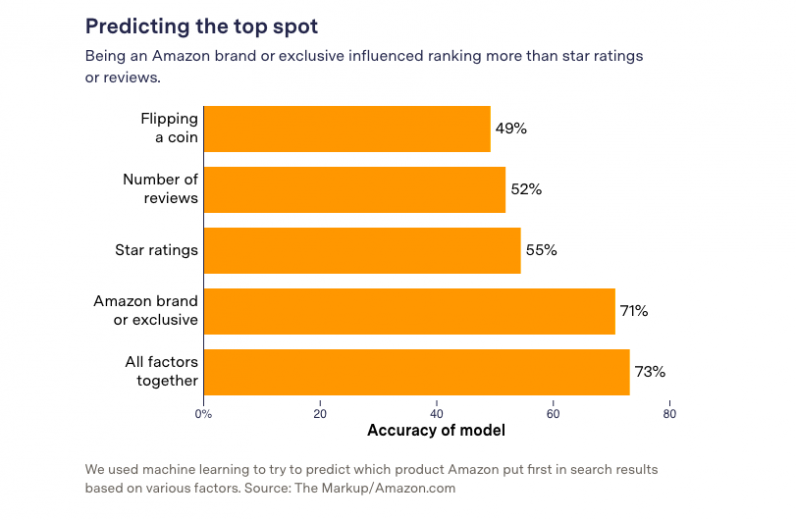
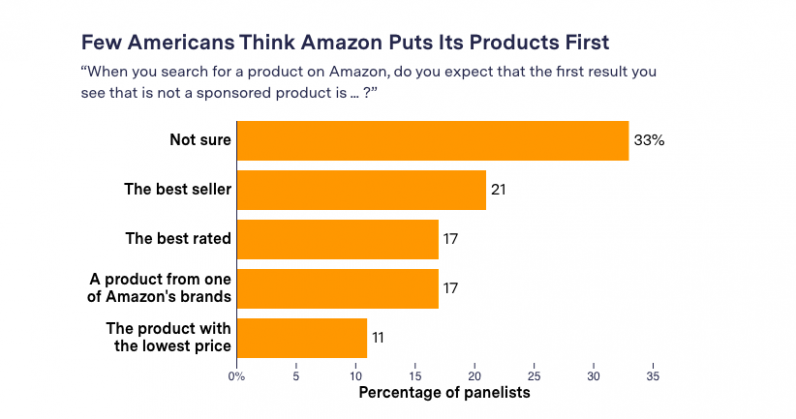


 Image:
  Image: Depositphotos.com
 Image: Depositphotos.com
 Image:
  Image: Depositphotos.com