Author

editor

Browsing

By

When it comes to generating passive income, several ideas and strategies get tossed around quite frequently, one of them being blogging. So the question is, can you really make passive income from a blog? In a word, yes.

Four Bloggers Who Make Some Serious Cash

By now, we’ve all heard claims that bloggers can make six or even seven figures per year. But isn’t that an exaggeration? Are there actually people that make significant sums of money running blogs online?

While it certainly takes some work — and isn’t the norm — it’s more than possible. Just ask the following bloggers, all of whom have transformed their lives by creating blogs that generate high passive income on a monthly basis.

  • Jeff Rose has a successful personal finance blog called “Good Financial Cents” that nets him monthly blog revenue of $102,000.
  • Robbie Richard of RobbieRichards.com generates over $60,000 per year on affiliate revenue alone without spending a dime on ads or traffic generation. And that’s just one of his revenue streams from the blog!
  • It took Lena Gott of the What Mommy Does blog just ten months to scale up to $10,000 per month in revenue. Best of all, she works just 20 hours per week.
  • Ramit Sethi of I Will Teach You To Be Rich earns millions of dollars per year on his blog. On top of that, his blog has paved the way for bestselling books, six-figure speaking gigs, and various seven-figure courses and business ventures.

Those are just four examples. It’s relatively simple to find more than 4,000 examples of bloggers who are making lucrative full-time revenue with blogging. There are tens of thousands more who are using blogging as a passive, supplemental source of income to cover bills or upgrade their lifestyle.

In other words, it really doesn’t matter if your goal is to make $300 per month or $3 million per year — blogging can help you get there.

The key to making money blogging is to have a game plan. You can’t just throw some words into cyberspace and hope they come back with dollar signs. (That’s highly unlikely.) Instead, you need to be intentional with your approach.

While every blogger has their own unique formula for success, here’s a basic three-step plan that will increase your odds of building a cash-generating blog.

Step 1: Start a blog.

The very first step in the process is to create a blog and launch it out into cyberspace. In many ways, this is the easy part. However, there are several things you’ll need to keep in mind if you want to do it well the first time around.

According to The Blog Starter, which has helped many people successfully launch revenue-generating blogs online, there are six overall steps to follow when starting a blog. Four of them occur during this initial step.

  • Choose a blog name. Begin by choosing a blog name. Typically, this name will be directly related to your topic or your name. It should be simple yet descriptive. It also needs to have an available domain. The best blog domains are one to three words. If possible, you want a top-level domain (TLD) that’s either .com, .org, .net, or .co.
  • Get your blog online. Once you settle on a blog name and find an available domain, you’re ready to get your blog up and running. To do so, you’ll need a website hosting company to host your blog on the internet. You’ll also need a content management system (CMS) to help you populate your website in an attractive and user-friendly way.
  • Customize your blog. Armed with a blog host and website builder, it’s time to customize the look and feel of your website. You can either customize an existing template/theme or pay for a custom website developer to do it for you.
  • Write/publish your first post. The time is now at hand to publish your first blog post. We recommend starting with a “pillar post.” This is a long, meaty blog post — several thousand words — that will serve as a piece of foundational SEO copy for your blog.

Once you check the box on each of these four items, you can officially say you have a blog. That’s more than 99 percent of people can say, so give yourself a pat on the back.

Step 2: Monetize your blog.

Having a blog is one thing. However, you’re not starting a blog so that you can journal your thoughts online. You’re starting a blog because you want to make some serious passive income. This means you have to monetize it. Here are the four most common blog monetization methods:

  • Affiliate Marketing. Once you have a steady flow of traffic visiting your website, you can leverage affiliate links to capitalize on this traffic. Using this method, you don’t even have to own any of your own products or services. You just drive traffic to other people’s products and earn a commission for any sales made.
  • Banner Ads. Advertisers will pay for a digital “billboard” on your blog in the form of a banner advertisement. They typically pay based on your blog analytics. These include monthly visitors, engagement, conversion rate, and so forth. The more impressive your numbers are, the more you can charge.
  • Sell Digital Products. One of the best monetization strategies is to build a loyal following with high-value free content. After that, you can upsell followers into digital products such as eBooks and courses.
  • Sell Coaching. If you have a particular skill or service that you’ve mastered, there are always people looking to learn your skill and replicate your success. One way to monetize this is by using your blog to sell coaching services. Done well, you could potentially charge thousands of dollars per month for coaching. Mastermind groups are yet another option.

Every blog monetization strategy will look different. Some bloggers make 100 percent of their money from affiliate marketing. Others focus on selling their own digital products and courses. You also have bloggers who do a combination of everything. You’ll have to decide what makes the most sense for you.

Step 3: Automate and outsource your blog.

Successfully monetizing your blog is super exciting. Whether you’re making several hundred dollars per month or thousands, there’s something very rewarding about seeing your blog go from concept to published website to cash-generating machine.

However, unless you like the idea of spending 40 to 60 hours per week writing content, optimizing your website, and monitoring your email inbox, you must find a way to turn that income into passive income. There are two primary ways you can do this:

  • Automation. The first step is automation. Simply find tools that streamline the tasks you’re tired of doing and integrate them into your blogging workflow. There are apps to automate email marketing, social media, list segmentation, proofreading, writing headlines, scheduling meetings, tracking analytics, finding link-building opportunities, optimizing images, automating business payments, and everything in between. The key is to make sure you’re choosing smart tools that work together. You can always use a tool like Zapier or IFTTT to connect different applications.
  • Outsourcing. There’s only so much you can automate. At some point, you have to build up a team of skilled professionals who can help you handle the tasks that require human energy and creativity. This is where outsourcing to freelancers and virtual assistants comes into play. For best results, you’ll probably want to start with a freelance copywriter to shoulder some of the content creation burden and a virtual assistant to help out with the administrative tasks. Over time, you can expand to add more writers and assistants. You may even want to hire an operations person or sales professional to get your revenue numbers moving upward and to the right.

You don’t have to automate and outsource everything at once. Start with the tasks that are both time-consuming and undesirable. In other words, if you hate the SEO component of blogging, there are always SEO professionals who would be happy to do the work for you. Alternatively, if you find yourself spending two hours per day answering emails and replying to comments, hiring a virtual assistant might be a good move.

Once you have the most time-consuming and undesirable tasks out of the way, you simply let things progress from there. Try automating/outsourcing one new task every week. Before you know it, you’ll only have to spend a few hours working on your blog as opposed to dozens of hours. You’ll also discover that it’s easier to scale up your revenue when you aren’t the only one creating content, running promotions, or selling products.

Ready, Set, Blog!

No one is saying that you’ll magically start generating $10,000 in monthly passive income if you start a blog. However, if you follow the steps listed above and really commit to honing your strategy, you’ll eventually start generating a steady drip.

At first, your revenue might be $100 per month. Then, it could go up to $1,500 per month. Next, $5,000…and so on. It’ll take time — and plenty of work on the front end — but you can get there. The path forward has already been blazed by thousands of people ahead of you.

The post How to Start a Blog That Actually Makes Passive Income appeared first on Due.

Feature Image Credit: Due – Due

By

Sourced from Entrepreneur Europe

By Trevor Mogg

Apple is advising iPhone owners to download its latest update to iOS and iPadOS 15 as it includes an important security patch as well as a number of bug fixes.

Made available on Monday, October 11, iOS and iPadOS 15.0.2 addresses an issue that could allow nefarious apps “to execute arbitrary code with kernel privileges.” In other words, it offers a way for a hacker to take control of your iDevice.

Apple even says that the issue may have already been exploited, so you’re strongly advised to install the security patch just as soon as you can.

To perform the update on an iPhone or iPad, tap on Settings, and then General. Next, tap on Software Update, and then follow the install instructions to download 15.0.2.

If your Apple devices are still running version 14 or earlier, you won’t see the update prompt for 15.0.2.

Monday’s update also includes fixes for the following iPhone issues that some people have been experiencing:

  • Photos saved to your library from Messages could be deleted after removing the associated thread or message
  • iPhone Leather Wallet with MagSafe may not connect to Apple’s Find My app
  • AirTag might not appear in the Find My Items tab
  • CarPlay may fail to open audio apps or disconnect during playback
  • Device restore or update may fail when using Finder or iTunes for iPhone 13 models

Apple released iOS 15 on September 20. Despite months of testing prior to release, it’s normal for new bugs and security issues to emerge once the operating system is rolled out to the entire customer base. It’s for this very reason that many people hold off installing a new mobile operating system until they’re confident that the worst problems have been addressed in subsequent updates.

Apple released iOS 15.0.1 on October 1. This update dealt with an issue that prevented iPhone 13 handsets from unlocking and using an Apple Watch and got rid of an alert in the Settings app that incorrectly claimed a phone’s storage was nearly full. It also stopped audio meditations from suddenly initiating a workout on Apple Watch for some Fitness+ subscribers.

If you haven’t yet installed iOS 15 but are ready to do so, here’s how to do it. And here’s the best of what the iPhone’s latest mobile operating system has to offer.

Editors’ Recommendations

By Trevor Mogg

Sourced from digitaltrends


By

Developing a strong brand is crucial to a business’s success. You run the risk of losing your company’s identity without a branding strategy.

Your brand identity is the mortar that holds your brand together. Consistent branding is key to creating a brand that is memorable and easily recognizable to customers. Effective branding involves sculpting a brand identity that carries through across all of your marketing platforms and consumer touchpoints. Everything from graphic design to content development, web design to email signatures should subscribe to your brand identity. That way, from first to last impressions, your customers will know exactly who you are as a brand.

Why is branding necessary?

Branding isn’t just an accessory: It’s foundational to business. Consistent branding generates memorable, lasting impressions.

Take Airbnb, for example. The popular holiday-home hosting and rental service has defined a space for itself in the travel and tourism market with monumental success. Airbnb’s branding is consistent and ethos-driven. A winning combination.

Everything from imagery to content promotes active living, adventure and limitless possibility for everyone from beginners to seasoned travellers. Airbnb is recognizable, accessible, consistent, contemporary and oozing personality.

Everything contained in your brand book from logo design to value prepositions should communicate who you are, what you do and your fundamental brand personality to the customers who encounter your business. A successful and memorable brand image is one of the best ways to differentiate yourself from the competition and ensure that customers come knocking on your door.

Brand-guide creation is the first place to start. One of the best things you can do to create and maintain a consistent brand identity is to create a brand book. Here at Valux we help businesses establish robust brands with a comprehensive brand-building process covering everything from digital marketing to public relations and integrated sales.

Brand opportunities versus challenges

Branding is an opening to so many business opportunities.

A robust brand strategy will help you:

Establish your brand as a credible market leader

Building customer trust is a natural by-product of great branding. Unified branding establishes a business’s credibility in the market. In turn, this tends to increase market receptiveness and brand loyalty in the process. Consistent marketing messaging that delivers on its promises shows customers what they can expect from your businesses.

Look professional and trustworthy to prospective customers

Consistent brand imagery and messaging makes a business look professional. The best way to adhere to a unified branding strategy is to create a set of branding guidelines (a.k.a a brand book). Your brand book will contain key criteria including brand name, story, ethos, logos, icons, fonts, colour schemes and imagery.

Increase customer loyalty and customer referrals

If customers resonate with your brand ethos and story, then they are more likely to buy. What’s more, they’re more likely to buy again and again, and they might even tell their friends and colleagues to check out your business too. Great branding is a recipe for increased sales, customer loyalty and referrals. Strong and consistent messaging is the key to attracting a loyal customer base.

Stand out in competitive markets and industries

Branding gives every business the opportunity to stand out from its competitors. As a business, you can use your branding strategy to differentiate yourself from those around you. That could be by creating a striking image that immediately speaks of your business or tailoring your band messaging in a way that speaks directly to your target personas.

However, successful branding does not come without its challenges. Branding isn’t something that just happens. Maintaining brand relevance requires a consolidated effort. Your branding must be synergistic and respond quickly to market fluctuations.

Responding quickly to social, economic and political changes and trends improves customer perceptions of an organization. Take Nike, for example. In 2020, Nike took a clear stand against racism and voiced its support for the BLM movement.

The most successful brands don’t just build their branding outwardly but inwardly too. Nurturing your brand internally is imperative for a successful, integrated marketing campaign. Your people should be as invested in your brand identity as your customers.

And Nike did just this. Following on from the company’s campaign, Nike’s Chief Executive John Donahoe demonstrated that his organization’s commitment to the cause went beyond just “hot air” and virtue signalling by implementing internal changes to nurture a culture of anti-racism throughout the company. Donahoe pledged to commit $40 million to support black communities and fight systemic racism.

Clear and consistent branding is a must for all businesses. A concerted effort towards improving your branding strategy will help you stand out from the competition and gain industry credibility, consumer trust and loyalty. In today’s fast-moving consumer ecosystem, the ability to maintain an ethos-driven, authentic and timely brand image is imperative.

By

Entrepreneur Leadership Network Contributor

Jessica Wong is a digital marketing expert with more than 18 years of success driving bottom-line results for clients through innovative programs aligned with emerging strategies. She is the founder and CEO of Valux Digital.

Sourced from Entrepreneur Europe

By Jeff Haden

Within seconds, you’ll determine just how confident you really are in a prediction or decision.

I was having dinner with two entrepreneurs. Both are smart and successful, two qualities that don’t always go hand in hand.

One (we’ll call him Ben) thinks an emerging technology will transform his market within the next 18 months. “We’re going to drop everything we’re developing and put all our money on (that),” he said. “We’re going all in.”

In financial terms, it’s easily a $10 million bet. But “all in” is kind of Ben’s thing.

The other (we’ll call him Frank) seemed skeptical. “How certain are you?” Doug asked.

“Very,” Ben said.

“OK,” Frank said, and dumped 20 peanuts onto the middle of the table. (I didn’t say we were having a fancy dinner.) “Imagine one of these peanuts is worth $10 million. You only get to pick one. Would you rather take your chances on choosing the right peanut, or that you’re right about your project paying off in 18 months?”

“Shoot,” Ben said. “Definitely my project.”

Frank took away 10 peanuts.

“How about now?” he said.

Ben pointed at his own chest. “I’m still betting on me.”

Frank pushed more peanuts aside so only five were left.

Ben sat back. He crossed his arms. His eyes narrowed. He was clearly less certain. Eventually he said, “Still me.”

Frank took away two more peanuts. Now Ben had a one in three chance of picking the $10 million peanut.

Ben sat quietly for about 30 seconds, mental file cards clearly fluttering. Finally he pointed to the peanuts. “I think I’ll take those odds,” he said.

What happened? Ben calibrated his prediction. Instead of just thinking he was right, the exercise forced him to think thought about how he thought about making predictions. (Psychologists call thinking about thinking “metacognition.)

Thinking about thinking — in this case, seeking to calibrate his prediction — is something Ben freely admits he rarely does. He’s smart. He’s decisive. He’s often right. Over time, he’s come to trust his instincts.

In this case, his gut told him he would be proved right, and he was willing to back that belief with millions of dollars.

But then Frank’s peanut game — an exercise called the equivalent bet test, popularized by decision-making expert Douglas Hubbard — made him realize he felt more comfortable with one out of three odds than he did with his prediction.

“Very certain”? Not so certain after all.

The beauty of the equivalent bet test is that forces you out of binary mode — either “I think (this) will happen” or “I don’t think (this) will happen” — and allows you to fine-tune a prediction. Ben’s true level of confidence fell somewhere around 33 percent.

In some cases that might be a good bet. In others, not.

For Ben, it wasn’t.

While he sees the situation as a “when,” not an “if,” still: the stakes of being too early are too high. So he scaled back the investment. He ready to quickly double down if it looks like his prediction will be right, but he’s also prepared if the timeline turns out to be longer.

Calibrating his prediction — realizing his knowledge and experience allowed him to turn a coarse judgment into one much more nuanced and fine-grained — not only improved his decision-making, it helped mitigate the risk involved.

That’s the real beauty of the equivalent bet test: Determining how confident you really are in a prediction and using that knowledge to make even better decisions — and plans.

Because you can’t always be right.

But you can determine how confident you are that you will turn out to be right. That an employee will react to a decision the way you think. That customers will react to pricing changes the way you think. That expanding your product line will turn out the way you think.

And then plan accordingly.

Because even the biggest risks should still be intelligent risks.

Feature Image Credit: Getty Images

By Jeff Haden

Sourced from Inc.

By

Google Translate might be the go-to translator service for most people, but Microsoft’s Translator is catching up with the addition of 12 new languages and dialects.

Microsoft Translate now supports 103 languages with the addition of 12 languages spoken by 84.6 million people: those languages include Bashkir, Dhivehi, Georgian, Kyrgyz, Macedonian, Mongolian (Cyrillic), Mongolian (Traditional), Tatar, Tibetan, Turkmen, Uyghur, and Uzbek (Latin).

Google announced support for 108 languages in Google Translate after a rare update to language support last February, which added Kinyarwanda, Odia, Tatar, Turkmen, and Uyghur to the list.

Both companies are using artificial intelligence in their cloud infrastructure to reach different language groups across the world.

“With this release, the Translator service can translate text and documents to and from languages natively spoken by 5.66 billion people worldwide,” the Microsoft Research group said in a blogpost.

While Microsoft now covers the vast majority of people, its – and Google’s – advances in translation come as hundreds of about 7,000 languages globally die out each year.

Microsoft began its machine translation systems more than 20 years ago and targeted its KB or Knowledge Base articles that, for example, accompany its Patch Tuesday release notes.

In 2003, a machine translation system translated the entire Microsoft Knowledge Base from English to Spanish, French, German, and Japanese, and the translated content was published on its website, making it the largest public-facing application of raw machine translation on the internet at the time.

“Microsoft evolved the systems further based on statistical machine translation (SMT) models and made it available to the public through Windows Live Translator, the Translator API, and as a built-in function in Microsoft Office applications.”

The big change came with neural machine translation (NMT) and Microsoft’s decision to move its translation systems to NMT and models based on transformer technology, which allowed it to train models on smaller amounts of material, such as documents, than previously.

“Using multilingual transformer architecture, we could now augment training data with material from other languages, often in the same or a related language family, to produce models for languages with small amounts of data –commonly referred to as low-resource languages,” it notes.

But it still needs humans to translate text to build models about rarer languages, requiring people to translate documents from one language to another.

The goal is for Microsoft to develop Azure cloud services that help businesses expand their reach to customers in other markets where different languages are spoken.

The key tools to enable this are Azure Cognitive Services Translator APIs in the public cloud and in Microsoft’s Azure Government Cloud. The Text Translation API is available in Docker containers, allowing customers to process content on-premises.

By

Sourced from ZDNet

By

Getting your colours right, having a clean typeface, and everything else you have heard about branding is probably, mostly correct.

However, this is where many entrepreneurs and brand designers fall short: aligning everything to form an identity. There is a difference between creating a memorable logo or colour palette and the concept of Brand Design – the intersection of ‘Branding’ and ‘Brand Identity.’

Brand Design is what bridges the elements of a brand with the way it is perceived in the market – its true meaning among consumers. Let’s take a closer look at branding 101 and these various definitions.

Brand Identity vs Branding vs Brand Design

Branding

The concept of branding is more than just a logo or colour palette – it’s a sum of all those parts and more. Branding is an ingenious collaboration of all the components: logo, tagline, typography, colour palette, website design, and visual communication tools, that form a recognizable depiction of your business.

Brand Identity

One of the best and closest definitions of a brand identity is given by Marty Neumeier in his book The Brand Gap.

“A brand identity is a person’s gut feeling about a product, service, or company. You can’t control the process but you can influence it”.

It is all about what your target market thinks of you, which is based on your branding efforts. You need to be authentic with your branding efforts and strategies; in order to grow in the long run in today’s competitive and ever-growing world, it is important to stand your ground and connect with your audience.

Brand Design

As discussed, brand design is the common ground that connects brand identity to branding and leaves an impression of a brand in the minds of the respective target audience. It represents the holistic personality of the brand.

In order to create an effective, unique, and consistent brand identity, it is essential to lock in the basics of brand design elements which will be used in all the components of your brand, such as a logo, website, billboards, social media pages, etc.

Elements of brand design

You have likely come across phrases such as ‘less is more,’ ‘be unique,’ ‘design to be memorable,’ and many more. While following these is certainly a great idea, it all boils down to brand design. The more well-thought-out and assembled the elements of brand design are, the better all design decisions will be. Eventually, this will lead to a better brand identity.

Elements-Of-Brand-Design

Image Source

Logo

Of course, this is one of the most obvious and known design elements; even confused as the brand identity itself (which, of course, is not true). Be that as it may, with logos being the foremost of brand identifiers, it is important to be highly attentive when it comes to designing your logo.

Typography

When it comes to typography, also known as font styles, I would suggest you select the main font – this could be the font you use for your logo or major headings – and one or two secondary fonts. This may not seem as crucial, but if you want to set the style of your brand from scratch, it’s important.

Colour Palette

As typography sets the style and tone of your brand, the colour palette is what sets the overall mood of your brand and its graphics. In order to get this right, it is important to understand how different colours have different effects on people. After a bit of research concerning colour psychology, you can come up with a colour combination that aligns with other brand design elements.

Photography

Now, this may seem a bit out of the ordinary, but integrating a photography style with your brand can bring out excellent results. After all, photography is a bit more real than all others. Therefore, when it comes to making your target customers feel associated with your brand, this is quite an underutilized design element.

Iconography

This is by far the most flexible brand design element. From an icon of a gaming console to an arrow, there are generic icons for numerous things. Selecting a style of icon to be used specifically for your brand is an extra mile that many brands don’t take. One of the best examples to prove this are Apple products, from its laptops’ keyboards to its different set of stickers and symbols, the brand shows that it doesn’t shy away from going all unique while being relevant.

Illustration

This is not for everyone. Not that it cannot work for everyone, but most brands go with either an illustrations style or photography style. Having said that, illustrations have been acing design elements recently, especially when it comes to the IT, entertainment, clothing, health, and FMCG industries.

Audio and Video

As people are experiencing brands in different ways, which is changing faster than we notice, exploring audio and video as visual communication tools can hardly go wrong. Elements such as podcasts and YouTube videos are only going to be increasingly important from here, but it is also important to know when is the right time to get on board with this. As these are capital-intensive strategies, I would suggest keeping these at a medium on your priority list.

Pattern

More often than not, we interchange the meaning of patterns and textures with each other – somewhat, at least. Consequently, we presume that pattern plays an important role in design only when a product is involved. Nevertheless, this is one of the most flexible brand design elements.

Motion and Animation

With the digitization of the world, experiences, and branding strategies themselves, there has been an unbelievable growth in brands getting online. The more they focus on the online presence, the more interactive websites and applications tend to be. Besides websites and applications, there are several other opportunities for brands to add animation; these may range anywhere from animated characters to the use of motion graphics for your logo design in your videos.

While the above-mentioned elements of brand design are all about tangible aspects of your brand, it is not all that encompasses brand identity. You should consider brand positioning all throughout your brand design decisions.

Some questions to help you address the positioning of your brand:

  • Which unique market do you dominate (or plan to dominate)?
  • How are you better than your competitors? (Answer this positively by understanding and communicating what you bring to the table that is exclusively associated with your brand)
  • What are the benefits of your products and services?
  • Is there is any proof to your claims to increase credibility?

To conclude

There are a few things that you need to know before diving into brand design:

  • It is the powerhouse of your brand. While quality, marketing mix, and all other aspects are important, your target customers will never care unless it feels right to them. With well-structured brand design, you can lay out your brand identity to your customers, and welcome them instead of vigorously advertising.
  • Storytelling never gets old. From ancient wall scribbling to today’s storyboards, stories are the most engaging and effective manner to represent your brand. With the help of all brand design elements, you can tell your brand story, your customers’ stories, your opinions, and everything else to be more inclusive of your target audience.

By

Guest author: Manas Chowdhury is a Digital Marketing enthusiast with a PG in Economics and a specialization in Finance. He is an entrepreneur who has a keen interest in stocks, bullions, gaming, and blockchain technology. While he runs his own startup, he also enjoys writing on a variety of topics. Being a philanthropist, he is also involved in various activities contributing to the betterment of the environment and society. You can connect with Manas on LinkedIn.

Sourced from Jeffbullas.com

By Azeem Azhar

Azeem Azhar has been a journalist, podcaster, entrepreneur, and investor. For the last five years, he has been writing a popular newsletter called Exponential View and investing in technology start-ups.

Below, Azeem shares 5 key insights from his new book, The Exponential Age: How Accelerating Technology Is Transforming Business, Politics and Society. Listen to the audio version—read by Azeem himself—in the Next Big Idea App.

1. Key technologies are improving exponentially.

Starting in about 2015, I spent time exploring a number of different technologies and looking at how they were turning into products and services and ultimately into companies. During this research, I came to the conclusion that we are at a transition point across advanced economies, one that is being driven by a number of broadly applicable general technologies.

The first of these is computing, in which advances can be measured by the ever-marching power of our smartphones. In biology, we’re able to take the approaches and disciplines of engineering and apply them to the human genome. I also saw trends in energy where the cost to produce power from renewable sources, like solar and wind, is declining precipitously, and battery storage is also getting cheaper and cheaper. Finally, in manufacturing, new techniques like 3D printing and additive manufacturing are improving dramatically year after year, while also getting cheaper and better.

Now, the interesting point about these four technology areas is that they’re broadly applicable across our economies, but more than that, they are improving exponentially. And by that I mean they are improving by more than 10% on a price performance basis every single year, year after year, compounding those improvements. The impact of that is a tremendous reduction in the cost of these fantastic capabilities, and with that reduction in cost, we’re going to start to see a ubiquity of these approaches across our economies and societies more broadly.

“We are at a transition point across advanced economies, one that is being driven by a number of broadly applicable general technologies.”

2. Technologies have ripple effects across the whole of society.

My house in Northwest London is in a suburban part of the city, but in 1895, it sat in a field about 150 meters from a blacksmith’s shop. Today, that shop is my convenience store, where I supply the family for Saturday breakfasts. The fascinating thing is that the transition from farmland in 1895 to the houses and convenience stores of today took place in a really short period of time, about 25 years. During this brief period, roads were laid out, and electricity, water, and telephone systems were put in place. By 1925, my little suburban neighbourhood looked very much like it does today.

What had effected that change were three general purpose technologies: the car and its internal combustion engine, the telephone, and electricity. These three technologies, all developed and commercialized from the 1880s through the early part of the 20th century, had knock-on effects. They shaped the nature of our jobs. They shaped the nature of industry, of work, of labour laws, of the patterns and customs of our everyday life. By the 1920s and 1930s, you had many of the resemblances of modernity: large cities and skyscrapers and office jobs and factory employment and lifetime work.

That’s the impact of technologies on a society. They have second- and third-order effects that go beyond the industries from which they spring. And of course, society also shapes the technologies—it shapes the directions in which they go. That interplay—technology to society, society to technology—is an important insight when we think of what is happening today, as we transition to what I call the “exponential age,” a transition driven by the four technologies that are changing our economies today.

3. The current pace of change is hard for humans to understand.

We have many historical examples of people being uncomfortable with new technology. In the early 20th century, people were scared to get into elevators. Today, fuelled by technology, global supply chains, and venture capital, the pace of change has increased enormously, and it’s hard for us to keep up. First there was Facebook, and then suddenly there was Instagram, and then suddenly there was Snapchat, and suddenly there was TikTok, and soon there will be something else.

“We evolved to understand natural time scales, like the rising and setting of the Sun, and the changing of the seasons. The rapid acceleration of the technology-driven exponential age is alien to us.”

Humans didn’t evolve to understand this kind of exponential change. We evolved to understand natural time scales, like the rising and setting of the Sun, and the changing of the seasons. The rapid acceleration of the technology-driven exponential age is alien to us. We regularly misunderstand both the long-term and the short-term impact of this pace. Sometimes we over-estimate, sometimes we under-estimate, but it’s very unlikely that we’ll be able to predict exactly what happens next. And even if we can do so with some first-order effect, it’s hard to explain or predict where the ripples will end up.

4. There is an exponential gap between technologies and the linearity of our everyday lives.

In most well-functioning societies, we manage corporate behaviour through a variety of institutions, regulations, laws, and taxes. The challenge is that those institutions, whether formal or informal, tend to evolve at a linear rate, so they get out of step with the realities of exponential technologies.

I call that gap—between the accelerating upward curve of technology and the relatively flat curve of regulation—the exponential gap. The exponential gap underpins many of the tensions that we see between technology companies and society at large, whether it’s questions of market dominance, worker compensation, or the impacts on democracy itself. The exponential gap is a useful analytical tool for us to understand, diagnose, and ultimately fix these issues.

5. We can close the exponential gap if we understand what drives its creation.

Slowing down the pace of technical development seems to be impossible. I argue in my book that the reason these technologies develop as fast as they do is a function of having a modern complex economy where the engineers, entrepreneurs, and scientists learn from their experience and respond to signals in the market. So at one level, the pace of technological change seems to be almost set.

But there are things we can do because technologies are human artefacts, designed and created by people. By better understanding how technologies develop and progress, and how their second- and third-order effects impact society at large, we can actually start to direct this river of innovation into useful channels. As customers, consumers, and citizens, we need to ask the right questions in order to govern rapid technological change.

To listen to the audio version read by Azeem Azhar, download the Next Big Idea App today:

By Azeem Azhar

Sourced from Next Big Idea Club


By ADITYA KALRA in New Delhi and STEVE STECKLOW in London

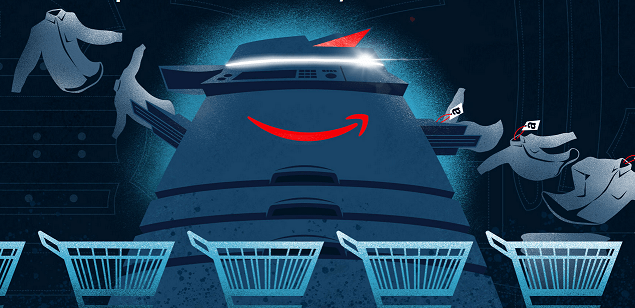
A trove of internal Amazon documents reveals how the          e-commerce giant ran a systematic campaign of creating knockoff goods and manipulating search results to boost its own product lines in India – practices it has denied engaging in. And at least two top Amazon executives reviewed the strategy.

Amazon.com Inc has been repeatedly accused of knocking off products it sells on its website and of exploiting its vast trove of internal data to promote its own merchandise at the expense of other sellers. The company has denied the accusations.

But thousands of pages of internal Amazon documents examined by Reuters – including emails, strategy papers and business plans – show the company ran a systematic campaign of creating knockoffs and manipulating search results to boost its own product lines in India, one of the company’s largest growth markets.

The documents reveal how Amazon’s private-brands team in India secretly exploited internal data from Amazon.in to copy products sold by other companies, and then offered them on its platform. The employees also stoked sales of Amazon private-brand products by rigging Amazon’s search results so that the company’s products would appear, as one 2016 strategy report for India put it, “in the first 2 or three … search results” when customers were shopping on Amazon.in.

Among the victims of the strategy: a popular shirt brand in India, John Miller, which is owned by a company whose chief executive is Kishore Biyani, known as the country’s “retail king.” Amazon decided to “follow the measurements of” John Miller shirts down to the neck circumference and sleeve length, the document states.

The internal documents also show that Amazon employees studied proprietary data about other brands on Amazon.in, including detailed information about customer returns. The aim: to identify and target goods – described as “reference” or “benchmark” products – and “replicate” them. As part of that effort, the 2016 internal report laid out Amazon’s strategy for a brand the company originally created for the Indian market called “Solimo.” The Solimo strategy, it said, was simple: “use information from Amazon.in to develop products and then leverage the Amazon.in platform to market these products to our customers.”

The Solimo project in India has had international impact: Scores of Solimo-branded health and household products are now offered for sale on Amazon’s U.S. website, Amazon.com.

The 2016 document further shows that Amazon employees working on the company’s own products, known as private brands or private labels, planned to partner with the manufacturers of the products targeted for copying. That’s because they learned that these manufacturers employ “unique processes which impact the end quality of the product.”

The document, entitled “India Private Brands Program,” states: “It is difficult to develop this expertise across products and hence, to ensure that we are able to fully match quality with our reference product, we decided to only partner with the manufacturers of our reference product.” It termed such manufacturer expertise “Tribal Knowledge.”

This is the second in a series of stories based on internal Amazon documents that provide a rare, unvarnished look, in the company’s own words, into business practices that it has denied for years.

Amazon has been accused before by employees who worked on private-brand products of exploiting proprietary data from individual sellers to launch competing products and manipulating search results to increase sales of the company’s own goods.

In sworn testimony before the U.S. Congress in 2020, Amazon founder Jeff Bezos explained that the e-commerce giant prohibits its employees from using the data on individual sellers to help its private-label business. And, in 2019, another Amazon executive testified that the company does not use such data to create its own private-label products or alter its search results to favour them.

By ADITYA KALRA in New Delhi and STEVE STECKLOW in London

Sourced from Reuters

Artificial Intelligence (AI) mimics the cognitive functions of the human mind, particularly in learning and problem-solving. Many of the apps that we use today are powered by AI. From voice-activated virtual assistants to e-commerce, AI applications are everywhere.

With the advancements in AI technology and access to big data, companies across different industries are integrating AI into their processes to find solutions to complex business problems.

The application of AI is most noticeable within the retail and e-commerce space. Websites and apps can interact intelligently with customers, creating a personalized approach that enhances the customer experience.

No matter what industry your business operates in, these seven tips can help you acquire and retain customers more efficiently at a fraction of the time it takes to do things manually.

How to Use AI to Get and Keep Customers

1. Identify Gaps in Your Content Marketing Strategy

If you’re just starting with content marketing, you’ll need to know what type of content to create.

By using AI, you can identify the gaps, find fixes, and evaluate the performance of your content marketing campaign.

Take Packlane, a company that specializes in custom package designs, for example. They came up with high-quality content like helpful blog posts that provide valuable information. At the same time, the content they publish makes it easier for their target market to understand their brand and services.

If you’re in the retail or e-commerce space, you can use AI to identify the gaps in your content marketing. Your content may be focused on your products and their features, but through AI, you can determine the relevant content that addresses your audience’s needs and pain points.

2. Pre-Qualify Prospects and Leads

Not every visitor to your site will become a paying customer. If you’re not getting sales despite the massive traffic, it means you’re generating low-quality leads.

Some reasons why this happens includes:

  • Targeting the wrong audience
  • Poor content marketing strategy
  • Using the wrong type of signup form
  • Promoting in the wrong social media platforms
  • Ineffective calls to action

These explain why 80% of new leads never convert into sales. The mistakes can be rectified with the help of artificial intelligence.

AI tools can extract relevant data to help you learn more about your target audience. These tools also provide predictive analytics on your customers’ behaviour. They, in turn, help improve your lead generation strategy because you’ll know which leads to pursue, where to find them, and how to effectively engage them.

3. Provide Personal Recommendations

According to a report by the Harvard Business Review, even though there are privacy concerns when consumers’ personal information changes hands, people still value personalized marketing experiences.

Brands that tailor their recommendations based on consumer data boost their sales by 10% over brands that don’t.

Recommendation systems’ algorithms typically rely on data on browsing history, pages visited, and previous purchases. But AI is so advanced that it can analyse customers’ interactions with the site content and find relevant products that will interest the individual customer. This way, AI makes it easier to target potential customers and effectively puts the best products in front of the site visitors.

Because of AI, recommendation engines are able to filter and customize the product recommendations based on each customer’s preferences. It’s a cycle of collecting, storing, analysing, and filtering the available data until it matches the customers’ preferences.

This is an effective way of acquiring and retaining customers because there’s an element of personalization.

4. Reduce Cart Abandonment

A high cart abandonment rate is the bane of e-commerce business owners. According to a study by the Baymard Institute, online shopping cart abandonment rate is close to 70%.

Users abandon their online carts for various reasons:

  • high extra costs
  • complicated checkout process
  • privacy concerns
  • not enough payment methods, or
  • they’re not ready to buy yet.

Using AI-powered chatbots is one way to reduce cart abandonment. AI chatbots can guide the customers through their shopping journey.

AI chatbots can have a conversational approach and give the customer a nudge to prompt them to complete the purchase. These chatbots can also act as a virtual shopping assistant or concierge that can let a customer know about an on-the-spot discount, a time-sensitive deal, a free shipping coupon, or any other incentives that will encourage them to complete the checkout.

With AI, lost orders due to cart abandonment are recoverable and can lead to an increase in conversion rate for e-commerce businesses.

5. Increase Repurchases With Predictive Analytics

Predictive analytics is the process of making predictions based on historical data using data mining, statistical modelling, artificial intelligence, machine learning, and other techniques. It can generate insights, forecast trends, and predict behaviours based on past and current data.

In marketing, predictive analytics can be used to predict customers’ propensity to repurchase products as well as its frequency. When used to optimize marketing campaigns, AI-powered predictive analytics can generate customer response, increase repurchase, and promote cross-selling of relevant products.

It’s all part of the hyper personalized marketing approach, where brands interact and engage with customers and improve their experience by anticipating their needs and exceeding their expectations.

With predictive analytics, you can focus your marketing resources on customer retention and targeting a highly motivated segment of your market that are more than happy to return and repurchase your products. This approach is less expensive than advertising or implementing pay-per-click campaigns.

6. Improve Your Website User Experience

Every business—big or small—knows the importance of having a website, where visitors can interact with the brand, respond to a call to action, or purchase products. But it’s not enough to just have an online presence; it’s important that visitors to the site have a great experience while navigating through your site.

What makes for a great user experience? Users have different expectations. Some of them want faster loading time, while others want a simple and intuitive interface. But most important of all, they want to find what they’re looking for. It could be a product, content, or a solution to a problem. Whatever they may be, it’s up to you to meet their expectations.

With artificial intelligence, you can improve your website user experience tenfold. Here are some of the ways AI can be used to improve user experience.

Search relevance

This pertains to how accurate the search results are in relation to the search query.  The more relevant the results are, the better search experience the users will have. This means they are likely to find relevant content answering their queries or finding products that solve their problems.

Personalized recommendations

Content that is tailor-made for the user tends to have greater engagement which increases the likelihood of conversation. Amazon has perfected the product recommendation system using advanced AI and machine learning. AI gets data from customers and uses it to gain insights and apply predictive analysis to recommend relevant products for cross-selling opportunities.

AI chatbots

The presence of chatbots contributes to a great user experience because they provide 24/7 assistance and support in the absence of human customer service.  Users can get accurate answers to their inquiries quickly and efficiently, compared to scrolling through a text-based FAQs.

7. Social Listening for Potential Customers

Social listening is the process of analysing the conversations, trends, and buzz surrounding your brand across different social media platforms. It’s the next step to monitoring and tracking the social media mentions of your brand and products, hashtags, industry trends, as well as your competitors.

Social listening analyses what’s behind the metrics and the numbers. It determines the social media sentiment about your brand and everything that relates to it. It helps you understand how people feel about your brand. All the data and information you get through social listening can be used to guide you in your strategy to gain new customers.

Social media monitoring and listening can be done much more efficiently with the help of artificial intelligence. It’s an enormous task for a team of human beings to monitor and analyse data, but with AI-powered social media tools, all the tedious tasks can be automated. They can be trained to leverage data to provide valuable insights about your brand with high accuracy.

With AI and machine learning, your social listening can easily determine your audience, brand sentiments, shopping behaviour, and other important insights. By having this information within reach, you’ll know how you can connect with them more effectively and turn them from prospects to paying customers.

Key Takeaways/Conclusion

More companies across different industries are using the power of artificial intelligence and machine learning to significantly increase brand awareness, enhance customer engagement, improve user experience, and meet customer expectations.

  • AI can identify gaps in your content marketing strategy so that you can create content that’s relevant to your target audience.
  • AI can help you generate high-quality leads that are likely to buy your products.
  • With AI, you can personalize and tailor-fit your product recommendations based on your customers’ preferences, increasing repeat purchases.
  • AI can be integrated into your e-commerce site to reduce shopping cart abandonment.
  • AI significantly improves website user experience by making it intuitive, accessible, and easy to navigate.
  • AI-powered social media tools can help you monitor and gain valuable insights about your brand. You can then use this to develop a social media marketing strategy to gain new customers.

Achieve these milestones, and you’ll be sure to acquire new customers and retain existing ones.

Feature Image Credit: iStock/monsitj

Sourced from Black Enterprise


By Ryan Barwick

The company can tell which way the wind is blowing.

Advertisers are going to start finding a larger audience across Facebook’s apps.

The company announced in a blog post Monday that, unless someone links their accounts together, it will consider an individual user’s Instagram and Facebook accounts as two separate people—at least from an advertiser’s perspective.

  • Previously, Facebook counted someone with a Facebook and Instagram account as one person using identifiers like email, even if these accounts weren’t officially linked up.

Why the change? Facebook can tell which direction the wind is blowing.

“This update aligns with trends of offering people more control over how their information is used for ads and is consistent with evolving advertising, privacy, and regulatory environments,” wrote Facebook’s VP of product marketing, Graham Mudd.

Though he said pre-campaign audience estimates will look larger, “we do not believe this will have a substantial impact on reported campaign reach.”

  • Facebook said it’s been telling advertisers that changes were coming since June.

Refresh: It’s been quite a few weeks for advertisers on the Book.

In September, the company acknowledged that Apple’s privacy updates were more disruptive than advertisers initially expected, leaving marketers “blind” to Facebook’s campaign metrics.

Weeks later, whistle-blower Frances Haugen disclosed internal documents and accused Facebook of misleading advertisers, specifically its “shrinking user base” and how it counts the number of people using its platform.—RB

Feature Image Credit: Pexels

By Ryan Barwick

Sourced from Marketing Brew