Author

editor

Browsing

Sourced from lightspandigital

One of the biggest debates we hear from LinkedIn fans who are determined to make the social network’s algorithm work in their favour is whether or not to place a link in the post or in the comments. In other words, does LinkedIn’s algorithm favour posts that don’t link off the platform?

The tactic of posting links in the comments instead of creating a post containing a link has become very popular with those who are trying to “work” the LinkedIn algorithm. Are they right? We decided to put it to the test.

Do LinkedIn Posts Without Links Get Better Engagement Than Posts With Links?

Socialinsider, an in-depth social media analytics provider, partnered with us to analyse their trove of data and provide insights. They analysed 86,504 LinkedIn posts from a total of 883 LinkedIn pages.

What do we mean by a LinkedIn post with a link vs. no link? Typically when we share a resource on LinkedIn, we’ll share a link with our own commentary. But what if we were to share only the commentary, perhaps with an image, and then post the link in the comments?

The hypothesis here is that posts that are not based on a link will perform better than those that share text only or images. And that leads to a preference by many to post the link in the first comment. 

If we think about it, it’s in LinkedIn’s interest to keep people on the platform as long as possible. The longer people stay, the more ads they’ll see, which is profitable to LinkedIn. Keeping people on the platform is a key strategy that’s been theorized for most social networks. It also circulates when it comes to Facebook content and might be behind Instagram’s reluctance to enable linking off the platform.

Objectives:

While our original hypothesis was related to the effect of text-based posts, Socialinsider’s volume of data gave us access to additional insight. We looked to:

  • Determine how LinkedIn posts perform when placing the link in the posts itself compared with posts without a link
  • Determine how LinkedIn posts perform when placing the link in the comments, not in the post itself.
  • Find out what type of post performs best overall on LinkedIn

LinkedIn Algorithm Study Key Insights

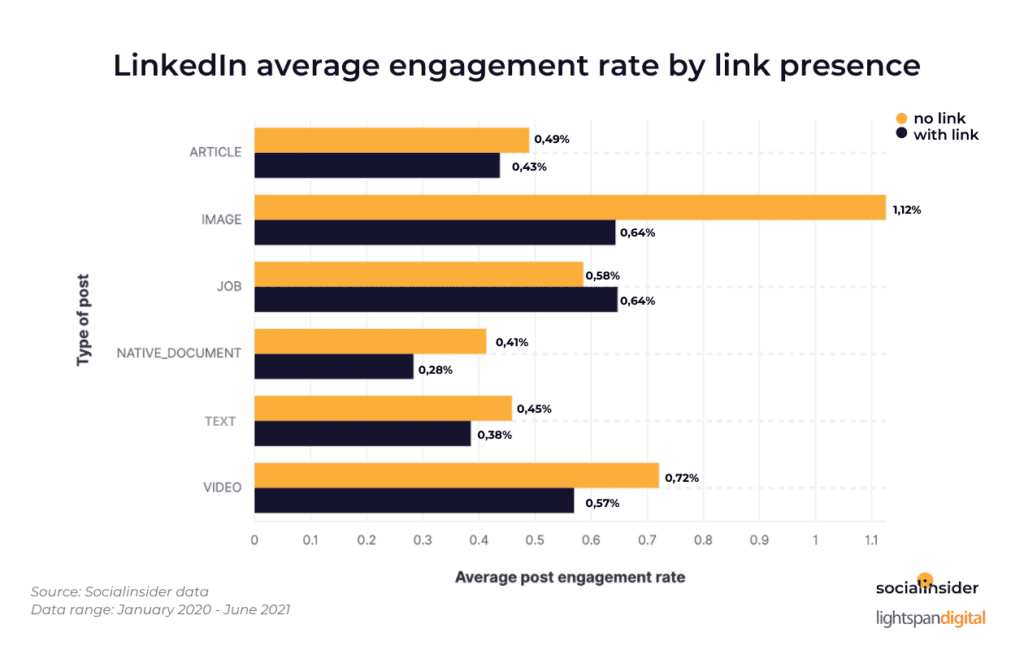
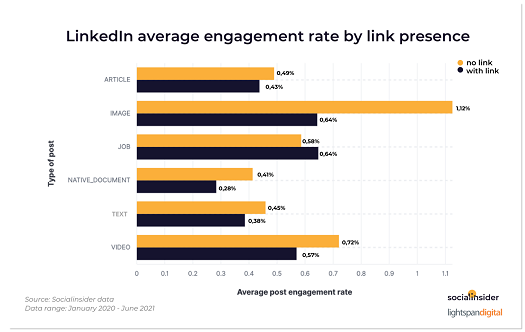
Posts with no links perform better across all types of posts on LinkedIn.

linkddin average engagement rate by link presence

For example, a single image posted on LinkedIn with no link can get an engagement rate that’s 70% higher than a post with an image and link.

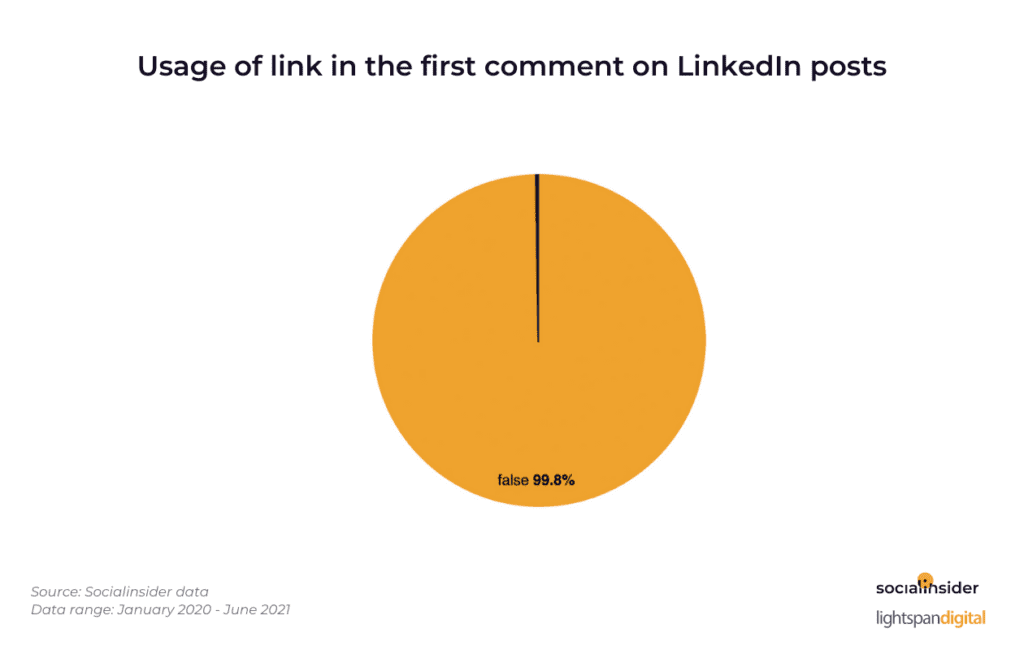
99.8% of companies that use LinkedIn for business don’t usually place links in comments.

To note, based on an analysis of 86,504 LinkedIn posts from a total of 883 LinkedIn pages, brands on LinkedIn usually don’t place links in comments. Most brands are using scheduling tools that limit their options to add links in comments.

companies don't post links in content on linkedin

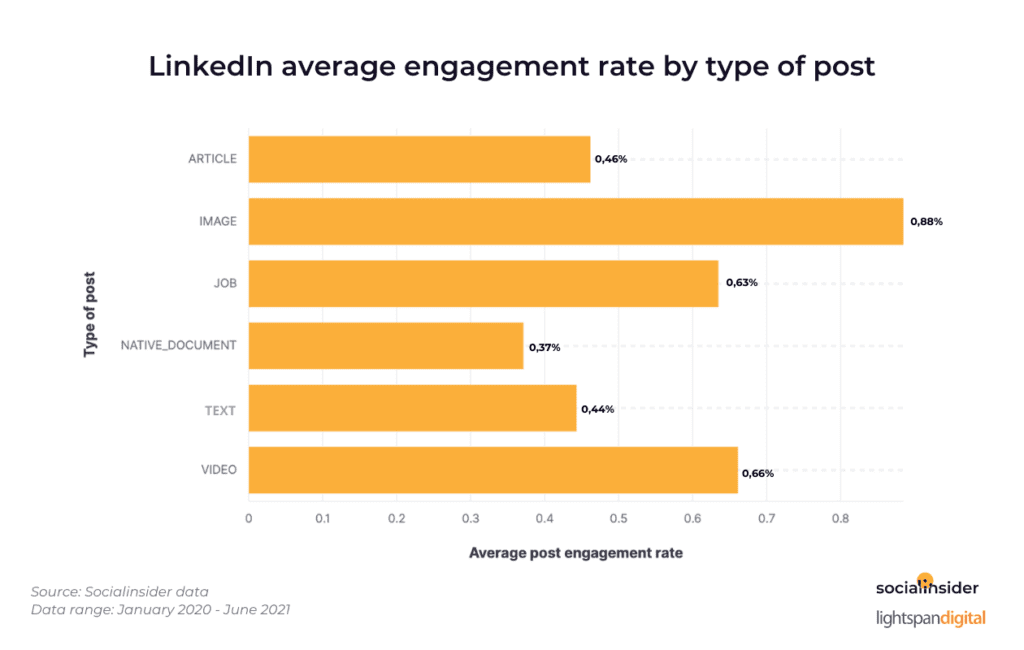
The top-performing content on LinkedIn is the image post, with a 0.45% engagement rate per post.

The most common type of business content on LinkedIn is an image with an engagement rate per post of 0.45%. Simply adding just text with no link, video, or link doesn’t increase your chances of getting higher engagement from your content on LinkedIn.

engagement rate by type of content on LinkedIn

Methodology

Socialinsider tapped into their database to evaluate more than 86,504 LinkedIn posts from a total of 883 LinkedIn pages that had an active presence on LinkedIn between January 2020 and June 2021. During that period, these pages had LinkedIn follower counts between 100 and over 100K.

For the purposes of the study, we define engagement as the measurable interaction on LinkedIn posts, including likes, comments, and shares. The engagement rate is calculated based on the total of these interactions per post, divided by the total follower count.

The LinkedIn data was also analysed based on page size, defined as the total number of followers that liked the business page.

We used Socialinsider to find out the engagement rates, the type of posts, and the link placement in the post.

Below are the categories of LinkedIn posts analysed in this case study:

  • Article – represents content that links to an article
  • Image – represents content that contains images
  • Job – represents content that contains jobs
  • Native document (PDF) – represents file types (most of the time, these are PDFs) uploaded natively. LinkedIn allows you to create posts that contain documents.
  • Text – represents content that does not contain any media
  • Video – represents content that contains videos

Conclusion

While it’s impossible to decode social network algorithms, especially since many have AI components built-in, these insights are worth exploring.

While the original hypothesis had to do with links in posts, the finding that image posts get the most engagement is beneficial and easy for you to test out on your audiences. And it may have nothing to do with the algorithm but rather with our visual human nature.

I believe that empathy is the good marketer’s superpower. Powerful content is content that gives the people what they want, how they want it, and where they want it. Algorithms are typically designed to give people what they want so they continue using that social network. If you can figure out how to give YOUR people what they want, you won’t have to worry about the algorithm. 

Sourced from lightspandigital

By Bernard May

Contribute to society, improve people’s lives, provide the next groundbreaking solution — these may be our true end goals, but we need our businesses to grow and flourish in order to make these happen.

Enter the seemingly never-ending effort to tone up our websites so they fuel excitement and inspire as many people as possible to connect, purchase or fill out our enticing site form for some free goods.

If you’re anything like me, you’ve heard thousands of ideas that “experts” promise will turn the tide when it comes to converting website leads: more content, less content, delete old blogs, refresh old blogs, add videos, add social proof and the list goes on and on.

I 100% understand the frustration. And as the CEO of a marketing agency, I will also be the first to tell you there is no single strategy that works for every website. But every website does need a strategy.

To uncover what custom strategy will work for your site, in particular, we need to find out why your current site isn’t driving leads. So, let’s dive into five of the most common reasons conversions often fall flat and what you can do about it.

You don’t have any goals.

Every page on your website needs a goal. Whatever the goal is — clicking a product link, watching a video testimonial or just filling out a form — create your page with this in mind.

I have seen hundreds of websites that either had no clear “next step” actions for customers, or worse, too many (confusing) actions from which to choose. Both are more than likely going to eliminate the possibility that your next visitor will convert into a lead.

For example, if you know that a higher number of customers become a valid lead (or buy your product) after watching your product video, then focus on that goal for the page in question. Whatever it is, establish a goal for your page and build everything to support that goal — everything else is fluff.

I know, we all get excited and want to get everything we can think of on the page, but start with your goals and work backward.

Visitors have no idea what you do.

Does your website say what you do, loud and proud, in the most basic terms? All too often, I see businesses that are so laser-focused on sounding different that the core of what they do falls by the wayside.

For example: “We drive business intelligence solutions for best-in-class e-commerce impact!” Um, what? Are you in marketing, finance, software or something else? As a business, if what you actually do or provide is confusing, chances are leads are not going to scour your site to find out.

From the second a customer lands on your website, they need to know what you do or at least be enticed to scroll down and learn more. So, if you are a service provider, say it. You offer a product? Show it — loud and clear.

Your site speed is just too slow.

As the saying goes in the culinary world, “We eat with our eyes first,” and the same is true for your website. So, if your website is slow to load or slow to interact with, this can (and most likely will) tank the perception of your brand and what it has to offer.

When it comes to almost anything online, we all crave instant gratification. That being said, take the time to ensure anything that’s slowing down your site (i.e., images, videos or even website plugins) is optimized accordingly.

Any milliseconds you can shave off of loading and interaction times increase the likelihood that your next visitor will turn into a viable lead. If you want to see what your load speeds are and how you can optimize, try using Google’s Lighthouse plugin for Chrome.

Prospects don’t trust you.

Trust is something that needs to be earned, and in the online space, you need to earn it fast. But how? In a word: proof.

Making bold claims and using spicy taglines are only going to get customers to the front door. It’s your job to kick it in for them. Can you feature any awards, certifications or endorsements? What about media spots, written reviews or video testimonials? In short, can you crank up the dial and give them some solid social proof?

Don’t get me wrong, case studies and data are great, but even adding a single quote from one of your clients is going to move the trust needle several times over.

Social proof from those outside the walls of your business is the greatest trust-building content you can provide to your site visitors, so don’t be afraid to lay it on thick.

You never asked.

Question: What do you want visitors to do on your website — download your how-to guide? Add your product to their cart? Okay, now a follow-up question: Are you asking them to take that action?

One of the first rules in sales is… ask for the sale!

Not sure what to ask? Well, what was the goal you created for this page? This should be directly tied into your “ask.” If your goal is to get the visitor to fill out your form in exchange for your free strategy guide, ask for this on your page.

“Ready to see how to leverage your business intelligence for 5X better ROI? Complete this form for instant access.” Never assume anything, and be willing to ask for what you want.

As with everything “lead gen,” it comes down to putting yourself in the shoes of your customers. Focus on giving them what they want rather than what you think they need. Be ready to test, evaluate and adapt to these wants on a regular basis.

Feature Image Credit: Getty

By Bernard May

Bernard May is the CEO of National Positions, a 5-time Inc. 500 company, award-winning marketing agency and Google Premier Partner. Read Bernard May’s full executive profile here. 

Follow me on Twitter or LinkedIn. Check out my website.

Sourced from Forbes

By Gargi Ghosal

If you’re looking to learn or brush up on your SEO skills, here are the six best websites you can use.

With everything now online, content marketing has become critical. Just having great content is no longer enough if you can’t back it up with robust SEO strategies when you publish something.

For instance, even social media marketing relies heavily on the right use of SEO. That’s because when SEO best practices are followed, the quality and quantity of traffic received by a website or a webpage increase tremendously.

If you’re interested in becoming an SEO specialist, there’s no better time than now. Here are the best websites to help you learn and master your SEO game.

1. Google Analytics Academy

Google is the most popular search engine today. Therefore, it makes sense to learn how to optimize searches for Google and do so at Google’s own Analytics Academy. Here, you can improve your SEO and analytics skills using free online courses provided by Google.

You can get started by learning all about Google’s measurement tools to unlock deeper insights. These tools will come in handy while creating smarter ad campaigns. In addition to being an authority on SEO, Google Analytics Academy’s Analytics IQ Exam is an industry-recognized qualification.

To prepare for this certification exam, you must complete the Google Analytics for Beginners and Advanced Google Analytics courses. Moreover, you can access its mini-courses on YouTube, and fall back on the blog for additional reading material, best practices, and industry trends.

2. HubSpot Academy

With HubSpot being an international leader in the domains of marketing and sales, HubSpot Academy is a good place to learn everything you need to know about SEO. Here, you’ll get to choose from comprehensive certifications, methodology training programs, and quick, practical courses that are 100 percent free and online.

What’s more, you’ll get unlimited access to these courses, so you can look them up anytime. Perfect for marketers, content creators, and anyone who’s willing to ace their SEO game, HubSpot Academy’s certification courses cover website optimization, link building, keyword research, and all other related topics.

You can always view the Course Curriculum before choosing a course. Besides, every course has video lectures, quizzes, exercises, and lesson plans, thus ensuring an interactive learning experience.

3. LinkedIn Learning

With free access to over 16,000+ courses led by industry experts, LinkedIn Learning helps you take your skills to the next level. You can access LinkedIn Learning’s expansive education material on SEO in the form of standalone online courses, or pre-defined learning paths.

While the courses cover specific topics, the learning paths give you a complete and structured learning experience on becoming an SEO expert or a master of Digital Marketing. From essential SEO techniques to marketing tools, the learning paths on SEO cover everything you require to achieve maximum visibility on search engines.

You can even access exercise files to apply your new SEO skills and on completion of each course, you’d stand the chance of earning a certificate or badge.

Leveraging the fundamentals of SEO is a skill, and LinkedIn Learning helps you master that skill. You can learn how to conduct keyword research, build internal and external links, plan a long-term strategy, implement foundational optimization strategies and techniques, and do much more.

4. Wordtracker Academy

Wordtracker Academy is best known for its keyword tool that boosts search engine rankings while helping online marketers discover profitable new market niches. Trusted by SEO professionals, Wordtracker gives you an edge and helps you generate more targeted traffic.

However, that’s not all Wordtracker is known for. Wordtracker Academy has specialist guides on seven categories, namely, keyword research, SEO, website, marketing, Google, social media marketing, and content.

With Wordtracker Academy, you can get started with fundamental analytics such as site optimization and page optimization, or learn advanced techniques to improve your online presence.

No matter where your interest lies, you need no prior experience to get started, and Wordtracker’s 28 specialist guides can help you upgrade your SEO skills in no time.

5. Moz

Being a dedicated SEO platform known for its SEO marketing software and the largest community of SEO experts, Moz Academy’s courses are popular and trusted globally. It has a wide range of training courses available, and you can find them in the Course Catalog.

To search for a suitable course, you can start by choosing your level of difficulty, preferred SEO topic, and type of course. Moz Academy has three types of courses for you to choose from.

While a Series covers multiple courses and is similar to a learning path elsewhere, Certifications are learning paths with valid certifications. If that wasn’t enough, the site has another type where you can level up in 90 minutes or less.

Moreover, the Moz Blog is a useful resource on search engine optimization, its best practices, and the latest trends. It helps you keep up with the ever-evolving trends of the SEO industry so that you’re always ahead of the curve.

6. Semrush

Trusted by the world’s leading brands, Semrush is known for its award-winning toolkits and SEO suite that helps industry professionals check website traffic, improve rankings, and perfect their digital marketing game. That’s not all.

What makes Semrush special is its incredibly useful resources on SEO. From downloadable guides and Ebooks to educational webinars and case-based podcasts, Semrush has all you need to improve your SEO skills and broaden your scope. Besides, Semrush’s Academy lets you acquire vital skills with top-notch experts from the field.

Watch the lessons, explore additional reading material, get practical tips, and take quizzes to complete a course and get certified. The best part is all these resources, courses, and certification exams are completely free as long as you’re a registered Semrush user.

Up Your SEO Game at Your Own Pace

The best thing about all these sites is you can learn SEO and improve your digital marketing skills at your own pace. Most of the courses on these sites are 100 percent free and can be accessed whenever, wherever. Moreover, you don’t need to have any prior experience to start your journey and become an SEO specialist.

While courses, video lectures, and certifications train specific skillsets and bring you acclaim in your field, the blogs, podcasts, and webinars keep you up to date with the latest industry trends and SEO best practices.

By Gargi Ghosal

Sourced from MUO


By Shalom Kamau

The increase in social media and digital technologies has led digital marketing to become the most in-demand form of advertising. It is easier to reach a larger audience and have a higher return on investment (ROI) within a short period in the digital marketing field.

For this reason, more people are interested in becoming digital marketers. This guide covers all the necessary steps you need to launch a career in digital marketing as well as similar jobs you can pursue. Read on to discover more and learn how to become a digital marketer in 2021.

What Is a Digital Marketer?

A digital marketer is a marketing expert in charge of using digital technologies to reach customers online. Their primary role is to ensure clients receive widespread recognition on digital channels, which in turn generates higher sales. Digital marketers must be conversant with most, if not all, of the digital marketing tools currently available.

Some of these tools include social media, email marketing, search engine optimization (SEO), content marketing, and mobile marketing. It is essential to understand these powerful tools as you begin your career path to becoming a digital marketer.

Digital Marketer Job Description

In short, your primary role is to act as a bridge between a company and its customers. Digital marketers perform several duties, from creating and uploading content to strategizing ways of enhancing search engine rankings. You will be in charge of the client’s online platforms, such as the company website, Instagram page, or blog content.

You will plan and strategize ways to engage with customers and keep them interested in your client’s brand or product. You will also likely manage Google Analytics and other SEO tools, enhancing the company’s online presence through posting images, videos, and written content.

Digital Marketer Salary and Job Outlook

The Bureau of Labour Statistics (BLS) indicates a six percent job growth for advertising and marketing jobs between 2019 and 2029, which is faster than average. The fast job growth can also be attributed to the lucrative annual salary. The BLS also reports that marketing management professionals earn $141,490 per year.

PayScale offers a more specific salary outlook. According to its official report, digital marketing specialists earn an average salary of $50,380. However, this can go up to $62,767 for experienced digital marketers. If you enter a digital marketing management position, your salary can double. This means you should enter the field as soon as possible.

Top Reasons to Become a Digital Marketer in 2021

Besides the job security and high salaries, there are many different reasons to become a digital marketer. This field is both fulfilling and full of variety. Below are more reasons why pursuing a digital marketing career in 2021 is worth it.

  • Job outlook. Digital marketers have a great projected job outlook for the rest of the decade. The six percent growth rate projected by BLS emphasizes job security in the industry for an extended period.
  • Flexibility. Apart from extensive job opportunities, you also have the freedom to work in any industry. Digital marketing professionals can work in retail, fashion, entertainment, education, technology, or sports.
  •  Lucrative salaries. The digital marketing industry pays its workers well. You can receive a median salary of $50,000 and above, depending on your skill level. In addition, most digital marketers have the freedom to work as freelancers, which is a great way to make extra income.
  • Creative outlet. If you’re a creative person, working as a digital marketer is a dream come true. There are always opportunities for you to think outside the box and develop ways to make a marketing campaign stand out.

Digital Marketer Job Requirements

Although penetrating the digital marketing industry isn’t as challenging, you still need to meet specific criteria as a digital marketer. Employers are open to employing individuals who meet the following requirements.

  • A bachelor’s degree. Employers look for candidates with a Bachelor’s Degree in Marketing or a related field. However, an Associate Degree in Marketing is still enough to get you a job as a digital marketer.
  • Digital marketing tools. You must be familiar with several digital marketing tools. Tools like social media, email marketing, and search engines play a significant role in the success of digital marketing campaigns. In addition, you need to understand how Google Ads works, perform numbers analysis, and keep up with the current trends.
  • Experience. On average, employers look for candidates who have worked for two or more years in the digital marketing industry. However, this doesn’t mean beginners are out of luck. You can launch your career by applying for entry-level digital marketing jobs to gain more experience.
  • Problem-solving skills. Like every other industry, problems and emergencies occur in digital marketing. Therefore, you need to be a fast thinker and always come up with suitable solutions for any problem.

Types of Digital Marketing Careers

As mentioned above, digital marketers can work in any industry. You can also branch into different career paths under digital marketing. Whether you want to become an SEO expert or a digital marketing manager, your roles contribute to the business’s success. Below are some of the most popular digital marketing careers.

Search Engine Optimization (SEO) Specialist

An SEO specialist ensures a website ranks highly on several search engines like Google, Bing, and Yahoo. You will delve into keyword research to ensure each article aligns with current common search terms. Your primary role is to increase website traffic by making sure your website activity generates leads.

Social Media Manager

A social media manager oversees a client’s social media platforms. You will be responsible for creating and posting content, responding to customer comments and queries, and monitoring engagement data. Moreover, you need to be up-to-date with current trends to ensure your client’s products align with contemporary markets.

Marketing Coordinator

A marketing coordinator is in charge of content marketing strategy for all marketing channels. You will also lead the marketing team in the day-to-day activities of the marketing department. These activities include tracking product performance, monitoring customer engagement, or drafting performance reports for clients.

Digital Marketer Meaning: What Does a Digital Marketer Do?

As mentioned earlier, a digital marketer acts as a bridge between the company and its customers on all digital platforms. Digital marketers wear many hats and therefore need to have many different skills. Read below to learn more about the responsibilities that digital marketers have.

Conducts Inbound Marketing

Inbound marketing is one of the best ways to enhance a company’s website traffic. It involves marketing strategies that redirect user attention to your site. You will create and distribute content through link building, content marketing, and search engine optimization.

Tracks Social Media

As a digital marketer, you will manage one or more social media pages. Your role is to enhance the client’s social media presence by posting regular content and engaging with the customers. You will also gather analytics, conduct pay-per-click (PPC) marketing, and write performance reports.

Communicates with Customers

Digital marketers are in charge of developing and maintaining relationships between the company and customers while increasing brand awareness. Digital marketers need to ensure that all content being produced and published online is in line with the brand’s image.

Essential Digital Marketer Skills

Digital marketing can be applied to any industry, meaning professionals need a variety of unique skills. Almost all businesses in 2021 have a digital marketing presence, and there are many jobs out there that require different skills and tools. Most employers look for the following skills in all potential employees.

SEO and SEM

Search engine optimization and management skills help you bring traffic to your client’s website. Therefore, you must know how to research keywords, analyze performances, and keep up with the analytics. This is arguably the most important part of digital marketing because it helps clients or customers find your business or organization.

Pay-Per-Click (PPC) and Social Media marketing

You should learn how pay-per-click marketing works and use marketing channels like Google Ads and sponsored posts. Understanding trends will help a brand’s social media stay relevant. You should be familiar with Instagram, Facebook, LinkedIn, and any other relevant platforms to the industry.

Storytelling

Whether visual or written, your posts, blogs, and images must tell a story. You should have the ability to make ideas flow in a way that any reader can understand and that adheres to your company’s brand. Communication is a vital part of digital marketing.

How Long Does It Take to Become a Digital Marketer?

It takes anywhere between six months to four years to become a digital marketer. You have the freedom to pursue various learning paths, including community college, bootcamp, university, or online courses. Therefore, depending on your learning path, the time frame will differ.

Can a Coding Bootcamp Help Me Become a Digital Marketer?

Yes, coding bootcamps offer short-term digital marketing courses for beginners and experienced professionals. You can learn various digital marketing fundamentals, such as advertising, PPC marketing, content strategies, email marketing, SEO, and marketing budgets at one of the best digital marketing bootcamps in 2021.

Can I Become a Digital Marketer from Home?

Yes, thanks to modern technology, it is possible to become a digital marketer from home. You can register for an online course, pursue an online degree, or join an online coding bootcamp remotely. All you need is a reliable Internet connection and a working computer.

How to Become a Digital Marketer: A Step-by-Step Guide

Becoming a digital marketer involves a straightforward process of getting an education, gaining experience, and finding a job in the industry. Below is an overview of how to become a digital marketer in 2021.

Step 1: Get an Education

Like all other careers, it is essential to get an education before launching your career. You can join a digital marketing bootcamp or any other educational institution. If you can, take this time to find a specialty within the industry.

Step 2: Gain Experience

You can gain experience by finding an internship or an entry-level job. You will gain hands-on experience in the field and develop the skills to flourish as a digital marketer. You can also take the initiative to create a personal portfolio of mock marketing or social media campaigns.

Step 3: Find a Job

After you gain enough work experience, find a career in the industry. For example, you can work as an SEO specialist, digital marketing manager, or email marketing manager. There are many different specialties within this field, so find one that works for you and your career goals.

Best Schools and Education for a Digital Marketer Career

There are several learning paths for a digital marketer. Some are long-term, while others only take a few months to complete. Below are the best schools for anyone pursuing a digital marketing career.

Digital Marketing Bootcamps

Digital marketing boot camps are short-term programs with a curriculum that focuses on the fundamentals of the industry. Most boot camps provide career services like resume reviews and mock interviews, and many boot camps partner with companies to ensure you receive job placement upon graduation.

Vocational Schools

Vocational schools focus on the technical aspects of digital marketing. You will receive hands-on training on using analytics tools like Google Adwords, social media networks, affiliate marketing, and other digital marketing concepts.

Community College

You can pursue a two-year associate degree at a community college. The education path is not equivalent to a bachelor’s degree, but most associate degree holders are eligible for entry-level positions. You can also transfer your credits over to a bachelor’s degree if you want.

Digital Marketing Degrees

A bachelor’s degree is enough for you to launch a lucrative career in the industry. However, after the four-year degree program, you have the opportunity to pursue a master’s degree or even a PhD. You should research the best online degrees before you decide which one to pursue.

The Most Important Digital Marketing Certifications

Certifications are essential for any career path. You solidify your authenticity as a digital marketer and gain the upper hand when it comes to attracting clients. Below are three of the best professional certifications for digital marketers.

Google Ads Certification

This is a free certification program that tests your knowledge of Google Ads. You will explore basic and advanced knowledge before completing a Google Ads Fundamentals assessment. You can choose from a few different Google Ads certifications depending on your career goals and where you are in your journey.

Hubspot Inbound Marketing Certification

This program focuses on the fundamentals of inbound marketing. It is a free four-hour Hubspot Academy course that teaches you everything you need to know to become a digital marketer. If you want to learn inbound marketing techniques, this certification program is the perfect choice for you.

Copyblogger Certified Content Marketer

The Copyblogger program is one of the best content marketing certifications courses. It is self-paced coursework that costs $495 on Copyblogger. Once done, you become listed in the Certified Content Marketer directory and have a certification for your resume and LinkedIn profile.

How to Prepare for Your Digital Marketer Job Interview

A job interview is a significant part of the job search process. You should research the company, find out about their products, prepare your cover letter, and practice mock interviews more than once. Remember to stay positive and always exude confidence when responding to questions. Practicing questions is the best way to prepare for your job interview.

Digital Marketer Job Interview Practice Questions

  • Why do you want to pursue a digital marketing career?
  • Which digital marketing tools do you use?
  • How will you enhance our company’s online presence?
  • What strategies would you implement to raise awareness for our company?

Should I Become a Digital Marketer in 2021?

Yes, digital marketing is a fast-growing industry with many opportunities. You get to explore your creativity, work in a fun environment, and network with a diverse team. Furthermore, you can earn a lucrative salary with many opportunities to move up in the field. If you want to work with digital content, social media, and SEO, you should become a digital marketer.

Digital Marketer FAQ

Can You Become a Digital Marketer Without a Degree?

Yes, you can enrol in a digital marketing boot camp or pursue any digital marketing online course on massive open online course (MOOC) platforms.

Is It Hard to Become a Digital Marketer?

No. Digital marketing is a flexible field and accommodates people with little to no experience. However, you need to be motivated and ready to work hard.

Is Digital Marketing Worth It?

Yes, digital marketing is worth it. The industry has an impressive job growth rate of six percent, according to the Bureau of Labour Statistics, which guarantees job security. Even better, it can be an exciting career where no day is the same.

How Many Years Does It Take to Become a Digital Marketer?

A digital marketing career takes a few months to four years to start, depending on your learning path. You can attend a digital marketing boot camp for two to six months, a community college program for two years, or a university degree program for four years.

By Shalom Kamau

Sourced from Career Karma

Sourced from Inc.

It’s not “if” TikTok has potential as a business platform; it’s when your company will decide to leverage it.

Roger Patterson is an EO Vancouver member and the founder and CEO of visual marketing platform Later, and co-founder of accelerator Launch Academy. We asked him about the business case for TikTok. Here’s what he shared.

My first impression of TikTok was typical for a Gen Xer: The platform seemed like a hub for tweens to flaunt dance moves and indulge in pre-adolescent narcissism. But after participating in a company hack week where the mission was to build an integration with TikTok, my eyes opened to its possibilities as a serious business tool.

With more than a billion monthly active users globally, TikTok has become the fastest-growing social media platform of the decade–but with 63 percent of its users under the age of 30, executives are quick to disregard it.

And while increased screen time among the under-15 demographic during the pandemic contributed to its growth, the platform is more than short-form dance videos–it’s the next generation of content creation.

With its suggestive algorithm, musical navigation and brilliant editing tools, TikTok has mastered compelling, short-form video as a service in a way legacy platforms like YouTube and Instagram have not. The latter may have secured more placement in marketing budgets for now, but TikTok as a legitimate new content channel is forcing brands to re-evaluate how they engage consumers.

If you’re a Gen Xer, Boomer or traditionalist doubting TikTok;s business ROI, here are three reasons you should reconsider:

Branded Entertainment Has Become a Must-Have

First and foremost, TikTok is about entertaining its users. Entertainment has become a new form of brand currency, and it’s a must-have. Social media influences 71 percent of consumer buying decisions–and that funnel starts with interest and awareness. Millennials and Gen Z in the US alone have a combined $350 billion of buying power, and they’re also turning to mobile video as a primary source of entertainment.

Brands need to start thinking of entertainment as a service–a way to add value to consumers first and establish a relationship before moving to transaction.

Importantly, entertaining content doesn’t need to exclusively be a frivolous distraction. Done right, TikTok videos can be a gateway to brand education, tying to a brand’s mission or higher purpose in more creative and authentic ways.

Early Adopters are Rewarded with Influence 

Just as Snapchat graduated from the exchange of ephemeral photos to include video, stories and chat–a formula brands quickly acclimatized to–TikTok is showing signs of breaking out of its Gen-Z niche. The platform just launched a TikTok Resumes pilot program and a new Shopify partnership to support social commerce. Recently, Vimeo integrated with TikTok Business: The first video creation platform to do so.

While the platform’s expansion into more mature markets is inevitable, research shows those who get in early have a distinct advantage–higher social status, increased customer loyalty and influence–over competitors who are left playing catch up. Not to mention, building an authentic community on any social platform takes time.

Retail giants including Walmart and Amazon are already diving in head first, securing their position on the platform, as other brands figure out how to embrace the new kid on the social media block. The Washington Post, for example, may not seem a likely brand for TikTok success. However, the legacy publication was an early adopter, turning its news into funny, bite-sized videos that appeal to an entirely different audience than its print or web presence. The reward for its efforts: 40.9 million likes.

Connectivity is the New Word of Mouth

In January, TikTok star Barbara Kristoffersen posted a video of herself wearing a vintage Gap hoodie in brown, a colour the retail giant hadn’t produced since the 2000s. The post went viral, garnering more than 6 million views. By February, retro Gap hoodies were a common sight on style influencers across all platforms. Just a few months later, Gap was taking preorders for a reissue of the iconic pullover sweatshirt.

The fact is, social connectivity is the new word of mouth. And Gen Z’s status as the most socially connected generation of all time can’t be ignored. These are the consumers most likely to be talking, sharing and posting about your brand.

Hesitations some have about social media in general, and TikTok in particular, are legitimate. Between privacy issues, concerns about spyware and misinformation bubbles that just can’t seem to be popped, the internet can feel like a scary place. But ultimately, at its best, social media allows people to connect around shared interests and businesses to relate to their customers in a more direct way–through conversation, not broadcast.

TikTok may be whimsical and fast-changing, but it’s not going anywhere anytime soon. Much like the social media platforms that came before (Facebook started for university students, and is now a key player in the $48 billion social commerce market) TikTok will eventually grow up, expand its demographics and monetize in new ways.

It isn’t a question of if TikTok has business potential; it’s whether Gen X wants to lead the way in harnessing it, or follow.

Feature Image Credit: Alamy. Illustration: Inc. Magazine

Sourced from Inc.

Sourced from allkpop

With the advancement of technology, AI influencers and virtual human models are becoming the new trend. It has recently emerged as a blue-chip in the advertising industry because there are no privacy scandals and there are no time-space restrictions with these virtual humans. In particular, the use of virtual humans seems to be gaining more momentum in the COVID-19 pandemic, where there are many restrictions on travel and limitations on the number of people gathering.

On September 10, Baek Seung Yeop, CEO of Sidus Studio X that created ‘Rozy,’ the newly rising blue-chip in the advertisement industry, explained, “These days, celebrities are sometimes withdrawn from dramas that they have been filming because of school violence scandals or bullying controversies. However, virtual humans have zero scandals to worry about.” 

‘Rozy’ is a virtual human that was created Sidus Studio X last year in August. Her age will forever be 22, and she has been keeping an active presence online as a real human since December of last year. In particular, this virtual human began gaining much attention as she appeared in an advertisement for Shinhan Life in July.

According to CEO Baek Seung Yeop, Rozy currently has advertising contracts with companies and a significant amount of sponsorships. CEO Baek said, “We have advertised twice already this week alone and now we have eight exclusive contracts,” and continued to explain, “She has landed more than 100 sponsorships now, but we have not been able to process them yet.

He then added, “We have achieved our goal profit now, and I think Rozy will be able to make more than 1 billion KRW (~$854,007) by the end of this year.”

In regards to Rozy’s visual, CEO Baek explained, “We didn’t use a specific person as the model to her look. The MZ generation does not like to hide their flaws nor reveal their flaws. We didn’t take western beauty as the beauty standard either.”

CEO Baek Seung Yeop also shared Rozy’s future plans. He explained that the company plans to expand Rozy’s scope of activities, moving on to movies, dramas, and entertainment shows.

As CEO Baek said, the reason for the popularity of virtual humans is that there is no fear that advertisements will be suspended due to unsavoury privacy scandals after the AI model is selected as the advertising model. In addition, the location and scene can be created through computer graphics, so the virtual model is not limited in time and space, and unlike real people. The other advantage is that period in which the model can be active is very long or eternal because the virtual human doesn’t get sick or grow old.

Sourced from allkpop

By Chris Walton

On stage at Shoptalk 2019, Shoptalk Founder and then CEO Anil Aggarwal remarked that it is human nature to overestimate the change that should happen in the short-term and to underestimate the change that will happen over the long-term, say over 10 years or more.

And this article is all about the risks associated with the latter.

Make no mistake — the pandemic arrived in 2020 like a bat out of hell, bringing with it a flurry of in-the-moment and much needed innovation across nearly every industry and especially retail. The pace of technological innovation, as has been stated ad nauseam, likely jumped ahead three to five years in just 2020 alone.

Ideas that were once fun to talk about at parties — things like curbside pickup, Instacart deliveries, and social commerce — suddenly became a de rigueur means of survival for nearly every retailer in some form or fashion.

But, that was also the easy stuff.

While the pace of innovation accelerated under COVID-19, the tea leaves were all there on these innovations before the outbreak began. Smart retailers, like the Amazon AMZN -3.1%s, the Target TGT -1.8%s, the Walmarts WMT -1.4%, the Albertsons, and the Best Buys BBY -2.7% of the world had all been experimenting with many of these very same ideas for the past decade, say nothing of the click-and-collect activity that had already been happening overseas in Europe, too. But, say what one will, it took a pandemic to spur nearly all of them into action, and many retailers, like Macy’s M -1.6%, for example, are still paying the price for being slow to move.

All of which begs the question, going back to Aggarwal’s point above, if these trends were missed by so many, then what trends still lie around the corner 10 years from now that retailers could soon miss again?

What follows is a list of the potential blindspots on the horizon, and, while some of them may seem outlandish and out there, remember it is also human nature to overestimate just how far off they all might actually be.

Trend #1 — Delivery Speed Disintermediation

The arrival of many upstart delivery companies, companies like Buyk, GoPuff, and Gorillas, all promising delivery in 30 minutes or less, is a harbinger of one very important point — namely, that speed of delivery matters.

Amazon owns the majority of U.S. consumer mindshare when it comes to quick, reliable delivery, but even Amazon hasn’t gone so far as say Gorillas, which promises delivery in 10 minutes or less.

And, more importantly, even though Amazon is number one in mindshare, who is number two?

No one, at least not right now anyway.

But this is the territory to which everyone, from Instacart to DoorDash to the companies just mentioned above, is trying to stake a claim.

The approach to the problem is two-fold: 1) build out the hard infrastructure as a retailer to occupy this space (the approach of GoPuff, for example) or 2) Try to claim it by becoming a marketplace that specializes in “get-it-quick” delivery through an assortment of various lightweight crowdsourced or “gig” options (i.e. the approach of DoorDash and Instacart).

The first path is a difficult and much more treacherous way to reach the summit, while the second path is just a stone’s throw away from your garden variety retailers — your Bed Bath BBBY -2.2% and Beyonds, your CVSs, your Sephoras, or even your local Kroger KR -1.3% grocery stores — continuing to leverage Instacart or DoorDash for third party delivery, thereby enabling DoorDash or Instacart to reverse engineer their way into the hearts and minds of American consumers (if they haven’t already).

The day is coming when Amazon and “another” will emerge to stand atop the quick delivery mountain. The only question that remains is how quickly will the retailers of yesteryear allow tomorrow to happen, while the hard infrastructure types die trying on the backs of billions of dollars in VC funding.

Because the prize of being the number two option is just that large.

Trend #2 — Checkout-Free Stores

The most glaringly obvious example of something that stands to disrupt retail radically over the next 10 years is Amazon Go AMZN -3.1%, and yet so few retailers have paid the concept the attention that it deserves.

Powered by artificial intelligence computer vision (or AICV, for short), Amazon Go lets consumers walk into a store, take whatever they want off the shelves, and “just walk out” and pay in a manner similar to how one pays for an Uber UBER +0.1% or a Lyf LYFT -2%t.

The experience is great. It means no more standing in lines . . . ever.

Amazon debuted its Amazon Go concept in 2018. The first store was approximately 3,000 square feet. Two years later it expanded the concept to around 10,000 square feet, and then in 2021 it opened up a full scale 20,000 square foot plus grocery store experience, called Amazon Fresh AMZN -3.1%.

In that same period of time, none of the big guys — not Target, not Walmart, not Kroger — have even debuted one public facing experiment with the technology. Whether hubris or downright negligence, this lack of activity is downright laughable.

Because there will come a day soon (my prediction = 5 years or less) when Amazon figures out the technology across every category of product out there, and when it does, U.S. retail will never be the same again.

Trend #3 — Real-Time In-Store Pricing and Promotions

When it comes to in-store pricing, most retailers are like Stonehenge.

Week after week, they print hundreds if not thousands of physical signs for various promotions and assign payroll weeks in advance to put these signs on shelves, only to find out minutes later that they have already been obsoleted by aggressive pricing online or, worse, just fallen off the shelves entirely because little Timmy came by and knocked them all off while shopping for groceries with his mother.

If the above Amazon Go diatribe didn’t scare the pants of the grocery industry, this last point sure as hell should.

Amazon Fresh’s “Just Walk Out” technology is cool, but what’s even cooler over the long-term is Amazon’s use of electronic shelf labels within its Amazon Fresh stores because they mean that Amazon never needs to schedule another print job, another hour of labour, or pick another sign up off the floor ever again.

No, instead, Amazon can price the products in its grocery stores in real-time, at all times, from a centralized location, and that means a whole hell of a lot of bad news for the grocery industry on the promotions front.

It means the world will soon see online flash sales meet in-store grocery shopping because ideas like strategic promotions on the 1st and the 15th of the month, right when people get their pay checks, with very little advanced warning, could one day soon become a reality.

And every grocer still putting up physical signs will be powerless to stop it.

Trend #4 — Pickup-Only Warehouse Clubs

This trend is a fun little thought exercise. Ask yourself — what is Costco?

Well, essentially, it is a large bulk warehouse that asks consumers to act like warehouse pickers and last-mile delivery drivers. The only difference between it and an honest to god warehouse is the needless presence, as mentioned above, of a cashier at the end of the experience.

So, imagine, just imagine that instead of consumers doing the picking out of a large warehouse/store, automation took the place of humans and robots picked and packed orders for customers while they shopped online, and then all the customers would have to do is swing their cars through a few drive through lanes designed for pickup, similar to a Taco Bell or a McDonalds MCD -1.4%.

The seeds of this idea are already upon us, too.

Target this past year announced the creation of what it is calling “sortation centers,” i.e. mini-warehouses nearer to consumers and that also come equipped with drive through lanes for Shipt’s third-party delivery drivers.

Therefore, it isn’t much of a logic leap from the idea of a sortation centre to ask: what if customers can just drive up and pickup from these locations as well? Especially, if they are willing to buy in bulk?

In fact, “leap” probably isn’t even the right word. Something like a “baby step” feels far more appropriate. And even that may still be too small of a reference point.

Trend #5 — Asset-Lite Influencer Retailing

Finally, when one puts his or her hands together on many of the trends just mentioned, one last concept also starts to emerge, and that is the arrival of influencer-based asset-lite physical retailing.

For decades, if not centuries, merchants have ruled the roost at retail companies.

But, now? Who needs them?

The influencer has taken over the role as the authority on what people can and should be buying. Which begs the question — why not buy directly from the influencer?

In the online world, it is easy to see how this emerges. Livestreaming, Instagram shopping, etc. all bring this to life, but in the physical world, creating a direct connection like this between the celebrity influencer and one’s fans has almost always necessitated some type of retail partnership because the capital costs of opening up physical stores is too arduous to undertake on one’s own.

Not anymore.

With the arrival of contactless scan-and-go shopping, physical stores will begin to work like a shop on Instagram, only the product is still visible in person but shipped to the consumer to a place of his or her choosing.

It is not unlike the glimpse Amazon gave into this world with its GH Lab experiment with Good Housekeeping back in 2018 at the Mall of America. See video below:

There one took out his or her mobile phone, scanned a barcode to buy anything that he or she liked, and was immediately ported into the Amazon app to coordinate delivery.

This example is important because it breaks down our construct of what and who a retailer is and because it shows that from whom people actually buy is far less important than from whom they think they are buying (i.e. the storefront).

Or, said another way, this is one of the reasons Toys R Us is no longer the authority on toys in America, for that title now belongs to some kid named Ryan who unboxes toys to the tune of $30 million per year on YouTube.

And with just a few properly placed mentors to guide him along the way and the right technology at his back, who is to say Ryan couldn’t build out his very own toy empire, in a similar manner to GH Lab, one new, working capital-light store at a time.

This is the future that is coming. To underestimate it or overestimate it is every retailer’s choice.

But, then again, no one ever went out of business from being too prepared for the future.

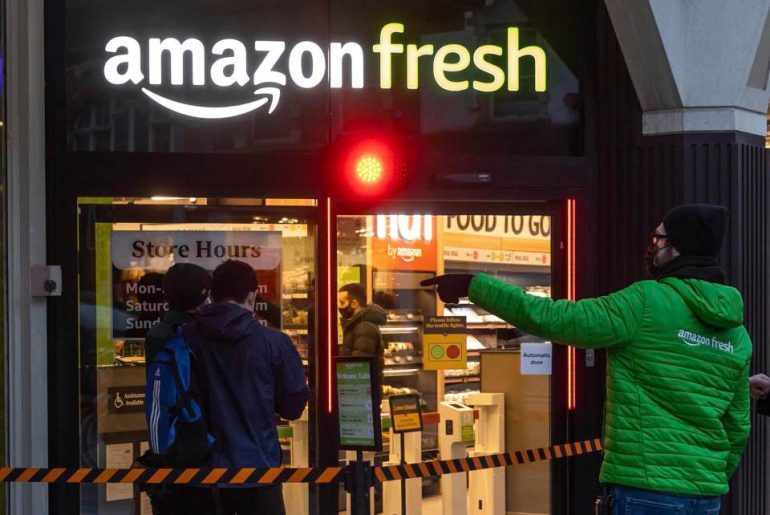
Feature Image Credit: zz/KGC-254/STAR MAX/IPx 2021 3/6/21 General views of the Amazon Fresh Grocery Store on Ealing Broadway in London on March 6, 2021. Customers must scan a digital code to gain entry, simply choose their products and walk out. Purchases are then automatically billed to their Amazon account. (London, England, UK) zz/KGC-254/STAR MAX/IPx

By Chris Walton

I am a leading expert and influencer in omnichannel retailing, with nearly 20 years of experience across nearly every discipline within retail. Currently, I am CEO and founder of Omni Talk, one of the fastest growing blogs in retail, and Third Haus, a retail technology lab and coworking space in Minneapolis. I also sit on the advisory boards of Xenia Retail and Delivery Solutions. Previously, I was the vice president of Target’s “Store of the Future” project and also the vice president of merchandising for home furnishings on Target.com. I began my retail career at Gap, Inc. and hold a BA from Stanford University and an MBA from the Harvard Business School.

Follow me on Twitter or LinkedIn. Check out my website or some of my other work here.

Sourced from Forbes

Sourced from BOSS Magazine

A social media platform like Instagram is undeniably one of the most influential platforms out there. A strong marketing strategy should include Instagram as part of it, regardless of whether you manage social media for your business or personal brand.

Approximately 500 million people were active users of Instagram stories as of January 2021. Close to 35% of the global audience is between the ages of 25 and 34, making it a popular target audience for marketers. Close to 80% of users follow at least one business. Each day, about 200 million Instagram users click on one or more business profiles. Instagram users search for products and services on Instagram 81% of the time. More than 90% of Instagram users follow businesses. Instagram has been a source of new products for 60% of customers. Considering its popularity, ease of use, and brilliant statistics, Instagram has proven to be an invaluable marketing tool for businesses that wish to expand their visibility and reach. Hence, here are 5 reasons why every brand should make use of Instagram to grow their business.

Visual content

Visual content is absorbed by the brain faster than the textual content; more than half of all information transmitted to the brain is visual. You can, therefore, create a visual representation that is suited for whatever brand product you have. Instagram is the perfect platform to share images related to your brand. This is a great way to express your brand’s identity creatively. You can make use of infographics, animations, gifs, and more as you provide value to your customers through the use of pictures and videos. Instagram Marketing can be used in a variety of ways. Here are some ways to create content for social media:

  • Use infographics to educate your customers and provide them with useful information.
  • Get to know your customers by asking them how they use your product or how it benefits them. You will gain more credibility and be more relatable to your customers if they are in the spotlight.
  • Does the process you use to develop your product seem complicated? You can post a video or photo of the entire process behind the scenes.
  • By using stories, you can stand out from the crowd and have a greater impact on your audience.
  • Establish an aesthetic style and colour scheme for your brand. Your brand’s identity will be reinforced in your feed, which will also help you gain more real Instagram followers.
  • Increases engagement

Apart from increasing brand awareness, Instagram is also a great platform for increasing engagement with your audience. A number of Instagram’s new features are available to users, including polls, Q&As, countdowns, hashtags, and quizzes. By taking advantage of any of these options, the brand can interact with the audience more personally. As an alternative, you can execute brand campaigns around special events like popular sporting events, Mother’s Day, etc., by offering giveaways, scholarships, and more. more. Instagram’s average engagement rate is much higher than that of Twitter, LinkedIn, and Facebook. Gaining Instagram likes on your photos and videos is one of the easiest ways to engage with your audience.

Unique hashtags can be used by brands to start conversations. Gaining more Instagram followers and engagement is easy with a successful Instagram contest. You should remember that in addition to marketing your products, you are trying to connect with your audience. It can be tempting to use bots to respond to comments and likes, but it lacks a personal touch. Real engagement from the brand would be necessary in order to create real customers, leads, or sales. 

Generate leads 

A consumer’s purchase decisions can be strongly influenced by social media. Through Instagram’s direct messaging feature, your audience can easily get in touch with you. With Instagram, you can easily link to your products in your posts and stories. This makes it easier for a customer to purchase your products. The content you put in your bio has become more important to generate sales. You can achieve better conversion rates by using a paid ad campaign, which allows you to reach a broader audience.

With Instagram, you can emphasize the human aspect of your brand and interact with individuals while increasing the value of your brand. Besides increasing engagement, you can access current customers and buy Instagram followers at the same time. Additionally, studies have demonstrated that the response rate of social media leads to conversions is 100 percent higher than that of outbound marketing. You can interact with your audience through every post, whether it is a blog, infographic, or video. It is a gateway for future conversions. Gaining Instagram likes and followers is a great way to prove your credibility as a source. In turn, this increases the chances of improving conversions. Partnering with a reputable influencer can also lead to increased business leads.

Wide reach/ Increases blog traffic 

Increased blog traffic is another reason why you should leverage Instagram Marketing. You can reach a large number of people using social media platforms like Instagram. Each new user who joins the platform daily can potentially become a customer. It is likely that without Instagram, your blog will only attract people who know about your brand or are already familiar with your website. Instagram helps you reach an entirely new group of prospective clients. It is an excellent way of driving traffic to your blog or website. You will gain more Instagram likes if you post regular content and engage with your audience.

You can do this by including attractive visuals in your Instagram posts. Participate in their social media activities by conversing with them. Consider conducting contests that require the contestants to visit your blog or website. You should also include a link to the blog in the post. Take advantage of Instagram Stories and share ‘behind-the-scenes’ clips that highlight the faces and personalities behind your brand.

Valuable customer insights

As a marketer, you know that you need to monitor the conversation about your brand and products on various platforms. You should monitor mentions on other platforms such as Facebook, Twitter, or blogs. However, tracking similar metrics on Instagram is just as necessary. Your business will still be discussed on this platform whether you are on the platform or not. Users could make use of it to publish pictures of products they bought or to make videos. It is important to not ignore this since it can provide valuable information.

Instagram Analytics also provides information such as how many times your story has been viewed, the age group of your audience, and which posts have gained more Instagram likes. Conduct tests and campaigns to track metrics and determine which content performs best on your platform. There are endless possibilities.

Conclusion 

Instagram is a highly popular social media platform for sharing photos and videos. You can share photos and videos through the app; use temporary stories which are available for 24 hours; use Reels, which are short-form videos that can be produced in 15 seconds; and find IGTV videos. You can even shop directly from e-commerce brands.

Instagram was designed from day one to be an application, instead of being a browser-based site like Facebook and Twitter. In addition to having a cleaner feed than Facebook, Instagram tends to be a favorite among smartphone users. It is also possible to buy Instagram followers in order to gain more Instagram followers and hence, more exposure. The reasons mentioned above should push you to include Instagram in your marketing strategy right away.

Sourced from BOSS Magazine

By Perri Richman

Achieving profitable organic growth expectations is more challenging than ever before – changing markets, customer, and shareholder expectations, new players entering the market, the pace of innovation, and the potential for brand loyalty to flip in the blink of an eye.

A McKinsey survey confirmed that 86% of senior executives know how critical innovation is to competitiveness and 80% believe their business models are threatened by disruption. Yet, less than 10% felt confident in their organization’s ability to innovate internally or use and engage partners to grow and increase the elasticity of their brands.

And we know that the barriers to corporate innovation can be endless – culture, bureaucracy, risk profile, knowledge and capability, cash flow, and the press for quarterly earnings performance, to name a few. In fact, the business history books tell many stories of companies that have grown big while investors grew more conservative, and employees became risk-averse in fear of losing jobs. Think of companies like Borders, Pan Am, Blockbuster, and our favourite department stores like Lord & Taylor and Bamberger’s.

Applying entrepreneurship principles and investing in new models with outside partners (like early-stage companies) are powerful answers to the challenge of accelerating growth and increasing brand health through innovation. Take Netflix as an example of a disruptive company that started as an online, movie-rental company that pivoted to a subscription-based, DVD-rental model and then to a streaming entertainment service. When getting the ball rolling on original content (e.g., House of Cards, Orange Is the New Black), Netflix partnered with new and established studios like Media Rights Capital. Today, the Netflix brand is known equally for streaming our favourite shows as it is for its original content.

Wait, stop! Corporate entrepreneurship?

Corporate entrepreneurship means creating new business models in an already well-established organization. While it may sound like an oxymoron, as a coined term, it’s been around since the 1970s and has been extensively studied by academics, written about in primary research, books, articles, and educational programs have been designed for undergraduates, graduates, and executives. MIT’s Wolcott & Lippitz defined corporate entrepreneurship as:

“The process by which teams within an established company conceive, foster, launch, and manage a new business that is distinct from its parent company but leverages the parent’s assets, market position, capabilities, and financial resources. It pairs external teams, early-stage companies, and research institutions with internal teams and resources to create new business models.”

Formal and informal corporate entrepreneurship can happen at the enterprise, business, functional, regional project, or individual levels depending upon the needs, goals, individuals, and the urgency to strengthen the company’s financial performance, corporate, product and employment brands, and long-term competitive position. Researchers Tseng and Tseng suggest that corporate entrepreneurship strengthens a company’s success profile (versus entering straight into a mergers-or-acquisition) by encouraging new behaviors – proactivity, risk-taking, and innovation productivity.

Current business operating realities can be headwinds

Aligning strategy, entrepreneurial-driven innovation, and business cases requires different skills, systems, and support. Doing it right requires access to new innovation, change in culture including greater transparency, and risk tolerance, rewards and incentives, a willingness to extend the brand, and a balance between new ways of working and the current way that has advanced the company thus far.

Established organizations already have fixed standards, systems, and structures in place, and striking the balance between respect for the current and passion for the future is essential. Corporate entrepreneurs, or employees with support to innovate for the benefit of the company, are often frustrated by these fixed approaches including:

Preservation of the status quo, fear and threat of change, silos and political factions, and the amount of stakeholder engagement required to move new models forward because they slow down corporate innovation and threaten competitiveness.

This is even true of arguably the most famous story of corporate entrepreneurship, breakthrough innovation, and game-changing brand building – the Post-It note. In 1968, 3M researcher, Spencer Silver, researched a durable adhesive for aircraft application. A mistake led to a new adhesive that was weaker, could stick to certain surfaces and be peeled off without leaving residue and be reused. It wasn’t until 1977 that 3M commercialized the Post-It note in 4 cities (to slow sales) and committed to educating consumers on the value of the product.

Corporate entrepreneurship and evolving a brand in line with these new behaviors are changes – and changes can be exciting, scary, frustrating, and satisfying. It requires a lot of patience and empathy, a delicate balance between respect for legacy and urgency for new. There will be confusion, inertia, and hurt relationships from opaque strategic direction and financial resources, constant pull for short-term results, and threats to incentives and compensation.

Make the individual corporate entrepreneur the hero, not the villain

At the end of the day, innovating and evolving brands within this construct largely comes down to the individual corporate entrepreneur – and a recognition that her strengths will be her individualist mindset and thought-leading approaches in corporate cultures that urge collective and unified decision-making.

Our corporate entrepreneur, Barb, will selectively temper her competence and expertise to collaborate, obtain sponsorship, and share the limelight – to varying degrees of self-satisfaction. She will build her personal leader brand and earn accolades amongst individuals and groups who believe in change. Barb will experience a hit during her annual performance review with feedback that suggests she is moving faster than the organization can handle, and she will question herself.

Barb should be celebrated as a hero, not villainized as a threat to the status quo. According to Tsang and Tsang (2019), “companies that abandon the individual when glorifying the team may not produce much entrepreneurship”. Here’s how to set Barb, and other corporate entrepreneurs like Barb, up for success:

1. Be clear with her about her level of resource authority and the organization’s expectation of how corporate entrepreneurship will operate and report. Barb can then mediate her own expectations – and as part of her own personal leader brand building, determine how much of her personal identity she must retain and what she is willing to compromise in order to get along inside of the organization.

2. Help her make choices about her approach to corporate entrepreneurship. Reflecting upon the Wolcott and Lippitz four models for corporate entrepreneurship is a place for her to start, and help her decide upon the mode that she can work within and be successful:

  • Enabler: Organization provides funding and attention to specific projects she brings forward;
  • Opportunist: Organization is not deliberate in its approach. She is to use her networks to identify opportunities and win favour for the ideas internally;
  • Producer: Organization empowers her to establish a new group and removes operating obstacles;
  • Advocate: The organization asks her to serve as an evangelist for corporate entrepreneurship and expects business units to fund activity.

3. Provide structures and systems required for her to manage and collaborate. It’s essential for Barb to manage a pipeline of new opportunities, stay up to date on the latest trends so that she can serve as that internal thought leader, evaluate new models presented by partners and early-stage companies, advance business cases through a clear decision path, consistently report results, and most importantly, collaborate and bring others along with her.

Inspire Global Ventures surveyed corporate entrepreneurs in various functions in well-established U.S. organizations and nearly all cited the lack of new structures and systems as top reasons for stopping or slowing down entrepreneurial-driven innovation particularly with outside partners and early-stage companies.

Structures include respect for hierarchy and approaches to stakeholder engagement; standard work for commercializing new innovation; decision-making and approval processes; levels and limits of authority; and stated and unstated cultural norm of acceptable actions and behaviors. Systems are technologies that manage and track engagement; create transparency and foster collaboration; provide data-driven insights; and offer standards for business cases and reporting.

4. Pair her with brand strategy and investor relations so that corporate entrepreneurship can contribute to the health and evolution of the corporate brand and employee value proposition. Barb will have new and interesting narratives and stories about company innovation that can prove invaluable to brand building and investor relations efforts. Show us a company that doesn’t have “innovative” as a brand attribute.

This will also bolster Barb’s confidence, allow her to advance other team members as part of the process, and ultimately reinforce both entrepreneurial behavior and company reputation as forward-thinking and entrepreneurial.

Stakeholders are paying attention

Tseng and Tseng (2019) assert that companies have a responsibility to their stakeholders to practice corporate entrepreneurship. A 2019 study conducted by researchers from the Universidad Carlos III de Madrid (UC3M) and the Universidad Autónoma de Barcelona (UAB) affirms that the pressure from financial analysts significantly influences public company innovation activity and increases CEOs’ incentive to invest and find more efficient ways to innovate.

And, guess what? Those more efficient ways work.

An Accenture Labs study confirmed that companies that practice corporate entrepreneurship including investing in early-stage technologies grow five times faster than those that don’t engage. Why? Because innovating outside of the four walls of the company with early-stage companies can increase speed and efficiency, and either disrupt well-established organizations or inspire them toward corporate entrepreneurship (and with scale comes a healthy return on investment).

It’s generally understood that organizations need to embrace new and breakthrough approaches to business model innovation if they want long-term prosperity. If your organization isn’t ready, perhaps exploring one of the hundreds of traditional and non-traditional academic paths available is the way to go – one even promises to “turn the 90% failure rate of corporate innovation initiatives on its head.” Though taking a good hard look in the mirror might be a more effective path.

Feature Image Credit: Reza Rostampisheh

By Perri Richman

Perri Richman is a brand and reputation leader and innovator with deep expertise in social impact. She blends big corporate brand experience with a passion for early-stage, social-good entrepreneurship. She is a ChangeX change agent, engaging companies to maximize social purpose. Perri writes and innovates around the connection between strategy, brands, and people – and the role that people play in delivering upon purpose-driven brands.

Sourced from Brandingmag

By Rajesh Bhimani

Alfred is running a successful bakery shop in the prime city square and his on-site business is not only a favourite place for the locals but is quite a talk of the town for tourists.

Alfred launches his online shop through a WordPress website to expand his business digitally after a flourishing on-site business.

But, the results haven’t been satisfactory for him. It’s not that Alfred wasn’t quick on the trigger, but little knowledge of attracting customers to his online bakery shop is giving him a tough time. Are you facing the same problem as Alfred?

We are here for your rescue.

#EyeOpener: It is not only the case of Alfred; 75% of customers never return to a website after visiting it once.

Given the competition in the online market, it’s tough to attain the interest of your targeted audience or quality leads. Lead refers to a potential customer to whom you can make a sale in your business. It can be a person who mailed/ called you for a quote. A person who downloaded an e-book of your product or service from the website can also be a potential lead.

So, to grow your business, you need to generate quality leads.

It means you need to turn your website visitors into buyers or your customers. You want security first. You need to market your product/service in a way that takes your business to the next level. In order to do that, you must maintain your website properly. You may take the help of any WordPress Website Maintenance Company to keep up your WordPress website, so you can keep generating quality leads and turn them into your customers.

As a word to the wise, the epitome of information regarding the ideal WordPress lead generation plugins will work out the best in such a case.

To guide you on the same, we have curated an impactful guide of some of the best WordPress Lead Generation plugins, which are nothing less than goldmines.

1. MonsterInsights

  • User-Friendly WordPress Analytics Plugin

Well! Don’t judge this plugin by its name. It does huge work like its name, Monster (in a good way).

Google Analytics and Google search console are the epitome of information that comes together in the MonsterInsights plugin for WordPress. It is a recommendable plugin that fetches the data and compiles the same into precise and actionable reports which are easy to understand.

The data recorded through this plugin speaks volumes about the activity of the visitors to your website. To acknowledge you about the same, let’s take a deep dive into what Monster insights show you.

  • This plugin provides information on the web pages that receive the highest amount of traffic or visitors.
  • It acknowledges you on the links that receive the maximum clicks out of all you have included on a particular page for the entire website.
  • It gives you a clear answer on the best-performing call to action buttons placed on your website.

#MarketInsight: MonsterInsights is loved by over 3 million users, among which prestigious brands like Subway, yelp, FedEx, and others are also present.

  • Another major highlight of this plugin is file download tracking that lets you keep an eye on the lead magnet’s performance like ebooks. Further, it recognizes the ordinary downloadable files to offer you a track report on the same.
  • You as a business can get an idea of the most downloadable assets and the others that need some changes for better performance.
  • With an idea over which content is welcoming the most convertible visitors via author tracking, you can get an idea about what content your audience likes and how you can grow your site through it.
  • With all such features on the plate, MonsterInsights help you keep updated with the results of the efforts you are putting into your business.

Availability:

  • Free to use with limited features.
  • Paid version packages starting at $99.50/year

2. Optinmonster

  • Most powerful lead generation plugin

The best-rated WordPress popup plugin, or say the most recommended lead generation software is Optinmonster. It offers you exceptional tools to create email signup forms and popups that will turn out to be highly converting for your WordPress website. The eye-catching opt-in forms lure the visitors and cease their urge to abandon your business website.

  • It further helps in converting your visitors into subscribers and customers that will, in turn, grow your email list optimize conversion rate, and drastically reduce the bounce rate on your website.
  • Including these WordPress plugins will prove to be a bee knee’s approach for your business. You can expect the traction in the rate of quality leads you to get in your business.
  • Quickly deploy campaigns on your site WordPress lead generation plugin can be installed quickly on your website.

#MarketInsight: 1,213,437+ websites use OptinMonster for lead generation.

  • Optinmonster is used to create slide-in, sidebar form, floating bars, spin the wheels pop up, Yes/No pop-up, lightbox pop up, welcome mat pop up, and many more.
  • It has a built-in Analytics tool with which you can track the performance of a website.
  • Every form element is open for testing to check which one would work the best for maximum conversion from headlines, button colors to two different designs.
  • The inbuilt exit-intent Technology works the best to convert your visitor to be a part of your subscriber list by popping up a form when they are about to abandon your site.
  • Segmented email lists can be built with targeted messages on specific pages in all categories.
  • This SAAS platform integrates well with e-commerce platforms, other websites, and Email Marketing Services.

Availability:

  • The basic plan starts at $9/month.
  • If you want to avail just like yes/no forms and exit intent Technology, plans start from $29 per month.

3. WP Forms

  • Exceptional Drag & Drop Form Builder

WP Forms is one of the most user-friendly contact form plugin ideal for even a beginner.

  • The Drag and Drop Form Builder feature eases off the task of creating eye-catching email subscription forms, donation forms, quote forms, payment forms, contact forms, or any other forms.
  • WP Forms offers you in-built options with beautiful graphs and charts to showcase results for polls and surveys.
  • Forms created by WP Forms are 100 % responsive when opened from any device, be it mobile, tablet, or computer, given to its device compatibility.
  • This plugin includes a template goldmine. Give a spark to any form you create with the creative 150+ pre-built form templates available in WP Forms.
  • High-end spam security helps you to block spam form submissions with the help of a captcha and a Honeypot method in WP Forms.
  • The choice of creating multi-page forms when you require more than one page for surveys and detailed order forms is present in WP Forms. Long-form is split into multiple pages to enhance the user experience on your website.

#FunFact: 4,000,000 professionals utilize WP Forms to build smart forms for their requirements. You too, can start using it through a video tutorial on their website.

  • Smoothly integrate your forms with Mailchimp, constant contact, GetResponse, Drip, and many others to enjoy mail services.
  • Conversational Forms are perfect to increase form completion rates and form conversions. It initiates a real-time conversation-like interface by displaying one question at a time.
  • WordPress database is abode to all the saved entries. It means form entries are managed directly from your WordPress dashboard. WP Forms further allows you activities like marking them read, sorting, delete, or export to a .csv file.

Availability:

  • Free version with limited features
  • The paid version starts from $39.50/year.

4. Chatbot

  • AI Chatbots at your service

If you like to work out of the box, the chatbot plugin will help you assist your customers round the clock. It is an ideal plugin to create, deploy, and track chatbots all in one place.

  • You can use the drag and drop option to include new elements to create any class of chatbot with the Customised visual builder.
  • Key tasks are automated right away by creating multipurpose chatbots with an easy-to-use builder or pre-built templates.
  • It includes one-click installation and requires no coding or technical skill, or training to get started. Any unrecognized phrases get saved automatically and suggestions are further available on the same that you can add to your stories.
  • Integrate with one click with Slack, LiveChat, Facebook Messenger, and other with open API, webhooks, and Zapier integrations.
  • AI powers every task for better support, engagement, and to sell across different channels. It works in a background that utilizes natural language processing to understand the most precise meaning of the user. Using machine learning algorithms further improves the performance of the chatbot.
  • Encourage the customers to carry on the conversation on your chatbot with interactive responses. From text, images, buttons to quick replies, you can utilize the chatbot platform to showcase the product and services of your brand.

Availability:

  • Chatbot offers a 14-day free trial to get an insight into its features.
  • The paid version starts at $42/month.

5. Livechat

  • Real-time and prompt live chat plugin

This live chat software shines out with a range of great features. It is a seamless handy chat tool to generate quality leads and further into your customers. It’s easy to use and can easily integrate with several other marketing services.

  • Utilize this plugin to talk with people in real-time. Another highlight of this plugin is that it doesn’t need any login into WordPress for its use.
  • This plugin works seamlessly on any device, be it mobile, laptop, or other.

#PointToNote: If a person tries to contact you through live chat apart from your working hours, a support ticket will be created instead of in your unavailability that you can solve the next day in your working hours.

  • You can start a conversation from your end with an automated message greeting the website visitor. It lures the attention of the visitor to let them know that their query can be directly solved by the support team.
  • Customize the chat window that is most appealing to the visitor and help you grab the attention of the potential leads.
  • If you want to fetch the history of the chat of a particular visitor, you can get the same on Livechat.
  • It also offers the flexibility of including social media icons in your chat group. It can help the visitors give a shout-out to your brand on their social media handles. Brand awareness is thus an added advantage to use this lead generation WordPress plugin.

Availability:

  • Start with a free 14-day trial.
  • Paid version available at $16/month.

6. All in one SEO

  • WordPress SEO plugin

The name of this plugin is enough to tell its story. It has been an assistant to tons of webmasters to combat SEO-related challenges.

It requires no experience to get started! You have to input the correct data in the related fields to get desired results and work done. It is a WordPress SEO plugin that lets you optimize your website so that your content can rank at top positions in search engine results.

  • While using this plugin, you can enjoy automatically generated Meta tags.
  • Any duplicate content is detected easily in your website content which helps you stay away from plagiarism.
  • On-page optimization tools: the powerful tools for page optimization sorts the work of adding descriptions, Meta tags to your pages and optimizing page titles.
  • Be it XML sitemap, Google Analytics, Google Search Console, and Bing Webmaster Tools, and a lot others can be connected with the All-in-one SEO plugin.
  • As you use it more and more, it offers you more control over the SEO tasks through its advanced features.

Availability:

  • Free to use with limited features.
  • Paid version starting at $49.50/year.

7. OneSignal

  • Notification WordPress plugin

Push Notification to your WordPress website as you use this WordPress plugin so that you don’t miss out on any potential leads. You can send notifications on the desktop as well as on your mobile so that you can instantly cater to the queries or requirements of your aspiring customers.

  • Initiate by creating your account. Further, install the plugin the WordPress plugin.
  • You can also choose to alter how push notifications should be displayed to the visitor.

#FunFact: One Signal sends over 5 billion notifications through their platform every day.

  • Your visitor will see a pop-up just when they are browsing on your website. Once they allow it, they choose to receive any new update from you. It can turn them into your loyal followers and customers.
  • You can create user segments, configure notification delivery at pre-set intervals, and customize the opt-in process for your visitors with live chat.
  • A visitor can choose to get notifications from you if you have anything to inform your customers even after they left your website.
  • This WordPress plugin powers notifications from startups to fortune companies.
  • You can re-engage with your audience to attract them with any loyalty program or reward you are offering on your website.

Availability:

  • It’s free to use with a limited set of features.
  • Paid plans start from $9/month.

8. Thrive Leads

  • Email list building plugin

In the era where professional communication is the best way to seek the interest of your potential customers, Thrive leads come as a blessing to all. It compels the user to fill out the information, especially the email addresses.

  • Once you get them in your database, you can advertise your products/ services to them in their inbox.
  • This all-in-one list-building solution helps you build conversion focussed forms to capture the data of your website visitor. The drag and drop editor is the best option to design such forms to persuade the visitor.
  • Not only the designs, but the way you want it to arrive in front of the visitor is another highlight of this plugin. Choose a pop-up form, slide-in form, in-line form, or sticky ribbon one to display your email form in front of your visitor.
  • This plugin supports all types of opt-in forms and a huge range of email marketing services.
  • Analysis and tracking of crucial metrics are available on the dashboard.
  • The A/B testing feature is the golden feature in this plugin is ideal for enhancing the rate of conversion.
  • If you are a beginner, the pre-designed templates will provide you a base to get started. Start building your own once you get the experience of which template gets you the best conversion.

Availability

  • The paid version is available in Thrive Suite at $19/month.

9. Leadpages

  • Landing page WordPress Plugin           

An excellent way of converting your visitors into loyal customers is by creating extravagant and informative landing pages.

  • Start by choosing an optimized and professionally designed template for lead generation and conversion.
  • You can mix and match any element to design a custom landing page.
  • It helps you create conversion-oriented and mobile responsive lead pages for your website.
  • You can include alert bars, pop-ups, opt-in texts, and more on the landing pages created with its drag and drop builder.
  • The easy-to-read analytics report will help you check the performance of landing pages associated with your marketing campaign.
  • The real-time conversion tips and A/B testing further guides the creator in the right direction.
  • Check out the workflows and add leads automatically to your email list as you integrate your favorite online marketing apps with it.

Availability:

  • Start with a free 14-day trial.
  • Paid version plans starting at $27/ month.

Conclusion

Get settled for the best choices listed above for generating innumerable quality leads for your online business. It’s high time that you work for the best to achieve a flourishing business.

Feature Image Credit: provided by the author

By Rajesh Bhimani

Sourced from readwrite