Author

editor

Browsing

By

You can’t just send emails and hope for a response.

Email marketing is either alive and well or completely ineffective depending on whom you ask.

And it almost always comes down to the execution of the campaign.

Cold-email marketing is a powerful way to generate leads, clients, buyers and users.

But you can’t just send emails and hope for a response. Not when the average office worker gets 121 emails every single day.

Here are three cold-email-marketing tips I’ve used to land major corporate client deals and how you can leverage them too.

Sourced from Entrepreneur Europe

By William Arruda

The old days of flying all your new hires into your corporate headquarters for a simultaneous group onboarding are behind us. Sure, in-person onboarding will resume post-Covid-19 for some employees at some companies, but it will likely be combined with virtual onboarding for some or all of the orientation period.

That means the sessions attended by new hires are poised for reinvention. After all, onboarding delivers that all-important first impression of the organization. So getting the new model right is essential for engagement, retention and productivity. To achieve these goals, the process needs to be rooted in three primary components: inspiration, education and connection.

Inspiration. Onboarding confirms for new employees that they made the right choice; it’s the inaugural experience of being employed at your company. It serves as a spark to ignite action and performance. Nonetheless, one of the best ways to inspire new hires is to not focus your onboarding on your company. Instead, focus on personal branding, or as behavioural scientist Francesca Gino calls it “authentic self-expression.” Research done by Gino, with Dan Cable and Bradley Staats, showed the impact of giving your new talent the opportunity to explore how they can deliver their best value to your organization. “It can be powerful, motivating, and even addictive to become known by others as the person you are when you are at your authentic best.”

One empowering element of the personal branding process is uncovering strengths using modules that are easy to implement virtually. Include a segment on “superpowers” to help them unearth their signature strengths and make a plan to integrate those strengths into their new role. We all know the confidence that comes with being great at something. And we know that when every employee is empowered to integrate their strengths into what they do every day, the entire organization rises to a new level of performance.

Education. The education component provides information about everything from the company culture and how to submit expense receipts to role-specific training that equips your newbies with what they need to know to make an impact from the very start of their employment. Many of the traditional educational elements will remain the same—although the way they’re delivered will change to accommodate the new distributed workforce. In addition, there are skills that need to be built to help your people be successful as members of a hybrid workforce. The most important among them is being virtual-ready.

During the pandemic, people were forced into this all-virtual, all-the-time way of working. Few were trained in how to be successful at it. Helping your people master the tools of digital work will remove impediments to success that the online world creates. A few topics to focus on include:

  • Creating a powerful digital-first impression. When your people want to learn about the new person on the team, they’ll google them or go directly to LinkedIn to read their profile. Teach them how to build an authentic and compelling LinkedIn About. It will be the most read version of their bio—and it’s often the first impression they convey.
  • Becoming a digital brand ambassador.  Your people provide the best opportunity for making your company’s messages visible to all stakeholders. When shared by your people, the content your communication folks create has more impact. When your new hires engage in company content, they learn about what’s happening outside their job function and demonstrate their connection to the company. Helping them adopt a habit of sharing content will have an impact on their career and on company success. According to Sondra Dryer, Global Head of Brand & Attraction at AMS, “Engaged employees are your best advocates and recruiters for future talent. A strong onboarding experience not only makes a new employee feel welcomed, it will also be the period of time when they are most excited about their new role and want to share that excitement with others. Enable your new hires to be your brand advocates and provide them with content they can share across their social channels that promotes your company as an employer of choice.”
  • Mastering virtual meetings. It’s shocking to see how many people have still not perfected their participation in online meetings. Mastering being on camera is essential for increasing influence and impact. Teach your newbies how to make the most of digital meetings so they are seen as confident, competent and connected. The talented folks at Cohn Creative recognized the importance of these skills and produced this fun parody of 1950s culture to teach this critical 21st century skill.

Connection. Onboarding is also the place where relationships are formed—both among newcomers (we always remember the people who joined the company when we did) and with people from throughout the company: leaders, HR managers, etc. The social component of onboarding provides human connection—the superglue that creates cohesion in teams and in the workforce. We’re living in the relationship economy, and we know how important relationships are at work; yet in the distributed workforce, we’re experiencing a humanity deficit.

During live, in-person onboarding, connections happen organically, but when onboarding is mostly or completely virtual, you need to be more deliberate in creating opportunities for these relationships to form. You can’t force friendships to happen, but you can create an environment that’s conducive to them. To make the onboarding experience more human and less pixilated, help new talent connect with a buddy. Going through the onboarding experience with a friend will provide instant connection. Gallup tells us that having a best friend at work is the single most powerful indicator of full engagement. The buddy they’re assigned may not become their best friend, but they will be a friendly resource who can help them understand the intricacies of how things get done at your organization.

As companies ramp up their investment in recruiting new hires, they need to complete the process by making sure that new hires are welcomed aboard with programs that are relevant to the new hybrid world of work. Being thoughtful about what your onboarding delivers (and how you deliver it) will ensure that your newest team players are off to a great start.

Feature Image Credit: Getty

By William Arruda

William Arruda is a founder of CareerBlast and co-creator of BrandBoost – a video-fueled personal branding talent development experience. Follow on Twitter or LinkedIn. Check out my website

Sourced from Forbes

By

Companies are making it more important than ever for them to prioritize attribution.

is a bright new frontier in business advertising. Just a few decades ago, platforms like radio, print and television were the primary options for marketing our products — but today, the digital options are almost endless.

This plethora of options may have you swinging between feeling like a kid in a candy store and being that kid’s parent, unsure of which options are best and a little frazzled at the range of choice.

Choosing which digital marketing device gets your dollars should be easy, though, if you’ve built your choices on the foundation of attribution.

The wasted money

John Wanamaker, a nineteenth-century Philadelphia retailer famously said “Half the money I spend on advertising is wasted; the trouble is I don’t know which half.”

While many may feel they are in the same boat as Wanamaker, it is very clear that the man simply had not built his marketing and advertising strategies on a foundation of attribution. If he had, he may still be wasting half his money, but at least he would know which half.

By building your marketing strategies around attribution, you cannot only see which channels aren’t working for your marketing plan, but also which channels are working better than others.

We’re all chasing the golden conversion, right? Old wisdom tells us that if our attribution tracking shows that a platform is not converting sales, we should move our budget away from it. But it’s just not that simple.

Deceptive simplicity

The vast majority of digital marketing attribution models are built on the “last touch” mechanism. Whichever platform a customer is using at the time of their purchase is given credit for the conversion.

If you are following this model, you are likely moving a lot of your budget away from social media because you just aren’t seeing conversions there. But have you noticed how your conversions start to drop when you do this?

That’s because the “last touch” attribution model is deceptive. It’s not showing you the full picture. It’s only telling you what platform your customer used to make the final step in their journey through the funnel.

By the same token, focusing on the first touchpoint your customer makes with your brand is equally deceptive. Attribution is vital to digital marketing, but it’s not just about understanding where your customer buys. It’s about understanding how your customer learns, decides and then buys.

The hidden benefits of attribution

The process of attribution does help you to identify which channels are directly converting sales, but it also provides a huge number of other benefits.

When you have a proper attribution mechanism, you can tell which channels are building , which are directing customers toward your last-touch platforms, and, conversely, which are not contributing at all.

Correct and thorough attribution helps to shift dollars around so that you are focusing on the platforms that contribute to your customers’ entire journey with your brand and not just the one that is closing them.

By the same token, focusing on the first touchpoint your customer makes with your brand is equally deceptive. Attribution is vital to digital marketing, but it’s not just about understanding where your customer buys. It’s about understanding how your customer learns, decides and then buys.

The hidden benefits of attribution

The process of attribution does help you to identify which channels are directly converting sales, but it also provides a huge number of other benefits.

When you have a proper attribution mechanism, you can tell which channels are building , which are directing customers toward your last-touch platforms, and, conversely, which are not contributing at all.

Correct and thorough attribution helps to shift dollars around so that you are focusing on the platforms that contribute to your customers’ entire journey with your brand and not just the one that is closing them.

Start with a solid idea of how you are going to track attribution. Ensure that the attribution process is not just focused on the first or last touchpoints, and start to watch your digital marketing campaigns take off.

By

Sergio Alvarez is a performance-marketing expert, digital-attribution leader and CEO and founder of Ai Media Group.

Sourced from Entrepreneur Europe

By Rachel Kraus

Facebook and Google are struggling to advertise to iPhone users. Meanwhile, according to the Financial Times, Apple’s own ads business is thriving.

Apple wants to be the privacy Big Tech company. But it won’t say no to some extra cash as a result.

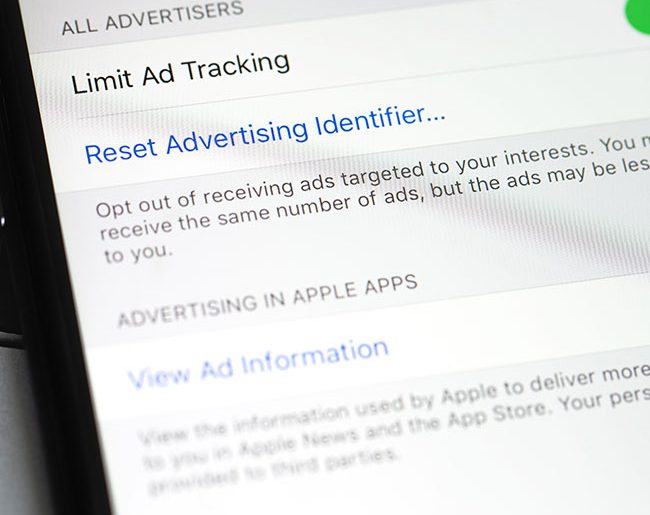
Earlier in 2021, Apple instituted a new App Store policy that limited apps’ ability to track user behaviour without getting express permission first, which has made targeted advertising more difficult.

The result may very well be less snooping on our iPhone habits by companies like Facebook and Google. However, a new report from Financial Times shows there was an unexpected (for us, at least) upside for Apple, too. Speaking with multiple analytics firms and advertisers, FT found that Apple’s own App Store advertising business skyrocketed after initiating the policy change.

Apple sells advertising space in the App Store. For example, if you search for a specific iPhone game, you will see sponsored results for other games, or other related apps, at the top of the results. This is a form of targeted advertising, according to the FT.

One analytics firm noted in the report that, in the last six months, Apple went from capturing 17 percent of all sponsored app store downloads, to now having 58 percent. Its revenue from this business is expected to double, and advertisers said they were spending more advertising with Apple, as opposed to Google. The advertisers said they could get more granular, real-time data, with retargeting capabilities through Apple ads — something advertisers like Facebook can no longer offer.

If this is all too much business and ad talk, the simple takeaway here is: Apple’s move to safeguard user privacy is also enriching Apple itself. Why? Less outside advertising appearing in your App Store feeds means more room for Apple-hosted ads.

Mashable reached out to Apple but did not hear back before the time of publication. Apple told the FT that the new advertising policy was about protecting users, not “advantaging” Apple.

Apple’s privacy updates were a welcome change for users. But that doesn’t make the FT’s report any less eyebrow-raising, especially as Apple continues to be investigated for monopolistic business practices. Even if making things more difficult for its competition while creating some new business for itself wasn’t Apple’s (public) intention, we’re sure the company is not mad at the result.

Feature Image Credit: Omar Marques/SOPA Images/LightRocket via Getty Images

By Rachel Kraus

Sourced from Mashable

By Eric Kim

Whenever I meet new people and try to tell people what I do, it is difficult. I’m not quite sure how to introduce myself. but upon thinking about it for a little bit longer, The best way I would describe myself as an Internet photography entrepreneur. That is, my passion is using the power of the Internet, and to promote photography and interesting ways.

What is your personal goal?

I think a lot of people want to pursue photography to make their passion their living. But is the end all goal?

if so, then the way to do this is simple. To make a living from your passion and photography, sell either your services or your products online or in person.

And what is the best product or service to sell? I think it has to do with education. Either sell workshops, in person experiences, or teach online zoom workshops.

Or another idea is to develop hard physical products, like haptic industries. Produce and sell camera straps, or other camera accessories.

Create your own website and platform

The easiest first thing you could do is create your own website blog platform. Honestly at this point it’s all the same thing. Go on bluehost.com and install wordpress.org and start with any starter theme and just start posting. and what is the goal blogging? To never stop posting.

To niche or not to niche?

I say just pursue your passion. for example, my passion was street photography, and for over a decade I have blogged on street photography and other things.

I see a simple recipe for success is this: focus 80% of your blog posts on your niche, and allow the other 20% to be other random things on your mind.

Blogging versus vlogging

Also when it comes to blogging, focus at least 80 to 90% of your focus on blog posts. Other 10 to 20% on YouTube vlogs. why? Because ultimately YouTube is not your platform. But YouTube is the second worlds biggest search engine, which is a good way to help you get discovered. And make sure in your YouTube videos to always mention your first and last name in your own personal website or blog.

You are the brand and product

Don’t get suckered into becoming a servant or a slave of another brand. Rather, promote yourself in your own personal brand above everything else. for example, better for Eric Kim to promote Eric Kim than Eric Kim to promote Leica or any other camera brand.

How to get discovered and how to get exposure

A simple way to get discovered is through Google SEO, that is, Google search engine optimization. That is when somebody searches for something on Google they find you. A simple way to do this it’s just think about what information you’re looking for, and write about it.

For example, in the early days I was very interested in how to conquer my own personal fears and street photography, and so I wrote blog post on that. Same thing goes with finding the best cameras for street photography, and then I also blog about that and my own personal experiences.

What is an expert?

An expert is literally somebody with experience. And if you have attempted or tried out something, do you have some sort of level of experience. And therefore anyone with even a tiny bit of experience as an expert.

Do not get intimidated by thinking that you don’t have enough experience. Because no matter how much of a newbie you are, there will always be someone else with less experience than you.

Your own personal raw experiences are king

My greatest advice is just talk about your experiences openly and honestly. Don’t sugar-coat anything. Be extremely raw and opinionated.

And don’t worry about getting hate or critique. If anything, the best measure of success the amount of hate, and negative feedback. Because at least you struck a chord with people. And the cardinal sin of the Internet is this: being boring.

By Eric Kim

By Dan Haverty

Videos are powerful tools. They’re engaging, exciting and often make us want to do something. It’s no surprise then that they’re the main event for some of the best content marketing strategies out there.

You’d think that with so many videos circulating on the internet, we’d have a set of fool-proof ways to produce compelling content. But it turns out there’s a lot of misconceptions about what makes for a good video, and we could all use a refresher from the experts.

We got AJ Muffett, Brafton’s Video Creative Director, to give us his take on some of the most popular do’s and don’ts about videography.

1. Do Tell a Story

“Absolutely tell a story!” AJ says. “Why create a video if there’s no story to tell?” Telling a story is what brings the whole thing together. Without a story, videos don’t really have a point, they don’t draw in an audience and they don’t help you achieve your goals.

So how do you do it? “You want to tell a story that relates to your target audience. Don’t just tell a story that you think is interesting — tell a story that they will find interesting.” That might mean presenting a familiar problem right from the get-go, demonstrating potential work-throughs using some flashy graphics, and then topping it off with a way to solve that problem.

2. Do and Don’t Use a Script

This one can get a little complicated. For some videos you should definitely use a script. Others, not so much. “For animations or voiceover-driven pieces, it’s certainly important to have a script because you don’t want [your interviewees] winging it, and you want to have a clear goal to communicate.”

But if you’re putting together company “about us” videos, testimonials or even case studies, it makes more sense to let your interview subjects speak freely. This lets their passion come out. That’ll make the video feel more authentic, and your audience will relate to it much better.

3. Do Try To Create an Emotional Response

This one’s a no-brainer. “100% yes! Why would you create anything if you weren’t trying to get a response?” Video works best when viewers are engaged and walk away feeling something — that’s what’s going to get them to remember you and buy your product or service down the line.

Of course, not every emotional response is a good one, so you could be walking a fine line here. But as long as you’re evoking the appropriate response in the right way, making your viewers feel something when they watch your video is truly the mark of a successful video. “The worst thing you can have is for someone to watch a video and feel nothing,” AJ says.

4. Do and Don’t Use Stock Footage

There’s another fine line to walk when it comes to using stock footage. For lots of folks, there can be some negative connotations around stock footage. The term may evoke generic images of busy highway flyovers and businesspeople shaking hands.

But AJ tells us that stock footage is actually used in a lot more video content than we realize. “Well-placed, thoughtful stock footage is super useful and super important,” he says. “As long as it’s helping tell the narrative or move the story forward in a positive way, then stock footage is a good tool to add to your repertoire.”

5. Do Keep Your Videos Simple and Concise

You don’t want to make your videos so simple that they’re generic, but you also want to avoid overcomplicating the video and crowding out your message. “If you overcomplicate it by making your scenes too busy or trying to fit too much narration in a short period of time and you lose the actual goal of the video, then you’ve lost the whole point of the video.”

6. Don’t Make Your Videos Too Long

This one is right there alongside keeping your videos concise. Most of us have short attention spans. Very short. One widely cited Microsoft study found that the average attention span is just 8 seconds. Your videos should reflect that reality and get your point across as efficiently as possible.

Plus, it pays to leave some information for viewers to wonder about: “You should leave your audiences wanting more when they leave a video. Enough for them to start a conversation or engage with your website after the fact,” says AJ.

7. Do Include a Call to Action

Always always always encourage your viewers to do something in your video. At the end of the day, the whole purpose of your video is to get people to do something, whether that’s filling out a form, going to your website or buying your product or service. If you don’t direct them anywhere, then what’s the point of the video?

8. Don’t Expect Immediate Results

Sometimes people push out videos expecting to see tons of clicks and likes pour in right away. That rarely happens, but you definitely should expect something to come from your videos. “Just because you created a video you shouldn’t expect immediate results, but you shouldn’t have just created a video just to create a video. You should’ve created a video with a goal or a purpose in mind that should’ve been part of a larger strategy.”

So there you have it. Expert insight on creating impactful marketing videos from one of our experts. At the end of the day, any one of the above tips will help you pack the most punch with your videos, but incorporating several (or all) of them into your video content strategies might really transform them for the better.

By Dan Haverty

Dan Haverty is a content writer at Brafton. Currently based in Boston, he also spent time living in Ireland and Washington, DC. When he isn’t writing, Dan enjoys reading, cooking and hiking, and he recently became an avid yoga practitioner.

Sourced from Brafton 

Nakeisha Campbell

You’re in the process of applying for your dream job. You’ve dotted all the i’s and crossed all the t’s on your resume (after proofreading it 58 times, of course). But now, it’s time to move on to the hard part: writing your cover letter.

Naturally, you want to grab your reader’s attention—ideally without over-decorating the page or sending a 10-page essay. But how do you begin? Is it “Dear” or “Hello?” Is it “Mr.” or “Ms.?” And more importantly, are there certain salutations that should be avoided completely?

We turned to Kelly Piscitelli, Director of People & Experience at Gallery Media Group, for some insight and, as it turns out, there is one particular greeting that could lower your chances of standing out among other applicants: “To Whom It May Concern.”

“It could be seen as a bit lazy to some recruiters and hiring managers,” says Piscitelli. “There are days when I’m looking through hundreds of applications, and if I see a cover letter addressed to me personally, I’m pleasantly surprised and I know that the candidate has done their research. They automatically stand out from the others from the very first impression.”

While there may be some hiring managers that find this standard, non-specific greeting appropriate, this isn’t typically the case—especially if you’re applying to a company that has easily accessible contact information online. According to career experts over at Glassdoor, this is why “To Whom It May Concern’ can “communicate apathy” or be discouraging for some recruiters. So before you consider using a phrase that’s totally generic, do your homework—even if that means spending an extra half hour combing through the company’s website.

“Make sure to scour the job posting carefully for clues, such as the supervisor’s title,” says Piscitelli. “From there you can search the company’s website for employees with that title or do a search on LinkedIn to see if you can find them that way.”

Another smart option? Do some investigating on LinkedIn and make use of your connections. She continued, “You might also search the company’s LinkedIn page. Is the job featured in their posts? Oftentimes a hiring manager will spotlight an open position on their team. Do you have any connections that work at the company you’re applying to? Reach out to them and see if they can give you the name of the hiring manager or recruiter. Or better yet, see if they can facilitate an introduction.”

Monster career expert Vicki Salemi also notes that giving the company a call could lead to results (provided that the application itself doesn’t say “no phone calls,” of course), but prepare for the possibility of speaking to someone from the department in which you’d be working. She said, “If you speak to a receptionist, that person may want to connect you directly to the department rather than provide you with sleuthing information because the receptionist may not know who is looking to fill the job either. If you speak to someone in the department, that person may be able to help you.”

But what if none of these approaches work? Don’t panic. It’s likely that the company you’re applying to is relatively private or has limited information online. And chances are, they know this. So if all else fails, it doesn’t hurt to move on to something that’s more generic, but still shows that you made an effort. Piscitelli says, “If you’re unable to find a specific name, I’d say your best bet would be to tailor your greeting to the supervisor’s title or the department in which you’d be working.”

So, with some help from the experts, we compiled a list of acceptable generic greetings that’ll make your cover letter pop (and, more importantly, that aren’t “To Whom It May Concern”). See below for the best alternatives.

WHAT TO SAY INSTEAD

  • Dear Hiring Manager
  • Dear Recruiter
  • Dear HR Manager
  • Dear Recruiting Team
  • Dear [insert title of employee you would report to]
  • Dear Head of [insert name of department]
  • Dear [insert name of department] Hiring Team
  • Dear Human Resources Manager
  • Dear [insert name of department] Director

Feature Image Credit: Twenty20

Nakeisha Campbell

Sourced from PureWow

Sourced from News18

One of the many reasons why some smartphone users prefer iOS over Android is the clutter-free experience that Apple offers. Android users have often complained about being bombarded with unwarranted ads while using the phone. These ads at times pop on the lock screen of the device even it’s not being used – most common in Android-based skin from manufacturers like Samsung, Xiaomi, Realme, Oppo, and the likes. While some smartphone manufacturers promote ads from their end, this problem is prevalent even in brands like Samsung where the company does not send out ads from their end. If you are an Android user and have faced similar issues with your device, this could probably be caused by the downloaded apps on your phone.

How to remove ads from the lock screen?

Uninstall app sending out lock screen ads- If you have recently started using lock screens on your phones, chances are that the unwarranted ads are being sent by an app on your device. You can easily check the recently downloaded apps on your device and uninstall them to remove the problem.

– Open the Google Play Store on your smartphone

– Tap on ‘Menu’ and then on ‘My apps & Games’

– Tap on ‘Installed’

– Sort the list on basis of the last used app

– Among the most recently used apps, select the app that has been sending unwarranted ads on your device, and uninstall it.

Additionally, you can the following things in mind to get rid of unwarranted ads

– Always download apps from reputable sources based on the ratings and reviews.

– Make sure that you never give administrator’s right to any app especially.

– Update your device regularly with Android security patches. Keeping tracking for new updates

– Do not download apps that you don’t trust or are published by unknown publishers

As per the Google Play policy, apps listed on Google Play Store must not send any fraudulent ads to the device. Further, ads can only be sent when that particular application is being used. Ads appearing on the apps are considered part of the app and hence they have to adhere to the Google play Policy.

In case you spot any app with inappropriate ads violating the policies, you can report it to the Google Play store

– Go to the Google Play Store on your device

– Go to the Install page of the app

– Tap on ‘More Option’ (three vertical dots) on the top right corner of the screen

– Tap on Flash as inappropriate to report any fraudulent ads sent out by the app

Sourced from News18

By Anil Gupta

Artificial intelligence and machine learning are among the top marketing buzzwords we come across in the field of digital marketing. These technologies have already become an integral part of digital marketing and are being leveraged to make campaigns more personable and efficient.

For instance, artificial intelligence can make personalization easy and quick by creating accurate buyer personas. These personas are auto-generated to deliver a holistic audience segmentation, thereby improving the effectiveness of the campaigns. In addition, Netflix, Google, Uber, Spotify, Pinterest, and other apps use machine learning to personalize individual accounts and make relevant recommendations to their users.

The ever-improving algorithms and the exponential growth of data are encouraging business leaders and marketers to use AI, in the form of machine learning, natural language processing (NLP), deep learning, and other technologies. These technologies are helping them improve customer experience and conversions.

A Gartner survey shows that 37% of organizations are applying AI in some form or the other to boost their digital performance.

This post highlights how AI and ML are proving to be game-changers in the digital marketing realm.

1. Offer a Better Understanding of the Audience

Great content starts with knowing the audience well. When a business knows its target audience, the connection feels more natural and relevant. That genuine connection goes a long way in building lasting relationships with customers.

In recent years, AI and ML have opened up a whole new world of possibilities for understanding audience behavior. AI tools and data-driven insights are helping businesses understand who they are reaching, what the customers want and need, when to communicate, and where to reach them.

Artificial intelligence helps marketers instantly define buyer personas. Then, platforms like Socialbakers auto-generate these personas to deliver more holistic audience segmentation in the form of actionable insights. These insights help content marketers share inspiring stories that convert.

Keeping your audience at the centre of your online strategies is critical to business success. AI can help by offering unique audience insights, enabling businesses to deliver an integrated brand experience through relevant content. It also helps in selecting the most trustworthy and effective influencers for the brand.

2. Help with Lead Management

Big data, predictive analytics, and machine learning are being increasingly used in business intelligence these days. Machine learning, with its ability to bring out valuable hidden insights from large data sets, can create tangible value for businesses.

Leads are the driving force for businesses. They are the ones who will soon contribute to the organizational revenue. Hence, business leaders spend a significant amount of time in lead management. ML can be leveraged to improve and scale a firm’s approach to lead management, thereby boosting the bottom line. It helps firms generate better leads, qualify and nurture them, and ultimately monetize them effectively.

For instance, ML can help you create an ideal customer profile (ICP) to reach the best customers. ICP takes a structured look at the demographics and psychographics of an individual and determines their purchase intent and the content that matters to them. Thus, ICP can be used for lead scoring, allowing marketers to prioritize targeted accounts.

ML can also help firms generate more qualified leads from the traffic already coming to the site. For example, check out how Drift, a revenue acceleration platform, uses conversational AI to recognize quality from noise, learn from the conversations, and automatically qualify or disqualify website visitors. These qualifiers help the sales team focus on leads that are ready for conversions.

3. Curate and Create Better Content

AI is changing the game for content marketers. The technology is being used to automatically generate content for simple stories like sports news or stock market updates. AI also allows social channels to customize user new feeds.

But one content field where AI is increasingly applied is content curation. AI algorithms make it easier to collect target audience data to create relevant content at each stage of the marketing funnel.

For instance, the algorithms collect data on what the audience prefers to read, the questions they want answers to, or any specific concerns. Using this data, content marketers can curate and create relevant content that boosts customer experience and ultimately leads to conversions.

The North Face uses an AI-powered technology like IBM Watson that recreates shopping experiences. The AI tool uses cognitive computing that brings the online and in-store experiences closer together.

Besides, machine learning feeds content strategies by discovering fresh research-based content ideas, identifying the top-performing topic clusters, showing the most relevant keywords in a specific niche.

For instance, Google Analytics and SEMrush operate on machine-learning algorithms that are useful in keyword research and discovery, and content distribution. In addition, these tools can discover industry trends and show you ways to rank higher in SERP.

AI and ML-enabled tools improve the overall reception and performance of online content. In addition, the tools allow marketers to offer relevant and personalized digital experiences that positively influence engagement.

4. Help with Competitive Search Engine Ranking

Search engines are already using AI-enabled algorithms to deliver the most relevant SERP results. These algorithms rely on AI to understand the context of the content and spot irrelevant keywords. No wonder SEOs are constantly striving to understand these algorithms and coming up with strategies to create contextual, conceptual, and accurate content.

The placement of your business in the SERPs can make or break your online reputation and performance. AI technologies make it easier to create compelling content that answers the target audience’s queries, keywords, and phrases.

SEO isn’t a day’s job. It’s challenging, and the results of one’s efforts can only be seen after months. Fortunately, AI-based SEO tools help alleviate this stress. SEO optimization tools like Moz, WooRank, BrightEdge, and MarketMuse heavily rely on AI to offer SEO solutions like:

  • Keyword research
  • Search terms to make the content more relevant
  • Link-building opportunities
  • Trending topics
  • Optimum content length
  • User intent and more.

Tools like Alli AI can instantly optimize your website regardless of the CMS and your web development expertise. The platform performs a site-wide content and SEO audit, automatically optimizes the content, and resolves duplicate content issues. All this makes it easier for content creators to avoid poor-performing content and boost their online ranking.

5. Improve Page Speed

Google has put an exact value on fast user experience by including page speed as one of its ranking signals. That’s why boosting page speed is one of the top priorities for all businesses, especially ecommerce firms. As a result, Webmasters take all sorts of measures to improve page speed.

For instance, WordPress site owners may speed up WordPress by optimizing background processes, keeping the WP site updated, using a content delivery network (CDN), or using faster plugins. Of course, they also use various tools like Page Speed Insights, load time testers, and CMS plugins for the purpose. But now, there’s another ML-powered solution available for boosting the page speed – the Page Forecasting Model.

This model predicts user behaviour using machine learning and predicts the next page visitors will click on in real-time. This allows Webmasters to preload the page in the background, thus improving the overall experience.

The algorithm is trained with historical data from Google Analytics.

For instance, user patterns like going from home page to category page or product page to the shopping cart are recognized, understood, and included in update algorithms. If the user behaves similarly, the algorithm is automatically prepared with the next page.

However, the prediction accuracy is dependent on the amount of data available to train the algorithm and the website structure. So, the models will vary according to these factors. For instance, if yours is an ecommerce website that combines industry news with product pages, it’s better to use two or more models that can predict the behaviour per section.

6. Automate Website Analytics Process

Web analytics isn’t new. Businesses have been assessing user behaviour and tracking key performance metrics since the mid-’90s. But thanks to AI and machine learning, web analytics tools now have robust capabilities that allow businesses to automate the process. These tools can offer auto-generated reports and on-demand insights that feed marketing strategies.

Within a single visit to a webpage, each user generates hundreds of data points like the time spent on a page, the browser details, its location, and others. It is practically impossible to analyse all this data manually. AI and ML make such analysis faster and accurate by speeding up the data processing.

AI-based tools can help you track each visitor’s online behaviour, understand user journeys, and how customers move through the marketing funnel. They also point out issues, if any.

Let’s say you have a blog post that gets a lot of traffic, but visitors just read the post and leave without taking action like subscribing to your newsletter or sharing your post on social media. AI-based tools can flag such issues, allowing you to take the necessary corrective action like adding internal links or improving your CTA.

Google Analytics (insights section), Adobe Analytics, and Kissmetrics are among the top web analytics tools that help firms see patterns in customer behaviour and predict future trends.

7. Improve Site Navigation

Site navigation is another critical area in digital performance where AI and ML can help is site navigation. Though it may sound negligible, the importance of having organized and easy-to-follow navigation cannot be ignored. Well-planned navigation improves the visit duration, reduces the bounce rate, and boosts user experience. It also enhances the overall aesthetic appeal of the website design.

AI can help Webmasters create a user-friendly website structure that’s easy to navigate. AI-powered chatbots can guide users through the pages and help them find what they are looking for within the first few clicks. This significantly improves the user experience and sends good signals to search engines, indicating that your content is useful and relevant.

Thus, Google and other search engines will rank your page higher than any other website offering similar content.

8. Design Better Websites

AI applications can improve the usability and experience of a website by enhancing the site’s appearance, strengthening its search abilities, managing inventory better, and improving interaction with website visitors. No wonder a growing number of designers and developers are moving towards AI-based design practices.

AI is slowly becoming an indispensable part of modern web design and development. Take the field of artificial design intelligence (ADI) systems, for instance. ADI has triggered a sudden shift in the way web designing is done. It allows designers to combine applications into the website for better user experience and functionality.

Check out The Grid website platform that automatically adapts its design to highlight the content. The platform uses ML and constraint-based design and flow-based programming to dynamically adapt the website design to the content.

Today, we have several entrants in this space that are taking AI in web design to a whole new level. Brands like Adobe, Firedrop, Bookmark, Wix, Tailor Brands, and many others are leading the segment and leveraging the capabilities of AI in web design. In addition, most of these ADI platforms can learn and offer suggestions for optimizing the website for better user experience and SEO performance.

The Way Forward

Artificial intelligence and machine learning are proving to be awesome technologies when it comes to improving a firm’s digital performance. However, it is essential to remember that these ML models are only as good as the data that’s used to train them. Therefore, it’s critical to ensure that your marketing team has access to high-quality and accurate data.

So, before applying these technologies to your digital efforts, there are specific steps that you need to take.

  • Set up tags to track and capture on-site user behaviour.
  • House all the data from different sources in one central place like Google BigQuery, a Big Data analytics platform.
  • Invest in data deduplication to eliminate duplicate copies of repeating data from multiple sources.

Once your data is in place, you will be in a great position to start deploying AI and ML for boosting your digital performance. In addition, the information shared above will prove to be useful as you start building machine learning solutions for improving your business’s online presence.

By Anil Gupta

Anil is the CEO & Co-Founder of Multidots, one of the top WordPress development agencies on the planet. He is a technopreneur with over 13 years of experience coding, thinking, and leading the business with mind and people with heart. He and his team are seasoned in delivering secure and feature-reach WordPress services for businesses big and small.

Sourced from readwrite


By

The question: What would it take for advertisers to give Facebook the boot? The answer isn’t as inspiring as one might think.

The findings: Advertisers on the whole are sticking with the platform—but there’s still a split between who will stay and who might go.

  • Performance marketers like mobile app advertisers, for example, use Facebook predominantly to drive app installs. Facing aggressive revenue targets and typically operating under the radar as brands, those companies are less likely to take part in advertiser initiatives like brand safety boycotts.
  • That’s more likely to happen among bigger, institutional brands, such as Coca-Cola, Nike, and Procter & Gamble, which have more of a stake in how consumers perceive them. These highly visible brands are often looking for brand exposure, which allows them to shift spending to other channels—since the top of the funnel offers more advertising options.

The marketer’s point of view: While Facebook has issues, it’s important to remember some companies have performed well by relying on the company’s ad ecosystem.

  • Some of the advertisers eMarketer spoke with have indicated that they’re diversifying into different channels in order to ensure they aren’t overly dependent on the Facebook ecosystem.
  • “I think there is something to be said for the CPM [cost-per-thousand] increase. It’s much more expensive than it was last year. There’s no question there,” said Avi Ben-Zvi, vice president of paid social at Tinuiti.
  • But rising CPMs only account for a fraction of his increased Facebook spend year over year, Ben-Zvi added. He said he’s seen a major increase in investment for mid-funnel consideration campaigns on Facebook that are designed to fuel the bottom of the funnel.

Our analysts weigh in:

  • “Facebook has weathered multiple scandals and headwinds in the past and continued to grow, indicating that advertisers will continue to spend on Facebook despite negative public perception,” said Jasmine Enberg, eMarketer senior analyst at Insider Intelligence. “What’s different this time is that Facebook is facing a real potential threat to its ad business.”
  • “Brand safety is a noble concern and something that many major companies think seriously about, but when it comes to their ad expenditures, the bottom line often ends up being more important,” said Debra Aho Williamson, eMarketer principal analyst at Insider Intelligence. “If ad performance were to start suffering, advertisers will look to other media. But brand safety concerns alone aren’t going to drive most advertisers away.”
  • “Measurement and attribution problems are causing performance declines for advertisers, especially ones focused on the lower funnel,” said Audrey Schomer, eMarketer senior analyst at Insider Intelligence. Schomer sees that advertisers are confused by a lack of clarity regarding what’s causing performance to go down: Is targeting particularly challenged by iOS users opting out of tracking? “That could be having some impact on performance, though most advertisers I’ve spoken with believe it’s primarily an attribution problem,” Schomer said.

By the numbers: Even in light of the whistle-blower news, our upcoming Facebook ad revenue forecast won’t be making any big downward adjustments.

  • Facebook’s net ad revenues for 2023 will actually be higher than previously forecast, but growth will be a little bit slower.
  • “The biggest thing that’ll come out of the whistle-blower revelations and platform outage is that advertisers will look to diversify their spending more,” said Nazmul Islam, forecasting analyst at Insider Intelligence. “While you won’t see a big drop in Facebook spending overall, you might see a bit more growth in the other social platforms that benefited from last year’s Facebook ad boycott.”

The big takeaway: Some advertisers may pull back spending due to negative public perceptions of the platform, but those pullbacks have so far tended to be temporary.

  • Advertisers won’t leave Facebook until there is real evidence that campaign performance is hurting, and until there is a better option for them to go to.
Facebook Ad Revenue Growth, 2018-2023 (billions and % change)

By

Sourced from eMarketer