
Author

editor

Browsing

By Phil Forbes

Your business has no doubt invested a lot of time into many facets of its operations. Two of those will undoubtedly be your branding and your marketing.

One of these is how your brand looks. The other is how that image is presented to the world.

And when you look at it like this, it’s easy to see how the two are related. But in reality, brand owners, marketing managers, and other specialists rarely understand how the two work in unison.

There are many examples of small and medium enterprises that have perfected how their branding and marketing communications complement each other. In this article, we will take a look at a few of them and why they work so well.

Why marketing and branding need each other

When your brand looks good, it’s a lot easier to spread its name, message, values, and products. That being said, looking ‘good’ is a very subjective term. Knowing what your ideal customer defines as ‘looking good’ is critical – and knowing your ideal customer is a crucial part of marketing any brand.
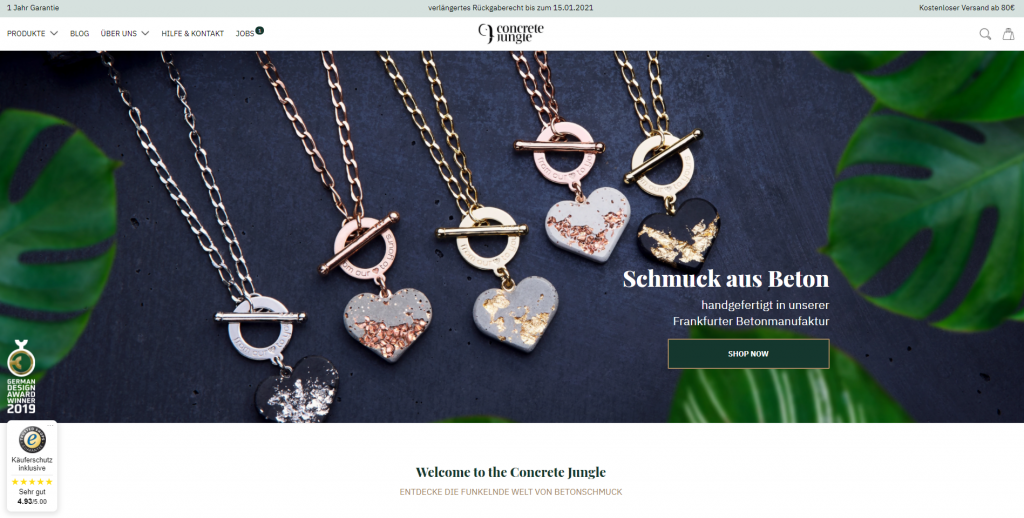
Source: Concrete Jungle

Already we can see how branding and marketing are overlapping.

When your brand has a design system that’s echoed over several channels, you make it easier to appeal to that ideal customer. Marketing channels like social media, your website, as well as letterheads and email signatures, should have your brand’s imagery.

Consider for a moment the role of packaging in an eCommerce brand.

A small boutique selling apparel made from locally sourced and organic materials may use those values in its marketing and branding. The area that the materials are sourced from may be part of the marketing message, the same with the fact that those materials are organic and no chemicals have been used to process them.

Such a brand can implement eco friendly packaging to bolster further their commitment to using environmentally friendly materials. This move can support their marketing efforts and create another branding opportunity.

The values of these actions amalgamate to help your customer ‘feel’ what your business stands for. Your branding is a pathway to present that ‘feel’ to your customers, while your marketing helps you find more customers to ‘feel’ your brand.

When effective branding is implementing by a stable business build around a good product, your customer is in a prime position to remember your product and why it’s different from your competitors.

Quality branding helps your User Generated Content, too.

Simply put, User-Generated Content is pictures, reviews, videos, and such featuring your product, created by your customers. Without going into too much detail, it’s a fantastic way for trusted content creators to spread your brand’s name around their engaged audience. It is also excellent at proving that your business is real and it creates a good product.

Take, for example, unboxing videos.

Unboxing videos are:

Pretty impressive numbers for a video that’s little more than your product being taken out of a box.

Video source

Video marketing, in the form of unboxing videos a perfect example of marketing (user-generated content) overlapping with branding (customised small business supplies).

This is a perfect example of how good branding (quality packaging) enhances your marketing efforts (user-generated content).

The rewards are simply more significant and more long-term when marketing and branding work together.

Consider the following word: Nike.

What first comes to mind?

  • the goddess of victory
  • The US anti-air defence missile system from the 60s
  • ‘Just do it’

It’s the tick, Air Jordan’s, and sport that comes to your mind.

The fact that ‘just do it (Nike’s marketing) and the tick (branding) is the first thing that enters your mind is proof that both elements are working in unison.

Subway.

  • A form of mass transport, often used underground in urban populations
  • ‘Eat Fresh’

Just another example of how your brand can use these two creatures side by side.

Using your branding for marketing purposes

Hemp Juice is a manufacturer of CBD oils. This market has exploded since society has been made more aware of the therapeutic benefits of cannabis. Regulations have also been changed to allow the product to be taxed and sold.

The brand has gone in a unique direction with its branding. When many competitors have taken the cold and sterile medical/clinical approach to branding, Hemp Juice uses warm colours, round shapes, and informal copywriting.

They take this approach as they know that their target audience doesn’t necessarily need the ‘medical’ image to be convinced of the product’s effectiveness. This is because Hemp Juice’s audience is more than likely already familiar with such a product.

Hemp Juice’s branding strategy complements its marketing when we take a look at its use of colour.

The company sells several types of oils in the same tincture bottles, yet each formula has a different strength and is designed to have a different effect on the user.
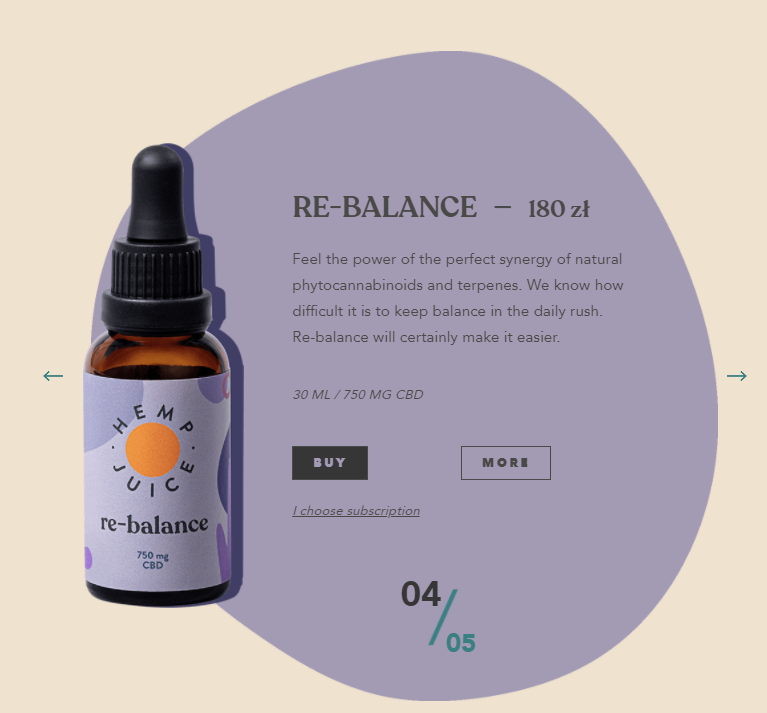
On retail store shelves, the array of colours pop and stand out, drawing in the potential customer’s eye – a great retail marketing tactic.

For their eCommerce store, it’s a quick and easy way for users to understand that ‘this colour has this effect’ – a great way to speed up the buying process.

Here we see how good branding complements both online and offline marketing.

Social media marketing and branding

Nearly 4 billion (yes, with a ‘B’) have access to and use social media. With consumers in the US and Europe now wanting to keep their money in local communities and move away from large corporations, the power of social media marketing has never had the potential it does today.

In other words, social media is a marketing channel that’s ripe for your business’ branding. 

However, you’ll only garner notoriety and brand recognition on social media if you create the right content, speak to the right people and present your brand with the right imagery.

This is a great moment to remind you, whether you’re a marketing manager, brand owner, or budding entrepreneur, that ‘branding’ consists of much more than a fancy logo and sleek colour palette.

Your branding is your word choice, the vocabulary used in your messaging, and it’s the tone you use when writing blog content. It’s the faces and body language of the presenters in your video content and all the greetings your customer service staff use.

Tailoring your ‘branding’ to the right marketing channel, whether a social media platform or not, is crucial.

LinkedIn, a social media channel more tuned for a B2B brand, is obviously a lot more professional than, for example, Instagram. This, therefore, dictates the way that you use your tone of voice to communicate a message. Similarly, a flash sale of 15% off probably won’t get much traction on LinkedIn. Instead, it’s a channel ripe for your brand to talk about challenges your industry faces, present your businesses’ values, and attract a different type of customer.

Mr Fothergills is a British retailer of seeds, bulbs, and other plant varieties.

They use Instagram, a very visual social media channel, to present the quality of their products and explain how to get the most out of their products and general gardening tips, and sharing the content of their other customers.

The tone of voice is consistent on all posts, as are the responses to any comments left. The content shows off the high quality of their products, and overall, it’s very appealing to look at as you scroll through your Instagram feed. The content is tailored to that medium, while the marketing presents the brand’s values.

Mr Fothergills’ LinkedIn tells a different story.
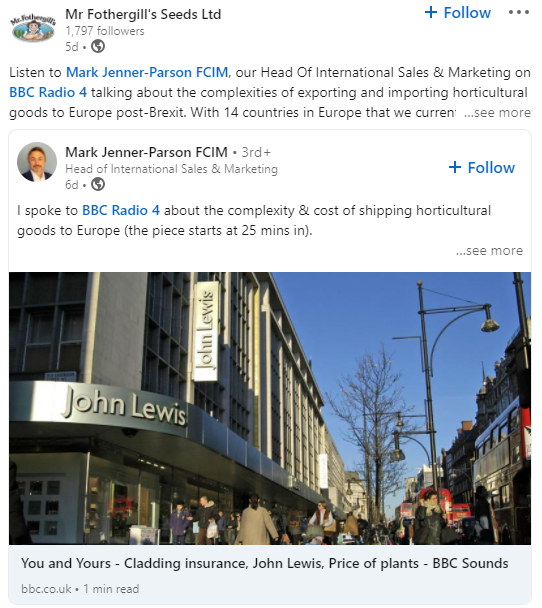
Here, they discuss content involving the export of goods to Europe post-Brexit. This is something that has an effect on the company’s B2B or enterprise clients. They still communicate with a friendly and open tone of voice, creating that consistent marketing message. Their values are still focused on a quality product, again showing that the company uses its branding effectively in their marketing efforts.

Fine-tuning your word use and the messages you push in all marketing channels, not just social media, is core to making your branding help your marketing.

Branding, your image, customer loyalty, and marketing

It’s much cheaper, easier, and faster to get a customer to buy from you again, rather than convince a customer to buy from you for the first time. This is where the power of customer loyalty really starts to make an impact on your bottom line.

Good branding and marketing, accompanied by a great product, naturally create and foster customer retention. As a result of the above, your brand’s name stays in the customer’s mind, and they’re more satisfied with your brand.

This retention rests heavily on the trust that your branding and marketing initially built between you and that customer. Consumers often remember how they first heard about your brand!

When marketing to reactivate past buyers, consider a different message to build that relationship. If your product competes on price and tries to be the lowest, add more value to the sale to increase average cart spend and live time value. You can do this in the form of buy one get one free or an extended warranty.

Remember, though; it’s hard to change your brand’s image at this point. Suppose your brand is seen as one of high quality and rugged durability. In that case, it’s going to be challenging to make a customer start to see you as affordable, accessible to everyone, and produced en masse.

The way that you promote incentives to reactivate past customers can also affect your image. If your brand prides itself on elegance, luxury, exclusivity, and opulence, a flash sale with 20% off everything will more than likely undermine that image.

Branding and marketing symbiosis

Every customer-facing channel of your business is prime for your branding and marketing efforts to spread your products, name, values, and morals. Making your branding complement your marketing efforts and vice versa isn’t particularly hard, but not many brands consider the symbiotic relationship between the two.

At the end of the day, your marketing efforts are never really done, and your branding can continuously evolve and change should your buyers’ sentiment also shift.

By Phil Forbes

Phil is a bearded Australian living and working in Poland. When he’s not taking Packhelp’s custom packaging to the world, he can be found trying not to kill his plants, pretending to be a stormtrooper, or hanging out with his dog.

Sourced from noupe

By

The best way for creatives everywhere to make their brand or designs stand out and to win more clients.

For creatives everywhere, video calling has become an integral part of showcasing work, whether it’s for making a pitch, applying for a job or walking clients through ongoing projects for feedback. And when faced with so much competition, creatives need to treat video calls as a crucial tool in order to win more clients and better projects.

There are lots of video conferencing platforms out there, and it might not seem important to consider which you use with clients. But with so much competition in the creative arena, such a key part of the connection with your clients shouldn’t be left as an afterthought. Why pour so much effort into creating the perfect portfolio site only to let your work down with poor quality screen sharing that’s plastered with the brand of a big tech player?

So how can you make a more memorable and professional impression? In steps Crikle, a video calling service that functions as an extension of your own brand thanks to its in-built portfolio and customisation features.

Unlike other platforms, Crikle is designed specifically with creatives in mind. Just like you might use Squarespace to show your work in a portfolio that does it justice, you can use Crikle’s powerful presentation features to show your work at its best during a video call. It has a unique range of features specially devised to help creatives stand out from the crowd, including customised branding, high-resolution presentation functionality and simplified content transfer.

Stand out with personalised and branded video calls

Crikle video calling

Crikle allows you to make video calls an extension of your portfolio (Image credit: Crikle)

One of the standout features Crikle offers for creatives is the ability to brand and personalise the platform. You can replace all Crikle branding with your own logos, background images and brand colour. This includes using your own website domain, which effectively makes it look like you’re using your very own video conferencing app.

If you’re a professional creative, you probably wouldn’t want a web builder’s branding all over your website, so why accept a video conferencing provider’s branding on your video calls? Zoom allows you to personalise links on its higher plans, but Crikle lets you replace crikle.com with your own business domain as standard. Whether you’re a solo freelancer or a boutique design agency, this ability to apply your own branding in this way can really help you to stand out from the competition in the eyes of potential clients.

Present your work in high-resolution

Whether you’re a photographer, graphic designer, motion designer or web designer, you need to be able to show clients quality images of your work, both to win business in the first place and to present work in progress in a professional way. Often the standard screen share options offered by the usual video calling platforms just aren’t up to that job. You wouldn’t deliver 4K video on a VHS, but you’re doing something fairly similar to that if you use Google Meet or Microsoft Teams to present quality work to clients.

Crikle provides an alternative, offering the highest quality of any video meeting solution with perfect colour and clarity every time. You can showcase your portfolio images, videos and more in full HD with no pixelation or lag, and no flaws in colour representation.

Share content in a professional way

Often when you finish a call, you’ll want to send work to the prospects or clients you spoke with. Crikle allows you to do that seamlessly with a simplified content transfer feature. This allows you to send images and video quickly and easily on a branded website that’s personalised with your own logos, background images and brand colour palette.

This easy way to send images, storyboards and concepts keeps everything looking highly professional and can make your business feel bigger than it actually is. You’re effectively getting file transfer and web design rolled into one neat feature since you can send full-quality versions of files without having to use a third-party transfer service. Again, just as operating your own branded video call looks more professional than using Google Meet or Zoom, a branded site for file transfer makes a much better impression on clients than using one of the standard third-party transfer services like Wetransfer or Dropbox. The webpage even automatically updates when you make changes to the content in your presentation.

With so much competition in the creative industries today, investing in the right tools can help you stay ahead of the pack. The “that will do” approach no longer holds weight since the top designers are constantly finding new ways to showcase their work and expertise. Creatives no longer have one single calling card but a range of channels to get clients’ attention, from a portfolio site to social media. Personalised video calling fits right into this expanded ecosystem, making every call an extension of the shop window you present. Crikle offers video calling that compliments your portfolio website and showcases your creative work in a highly professional way to make a big impression on the best clients.

Feature Image credit: Crikle

By

Joseph is a regular freelance journalist at Creative Bloq. He also works as a writer and translator, as well as a project manager at a design agency based in Buenos Aires, Argentina, where he spends his nights dancing tango and drinking malbec. His interests include graphic design and social media.

Sourced from CREATIVE BLOQ

By Myles Suer

A large part of my career has involved pivoting between product management, product marketing and solution marketing. I spent nearly two years out of work after my second start-up had failed in 2000. During my job search, I kept noticing Silicon Valley organizations cobble together multiple jobs under one title. One that came up frequently was product marketing jobs asking for brand builders.

Now I had hired a branding company to name my largest start-up, but had no idea myself how to build a brand. Desperate for an answer, I bought David Aaker’s 1991 book, “Managing Brand Equity.” It explained the value of a brand, and recommended marketers do five things to help build one:

  1. Treat the customer right.
  2. Stay close to the customer.
  3. Measure and manage customer satisfaction.
  4. Create switching costs.
  5. Provide unexpected extras.

Aaker’s book provided the answer I needed for my next job interview, but I knew there was more to positioning and branding. A new book published this week reminded me of my quest for branding and positioning knowledge all those years ago: Kimberly Whitler’s “Positioning for Advantage: Techniques and Strategies to Grow Brand Value.”

How Marketers Create Competitive Advantage

Whitler is the Frank M. Sands Sr. Associate Profess of Business Administration at University of Virginia’s Darden School of Business. She argues marketers should focus on creating sustainable advantage for their businesses. Advantage is created “by combining the firm’s resources with insight-generated marketing intelligence (information on competitors and consumers) and direction from firm level strategic marketing choices about where a brand should play or its desired position.” Effective marketing plans should therefore define how to win, choices and decisions regarding resource allocations, organizational structure design, strategic partners and go-to-market activities.

The outcome from this effort should in theory be superior marketing strategies and plans. These should deliver a perceptual advantage (in the hearts and minds of customers) which translates into a brand equity advantage and ultimately drives business growth. As Whitler sees it, the business outcome is a vision of how to win given an organization’s competitors.

The Positioning Concept

The problem, according to Whitler, is entrepreneurs spend so much time learning how to create new products and not enough learning how to create a brand. I agree. Most start-ups in Silicon Valley focus on selling products and product features prior to their Series C or D funding. This approach puts all the focus on “the development of a new product, fails to connect the value of the benefits that the product creates to the market for the solution. When leaders focus on the developing a product, it’s possible that there won’t be a real consumer (customer) need.”

For these organizations a gap exists in how they create, test and perfect the core positioning of the brand. Whitler argues positioning should be done first. And because this is rarely the case, 90% of new products fail. The “problem is few are taught to understand why it’s important to use a rigorous process to define the strategic positioning and that all decisions — from the product to brand design to the choices of commercialization strategies and tactics” come from a company’s strategic positioning.

Whitler’s proposed solution is for organizations to adopt a positioning concept. Leaders can then create, test and perfect ideas upon which brands and new products are created and then launched.

The positioning concept specifically identifies the customers’ problem, the solution the brand is designed to provide, and the proof that the brand can deliver. It essentially summarizes why a brand exists. To be effective, problem statements should be in the customers words and state the customer problem in simple language. The solutions statements should connect the solution to the customer problem statements. And finally, supporting statements should provide the granularity around how a new product works to solve the customer problem. Whitler argues it is important to create a process deliberately comparing ideas that are generated against established criteria. This ensures a product has the best chance of success.

Related Article: What Brand Marketers Can Learn From Personal Brands

Crafting a Brand Essence Statement

A marketing strategy, Whitler claims, should at its core be about identifying a position in the marketplace that provides the greatest opportunity to create value for a chosen customer target. Over time, successful brands come to stand for something as well — these establish meaning, feeling and emotions that capture the hearts and minds of their customers.

Marketers have had a hard time determining what the brand essence should be, argues Whitler. She calls the process both art and science. A brand is a distinguishing name/symbol intended to identify goods and services and differentiate the company from competitors. Given this, a brand essence statement (BES) is a document, picture, video or other communication vehicle that captures the intrinsic nature and indispensable qualities that make a brand unique, compelling and meaningful to a target.

Whitler stresses a BES is more than a messaging document. It should precede the design of a product, to guide the decision on which product to create. It serves as a beacon that summarizes the brand’s unique positioning in the marketplace. As a goal, the BES serves as the brand image that marketing is working to develop and, therefore, should be used as a filter to think through brand decisions.

In terms of timing, a BES should be created after determining segmentation, target definition and positioning concepts. It should consist of four components:

  1. Foundation (brand values and brand personality).
  2. Impact (the impacts the brand will provide customers rationally and emotionally).
  3. Support (the reasons to believe).
  4. Brand essence (what is the summary statement of what the brand can do for the target customer).

Whitler cautions marketers to watch for gaps where the promise and behaviour do not align in this process. A key idea I really like is a brand must be authentic, and this includes people decisions. “Authenticity and veracity are mechanisms thru which brands create trust.” To make things right, Whitler says marketers need to serve brands and consumers, and not the other way around.

Communicate Your Vision With Strategy Maps

Once an organization has built its BES, the next step is to communicate its desired position to the broader organization in a way that is clear, aligned and committed to delivery. Strategy maps are a great tool to do this. They are a visual, fast and easy way to share an overview of the corporation, its brands and its competition.

Whitler believes CMOs should lead this effort because they sit at the intersection of the external marketplace and the internal functions of the C-Suite. She suggests CMOS create four strategy maps: 1) Brand portfolio and resource management; 2) Consumer perspectives and preferences; 3) Competitive market dynamics; and 4) Strategy maps (the process).

Strategic Marketing Plan

To a large extent, Whitler builds upon the work of Derek Abell’s “Strategic Marketing Planning.” Abell defined a three-cycle enterprise planning approach:

  1. Develop alternative long-range business definitions and missions.
  2. Develop long-range functional strategies.
  3. Develop one-year plans and budgets.

Like Abell, Whitler believes the strategic marketing plan flows from the corporate plan to assure that all departments are aligned with the firm’s overall strategic plan. Whitler is clear that converting marketing strategy into plans that can achieve a vision is more difficult than devising an effective strategy. Without question, a strategic plan represents a set of choices that direct and focus activity to achieve corporate goals.

In terms of structure, Whitler suggests a strategic marketing plan include the following: visions, objectives, strategies, tactics and measures. To be effective, it should be a stand-alone document that reflects ruthless choice making and not be created in isolation.

The Creative Brief: A Blueprint for Marketing Activities

With agreement on the BES and strategic plan, a creative brief aims to strategically communicate key information about a specific project. It provides creatives a guide or blueprint to inform any marketing activity, such as advertisements, store design, brand communications, website, events, logo design and IT projects. As someone who often works with IT organizations, the last point was interesting to me.

Whitler asserts “it is better for clients to write the creative brief because they have more knowledge on the target consumer, the brand, and the business objectives.” In terms of specific writing tasks, they include:

  1. Project assignment.
  2. The situation.
  3. Objectives and success criteria.
  4. Customer insights.
  5. Communications strategy.
  6. Execution guidelines.
  7. Details and approvals.

Marketing Technology Blueprint

CMOs are spending billions in technology to modernize marketing with the aim of discovering, engaging, creating and delighting customers. The question for CMOs and CIOs to answer together is how can they leverage technology to create superior value to customers? A martech blueprint is used to evaluate, inform and support marketing technology investments across an entire organization.

Typically, the blueprint is a diagram or visual, created with an enterprise architect, that illustrates how technologies connect and worked with each other to drive marketing processes. A martech blueprint should answer the following questions: 1) vision for customer experience and journey; 2) desired state of marketing technology guide the buyer journey; 3) What is in place and left to add; 4) Are we using what we have; 5) Have we integrated what we have: 6) Are there duplications and unnecessary capabilities; and 7) The roadmap for data flow, marketing capabilities and customer experiences.

Brand Measurement

Measurements are core elements of how every organization should run itself. In marketing organizations, Whitler says measurement should guide marketing strategy; access in-marketing process; access extendability of a brand; evaluate the effectiveness of decision; track brand strength against competitors; and assign financial value of the brand. Key areas of consistent measurement across brands should include consumer knowledge, consumer perception; consume behaviour; and financial valuation.

Parting Thoughts on the Book

Whether you are a B2C or B2B marketer, the principles of Whitler’s book should be foundational to your marketing plan. Marketing organizations need to do their homework. And while the book does not explicitly consider digital adjuncts to products or the need for digital speed, the same principals apply. I would not have received dollar one of venture capital for my startups if I hadn’t done my homework. And every time I learned something new about a customer and their problems, it would be like entering a room and finding everything changed. Given this, it is smart to follow Whitler’s guidance, regardless of business type.

Feature Image Credit: Brands&People | unsplash

By Myles Suer

Myles Suer, according to LeadTail, is the No. 1 leading influencer of CIOs. Myles is director of solutions marketing at Alation and he’s also the facilitator for the #CIOChat.

Sourced from CMS Wire


By Fadeke Adegbuyi—Doist

To continuously expand your skill set and achieve mastery over new and complex concepts, it’s crucial to have a framework for conquering puzzling problems.

Richard Feynman was a Nobel Prize-winning physicist who made significant contributions in areas such as quantum mechanics and particle physics. He also pioneered quantum computing, introducing the concept of nanotechnology. He was a renowned lecturer who taught at Cornell and Caltech.

Despite all of his accomplishments, Feynman thought of himself as “an ordinary person who studied hard.” He believed that anyone was capable of learning with enough effort, even complex subjects like quantum mechanics and electromagnetic fields:

There’s no miracle people. It just happens they got interested in this thing and they learned all this stuff. There’s just people.” – Richard Feynman*

What made Richard Feynman Richard Feynman (according to Richard Feynman, at least) wasn’t innate intelligence, but the systematic way in which he identified the things he didn’t know and then threw himself into understanding them inside and out. Throughout his work and life, Feynman provided insights into his process for considering complex concepts in the world of physics and distilling knowledge and ideas with elegance and simplicity. Many of these observations about his learning process have been collected into what we now call “The Feynman Technique”.

The Feynman Technique is a learning concept you can use to understand just about anything.

To continuously expand your skillset and achieve mastery over new and complex concepts, it’s crucial to have a framework for conquering puzzling problems ranging from computer science and product design to psychology and evolutionary biology.

This article will provide an overview of the Feynman Technique and how you can apply it to continuously expand your knowledge and skillset. In short, Feynman will teach you not just how to learn but how to truly understand.

What is the Feynman Technique?

“I was born not knowing and have had only a little time to change that here and there.” – Richard Feynman

The Feynman Technique is a four-step process for understanding any topic. This technique rejects automated recall in favour of true comprehension gained through selection, research, writing, explaining, and refining.

Feynman’s biography, penned by James Gleick, provides a host of clues into the famous physicist’s learning process. Here’s just one:

“In preparing for his oral qualifying examination, a rite of passage for every graduate student, he chose not to study the outlines of known physics. Instead he went up to MIT, where he could be alone, and opened a fresh notebook. On the title page he wrote: Notebook Of Things I Don’t Know About. For the first but not the last time he reorganized his knowledge. He worked for weeks at disassembling each branch of physics, oiling the parts, and putting them back together, looking all the while for the raw edges and inconsistencies. He tried to find the essential kernels of each subject. When he was done he had a notebook of which he was especially proud.”

He rejected rote memorization; believed that learning should be an active process of “trial and error, discovery, free inquiry”; and held that if you couldn’t explain something clearly and simply it was because you didn’t understand it well enough.

His philosophies make up the Feynman Technique:

A graphic that shows the 4 stages of the Feynman Technique


  1. Choose a concept to learn. Select a topic you’re interested in learning about and write it at the top of a blank page in a notebook.
  2. Teach it to yourself or someone else. Write everything you know about a topic out as if you were explaining it to yourself. Alternately, actually teach it to someone else.
  3. Return to the source material if you get stuck. Go back to whatever you’re learning from – a book, lecture notes, podcast – and fill the gaps in your knowledge.
  4. Simplify your explanations and create analogies. Streamline your notes and explanation, further clarifying the topic until it seems obvious. Additionally, think of analogies that feel intuitive.

How the Feynman Technique Works

“I couldn’t reduce it to the freshman level. That means we really don’t understand it.” – Richard Feynman

Often, we don’t realize we don’t understand something until it’s too late.

Maybe you’re facing down a question on an exam. Or someone asks you to explain a topic you thought you understood. And suddenly, your mind goes blank. When you’re asked to demonstrate your knowledge outside your own head, you realize you knew a lot less than you thought.

The Feynman Technique doesn’t let us fool ourselves into thinking we’re masters of a subject when we’re really amateurs. Each step of the process forces us to confront what we don’t know, engage directly with the material, and clarify our understanding.

Choose a Concept to Learn

Selecting a concept to study compels you to be intentional about what you don’t know. It also forces you to choose a topic that’s small enough that it could reasonably fit onto one or several pages.

Why this step works:

  • You face what you don’t know. By writing a topic down on a blank page, you acknowledge you’re starting from scratch or at least filling in some blanks. In doing so, take the initial step in the process.
  • You need to be specific. Given the accumulated knowledge in the universe, most of us know nothing about most things! Writing down explicitly what you don’t know provides you with a starting point.
  • You have to start small. You really only have a page (or a few) to fill up with information. You can’t fit everything there is to know about “Evolutionary Science” or “Microeconomics” or “Psychology” on a page. Instead, work on smaller more defined concepts or what might reliably be found on a midterm or final exam.

Explain it to yourself or teach it to someone else

“The first principle is that you must not fool yourself and you are the easiest person to fool.” – Richard Feynman

A classic learning mistake is reading an article or textbook and considering our learning complete. In reality, reading is not understanding. We might even take notes, essentially transcribing a resource’s sentences into our notebooks. We often nod to ourselves, thinking we’ve grasped a subject. After all, we’ve taken notes.

But true understanding requires a more active process like teaching. Start out by formally teaching yourself. Write out a summary in your own words without looking at your notes. Or explain it to yourself out loud. Then take it to the next level by teaching other people. Teaching also initiates a feedback loop, where critique or questions can help us learn and sharpen our thinking.

Why this step works:

  • It makes it harder to trick yourself. When you have to truly explain something, whether through writing or aloud, you encounter the holes in your reasoning and the white spaces in your knowledge. Think of writing and teaching as a process to obtain understanding, not something you do once you already understand.
  • It’s even harder to trick others. If an explanation you’re providing doesn’t make sense, they’ll often tell you or you can pick up cues like blank stares. As a test, ask them to repeat what you taught them in their own words. If they can’t do this, your explanation is too complex –– simplify it and use plain language.
  • You build confidence. When you truly understand something, it clicks. You can explain it forward and backward, pointing out exceptions and spotting logical inconsistencies. When this happens, it builds confidence and pushes you to tackle even more challenging subjects knowing you have a solid framework for learning.

Return to the source material if you get stuck

Learning should be iterative. More often than not, learning something challenging takes several attempts. With the Feynman Technique, returning to the source material is an explicit part of the learning process. When gaps in our knowledge arise and our explanations aren’t quite right, revisiting our primary and secondary sources can help solidify what we’re learning.

Getting it right will likely take several iterations. That’s a good thing; the more you refine your explanations, the more your understanding will deepen.

Graphic showing a back and forth movement between steps 3 and 2


Why this step works:

  • Learning becomes an iterative process. Rather than viewing learning as a one-and-done, this step gives you permission to continuously refresh your knowledge.
  • You’re actively engaged. Using sources to polish our own explanations and models is an active process. When we learn passively, committing details to memory is more challenging. When we’re actively part of creating our own summaries and reasoning, drawing intentionally from original information to fill our blind spots, we can more readily commit knowledge to our long-term memory.
  • You expand your knowledge base. Paradoxically, the more we learn, the more our capacity to learn increases. Looking through a chapter of a textbook might feel like a different language the first time around. The second time it becomes more clear. The third time, with a strong base already, we pick up nuances we couldn’t have possibly seen before.

Simplify your explanations and create your own analogies

Every field of study has its own specialized terms. While it may be important to know them, it’s also important to not confuse knowing jargon with knowing concepts. The Feynman Technique involves simplifying our initial explanations and refining our understanding through simple analogies.

Why this step works:

  • Simplicity is a proxy for understanding. It’s easy enough to commit terms to memory, and repeat them back when prompted. But memorization is not understanding. When we can’t rely on big words that make us sound smart, we have to distil what we truly know to the most basic form. This is where true understanding takes place.
  • Analogies are easier to recall and explain. When you understand a challenging concept, analogies allow you to create a short-hand for recalling it quickly and explaining it to others clearly. Learning material often provides ready-made analogies for us. For example, we all probably have “the mitochondria are the powerhouse of the cell” burned into our collective memories. However, pushing ourselves to create our own analogies is even more powerful than regurgitating a borrowed one that we may not actually understand.

In Tyler Cowen’s Average is Over, the renowned economist notes that technological advances are driving us towards a future of work where, “lacking the right training means being shut out of opportunities like never before.” In describing the role of education in future economies, Cowen argues that the person who finds success will increasingly be the one “who sits down and actually starts trying to master the material”.

Now, more than ever, it’s important to adopt the mindset of a life-long learner.

Learning new skills and information takes time and patience, but also humility. By starting with a blank page, you face what you don’t know head-on. From there, you only need a pen, resources, and the willingness to explore to embark on an indefinite learning quest.

Feature Image Credit: Olia Gozha/Unsplash

By Fadeke Adegbuyi—Doist

Sourced from Fast Company

By Rachael Johnson

Ever wonder what people are saying about your brand? Not only is this information interesting, but it’s also incredibly useful and important in developing your marketing strategy.

But how can you gather social data outside of direct customer interaction? Social media monitoring is the answer, and luckily, there are plenty of free social listening tools out there you can use.

What Is Social Media Monitoring?

Social media monitoring, or social media listening, is the identification and extraction of online conversations that contain mentions of your brand. For example, if someone posts something about your company on Twitter, Facebook, YouTube or another social platform, you can learn a lot about how your brand is perceived through that social media post as well as the comments or replies.

But how can you possibly monitor all of the online conversations out there? If you wanted to comb through all of the online conversations on every social channel available, you would need a team of hundreds of people consistently scrolling through social media accounts, and you still wouldn’t even scratch the surface. Luckily, there’s such a thing as a social media listening tool — or a social media monitoring tool — that does that work for you.

What’s a Social Listening Tool?

If you’re familiar with how search engines work, you already have a basic idea of how a social media monitoring tool works. Search engines send crawlers to scan through the internet and find content that matches search queries. Similarly, a social media monitoring tool spreads out across social channels to identify every brand mention it can. The data is then collected and stored so that a social media marketing team can respond to questions, concerns and feedback as well as conduct social analytics.

Why Is Social Listening Important?

Social media monitoring and social listening are essential for any brand. Customer reviews and data will reveal important information about your target audience, but it leaves out an important part of the story.

Social media listening is important because it:

Improves Customer Service

Often, if a customer is unhappy with a product or service or if they have a question, they may try to reach the brand on social media instead of emailing them or going straight to their website. When this happens, it’s essential that your brand notices and responds. Ignoring this type of outreach — whether accidental or on purpose — is sure to make a potential customer feel neglected. But responding will make them feel heard. In fact, 21%of consumers are more likely to purchase something from a brand that is accessible via social media, according to Sprout Social.

Assesses Brand Awareness

You can’t improve your brand awareness without first gaining an understanding of how it’s already performing. Social listening helps with brand monitoring because it gives your company data on where the most conversations about your brand are taking place, and where there needs to be more awareness. Let’s say consumers are raving about your company all over Instagram, but they’re quiet on Twitter. That may mean that you need to increase your Twitter engagements to reach a larger audience.

Keeps Tabs on Brand Reputation

Not only will social media monitoring help you find out where and how much consumers are talking about your brand, but it will also give you valuable information about the general sentiment towards your company. People turn to online conversation for many reasons — whether they are happy, angry, confused or curious about your company, they may convey their feelings through a social media channel.

Sprout Social found that 59% of consumers reached out to a brand on social media as a result of a great experience, while 40% of consumers will reach out due to a bad experience and 47% will contact a company through a social channel seeking an answer for a question.

So now that we’ve established how useful and important social media monitoring is, let’s talk about how to do it affordably. Luckily, there are a number of free social listening tools on the market that your brand can start using today.

14 Free Social Listening Tools To Try

1. Brandwatch

Brandwatch is a social listening tool that works across multiple channels, plus it is a direct partner of Twitter. This tool’s bread and butter is consumer intelligence and trendspotting. When you use Brandwatch, the tool uses an algorithm to find and analyse brand mentions and discover common trends across social networks.

2. Brand Mentions

Brand Mentions is exactly what its name implies, and more. This free social listening tool searches the internet for your brand name in online conversations. Once the mentions are located, they are collected and organized into categories that coincide with trends. Therefore, the result you get when you use Brand Mentions is a convenient, streamlined report on all of the conversations in which your brand appeared across Twitter, Facebook, YouTube and more.

3. BuzzSumo

BuzzSumo is a content analysis tool with an impressive amount of social listening capabilities. This tool allows you to search the internet for content that includes mentions of your brand. Once the examples are found, BuzzSumo will compile engagement metrics for each social media post — like views, likes, clicks, shares and more. This way, you can find out not only which channels contain the most conversations about your brand, but also where the lengthiest and most interesting conversations are taking place.

4. Followerwonk

Followerwonk is a social listening tool specifically designed for Twitter. It allows your company to search through Twitter bios to find and connect with relevant users, and it also allows you to compare Twitter accounts with one another. You can also analyze your followers, gaining valuable information on their demographics, locations and other valuable customer data. Furthermore, Followerwonk provides insights on possible relationships between your activity on Twitter and the gain or loss of followers.

5. Google Alerts

If you aren’t already using Google alerts, you should be. They couldn’t be easier to set up, and they inform you of when your brand is mentioned in news story titles. If someone posts a blog or article about your company on a social media channel, magazine or other online platform, you’ll get an email notification. This will help you keep tabs on the bigger topics of discussion related to your brand.

6. Hootsuite

Hootsuite is a social media management platform with a subsection for social listening called Hootsuite Insights. This tool provides a convenient platform when you can view and respond to social media posts that mention your brand. Surfing Twitter, Facebook, Youtube, Instagram and every other social media channel for brand mentions would take far too much time and effort. Hootsuite, luckily, compiles all the posts and lets you engage with them in one easy-to-use tool.

7. Lithium

Lithium recently acquired Klout, a social media management tool that allows you to more easily interact with your followers. Through this tool, you can respond to direct outreach from your followers, including direct messages, Tweets, Facebook posts and more. As your brand awareness increases, it becomes more overwhelming to respond to all the outreach you get. Lithium makes this process much easier by providing a simple and convenient platform.

8. Mentionmapp

Mentionmapp is another social monitoring tool that connects to your Twitter account. It shows metrics like who mentions your brand the most, as well as who most often retweets or replies to your tweets. Since the tool is interactive, you can do quite a bit of investigation into these metrics. For example, you can look at each tweet to see how they are related to one another.

9. Socialmention

When you use Socialmention, you type a term into the search bar — likely your brand name or a term very closely related to your company — and the tool scours the internet and fetches all mentions of that term it can find. These might be in the form of social media posts, blogs, news articles, images or video content. It gathers this information and presents it in one convenient platform.

10. SumAll

SumAll functions as the name implies. It gathers information from all of your social media accounts — Twitter, Instagram, Facebook, YouTube and more — and presents it in one easy-to-read summary. Using this tool, you don’t need to check the insights of each social media channel individually. Information about engagements is all right there in front of you.

11. TweetDeck

Tweetdeck is a tool provided by Twitter itself, and it helps you view and assess Twitter engagements in real time. You do this by monitoring live feeds across Twitter, so if someone Tweets something, adds to their story or starts a live video, you’ll know as soon as it happens.

12. TweetPsych

TweetPsych is a social listening tool that helps you find out about your brand’s reputation. If you give this tool your brand’s Twitter handle, it will compile a series of Tweets that unveils the general sentiment toward your brand among Twitter users.

13. TweetReach

TweetReach helps you navigate the wonderful world of hashtags. If someone is to discuss your brand on Twitter, there are a number of terms they might use for the associated hashtag. TweetReach makes it easy to search through Twitter for mentions of various hashtags.

14. Twitonomy

If you want to investigate a specific Twitter user or hashtag, Twitonomy is a useful social listening tool for that. Just type the hashtag or user handle into the tool, and it will find and extract metrics like mentions, followers, retweets, replies and more for that particular search criteria. This is useful for if you need information on one influencer or a trend that’s circulating around social media.

By Rachael Johnson

Rachael is a content writer located in Chicago. When she’s not typing away, you can find her running the pool table at her local dive, crocheting her own clothes or reading under a blanket and working her way through the 20 different types of loose leaf tea she bought in bulk on an impulse.

Sourced from Brafton

By Mandy Schmitz

In a world with 7.9 billion people, 4.48 billion have social media accounts. That means more than half of the world is using social media. Making it one of the most powerful marketing tools in the age of digital media.

According to statistics, an average user currently spends more than two hours each day on social media. Obviously, many people hang out on social media longer than that. It’s no wonder then that marketers are constantly on the lookout for the next big social media campaign ideas.

But while many brands are still having a hard time breaking through social media, some have already launched phenomenal campaigns that catapulted them into the spotlight. Not only did their sales increase, but these campaigns also made their brands more visible and recognizable.

So if you’re still racking your brains for the best social media strategy, here are ten phenomenal social media campaigns you can learn from.

  1. #DistanceDance

Company: Procter and Gamble

Platform: TikTok

What They Did

@charlidamelio

Stay home & do the distancedance. Tag me & the hashtag in your video. P&G will donate to Feeding America & Matthew 25 for first 3M videos #PGPartner

♬ Big Up’s (feat. Yung Nnelg) – Jordyn, Nic Da Kid

The whole campaign started as a result of a series of phone calls. Ohio Governor Mike DeWine called P&G CEO David Tylor to discuss his concern about the youngsters not following social distancing in his state.

The phone calls eventually reached Debby Reiner, the President for Global Clients at Grey Worldwide, a partner branding agency of P&G.

The next 24 hours saw the brainstorming of an absolutely brilliant social media campaign called #DistanceDance. To kick-start the campaign, the agency hired the most popular TikToker Charli D’Amelio to do a video challenge.

Charli initiated the campaign with her first distance dance video that garnered 8 billion views in a week. It also inspired youngsters on TikTok to stay home and do their own #DistanceDance video. The first week ended with about 1.7 million imitation dances from every kind of social media user.

When the challenge went viral, P&G used the hashtag to start a fundraiser for the populations hit hard by the pandemic.

What We Can Learn From It

P&G showed how an organization can achieve its brand awareness goals while keeping up with its corporate social responsibility.

  1. Dear Kitten

Company: Friskies (in collaboration with Buzzfeed)

Platform: YouTube

What They Did

Friskies did a video campaign in collaboration with Buzzfeed in 2013. The video has more than 32 million views on YouTube to date, and it proved to be one of the most successful social media campaigns.

The concept was simple. The video shows two cats, an old cat, and a young kitten. The old cat advises the little kitten in a human voice.

The catchy and funny script hooked the audience to the video, and Friskies and Buzzfeed used this campaign to create a viral video series after that.

What We Can Learn From It

The video series proved that funny content hooks audiences better than any other type of content.

  1. #WhatsYourName

Company: Starbucks

Platform: Facebook, Instagram, Twitter, YouTube

What They Did


Starbucks UK partnered with an organization named Mermaid to show support for the gender non-conforming youth and transgender community. Together, they created a TV commercial that shows the struggle of a transgender teen called Jemma.

But the highlight of this brilliantly poignant ad was when Jemma uses the name ‘James’ when ordering coffee at Starbucks.

The campaign aligned two concepts. One is the support for the transgender community. The other is the familiar experience of ordering coffee at Starbucks and having your name written on the cup.

After the TVC, Starbucks created a social media campaign with the hashtag #WhatsYourName.

People used the hashtag to post their pictures with a Mermaid tail cookie to show support for the Mermaid community. That hashtag also worked as a fundraiser for the organization.

What We Can Learn From It

Marketers need to keep tabs on the current social issues and use their platform to help break taboos.

4. #ShotOniPhone

Company: Apple

Platform: Instagram

What They Did

Instagram

In March 2015, Apple promoted the hashtag #ShotOniPhone on Instagram. Six years later, the campaign is still going on and has generated over 21.9 million posts to date.

Through the hashtag, Apple has encouraged its users to share their photos and other user-generated content. It is a smart way to build brand awareness through the existing customer base without paying anything to them.

What We Can Learn From It

User-generated content can be a powerful tool to engage your target audience.

5. #MoonPieToTheMoon2024

Company: MoonPie

Platform: Twitter

What They Did

Put-A-M00nPie-On-The-Moon

MoonPie has made us laugh out loud a lot of times thanks to its hilarious Twitter antics. But recently, it caught the attention of NASA executives by launching an interestingly innovative ad. They directly addressed NASA to take their MoonPie to the moon, stating ten funny reasons for it.

The ad became viral through the hashtag #MoonPieToTheMoon2024 when all MoonPie supporters kept sharing it to support the cause. The trend was even backed by an actual petition on Change.org that got almost 5000 signatures.

Judging by how the campaign is going, there’s a big chance we’ll get to see an astronaut munching on a MoonPie while landing on the moon.

What We Can Learn From It

Companies can build interesting narratives around current events and use them to create a unique brand voice.

6. Sleep Channel

Company: Casper

Platform: Spotify and YouTube

What They Did

Casper

Casper, a popular mattress brand made a unique sleep audio playlist they called the “Sleep Channel”. Hosted on Spotify and YouTube, the playlist features relaxing tunes that can help lull the listener to sleep. Casper then advertised it on other social media platforms such as Facebook, Twitter, and Instagram.

Considering that they sell mattresses, the campaign was a stroke of brilliance. It quickly became phenomenal and elevated the brand from a mere mattress manufacturer to a sleep company.

What We Can Learn From It

Giving your audience a unique, out-of-the-box experience can give you an edge over your competitors.

7. #BigGameColorCommentary

Company: Pantone

Platform: Twitter

What They Did

Pantone

Pantone, a color company that deals mainly with graphics, took advantage of the Superbowl to launch a brilliant social media campaign.

The campaign came about when two Superbowl teams (Kansas City Chiefs and San Francisco 49ers) were both wearing red uniforms, albeit with different shades. To clear the confusion, Pantone tweeted an image that shows the Pantone colors of both team’s uniforms.

Pantone then followed it up by promoting the #BigGameColorCommentary. Using this hashtag, they shared their views about all the colors they encountered during play. The company even posted commentary on the brands that put their ads on the game.

Since it’s the Superbowl, the campaign became a trending topic on Twitter which led to increased brand visibility for Pantone.

What We Can Learn From It

Marketers need to learn how to effectively incorporate big events into their social media strategies without losing their brand voice.

8. #ShowUs

Company: Dove in partnership with Getty Images

Platform: Instagram

What They Did

Instagram-Showus

Dove is a beauty brand that, for the past few years, has promoted originality and inclusivity for all women. To showcase its brand values, the company started a campaign with the hashtag #ShowUs.

This campaign’s idea revolves around user-generated content shared on social media that encourages body positivity.

To date, the hashtag has gathered more than 650,000 raw, unedited photographs of women.

What We Can Learn From It

Promoting brand values can stir up loyalty among your customers. If your customer’s values coincide with your brand’s values, they are most likely to stick with the brand.

9. #OptOutside

Company: REI

Platform: Instagram

What They Did

Instagram-Optoutside

REI is a recreational equipment company that stood against the frenzy that came with Black Friday sales. The company promoted the hashtag #OptOutside by announcing that they will be closed on Black Friday.

The hashtag quickly went viral and now has more than 17 million Instagram posts.

The idea behind the campaign was to curb the consumerism that Black Friday instigates in the minds of consumers through FOMO.

Using the hashtag, they encouraged people to go outdoors instead of fighting their way into a shopping mall. This, obviously, resonated with a lot of people who think that mindless shopping is not a great way to spend the holiday.

What We Can Learn From It

Companies should stand for what they believe in, even if they may not agree with popular opinion.

10. #CouldUseABeer

Company: Coors Light

Platform: Twitter

What They Did

America-Could-Use-A-Beer

Coors Light started the hashtag #CouldUseABeer to cheer up Americans during quarantine. Everyone who retweeted the hashtag received a pack of six beers. When the campaign ended, Coors was able to give away a total of 500,000 beers.

The campaign was inspired by another giveaway that Coors Light did for a quarantined 93-year-old woman who went viral when she put up an “I need more beer” sign on her window.

What We Can Learn From It

There are actually two things we can learn from this campaign. One is that giveaways are a brilliant way to gain brand recognition. Another is that marketers should keep track of what’s trending on social media and use it to their advantage.

Key takeaways

Social media campaigns usually need careful planning and timely execution to be successful. But as some of these campaigns have taught us, it doesn’t hurt to jump on the bandwagon every once in a while. Nor should you be afraid to think out of the box, harness the power of social media influencers, or go against the flow. Because when it comes to social media, your creativity is your only limit.

By Mandy Schmitz

Mandy Schmitz is a freelance consultant and project management expert with 10+ years of experience working internationally for big brands in fintech, consumer goods, and more. Join her on Changeaholic.com to learn how to optimize your business operations and find the latest software reviews.

Sourced from Jeff Bullas


Sourced from News Thump

Experts in artificial intelligence have responded with amazement, and some scepticism, to Google Brain’s recent assertion that before the decade is up, it will have cracked the linguistic Holy Grail of understanding what the residents of Newcastle are talking about.

Professor Simone Williams, a neurolinguistics expert working for the project, was adamant the prospect of being able to translate Geordie into English was no longer a pipe dream.

She went on, “After we bought AlphaGo we hooked it up to looped episodes of Geordie Shore. It went dark and after two full years, we were about to give up. But six months ago it finally made a breakthrough and conclusively proved that ‘scran’ was a phoneme used to denote a condition of hunger.”

Professor Williams admitted the project was always seen as a moonshot, particularly by financial backers.

“A lot of people didn’t believe in it. We had to go against decades of conventional thinking that Geordie wasn’t technically ‘speech’ but a method of echolocation gone horribly wrong due to alcohol abuse. And we were constantly being told there was no commercial value in knowing what a ‘canny broon’ is.

“But for linguists like myself, Geordie is the last great frontier. Once we crack it, the prospect of a sci-fi universal translator becomes very real.”

Professor Williams did say it would be at least three years before simple messages like texts could be fully translated and another two years to reach a B2 CEF level.

Until then, trade with Geordies would still have to rely on basic object recognition or getting surly residents of Gateshead to act as interpreters by pretending to agree with their ridiculous claim that they’re not a suburb of Newcastle.

Sourced from News Thump

Adobe Photoshop is an incredibly complicated piece of software that is multifaceted and multipurpose. However, one of its lesser-known workspaces is going to be removed completely.

Adobe Photoshop might never have been synonymous with 3D work, but it has had the functionality for a good few years now. With the introduction of Adobe Dimensions (previously Project Felix), the 3D workspace did see more use, however. Adobe has now made the announcement that they are removing the core 3D engine within Photoshop, which necessitates the removal of all interactions in the 3D workspace, 3D printing, normal and bump maps, lighting effects, spherical panoramas, and the import and export of all 3D formats, among a few others elements.

There are a few features being removed that did see some use for photographers. For example, the spherical panoramas and the lighting effects in particular. The lighting effects didn’t — in my experience at least — seem to be creating results that would be impossible without reliance on the GPU or the 3D workspace, so perhaps that will be recreated in time.

In this video by photoshopCAFE, you will be given the reasons behind the removal, as well as some ways in which you can still access these features using older versions.

Sourced from Fstoppers


Sourced from Brighter Side of News

A study in which machine-learning models were trained to assess over 1 million companies has shown that artificial intelligence (AI) can accurately determine whether a startup firm will fail or become successful. The outcome is a tool (www.venhound.com) that has the potential to help investors identify the next unicorn.

It is well known that around 90% of startups are unsuccessful: between 10% and 22% fail within their first year, and this presents a significant risk to Venture Capitalists and other investors in early-stage companies. In a bid to identify which companies are more likely to succeed, researchers have developed machine-learning models trained on the historical performance of over 1 million companies. Their results, published in KeAi’s The Journal of Finance and Data Science, show that these models can predict the outcome of a company with up to 90% accuracy. This means that potentially 9 out of 10 companies are correctly assessed.

“This research shows how ensembles of non-linear machine-learning models applied to big data have huge potential to map large feature sets to business outcomes, something that is unachievable with traditional linear regression models,” explains co-author Sanjiv Das, Professor of Finance and Data Science at Santa Clara University’s Leavey School of Business in the US.

The authors developed a novel ensemble of models in which the combined contribution of the models outweighs the predictive potential of each one alone. Each model classifies a company, placing it in one of several success categories or a failure category with a specific probability. For example, a company might be very likely to succeed if the ensemble says it has a 75% probability of being in the IPO (listed on the stock exchange) or ‘acquired by another company’ category, while only 25% of its prediction would fall into the failed category.

 
Credit must be given to the creator. Only noncommercial uses of the work are permitted. No derivatives or adaptations of the work are permitted. (CREDIT: Greg Ross)

The researchers trained the models on data sourced from Crunchbase, a crowd-sourced platform containing detailed information on many companies. They married the Crunchbase observations with patent data from the USPTO (United States Patent and Trademark Office). Given the crowd-sourced nature of Crunchbase, it was no surprise to learn that some companies’ entries miss information. This observation inspired the authors to measure the amount of information missing for each company and use this value as an input to the model. This observation turned out to be one of the most critical features in determining whether a company would be acquired or otherwise fail.

Lead author Greg Ross of Venhound Inc. notes that the ensemble of models, along with novel data features, “generates a level of accuracy, precision and recall that exceeds other similar studies. Investors can use this to quickly evaluate prospects, raise potential red flags and make more informed decisions on the composition of their portfolios.”

Feature Image Credit: Creative Commons

Sourced from Brighter Side of News

By Shalom Kamau

The increase in social media and digital technologies has led digital marketing to become the most in-demand form of advertising. It is easier to reach a larger audience and have a higher return on investment (ROI) within a short period in the digital marketing field.

For this reason, more people are interested in becoming digital marketers. This guide covers all the necessary steps you need to launch a career in digital marketing as well as similar jobs you can pursue. Read on to discover more and learn how to become a digital marketer in 2021.

What Is a Digital Marketer?

In this guide, we look at learning to code. We show you the easiest languages to learn so you can start on the right foot. You’ll get to know which languages are the hardest to learn, as well. You can tackle these after getting a few of the easier ones down. It’ll be a madcap adventure, I’m sure, so let’s get started.

Some of these tools include social media, email marketing, search engine optimization (SEO), content marketing, and mobile marketing. It is essential to understand these powerful tools as you begin your career path to becoming a digital marketer.

Digital Marketer Job Description

In short, your primary role is to act as a bridge between a company and its customers. Digital marketers perform several duties, from creating and uploading content to strategizing ways of enhancing search engine rankings. You will be in charge of the client’s online platforms, such as the company website, Instagram page, or blog content.

You will plan and strategize ways to engage with customers and keep them interested in your client’s brand or product. You will also likely manage Google Analytics and other SEO tools, enhancing the company’s online presence through posting images, videos, and written content.

Digital Marketer Salary and Job Outlook

The Bureau of Labor Statistics (BLS) indicates a six percent job growth for advertising and marketing jobs between 2019 and 2029, which is faster than average. The fast job growth can also be attributed to the lucrative annual salary. The BLS also reports that marketing management professionals earn $141,490 per year.

PayScale offers a more specific salary outlook. According to its official report, digital marketing specialists earn an average salary of $50,380. However, this can go up to $62,767 for experienced digital marketers. If you enter a digital marketing management position, your salary can double. This means you should enter the field as soon as possible.

Top Reasons to Become a Digital Marketer in 2021

Besides the job security and high salaries, there are many different reasons to become a digital marketer. This field is both fulfilling and full of variety. Below are more reasons why pursuing a digital marketing career in 2021 is worth it.

  • Job outlook. Digital marketers have a great projected job outlook for the rest of the decade. The six percent growth rate projected by BLS emphasizes job security in the industry for an extended period.
  • Flexibility. Apart from extensive job opportunities, you also have the freedom to work in any industry. Digital marketing professionals can work in retail, fashion, entertainment, education, technology, or sports.
  •  Lucrative salaries. The digital marketing industry pays its workers well. You can receive a median salary of $50,000 and above, depending on your skill level. In addition, most digital marketers have the freedom to work as freelancers, which is a great way to make extra income.
  • Creative outlet. If you’re a creative person, working as a digital marketer is a dream come true. There are always opportunities for you to think outside the box and develop ways to make a marketing campaign stand out.

Digital Marketer Job Requirements

Although penetrating the digital marketing industry isn’t as challenging, you still need to meet specific criteria as a digital marketer. Employers are open to employing individuals who meet the following requirements.

  • A bachelor’s degree. Employers look for candidates with a Bachelor’s Degree in Marketing or a related field. However, an Associate Degree in Marketing is still enough to get you a job as a digital marketer.
  • Digital marketing tools. You must be familiar with several digital marketing tools. Tools like social media, email marketing, and search engines play a significant role in the success of digital marketing campaigns. In addition, you need to understand how Google Ads works, perform numbers analysis, and keep up with the current trends.
  • Experience. On average, employers look for candidates who have worked for two or more years in the digital marketing industry. However, this doesn’t mean beginners are out of luck. You can launch your career by applying for entry-level digital marketing jobs to gain more experience.
  • Problem-solving skills. Like every other industry, problems and emergencies occur in digital marketing. Therefore, you need to be a fast thinker and always come up with suitable solutions for any problem.

Types of Digital Marketing Careers

As mentioned above, digital marketers can work in any industry. You can also branch into different career paths under digital marketing. Whether you want to become an SEO expert or a digital marketing manager, your roles contribute to the business’s success. Below are some of the most popular digital marketing careers.

Search Engine Optimization (SEO) Specialist

An SEO specialist ensures a website ranks highly on several search engines like Google, Bing, and Yahoo. You will delve into keyword research to ensure each article aligns with current common search terms. Your primary role is to increase website traffic by making sure your website activity generates leads.

Social Media Manager

A social media manager oversees a client’s social media platforms. You will be responsible for creating and posting content, responding to customer comments and queries, and monitoring engagement data. Moreover, you need to be up-to-date with current trends to ensure your client’s products align with contemporary markets.

Marketing Coordinator

A marketing coordinator is in charge of content marketing strategy for all marketing channels. You will also lead the marketing team in the day-to-day activities of the marketing department. These activities include tracking product performance, monitoring customer engagement, or drafting performance reports for clients.

Digital Marketer Meaning: What Does a Digital Marketer Do?

As mentioned earlier, a digital marketer acts as a bridge between the company and its customers on all digital platforms. Digital marketers wear many hats and therefore need to have many different skills. Read below to learn more about the responsibilities that digital marketers have.

Conducts Inbound Marketing

Inbound marketing is one of the best ways to enhance a company’s website traffic. It involves marketing strategies that redirect user attention to your site. You will create and distribute content through link building, content marketing, and search engine optimization.

Tracks Social Media

As a digital marketer, you will manage one or more social media pages. Your role is to enhance the client’s social media presence by posting regular content and engaging with the customers. You will also gather analytics, conduct pay-per-click (PPC) marketing, and write performance reports.

Communicates with Customers

Digital marketers are in charge of developing and maintaining relationships between the company and customers while increasing brand awareness. Digital marketers need to ensure that all content being produced and published online is in line with the brand’s image.

Essential Digital Marketer Skills

Digital marketing can be applied to any industry, meaning professionals need a variety of unique skills. Almost all businesses in 2021 have a digital marketing presence, and there are many jobs out there that require different skills and tools. Most employers look for the following skills in all potential employees.

SEO and SEM

Search engine optimization and management skills help you bring traffic to your client’s website. Therefore, you must know how to research keywords, analyse performances, and keep up with the analytics. This is arguably the most important part of digital marketing because it helps clients or customers find your business or organization.

Pay-Per-Click (PPC) and Social Media marketing

You should learn how pay-per-click marketing works and use marketing channels like Google Ads and sponsored posts. Understanding trends will help a brand’s social media stay relevant. You should be familiar with Instagram, Facebook, LinkedIn, and any other relevant platforms to the industry.

Storytelling

Whether visual or written, your posts, blogs, and images must tell a story. You should have the ability to make ideas flow in a way that any reader can understand and that adheres to your company’s brand. Communication is a vital part of digital marketing.

How Long Does It Take to Become a Digital Marketer?

It takes anywhere between six months to four years to become a digital marketer. You have the freedom to pursue various learning paths, including community college, bootcamp, university, or online courses. Therefore, depending on your learning path, the time frame will differ.

Can a Coding Bootcamp Help Me Become a Digital Marketer?

Yes, coding bootcamps offer short-term digital marketing courses for beginners and experienced professionals. You can learn various digital marketing fundamentals, such as advertising, PPC marketing, content strategies, email marketing, SEO, and marketing budgets at one of the best digital marketing bootcamps in 2021.

Can I Become a Digital Marketer from Home?

Yes, thanks to modern technology, it is possible to become a digital marketer from home. You can register for an online course, pursue an online degree, or join an online coding bootcamp remotely. All you need is a reliable Internet connection and a working computer.

How to Become a Digital Marketer: A Step-by-Step Guide

Becoming a digital marketer involves a straightforward process of getting an education, gaining experience, and finding a job in the industry. Below is an overview of how to become a digital marketer in 2021.

Step 1: Get an Education

Like all other careers, it is essential to get an education before launching your career. You can join a digital marketing boot camp or any other educational institution. If you can, take this time to find a specialty within the industry.

Step 2: Gain Experience

You can gain experience by finding an internship or an entry-level job. You will gain hands-on experience in the field and develop the skills to flourish as a digital marketer. You can also take the initiative to create a personal portfolio of mock marketing or social media campaigns.

Step 3: Find a Job

After you gain enough work experience, find a career in the industry. For example, you can work as an SEO specialist, digital marketing manager, or email marketing manager. There are many different specialties within this field, so find one that works for you and your career goals.

Best Schools and Education for a Digital Marketer Career

There are several learning paths for a digital marketer. Some are long-term, while others only take a few months to complete. Below are the best schools for anyone pursuing a digital marketing career.

Digital Marketing Bootcamps

Digital marketing boot camps are short-term programs with a curriculum that focuses on the fundamentals of the industry. Most boot camps provide career services like resume reviews and mock interviews, and many boot camps partner with companies to ensure you receive job placement upon graduation.

Vocational Schools

Vocational schools focus on the technical aspects of digital marketing. You will receive hands-on training on using analytics tools like Google Adwords, social media networks, affiliate marketing, and other digital marketing concepts.

Community College

You can pursue a two-year associate degree at a community college. The education path is not equivalent to a bachelor’s degree, but most associate degree holders are eligible for entry-level positions. You can also transfer your credits over to a bachelor’s degree if you want.

Digital Marketing Degrees

A bachelor’s degree is enough for you to launch a lucrative career in the industry. However, after the four-year degree program, you have the opportunity to pursue a master’s degree or even a PhD. You should research the best online degrees before you decide which one to pursue.

The Most Important Digital Marketing Certifications

Certifications are essential for any career path. You solidify your authenticity as a digital marketer and gain the upper hand when it comes to attracting clients. Below are three of the best professional certifications for digital marketers.

Google Ads Certification

This is a free certification program that tests your knowledge of Google Ads. You will explore basic and advanced knowledge before completing a Google Ads Fundamentals assessment. You can choose from a few different Google Ads certifications depending on your career goals and where you are in your journey.

Hubspot Inbound Marketing Certification

This program focuses on the fundamentals of inbound marketing. It is a free four-hour Hubspot Academy course that teaches you everything you need to know to become a digital marketer. If you want to learn inbound marketing techniques, this certification program is the perfect choice for you.

Copyblogger Certified Content Marketer

The Copyblogger program is one of the best content marketing certifications courses. It is self-paced coursework that costs $495 on Copyblogger. Once done, you become listed in the Certified Content Marketer directory and have a certification for your resume and LinkedIn profile.

How to Prepare for Your Digital Marketer Job Interview

A job interview is a significant part of the job search process. You should research the company, find out about their products, prepare your cover letter, and practice mock interviews more than once. Remember to stay positive and always exude confidence when responding to questions. Practicing questions is the best way to prepare for your job interview.

Digital Marketer Job Interview Practice Questions

  • Why do you want to pursue a digital marketing career?
  • Which digital marketing tools do you use?
  • How will you enhance our company’s online presence?
  • What strategies would you implement to raise awareness for our company?

Should I Become a Digital Marketer in 2021?

Yes, digital marketing is a fast-growing industry with many opportunities. You get to explore your creativity, work in a fun environment, and network with a diverse team. Furthermore, you can earn a lucrative salary with many opportunities to move up in the field. If you want to work with digital content, social media, and SEO, you should become a digital marketer.

Digital Marketer FAQ

Can You Become a Digital Marketer Without a Degree?

Yes, you can enrol in a digital marketing boot camp or pursue any digital marketing online course on massive open online course (MOOC) platforms.

Is It Hard to Become a Digital Marketer?

No. Digital marketing is a flexible field and accommodates people with little to no experience. However, you need to be motivated and ready to work hard.

Is Digital Marketing Worth It?

Yes, digital marketing is worth it. The industry has an impressive job growth rate of six percent, according to the Bureau of Labor Statistics, which guarantees job security. Even better, it can be an exciting career where no day is the same.

How Many Years Does It Take to Become a Digital Marketer?

A digital marketing career takes a few months to four years to start, depending on your learning path. You can attend a digital marketing boot camp for two to six months, a community college program for two years, or a university degree program for four years.

By Shalom Kamau

Sourced from Career Karma