Author

editor

Browsing

By

Publishers rate the global economy, not the decline of display advertising, as their biggest future threat, according to “The Future of Publishing,” a study by Akamai.

Rated on a scale of one to 10, publishing executives see these issues as the biggest challenges to their success going forward:

Global recession/depression—7.3

Continued dominance of tech platforms in advertising—6.9

Competition from the media companies—5.2

Collapse of market for display ads—4.9

Competition from VC-funded start-ups that can lose money—3.7

In addition, using the same rating scale, they see data as their biggest revenue opportunity, based on a small number of write-ins: 

Data—8.5

Events—7.9

Digital subscriptions or membership models—7.6

Branded content or ad creation (studio models)—7.4

Digital commerce affiliate deals—6.7

Video advertising (pre-roll, outstream)—6.3

Podcasts—6.2

Direct digital commerce—5.3

The study does not describe its methodology except to say that it is based on a qualitative survey of publishing executives.  It is not clear if the survey can be applied to the entire publishing universe.

That said, here is how they see the display advertising market over the next two to three years relative to its pre-COVID-19 position. The respondents expect it to:

Significantly improve—7%

Slightly improve—20%

Stay about the same—12%

Slightly deteriorate—52%

Significantly deteriorate—7%

However, they have a much more optimistic outlook about their own advertising revenue compared to the overall industry. They say it will:

Significantly improve—44%

Slightly improve—50%

Stay about the same—6%

Slightly deteriorate—0%

Significantly deteriorate—0%

In terms of future revenue models, they agree with the following, one a scale of 0 (disagree) to 1 (agree): 

For most consumer publishers, a hybrid model involving ads, ad-lite, and subscriptions is likely to be the optimal strategy—0.97

Digital subscription services will only work for a small number of content verticals (e.g.,, business, finance, politics)—0.47

Digital advertising will steadily decline as a source of income for most consumer publishers during the 2020s—0.41

Multi-title aggregators like Apple News+ will be a major new source of revenue for consumers in the 2020s—0.30

By

Sourced from MediaPost

By

Darren Goldie LocationifyData-Driven Thinking” is written by members of the media community and contains fresh ideas on the digital revolution in media.

Today’s column is written by Darren Goldie, CEO/Founder, Locationify.

Prior to the digital revolution, location data was explicit – it referred to fixed physical stores.

Today, location data matters because people check their phones before they walk into a store, as evidenced by 200% annual growth in “where to buy” and “near me” mobile queries since 2017 (Think with Google, 2019). Since the pandemic, growth in these location-focused queries spiked to 700%. This spike is on the back of surging “local” demand for local transport, local car valeting and an array of home services. On Amazon, 58% of total sales were by small and medium-sized businesses across the 1.9 million US businesses using Amazon as a marketplace (oom.com, 2021).

Here are some tips to help you transform to both customer-centric business and location-focused business.

  1. Research customer intent by location. Location data is transforming how businesses understand “local intent” data across hundreds of consumer touch points. Whether you are B2B, B2C or increasingly a B2B2C company, your business is generally successful because it serves or creates a demand. However, a quick look behind the scenes will often reveal a treasure trove of varying, local customer demand patterns that can significantly enhance marketing effectiveness. Adjusting your marketing by location in response to this shifting demand will give you a differentiator when driving overall sales. Since 2019, we have known that 46% of shoppers surveyed confirm inventory online before going to a store (HubSpot Marketing statistics, 2021), but how many marketers can claim they use this intelligence at the product level to vary their location marketing efforts?
  2. Customize the content journey by location. Whether an audience lives in a fast-growing city, an established town, near a shopping mall or somewhere in the countryside, they value local information or recommendations when making local purchase decisions. Even if the product is bought online, local product visibility, local customer service and local reviews can be a driving force behind online purchases compared to data that doesn’t take location into account.
  3. Plan privacy compliance by location. Location data grapples with two fundamental challenges: privacy and proving the value of data collection to consumers. Although obviously linked, privacy primarily concerns how location data is used, which is increasingly based around consent. Value concerns how consumers proactively share location data with third parties to improve their lives, from hailing a cab to accessing local product offers. By thinking in a location-first manner, businesses can adjust their privacy management at the state level. This means they can take advantage of the different legislation adoption rates across the country to deal with the continual flow of non-fixed, continuous mobile data.
  4. Vary “near me” shopping and “service centre” visibility by location. The biggest platforms – Google, Facebook and Amazon – are investing in building out their location-based ad services, so savvy marketers should, too. By connecting Google My Business with local inventory ads, for example, businesses can quickly establish a location-first strategy and evaluate the opportunities for varying their marketing by location.
  5. Vary SEO tactics by location. In addition to optimizing your presence on directories, companies should rethink location-first prioritization within their SEO strategies. Local SEO has been popular for some time, but using the insights generated from local SEO, then connecting those insights with cross-channel paid strategies, is only now starting to emerge.

Previously, companies would focus on optimizing their first-level domain within Google organic search. As competition increases, audience conversion rates at different locations for different products and services are higher, causing brands to rethink their local strategy. By connecting local inventory, consumer demand insights and localizing offers, companies can generate immediate incremental revenue from sub-domains or pages by location.

Marketing customization based on location data challenges the one-size-fits-all marketing approach widely used across the industry. From local stock availability to locally focused offers and promotion, thinking “location-first” increases relevancy and improves the customer experience.

Of course, audience targeting will continue to remain the priority for many marketers, but location data is quickly becoming the most important driver after product and price for advertisers. As programmatic and content marketing continue to rise in popularity and new channels such as CTV, internet of things and audio devices become addressable, marketers will be overwhelmed with options for reaching audiences.

Local-first thinking will help simplify this challenge, unlock more consumer revenue and increase brand visibility across the different locations that matter most for driving business growth.

Follow AdExchanger (@adexchanger) on Twitter.

By

Sourced from adexchanger

As brands and consumers seek a return to the physical retail space post Covid-19, the technology that has enabled ecommerce to fill the gap as stores were closed will play a vital role in the recovery of that same bricks-and-mortar retail. Shoppers, particularly in the UK, want a “connected shopping” experience.

The pandemic has obviously hit the UK high street, but shoppers are ready to return, particularly if the ease of online shopping is blended with the richness of the in-store experience. Some 40% of UK shoppers use their mobile in-store to look up more information on a product. And there is a huge increase (80%) among Gen X shoppers who say they will use augmented reality (AR) in shopping over the next five years.

These are the headline findings of a new report, ‘Future of Shopping’, based on a global survey of 20,000 shoppers by trends agency Foresight Factory, for Snap Inc. Technology, rather than sounding the death knell for bricks-and-mortar retail, has led to an irreversible shift to omnichannel that genuinely benefits both shoppers and retailers.

As we have seen over the past 18 months, when new technologies are built primarily around human behaviour, rather than imposed because of internal business needs, their impact can be positive. Yes, online shopping has disrupted bricks-and-mortar retail over the past two decades. However, technology has also helped retailers navigate the increasing overlap between online and physical environments, now a part of our lived experience.

The report reveals that consumers worldwide feel their shopping experience has been greatly enhanced by camera technology and accompanying digital innovations. It is clear that shoppers are keen to get back into stores, but they also want to keep all the advantages of technology when they return; for example, instant access to stock information or home delivery service.

Britons seem more wedded to online shopping, particularly for clothes, than others. Some 44% plan to do the majority of clothes shopping online, above the global average of 38%. Only 34% of Brits said buying in-store was their favoured method of shopping – compared with 43% globally. But nearly half (49%) of Brits missed the social aspect of shopping and more than half (51%) found the inability to try on products frustrating.

This desire to blend online and in-store highlights how vital the mobile phone has become across the shopper journey and explains why the new consumer habits forged in the pandemic are here to stay. However, consumers have missed the social component of physical shopping, so e-commerce advertisers need to greater humanize their brands online.

The report identified several other key takeaways:

Growth in e-commerce during Covid-19 will be sustained

81% of UK shoppers are expecting to do the same amount or more online shopping in the next 12 months compared to last year, with only 19% indicating they plan to do less.

A post-lockdown return to physical retail

Shoppers returning to store post-lockdown will seek the social and tactile experiences they have missed in the last year, albeit combined with the convenience and safety of shopping online. But bricks and mortar stores must act fast to ensure they do not lag behind shopper expectations.

Technology will drive shoppers into stores

Some 35% of global consumers would visit a store specifically if it had interactive virtual services such as a smart mirror that allowed them to try on clothes or makeup.

Mobile will connect brands and consumers across the shopper journey

One in three global consumers choose the mobile phone as their preferred shopping channel, and 50% of Generation Z and millennials say they never go shopping without using one. These trends will only continue, not least in the area of price comparison.

Virtual testing could accelerate e-commerce further

Some four in 10 consumers globally state that not being able to see, touch, and try out products puts them off online shopping. Retailers will therefore need to invest heavily in try-before-you-buy technology to help encourage purchase and reduce the potential need for returns, by enabling consumers to more tangibly engage with products.

Shoppers will demand widespread AR

Within five years we will see a 57% increase in Gen Z shoppers who use AR before buying. Significantly, 56% of consumers who have used AR when shopping claim it encouraged them to make a purchase. The mobile phone will be the core tool.

New technology could reduce the number of online items that are returned annually by up to 42%. The study estimates that the cost of online returns now amounts to around $7.5 billion each year – and £377m in the UK alone.

Resale platforms cement their position as a credible alternative

Four in 10 consumers globally have bought and sold something via resale platforms, which attract shoppers searching for cheaper prices and unique products. Second-hand goods no longer come with stigma, but are a more desirable, sustainable alternative. Retailers like Levi’s, Ikea and H&M are moving into the branded resale space.

The key trends identified above talk to the blurring of consumer needs and expectations across physical and digital shopping channels. They reflect shoppers’ primary demands (beyond pricing): convenience, social interaction and product testing.

Ed Couchman, general manager, UK, Nordics and DACH, at Snap Inc. says: “People thought the internet and technology was a threat to physical retail but this report clearly shows that those who harness the benefits of tech are best placed to thrive post pandemic. Shoppers want to read reviews, compare prices and try on items using AR – but they also enjoy the experience of going into a shop, speaking to staff, and looking at items. They want the best of both worlds.”

The ‘Future of Shopping: Global Report 2021’ from Snap is available here

Sourced from The Drum

By Kate Kaye

Google engineers and staff on its ads and Chrome teams have a new monthly meeting on their calendars — with digital publishers.

Representatives from around 20 publishers, many from large Comscore 50 media properties, have convened monthly since March with Google ads and Chrome execs and engineers to conduct focused conversations about technologies Google is developing as part of its Privacy Sandbox initiative.

In general, though some publishers have shown interest in testing Google’s emerging tech, many of them have believed the platform’s timeline for development and implementation of it has been “too aggressive,” said Rob Beeler, the de facto leader of the fledgling publisher collective and founder of Beeler.Tech, who helps publishers navigate the complex world of ad tech.

“It’s been clear in these meetings that publishers have had a lot of things to answer before they were on board with any of these solutions,” he told Digiday.

Publishers have in many ways been left out of Google’s efforts to redesign how digital ads work without third-party cookies. This is despite the fact that they produce and distribute the content that comprises the open web, which Google and others say they aim to preserve when the great shift away from today’s tracking technologies goes into effect. Now, the regular meetings between a small group of top-tier publishing execs and Googlers are intended to give publishers a louder voice in the discussion.

Neither Google nor Beeler would name publishers involved and two group participants Digiday spoke with for this story asked not to be named. Google and the publisher participants have made a point of keeping the meetings hush-hush, in part because none wants to alienate smaller publishers who might feel left out of a process that already has most of them feeling sidelined. Beeler said participants of the new group were selected because they are “in a position to have some influence as things get rolled out.” He also said meetings with a larger group of people might become too unwieldy to be productive.

“We are committed to open dialogue with publishers of all sizes as they develop strategies for the transition to a more privacy-centric web,” said a Google spokesperson. “We take every opportunity to engage with publishers and to listen, share information and solicit feedback on how we can build for a better future.”

A more accessible forum than the wonky W3C

Many industry players criticize Google for wielding too much power in the transition away from third-party cookies and development of new tech intended to replace them in a more privacy-preserving way. The aspects of that work that Google has made public have happened inside the W3C, or Worldwide Web Consortium. The international web standards body serves as host for engineers from companies including Google, Facebook and other ad tech firms hashing out complex elements of Privacy Sandbox tech development through jargon-laden web forums.

Although some bigger publishers such as The New York Times and Hearst have dispatched staff to W3C meetings and forums, many publishers find the environment an impenetrable labyrinth, keeping them away despite handwringing over how the tech developed by W3C participants will affect their businesses.

“The W3C is very technical,” said a participant of the recently-formed publisher group who represents smaller media outlets and spoke on condition of anonymity.

Rather than circumventing the W3C process, insiders said Google’s recent monthly meetings with publishers (which, of course, take place on Google Meet) are intended to provide a more accessible setting for publishing execs to learn about what’s in development, voice concerns and perhaps eventually acclimate to the idea of having their own representatives play more active roles in Privacy Sandbox efforts at the W3C.

Google itself has lamented a lack of engagement from publishers in its Privacy Sandbox development. Chetna Bindra, Google’s group product manager in user privacy and trust in its Ads division, told this reporter for The Drum in November 2020 the company was “hoping for more participation” from publishers “as we come up with a workable solution for everyone that is privacy-forward.”

What’s on the agenda — and what isn’t

Thus far, meetings have entailed discussions of technologies such as FLoC — Google’s recently-tested but evolving cookieless ad targeting method and how it might affect publishers, for instance in relation to creating inventory packages. First-party sets — which would affect how domains owned by the same publisher are defined in context of data collection and use via web browsers like Google Chrome — were a topic on the agenda at the July meeting. But the first half-hour was devoted to discussion of Google’s morphing timeline for rollout of Privacy Sandbox tech.

“A lot of these conversations are just like level-setting,” said the unnamed smaller publisher representative.

Beeler, who also helps run a similar recently-formed group of EU-based publishers meeting with Google to discuss the same sorts of issues, said he and other publisher reps help determine the meeting agendas.

Still, some topics that could have significant impacts for publishers continue to be relegated to engineer-centric spaces. For instance, participants in the new meetups said changes to FLoC which Google is mulling and were recently presented at an engineering research event have yet to make the publisher meeting agenda.

“It always amazes me how these things get reported in random tweets, blog posts or non-endemic conferences like an engineering research event,” said another exec participating in the new publisher meetings with Google who asked not to be named.

Correction: This story originally incorrectly reported that Chetna Bindra leads Google’s product development for third-party cookie replacement in its Chrome browser division.

Feature Image Credit: Ivy Liu 

By Kate Kaye

Sourced from DIGIDAY

By

This is your essential shortlist of must-haves to form your brand’s digital identity.

The first thing you should do when you begin a new business enterprise is create your company’s digital identity. Essentially, think about all the places where you will want your future marketing campaigns to lead customers: your website, your Google Business listing and your social media. You’ll need to create all of these platforms before you start considering a marketing campaign.

So, to get started, here’s a shortlist of must-haves to set up before bringing on a marketing team. Look at it like a digital package that’s in your hands to complete. Here are the essentials.

Build your website first

Before spreading out across the internet, establish your home base first. Build your website and make sure it’s free of bugs and fully operational before you start sending people to it.

Your website is going to be the conversion point for your products or services. Everything that we touch on after this point is going to be a pathway back to it, so your site really is the most critical aspect of your brand identity.

Some important considerations of a good website include:

  • Make sure you have a clear and easy to spell domain name
  • Make sure your domain name is the name of your company if that real estate isn’t already claimed.
  • Make sure your website hosting is secure and scalable for when it’s time to expand things — for this, I would recommend a dedicated server hosting plan. It’s the more expensive option but you’re getting what you pay for.

Finally, make sure that you have a good grasp on SEO and incorporate all relevant keywords into your site to maximize traffic opportunities. Perform thorough keyword research to anticipate what kind of phrases your customers might be searching for to find the products or services that you provide, and include as many as you possibly can.

Claim your territory on all social media channels

Even if you don’t think your brand will have any use for a Facebook account, claim one anyway. Consistency is key in branding — you have to have a uniform handle across all social media if you can.

Having @mybrand claimed on all social media channels is just safeguarding yourself for the future. First off, it’s just more customer-friendly than having @mybrand on Twitter, @mybrandUS on Instagram, and @therealmybrand on TikTok. Secondly, getting control of your handles across social media will prevent potential interference from competitors who might claim the handle otherwise.

Pay attention to how social media evolves. If a new platform pops up, take five minutes to create a profile and stake your territory.

List your business on Google and everywhere else

Type in the name of a business you frequent into Google or type in the name of a competitor. What should pop up first is their Google My Business listing that will tell you what the company does, where to find them, their contact information, and an aggregate of reviews.

Because of Google’s supremacy over other search engines, this will be the first and last stop for most people trying to look up your business. That doesn’t mean you shouldn’t list your business everywhere you can, though. Much like with social media, the main purpose behind this is to claim this spot before a malicious competitor or similarly named business might.

Test out a few email platforms

Email marketing builds credibility, a customer base and content. In short, you need to look into email marketing technology as part of your digital package.

All of the email marketing platforms out there have different pros and cons, so the one you choose should be able to tick the most boxes for your audience. Consider this: 43% of people now check their emails on their smartphones every single day, but does that overlap with your demographic? If your core audience is 50 and over, maybe not, so you don’t have to put as much consideration into mobile optimization as you would if you were targeting millennials.

Also, consider the automation capabilities of these platforms. You do not want to be responding to every email manually. Instead, most platforms have automation software available, so plan out what kind of conversations you and your audience will be having.

Skip advertising — for now

Advertising seems like the way to get your business at the forefront of consumer’s minds, but it isn’t. Upfront, it’s just going to be a waste of your money because if you don’t have your digital pack together, you don’t have anything substantial to advertise. Let’s break this down item by item.

With no social media channels claimed and your website fully operational, where will your advertisements take your customers? Without all the right listings in place, how are customers going to know if the business that pops up on Google is yours or not? At best, they’ll be confused when they don’t find any trace of your digital presence. At worst, they’ll end up giving clicks to a brand with a similar name.

Without your digital identity being fully formed, spending money on advertising is seriously jumping the gun.

Think of your brand and your digital presence as one and the same — you need to force out your identity in every space available in order to gain the greatest momentum. By going through these steps in your digital package, you’ll position yourself to be fully responsive and able to handle an influx of business that will come as the result of your well-planned marketing campaign.

By

Sourced from Entrepreneur

By

Netflix is expanding into gaming opportunities

Netflix is set to bring video games to its platform next year having made its first key hire to lead the push.

Mike Verdu was previously head of virtual and augmented reality at Facebook, where he worked with developers to bring games and other content to Oculus.

Prior to that, he spent his career leading the gaming efforts at companies including EA, Zynga and Kabam.

He will now lead Netflix’s push into creating content beyond TV shows and films. Netflix hasn’t been shy in talking up its ambition to be a major player in the $90bn video games industry.

It’s likely that some games will be tied to its most popular shows, such as Stranger Things. On its most recent earnings call, chief operating officer Greg Peters – who Verdu will report to – said its users “want to immerse themselves more deeply and get to know the characters better and their back stories and all that stuff”.

He said: “Really we’re trying to figure out what are all these different ways that we can increase those points of connection, we can deepen that fandom. And certainly, games is a really interesting component of that.

“And there’s no doubt that games are going to be an important form of entertainment and an important sort of modality to deepen that fan experience. So we’re going to keep going, and we’ll continue to learn and figure it out as we go.”

According to Bloomberg, which first reported Verdu’s hire, the first games are slated to appear on the platform within the next year. Rather than sitting on a separate site, they will appear alongside current content as a new programming genre. It is not expected that users will be charged extra to access games.

The move into gaming comes as Netflix continued to battle it out against Amazon Prime and Disney+ for new users in the competitive streaming market.

Netflix reported a dramatic slowdown in subscribers for the first three months of 2021.

As a result of the pandemic, it added 36 million subscribers in 2020 to pass 200 million subscribers worldwide. It predicted the surge would continue this year and said it expected to add six million users to the platform in the first quarter of the year. However, it only managed to add four million and now expects to add about one million subscribers in the current quarter, which would be its slowest growth on record.

By

Sourced from The Drum

In the early days, people used crude methods to communicate.

However, the evolution of the internet has helped people to communicate even better. At the forefront of this breakthrough is mobile communication.

You can now communicate on the go using your mobile device. Also, people can use their mobile devices to know what is going on around them.

Different mobile trends would have a significant impact on the industry. Some of them are AI Personalisation, Enhanced Security, Cloud Technology, and so forth.

However, this article will focus on five of these trends.

AI Personalisation

Artificial intelligence is the branch of computer science that focuses on machines copying human behaviour to make intelligent decisions.

You need a large amount of data to be able to create an AI system that works. The breakthrough of AI in mobile apps came in 2011 when Apple launched Siri.

The integration of AI into mobile is done using sensors or chat boxes. Top companies use AI as a powerful tool to attract and retain customers.

One of the ways AI is driving mobile app personalisation is through reasoning. Mobile apps that use AI can reason out solutions to the problems of the users.

These solutions come when the machine learns from recurring patterns. Another way AI drive mobile personalisation is through AI-Powered Prediction.

The machine can predict the behaviour of the customer by tracing their history.

Different Form Factors

Mobile devices are getting better in form factor.

Top mobile companies put in a lot of work to produce different phone designs for their users.

Some of these companies are Samsung, Motorola, Apple, and more. In the 1990s, the form factor of mobile phones was the brick-like design.

Then it gradually shifted into “candy bar” designs in the early 2000s.

In the late 1990s, the first-ever mobile phone with the “slider” form factor was launched. This phone gained more popularity when it was used in the popular film — The Matrix.

Also, the flip phone was released in the late 1990s — The Motorola StarTAC. In 2019, Samsung and Huawei showcased their foldable phones.

The foldable form factor means users can now have a larger screen. Interestingly, these phones can still fit into the pockets of users because they are foldable.

Enhanced Security

Many workplaces now use mobile devices to improve the efficiency of work delivery. However, mobile devices pose different threats to the network security of the company.

Some of these threats are unsecured WI-FI, spyware, phishing scams, malicious mobile apps, and so forth. Companies can adopt different security solutions in their processes to combat these threats.

In fact, many online casinos like Platin Casino on Mobile are investing more in security measures to keep their consumer base safe and happy.

Enterprise Mobile Management Platforms is one of the security solutions companies can adopt. It allows the company to manage the real-time activities of employees and spot potential threats.

Email security is another solution. Email is the easiest way hackers can spread malware. To combat this, companies need to install advanced email security tools that will block these threats.

Increased Interest in AR

Another trend that is gaining attention is Augmented Reality technology.

This is because top companies like Microsoft, Apple, Google, Amazon, and Facebook now use the technology.

Mobile AR saw a major break when Apple and Google launched Apple ARKit 4 and Google ARCore.

The launch of these technologies in 2017 has helped developers to explore the AR market. Android users can use the Google AR Core while iPhone users can use the Apple ARKit 4.

In the wake of the COVID-19 pandemic, companies had to resort to work-from-home.

Also, businesses leveraged AR technologies to help solve the problems of their clients remotely. The AR technology now allows businesses to use Remote Assistance and Virtual Manuals.

IT Technicians can now give solutions to clients’ problems through on-screen directions. However, both parties need to use one app to have the same AR experience.

Increased Dependability on Cloud Technology

Cloud technology is another trend that is getting a buzz from many companies.

The technology allows companies to access files, share software, and house databases from powerful remote servers.

Local machines can access different information from these computers via the internet. Cloud computing provides more flexibility and ease of data management to companies.

Aside from that, it helps companies to reduce the cost of installing physical infrastructures.

Serverless Computing allows companies to develop and run applications in the cloud.

All the maintenance, scaling, and upgrading of the application is done by cloud service providers for a fee.

Cloud Gaming is another cloud technology that is gaining popularity. It helps gamers to enjoy their favourite games directly from the server.

Hybrid Cloud is also a cloud technology that allows companies to share data between their public and private cloud.

Conclusion

All in all, the internet is the bedrock of all these exciting trends. Companies are now embracing mobile communication because of the flexibility it offers.

AI can now be incorporated into mobile using sensors and chat boxes. One of the ways AI is driving mobile app personalisation is through reasoning.

Additionally, another mobile trend is the form factor. Cloud Technology and Augmented Reality are also gaining popularity among users.

With all these exciting trends, we can say mobile technology is here to stay.

Feature Image Credit: fauxels on Pexels.com

By Kingsley Felix

https://kraftysprouts.media

Kingsley Felix, 2 time African Blogger of the year (2015, 2016) is the founder of Krafty Sprouts Media, LLC, a small digital media publishing agency registered in Sheridan, Wyoming, USA. Based in Port Harcourt, Rivers State, Nigeria i make sure things run smoothly and effectively, an enthusiast in tech, animals, health, politics and many more… (yup the real jack of all trade, master of all 😀🤣)

Sourced from TX THE XPLORION

Sourced from wpbeginner

Do you want to get a Google featured snippet with your WordPress site?

Featured snippets are the highlighted results for a Google search. Users are more likely to click on a featured snippet than a plain search result.

In this article, we will show you how to get a Google featured snippet with your WordPress site without any technical knowledge.

Here is a quick overview of things we’ll cover in this article:

What are Google Featured Snippets?

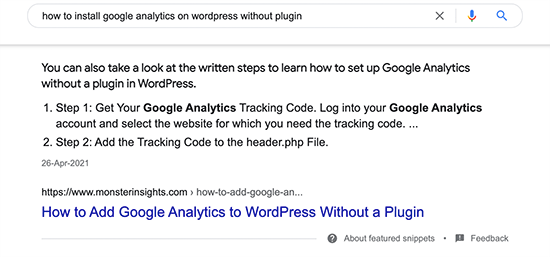
Google featured snippets are highlighted results that’s shown at the top of the page above position one that’s why they’re also known as position 0.

In the featured snippet, Google may display a search result in the Answer box or highlight it using microdata from your website.

For example, if Google thinks that your website will answers user’s question adequately, then it will appear on top with relevant text displayed as the description.

Answer box

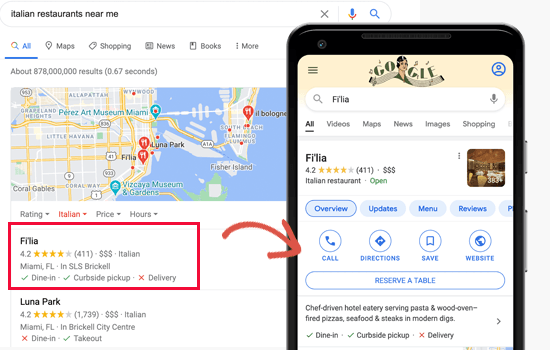
Similarly, Google also uses Schema.org metadata to fetch important information from websites and display them in search results at the top. For example, if you search for a local business, then their relevant business information will be at the top.

Local search results preview

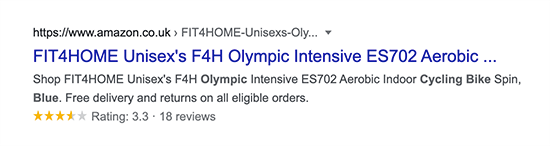
Featured snippets can enhance product pages for your online store, better showcase your recipes, highlight your real estate listings, and more.

Product results with ratings and reviews

The enhanced search display of featured snippets improves your organic click-through rate and brings more free traffic to your website.

This is why all smart business owners optimize their website, so they can have maximum chances of appearing as featured snippets in Google search.

That being said, let’s take a look at how to get Google featured snippets for your WordPress posts and pages.

Getting Google Featured Snippet using All in One SEO

Google uses Schema.org metadata and their knowledge graph API to display different types of featured snippets.

Schema markup is a special vocabulary that you can use in your content’s HTML code to give search engines more context about your website and individual pages.

In the early days, this used to be hard for small businesses because it involved a lot of coding.

But that’s not the case anymore, thanks to plugins like All in One SEO for WordPress.

It is the best WordPress SEO plugin on the market that’s used by over 2 million websites. They help you easily optimize your website for higher search engine rankings.

AIOSEO automatically adds Schema.org support which helps you provide information for Google Knowledge Graph. It has full WooCommerce SEO support, local SEO, images, news, video optimization, and more.

First, you need to install and activate the All in One SEO for WordPress plugin. For more details, see our step by step guide on how to install a WordPress plugin.

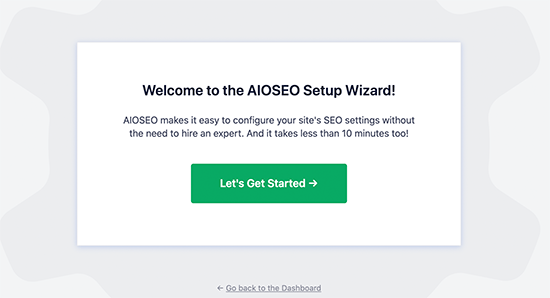
Upon activation, you’ll be asked to run the setup wizard. It is the easiest way to quickly select the best SEO settings for your website.

All in One SEO set up wizard

Need help with the setup? See our complete guide on how to install and set up All in One SEO for WordPress.

Now, if you have followed the setup wizard, the basic settings for your website to appear in featured snippets are already set.

But we’ll show you what they do and how to change them if you need to.

Setting up Knowledge Graph Information in WordPress

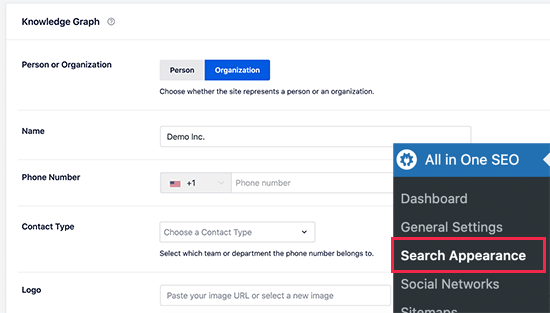
First, you need to visit All in One SEO » Search Appearance page and scroll down to the Knowledge Graph section.

Knowledge graph information

From here, you can tell the search engines who your website represents (i.e. An organization or an individual). After that, you can provide your business phone number, logo, and contact type information.

Don’t forget to click on the Save Changes button to store your settings.

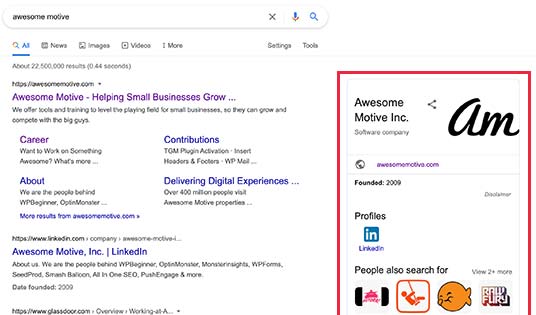
Knowledge Graph information is used by search engines to display knowledge panels. These panels appear when someone searches for an organization or individual person.

Knowledge panels in Google Search

Adding Local Business Information to Featured Snippets

More than 40% of all searches on the internet have a local intent. Majority of these searches lead to sales as users are looking for directions and things to buy near them.

Many businesses and organizations have retail locations and offices that customers can visit.

You can add this information using All in One SEO and let search engines automatically display it in featured snippets.

Local search results preview

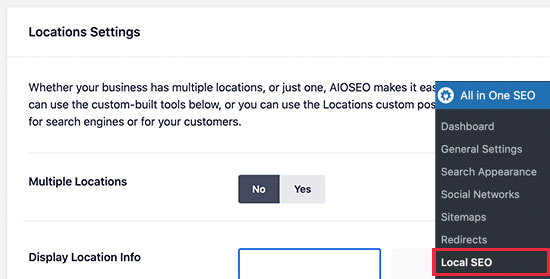
First, go to the All in One SEO » Local SEO page and activate the Local SEO feature.

Choose single or multiple locations

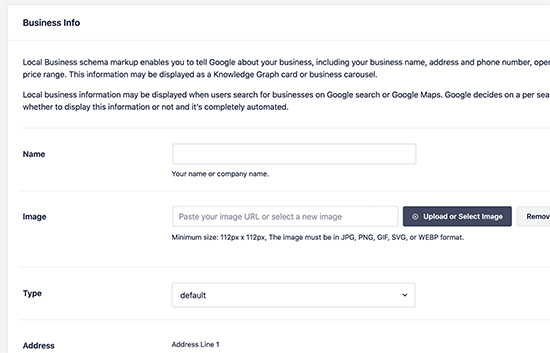
Upon activation, you can choose if your organization or business has multiple locations. If you do, then you can go ahead and start adding those locations otherwise you can scroll down to add your business information.

Business information

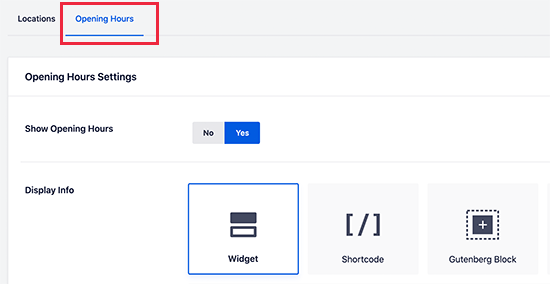
After that, switch to the Opening Hours tab to add your business hours.

Opening hours for your business

For more details, check out our article on how to add business hours in WordPress.

Finally, you need to connect and verify your business using Google My Business website. This gives you more control over your business’s appearance in Google search results and improves your chances appearing more often in featured snippets.

Add SEO Schema Markup in WordPress Posts / Pages

All in One SEO automatically adds the correct Schema markup for your content. However, you can review these settings and change them if needed.

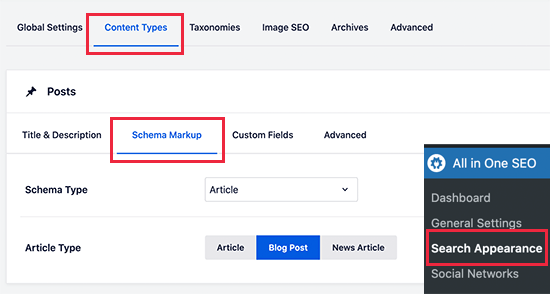
Simply go to All in One SEO » Search Appeaerance page and switch to the content types tab. From here, you’ll see all your post types listed (posts, pages, products).

You need to click on the ‘Schema’ for a post type to change its default settings.

Default schema settings

What if you didn’t want to change schema type for all posts? Well, AIOSEO let’s you change Schema markup for individual posts, pages, and other post types as well.

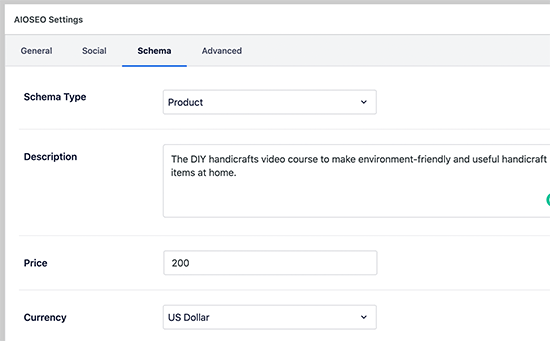
Simply edit the post or page you want to change and scroll down to the AIOSEO settings box below the post editor.

Default schema settings

This feature is particularly useful for businesses that use Pages to sell products with or without using an Ecommerce plugins. You can then simply edit your product landing page and change its schema type to Product.

Changing any page schema to a product in WordPress

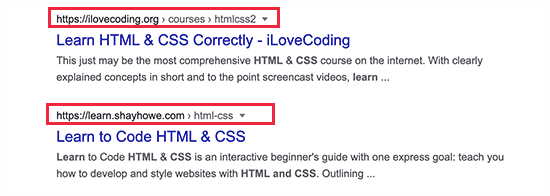
Another way to turn your search listing into a more enhanced featured snippet is by using Breadcrumb navigation.

Breadcrumb navigation tells users where they are on a website relative to the homepage. It is then displayed as a trail of links and would also appear in search results.

Breadcrumb navigation in search results

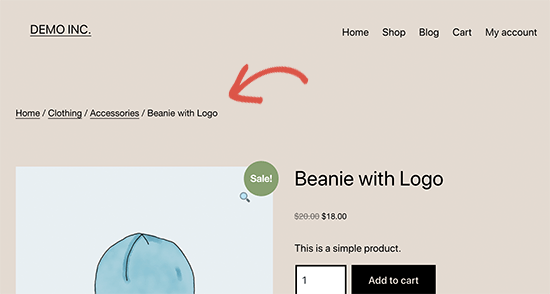
You can also display the breadcrumb navigation trail on your website. This allows users to go up and down, browse categories, and discover more products and content.

Breadcrumbs on a WooCommerce store product page

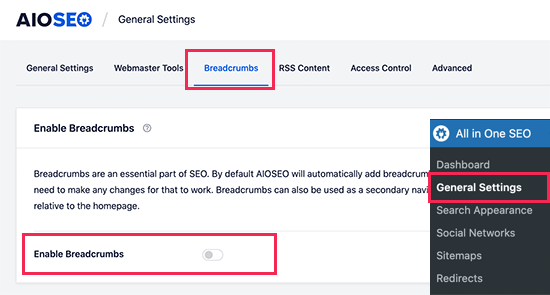
For search engines, All in One SEO automatically adds the required markup to your website’s HTML code. However, if you want to display breadcrumbs on your site too, then you can go to All in One SEO » General Settings page and switch to the Breadcrumbs tab.

Enable breadcrumbs display in All in One SEO

From here, you need to Enable Breadcrumbs and then use one of the available methods to display the links. For more details, check out our article on how to add breadcrumb navigation links in WordPress.

Get Site Links for WordPress in Google Search

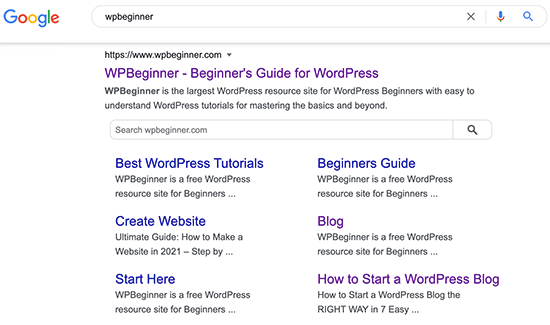
Site Links are the additional links that Google may show below a particular search term. They usually appear for brand and website names, but they may appear for other types of searches as well.

Site Links

To get site links, you need to add your website to Google Search Console and submit your XML sitemap.

Add sitemap to Google Search Console

You can increase your chances of getting site links by creating a proper website structure. This includes adding all the important pages for your website and use categories to properly organize your website structure.

Appear in The Answer Box for Google Search

What’s better than ranking #1 for a keyword?

Ranking #0 in the answer box.

Answer boxes are the search results that appear on the top and Google considers them to be answering user’s search intent.

Answer box

Answer boxes have an average click-through rate of 32% which makes them highly lucrative. Particularly for keywords with a purchase intent Answer boxes can lead to sales and boost conversions.

The only way to appear in the answer boxes is to improve the quality of your content. Make sure it is comprehensive and answers users’ questions from different angles.

See our detailed tutorial on how to appear in the Google Answer boxes with your WordPress posts and pages.

We hope this tutorial helped you get featured snippets with your WordPress site. You may also want to see our guide on how to get more traffic to your website with proven tips, and our comparison of the best email marketing services.

Sourced from wpbeginner

By Thom Murtagh

Inbound marketing serves to attract potential customers by dazzling them with great online content, specifically tailored for them.

Compare this to outbound marketing — which often interrupts potential customers in ways they might not appreciate — such as telemarketing, cold calling and television or radio commercials.

But by providing people with valuable content they can consume at their leisure, you can not only generate leads, but you can also secure lifelong customers. This makes inbound marketing essential for gaining new customers and creating loyal brand ambassadors.

Let’s take a look at what comprises inbound marketing, how to effectively implement the four stages of a successful inbound marketing strategy and why this is such an important aspect of your overall marketing strategy.

What is Inbound Marketing?

At its core, inbound marketing provides potential and long-time customers with valuable content. You accomplish this by guiding consumers through the buyers’ journey, and you do it all without actually advertising or outright promoting your brand.

Inbound marketers work in collaboration with the company’s sales team to draft a profile of your desired target audience. This includes answering questions such as:

  • “Who is our ideal customer?”
  • “What kind of income levels do they have?”
  • “Which demographic do they belong to?”
  • “How does our product or service solve a problem they’re having?”

With these buyer personas in hand, you can then move to the next phase of crafting your strategy: following the four stages of inbound marketing methodology.

The 4 Stages of Inbound Methodology

Generally speaking, you can divide your inbound marketing strategy into four main stages:

1. Attract

The first step is catching the eye of potential customers. Ways to attract these consumers vary, but ultimately this is what generates your leads.

Your goal should be to use SEO-enhanced digital marketing content, such as blogs or infographics, or a strong social media presence to drive people to your website, where you can move them further down your sales funnel.

2. Convert

After attracting site visitors, you then need to convert these leads into prospects. You can accomplish this through form-fills, calls-to-action or gated material on your website’s landing pages.

3. Close

Once you’ve converted the leads into prospects, you need to then close the deals. A CRM can identify where each of the leads came from while also tracking the sale sizes, which helps you further hone your messaging.

4. Engage

Your work isn’t done after closing the deal. You still need to delight your customers in engaging ways to earn their brand loyalty and turn them into long-time buyers.

How Can Content Attract Customers?

Each stage of the inbound marketing methodology is important, as is the type of content used at each stage. The type of digital content you publish should relate to the particular inbound methodology stage you’re trying to reach. But most importantly, this content needs to be valuable.

Quality content is key.

Whether it’s in the form of digital ads, videos, blogging, social media or graphics, the content you use in your inbound marketing campaign needs to be entertaining, informative and valuable to your customers.

When your content meets these criteria, you build more brand awareness, credibility and trust, while also educating the audience about your solutions. This helps create demand and, ultimately, generates leads.

How to Create Valuable Content

You have many options for what kind of content you can create to attract or engage customers, so long as you make sure you’re providing something of substance for them.

In the Attract Stage, you can collect data from industry analysts and market research, and share this data in easily digestible and shareable content, such as an infographic or a listicle blog.

Depending on your industry, you might want to make this fun and lively if you have a B2C model. Or, on the other hand, consider utilizing your industry subject matter expertise and write long-form, serious thought leadership pieces.

For example, you can attract consumers with your digital content if they are specifically searching for particular answers to a question they typed into Google. If your piece of content, say a blog, uses search engine optimized (SEO) keywords and phrases specific to your target audience, Google will give your content a high rank on its search engine results page (SERP). This, in turn, attracts viewers to the blog on your website.

Similarly, a strong social media strategy can work to help keep customers engaged. The brand’s official social media accounts can listen for feedback, answer questions, conduct surveys and generally just interact with other users.

It’s important to keep in mind that the type of content you use throughout the four stages of your inbound marketing strategy should all work in tandem and flow from one stage to the next.

While it might require you spending some time to craft and implement your own strategy that’s best suited for your brand’s needs, inbound marketing remains a cost-effective and proven method of marketing.

By Thom Murtagh

Thom Murtagh is a Chicago-based copywriter and digital marketing specialist. He enjoys cooking, jamming out on the ukulele, and trying to keep pace with the never-ending deluge of new movies, shows, and books.

Sourced from Brafton

By Matt Moran

“Blogging is dead”. They said that back in 2007. And again in 2008… and 2009… and 2010.

Yet here we are, a decade later, and blogging is still a powerful inbound marketing medium and source of revenue for many.

Maybe the truth is this: blogging isn’t going anywhere – it’s just evolving.

To shed some light on the current state of blogging, we’ve compiled a list of the most important blogging statistics, trends, and facts.

These blogging stats will show you exactly what blogging looks like this year and provide useful insights you can use to inform your blogging strategy.

Key blogging statistics

Let’s start by taking a look at some of the most important blogging statistics.

1. There are at least half a billion blogs on the internet

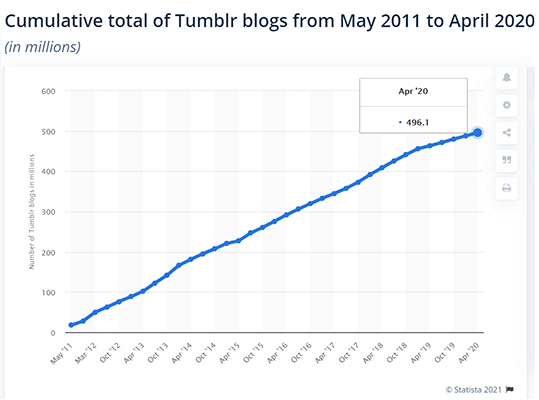
500 million is a conservative ballpark estimate, given that there were 496 million blogs on Tumblr alone as of April last year. And that’s not even counting all the Wix, WordPress, and Blogger blogs on the internet.

Blogging Statistic 1

The takeaway: Yes, the blogging space is definitely saturated at this point, but there’s always room for more. It’s still possible to carve out your own space in the market if you find the right niche and consistently create high-quality content.

2. 77% of all internet users still read blogs

“Who even reads blogs anymore, am I right?” Nope. As it turns out, you’re very wrong.

77% of all internet users regularly read blogs – and some of them probably don’t even know it. A huge chunk of the informational content we consume while looking for information are blog posts, even if they don’t look like it.  How-to posts, listicles, and buying guides are just some of the many different formats that blog posts can take.

3. The top blogs make over $1m+ per year

If you were wondering if you can still make money blogging, here’s your answer. The top 0.6% of blogs generate 7 figures a year in revenue.

Don’t worry, I know what you’re thinking: what about the other 99.4%? Well, it’s not just the elite that makes money. The top 10% of bloggers also make over $10,000 per year. That might not be quite a full-time income, but it sure is a nice side-hustle. (Source: Hosting Tribunal)

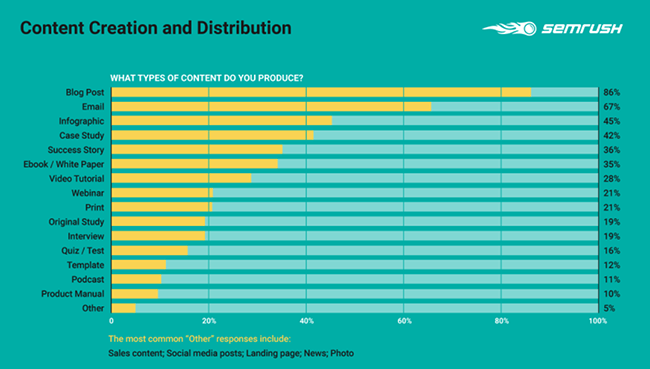
4. 86% of content marketers use blog posts as part of their strategy

This makes blog posts the most popular content format amongst marketers. Perhaps surprisingly, email comes in at a distant second place at just 67%. (Source: SEMrush)

Blogging Statistic 4

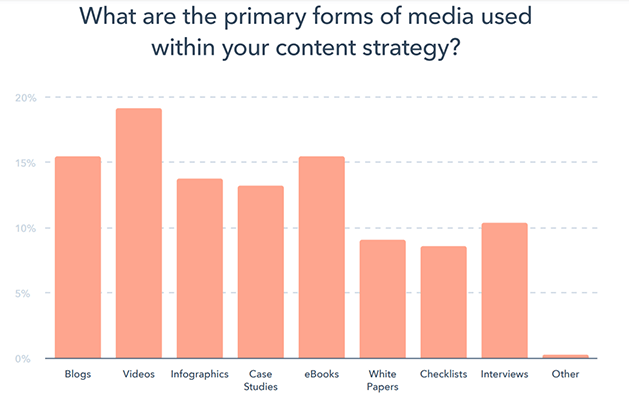
5. Blogs are the #2 form of media used in content strategy

Blogs lost out on the top spot this year to video, but they’re still a very popular form of media amongst content marketers – and it’s no surprise why. Blog content is a powerful, cost-effective way to generate traffic and leads. (Source: HubSpot, 2020)

Blogging Statistic 5

Blogging marketing statistics

Wondering how blogging fits into your marketing strategy? Take a look at the marketing-related blogging stats below.

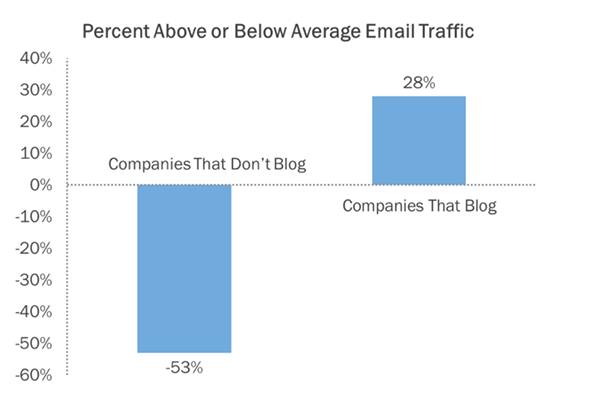
6. Businesses that blog generate twice the email traffic…

According to a HubSpot study of over 6,000 companies, those that blog get x2 the email traffic compared to those that don’t. Why? Simple: because blog emails contain content that customers want to read, and traditional emails don’t. (Source: HubSpot)

Blogging Statistic 6

7 … And 67% more monthly leads

Yup, companies with blogs produce 67% more leads each month than those without them. I think that statistic speaks for itself and proves if more proof be needed just how effective blogging is for lead generation. (Source: Demand Metric)

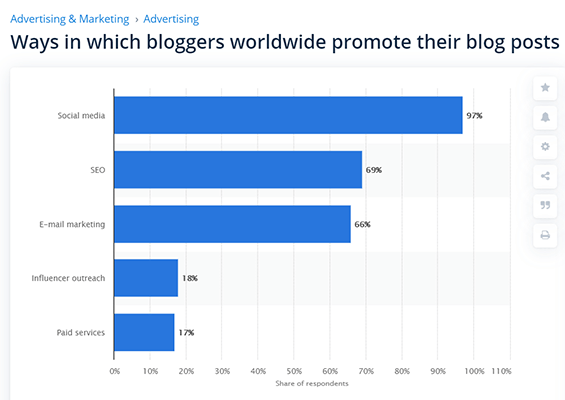
8. 97% of bloggers promote their blog posts on social media

Distribution is an important part of blog content success – and social media is the go-to distribution channel for bloggers. (Source: Statista)

Blogging Statistic 8

9. 61% of US consumers spend 3x as long consuming blog content than email content

Consumers still spend a lot more time reading blog content than they do emails – but that doesn’t mean you should neglect email marketing either. There’s room for both in your strategy. (Source: Social Media Today)

Blogging Statistic 9

10. Businesses with blogs get 97% more inbound links

And as we know, more inbound links means more ranking power. That’s why so many marketers create blog posts as part of their outreach strategy. (Source: HubSpot)

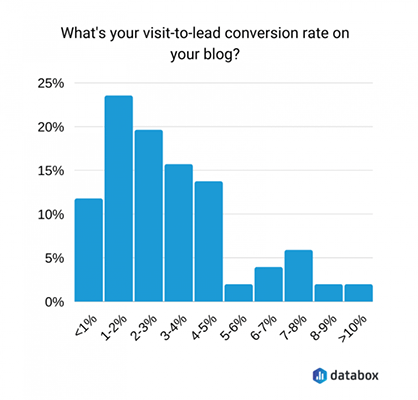
11. 1-2% is the average blog visit-to-lead conversion rate

In a survey by Databox, almost 25% of marketers said they had a lead-to-visit conversion rate somewhere between 1-2%. This is a good benchmark to compare your own blog conversion rates against.

Blogging Statistic 11

General blogging statistics

Here are some general blogging statistics that shed light on important questions about blogging monetization, growth, frequency, and more.

12. Only 1 in 3 bloggers monetize their blogs

That means the vast majority (2/3rds) of all blogs out there don’t generate any revenue. These not-for-profit blogs are likely mostly personal blogs run by hobbyists, rather than business blogs. (Source: Hosting Tribunal)

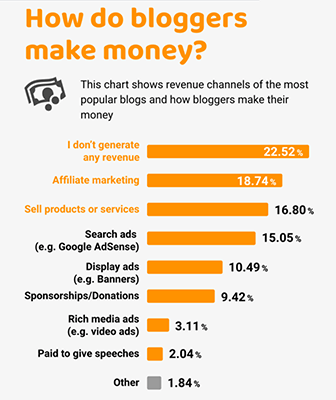
13. Affiliate marketing is the top blog monetization strategy

Amongst bloggers that do monetize, affiliate marketing is the most popular way of making money. The Amazon affiliate program is particularly popular and allows bloggers to earn affiliate revenue when readers click through their links before purchasing items on Amazon. (Source: First Site Guide)

Blogging Statistic 13

14. WordPress is the fastest growing blogging platform

Tumblr technically is the most popular blogging platform, given that there are over 470 million blog accounts registered on their platform, but as Tumblr is technically a microblogging platform and more akin to a social media platform than a website builder, it’s better suited to hobbyists than serious bloggers. Amongst business blogs, WordPress remains the gold-standard. (Source: W3techs)

15. There are roughly 70 million new WordPress blog posts published each month

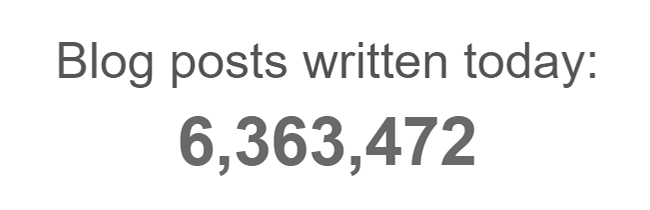
…and 77 million new comments. And that’s just on WordPress. The total number of blogs across platforms is anyone’s guess, but Worldometers provides a running live estimate based on a formula that factors in WordPress market share and historical trends. As of the time of writing, there have already been 6.4 million blog posts published today.

Blogging Statistic 15

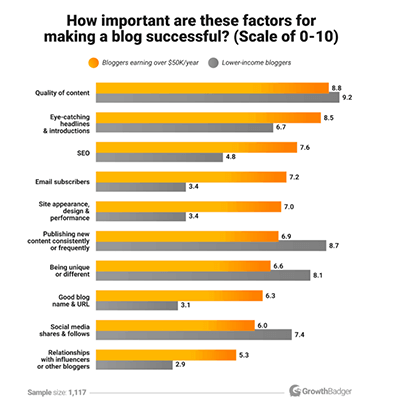
16. Content quality is the most important blog success-factor

Making sure you’re writing top-notch content is the number one most important thing you can do to make sure your blog is a success. (Source: GrowthBadger)

Blogging Statistic 16

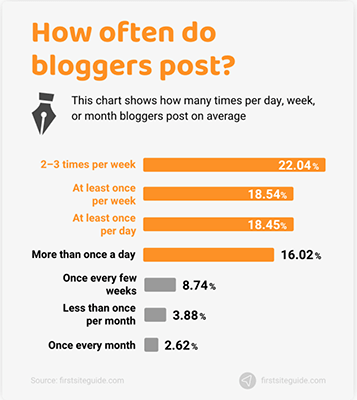
17. 22% of bloggers post 2-3 times per week

If you’re wondering how often you should be publishing new blog posts, 2-3 times a week might be a good place to start. More bloggers post 2-3 times per week than any other frequency. (Source: First Site Guide)

Blogging Statistic 17

Blogging ranking & SEO statistics

For many bloggers, the goal of each post is to rank at the top of the search results pages for their target keywords. But to do that, you need to nail your on-page SEO. Here are some blogging ranking/SEO stats that’ll help you to do that.

18. 95% of all blog traffic goes to page-1 results

If your post isn’t landing on page 1 for your target keyword, it might as well not exist as far as organic search traffic is concerned. The vast majority of searchers won’t go past the first page to find the content they’re looking for. (Source: Brafton)

19. The ideal blog post length (for SEO) is 2,100 – 2,400 words

According to data gathered by HubSpot. In other words, blog posts that are in this word count range stand the best chance of ranking well on the SERPs. Earlier data from Backlinko found that the average length of a page-1 blog post was 1890 words.

20. 83% of bloggers still do keyword research

If you thought keywords were no longer relevant, think again. While optimizing your blog posts around a specific keyword might be less important as Google’s algorithm has got better at assessing search intent, it’s still important. And that’s why the vast majority of bloggers still do keyword research to come up with topic ideas for their posts. (Source: Orbitmedia.com)

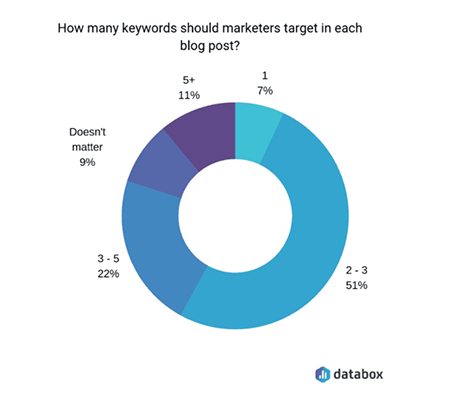
21. Most experts think marketers should target 2-5 keywords in each blog post

Don’t just optimize your posts around one keyword. Think about variations of your keyword that your readers are likely to search for and include a handful of them throughout your content. The more keywords you rank for, the more opportunities for traffic your post will get. (Source: Databox)

Blogging Statistic 21

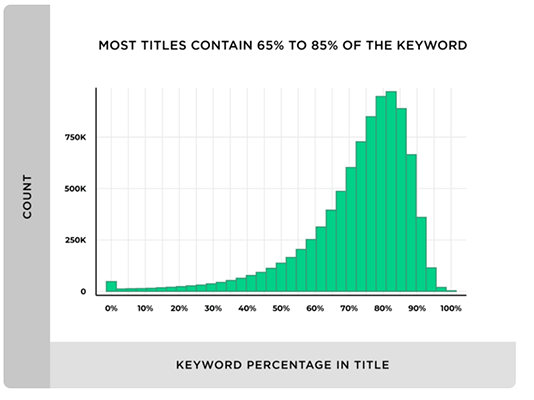
22.  Most blogs ranking on page-1 of Google include the target keyword in their title tag

The title tag has long been considered one of the most important on-page SEO elements, and that still holds true today, as proven by this stat from Backlinko.

Blogging Statistic 22

If you want to learn more, be sure to check out our dedicated article on SEO statistics.

Blog content statistics

The blog content statistics below provide useful insight that’ll help you to create high-quality posts that get more clicks, shares, and engagement.

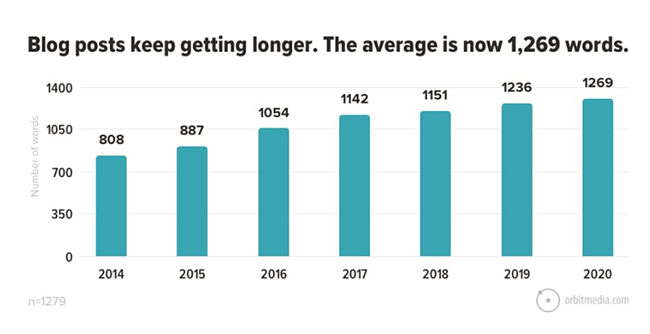
23. The average blog post length is 1269 words

2,100+ words might be best for SEO purposes, but the majority of blog posts out there are still shorter than that. The average length was 1269 words as of 2020, which is still more than 50% higher than it was 6 years ago.

Blogging Statistic 23

Why the increase? Well, one clear trend over the last few years has been a shift towards long-form content. Google seems to like content that covers a given topic in-depth over thin content. (Source: Orbit Media)

24. It takes 2-3 hours, on average, to write a blog post

This is how long most respondents in a survey by Databox said they spent creating blog posts. The same respondents said it takes over 8 hours to produce video content. This makes blogging significantly less time consuming than other inbound marketing content creation.

25. Blog posts that include an image every 75-100 words generate twice the shares

Nobody likes boring walls of text. Visual elements like images and videos enrich your blog posts, help to keep your audience’s attention and make your content much more shareable. Make sure you’re using them in your posts. (Source: HubSpot)

26. Blog post headlines that are 6-13 words long drive the most traffic

Aim to keep the word count of your headlines somewhere in this range to maximize your traffic potential. (Source: OptinMonster)

27. Consumers spend 88% more time on pages that include video content

Dwell time is one of the most important metrics you can use to measure the success of a blog. The longer your readers hang around on your post, the greater chance you have of ranking in the search engine results pages for your target keywords.

And one way you can boost your blog post dwell time is to add in video or audio content. 88% of consumers will spend more time on your page if it includes video content, and 45% of bloggers who include audio in their posts achieve better results.

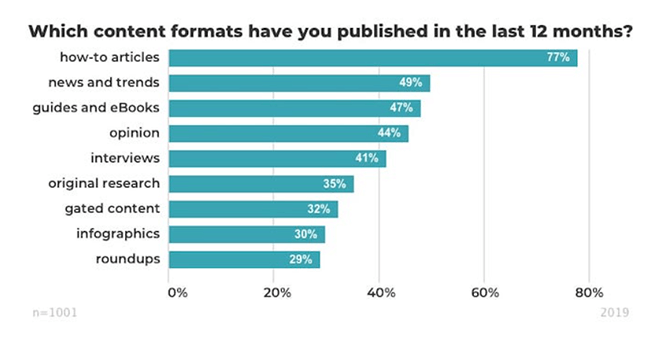
28. “How-to” posts are the most popular blog content format

77% of respondents in an Orbit Media survey said they’d published how-to articles in the last 12 months. This makes it by far the most popular type of content amongst bloggers. (Source: Orbit Media)

Blogging Statistic 28

Blogging traffic statistics

Wondering how to drive more traffic to your blog? Check out these blogging traffic statistics.

29. Businesses that publish 16+ posts/month generate 3.5x more traffic

The upshot of this is clear: more posts means more traffic. Aim to publish at least 3 posts per week if your content calendar allows and watch as your traffic goes through the roof. (Source: HubSpot)

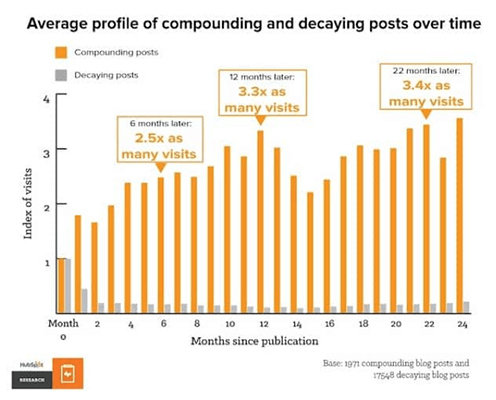
30. Compounding blog posts generate 38% of all blog traffic

This is despite the fact that only 10% of all blog posts are compounding blog posts. What are compounding posts, you ask?

Well, in a nutshell, they’re posts that generate traffic that grows over time. They’re the opposite of ‘decaying posts’, which are posts that generate traffic that peaks when first published but then declines over time (like news stories and posts about passing trends).

Blogging Statistic 30

Aim to create content around ‘evergreen topics’ that are likely to appeal to your audience and for years to come and you should see more traffic over the long term. (Source: HubSpot)

31. The use of promotional techniques to drive blog traffic is up 93% over the past year

It’s getting harder and harder to generate organic traffic, and bloggers/marketers are increasingly reliant on paid ads to drive traffic to their content. (Source: OptinMonster)

Blogging challenges statistics

While blogging might not be dead yet, the industry is nonetheless facing challenges. Here are some statistics that show the main hurdles brands, marketers, and independent bloggers face in getting their posts off the ground this year.

32. The average reader spends just 37 seconds reading a blog post

What does this mean? It means you need to work harder at grabbing your reader’s attention right off the bat. The average blog reader has a short attention span. Make sure you’re hooking them in in your introduction and keep them engaged with great content so that they stick around. (Source: NewsCred)

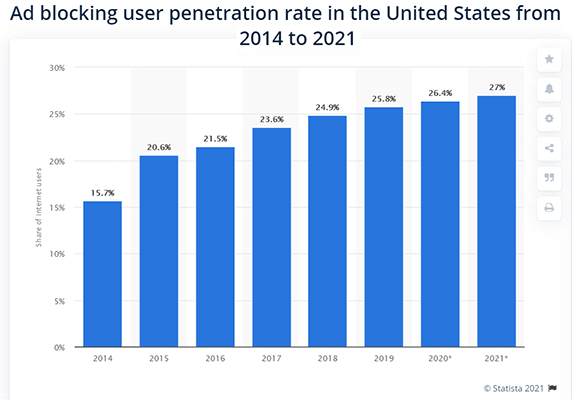
33. Around 27% of US internet users use ad blocking software

That number’s been growing steadily year on year. What does it mean for bloggers? Well, if you generate an income from traditional ad networks, you might want to start looking for new revenue streams. More future-proof monetization strategies include affiliate revenue and sponsored content. (Source: Statista)

34. 92.42% of keywords get less than ten monthly searches

Finding low-competition, high search-volume keywords is getting harder and harder as the blogging space becomes increasingly saturated. (Source: Ahrefs)

35. The average top-ranking blog post is 2+ years old

Blogging (and content marketing more generally) has always been a long-term game. It takes a while for your posts to gain traction and start ranking, as this stat proves. The average blog post ranking in the top 10 results is 2+ years old. If you’re looking for fast results and want to drive website traffic quickly, blogging might not be the right way to go. (Source: Ahrefs)

36. Around 74% of marketers think videos are better than blog posts for lead generation

One trend we’ve seen over the last few years is a ‘pivot to video’. Marketers are increasingly prioritizing video content to generate leads over blog posts – but that doesn’t mean blogs don’t have a place in your strategy.

While video content is great, it typically costs more and takes longer to make than blog content. Plus, it’s not ideal longer in every situation. Some readers (think busy commuters or people in the workplace) are more likely to want to skim a blog post than watch a video.

Final thoughts

There you have it – 36 enlightening blogging statistics, facts, and trends. We hope you were able to draw some useful insights from them!

If you take away just one thing from this article, let it be this: blogging is still a viable marketing method and way to make money as long as you put in the effort.

Focus on creating high-quality content that your readers will love and the traffic will take care of itself.

By Matt Moran

Sourced from STARTUP BONSAI