Author

editor

Browsing

By

These days, Facebook is known as the social network for the generations of people that may not really understand how the computer works. Parents, grandparents and, somehow, all of your older co-workers have made the platform home, driving the younger demographic, and subsequently its influencers, to newer social media sites like TikTok where they’ve built their own followings. But Facebook has revealed that it has plans to bring influencers to its platform so who knows how the social landscape will change in the near future.

Facebook recently unveiled its plans to pay influencers $1 billion to utilize its products, in a program that’s set to run until the end of 2022. Its mission? To revive the platform and stop it from being the place to go to see what your old teachers are up to nowadays. This also goes for Instagram which has quickly become second fiddle to TikTok.

Deadline reports that Facebook will reward creators, especially those just starting, and will include a new bonus program that compensates eligible creators for hitting milestones using Facebook tools. The company will provide seed funding for creators to make their own content.

“We want to build the best platforms for millions of creators to make a living,” CEO Mark Zuckergberg said in a Facebook post. “Investing in creators isn’t new for us, but I’m excited to expand this work over time.”

Some of these new programs are reportedly already available via invitation for select creators. Some of these are IGTV ads bonuses which enable creators to earn a one-time bonus for signing up, Reels Summer bonuses, which pays Instagram creators for creating Reel content on the platform, badges in Live bonuses, which rewards creators that reach certain milestones, and the Stars Challenges Bonuses, which involves gaming creators hitting certain monthly Stars milestones over the next three months.

More change is set to come soon because a dedicated place for bonuses will arrive in Instagram this summer and Facebook this fall.

Feature Image Credit: Getty/ Alex Wong

By

Sourced from PAPER

By Pia Silva

With a world population of upwards of seven billion people and more than 60 billion messages being sent out on a host of digital platforms every single day, standing out on social media is a tall task. Seriously, though — if you’re not using social media to build your business, why are you even on the internet? These days, just having a website isn’t going to cut it.

Of course, not all social media profiles are created equal. We’ve all seen those business accounts that only post once or twice a year. Or there are those accounts that are so spammy and salesy that you instantly regret ever following them in the first place.

If you want to really leverage social media to your advantage as part of your career as a solopreneur, you have to learn to build a true emotional connection with your audience. While this can sometimes be hard to do for a “faceless brand,” the very nature of being a solopreneur makes this much easier for you to accomplish — as long as you know how to post.

1. Speak DIRECTLY To (Not At) Your Target Buyer

It might feel like a lot of your social media posts aren’t all that personal — after all, you’re broadcasting the same message to hundreds, if not thousands, of followers.

But the thing is, your followers chose to be just that: followers. Their timelines and news feeds are personal to them. When it comes to following brands and influencers, they choose what content they want to see.

This means that if someone chose to follow you, you need to make sure that your content belongs with everything else that shows up in their news feed.

This became especially clear during a recent email conversation with Lamia Jarrah, an accomplished brand strategist and social media expert. She explained, “When you speak to your target audience directly, it’s a win-win. By identifying specific pain points and letting them see the value in your offering, the lead finds enough value in your solution that it outweighs the cost. This is how you attract high-quality leads.”

As part of this, be sure to take the time to listen to your social media followers. When they comment on your posts or send you a direct message, don’t hesitate to respond. This way, you can start a real conversation, rather than simply using your profile like a megaphone.

2. Don’t Be Afraid To Take A Stance On Something (And Then Do It)

When politicians fail to take a solid stance on an issue, they’re perceived as weak. Worse yet, people might think they’re trying to hide something. Whether you love or hate a particular politician’s opinions, as a voter, you understandably feel like you deserve to know what they believe.

The same thing applies to brands on social media. If you want to connect with like-minded followers, you need to take a stance.

This doesn’t mean getting super political with your content. It means taking a stand on the areas where you have real, notable expertise. If you’re a financial expert, don’t be afraid to speak out when you see trends that you think your followers should jump in on — or avoid.

Of course, as an expert in your field, you shouldn’t just take a stance. You should defend it with data, research, case studies or your own experiences. Strong opinions backed up with quality analysis will provoke exciting conversations on your profile that keep followers coming back for more.

3. Incorporate Emotion Into Your Everyday Posts: Joy, Humour, Empathy, Etc.

As much as we like to think of ourselves as logical beings, in reality, most of our decisions are based in emotions. The human brain loves to relate and form connections with others, and most often that is done by evoking some type of emotional response in those around us.

Cracking an industry-specific joke or trying to occasionally tug at your audience’s heartstrings may not feel as important as your big sales announcement or a rundown of your services. But when it comes to building a lasting emotional connection with your audience, these things can prove just as important as the more “direct sales” content you might want to post.

In reality, your followers aren’t going to remember many (if any) of the specifics of what you say. But they will remember how your content makes them feel. When you can make them feel a strong emotion, your personal brand becomes far more memorable than it would otherwise.

Remember, you’re a person — not a corporation. So act like a person. Think of the type of things you share on your personal social media accounts, and how you naturally integrate humour, happiness or empathy into your content.

While you probably don’t want to share what you’re eating for dinner on your business accounts, applying the general principle of acting like a real human being with real emotions will make it much easier for your content to resonate with your followers.

Start Building Real Connections

Building emotional connections with your followers on social media requires a fair amount of work — just like everything else in becoming a successful entrepreneur.

As you give your social media profiles the attention they deserve and engage with your audience in genuine, meaningful ways, you’ll strengthen your personal brand and be more likely to gain and keep their business.

Feature Image Credit: STEVE WASTERVAL

By Pia Silva

Follow me on Twitter or LinkedIn. Check out my website or some of my other work here.

I am a partner and brand strategist at Worstofall Design where we build brands that turn expertise into profit. Unlike most branding firms, we build entire brands in days instead of months, and only work for 1-3 person service businesses. Our unique process and niche positioning has helped us to overcome the hurdles we struggled with when we were starting our business, reliably attracting a steady flow of high paying clients and allowing us to enjoy the freedom that inspired us to become entrepreneurs in the first place. At Forbes, my goal is to clarify and simplify the elusive idea of “branding,” and share practical tips and tangible steps to help businesses find their unique brand voice that leads to profit.

Sourced from Forbes

Sourced from Forbes

Planning a digital marketing campaign isn’t a simple process. Many factors impact the creation of an effective strategy, and it’s important for everyone involved to be on the same page. However, there are a few aspects of a digital campaign that marketers may not always consider prior to creating a strategy.

As leaders in the communication space, the members of Forbes Communications Council are intimately familiar with what goes into crafting effective digital marketing campaigns. Below, 16 of them share important aspects that marketers should consider before diving into strategizing one.

1. Your Lookalike Audience

Most digital marketing campaigns involve some version of creating a lookalike audience, and most will create a lookalike audience of their entire customer database, but this is a mistake. You don’t want to target all of your customers; you only want to target your “best” customers. When you create these lookalike audiences, only mirror the top 10% to 20% of your customers, not the entire list. – John Huntinghouse, TAB Bank

2. Your Purpose And Success Metrics

Ensure there is a clearly defined purpose with the right success measures in place, then look at it strategically, using data from the entire customer lifecycle. This isn’t just a short-term campaign; it’s about enhancing business performance based on a lifetime of customer experiences that are recorded, analysed and fed back into the brand’s data ecosystem to build personal experiences and lasting relationships. – Azlan Raj, Merkle

3. Alignment With The Overall Marketing Strategy

“How does this campaign align with our overall marketing strategy, and how will it help in delivering the business strategy?” These are two questions I ask my team before starting any campaign, digital included. Another important aspect of digital campaigns includes measurements, and not just the digital metrics, but also how we capture sales metrics aligned with a specific campaign. – Raghunath Koduvayur, IQM Quantum Computers

4. The Customer Journey

What is the customer journey that you want your users to experience? What do you have today? How far is the experience from where you want to be? How do you need to get your experience ready for visitors before investing in inviting people in? – Sarah Falcon, Object Edge

5. Your Customer Profile

Definitely start with your customer profile. Having a really good understanding of the digital habits of your ideal customer is often overlooked, but it’s one of the best ways to influence the content and behaviour of your own digital marketing. – Amanda Davis, Zii Technologies

6. Previous Campaign Performance And Processes

When teams begin planning a digital marketing campaign, they often view the project as a “fresh start” and throw all of the previous campaigns out the window. However, an assessment of previous campaigns in terms of performance and process should be at the heart of planning any new digital marketing campaign. Learn from what you’ve done and keep trying new things. – Alfie Dawson, Datasine

7. Your Target Audiences

It’s important to be aware of and define your target audience for each campaign. In the digital world, one campaign could have multiple audiences, which in turn calls for multiple ads. People are hungry for personalization, so you have to be very diligent and think through all of the different touch points within a campaign to ensure the message is speaking to the proper audience. – Emily Burroughs, BGSF

8. Contextual Targeting Through Other Channels

In light of recent changes to the availability of consumer data, digital marketers need to acknowledge the increasing importance of contextual targeting and consider other channels in the wider mix. Unlike in the online world, out-of-home advertising is one-to-many, and context has always been king. With the advancement of programmatic digital out-of-home (DOOH) media, marketers now have far greater control to deliver contextual messages globally and at scale. – Nikki Hawke, Hivestack

9. Testing Budget

Testing budget isn’t really something that many digital marketers talk about. View it and use it as you would money when you go to a casino: You are taking a risk, but it’s money that you can lose, and it won’t break the bank. Unlike gambling, though, if you have a great creative team you will probably get that ROI back! – Philip Kushmaro, Usercentrics

10. Purchase Behavior

Marketers should consider purchase behaviour targeting. Rather than targeting a campaign at a specific age group, profession or gender, you should aim to reach people who have purchased similar products in the past and are therefore more likely to buy them again. Here, targeting is based on proof, not an assumption. Marketers can expect conversion rates to rise and the bottom line to increase. – Anil Malhotra, Bango

11. How You Can Leverage Chatbots

Digital marketing campaigns have to be omnichannel and provide the right information to customers at their point of interaction. Real-time conversation via chatbots can help turn visitors into prospects and customers. Be sure to add chatbots to the strategy and think through how the campaign message can be personalized and delivered via these intelligent tools. – Parna Sarkar-Basu, Brand and Buzz Marketing, LLC.

12. First-Party Data

Knowing how to use first-party data is a critical first step. In our cookie-less world, it’s increasingly expensive to acquire new customers. To maintain the ROI of digital programs, marketers must focus on creating long-term customer engagements that increase the lifetime value of any customer they do acquire. And the best way to do that is to use first-party data to create unique, engaging experiences. – Christian Selchau-Hansen, Formation

13. Where The Target Is In The Sales Funnel

As marketers, we need to evaluate where the target is in the funnel and align our strategy accordingly. Are you not only looking for buzz and to create amplification for your brand, but also to potentially bring a number of unqualified contacts, leads or visitors to your website? Or is it something more product-focused to engage with people who already know about the brand but are still discovering what you do? – Alison Bringé, Launchmetrics

14. The Follow-Up Communication Plan

Assuming the basics—goal, audiences, content, visuals, channels and measurement—are defined, the digital marketing campaign funnel and follow-up communication plan are critical for monetization purposes. This should be based on a mix of segmentation buckets with clear goals to convert leads, boost activity and build loyalty. Growth acquisition, support and loyalty-team dialogue are key here. – João Mendes-Roter, Itamar-Medical

15. Other Internal Viewpoints And Ideas

As a marketer, you should have multiple brainstorming sessions with your internal teammates. This should include sales and other teams that are impacted by the campaign. Another very important part is to create messaging that embodies your solution. – Alex Cox, Opsani

16. The Cost Of Doing It Right

Many don’t consider what it costs to do it right. As a product-based company, we need multiple studio shots, videos and blackouts to create the right digital imagery. These upfront costs are more expensive to commit to consistently than the fairly transparent ad-buying CPC and ACoS metrics that you will track and optimize to define the winners after the initial investment. – Edwin Bender, Broan-NuTone

Sourced from Forbes

Communications, PR, public affairs & media relations executives from Forbes Communications Council share firsthand insights.

By 

Does your business market in multiple cities or countries? Wish there was a simple way to localize your marketing based on location or language?

In this article, you’ll discover how to set up a Facebook global pages structure with Facebook market pages to streamline your Facebook marketing.

Why Use a Facebook Global Pages Structure?

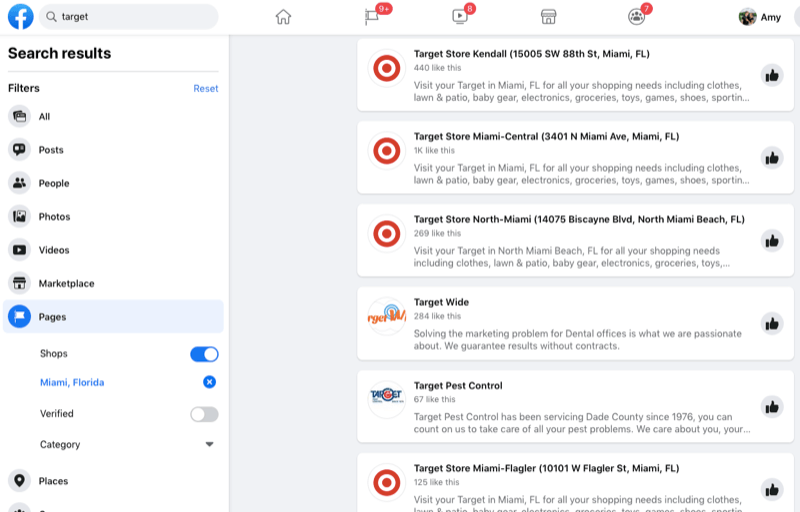
Facebook location pages, which have been available for a number of years, are particularly helpful when consumers are searching for directions to one of your brick-and-mortar stores or you’re offering discounts or special offers at certain locations.

Location pages show up in Facebook search individually, making it easier for people to find stores and offices that are near them.

Facebook global pages, which are slowly being rolled out, are for businesses with multiple global audiences that wish to leverage localization in a particular market or for a particular language, but want to retain a single Facebook page URL.

Global page structures contain market pages, which are simply different versions of the same brand page made visible to users based on their geographic location. In Facebook search, users see only the market page that relates to their region (although they may switch the region if they want).

As an example, Nokia Mobile utilizes global pages. When you click the three-dot button on their page, you’ll see the option to Switch Region. If you change the region, the content on the page changes too.

Click HERE to read the remainder of the article.

By 

Sourced from Social Media Examiner

By Alex Kantrowitz

If you make stuff for the internet, and are good at it, you are very happy right now.

It’s an absolutely incredible moment to be creating stuff online.

After long neglecting people who create content for their products, the tech platforms are showering them with money, support, and opportunity. Facebook just pledged $1 billion to creators by 2022. TikTok is on its way there. YouTube, Pinterest, and others are promising millions of their own. Snapchat wouldn’t return creators’ calls a few years ago; now, it’s paying them millions per month.

We’re seeing a stark — but inevitable — shift in the conventional belief that user-generated content was enough to fill social platforms’ feeds, and keep them vibrant. It turns out that making videos, photos, or words that people want to watch or read is difficult. Only a select few are good at it. And the platforms are all competing for their work. So, it’s advantage: talent.

“We want to build the best platforms for millions of creators to make a living,” Mark Zuckerberg said yesterday, no doubt looking at TikTok’s hasty, creator-driven incursion on his territory. The bulk of Facebook’s payments will likely go to thousands — not millions — of creators. But its plan to supply a livelihood to individuals who post on its services represents a significant shift.

Just five years ago, a group of Vine creators walked into Twitter’s headquarters and asked to be paid for their work. Going viral was fun, they said, but the app would be nothing without them, so they wanted to be compensated. Twitter balked at the request, Vine crumbled, and the rest is history. Creators moved to Snapchat and YouTube (the former had promise, the latter had money), and both platforms are now worth billions.

When TikTok arrived a few years later, it didn’t rely on its technology alone. The company struck deals with creators, paid some of them salaries, and emailed updates winking at what trends would be popular (check out Bloomberg’s Foundering podcast for more). TikTok’s creators responded, and it’s now the most vibrant social app in the world. TikTok recently became the first non-Facebook app to hit 3 billion downloads. And Facebook is now so concerned that, on top of the $1 billion it’s spending on creators, it’s running a set of experiments that would essentially turn Instagram into TikTok.

Facebook and its counterparts’ plans to pay creators are unique because they empower the individual. Tech platforms like Facebook have paid limited sums to media companies like Viacom and Hearst to produce video for their apps. But the platforms long viewed individual creators as insignificant players who could be satisfied with a brand deal. Now, they see the individual creator as the key differentiator, so they’re paying the talent directly. No middlemen.

A similar shift is taking place in journalism, where tech companies are throwing money at individual journalists and putting pressure on institutions to pay stars and keep them happy. “Lucky for me, if not for you, it’s a rare moment right now where it’s actually good to be talent,” Choire Sicha said as he left his job running The New York Times’ Styles section, one of journalism’s most desirable management jobs.

Asked to elaborate, Sicha said journalists are “just a part of a larger boom” where individuals are getting “some weird fat one-off paychecks.” He emailed:

Podcasts, newsletters and the digital media subscriber business overall means that people need … actual people, actual voices. (This is why it’s also a boom for people to write pilots and other televisual stuff.) And so, if you are willing to go through the steps to commodify yourself, you’re actually a well-valued commodity! Think about how hard a Kara Swisher had to work. They had to start whole companies! Now all you basically have to do is tweet really aggressively for a few months and someone pulls up with $300,000 in Substack Bucks. The real winners are gonna take that money and then go live somewhere cheap and wonderful until they die.

Sicha said he expects this moment to pass. And it may well do so. But until it does, those who create things online will continue to have a blast.

By Alex Kantrowitz

Sourced from Big Technology

By ,

Corporate Pride strikes again.

One inevitability of Pride month is what’s (un)affectionately known as Corporate Pride – which, as the name suggests, involves all manner of brands paying lip service to the cause with rainbow logos and the like. One of the slightly more creative efforts this year came from Coca-Cola – but it appears to have backfired spectacularly.

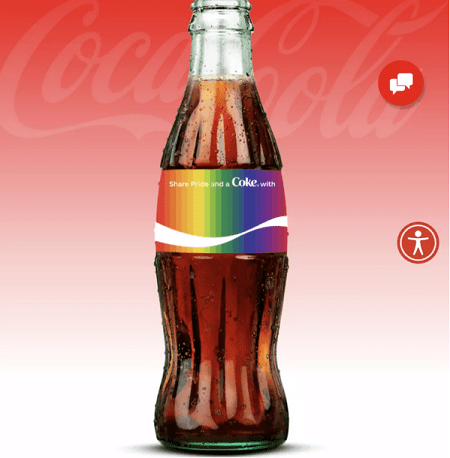
The company’s new custom bottle creator lets users personalise a rainbow-coloured Coca-Cola bottle sticker by entering a word, name or phrase of their choice. But the list of banned phrases, as well as some that are allowed, has proven somewhat questionable. (Check out our best print ads for some bold advertising that actually works.)

Coca-Cola

Coca-Cola’s custom bottle creator (Image credit: Coca-Cola)

If the user attempts to create a bottle with one of Coca-Cola’s prohibited words or phrases, they’ll receive the message: “Oops! Looks like the name you requested is not an approved one. Names may not be approved if they’re potentially offensive to other people, trademarked, or celebrity names. We’ve worked hard to get this list right, but sometimes we mess up. If you think this is an error, please contact our Customer Care team. Otherwise, please try again, keep it fun and in the spirit of sharing!”

And, naturally, users have been testing the limits of what Coca-Cola considers “fun and in the spirit of sharing”. In one of many eyebrow-raising examples, ‘White Lives Matter’ = fine, whereas ‘Black Lives Matter’ = not fine.

“We’re continuously refining and improving our Share A Coke personalisation tool to ensure it is used only for its intended purpose,” a Coca-Cola spokesperson told CNN Business. “Actual bottles are not made with words that are inconsistent with the program’s intent. We have clarified in the tool’s preview mode that proposed language may require further review.”

While we appreciate the company’s desire to filter out offensive phrases, one can’t help but wonder whether Coca-Cola’s half-hearted censorship mechanism is actually better than no mechanism at all. Like McDonald’s tasteless coronavirus-themed logo, Coke has ended up, no matter how well-intentioned, with a bonafide marketing fail on its hands. Still, at least it’s in good company this year – who can forget Burger King’s abysmal attempt at humour on International Women’s Day a few months back?

By

Sourced from CREATIVE BLOQ

By Laura Perkes

The often overlooked tactic enhances reach, raises brand awareness and drives new customers and clients to your business.

Picture the scene: It’s 2021, and the enormity and popularity of  is providing entrepreneurs with a plethora of opportunities and the ability to tap into an audience of hundreds of thousands, if not millions, of potential customers, all at the push of a button.

When Facebook first launched back in 2004, it really was the first of its kind. Before that, we had MySpace and a few other platforms I’ve never heard of (Friendster or Hi5, anyone?), but none of them had managed to make the impact that Facebook did, and still does.

Since Facebook, we’ve seen the launch of Instagram in 2010 and TikTok in 2016, plus the addition of Instagram Reels in 2020. Not to mention other platforms such as Snapchat and Clubhouse, all giving us access to a wider audience.

In the past 19 years, we’ve all had the luxury of being able to communicate directly with our fans, customers and potential customers in a way that has never been possible before. But before the advent of social media, businesses and brands were built the “old fashioned” way, using more traditional marketing techniques, such as advertising and face-to-face networking.

Social media seems like the Holy Grail

When the world became more digitized, tools such as online advertising, pay-per-click and email marketing grew in popularity and gave entrepreneurs and brands alike the chance to reach an even wider audience. Data was easier to track and metrics and insights enabled you to calculate your return on investment.

For many entrepreneurs and startup businesses, social media seems like the Holy Grail. Not only do you get to build an audience and interact and engage with your followers, but it’s also completely free at the point of entry. Of course, you can now invest in adverts across all social-media channels, but for someone completely new to the  world, social media is a sensible place to start.

Yet there’s a missing piece of the puzzle here. A modality that’s as old as time, but a powerful force when it comes to sharing messages, raising brand awareness and building on the know-like-trust factor. And that’s .

Everything you say and do is PR

Public relations exists so that you can communicate with your audience. If you Google “public relations,” you will find Wikipedia’s definition: “Public Relations is the practice of deliberately managing the release and spread of information between an individual or organisation and the public, in order to affect the public perception.”

So, essentially, everything you say and do is PR, but the platform in which you share your message changes. The tools you use to share your message changes. But the message remains the same. Your audience, generally, stays the same, yet where they hang out may change, based on the launch of new platforms, or the increased popularity of existing platforms, such as YouTube and podcasts.

YouTube first launched back in 2005 and podcasts launched a year earlier in 2004, yet they’ve only really exploded as a business tool over the past few years, giving entrepreneurs and startups the chance to create easy-to-share and easy-to-digest content that their ideal clients will love  content that can then be repurposed across social-media channels.

Back in 2004, when I first started my career in PR, there were really only three types of media outlets to pitch to: print titles, TV and radio. Online titles were seen as the poor relation to print, so we rarely bothered pitching to them as clients didn’t see the value in them  oh how times have changed!

However, because there was less choice, it made it easier to build relationships with journalists and work on features and content ideas with them. Over time, the media landscape has changed, and online started to make a huge impact and podcasts and YouTube channels became prime real estate.

Now, there is way more choice when it comes to gaining exposure, so while you may not consider social media, YouTube or podcasts your typical media outlets, they’re still consumed by your ideal clients, still covering topics that complement what you do, and they still have a ready-made audience of loyal fans that you could (and should) be tapping into. How? Quite simply, by pitching.

One piece of content can be shared and shared again

The way you’d pitch yourself to a podcast host is the exact same way that you’d pitch yourself to a journalist. That is a PR tactic and a skill that publicists have been honing for decades. Now, one of the utterly brilliant, yet often overlooked, powers of PR is that you can take one piece of content and deliver it to millions of people in one go. No other form of  enables you to do that.

It may take time to build and execute your PR plan. You may not see anything published or broadcast for three to four months, but when it lands, it’s well worth the wait, as your content has the potential to be seen or heard by hundreds of thousands, if not millions, of potential ideal clients and customers. Just think about the circulation of a print publication, then triple it to get an average reach.

Think about the audience size of a podcast, then think how many extra people you can reach by sharing it across your social-media channels. And then think about how many extra people you will reach when the host shares it across their social-media channels. All of a sudden, one piece of content can be shared and shared again, leaving behind a digital footprint and breadcrumbs that can lead even more people to your business.

This is another reason why PR is such a powerful and influential tool  because what you do now is searchable forever. PR isn’t always easy to measure, which potentially adds to its downfall in the ROI stakes, but it’s still a tactic that should be employed, and a muscle that should be flexed, as part of your communications strategy.

PR is yet another way of transporting your business and your expertise to a wider audience, an audience that has been built up and cultivated for decades, that already knows, likes and trusts the outlet and the content they produce.

So, next time you decide to put all your eggs in one basket and focus all of your attention on one particular marketing tool, or one particular platform, ask if there’s a more efficient, more effective way of sharing your message to drive hundreds of thousands, if not millions, of new customers to your business. The answer, in case you missed it, is PR.

By Laura Perkes

Sourced from Entrepreneur Europe

Not a single day goes by without my speaking to an early-stage entrepreneur who wants to discuss marketing and how to get quick results. So let’s just get this out of the way from the beginning: Marketing takes time.

There are some tactics you can use that will generate a return on investment (ROI) in the relatively short term, but achieving real long-lasting results takes time. Put simply, anything you achieve in the short term will go down as fast as it went up. You want to play the long game. This is true even if you’re tempted to try some things that are less organic but might look good on the surface, such as buying likes or followers. Don’t do that.

Instead, here are five reasons you should start generating content on your own company blog as soon as you can:

Search engine optimization (SEO) is very much a thing

I know that social media gets all the hype nowadays and no one is talking about search anymore, but they’re wrong not to. A quick glance at the numbers will show you that search drives just as much traffic as social does, at least for the time being.

Once you’re sold on the importance of search, now the question is how to leverage it. I am obviously oversimplifying here, but the more incoming links to your site, the better. How do you get people to link to you? Well, some SEO experts would tell you to buy links. I say listen to Google and produce good content people want to talk about and link to.

Getting social on social media

Let’s break down what social media means. The “media” part is obvious, but what about the “social” part? Are you engaging with people like you do offline or are you using Twitter as a glorified RSS feed or sales platform?

I once heard a speech from the guy who invented the “Like” button at Facebook. He explained that he wanted to give people the ability to express appreciation for someone else’s content. What did it do? We ruined it by begging for likes.

How about instead of asking me to follow you, giving me a reason to click “Like” or “Follow”? What’s the best reason to get someone to do that? Fill your feed with quality content, yours or someone else’s, and that’s how you increase your numbers across social media.

Public relations is not the same as content marketing

Let’s clear one thing up: When you or someone on your team writes an article about the industry on the company blog, that’s called content marketing. When a journalist writes about the company, that’s called public relations (PR).

So why does content help with PR? When you pitch a journalist, the first thing he or she is going to do is Google your name or the company’s name. When there is no footprint on the internet, that raises a red flag.

However, when he or she encounters all of your content, all of a sudden you are now a colleague, and not just a company pitching that journalist. Just like he or she produces content, you produce content.

Content changes the whole dynamic between you and journalists.

Your user acquisition can be much more frictionless

Whether you are running ads or acquiring users in another way, content makes the whole process that much easier.

It’s fairly straightforward. If I come across an ad for a company I’ve never heard of, I might click, I might not, but even if I do, it’s a very cold click, and converting me will be quite the challenge.

If, however, I see that ad and think to myself, “Oh, I know that company. I read their blog, listen to their podcast, or follow them on Twitter,” the chances of engaging me are significantly higher. Simply put, content elevates your brand.

Business development with a stranger is not as fun as with someone who trusts you

Finally, last but not least, content marketing helps with business development. Imagine going out to dinner with a potential customer and the person sits across from you with a look on his face that says, “What are you selling this time?”

Now contrast that with the look on his face that says, “I am loving your content. You clearly know your stuff, and I want to work with professionals. So how do we get started?”

That right there is the difference between cold business development and warm business development. That’s the difference between a company that produces valuable industry content and a company that only focuses on promoting itself.

So, the bottom line, in case it wasn’t clear? Stop reading this and start producing content of your own.

Feature Image Credit: Getty Images

BY HILLEL FULD

Sourced from Inc.

By Jay Feldman, DO

If you’re anything like me, you’re probably sick and tired of all of the gurus telling you how easy it is to make extra income from a side hustle. This isn’t because those side hustles don’t work, but they don’t always provide the same successful outcome for everyone who tries them — especially introverts.

Since introverts are known to be reserved, quiet and thoughtful, the opportunity to earn some spare cash from side hustles remotely are perfect for them. Remote side hustles also provide introverts with the opportunity to make money on their own time without worry of a daily commute.

1. Freelance writing

Spending a few years freelancing to bulk up your writing portfolio of both clients and content can lead to a well-paying and flexible career.

Along with copywriting, blog writing and ghost-writing, finding a niche as a freelance writer for more technical pieces will allow you to charge clients more due to the dedication and focus they require. Sites like USA Wire will actually pay you to contribute content.

2. Graphic design

Many introverts who start dabbling in design — even if they haven’t designed before — find they have a talent for it.

Tools like Canva can help you design infographics, email templates, fonts and more. Before getting started in graphic design, consider:

  • What kind of services you want to offer
  • Your target customer market(s) and pricing
  • Which software(s) you will use

3. Web design

Every brand in today’s world needs a website. Though building websites as a freelancer today is more challenging due to market saturation, it remains a strong side hustle option from the flexibility, creativity and control it provides.

Introverted web designers can set themselves apart from other web designers by becoming more talented in niche areas of web design, such as:

  • SEO optimization
  • Content strategy and creation
  • Copywriting
  • Social media management
  • Establishing pay-per-click advertising campaigns

4. Video editing

Video editing provides introverts with the freedom to create their own schedule and negotiate pricing with clients. Tools like Magisto and Splice make the video editing process much easier than in years past, too.

Here are just a handful of markets to give you some ideas on which to target for a video editing side hustle:

  • Conference videos
  • Explainer/educational videos
  • Marketing/promotional videos
  • Recorded presentations
  • Recorded speaking events

5. Audio engineering

If introverts have the essential tools at their disposal, they can quickly start offering audio engineering services like mixing, producing and tracking. Here are some things you need to do:

  • Create a studio in the quietest area of your home
  • Have a laptop with a strong processor
  • Install DAW software like Audacity or Garageband
  • Have a high-quality recording microphone
  • Have a MIDI controller or keyboard

Audio engineers also offer their produced soundtracks to other industries such as podcasters or stock audio platforms, and even earn money by streaming their music online through apps like Spotify or YouTube.

6. Social media management

Social media can be a very lucrative side hustle for introverts. The trick to making real money from managing social media as a side hustle lies in the power of networking.

As a social media manager, your time will mostly be spent managing clients’ websites and social media accounts, approving comments and reviews and ensuring web pages are published on time.

Like many jobs and side hustles alike, the key to becoming a winning social media manager is being consistent in providing value.

7. Virtual assistant

Having a virtual assistant job as a side hustle entails routinely interfacing with only one other person. It can typically be done entirely remotely, too, making it more appealing to introverts.

Virtual assistants can expect to make between $10-20 per hour (depending on your employer) for a number of tasks like:

  • Reading/writing/responding to emails
  • Scheduling appointments
  • Managing calendars
  • Posting content on websites/social media

8. Taking surveys

There are plenty of legitimate ways to get paid by answering surveys, as many companies outsource survey agencies to gain insight on consumer behaviour. Most pay between $0.50-2.00 per survey, and each one shouldn’t take more than 5-15 minutes to complete.

9. Book reviews

Reading is a common hobby for many introverts, so why not get paid to read and review some books?

Some of the best sites to use to get paid for your reviews (and even get some free books) include:

If you already have an existing blog, you can also make money by writing sponsored posts or book reviews. If you have enough clients as a freelancer, you could also earn money as a freelance book reviewer.

10. Read emails

For introverts who shy away from the conversation, getting paid to read emails can end up being a dream side hustle.

Thankfully, there are now a ton of different sites you can sign up for that pay you to read other peoples’ emails, including the following sites:

For the more email-savvy introverts, inbox management is also a viable option.

Related: How to Start a Side Hustle: Find Your Idea

11. Start a blog

Blogging is a great way to make money that requires minimal interaction with others. Monetizing your blog may take a few months to see its potential, but the ability to create a winning blog you can monetize lies in:

  • Creating quality content
  • Producing content that can be consistently consumed and shared
  • Partnering with advertisers to sell digital ad space on your blog

If you stick to this process, your blog can make money off the content you want to write.

12. Affiliate marketing

If you already have a strong following on Instagram, you can promote a brand’s latest product or service. Each sale you facilitate earns you a portion of the sale.

The potential income you can make through affiliate marketing is virtually unlimited, depending on the size of your target audience and their buying trends as consumers.

13. House sitting

If you’re looking to make money each month with almost no work or social interaction, becoming a professional house sitter may be your best bet.

As a house sitter, your mission is simple: stay at the client’s residence and occupy it in their absence.

House sitting is a common need for homeowners who routinely leave town or travel. If a client’s pet needs care, you can charge even more per day or week, depending on the client.

14. Podcasting

Starting a podcast as an introvert can prove to be a very lucrative side hustle depending on the topic(s) of audio content you produce, as well as the quality and consistency of that content.

Many podcasts are recorded solo, meaning introverts don’t need to worry about outreach to potential interviewees. Instead, spend that time to learn about how you can best market your podcast, and to who.

15. Transcription

If you’re an introvert with crazy-awesome typing skills, look into online transcriptions as a side hustle.

Transcriptionists convert audible conversations or content into typed documents. Today, everything from YouTube videos to legal proceedings requires transcription.

Transcriptionist work can pay very well for those with a knack for it, and most employer’s transcription guidelines tend to follow the most basic transcription training courses, which you can easily find available for free online.

16. Dog walking

Let’s be real: As an introvert, there are times when you will simply grow tired of dealing with other people. As a dog walker, the most interaction you’ll have with other people is through the dog’s owner.

Getting started as a dog walker is made even easier with apps like Rover or Wag. Depending on where/when/who you walk for, you can make between $15-30 for less than an hour of time that you spend walking!

17. Food delivery

Since the Covid-19 pandemic began, food delivery sales have been at an all-time high. For introverts with reliable transportation, this presents a great side hustle opportunity.

Becoming a designated driver for apps like DoorDash or Instacart offers ways to make extra money, including tips. Since the bulk of the work is driving, introverts may find this an appealing way to earn $10-15+ per hour, depending on where they live and the number of deliveries completed each day.

18. Day trading

The recent rise in cryptocurrencies such as Bitcoin and Dogecoin has seen millions become more aware of the earnings day trading can bring. However, trading on the stock, futures or foreign exchange market is where most day traders make their money.

According to one trading expert, the best trading times are when markets officially open and close (around 9:30am and 4:00pm) each day. Because the first hour of each day tends to be when trade prices are most volatile, trading at these times provides the best potential for profits.

Remember: you never lose money off of stocks you don’t sell, you only lose money when you sell (rather than buy) during the dip.

By Jay Feldman, DO

Sourced from Entrepreneur Europe

By

It’s an unpredictable time for us marketers. People are still recovering from a rough year, financially, mentally, or both. The last thing you’d think people want are dozens of telemarketing or cold calls, automated emails and clickbait headlines — and you’re right.

The idea of trustworthy and transparent marketing — or simply, responsible marketing —  isn’t new. Still, it’s taken on more meaning as many companies with initially small online presences finally moved more assets and more effort into digital marketing. The recent increase in digital marketing seems to mean an endless glut of spam from companies indiscriminately marketing to the masses.

So how do we define responsible marketing? For me, it means smarter, targeted marketing with the customer and their pain points always in mind.

Target the Customers Who You Can Benefit

Marketing has a truly awesome ability. It has the power to reach people at a primal level and heavily influence their thoughts and actions. Because our actions as marketers can significantly impact people, it’s our responsibility to promote our product or service in a way that limits the reach only to those whom we believe can benefit from what we are offering.

There is a lot of really great marketing out there, but let’s admit it, a lot of marketing is really spammy. Spam significantly reduces the quality of leads, and more importantly, it’s annoying and gives all marketers a bad name. We need to evolve past the lazy approach of tossing a wide net with the hope of catching the right fish and instead prioritize reaching a smaller, more targeted audience, specifically relating our solutions to the audience’s pain points. Your resulting lead pool may be smaller, but it will also be filled with far higher-quality leads.

How can you tell if you’re in the spammy vs. good marketing camp? First, take a look at who you’re marketing to. Do you know who your ideal customer is? Are you doing your best to reach that customer? Is your content purely promotional, or are you helping that ideal customer understand how your solution will solve their problem?

Your marketing material should first educate. It should demonstrate understanding of a customer’s problem while describing how your offering can help. At Moz, we provide free educational resources on our website because we know that the more we educate people about how to use SEO to increase the visibility of website (for example), the more likely we are to reach the customers who will benefit from our SEO solutions.

It takes patience. You need to respect your audience enough that you allow them the time and space to take the next step and convert or buy at their own pace — not yours.

Build Trust and Connect With Your Customers

I’ve talked before about how storytelling is the best way for marketers to create lasting relationships with customers. People want to experience something human and latch on to a greater narrative. When people feel you’re talking directly to them, it evokes a greater sense of connection and sparks interest in whatever you’re marketing.

Connection creates lifelong customers. Lifers, as we call them, have more value in the long run than higher volumes of entry-level customers. They’ll spend more on premium products, stick with you through rough times and recommend your brand to others. We connect with and retain lifers through a few core values — empathy, transparency and generosity.

Recently, everyone has had a rough time of it. Adjusting to new standards is exhausting, and the last thing a customer wants is to have to wade through clickbait and spam to find the answers to their problems. When I say empathy, I mean taking the time to see the world from your customer’s point of view. It ties back into your responsibility as a marketer to meet the customer where they’re at and guide them through the journey, rather than pushing them towards something they may not yet want or need. When customers see your commitment to allow them to experience the buying process in their own time, they’ll be far more inclined to trust you.

In light of recent data breaches and questionable data collection, transparency is essential right now . Customers and those interacting with your material need to know their data and information are safe with you. It’s also about showing your interest in new prospects and truthfully communicating who your product is right for.

Respect, Responsibility and Success

People get used to the status quo. Right now, the status quo is dozens of robocalls a day, irrelevant emails and other forms of spam. Is this marketing’s future? I would hope not. Imagine what a beautiful world it would be if we all worked hard to truly understand who could benefit from what we’re offering and only reached out to those prospects. Then focused on educating those prospects about how we can help.

The hope is we all use this power we have as marketers to reach targeted audiences, creating lifelong customers and responsibly guiding them along their journey.

Feature Image Credit: ADOBE

By 

Christina Mautz has served as a strategic marketing leader for some of the world’s largest technology companies, including Amazon and Yahoo!, as well as a few Seattle SaaS startups where she earned the nickname “Chief Problem Solver.” She currently serves as the CMO and Head of Sales for Moz, the world’s leading SEO software company. In this role, she brings her passion for strategic problem-solving to the sales and marketing teams, aligning them with creative strategies to drive growth.

Sourced from CMS WiRE