The job market is competitive right now — here’s how to maximize your chances of success.
Job hunting can be an exciting yet overwhelming experience. I get it; no one likes to get the dreaded rejection email, and nothing is more frustrating or discouraging than sending off 20 or more applications and getting zero responses. You may have the exact experience a hiring manager is looking for, but maybe you’re just not telling your story right. Or it’s possible your resume isn’t getting past strict algorithms that scan resumes for keywords.
If you’re wondering what you can do to set yourself apart from other candidates, you’re in the right place. From choosing the right keywords to designing the ideal layout, creating a stellar resume is no easy feat. But you’re fully capable of getting the job done — no pun intended.
1. Customize your resume for your industry
When you’re creating your descriptions for the roles you’ve held, you should include all of your skills and experiences relevant to the job(s) you’re applying for. Read through the desired job description and see how you can tailor your resume to showcase you’ve got the skillset they’re looking for in a candidate.
You may want to have a few different versions of your resume depending on the types of roles you want. For example, if you work in marketing and are interested in a few different roles within that industry, you can have one resume specific to SEO content marketing, one resume specific to PPC campaigns and one resume that is specific to email marketing.
2. Use a header
You can think of your header as a business card right under your name and right at the top of your resume. It should include your job title, phone number, email address and your location. If you have a link to your portfolio, you should add that in there as well, along with any certifications and or desirable credentials.
This helps hiring managers see right away what your goal is without having to sift through your resume.
Here’s an example:
John Smith
EMAIL MARKETING SPECIALIST
Los Angeles, CA, 90210 | 310-XXX-XXXX | johnsmith@email.com | jsmithportfolio.com
This is just one example, but you can find a few more here along with some useful tips on how to make your header stand out.
3. Make sure your resume is clean, concise and error-free
Hiring managers and recruiters are usually overwhelmed with resumes and cover letters to sift through and manage. Give yourself a leg up by ensuring your resume is easy to read and free of spelling and grammatical errors. Keep the content concise; simplicity goes a long way!
Additionally, hyperlinking to your portfolio or LinkedIn profile is an easy way to preserve space and keep your resume looking clean and easy to navigate.
4. Don’t go wild with fonts and colours
Look, even if you’re a creative and want to showcase your talents, your resume really isn’t the best place to do so. Your portfolio can be stocked with relevant work, but your resume should still be easy to read and formatted to look both modern and professional.
You can add a border to your resume or use some colour in a tasteful way, but sticking to a clean and simple resume ensures it will be legible across all platforms. Readability is huge when it comes to creating an effective resume, so make sure any colours you use are easy on the eyes.
5. Incorporate industry keywords
If the job description has certain keywords (and it almost undoubtedly does), your resume needs to have those as well. Many companies today use some sort of method to search for keywords when sorting resumes. This means in order for your resume to even be viewed, you need to include those keywords in your resume.
It can be a tedious process, which is why I suggested having a few different versions of your resume on deck depending on which roles you’re applying to. But either way, make sure your resume includes the right keywords for the role. Taking the time to do so is a sure-fire way to ensure your resume stands out.
That all said, don’t overdo it! Yes, it is possible to “keyword stuff” your resume. While some companies’ algorithms initially sift through resumes, the human being eventually reading your resume will be able to see that you stuffed a bunch of keywords into your descriptions. No one likes to see that. Hiring managers have seen enough resumes to last ten lifetimes and can easily see when someone is guilty of keyword stuffing in the hopes of getting past algorithms.
6. Include those metrics!
Anyone can write about or fluff up the role they did while at a company. So, if you want to show hiring managers all that value you can bring to their company, you need to include metrics. Including your quantifiable achievements helps hiring managers get a better idea of the kind of results they can expect from you.
Every industry is different, so if you need help deciding which metrics to include and how they should be included, check out this site that goes into further detail.
7. No need for any trash talk
Unless you’ve been absurdly lucky throughout your career, it’s likely you’ve had some less-than-ideal experiences at past companies or maybe even at your current one. Do not include negative information or details about anyone or anything, neither in your resume nor in your cover letter.
And, it should go without saying, but you really shouldn’t trash talk past or current employers or teammates in your interview. You are above that, and it is never a good look.
8. Create a cover letter that tells your story
While your resume should convey your professional story in the most concise and effective way, your cover letter can really show the hiring manager your professional experiences, accomplishments and how you’ve grown over the years.
The top three things that must be included in a cover letter are how your work experience meets job requirements, how your skills meet job requirements and the reasons why you want to work at the organization.
Your cover letter needs to show the reader that you are just the right person for the job. You don’t need to include any hobbies; just stick to showcasing your skillset and how it’s relevant to the job.
Keep in mind that hiring managers often see the same phrases and claims over and over again. You can consider using a template and refer to Glassdoor’s blog on writing a solid cover letter to make sure your cover letter doesn’t sound like everyone else’s.
Richard Maize is a real-estate entrepreneur who has built a well-respected reputation for making astute business investments. Before the age of 30, Maize had already accumulated 1,000 apartment units, and he now owns property in 20 states. Additionally, Maize invests in TV and film and philanthropy.
LinkedIn is something of an enigma as a social network. Despite its massive size — nearly 800 million members — it isn’t filled with the same type of misinformation, trolls, and engagement baiting algorithms that define its peers. The tone on LinkedIn is, actually, kind of friendly. It’s a place, as Scott Galloway recently put it, where people assume you’re engaging in good faith, not bad. “I no longer respond to people on any platform except LinkedIn,” Galloway said. “People are much more civil.”
LinkedIn’s built a friendly, productive, and scaled network by developing the right incentives and taking genuine action when things go wrong. It’s not perfect, of course. But given that the network’s peers seem to live in perpetual scandal, there’s a lot we can learn from it. Here’s a brief rundown of what LinkedIn gets right:
Real consequences for being a jerk
On most social networks, you can be a jerk with little consequence. Twitter is filled with anonymous, bile-spewing users who corrode the network’s tone. Facebook may require you to use your “real name,” but being a jerk can mostly cost you Facebook “friends,” and since you likely have more of those than friends in real life, you can spare a few. On LinkedIn, being a jerk has consequences. It threatens your ability to get your next job, strike your next partnership, or find your next customer. You use your real identity there, and what you say has ramifications. This encourages people to pick their fellow users up, not tear them down.
Long term product health > engagement
LinkedIn’s product team makes substantial changes to address bad things on its product, even when it costs the company “engagement.” While I was at BuzzFeed News, for instance, my colleague Ryan Mac and I wrote about a phenomenon called Broetry. At the time, LinkedIn’s feed was flooded with “broems,” or stories written line by line with spaces in between, often by cringeworthy growth hackers. LinkedIn prioritized these posts in its algorithm because it believed that when people clicked “see more” to expand posts in their feed, the posts were probably compelling. But the growth hackers figured this out, and then exploited the curiosity gap and filled the feed with garbage.
LinkedIn’s product team could’ve left the algorithm alone and kept its precious engagement. But after the story came out, they changed the algorithm and minimized the signal, and Broetry largely disappeared. When you have a product team willing to sacrifice short-term numbers for long-term product health, you’ll often end up in a good place.
A business model aligned with user interests
Most social networks make money via advertisers (their real customers), so they try to keep people (users) as engaged as possible, even if it requires some sacrifices. When you run an ad business, it’s okay if a certain percentage of the platform hates each other, as long as they keep coming back to fight.
LinkedIn’s business model is different. About one-third of its revenue comes from advertising, but many of LinkedIn’s users pay to use its premium product, so its users are its customers, and the interests are aligned. LinkedIn also sells a premium product to recruiters, who want to get people jobs, and creepy targeting won’t help with that. LinkedIn is able to sacrifice short-term engagement for long-term goals — as noted above — because its business model incentivizes it.
A functional trending column
LinkedIn’s trending column is world-class. It’s filled with relevant news, curated by human editors, and doesn’t rally people to ridicule peers who became that day’s “main character.” Facebook struggled to figure how to build a trending column, and eventually gave up. Twitter’s trending column is so bad that the best stories about it call foritsdestruction. LinkedIn, however, is demonstrating how you keep people informed about relevant, popular news without wrecking society.
A reasonable share button
LinkedIn’s share button doesn’t allow you to pass along other people’s posts without accountability. Unlike Twitter’s retweets, posts on LinkedIn show up with your name and photo when you share them, adding a layer of ownership that’s missing on Twitter. There’s also little incentive to share dunks or outrage due, again, to the disincentives for being a jerk.
The slow life is the good life
LinkedIn’s feed has interesting information, but nothing feels too pressing. People using the service, therefore, tend to be thoughtful when posting. This differs from Facebook and Twitter’s rollicking, impulse-driven feeds. Slowed-down social media, as counterintuitive as it may seem, tends to be a better experience and healthier for society.
I expect that you are using Free SEO tools but facing some problems in ranking your website. There are chances that you can make a brand of your online business, but these chances are pretty low with Free SEO tools.
If you are struggling to mark your online presence, you must start using paid SEO tools instead of free ones because Paid SEO tools will give you a more detailed report of your competitor’s website.
With proper analysis, you will be able to replace your competitor on every search engine.
In this article, I’ll be discussing five signs of your website that indicate that you should start using paid SEO tools now. But, first, let’s Optimize for SEO to get more and more engagements.
5 Signs Indicating you to use Paid SEO tools
#1 Conversion Rate is low
You are getting enough impressions to attract many visitors/customers, but you are getting enough CTR, so eventually, you aren’t getting enough people on your website. This is a problem because your website lacks some crucial aspects that search engines require.
Generally, free SEO tools don’t have enough data to analyse the flows of a website; to thoroughly analyse your website and understand what is stopping your website from converting your impressions into visits; you should use paid SEO tools.
Paid SEO tools will give you detailed and correct information about your website’s optimization. In addition, paid SEO tools will help you optimize your website according to search engines.
#2 Not getting enough Sales
There are situations where you are getting visitors, but your website cannot convert them into your customers. If you are struggling with this problem and free SEO tools aren’t helping you. So, now it’s time to switch to paid SEO tools so that you can understand what is wrong with your content and your website’s layout.
You have enough backlinks and good off-page SEO to attract visitors, but your content has some problems. Once someone lands on your website, then it’s your content that can convert the visitor into your customer.
Paid SEO tools like Grammarly can help enhance your website’s content.
#3 Unable to generate quality content
This is somewhere similar to the above situation, but here you have neither visitors nor the content to upgrade. So here you are struggling with the essential requirement of a website that is content, Right? And Free SEO tools aren’t effective in helping with content quality.
Only paid SEO tools can help you in such situations because they will make the content creation process much easier for you.
For example, Grammarly will analyse each sentence you write and find errors, if any. If it finds any errors, it will highlight the particular word/phrase where the error is present.
Apart from this, Grammarly will suggest possible corrections that will undoubtedly help you generate better content relatively quickly.
#4 Unable to find worthy keywords
Keyword Research is the most important aspect of SEO. You can’t rank on search engines without proper keywords, and without keywords, you can’t even make your SEO strategy. But, on the other hand, if you pick the wrong keywords, you will waste your effort and time.
You have to be very careful while picking your keywords to work on. However, I discovered that most of them aren’t accurate enough to rely on while using Free SEO tools. Thus, for me, Paid SEO tools like SEMRUSH, AHREFS work perfectly fine.
These tools are regularly maintained and upgraded by a bunch of professionals, and these are entirely reliable.
#5 Email Marketing isn’t working
If you are facing problems with email marketing, then you are pretty much sorted with the website’s optimization and content-related issues; if you aren’t, then before email marketing, you should concentrate on them. Then, once you are satisfied with your content, you can use Email marketing to grab some extra visitors.
If you are already generating quality content and your website is also well-optimized. Still, emails aren’t working for you, then it may be because of a wrong template, or your mails are piling into the receiver’s spam folder.
You need to pick a reliable tool for email marketing because most of the free email marketing tools aren’t very effective. So you have to keep on shuffling with some paid SEO or email marketing tools and need to analyse which one is working for you.
Final Verdict
Using paid SEO tools for your business, you can also generate income and increase your online presence through some free SEO tools. But, again, as mentioned above, the chances are pretty low. However, many Digital Marketing Companies, such as an SEO Company in India, SEO Company In the USA, SEO services in Vietnam, etc. are started using many tools for their clients.
If you are using some paid SEO tools, then no doubt they will give a good ROI. It is mainly because most of the paid SEO tools are accurate and precise. This makes them reliable to use.
To get faster results and you want to make your website/business a brand, then I think it is entirely worth it to invest in some good Paid SEO tools.
Aashirvad Kumar is a Writer at Tele Trick Mania and SEO Executive at Optimize For SEO. He has been blogging since 2016 in the technology niche. He has experience of more than 5+ years in Digital Marketing.
Learn how to implement B2B marketing automation to effectively streamline your marketing efforts, save time, and keep your teams in sync.
What is B2B marketing automation?
Marketing automation refers to the systems and automated processes that organizations use to facilitate various marketing activities. For B2B professionals, it’s often used to secure leads and monitor their account needs before and during the sales lifecycle. The right marketing automation setup depends on factors such as your current initiatives, the size of your organization, and the customer journey you want to implement.
Why should businesses use marketing automation?
Modern B2B marketers often have to deal with many moving parts, including content marketing, social media engagement, email campaign management, and SEO upkeep, as the minimum marketing effort to stay competitive.
As with B2C marketers, B2B marketing automation can help save time to focus on these efforts. We’ll be looking into how some B2C automated marketing campaigns can help inspire your B2B marketing drive later on.
In this article, we’ll be diving into all things SMB marketing automation. You’ll learn what it is, why it’s important, how you can make it work in your business. We’ll also walk you through its history and share marketing automation examples that you can draw inspiration from.
The importance of automation in B2B digital marketing
While there are countless apps out there that can help you run your promotional initiatives, keeping your marketing operations functioning smoothly can still be a major challenge. Even the most robust email apps or the best content marketing tools won’t work well if they don’t integrate with your other marketing solutions.
This is why marketing automation for small businesses is so important. Marketing automation helps you achieve your marketing efforts faster. When implemented correctly, marketing automation platforms can streamline lead generation for SMB owners by ensuring real-time data sync across software platforms and automating the operational aspects of B2B digital marketing tasks—at any interval of your choice—so you can focus on the wider B2B marketing roadmap.
(Image credit: Logitech)
Example: How B2B automation can improve your email marketing campaigns
For example, from the moment they subscribe to your email marketing list you likely want to keep new sales leads engaged with your marketing content. This is key if you’re an SMB owner trying to get to know your client base better. Wouldn’t it be great if you could automatically:
1) Personalize the email subject line and greeting with the business contact’s name
2) Ensure they get relevant brand content throughout their client lifecycle, with personalized product or service recommendations and promotional offers to position them for another point of sale
3) Monitor their email open rate in their first few months of sign up to learn which business content they enjoy most and the best time of day for them to open your email, via an automated email analytics report
Well, with a marketing automation platform you can. Plenty of automated marketing platforms like Klaviyo, MailChimp and Hubspot are designed specifically for growth marketing across all your marketing channels. Pardot, B2B marketing automation by Salesforce, is perhaps the most popular B2B marketing automation pick.
B2C automation inspiration for B2B marketing automation
Before we jump into marketing automation for small business, let’s look at two B2C companies who use marketing automation expertly: UK bank Monzo and global music favourite, Spotify.
Image 1 of 2
(Image credit: Monzo)
Case study: Monzo’s #YearInMonzo personalized automated marketing emails
(Image credit: Monzo)
Case study: Monzo’s Year in Monzo personalized automated marketing emails
(Image credit: Monzo)
Case study: Monzo’s #YearInMonzo personalized automated marketing emails
(Image credit: Monzo)
Case study: Monzo’s Year in Monzo personalized automated marketing emails
Popular online bank Monzo are well known for their community focused, user-first approach both in their services and marketing efforts. In fact, back in 2018 they partnered with “the world’s largest automation platform — IFTTT.” It follows then that their email marketing campaigns are customer led and personalized, even when automated.
Despite having over five million customers Monzo uses marketing automation to create a year-in-review ‘Year in Monzo’ email of individual spending habits. Not only is this a helpful customer summary it also serves as brand engagement via personalization.
Naturally, customers also receive an annual statement of fees, but this works as a softer banking approach with a Snapchat-style carousel of interactive graphics, custom user data and Monzo’s trademark playful design. This kind of engagement can be invaluable for brands, especially if leads to customer-generated marketing such as the tweet shown above in the picture carousel.
Image 1 of 3
(Image credit: Spotify)
Case study: Spotify’s annual Wrapped campaign for listeners and artists using data automization
(Image credit: Spotify)
Case study: Spotify’s annual Wrapped campaign for listeners and artists using data automization
(Image credit: Spotify)
Case study: Spotify’s annual Wrapped campaign for listeners and artists using data automization
Spotify’s yearly Wrapped email marketing campaign is an excellent example of using customer personalization and marketing automation in tandem. Each year Spotify draws listeners back to its platform by recapping their favourite songs, artists and genres via an automated email that encapsulates their musical journey in those 52 weeks. It’s pretty genius to use someone’s own music tastes as time capsule for the purpose of getting them to use your product again. Never underestimate nostalgia!
📖Read next: What is digital marketing
(Image credit: Alexander Shatov via Unsplash)
We break down the history, development and modern online marketing trends plus examples in our What is digital marketing? guide.
The brilliant thing about thing about the campaign is it starts off as email automation and expands into gamification. Using the email link, customers can find personalized playlists made by Spotify, favourite podcast insights, and can even quiz themselves on their favourite artists of the year. Not bad for a company that has over 170 million premium subscribers alone.
Their automated marketing efforts don’t stop there however. The Spotify Wrapped annual automated marketing campaign is also utilized for B2B marketing automation. Spotify send artists on the platform a similar round-up of number of streams broken down into countries, hours and unique listeners.
B2B marketing automation example: Slack
(Image credit: Slack)
The ‘get report’ CTA pictured here is just the start of using B2B marketing automation to entice leads. Once the user clicks the link, they are directed to a webform which will trigger an automated email containing a link to the promised report and confirmation that they have been signed up to Slack’s marketing content.
More importantly though, the company data added to the webform is segmented by everything from the reader’s business department role, to the company they work at, its size and vitally a company contact email address to help Slack convert a single sign-up into a long term business customer.
Slack’s B2B marketing automation model is incredibly successful and you can use it as a case study to inspire automation along your own B2B automation journey. As well as considering what you want to share with your leads to generate business, also think about:
1) What they want to read and learn about, and how your product/service can directly meet that need
2) The best time to share that information with them
3) The most engaging way to deliver it
(Image credit: Slack)
Their webchat bot is another great example of using B2B marketing automation to your advantage. Before the user even gets to the live chat stage with a Slack employee, the bot has already offered them the information they need to find out whether Slack’s product is suitable for their business.
This way, by the time the Slack employee speaks to the prospect not only have they been engaged with quality educational brand content, they’re a near-qualified lead who’ve decided this product is worth investing time in.
Added benefits of B2B marketing automation 💡
Along with saving you time and getting more work done on your behalf, marketing automation also keeps your teams in sync. Automation is dependably consistent after all.
This is key if you’re a global B2B company or remotely working team, as it’s important that certain tasks are automated to stop confusion across colleague and client time zones. Of course, when your B2B marketing automation efforts are successful you’ll also see a lift in business sales.
Different types of marketing automation
Customer relationship management
A business client is still a customer in need of care, and there are many tasks that come with ensuring healthy customer relationships. These include tracking customer data and purchasing history, as well as regularly touching base with shoppers to ensure they’re happy.
You can streamline these components by using solutions that enable you to collect and manage customer data from one place. B2B marketing automation can also automate tasks like sending follow-up emails and notifications to customers.
Marketing and sales handover
You can use marketing automation for sales outreach initially, and later to ensure that the right leads are efficiently funnelled to your sales team.
Some B2B marketing automation platforms have lead scoring systems that teams can use to determine someone’s likelihood of making a purchase. That info is then used by sales teams to figure out which leads to prioritize.
Email marketing automation
Certain types of communications — including welcome messages, abandoned cart emails, and feedback requests — can be powered by B2B marketing automation, so you don’t have to manually send them out.
(Image credit: Pardot by Salesforce)
Website landing page automation
Many B2B marketing automation solutions enable you to create dynamic landing pages that can be tailored based on different parameters, including the visitor’s location, referral traffic sources, and previous visits to the website.
Webform automation
If you leverage online forms to collect potential lead information from companies, you can use marketing automation tools to route form entries to the right teams or departments.
You can also use webform automation as part of your customer service level agreement strategy, allowing client’s to request a callback within a scheduled timeframe, then following up on the form submission with automated email confirmation of the appointment.
Social media automation
Many solutions also enable you to automate social media tasks, such as publishing new content, liking other posts, following users, and more.
Automated customer re-engagement
B2B marketing automation tools also let you re-engage with your customers when you haven’t done business with them in a while.
Some brands, for example, automatically send “We miss you” messages to customers who haven’t purchased in a while.
Other businesses use automation tools to help them re-engage when they release new products or services. With the right B2B marketing automation software it’s simple to personalize automated emails with content related to the businesses current needs, so they are prompted to buy.
Marketing analytics automation
Ensuring the success of your marketing initiatives requires measuring your performance. Fortunately, most B2B marketing automation solutions make this easy through built-in reporting capabilities as well as integrations with other analytics tools.
Marketing automation vs. CRM: what’s the difference?
(Image credit: Hubspot)
While B2B marketing automation and B2B customer relationship management (CRM) tend to overlap, they do have some key differences. In short, CRM requires human input to nurture business relationships while marketing automation is self-regulated after human instruction is given.
The longer explanation is: CRM refers specifically to practices related to managing your customer relationships. Software solutions that focus specifically on CRM typically offer features like a robust database as well as capabilities to communicate with customers.
However, CRM software alone doesn’t necessarily automate your marketing. A CRM software may give you the ability to capture and store customer data, but it may not have features to support drip campaigns or marketing and sales handover.
On the other hand, B2B marketing automation platforms often have CRM features built-in, which means you’re able to communicate with customers and run campaigns in addition to managing your relationships with them.
B2B marketing automation vs. Active campaign management
(Image credit: Zoho)
Marketing activities typically involve several distinct campaigns. They may include things like PR initiatives, social media campaigns, influencer outreach, and more. The act of managing these specific campaigns (i.e., ironing budgets, timelines, and scope) would fall into campaign management.
Meanwhile, anything related to automating the activities within or across your marketing campaigns would fall under the territory of marketing automation.
When did B2B marketing automation start?
(Image credit: Salesforce)
While marketing practices have existed since antiquity, people hadn’t really started automating them until much later.
One of the earliest companies in the arena was Unica (now a part of HCL Technologies), which was formed in 1992. Unica provided various marketing management tools that allowed enterprises to reach customers in the digital age.
Over the years, more and more consumers started adopting technology, and the marketing automation industry continued to grow. Alongside it, so did the need for sophisticated B2B marketing automation tech. Between 2006 to 2008, software solutions such as Salesforce and HubSpot emerged with more user-friendly and intuitive features that allowed businesses to do things like score leads, segment customers, and communicate with subscribers.
Today, B2B marketing automation technology is more accessible than ever. Solutions such as MailChimp and Campaign Monitor are enabling small businesses to launch more sophisticated marketing initiatives including Drip campaigns, social media funnels, and more.
Why is B2B marketing automation important?
(Image credit: Pardot by Salesforce)
Earlier we looked at why marketing automation is generally a must for any B2C or B2B business that wants to maintain a strong brand presence across sales channels. This is particularly crucial in today’s modern landscape.
For B2B marketers marketing automation specifically helps to quickly understand how likely a new lead is to convert or an existing lead is to spend again. This is based upon prospect/lead scores, activity tracking, and advanced segmentation.
B2B marketing automation can help by streamlining repetitive tasks like:
✔ Scheduling and sending automated emails on time
✔ Sales outreach content via LinkedIn or Twitter, or retargeting ad campaigns on Facebook Business
✔ Building up targeted leads lists then onboarding them as new clients when secured
✔ Publishing new content: including social media, copy automation for blog posts, feedback surveys, webchat content out of business hours, automated sales tracking and analytics reports for the team,
✔ Notifying the team about important events (e.g., new leads, customer cancellations, brand mentions on social or news platforms, etc.)
Marketing automation solutions also let you manage different campaigns and channels from one platform, so you have a single view of all your marketing activities.
How does B2B marketing automation work?
The specifics of how marketing automation works largely depend on the tool that you’re using, as well as the types of campaigns you’re running. Here are some examples of how different software solutions automate various marketing activities.
(Image credit: Salesforce)
Salesforce is a large company that offers a wide range of sales and marketing tools, including specialist B2B marketing automation platform Pardot. Alongside its marketing workflow management, one of Salesforce’ top offerings is its Lead Management feature, which makes it easy for marketing and sales teams to manage their pipeline and close more deals.
(Image credit: Pardot by Salesforce)
Here’s how it works: whenever you capture a new lead through Salesforce, the solution automatically tracks the activities of that lead and gives them a score based on the actions they’ve taken. For example, a lead that downloaded a piece of content and viewed your pricing page would score higher than someone who visited your site only once.
Salesforce can then route leads to your sales team automatically, to ensure that reps can touch base with leads while they’re hot.
(Image credit: HubSpot)
HubSpot is another well-known solution and one of its most popular features is its workflow tool, which enables you to design automated marketing flows using a web-based interface.
Here’s how it works: You start by setting a trigger that enrolls a lead into the workflow. Examples of triggers include subscribing to your newsletter, submitting a form, or downloading a piece of content.
Once the trigger is set, you can then add automated actions (such as sending an email) to all the leads that enter the workflow. For instance, if you’d like to send a special discount to everyone who signs up for your newsletter, you can set the following trigger + actions:
① Trigger: user subscribes to the newsletter
② Action: send special offer via email
⨠ If the lead redeems the offer, remove them from the email flow
⨠ If the lead doesn’t redeem the offer, send a follow-up email after 5 days
✔Once the workflow is enabled, the system will get to work and start sending offers to the right users.
How do you choose B2B marketing automation software?
(Image credit: cottonbro from Pexels)
Your B2B marketing automation costs will depend on several factors, including the following:
⩥ Size of your database
⩥ Number staff users
⩥ Features and functionalities
⩥ Number of marketing campaigns you need to run
⩥ Level of customer account support you need
When shopping around for a B2B marketing automation platform, you must know your numbers when it comes to the above-mentioned factors. This will help you figure out how much to budget for the software.
It’s also worth noting that most B2B marketing automation solution providers use a subscription pricing model, so it’s easy to scale up or down depending on your needs. If you’re a new business, for example, it makes sense to start small and simple and go for a lower-tier plan rather than starting with a mid- or high-tier plan and end up with features that you don’t need.
How much B2B does marketing automation cost?
Marketing automation costs can range anywhere from $0 to well over six figures annually. Omnisend’s free plan, for example, offers email and SMS automation for up to 250 contacts. Meanwhile, Pardot, a B2B marketing automation platform owned by Salesforce, costs $15,000 a month for up to 75,000 contacts.
In summary
If you want to develop brand awareness with consistent results, and monitor leads throughout the sales funnel, marketing automation software isn’t just something’s that nice to have.
Modern customers expect speed, value, and personalization from the businesses they interact with, whether B2B or B2C. The only way to deliver these at scale is to automate your marketing activities.
Fortunately, marketing automation software is no longer reserved for sophisticated enterprises. These days, small and medium and businesses can gain access to tools that can streamline their marketing and enable them to interact with customers in the most efficient way.
Francesca has over 10 years experience as a B2B writer and content marketeer, creating content about retail, ecommerce, technology, and SMB. And has written for websites such as Entrepreneur.com, The Huffington Post, Lifehack, MediaBistro, Independent Retailer, Retail Touchpoints, and many more.
Every business owner knows the indispensable value of email marketing. From promotional emails, newsletters to advertisements, the scope is endless for well-crafted emails. It’s safe to say that this trend is here to stay.
On average, an individual receives over 121 emails each day. And marketing/promotional emails comprise the lion’s share of them.
In the face of such stiff competition, marketing emails need to be informative, intriguing, and entertaining, all rolled into one. To find out the various ways to make your business emails more alluring, continue reading this post.
A guide to crafting the best business emails
Everything about emails and email marketing is an art. And, just like any other art, there are various nuances to it. From nailing the subject line to focusing on the audience, a lot goes into a successful business email. See for yourself!
The subject line of your email is your opening salvo, and you need to get it right. Statistics show that by sending out emails with personalized subject lines, the consumers are 22.2% more likely to open them.
Even the length of your subject line has a vital role to play. For instance, research has shown that 6-10 words long email subject lines have the highest open rates, at 21%.
Here’s a list of the other things you can do to develop a winning email subject line:
Use action words to create a sense of urgency
Convey a powerful message
Prompt consumers into taking action by promoting the value
2. Make the Customer Feel Important
Often, business emails go overboard with their marketing. Look at it this way. If you only talk about your products and business in the emails, there is no room for your customer.
That’s why it is essential to place your customers at the very centre of the emails.
For instance, don’t talk about how you developed the fabric for the new range of jeans that your business is launching. Instead, tell your customers how comfortable the jeans are going to be.
3. Create and Provide Value
It’s effortless. If you want consumers to open and read the email, you need to entice them with the promise of value. This is precisely what the shoe retailers TOMS did.
When customers subscribe to the TOMS mailing list, they get sent 2-5 successive emails. These emails are a part of their automated welcome email series, which include the following:
A vivid narration of their brand story
A discount coupon or code
Links to different sections of their website
A mention about the social cause that’s dear to them
In short, TOMS welcome emails are jam-packed with value and are customer-centric. And that’s what makes them wildly successful.
Even Shane Barker, a digital marketing consultant, believes that companies should not underestimate the power of welcome emails and be used to nurture strong customer relationships.
This is important if you want your marketing emails to avoid the dreaded spam folders. Evaluate your business email domain reputation. You can use many online tools in this regard, like SenderScore.org, TrustedSource, Postmaster Tools, etc.
Alternatively, you can create an account solely meant for your business’ email marketing campaigns.
Get this: If your reputation score falls between 91-100, there’s a 92% chance that your marketing emails will land safely in the customer’s inbox.
It’s time for the million-dollar question: How often should businesses send marketing emails? Well, it entirely depends on the nature of your products and services and the preferences of your target demographics.
Monitor the consumer response to your emails for a while. Identify a frequency that works. Maybe it’s twice a month. Perhaps it’s once a week. Finally, stick to the schedule.
By doing so, you’ll generate anticipation amongst your customers, and your emails will be well-received.
6. Include Button CTAs
Here’s a fun fact: People are obsessed with pushing buttons. Also, they are a great choice if you want to encourage customers to buy from you. Thus, it would be a good idea to include button CTAs in your emails.
To make your CTAs more actionable, keep the following in mind:
Use action words to create a sense of urgency
Choose contrasting colours
Keep it short
Provide value
And, et voila, you’ll have more people opening your company’s marketing emails.
7. Visual Appeal Matters a Lot
A lot has been said about the attention span of customers. For emails, the span is pegged at 11-15 seconds. Your email needs to do something incredible in this tiny time frame to bait the customers into reading further.
This is where your email’s visual appeal will matter a lot. It would be great to go all out. Listed below are a couple of things you can do:
Use interesting fonts that are easy to read
Throw in images, videos, animations – anything to break the text trail
Think long and hard about the mobile and PC layouts
Are the products of your business targeted at different demographics? Then, segmented email marketing is an absolute necessity.
Not only is this a tremendous data-driven marketing strategy, but it is also helpful in sending meaningful emails across your vast customer base. Eventually, as the open email rates improve, so will the conversion rates.
Segment your customers, understand their needs and send them emails accordingly.
9. Mix up Your Content
No, uniformity is not a good policy when it comes to email content. Don’t use your emails to send your customers newsletters all the time. Think differently. Given the versatility that email as a medium brings to the table, there’s a lot you can send:
Infographics
Offer-specific emails
Emails that tell a story
Put on your thinking hats. Rest assured, it will be a rewarding endeavour.
Wrapping Up
With sufficient planning, you can easily make your business emails more enticing to customers. In addition to the nine ways mentioned above, focusing on email deliverability is also a good idea.
Even if your customers only open a few promotional emails a day, make sure that yours is one of them!
Shirley Stark is currently working at InfoCleance as a Marketing Team Lead. She Has hands-on experience in B2B marketing and loves to write blogs, tips, reading b2b articles, creating business strategies, and traveling.
If you haven’t been using email marketing tactics to support your SEO efforts, now is the time to start. In today’s episode of Whiteboard Friday, Cyrus explains how to use the complementary powers of these strategies over and over again, so that each becomes bigger and more powerful the more you do it.
Click on the whiteboard image above to open a larger version in a new tab!
Video Transcription
Howdy, Moz fans. Welcome to another edition of Whiteboard Friday. I’m Cyrus Shepard. I hope you’re enjoying this video no matter which day of the week you’re watching it on. Today I want to talk about SEO and email marketing, specifically five simple tips for SEO and email marketing flywheels.
What is a flywheel?
So when I talk about SEO and email marketing flywheels, what do we mean by flywheel? Well, that’s where we’re using the power of SEO to grow our email marketing list and conversely using our email marketing list to grow our SEO for more website traffic. There are actual ways you can do that and doing it over and over and over again so that each becomes bigger and more powerful the more you do it.
So it’s like a flywheel. It’s really hard to get started. But as you get going, it gets easier and easier and easier, and everything grows a little bit more effectively. So if you’re an experienced SEO and email marketer, this video may not be for you. But if you primarily do SEO and you’re looking for ways to improve your mail marketing, or you’re primarily an email marketer and you’re looking for ways to grow your SEO, these are the tips for you.
Set goals
So let’s talk about our goals. What are we trying to accomplish with this email SEO marketing flywheel? First of all is simply more visitors, more visitors to your website content, because more visitors usually leads to more links, sharing, and things like that. The links and sharing can be positive SEO signals to Google, which actually lead to higher rankings.
So if we can get more people to our content through our email, the downstream effect of that could be higher rankings and more traffic generally naturally generated through Google search results. But also we want bigger and more powerful email marketing lists because your marketing list is one of your best marketing channels, especially if you segment users, which we’re going to talk about in just a little bit.
Ultimately, we want more conversions and sales. Whatever your marketing and business goals are, that’s what we want to achieve with this flywheel effect.
How to achieve those goals
1. Incentivize sign-ups
So let’s talk about the specifics, how are we going to get into it. First of all, we want to get more sign-ups from our content, from our website material. So we want to incentivize sign-ups.
Now the important thing to realize is you don’t have to incentivize sign-ups just through SEO. You can do it through any marketing traffic channel. That’s direct traffic, social media traffic, and referral traffic. Any way that people are visiting your content, you want to target those to incentivize for sign-ups to your email marketing list. So one of the ways I like to do this through SEO is through what a lot of people call content power-ups.
That’s where you’re incentivizing sign-ups by offering bonus or exclusive content in exchange for people to sign up for your list. For example, this is “5 Simple Tips for SEO and Email Marketing.” What if at the end of this post I would offer five additional bonus tips in exchange for signing up for exclusive content? The idea is that you want to offer something that they can’t find on the website. That could be a tool, some additional content, downloads, any sort of free bonus, a coupon, whatever you can think of, something exclusive to incentivize those sign-ups from your content.
2. Segmentation
Second tip, we don’t want to dump everything onto the same large email list. We want to make sure that we’re segmenting those sign-ups by topic and interest.
Unless your site is very narrowly focused, you generally want to segment your list among different topics. For example, here at Moz, we cover SEO, but we cover many, many different types of SEO based on user interest. So there’s local SEO, there’s technical SEO, there’s copywriting, there’s link building, all these niche interests that we want to segment users by.
So there’s a couple different ways to segment. One is self-segmentation, where people can check a box and say I’m interested in this and this and this. But a little bit easier is automatic segmentation based on the type of content that people are visiting. So on your technical SEO pages, if that’s what you were doing, you would put people onto a technical SEO sign-up list and make it clear that they’re receiving technical SEO tips.
Always make it clear what they’re receiving. But this segmentation is going to come in useful in just a little bit.
3. Content promotion
So the third thing, the third tip, and this is where we’re getting into the meat of it, is content promotion. This is where we’re using our email list to send traffic back to our website. When people think about SEO and email marketing flywheels, this is what they typically think about.
They think about the content promotion aspect. Now the important thing is we’re not trying to promote all of our content. No, we want to promote our best content, because your website, your visitors are coming, they’re doing a Google search. They’re not necessarily aware of what your best content is, and that’s why you want to deliver your best content. Importantly, you want to personalize it with the segmentation.
You’re not promoting all your content to all your visitors. You’re personalizing it based on their interests because you already segmented them out based on the type of content that they consumed. So if we’re sending out a technical SEO newsletter, we’re sending the best of our technical SEO content to those people who have already indicated an interest in technical SEO.
One of the most important things to remember, you don’t have to just promote your new content. It’s okay to promote the best of your old content as well, because again your users aren’t aware of what that is. So oftentimes in an introductory email, maybe the first email they receive in a series, you can promote and highlight old posts or even do it in a series.
“This is our best content over the last five years. Make sure you don’t miss this.” That old content, if it’s truly the best, will oftentimes outperform your newer content. So that’s how you can personalize and segment and send out your best content to get more promotion and more eyeballs on your best SEO content and hopefully more links, sharing, and all that to keep the flywheel going.
4. Incentivize sharing
So not only did we incentivize sign-ups, now that we’re in the email part and sending emails out, we want to incentivize sharing. That’s my fourth tip, incentivize sharing, because we don’t only want people to visit and read the content, we’re hoping that they’ll share it with their audience as well. One of the ways I like to do that is to segment my best sharers.
Now what do I mean by this? I’m not only segmenting by interest, but I’m segmenting by influence. So I might put together a list of influencers or people I know in my particular industry that have signed up. Maybe I’ve targeted them. Just like I offer people exclusive content to sign up for the email list, I’m offering my sharers exclusive content before I share it with the rest of the world.
So I might email my sharing segment and say, “Hey, we just published a post. We haven’t told anybody. We’re going to announce it on social tomorrow. But I wanted to let you know about it ahead of time if you want to share it with your followers.” Because we made it exclusive, we haven’t shared it with our followers, it gives our influencers something to share and it makes them feel special and sharing it out with their own audience.
There are different strategies that you can use to do that. But it is often an effective tactic to segment your best sharers. It’s a little advanced, but that can incentivize sharing and hopefully help out your SEO.
5. Keyword research
Finally, when we talk about SEO, we talk about keyword research. Keyword research is one of those SEO areas that works really well in incorporating into email.
Now, here at Moz, we have a tool called Keyword Explorer. There are other tools out there. But millions of keywords suggestions. Traditionally, in SEO, you use keyword research to determine your content, targeting keywords that your audience has interest in. We have lots of guides here at Moz on how to do that, how to target content around keywords.
But you can also use that keyword research in your emails. One of the most important places to use them is your email subject line. If you know the interest that your audience is interested in, through your segmentation, you can start to understand the keywords that drove them to their content, and using those same keywords in your email subject lines can improve your open rates. But that’s not the only place.
One of my favourite places to use keywords is in the sign-up CTA. So when you have a sign-up form on your website, you can use a generic sign-up form, like, hey, sign up for our newsletter. Okay, that’s not very effective. But if you use the keywords, the targeted keywords sign up for our technical SEO tips or our local SEO or our best dog food recipes, the keywords that people use to find your website are going to be the best keywords to incorporate into your CTAs to get them to sign up. You use keywords in your email subject lines to get them back to your content and so on and so forth. It’s another part of the effective flywheel.
Bonus: turn your best emails into content
So finally, bonus tip, I want to make sure that you don’t forget to turn your best emails into content. Your content doesn’t have to live exclusively in separated channels. If you’re writing killer emails to your audience, that get a lot of engagement, that have super high open rates, those are emails that you can turn into content for your website.
Or if you have a popular newsletter, you can simply archive all your emails into HTML so people can search. You may not want to do that for certain reasons if the quality isn’t very good. But if the emails are actually good, go ahead and turn them into content, because that’s going to help your SEO as well.
All right. I hope you enjoyed these tips. If you have any questions about email or SEO, please reach out to the team here at Moz. We’re here to help. Hope you enjoyed it, everybody, and please share this video. All right, thanks.
The pace of digital change in business shows no sign of slowing in 2022. The latest research from MuleSoft identifies 7 key digital transformation trends that will shape the future of work in 2022 and beyond.
The latest research from MuleSoft identifies hyper-automation, hybrid experiences, distributed environments and explosion of data as some of the new challenges and opportunities facing all businesses. The research points to an accelerated digital transformation in business for 2022 and beyond with seven key trends.
The top 7 trends shaping digital transformation in 2022 are:
Trend 1: The future of work will be built on connected, hybrid experiences. The workplace has rapidly evolved, and with it, employee expectations — forcing organizations to deliver digital‑first and connected experiences to drive productivity and retain talent.
Trend 2: The composable business matures. As the pressure to innovate faster continues to rise, organizations will seek even greater agility, leading to an increased drive to composable and event‑driven architectures.
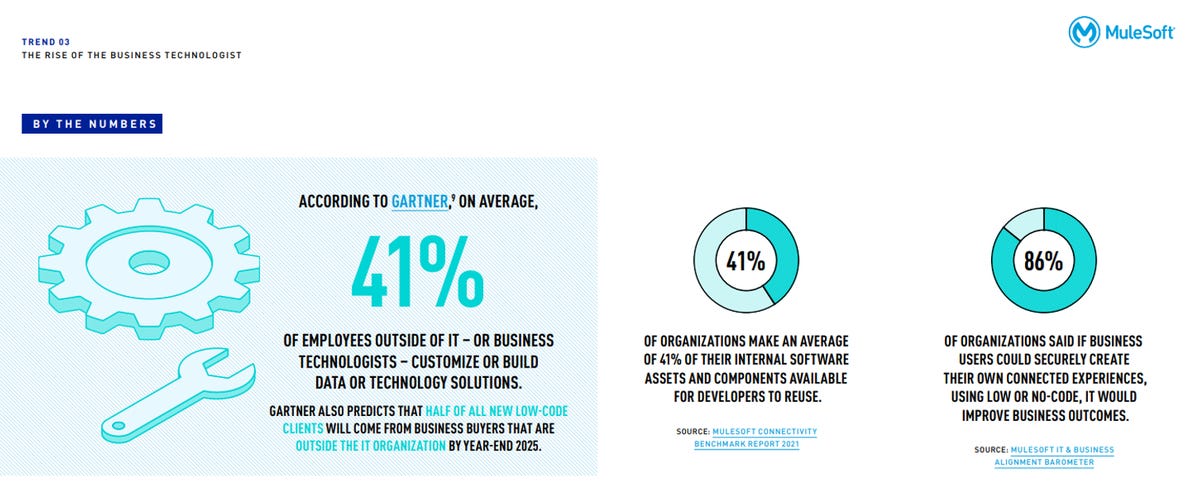
Trend 3: The rise of the business technologist. With the increasing pressure of the digital imperative on organizations, business technologists will come to the fore as an essential partner in IT departments’ efforts to accelerate innovation.
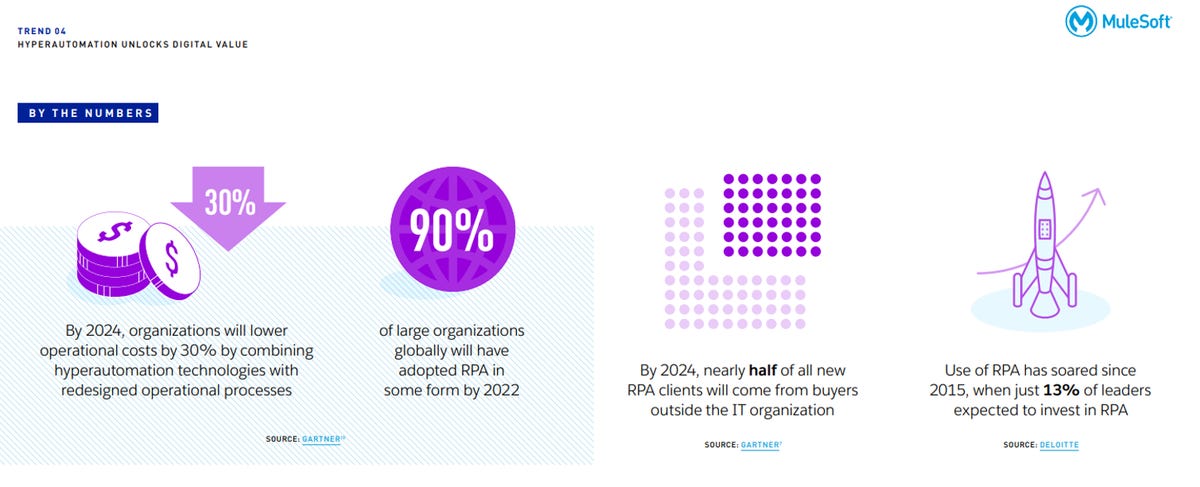
Trend 4: Hyperautomation unlocks digital value. Hyperautomation will unlock productivity, accelerate time‑to‑market, and transform employee and customer experiences.
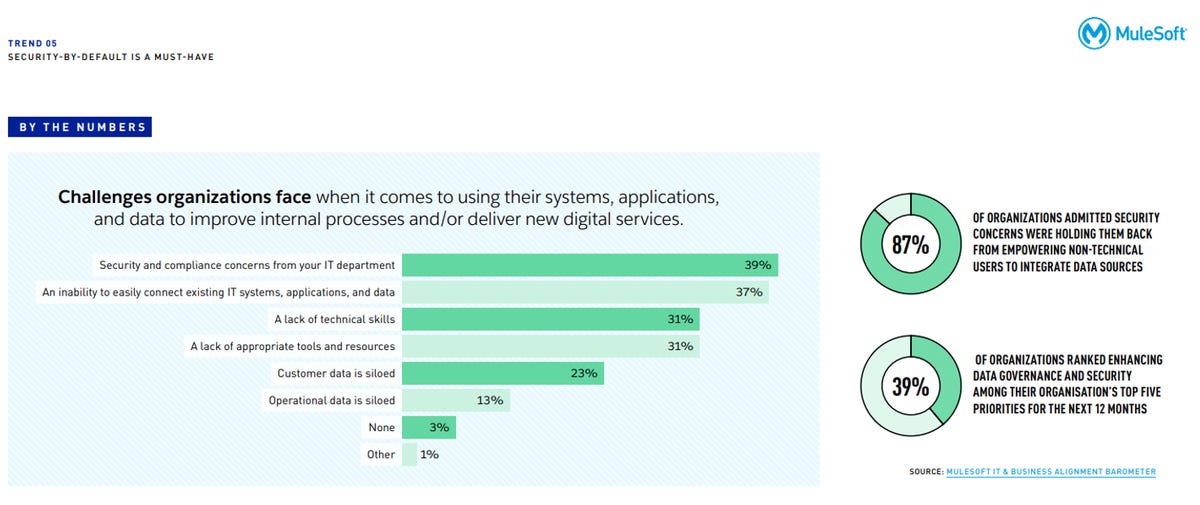
Trend 5: Security‑by‑default is a must‑have. Security‑by‑default will become a need‑to‑have as organizations increasingly realize their applications and automations are only as secure as the composable blocks on which they are built.
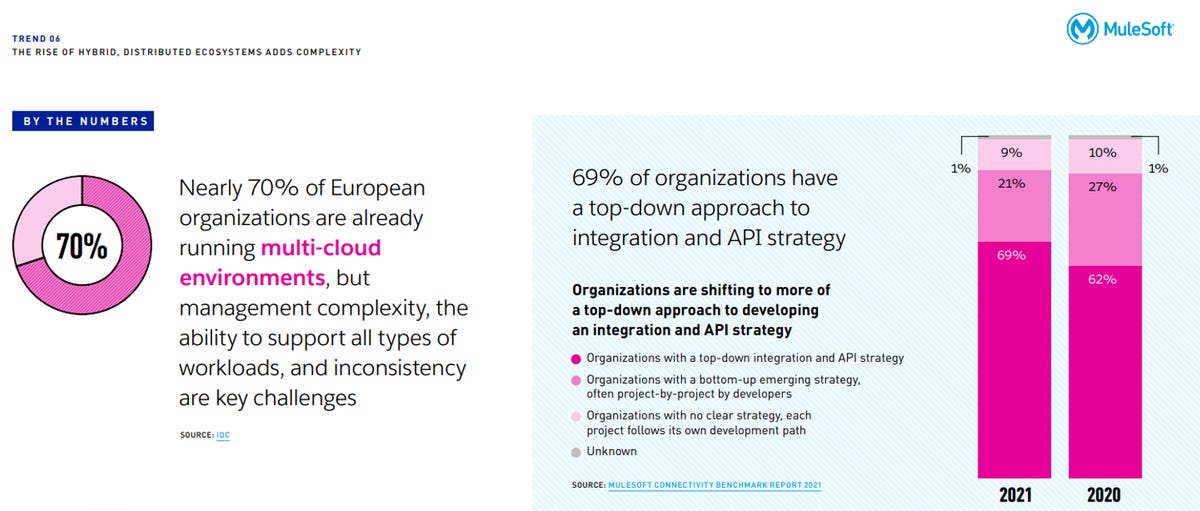
Trend 6: The rise of hybrid, distributed ecosystems adds complexity. As the digital world embraces hybrid and multi‑clouds, finding a universal way of integrating and managing these environments will become essential to successful digital transformation.
Trend 7: A single source of truth becomes key to the data‑driven business. As digitization continues to drive an increasing amount of data, organizations will seek a single source of truth where consumers can get the right data in the right context at the right time.
Here are the top takeaways of the 7 trends shaping digital transformation in 2022 and beyond:
Future of work built on connected, hybrid experiences
Gartner estimates that the use of collaboration platforms alone surged 44%. between 2019 and 2021. McKinsey estimates that more than 20% of the global workforce — although mainly those in high‑skilled roles in verticals such as finance, insurance, and IT — could work most of the time away from the office without any impact on productivity. Automation will play a key role in a hybrid and connected work environment. The use of low‑code techniques will be essential, having been identified by 42% of business users as critical to their ability to create better-connected employee experiences.
Here are some stats around the use of automation to create better-connected employee experiences:
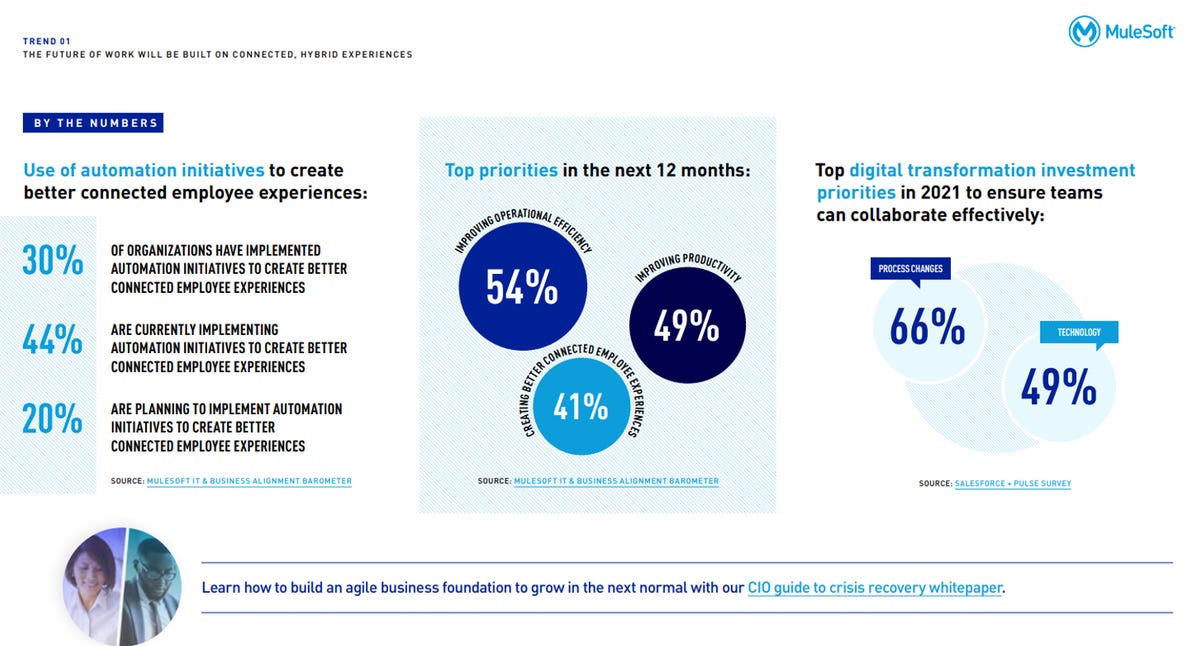
30% of organizations have implemented automation initiatives to create better-connected employee experiences
44% of organizations are currently implementing automation initiatives to create better-connected experiences
Top automation priorities for 2022 include: improving operational efficiency (54%), improving productivity (49%), and creating better-connected experiences (41%)
Top digital transformation investment priorities in 2021 to ensure teams can collaborate effectively included: process changes (66%) and technology (49%)
Use of automation initiatives to create better connected employee experiences
The composable business matures
According to MuleSoft, the 2020s will be a period of seamless digital experiences. To make this a reality, organizations will need to think carefully about how they drive enhanced agility, which will lead to a new era of event‑driven architectures and composable businesses in 2022.
According to MuleSoft, the always‑on digital economy brings huge pressure for organizations to get things right for the end-user. According to PwC, one in three consumers will walk away from a brand they love after just one bad experience. One of the most effective ways for organizations to drive agility and meet these rapidly rising expectations is through becoming a composable business built on reusable APIs. These APIs can be used to turn the organization’s digital capabilities and data into a series of interchangeable building blocks that employees can reuse in other ways to build their own solutions.
The future of digital commerce is a great example of a connected and composable model. Gartner defines this as “Composable Enterprise”, with composable commerce as the expression of this idea applied to shopping infrastructure. Per Gartner, the composable business means creating an organization made from interchangeable building blocks.
The idea of composable business operates on four basic principles:
Reusable APIs are a great way to achieve this, which is why 96% of global organizations already use public or private APIs. The research identifies important concepts and differentiation with APIs with a focus on event-driven APIs and event-driven architectures. The research concludes that event‑driven architectures are more flexible and extensible than their RESTful counterparts, supporting the fluid, real‑time interactions that consumers expect today.
Four in five organizations recognize the need to make data and integration accessible to business users to increase productivity, deliver connected experiences, and drive innovation.
36% of organizations say they have a mature approach to enabling non-IT users to integrate apps and data sources through APIs easily
44% of organizations say they are developing plans to enable non-IT users to integrate apps and data sources through APIs
Composable thinking, which keeps you from losing your creativity. Anything is composable. Combining the principles of modularity, autonomy, orchestration and discovery with composable thinking should guide your approach to conceptualizing what to compose and when.
Composable business architecture ensures that your organization is built to be flexible and resilient. It’s about structure and purpose. These are structural capabilities — giving you mechanisms to use in architecting your business.
Composable technologies are the tools for today and tomorrow. They are the pieces and parts and what connects them all together. The four principles are product design goals driving the features of technology that support the notions of composability.
The composable business matures
The rise of business technologists
According to MuleSoft, the volume of digital initiatives doubled during the pandemic, making it even more difficult for already stretched teams to keep up with the needs of the business. In 2022, business technologists will relieve some of this pressure by working alongside IT teams to accelerate innovation. Gartner found that those organizations that successfully enable business technologists are 2.6x more likely to accelerate digital business outcomes. However, to do so, they will need the right tools at their disposal.
By 2024, 80% of technology products and services will be built by those who are not technology professionals, according to Gartner. Low or no‑code approaches and AI‑assisted development tools hold the key to success. Gartner found 77% of business technologists routinely use a combination of automation, integration, application development or data science and AI tools in their daily work. Some 80% of business users agree that if data and IT capabilities were discoverable and available in packaged business capabilities (PBCs), they and their colleagues could create solutions and deliver digital projects more quickly. Over a third (36%) say they have a mature approach to enabling non‑IT users to integrate apps and data sources through APIs easily. 80% of technology products and services will be built by those who are not technology professionals by 2024.
According to Gartner, on average, 41% of employees outside of IT — or business technologists — customize or build data or technology solutions. Gartner also predicts that half of all new low-code clients will come from business buyers that are outside of IT organizations by end of year 2025. 41% of organizations make an average of 41% of their internal software assets and components available for developers to reuse. 86% of organizations said if business users could securely create their own connected experiences using low or no-code, it would improve business outcomes.
The rise of business technologist
Hyperautomation unlocks digital value
Automation will be a fundamental driving force for the modern digital enterprise rather than being used in piecemeal projects. Hyperautomation is about scaling automation across the enterprise via the reuse of processes and the deployment of multiple, integrated technology capabilities — such as low‑code platforms, machine learning, and robotic process automation (RPA). It’s a market the analyst predicts will grow by nearly 24% from 2020 to be worth nearly $600 billion by 2022 — as organizations look to identify and automate as many processes as they can rapidly. Per Deloitte, 93% of business leaders expect to be using RPAs by 2023. MuleSoft found that most organizations are either already using or are planning to implement such automation initiatives to realize strategic goals, such as improving productivity (96%) and operational efficiency (93%) and creating better‑connected customer experiences (93%).
2021 research shows that automation will accelerate the decentralization of businesses with a digital-first investment and new capabilities strategy. Customer service is an example line of business that will see significant hyperautomation. Given their proximity to changing customer needs, customer service provides a helpful window into how workflow automation can increase a team’s flexibility, efficiency, and job satisfaction.
There is no doubt that it has been a challenging year for customer service employees. Research shows these teams have contended with a whiplash of increased case volume and complexity without commensurate increases in headcount and budget. Workflow automation, however, provides needed relief. 77% of agents say automating routine tasks allows them to focus on more complex work — up from 69% in 2018. It is telling that, even amidst a budget crunch, 71% of service decision makers say they’re accelerating automation initiatives.
One area of service automation that’s getting a lot of attention is chatbots. Currently, 83% of customers expect to engage with someone immediately when contacting a company — up from 78% in 2019. This dynamic puts pressure on already-strained teams. Unsurprisingly, we’ve concurrently seen chatbot adoption grow at a rapid pace.
Hyperautomation trends in 2022 and beyond
Security‑by‑default is a must‑have
Security concerns have always been a roadblock on digital initiatives. Some 87% of IT and business leaders claim that security considerations are slowing down the pace of innovation, while 73% say that specific security and governance concerns have increased as their systems have become more integrated. Gartner predicts that by 2022, application programming interface (API) attacks will become the most‑frequent attack vector, causing data breaches for enterprise web applications. According to Forrester, 21% of security decision‑makers plan to prioritize building security into development processes. Many more will follow suit over the coming years as the era of the business technologist continues to gather pace.
Security requirements can slow down pace of digital transformation
The rise of hybrid, distributed ecosystems adds complexity
IT and business leaders agree that the ability to create seamless digital experiences for both employees and customers is key to the success of modern organizations. In 2022, universal API management will come to the fore as organizations seek answers to this question. Cloud solutions enabled many organizations to navigate the challenges the pandemic created. However, they have also drastically increased the complexity of modern digital ecosystems. Today, 92% of enterprises have a multi‑cloud strategy, while 82% have a hybrid cloud set‑up. According to Deloitte, virtually all (97%) IT managers are planning to take a best‑of‑breed approach by distributing workloads across two or more clouds to boost resilience and support regulatory requirements.
The rise of hybrid, distributed ecosystems add digital transformation complexity
A single source of truth becomes key to the data‑driven business
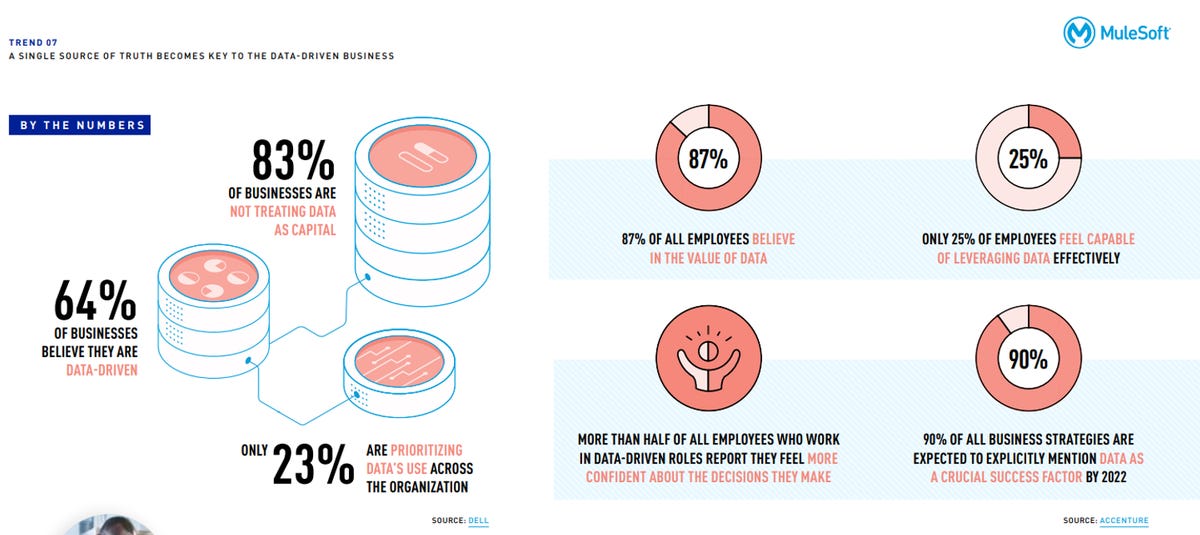
The world is witnessing a data explosion. In 2020 alone, over 64 zettabytes (ZB) were created, and this volume is expected to grow at a rate of 23% up to 2025, according to IDC. Yet, things aren’t getting any easier for organizations looking to integrate, analyze, and act on this data. IT complexity, proprietary systems, and a lack of strategic direction all provide their own challenges.
To be a successful data‑driven organization in 2022, organizations must break down silos across the enterprise to create a single source of truth. Business leaders can only look to machine learning and data analytics to make sense of all their data for enhanced decision-making.
What does it mean to be a truly data‑driven business? It’s all about using the insights derived from AI‑powered analytics to transform business processes. Ultimately, the aim is to improve business outcomes, by driving greater revenues and success. According to Accenture, true data‑driven organizations experience annual growth of over 30%. In addition, 81% of businesses still don’t have a solid data strategy to maximize the full potential of their data, and a similar number don’t have the right platform in place to support their goals. API‑led connectivity is increasingly recognized as the best strategy for achieving the required level of connectivity. Indeed, API‑led connectivity can result in 3x faster project delivery, on average, and a 63% reduction in maintenance costs.
A single source of truth becomes key to data-driven business
The trends shaping digital transformation in 2022 include hyperautomation, hybrid experiences, distributed environments, and an explosion of data. MuleSoft research of these trends concludes with the following recommendation to IT and business leaders with respect to improved collaboration and execution velocity:
Empower IT teams to deliver composable services, API products, and bots at scale for the entire organization.
Empower business teams to automate integrations to common systems without code by leveraging IT’s reusable assets, support, and governance.
Automate repetitive and manual tasks with reusable and composable bots that can intelligently process documents, enter data, or take action on the user’s behalf, all without code.
To learn more about the MuleSoft report on the 7 trends shaping digital transformation in 2022, you can visit here.
Feature Image Credit: Colin Anderson Productions – Getty Images
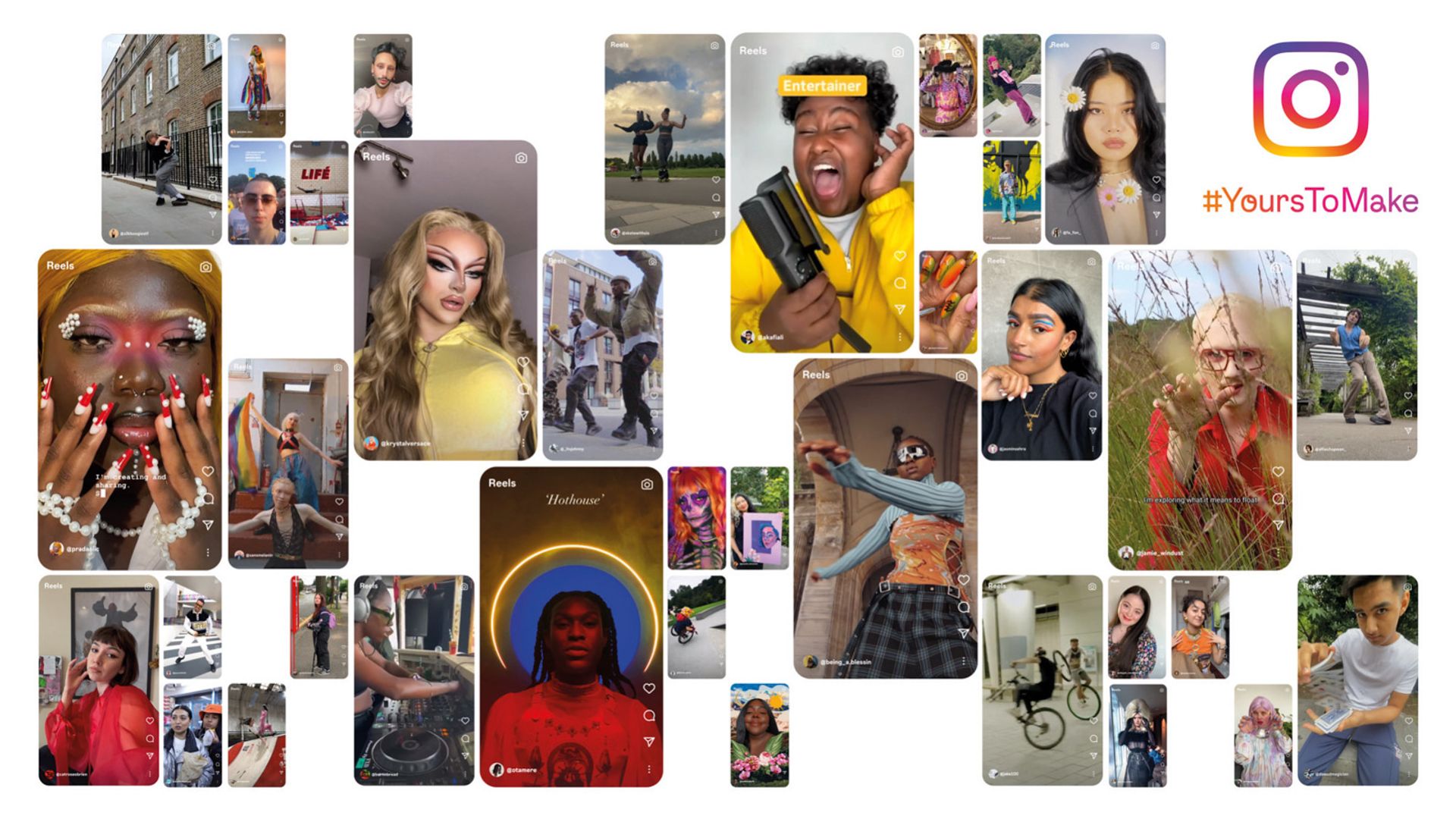
The Yours to Make initiative includes an installation at London’s Saatchi Gallery created by digital artist and curator Zaiba Jabbar using Reels
Instagram’s “Yours to Make” initiative aims to attract young people to the platform Instagram
In a column about art and Instagram, it’s easy to ignore the other apps scrambling for social media dominance. But the fight for attention is relentless, and while Instagram may be the art world’s social platform of choice, such favouritism tends to be generational. In the mid-2010s, reports started to show that fewer young people were using Facebook while the number of over-55s signing up was growing. It was soon coined “Boomerbook”. Meanwhile, Facebook bought Instagram in 2012 initially to neutralise the threat of competition, but soon the app began to mop up the pool of young people abandoning Facebook.
Now we are facing “Millennialgram”. According to a recent survey
undertaken by the financial services firm Piper Sandler, 35% of US teenagers say Snapchat is their favourite social media platform and 30% prefer TikTok, while Instagram comes in third at 22%. A report from the New York Times
last month revealed internal documents from 2018 in which the company had named the loss of teenage users to other social media platforms as an “existential threat” and a further document from October last year that read: “If we lose the teen foothold in the US we lose the pipeline.”
The latter leaked document laid out Instagram’s marketing plan for this year, and now we are beginning to see it unfold. The platform openly announced what it calls “the next chapter in Instagram’s brand story” on its website in September. Called “Yours to Make”
it aims to “showcase how you can explore who you are with Instagram”. The announcement was accompanied by a video that shows young creatives using the various features and products on the Instagram app, including the hip-hop artist Topaz Jones, the Native American make-up artist Madrona Redhawk and the digital creator Justin Yi—“real creators and everyday users who are using our platform to push the boundaries of creativity and experimentation”, Instagram says.
The New York Times says Instagram has allocated a marketing budget of $390m this year, mostly aimed at wooing teens. In the UK, the Yours to Make film is accompanied by a social-first content series created with Channel 4’s 4Studio, a brand partnership with the culture publication Dazed, targeted digital and video adverts, and “experiential activity” such as an installation at London’s Saatchi Gallery (4-9 November).
The work at Saatchi will consist of a free-to-access, interactive “motion art installation” in the galleries—a “digital portrait of British youth culture” with Instagram Reels video content from 50 handpicked Gen Z creatives. It has been assembled by the digital artist and curator Zaiba Jabbar, who says she has been inspired by “the breadth of creativity” in the Reels. The platform is also inviting users to submit Reels about their own journeys of self-discovery—tagged #YoursToMake—for the chance to be included in the work. Time will tell if Instagram can Reel the kids back in.
Insta’ gratification is a monthly blog by Aimee Dawson, our Associate Digital Editor. Looking at how the art world and Instagram collide, each article tackles a topic around the innovations and challenges that spring up when art enters the digital world.
Meta, the parent company of Facebook, has announced new plans for creators to bypass 30 per cent App Store fees that Apple charges on transactions, as it prepares to build Metaverse.
In a Facebook post, Meta CEO Mark Zuckerberg said that as we build for the metaverse, we’re focused on unlocking opportunities for creators to make money from their work.
“The 30 per cent fees that Apple takes on transactions make it harder to do that, so we’re updating our Subscriptions product so now creators can earn more,” he posted.
Zuckerberg said that the company is launching a promotional link for creators for their Subscriptions offering. A
“When people subscribe using this link, creators will keep all the money they earn (minus taxes). Creators will have more ownership of their audience — we’re giving the ability for them to download the email addresses of all of their new subscribers,” he explained.
An investigation by The Financial Times has found that Snapchat, Facebook, Twitter, and YouTube lost around $9.85 billion in revenue after Apple introduced App Tracking Transparency (ATT) policy last year.
Advertisement technology company Lotame estimated that the four tech platforms lost 12 per cent of revenue in the third and fourth quarters, which roughly translates into $9.85 billion.
Zuckerberg said that Meta is also launching a bonus programme that pays creators for each new subscriber they get “as part of our $1 billion creator investment announced this summer”.
The new iOS App Store policy requires apps to ask permission to track users’ data. The policy went into effect in April, barring apps from tracking users if they opt out.
Facebook lost the most money “in absolute terms” when compared to other social platforms due to its huge size.
“Facebook has the most to lose because the cost of running advertisements on its platform has been increasing for years,” the Financial Times report said.
Since the introduction of the Apple iOS policy, most users have opted out, leaving advertisers in the dark about how to target them.
Zuckerberg has slammed Apple for its App Store policies in the past, saying the iOS privacy changes are negatively affecting its business.
“Apple’s changes are not only negatively affecting our business, but millions of small businesses, and what is already a difficult time for them and the economy,” he said last month.
Sheryl Sandberg, Facebook’s Chief Operating Officer, said that the biggest impact to them has come from iOS 14 changes which advantaged Apple’s own advertising business.
It’s one of the great ironies of branding that, while we tend to care passionately about the precision and quality of the words that brands use to communicate, the language we use ourselves is hopelessly vague. Often, we use identical terms to describe different ideas and concepts. At other times, we use different words to describe identical ideas and concepts.
One of the most glaring examples of this is the confusion that often exists between ‘brand positioning’ and ‘brand strategy’. Positioning is often described as “the space in people’s minds that a brand wants to occupy”. The term was popularized in the 1970s by advertising executives Al Ries and Jack Trout, who argued that brands wishing to cut through in a noisy, over-communicated society, needed to develop an oversimplified message capable of reaching an oversimplified mind:
Avis: we try harder. Seven-Up: the uncola.
In the words of Ries and Trout:
“Along Madison Avenue, these are called positioning slogans. And the advertising people who write them spend their time and research money looking for positions, or holes, in the marketplace.”
And here’s where the confusion begins: Ries and Trout flip-flop between two different definitions of positioning:
1. Positioning a brand in a marketplace;
2. Positioning a brand in people’s minds.
These are related, but different activities. What happens in someone’s mind is not the same as what happens in a marketplace. ‘We try harder’ and ‘uncola’ are not parts of a market, they are ideas that brand owners want to establish in our heads.
Philip Kotler is pretty firm in his point of view on which of these two activities is best described as ‘brand positioning’. As he explains in his 2017 book, Marketing 4.0:
“Since the 1980s, brand positioning has been recognized as the battle for the customer’s mind… Brand positioning is essentially a compelling promise that marketers convey to win the customers’ minds and hearts.”
That’s good enough for me. There are as many definitions of positioning as there are brand consultancies, but I’m happy to go along with the intention expressed here. It’s about hearts as much as minds.
It’s about belief.
The precise form of this belief can vary significantly. Over twenty years ago, I was told that a brand positioning is best expressed as a vision, mission, and set of values. Years later, it became popular to distil these into an ‘essence’ or a ‘brand DNA’. Subsequently, ‘brand purpose’ reinterpreted brand positioning for a generation in search of a deeper form of meaning. In reality, these are all variations on the same theme.
They are all about establishing a belief about a brand in people’s minds.
None of these describes strategy, although I’ve noticed that ‘brand positioning’ and ‘brand strategy’ are frequently used interchangeably. I find it helpful to think of them as distinct.
Here’s why:
Strategy suggests an analytical, insight-rich, data-informed, logical process. In broad terms, it’s about deciding where to play and how to win. Brand strategy comes in many forms, but I’ve always found it helpful to think in terms of the 5Ws:
WHO: Which groups of people do we want to prioritize? WHY: What are the most powerful motivations and attitudes we can appeal to? WHERE: Where are the best places for us to reach them? WHEN: What are the most important moments and occasions to focus on? WHAT: What competing offers exist, and how can we improve upon them?
If you don’t have a clear idea of who you want your brand to resonate with, why they should care about it, where and when you need to be available to them, and what competing offers you’re up against, then you don’t have much of a strategy. When someone talks about ‘positioning a brand in a marketplace’, then I tend to think of brand strategy, not brand positioning. It’s the part of my work when I expect to be wading through data, facts, and insights. It’s when I expect to be spending my time scrolling through Excel spreadsheets. The result should be a laser-sharp definition of what a brand wants to achieve and how it intends to get there. This is the realm of KCQs, KPIs, and BHAGs.
Brand strategy is a dispassionate, rational process.
Brand positioning is the opposite.
A solid brand strategy is necessary, but not sufficient if you want to create a great brand.
It’s not enough simply to set out which parts of a market you want to compete in, or who you want to appeal to, or which of their unmet needs you intend to fulfill. This gets you to something like Marty Neumeier’s ‘onlyness’ statement for Harley-Davidson:
WHAT: motorcycle manufacturer;
HOW: that makes big, loud motorcycles;
WHO: for macho guys (and macho wannabes);
WHERE: mostly in the United States;
WHY: who want to join a gang of cowboys;
WHEN: in an era of decreasing personal freedom.
It doesn’t exactly grab you. When I look at it, I wonder, ‘what’s the point?’ This is more compellingly articulated in Harley-Davidson’s mission statement:
“More than building machines, we stand for the timeless pursuit of adventure. Freedom for the soul.”
That’s a statement of belief. Although the two are clearly related, it’s more than a simple summary of the brand strategy, because it involves a creative leap. Without this, it would be as dry and uninspiring as a brand onion.
Great brand positioning is an antidote to indifference.
In contrast to brand strategy, positioning a brand is a creative act. It’s based on imagination, not insight; inspiration, not analysis. This is the part of my job where I spend time listening to people: What motivates them? What makes them proud? What inspires them? What are their hopes for the future? What does sustainability mean to them? How do they define success in its broadest possible sense? This part of the job is about understanding the future people want to create and the role they would like their brand to play in creating that future.
Brand positioning and brand strategy play complementary roles. Without a brand strategy to back it up, brand positioning risks being a hollow statement of ambition. Without a brand positioning to make it sing, brand strategy can descend into dull, lifeless drudgery. I’ve seen examples of both. There are organizations that love the fun part of coming up with a beautiful, bold promise, but shy away from the dirty, difficult task of working out how exactly that’s going to be delivered, to whom, and how. There are also organizations that create intricate brand onions, wheels, bridges, or platforms, but are utterly bereft of a creative expression that people can actually care about and believe in.
Trying to pin precise definitions on vague marketing concepts is generally a fool’s errand, but I’ve found the distinction between brand strategy and positioning is a helpful way to make sure when I’m speaking to a client that I’m fixing the right problem. Sometimes the issue is a lack of creativity. Sometimes it’s a lack of rigor. Often, it’s both. I’ve also found the distinction is a helpful way to critique my own work: Is the positioning ‘idea’ compelling enough? Is the strategy sharp? Is there an appropriate balance of rigor and creativity?
One final thing worth mentioning is that the relationship between brand strategy and positioning is similar to the relationship between a chicken and an egg: It’s not obvious which comes first. I’ve noticed that B2B brands tend to lead with positioning, while B2C brands lead with strategy.
“Brand positioning and brand strategy play complementary roles. Without a brand strategy to back it up, brand positioning risks being a hollow statement of ambition.”
For example, when Google says it wants to ‘organize the world’s information and make it universally accessible and useful’, it’s not describing a strategy. It’s making a promise with the expectation that this statement will establish a firm belief in the minds of its employees, its investors, its customers, and the rest of the world. The role of brand strategy is to translate the positioning into a concrete activity that stretches the brand into specific areas and specific audiences: maps, news, academia, communication, hardware, and beyond.
On the other hand, when Guinness shifted its brand strategy to focus on occasional drinkers, the brand team realized that the positioning would also need to change: The brand’s emphasis on ‘waiting’ was seen as a barrier to consumption for this group. The result was a shift of positioning and comms that moved away from ‘good things come to those who wait’ and instead repositioned the brand to celebrate people with the character and confidence to stand out from the crowd.
Honestly, I don’t think it matters which comes first. What matters most is that a brand’s strategy and positioning are mutually supportive: A clear strategic direction, married with a compelling positioning that’s capable of inspiring strong creative execution. Great brand strategists seamlessly bring together the analytical and the imaginative. This is how they do it.
I’m a brand strategist with over 20 years of experience. I began my career at Interbrand, where I led their brand valuation offer, and have subsequently developed and spearheaded the consultancy teams at M&C Saatchi Clear, Dragon Rouge, and The Clearing. I’m a member of the Superbrands Council in the UK, as well as a regular conference speaker, contributor to marketing publications, and author of two books on business, branding, and sustainability.