Author

editor

Browsing

By Laura Perkes

The often overlooked tactic enhances reach, raises brand awareness and drives new customers and clients to your business

Picture the scene: It’s 2021, and the enormity and popularity of is providing entrepreneurs with a plethora of opportunities and the ability to tap into an audience of hundreds of thousands, if not millions, of potential customers, all at the push of a button.

When Facebook first launched back in 2004, it really was the first of its kind. Before that, we had MySpace and a few other platforms I’ve never heard of (Friendster or Hi5, anyone?), but none of them had managed to make the impact that Facebook did, and still does.

Since Facebook, we’ve seen the launch of Instagram in 2010 and TikTok in 2016, plus the addition of Instagram Reels in 2020. Not to mention other platforms such as Snapchat and Clubhouse, all giving us access to a wider audience.

In the past 19 years, we’ve all had the luxury of being able to communicate directly with our fans, customers and potential customers in a way that has never been possible before. But before the advent of social media, businesses and brands were built the “old fashioned” way, using more traditional marketing techniques, such as advertising and face-to-face networking.

Social media seems like the Holy Grail

When the world became more digitized, tools such as online advertising, pay-per-click and email marketing grew in popularity and gave entrepreneurs and brands alike the chance to reach an even wider audience. Data was easier to track and metrics and insights enabled you to calculate your return on investment.

For many entrepreneurs and startup businesses, social media seems like the Holy Grail. Not only do you get to build an audience and interact and engage with your followers, but it’s also completely free at the point of entry. Of course, you can now invest in adverts across all social-media channels, but for someone completely new to the world, social media is a sensible place to start.

Yet there’s a missing piece of the puzzle here. A modality that’s as old as time, but a powerful force when it comes to sharing messages, raising brand awareness and building on the know-like-trust factor. And that’s .

Everything you say and do is PR

Public relations exists so that you can communicate with your audience. If you Google “public relations,” you will find Wikipedia’s definition: “Public Relations is the practice of deliberately managing the release and spread of information between an individual or organisation and the public, in order to affect the public perception.”

So, essentially, everything you say and do is PR, but the platform in which you share your message changes. The tools you use to share your message changes. But the message remains the same. Your audience, generally, stays the same, yet where they hang out may change, based on the launch of new platforms, or the increased popularity of existing platforms, such as YouTube and podcasts.

YouTube first launched back in 2005 and podcasts launched a year earlier in 2004, yet they’ve only really exploded as a business tool over the past few years, giving entrepreneurs and startups the chance to create easy-to-share and easy-to-digest content that their ideal clients will love  content that can then be repurposed across social-media channels.

Back in 2004, when I first started my career in PR, there were really only three types of media outlets to pitch to: print titles, TV and radio. Online titles were seen as the poor relation to print, so we rarely bothered pitching to them as clients didn’t see the value in them  oh how times have changed!

However, because there was less choice, it made it easier to build relationships with journalists and work on features and content ideas with them. Over time, the media landscape has changed, and online started to make a huge impact and podcasts and YouTube channels became prime real estate.

Now, there is way more choice when it comes to gaining exposure, so while you may not consider social media, YouTube or podcasts your typical media outlets, they’re still consumed by your ideal clients, still covering topics that complement what you do, and they still have a ready-made audience of loyal fans that you could (and should) be tapping into. How? Quite simply, by pitching.

One piece of content can be shared and shared again

The way you’d pitch yourself to a podcast host is the exact same way that you’d pitch yourself to a journalist. That is a PR tactic and a skill that publicists have been honing for decades. Now, one of the utterly brilliant, yet often overlooked, powers of PR is that you can take one piece of content and deliver it to millions of people in one go. No other form of enables you to do that.

It may take time to build and execute your PR plan. You may not see anything published or broadcast for three to four months, but when it lands, it’s well worth the wait, as your content has the potential to be seen or heard by hundreds of thousands, if not millions, of potential ideal clients and customers. Just think about the circulation of a print publication, then triple it to get an average reach.

Think about the audience size of a podcast, then think how many extra people you can reach by sharing it across your social-media channels. And then think about how many extra people you will reach when the host shares it across their social-media channels. All of a sudden, one piece of content can be shared and shared again, leaving behind a digital footprint and breadcrumbs that can lead even more people to your business.

This is another reason why PR is such a powerful and influential tool  because what you do now is searchable forever. PR isn’t always easy to measure, which potentially adds to its downfall in the ROI stakes, but it’s still a tactic that should be employed, and a muscle that should be flexed, as part of your communications strategy.

PR is yet another way of transporting your business and your expertise to a wider audience, an audience that has been built up and cultivated for decades, that already knows, likes and trusts the outlet and the content they produce.

So, next time you decide to put all your eggs in one basket and focus all of your attention on one particular marketing tool, or one particular platform, ask if there’s a more efficient, more effective way of sharing your message to drive hundreds of thousands, if not millions, of new customers to your business. The answer, in case you missed it, is PR.


By Laura Perkes

Sourced from Entrepreneur Europe

By

The social media giant is creating its own newsletter, taking aim at Substack and Twitter’s Revue

Facebook launched its independent newsletter Bulletin on Tuesday, as competition heats up against rivals Substack and Twitter-backed Revue. Writers and creators including Malcolm Gladwell, Tan France and Erin Andrews are among its initial recruits.

In an audio livestream, CEO Mark Zuckerberg introduced Bulletin as a platform “focused on empowering independent writers, helping them reach new audiences and power their businesses.”

“The goal here across the company is to support eventually millions of people making a living doing creative work,” Zuckerberg said.

Facebook presented Bulletin as a way for writers to monetize their following, and Zuckerberg said they will not take a cut “at launch.” Writers will have full ownership of their work and subscribers and be able to publish free and paid newsletters that can be distributed across inboxes and the Facebook platform.

Facebook said it will continue to recruit other writers to cover topics from sports to medicine. With the debut it also adds high-profile recruits including writer Mitch Albom and journalists Jane Wells and Jessica Yellin.

The initiative is part of the company’s ongoing Facebook Journalism Project, and Facebook has said it will allocate at least $5 million to “support local journalists” that apply and get accepted for its newsletter product. The newsletter lives outside of the Facebook platform.

This isn’t Facebook’s first foray into cloning successful products on the market by putting its reach and money behind new projects. In January, the tech giant introduced podcasts and live audio streams in the U.S., its answer to Clubhouse and Twitter Spaces. Spotify also has its own service called Greenroom.

For writers and journalists seeking a newsletter home, it may come down to the size and scale of the social network. They may find an advantage to Facebook and Twitter’s reach, while Substack offers a fresh take with convincing growth.

Substack had 12 million readers a month and 500,000 paying subscribers as of April, according to Politico. Twitter reported 199 million daily active users, while Facebook had nearly 1.9 billion daily users. Twitter, which acquired Revue earlier this year, takes a 5% cut in subscription fees, but writers can control whether their work is free or paid. Substack reportedly offers six-figure advances to recruit high-profile writers.

By

Sourced from THE WRAP

Sourced from Neurosciencenews.com

Summary: People who trust their gut instinct with simple decision-making strategies make equally as good, but faster, decisions as those who rely on data methods alone.

Source: City University London

Managers who use their gut instinct together with simple decision-making strategies may make equally good, but faster, decisions as those who use data to reach an outcome, a new study has found.

The report, co-authored by academics at the Business School (formerly Cass), King’s Business School, and the University of Malta, finds that the reliance on data analysis in decision-making might be counterproductive as this reduces decision-making speed without ensuring more accuracy.

The research, based on information from 122 advertising, digital, publishing, and software companies, finds that using data to inform decision making under high uncertainty is often not optimal. This may explain why 12 different publishers initially rejected the opportunity to publish “Harry Potter and the Philosopher’s Stone’ – because it had no data to inform its potential.

A recent survey revealed that 92 percent of Fortune 1000 companies were reporting increased investment in data initiatives, although it appears this may not always be necessary.

The authors asked managers how they made decisions on their most recent innovation project, including the extent to which they used data, instinct, and other simple heuristics (mental strategies). The findings outlined that among those decision-making methods were:

  1. Majority—choosing what the most people wanted
  2. Tallying—picking the choice with the greatest quantity of positive points
  3. Experience—selecting the option that the most experienced individual on the team wanted.

Managers were asked whether they think they made the right decision and how fast they were in reaching that decision. Results showed that managers relied on their own instinct as much as data, using ‘tallying’ more than any other metric.

This shows a woman surrounded by questionmarks
Results showed that managers relied on their own instinct as much as data, using ‘tallying’ more than any other metric. Image is in the public domain

Dr. Oguz A. Acar, Reader in Marketing at the Business School and co-author of the report, said: “This research shows that data-driven decision-making is not the panacea in all situations and may not result in increased accuracy when facing uncertainty.

“Under extreme uncertainty, managers, particularly those with more experience, should trust the expertise and instincts that have propelled them to such a position. The nous developed over years as a leader can be a more effective than an analytical tool which, in situations of extreme uncertainty, could act as a hindrance rather than a driver of success.”

About this decision making research news

Source: City University London
Contact: Luke Lambert – City University London

Sourced from Neurosciencenews.com

Neuroscience News posts science research news from labs, universities, hospitals and news departments around the world. Science articles can cover neuroscience, psychology, AI, robotics, neurology, brain cancer, mental health, machine learning, autism, Parkinson’s, Alzheimer’s, brain research, depression and other topics related to cognitive sciences.

By Jake Fichman

The world’s largest brands are winning the hearts and dollars of consumers in ways thought unimaginable just a decade ago. According to a Kantar study, 68% of US consumers expect that the brands they shop be clear about where they stand concerning social issues. Furthermore, Millennials and Generation Z top the charts in demanding that consumer brands go far beyond their utilitarian provisions, and get their hands dirty in engaging with the world’s hottest issues.

Outdoor goods store REI shocked the public nearly a decade ago by taking a stand against consumerism by literally closing their doors on Black Friday. Coining the campaign #OptOutside, the brand led with its values in place of its revenues and showed its customers that REI stands for more than the bottom line. Every year since REI has closed on Black Friday, yet the company’s revenues continued to hit record highs.

Ben and Jerry’s ice cream proved to its customers that the iconic brand is worth more than a tasty treat. While their product line stands clear and defined, the executives of Ben and Jerry’s found the trending wave of consumer concern for their dollar to go-to brands that mean more than profitability. The ice cream giant has found itself at the center of conversations and influence in social issues such as global warming, Black Lives Matter, Israeli-Palestinian debates, and marriage rights in America.

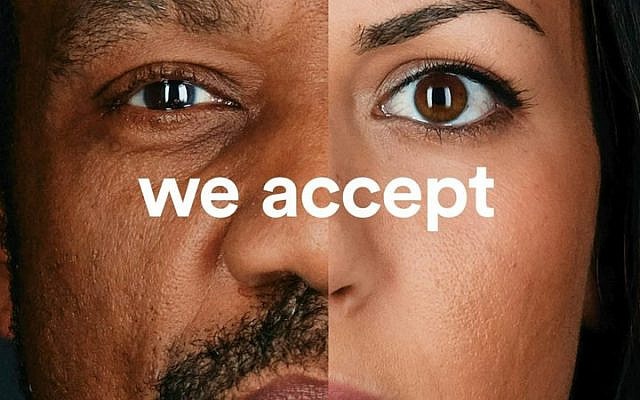
While global brands are spreading influence and giving up profits, other companies are taking it to even greater heights; some are investing millions into their leadership’s chosen issues. Airbnb took a stand during the Trump Administration by dedicating its empathy and dedication to refugees halted at the border. Aired during the Super Bowl, Airbnb pledged to provide short-term housing for over 100,000 displaced people. Furthermore, the brand promised to prove its compassion by donating $4 million to the International Rescue Committee in a campaign titled “We Accept.”

Following this successful campaign, on June 17, 2021, Airbnb announced the launch of a $25 million fund to support refugees and asylum seekers.

Other brands such as FUBU, Spanx, and Nike have been leading their industries for years by using social media channels to amplify their stances on social and political issues. Challenged by a younger, more concerned consumer base, these brands are forced onto the stand to testify about who and what they support.

While the general consumer once expected brands to fulfill a basic need, leaving social issues to politicians and NGOs, today the average shopper first researches the fundamental beliefs and social stances of their favorite brands. This attention to a brand’s character and identity finds its climax across social media channels where the world’s largest consumer brands can track trends of brand appreciation or antipathy in real-time.

US brands appear to be leading in today’s global fight for authority and brand value, putting their profits and consumer base at risk at the fear of falling into the shadows of consumer interest. Among their efforts, brands commit to:

  • Sacrificed profits for the sake of social justice
  • Use of digital assets to voice opinions on hot topics
  • Donations of millions of dollars to NGOs that stand for change
  • Purchasing of ad space to tie their brand name to a movement
  • Adjustments to ingredients and inputs to state their brand’s purity

When brands carry out social good campaigns properly, the benefits of sacrificed profits are exceeded by an increase in customer loyalty and positive engagement. While younger consumers show the highest sensitivities to a brand’s stance on a social issue, it’s apparent by the efforts and span of companies’ advertising efforts that they clearly see the return on vulnerability.

Feature Image Credit: Photo provided by Airbnb ad shown during Super Bowl 51

By Jake Fichman

Jake Fichman serves as international Media Advisor to the Prime Minister’s Office and is the Founder and CEO of Goldfish Marketing Agency in Israel. Originally from the USA, Jake specializes in international communications and strategic messaging.

Sourced from The Times or Israel

By Ellen Bennett,

Ellen Bennett is the founder and CEO of Hedley & Bennett, an apron and kitchen gear brand that outfits many of the best chefs in the world. Since starting the business in her L.A. home, Ellen has grown H&B into a multi-million dollar business. They have collaborated with Vans, Madewell, Chrissy Teigen, and artist Takashi Murakami, among others and create uniforms for 4,000 restaurants and coffee shops all over the U.S.

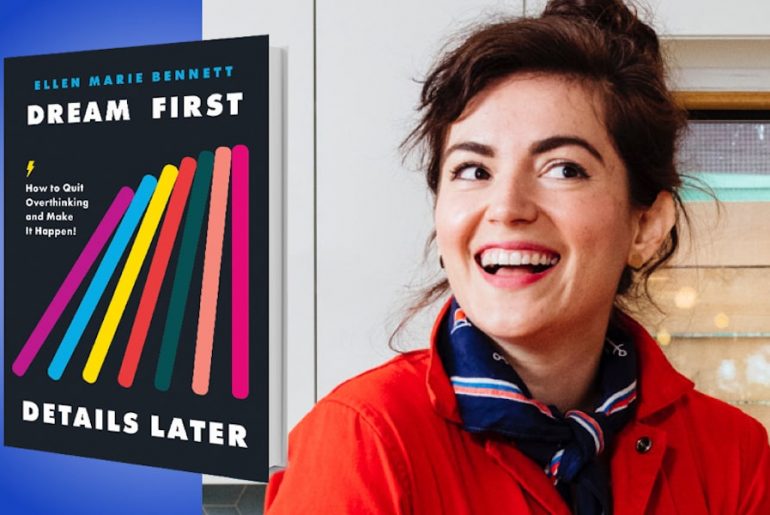
Below, Ellen shares 5 key insights from her new book, Dream First, Details Later: How to Quit Overthinking & Make It Happen! (available now from Amazon). Listen to the audio version—read by Ellen herself—in the Next Big Idea App.

1. Start before you stop.

When you have a big idea for something exciting that nobody else has seen, you just have to begin. Don’t let yourself get caught up in all of the details—that will make you go into analysis paralysis. Decide what you’re going to do and start. It’s not going to be perfect, with everything in its right place. It will come together further down the road, but not by you sitting around noodling on it. So, get going, begin, and worry about those details later.

2. Humble your enthusiasm.

When you are first starting out, you’ve got to get people jazzed about what you’re doing and whatever it is that you are trying to bring into the world. The way I’ve found that to be possible is by not bragging—so don’t say how grand you are and how awesome your idea is, but simply take a very humble approach. Bring humility and excitement together to create humble enthusiasm.

“Don’t say how grand you are and how awesome your idea is, but simply take a very humble approach.”

It’s about talking to somebody the way that you would talk to your friend or neighbor when you’re so pumped to share some cool thing you found, or some new idea you discovered. That is what that feeling looks like, versus when you’re walking in a mall and someone’s trying to sell you cream or hair straighteners, and you cringe and pull away because you feel like a transaction, not like a human. Nobody likes feeling that way.

So, use humble enthusiasm when you are trying to get your ideas off of the ground. Share your thoughts, but be very open to feedback—and that is where the humble part comes in. Be able to talk about your idea, and when people give you their two cents, you can listen, wholeheartedly take that in, and do what you want with it. More people would be willing to have conversations about the thing that you’re doing if you share it with such joy that the listener can’t turn you away.

3. How I deal with “No.”

To me, a “no” is not a “no.” “No” is a signal to turn left or to turn right because the path forward is not the right direction at this moment, and that’s OK. It’s very similar to a sign painted on the outside of our building here in Los Angeles that says, “If the front door isn’t open, climb in through the window.” A “no” is a door that is closed, but there are windows out there, and you have to find the right window to keep moving. So don’t take “no” as the end of the road. It’s simply the signal to pivot left or to pivot right. Don’t throw in the towel just because somebody decided that, at that moment, they weren’t ready for what you had to offer.

“If the front door isn’t open, climb in through the window.”

4. Crashing and learning.

One of the biggest leaps of faith that I took in starting my company, Hedley & Bennett, was when I took my very first order of 40 aprons. I didn’t have a company, truly. I didn’t even have a business plan, but I suddenly had a customer, and I needed to deliver on that. So I got those first aprons out the door, and while I can’t say that they were perfect, if I hadn’t begun, I would still be standing there staring at the idea of maybe one day starting an apron company. Because I started, because I began pushing forward, I was able to push that out into the world and evolve it, continually making it better until it was a perfect product. I had started with a minimum viable product, pushed it out, and then kept changing it. So don’t be afraid to make mistakes—when you are starting out, that is 1000 percent part of the journey. You cannot have successes without failures. You cannot learn or succeed without some crashes. So be willing to lean into the falls, find the thing that gets you excited, and do that thing.

5. Wake up and fight.

Every day you are driving your life car, and it is up to you to figure out which direction to go, and to not stop. You have the gift of life today, and you don’t know if it’s going to be around tomorrow, so you need to fight for all of it, go out there with gusto, and think about what you have instead of what you don’t have. Push forward, create the energy that you need to create the money, the opportunities, the path, all of it. It is on you and for you and to your benefit. The more you believe that you can do this and the more that you show up and try, the farther down the road you will get. So don’t for a second think that you are not capable enough—you absolutely are. We are all here, and so lucky to be alive. Wake up and fight, and never stop doing it.

To listen to the audio version read by Ellen Bennett, download the Next Big Idea App today:

By Ellen Bennett

Sourced from Next Big Idea Club

By

Widespread snooping on users in real-time alleged

The Irish Council for Civil Liberties (ICCL) is suing a branch of the Interactive Advertising Bureau (IAB) and the broader online marketing industry, accusing it of facilitating “the world’s largest data breach.”

The New York-based IAB Tech Lab develops standards for the digital ad industry standards, and counts the likes of Facebook, Google and Amazon as members.

The case, which has been filed by ICCL’s Dr. Johnny Ryan, a former advertising industry professional turned privacy advocate, revolves around the auctioning of ad space while a webpage loads, known as real-time bidding.

“Every time we load a page on a commercial website or use an app, the website or app tells tens or hundreds of companies all about us, so that their clients can decide whether to bid on the opportunity to show you an ad,” Dr. Ryan told the BBC.

Real-time bidding

Real-time bidding refers to the buying and selling of online ad impressions through auctions conducted in the time it takes a webpage to load.

While a page loads, real-time bidding helps facilitate the sharing of various details gleaned from the device the web page is loading on, including its location, along with information about previously visited websites.

“These bid requests include inferences of your sexual orientation, religion, what you’re reading, watching, and listening to, your location,” says Dr. Ryan.

Although the advertising industry claims that the targeted individual isn’t personally identified, critics like Dr. Ryan argue that the sheer volume of information still constitutes a violation of privacy, especially since the average person isn’t aware about the amount of data that is shared about them, and with whom.

This isn’t the first time Dr. Ryan has taken action against the use of real-time bidding. He tells the BBC that he first filed the complaint with the Irish Data Protection Commissioner’s Office in May 2018, but that investigation is still continuing. He’s also lodged complaints with information commissioners in other EU countries as well.

“The amount of data advertisers have on us might shock most people but we can still still limit the amount we share and try and control further information being used,” noted Jake Moore, Cybersecurity Specialist at ESET.

“Our data is continually analysed and profited from by many technology firms but it is possible to reduce this by learning specific settings within the accounts and not sharing sensitive information that isn’t crucially required for the application to function.”

“Before we part with our personal information, our data is our responsibility but unfortunately many companies still do not fully understand how to protect our personal data online or worse still, they share such data with third parties without our direct knowledge. We must start restricting the amount of data we share with companies now to help reduce problems in the future where any company, government or third party could potentially learn every single private detail about us.”

Feature Image Credit: Pixabay

By

Mayank Sharma is a technology reporter and writer from New Delhi, India.

Sourced from techradar.pro

By Terry Tateossian,

Merging shopping, entertainment, and real-time interactions, video-based live-stream shopping is changing the ecommerce game.

Live commerce, a hot trend in China and Singapore, is an innovative approach to interacting with customers by way of creating an engaging retail experience. Using live streaming, brands in Southeast Asia are increasingly using movie stars, top chefs, and influencers to reach online audiences and encourage them to make purchases. Merging digital technologies, shoppertainment, real-time interactions, and brand advertising, live streaming promises to revolutionize e-commerce and consumer shopping habits. But while Southeast Asia has seen an explosive growth in livestream shopping, is the U.S. catching up with trends?

Live Commerce Gaining Momentum in the U.S.

The pandemic-driven shift to online shopping has helped accelerate the transition to live commerce in the U.S. Sales are forecasted to increase by 38.4 percent in 2021, according to Emarketer, with brands using Pinterest and Instagram to put themselves at the forefront of live commerce. Apparel and accessories are the largest categories for livestream shopping. Companies selling consumer goods, cosmetics, and electronics have also been quick to embrace the trend and add social commerce to their marketing mix.

Levi Strauss and Tommy Hilfiger have been among the early adopters, featuring short sessions during which viewers were offered the opportunity to ask questions. In 2019, Amazon launched its livestreaming commerce service, enabling influencers to market products through video streams to earn commissions. Alongside big brands, startups have also gained momentum, including online shopping platforms such as NTWRK, Popshop Live, and ShopShops. Popshop Live, for example, was able to raise $4.5 million to enable established brands and individual sellers to market their products in real time. A video-based footwear shopping marketplace, NTWRK features major brands like Nike, Jordan, New Balance, and Adidas. Having a membership of over 1 million, the platform boasts a conversion rate of 5 – 15 percent, with sales volumes doubling from March to April alone.

Why Is Live Commerce Set for Success?

As big brands and innovation-forward startups are already leveraging shoppable video, live commerce seems to be gaining strength in the U.S. And while it has a way to go from taking off, livestream shopping is the next frontier of modern advertising, offering frictionless experience where digital commerce, social media, and entertainment merge. Still in its nascent stage outside of Southeast Asia, live commerce is nevertheless set to boom and for two reasons. First, we already have the technology to livestream products and interact with consumers. Second, younger generations expect two-way engagement and more interaction with brands. Social commerce brings technology and human interaction together, enabling consumers to connect and shop in new ways.

Social Commerce: The Future of U.S. Retail 

Livestream shopping is the latest ecommerce trend to emerge and a hybrid between in-store retail and online browsing. It is gradually gaining traction as brands come to embrace it as a powerful form of retailing. With plenty of options to utilize live streaming, from unboxing of products and live webinars to product demos and launches, this is an opportunity for brands to go beyond describing, showcasing, and convincing. It is a win-win for both businesses and customers who benefit from that dose of human connection that ecommerce has long been missing.

Feature Image Credit: Getty Images

By Terry Tateossian

Sourced from Inc.

By Paul Melcher,

You walk through the supermarket aisle until you face various choices for the product you wish to eat. In the case of cereals, it can be 20 or more different options. You reach out and pick one, which you feel is the right decision based on a well-educated process.

In fact, when you make that decision, you are executing on thousands of messages received during most of your entire lifetime—each one with the sole purpose of influencing that decision. In commerce, that purchasing act is called the second moment of truth. The moment when millions of dollars of marketing (at least for cereal companies) is converted into a purchase decision.

The second moment of truth.

Traditionally, the two have been geographically and historically separated. You receive marketing messages at breakfast while reading your daily digest on your phone, and you will be buying in the late afternoon.

Ecommerce, for most of its brief existence, has followed the same schema. Advertising here, shopping there. But not anymore. Everything is converging to one all-encompassing moment of truth at one place and one time, with visual content at its core. The customer journey is now reduced to an instant and one visual.

There are three main steps in a customer journey:

  1. The awareness of the product
  2. The consideration of the product
  3. The purchase of the product

Up to now, they all happened at different places and over time. Now, it’s all converging at one place and time and all within one visual content.

Nowhere can this be experienced more than on social media since we spent most of our time. All platform owe their success and operate with visual content as their core interface. Stage one was to use those visuals to capture audiences. Stage 2 two was to transform those views into advertising; stage three adds a “buy” button: Discovery, conversion, purchase, now all in one image or video.

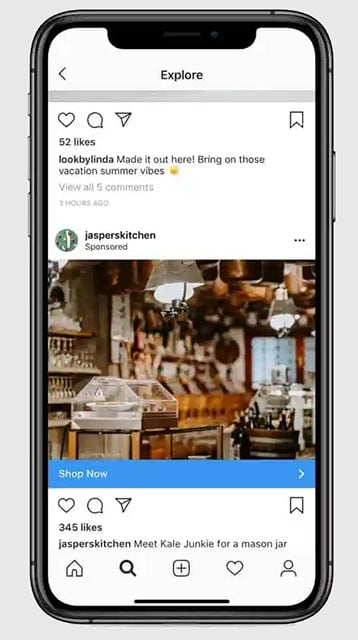
Instagram displays an ad every 3 to 4 posts and uses retargeting profusely. Each ad contains multiple visuals introducing a product you have shown interest in and leading to a shop now button. That one image or video contains the whole customer journey.

A familiar view: an ad on Instagram

The numbers confirm the story: 81% of people out of over 1 billion use Instagram every month to help research products and services. With an average conversion rate of 1.85 percent, that’s 14 million clicks on a “buy” button of an image every month.

Identical scenario for Facebook, Pinterest, Twitter, and Snap. Photography has a new role, one much harder to master. It has to introduce, convince, and sell all within one frame. It has to capitalize on the instant attention span. With video, it’s an identical challenge, all within the maximum of 60 seconds granted by most social media platforms. For brands, the bar is making the brutal journey feel seamless, which is why they rely on influencers’ expertise. They have mastered converting content into captive audiences and come with built-in trust. All that is needed is the “buy” button.

The product now comes to you, fully packaged with all the information you might need to make a purchase decision, including the cash register. Everything is transformed into an impulse buy, one carefully vetted via retargeting by your shown interest. All compressed in one frame or 60-second video, right next to those party pix of last night shared by you BFF.

Shop and share. The lines are blurred. Your friends, brands, product, purchase, parties are all part of the same flow. Click Like here, click buy there; who is that at my front door? A delivery or a friend? The beginning and end of your buyer journey are all in here, in one frame.

By Paul Melcher

Paul Melcher is a photography and technology entrepreneur based in New York, and the founder of Kaptur, a news magazine about the visual tech space. The opinions expressed in this article are solely those of the author. You can find more of his writings on his blog, Thoughts of a Bohemian. Melcher offers his services as a consultant as well. This article was also published here.

Sourced from PetaPixel

By

The world of social media is turning into a school of sorts where teachers (read: rule regulators) will call out the defaulters for failing to follow guidelines. The UK regulator for advertising called Advertising Standard Agency (ASA) has launched a new initiative in a move to make influencers more transparent about what they are paid to promote on their social media. The advertising watchdog has named and shamed social media influencers who failed to disclose paid promotions on their accounts namely Chloe Ferry, Chloe Khan, Jodie Marsh, and Lucy Mecklenburgh.

Via Instagram / @chloe.khan

These names have graced a designated website designed to highlight influencers who fall foul of the rules citing reasons as “routinely failing to clearly disclose when they are advertising to consumers.” interestingly Chloe Ferry, Chloe Khan, Jodie Marsh and Lucy Mecklenburgh all rose to prominence after their appearances on UK reality television shows and now boast hundreds of thousands of online followers and now all will unite again and spotlighted for three months. It is not only influencers who will be watched and controlled, but brands too need to follow all guidelines. “We will also be looking to take action against brands that repeatedly fail to disclose ads or do not provide assurances that they will properly label ads in future,” said the ASA.

Via Instagram / @lucymeck1
The influencers who had been contacted beforehand to seek assurances that paid promotions would be highlighted as such, have erred by not reverting such assurances or gave them but then reneged. ASA chief executive Guy Parker said, “We prefer to work with influencers and brands to help them stick to the rules.” He continued, “It’s not difficult: be upfront and clear when posts and stories are ads. If this doesn’t bring about the changes we expect, we won’t hesitate to consider further sanctions.”
Via Instagram / @jodiemarshtv
According to a study of 122 UK-based influencers in September last year, only one in four of the Instagram stories it assessed was advertising. Barely 35 percent of the posts were clearly labeled as a paid promotion. BBC News sought comment from two of the named influencers and this is what Khan had to say, “I feel like I don’t have freedom of speech. We should be given this information instead of having to try and guess the rules.”
Via Instagram / @lucymeck1

Feature Image Credit: Via Instagram / @chloe.khan

By

Sourced from Luxurylaunches

By Nick Brogden,

Not only does content increase a brand’s visibility, but it also educates and persuades prospects to take actions.

The global B2B ecommerce market is valued at $12 trillion, and this number is expected to grow by 17% in 2021. And today, more than 90% of B2B marketers use to reach, nurture and convert prospects.

This is why content marketing still leads as one of the most popular and cost-effective marketing strategies for companies growing in the B2B ecommerce segment. Not only does content increase a ‘s visibility, but it also educates and persuades prospects to take actions. The good news, it’s not too late to get started. Here’s a shortlist of steps you can take.

1. Invest in video content marketing

Around 87% of marketers are using video as a marketing tool. People prefer watching videos as compared to reading text. Video is a growing trend, and content marketers should not ignore this.

Video content marketing involves creating and distributing videos to drive profitable actions. Every video should have a story to tell. Hence, start by identifying the needs of your target audiences and select the characters of your story. Make sure your video resonates with your brand values.

Your video story should be created, keeping in mind any one of three goals that are awareness, consideration and decision. Include the top elements in your video apart from characters, such as conflict, resolution, quest, pain points and triumph.

Videos can assist your content marketing in a variety of ways, such as:

  • Product reviews.
  • Event videos.
  • Commercials.
  • Explainer videos.
  • Testimonials.
  • Tutorials.

2. Optimize for question keywords

Question keywords are an excellent way to optimize your content because it educates the prospects and presents you as a trusted brand in the eyes of the buyers. Since the answers are displayed as answer boxes, people value businesses that are returned by Google as featured snippets.

You can find relevant question keywords using tools such as SEMrush, Ubersuggest and Answer The Public. Here are some ways that B2B companies can optimize for question keywords:

  • Create FAQ pages that answer the most commonly asked questions of the customers.
  • Follow a question-answer pattern for content creation.
  • Use relevant question Schema to prepare your content.
  • Improve the readability of your content. Opt for a Flesh-Kincaid score of above 70.
  • Offer unique, informative, and comprehensive content.
  • Add proper product markups to display relevant product information directly on the search results.

3. Leverage the power of linkable assets

PR and content marketing are two sides of the same coin. When your PR and content-marketing teamwork is in sync, they help to improve the overall organic visibility of your website resulting in more traffic and conversions.

For example, a content-marketing team can create linkable assets and contact journalists and bloggers with that specific resource. The key to this is doing something that is timely and relevant right now as to what is happening in the media. Here are some examples of linkable assets:

  • Case studies.
  • Infographics and long-form content.
  • Fresh research and statistics.

4. Focus on remarketing

Remarketing is a content strategy to target prospects who have earlier visited your website. Retargeting helps to:

  • Generate more repeat visitors.
  • Improve your branding.
  • Convert prospects in every stage of the buyer journey.
  • Increase the flow of leads.

Users who have viewed your content before having higher chances of conversion. Hence, it is the best tactic to maximize the reach of your content.

Depending on user behaviour, a fresh piece of content is sent to influence the buying decision. It can be in the form of email, a PPC ad or a sponsored social media post. Both text and video content formats can be used for remarketing.

5. Partner with influencers

A recommendation from an influencer is a kind of word-of-mouth marketing that increases user trust in your business. The key here is to identify niche influencers who have a strong influence on your target audience.

There are several types of content techniques you can use for influencer marketing, such as preparing guest posts content to publish them on the influencer blog. You can also co-create content with an influencer and publish it on your business blog.

You can collaborate with both micro or macro influencers by finding them on platforms such as Traackr or Upfluence.

Around 94% of successful content marketers always measure their content performance. Anything that is not measured cannot be optimized. Hence, make it a point to measure the ROI of your content promotion efforts.

Here are some of the top metrics for tracking your content marketing investment:

  • Traffic.
  • Engagement.
  • Conversions.
  • Bounce rate.
  • Time on-page.
  • Social engagement metrics.
  • Dwell time.

Effective content marketing lets you build the user’s trust in your business. People look forward to doing business with a company that is reliable. B2B content marketing requires a more planned approach than B2C content marketing because the buying cycle of B2B audiences is longer.

Lastly, make sure to list your goals, identify the needs of the audience, create quality content and measure the effectiveness of your content at every level of the customer journey. Use the above strategies to take your B2B ecommerce content marketing efforts to the next level.

By Nick Brogden,

Sourced from Entrepreneur Europe