Author

editor

Browsing

By Dan Casarella,

As a startup, you’ll need to know how to write a business plan in order to attract investors. Here are some templates and examples to help you get started.

If you’re starting a new business or executing a new plan within your company, you’ll want to have a business plan. It’s a formal document that outlines your company, your project, funding options and your means of execution. There are many resources available to help you write your business plan, including countless templates you can follow depending on your goals. Below we’ve outlined some examples, including a sample plan.

Business plan template examples

While business plans can be general, it’s helpful to gear yours toward your industry. Here are five business plan templates for specific industries or situations:

Sample business plan

A one-page business plan briefly states your opportunity and timeline. It’s often used as an introduction to your longer, more robust plan. Here is a brief overview of a business plan and the nine elements that should be included.

1. The business opportunity

At the top of your plan, state the endeavour you’re looking to pursue. Are you a new start-up or an existing company looking to grow? Describe your challenges and how you plan to work through them. This section should be a one- or two-sentence elevator pitch of your business opportunity.

2. Your company description

When writing your company description, assume the reader knows nothing about your company. Briefly define who you are, identifying your values and why your company is necessary right now.

Outline your timeline for launching your business or project. Timelines are always subject to change, so make sure you account for alternative scenarios and setbacks.

3. Your talent description

In this section, you’ll want to introduce your team and demonstrate why they are the right fit for your business. Talk about their relevant skills, experience and background, getting as specific as possible. Providing their track record will reassure potential investors that your business is backed by reliable professionals.

4. The industry analysis

While writing your plan, it’s important to recognize your industry’s outlook and your potential within it. This will also help you identify your competitors and analyze their offerings in comparison to yours, so you can focus on how you might stand out among them. This analysis is a great way to show investors that you’ve done your research and understand how you fit into your market.

5. Your target audience

In this section, you will identify your target audience, defining their demographic, location and other specific traits. Additionally, explain how your audience will benefit from your company or project, or how you will solve common problems they share.

6. The timeline

Outline your timeline for launching your business or project. Timelines are always subject to change, so make sure you account for alternative scenarios and setbacks. For your one-page business plan, talk about your general timeline, its phases and why it’s a realistic goal.

7. Your marketing plan

How will you get the word out about your new business or project? Identify the avenues you and your company will choose to explore and how you plan to meet your target audience there. For example, consider your social media efforts, digital marketing and other methods that you seek to execute.

8. The financial summary

Clearly define your cost structure and revenue streams, describing your sales methods and post-launch goals, as well as how you will achieve them. Be sure to include both your long- and short-term financial goals and benchmarks.

9. Your funding requirements

One of the primary reasons you write a business plan is to help obtain funding. In this section, talk about the amount of funding you’ll need from investors and where that funding will go. You should also be clear about how you plan to pay back your investors through your financial plan.

CO— aims to bring you inspiration from leading respected experts. However, before making any business decision, you should consult a professional who can advise you based on your individual situation.

Feature Image Credit: Getty Images/shapecharge 

By Dan Casarella

Sourced from CO

By George Deeb

Being an entrepreneur is no simple task, given the fact that 90% of start-ups collapse. But based on the learnings from past flame-outs, there are some leading indicators that can identify whether your start-up is headed for failure.

1. Lost Focus on Primary Goal

For some start-ups, their focus can divert to unimportant factors than the primary goal at hand. A successful start-up learns to prioritize its efforts, and stay religiously focused on that end goal. Keeping the team firmly focused on the end goal can also be beneficial for the work environment as it will keep the team all rowing in the same desired direction. If you see a start-up flailing in the wind of change, going in multiple directions based on the “flavour of the month,” you know that business is in trouble.

2. Poor or Slow Execution

There are start-ups that begin with innovative concepts but cannot execute them properly. This is due to a number of reasons—lack of relevant resources, lack of motivation or poor working habits for starters. Firms that are properly tracking their progress with regard to a particular project will quickly see if they are falling behind and come up with ways to correct the problem before it becomes a material one. Those that are not executing well will suffer deficits in capital or timelines. There is also a problem with the speed in execution, with many start-ups not being able to push out products or services as fast as their competitors. Speed is critical, to staying ahead of your competitors as the first mover, and not being forced to play catch up.

3. Lack of Customer Engagement

A lack of customer engagement is something many early-stage start-ups face. There are a many possible scenarios in which customers might lose interest in a product or service. Maybe the start-up didn’t properly research the market to ensure meaningful demand? Maybe sales and marketing efforts are not the best strategy for that business? If you don’t truly understand your customers pain points, they will never have a serious interest in your product or service. It is best to figure out why customers are not engaging, sooner than later, to try and resolve those product or marketing related issues to see if they are fixable, before deciding to cut your losses and close shop.

4. Poor Teamwork

Sometimes, perfectly capable and promising start-ups begin descending into failure because of differences among team members or lack of effective teamwork. This does not necessarily have anything to do with how well a person or a group of people can perform in the workplace. It just means, at times, some people cannot work well together. It is a start-up CEO’s responsibility to know what is required to keep the team gelling and how to improve the team’s performance in thinking and acting like one well-oiled machine. If ineffective teamwork goes undetected or unresolved for an extended period of time, the start-up will struggle to recover.

5. High Employee Turnover Rate

If the employee turnover rate is high and recurring, it could be an indicator of a failing start-up. There could be a number of reasons why the turnover rate is high. For one, a start-up’s culture plays a strong role. If employees are unsatisfied with the work environment, don’t like the people they are working with or don’t have confidence with their management, they will most likely be looking to leave. So if you have a revolving door with your staff, something is wrong and needs to be fixed, as you can’t scale a business on a wobbly foundation of talent.

6. Lack of Adaptability

Any start-up that says it is immune to changes in the market is setting itself up for failure. External market forces ultimately dictate how your start-up will fare against changing trends and competitors in the industry. If a start-up doesn’t truly understand or disregards what is happening outside of its own office, it is doomed to fail. For a start-up to truly reach success, it may have to pivot several times until it finds the right mix of product-market fit. If a start-up does not pivot fast enough, that is usually a sign the end is near.

7. No New Product Development

For a start-up to stay relevant, it needs to constantly be reinventing itself. Your product development efforts are never done, as you should always be striving to improve from version 1, to version 2 to version 3 over time. Because if you don’t, you can rest assured your competitors will clearly copy whatever you are doing successfully today, and will be improving their business at your expense.

8. Unaware of Finances

Every good start-up should always be aware of its financial situation. But you would be surprised how many entrepreneurs have no clue about their finances, and hence cannot easily predict they are about ready to slam into a brick wall. There needs to be financial reports, dashboards and KPI’s that a start-up studies closely each week to understand how much it is spending, earning and retaining vs. its goals. You can’t manage what you are not measuring, so make sure you get your key reporting metrics identified and tracked.

9. Creative Block or Stubbornness

Oftentimes, a start-up’s team gets hung up on a particular perspective or approach to an issue. When things are not going well, it is important to push the team to change their perspective and try something new and creative to solve the problem. Start-ups that are heading towards failure are often unsure of where they should be heading as a company, and lack the creative thinking skills that are required to ideate potential solutions. Or, they are simply inflexible and not willing to entertain a different approach.

10. Boredom

The team getting bored with what they are working on can surely be a start-up killer. Early in the start-up’s life, the team is motivated, as the venture is exciting to work on, and the team enjoys working towards the success of a start-up. Hence, everyone works with dedication and puts in long hours. But the reality is, after the euphoria wears off, it is easy for the team to get bored with their work. It could be due to their attention diverting elsewhere, lack of motivation, or monotony in the day-to-day grind of the workplace, especially if the business is not succeeding as planned. A good entrepreneur will figure out ways to keep its employees engaged and motivated at all times.

So, do a critical assessment of your business to make sure you are not about ready to drive off the cliff. If any of the above resonates as happening with your business, it is time to put an immediate fix in place.

Feature Image Credit: getty

By George Deeb

George Deeb is a Partner at Red Rocket Ventures and author of 101 Startup Lessons-An Entrepreneur’s Handbook. For future posts from George, please follow him here or on Twitter at @georgedeeb or @redrocketvc.

Sourced from Forbes

By Jacob Tanur.

Become recognizable for the things that set you apart.

Video is one of the best windows your consumers have into your business. It allows them to see for themselves what you can offer them and why they should trust you. But for it to be effective, your videos need to build on and strengthen your brand so that consumers have a clear picture of what to expect and why they should come to you.

In light of the pandemic, 30 percent of marketers have indicated that they plan to increase their video production, which means it’s more important than ever to ensure the strength of your brand through your videos. That’s what will set you apart.

Let’s get started.

1. Be clear from the start.

The first few seconds of your video are not the time for ambiguity. Your audience needs to recognize your business early on. This maintains consistency and ensures that they spend the rest of the video associating everything they see with you and your brand.

Additionally, be clear about your message from the start, whether your goal is to teach your audience, introduce a product or tell a story about your services. This reminds your audience what your business is about and keeps them hooked throughout the video. If your audience stops watching, your video will do nothing for your brand.

2. Establish your target market.

Before you even think about designing a video campaign, you need to identify your target audience. Generalizing your video to everyone won’t do you any good when it comes to strengthening your brand.

By focusing on the audience your business appeals to, you not only create a more focused brand but you increase the likelihood of getting through to your audience and seeing real results. Pro tip: More business helps your brand, too.

3. Tell a story.

Use your videos to tell a story, whether it’s the business’s story, an employee’s story or a consumer’s story. This shows your audience that there are real people behind the logo and allows them to connect with your brand on a human level.

Putting real faces and stories at the forefront of your marketing strategy builds a sense of trust and understanding between you and your audience and helps craft a brand that appeals to people on a personal level.

4. Include testimonials.

Don’t just rely on yourself and your employees to sell your company. Let satisfied consumers do it for you. If your video displays real consumers who enjoyed your product or service, it lends your brand credibility and shows that you’re a business that can be trusted.

Think about it: Who are you more likely to believe? A happy customer sharing their positive experiences or the employees that get paid for every product or service sold?

5. Use your expertise.

You are where you are for a reason. Let your audience see that. Make how-to videos or case study videos. Give your audience real advice that they can apply to their lives to show that you know what you’re doing or show them your real results and how you got there. Make sure that your brand is associated with real expertise and knowledge in addition to good human relations.

According to a 2021 report, “94 percent of people have watched an explainer video to learn more about a product or service,” so your efforts won’t be in vain.

6. Incorporate calls to action.

You need more than just a goal for your video. You need your audience to know what you want them to do. Including a call-to-action in your video shows that you are a brand with direction and purpose and gives the audience direct instructions on how to get involved with you if they’re interested.

A successful call to action will also strengthen your brand through the business it brings you. Although most put their calls to action at the end, studies have shown that calls to action in the middle of a video actually have the highest conversion rate. Play around with it and see what works best for your video.

It’s important to remember that when it comes to video marketing, standing out and being unique is important, but that in itself isn’t enough to bring in business. You need to ensure that everything you do works to strengthen and build upon your brand so that you not only gain your audience’s trust and confidence but become recognizable to them for the things that set you apart.

Remember, it’s not your product or your services that sell. It’s your brand.

Feature Image Credit: Getty Images

By Jacob Tanur

Founder and Creative Director at Click Play Films, a video production company specializing in premium branded content.

Sourced from Inc.

By Kaitlyn McInnis.

What if we told you that it was possible to unlock your mind, learn anything you set your mind to, and change your habits for the better?

It might sound too good to be true but that’s exactly what bestselling author and brain coach Jim Kwik sets out to do in his mental expansion manual.

He might be the world’s number one brain coach but Jim Kwik’s recipe for success is anything but pretentious or complicated.

In the pages of Limitless: Upgrade Your Brain, Learn Anything Faster, and Unlock Your Exceptional Life, Kwik aims to help the average person to expand their mind in order to accomplish more, be more productive, and see more personal and business success by simply changing a couple of key factors.

The “3 M’s”

The “3 M’s” as Kwik calls them, consist of Mindset, Motivation, and Methods, and have the ability to change every aspect of your life—if you’re willing to cultivate each one to increase your productivity and success while rewiring your brain.

The science-based practices and field-tested tips that Kwik employs are proven to help accelerate communication, memory, focus, recall, speed reading, and even self-learning, in order to create fast and tangible results no matter your goals or to-do list.

Flipping through Limitless, you’ll notice that the book is broken down to cover the “3 M’s” in a systematic approach—something that anybody can accomplish if they’re ready to put in the work involved.

Flipping your mindset, to start, is nothing new to personal development junkies—but it’s key to achieving greater success and the most important aspect of flipping the switch on your productivity and brain power.

Your brain is a ‘supercomputer’

According to Kwik, the brain is like a supercomputer and your thoughts program it to run. The “Kwik Brain process” as it’s called in the book, will help you to rewrite the assumptions, bad habits, and procrastinations that are holding you back or causing your negative thoughts.

From there, readers will move onto igniting their motivation—which Kwik says is the key that opens up limitless mental capacity. It’s here that readers will get to focus on a more tangible aspect of success and goal-setting; passion, purpose, energy, and focusing on goals should all foster a sense of excitement when done right—and Kwik shows readers exactly how to foster a more sustainable and self-renewing sense of motivation that will help drive success even faster (and further).

Becoming “brain-fit”

The final step involves mastering the method—putting together everything you’ve been training your brain to do and think. According to Kwik—and to the endless reader reviews—mastering the method will allow you to use your brain in ways that you never thought possible.

The level of “brain-fit” you achieve will all come down to the effort you put in after finishing the book. If you take Kwik’s lessons and run with them, chances are good that you’ll be able to read a book three times faster through speed reading, actually learn to speak a second language fluently, and master other skills like learning an instrument, simply by shifting the way you think about motivation and mindset.

While it might sound like a lot of fluff or fiction, there’s a reason that Limitless has nearly 10,000 five-star reviews online—the hacks and processes that Kwik brilliantly lays out within its pages are a game changer when it comes to overcoming poor productivity and lack of motivation.

Whether you’re hoping to increase your productivity and success or you’re ready to take that new self-taught hobby to the next level, the surprisingly simple ways to unblock productivity and expand your brain’s capacity as outlined in Limitless will benefit anyone willing to work on their motivation and mindset—and it’s definitely worth a read.

By Kaitlyn McInnis

Sourced from LADDERS


Sourced from Entrepreneur Europe.

It doesn’t take much to scale your Instagram strategy.

Instagram is one of the best tools for small businesses to grow their brand recognition and build a loyal following. But managing a social media marketing strategy takes time, energy, and often, money your business may not be able to afford. Fortunately, technology can help.

Brello is an all-in-one master tool for managing Instagram marketing from your phone. With Brello, it’s easy to scale your Instagram, whether it’s for personal or professional branding purposes.

This suite includes a growing list of tools that make it easy to manage your ‘Insta’ on the go. Currently, Brello includes a Story Creator, Post Maker, Grid Post Maker, Animated Story Maker, Analytics, Hashtag Generator, Repost Tool, Post Saver Tool, Photo Blend Tool, Bio Ideas Tool, Caption Spacer, Highlights Icon Maker, plus more tools that are added regularly. With hundreds of unique, handpicked, customizable templates for posts, stories, and more, you can quickly put together an Instagram post and use AI hashtags to correctly classify your photos for the best exposure.

With tools like the Caption Spacer, and AI hashtag generators, you’ll ensure your captions always look great and you’re reaching the biggest (and best) audience possible. Plus, Brello provides detailed account metrics like follower counts, top posts, comments, likes, and more so you can keep track of what’s going on with your strategy — all from the palm of your hand.

Start scaling your Instagram strategy without investing a ton of time and money. Normally, a lifetime subscription to Brello is $600 but you can sign up today for just $49.99 through this offer.

Prices subject to change.

Feature Image Credit: Gabrielle Henderson/Unsplash

Sourced from Entrepreneur Europe

By Timothy Carter.

  • Content should add value to the conversation by making strong points or sharing research.
  • Your brand’s reputation could suffer if it’s associated with regular bad content.
  • Although good content takes time and money to produce, it can offer great return on investment.

Content marketing is one of the dominant strategies in the modern digital marketing world. That’s partially due to its accessibility (since anyone can write and publish content on the web). But it’s also a testament to its effectiveness.

Of course, practicing content marketing isn’t a sure-fire way to generate traffic or even build your brand reputation — especially now. The truth is, marketers everywhere are suffering from the effects of “bad” content, whether they’re the ones writing it or not.

If content marketing is going to survive as a strategy, we need to collectively address it.

What is bad content?

Bad content is pretty much what it sounds like. It’s typically content produced for its own sake, rather than to serve a specific purpose. Instead of being written to inform the public or entertain a specific target audience, it’s written merely to generate traffic or improve the visibility of the brand.

That said, the intent of the piece isn’t the main problem. The main problem is that the content cuts corners, or otherwise adds little value to a given conversation. It doesn’t cover new ground. It doesn’t make strong points. It doesn’t offer new research. Sometimes, it’s not even well written, ending up riddled with typos and semantic errors.

The ongoing publication and syndication of bad content leads to a host of negative consequences for marketers, both on a first order (affecting the publisher directly) and a second order (affecting everyone, even those not publishing bad content).

First order effects

Writing and publishing bad content will negatively impact your brand, even if you see some marginal increases in traffic or brand recognition.

For example:

  • Reputational damage. When a person reads an empty or poorly researched piece of content, they often look to the author to see who’s responsible for it. If your brand is associated with bad content, it’s going to take a reputational hit, sooner or later. You don’t want to be known as the company that makes shoddy content.
  • SEO issues. In some cases, an influx of hastily written content can actually harm your positions in search engines. Google‘s search ranking algorithm significantly considers content quality when evaluating trustworthiness and eventual positions; in other words, if you care about search engine optimization (SEO), bad content will do more harm than good.
  • ROI and cost issues. Writing a piece of bad content still takes time, money and effort. If the bulk of your content marketing strategy is centred on “bad” pieces, it’s going to ruin your return on investment (ROI).

Second order effects

Bad content in circulation also affects the entire marketing industry — even if you’re not immediately aware of these effects.

Consider:

  • Consumer trust. Consumer trust in brands is already at an all-time low. It’s part of the reason why traditional advertising is met with such scepticism and cynicism in the modern era. The more the internet is flooded with bad content, engineered for marketing purposes only, the more consumer trust is going to fall; increasingly, companies will be seen as greedy manipulators that don’t care about quality.
  • The efficacy of content marketing. Content marketing originated as a way to build trust with consumers — that’s what made it powerful. But as bad content becomes the new norm, content marketing suffers reputational damage. Everyone’s strategy takes a hit.
  • Content pollution. Here’s the thing about bad content — it’s cheap and easy to produce. It’s therefore easy to flood the internet with bad content. This “content pollution” makes it harder and harder for good content to stand out and get the attention it deserves.

Is your content bad?

Generally speaking, you should have an intuition for whether or not your content is “bad.” If you only care about it as a tool for generating traffic, if you outsource the work to non-native speakers or if you rush through the content with no regard to its structure, research or writing, you probably have bad content on your hands.

But if you’re in a grey area and you’re not sure whether your content meets a decent threshold of quality, there are some aspects you can check:

  • Research. Are your claims backed with evidence? Did you look up the counterarguments? Which sources do you cite?
  • Purpose. Are you genuinely trying to inform or help people? Or are you only interested in optimizing for a specific keyword?
  • Grammar, spelling, syntax, etc. Your finished content should be flawless after a few rounds of review and revision.
  • Feedback. How do your readers feel about this content? This is arguably the most important factor, so run surveys to collect more feedback.

There isn’t much you can do about other businesses and individuals writing and publishing bad content, but you can take control over your own approach. Take some time to audit your current content marketing strategy (if you have one) and re-prioritize the quality of your work.

Feature Image Credit: Marketers should have an intuition for whether or not their content is bad or something people will enjoy. Carlina Teteris

By Timothy Carter

Sourced from Insider

By

In this article SEOLEVELUP focuses on strategies for better SEO that can help you rank higher on Google in 2021.

With more than 4.5 Billion Google searches a day, you will need to play by the rules of Google to rank high enough for potential visitors to come across your content. Improving your search engine optimization (SEO) efforts is one of the best ways to ensure that you are making full use of your content. Check out our SEO Tips that will help your website improve online visibility and rankings.

Before you get started, be sure to get our FREE SEO Audit if you want to see needed improvements to your website! Also check out our Google reviews and read some success stories!

Organizations need a way to assess and view their SEO activities in today’s data-driven environment to stay ahead. To accomplish this, 73% of marketers use SEO tools to refine their content and improve Google’s content ratings.

You can increase the probability of obtaining organic website traffic by introducing small changes to the content of your website.

In this article I focus on strategies for better SEO that can help you rank higher on Google in 2021. In the new year, it will break down Best SEO Companies for small business and clarify some strategies to enhance SEO.

Best SEO Tips to Implement in 2021

Monitor with a Program that works with Search Engines

Understanding Google Analytics is the best step that you can take in enhancing your SEO in 2021. Google Analytics is a helpful tool to understand your website, so you can make good decisions based on results.

Not only can statistics help you understand how you rank, but also your audience, so that content can be better created for them.

Google Analytics can be a fantastic tool over time to target the customers better. Some of the indicators you can learn from visitors to your site include:

What browsers they use

Google Analytics will give you powerful insights on which browsers your customers use. By concentrating on web design on the most-used browsers, will allow you to enhance their experience.

The devices used to visit your site

Similar to knowing the browsers your customers use, knowing what devices they use can be helpful. There are more web users on those pages than desktop users or vice versa. Understanding the metrics of your website will allow you to develop content customized to the screen size that is most widely used, improving the user experience.

Understand your competition

Google Analytics also provides insights into traffic from rivals. When determining how to boost your content and outrank rivals, this knowledge can be useful.

Refresh Website with new material

There is one thing in common with content marketers who create high-ranking content. They provide readers with engaging content topics. Successful marketing managers track patterns and discussions to brainstorm content ideas. This ensures that at some stage you’re going to have to revisit low-performing content.

Consider what kind of content would resonate with your audience when designing your content marketing strategy. From there, you can analyse what headlines will do well for that subject and whether you can establish some prequel topics.

Many content marketers consider mind maps to be useful. Using a mind map for visual individuals will help you present all of your future topic ideas. It will enable you to create larger topics that can be built into similar, smaller items. Visualizing your content plan can help you grasp it completely sometimes.

Ensure you create your Content around Keywords

Researching keywords not only works for your content and helps to develop your piece’s framework but it also allows you to understand what your audience wants to read. You can help build a content strategy to boost SEO by understanding what keywords are best for your target audience and content type.

Google-friendly writing depends on a balance between keywords and everyday language being proven. This implies that it should be written in such a way that your content flows naturally. In your content, keywords should naturally come up so that you don’t have to stuff your content at the last minute.

There is an option for the Keyword Magic Tool where you can look up related keywords for your primary keyword. To help you identify whether it is something you will want to add to your content.

You will see how closely related a keyword is and its search volume. You can talk with your SEO Agency and can make small changes to boost your SEO ranking gradually.

Expand your Portfolio Backlink

Even if you follow all of the tips related to on-page technical SEO, Google’s front page will still not be proven. A large portion of SEO deals with backlinks and whether high-authority sites generate backlinks.

Diversity in backlinks can come from two sources, specifically: The type of backlink
In general, a dofollow or nofollow would be your backlink, with a dofollow bearing more weight.

A site where the backlink originates

For example, if you are promoting your content and targeting publishers to run a story, the source of your backlink will be the site that links back to your content.

A diverse portfolio of backlinks signals to Google that your website is an authoritative source. Also that you naturally create links versus relying on automated tools or other spam tactics.

Use Appropriate Header tags

You want to be aware of how you organize the content on the page while creating content. With the most relevant details at the top of the page, each page should have content arranged logically.

Studies have noticed that 80% of readers spend much of their time at the top of the page looking at the content. How great are these SEO Tips?

Google does not, however, inherently index meaning exclusively to what is at the top of the list. To see if it’s comprehensive, they look at the article as a whole. So with that in mind, you may need to put some effort into how the page is laid out.

Consider adding jump links to the top of your page to get the most out of the keywords you’re targeting.

Not only does this create a more enjoyable user experience, but it also encourages you to use your header tags to go after Google Gathering Information from a sample in more innovative ways.

Conclusion

Search engines work overtime to list the billions of websites on the internet because of the content being made and released quickly. Get in touch with us today and we can discuss how to improve your online rankings.

Besides, you can improve SEO on your site and start ranking higher on Google by using tools to look at critical factors that affect it, such as loading speed, content problems, meta tags, linking, and crawlability.

I hope you enjoyed these amazing SEO Tips and be sure to get a FREE SEO Audit today!

By

Sourced by Patch

By Steve Hall.

In 2021, harnessing the power of SEO is a necessity for all businesses, regardless of their size or industry. The Covid-19 pandemic demonstrated the power of the digital; companies that had a pre-established online presence found it far easier to navigate the challenges of lockdowns and border closures than those that didn’t.

SEO is quite a technical area of marketing, which is why many companies opt to outsource their SEO activities to external agencies. While this is a great strategy, there tends to be an enormous difference in the quality of work and results obtained between various SEO companies. So, how can you tell the good from the bad?

If you are searching for a team specializing in SEO in Melbourne, read on to discover what factors you should consider (and which agencies you should definitely steer clear of!)

What does an SEO agency do?

Before picking an SEO agency, it’s important that you understand their exact function.

SEO stands for ‘search engine optimisation’, which is the process of making improvements to your site to increase search engine visibility. When you search a term — known as a keyword — using a search engine, the engine will crawl through every page on the internet, taking into account a variety of factors to present the website they think best matches what you are looking for.

These factors can include:

  • How secure a website is
  • The page load speed
  • Whether or not a site is mobile friendly
  • ‘Crawlability’ — that is, whether or not the engine’s bots can access a page.
  • Analytics on user engagement
  • The presence of quality, keyword optimised content
  • Backlink profile.

It is the role of an SEO agency to put together a strategy that elevates your website to the top of the search engine results page, or SERP.

SEO is different to ‘pay per click’ advertising, or PPC, in that you cannot pay to have a site elevated to the top of organic search results. It takes insider knowledge, a strategic mindset, and hard work to get a website ranking for any one particular keyword. A good SEO agency understands this and knows that your end goal is to have more traffic to your site that results in increased profits.

How to choose an SEO agency

First up — why do I need an SEO agency?

While it’s true that there are some areas of SEO you can implement yourself, it really is a job best left to the professionals. By hiring a reputable SEO company in Australia, your company can focus on what they do best while benefiting from the experience and knowledge of SEO experts.

However, not all SEO agencies are created equal, and there are literally thousands of them out there. When deciding between agencies, consider the following key points:

1. Make sure they know what they’re talking about

One of the great things about SEO is the amount of resources there are out there. The SEO community is enormous and very willing to share their knowledge with newcomers.

The downside of this is that many agencies claim to be SEO experts when they only really have beginner knowledge. SEO is more of a science than an art and it takes extreme skill and patience to execute proven strategies.

That’s the other thing about SEO — it takes time. Don’t be fooled by any agency who promises quick results. In reality, it can take months to improve keyword ranking, particularly if you are operating by the SEO rules.

An agency that advertises lightning fast turnaround may be following ‘black-hat’ techniques. If Google, or any other search engines, catches on to the fact that you are trying to bend the rules, they can blacklist your website and send it plummeting to the bottom of the search rankings.

Be discerning about who you trust your website with and only work with agencies who have proven results and know what they’re talking about.

2. Understand your own goals

SEO is really just another form of marketing, and the end goal of any marketing strategy is to increase customer engagement (and profits). For most people, this will be their SEO goal.

However, amidst terms like ‘keyword ranking’ ‘traffic’ ‘lead generation’ and ‘page speed’, this goal can quickly get lost. Before meeting with an SEO agency, make sure you have sat down internally and discussed your future direction. If your goals line up with the expertise and strategies of your SEO agency, you are more likely to have a successful campaign and get a return on your marketing investment.

3. Ask for recommendations

When it comes time to pick an SEO agency, many people turn to Google. After all, a team that specialises in search engine ranking should occupy a top spot on the Google results page, right?

Well, not necessarily. A better strategy might be to ask for recommendations within your industry or from other similarly sized companies. There are many factors that go into a good SEO agency, and not all of them can be demonstrated through a quick Google search.

4. Communication is key

Finally, prioritise communication. Ideally, your SEO agency should report to you on a monthly basis. This report can include what kinds of on-page, technical, and off-page activities they have undertaken and what the results have been — increased keyword ranking, improved page speed, and more.

Whether these reports are accompanied by in-person (or virtual) meetings is up to you. However, when you’re trusting your website and search engine rankings with an external agency, more communication is always better than less.

Finding an SEO company in Australia is no easy task. Take your time, meet with agencies in-person, and ask all the questions you need so that you can be confident in your choice. Then sit back and let the SEO experts do the work for you!

By Steve Hall

Sourced from AdRANTS

By Simon Severino

If you have no time, you have no priorities.

Life isn’t perfect, but you could have an ideal week. It is your choice to make it happen.

You can either design your business wherein you’re in control, or your business controls you. You can live your life on purpose. Or you can draw yourself into reaction mode.

These days, I find that planning out the week and thinking about things seriously are two rare attributes of busy entrepreneurs. Many entrepreneurs tend to go with the flow, spending their time agreeing to their business demands instead of getting their priorities straight beforehand.

Many business owners complain that they don’t have time, especially if they’re wearing too many hats inside their business. But the truth is, if something matters to us significantly, we will make time. Shifting your mindset from having no time to having enough time is done by simply changing how you approach and clarify your priorities.
And if you want to grow your business, you need to achieve clarity on high-value activities. If you’re clear with your priorities, you can do better, meaningful work that will pivot your business to the next level.

Being proactive in your business starts by mapping out your “ideal ordinary week.”

Your Ideal Ordinary Week

Creating your ideal ordinary week is a powerful approach to help you design your week according to your needs and where you want your business to be. This is important because if you don’t take an approach like this, everything will fall into your calendar, and you will be lost.

You need to create space and boundaries to really stay on the playing field of your own game.

So, for example, I have a simple rule that I always follow when it comes to protecting my boundaries: In the morning, I do my top three tasks because I have optimal energy. Plus, I have fewer distractions since most people are not working yet. This is my time to create stuff for myself and my business while maintaining my pace and momentum. As a result, I get more things done in less time while growing my business faster.

In the afternoon, I have meetings, joint ventures and discussions about deals, business growth, collaborations or coaching our coaches.

Know When To Say Yes And When To Say No 

Your ideal ordinary week is not one that’s out of reach or unrealistic. Your real ideal ordinary week depends on how you operate, your patterns, strengths and weaknesses. It’s like a binder that connects your best life and business with your daily specific actions that support your higher goals.

If you can decide what your ideal ordinary week looks like, at least you will have a blueprint — one you can put into a Google calendar or just put on the wall. You’ll make many micro-decisions every day that will gradually evolve your week to become that ideal week.

Whenever somebody asks for a meeting, you can aim to accept an appointment for when you want it to be. For example, if I want the meeting to be on Friday morning, I move them gradually there. And that forms part of your ideal week.

Most of your ideal week is up to you to decide on, so let’s design it.

Step 1: Set your intentions.

I recommend that you set an intention every day.

Let’s just say you set Monday as a “sale day.” You can say, “My goal is setting sales calls for the closer to close on the phone. On Monday, I will reach out to 200 people so that 10 of them get onto a closing call with the closer.”

Another day might be “team day,” where you are available to your teammates to help with whatever pops up. Another might be the “marketing day,” where you work on recording videos for your clients or other marketing needs.

Basically, set intentions each week that will serve you and your business — no hard rules for this. Let your creativity do its magic.

Step 2: Define the elements that make up your week.

After you’ve set intentions, think about the elements of your week. Our most successful clients at Strategy Sprints have these elements in place. I find that the most-used elements are fulfilment, team time, marketing, me time, sales, growth and hiring.

Step 3: Put time blockers into your calendar.

Growth is the business of business. It is when you work on the form, fit and function of your sales process, marketing process and fulfilment process.

Make sure to have enough time blocked in advance to work on the business. This includes your company’s vision, positioning, joint ventures, collaboration, franchise system, affiliate system, blue ocean strategy, how you can differentiate, hiring and firing.

Step 4: Track your projects.

Sometimes, I have to review my project list so they are always updated. I close the projects that are done. For the ones that I am not running well, I may discontinue them. So, I update the list and make sure it reflects every new project.

Now you have a blueprint for how to create your ideal ordinary week as a CEO. Life is short, so do the stuff that matters.

Feature Image Credit: getty

By Simon Severino

Simon Severino is the CEO of Strategy Sprints®. The Strategy Sprints® method doubles revenue in 90 days.  Read Simon Severino’s full executive profile here.

Sourced from Forbes

By Don Fluckinger,

If your business strategy fully relied on iOS tracking for survival, your company was probably in trouble before 14.5 came out this week, marketing experts say.

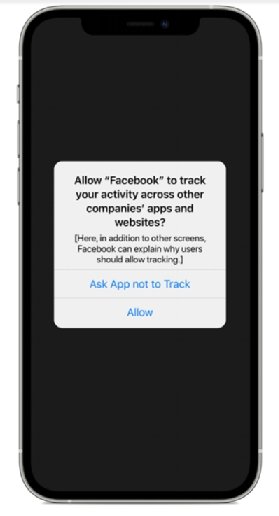
Apple’s iOS 14.5 App Tracking Transparency for mobile devices gives phone and tablet owners more control over data surveillance — apps tracking behaviour in other apps to customize ads. For marketers, that may mean one of their go-to tools has been taken out of the digital toolbox, or at least will be severely blunted.

Apple made its intentions known that it would require app developers to give users a choice to opt in to data tracking across apps late last year. Facebook immediately hit back, claiming that less-targeted Facebook ads would harm small businesses. Small businesses and agencies that cater to them reaffirmed that notion.

Experts said that while less iOS tracking will change how digital marketing is done, it probably won’t have a big effect on marketing strategy and technology for many large businesses. That’s because in the last two years, marketing teams have worked hard to comply with new consumer privacy laws that lay the groundwork for customer opt-ins on data use.

Google and Apple both plan to eliminate third-party browser cookies, too. Taken together, privacy opt-outs and the slow death of third-party cookies either already have or will in the very near future dilute the value of data gleaned from digital ads.

“If marketers were really being honest about why we’re freaking out about this — and why Facebook is freaking out about this — it’s because shady behaviour begets shadier action, and we’ve been doing it since the dawn of time,” said Liz Miller, an analyst at Constellation Research. “The losers in this situation are companies who look at giving customers control of their own data as a bad thing.”

Who will opt out?

Apple turned on iOS 14.5 App Tracking Transparency this week, which manifests as a pop-up window in apps. Some developers, however, turned on the features earlier in preparation of iOS 14.5. AppsFlyer, which manages mobile attribution of digital ads — keeping track of what ads drive what activity — analyzed 13 million consumer answers to data-tracking prompts among about 300-plus apps hosted by these early adopters during a three-week period before iOS 14.5 went live.

AppsFlyer found that people opted in for ad targeting approximately 41% of the time. Half the apps had at least 32% opt-in rates. But there was a difference in the kinds of apps people said “yes” to, said Shani Rosenfelder, head of content and mobile insights at AppsFlyer. The more well-known and trusted a brand was, such as in the utilities, shopping or social arenas, opt-in rates tended to be higher.

Brands that had less of a connection to their users, such as game developers, saw lower opt-in rates. Only the largest, most well-known game developers saw opt-in rates comparable with non-game apps. Brands that app users have done business with in the past, such as shopping apps, tend to be more trusted when the opt-in window pops up.

iOS 14.5 Software Update

Apple

Apple mobile device users get App Tracking Transparency in the iOS update released this week.

“Things may change, but we are cautiously optimistic that opt-in rates will be higher than anticipated for marketers and for users,” Rosenfelder said. “It remains to be seen what the real opt-in rate will be.”

To persuade app users to opt in to ad tracking, AppsFlyer found that three messages Apple allows developers to put in the App Tracking Transparency pop-up may effectively drive positive results: Opting in helps the app to remain free, opting in helps show users content that is relevant to them and “we prohibit the use of your data for any purpose other than providing you with relevant experiences.”

AppsFlyer notes that Apple prohibits the use of discounts or other offers to induce users to opt into iOS data tracking across apps.

Marketing strategies will change

In anticipation of a drop-off in cross-app tracking data, agencies and consultants who work with marketers have been developing strategies to replace it. The companies that are panicking now are the ones that put off planning for App Tracking Transparency during pandemic disruptions, said Zach Baze, chief intelligence officer at Hawkeye, a digital agency that runs Epsilon adtech as well as first-party data platforms.

The hardest-hit marketers will be those that built businesses on mobile advertising or hyper-targeted ads, and they will have to adjust to survive, Baze said. For small businesses, those ads were cost-efficient. For most companies, though, the loss of cross-app data will reinvigorate the creativity that precision advertising tools made obsolete, and they probably have at least gotten started on cleaning up their first-party data on the customers they already have.

Apple’s iOS moves, in tandem with Google eliminating third-party cookies by next year, will force companies to use that first-party customer data to drive better customer experiences, instead of outsourcing tracking to Facebook and its competitors.

Apple iOS tracking

Apple

Tracking via iOS can still happen as it did before — but in version 14.5, Apple forces developers to explain themselves to iPad and iPhone users.

“Responsible marketers have seen this coming; it’s part of a tidal wave of a cookie-less future, and it’s probably a part of a market correction,” Baze said. “Apple is a lifestyle brand, not a data company, so it is diametrically at odds with Google or Facebook. Apple is just looking out for the experience of the consumers that they market to — which is what marketers should have been doing all along.”

Facebook, in a blog post, said small businesses will be adversely affected by the iOS tracking changes. Consultant Athan Slotkin, who works with small businesses and entrepreneurial startups on marketing and business planning, said companies that offer specialized products and sell exclusively online will be hardest hit.

Many small companies, he said, start and end their advertising plans with Facebook and Instagram. Sometimes they aren’t even aware of targeting tools those platforms run to lower costs and more precisely find customers more likely to be interested in what they’re selling.

Slotkin said he advises clients to diversify investment over different online channels, whether it’s straight SEO, TikTok, Clubhouse or other ad platforms. New and emerging social platforms typically offer more organic reach, he said, so they may represent better returns for cash-strapped small businesses. More than that, though, Slotkin advises businesses to collect and invest in their own customer data.

Get their email address, and don’t just get their consent, because that feels a little like it’s under duress. Get them enthused to share their email address because they’re interested in hearing from you and they value what you do.

Athan SlotkinSmall business consultant

“Part of my thought process — even before all this happened — is the value of owning the customer relationship and communicating with them directly,” Slotkin said. “Get their email address, and don’t just get their consent, because that feels a little like it’s under duress. Get them enthused to share their email address because they’re interested in hearing from you and they value what you do.”

CDPs move up in priority

The customer data platform (CDP) is one way to activate first-party data a company owns for marketing purposes. As Apple, Google and privacy-minded legislators put more control over data surveillance into the hands of consumers, CDPs may provide new paths for marketers to reach customers.

Many companies have mixed-vendor stacks for CRM, marketing automation, e-commerce and customer service. CDPs function as a customer data traffic manager to update marketing efforts in real time as customers buy things, browse, call customer service and fill out surveys. In turn, marketing tools can send offers to those customers or add them to campaigns as they reveal more about their preferences and needs.

For their part, CDP vendors are watching how interactions between companies and their customers will be governed by future privacy laws and those already on the books. BlueConic, a CDP vendor, strives to build flexibility into its data management features to anticipate scenarios that go much further than iOS 14.5.

“We need to be looking at the potential that every interaction with a customer will need to be consented — at the moment of interaction,” said Cory Munchbach, COO of BlueConic. “We play that out all the way — every time you come to a website or every time you come in-store, you, as a brand, have to earn the right for the customer to authenticate who they are and give you that identity. That raises the bar on customer experience.”

Optimizely, formerly Episerver, acquired the Zaius CDP last month. Peter Yeung, CIO and general counsel at Optimizely, agrees that companies that are more transparent about their customer data use will be better off in the long run.

As for App Tracking Transparency, Yeung said he feels that Apple is playing catch-up in a marketplace where consumers feel increasingly insecure about data breaches. Apple, he added, also probably wants to distance itself from Facebook and its subsidiary WhatsApp, whose data-tracking methods are under Federal Trade Commission scrutiny.

Yet iOS 14.5 gives a “romanticized vision” of choice to consumers, he said. It sounds good. But anyone who has tried to opt out of data tracking in apps then looks at their Gmail to see what is left, for example, realizes just how convenient personalized notifications and tailored emails are for things like keeping in touch with friends.

It’s great that technology companies are empowering individuals to choose to whom they give their data, Yeung said. Consent will become the product roadmap bedrock for many digital marketing vendors. But personalization is still in early stages, and the experiences will at first have much room for improvement.

“I don’t believe it’s the end of personalization,” Yeung said. “What you’ll find is that technology companies will find ways to become more and more clever in terms of how to create a personalized experience without identifying you as an individual, building a profile of an anonymous user that they kind of, sort of know what they look like or their activities are, but they can’t identify as an individual.”

Hawkeye’s Baze said that CDPs might become the tool that saves personalization, taking it to heights that cross-app tracking never could as marketers begin to use more of their features and integrate them more fully into their tech stacks. But CDP users must first get their data in order before they can effectively deploy those features. His company’s third-party data will enhance the insights that first-party data reveals, he said.

“First-party data is the best data; it’s the most actionable,” Baze said. “But a lot of CTOs have spent a lot of money on data infrastructure the last five to eight years. What they’re finding out is that the data that’s in those is incomplete, badly organized, its hygiene is not good, and it’s not that hardworking.”

By Don Fluckinger,

Sourced from TechTarget