Author

editor

Browsing

By Joan Verdon,

The latest tools unveiled by the social media network focus on connection, communication and converting potential leads into customers.

Why it matters:

  • Facebook founder Mark Zuckerberg says the site aims to give entrepreneurs and small businesses the same tools that historically only the big companies can access.
  • The social network is helping businesses turn leads into sales by identifying shoppers poised to spend via analytics.
  • Facebook is also testing a new feature in its News Feed that will allow users to tap on topics such as beauty, fitness or restaurants, and view content from businesses in those categories.

Facebook has added new tools to make it easier for small businesses to get more attention online, schedule and edit their posts across all Facebook platforms and connect with more customers.

The new features are part of Facebook’s ongoing campaign to become small businesses’ best friend on social media.

Event Recap: Marketing and Protecting Your Brand

Watch the replay from our latest Roadmap for Rebuilding event, where the panel discusses marketing your brand to the public and protecting it for the long term.

Facebook has a strong incentive to keep small businesses happy. Small businesses generate a significant, and growing, portion of its advertising revenue.

Time saved on posting content has given me so much more time to focus on other projects. I estimate saving about 10 hours a week after switching to Facebook Business Suite.

Nita Cooper, owner and founder, Star N Skyes Travel

Wooing the loyalty of small businesses

Facebook has benefited during the pandemic as consumers began spending more time online and on social media, and as advertisers shifted their spending to catch their attention. That trend has continued into 2021, with Facebook reporting that ad revenue rose 46% during the first quarter of this year to $25.4 billion, with the average price per ad and the number of ads increasing.

It also needs to keep small businesses loyal to its platforms at a time when Apple is preparing new privacy features to make it more difficult for apps like Facebook and Instagram (owned by Facebook) to track what its iPhone users are viewing, and thus harder to target ads to those users.

“Our goal here is to give every individual entrepreneur and small business access to the same kinds of tools that historically only the big companies have had access to,” Facebook founder Mark Zuckerberg said during earnings call in January. “We’ve always cared about this, but the pandemic has made it more urgent,” Zuckerberg said.

More than 200 million businesses use the company’s Facebook, Instagram, Facebook Messenger and WhatsApp platforms each month.

The new tools build on a series of initiatives begun a year ago. In May 2020, Facebook launched Facebook Shops, which allows businesses to sell directly from their Facebook and Instagram pages. In September, it released Facebook Business Suite, which helps businesses coordinate their sales and customer interactions simultaneously across Facebook, Instagram and its WhatsApp messaging platform. In November, it purchased customer service platform Kustomer to bolster its plans to enable businesses to sell via message on WhatsApp and Facebook Messenger.

The latest tools Facebook is adding focus on three functions: discovery, convenience and conversion.

Discovery: New feature helps consumers find businesses they might like

Facebook is testing a new experience in its News Feed that will allow users, while viewing posts or ads, to tap on topics such as beauty, fitness or restaurants and view content from other businesses in those categories.

The feature, which is being tested with a small number of U.S. businesses currently, is intended to help users discover businesses they are interested in, while giving the businesses a new way to catch the attention of potential customers.

Convenience: A single dashboard of professional business tools

Facebook has made it easier for business owners to comment, post and engage with users, including a dedicated news feed for businesses, and a professional dashboard that aggregates all of the tools in one place.

Businesses also will be able to schedule posts and Facebook stories in advance, save posts as drafts and edit schedule posts, making it easier to prepare a steady flow of content.

Conversion: Turning leads into sales by identifying shoppers poised to spend

Facebook is giving businesses new ways to identify and connect with the most interested potential customers through features like the conversion leads optimization program, which identifies the leads, or potential customers, most likely to become spending customers.

Businesses can also add a “Call Now” button to their ads to connect with customers in real time, or contact them through Facebook Messenger.

Facebook shared comments from two small business owners who said they’ve benefited from the enhanced features.

“Time saved on posting content has given me so much more time to focus on other projects,” said Nita Cooper, owner and founder of Star N Skyes Travel in Fayetteville, Georgia. “I estimate saving about 10 hours a week after switching to Facebook Business Suite.”

Niki Libarios, co-owner of Hawaiian Doggie Bakery in Honolulu, Hawaii, said “we’re able to do everything in one place, which saves us so much time.”

“We love being able to see analytics for both platforms [Facebook and Instagram] in one place, and the comments as well. I’m more confident that we’re not missing any interactions or chances to connect with our customers,” Libarios said.

CO— aims to bring you inspiration from leading respected experts. However, before making any business decision, you should consult a professional who can advise you based on your individual situation.

Feature Image Credit: Getty Images/svetikd 

By Joan Verdon,

Soured from CO

By .

S3 Advertising’s media buyer, Grace Johnson, counts down the top 10 benefits of programmatic advertising and explains why you should make it part of your advertising media mix.

The world of programmatic advertising is often perceived as uber-complicated, full of jargon, and home to more abbreviations than you could shake a stick at. Although the latter two might be true, understanding how programmatic advertising works doesn’t need to be complicated.

In a nutshell, programmatic advertising is the automated buying of online ad space in real-time, using data to reach the right person at the right time. It takes away the need for laborious manual processes, leaving humans more time to optimize their programmatic campaigns and yield stronger results for advertisers. If you’re curious about the benefits of programmatic, and why you should use programmatic advertising in your media mix, read on.

1. It can work for the small and mid-size brands as well as big-budget brands

First things first, it would be wrong to go into all the weird and wonderful things brands can do with programmatic advertising without first debunking the myth that you need endless bags of cash to get started. The beauty of real-time, audience-focused programmatic buying means we end up with far less wastage and far more bang for your buck. So if you don’t have tons of budget to play with, or you want programmatic to prove itself before investing more, rest assured there will be an approach for you.

2. Programmatic reach is huge

“I don’t want to reach as much of my target audience as possible,” said no one ever. We’re all agreed that the most efficient forms of advertising reach their desired audience at scale. Programmatic advertising allows us to do just that. With access to ad space across millions of sites, programmatic opens up the opportunity to find and engage your audience, wherever they are (almost).

3. You are in control

Programmatic advertising has many a perk, but one of the most invaluable benefits is the freedom it gives brands to press pause and make changes to campaigns in mid-flight. From a performance perspective, it allows optimizations to be made to upweight the best performing audiences, sites, time of day and so on, helping to continuously boost results. Plus, from an ‘oh no, our website is down’ point of view, it allows brands to get out of jail free and stop paying to drive their audience to a dead page in an instant. What a dream.

4. You can show off your brand using funky formats

Long gone are the days where click-focused banner ads were the only formats associated with programmatic. These days, brands can engage their audience with highly interactive digital creative units, drive them to store using in-built maps, or simply wow them with a beautifully-designed web takeover format, which – yes, you guessed it – can be bought and served on an individual user basis in real-time.

5. The targeting possibilities are pretty much endless

Browsing for your SO’s birthday present only to be stalked forever by an ad of that very product? We’ve all been there. As much as retargeting can play a key part of a brand’s programmatic strategy, there are many other targeting strategies brands can employ to find and engage key audiences. These can be a bit sexy, such as overlaying previous purchase data via Mastercard, real time and historic geo-location data, email data, Amazon purchase data, or household data, or they can be slightly-less-sexy-but-still-effective, with strategies like contextual targeting, where the ad appears alongside relevant content.

6. You can sync up your programmatic activity with DOOH (digital out-of-home billboards)

Picture this: you’re walking down the street, it’s nearly lunchtime. You walk past a billboard advertising a lovely looking burger (sorry vegans) and it catches your eye. You continue walking, getting out your phone to check the weather. You open the app and there’s that burger again. Giving in to temptation, you make your way to those famous Golden Arches. You have just experienced a DOOH/programmatic sync that captures audiences as they come into proximity with your OOH advertising and retargets them on their phone. A simple, yet super effective way to increase frequency and maximize the impact of messaging on your audience.

7. Programmatic campaigns can be weather-triggered

Not only can you reach the right person in the right environment at the right time, you can also reach them in the right weather conditions. Weather signals are a powerful way of contextualizing your brand’s messaging and are an instant win among your audience. These triggers can be based on insight about your brand and can be as simple as ‘sales increase when it rains’. Setting these parameters in the programmatic buying platform means that budget can automatically be upweighted when desired weather conditions occur, or the messaging can change to become more relevant.

8. You know every single site your brand appears on

We no longer live in a world where programmatic campaigns are set up and delivered with no insight into where our ads ended up. Oh no. Goodbye black box, hello transparency. When running either across the open-exchange, or a pre-agreed list of sites, brand safety and transparency are paramount. With strict measures in place to exclude sites and content deemed unsafe, brands can be confident that they’re reaching their intended audience in perfectly acceptable, brand-safe environments.

9. Programmatic advertising fulfils objectives galore

Despite the rumours, the reason why we use programmatic advertising isn’t just to sell, sell, sell. Granted, it does this well, but more and more brands are increasingly turning to programmatic to help improve awareness and consideration too. Through a clever mix of the right targeting and, crucially, a well-executed creative, programmatic advertising has proven it is nothing to be sniffed at when it comes to increasing brand metrics.

10. Because you need to be where your competitors are

If the above nine reasons weren’t enough to persuade you, then let this be it. The chances are, your competitors are already talking to your potential customers through their own programmatic campaigns. This means they’re benefitting from the extra edge this type of digital buying creates. In an increasingly competitive world online, now more than ever it’s important for your brand to be active and compete in the programmatic space.

Feeling inspired and ready to explore how programmatic advertising could work for you? Good. Our team of experts at S3 Advertising agency will work with you to plan and execute a programmatic campaign that will speak to your audience and deliver against your objectives. Whether you want to raise awareness of a product or service, drive traffic to your site, drive people to your store or something else –get in touch with our team and we’ll do the rest.

By .

Grace Johnson is media buyer at S3 Advertising.

Sourced from The Drum

By Spicy Minds
The user experience, better known as UX, is one of the most important features in the navigation of a website.
The user experience , better known as UX , It is one of the most important features in the navigation of a website. It should be intuitive and easy to understand when users enter a page. Therefore, we must always ensure that the crawl from search engines to be efficient. But what is crawl and how does it work? Here I tell you a little more.

The crawl is nothing more than the movement of digital spiders that browse the web to search for information. We owe this conception to the word web ( mesh or cobweb , in Spanish). Your website is the information that these arachnids find according to the search interests of each person. And for these spiders to find your site, we must trace an easy and simple path for the crawl . But how do you do it?

Basically there are three points that you must take into account to create a perfect structure for your site.

Here I present them:

The importance of structure on your website

User experience . If people who enter your website easily find what they are looking for and are interested in, you are doing a good job. When this happens, the bounce rate on your page drops and the lower the better. When the opposite happens, your bounce is high and as users enter your website, they are shot. There can be several reasons: bad structure of the web, it is not easy to navigate and much less intuitive.

Web structure . A good site should always ensure that search engines do their job efficiently, that is, they index and navigate naturally.

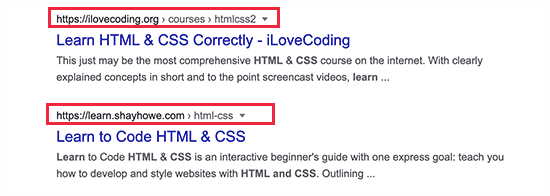
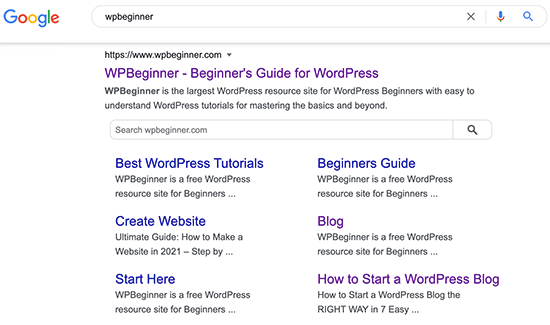
SERP (Search Engine Results Page) . A correct web structure will help you receive SERP links. This will get the user to the point of interest from the search engine. We must make the engine show the main links of your website when people ask about your business. For example:

Image: Spicy Minds

The characteristics of a correct web structure

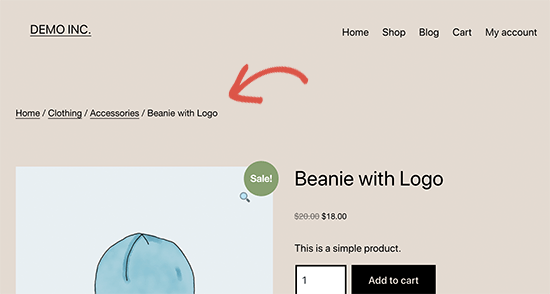
Navigation structure

The first thing is to check that it complies with a hierarchy. If you only have one or more sections on your page, make sure there is a hierarchy so that the sections that make up your site are organized.

Image: Spicy Minds

Surface structure

It ensures that users reach the desired section with the fewest possible clicks. If you do this, search engines will prefer your page because of its surface structure.

Internal links

Internal links are a great help when you make them visible. It is important that you make them known to users. For example, through a new blog post, a new product or a main category, each when opening your web page. According to Google developers, we know some pages because we have already visited them at some point; others, on the other hand, we find them by following links to known pages that lead us to them. ”

If Google or another search engine has your page indexed and you help it by placing internal links in an ideal way, you are making the job easier, ensuring for your site a reward of many visits.

Now that you know what a correct web structure should look like, what do you need to do before publishing your page on the internet?

We go in parts.

  1. Structural map design. You should design the structural map of your website with both users as well as search engines in mind, so that they are visible and reachable. Remember that if you don’t, the only thing you’ll be building is a web page with high bounce and little chance of being found.
  2. Make sure to go over this list
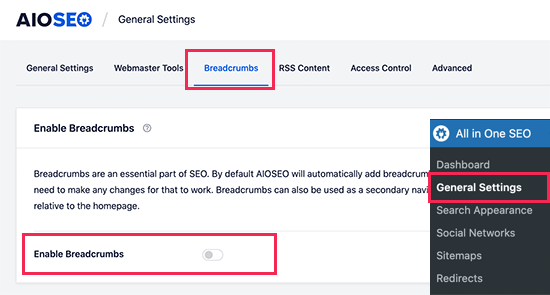
    • Site map . Try to update it every time you add a new section to your page. This task can be done in a content management system (CMS) like WordPress. You can program it to be done with the help of a plugin.
    • Links ‘nofollow’ . Make sure that no internal link works as a bridge from one section to another, much less that it is classified as ‘nofollow’; doing this would be like turning off the tap that sends water to your house.
    • Duplicate content . Avoid that the names of the sections like us.html , us.php or titles and subtitles, as well as meta descriptions or sections, have the same or similar name, this confuses search engines. If unwanted content gets indexed, you will bring serious problems to your website.
    • Alternative text on images (ALT attribute). Images are information and we can add keywords to them. If we fill in its ALT attribute, you help search engines identify your image and index it. Remember to fill the ALT attribute with keywords sparingly.
    • Orphaned pages. If you already have a web page, but you updated a new one, it may be that the names of your new sections are not named the same as the previous ones. Then the old sections become orphan pages. The problem with this is that the search engines index it and bring traffic to them, but with nothing of value. This is a real problem that you will see reflected in your measurement statistics which, as a consequence, will drop dramatically. To avoid this make sure to add 301 redirects.
Feature Image Credit: Depositphotos.com

By Juan Carlos Mendoza, SpicyMinds Web Developer

Sourced from Entrepreneur Europe

By

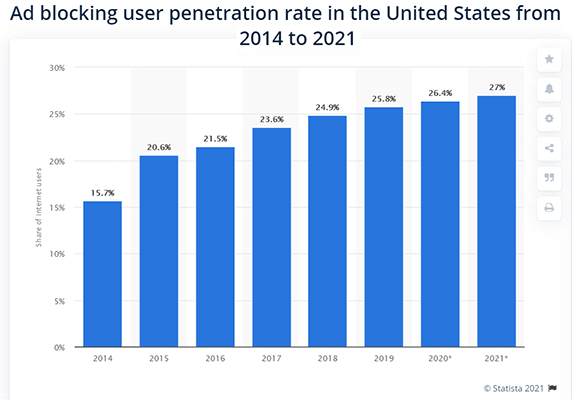
In the US, an estimated 40% of adults block online ads on PCs or phones.

While Facebook and Apple tussle over the harms and benefits of online advertising, more and more of us are sidestepping the issue by blocking ads completely. Use of ad blocking software like web browsers is surging, especially on smartphones, a study published Monday concludes.

The number of people using ad blockers has remained mostly level on personal computers, with 257 million people using them monthly by the end of 2020. But it’s on mobile devices where ad blocking is really increasing, doubling over the last five years, from 282 million to 586 million at the end of 2020, according to the 2021 PageFair Adblock Report from ad tech firm Blockthrough. That’s a 10% increase over the 2020 PageFair report on ad blocking.

Blockthrough makes money by helping advertisers try to cope with ad blocking. It offers a system to try to persuade website users to opt into delivery of the less intrusive system called Acceptable Ads. Though the ads might not be as distracting, they still face criticism that they they enable tracking, the central issue in the dispute between Apple and Facebook.

Advertising has funded countless online sites besides the dominant beneficiaries, Facebook and Google. Indeed, it propelled much of the foundation of internet businesses. But Apple’s privacy-first stance and the increasing use of ad blockers show major pushback to the approach.

Use of ad blocking software is increasing on mobile devices, a study by Blockthrough found.
Use of ad blocking software is increasing on mobile devices, a study by Blockthrough found. Blockthrough

Blockthrough also funded a survey of 5,423 Americans to gauge their opinions on online ads. One conclusion: About 40% of US adults use an ad blocker, more than twice what publishers often report based on ad-blocking detection software, Blockthrough said.

The top reason for blocking ads was to avoid interruption and annoyance, with 81% of survey respondents selecting that as a motivation. The second-place reason was protection against malware, at 62%. Third place, at 58%, was privacy.

To estimate ad blocker use globally, Blockthrough based its PC figures on downloads of the ad-blocking address list from Eyeo, maker of the Adblock Plus browser plugin. Its mobile ad blocking use was chiefly from download figures and app developer disclosures about usage. The top ad-blocking browser remains UC Browser, still with an estimated 310 million users despite bans in India and more recently China.

Feature Image Credit: Ad blocking is surging on smartphones with the use of browsers like UC Browser and Brave. Eyeo; Illustration by Stephen Shankland/CNET

By

Sourced from C/Net

By Minda Smiley

According to the company, 21 million people attended virtual events on the platform last year.

Virtual events had a moment in 2020. While their 15 minutes of fame might be coming to a close, they aren’t exactly going anywhere, since hybrid events are expected to be the next big thing. Want your lanyard and mediocre coffee in a freezing conference room? Great. Prefer to stay in sweatpants and watch from home? That works, too.

LinkedIn, for its part, is helping marketers get the word out about whatever events they’re cooking up. This week, it rolled out tools that make it easier to plug events + learn more about who’s attending:

  • Its new Event Ad format highlights details like “date, time, and how to join.” Plus, it lets users see if a mutual connection has expressed interest in attending.
  • Rishi Jobanputra, senior director, product management at LinkedIn Marketing Solutions, told Marketing Brew that these ads also provide event-specific metrics that its other ad formats do not. “Marketers can see exactly how many members clicked on or saw an ad and then registered for an event, so they know how effective their campaign spend was at driving event registrations​,” he explained.
  • Jobanputra said 60 brands created campaigns using this tool during its beta phase. During testing, he claims Event Ads reduced cost per registration by an average of 40%, compared to LinkedIn’s Single Image Ad format.

+1: LinkedIn has also released an Event Analytics tool that pulls together insights related to reach, engagement, and makeup of attendees so marketers can “more easily and effectively plan for future events.”

According to Jobanputra, 21 million LinkedIn members attended virtual events on the platform last year, while its livestreams increased more than 400% from September 2019–September 2020.

So profesh

In recent months, the Microsoft-owned company has been trying to position itself as the home for B2B advertising. A campaign it released in March told marketers that its platform, teeming with job updates and career advice, isn’t a place where cat videos and vacation pics regularly show up.

“Reaching your target audience when they’re in a ready-to-do-business mindset is particularly crucial on social media,” it said at the time.

Big picture: The latest updates come roughly a month after LinkedIn said its ad revenue was up 60% year over year, surpassing $3 billion.—MS

By Minda Smiley

Sourced from Morning Brew

Starting a home business is an exciting prospect for many, but only a fraction of would-be entrepreneurs succeed in making and running an enterprise. Coming up with a great idea is good, but doing your research, setting realistic goals, and creating a workable action plan is what transforms “could be” into “is.”

Setting goals can be helpful in every area of your life. Goal-setting can enhance motivation, self-confidence, and independence.1 When it comes to establishing a business, having a plan is crucial.

According to Bernard Ferret, a senior business counsellor with George Mason University’s Small Business Development Centre, good goals are “based on solid research, provide a clear direction, and set expectations for all involved.”

In this article, you’ll learn what an action plan is and how to create one that really works for your home business.

What Is an Action Plan for a Home Business?

An action plan acts as your guide to ensure your organization’s vision and goals shine through. It often describes the way your business will use strategies to meet already-set objectives. A good plan not only addresses what needs to be done, but the how, when, and who of what is involved with the task as well. It should clearly outline strategies to meet your objectives, and include deadlines and possible obstacles.

NOTE: Your action plan will need constant revision as your business evolves. When you are creating an action plan, work to make it as complete, clear, and current as possible.

To create a successful action plan, you need to go into the process fully prepared, Ferret said. Prior to joining George Mason University, where he advises hundreds of clients and leads business counselling workshops, Ferret ran his own successful home-based business.

“There are two things they should ask themselves: ‘Is this business a good idea?’ and ‘Can it be successful?’ ” Ferret said. “The only way to know is to speak to people about it. Conversations reveal habits, likes, dislikes, etc.”

Ferret suggests talking to at least 100 people about your ideas, products, and/or services before diving into the concept. According to him, the more people you talk with, the better. In addition, educate yourself with help from books, online courses, or videos surrounding your industry.

When done correctly, your written action plan will break down the steps you need to take to meet the objectives you’ve set for your business. For instance, to establish your home-based business, you likely need a permit and license from your local government.

NOTE: In most cases, businesses are required by the IRS to get an employer identification number (EIN).2 The online portal from the IRS makes it easy to apply, and helps with filing your taxes.

The Power of Marketing

According to Ferret, a key factor many new small-business owners neglect to think about when creating their action plans is the importance of marketing. Along with this, many new entrepreneurs don’t realize how long it may take before they break even on their investments. According to Ferret, no matter the industry you are in, an action plan should focus extensively on marketing strategies.

“Branding is a long-term, strategic practice that includes the company’s image, logo, and look, but it also includes the opinions of your customers,” Ferret said. “Spend time on developing a marketing communication strategy based on what you learned from those 100 conversations.”

As the business owner, it is important you take a leadership role in setting goals. According to a recent study, your marketing ability has an impact. The study found that in small- and medium-sized companies, if an entrepreneur had strong marketing skills, it had a positive effect on the company’s ability to successfully meet goals.3

TIP: There are many online resources you can use to set goals, both as an individual and for your company team. PositivePsychology.com, for example, offers three free Goal Achievement Exercises you can download on your smartphone or computer.

Set SMART Goals

When working on your action plan, take extra care to clearly define your goals, and make them SMART. This concept—S.M.A.R.T. goals—was first introduced in a 1981 article written by three professionals: George Doran, Arthur Miller, and James Cunningham.4

  • Specific: It’s important to make your goals detailed and precise when creating them. If you’re in sales, for example, a possible goal may be to sell 100 widgets in the month of May, rather than simply “sell more widgets.”
  • Measurable: As illustrated in the example above, set goals that can easily be quantified.
  • Attainable: Make your goals realistic based on your current financial situation, experience in the industry, and access to resources. Don’t be so conservative that you limit yourself; you should challenge yourself yet still be realistic.
  • Relevant: Think about whether the action you are planning to take will move you closer to where you need to go. Is it going to be effective? With limited time and resources at your disposal, you need to keep your efforts specific to what works.
  • Time-Bound: Setting hard deadlines for accomplishing tasks will keep you focused on the goal in front of you.

In addition to setting SMART goals, it takes a certain amount of discipline as well as the development of good habits to yield results.

“Even if you are not at an office, you should be working eight hours a day,” Ferret said. “Multitasking is the death of effectiveness.”

TIP: To ensure your business is thriving, consider creating a home workspace, if possible. By having a dedicated space to conduct business, you’ll limit distractions and focus on the goals in front of you. It also is beneficial to stay organized with the help of digital calendars, reminders, and notifications.

Find a Team and Hold Each Other Accountable

Finding a team as a home-based business owner can take some effort, but it’s an essential part of a successful business. This doesn’t mean you have to have several employees. Even if your business is a sole proprietorship, there are other ways to create a support system.

Whether online or in-person, there are various business-oriented communities you can join. These groups can offer support, share experiences, and also provide mentoring opportunities. A few examples include:

There are Small Business Development Centres in every state, as well as SCORE, a non-profit that seeks to foster vibrant small-business communities through mentoring and education. SCORE, in partnership with Constant Contact, has created action plan templates during the global health crisis to assist small businesses and organizations in recovery.

Evaluate Your Progress

Having SMART goals is important, but making the time to review and update those goals regularly is key. At prescribed times, whether weekly, monthly, quarterly, or yearly, take some time to evaluate various elements of your action plan. What is working? What isn’t? Are you meeting the deadlines you’ve set for yourself?

As you gather experience and learn new information about the industry, your products or services, yourself and your employees, you may realize some adjustments are required. Don’t be afraid to make a course correction—it may help you see better results. Revising your action plan can make it much more useful, and also make you a better business owner.

Feature Image Credit: The Balance / Ashley Deleon

Sourced from the balance

Sourced from Inc.

Business leaders have great ideas, but don’t always share them clearly in writing. It’s time to change that.

Jeff Bradford, an Entrepreneurs’ Organization (EO) member in Nashville, is the founder of the Bradford Group and president of Bradford Dalton Group, a full-service public relations and advertising agency with offices in Atlanta, Jacksonville, and Nashville. We asked Jeff how you can improve your writing skills. Here’s what he shared:

I’ve spent a lifetime learning how to write and edit other people’s writing. Below is a collection of tips I’ve amassed over the years to help you become a better writer.

Good writing is good thinking.

Too often, I see people simply throw everything they know on the page with nothing connecting the dots. Make sure your ideas are clear before trying to communicate them, and that the flow of thoughts you want to communicate proceeds in a clear and easily decipherable pattern. Make sure that each sentence and paragraph flows naturally and rationally from the one before it. The reader should be able to easily retrace the path you followed to arrive at your conclusion.

If you want to write better, read better writers.

Good writing requires more than knowing the rules of grammar. It has a certain style and art about it that makes people want to read it. It’s not easy to describe, but there are basic rules like: avoid redundancy, don’t use the same word twice in close proximity, and use an active voice. The best way to learn a compelling writing style and how to use the right style in every situation is to read good writers. To paraphrase Truman Capote, writers who don’t read aren’t really writing: They’re just typing.

Jargon is about pre-chewed ideas.

Jargon is often used by people who can’t digest original concepts. Don’t get me started on jargon. I loathe it. It’s ugly. It makes you look stupid. It annoys people. It’s cheap substitute for thinking.

Empathize with your reader.

A writer’s primary job is to make it easy for readers to understand him. It’s not to show off what a good writer you are. In fact, the more you draw attention to your writing, the worse it is.

Think only about the reader and his needs when you’re writing, not about you and your needs. Try and get inside your reader’s head. Seek to understand what he wants to know, how he feels about your topic, what his fears and delights are. Then, do you best to give him what he wants without drawing attention to how you’re doing it.

Use only as many words as necessary.

Good writing is economical. Unfortunately, because of college requirements to write essays with a specified word count (it was 500 words when I was in school, which seems short now, but was such a hurdle then), many of us got into the habit of padding our writing with unnecessary verbiage. Stop that. I recommend you re-read what you write and find a way to cut it down by at least 10 percent. It will always be a better product if you do.

Good writers are naturally curious.

Always seek something new to learn, and you’ll be worth listening to. Good writing requires a deep well of knowledge you can draw from to make your point, explain an idea, or capture the reader’s imagination. So, in addition to reading often and widely, you should also live life fully to build up a cache of experiences.

Avoid adjectives and adverbs.

Use more precise nouns or verbs instead. Don’t say that someone lightly knocked on the door. Say she tapped on the door. I think Hemingway was the best at this.

You can’t break rules you don’t know.

Picasso once said, “It took me four years to paint like Raphael, but a lifetime to paint like a child.” That is, he had internalized the rules of classical painting to such a degree that he was able to paint so compellingly by breaking those rules. He knew how to break them in a way that led to better art. Same with writing. The best writers successfully bend the rules because they know them so well.

The best way to write well is to write often. Write when you don’t feel like it, when you think you have nothing to say, and under a pressing deadline. Write in different formats, and learn how to adapt your style to each. Practice, practice, practice. Eventually, writing will come as naturally as speaking–and your speaking will probably become more precise, with fewer “you know” and “like” and “um” and other filler words.

Featured Image Credit: Getty Images

Sourced from Inc.

Sourced from WNIP

Let me take you back to December 2010, when Tunisian street vendor Mohamed Bouazizi set himself on fire in protest outside a government office in the town of Sidi Bouzid. In a matter of days his act of defiance set off a revolutionary movement, which became known as the Arab Spring, that rippled across the Middle East and North Africa, toppling several long-standing authoritarian regimes.

For me, this was also a defining moment that demonstrated the power of user-generated video (UGV) in communicating to the rest of the world what was happening on the ground. Videos published on social media began acting as a megaphone or rallying cry for the cause. It was also perhaps an eye-opening moment for publishers, coupled with the realisation they must evolve alongside their audiences, who were increasingly turning to the internet for information.

Fast-forward to 2021 and UGV has become an invaluable source for publishers, and an ever-more important component in newsgathering, storytelling and entertainment.

UGV has changed newsgathering

Some of the most important stories of recent years have largely unfolded thanks to UGV.  Evolving from its roots in the reporting of the Arab Spring, it’s increasingly become a vehicle through which human rights, gender, and environmental issues are made public. Perhaps most notable being the video of the murder of George Floyd, which ignited a movement that was waiting to happen. That movement gained momentum with countless other videos of protests and even rioting across the world.  Follow the video and you follow the story.

Frequently now, a journalist starts researching a story with a video. Eye-witness video offers the opportunity to deliver stories grounded in a moment. It allows publishers to not only cover a story, but to show the actual moment the story took place. It plays an important role in the verification of the facts that support a story, as well as adding a level of credibility to reporting in an era of disinformation. It also provides speed and access to tell stories in real-time. A great example of this was the recent coverage by Sky News of the Sarah Everard vigil in the UK. Using entirely UGV, Sky News presented an incredible timeline of the story as events unfolded.

Most importantly, UGV is a powerful storytelling tool, that brings us closer and fosters a deeper understanding of shared struggles, greater context and comprehension to reporting. It’s no longer enough to simply report the news.  Audiences crave a sensory experience when it comes to news consumption. They want to feel the story.

The light and the dark

2020 was a year when movements and events around the world, including the pandemic, Hong Kong riots and Black Lives Matter, gathered momentum from UGV more than ever. When the world outside was lost to us, our desire for emotional connections, community and to be close grew exponentially. Increasingly audiences want to participate and interact with the stories happening around them – let them do so, and you grab them from the noise of a crowded newsfeed and keep them engaged. But let’s be honest – there is only so much distressing content people can take.  Successful publishers in 2021 know that it is critical to maintain a healthy balance of ‘the light’ and ‘the dark’, and nothing provides the breadth of content to achieve this than UGV.

Content creators are capturing the happy, the sad, the weird and the wonderful on a range of devices. It’s these unvarnished, unbiased, authentic moments that audiences crave, and publishers need. UGV offers publishers more than just the ability to create attention-grabbing news; it provides them with a vast quantity of really compelling content that resonates with audiences and can hold their attention for longer periods of time, even on perpetual-scroll platforms. 

The long and the short of it

It’s a paradox of the social media age that audiences desire immersive storytelling, and yet attention spans have reduced to that of a new-born puppy.  We are operating in the attention economy. Human attention, as a measure of success, is fast becoming a unit of trade and publishers are not immune – they are competing for the attention of users with the likes of TikTok, Instagram Reels, YouTube Shorts as well as Candy Crush and Fortnite. 

Publishers must invest in providing content that ‘kills time’ and entertains – be it the latest adorable pet video, celebrity tweet or ‘break the internet’ moment of the day. Capturing UGV from all over the world ensures publishers can remain relevant and make themselves impossible to ignore when competition is at an all-time high for people’s attention.

But it’s not all about clicks, it’s also about reputation.  The fake news and click-bait phenomena have put the publishing industry through a crisis of public confidence.  To retain attention, and even push audiences through the paywall, publishers must also invest in unique, distinctive content that provides readers with a perspective, angle, or reporting they can’t find anywhere else.

Long-form video offers publishers the opportunity to build beautiful, immersive stories quickly as well.  For example, South China Morning Post’s ‘China’s Rebel City’ video is an hour-long piece of documentary-style video journalism about the Hong Kong protests, that previously would have only been the realm of documentary producers.

It’s about building an ecosystem of content that’s responsive to the non-linear nature of the audience journey. Audiences want to be entertained, but they also seek to understand, and demand greater context.  By combining long-form and short-form video publishers can maximise their appeal to the largest possible audience, providing them with what they are craving at any given moment in time, and content that’s hyper-relevant to their lives.

And finally, monetisation…

As audiences began pivoting attention even more in the direction of digital channels, so too did advertisers. Audience trends over the last few years have shown that time and again UGV is the content they most want to see – a trend that only accelerated in 2020. If that content relates in whole or in part to a product or service, then it’s the perfect opportunity for publishers to monetize the content with advertising and affiliate marketing.

The average editorial site will convert approximately 3% of its audience, whilst one featuring UGV will convert as much as 10%.

Jon Cornwell, CEO, Newsflare

Looking ahead to the future, social commerce will become an increasingly significant component in publisher revenue streams. They must act now to innovate and grab a slice of the pie from the social platforms, but that means doing more than simply embedding affiliate links and delivering branded content. Publishers must build huge, highly engaged communities, and they must be seen as relevant to audiences on every platform, be it Facebook, Instagram, TikTok, Pinterest, Snap or Twitch. Once again, UGV offers the fastest, most cost-effective, and importantly the most engaging format for growing audiences quickly and maintaining their loyalty.

Jon Cornwell
CEO, Newsflare

Headquartered in London and with offices in Los Angeles, Newsflare is a global leader in licensing user-generated and eyewitness video to TV producers, brands, advertising agencies, and publishers. Its unique model, which combines tech-driven optimization with the expertise of seasoned editorial and production teams, sources UGC from a diverse partner network and 40,000 strong content creation community. With viral video and breaking news from around the globe uploaded daily, a back catalog of nearly a quarter of a million videos, and an ability to crowdsource content, Newsflare ensures the stories buyers want to tell are easy to source and quick to license.


Sourced from WNIP

By  Brad Vassallo,

In today’s world, it is easier than ever to start a business. Explore Instagram on any given day and you will inevitably see an ad for some new online retailer. It begs the question: How, in such a saturated online marketplace, can a fledgling brand separate itself from the pack and survive?

There is no one answer to such a complex question, but for many consumer brands, the key is brand storytelling.

In short, brand storytelling is a marketing strategy that references a product’s functional benefits and establishes a context for when, where, and by whom that product is to be used. Oftentimes the goal is for a consumer to see her/himself in that scenario; for example, a casual menswear brand might produce a shoot involving a group of men on a weekend trip to the outdoors.

In other cases, the audience or customer profile is more aspirational in nature; an example of this might be a company that makes luxury handbags producing a shoot with beautiful talent up and down the Amalfi Coast. The average consumer will not be traipsing about the Mediterranean coast all that often, but with the right handbag, they feel like someone who would. Here emerges the two primary ingredients behind the secret sauce that is brand storytelling: Functional benefits and emotional connection.

Functional Benefits

Integral to any sensible advertising is a display of the product’s functional benefits. If you are a photographer shooting a campaign for a pair of boardshorts, it’s fairly obvious in what context that shoot will take place. You wouldn’t showcase a pair of sunglasses lying in bed, and you certainly wouldn’t photograph a pair of boardshorts at the opera. There is a natural association between a product’s benefits — in this case, probably lightweight and fast-drying material — and the expected scenario in which you would find that product. Once you identify a few key benefits, then you can begin to segment your market by other metrics like price: Yes these shoes are comfortable, but are they lounge-in-a-hammock comfortable or sip-martinis-on-a-yacht comfortable? Think of it like a mind map; identify your core benefits then branch out from there.

The primary benefit of Kuju Coffee is convenience, but here’s the thing: K-Cups are convenient and easy to use too, just not while hiking. So when I decided to produce a spec shoot for Kuju, I had to go beyond the logical appeal of convenience and portability and tap into something deeper.

Emotional Connection

Think back to my examples in the opening paragraphs. In either scenario, the advertiser’s goal is to strike an emotional chord with their audience. One plays on a sense of belonging and friendship, while the other taps into a bit of envy and longing for a future perfect self. The narrative being told tells us who is expected to buy certain products and for what context.

With Kuju, the emotional association I wanted to make was a sense of adventure and wanderlust. Shooting in a location like the mountains of West Virginia is generic enough to have a universal appeal while still evoking this feeling of envy and a yearning to go somewhere beautiful. If your coffee can go wherever you go, then why not go anywhere? Suddenly your mind is flooded with possibilities far beyond the coffee itself.

By driving home this connection between product benefits and emotion, you effectively marry the two in a consumer’s mind:

“Man, I need to get out and see the world and with this coffee I don’t even have to give it a second thought.”

Or:

“You know, I’m going hiking with some friends next weekend, this coffee would be perfect!”

Whatever direction the consumer’s mind takes them, at the end of the day they want to buy your coffee.

Good Versus Great

Brand storytelling is the key to levelling up your company’s marketing strategy and zeroing in on your target market. In fact, you could argue that for many companies these days, it is the only thing separating one brand from the next. Good content is well lit, properly exposed, and captures the mind; truly great content goes a step further and captures the head and the heart, showing you not only what’s being sold, but why you need it in your life.

By Brad Vassallo

About the author: Brad Vassallo is a commercial and outdoor lifestyle photographer based in Philadelphia, Pennsylvania. A creator since his earliest days, he once had the dream of being a National Geographic photographer. In spite of those aspirations, he spent the better part of his life chasing other people’s dreams of what he was supposed to do and who he was supposed to be. At a certain point though, the voice inside got to be too loud, too persistent, and told him that the path he was on was not his own. He began to listen to that voice, affirming his own creative aspirations and returning to his creative roots. You can see more of his work on his website and Instagram.

Sourced from PetaPixel

By

Launching a successful Amazon product is both exciting and challenging too.

Getting a product on the biggest buying website in the world takes time, knowledge, and patience.

Sellers often fail to realize it takes more effort than just listing a product for sale and waiting for the money to pour in.

AJ Rantz is a former bartender turned entrepreneur who turned his idea for drink mix recipe cards into a business after going viral on TikTok.

“Over the past 10 months, I’ve been able to launch cocktail cards my very own business on Amazon, and it’s been absolutely incredible,” explains Rantz.

The entrepreneur was willing to share that while his recipe cards are currently selling well on Amazon, he made several costly mistakes when first launching his business.

He chronicles those mistakes in this video, “The Top 5 Mistakes Starting on Amazon,” and explains how he lost $10,000 in the process.

The first big mistake Rantz made was not outsourcing a bulk of the day-to-day work.

At first, Rantz launched the product and designed all of the cards on his own.

Unfortunately for the mixologist, he’s not a designer, and his original cards looked amateur. Eventually, Rantz hired a designer but admits that he should have outsourced other tasks as well, like social media management, video editing, and general email and DM correspondence.

The second mistake Rantz admits to making while launching his Amazon business was not trusting his gut.

“There were a lot of decisions that we had to go back to because I just didn’t trust my gut,” explains Rantz.

Rantz’s mistake involved including QR codes on each card, which he had initially, and then took off each card. Finally, he realized the QR code was a smart idea – after polling his fans – and put them back on each card.

This wishy-wash approach costs Rantz time and redesign dollars.

Not being firm with expectations from people was Rantz’s third mistake when launching his product on Amazon. He wanted to avoid confrontation, but in the end, the processes took longer because he wasn’t specific about what he wanted and expected from employees.

Rantz’s fourth mistake was believing he could please every single customer.

“A good example of this is when I got my first order. I did 700 units by plane and 800 units by ocean.

Well, the plane came to me in a week, and the ocean took around five weeks, and I really had no idea we were gonna sell so well. On Indiegogo, we actually did really good marketing, and by the time I got the plane shipment, I had sold all 700 units already.

At that point, I’ve already had this expectation that I’m shipping out to customers that I just convinced myself that if anyone purchases on Indiegogo, they would not be willing to wait a month for the product to be shipped to them, which is kind of silly, because Indiegogo is a crowdsourcing platform where people invest to be one of the first to get a project.

They typically know that it’s gonna take anywhere from 1-to-6 months to get their product.”

Rantz estimates this mistake cost him anywhere from $5-10K.

And the final mistake Rantz made while launching his product on Amazon was not continuing to push the product after he’d sold out.

Rantz said he waited three weeks to promote the cards again in hopes of supplies being replenished. Many of his mentors told him to keep pushing the product even when sold out.

Rantz estimates this costly mistake also lost him about $5-10K in sales.

By

Sourced from WEALTHGANG