Author

editor

Browsing

By

Google My Business is the home of your local online presence and the information hub for potential customers in your area. In this article, we fire through all the key steps of completing and optimising your profile to bring more customers to your business – both online and in store.

Make your NAP & business info 100% accurate

Accurate business information, especially your name, address and phone number (NAP), is one of the strongest signals in local search. So make sure your details are 100% accurate on your Google My Business page and that they match the business information you have listed on your website and third-party sites (directories, review sites, etc).

There are four pieces of basic business information that you need to specify right away:

  • Your business name
  • Your business category
  • Your business address
  • Your service area

You will have chosen a business category when you created or claimed your business in GMB but you can now add further categories to help Google show your listing to relevant searches with greater accuracy.

Provide opening times to encourage store visits

People searching for businesses in their local area might be looking for takeaways open late on a Sunday, shops that are still open on their way back from work or stores where they can look at a product before actually buying it. This means having accurate opening times on your GMB listings can win you customers.

Google My Business encourages you to add opening times to your listing and you absolutely should. Make sure you accurately fill these out and keep them up-to-date so people can always trust the information on your profile.

Capture web and phone leads from GMB

You can track phone calls from Google My Business by using a phone tracking service and entering your tracking code as your primary phone number.

Bonus tip: add your real phone number as an additional number and make sure it matches with the number you’ve got listed elsewhere (area code is important) to show Google that this is, in fact, your business number.

You can also track website visits from GMB by creating a UTM (Urchin tracking module) using Google Analytics Dev Tools.

Once you’re done, simply copy the URL and paste it into the website section of your Google My Business page.

Add products to your GMB profile

If you sell products online or in-store, you can add them to your Google My Business profile to drive in-store visits and clicks through to your website.

You need to name each product and select or create a new product category. You have the option of showing prices or price ranges for each product and you can add a product description, as well as an optional call-to-action button.

Make your business stand out with attributes

Attributes help users choose the ideal business for their needs and also increase the quality of leads you generate from Google My Business.

You can specify that your business has on-site parking or free wifi, for example, or show which Covid-19 measures you’re taking, such as staff wearing masks. You can also list services you provide, like free delivery, takeaways, in-store pickups and other options that could win the customer.

Optimise your business description?

Your business description is one of the few places in your GMB profile where you get to explain what makes your business unique. You get 750 characters to tell people why they should step through your door or buy from you over the other alternatives in the local area (if there are any).

The more competition you face, the more important your description could prove to be. Make sure you’re honest and try to focus on the characteristics of your business that appeal to your target customers.

You can find out what not to include in your business description on this Google My Business Help page.

Show the best of your business with quality photos

Google My Business allows you to upload images of your business and this is one of the most underutilised tools in GMB. These images, quite literally, shape the mental image users build about your business and you want to make sure these photos create the right impression.

Get yourself a professional photographer and upload high-quality images of the following:

  • Your business logo (this shows when you post a photo or reply to reviews, questions, etc)
  • Your GMB cover photo
  • Your exterior building
  • The interior of your business
  • Products/services
  • Covid-19 measures
  • Images showing the attributes in your profile

You can also upload videos to Google My Business so think hard about the kind of message you want to put across, such as your company’s history or a compilation of video reviews from a selection of happy customers. For more tips on optimising your Google My Business page, check out this video.

By

SEO specialist at Vertical Leap

Sourced from The Drum

By Sara Fischer,

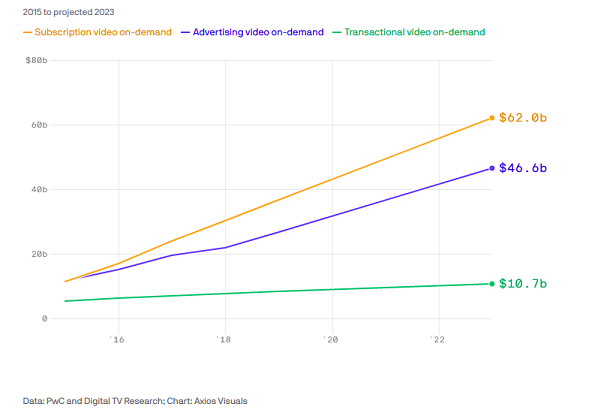
Data: PwC and Digital TV Research; Chart: Axios Visuals

Entertainment giants are doubling down on free, ad-supported services as way of extending their legacy TV ad businesses with digital inventory.

Why it matters: Ad-supported streaming can often be more lucrative, driving a higher average revenue per user (ARPU) than ad-free subscriptions.

Driving the news: Fox Corp. last week said that its free, ad-supported streaming service Tubi, which it acquired for $440 million last year, is on its’ way to becoming a $1 billion yearly revenue-driver for Fox.

  • Tubi has already become “a core asset for Fox Corporation,” CEO Lachlan Murdoch told investors last week. Murdoch expects Tubi to bring in $300 million in revenue this year.
  • Pluto TV, the free-ad supported streaming service from ViacomCBS, became the first free, ad-supported streaming service to launch in France last week, after launching in several countries last year.
  • Hulu is Disney’s largest revenue-driver within its streaming portfolio, despite having fewer subscribers than Disney+. The majority of subscribers to Hulu are on the ad-supported plan.
  • Xumo was acquired by Comcast last year to help expand its digital ad inventory for Peacock.
  • PrendeTV, the new ad-supported streaming service from Univision, is set to launch in the first quarter of this year.

Go deeper: Free apps are driving adoption of digital TV ads

By Sara Fischer,

Author of Media Trends

Sourced from AXIOS

By Gideon Kimbrell

The ABCs of SEO have changed a bit over the years. Usability and mobile experience have become more important elements in the past five years by an order of magnitude. Beforehand, they weren’t really part of the ranking algorithm much at or other . However, as a builder of , I find too many clients and counterparts in the SEO and Web development space treating these metrics as if they are the only ones that matter.

More than anything, content absolutely remains king — and always will. Google has stated that even if a website has a horrid design and janky user experience, it can still rank first if it has vastly superior content.

In my experience, a good SEO strategy involves 30 to 40 percent creation of high-quality, , including well-researched, in-depth articles; 30 to 40 percent link-building in a manner that’s as organic as possible; and the remaining 20 to 30 percent is UX, Core Web Vitals (such as CLS), bounce rate and session duration (for sites that use Google Analytics), and all these other remaining trends.

Just because these other trends represent only 20 to 30 percent of the ranking factor does not mean you should ignore them. When you are competing for highly competitive search terms, these may make the difference that can push you onto page one. This is especially true if your competitors already match your quality with content and links and if you’ve maxed out your edge on those leading factors.

Remember, when it comes to SEO, you don’t have to be number one. You just have to be in front of everyone else.

The men in black

Many small businesses still trust or default to more “black hat” SEO tactics for two primary reasons: speed and cost. Black-hat SEO techniques can be appealing to small and mid-size businesses because they can provide quicker boosts than playing by the rules does. But as rapidly as the boost came, it will go away.

Back in 2004, when was only a year old, I was one of the first to figure out comment spam. I created a bot that scoured the website for blogs and left comments on them, linking back to the company I worked for. Within three days, we were number one on Google for every search term we wanted to rank for. Of course, this didn’t last long, and Google caught on. I don’t employ black-hat techniques like this anymore, but the process taught me a lot about page rank, authority and hub sites.

Six steps for proper SEO

Proper SEO can seem expensive at first, but it typically yields a much lower cost per acquisition than pay-per-click, print, TV, etc. A host of viable SEO strategies are available to employ in 2021. Here are six steps for proper SEO that are both highly effective and are personal favourites of mine.

1. Perform competitive analysis

Remember with SEO that your placement is relative; there is no absolute placement in the search engine results pages. You simply must analyse what your competitors are doing: Where are they getting links? What kinds of sites? How long have they had those links? You need to do as well or better.

What about their content: How deep is their research on various subjects, and how large is their semantic net? Your site’s vocabulary on these subjects needs to be slightly broader. This applies to all SEO metrics. In , we have a saying: You don’t have to outrun a grizzly bear; you just have to outrun your friend.

2. Start small 

Go for the less competitive key phrases, then work your way up. Many tools, including SEMrush and Wordtracker, can help with long-tail keyword research (and normal keyword research). It may seem counterintuitive, but with SEO, it’s better to lock-in placement and traffic for less competitive search terms (usually the longer multiword phrases, also known as “long tail”) before trying for the more competitive ones. The idea is to get users onto your site in the short term and get the ball rolling.

3. Make use of structured data 

When you search for cookie recipes in Google and see a carousel of recipes appear before the actual search results, those rich snippets are from websites that provide Google a special markup, in the Schema.org format, called structured data. This is how Google knows it’s a recipe and not just a blurb about cooking.

Ten years ago, Google was just a list of Web results without these carousels and accordion elements. Now, most of the first page of a search query on Google are snippets, carousels and accordions (expandable elements) provided using structured data. It’s important to describe everything on your website — products, videos, reviews, etc. — using JavaScript Object Notation, or JSON. This is how you can get more visibility when Google knows the searcher’s intent. Just make sure to not abuse this, like by using structured data to tell Google that your products, say, have five-star reviews when they actually don’t just to have five stars appear on Google next to your website.

4. Get creative 

If you have developers, try creating widgets or badges that link back to your site and that customers, vendors or affiliates can put on their websites. This is an excellent, legitimate link-building technique that can result in exponential growth in the right situations. TripAdvisor is one of many such companies that offer badges to users for interacting with its site and submitting reviews, thereby boosting SEO efforts.

5. Start blogging

Unleash your inner writer and create your own blog with well-researched, in-depth blog posts — 2,000-plus words. Having blog content on your site is especially handy if you run an e-commerce website. When you are trying to get other sites to link to you, it’s easier to get them to link to a blog post than an e-commerce store; it appears less “spammy” to them and their users. And please, do not use content spinning — using software to tweak your article just enough to trick Google into thinking it’s a separate article — or similar hacks to generate content. These tricks are not good for real users and, therefore, not good for SEO in the long run.

6. Consider guest posting 

Another valid way to gain new visitors is guest posting on other blogs. Then you can publish content that links back to your website or blog. Just make sure the content you write is rich, original and authentic and that the site where you post is reputable. Keep in mind that you are creating the content, which should do the following:

  • Provide information that real humans would find useful. (Would complete strangers link to it from their sites because they found it informative?)
  • Be original. (Can it all be found on another single web page?)
  • Be authentic. (Are you giving both the pros and cons and being as neutral as possible on the subject matter?)

Just remember that none of this matters if you don’t track all your key SEO metrics over time and in relation to your competitors. Tracking is key.

By employing the white-hat techniques above, my clients have enjoyed years of steady SEO growth without suffering the major drops in the search results that many complain of when Google makes a major update — and they’ve never suffered a manual penalty either. Writing expert-level, researched, in-depth articles has yielded considerable returns, with top websites linking back to the material. The formula may change a bit, but the path to successful SEO is still paved in solid content.

Feature Image credit: Westend61 | Getty Images

By Gideon Kimbrell

Entrepreneur Leadership Network Contributor, Co-Founder and CEO, InList.com

Sourced from Entrepreneur Europe

By Oliver Rist.

Making the most out of your social media interactions with customers has become a key feature in today’s CRMs. Make sure your CRM strategy incorporates this important new capability in 2021.

Customer relationship management (CRM) continues to be a popular solution for helping a swamped sales staff stay ahead of deals and customer issues. But it’s also evolving to become the heartbeat of your business’ marketing and outreach as well as a key source and destination point for sales data. A key factor in that evolution has been social media.

Social media is an important customer touchpoint. It’s where customers talk about what what they care about, how they feel, and their opinions on your business. If a customer has a problem with your product or service, they can now let all of their friends and family know about it instantly. Thus, social customer relationship management (social CRM) is crucial for keeping your enterprise or small to midsize business (SMB) accessible, informed, and proactive in engaging with and learning about your customers.

Get the Most From Both Customer Touchpoints

The combination of social media and CRM spells lots of new opportunities for sales personnel looking to connect or marketing professionals seeking to inform. And all of it can happen through your CRM system as long as your social CRM strategy is on target. It’s a key factor of what’s been fueling CRM’s steady growth over the past half decade as this chart from market research firm Statista clearly shows:

CRM Market Revenue, 2016-2021 (in Billions USD)

Social media should be a core component of your business’s CRM plan, but a successful social CRM strategy is about more than racking up likes and followers to drive site traffic. Once you’ve gotten the audience, these seven tips will help your business make the most of the tools it’s using and the data it’s gathering, while turning the immediacy of social media into an asset rather than a liability.

  1. Invest in the Right Social Tool: Before even incorporating a Social CRM strategy, your business should be managing its social media efforts through a social media analytics tool. The platform you choose will serve as the focal point for scheduling social posts across all active presences, monitoring who’s saying what and to how many people, and interacting with customers. You need a Social CRM tool that can do all of those things (for a price that fits your business) as well as integrate with whatever existing CRM tool you may have. Sprout Social Premium is a great option for advanced analytics capabilities.
  2. Invest in the Right CRM: Your social media management tool should focus on how your marketing campaigns are doing across your social platform engagements. However, your CRM should have not only the appropriate integration hooks to these social media management platforms, but also CRM-specific social media tools as well, including dashboard, reporting, and clean data collection. Many CRMs, even those designed specifically for small businesses, now have easy-to-use, customer-centric social media tools embedded directly into the CRM. Good examples are HubSpot CRM and our Editors’ Choice winner, Salesforce Essentials.
  3. Target Relevant Networks: Don’t waste time churning out posts and engaging with followers on a social media platform that’s not core to your business. An e-commerce site might be well-served to post glossy photos of its products on Instagram or Pinterest and interact with customers there whereas an enterprise software company’s customers are more likely to be localized in the traditional trifecta of Facebook, Twitter, and LinkedIn. If more and more of your customers are gravitating toward a new social network, that network may be worth monitoring. But your social media manager shouldn’t take hours to respond to a Twitter question because he or she was busy messing around with the Snapchat account your business decided to launch.
  4. Monitor Interactions and Mentions: Your Social CRM platform should have the ability to set up feeds and streams for each social network and specific parameters within them. In addition to one tracking customers’ direct tweets, comments, and likes, with your presences, set up streams that can monitor keywords such as your company’s name and the primary words associated with what your business does. The moment your company is mentioned or a social network user asks a question about an area of expertise, your business can quickly respond with a helpful answer that could turn a user into a customer or a lukewarm customer into a loyal one.
  5. Analytics are Your Friend: Once you’ve identified a particular customer, analytics can help you learn more about them. What was the reach of the tweet this user sent out about your product? Have they recently mentioned any competing products and in what context? Send a user’s profile and specific data about them through the CRM pipeline to a marketing or sales representative at your company and analytics could be the key to a customer conversion.
  6. Group Customers Into Target Audiences: A Social CRM strategy should leverage all of the existing capabilities social networks have to offer. For example, Facebook and LinkedIn have groups while Twitter has lists. This functionality can help you group customers into segments naturally and within the context of the social network that is better suited for targeted interactions about a specific product or products. Social CRM is about using the individuality of a customer’s social persona to tailor smarter business interactions with him or her.
  7. Social Media Managers Are Real-Time Customer Service Reps: The team who manages your business’s social media presences is your first line of customer service and the ambassadors of your company’s brand. Representatives should respond to a customer’s question on social media within an hour and the conversation should be a genuine interaction rather than a transaction. Don’t be afraid to give out your first name just as a traditional customer service rep would. Depending on the type of business, integrating your social media and customer service teams into a cohesive department could improve both the speed and quality of responses.
  8. Use Social Incentives to Foster Brand Loyalty: The most loyal, vocal, and active of your company’s social media followers are assets. Building a relationship with these loyal customers and those with the widest social influence can help turn your online presences into communities. Run a hashtag-driven event on Twitter around a particular promotion. Give a @shoutout to the customer who’s been most active in your community this week. Send out discount offers or promotional codes to reward engaged customers. Social media gives businesses more immediate access to a wider array of customers than ever before, and Social CRM is how your business can tap into and make the most out of those connections.
  9. Don’t Delete Negative Comments: Even if your company’s offerings and customer service are both impeccable, there are sure to be times when customers will have nasty things to say on social media. Some complaints may have more merit than others. With that in mind, the optics of deleting a negative comment can be far more harmful than the comment itself (with the exception, of course, of posts that are highly inappropriate or offensive). If your customers see that you are deleting unpleasant feedback, it could be perceived by them that your company cares more about its online image than helping customers. When it comes to combating negative feedback, always maintain a proactive, professional demeanour.

By Oliver Rist

Sourced from PC

Sourced from 1WD 1stWebDesigner

In 2020, smartphone sales were 1.57 billion units worldwide, an increase from 1.52 billion units in 2019. Such impressive figures continue when we look at the world’s tablet shipments and deliveries. In the third quarter of 2020, Apple alone shipped 13.9 million units of tablets. These figures, as surprising as they are, make us think about the impact on mobile websites and website owners. The demand for smartphones and other mobile devices have been responsible for connecting 4.66 billion people with the internet. This number has gone up by 7.3 per cent since last year. Out of this, mobile internet traffic has been more than half of all the internet traffic all around the world. As a website owner whose website is not mobile-friendly, this is a matter of great concern and something to help shape our website in the correct direction.

It is now time that website owners understand that mobile users are top priority and should be taken seriously. If you are still backing on the desktop website with a bunch of media queries and letting luck shape your revenue, I will help you decode the importance of responsive design and how to make a high converting mobile web pages.

Responsiveness and Conversion Rates

A lot of the people take the responsiveness and conversion rates as a cause and solution pair in the website world. But converting a mobile web page is a much more complex process than just making your website responsive or mobile-friendly. Sure, responsiveness is an important aspect of conversion and is the first step in the website development but it alone cannot increase your CTR. In 2015, Google started giving more preference to responsive and mobile-friendly websites. Improving for a better experience for their users, Google does not want people to keep searching for that one perfect website which is rendered proportionately on the device. This move gave the website owners a wake-up call to focus on the user experience and mobile-friendliness as much as possible.

So how can we improve our conversion rates once we have the responsive website built? To be fair, responsiveness is more concerned towards scaling your website up and down. If my images are scaled in the proper ratio on a 5.5-inch device, I have got a responsive website. But the user is never concerned about responsiveness. Instead of praising the scalable elements, the user is more concerned about how fast those elements rendered on to the device? My user is more concerned about their own preferences and benefits.

Nearly 8 out of 10 users bounce back when the content is not properly visible on the mobile device. Such anomalies on the mobile website bring down conversion rates and affect the business. In the subsequent sections, we will focus on things that are responsive in nature (no doubt!) but is not enough that can make the user click that CTA of yours or purchase a product from your website. Soon we will realise that responsiveness has much more than what meets the eye. Let’s see how we can put ourselves up to the user’s expectations.

PS – We have used LambdaTest LT Browser to show website view in various device viewports. Know more here – https://www.lambdatest.com/lt-browser

Do you need all the content on the mobile?

The first thing to ask in developing a website for mobile is the content you are about to show on the device. A device’s screen is small, which means you have to show less but relevant content on the small space provided to you. The content should be able to communicate to the user without using too many words. A user is not going to read everything just to find if he gets anything pleasing for himself. That is your job to show him what he needs to see. The content analysis can be boiled down to three major categories: the headline, the font size and the content.

What’s a perfect headline?

A web page starts with a headline which is probably the first thing a user sees. This is your chance, the moment that decides whether the user will increase the session duration or will bounce back. The following two website ranks on the first page of Google for “real estate solutions”:
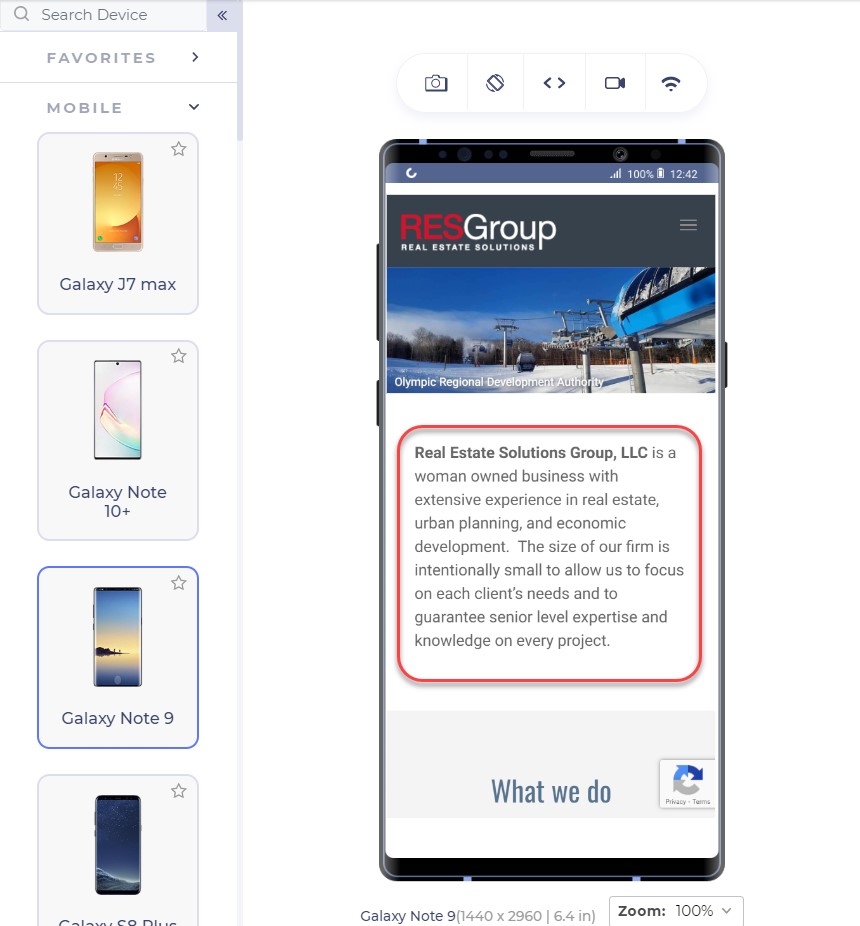
Anatomy of High Converting Mobile Web Pages - 1

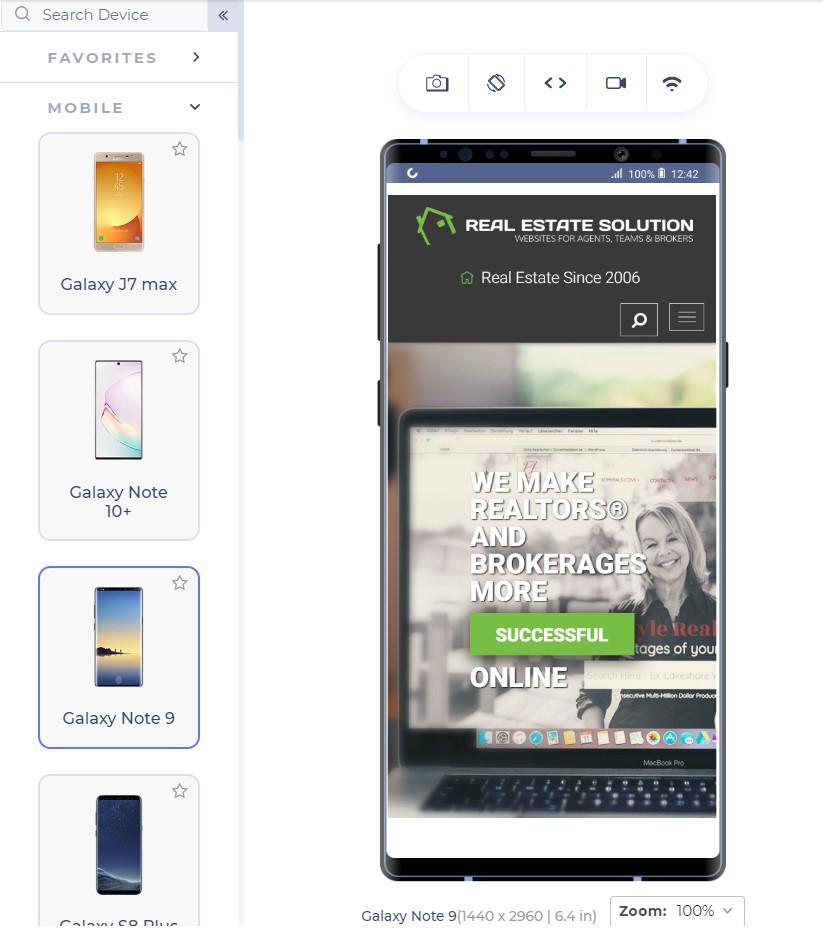
The above landing page is from RESGroup while the below screenshot is from Getrealestatesolution.
Anatomy of High Converting Mobile Web Pages - 2

Apart from a weird header which is taking 25% of your valuable screen space, the headline is concise and easy to read. The RESGroup have focussed on a long heading (if that what it is) and forces users to scroll the entire page to find something meaningful for them. A good point to note is that although building up trust on the user is important by embellishing the web page with your achievements, a user needs to find something which they can use. They rarely care about what you have to offer but more about how they can be benefitted. Remember, a user makes up his mind about the website in just 50 milliseconds.

Scrolling from up to bottom and reading about your achievements will result in an increased bounce rate. Getrealestatesolution is building up trust and showing their achievement both cleverly into a single line: “We make realtors and brokers more successful”. This more or less would translate to “We are capable enough to make you successful” and “You will be successful if you join us”.

Font-Size: Should my user zoom in?

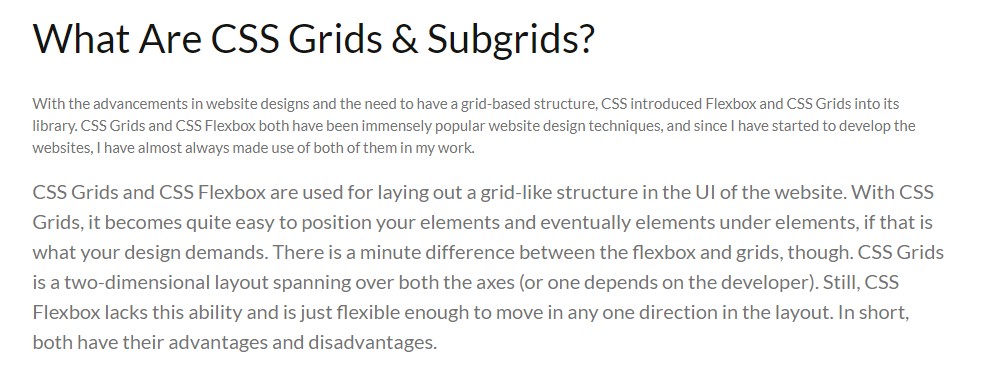
Font-size is an extremely important part of a landing page (or any other page) to determine the conversion rate of your website. A font-size of 16 px or 1 em is considered perfect for good readability of the content. Although one might argue that they can still read properly on 14 px, there are a large percentage of visually impaired people to be taken into account. The main target audience of the majority of businesses lies in the range of 15-49 years which is 28% visually impaired, as per WHO data. The following screenshot shows a blog on CSS Subgrids with 12 px font and the original font below it.
Anatomy of High Converting Mobile Web Pages - 3

Although text can be enlarged by zooming into the mobile device, it moves the content out of the screen and makes the screen scrollable which is not liked by the users.

The relevance of Keywords- Which words to choose?

The final thing to remember while presenting content to the user is to use specific keywords which are relevant to the user. Mobile screens are very small with 5.5 inches being the most popular among the users as per a 2019 study. With a little time and smaller space in our hands, we want to gain a user’s trust as soon as possible so that he sticks on the website and does not bounce back.

The specific keywords process first starts by eliminating all the redundancy and loose words. Words such as “very”, “extremely”, “best” etc are considered fillers in the content. “We are very professional and provide the best services” could be transformed to “We are professional in providing real-estate services”. The second sentence is more effective and uses 1 less word than the first.

After elimination comes the relevant keywords to pitch to help you convert through the web page. These keywords will work as something your user can trust upon. At least, the user should be well convinced that you are the best and believe me, writing “best” does no charm in conversions. So, instead of being verbose and explicitly pitching your projects, choose minimal but effective words that show your confidence, experience and professionalism. In my analysis, I found two interior design services websites that portray this point quite clearly.

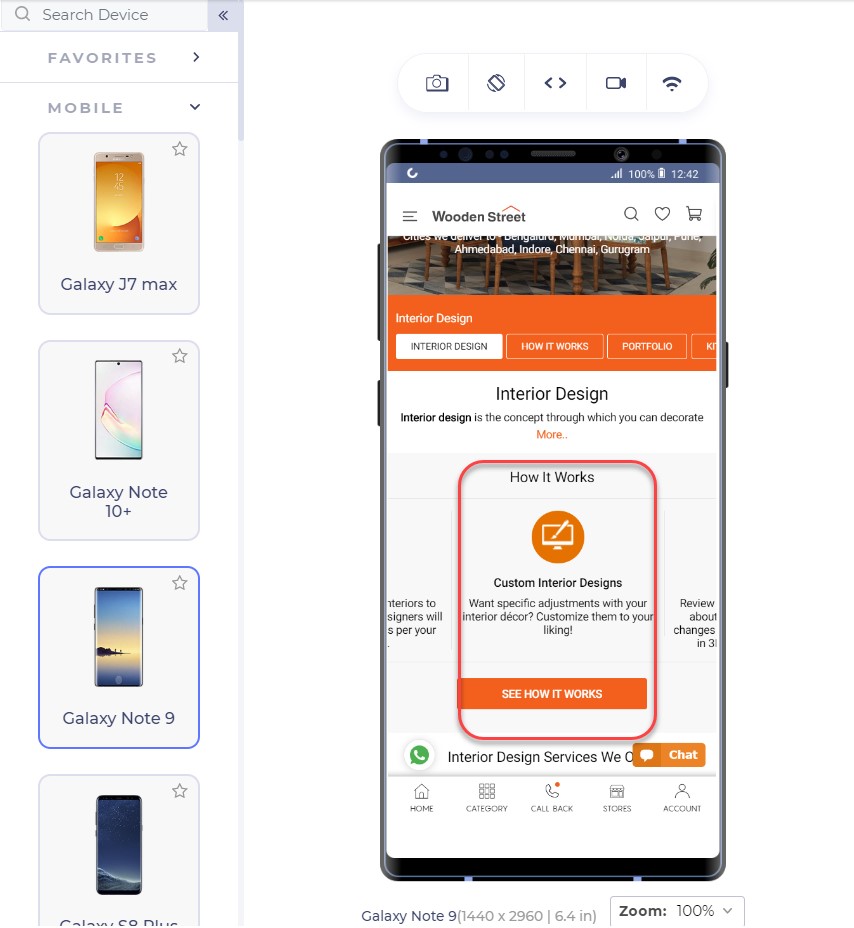
This is the landing page of Woodenstreet
Anatomy of High Converting Mobile Web Pages - 4

In addition to proving our point of small font-size, the only effective sentence in this segment is “Customize them to your liking!” which makes me feel the fact that I will have control over customizations but not a strong one. The words are loose to build trust over to the service company.

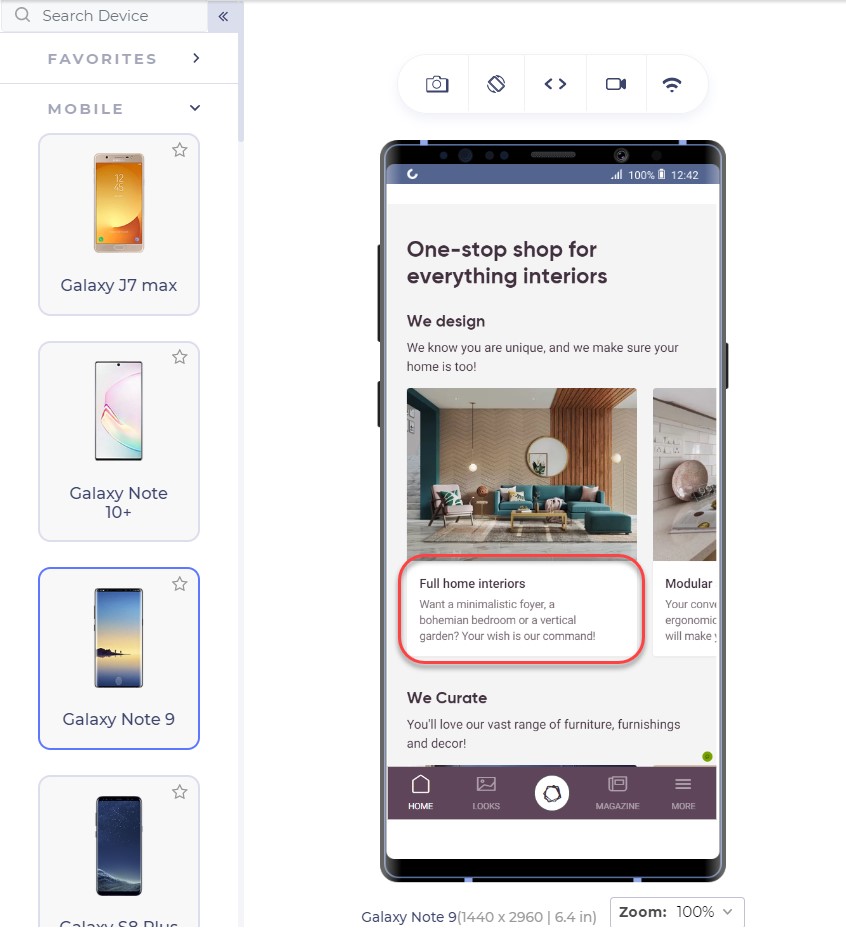
Another competitor of this website is Livespace. The same section on their website looks like this:
Anatomy of High Converting Mobile Web Pages - 5

The segment focuses on keywords and experience by the lines of sophisticated keywords that will lure the user. I too want someone who knows a bohemian bedroom!! (Just Kidding!)

Also, notice the transformation of the same sentence in these two websites. Where Woodenstreet says, “Customize them to your liking!”, Livespace says, “Your wish is our command!”.

Which one do you think has more weight to convert your page?

For the enhancements of the content, you do not need to remove the white spaces and fill every gap on the web page. White spaces are good! They let the elements breath in the congested space and every element can get proper attention from the user. For larger content, you can also use bullets that can deliver more information in lesser sentences.

To ensure yourselves of the appearance of your website on mobile devices, you can use tools which can help you emulate the experience. A developer-friendly browser such as LT browser is also a great choice since it provides a complete solution with loads of features (including a debugger) and performance reports to analyze. LT browser can show you your website on any mobile device of your choice in a couple of clicks.

Test Responsiveness on LT Browser

Emulators and simulators have been long used to test the website on different devices. But today, for a specific tester’s need, we can take advantage of a mobile-specific testing browser that provides a complete environment for the tester. A developer-oriented browser such as LT browser can provide additional features highlights of which are given below:

  • A large list of in-built tools: A list of 40+ in-built screens can render the website in a couple of clicks.
  • Comparison Grid: A comparison grid shows two mobile devices side by side for the testers to compare. The tester can also use scroll-sync to mirror his actions on both the devices simultaneously.
  • Screenshot capture and Session recording: The tester can take screenshots of the device screen and mark a bug and send the video/image to the team.
  • Third-Party Integrations: The third-party integrations allow the developer to share the bugs or issues with their teammates with a single click.
  • Network Throttling: A very important feature to check user experience is how the website performs under various network bandwidth. This can be achieved with network throttling in LT browser.
  • Local Testing: Local testing allows the developer to test their website even before publishing it on a domain service. With the local tunnel, they can view the website on any device from the local system.
  • Performance Report: To analyse the final performance, developers and testers can view the performance report and share it or save it for future use.

The thumb zone and its importance in conversion

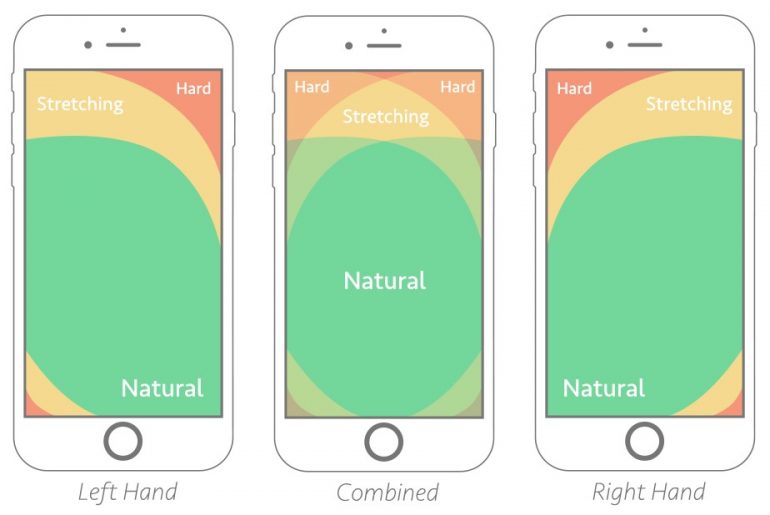
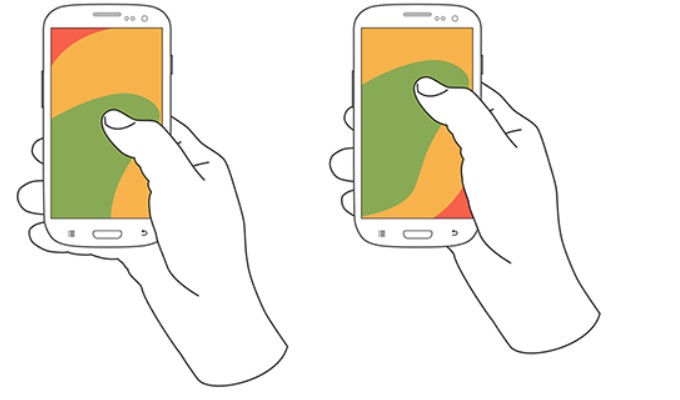
The thumb zone has been a conclusive argument for some time now and a strong foundation to many pieces of research in mobile designs and mobile web implementation. The thumb zone is the area on the mobile screen determining how hard or easy it is for our thumb to reach a certain point. A research study by Hoober concluded that 49% of people operate their mobile phones with one hand and only a 15% with two hands. Among those who do, 67% are operating through their right thumb with two major positions:
Anatomy of High Converting Mobile Web Pages - 6

Note: The second image is placed slightly above as compared to the first image.

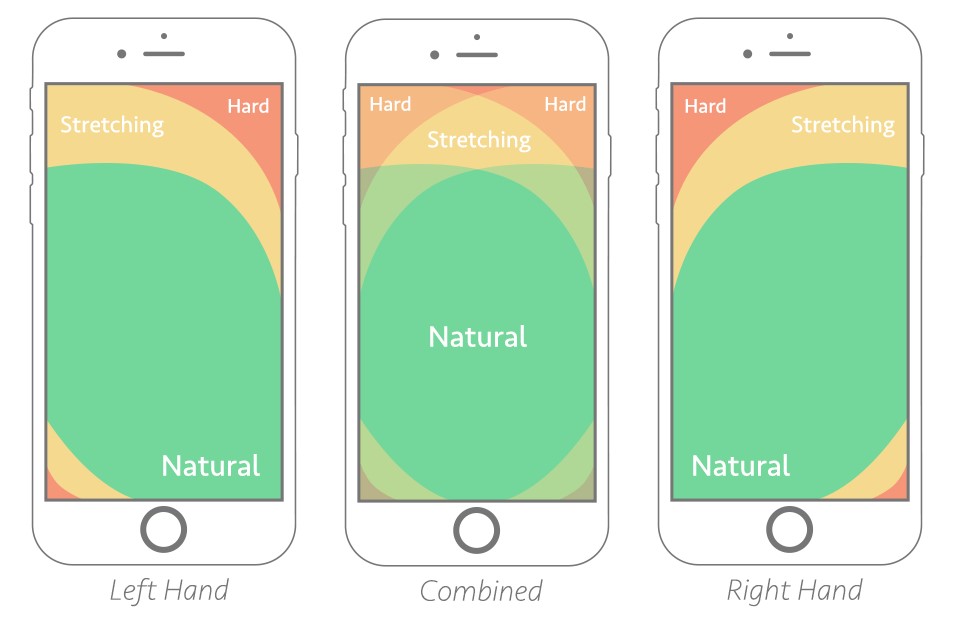
The color that you see in the above image: is our thumb zone. A thumb zone in general for a person using their phone with one-hand can be magnified as follows:
Anatomy of High Converting Mobile Web Pages - 7

The green zone is the easiest to achieve: hence the most important for our conversion goals. The yellow zone is a bit hard to reach but manageable: something we can put less important things in such as headings and other content, things which are not clickable. Finally, the red zone is the toughest to reach and is the worst place to put our CTA.

Another worst position to put our CTA is at the bottom of the page or deep down below. No user would want to scroll down 4 5 times and search your CTA on the webpage. A lot of them probably don’t even know about CTA buttons and if it exists on that website or not.

The best way is to put CTA in the thumb zone and on above-fold in the first web page view. Amazon has put similar thought into their CTA and the following is their landing page:
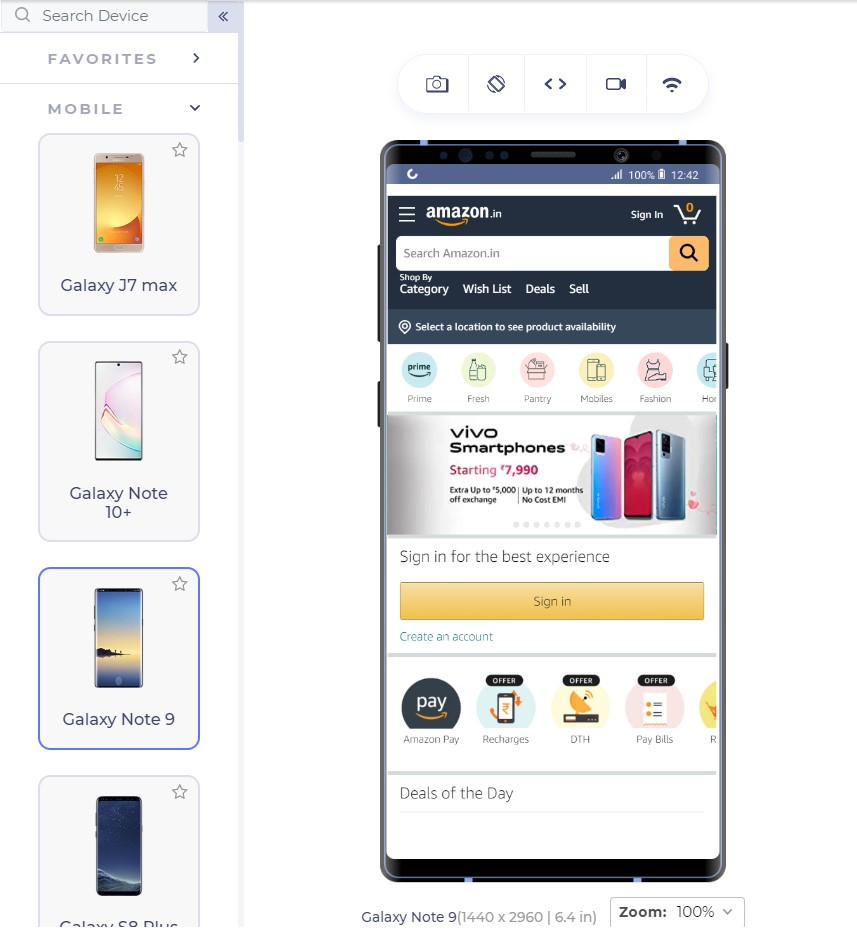
The Sign In button is exactly where our green zone lies with the width being enough that we do not touch anything accidentally.

From the above page, we observe two interesting things: first the Sign In is also available at the top right (the hardest) position too and our green zone has another CTA “Create Account”.

Having two sign-in options reminds the user about signing in two times. You would see the button anyway even if you do not click that. LiveSpace uses the same approach on its website in a little different way:
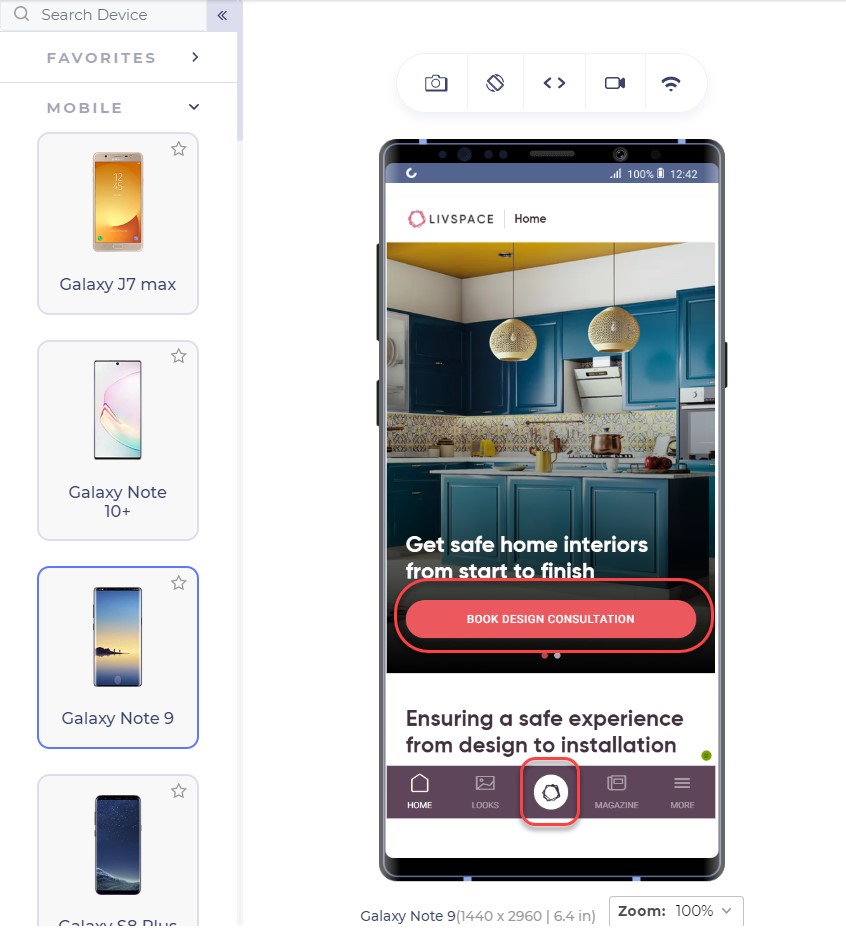
The bottom button is fixed and is a constant reminder to “book design consultation”. The second approach is interesting. There are two possibilities of an unknown user: either he signs in (given that he has already registered) or he creates a new account.

Deciding among the two is important for an owner to come to a final conclusion of primary CTA and secondary CTA. Having two CTAs is generally not considered a good approach as it confuses the user but even if you do, one of them should stand out in comparison to another, as in Amazon.

What CTA to use?

As a website owner, you might have a lot of services to provide: a consultation booking form, you want to showcase your cheap pricing too! And you want them to call you by a single click from the home page itself!! A CTA can increase your revenue with high conversions but a CTA cannot be the developer’s wish. It has to be what the audience wants. To increase your mobile conversions through CTAs, you need to analyse what your visitors are more interested in.

Google Analytics is a great way to start here. Google Analytics provides the keywords your visitor is most interested in. Mailchimp has a lot of good features which can be used as CTAs for example, “Start Campaign”. But their website on mobile uses the CTA linked to pricing:
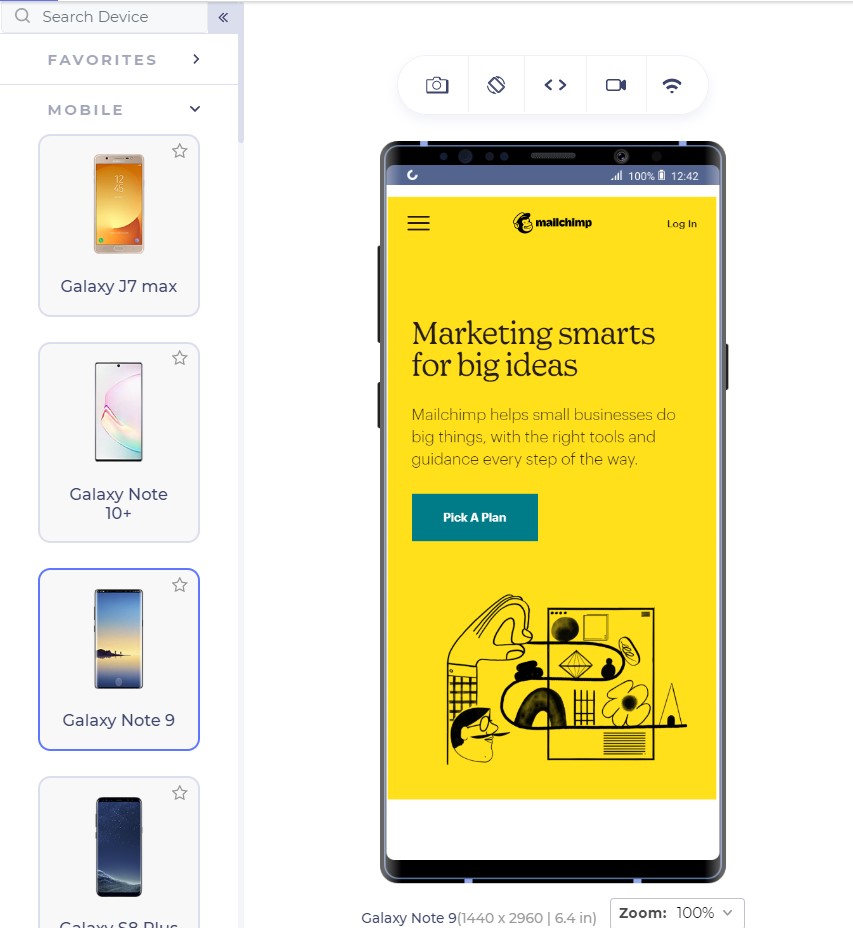
CTAs are something to ponder upon and it is also a good idea to include a good input from the marketing and sales team which can suggest to you the user’s inclination quite well.

With keywords in hand, the next step is to think about the CTA text that can bring out more conversions through a responsive mobile web design. In the above screenshot, Mailchimp could have used, “See pricing” but they went with “Pick a plan” even though the page links to the pricing page.

Similarly, Youneedabudget provides the user with “Try YNAB Free For 34 Days” instead of Sign Up or Try YNAB Free.
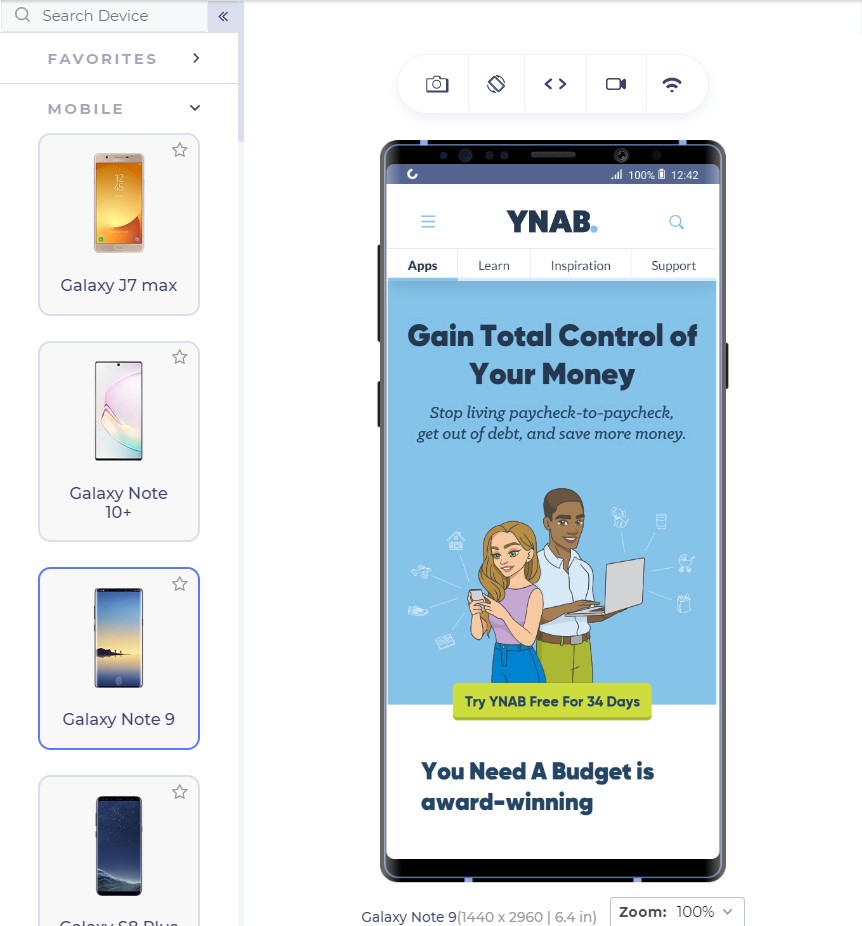
Research these words and find out why your user visits your website. Show them exactly what they are looking for through the CTAs and the conversion rates would see an increase.

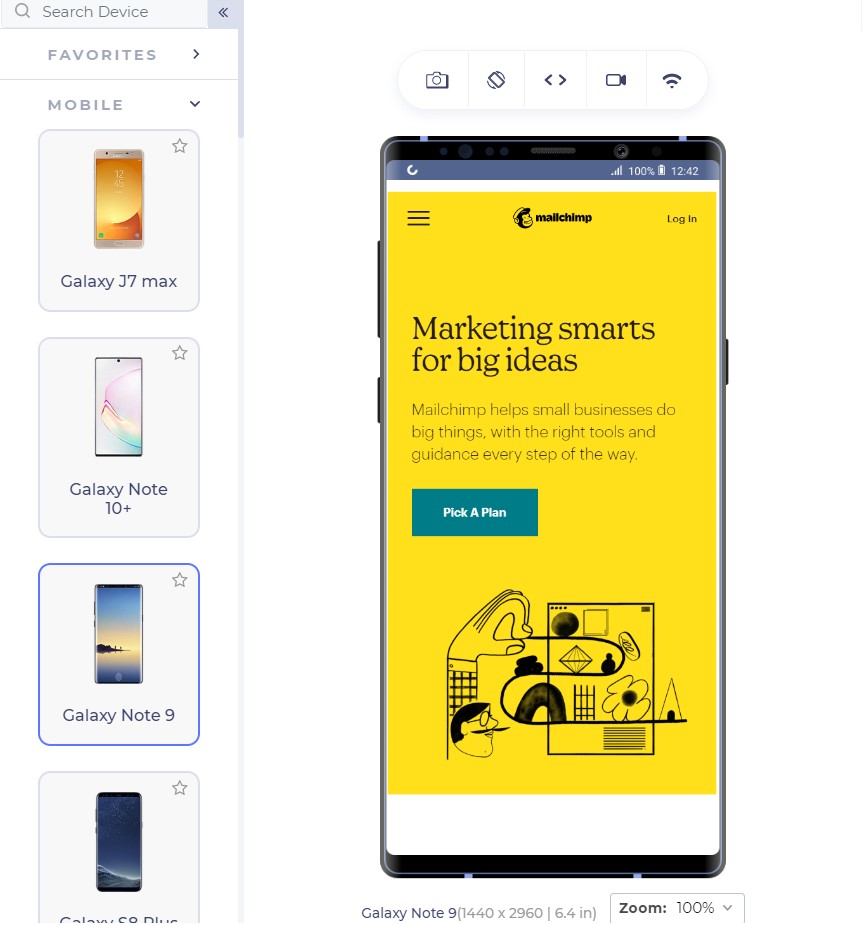
The CTA should also look like a “CTA” and work like one. If the CTA gets blended into the background and looks like a ghost button, it loses its purpose. CTAs should be a contrast in colour speaking out loud and demanding attention from the user; that is what they are there for.

Mailchimp does that perfectly with a little darker shade of yellow in the background and CTA with blue; a complete contrast.
For business providers looking for direct leads, forms work as fine as a button since they cannot provide all the information in concise segments and users have a lot of other doubts. For example, interior designing. Interior designing has different requirements for different users and personal contact is necessary. A responsive form works as a great CTA here:
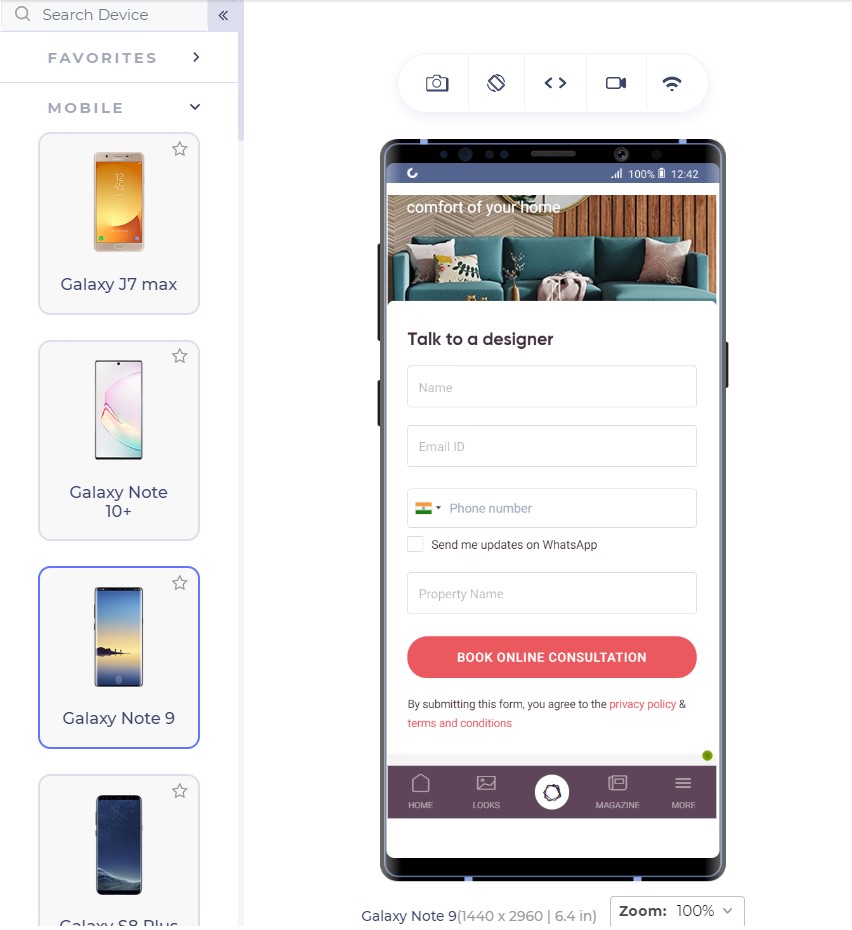
The number of fields is important to understand the conversion rates. A user is not interested in filling too many fields and will bounce back too easily. Quicksprout shows how the number of fields leads to a lower conversion rate on the mobile:
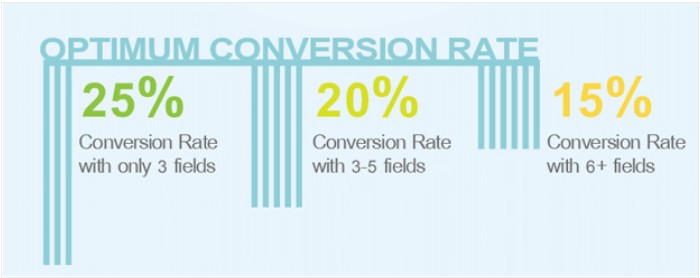
More than 5 fields in a form is intimidating for the user and the user is unlikely to complete the form. If you cannot manage to lower down the fields below 6 or 7, use the autocomplete feature of the browser in your HTML code so that the user can quickly fill out the form in one tap. Autocomplete is available in major browsers today and is helpful for the user.

If your CTA is a call button, it should be a one-click button instead of plain text. Do not expect your user to take the burden of copying the number and moving onto his dial pad, paste it and then call you.

Remember the 2-second rule!

Google aims at 0.5 second load time when it comes to loading any Google’s product. But don’t worry, we still have not touched such a high-performance statistic practically although we have come a long way in the last decade. Google states that 2 second is the user’s “acceptability” for the website load time. So how is it affecting our conversion rates?

As it turns out, the bounce rate depends heavily on the website loading time:
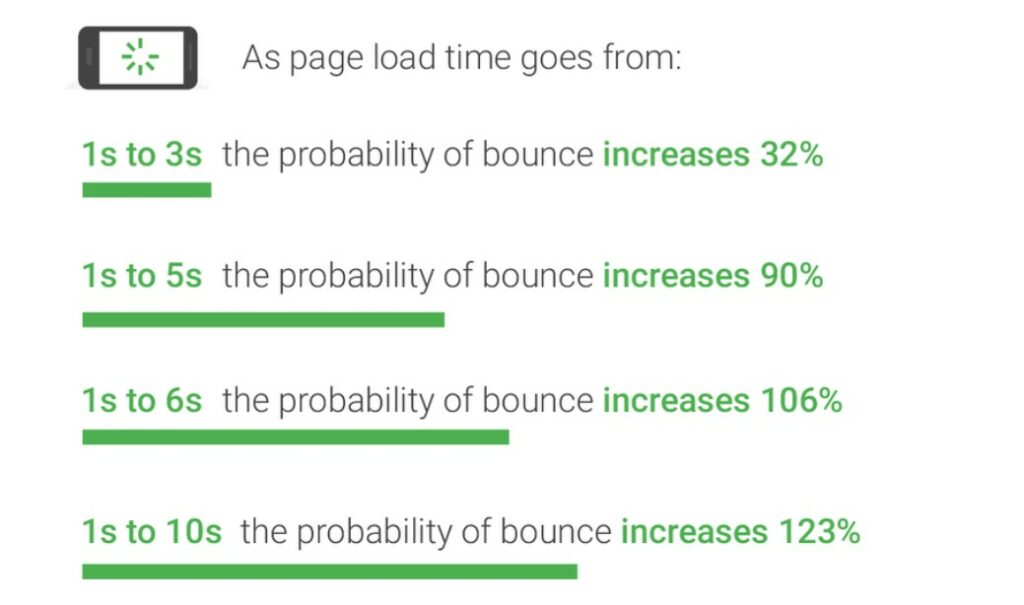
Gone are the days of 2G connection when people could wait a hundred seconds for the website to load. With the increase in elements on the website leading to a lower load time, the conversion rate drops by a whopping 95%!!

What can we do to increase loading speed?

The question drops to the mind as to what we can do as web developers to decrease the web page load time when the network plays a vital role which we have no idea about. As a developer, we can follow a series of checks on our responsive mobile design to ensure higher conversion rate and simultaneously lower bounce rates:

Content Display Improvement

A good way to start is to code the web page to display something (if not all) to the user as early as possible. For example, AJAX queries are a great way to show a partial content to the user on the first view.

Server Improvement

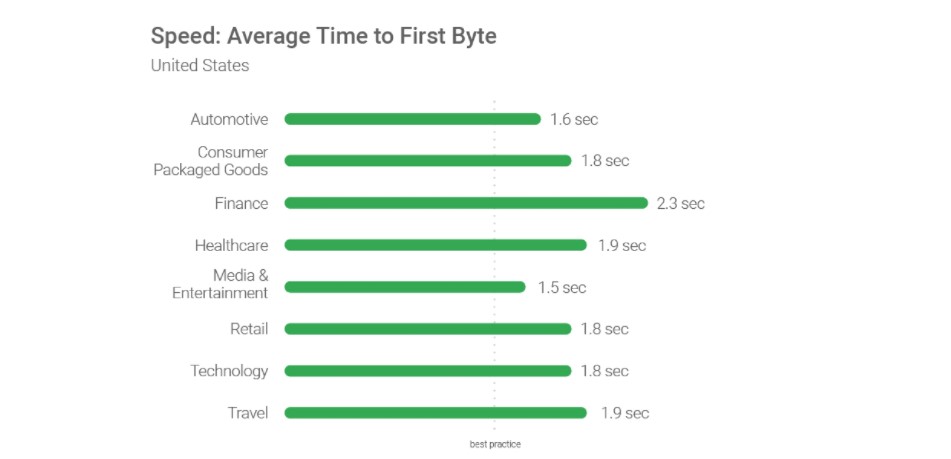
Use a good server!! Servers play an important role as they are responsible for not only communicating with requests but also sending the first byte to the user. Google recommends a time of 1.3 seconds for the mobile server to communicate with the first byte. The lower the better.

The figure shows recommended average response time of the mobile server in various categories:
Request Count Optimization

Lowering the number of requests to the server also decreases the overall page load time. The lesser number of requests would generally mean lesser elements to fetch. While Google recommends less than 50, today’s average lies somewhere between 120-170.

Weight of Elements

An extremely important factor in determining the loading speed of the website is the weight of elements present in the mobile web page. The study found out that websites use too many elements in order to lure the users which slows down the loading speed even on the 4G connection (which is the most popular). 70% of the pages took 5 seconds for any visual element to first appear on the web page. This has made the average loading time to 15 seconds as compared to the recommended 2 seconds.

The main culprit; images. Providing an extremely high-quality image will just decrease the conversion rates especially the ones which are nowhere related to the product such as background or achievement thumbnails. Applying very high-quality images without compression can load up the page to as high as 4MB which is more than the average.

The analysis is done in the study also found an image worth 16 MB of size on a web page which is a simple blunder, an invitation to decrease the conversion rates. What can we do? Compress these images and use proper image formats.

By simply compressing the images on the web page, the developers can save up to 250 KB of size on as high as 25% of the website analysed. Image format can help you in decreasing the load time too. Out of all the mobile-friendly websites, 46% use JPEG and 28% use PNG. The reason behind the success of JPEG is that it is a lossy compression losing bits in the process. JPEG is a great format to use when too much focus is not on the extreme detail of the image like nature images, landscapes or background color shades etc. PNG on the other hand is lossless and saves the bits in the process. PNG images are great when sharpness, details and observations are required in the image.

The following image is a JPEG image:

This image is of a natural scene and hence does not demand very small details for the user. Your user will not zoom into the Taj dome to check out the colour shade. This image makes about 127 KB in size.

The same image in PNG consumes 714 KB of the web page which is extremely unnecessary.

To determine your website’s performance, you can use a trusted tool PageSpeedInsights by Google.

To increase the speed of the landing page, developers can also make use of CDN or Cache that web service providers such as Amazon offer. These are very fast and help store data according to the geographic locations.

A/B Testing and you are done!

When Google launched ads on Gmail, they were not sure which blue colour to use. In their experiment, they decided to provide different shades of blue to different users and see their response. With 1% of users getting one shade and another 1% getting another, Google ended up testing among 40 shades of blue to 40 different groups. The final blue selected in this experiment earned them an additional $200 million in revenue.

This is termed as A/B testing. A/B testing is a process of comparing two different versions of a web page by giving them to different groups and recording their response. A/B testing has been used extensively today to finalize the colour, location or size of the CTA button. An experiment between green and red CTA buttons showed that the red CTA button performed 21% better on 2000 page visits. The 21% increase in the conversion rates points towards how important A/B testing is today.

This does not mean every red CTA button will outperform green ones. Performing A/B testing will provide conclusive results by which you can increase the conversions and they are different for different websites.

Not only CTAs, as a developer you can also test the headlines, buttons and other important content to decrease the bounce rate which eventually does result in increased conversions. You can use Heatmap tools for A/B testing.

Conclusion

If you ever believed that responsiveness is everything there is to increase the CTR, you are not alone. The researches and studies have brought out a lot more about the behavioural aspect of a user than we knew before. From colour to the font-size, conversion rates on a mobile device is like a house on wooden pillars. All of them together increases the CTR to its capabilities and give your revenue a boost up.

Apart from the points discussed in this post, as a developer, you can also perform certain enhancements on the website for better conversions. User experience always matters on a mobile website. Whether it is conversions, word of mouth or any other target, you will always be rewarded for a better user experience. Enhancements such as not losing the sessions when the back button is pressed, providing cart support on multiple devices or shutting up the navigation bar in a hamburger menu. These enhancements are always noticed by the user and the easier it is for him, the better are the chances of conversions. So the next time you are busy developing your website, make a checklist and boost up that conversion rate from mobile web pages.

Sourced from 1WD 1stWebDesigner

Sourced from VentureBeat

Audio is having a moment, thanks in part to the pandemic. At home most, if not all of the day, consumer consumption habits are unexpectedly switching up dramatically, with audio content and listenership rapidly on the rise, and engagement surging. To stay connected and informed, those sheltering at home are spending their days kept company by podcasts and music.

It’s a hands-free medium that can move with them throughout their day, listened to anywhere and anytime. In a crowded content landscape, the promise of audio is a powerful one. It expands the reach of your marketing significantly, attracting listeners who simply prefer audio content, or who can’t use other forms of content.

Portable and versatile, audio offers brands a unique way to cut through the visual clutter and increase personalization, convenience, and loyalty with meaningful content. And consumers are very willing to listen up.

According to Nielsen, four out of ten households have more than one smart speaker, and in a typical week, 90% use it for music, while 68% are listening to news. In the last month, 37% have listened to a podcast in the last month, 24% listen weekly, and 16 million people in the U.S. are avid fans.

That’s because audio grabs you. Neurological studies have shown how powerful audio is, engaging a storm of neural networks in the brain, including those that control motor actions, emotions, and creativity. Adding a human voice to your brand adds a layer of emotion that engages your audience more deeply, in a more sensory way.

More than any of your other content, to make branded audio content work as an integral part of your full brand identity, you need to understand your target audience, and the way they want to feel when they think about your brand, the mood you want to evoke, the kind of message you want to send — and it requires knowing how to create a rich and seamless audio experience wherever a consumer encounters your brand.

Here are just a few formats and channels branded audio content can include — and what you should be considering to integrate into your marketing mix:

Podcasts, both sponsored and branded. Creating a branded podcast gives you an opportunity to tell your company’s story, give insight into what you do, and show your audience who you are and what your company stands for. Like a blog, podcasts should offer educational, thought leadership-style content for listeners searching for information surrounding your business’s area of expertise. It can include interviews with experts from your company as well as leaders in your field — or you can repurpose existing content from your blog, turning it into a spoken word performance.

Audiograms. Essentially, an audiogram is a soundbite. It’s a way to concisely impart information, or promote something quickly. They can be pithy audio moments layered over still images — such as a seasonal message from your company’s CEO, for instance, and unlike advertisements, they aren’t paid promotional spots, and don’t necessarily require a call to action. They can be shared on social platforms like Instagram, where users tend to browse wearing headphones.

Clubhouse. Brands are starting to dip their toes into the Clubhouse waters. With over 6 million registered users as of February and a ton of celebrity buzz, the app is taking off. Rooms in the Clubhouse are home to live audio conversations that users can listen to or participate in; you can find yourself listening to discussions between reporters, celebrities, scientists, artists, and more. The immediate nature of these live conversations makes them powerfully engaging, and brands are just starting to explore the possibilities.

Facebook Live. Streaming an audio broadcast on Facebook Live — for instance, showing viewers a podcast recording session — is a great way to get on your audience’s news feed. It’s also a great way to solicit engagement, allowing them to comment in real time, provide feedback, and ask questions from your guests.

Making existing content accessible. Adapting your visual and written content into audio makes it available to audience members who are vision-impaired, which is table stakes in 2021. It also makes your content more portable, the way audiobooks let readers take their books on the road. It can also bring energy and emotion to your content, engaging an audience in a way the written word cannot.

Audio advertisements. 49% of avid podcast fans report that advertising on a podcast is the best way for a brand to reach them — and 54% said they’re more likely to purchase a product they heard about on a podcast. You can find this kind of ad space on radio programs and streaming services. It’s an opportunity to find a compelling way to capture audience attention quickly, and to create an audio brand for yourself.

It’s important to ensure these on-demand audio experiences should have the same clear audio quality as live interaction. Consumers now expect this, and when audio is sub-par, they can get frustrated and abandon. However, many application developers are not audio experts. And historically, great audio required an audio engineer, and the right software, and a lot of time.

But there are new ways to deliver great audio, whether that’s on a communication platform or with online content. New cloud-based API solutions can improve audio quality with just a few lines of code, allowing for background noise reduction, loudness adjustment, and improved dynamics and equalization, and a consistent quality control process.

To learn more about the importance of branded audio content across online experiences, how to develop powerful audio branding, how audio can help you connect with your users, plus the tools that can help you improve your audio and extract actionable data, don’t miss this VB Live event.


Register here for free.

Sourced from VentureBeat

By Elijah B Torn

Lessons and opportunities in sonic branding

We’re living a lot of our lives virtually, increasingly looking to digital channels and platforms for shopping, entertainment, and educational needs. Unsurprisingly, many people now have their first encounter with a brand online yet marketers are letting the sound of their brand blow away in the wind.

Few are paying attention to crafting an effective and recognizable sonic signature, which is ridiculous when you think how much sound and music play a role in our experiences across the burgeoning number of new platforms.

Of course, I might be a little biased, but the fact is there are huge opportunities for brands to make a connection through sound — if they can figure out the right way to differentiate themselves.

Sound and emotion

In the past year, we have seen huge audience behavior shifts when it comes to sound, which means marketers need to think more strategically about the role that music branding can play in forging a deeper relationship with their customers.

They need to pause and reflect on how they personally feel about various sounds and music — I know what emotions are evoked for me when I hear the electric hum of a tattoo machine, or the tranquil, ambient sounds when walking in nature. Marketers can then start to imagine what feelings they would like to evoke via sound in their audiences.

When we hear ‘sonic logos’ we consciously understand we are hearing a brand sound for a few seconds. What we may not realize is that a good strategy behind many sonic identities means we’re subconsciously hearing something that is determining how we feel over time. And that is very powerful.

What do I mean? People usually point to the sonic identity developed by Intel as a good example — simple yet iconic:

There is also Coca-Cola and its iconic suite of sonic assets — the sound of the bottle opening, the ice cubes in a glass, and the more obvious five-note sonic logo. The video below does a good job summarizing the work behind the soundscape.

Have a listen and see just how seamlessly this strategy has been embedded. This isn’t luck — Coca-Cola’s marketers understand the science that proves the effectiveness of sound, and continue to reap the benefits today.

Every brand wants this but they want it fast. Few understand how to execute a sonic experience strategy properly, opting instead to simply slap on a quick-fix sonic logo as a short-term tactic and then expecting long-term results.

It’s not easy — pitfalls await the unprepared. Even a brand as innovative and focused on the customer as Netflix can trip up.

I can’t be the only one who felt Netflix’s new cinematic sonic brand was clichéd and unoriginal despite the adaptation of their sonic logo being composed by the legend Hans Zimmer. Nothing about the brand is evoked and there seemed to be little else in terms of strategy and rollout.

The science of sound

But does any of this really matter? Well, you don’t have to just take my word for it — it’s backed up by studies. Research carried out at the University of Leicester in the UK discovered that brands that use music that is aligned with its identity are 96% more likely to be remembered by the consumer, versus brands that use ‘unfit’ music or no music at all.

The findings of the 2020 Power of You Ipsos report confirmed that brand assets such as sonic brand cues are more effective than assets leveraged from wider culture, such as celebrities.

The associations between a specific brand and celebrity fade over time or become obscured as the person signs up to more and more partnerships. A sonic signature is unique.

The research shows how a cohesive and compelling sonic strategy fuels positive recall and steers behaviours. The challenge is how to inject audio into a brand’s ecosystem.

So how do you create a strategy for sound scaping your brand?

Well, you can take a page from my book.

When I and my team first meet with brands, we look incredibly closely at the overall business and brand objectives. We dive into whether this is a new brand, a repositioning or rebrand, or whether they just need to cut through a cluttered market. We form an internal map and understand the brand’s personality — their tone of voice, language, who they are talking to, and who they see as competitors.

This helps us match sounds to their unique values — a crucial part of the strategy and where many brands slip up. Rather than looking to their own identity, brands often look to competitors and the ‘sound of the sector’ meaning brands start to sound the same. For example, can you think of an individual utility company’s sonic identity right now?

I see a lot of the same errors in judgment when brands blindly tap into a music zeitgeist in order to try and reach a younger demographic — don’t do this. They miss the mark because they’ve strayed outside of what the brand stands for or what it means to consumers.

This doesn’t mean your brand shouldn’t look to diversify or understand what different audiences want — but simply adding a grime soundtrack to a campaign to appear ‘cool’ will do nothing for brand equity.

A more effective approach to using sound in the most culturally relevant way is to spend time figuring out a clear direction for how your brand should sound in and of itself, and then make it flexible enough to tap into other genres and artists.

Why I’m lovin’ McDonald’s strategy

McDonald’s did this brilliantly nearly two decades ago with its partnership with Justin Timberlake on the track ‘I’m Lovin’ It.’

After the strategy was conceived the song was released and that now-iconic five-note mnemonic (ba-da ba ba baaaa) started appearing in all brand advertising which meant they reaped the benefits of teaming up with a popular artist without straying from their own brand identity.

Simply licensing one of his songs would have been more costly and would never have had the same long-term brand-building that this strategy generated.

So how does a brand balance cool with its own values and doesn’t then run the risk of quickly becoming dated? For example, capitalizing on a trend like TikTok without looking try-hard and lost. Bose just launched a really popular TikTok challenge using the hashtag #CancelTheNoise and featured a cool and accessible custom-made track — this worked for the platform’s format, reflecting the personality of Bose whilst also appealing to both younger and older users.

Recently, Gucci strategically found a way to reach younger audiences and be ‘trendy’ without renouncing its values. Collaborating with director Gus Van Sant, the brand created its first digital film series featuring musicians Billie Eilish, known for her love of the designs, and Creative Director Michele Allasandro’s muse Harry Styles.

Peloton recently announced a strategic partnership with Beyoncé. The brand took the data that proved she was the most requested artist by Peloton owners and then used the partnership to celebrate students at historically black colleges and universities, placing purpose at the core whilst appealing to the fan-base of one of the biggest musicians in the world.

I think we’re coming to the end of one of the most interesting and challenging periods in recent history. Brands have struggled and yet face enormous opportunities to evaluate and update as they work to match rapidly-changing consumer behaviours.

It is my hope that smart marketers soon realize that simply slapping a quick-fix sonic logo on their ad and playing it repetitively offers little more than basic consumer recall, while strategic sonic branding has so much more potential to build brand love.

Sounds exciting, doesn’t it?

By Elijah B Torn

Sr. Creative Director, MassiveMusic New York — Elijah has been working with music and audio for brands for nearly fifteen years. His experience however is not just limited to audio branded content. Torn has also released three solo albums of electronic music. These albums have received air time on KCRW’s ‘Morning Becomes Eclectic’, WNYC’s ‘New Sounds’ as well as (the late) Lou Reed’s SiriusXM radio show ‘NY Shuffle’. Twitter: elijahbtorn

Sourced from TNW

By Jack Morse

Your iPhone has trouble keeping secrets. Thankfully, there’s something you can do about it.

What you do on the internet, what apps you download, and, often, where you go are all data points that can be linked to an iPhone’s so-called advertising identifier (Android phones have a similar Advertising ID). Combined with commercially available databases, this unique alphanumeric string can be enough for third parties to tie an iPhone’s actions back to the real name of its owner.

We were reminded of the real-world consequences of this Friday, when the New York Times published an article exposing the movements of individuals involved in the Jan. 6 riot at the U.S. Capitol. The newspaper obtained a data set that linked phone location data to advertising identifiers, which, combined with other available databases, allowed the paper to link that location data to real people.

Assuming they’re playing by Apple’s rules, app developers get access to a phone’s advertising identifier by simply requesting it from the phone. Think of an ad identifier like the more familiar web cookie which follows you around the internet, remembering what you do and exchanging information with websites along the way. Your phone has something like a cookie, too — that’s the ad identifier.

While you may not have much sympathy for those described in the Times article — who, after all, may have taken part in the attack on the Capitol — the point remains. Your phone’s advertising identifier is yet another digital breadcrumb leading straight back to you.

If you want privacy when, say, going to the doctor, church, an AA meeting, this should concern you. Many of the apps on your phone that have access to your ad identifier are tracking your location. While the apps may promise to store this data anonymously — linked only to your ad identifier — the Times article provides an example of just how easy to it to tie those identifiers (and all the data associated with them) back to real names.

“Several companies offer tools to allow anyone with data to match the IDs with other databases,” the paper explains. And those databases might contain your real name and address.

But there’s a way to fight back.

Apple offers users the option, albeit buried deep in an iPhone’s settings, to deny apps access to your advertising identifier. Turning off apps’ access to location data is also an important step, but there are other ways for apps to estimate your phone’s location — like connections to WiFi networks. You should also not give apps access to your location data unless they absolutely need it to function, like, for example, a map app.

To deny apps access to your phone’s advertising identifier:

  1. Go to “Settings”
  2. Tap “Privacy”
  3. Select “Tracking”
  4. Disable the option that says “Allow Apps to Request to Track”
Limit how you can be tracked on your iPhone.

Image: screenshot: iphone

That’s it.

Interestingly, the menu page doesn’t make it immediately clear that this action will have the intended effect. But it does. Clicking “Learn More” takes the curious to a long page of text which explains what’s going on behind the scenes.

SEE ALSO: How to blur your house on Google Street View (and why you should)

“When you decline to give permission for the app to track you, the app is prevented from accessing your device’s advertising identifier (previously controlled through the Limit Ad Tracking setting on your device).”

There, wasn’t that easy?

By Jack Morse

Sourced from Mashable India

By David Benady

The world of marketing is changing rapidly, but a postgrad degree offers a route to more senior roles.

From commissioning TV ads to analysing sales data, marketing is a discipline that combines science with creative magic. Perfecting skills such as branding, digital promotion, creative engagement and consumer psychology requires both in-depth study and on-the-job experience. A master’s degree in marketing offers a chance to learn these skills and helps students plan their career path.

“The opportunities are limitless,” says Beverly Wagner, department head of marketing at the University of Strathclyde. Graduates from Strathclyde’s marketing MSc degree can go into classic marketing roles, such as becoming brand managers or they can use the course to broaden their business skills base.

“As well as the typical marketing jobs, our marketing MSc graduates are employed in businesses to support innovation, undertake market research, analyse industry trends, carry out strategic planning and create social media strategies,” she says.

Students learn about areas such as consumer behaviour, customer service and digitalisation. “Every class includes guest speakers from industry and students are appraised of industry trends and how their degrees can support a variety of career choices. Assignments are often based around real-life business problems,” she says.

One of the big attractions of a master’s in marketing is that it offers a wide-ranging perspective of the field. This was part of the appeal for Lily Garefalaki, who has just completed a one-year MSc in strategic marketing at Cranfield School of Management. The course was interrupted by the pandemic lockdown, though teaching shifted seamlessly online. She says the MSc has provided her with a comprehensive understanding of marketing strategy from concept to implementation. She was also glad to receive training in two distinct areas, marketing to consumers (B2C) and marketing to businesses (B2B).

“We were taught a range of modules covering both B2B and B2C, from key account management and digital marketing to branding. We were able to create strategic plans because the curriculum was structured as a journey, it connected everything together at the end. I liked this course because we were able to get a holistic view of marketing,” she says. In the first term, students worked on key account management – managing a company’s most important clients – with a real business. “Each team had a real live client for whom they did a key account management plan and we had meetings with the actual executives. So it was really hands-on from day one,” she says.

Her ambition is to work in film and TV distribution, so she focused on areas such as subscription TV services and online video during the course. For her 16,000-word dissertation, making up 35% of the assessment, she conducted a literature review on the use of video games to conduct market research.

Meanwhile, Maggie Jones, director of qualifications at the Chartered Institute of Marketing, advises candidates to check whether their chosen master’s offers a high level of digital training, as there is a shortage of digital skills in the industry. Another consideration is whether fellow students are pursuing careers in marketing or more general areas of business. “You pay a lot of money for a master’s, but many of the people who join it may not be marketing related. That can affect the whole experience, so it’s worth knowing what you are going into,” she says.

Playstation Takeover Of London Tube Stops For PS5 Launch
Marketing innovations have continued throughout the pandemic, such as Sony’s PS5 Underground campaign. Photograph: Alex Davidson/Getty Images

Media and marketing: what you need to know
Media and marketing remain popular choices for postgraduate study, offering either a route to academic study or a practical career boost. Those looking to work in news and reporting can take an MA in journalism at a number of universities – and there are a variety of media studies courses combined with subjects such as sociology, film studies and cultural studies.

Most UK universities offer marketing master’s courses. These can either be MA degrees that focus on advertising, retail and public relations or MSc degrees that lean towards data and market research.

The skilled marketer needs the ability to blend the two areas together. A master’s typically requires a bachelor’s degree, which can be in any subject. A master’s is especially useful for those with a number of years’ experience working in the field as a potential foot in the door for more senior roles.

The qualification can aid promotion to a senior marketing role such as board-level marketing director. While many students self-fund their degrees, there are employers who are prepared to help with tuition fees. More than 10,000 students took postgraduate studies in marketing in 2018/19, according to HESA.

Meanwhile, more than 5,000 students took media studies postgraduate courses and 2,000 studied journalism at postgraduate level. Some universities also offer marketing as part of an MBA course.

The Chartered Institute of Marketing offers a variety of auxiliary training options that can prepare students for a master’s. Students can take a diploma in professional marketing or a diploma in digital marketing ahead of a master’s.

A master’s can also be helpful when applying for chartered marketer status, recognised as the highest level of marketing in the profession.

Feature Image Credit: A master’s in marketing offers a wide-ranging perspective on the field. Photograph: Victor Torres/Stocksy United

By David Benady

Sourced from The Guardian

By Roy Hutchinson

We are living in a time of seismic change for brand management, the third of its kind in the last 35 years. Covid brought to the surface what’s been percolating in the market for years: the need for brands to focus on their purpose in order to lure millennial consumers, who have become today’s highest quality consumers because they’re the beneficiaries of the largest wealth transfer in human history.

No longer is advertising a product’s benefits or features enough to keep a brand afloat and attract consumers in troubling times. Brands need to showcase what they do for the greater good, how they treat their employees, and their actions to protect the environment if they want to cash in on the new spending power of millennial consumers.

Previous Seismic Transformations In Branding  

Over the past 35 years of my career, I can recall only two periods of similar seismic branding transformation: when the very notion of brand value was questioned in the 1990s and when digital marketing hit the scene in the 2000s.

When Brands Almost Disappeared In The 1990s

In the early 1990s, the world started to question why brands were even important. Why would someone pay more for a name-brand soda when a store substitute tastes nearly the same?

At the time, it was questionable if the very concept of “brand” would survive outside of luxury goods. The debate was reversed when non-luxury brands worked hard to create sales-driving brand association. Toyota and Honda became shorthand for reliability because of the brand’s cost-to-performance ratio. No matter if customers purchased the lowest- or highest-priced Toyota, they knew they were getting the best vehicle for that price point. Apple resurrected itself from near bankruptcy to become the standard for quality in electronics by offering elite-quality products that last, combined with instantly-recognizable design. Quality craftsmanship was only the starting point to elevate these brands, of course. Advertising and marketing campaigns spread the word that both Apple and Toyota produced only “best in class” products.

If you’d like to read more about it, I highly suggest David Aaker’s classic book Managing Brand Equity. (Aaker and I are not professionally affiliated.)

Digital Domination In The 2000s 

The second earthquake moment happened with the advent of digital media. Suddenly, print, radio and television were no longer the only way to target consumers. Advertising became a completely new science driven by data that enabled very fine segmentation of messaging. This required a massive change in the skills of marketers, such as learning to engage on social media and create high-converting websites. To this day, two decades on, many brands still struggle with digital success.

Today’s Shift To Purpose  

Today, we are experiencing a third transformational change in branding and marketing. This time, the transformation centers around purpose.

To reach millennials, businesses must define and promote their purpose. Almost two-thirds of millennials express “a preference for brands that have a point of view and stand for something,” according to a study of global brands by Kantar.

Millennials favor doing business with brands that share their values. According to the Deloitte Global Millennial Survey 2020:

• 47% educate themselves on the environmental impact of the brands they consume

• 41% think that businesses have a positive impact on society

• 38% have initiated a relationship with a business that has a positive impact on the environment

• 33% think business leaders are having a positive impact on them and on society

• 22% have reduced their engagement with a brand because of the CEO’s political views

Largest Transfer Of Wealth In Human History 

In addition to the fact that every millennial is now of working age, from 24 (entry-level workforce) to 39 (peak age for savings and borrowing), they are also the beneficiaries of the largest wealth transfer in human history. This makes them the highest-value target demographic in the market today.

As Baby Boomers (a disproportionate number of whom rode stock options and a 20-year bull market to unusual levels of wealth) begin to retire and pass away, they are transferring a staggering amount of money to their millennial descendants. So not only are millennials earning income in the workforce, they are also on track to becoming an extremely wealthy generation via inheritance.

Estimates of this wealth transfer stand at $30 trillion in the U.S. alone, of which $9 trillion will be liquid assets (e.g., cash, houses). Worldwide, the estimated wealth transfer reaches $100 trillion. Add this to their current spending power as part of the workforce, and brands would be remiss not to do everything in their power to capture this market.

The Pandemic Brought Purpose To The Forefront of Advertising  

While Covid-19 made every brand put “being safe” at the heart of its messaging, it is easy to tell a true purpose-driven brand from an opportunistic campaign. The latter often includes thinly disguised offers (e.g., “Stay at home and order food online with our credit card, which gives 10% cash back on groceries”). Compare these with genuine, purpose-driven campaigns, like those we saw from Apple, Nationwide, and Vodafone, and the difference becomes evident in tonality and responsibility.

It Takes More Than Advertising To Reach Quality Consumers   

Creating a brand that is truly purpose-driven — and comes across as such — requires a company to rethink its internal culture, its consumer-facing processes and its treatment of staff. Millennials will not do business with a company known for unethical treatment of employees, unfair pay practices, animal testing and other transgressions.

What does your company offer to the world? What is your true purpose, other than turning a profit? Craft a brand purpose that resonates with your audience and that your company can and will actually “live.”  Then, invest in marketing, advertising and action that brings that purpose to life.

Feature Image Credit: getty

By Roy Hutchinson

Roy Hutchinson, Chief Strategy and Communications Officer, Deem Finance LLC. Read Roy Hutchinson’s full executive profile here. Follow me on LinkedIn. Check out my website.

Sourced from Forbes