As a former executive assistant to late Apple founder Steve Jobs, Naz Beheshti got an up-close view of what it took for the tech CEO to be successful.
In addition to prioritizing his well-being by exercising regularly and meditating daily, Beheshti, who is now an executive wellness coach and founder of the corporate wellness company Prananaz, says Jobs also was “extremely efficient and productive because he worked on his energy management and not necessarily time management.”
“Yes, it’s good to manage some of your time,” the author of “Pause. Breathe. Choose: Become the CEO of Your Well-Being,” tells CNBC Make It. “But to optimize your day and be most productive and not fall into the productivity trap, you have to manage your energy.”
A productivity trap, Beheshti describes, is “when we’re just constantly chasing more hours in the day” and “wearing our lack of sleep like a badge of honour.”
“The way some people do it, even my clients when they first come to me, is they say, ‘Oh, I only slept two hours.’ Or ‘I pulled an all-nighter because I needed those extra hours in the day to be more productive,’” she explains. “But is your quality of work productive and up to par during those hours where you are supposed to be sleeping and rebooting your body and mind? Typically it’s not because you’re not performing at your best when you’re exhausted.”
To avoid this trap of working around the clock, Beheshti suggests managing your workload the way Jobs did by “looking at your day and defining or identifying what parts of your day you have the most energy.”
“Do the things that you typically procrastinate on, or that are challenging or that you don’t typically find as inspiring when you have the most energy and focus on optimizing your day based on your energy rather than the time,” she says. “Because we all have the same number of hours in the day, right? But this is why some people get a lot more done in a day than someone else does.”
This “important shift” from time management to energy management is what Beheshti says she advises all of her clients to do as they work towards managing their stress and overall well-being.
“Your well-being is really about taking empowered action,” she says. “It’s your choice to become the CEO of your well-being. And, when you are the CEO of your well-being, you show up as your best self in all areas of your life.”
Feature Image Credit: The late Apple CEO, Steve Jobs, Justin Sullivan | Getty Images
When it comes to picking the best website builder for you to build an online presence, many have similar features that could make picking the right one for you quite challenging.
Two of the most popular names in easy-to-use website builders are Wix and Squarespace.
Behind over 50% of the websites created using website builders, on the surface you may think that there’s not much distinction between Wix and Squarespace in terms of their offerings, but there are actually key differences you may want to consider before making a final decision on which one to pick.
From awesome templates to user-friendly navigation, website builders gaining popularity these days is not at all surprising. After all, these website building tools are a big help for businesses to gain online presence.
In this article, we will thoroughly examine the differences between Wix and Squarespace, highlighting all their pros and cons so that you can then decide for yourself which of the two is right for you.
1. Wix – a top-notch website builder Wix is top dog when it comes to free website builders, but it also offers some powerful paid plans. These start from as little as $8.50 per month for the Combo plan, which gets you 3GB of storage space, a free domain and free SSL certificate. View Deal
Build your next website for as little as $10.80 per month With world-class designers creating templates for every use case, Squarespace can help make your idea stand out online. Get started with one of our best-in-class website templates and customize it to fit your needs. Use the exclusive Squarespace voucher code TECHRADAR10 to get that price on the cheapest package. View Deal
No coding skills? No problem. Both Wix and Squarespace utilize tools known as ‘software as a service’ or SaaS, which allows the creation and maintenance of a website to be done by a novice. Be that as it may, here are some identified differences between the two.
Wix relatively makes creating the website without coding skills a lot easier than Squarespace. The latter, however, becomes easier with practice, and for website builders who don’t have a lot of time to spare, Wix is an easy choice.
Wix vs Squarespace: the main difference
Wix allows a lot more freedom to customize your website pages whereas Squarespace has a structured editor. Wix has more overall features to work with but Squarespace is designed to make the features it does have easier to apply and use.
Page Editor
Here’s some of the Wix templates available (Image credit: Wix)
Wix offers drag-and-drop by the pixel. That means any element can be moved to any space on the page. This drag-and-drop editor makes it easy to start designing your website as you can do so freely. Wix’s editor is intuitive, which is ideal for beginners who have very little experience of building a website. This also makes reverting to previous versions easier as well as recovering content in the event that the need arises.
Squarespace has a more structured drag-and-drop feature in that it’s more section-based as opposed to the drag-and-drop anywhere feature that Wix offers. This means that when you drag elements, you’ll essentially be dropping them into specific columns and rows where they can snap into. This takes away a great deal of the creative freedom Wix offers, but it only takes some getting used to and it becomes just as easy to manoeuvre.
Pricing
Wix is a cheaper option for users who aren’t too concerned with bandwidth and storage (Image credit: Wix)
Wix offers a free plan where the most basic tools can be utilized. Its paid plans are divided into two categories: website plans for when you’re creating a professional website, and business and eCommerce plans for when the website needs to accept online payments.
With prices ranging from US $4.50 to $24.50 per month, users who avail of the website plans get from 1GB to unlimited bandwidth, up to 35GB of storage space, up to five hours of video, Site Booster and Visitor Analytics apps free for an entire year, a professional logo, social media logo files, and 24/7 dedicated customer support.
Business and eCommerce plans, on the other hand, range from US $17 to $35 per month. These plans allow users not only to accept online payments, but also scale their business and access to the full VIP suite. All plans offer unlimited bandwidth, 20, 35, and 50GB of storage, and the same level of dedicated customer care as the website plans.
Choosing a Squarespace plan is less complicated as there are only four. It follows the logic of getting more features made available the higher the tier of the plan users choose. The cheapest plan called the Personal plan gives a user a custom domain whereas Wix’s Connect or most basic plan doesn’t. This basic plan also gives users unlimited bandwidth and storage, as opposed to Wix’s 1GB bandwidth and 500MB of storage for the same plan.
Though noticeably different in features, it is important to consider the price difference between the two basic plans. Wix Connect Domain plan has a monthly recurring charge of US $4.50, whereas Squarespace Personal plan costs $12 per month. It is also worth noting that Wix Connect Domain plan displays Wix ads, something a user would not have to deal with if they went with Squarespace.
For users who aren’t as concerned about bandwidth and storage and want to focus on design and having a website and don’t mind ads, Wix is a cheaper option.
Extra Features
Squarespace’s extra features can be added in-house unlike Wix’s preferred method of using apps (Image credit: Squarespace)
With over 200 apps for third party integration (both paid and free) found exclusively in its own dedicated App Market, Wix lets users maximize how they can personalize their website even further. The App Market offers a wide selection of “made by Wix” apps as well as third party apps that help add an extra layer of functionality to sites easily. The apps featured in the App Market include email marketing apps, call conversion apps, interactive videos, dropshipping tools, calendars, notification tools, and a lot more.
Squarespace, on the other hand, doesn’t offer extra features in the form of apps. Instead, anything that isn’t already offered by Squarespace in-house can be added via third-party integration. Instead of an app store, Squarespace has extensions that help users manage, optimize, and expand their site. There are extensions for shipping and fulfilment, finance, inventory and products, and sales and marketing.
Wix definitely outdoes Squarespace in the number of apps to choose from, making customization much easier, however, quality-wise, we think Squarespace has the edge over Wix.
Ecommerce: Wix Store vs Squarespace Shop
Squarespace’s online store has a slick overall design (Image credit: Squarespace)
Wix Store lets users create a professional online store with features such as custom product pages, shopping cart, multiple sales channels, and a lot more. Mainly, it’s geared towards small and medium online stores alike, and it’s affordable and convenient.
Squarespace does not fall behind Wix in terms of features, and certainly has the upper hand when it comes to a sleek overall design. It’s main disadvantage, however, is that it does not have its own store, which means if the feature is not built-in, it can’t be implemented.
Verdict
If you’re ready for your business to take off, choosing the best builder can help you get started. Unless you’ve found the perfect tools and have found comfort in either option, you can opt to try them both and see where the most benefits are.
As Wix is for anyone who wants to give website creation a try, it comes highly recommended as the interface is intuitive, and there are tons of extra options. You can get your creativity working, and personalize your site as much as you need to.
Squarespace is the perfect option if you want to achieve giving your site a sleek look with premium features, never mind how limited the options are.
Feature Image Credit: Wix vs Squarespace: which is better?(Image credit: Pixabay)
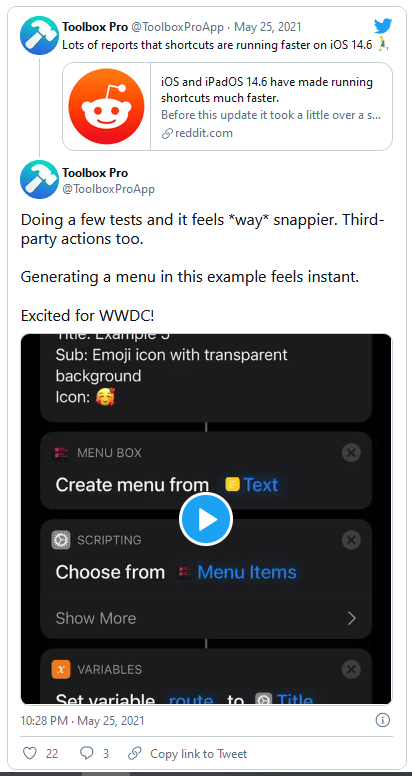
After rolling out beta releases for four months between the release of iOS 14.4 and iOS 14.5, Apple stepped on the gas with its latest update, launching iOS 14.6 to the general public just four weeks after iOS 14.5 arrived. Although iOS 14.6 is a significantly smaller update than iOS 14.5 — which added App Transparency Tracking, Unlock with Apple Watch, support for PS5 and Xbox Series X controllers, and more — there are still plenty of reasons to update right away.
Of course, there are obvious reasons, such as security updates and bug fixes that could keep your data safe from attackers, but we are also discovering new reasons to install iOS 14.6 as iPhone users get their hands on the software. As spotted by 9to5Mac, some users on Twitter and Reddit claim that actions in the Shortcuts app are running faster on the latest version of iOS.
“Before this update [iOS 14.6], it took a little over a second to run the “Night Mode” shortcut I made that contains only seven different simple Settings actions,” said Reddit user jasonefmonk on Tuesday. “I’ve noticed after the update that it now runs in approximately 1/4 second! It is very noticeable and a welcome fix for something that should be quite quick.”
Another user in the thread claimed that their 700 action shortcut used to take 30 seconds to run on iOS 14.5 and earlier, but now completes in just 13 seconds. Others saw more modest gains, but pretty much everyone who tested their shortcuts seemed to confirm the speed boost.
In order to further corroborate these claims, 9to5Mac did tests of its own and saw improvements on both iOS 14.6 and the first iOS 14.7 beta, which began rolling out to developers and public beta testers last week. That said, the site only began to notice significant gains on shortcuts that involved “dozens or hundreds of actions.” In one test, 9to5Mac ran a shortcut with 380 actions. On one iPhone running iOS 14.5.1, the shortcut completed in 8 seconds, but on another with iOS 14.6, it took 4 seconds.
Apple usually highlights all of the biggest changes in the release notes for its software updates, but for whatever reason, faster shortcuts didn’t make the cut for the iOS 14.6 release notes. Nevertheless, all evidence points to shortcuts being faster, so if you’re an avid shortcut user, update today.
Of course, you really shouldn’t need any additional reasons to update your iPhone, because Apple released a security notice about iOS 14.6 on Monday covering the dozens of security flaws addressed by the update. Spend just a minute or two scrolling through all of the dangerous exploits that Apple patched in iOS 14.6 and iPadOS 14.6, and I can all but guarantee you that you will be installing the update on every device you own as quickly as possible.
Jacob started covering video games and technology in college as a hobby, but it quickly became clear to him that this was what he wanted to do for a living. He currently resides in New York writing for BGR. His previously published work can be found on TechHive, VentureBeat and Game Rant.
This invite-only platform is an excellent way to learn from experts, find exceptional employees and become an established authority in your field.
Clubhouse is an audio-based platform drawing in celebrities, huge businesses, crypto experts and social-media stars. The platform is like a podcast — but on steroids.
Clubhouse users can engage with an array of audio-only activities on the app. Some events are scheduled and marketed ahead of time while others pop up randomly. Users can create rooms and clubs in this virtual space — some events are interactive, allowing multiple users to participate in a discussion, but others are more like presentations or panels. These conversations aren’t recorded, so users must be on the app at the right time to hear content.
The versatile platform is currently in a beta stage, meaning that it’s trying to control its audience while it finalizes bugs and works out exactly how it wants its platform to work. Because of this, Clubhouse is invite-only and not open to the general public. If you manage to score an invite from an existing user, now is the time to establish your business profile and gain traction.
Using Clubhouse for organic growth
Clubhouse has excellent potential for organic business growth, and the key is to get your business profile started now. While the platform has grown exponentially in the past few months, even with an invite-only feature, now is a great time to build your reach before the general population floods the app. Here are three ways you can use Clubhouse to develop your business today.
1. Networking
Clubhouse connects you with people in your industry. By using the app, you can hear industry perspectives and trends as they are happening. You don’t need to wait for the next national conference or industry report to come out — you can hear from the industry leaders themselves.
2. Becoming an industry authority
Putting out expert content in your industry is crucial to gain traction. Think of this aspect of Clubhouse like a well-tailored blog or article that your company puts out on a critical issue that your business is knowledgeable about. Clubhouse allows you to take it one step further by allowing you to put out real-time audio to answer questions and connect with other users. Becoming an industry authority by putting out quality audio content on topics relevant to your business allows your clients or buyers to see that you are an expert and their money is in good hands.
3. Virtual events
Covid-19 has created a profoundly digital world where meetings, conferences and events take place online. The need to have several hundred people in a conference hall is gone. Instead, you can have several thousand people in your Clubhouse room listen to whatever content you create. Sharing your insight, hosting speakers and creating content relevant to your industry will help your business take off.
Clubhouse is shaping the way we do business
The CEO and founder of Spark Business Strategies, Brad Caldwell, was able to gain clients and close sales because of Clubhouse. He joined the platform and answered another business owner’s question on branding during an audio event. Because he had established himself as an authority in the industry, the company messaged him and offered him a contract. Clubhouse has given him opportunities to do interviews with business leaders and close huge sales. Caldwell saw the potential of the platform and has used it to create organic growth for his company.
While you may not be able to post videos or show your face, like on TikTok or Instagram, Clubhouse works wonders for organic business growth. You can listen to investors talk about cryptocurrency, offer solutions on marketing or be interviewed by a leader in your field, and all of it unfolds in real time for maximum audience engagement — helping your business establish critical connections.
Facebook and Instagram have announced that “likes” will now be an opt-in feature, and we’re here for it.
Facebook and Instagram have announced an opt-in feature that would allow users to do away with the like counts on posts. And, for the sake of everyone’s mental health, we think it’s a good idea.
Since its inception more than a decade ago, social media has had a significant impact on the way we live our lives, and “likes” have been a big part of that transformation. Facebook, Twitter, Instagram, and TikTok all subscribe to this means of displaying support for posts, and to many “likes” feel like the entire point of social media in the first place.
Now though, with Facebook and Instagram giving users the option to do away with “likes” in their entirety, it might be time to consider the mental health ramifications of quantifying our every interaction online.
Facebook and Instagram Allow Users to Hide Likes
In a Facebook blog post, the company announced that they would be “giving people more control on Instagram and Facebook” by allowing users to hide the like counts on all posts within their feed, including their own.
To be fair, this news isn’t entirely surprising. Facebook and Instagram have been testing out this feature since early 2019, with plenty of users getting a taste of the like-less social media experience. Still, it was unclear how the social media giant would roll out its plan for its two platforms, and now we know: They aren’t forcing it on anyone.
“People want more flexibility, so we thought it would be important to give people the option.”
Even with years of testing and public attention, this movie is a significant departure from the social media we all grew up with that will likely see some serious backlash if it ever becomes mandatory. So are like counts really that bad?
Likes and Mental Health
Likes may feel like they are integral to the social media experience, because they’ve been around since the beginning. Still, the reality is that likes allow users and followers alike to quantify the perceived value of their everyday life in a way that simply does not promote mental health.
Heck, a 28-year-old Florida woman was just arrested for passing out flyers with her Instagram information on it while posing as a teenager at a local high school, so it’s safe to say we’ve reached an unhealthy level of obsession. In fact, many believe — even former Facebook employees — social media is as addictive as an actual drug.
“The short-term, dopamine-driven feedback loops that we have created are destroying how society works,” said Chamath Palihapitiya, former Vice President of User Growth at Facebook, during a talk at Standford University.
Mandatorily removing like counts would, admittedly, cause significant uproar. But social media companies, especially Facebook, need to start taking their role in the mental health crisis seriously, and a big move might just be the way to go.
But until then, at least let us help you get rid of like counts on your own account.
How to Hide Like Counts
If you want to rid yourself of the shackles that are social media likes, you’re in luck! The feature should be available for everyone now, and we can walk you through it. First, if you want to hide like counts on other users’ posts on Instagram, follow these instructions:
Settings –> Posts –> Hide Like Counts
Now, if you want to get rid of like counts on your own posts as well, we can help you with that too. Just follow the instructions below and you’ll be on your way to a healthier social media experience. Before posting something, here’s what to do:
New Post –> Advanced settings –> Hide Like and View Counts on This Post
Facebook is also giving users control over like counts, and if you want to make sure you don’t see them on the world’s most popular social media app, just follow these instructions:
Settings & Privacy –> Settings –> Reaction Counts
How will this affect business?
It’s no secret that social media is no longer just for personal use. For years, platforms like Facebook and Instagram have been used to supercharge the business world, providing free marketing tools and affordable advertising features that can seriously have an impact on your bottom line.
So how exactly will this news impact your business’ social media presence? For now, it shouldn’t have a big impact at all. Advertising is barely affected by whether or not you get likes as far as we know, and the fact that it’s an opt-in feature means that you can still keep like counts out there if you want to boast about your high numbers. Conversely, it could actually improve your businesses approach, as users won’t be hung up on whether or not you have “enough” likes to warrant their attention.
If it does become mandatory though, influencers and other advertisers that are paid “by the like” could face a significant problem, an industry that accounted for 3.7 billion posts on Instagram in 2018 alone.
Overall though, while it may seem controversial, removing like counts would likely serve as a pleasant departure from one of the more toxic aspects of social media, and as they say, a mentally healthy tide raises all ships.
Conor is the Senior Writer for Tech.co. For the last five years, he’s written about everything from Kickstarter campaigns and budding startups to tech titans and innovative technologies. His extensive background in stand-up comedy made him the perfect person to host tech-centric events like Startup Night at SXSW and the Timmy Awards for Tech in Motion. You can email Conor at [email protected].
Whether you are a professional or a new blogger, you might be surprised by how big changes have been introduced in 2021
Whether you are a professional or a new blogger, you might be surprised by how big changes have been introduced in 2021. If you are searching to refresh your mindset, or just want to get new tips in your business, this post is best for you. Before reading this post, it would better to read out the safety eyewear program, so that you can protect your eyes. In this post, there is a breakdown of major tips so that you can keep in mind while beginning the business blog or just want to enhance your blogging according to 2021 trends.
Enhance your content strategy:
Just digital landscape is growing and more and more people are restricted to their homes than before because of COVID-19. So, You have a chance to avail of large traffic at your disposal. And you just have to catch those social media audiences through your quality content. Therefore, this is the time to plan new strategies just not for your blog post, but to make rich imagery and even your videos should be more engaging and relevant to their main content.
Influence social media:
Just to stick with the blogging mean your site is hampering your victory. An excellent way to display your business blog in front of people is to build strong social media visibility and you should have an impressive fan following simultaneously.
By creating incredible content that is producing for your blog should make different ways on social media. Therefore, it’s time to get the benefits of a live stream and plenty of other tools so that you can keep your audience in full grasp with the social media platform of 2021.
Don’t forget your niche:
Well, the blog landscape is dense, and therefore, there is strict competition. So, you should stick with your specific niche and try to make it creative and unique for your audience. For a business blogger, there are several categories you need to polish in one. But first of all, you need to understand, what is your area of interest and expertise? In which are you are qualified that you can bring more creativity in that niche?
Just like that, there are several questions that you must ask yourself and they will help you to become clear in your niche. Besides, these are the important questions that you must relate to day-to-day things. Keep your content bespoke to your niche. For example, if your blog is related to marketing, but good focus on it and find it new way to enhance this field. If you are well aware of your niche, you are better able to hit your targeted audience and then serve your followers in a better way.
Stick with the latest events:
Covid-19 tension across the world is bringing forever change in businesses. So, you need to make plenty of blogs that how this pandemic is affecting business with the blog post that should have a solution as well. Keep remember, this is a great time to hold your audience with the latest trend and unique strategies.
For example, online businesses have exploded all over the side because of COVID-19. Therefore, this perfect time to help your people and tell them why eCommerce is essential and how can they come out of their business from its effects.
One important thing that you need to consider is to create new strategies. What should be your next strategy, you must watch out latest events closely and creative stories that emerge on social media. What kind of content audience is like most, follow it and then implement the same techniques in your blog posts as well? Through this way, you will first-mover benefits which help to bring a significant audience for your blog posts.
Make sure bout up to date SEO:
With the start of a new year for your business blog, this is also time to monitor the setting of your website in plenty of areas with SEO as well. If your keyword stuffing is shifting, it is time to make big changes in them. Make sure your entire content is optimized with meta titles, meta tags, and headers as well. Avoid your blog with over-optimization because it can hurt your ranking despite helping you.
Watch out for analytics:
Are you looking for whether you are going in the right way or not? Or what kind of new things you need to highlight in your blog posts? While for business blogging, check out your analytics is significant. With the help of insight and data, you can bring big changes to your content, websites, and even marketing techniques. All these things will help you to engage your audience in a better way.
You may require to check the demographic of your users and then counts their visits, and even bounce rate as well. But if you want to enhance your setup one step ahead, you need to analyse the layout of your website as well.
Use different tools like Crazy Egg where you can see how can the attention of visitors on. Besides, which buttons they are clicking more and how far they are scrolling down the different pages. Make sure, you also joined Eyeweb safety, so that you can shield your peepers from hazardous things effectively.
The latest tools unveiled by the social media network focus on connection, communication and converting potential leads into customers.
Why it matters:
Facebook founder Mark Zuckerberg says the site aims to give entrepreneurs and small businesses the same tools that historically only the big companies can access.
The social network is helping businesses turn leads into sales by identifying shoppers poised to spend via analytics.
Facebook is also testing a new feature in its News Feed that will allow users to tap on topics such as beauty, fitness or restaurants, and view content from businesses in those categories.
Facebook has added new tools to make it easier for small businesses to get more attention online, schedule and edit their posts across all Facebook platforms and connect with more customers.
The new features are part of Facebook’s ongoing campaign to become small businesses’ best friend on social media.
Event Recap: Marketing and Protecting Your Brand
Watch the replay from our latest Roadmap for Rebuilding event, where the panel discusses marketing your brand to the public and protecting it for the long term.
Facebook has a strong incentive to keep small businesses happy. Small businesses generate a significant, and growing, portion of its advertising revenue.
Time saved on posting content has given me so much more time to focus on other projects. I estimate saving about 10 hours a week after switching to Facebook Business Suite.
Nita Cooper, owner and founder, Star N Skyes Travel
Wooing the loyalty of small businesses
Facebook has benefited during the pandemic as consumers began spending more time online and on social media, and as advertisers shifted their spending to catch their attention. That trend has continued into 2021, with Facebook reporting that ad revenue rose 46% during the first quarter of this year to $25.4 billion, with the average price per ad and the number of ads increasing.
“Our goal here is to give every individual entrepreneur and small business access to the same kinds of tools that historically only the big companies have had access to,” Facebook founder Mark Zuckerberg said during earnings call in January. “We’ve always cared about this, but the pandemic has made it more urgent,” Zuckerberg said.
More than 200 million businesses use the company’s Facebook, Instagram, Facebook Messenger and WhatsApp platforms each month.
The new tools build on a series of initiatives begun a year ago. In May 2020, Facebook launched Facebook Shops, which allows businesses to sell directly from their Facebook and Instagram pages. In September, it released Facebook Business Suite, which helps businesses coordinate their sales and customer interactions simultaneously across Facebook, Instagram and its WhatsApp messaging platform. In November, it purchased customer service platform Kustomer to bolster its plans to enable businesses to sell via message on WhatsApp and Facebook Messenger.
The latest tools Facebook is adding focus on three functions: discovery, convenience and conversion.
Discovery: New feature helps consumers find businesses they might like
Facebook is testing a new experience in its News Feed that will allow users, while viewing posts or ads, to tap on topics such as beauty, fitness or restaurants and view content from other businesses in those categories.
The feature, which is being tested with a small number of U.S. businesses currently, is intended to help users discover businesses they are interested in, while giving the businesses a new way to catch the attention of potential customers.
Convenience: A single dashboard of professional business tools
Facebook has made it easier for business owners to comment, post and engage with users, including a dedicated news feed for businesses, and a professional dashboard that aggregates all of the tools in one place.
Businesses also will be able to schedule posts and Facebook stories in advance, save posts as drafts and edit schedule posts, making it easier to prepare a steady flow of content.
Conversion: Turning leads into sales by identifying shoppers poised to spend
Facebook is giving businesses new ways to identify and connect with the most interested potential customers through features like the conversion leads optimization program, which identifies the leads, or potential customers, most likely to become spending customers.
Businesses can also add a “Call Now” button to their ads to connect with customers in real time, or contact them through Facebook Messenger.
Facebook shared comments from two small business owners who said they’ve benefited from the enhanced features.
“Time saved on posting content has given me so much more time to focus on other projects,” said Nita Cooper, owner and founder of Star N Skyes Travel in Fayetteville, Georgia. “I estimate saving about 10 hours a week after switching to Facebook Business Suite.”
Niki Libarios, co-owner of Hawaiian Doggie Bakery in Honolulu, Hawaii, said “we’re able to do everything in one place, which saves us so much time.”
“We love being able to see analytics for both platforms [Facebook and Instagram] in one place, and the comments as well. I’m more confident that we’re not missing any interactions or chances to connect with our customers,” Libarios said.
CO— aims to bring you inspiration from leading respected experts. However, before making any business decision, you should consult a professional who can advise you based on your individual situation.
S3 Advertising’s media buyer, Grace Johnson, counts down the top 10 benefits of programmatic advertising and explains why you should make it part of your advertising media mix.
The world of programmatic advertising is often perceived as uber-complicated, full of jargon, and home to more abbreviations than you could shake a stick at. Although the latter two might be true, understanding how programmatic advertising works doesn’t need to be complicated.
In a nutshell, programmatic advertising is the automated buying of online ad space in real-time, using data to reach the right person at the right time. It takes away the need for laborious manual processes, leaving humans more time to optimize their programmatic campaigns and yield stronger results for advertisers. If you’re curious about the benefits of programmatic, and why you should use programmatic advertising in your media mix, read on.
1. It can work for the small and mid-size brands as well as big-budget brands
First things first, it would be wrong to go into all the weird and wonderful things brands can do with programmatic advertising without first debunking the myth that you need endless bags of cash to get started. The beauty of real-time, audience-focused programmatic buying means we end up with far less wastage and far more bang for your buck. So if you don’t have tons of budget to play with, or you want programmatic to prove itself before investing more, rest assured there will be an approach for you.
2. Programmatic reach is huge
“I don’t want to reach as much of my target audience as possible,” said no one ever. We’re all agreed that the most efficient forms of advertising reach their desired audience at scale. Programmatic advertising allows us to do just that. With access to ad space across millions of sites, programmatic opens up the opportunity to find and engage your audience, wherever they are (almost).
3. You are in control
Programmatic advertising has many a perk, but one of the most invaluable benefits is the freedom it gives brands to press pause and make changes to campaigns in mid-flight. From a performance perspective, it allows optimizations to be made to upweight the best performing audiences, sites, time of day and so on, helping to continuously boost results. Plus, from an ‘oh no, our website is down’ point of view, it allows brands to get out of jail free and stop paying to drive their audience to a dead page in an instant. What a dream.
4. You can show off your brand using funky formats
Long gone are the days where click-focused banner ads were the only formats associated with programmatic. These days, brands can engage their audience with highly interactive digital creative units, drive them to store using in-built maps, or simply wow them with a beautifully-designed web takeover format, which – yes, you guessed it – can be bought and served on an individual user basis in real-time.
5. The targeting possibilities are pretty much endless
Browsing for your SO’s birthday present only to be stalked forever by an ad of that very product? We’ve all been there. As much as retargeting can play a key part of a brand’s programmatic strategy, there are many other targeting strategies brands can employ to find and engage key audiences. These can be a bit sexy, such as overlaying previous purchase data via Mastercard, real time and historic geo-location data, email data, Amazon purchase data, or household data, or they can be slightly-less-sexy-but-still-effective, with strategies like contextual targeting, where the ad appears alongside relevant content.
6. You can sync up your programmatic activity with DOOH (digital out-of-home billboards)
Picture this: you’re walking down the street, it’s nearly lunchtime. You walk past a billboard advertising a lovely looking burger (sorry vegans) and it catches your eye. You continue walking, getting out your phone to check the weather. You open the app and there’s that burger again. Giving in to temptation, you make your way to those famous Golden Arches. You have just experienced a DOOH/programmatic sync that captures audiences as they come into proximity with your OOH advertising and retargets them on their phone. A simple, yet super effective way to increase frequency and maximize the impact of messaging on your audience.
7. Programmatic campaigns can be weather-triggered
Not only can you reach the right person in the right environment at the right time, you can also reach them in the right weather conditions. Weather signals are a powerful way of contextualizing your brand’s messaging and are an instant win among your audience. These triggers can be based on insight about your brand and can be as simple as ‘sales increase when it rains’. Setting these parameters in the programmatic buying platform means that budget can automatically be upweighted when desired weather conditions occur, or the messaging can change to become more relevant.
8. You know every single site your brand appears on
We no longer live in a world where programmatic campaigns are set up and delivered with no insight into where our ads ended up. Oh no. Goodbye black box, hello transparency. When running either across the open-exchange, or a pre-agreed list of sites, brand safety and transparency are paramount. With strict measures in place to exclude sites and content deemed unsafe, brands can be confident that they’re reaching their intended audience in perfectly acceptable, brand-safe environments.
Despite the rumours, the reason why we use programmatic advertising isn’t just to sell, sell, sell. Granted, it does this well, but more and more brands are increasingly turning to programmatic to help improve awareness and consideration too. Through a clever mix of the right targeting and, crucially, a well-executed creative, programmatic advertising has proven it is nothing to be sniffed at when it comes to increasing brand metrics.
10. Because you need to be where your competitors are
If the above nine reasons weren’t enough to persuade you, then let this be it. The chances are, your competitors are already talking to your potential customers through their own programmatic campaigns. This means they’re benefitting from the extra edge this type of digital buying creates. In an increasingly competitive world online, now more than ever it’s important for your brand to be active and compete in the programmatic space.
Feeling inspired and ready to explore how programmatic advertising could work for you? Good. Our team of experts at S3 Advertising agency will work with you to plan and execute a programmatic campaign that will speak to your audience and deliver against your objectives. Whether you want to raise awareness of a product or service, drive traffic to your site, drive people to your store or something else –get in touch with our team and we’ll do the rest.
The user experience, better known as UX, is one of the most important features in the navigation of a website.
The user experience , better known as UX ,It is one of the most important features in the navigation of a website. It should be intuitive and easy to understand when users enter a page. Therefore, we must always ensure that the crawlfrom search engines to be efficient. But what is crawl and how does it work? Here I tell you a little more.
The crawl is nothing more than the movement of digital spiders that browse the web to search for information. We owe this conception to the word web ( mesh or cobweb, in Spanish). Your website is the information that these arachnids find according to the search interests of each person. And for these spiders to find your site, we must trace an easy and simple path for the crawl . But how do you do it?
Basically there are three points that you must take into account to create a perfect structure for your site.
Here I present them:
The importance of structure on your website
User experience . If people who enter your website easily find what they are looking for and are interested in, you are doing a good job. When this happens, the bounce rate on your page drops and the lower the better. When the opposite happens, your bounce is high and as users enter your website, they are shot. There can be several reasons: bad structure of the web, it is not easy to navigate and much less intuitive.
Web structure . A good site should always ensure that search engines do their job efficiently, that is, they index and navigate naturally.
SERP (Search Engine Results Page) . A correct web structure will help you receive SERP links. This will get the user to the point of interest from the search engine. We must make the engine show the main links of your website when people ask about your business. For example:
Image: Spicy Minds
The characteristics of a correct web structure
Navigation structure
The first thing is to check that it complies with a hierarchy. If you only have one or more sections on your page, make sure there is a hierarchy so that the sections that make up your site are organized.
Image: Spicy Minds
Surface structure
It ensures that users reach the desired section with the fewest possible clicks. If you do this, search engines will prefer your page because of its surface structure.
Internal links
Internal links are a great help when you make them visible. It is important that you make them known to users. For example, through a new blog post, a new product or a main category, each when opening your web page. According to Google developers,“ we know some pages because we have already visited them at some point; others, on the other hand, we find them by following links to known pages that lead us to them. ”
If Google or another search engine has your page indexed and you help it by placing internal links in an ideal way, you are making the job easier, ensuring for your site a reward of many visits.
Now that you know what a correct web structure should look like, what do you need to do before publishing your page on the internet?
We go in parts.
Structural map design. You should design the structural map of your website with both users as well as search engines in mind, so that they are visible and reachable. Remember that if you don’t, the only thing you’ll be building is a web page with high bounce and little chance of being found.
Make sure to go over this list
Site map . Try to update it every time you add a new section to your page. This task can be done in a content management system (CMS) like WordPress. You can program it to be done with the help of a plugin.
Links ‘nofollow’ . Make sure that no internal link works as a bridge from one section to another, much less that it is classified as ‘nofollow’; doing this would be like turning off the tap that sends water to your house.
Duplicate content . Avoid that the names of the sections like us.html , us.php or titles and subtitles, as well as meta descriptions or sections, have the same or similar name, this confuses search engines. If unwanted content gets indexed, you will bring serious problems to your website.
Alternative text on images (ALT attribute). Images are information and we can add keywords to them. If we fill in its ALT attribute, you help search engines identify your image and index it. Remember to fill the ALT attribute with keywords sparingly.
Orphaned pages. If you already have a web page, but you updated a new one, it may be that the names of your new sections are not named the same as the previous ones. Then the old sections become orphan pages. The problem with this is that the search engines index it and bring traffic to them, but with nothing of value. This is a real problem that you will see reflected in your measurement statistics which, as a consequence, will drop dramatically. To avoid this make sure to add 301 redirects.
In the US, an estimated 40% of adults block online ads on PCs or phones.
While Facebook and Apple tussle over the harms and benefits of online advertising, more and more of us are sidestepping the issue by blocking ads completely. Use of ad blocking software like web browsers is surging, especially on smartphones, a study published Monday concludes.
The number of people using ad blockers has remained mostly level on personal computers, with 257 million people using them monthly by the end of 2020. But it’s on mobile devices where ad blocking is really increasing, doubling over the last five years, from 282 million to 586 million at the end of 2020, according to the 2021 PageFair Adblock Report from ad tech firm Blockthrough. That’s a 10% increase over the 2020 PageFair report on ad blocking.
Blockthrough makes money by helping advertisers try to cope with ad blocking. It offers a system to try to persuade website users to opt into delivery of the less intrusive system called Acceptable Ads. Though the ads might not be as distracting, they still face criticism that they they enable tracking, the central issue in the dispute between Apple and Facebook.
Advertising has funded countless online sites besides the dominant beneficiaries, Facebook and Google. Indeed, it propelled much of the foundation of internet businesses. But Apple’s privacy-first stance and the increasing use of ad blockers show major pushback to the approach.
Use of ad blocking software is increasing on mobile devices, a study by Blockthrough found. Blockthrough
Blockthrough also funded a survey of 5,423 Americans to gauge their opinions on online ads. One conclusion: About 40% of US adults use an ad blocker, more than twice what publishers often report based on ad-blocking detection software, Blockthrough said.
The top reason for blocking ads was to avoid interruption and annoyance, with 81% of survey respondents selecting that as a motivation. The second-place reason was protection against malware, at 62%. Third place, at 58%, was privacy.
To estimate ad blocker use globally, Blockthrough based its PC figures on downloads of the ad-blocking address list from Eyeo, maker of the Adblock Plus browser plugin. Its mobile ad blocking use was chiefly from download figures and app developer disclosures about usage. The top ad-blocking browser remains UC Browser, still with an estimated 310 million users despite bans in India and more recently China.
Feature Image Credit: Ad blocking is surging on smartphones with the use of browsers like UC Browser and Brave. Eyeo; Illustration by Stephen Shankland/CNET