Author

editor

Browsing

By Jeremy Bowman

Some think the social media stock is untouchable, but investors may want to tune out the noise.

Facebook (NASDAQ:FB) has gotten off to a rough start in 2021.

The social media stock is down 7% through Jan. 15 compared to a modest gain for the S&P 500, and the company is facing a slew of new challenges. WhatsApp users are reportedly fleeing the app for alternatives like Signal and Telegram after Facebook announced a new data-sharing policy, and the tech giant is feuding with fellow FAANG stock Apple over changes in iOS 14 that require Facebook to get permission from users to allow certain data-tracking tools.

Still, if you’re thinking about selling Facebook right now, that move might be short-sighted. Below are three popular but misguided reasons to sell the stock.

1. The Trump ban

Investors didn’t respond well to Facebook and Twitter’s decision to boot the president off of their platforms. Twitter said it would permanently ban Trump, while Facebook said he would be suspended “indefinitely.” After the decision came out, Facebook stock fell 4%, while Twitter gave up 6.4%.

Still, the risk to Facebook seems minimal. Trump only had 33 million followers on the platform, a small fraction of Facebook’s total active user base of over 2 billion, and much of the reaction seemed to be a knee-jerk movement to a big headline, especially as conservatives decried the move. However, that headline risk seems to already be fading, and with Trump on his way out as president, his influence on Facebook will only be diminished.

Alternatively, the decision also pleased some Facebook users as CEO Mark Zuckerberg has been criticized repeatedly for not doing more to police dangerous content on the platform and for being too accommodating to the president.

Over the long term, the Trump ban is mostly noise, and his presence isn’t why Facebook users spend time on the platform.

2. The regulatory risk

Perhaps the biggest weight on Facebook stock these days is the potential impact of ongoing antitrust investigations. In October, the House antitrust subcommittee accused Facebook, as well as AlphabetAmazon, and Apple, of exercising monopolistic power in their respective sectors, and the CEOs of all four companies testified before Congress. Meanwhile, the Federal Trade Commission also sued Facebook on antitrust grounds in December.

But there’s a reason all four of these stocks have done so well over the last decade. From an investor perspective, monopolies are great as they allow for high profit margins and block out competition. The risk in them is that regulators will catch on, but Facebook has already faced plenty of fines and restrictions such as $5 billion in fines from the FTC in 2019, and the GDPR protocol in Europe designed to enhance user privacy protections. Neither one of those had a significant impact on the stock.

While antitrust investigations may gain strength with Democrats now in control of the federal government, even a break-up of Facebook would likely do little to harm investors as some analysts believe Instagram may now be worth $200 billion as a standalone company.

3. Facebook is “bad for democracy”

This issue is the most controversial one facing the company, and if you have ethical reasons for not owning Facebook, that’s a fine reason to take a pass on the tech stock as investors should feel comfortable supporting the businesses they’re invested in.

At this point, it’s almost become rote to say that Facebook is bad for democracy, at least in some circles. It’s true that Facebook’s platform facilitated “Russian hacking” of the 2016 election, or advertising by Russians to manipulate voters, and some of the planning for the Jan. 6 insurrection of the Capitol took place on Facebook as well, among other platforms. But such concerns have done relatively little to dissuade Facebook users or advertisers, though they have been problematic for the company’s brand image.

In the wake of the George Floyd protests, activist groups organized the #StopHateforProfit boycott, calling on major corporations to stop advertising for the month of July. Many of the world’s biggest brands like DisneyCoca-Cola, and Unilever embraced the call, and some even said they would extend their boycotts past July. However, Facebook still put up solid growth in the third quarter, even with that boycott and pandemic-related headwinds in advertising. Revenue in the quarter rose 22% to $21.2 billion, and earnings per share jumped 28% to $2.71. Both were company records.

While Facebook should do more to protect its platform from bad actors, that performance shows the growth of the business won’t be easily obstructed as the company’s platform and reach is unique for both users and advertisers.

Many of Facebook’s risks already seem fully priced in. The stock trades at a discount to the S&P 500 and should enjoy tailwinds from the economic reopening that’s expected later this year, and as it laps the impact of last year’s lockdowns. While investors should keep an eye on the risks the company is facing, on balance there are more reasons to buy Facebook stock today than to sell.

Should you invest $1,000 in Facebook, Inc. right now?

Before you consider Facebook, Inc., you’ll want to hear this.

Investing legends and Motley Fool Co-founders David and Tom Gardner just revealed what they believe are the 10 best stocks for investors to buy right now… and Facebook, Inc. wasn’t one of them.

The online investing service they’ve run for nearly two decades, Motley Fool Stock Advisor, has beaten the stock market by over 4X.* And right now, they think there are 10 stocks that are better buys.

See the 10 stocks

*Stock Advisor returns as of November 20, 2020

John Mackey, CEO of Whole Foods Market, an Amazon subsidiary, is a member of The Motley Fool’s board of directors. Suzanne Frey, an executive at Alphabet, is a member of The Motley Fool’s board of directors. Randi Zuckerberg, a former director of market development and spokeswoman for Facebook and sister to its CEO, Mark Zuckerberg, is a member of The Motley Fool’s board of directors. Jeremy Bowman owns shares of Amazon, Facebook, and Walt Disney. The Motley Fool owns shares of and recommends Alphabet (A shares), Alphabet (C shares), Amazon, Apple, Facebook, Twitter, and Walt Disney and recommends the following options: long January 2022 $1920 calls on Amazon and short January 2022 $1940 calls on Amazon. The Motley Fool has a disclosure policy.
Feature Image Credit: Facebook.

By Jeremy Bowman

Sourced from The Motley Fool

Sourced from Forbes

With everyone social distancing and spending more time at home due to the Covid-19 pandemic, marketing through a variety of channels is vital to a company’s success. A robust omnichannel marketing plan ensures that the business can connect and engage with consumers at multiple touch points.

However, because of its distributed nature, it’s easy for an underperforming channel to slip through the cracks and go unnoticed. To help manage this risk, marketing teams need to be able to identify weak points in their omnichannel marketing strategies so that they can make needed adjustments and not waste time or money on ineffective channels.

1. ‘Are we really where we need to be?’

So many people jump onto a platform because it’s where they were “told” to go, or because they think it will be the “next big trend.” But what if your audience isn’t on that platform, or is no longer engaging on that channel, but has gone somewhere else? Then, you need to revaluate your efforts. Ask yourself the basics: “Where is my audience? And what do they need?” – Christina Hager, Ovations Digital

2. ‘Are we tracking the right customer data?’

Are you tracking the right data to adapt your marketing strategy to evolving customer preferences? The pandemic has emphasized the need for flexibility, and marketers cannot improve what they are not tracking. A robust omnichannel strategy requires communicators to tailor their message for each customer and every touch point. This can only be done by tracking how customers engage and respond. – Marija Zivanovic-Smith, NCR Corporation

3. ‘Do our channels create a unified message?’

One question marketers need to ask themselves is, “Do my channels work together to create a unified message, voice and brand?” When omnichannel marketing is done correctly, the customer can be shopping online from a desktop, on a mobile device, via phone or in a brick-and-mortar store, and the experience will be seamless. Once you’ve achieved a cohesive experience, you’ll know you’ve done it right. – Christian Anderson, Lost Boy Entertainment Company

4. ‘How do customers make a purchase?’

This is a very important question for retailers to answer so that they can adapt omnichannel marketing strategies and customize the shopping experience in ways to maximize revenue generation and profit. The pandemic accelerated digital adoption. Retailers must reprioritize digital, but fight the urge to go all-in on it at the expense of profitable customers who require consultation. – Anand Rao, AutoNation


5. ‘Do we offer seamless transitions across channels?’

One question marketers should ask is, “Can customers seamlessly transition their conversations with our brand across channels?” Today’s consumers are on the move. They may begin a conversation with you from their laptop and need to switch over to SMS text or a phone call midway through. Forcing customers to start over will cause frustration; it’s imperative that your company empowers them to transition across channels without disruption. – James Freeze, Interactions LLC

6. ‘Are we investing in the right cloud technology?’

Retail marketing is all about supporting customers on new “journeys.” This could include letting them create a cart on a store’s app that they can then use to check out at a self-checkout in the store; or it can be as simple as using contactless payments in more stores. Retailers who want to get ahead need to be selective and invest in the right cloud marketing tech now. – Lynn Kier, Diebold Nixdorf

7. ‘Are all of our campaigns connected?’

Marketing team leaders should ask themselves, “Are all of our campaigns connected and informing the success of each other?” Too many omnichannel efforts are all working independently across the various channels and not creating enough benefit for each other. – Jonathan Sasse, Metova

8. ‘Are we automating whenever possible?’

There aren’t enough hours in the day to manually harmonize content across every marketing channel. So, use marketing integration software to automate tedious workflows and manual tasks. Then, do a quarterly review of every channel’s performance. If one channel is lagging behind others on your key performance indicators, it’s time to reintroduce a focus group and see where the pain points are. – Amine Rahal, Regal Assets

9. ‘Can all touch points access updated customer information?’

The question to ask is whether all customer touch points have access to the most updated customer information so that they can deliver relevant messages to each customer. To deliver a seamless omnichannel strategy, data silos need to be removed by centralizing customer data, unifying it and making the (constantly updated) information available to each channel for a better customer journey. – Tom Treanor, Treasure Data

10. ‘Are our digital channels equipped to manage inbound?’

Customer care must be a priority. Marketing and communication professionals should ask themselves if their digital channels are equipped to manage and respond to inbound customer service requests. The digital transformation that took place this year is here to stay, and brands must prioritize their customer care efforts so that they can continue providing exceptional experiences on an ongoing basis. – Andrew Caravella, Sprout Social

Sourced from Forbes

Communications, PR, public affairs & media relations executives from Forbes Communications Council share first-hand insights.

Sourced from DIGIDAY

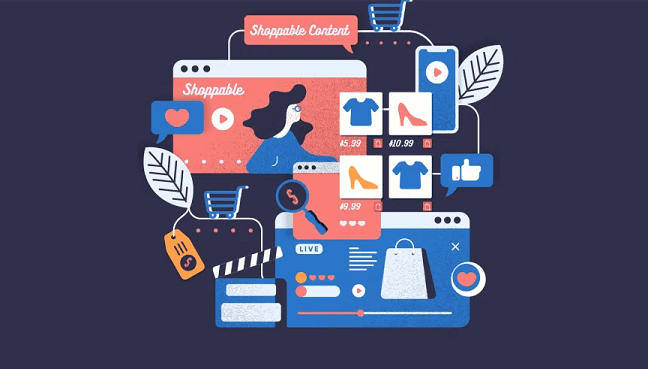
With the physical and social aspects of shopping stripped away due to various lockdown restrictions around the globe, shoppable social media is poised to fill the void.

In a recent example, Instagram launched its Reels and Shop tab for users to connect with brands and creators — and to discover products. The social media platform will further merge the two functions by allowing product tagging on Reels so that people can buy the products shown in the video.

“Shoppable content is not new, but there’s no question it’s gained more traction over the last year as consumers move online in their masses amid ongoing coronavirus restrictions,” says Olly Johnson, managing director of commerce at Jungle Creations. “Live shoppable video has been around since the days of TV channels like QVC.”

However, he adds, outlets such as Amazon Live have allowed shoppable video to enter the “big screen” of online, and it’s now “a proven concept.”

As Johnson puts it: “Trendy buzzword or not, headless commerce is truly enabling publishers and media brands to monetize their content. Adding ‘buy buttons’ within the content itself makes transactions seamless for consumers.”

Livestream shopping is taking off

Instagram rival TikTok also launched shoppable video ads and is testing a shoppable livestream experience.

Emma Chiu, global director at Wunderman Thompson Intelligence, says: “Livestream commerce is really taking off, as shoppers’ appetite for in-person and spontaneous live experiences, usually found in brick-and-mortar stores, are being adopted by digital platforms.” She says: “Offering live and interactive content to e-commerce is becoming the new way to browse ‘in-store’ in real time.”

It’s a trend that’s booming in China, where social e-commerce is ahead of the Western world. “Shoppable media is doing very well in China, where they do major content drops with influencers that drive massive sales,” says Jidé Maduako, CEO of influencer marketing agency Yoke Network.

Maduako gives the example of China’s top livestreamer, Viya, who sold $30 million worth of New Zealand products in hours. He says: “It’s still in its infancy in the West, but it will boom over the next few years: TikTok just entered the market in December by doing a deal with Walmart to showcase a fashion livestream using creators who have a big audience on the platform.”

Consumers are comfortable shopping via social media 

The appetite to buy via shoppable media is growing. New research from Tipser — surveying 332 consumers in the U.S., U.K. and Germany — shows that when asked if they would be open to purchasing products from Instagram if offered direct checkout, 58 percent said yes. And 35 percent said the idea of shopping via livestream is an appealing prospect.

Further to this, 74 percent said they look to social media for inspiration. Shoppable media is another way brands can provide consumers with an opportunity to purchase products at the point of inspiration. With stores either operating under restricted measures or closed, people will be searching for alternative shopping experiences, ones that include the social aspect of browsing or learning about products before they buy.

The content in commerce matters 

Social commerce has been growing for many years, but as TikTok and Instragam promote a rising cast of creators, it shows a move towards content that’s fit for purpose.

“Everything is about content now, and that is transferring to shoppable content,” says Maduako, at Yoke Network. He says there is a platform war happening where the likes of Disney and Netflix and Instagram and YouTube are “fighting for creators and their audiences” and using them to promote product drops “is really taking off.”

He says: “Any new e-commerce brand is going to launch with shoppable content, and by doing it with creators, you build engagement with your brand and your products because you’re seeing them in the right context.”

The future is shoppable, according to Johnson, at Jungle Creations. He says: “I’ve no doubt shopping directly through social platforms is set to take off exponentially in 2021, with increased engagement and personality cutting through via video from brands and influencers alike.”

As the pandemic continues, brands and media platforms will continue to experiment with ways of reaching, inspiring and converting consumers in the path to purchase. Shortening that path via shoppable video looks set to be the next evolution in e-commerce.

Sourced from DIGIDAY

The Special Covid-19 Edition of The CMO Survey found that social media has become critical to marketing during the pandemic. The survey reported that social media spending has increased from 13.3% of marketing budgets in February 2020 to 23.2% in June 2020 — a 74% lift. Meanwhile, spending on traditional advertising is projected to decline, as CMOs estimate a 5.3% reduction in traditional advertising channels in the next 12 months.

Companies are seeing a historic return on their social media investments, according to the survey. The self-reported contribution of social media to overall company performance has risen sharply, up 24% since February 2020. This is an important finding because, despite steadily rising investments social media, the impact of social media has remained relatively flat since 2016.

CMOs anticipate that social media investments will remain high at 23.4% of marketing budgets into 2021. Along with this, CMOs are increasingly investing in online customer experiences: 60.8% of CMOs indicated they have “shifted resources to building customer-facing digital interfaces” and 56.2% planning to “transform their go-to-market business models to focus on digital opportunities.” It is clear that social media will continue to play an important role in driving consumers toward digital offerings.

How can marketing leaders build upon this growing trend and plan their social media marketing strategies for a post-pandemic future that is equally bright? Here are 10 key recommendations:

1. Run formal experiments. The Special Edition of the CMO Survey found a high level of marketing improvisation during the pandemic, with CMOs reporting an average 5.6 out of 7 (where 1 represents “not at all” and 7 represents “a great deal”). Despite this, survey results also document a decrease in formal experimentation on social platforms, with only 31% of marketers reporting that they conducted experiments to understand the impact of their marketing actions during the pandemic, and only 29% of marketers reporting that they invested resources into building research and experimentation capabilities.

These statistics indicate that marketers are implementing new, improvised strategies frequently, but without fully understanding their effects. They need to correct this trend in 2021: Social media platforms provide excellent opportunities to test new brand messaging, advertisements, and offerings — and to receive direct measurable feedback from target consumers. Marketers must use these tools to learn.

2. Play with new channels and features on existing platforms. Social media strategists should always be aware of what’s new on existing platforms. For example, Instagram Reels, which launched this past summer, provides a new channel to deliver the short-form video style that has swept the internet. Facebook’s gift cards or TikTok For Business, which were also released earlier this year, are similar examples. These new tools provide an opportunity to build a unique connection with consumers, who will associate their discovery of these features with the brands that first use them. A strong social media marketing strategy will include a process for identifying new features and channels and quickly creating content for them.

3. Integrate social media strategy into your overall marketing strategy. The August 2019 CMO Survey reported that social media is not well integrated with marketing strategies (scoring 4.2 on 7-point scale where 1 represents “not at all integrated” and 7 represents “very integrated”). Although a slight improvement from past surveys, this number is still too low to produce adequate returns on social media investments — and far too low for an expenditure that comprises nearly a quarter of marketing budgets.

As social media takes center stage in a post-pandemic marketing world, it needs to integrate more seamlessly with the firm’s broader marketing strategy. Because social media is the current bright light, CMOs should ensure their social media strategy directly aligns with overall marketing strategy to maximize the benefits produced by these synergies.

4. Invest in top social media talent. Social media managers are now being asked to manage a costly and highly effective piece of the marketing budget and to take on a role that often requires wearing multiple hats (copywriter, graphic designer, customer service rep, etc.). So marketing leaders need to think carefully about who should fill this key position. While the best social media managers can have a positive impact, an inexperienced or unqualified one could be detrimental to a company’s brand. The national average salary for social media managers is $50,500, according to Glassdoor, which seriously lags the average compensation for the positions they often serve in: copywriters average $58,500, marketing managers average $65,500, and ad managers average $71,000. To get top talent in this area, compensation must meet the increasing value of the role.

5. Ensure agile social media management. 2020 has shown just how quickly the social media landscape can change. Recognizing this, CMOs ranked the “ability to pivot as new priorities emerge” as the top skill they look for in marketing talent. So, when it comes to social media management, CMOs must ensure that talent, processes, and agency partners are prepared to respond to and capitalize on these sudden changes. Organizations willing to re-evaluate their social media strategies in a rapidly changing landscape will minimize risk and maximize the opportunity to connect with consumers. (To that end, a recent Journal of Marketing article highlights how real-time shifts in social media activities generate more virality online.)

6. Harness the power of influencers and creators. The allocation of marketing budgets towards influencers is on the rise, up to 7.5% from 6.5% a year ago and expected to rise to 12.7% in the next three years. As online traffic continues to increase, it will be critical for brands to identify the right influencers to attract target customers and identify growth segments. It will also be important for social media managers to invest in influencer training and relationship building; Influencers are a great way to build trust and authentic relationships with followers, who may end up being paying customers. Scheduling individual and group touch points with influencers to discuss product updates and gain feedback on trends they are observing will go a long way toward fostering a mutually beneficial partnership.

7. Carefully consider the right platform(s) for your brand. CMOs have consistently ranked brand building as their top use for social media, so it is important to consider how the platform you choose impacts consumers’ perception of your brand. In the special edition survey, consumers indicated that a “trusting relationship” is most important to them in a brand (beating out low price, product quality, and even innovation). So always consider how the policies of social media platforms (as they relate to privacy and hate speech, in particular) may undermine consumers’ trust.

8. Reduce friction between social media and e-commerce platforms. To make online shopping easy, social media managers must ensure a smooth process of funneling consumers from social media to their e-commerce site. A bad user experience in this area can lead to lost sales; a good one can boost them. So as new digital tools are developed, social media teams must insist upon frequent collaboration with development teams to ensure a smooth customer journey from mobile-app and social sites to your company’s e-commerce site.

9. Adapt your creative content to the times. It is important for brands to keep creative content relevant to the current Covid-19 reality, whatever that may be. For example, a social media post that portrays a brand at a large, indoor gathering of people could be ignored by consumers who perceive it as outdated — or worse, insensitive. On the other end of the spectrum, many consumers are fatigued from content that centers around the virus. To resonate with followers, social media content must a balance. A good example of this is the Stella Artois Staycation Swap, a contest that matches would-be travelers who had planned trips to each other’s cities that were cancelled due to Covid-19 to swap itineraries on TripAdvisor for an all-expenses-paid staycation instead.

10. Take care to select and onboard the right agency partners. Results from the February 2020 CMO Survey indicate that 24.1% of companies’ social media activities are now performed by outside agencies — an increase from 17.4% in 2014. As agency partners become an increasingly important part of an increasingly important part of the business, selecting, training, and building a strong relationship with these partners is crucial.

As the Covid-19 pandemic pushes consumers to spend more time online, social media becomes an increasingly important part of the connection between brands and their customers — both existing ones and potentially new ones. Now is the time to invest in building an integrated and agile social media management function to adapt to the new landscape.

Feature Image Credit: Westend61/ Getty Images

By Christine Moorman and Torren McCarthy

  • Christine Moorman is the T. Austin Finch, Sr. Professor of Business Administration, Fuqua School of Business, Duke University. She is founder and director of The CMO Survey and Editor in Chief of the Journal of Marketing.
    Torren McCarthy is a Senior Consultant with Deloitte Consulting LLP and a 2020 MBA graduate from Duke University’s Fuqua School of Business.

Sourced from Harvard Business School

By Christian Tooley

  • Systems thinking can help us grasp the interconnectedness of our world.
  • During the uncertainty of the pandemic, it can spur innovation.

We are currently living through VUCA (volatile, uncertain, complex and ambiguous) times.

As innovators, general professionals, key workers, citizens and humans, everything we do is ever more interdependent on each other. ‘No man is an island’ is a well-known phrase, yet in practice, how often do we understand the interconnectedness of everything around us? Enter systems thinking.

In some circles, there has been a lot of hype around taking an “ecosystems view” during this global pandemic, which frankly is not something new. Systems thinking has been an academic school of thought used in engineering, policy-making and more recently adapted by businesses to ensure their products and services are considering the ‘systems’ that they operate within.

Defining innovation

Every firm defines innovation in a different way. I enjoy using the four-quadrant model (see figure below) for simplicity: incremental innovation utilises your existing technology within your current market; architectural innovation is applying your technology in different markets; disruptive innovation involves applying new technology to current markets; and radical innovation displaces an entire business model.

Image: Christian Tooley

During COVID-19, we are seeing a mixture of these. Many firms will start with incremental changes, adapting their products to a new period of uncertainty. With the right methodology and balance of internal and external capabilities, there is potential for radical and disruptive innovation that meets new needs, or fundamentally, creates new needs based on our current circumstances. Systems thinking is essential in untapping these types of innovation and ensuring they flourish long-term.

A dynamic duo

‘Systems thinking’ does not have one set toolkit but can vary across different disciplines, for example, in service design some may consider a ‘blueprint’ a high-level way to investigate one’s ‘systems of interest’. Crucially, this school of thought is even more powerful when combined with more common approaches, such as human-centered design (HCD).

The latter is bottom-up – looking in detail at a specific problem statement, empathising with its users and developing solutions to target them. Whereas the former is top-down – understanding the bigger picture, from policy and economics to partnerships and revenue streams. Systems thinking unpacks the value chain within an organisation and externally. It complements design thinking: together they’re a dynamic duo.

For starters, this philosophy needs to enter our everyday thinking. Yes, it is crucial for innovation, but an easy first step is to use systems thinking casually throughout your life. How is this purchase affecting other systems in the supply chain? What is the local economic impact of me shopping at the larger supermarket? Who will be the most negatively impacted if I don’t practice social distancing?

Image: World Economic Forum Strategic Intelligence

This mapping tool from the World Economic Forum is central in understanding causal relationships and effects during COVID-19. It helps to drive systems-informed decision making. Once this becomes mainstream, we can begin integrating data for systems modelling tools that will help us map impact across the multiple layers of influence from this pandemic. So, what does this mean for businesses?

Systems thinking for business

To illustrate how systems thinking applies in business, let’s use a simplified example of a bank branch.

Event: COVID-19 declared a pandemic, lockdown implemented for all people and businesses, except key workers and essential firms. Branches are shutting, people are afraid to go to non-essential establishments.

Patterns/trends: what trends have there been over time? Scientists have warned us about being ‘pandemic-ready’ for years, but we have had misinformation or a lack of transparency from other ‘systems’ who should have been driving this.

However, what about banking patterns? More customer service has moved online, digital banks and fintech developments have decreased the urgency for face-to-face business in branches. Are there trends in customer behaviours? More consumers are searching for all their products and services online, and this was common before the pandemic had begun.

Underlying structures: what has influenced these patterns and how are they interconnected? A growing desire for digitalised experiences and convenience is popular in financial services and customers will begin to seek and only interact with businesses who have the infrastructure to operate this way. A minimal number of touchpoints is seen as desirable, providing quicker, stress-free experiences, as consumers want to spend less time on these engagements when work-life balance has become more integrated, and therefore is important to preserve.

Mental models: what assumptions, beliefs and values do people hold about the system? Behavioural economics tells us that customers will adapt and change their consumer spending habits. Used to the convenience of online, less relevance will be seen for branches, and banks will need to further adapt. The ‘new normal’ will contain old and new beliefs. Which ones keep bank branches in place? Human contact and customer service? The agency in dealing with your finances face-to-face? Will a new experience or service be required to keep bank branches relevant or are online digital banks all consumers will need?

Beyond this, do banks have an ethical obligation to monitor spending habits to identify signs of debt and underlying mental health problems? What relationship should banks have with data? How do they balance intuitive service with consumer privacy?

Going through the layers of this iceberg unearths part of the power from using systems thinking and exemplifies how to guide your strategy in a sustainable way.

Only focusing on events? You’re reacting.

Thinking about patterns/trends? You’re anticipating.

Unpicking underlying structures? You’re designing.

Understanding mental models? You’re transforming.

Transformative thinking is how we innovate and systems thinking is essential for this journey.

We’ve only explored the tip of the iceberg (pun intended) on the philosophy of systems thinking. There are many in-depth tools available to discover the approach in more depth.

Ask yourselves if you want to survive the VUCA future ahead. Do you want your organisation to have the capacity to innovate and sustain itself? Are you willing to change your thought pattern to consider the systems in which we all live in?

If the answers to any of the questions above are yes, then you are on the right path to mastering systems thinking to successfully innovate.

The more we begin to use systems thinking every day, the better our innovation will become. We can all be architects for a better world with sustainable growth if we understand the core tenants of this approach. To echo my introduction, no customer, or citizen, or business, or policy, or company, or idea itself is an island. Whatever ‘new normal’ we have, systems thinking should drive this future and will ensure innovation is pursued with knowledge of the complex intricacies that we are living through.

Feature Image Credit: Image: Ezra Jeffrey. Systems thinking helps us see the part of the iceberg that’s beneath the water

By Christian Tooley

Global Shaper, London Hub,

Sourced from World Economic Forum

By Louis Columbus.

  • Freshworks CRM and SugarCRM are considered the best enablers of innovation across all 14 CRM systems evaluated by SoftwareReviews.
  • Across the 14 vendors profiled, Service Experience is the most valued trait and the most differentiating aspect of respondents’ relationships with their vendors.
  • CRM users are most dissatisfied with how their vendors overpromise and under deliver, with this category receiving the lowest aggregate score of 61% and finding 8 of 14 vendors below 60%.

These and many other fascinating insights are from SoftwareReview’s latest customer rankings published today in their Emotional Footprint Report on Customer Relationship Management. The report is based entirely on attitudinal data captured from verified owners of each CRM system reviewed. A total of 1,704 customer reviews were completed, evaluating 18 vendors meeting the minimum threshold for publication. SoftwareReviews is a division of world-class IT research and consulting firm Info-Tech Research Group whose business model is based on providing research to enterprise buyers on subscription, alleviating the need to depend on vendor revenue, allowing them to stay impartial in their many customer satisfaction studies. Please see page 2 of the SoftwareReviews study for additional details on the methodology.

Key insights from the study include the following:

  • SugarCRM, Pipedrive, Oracle CX Sales and Zoho CRM are the most popular with their users. SoftwareReviews found that these four CRM systems have the highest combined Value Index and Net Emotional Footprint scores across all CRM vendors included in the study. The Value Index metric captures the value users gain from the software, given the costs they are paying. The Net Emotional Footprint measures high-level user sentiment. It aggregates emotional response ratings across 25 questions, creating a powerful indicator of overall user feeling toward the vendor and product. The following grid charts the results of the survey:
  • As rated by the companies and users who rely on them every day to drive revenue, the top four CRM vendors have an aggregate Net Emotional Footprint score of 86%, far above the average score of 77%. SugarCRM is considered the most trustworthy of all 14 vendors included in the SoftwareReview survey of 1,704 CRM users. PipeDrive customers say they are the most respectful of their relationships with companies using their software, evidenced by a 99% rating on that Emotional Footprint Attribute. Oracle CX Sales is considered the best CRM system for enabling productivity out of the 14 systems evaluated. Zoho CRM is considered the most generous at including product enhancements at no charge.  The following is the Emotional Footprint Summary comparison of the four highest-rated CRM systems by the companies using them.


  • The 5 CRM vendors who are above-average for providing security that protects users instead of frustrating them are Pipedrive, Oracle CX Sales, HubSpot Sales Hub, Zendesk Sell and SugarCRM. Getting security right in a CRM application is challenging because usability and customer experience often get compromised to keep users and data secure. The Net Emotional Footprint score for security is 80%, indicating CRM vendors are learning how to balance usability, customer experience and advanced user and data security in the same workflows.
  • When it comes to being a roadblock to innovating versus helping customers innovate, 7 of the 14 CRM vendors included in the study have Net Emotional Footprint scores at or above the category average. The average across all ranked CRM vendors in the innovation category is 82%. How effective a CRM vendor is at enabling greater innovation is a divisive one. A CRM vendor below average in this category received 520 user votes, which is more than the top five highest-rated vendors’ user vote counts combined.
  • The focus and intensity CRM vendors are putting into improving usability and Customer Experience (CX) is paying off, with 76% of all CRM users saying their CRM systems help them save time. 9 of the 14 vendors ranked in the study have a score of over 76%. The greater the dissatisfaction users have with their CRM systems’ usability and ability to save them time, the more likely they are to comment on this performance aspect. The greatest number of responses are those vendors with Net Emotional Footprint scores of 67% or less – well below the aggregate score of 76%.

Feature Image: The focus and intensity CRM vendors are putting into improving usability and Customer Experience (CX) is paying off, with 76% of all CRM users saying their CRM systems help them save time

Feature Image Credit: Getty

By Louis Columbus.

Sourced from Forbes

By

Twitter has come a long way over the last 14 years.

From the early days of random egg-shaped avatars screaming into the void over 140 characters about why one celebrity’s dress was better than the other to modern election cycles. The cynic might view Twitter as nothing more than megaphone-assisted political diatribes without an edit button.

While this certainly exists to some extent, Twitter has grown to over 50 million accounts and as a top-five social media destination in the United States, maturity brings out additional use cases that brands should not ignore.

One big step in this maturation process has been the emergence of Twitter-specific influencers. Due to their relatively inexpensive acquisition cost comparative to professional networks like LinkedIn combined with a Swiss Army knife-like malleability similar to Google My Business influencers, there’s significantly more to the process than meets the eye.

Let’s explore seven different ways a business can employ Twitter influencers to solve a variety of use cases.

Build your next Twitter influencer campaign with Intellifluence now.

twitter-influencers-add-new-campaign-select-goals

Use #1: Social shares

Why: Amplify existing content such as previously written blog posts and hosted videos that exist outside Twitter in order to drive more exposure.

Details: This is one of the easier of the use cases for most brands to grasp. Twitter’s share functionality in the form of Retweets, Quote Tweets (and now likes injected into activity feeds) feel more disposable in nature than the intimate sharing with friends that exists over Facebook. The lower barrier to activity results in higher campaign acceptance rates for brands reaching out to influencers looking for these shares.

Since the amplification use case is designed more to maximize eyeballs than specific audiences, the targeting aspects are more relaxed.

A rough equation used at Intellifluence and other influencer networks would be to suggest Exposure-per-dollar wherein Twitter audience size is divided by the amount the influencer is looking to charge for a simple click.

This use case works best with content targeted towards a broad audience to ensure later KPIs for activity take place.

Use #2: Social engagement

Why: Driving deeper engagement on a conversation can not only increase exposure towards a desired audience as the comments show in the target activity feed, but conversation amongst authorities and industry peers provides an air of legitimacy, acting as social proof.

Details: Much like acquiring social shares, a brand in this case is looking for activity surrounding an existing asset; the primary difference is the asset in this example already exists on Twitter.

Further, pricing can be a little higher as the influencer is being asked to apply some critical thinking and needs to be judicious in word selection when commenting for engagement’s sake (though not as much as a review, which we’ll get to).

Targeting for engagement is also a bit more focused than simple social sharing, as the engagement that matters most will be from individuals the intended audience will respect. One easy method to locate these individuals is via Twitter’s own search functionality for specific keywords, both hashtags, and plain text.

An additional tip is to draw in specific influencers to a conversation occurring on Twitter.

This requires more nuance to not appear spammy.

By comment mentioning @NameOfInfluencer in reference to something s/he posted or commented elsewhere, the probability of ego baiting said influencer into the conversation increases dramatically. Don’t overuse this technique as it will become obvious what you’re doing and never do it if you have already pitched monetary compensation to the individual and were turned down.

Use #3: Social review

Why: When the KPI you are chasing requires eliciting a specific action such as sale, newsletter signup, or other lead generation activity, it is necessary to provide a more detailed endorsement than a Retweet or comment can provide.

Details: The individuals needed for a product or service review on Twitter should be hyper-focused on what you are selling.

Celebrity aspirational influencers only make sense in the context of the product having broad geographic and socioeconomic appeal.

Start with the best of the best: the industry experts you might have wanted to target your social engagement campaign. Get these industry experts to act as proxy authorities on your offering as well as social peers to your intended buying audience.

Expect the prices charged by influencers to be higher as the work they are required to put in is more of a time investment in order to accurately describe their endorsement via Tweet.

In previous years, social reviews over Twitter were similar to a Quote Tweet with a few sentences acting as an endorsement with a link out.

While this is still part of the strategy, the effectiveness of the method has evolved somewhat to where the initial Tweet can be thought of as the primary call-to-action language complete with the necessary URL, backed up with a Tweetstorm explanation of why the endorsement is taking place, such as a list of reasons.

The Tweetstorm threaded formatting enlists deeper readership by the influencer’s audience and a stronger probability of comment-driven engagement to extend efficacy of the campaign itself.

Use #4: Video reviews

Why: It is extremely difficult to convey a complex matter over 140 characters; 280 isn’t much better. When dealing with complex explanations, a good video can go a long way.

Details: Before starting, pour a drink out for Vine. Now pour another out for Periscope.

Vine was a wonderful short-form video service purchased by Twitter that was subsequently shut down. The demand for the humor-driven short format service has since shifted to rapidly growing TikTok.

At the beginning of writing this article, the video review solution for using influencers on Twitter resided then on the hope of Periscope. Unfortunately, that will now be sunset in March of 2021.

So how can brands get video reviews on Twitter?

Twitter Live.

The main concepts of Periscope have been adopted into the core Live product. Live reviews are objectively the same as regular social reviews in terms of influencer compensation and needs, with one caveat: timing.

As Live implies a time constraint, the timing of your influencers’ content needs to be managed to coincide with the time when a brand’s prospective audience is most likely to be on Twitter.

For specific use, Live content is ideal for both explaining complex matters and providing time-sensitive offers to spur the desired action.

Use #5: Contest/Giveaway for account growth

Why: Sometimes the best way to get attention is by giving away attention. When the KPI is to increase Twitter accounts following legitimately, contests and giveaways are the best way.

Details: The concept is relatively straightforward. If a brand is looking for a more authoritative account, the last thing you want is to purchase low-quality bot traffic and fake followers.

Instead, allow for self-selection of followers by periodically running contests and giveaways that somehow tie to the core product or service.

In the case of Intellifluence, the desire was to increase the number of influencers paying attention to the CEO’s account and the main brand account. To satisfy that, a simple giveaway was created to offer cash in exchange for a minor hoop-jumping activity.

The result was the positive lead generation of new influencers and a lot of additional attention.

For brands that are looking for specific paying users of their site, the giveaway could be a free subscription.

For brands selling a physical product, the giveaway could be the physical product.

The Retweets and comments in the example above were all from influencers recruiting more influencers, a virtuous cycle of activity.

If the contest is remotely successful, interview the winner like we did and re-run the contest again with a larger audience baked in to share your message.

Use #6: Press relations

Why: In short, influencer marketing is having someone tell your story for you.

Details: The PR world has been on a collision course with most mediums in the digital world since the advent of the Internet.

Influencer marketing is simply the latest collision.

For a brand’s purposes, the Twitter press relations game can be thought of as a multi-step process.

Keep in mind that the real power of press releases from an influencer perspective is to get the attention of those journalist contacts for the purposes of generating media interviews and garnering follow-up attention.

How to do this?

Step 1. Hire an authoritative influencer in your niche to write a positive story about whatever milestone you are looking to promote. This influencer doesn’t necessarily need to be Twitter-specific, but it helps if they have a strong Twitter following.

Step 2. Employ Twitter-specific influencers to Quote Tweet this content, utilizing mentions to the specific journalists you want to get in front of.

Step 3. Have your active listening customer service team (more on that below) comment positively in the thread that mentions the journalist and casually mentions being open to discussing what you’re building or doing.

It. Really. Works.

Use #7: Sneaky sales and customer service

Why: A happy customer might tell one person. An unhappy customer might tell ten people. An anti-vaxxer will probably tell ten thousand.

Details: All jokes aside, the premise is outreach with speed. When a prospective customer, current customer, or former customer is venting on Twitter, it is a prime opportunity for you as a brand to interject into the conversation and redirect.

The faster the response, the more appreciated and effective the outcome.

Anyone on Twitter has seen how angry frequent travellers can get at their airlines for poor customer service and take to put them on blast.

What’s the outcome? In most cases, if the Twitter user is prominent enough, a representative will jump into the conversation and try to make the problem right.

If you pay closer attention, the airline wasn’t always mentioned in the complaint, so they’re employing active listening. It is not enough to pay attention to brand mentions, but also the relevant hashtags and keywords used to know when a customer service nightmare needs to diffused before it explodes.

The same comes into play with sales.

A frustrated prospect might complain into the void about the need to solve problem XYZ, which just happens to be what you do! By having a small group of engaged influencers working on your behalf via active listening, compensated by a mix of hourly wage and per acquisition, they can redirect the prospect’s pain into your solution.

It’s sneaky because not only are you growing your sales, but you might be directly doing so at the expense of your competition.

Are there more use cases for Twitter influencers? Absolutely.

As with any advanced medium, there are far more use cases for Twitter influencers than the seven listed above. The limitations are constrained only by a brand’s imagination.

Build your next Twitter influencer campaign with Intellifluence now.

By

Joe Sinkwitz is the Co-Founder and CEO of Intellifluence. Joe has close to 20 years of experience in SEO, leading several successful marketing companies, and providing expert consultation. Joe recently published The Ultimate Guide to Using Influencer Marketing, available in print or ebook.

Sourced from Jeff Bullas

By Amit Mathradas

President and COO of Avalara, a cloud-based compliance solutions provider that helps businesses of all sizes get tax compliance right. 

The proliferation of e-commerce and cloud adoption in recent years has sparked a number of shifts in how our society engages in business. Businesses of any size are now able to leverage digital channels to reach a larger number of customers in nearly any corner of the globe. Cloud technology has increased the speed and efficiency of organizations through implementations across functions.

Through my time leading financial technology companies, I’ve found the adoption of these technologies has prompted more businesses to engage in real-time, 24-7 sales cycles across channels while enabling consumers to make purchases whenever, wherever and however they choose.

In the past year, the Covid-19 pandemic has accelerated the adoption of cloud and e-commerce, prompting even further change in consumer behaviour and business operations. Amid temporary in-person business closures and social distancing practices, consumers have prioritized things such as convenience when it comes to making purchases. These priorities among consumers have increased the need for efficiency and urgency across businesses looking to capture consumer attention and convert customers.

All of the changes taking place on a global scale have created new rules of commerce for businesses of all sizes. Here are some of my tips for business leaders to navigate and succeed in the new era of global commerce:

1. Embrace omni commerce.

To compete in a digital-first society, businesses should have not only an e-commerce store but also an omnichannel presence. Consumers seek options and flexibility when it comes to shopping online. Because of this, it’s important for sellers to have a presence across platforms and devices.

Businesses can employ a mix of in-person, e-commerce, online marketplaces, subscriptions, live-streaming events and other channels to reach customers in a variety of ways. And as in-person shopping remains limited, it’s more important than ever to have more than just one e-commerce store. Selling through online marketplaces and advertising across social media can help you reach more customers online.

While the move to omni commerce has created ample opportunity for sellers, it has also created a complex ecosystem of applications and systems. From platforms to billing systems to supply chain management, omni commerce businesses are using a number of disparate systems to manage inventories, host products, process transactions, facilitate online and in-store returns and more.

To succeed in omni commerce, businesses not only need to expand their sales channels but also should consider embracing technologies that can easily integrate across systems, applications and channels to increase visibility across the business and create a seamless customer experience.

2. Reimagine customer experiences for digital.

The digital customer experience isn’t confined to the time one spends on a business’s e-commerce website. The digital customer journey spans from customer discovery to delivery. I believe consumers expect access to responsive e-commerce websites that deliver in-person shopping benefits, such as 1-to-1 support and options to “try on” products.

They also expect to have options for payment types and demand security for their personal information when shopping online. And, perhaps one of the most important aspects of the digital customer journey is timely shipping, along with notifications and updates, and the ability to return merchandise.

With elevated customer expectations, businesses need to deliver great experiences. Because my company’s solutions are cloud-based, I’ve found that using cloud-based technologies to optimize the entire customer journey is a scalable way to keep up with customer demand while providing a personalized and convenient experience for each customer. For example, leveraging out-of-the-box, cloud-based e-commerce platforms can be an easy way for sellers to work with the technology integrations needed to personalize the browsing experience and ensure an accurate checkout process.

3. Digitize operations to remove friction and enable growth.

As businesses grow, whether it be through omnicommerce, acquisitions, adding new products or expanding geographically, the complexity of business operations also grows. To enable efficient and scalable growth, businesses can identify operations that can be digitized and automated to reduce the burden on personnel and financial resources.

By digitizing lower priority operations, businesses can reduce the amount of friction prohibiting growth and devote resources to the highest value projects.

4. Prepare for frequent tax rule and regulation changes.

Through my company’s specialization in tax compliance, I’ve seen firsthand that tax laws on a global scale have undergone rapid change in recent years. From economic nexus laws in the U.S. to e-invoicing across Europe, the sheer complexity of tax regulations and obligations facing digital businesses is unprecedented.

And in the wake of the Covid-19 pandemic, we can expect that tax authorities will be facing the daunting battle of balancing budgets and recouping lost revenue. This, in turn, can lead to trends including the addition of new taxes on goods and services and requiring even the smallest sellers to comply with tax regulations that previously impacted only larger e-commerce merchants.

In the new era of global commerce, businesses not only need to understand the tax obligations within their state or country but also those abroad. E-commerce enables businesses to sell virtually anywhere in the world, which also exposes sellers to a range of new, cross-border compliance obligations. As we move forward, I predict new tax regulations for a digital-first world will take aim at collecting revenue from digital commerce, and the enforcement of tax laws will become even more strict. In order to be competitive and thrive, businesses must have the expertise in place to manage these changing rules in real-time on a global scale.

The pandemic significantly disrupted how most of us make purchases and accelerated the adoption of digital-first strategies and channels. Consumers have more access to goods and services than ever before, and businesses have more power to reach and sell to consumers on a global scale. This new era of global commerce will require businesses to hedge on technology to provide the experiences, scalability and data needed to keep pace with the rapid changes impacting every industry. These new rules will continue to change, and businesses will need to put the foundation in place today to keep pace and continue growing their operations.

Feature Image Credit: Getty

By Amit Mathradas

Follow me on LinkedIn. Check out my website.

President and COO of Avalara, a cloud-based compliance solutions provider that helps businesses of all sizes get tax compliance right. Read Amit Mathradas’ full executive profile here.

Sourced from Forbes

By

Although 86% of marketers feel they are adequately trained and skilled, nearly all report that they want a new skill in order to advance their careers. The most frequently reported skills are data analytics, performance marketing, social media, and SEO.

Sidecar surveyed 146 marketing professionals in the retail industry. The majority of respondents were based in the U.S., with the remainder in Canada. All reported that they contribute to ecommerce marketing efforts at their company.

  • C-Level executives want skills in data analytics, social media, and performance marketing.
  • SEO directors or vice presidents want data analytics, performance marketing, and leadership skills.
  • Associated and managers want data analytics, SEO, social media, and performance marketing.

Job titles including associate, manager, director, vice president, chief marketing officer (CMO), and chief executive officer (CEO). The analysis groups these titles into associates and managers, directors and vice presidents, and C-level. Responses were fielded between September and October 2020.

Some responses were not discrete skills marketers want, but rather strategic knowledge and big-picture capabilities they hope to acquire. One CEO cited the ability to create the perfect balance between digital marketing spend and great content. A director asked for strategic thinking on how to lead a brand through the changing environment.

The top five functions that have had the greatest focus in hiring during the past 12 months include social media, content marketing, SEO, email marketing, and graphic design.

This differs from the functions that marketing professionals plan to hire for during the next 12 months. Social media marketing tops the list, followed by email marketing, content marketing, digital strategy, data analytics, and graphic design.

Survey participants were asked what platforms they would like to spend more time on. Some 42% cited Google paid search, while 41% cited Facebook, 40%, Amazon; 40%, Instagram; 37%, Google Shopping; 32%, Pinterest; 20%, TikTok; 15%, Snapchat; 13%, Walmart; and 10% cited Microsoft.

Participants in the survey were asked which tasks they want to devote more time to. Brand building and data analysis were tied for the top response, with about 45% saying they want more time to do each, followed by 43% who cited competitive analysis, while 36% cited customer experience; 34% cited creative; 33% cited multichannel strategy; 32% cited customer shopping trends; 32% cited marketing attribution; 20% cited more time to devote to improving their company’s mobile experience; and 14%, more time to set goals.

  • C-Level executives cited that they want more time for brand building
  • Directors and VP levels want more time for brand building
  • Associate directors and managers want more time for competitive and data analysis.

Marketers at small businesses want more time for data analysis, creative, brand building, multichannel marketing, and customer experience.

When asked to cite the number one goal for the company’s marketing team rather than an individual goal, 38% of marketers cited the acquisition of new customers, while 29% cited driving profitability; 9% cited increasing customer lifetime value; 9% cited retaining existing customers; 6% cited growing brand awareness; 3% cited growing website traffic; 3% cited SEO; 2% cited developing quality content; and 1% cited improving the customer experience.

When asked to cite the top challenges for this year, (multiple choice) 51% of respondents cited limited time, followed by 40% who cited limited budget, while 32% cited competing priorities, 26% cited brand recognition, 24% cited achieving scale, and 23% cited manual processes, among many more such as competition, lack of skills in-house, lack of data-driven decisions, insufficient marketing attribution, and lack of collaboration.

By

Sourced from MediaPost

By Naveen Joshi

Voice of the Customer technology is the latest among the different ways in which businesses keep their finger on the pulse of their customer base.

With the help of technologies like analytics and AI, Voice of the Customer can eventually become the primary source of market intelligence for businesses.

20 years ago in an interview, Jeff Bezos, the founder of a humble start-up named Amazon.com, emphasized his company’s focus on providing “great customer service” as their guiding mantra. That was the plan — simply to provide excellent customer service. And the success of the multi-billion dollar enterprise today is a testament to the effectiveness of that strategy. There are numerous other examples of businesses that have thrived by making their customers their singular point of focus, understanding their needs and problems, and solving those problems — profitably. Put simply, these businesses “listened” to the voice of the customer. And realizing this, businesses have been adopting different tools, technologies, and practices to gain a deeper understanding of their target customer base. From simple customer feedback forms to complex behavioural analytics, businesses are leaving no stone unturned to know what their customers want. And ‘voice of the customers’ technology is among the latest methods that businesses are adopting for gathering customer sentiments, feedback, and expectations.

What is ‘Voice of the Customer’ Technology?

Voice of customer technology is the set of processes and tools used to capture the customers’ sentiments, feedback, likes, and dislikes. The information gathered is used to provide customers with improved products and services.

The term ‘voice of the customer’ has already been used in the field of product development. In a product management practice known as Quality Function Deployment (QFD), the voice of the customer, i.e., the customers’ needs and expectations as expressed by the customers are translated into benefits and features of products. These translate into specifications and design requirements for the engineers and the manufacturers. These features are then Incorporated into the product design. Using such an approach during product development ensures that products developed are always designed to maximize customer satisfaction.

Voice of the customer technology is used for a similar purpose — using customers’ feedback and opinions to improve their products and services.

How are Businesses Leveraging Voice of the Customer?

Voice of the customer technology is being used by many leading businesses to gather data from customers through a variety of sources. These processes have include technologies like data analytics and, recently, artificial intelligence to translate the insights provided by customers into product and service quality. Following are a few ways in which voice of the customer technology is being used:

Voice of the Customer Technology

1. Gathering Customer Feedback

The best source of information for businesses regarding the efficacy of their operations in ensuring customer satisfaction is the customers’ personal feedback. Businesses, during different parts of the marketing and sales processes all for customer feedback. This may include gathering feedback through email, website, and also surveys. Customers voluntarily express their likes and dislikes regarding the different aspects of businesses’ products or services. The responses gathered through such mediums are used to derive valuable insights using data analytics. Businesses can also use artificial intelligence and natural language processing to make sense of the large volume of feedback and reviews received from customers and identify patterns that can drive product improvement.

2. Monitoring Customer Interactions

In addition to analysing the direct feedback received from customers, businesses also monitor the interactions of customers with the business. For instance, businesses can analyze the chat conversations between customers and customer care executives if the business to know what customers are interested in and what problems they consistently have.

3. Analysing Customer Behaviour

Voice of the customer technology also includes social media analytics to gauge customer sentiment regarding brands as well as specific offerings. This can help businesses understand the general reception of their products among the mainstream audience. Businesses can use content analytics to gain market intelligence and understand trends that are relevant to their target demographics. With the advent of technologies like IoT, businesses can also analyse customer behaviour when they are in contact with the business (e.g., a retail store) or while using the product or service. This can enable businesses to gain even deeper insights into customer needs and preferences.

Why Businesses Need Voice of the Customer Technology?

Voice of the customer technology can be used by businesses as a way to guide both their strategic and operational decisions in a direction that ensures maximum customer satisfaction.

1. Improving product and service quality

The primary purpose of voice of the customer technology is to improve a business’s offerings. Voice of the customer technology and programs enable organizations to receive valuable feedback from customers that can guide product designers to build satisfactory products. This especially helps when voice of the customer is used before launching new products. Conducting customer surveys and along with them, the right questions can give product teams unprecedented perspectives while making product-related decisions.

2. Enhancing Customer Experience

Using voice of the customer technology enables businesses to respond better to customer needs in all situations. Thus, businesses are able to create great customer experiences. Using voice of the customer applications, businesses can deliver services that can cater to the specific needs of different customers, which helps in improving customer engagement and loyalty.

Nearly every industry is transitioning away from a transactional model where customer interactions were one-off occurrences. Most businesses, even those that sell physical goods, are now focusing on providing their customers with brand experiences instead of just packaged products. And offering customers a good brand experience requires a deep understanding of the customer’s needs and demands. And what better way to get this information than from the customers themselves?

3. Fixing Recurring Issues

Actively listening to the opinions, reviews, and comments of customers and the general public can help burgesses understand the biggest and the most recurrent problems among their customers with their products or services. This can help them fix these problems in their products or services and ensure that these problems don’t repeat again. This goes a long way in improving customer trust and loyalty. Additionally, businesses can also listen for their target demographic’s problems and create whole new products to solve them, generating new revenue streams in the process.

4. Staying Agile

Ultimately, using voice of the customer technology helps businesses stay agile in a highly dynamic market. Customer needs are evolving rapidly with time, and the businesses that are able to keep up with these demands are the ones that are thriving in any given industry. Knowing this, businesses are adopting voice of the customer technology to keep abreast of the changing customer needs and translating these needs into new product and service design specifications. This way, businesses are minimizing the chances of losing relevance and competitiveness.

Being the most direct source of information regarding market demand, voice of the customer progress and technology will see increased use in the future. With the development of technologies like AI, analytics, and IoT, businesses will have even better visibility into their customers’ psyche. However, information without timely action is useless, and hence businesses should also devise systems to respond to the voice of the customer in a timely fashion. To that end, the use of things like AI and IoT can be the real game-changers.

By Naveen Joshi

Naveen is the Founder and CEO of Allerin, a software solutions provider that delivers innovative and agile solutions that enable to automate, inspire and impress. He is a seasoned professional with more than 20 years of experience, with extensive experience in customizing open source products for cost optimizations of large scale IT deployment. He is currently working on Internet of Things solutions with Big Data Analytics. Naveen completed his programming qualifications in various Indian institutes.

Sourced from BBN Times