Author

editor

Browsing

Data is the buzzword of 2020, but it’s only as good as the analytics it drives. When deployed correctly, data can support the retail experience by providing insights into customer behaviour. Brands that can use these learnings to create personalized shopper journeys are likely to see big rewards, from increased customer loyalty to greater brand engagement and, ultimately, to more sales.

FN spoke with Sebastian Schulze, co-founder and managing director at Fit Analytics, about the value of personalization and why the right fit for retail is Fit Analytics.

FN: Why is personalization worth the investment in 2020?

Sebastian Schulze: Customers crave a hyper-personalized experience. As shopping shifts online, retailers must keep up with their customers’ wants and needs to maintain a competitive edge. Customers may only spend a short amount of time browsing online; if they don’t immediately find something tailored to them, they will shop elsewhere

In an A/B test of our Product Suggestions feature with partner Simons, we found that showing more personalized products led to an increase of 10% in net revenue; 5% in average order value; and a 2% higher conversion rate for shoppers who interfaced with the feature. In order to keep shoppers engaged within massive product catalogues, retailers must personalize the online experience with items that are relevant to them.

Sebastian Schulze, co-founder and managing director at Fit Analytics. CREDIT: Fit Analytics

FN: What gives Fit Analytics an edge in the marketplace right now?

SS: Fit Analytics recommendations are based on real people – not just numbers. We take into account body modelling data and size charts, in addition to purchase and returns data, for truly accurate recommendations. When Fit Analytics launched a decade ago, we offered a webcam-based body modelling service that captured over 100,000 3D scans of real people. While the original technology proved a bit too laborious, we were able to gain irreplaceable insights, which served as the foundation for our AI-powered sizing platform. Our algorithms are constantly improving with every recommendation given; we provide over 1 billion size recommendations a month.

We are also continuously adding to our suite of solutions: We want to ensure that we are meeting retailers and their customers every step of the way. With the ongoing innovation within our platform, we perform regular user testing, learning from shoppers first-hand.

FN: How would you define a superior user experience in e-commerce?

SS: A superior user experience is one that keeps customers coming back. We’ve found that customers are not afraid of a longer journey, if it leads to a trustworthy recommendation. When presented with personalized products that are relevant to their likes and interests, customers are more likely to come back and shop again.

Recent A/B tests showed that Fit Finder users were more confident to check out when experiencing a medium-length user journey. Those shoppers had a 14.4% higher conversion rate on mobile (+6.5% on desktop) than those who received a size recommendation after just a few questions. Shoppers who completed the longer questionnaire were more confident with the provided recommendation and therefore more likely to convert. This type of user experience creates brand trust and leads to customer satisfaction and loyalty.

Fit Finder is an intuitive size advisor that delivers certainty for shoppers and captures crucial customer intelligence.
CREDIT: Fit Analytics

FN: How can machine learning and AI help strengthen existing retail strategies?

SS: These technologies take data points that don’t have much meaning when isolated and translate them into actionable insights. Through AI and machine learning, retailers can truly get to know their customers and create a completely custom experience for every shopper. Retailers can also leverage this data to improve initiatives around merchandising, inventory planning, product development, and marketing. This is essential when considering the expectations shoppers currently have to get what they want right now.

For more information, visit fitanalytics.com

Feature Image Credit: CREDIT: loops7

By

Learn these research-based tips on becoming a better seller and persuader.

For entrepreneurs, sales mean life — our sales directly impact our livelihood and ability to provide for others. Our ability to sell or persuade people on an idea (e.g., kids eating their broccoli) determines our effectiveness in the role we play. Therefore, becoming a more extraordinary salesperson and a better persuader should be for everyone.

The best businesses do something for the world

For the last few decades, the term “servant leadership” has led and reminded us that outstanding leadership empowers and equips others to embrace and accomplish their full potential.

Daniel H. Pink, author of bestsellers like DriveA Whole New Mind and To Sell is Human, has suggested that in the way many of us understand leadership synonymously with servant leadership, we must also understand selling as synonymous to servant selling.

He told me, “The presumption is either you run a business or do something good. I don’t believe that! The best businesses do something for the world. We have this belief that for me to win, you have to lose. But that’s rarely the case. I think it’s wrong morally and analytically.”

I drew four insights and strategies from our conversation, which can help lead to more powerful persuasion and more outstanding sales.

1. Remember your business is good

One of the fundamental strategies to better persuasion and sales is first to remember why you are doing what you’re doing and what you’re selling.

You most likely started your business to provide something, whether a product or service, to fill a gap in people’s lives. You wanted in some way to make their life better. Good. Remember that.

Your product or service makes lives better, so persuade and sell with confidence and a good conscience.

2. Think like a scientist

When I learn new things, I can get overwhelmed by the multitude of insights, tactics and strategies. So I asked Pink how to know which option to choose. He told me, “Think like a scientist … you have to say, ‘I have a hypothesis, I think this frame will work, but let me test it out.'”

Just as scientists test and prove their hypotheses, so should entrepreneurs test their marketing. Say you have two approaches for your next big sales presentation or marketing plan, but you don’t know which one to choose. Why not spend some more time to test out your different approaches? It could be as simple as asking your family or friends. Just find some neutral people you can experiment with.

When I launch a new product, one of the first things I do is create a survey and send it to friends and people I know that I’d ideally like to work with. It helps me get an idea of what’s connecting with people and also what I may be missing or blind to.

3. Use social proof

When you hear the term “social proof,” what do you think of? I think of brand names and logos plastered over a company’s website. But social proof is more than that. Social proof is anything that proves to your audience that you share something in common and part of a common tribe that affirms what you are selling.

When persuading someone, whether a client or a prospective mentor, try to bring in social proof to your conversation. Mention how someone they know just recently invested in your product or service. Appeal to their relational and social instinct: When they know someone in their tribe trusts you, they’ll be more more likely to trust you, too.

If you’re trying to get someone to become your mentor, mention how you’ve spoken with or are friends with someone they consider a peer. Just make sure it’s actually true.

4. Focus on one word

“When I say ‘Google,'” Pink asked me, “what word comes to mind? And when I say ‘search,’ what word comes to mind?”

When starting a company, developing or redeveloping a brand, a helpful exercise is to find your “one-word.” What is that one word that describes your product or service? Is it “search,” “marketing,” “paper?”

If you have difficulty honing your one-word down, simply ask some friends, your clients, or other people. Ask them what word comes to mind when they think about the business.

Sometimes we want ourselves or our business to be something that we are not. The sooner we can get over that and embrace who we are, the more clearly our clients will be able to see us, and the more confidence they will have to buy from us.

Whatever word you find, become that word and embody that word.

A better servant seller

Sales and marketing are for everyone. It’s for budding entrepreneurs, organizational leaders and parents who want their kids to eat broccoli.

If our intentions are pure and our product is good, then we don’t only have the right but the obligation to become a better seller. Remember: Your business, your sales and your persuasion are not merely a means to a personal end; it is an act of service to another, others and the world.

Feature Image Credit: Paul Bradbury | Getty Images 

By

Sourced from Entrepreneur Europe

By Roshan Perera

90% of all the information on the web is in writing. That means that typography is a skill that dictates that 90%. That’s a staggering figure that highlights just how important typography is.

It’s absolutely everywhere: blog posts, social media, magazines, reports, books, and so much more.

What this means for you as a designer is that text is your primary means of communication. If you haven’t got your typography skills down, then you’re not going to be able to deliver your ideas to your audience.

Luckily for you, we’ve got a list of useful tips and rules that you can follow to avoid that happening. Even if you’re not the best at typography, follow the information that we’ve laid out here, and you’re going to be fine.

Pick an Industry Standard Font

There are a ludicrous number of fonts to choose from when designing your web typography. Some of these fonts are much better than others, though, so make sure you do your research and pick one that’s proven to get results.

There’s nothing worse than looking at an unreadable squiggly mess on a page, so put some thought into what font you’re using.

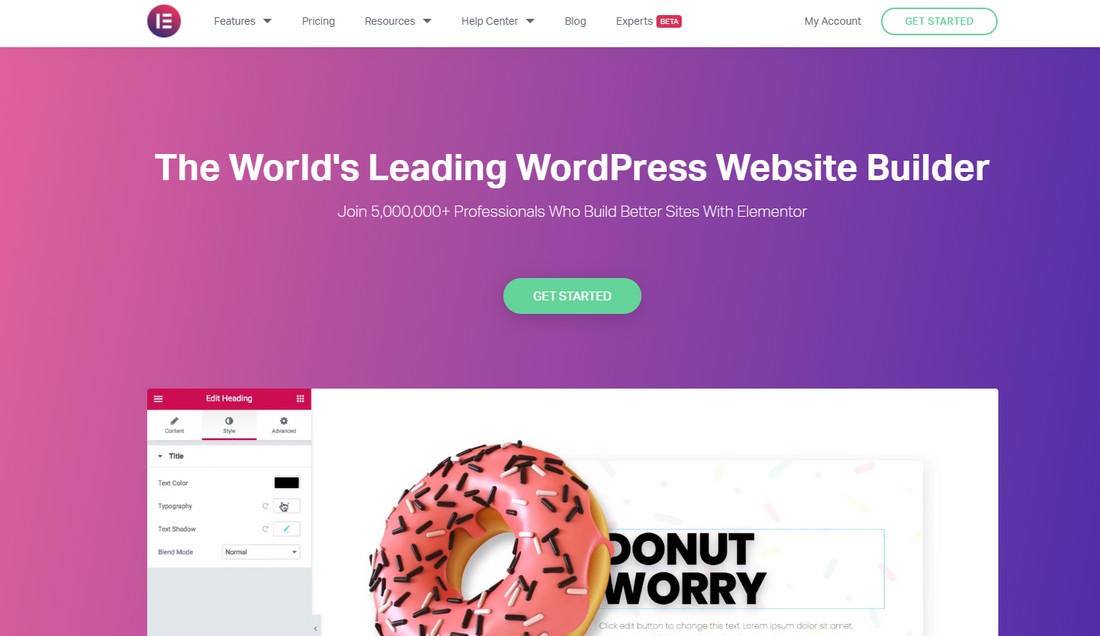
Use a Large Front Size

elementor

(Example: Elementor)

Back in the day, tiny font sizes used to be all the rage. That might be passible on massive blocky monitors, but people are using phones and tablets to browse the web these days.

You need to make sure that those users can read your content, so pick a big font that’s easily visible as soon as you glance at it.

We’ve found that 15 – 25 px yields the best retention rates, but so long as it’s legible and nice to look at, you shouldn’t have a problem.

Make Your Headings Proportionate

Headings are the signposts of your web typography. It helps the user navigate the page and highlights what information might be important to them.

It’s vital that your headings stand out, so make sure that you’re using at least a 180% increase in size when compared to your body text.

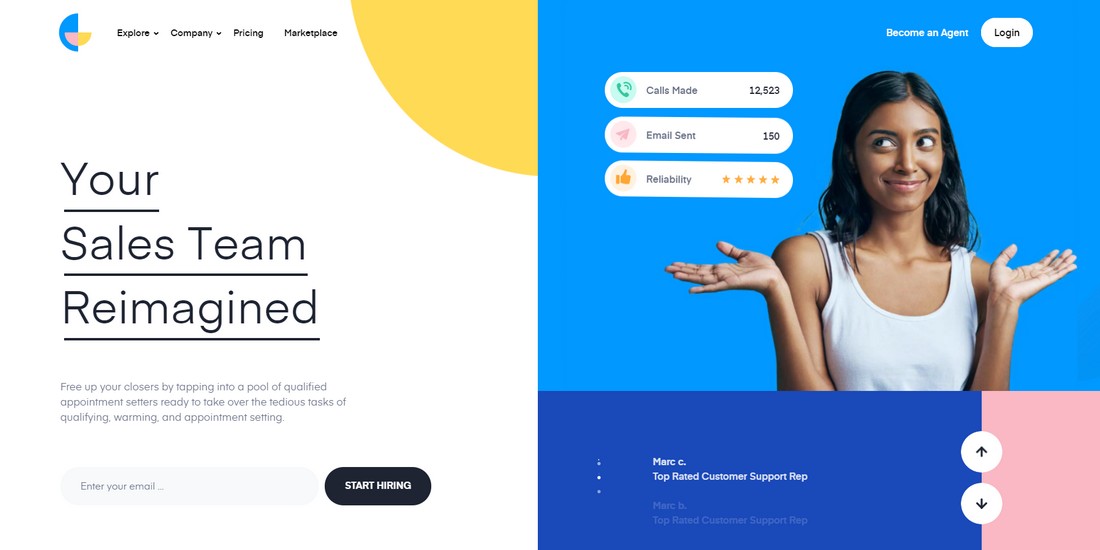
Line Spacing

overpass

(Example: Overpass)

There’s nothing more frustrating than trying to read a block of text that has awful line spacing. Not only does it turn the reading into a chore, but it can be incredibly hard to follow.

That’s why you’re going to set your line spacing appropriately. 120 – 145% percent of the overall point size should do it.

Tracking and Kerning

Adding tracking and kerning to your text is going to help it look neater and roomier. What this does is adjust the spacing between letters proportional to the size of the text. The space between the words of a heading versus lines of text isn’t going to be the same.

This can help to keep everything separate for your user, making it easier to navigate through the information.

Don’t Forget Whitespace

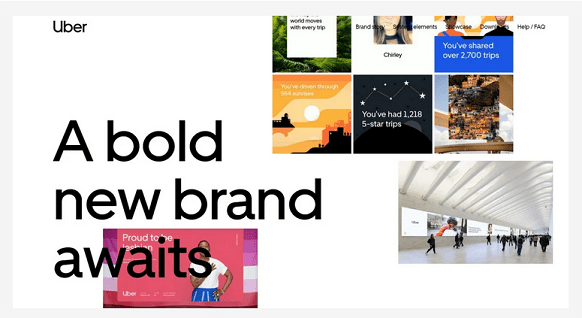
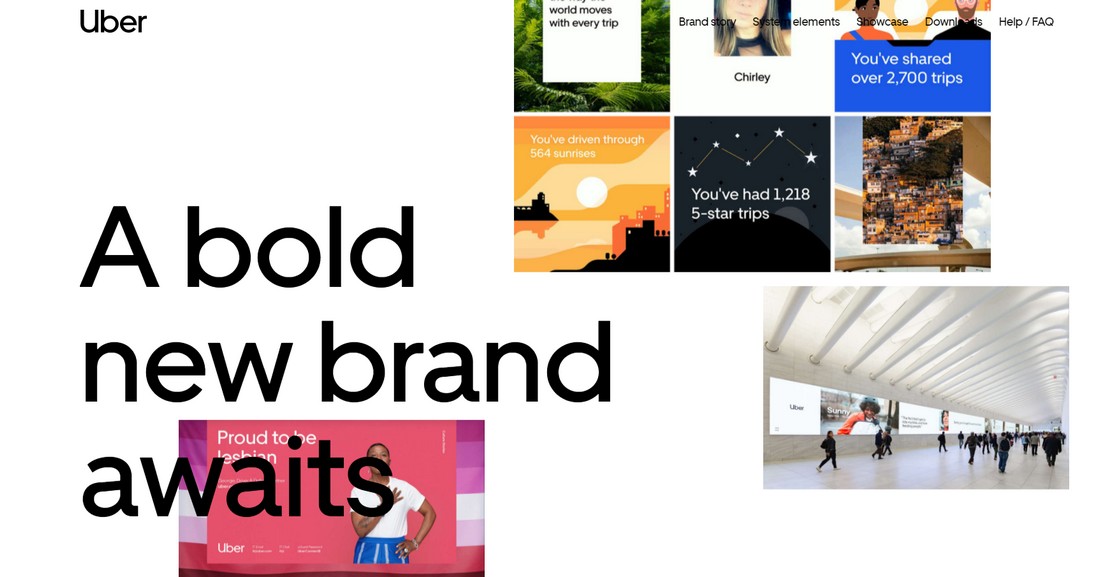
uber brand

(Example: Uber Brand )

Whitespace is a vital part of web design as a whole, and that includes typography. You need to have some decent whitespace in between your headings and your paragraphs. If you don’t, then the whole thing is going to become a cluster of information, which is exactly what you’re trying to avoid.

Your user’s eyes need places to rest. This doesn’t just go for on the page, but when they read, too. If you don’t have whitespace, they get fatigued. When they get fatigued, they stop reading.

This is the exact opposite of what you’re trying to achieve, so make sure you’re obeying this web typography rule at all times.

Limit Your Line Length

Limiting your line length is an industry-standard practice for a reason. If you’re not doing it, then your page is going to suffer when it comes to professionalism.

45 – 90 characters is a good-sized line length to take that also leaves a lot of room for your personal preference.

One factor you might want to consider when choosing your line length is what device you expect your clients to be using. There’s a clear difference in device usage across services here, and you can get away with longer line lengths with users visiting from bigger machines.

Choose and Stick to One Typeface

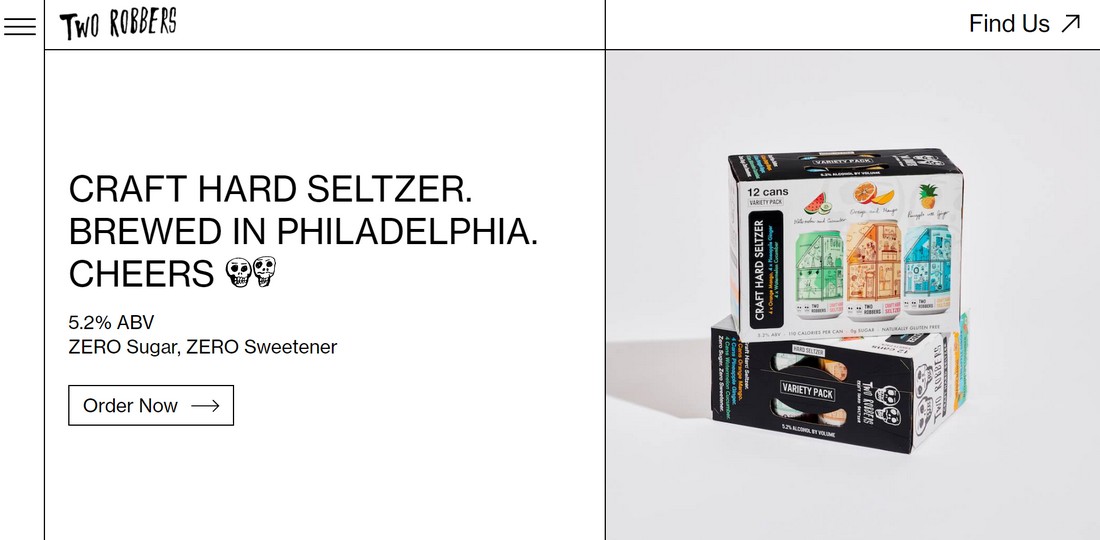
two robbers

(Example: Two Robbers)

Serifs and sans-serifs. Both of these typefaces have advantages and disadvantages, but you should only be using one.

Determine what your target audience or client is looking for and use that information to influence your decision.

This is completely separate from your font selection, bear in mind. The typeface is a stylistic family of fonts that fall within it.

That being said, you should determine your typeface before your font, and not the other way around.

Structure and Hierarchy

If you don’t have a hierarchy, you descend into chaos and pandemonium. This is as true for typography as it is for life.

We’re not just talking about your H1, H2, H3, and P HTML tags here, but the way in which you present your information, as well.

If you have quotes, links, lists, or anything in between, make sure that it all follows a uniform structure.

If you’re doing a listing page, then you don’t want the links to a resource being halfway through one entry, at the bottom of another, and the top of another.

Further Your Web Typography Education

Web typography is a discipline that cannot be learned in a day. It takes constant practice and exercise to develop your skills, and that’s only one part of the equation.

The industry standard is constantly evolving and changing, meaning that you need to keep up to date with all of those changes.

Keep yourself plugged in and make use of all the practice and educational resources you can find.

Conclusion

Web typography is an overwhelming discipline that can take its toll on even the most seasoned designer. It’s like a muscle, though, and the more you use it, the stronger you’re going to be.

It’s, unfortunately, a massive part of web design, meaning it’s completely unavoidable. You’re going to have to tackle it at some point; we just hope that our tips help you when you get there

By Roshan Perera

Sourced from design shack

e all have those pieces of writing that strike a chord within us each time we read them. You know what I’m talking about — those works that hit you in the feels with their is-the-author-inside-my-brain sentences.

Think about why you love your favourite authors and writers. What do they offer that you can’t get enough of?

For me, that’s how I feel whenever I read something by Stephen King or Sloane Crosley. Those two know how to transport readers smack-dab in the middle of a story.

When King writes about doom and gloom and apocalyptic nightmares, you feel it to your core.

When Crosley describes her New York City apartment, you’re sitting right there with her on her couch.

It’s their ability to immerse readers into their plotlines with strategic language that makes them exceptional writers.

In fact, that’s what inspired my newsletter/side project, Kat Loves Copy.

But how do they do it?

I’m going to share three ways to swiftly win over new readers using tried-and-true writing methods.

I’ll also show you how to apply these techniques to content marketing, whether it’s for your clients or your own work.

1. Write like you speak

The quickest way to lose your audience’s attention is to write in a way that sounds like a lecture from the economics teacher, played by Ben Stein, in Ferris Bueller’s Day Off.

And what do we say to writing that’s boring? Not today. Not tomorrow. Not ever.

The best kind of writing reads like a conversation between the author and the reader.

It’s engaging. It’s two-sided. Readers feel invested in what you have to say, just as they would if you were having the conversation in real life.

So, how do you achieve that to win new readers? Write as if you’re speaking with a friend or colleague. It may sound simple, and in many ways, it is, but it takes practice.

Let’s look at two different approaches to this writing technique:

First, think about how you might explain a topic to your friend:

  • What words and phrases would you use?
  • How would you position your opinion?
  • What titbits or examples would you lean on to get your point across?

It may be helpful to make a list of these answers as you think of them so you can refer back as you write.

Once you start writing, locate where you can inject a bit of your personality and unique conversational tone that’s appropriate for your audience.

For example, instead of writing, “Here are six homemade dog treat recipes,” you could say, “Let’s look at six different homemade dog treat recipes because, let’s be honest, our four-legged friends deserve a variety of treats.”

Now, don’t get me wrong. The first example is completely fine. But the second example has more personality to it, which will likely be more engaging.

The second approach is to record yourself having a conversation with a colleague (or solo) about your topic of choice.

Listening to how you discuss, analyze, and present different sides of your argument can drive clear, yet descriptive, writing. Just be sure to cut unnecessary filler words.

I recommend recording a video call, so you can pick up on things like your body language and visual queues, if you’re speaking to someone else.

2. Use figurative and descriptive language to paint a picture

Want to transport your readers into your narrative instantly?

Dust off your grade school English textbook and revisit the figurative language chapter.

Let’s review the most widely used figures of speech:

Simile

A simile is when you compare two, unlike things using “like” or “as.”

For example, that puppy is as cute as a button.

Or, reading that blog post was like watching paint dry.

Comparisons help clarify your message and explain the familiar yet undefined. They’re a type of metaphor and excellent writing tools for when describing something with one word doesn’t quite feel enough.

Metaphor

According to the Merriam-Webster dictionary, a metaphor is “a figure of speech in which a word or phrase literally denoting one kind of object or idea is used in place of another to suggest a likeness or analogy between them.”

Metaphors are workhorses of description that intrigue your audience and help you win new readers. They allow you to paint a picture beyond corresponding adjectives and nouns.

“A freshly paved tar road enveloped the night sky” is far more vivid to read than “the night sky was dark,” right?

Hyperbole

With hyperbole, it seems as though the more exaggeration, the better. And hyperbole is just that — extreme exaggeration.

This figure of speech is for emphasis. However, it can provide added humor due to its over-the-top nature.

For example, “I have one million things on my to-do list” or “I’m so hungry I could eat a horse” are common uses of hyperbole.

Another example comes from Dick Clark during his Daytime Emmy Award acceptance speech:

“Please sit down because having produced nine million award shows, I know the producer’s up there saying, ‘Hurry, say thanks fast.’”

These figures of speech help convey ideas, points of view, and details. Just make sure you’re using them in a way that adds value to your readers and doesn’t distract.

3. Use empathy wisely in your writing

In the wise words of Sonia Simone:

“When you write content and copy, your most important job is that of Chief Empathy Officer for your audience.”

Connection. It all boils down to connection. You could craft the most eloquent, well-written article, but it won’t mean a single thing unless it connects with your reader.

Empathy is a powerful tool that fosters a bond between you and your readers.

It helps you figuratively reach out from the page and say:

“I understand your problem or concern, dear reader, now, let me show you what to do about it.”

From a content marketing perspective, this is true whether you’re trying to sell a product or get readers to take any form of action.

But first, you have to understand your audience enough to write something that resonates with them. If you don’t know your audience, you won’t know how to connect with them and naturally win new readers.

Consider these questions when researching your audience:

  • What are their problems?
  • What makes them tick?
  • What’s the best way to communicate with them?
  • What kind of solution should you offer?

Knowing your audience means knowing how to serve them, and that’s the cornerstone of high-quality content. However, the buck doesn’t stop there.

Once you know your audience, you have to write in a tone that matches. In other words — and I say this lovingly — read the room.

If your tone doesn’t match the topic, it will be difficult (if not nearly impossible) to create a bond with your reader.

To do this, put your research cap back on. The same principles apply when figuring out how to write in your own voice. What language does your audience use? What phrases or words do they resonate with?

Get inside the mind of your audience, figure out what they need, and deliver.

Prioritize your audience

Most people are short on time and attention. That means you only get one chance to capture their hearts and win new readers.

By injecting details and your personality into your writing, you’re able to open the door to connect with your readers and encourage them to stick with you.

But while your writing voice is important, make sure your readers can still find themselves in your words.

After all, it’s not about you. It’s about them.

By Kat Ambrose

Kat Ambrose is a freelance writer for B2B SaaS and eCommerce platforms.

Sourced from  copyblogger

By Shade Vaughn

The days of just counting clicks are gone; more effective dollars are being spent on buyer intent and propensity-to-buy tools, data and analytics, search marketing, digital campaigns, and social selling.

For some, digital transformation may seem like a traditional business project that has a distinct beginning and end. However, the savviest organizations know that it has no defined starting point, and there is no true finish line. Digital transformation will continue to evolve and scale with the business, and it will require building consensus across numerous functional silos.

It also isn’t something that naturally happens—companies need to make the conscious decision to proactively define and manage their own digital transformation objectives, especially as spending on digital transformation increases each year. In fact, according to IDC, global spending on digital transformation technologies and services will grow 10.4 percent in 2020 to $1.3 trillion.

The investment is paying off. Those that had already begun executing against a digital transformation strategy were able to navigate the dramatic changes that resulted from the current pandemic.

Digital transformation excellence begins with marketing

While it might feel natural to look to the IT department to shepherd a digital transformation effort, marketers have specific skill sets that make them well-equipped to take on a leadership role. Marketers can help their companies use transformative technology to strengthen engagement between brands and customers, improve business performance and operations, and increase employee engagement.

According to Gartner consulting, 87%  of senior business leaders say digitalization is a company priority, however only 40% of organizations have brought digital initiatives to scale. To address this gap, marketers can tap into one of their many areas of expertise and showcase their value to the project:

Marketers are communicators

Marketers can use their communications skills to help energize and educate employees about the benefits of undergoing a digital transformation effort. More than six out of 10 respondents consider culture as the number one hurdle to digital transformation, according to Capgemini’s Digital Transformation Review 12th Edition, and marketers can help push the needle with effective communication strategies. When the pandemic disrupted the restaurant industry, Friendly’s Restaurants rapidly transformed their technology strategy to include contactless options. Friendly’s CIO recognized the strength of its culture as a key factor in the company’s success–they embraced the new processes and rose to the occasion.

Marketers understand the customer journey

Marketers have the insight and perspective to shape digital transformation efforts to maximize the value to the customer. After all, they are well-versed in the customer journey and how to establish strong connections across all touchpoints. To build a relevant roadmap, organizations need to take a long view of what they want a digital transformation strategy to accomplish–across people, performance, operations, and customers.

Marketers know the organization

By nature of the role, marketers have acquired a vast amount of knowledge about their organization–its strengths, its weaknesses, and how it operates day-to-day. They are able to have a bird’s-eye view of the business and build an ecosystem of trusted partners who are willing to put skin in the game and ensure value. This type of foresight will go a long way when executing against a digital transformation strategy as it requires strong talent in development and technology-related areas.

Marketers welcome digital disruption

Advances in marketing technology have changed drastically over the past 10 years–and so has the role of the marketer. The days of simply generating impressions and clicks are mostly gone; now, more effective dollars are being spent on buyer intent and propensity-to-buy tools, data and analytics, search marketing, digital campaigns, and social selling. Many marketers have embraced this digital-forward world and welcomed the many opportunities it presents to connect with customers in new and exciting ways. They are usually on the forefront of innovation and strive to inspire others in their quest for marketing excellence and fueling business growth.

Where marketing and IT meet

While marketing can confidently take charge, it still needs to be in lockstep with the IT department. After all, there is no digital transformation without a technology evolution, and that requires a heavy lift from IT. The two teams should work together to solve business problems, implement systems that support the larger goal, and find new ways to create value for customers.

For example, IT and marketing teamed up to create an improved fan experience for the San Francisco 49ers. Innovative technology was implemented to ensure football fans stay connected throughout the season, and the new site (IGYB) incorporates different aspects of digital and social media marketing to provide the latest updates and resources.

Marketers are creative and nimble, constantly on the lookout for new ways to innovate. By putting them in prominent leadership positions within a digital transformation overhaul, there will be an immediate shift in communication effort, diligence, and culture.

Feature Image Credit: [Source images: fad1986/iStock; Rawf8/iStock; OpenClipart-Vectors/Pixabay] 

By Shade Vaughn

Shade Vaughn is Chief Marketing Officer for Capgemini North America.

Sourced from Fast Company

By

A pronounced pivot toward e-commerce and video has seen global ad spend bottom out quicker than expected, with forecast falls now expected hit the floor with a 7.5% contraction to $587bn in 2020 – as opposed to a 9.1% fall as initially feared.According to Zenith’s Advertising Expenditure Forecasts, the advertising sector is proving to be more resilient than expected and is now expected to bounce back by 5.6% next year to reach $620bn.No mere dead cat bounce the rise is given credence by a surge in connected TV advertising as well as the delayed Summer Olympics and UEFA tournament.

How is global ad spend holding up?

  • Zenith’s metrics show that 2021 growth of 5.6% will be fractionally behind the 5.8% uptick it forecast back in July, falling short of the $634bn spent in 2019.
  • A recovery to pre-crisis spending is not expected until 2022, when a further 5.2% growth will see spending total $652bn.
  • All these forecasts are couched under the proviso that there will be no further black swan events to snuff out the tentative recovery.
  • What factors lie behind the improving outlook?
  • A universal shift in advertising budgets towards digital channels is providing a much-needed source of growth, with global digital ad spend expected to rise 1.4% in 2020, equivalent to a 52% share of total ad spend.
  • An explosion in e-commerce growth is not expected to tail off either, with Zenith confidently predicting that digital will account for 58% of all spend by 2023.
  • Another bright spot lies in connected TV’s as people flock to streaming video-on-demand (SVOD) providers such as Netflix and Disney+, whose reach has expanded by 5% in the US as people switch off from the world outside.
  • While advertisers are locked out of SVOD, ad-funded video on demand has enjoyed the strongest growth of all, jumping 9% to reach 5.5m US households.
  • Commenting on the findings Christian Lee, global managing director at Zenith, said: “Now that it offers mass reach in key markets, it’s the right time for brands to invest in connected TV.
  • ”Brands should use connected TV for both branding and performance, exploiting its high ad recall and full targeting and tracking capabilities to drive awareness and sales conversions at the same time.”

How is e-commerce shaking up ad spend?

  • A revolution in retail is feeding through to unprecedented demand for retailer media which promote products at the point of purchase, akin to in-store displays of old.
  • Crucially retailer media is allocated from commercial rather than marketing budgets, thus expanding ad expenditure as a whole. In all, Zenith anticipates the sector will jump from $35bn spend in 2019 to $51bn in 2020.
  • Ali Nehme, global chief commerce officer at Publicis Groupe, said: “Retail platforms are powering their growth by putting pressure on brand margins. Their focus on bottom out price wars, and enhanced consumer experiences, benefit consumers while brands bear the cost.
  • “In this scenario, brands must flex their power, by selecting retailer partners who offer demonstrable value through transparent data and measurement, as well as the ability to deliver the consumers who will drive much-needed category growth.”
  • A global jump in social media ad spend of 56.4% in the third quarter has also provided a timely boost.

Are there any regional variations in performance?

  • The global picture in the report masks significant regional variations with Asia Pacific, Central and Eastern Europe expected to lead the way in terms of growth, attaining 2019 levels of ad spend as early as 2021.
  • Zenith expects ad spend in both regions to shrink by 6% in 2020 and grow by 7% in 2021.
  • Elsewhere North America is expected to prove more resilient than most, declining by just 5.3% in 2020 courtesy of a spending boost driven by the presidential election.

Feature Image Credit: A pivot toward e-commerce and video has seen global ad spend swiftly fall, according to new forecasts

By

Sourced from The Drum

By Jen Glantz

“I haven’t spent a dollar on marketing or advertising,” says Bridesmaid for Hire’s Jen Glantz.

Over six years ago, when I started my first business, Bridesmaid for Hire, everyone wished me good luck. But that statement always came with a caveat. People told me that if I wanted to have any chance at being successful, I needed to pour as much cash as I could into my business.

Their reasoning? The only way to get clients would be to buy their attention through social media ads, paid search, and other marketing efforts, like influencer marketing or doing sponsored posts with well-known publications, that I couldn’t afford.

I had just been laid off from my full-time job and I was using my savings account to help keep me afloat. I didn’t have the capital to invest in my business and knew that I needed to find other ways to get new clients and people’s continued attention on my business.

That’s when I decided that I’d set out to prove people wrong. What if I didn’t put a dollar into marketing and advertising but could get a steady stream of clients and website traffic anyway?

Today, I’m still following that game plan. I haven’t spent a dollar on marketing or advertising. Here are the free tactics I used to turn my side hustle into a six-figure full-time business.

I focused on building relationships

Rather than viewing Bridesmaid for Hire’s social media presence as a promotional driver that would push people to make purchases, I saw my social media accounts as a relationship building tool.

So when I made my social plan, I created three content categories.

  1. Educational and engaging behind-the-scenes content
  2. Press and testimonials from clients who have used the service, which allowed us to take a break from talking about ourselves and pulls in a variety of other voices
  3. Promotions (“buy this package, grab this deal” — only 10% of our posts)

Doing this allowed people to gain value from our social media channel feed. It allowed us to build brand loyalty and awareness, and that often turned into people heading to our website to learn more and work with us.

I also tapped into free tools like Canva and Headliner.app to help me create professional looking content.

Doing my social media strategy on my own and using free tools saved me thousands of dollars that could have been spent hiring an agency or a designer. I used a fraction of that money, instead, to invest in video and photography assets for the business. 

I got good at pitching my story

One big thing I realized about myself as a consumer was that I didn’t start caring about a brand or business from their ads or marketing messages. I did, however, seem to give them a second look when I encountered them in an article or a TV segment, or on a podcast interview.

That’s when I realized that getting constant PR around my business and even around myself could be a valuable way to get new clients.

I made a list of publications I knew my audience cared about, from bridal magazines to podcasts, and sent pitch emails around the purpose of my business, uniqueness of my services, and even some unusual stories of what it’s like to work this job.

Over time, I had success getting the media’s attention, especially once I learned how to pitch stories around their editorial calendar and current trends. I have been able to be featured in over a hundred different stories and segments over the past six years.

I realized that getting constant PR around my business and even around myself could be a valuable way to get new clients.

I also used two free services, Help a Reporter Out and Qwoted, which brought press opportunities to my inbox. These websites share alerts when reporters or publications are looking for specific kinds of people as sources for articles. If you reply, you have a chance of being featured. This helped me secure various media placements.

Getting press helped us stay top-of-mind status in potential customers’ minds and allowed the news of our business to be shareable. It also allowed us to show up in the prime real estate locations our audience was already going to for news and updates without having to spend money advertising there. While I can’t measure an exact number of clients I received from this, it helped with brand exposure, brand awareness, and remaining top-of-mind status with my audience.

Dedicating a few hours each week to pitching the media in lieu of working with a PR agency has saved me thousands of dollars over the years.

I collaborated with peers in my space

A few months into launching my business, I created a master list of other companies and brands in my industry, who didn’t provide the same service I did, but still attracted my audience. I brainstormed ways to work with each of these companies that would be beneficial to both of us and reached out to ask if they’d be open to collaborating.

Some said yes to things like joint social media content through Instagram story takeovers, guest blog posts on each other’s websites, giveaways, and more. All of these collaborations were free, meaning I didn’t pay to work with these companies. To get them to say yes, even though I was new to the game, I provided a list of what I’d bring to the table: content creation, strategy, multiple promotional posts, and more.

This gave me exposure to their audience while giving them exposure to the small audience I was quickly building. It was a win-win situation. I’ve done over 20 brand collaborations over the past six years. While in some instances you can pay brands to do these partnerships with you, I didn’t go that route. Instead, I approached brands with a detailed strategy of how we’d add value to each other’s business.

For social media content, I was able to get traction in terms of building followers and getting website traffic. For giveaways and blog posts, I was able to help build up my email list, which allowed me to keep in contact with my audience and share news or offerings.

I developed a customer referral program

After working with my first 10 clients, I decided that it would be a good idea to have a referral program. I decided, since I didn’t want to offer a money reward, that I’d offer a product instead. I sent an email to my clients and offered them a free book, or phone session with me, if they sent over a referral.

This referral system worked and currently accounts for 15% to 20% of my new business yearly and it doesn’t cost any capital. Sure, I am giving away something for free, which costs the business a small amount of profit, around $50 to $200 a person. But it ends up being worthwhile since the amount of money a new client will spend is way more than the cost of the freebie I give existing clients when they send over a referral.

5:45
How Amobi Okugo turned a side hustle into a full-time business

Video by Courtney Stith

I provided free content

A good lesson I learned early on from my business mentors was to always offer a lot of free content for your audience to consume. I created high-value content, such as blog posts with practical tips to podcast episodes with popular guests, as a way of getting people to come back to my website and care about my brand, without asking them to buy something.

Doing this was a powerful way of creating constant brand awareness and a great strategy for getting people to come visit my website and stay for a while.

It’s hard to track which new clients or sales came from this method but either way, it’s a necessary thing to do as part of your overall strategy. Without free content, people might not pull out their wallet and buy from you, especially if they’ve never heard of the brand before, regardless of how big your ad budget is.

I led with my expertise

A final free thing I did to scale my business was to get in front of my audience whenever I could. I made lists of conferences and events I knew my audience would be at and pitched myself to the organizers to be a guest speaker.

Showing up at these events and hosting a workshop allowed me to get in front of people who were my direct target audience. It often led to immediate sales or even an increase in people knowing about the business and referring friends in the future.

You can find trade shows or events, even virtual ones, where you have to pay to present or display your product.

Working with no budget made me think outside the box and offer up my advice and knowledge as a thought leader instead. This added to the event’s programming and allowed me to meet hundreds or thousands of prospective clients, without paying to be there.

I view all of these strategies as puzzle pieces. Each have an importance and together they lead to business growth and a constant influx of new clients. Not having a big budget, or any budget, to spend on marketing or advertising won’t set you back if you find opportunities to enter the space of your audience and engage them in unique ways.

Feature Image Credit: Jen Glantz is the founder of Bridesmaid for Hire. Photo by Chris Ziegler

By Jen Glantz

Jen Glantz is the founder and CEO of the business Bridesmaid for Hire, the voice of the podcast ”You’re Not Getting Any Younger,″ and the author of the Amazon-bestselling books, ”All My Friends Are Engaged and ”Always a Bridesmaid for Hire.”

Sourced from grow

By

Use these 5 powerful digital marketing hacks to not only bring in quality leads, but also effectively convert leads into sales

Digital marketing is the most effective way to reach your target audience, drive targeted traffic to your website, generate quality leads, and ultimately, close sales. To create a digital marketing strategy that will foster business growth, it is key to understand the following:

  • How much money should be spent on digital marketing?
  • Which tactics will provide the best return on investment (ROI)?
  • Which channels will help funnel in high-quality leads?
  • What can be done to foster the entire buyer experience?
  • How can success truly be measured?

No matter how small or large your business is, having a deep understanding of what happens when you implement your digital marketing strategy is critical to making better decisions that will yield positive results. As such, having the right tools, processes, and people in place will only help elevate your efforts to meet your other business objectives.

Here are 5 powerful digital marketing hacks that will help you increase sales now:

1. Create stellar content for digital marketing

The key to making content work for you in terms of gaining the awareness, leads, and sales you want is to make sure that you’re adding tremendous value. This means that the topics you write about and tips you put forth are actionable and consumed by your target audience.

One of the biggest mistakes I see companies make is that they develop content and hope that it will attract attention right away. Know that your content strategy needs to be focused on both short- and long-term goals. You’re really running a marathon, not a sprint.

There is a multitude of content types you can consider, so let’s look at a few and also understand the benefits of each:

  • Blogging — research topics that are actually being searched for, including hashtags that are being used by your target audience. Find a way to be a part of those conversations by writing thoughtful blog posts.
  • Infographics — visual content is easy to consume, so develop infographics as a way to drive engagement on your website, extend the time-on-site, and input a CTA (call-to-action) for people to inquire more about what you have to offer.
  • Guides and eBooks — whether you choose to gate your content or not, what’s more important is that they are being leveraged successfully as lead magnets. You can do this without gating the content because inputting CTAs throughout the content pieces will still help you understand what drives engagement and what doesn’t.

2. Run social ads

Advertising on social media networks is a no-brainer. Let’s say you’re in charge of generating leads for a B2B SaaS product and need to figure out how you can drive sales-qualified leads that will turn into opportunities — which social networks would you want to consider?

For starters, look at these three: LinkedIn, Facebook, and Twitter.

You’ll be able to narrow down specific personas, test multiple creatives and messages, and collect data to see what works best. Like any advertising strategy, make sure that you tie your social ads to their own landing pages and that the copy from the ad to the landing page matches up. Additionally, consider the following:

  • Leverage your content assets to funnel in leads and inquiries.
  • Make sure your messaging presents a clear problem and solution.
  • Create multiple creative assets to avoid ad fatigue.
  • Fine-tune and tweak as you go. In other words, focus on progress over perfection.

3. Develop robust email marketing

Once you have lead information collected from your website, the logical next step is to develop automated workflows that will nurture your leads. The key to making effective workflows is to map out the buyer journey and align your email strategy with that.

Here are some key tips to keep in mind as you develop yours:

  • Position the content around the lifecycle stages of your leads.
  • Enable lead scoring so you can keep track of what drives engagement and movement from one lifecycle stage to the next.
  • Segment and personalize.
  • Test out multiple subject lines and copy.

4. Host webinars

Get creative with your webinars by inviting guest speakers to help co-host and even do interviews with happy customers who are using your product/services. According to Xant, 73% of sales and marketing leaders say that webinars are one of the best ways to generate quality leads. In fact, a single webinar could get you over 1,000 leads.

In order to make sure that your webinars are successful, do the following:

  • Research and choose the right topic. Just as you would with your blog topics, do the same with your webinar topics — it’s about the searcher intent and target audience needs, i.e. the problem you solve.
  • Decide on a promotion strategy for your webinar. Unlike your other ads that are pushed to promote a guide or direct inquiry, webinars need at least 1-2 weeks of a promotional period.
  • Create a series of promotional emails as well as reminders.
  • Run social ads and even search engine ads.
  • Get out of the PowerPoint or Google Slides only presentation. Be interactive with your webinars.
  • Make sure the webinar is available on-demand and then have a series of follow-up emails and advertising to still drive engagement that then turns into opportunities.

5. Push a growth hacking approach

Growth hacking takes on the approach of testing nearly everything you can during the entire buyer journey so that you gain clarity around what triggers a lead to be interested and then progress into a sale. The great thing about growth hacking is that you can apply it to every single digital marketing tactic.

Here are some actionable examples you can use:

  • A/B testing headlines and CTAs for targeted landing pages that are tied in with ads and your homepage.
  • Personalize your emails per segment and even personas.
  • Develop multiple content clusters with your blog posts to see which one drives the best quality of leads that turn into actual sales opportunities.

Good digital marketing vs. great digital marketing

What separates good digital marketing from great digital marketing isn’t just your ability to spend a ton of money, but to use that money to show the actual problem you solve. In other words, you’re selling the solution for a clear problem and can show how you are able to do that.

More specifically, people buy from people, not companies. Therefore, being authentic with your approach and steering clear from just making a transactional sale will only help you in the long-term.

Finally, continue to integrate both your intuition and the data you collect to help excel your business forward. Don’t look at digital marketing as just a 1:1 — money in and money out — solution. Rather, use the power of digital marketing to create awareness that will expand beyond just one single piece of creative or content. Changing your perspective to this approach will help you keep the needs of your target customers top of mind, and in turn, support your growth initiatives.

Feature Image Credit: ipopba | Getty Images

By

Sourced from Entrepreneur Europe

By Matthew Stafford

You might think I’m crazy to say that traffic is not your problem, but I’m going to prove that to you in the following paragraphs. I’m also going to show you how to profitably grow and scale your e-commerce business using the traffic that is already coming to your store.

I’m the chief marketing officer of Build Grow Scale, an e-commerce education company, and have been working in e-commerce for almost 10 years now, alongside my partner Tanner Larsson, who has been doing it for over 19. When we partnered up on our first e-commerce store five years ago, I was really good at Facebook Ads, and he was really good with private-labelling products, so we were a perfect match. We started off well, but we weren’t very profitable, no matter what ad strategy I used — and I knew how good my ads were based on my previous ad success.

There had to be something else that we weren’t seeing. If it wasn’t the ads, it had to be the store. The only way to figure out what was happening on our store was to look at our Google Analytics data.

I started diving into the data and even paid someone to teach me how to better interpret that data. Immediately, we started detecting leaks on the store left and right. Very soon I realized that the more we worked on the store, the easier Facebook Ads got.

My biggest “aha” moment happened when I found that our site’s load time was 13 seconds and our site’s bounce rate was 90%. I realized that we were struggling to be profitable because we were paying to get people to the site, but 90% of them were bouncing because the site was so slow. Only 10% were actually seeing the website.

I did the math and realized that if I could reduce our 90% bounce rate by just 10%, I would be getting twice as many eyes for the same amount of money, effectively cutting my traffic cost in half and instantly becoming profitable.

Think about this: Let’s say I spent $500 to bring 1,000 visitors to our site. That means that our cost per visitor is 50 cents, right? Wrong. Here’s my epiphany. Our site’s bounce rate was 90%, meaning that out of those 1,000 visitors, only 100 actually saw our offer.

So, in practical terms, we were paying $500 to get only 100 people to our site, making the true cost $5 per visitor. That is 10 times more expensive than we’d thought. It’s no wonder we weren’t profitable.

Now, let’s say we cut that bounce rate to 80%. That means that out of 1,000 visitors, 200 people would see our offer, which means that our traffic will cost $2.50 per visitor. A minuscule reduction in the percentage of people who bounce could cut our actual traffic cost in half.

Realizing this, I immediately hired a developer, and we went to work. We did a 15-hour marathon during which we reduced our site’s load time from 13 seconds to 1.87 seconds, and instantly, our bounce rate went down, and our conversions more than doubled.

From there, I started asking myself, “What else can I do? What other 10% improvements can I make that will double my results?” After doing that a few more times, our store performed much better, and we started selling thousands of units per day.

At this point, I hired a Google Analytics expert. We realized that we’d been looking at very surface-level data. That’s why we began using Google Tag Manager (GTM) in conjunction with Google Analytics and started getting granular. GTM allowed us to track everything that was happening on the website and unlocked a whole new level of data that we could use to optimize our store.

The more I learned about collecting and reading that data, the better I became at optimization. The more I focused on optimizing our store, the better our ads performed, and the easier they were to run. It was a powerful upward spiral. To make sure that this wasn’t just good luck, I decided to volunteer and do the same for two of my good friends, who both saw excellent results.

The way you profitably grow and scale your business is by focusing on optimizing your store first before burning money on running more and more traffic to a broken store. You cannot control the traffic, but you can control your store.

Before optimizing, ensure that Google Analytics and Google Tag Manager are set up properly and report accurately. You can only improve what you measure, and Google Analytics is how you’re going to track the changes in your metrics that result from your optimizations. This will also give you an idea of what you should optimize first.

I recommend you optimize your store backward, beginning with the checkout, then the cart page, the product page, the category page and, finally, the homepage. Start with the checkout because it’s closest to the money, so any fix there will mean a much bigger lift than a fix on your homepage, for example, which is many steps away from the purchase.

Finally, I recommend that you run A/B/n tests for any more significant changes you want to implement on your site. Make sure you test changes that alter user behavior rather than insignificant changes like new button colors. Run your tests for a minimum of two weeks and no more than one month. If you have a hard time finding leaks on your website, do 10 to 15 user tests using any of the tools out there, and you’ll likely discover issues that you can fix.

Why would you bet on something that you can’t control over something that you can? In fact, you are probably already better at traffic than you need to be. Focus on your store instead. Optimize before you maximize.

Feature Image Credit: getty

By Matthew Stafford

Matthew Stafford is CMO of Build Grow Scale, an e-commerce education company. Read Matthew Stafford’s full executive profile here.

Sourced from Forbes

By

You might love the product that you sell but it’s your customer who needs to love it too in order to become a success. And from the perspective of your customers, your product may look different.

But here’s the good thing – if you know what your customer thinks about your product, you may use the feedback to improve the things you lack in.

But how to collect your customer feedback?

While there are many platforms that you can use to collect feedback, Instagram should be your choice.

You may wonder why Instagram should be your go-to platform for collecting customer feedback, here are some statistics for you:

Now that you know why Instagram is a great platform for feedback, it’s time to discuss how you can use Instagram for collecting feedback.

#1. Instagram story stickers

If you know about Instagram, you must know about Instagram stories. Instagram stories are a very effective and interactive way of communicating with your audience. And the best part is that you can use stories for collecting your customers’ feedback as well. Want to know how?

Here are five stickers that you can use in your stories:

Question Sticker

collect-customer-feedback-question-sticker-ask-me-a-question

As the name suggests, the question sticker is a sticker that is used to ask a question of your audience. You can ask any question and your audience will be provided with a box where they can enter their inputs and you’ll be notified whenever someone drops an answer in the box. In this way, you can easily ask a question about your product and let customers provide feedback.

Poll Sticker

collect-customer-feedback-polly-sticker-ask-a-question

Do you like this one or that one? This is the kind of question that you can ask your audience using the poll sticker. With the poll sticker, you need to mention a question and provide them with two options to choose from. Once the poll is over you can check which option your audience liked the most.

Quiz Sticker

collect-customer-feedback--quiz-sticker-example

With the Quiz sticker, you can ask your customers multiple-choice questions right through your Instagram stories. So you can ask anything that lets your customers choose from various options.

Slider Sticker

collect-customer-feedback-slider-sticker-example

A slider sticker is a fun sticker where your audience can rate you on an emoji sliding scale. You’ll be provided with an overall average of all responses.

DM Me Sticker

collect-customer-feedback-dm-me-sticker-dm-me

Ask your audience a question that sparks a conversation and helps you explore what your customers think about your products and services through the DM me sticker on Instagram.

#2. Questions in your captions

Nothing works better than a direct question in your captions. If you’re using Instagram for your business, you must also be posting regularly on the platform. And with every image or video you post, you should add a caption to define the image or video. That’s exactly where you should be asking questions about your product.

collect-customer-feedback-instagram-question-in-your-captions

Create a compelling post about your product and ask a question about the product in the caption. This will encourage your users to post their answers in the comments. This will just not help you gather the feedback but will also help your post to get more reach as the engagement will be high.

However, it has its downside too. Everything posted will be public and negative comments can affect your online reputation. Nevertheless, you can still turn the situation into a positive one by smartly handling negative comments. Just make sure you reply to each and every comment and let your customers know that you’re always there to listen to their problems.

#3. Encourage user-generated content (UGC)

Most marketers see UGC as a way of increasing their followers on Instagram and improving their engagement rate. What they don’t know is they can use UGC to collect feedback as well.

collect-customer-feedback-starbucks-user-generated-content

Here’s how you can encourage your customers to create and share content for your brand:

Start a hashtag trend

collect-customer-feedback-hashtag-trend-christian-blair-style

Creativity is all that you need here. Start a campaign like a competition or a giveaway and use a unique hashtag that your customers can use while sharing their insights about your products. Every time your customer creates a post for your brand, they can use that hashtag.

Ask a question

You can simply ask a question in your post regarding your product. And if your customers have anything to say or suggest about your product, they can simply post about it and mention you. And in exchange, you can give them a shout-out. This one works best for brands who have a good follower base on Instagram.

Offer a discount

collect-customer-feedback-offer-a-discount-thank-you-use-code-gratitude-2018

Encourage your customers to post about your brand with their feedback for a discount offer. Discount or BOGO offers work amazing because everyone loves discounts and free stuff.

#4. Create engaging video content

IGTV videos and Reels are the current trending features of Instagram that can provide you with amazing reach and are also helpful for collecting feedback. All you need to do is create engaging videos that encourage customers to share their feedback with you.

To start with, think about an interesting topic and then ask your customers questions about what they think about your products. The more engaging the video is the more people will share their feedback with you.

#5. Collaborate with influencers

Influencer marketing is rising with every passing day and it can be a great way to encourage your customers to provide feedback.

Influencers already have a huge follower base on social media platforms like Instagram. However, if you want to leverage the power of influencers, you need to find the right ones based on your niche.

collect-customer-feedback-influencer-collaboration-zoesugg

Once you find some influencers ask them to create content that can help you gather feedback. Influencers are influencers for a reason. They know what their audience likes or dislikes – so give them a creative license with the content.

They may share something about how your product helped them and ask their audience about their experience with your product. Or, simply show a demo of your product and ask your customers for some other ways of using it. In this way, you don’t just get feedback but also promote your products in an effective manner.

To conclude

These are some ways you can collect feedback from your customers on Instagram. No matter what feedback you get, whether positive or negative, it’s your job to listen to every customer and understand their perspective.

Also, it’s not just about collecting the feedback but also about using it to improve your products or services. After all, there’s no sense in collecting feedback if you don’t use it for your own good.

Top Trending Tools (December 2020)

#1TokUpgrade - Grow on TikTok
#2Kicksta - Grow on Instagram


By

Bhavik Soni is a Creative Writer at Auto Monkey. We provide an original analysis of the latest happenings in the social media industry. Connect with Latest Social Media Trends and News plus tips on Twitter, Facebook and other social tools on the web.

Sourced from Jeff Bullas