Author

editor

Browsing

By Angela Kambouris

As the managerial glue of the workplace, frontline managers need these skills to succeed on behalf of themselves and their organizations.

When it comes to transforming an ’s strategy into results, frontline managers are the linchpin of success. Few roles demand technical knowledge, expertise, and soft skills such as clear communication, team building and resolving conflicts.

In her book Becoming a Manager, Harvard Business professor Linda A. Hill describes how managers are the cornerstone to sustaining quality, service, innovation and financial performance. As the primary face of leadership for the workforce, frontline managers serve as a talent pipeline for senior leadership roles and are an untapped resource for innovation.

Organizations today require a new approach to the development of frontline managers by identifying specific priorities, real-world tools and solutions that are integrated into the manager’s daily and weekly routines, and executive and organizational support. When investment in the leadership basics for frontline managers occurs, the organizational rewards can be more confident leaders, healthier and productive teams, more satisfied customers, a more agile organization, and a boost in financial performance for the business.

Here is how frontline managers can have a seat at the table and set up their own and the organization’s success.

Know thyself

Your understanding of yourself, how you see your values, passions, aspirations and how they fit with your environment. Your reactions and impact on others is an ongoing process of self-reflection and improvement. Alongside internal self-awareness, understanding how other people view you helps you become more attuned to the needs of others. You’re in a better position to manage your responses to situations more effectively. Leaders should explore where their biases lie and how they can break through these to view the world more realistically. can be invaluable in supporting your progress, expanding your self-awareness, and stepping into a leader people strive to emulate.

Be the first domino

How often do you hear, “When is going to get it right? They never listen.” The frontline manager must model the behaviour you wish to see in others. Rather than buying into the drama, diatribes, and emotional waste, adopt the role of rebuilder and healer to serve as the role model for others to follow. Leaders can engage in asking quality questions to transform negative energy into self-reflection, leading to better self-awareness and positive change. For instance, asking, “What could you do right now to help or how could we make this work together?” is far more empowering and brings calmness to the workplace.

Coach, not command

The Gallup “State of the Global Workplace” Report reinforces that employees want their supervisors to function like coaches who can leverage their strengths and open reciprocal communication channels. The role of a frontline leader is to foster an environment where individuals and teams thrive. Through coaching, leaders infuse positivity into the working areas, know their employee’s strengths and build their teams from those assets. Leaders create a space for celebrating accomplishments, manage reactions to stressful situations, recognize progress and actively listen to build trust and understanding within the team and organization.

Ignite insight and unlock human potential

Harvard Business Review article “The Leader as Coach” encourages leaders to ask questions that ignite insights in the other person and unlock their potential to maximize their own performance. Employees are human beings, and compassion is much needed in workplaces today. Leaders can grow team optimism, cultivate common goals, celebrate commonalities and differences in implementing the vision of the business.

Better serve people and the organization

A Harvard Business Review report, “Frontline Managers: Are They Given the Leadership Tools to Succeed?” uncovered that only 12% of respondents believe their organization invests adequately in the development of frontline managers. Sixty per cent of frontline managers never receive training for their first leadership role.

Crucial investment in managers is an investment in the entire organization. Frontline leaders require a leadership-focused training program to enhance soft skills strategically, develop better leadership competencies and strengthen decision-making capabilities.

Even though the training is one part of development, organizations can focus on understanding what frontline leaders do and embed development into their everyday work and routines. Organizations and individuals can define the developmental priorities that have the biggest impact on performance, identify top performers where employees can shadow them as they work, and identify trends and points in the workday where new capability-building measures can be added.

Lead with genuine care and empathy

People will not bring their best effort and ideas forward unless they work for leaders who authentically care about them, support and encourage them and help them breakthrough through challenging times. Wegman’s has shared how 90% of leaders define Wegmans as a psychologically and emotionally healthy place to work and 90% report that their direct supervisors demonstrate “a sincere interest in me as a person, not just an employee.” Wegman’s Chairman Danny Wegman and CEO Collen Wegman routinely visit the company’s over 100 stores to express their gratitude for how committed their staff are to the work they do.

Inspire people to learn, connect and progress

Mentoring circles are an easy and cost-efficient way to harness internal knowledge banks exponentially. They can improve culture by connecting people, increase the satisfaction of your people by allowing them to keep growing and saving you millions in preventable turnover.

A circle of contribution can foster personal and professional growth and can be used to recruit participants and manage projects that may lack resources or expertise. For instance, a can test new initiatives and brainstorm innovative ways to support employees. Mentoring efforts can focus on industry challenges, a common goal or on a subject such as , onboarding new hires, or diversity and inclusion.

Employees are the superheroes

Exceptional leaders inspire others to be their best every day, and to place other’s needs ahead of but not at the expense their own needs. They exercise selfless leadership in working with others. Appreciation, praise, and recognition for a job well done can build raving fans, strengthen reputation, and brand equity. You do not need fancy software to celebrate strengths, the achievement of milestones, or any successes. It can be as simple as a handwritten appreciation card hand-delivered, hosting a Facebook Live to recognize people who help others or a staff prize of having dinner with the CEO.

Hilton, a global hotel chain developed a calendar that features 365 no and low cost easy-to-implement ideas to thank employees. Texas Health Resources recognizes every 5 years of each employee’s service by customizing a celebratory yearbook with a message of appreciation from the CEO and gestures of gratitude from employees at work. Barry-Wehmiller shines a light on individuals who significantly contribute to how they touch the lives of others through a peer-nominated process and involves a celebratory unique car to drive for a week. There are all kinds of creative ways to make frontline managers feel appreciated. Whatever time and resources you invest in this will pay back dividends.

Feature Image Credit: Tom Werner | Getty Images

By Angela Kambouris

Sourced from Entrepreneur Europe

By

Since being in digital I have seen a standard timeline for businesses developing their websites. Make a new one every four or five years to experience an evolutionary leap forwards.

Is this still the right thing to do given the technology and options available to us today?

Basically no, it was never a great option anyway. Building websites, in general, is a difficult task and these days, websites are key revenue drivers for businesses, making it increasingly risky if it goes wrong. I still see cases where organic rankings plummet and conversion rates drop after so much hope has been pinned on a new site launch. It’s an emotional rollercoaster of stress, a sense of achievement on launch day and then panic.

Nowadays there is so much more available to us to mitigate the risk of launching a new website. Yet it is still untapped and companies are reticent to make the additional investment which is a small percentage of the overall cost. We all need to feel we are getting a good deal right so its an element regularly dropped from proposals.

So how do we improve this gambling situation? We need to be able to see into the future and find out how a new site will perform on launch. Good news! We can! Well, sort of…

No, we don’t have a time machine… but we can pre-test a website to see how it performs before exposing it to our entire user base and business to the new unknown. In my experience a lot of stakeholders want to have input on designs and battle for site real estate, this then defines how the new website is designed, from internal opinion alone and HIPPOs. To avoid this trap there are two ways which can give unbiased insight:

User testing

User testing outside of your own web environment can give you a level of feedback and information you simply can’t get from internal stakeholders and outside help. Even as an experienced CRO I can’t tell you for sure which new design is going to be better than your current one. We have to ask user testers what they think.

There are various techniques such as preference tests where user testers will vote for their preferred version, this type of feedback is great at the design stage of a website build.

Another is a click test, this involves finding out what a user would click on first upon landing on the new design. This ensures users are engaging and clicking the call to action most relevant for the business.

One of my favourites is the five second flash test. Users are shown the new version for five seconds and then asked some non-leading open questions: “What does the company do?”, “What would you click on first?”, “Which page element stood out the most?”. The answers from this type of test tell us how scan readers interpret the new design. Businesses can also run this test on the current version and see how the answers compare.

Any of the above can settle design debates and give real information on what users will respond best to. Designs can be updated and retested until 90% of user testers prefer a version. Not so much a shot in the dark now.

A/B testing

The other option is to start testing new designs and website experiences on the live website through A/B testing software. The software enables us to send a percentage of live traffic (usually 50/50) to a new version which is measured against the original. So let’s say designers have followed an internal brief, come up with a new homepage design and some stakeholders like it and some don’t, that’s normal. To find out if the new design really is better (and who is right) it can be tested against the original.

These rounds of testing can be done piece by piece on different layouts, images, fonts, branding, journeys and more. Gradually this gives valuable information on how users respond to the new design and importantly, to change.

Top tip

If you have a large user base and a high amount of returning visitors you can let them know that you will be launching a new website. Send them emails with a launch date combined with a promotion maybe.

One step further is to create a beta site and get feedback from users before the big switch is done. Companies like the BBC and Facebook regularly use this technique. It is a staple in the gaming industry, gamers are invited to use a beta version knowing it might break. Their reward for giving feedback is early access and feeling like a VIP, the game producers get free insight and debugging, win win.

Round up

Adding user testing and a/b testing does make a web build a more lengthy and expensive process. However, from experience, it is worth it. Web site changes can be vanity driven and a “need” to be done at a fast pace leading to errors. Going with a user led approach may be longer but it will help safeguard the business.

It’s also a mindset change, moving from completely changing a site every three to five years to constant tested small changes and evolution. An iterative tested approach removes stress, big lump sum costs and keeps websites up to date.

By

CRO consultant at Impression.

Sourced from The Drum

Smith’s new foundation shares the wisdom he’s gleaned over five decades of buccaneering menswear.

“People tell me this is the good one,” laughs Sir Paul Smith. The legendary designer is casually remarking on the Companion of Honour award that, on the same day as his brand’s fiftieth anniversary, Queen Elizabeth II bestowed upon him—a rare distinction limited to only 65 Britons at any time. “It includes David Hockney, Attenborough, and Dame Judi Dench…” he explains. “Good company, eh?”

This year marks five decades since a 21-year-old Sir Paul grew his business from a ten-by-ten-foot shop in his hometown of Nottingham into hundreds of stores across the world. Today, Smith is recognized globally for classic cuts with whimsical, vibrant motifs and many-colored stripes, and inspiring generations of menswear designers. Anyone else might want to rest on those shiny laurels (even for a moment) but Smith isn’t one for stasis. On the very day the Queen’s honours arrived, he revealed Paul Smith’s Foundation, a digital resource that gathers his decades-worth of advice to support people in the creative industries.

It is just the latest in Smith’s career of ever-inventive moves. Another example: if you’re cruising down Melrose Avenue and spot a large, bright pink box dazzlingly sat between the drab buildings, that’s Paul Smith’s LA flagship. “We had to decide how to stand out,” he laughs. “You know, it’s one of the most Instagrammed buildings in the whole city?” Smith attributes such ideas to his interest in “lateral thinking”, something he traces to a lecture he saw by British philosopher Edward de Bono: “This advice took me from a small, provincial town shop owner to my first Paris fashion show.” Now, he hopes visitors to his foundation will be able to apply his advice to their own careers.

We spoke with Smith about the new foundation, the greatest lessons he’s learned and what’s in store for the next fifty years.

At left, a young Paul Smith and his wife, Pauline. Right, two looks from Smith's forthcoming spring 2021 collection.

At left, a young Paul Smith and his wife, Pauline. Right, two looks from Smith’s forthcoming spring 2021 collection.  Paul Smith

How has the past year been for you? Quite a year to celebrate an anniversary…

Rubbish! Usually, our HQ is full of people, but I’ve been here alone. I miss the atmosphere. Thankfully we had a fashion show in January and we were able to celebrate the fiftieth anniversary in Paris. The party was lots of fun. Jimmy Page from Led Zeppelin was there, Bill Nighy and many others…Then, of course, October 9th was the anniversary, and on the very day, Phaidon released a Paul Smith commemorative book and I got another honour from the Queen! There is lots to reflect on, but I haven’t changed much after all the success. I’m still the lad from Nottingham who would cycle home to eat my beans on toast.

You didn’t always set out to be a fashion designer. How did that happen?

Right. I wanted to be a professional cyclist. I’m still immersed in that world, actually. [Tour de France winner] Bradley Wiggins was here just the other day. The room I’m currently in has five bicycles, and there are more next door. But after an accident at an early age, life took a new direction. My entry into fashion all started when I was 21 years old, after meeting my current wife Pauline in 1967. She was training as a fashion designer and would teach me how to make clothes in the delicate manner of the Parisian couturiers—how to properly cut a garment, and the way it drapes on the body. These are things they don’t teach you today, and she gave me a masterclass on our kitchen table.

How did the idea for the foundation come about? 

I’ve seen a lot of innovative designers crumble because the ideas were great, but the product or thinking wasn’t right. They didn’t push or do more on the business side because no one told them. Ten years ago, the thought came to me that I’d like to help young creatives in some way to learn these things. And to be honest, I’m excited to see what the foundation can become. It’s still new but there are lots of plans for travel scholarships and mentoring ahead, so it’s worth keeping an eye on. I just love building strong connections and supporting creativity; we already train or give work experience to students from the likes of Saint Martin’s and various other schools, so why not share the advice with more people?

PARIS, FRANCE - JANUARY 19: (L to R) Bill Nighy, Susan Sarandon wearing Paul Smith, Sir Ian McKellen wearing Paul Smith and Dame Anna Wintour attend an intimate dinner in celebration of 50 years of Paul Smith at Le Trianon on January 19, 2020 in Paris, France. (Photo by David M. Benett/Dave Benett/Getty Images for Paul Smith)

Bill Nighy, Susan Sarandon, Sir Ian McKellen and Anna Wintour at Smith’s 50th-anniversary celebration.  David M. Benett

How did you whittle fifty years of wisdom down to what we see on the website?

In my office, on my desk, I have a folder of ‘middle-of-the-night-notes’. I often get jet-lagged traveling for work and would struggle to sleep, and at hotels like the Chateau Marmont, they leave you these small notebooks by the bed. In the middle of the night, I would just jot down random, honest thoughts. You know, positive things. Over the years, I saved them in this folder, never expecting them to be read. And one day, a member of our team pointed over and took an interest in the folder. After flipping through all those notes from Tokyo to Los Angeles and beyond, we decided it was the right place to start.

If you had to choose the greatest lesson you’ve learned over the past 50 years, what would it be?

When I was designing fabrics at a mill in Bradford [northern England], I was advised: “When people offer you something, respond with enthusiasm, but wait until the next day to give your answer.” Whatever sounds amazing at the time comes into focus the morning after. Throughout my career, I’ve been offered incredible projects but I’ve had to think smart and consider what’s appropriate, irrespective of money.

It’s the planning side of creativity I mentioned: the ‘Monday, Tuesday, Wednesday, Thursday’ of invoices and emails, that allows for ‘Friday, Saturday, Sunday’ to be filled with your glorious creative ambitions. Our motto at Paul Smith is “Never Assume”. Be prepared for anything. When I was made a knight, it was placed on my coat of arms. It’s a left-field idea, sure, but the motto below is there as a reminder, an outlook that has got us to where we are today.

A look from Smith's first runway show and from his current fall-winter 2020 collection.

A look from Smith’s first runway show and from his current fall-winter 2020 collection.  Paul Smith

The fashion industry has changed so much in 50 years—do you still find it as interesting as when you started?

I still enjoy it, but that’s because I’ve remained independent. I’m lucky to be able to make my own decisions, decide what’s best for the brand without being leveraged by a financial institution of some sort. Fifty years later, customers still love us for us, for what we offer. We don’t just get one age group, but somehow draw in everyone. And I’ve tried to introduce a young, diverse team in the brand to help steer things along.

You should always have good manners in business, including fashion. I learned that from Dad. It was his way: to treat others the way you want to be treated. To be a gentleman, not a snob. We prefer to keep it fun here. It’s fashion, not heart surgery.

You’ve accomplished so much already. What’s something you’d like to achieve in the next 50 years?

Yes, I’m going for the ‘Full English’ of royal honours! I’m joking—seriously, I’m happy with the now. It’s the continuity that gets me most excited, what I love most. I’m always learning. I also want to make sure that I’m there for the people in my life. I’m sure [my wife] Pauline will continue to be an inspiration, she always has been. We love each other. There’s this thing she says to keep me grounded, and it always sticks in mind—it helps me carry on and improve. Fifty years on, she’ll say: “Nobody cares how good you used to be.” And you know what? She’s right.

Feature Image Credit: Paul Smith

Sourced from Robb Report

By Danny Star

“Follow your passion” can have different meanings. It could mean “pursue a career in the arts,” or something else that may not be traditionally considered lucrative or sustainable. The phrase could also mean “do what you want, and don’t worry about consequences.”

In recent years, there’s been a strain of business advice that basically says don’t follow your passions. Instead, the idea is that you make a lot of money and then do what you want on the side.

In my experience, working hard revealed exactly what my passions were. Then, I could incorporate those into what I and my team do.

Like Attracts Like

You’ve probably heard some version of that, too. Essentially, the idea is that you’ll come across people in your life who are similar to you. Perhaps they believe similarly or act similarly, and so forth.

When I started Website Depot, we wanted clients. Through hard work and dedication, we were able to develop a client base. Sure, we had clients in all kinds of industries. But, after a while, we realized something: many of our clients were detox and rehab facilities. This isn’t something we planned on. While we were grateful for it, it’s not like we intentionally sought them out over clients in other industries.

In a way, it caught us by surprise. Why did we have so many clients in this industry? Then, after we did some reflecting, we realized that it wasn’t a surprise after all.

The Makings Of A Connection

The rehab industry isn’t very similar to the full-service digital marketing one. However, there are real similarities. For lack of a better phrase, it’s a “people” industry, too. In rehab, detox and rehab professionals have to be able to talk to and connect with their clients. They need to be able to evaluate them and help them to put together a plan. Through constant, thoughtful hard work, they put their clients in a position to be able to ultimately succeed.

When looked at through that prism, running a rehab facility and running an online marketing company have quite a few similarities indeed. Now, no one is comparing the work a detox and rehab facility does with that of an online marketing company. Their stakes are much higher; they’re helping people to deal with the underlying trauma that causes addiction. We’re helping folks to rank higher on Google. That said, once we thought about it, we realized exactly why we’ve drawn so many rehab facilities. Then, we decided to do even more.

In order to truly discover your passion, it’s important to be on the lookout and make deeper-level connections. Look deeper beyond what’s on the surface and use it to fuel your next move.

Where Passion Can Lead

Years ago, I started a site, an offshoot of my company called Reputation Rehab. The idea was that we would “rehab” a client’s reputation, should it have been sullied online, etc. It was always there but we never did much with it. But, after working with so many rehab facilities, I began to see how we could do more. So, I hired mental health professionals to my staff. If it was good for our clients, it should be good for us. Then, we rebooted. Now, we help more detox, rehab and mental health facilities than ever to reach more people.

Be open to where passion can lead. It could very well lead you to an old project or a new venture that drives your business forward.

How This Applies to Your Passion

Maybe, when you started your company, you knew exactly what you wanted it to be. More than just successful, you wanted to make a difference, one way or the other. Or, perhaps you knew what you wanted to do, but beyond “be successful,” you didn’t necessarily have an end goal in mind.

If you have a moment, look around to see who you’re attracting to your company. You could look at your clients, but also your staff, audience, investors, customers, and more. Do they have something in common? Are they who you want to bring into your life?

After all, we’ve all heard so much about the threat of “burnout,” of feeling “unfulfilled.” For many, that’s become even more prevalent during the pandemic. If you don’t feel fulfilled by what your business is doing, who it’s attracting or where it’s headed, of course you’re going to feel burned out and empty. That’s just human nature. If that’s the case, then you want to take steps to change that.

If you have clients whose work you believe in, think about what it is about them that appeals to you. Then, reflect on why they came to you in the first place. You might even want to talk to them about it. “You were the best in your field” might be why they initially reached out to you, but odds are that’s not why they’ve stayed with you.

From there, you can take real, tangible steps toward figuring out exactly where your passions lie. Then, you can go after them with all your heart and business aptitude.

Feature Image Credit: getty

By Danny Star

Danny Star, CEO and Founder of Website Depot Digital Marketing Agency, has helped hundreds of small businesses grow and expand. Read Danny Star’s full executive profile here.

Sourced from Forbes


By

This week we reveal the Future 50 for 2020, our list of the best new brand-side talent from across the industry. But while celebrating the milestones our phenomenal 50 have already achieved in their careers, we also wanted to pick the brains of these marketing leaders of tomorrow.

And so, as the industry moves forward after a tumultuous year, the first question we put to our Future 50 is…

What qualities does the marketer of the future need to possess?

Harriet Lowe, portfolio marketing executive, ITV

They need to be inquisitive and never afraid to ask why. I think it’s really important that marketers of the future recognise they might have a different opinion or point of view to others in the room, and often by sharing this point of view great work can come from it. Although we can all learn a lot from people around us, we should never lose our own curiosity to challenge the status quo and be the most authentic versions of ourselves.

Mazen Mroueh, global digital manager, Friesland Campina

Marketers need to adapt and have an open-minded approach towards new market and technology updates. As a start, they need to be technically proficient, hybrid, agile, flexible to changes, creative, and disruptive. But also, they need to be socially responsible, honest, ethical, fair, transparent and direct with consumers.

Chad West, director, global marketing and communications, Revolut

Technical skills: you need to be able to source your own data, build your own dashboards and set up your own departmental processes. This involves learning to code basic languages and familiarising yourself with all the latest software in the market. Also, business acumen. Simply bringing customers into the funnel is not enough. You need profitable customers, which means you need to build a process to monitor and report on customer engagement and customer lifetime value.

Benson Mensah-Bonsu, sports partner manager, Twitter

Being agile is key in the long run. It’s hard to consider taking risks during the pandemic when many businesses have folded and people are furloughed/unemployed. Prior to Covid-19, I’ve seen marketers bet big on things that led to underwhelming results with minimal pivoting options to reach their target. Being agile with a minimal viable product allows you to continuously build and optimise your marketing strategy in response to the current fragile yet ever-changing state of the economy.

Elena del Boca, brand manager, GHD Italy

A modern, post-Covid marketer should have a strong ability to manage at 360° the engagement with consumers. The omnichannel model is a real challenge for brands and consumers today are used to navigating from online to offline and vice versa through new and different platforms. And their expectations keep increasing. We may call it the ’fusion marketing’ era, where the key is to follow the consumers, stay along with them in whatever space they are. The enormous availability of data is crucial today to execute this 360° strategy – it is mandatory for each marketers today.

Elizabeth Stone, marketing manager, for brand partnerships, John Lewis & Partners

Above all, marketers need curiosity. As customer champions, we should be constantly evaluating our environment and our customers’ evolving needs. We need to examine the wider world so we can identify trends, seek opportunities, spot risks and ask ’why?’ By doing this, we’ll generate better and more original ideas. Second to this is taking (calculated) risks to create bold marketing and obtain an advantage. You’re not going to make your brand famous by playing it safe. The qualities marketers need don’t change, only knowledge and skills. If you stay curious, you’ll pick those up along the way.

Shannon Ross, associate creative director, Spotify

The marketer of the future will need to possess compassion. We are now of an age where superficial ideas are so easily seen through, with the pandemic and social media holding a mirror to brands. The future marketers are people who will set the right tone for the world they wish to live in. The future marketers are those who identify the human truth in their target audience, zeroing in on people first and numbers second. That is how you move the needle on a brand. That is how you mould the future.

Brianna Foster, social editor, Pinterest

The main quality a future marketer possesses is the ability to authentically connect to culture. Marketing is all about connections – connections to a feeling, a friend, an aesthetic or even an avenue to the impossible. It’s not just one thing, but rather an evolving, fluid entity. When you think of marketing in a box, you don’t see the whole picture. A marketer of the future can take any preconceived notion of what marketing is and completely throw it out the window to create new concepts based on their own experiences, ideas and desired outcomes.

Sean Cook, senior social media manager, News UK

Innovation for me is particularly key when tackling marketing. At News UK, we pride ourselves on being first to new industry platforms, and being from a social media background, spotting new tools and trends in the market – and being first to test them within the company – is key for me to market our game in new ways. Over the last year, Dream Team was the first News UK brand to trial TikTok, quickly expanding to over 65,000 followers in a matter of months. This gave us a new, younger audience to push to our product.

Maeve Delahunt, business marketing lead, Snap

I truly believe adaptability will be the most important quality for a marketer, or indeed any professional. Living in such unknown territory, we need to stay flexible and nimble. We learnt so much in the first few weeks of lockdown alone when we were forced to completely reshift and strategize our marketing efforts almost overnight. By remaining adaptable and open to fresh perspectives, marketers can react to unforeseen challenges and capitalize on opportunities, future-proofing themselves and the organisations they work for.

Jack Mackie, social media manager, News UK

Adaptability. Markets and audiences are constantly developing, with new, innovative ways to communicate springing up almost every day. It’s essential to stay on top of trends and find out exactly what works for both you and your audience. While it’s always worth trying out new methods and strategies, don’t be afraid to move on when something isn’t working. Equally, never allow yourself to become too comfortable – just because something is working, doesn’t mean it can’t be improved.

Franny Goldberg, associate director, content growth strategy and analytics, SiriusXM

A willingness to fail. As the digital landscape continues to grow, with new platforms popping up daily and algorithms changing constantly, we have to be willing to sometimes fail first, before we find true success. I believe testing is more important than ever, whether it be creative, targeting, messaging etc, and in order to gain significant insight, we must be comfortable with the idea that we may not hit our goals on the first try. Often you learn more from why something didn’t work versus knowing why it did.

Chris Lu, regional head of communications and marketing, AnyMind Group

There is an increasingly blurred line between PR and marketing, and the future marketer will need to play on both sides of the equation by finding a balance. Effective PR can become effective marketing for a business, while effective marketing can also become effective PR for a business – for example, the content marketing push were doing for influencer marketing in Asia (since June 2020) has not just driven customer interest, but also greater product branding, clarity and audience perception.

Amanda Walker, senior campaign advisor, Sydney Water

Be brave. My biggest challenge is getting people to see value in challenging ideas and doing things differently. I don’t believe in doing things just because it’s the way they’ve always been done. I’m not saying throw everything out, but having a brave mindset and the courage to look at things in a different way. To test and learn, have an ear to the ground, try new things – this is what inspires me. It definitely requires passion and a strong gut-level instinct but sometimes we need to set aside just examining the data and take a leap.

Rachel Flynn, brand awareness executive, Worldwide Cancer Research

Emotional intelligence. We treat everyone like we would ourselves. Since March 2020, we’ve checked in with our friends, assured them that their money’s well looked after and that there’s a light at the end of this dark tunnel, helping them imagine a world free of the ’two Cs’. But to do this successfully, we had to put ourselves in their shoes and put our fears aside so we could serve our friends better. We cared, and it worked; empathy and sensitivity will cure our friends’ anxiety and uncertainty.

Laura Scott, brand customer strategy manager, Lloyds Banking Group

I started my journey with the group in customer-facing roles and every job I have gone into since I have been told the strength I bring to the team is my ability to truly put myself in the customer’s shoes and champion on the customer’s behalf. It is important now more than ever to truly understand and empathise with our customers, building on our experience and understanding to get as close to the customer as possible. The skill to truly understand and cater to customers’ changing needs is the core quality any marketer will need going forward.

You can see the full list of our fantastic Future 50 and read about just why we think they’re the future of the industry here.

By

Sourced from The Drum

By

Animals in suits, anyone?

It’s that time of year again. With the end of 2020 mercifully in sight, design forecasters have begun making their predictions for what the world of graphic design might look like in the year to come. And judging by the latest infographic, there could be some surprises in store for 2021.

Packed with ideas and inspiration for graphic designers, the infographic by design agency 99designs reveals 11 trends for 2021, along with a handy explanation of each. And the one thing that ties them all together is the theme of “putting people first”. (Take a look at our best infographics for more inspiring examples).

Graphic design trends

2021: the year of geese in suits (Image credit: 99designs)

According to 99designs, 2021 will be all about people and characters. From authentic representation, ensuring that stereotypes are ditched in favour of diversity, to irreverent characters such as “anthropomorphic sushi” (fair enough), apparently we can expect to see lots of personality in design next year.

A few older styles will also be making a reappearance, the company says. ‘Symbol revival’ will see modernised versions of classic icons from empowering Goddesses to stars and stoic lions make a comeback, while the fun world of pop art is set to be resurrected. Expect grainy colours and heavy inking aplenty (check out our art techniques guide if you’re looking for tips).

In an accompanying blogpost, the company explains that “while past trends were driven by the promise of a new decade, borrowing from sci-fi and futuristic tech, 2021’s graphic design trends are putting people first.” The company sampled opinions from its global community of graphic designers to create the list of 11 upcoming trends.

This isn’t the first graphic design forecast we’ve seen for 2021. Last month, Coastal Creative revealed 8 huge design trends for 2021. Check out all 11 of 99design’s predictions in the full infographic below.

(Image credit: 99designs)

By

Sourced from CREATIVE BLOQ

By Prabalta Rijal

Live streaming has gained massive popularity over the past few years. Its popularity on social media and other digital platforms has turned it into an important digital marketing tool that can be used by big and small companies to raise brand awareness.

Nothing lures people in more than a good story. American story consultant, Robert McKee once said, “Storytelling is the most powerful way to put ideas into the world.”  And in an age of , storytelling has become a cakewalk.

Gen Z, the youngest generation of consequence, comprises approximately 72 million Americans and 27% of the population.  For Gen Z, storytelling and digital engagement is a daily priority as they connect on the Internet and social platforms for over 10 hours every day, according to a survey made by Adobe. They seek real-time with content creators, chat with trusted peers, engage in political discussion and answer live polls. They are, in effect, the primary active target sought after by video livestreaming services.

survey by software company Livestream and New York Magazine shows that 80% of audiences prefer livestreamed videos to blog content. Moreover, with livestreaming becoming a popular feature on social platforms like Facebook, Twitter and , brands have accepted it as a vital component of and invested 28% of their budgets on livestreaming shows.

Create authentic connections

Accelerating the importance of livestreaming is the fact that Gen Z is evolving into a critical consumer category. The “Next Generation Report” from  Insider Intelligence says Gen Z will shortly become the largest consumer population in the U.S. According to Business Insider, they are already estimated to influence $143 billion in spending in the U.S. alone. With their ability to influence purchasing decisions, Gen Z is transforming livestreaming into an industry worth over $30 billion, which is expected to be worth over $70 billion by 2021.  A new study by ABI Research further estimates there will be 91 million subscribers utilizing livestreaming by 2024.

What is more, Gen Z completely shuns traditional media, seeking instead platforms where they can directly connect with brands. Characteristically, this generation is partial to honesty and transparency, which livestreaming offers, with all the glitches of spontaneous reality. Savvy brands, therefore, are creating fresh strategies incorporating livestreaming, especially during these challenging times, bringing events in real time to locked-down audiences.

Recycle content once and build new video assets

marketers are discovering the value of livestreamed content beyond the event, incorporating livestreamed content in subsequent videos and building an arsenal of marketing collateral.

Vogue used the livestreamed Met Gala for a live video on behind-the-scenes activity in making it happen. The video received over 200,000 views. After National broadcaster KBS launched BMW’s M2 on Periscope, it subsequently used the launch to return with the brand’s first interactive live-action adventure, on the app.

Similarly, many brands are recycling livestreamed content as live video footage on regular brand videos, as an important part of subsequent , to draw new customers. Forbes quotes Brandlive as stating that nearly 95% of brand and agency executives said live video would be an important part of their marketing strategy.

Brand marketers, thus, see it as two for the price of one, and an opportunity to capture new customers.

Bridge the virtual and physical worlds

Not long ago, there were significant gaps in streaming media technology that made inaccessible to many organizations and limited their brand expansion within the boundaries of their business’ country of origin. Today all this seems like prehistory, as the technology leapfrogged into its current user-friendly format, providing digital marketers the option of using livestreaming to get their brand in front of global audiences in real time.

Generate Valuable Market Insight

At a live event, a brand cannot quantify how many in the audience are captivated or bored. But livestreaming allows brands to obtain information by asking questions like:

Were there more viewers at the beginning of livestreamed event that at the end? If so by how much?

When people return to re-watch the presentation, what do they watch?

What does the audience say about the presentation?

These features unique to livestreaming video provide critical feedback on real audience reactions that cannot be obtained in any other way.

Essential for improving brand awareness

Using livestreaming video has the potential of becoming a clear growth hack for almost any brand, as you will be better positioned to form those invaluable connections with your clients. If you know how to make use of the technology available, creating those connections could be easier than ever. Understanding why livestreaming matters could be crucial to improving your business’ brand awareness.

Feature Image Credit: Jasmin Merdan | Getty Images 

By Prabalta Rijal

Sourced from Entrepreneur Europe

By

Content marketing is a contact sport. Just like any coach, you’re in charge of preparing for the game and carrying out those plans. Such is the life of a content marketer, where you must balance content marketing strategy vs. execution.

You can’t “win” at content marketing without a solid strategy. Nor can you do so without the ability to execute on it consistently. Let’s look at how both of these functions are critical to your game plan and how to find the right balance.

Quick Takeaways

  • A fruitful content marketing return for your organization requires both strategy and execution.
  • Different resources and tools are necessary to handle both sides.
  • Finding the right balance ensures that you can consistently publish content that’s relevant and engaging for your audience.

Start with a Strategy

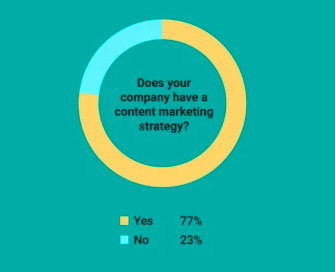
Your first play should be a content marketing strategy. The good news is that most of you have one. According to a SEMRush survey, 77% of organizations have a content marketing strategy!

Image: SEMRush

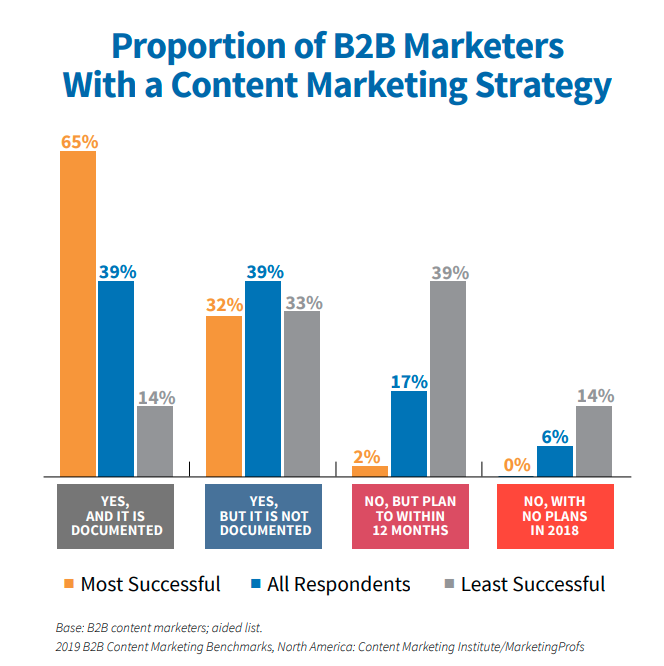
For those with a well-documented content marketing strategy, you can expect to benefit greatly. The Content Marketing Institute (CMI) reported that those that fit within this category are the most successful.

Image: CMI

Having a Strategy Doesn’t Always Mean Your Content Marketing Is Effective

Just because you have a strategy, it doesn’t mean it’s effective. This is something many organizations struggle with due to a variety of reasons. They don’t have leadership buy-in, resources are slim, it’s just words in a document, or it’s not really a cultural foundation.

It’s easy to get derailed with your strategy. It’s also something that’s living and breathing. It’s not static. Rather, so many things, internal and external, influence it. Just consider the pandemic impact. This global health crisis changed the message and strategy for basically every company.

However, you can’t dwell on your strategy and stop executing it because it’s not perfect. It never will be. You have to start somewhere with good enough and then look at your content performance analytics and data to determine if your strategy is on point or way off.

What Makes a Content Strategy Effective?

If you aren’t sure if your strategy is effective, then it’s time to find out. In general, the most successful ones have these attributes:

  • Specific definition of goals and the KPIs (key performance indicators) you’ll rely on to measure effectiveness.
  • Detailed and heavily researched buyer personas. You must really know your audience to develop content that will resonate with them.
  • Types of content (blogs, eBooks, webinars, video, etc.) you’ll use and how they align with your buyer persona preferences.
  • Channels you’ll use to disperse and distribute content (social, email, paid, etc.)
  • Tools you’ll need to develop content workflows, track audience behaviors, set up campaigns, aggregate analytics, and leverage automation.
  • Foundational language that should influence every piece of content you create (value prop, USP (unique selling proposition), elevator pitch, taglines, vision statement, and mission statement).
  • Content production goals (how much throughput do you commit to every month—check out these insights on blog frequency, for example).

If your strategy addresses all these points, you should feel pretty confident that it can be effective. The challenge for many is how to execute it.

Content Marketing Execution: Turning Strategy into Action

Coaches create game plans with precision, and then they attempt to execute it. They know they’ll have to course-correct along the way because the unexpected is inevitable. When you watch an NFL game, you know these guys are professional athletes, the best of the best, but you can also tell when they aren’t executing—dropped passes, sacked quarterbacks, and huge mental errors.

That can all happen in content execution as well. Strategists lay out the plans for a content team to be successful. Yet, the same challenges keep popping up. Some of the biggest around execution are consistency and content creation workflows.

Consistent Production and Content Workflows

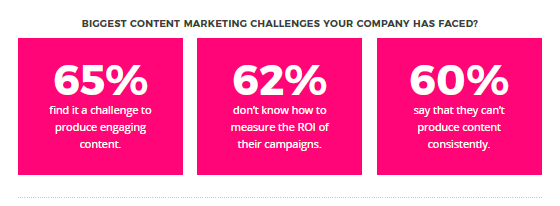
According to the CMI, 32% of marketers said their content workflows were either fair or poor. Additionally, other research confirmed that 60% of marketers find producing content consistently as one of their biggest challenges.

Image: Zazzle

There is certainly reason for friction here. However, it’s not difficult to improve this part of execution. Technology is the answer. A content marketing platform can streamline workflows, provide you with dynamic content calendars, and help you identify where the impediments are.

For example, you might have a few design resources, yet they’re necessary for almost all types of content. If that’s what’s slowing your production, you can consider hiring more in-house talent or outsourcing.

You’ll likely never have “enough” resources. But redistributing them and augmenting your team with outsourced talent can help you reach your content production goals.

Data Should Influence Execution

Execution isn’t on autopilot. The content performance data you generate and analyze should inform it. It could change your strategy, as well. For example, you may learn that your audience has a high preference for visual content over written content. You’ll change your execution of tactics based on this to meet your audience’s expectations better.

Execution Requires All Hands in the Same Circle

Sports teams huddle and put their hands together to show they are one. Your content marketing team should do the same when it comes to execution. Much of this comes down to accountability and transparency. When you have a technology platform that tracks the status of every project, you’ll have a clear picture of who isn’t playing their role.

Then it’s time to investigate the issue and find out what’s actually happening. It may be a time to coach up, add resources, or make a cut.

Finding the Right Balance for Your Business

Content marketing strategy vs. execution is a core concern for any organization committed to content marketing. Having the right balance means your strategy has all the essentials, and you refresh it regularly but aren’t getting caught up in it being perfect. On the execution side, it means analyzing why you aren’t meeting production goals and how to fix your strategy so you hit your goals.

These two areas are necessary for achieving wins in content marketing—more traffic, leads, and sales. And we can help!

If you’re ready to get more traffic to your site with quality content published consistently, check out our Content Builder Service.

Set up a quick consultation, and I’ll send you a free PDF version of my books. Get started today and generate more traffic and leads for your business.

By

Michael Brenner  is a Top CMO, Content Marketing and Digital Marketing Influencer, an international keynote speaker, author of “Mean People Suck” and “The Content Formula” and he is the CEO and Founder of Marketing Insider Group, a leading Content Marketing Agency . He has worked in leadership positions in sales and marketing for global brands like SAP and Nielsen, as well as for thriving startups. Today, Michael helps build successful content marketing programs for leading brands and startups alike. Subscribe here for regular updates.

Sourced from Marketing Inside Group

By M Muneer

By M Muneer

M Muneer is the managing director of CustomerLab Solutions, an innovative consulting firm delivering measurable results to clients.

Sourced from moneycontrol

By Manu Gupta

The raison d’être of a website is to draw potential customers and help generate leads. This can be achieved by an intelligent mix of strategies that include paid advertising, SEO, social media, and email marketing.

Website traffic is the lifeline of every business. More visitors to the website mean greater number of prospective customers coming across one’s products or services, which, in turn, will generate more sales. Hence, driving larger traffic to a website is really a no-brainer for businesses looking to make a name for themselves in the market.
For small- and mid-sized business owners, a website is an essential extension of their business itself, and for some, such as the online stores, it is the actual business. After achieving a pixel-perfect website, it’s important for businesses to divert their attention to drive substantial traffic to it.
Here are the five most effective ways of bringing traffic to one’s website:

1. Leverage paid advertising

Most of the strategies to drive traffic are free, requiring dedicated and consistent efforts and time. Towards this end, a strategy that can be more effective, easily measurable and provide quick results comparatively will be investing in paid ads. These include pay-per-click ads, social media ads, display ads and video ads. Pay-per-click ad campaigns will allow one’s brand to be at the top of Google search results whenever a search towards that end is carried out.
Social media ads such as Facebook ads are cheaper and allow brands to set highly-specific parameters like demographics, age, behaviour, location and interests so that ads are shown to the intended audiences. Display and video ads are visual ads that can be shown on third-party websites.

2. Implement good SEO strategies

Search Engine Optimisation (SEO) is the process of increasing the number of visitors to a specific website by ensuring a higher visibility for the site on the list of results given out by a search engine. Both on-page and off-page is an essential aspect of a successful website.
Backlinks, or creating links to other websites that can lead visitors to one’s website, especially are quite valuable for SEO as they represent ‘vote of confidence’ for search engine giants like Google. For SEO that drives positive results it’s important to ensure that the website and content are updated and relevant to those seeking one’s products or services. Appropriate keywords, captivating meta descriptions and valuable, catchy content are the deal-breakers in SEO. Sign up for our exclusive newsletters. Subscribe to check out our popular newsletters.

3. Be social

In the current digital era, a business can’t afford to not be on social media platforms. Globally, the usage of social media for marketing has doubled. One needs to be on social networks like Facebook, YouTube, Snapchat, Instagram and Twitter to reach out to their target audience.
No matter who the target audience is for a business, they are bound to be on a social network somewhere. The right way of connecting with them is through creating content specific to one’s industry or products so that it can draw followers in. Even for a niche market, one can find a following with consistency and premier quality content.
Also, using the right hashtags is equally important. People have become very selective about the content they consume and hence, they are resorting to hashtags as a way to filter and streamline the influx. Using hashtags smartly will enable businesses to target the right audience so that they are directed to their websites.

4. Invest in affiliate marketing

Affiliate programs allow brands to attract more traffic by tapping into other people’s users. Companies can publish their content on other websites and pay a commission on the sales generated. This way they can earn positive word-of-mouth for themselves. The pay-outs are made only when a genuine sale is made, which means there’s minimal risk involved. An affiliate program, once set up, can be left to go on autopilot so that one can focus on other aspects of their business. To get started, one must draw up a list of the best affiliate programs and then decide which can be appropriate for the purpose.

5. Use email marketing

Email marketing continues to be an effective channel for driving traffic to a website. It’s come a long way since the times of promotional blasts that were quite pesky for many customers. However, now email marketing involves building a well-thought-out sequence of newsletters or blogposts that can lead to more sign-ups that can forge long-lasting relationships.
In fact, even the basic and most primal welcome email is much improved than the old-school transactional kind. In its simplest form, email-marketing is a great option for showing off one’s latest blog post or for informing customers about an upcoming sale.
Summing it up Just creating an attractive website and waiting for the right audience to chance upon it won’t suffice. The competition is tough. Businesses need to adopt strategies to grow traffic on their websites. It’s important to focus on one’s target audience and quality of content to drive relevant traffic and get amazing results.
(Disclaimer: The views and opinions expressed in this article are those of the author and do not necessarily reflect the views of YourStory.)

By Manu Gupta

Sourced from YOURSTORY