Author

editor

Browsing

By

In a new report, researchers at Ranking Digital Rights lay out a prescription for fixing Facebook

In the face of the coronavirus outbreak, Facebook’s misinformation problem has taken on new urgency. On Monday, Facebook joined seven other platforms in announcing a hard line on virus-related misinformation, which they treated as a direct threat to public welfare.

But a report published this morning by Ranking Digital Rights makes the case that Facebook’s current moderation approach may be unable to meaningfully address the problem. According to the researchers, the problem is rooted in Facebook’s business model: data-targeted ads and algorithmically optimized content.

We talked with one of the co-authors, senior policy analyst Nathalie Maréchal, about what she sees as Facebook’s real problem — and what it would take to fix it.


In this report, you’re making the case that the most urgent problem with Facebook isn’t privacy, moderation, or even antitrust, but the basic technology of personalized targeting. Why is it so harmful?

Somehow we’ve ended up with an online media ecosystem that is designed not to educate the public or get accurate, timely, actionable information out there, but to enable advertisers — and not just commercial advertisers, but also political advertisers, propagandists, grifters like Alex Jones — to influence as many people in as frictionless of a way as possible. The same ecosystem that is really optimized for influence operations is also what we use to distribute news, distribute public health information, connect with our loved ones, share mediums, all sorts of different things. And the system works to various extents at all those different purposes. But we can’t forget that what it’s really optimized for is targeted advertising.

What’s the case against targeting specifically?

The main problem is that ad targeting itself allows anyone with the motivation and the money to spend it, which is anyone, really. You can break apart finely tuned pieces of the audience and send different messages to each piece. And it’s possible to do that because so much data has been collected about each and every one of us in service of getting us to buy more cars, buy more consumer products, sign up for different services, and so on. Mostly, people are using that to sell products, but there’s no mechanism whatsoever to make sure that it’s not being used to target vulnerable people to spread lies about the census.

What our research has shown is that while companies have relatively well-defined content policies for advertising, their targeting policies are extremely vague. You can’t use ad targeting to harass or discriminate against people, but there isn’t any kind of explanation of what that means. And there’s no information at all about how it’s enforced.

At the same time, because all the money comes from targeted advertising, that incentivizes all kinds of other design choices for the platform, targeting your interests and optimizing to keep you online for longer and longer. It’s really a vicious cycle where the entire platform is designed to get you to watch more ads and to keep you there, so that they can track you and see what you’re doing on the platform and use that to further refine the targeting algorithms and so on and so forth

So it sounds like your basic goal is to have more transparency over how ads are targeted.

That is absolutely one part of it. Yes.

What’s the other part?

So another part that we talk about in the report is greater transparency and audit ability for content recommendation engines. So the algorithm that determines what the next video on YouTube is or that determines your newsfeed content. It’s not a question of showing the exact code because that would be meaningless to almost everyone. It’s explaining what the logic is, or what it’s optimized for, as a computer scientist would put it.

Is it optimized for quality? Is it optimized for scientific validity? We need to know what it is that the company is trying to do. And then there needs to be a mechanism whereby researchers, different kinds of experts, maybe even an expert government agency further down the line, can verify that the companies are telling the truth about these optimization systems.

You’re describing pretty high-level change in how Facebook works as a platform — but how does that translate to users seeing less misinformation?

Viral content in general shares certain characteristics that are mathematically determined by the platforms. The algorithms look for whether this content is similar to other content that has gone viral before, among other things — and if the answer is yes, then it will get boosted on the theory that this content will get people engaged. Maybe because it’s scary, maybe it will make people mad, maybe it’s controversial. But that gets boosted in a way that content that is perhaps accurate but not particularly exciting or controversial will not get boosted.

So these things have to go hand in hand. The boosting of organic content has the same driving logic behind it as the ad targeting algorithms. One of them makes money by actually having the advertisers pull out the credit cards, and the other kind makes money because it’s optimized to keeping people online longer.

So you’re saying that if there’s less algorithmic boosting, there will be less misinformation?

I would fine-tune that a little bit and say that if there is less algorithmic boosting that is optimized for the company’s corporate profit margins and bottom line, then yes, misinformation will be less widely distributed. People will still come up with crazy things to put on the internet. But there is a big difference between something that only gets seen by five people and something that gets seen by 50,000 people.

I think the companies recognize that. Over the past couple years, we’ve seen them down rank content that doesn’t quite violate their community standards but comes right up to the line. And that’s a good thing. But they’re keeping the system as it is and then trying to tweak it at the very edges. It’s very similar to what content moderation does. It’s kind of a “boost first, moderate later” logic where you boost all the content according to the algorithm, and then the stuff that’s beyond the pale gets moderated away. But it gets moderated away very imperfectly, as we know.

These don’t seem like changes that Facebook will make on its own. So what would it take politically to bring this about? Are we talking about a new law or a new regulator?

We’ve been asking not just the platforms to be transparent about these kinds of things for more than five years. And they’ve been making progress in disclosing a bit more every year. But there’s a lot more detail that civil society groups would like to see. Our position is that if companies won’t do this voluntarily, then it’s time for the US government, as the government who has jurisdiction over the most powerful platforms, to step in and mandate this kind of transparency as a first step toward accountability. Right now, we just don’t know enough in detail about what, about how, the different algorithmic systems work to confidently regulate the systems themselves. Once we have this transparency, then we can consider smart, targeted legislation, but we’re not there yet. We don’t… we just don’t know enough.

In the short term, the biggest change Facebook is making is the new oversight board, which will be operated independently and supposedly tackle some of the hard decisions that the company has had trouble with. Are you optimistic that the board will address some of this?

I am not because the oversight board is specifically only focused on user content. Advertising is not within its remit. You know, a few people like Peter Stern have said that like, later down the road. Sure, maybe. But that doesn’t do anything to address the “boost first, moderate later” approach. And it’s only going to consider cases where content was taken down and somebody wants to have it reinstated. That’s certainly a real concern, I don’t mean to diminish that in the least, but it’s not going to do anything for misinformation or even purposeful disinformation that Facebook isn’t already catching.

Correction: A previous version of this post stated that the report was the work of New America’s Open Technology Institute. While the report was published on the Open Technology Institute website, it is the sole work of Ranking Digital Rights. The Verge regrets the error.

By

Sourced from The Verge

By Joe McKendrick

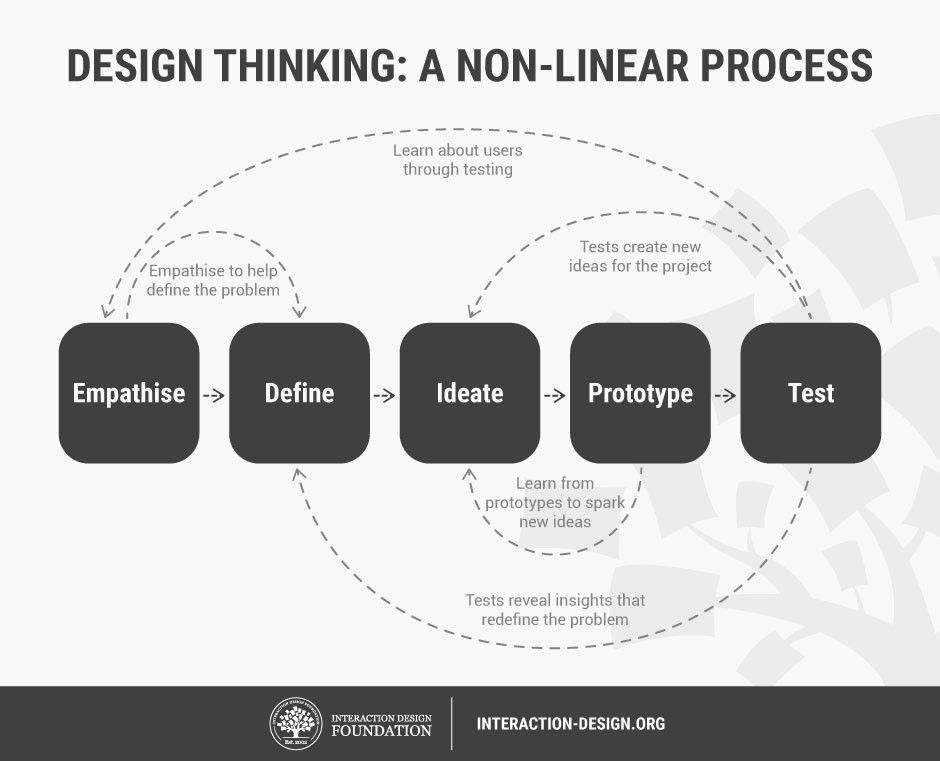
It takes design thinking to do digital transformation right. That’s the word from Teonna Akinsete and Kenton Hankins, both with Pega. In an insightful post, they describe the essence of design thinking as “co-production” with end-users of software and related products, to “encourage empathy and collaboration.”

However, they add, this is easier said than done, even in enterprises that seem to have robust design thinking initiatives. “In most digital transformation projects, the goal is to design a product or service that users or customers will love,” they observe. “Traditionally the design team will employ user-centered methods, such as conducting user research and usability testing. These methods are still essential to the design process, but when it comes to impactful collaboration, they only really scratch the surface.” The best way to approach productive design thinking “is to make users and stakeholders part of the entire design process; not just at certain touch points.”

Surveys out of McKinsey put a sharp point to this challenge, noting that many enterprises are still struggling with the right approach to design thinking. Companies that excel at design grow revenues and shareholder returns at nearly twice the rate of their industry peers, the survey finds. However, design thinking is not something that pops up overnight. “What we found was striking,” the McKinsey survey team, led by Melissa Dalrymple, points out. “Some 90 percent of companies weren’t reaching the full potential of design, even as, in the past five years, double the number of companies have added senior design roles to their organization.”

Overall, McKinsey finds, organizations with the most robust design initiatives increased their revenues and total returns to shareholders substantially faster than their industry counterparts did over a five-year period—32 percentage points higher revenue growth and 56 percentage points higher growth for the period as a whole.

Dalrymple and her co-authors make the following recommendations to deepen design thinking into every enterprise activity:

Create bold, user-centric strategies. “Embrace user-centric strategies, improving not only products and services but also the full user experience and, in some cases, the organization itself.”

Embed the design leader into the C-suite. As part of its study, McKinsey interviewed 200 design leaders, and they focus on three key players: customers, employees, and designers themselves. The key is to “embed your senior designer into the C-suite while cultivating a collaborative top-team environment in which your design leader will thrive,” Dalrymple and her co-authors state.

Get the metrics right. Only 14 percent of the companies in the McKinsey survey se are currently setting quantified targets for their design leaders. “Make the most of user data through a balance of quantitative and qualitative design metrics and incentives that enhance user satisfaction and business performance.”

The bottom line is everyone should engage in design thinking. “Gone are the days when the design department receives instructions via email and creates a fully fleshed-out design before aligning with the product owner,” say Pega’s Akinsete and Hankins. “In a design thinking scenario, everyone works together using all available tools, and the team selects winning ideas to go into the final product brief.”

Feature Image Credit: Getty

By Joe McKendrick

I am an author, independent researcher and speaker exploring innovation, information technology trends and markets. I am also a co-author of the SOA Manifesto, which outlines the values and guiding principles of service orientation in business and IT. I served on the organizing committee for the recent IEEE International Conference on Edge Computing, and was active on the program committee of the International SOA and Cloud Symposium series. Much of my research work is in conjunction with Forbes Insights and Unisphere Research/ Information Today, Inc., covering topics such as cloud computing, digital transformation, enterprise mobility, and big data analytics. I am also a contributor to CBS interactive, authoring the ZDNet “Service Oriented” site. In a previous life, I served as communications and research manager of the Administrative Management Society (AMS), an international professional association dedicated to advancing knowledge within the IT and business management fields. I am a graduate of Temple University.

Sourced from Forbes

By Daniel Sparks

This “once-in-a-lifetime consumer shift” looks extremely promising.

In The Trade Desk‘s (NASDAQ:TTD) earnings call late last month, CEO Jeff Green was incredibly bullish on one area of the data-driven digital ad buyer’s business: connected TV (CTV). Though the CEO has been bullish on CTV for years, his exceptionally rosy outlook for the nascent advertising channel during the company’s earnings call is worth a close examination. After all, with the fourth-quarter earnings report coming out on Feb. 27, the impressive quarterly update was quickly drowned out by the coronavirus outbreak that has grabbed the attention of investors all over the world.

In the fourth-quarter call, Green predicted an “accelerated shift” from advertiser spend in traditional TV to CTV in 2020. He backed this view up with a forecast for CTV ad spend on its platform to double again this year.

Here’s a closer look at why CTV could be a major catalyst for The Trade Desk in 2020.

A big opportunity

While The Trade Desk makes money from digital advertisements of all types, the tech company has been investing aggressively in CTV for years. Shareholders, of course, have been on board with these investments since the market opportunity is enormous. CEO Jeff Green thinks the global advertising industry will grow from about $725 billion today to about $1 trillion in seven years, with video representing half of this spend. CTV specifically, will take a “quantum leap forward” during this time, Green said in the company’s fourth-quarter earnings call.

One way to break down this opportunity is to look at CTV ad spend in the U.S. relative to total TV advertising spend. There’s about $70 billion spent on TV advertising in the U.S., yet total money spent on CTV ads domestically in 2019 was about $7 billion, according to eMarketer.  With an estimated 25% of U.S. households expected to be cord-cutters by 2022, CTV ad spend is bound to rise. Indeed, eMarketer estimates that CTV ad spend will grow from about $7 billion in 2019 to $11 billion in 2021, with the portion of this spend that is transacted programmatically (The Trade Desk’s specialty) increasing from $3.5 billion to $6.4 billion over this same time frame. And keep in mind that Green believes nearly 100% of advertising will be transacted programmatically eventually.

During the call, Green was adamant about the runway ahead, saying, “I know we talked quite a bit about CTV on these calls in the past, but we are in the middle of a once-in-a-lifetime consumer shift to connected devices and streaming content.”

Strong momentum

Of course, investors don’t need Green’s optimism to be convinced at how exciting the opportunity is in CTV. Investors can just look at the numbers.

  • CTV ad spend on The Trade Desk’s platform grew 137% year over year in 2019
  • In Q4, the company’s CTV ad spend increased about 100% year over year.
  • Based on a strong start to 2020, management guided for CTV ad spend to grow 100% in 2020.

Even more, thanks to The Trade Desk’s highly profitable business model, with adjusted earnings before interest, taxes, depreciation, and amortization (EBITDA) coming in at 32% of total 2019 revenue, the company can invest aggressively in CTV and grab as much share early in the game as possible.

CTV is a massive tailwind for programmatic advertising — and The Trade Desk is a great way to play this opportunity.

Should The Trade Desk be on your buy list? It’s on ours…

Motley Fool co-founders Tom and David Gardner have spent more than a decade beating the market. In fact, the newsletter they run, Motley Fool Stock Advisor, has tripled the S&P!*

Tom and David just revealed their ten top stock picks for investors to buy right now. The Trade Desk made the list — but there are 9 other stocks you may be overlooking.

Feature Image Credit: Getty Images

By Daniel Sparks

Daniel Sparks is a senior technology specialist at The Motley Fool. He has previously served in the U.S. Army on active duty and holds an MBA from Colorado State University. Investing is his primary passion. Follow him on Twitter to get links to his articles, quotes from books he reads, and a look at the sources that inspire him. 

Sourced from The Motley Crew

By Genefa Murphy

What makes a modern CMO?

The chief marketing officer (CMO) has historically worn many hats: the ideas person, the brand person, the creative thinker, the design person, the list goes on. Despite having a critical role in the organization, they weren’t always connected to the core strategy of the business, the financials and the transformations. In the past decade though, the savvy CMO has helped instigate a shift in the mindset of others when it comes to the CMO’s role in the C-suite.

Closer To The Customer, Closer To Strategy

In an era where marketplaces are moving faster than ever, smart organizations are inviting the CMO to sit at the table with the CEO and other C-level executives — not just for being the creative one, but for representing the voice of the customer in business discussions.

Today’s CMO needs to educate executives and the organization at large about how the market reacts to business decisions, the strategies it deploys and the directions it takes. Ultimately, a highly customer-centric business is a business that will retain its customer base, while also finding new business opportunities and building a lasting, loyal following.

Added Insights Yield Greater Return

Over the past several years, there has been a tremendous influx of dedicated marketing applications that allow the CMO and marketers to better track, manage and optimize marketing’s impact on the business. This increase in tools has helped CMOs run the “business of marketing” while providing a wealth of data that can deliver business insights.

Leveraging customer insights allows the CMO to be the business’s North Star, representing and understanding the voice of the customer at every turn. Helping the leadership team of an organization to truly understand the mind of the customer is critical. In today’s world where business-to-business (B2B) and business-to-consumer (B2C) companies alike are fighting to keep customers engaged, and these customers have higher expectations than ever, having the insights to provide personalized, custom experiences is key.

Having a strong brand is not enough. Having a strong product or technology offering is not enough. Having a good advertising campaign is not enough. I’ve found that customers want to feel a connection, an emotion  —they don’t just want a brand; they want brand intimacy. Companies that establish intimacy and focus on the experience and the engagement are able to outperform those that focus only on pure financial metrics in terms of revenue and profit.

The Difference Between Brand And Brand Intimacy: The CMO As The Change Agent

Yes, consumers want their needs fulfilled, but they also want the brands they engage with to resonate with their beliefs and lifestyles, according to “The Brand Intimacy Study 2019,” published by MBLM and Praxis Research Partners. Consumers want to feel that selecting a certain brand has meaning and value — that it will make them more capable and more connected.

Brands need to become embedded in the rituals of an individual and/or team, not just by habit, but by need. Software companies like Slack, Box, Monday and WhatsApp have achieved this. It has become a daily ritual for development teams that use Slack to collaborate on sprints to check into the app. Is there a new notification? Have I missed something?

Modern CMOs need to change their way of thinking and where they spend their effort. They need to balance their time between the creative and the analytics, and prioritize differently to bring new skill sets into the organization. Those who are data-driven, who can help mine data and turn it into business insights, will be successful in the long run.

The rise in demand for brand intimacy, coupled with the rise in technology and available insights at the hands of the CMO, has created a perfect storm for CMOs to have that seat at the executive table. They are the ones who bring the business something that few others can: blue-sky thinking and data-driven business insights that can ultimately drive customer loyalty. As the CMO uncovers and delivers business insights, they’ll find themselves not only at the table, but right next to the CEO.

Feature Image Credit:Getty

By Genefa Murphy

Dealing with Digital Transformation every day as CMO of Micro Focus, one of the world’s top 10 enterprise software companies @GenefaMurphy.

Sourced from Forbes

By Drew Kraemer.

By the year 2022, Amazon is expected to earn more than $350 billion in global revenue. And savvy brands and retailers are reaping the benefits of this tremendous growth. However, it’s becoming more complex to manage and take advantage of its capabilities. To help brands do this, I’m sharing six ways to grow your Amazon business in 2020. Keep these recommendations in mind when your brand refreshes its strategy.

1. Embrace Trial And Error

One of the most important things we’ve learned over the years is the importance of trial and error on Amazon. Since the marketplace is always changing, we’ve learned the lesson that what once didn’t work is worth trying again.

Trial and error are important for both new and routine campaigns. And, in 2020, brands should commit to pushing the envelope. In today’s e-commerce landscape, brands must take their strategies to the next level. To do so, in our experience, persistence and innovation are key.

For example, you could test different techniques in Amazon’s back end or on the product detail pages. Through this, you can consistently find new ways to improve the shopper experience and add efficiency to your processes.

Our technical analysts have also unveiled opportunities for clients by testing new bundles and pack sizes. This requires time, research and skill to approach in a way that works for your unique business. Yet, when bundles and pack sizes are popular, it can create impressive momentum for a brand’s catalog.

2. Diversify Your Advertising Mix 

I’ve shared the importance of using both programmatic and search advertising before. To reiterate, we have seen the best results when implementing both options. Using Amazon DSP (programmatic) capitalizes on the shopper’s intent captured through Amazon Advertising (search) campaigns. In 2020, we expect more clients and brands to adapt to this practice. We also expect brands and retailers to introduce new tactics such as over-the-top (OTT) advertising and Sponsored Brand video ads.

The results driven by these campaigns are important, but the insights associated with reporting are invaluable. Diversifying your brand’s advertising mix will increase awareness, discoverability and sales. But it will also expand your brand’s knowledge of consumer behavior and allow you to refine your approach if needed.

3. Cater To Mobile Shoppers

Each year, mobile is becoming more important to those of us in e-commerce. Optimizing on Amazon is possible, but it requires specific knowledge of best practices. This can apply to a product’s detail page, A+content, Store, advertising campaigns, and more. Prioritizing this will protect the customer’s experience and benefit other aspects of your brand’s Amazon presence.

For example, the Buy Box is more prominent on mobile devices and brands need to optimize accordingly. Doing so will improve the chances of making a sale. After all, 79% of shoppers make online purchases using a mobile device. We recommend regularly monitoring Buy Box ownership across your catalog and taking your product detail pages up a notch. Remember to include high-quality design and images and keep copy short and easy to read.

4. Practice Data-Backed Decision-Making

As I touched on above, the insights and data available through Amazon are extremely useful if you know how to use it to your advantage. In particular, advertising data is developing and continues to get better. Brands should build the knowledge to leverage attribution, new-to-brand, seller performance and more to regularly refine its strategy.

There’s nothing wrong with trying new things, but using historical data to make strategic decisions almost always pays off. If you don’t reach the goal you were intending to hit, you can still learn something valuable in the process.

5. Harness The Power Of Social Media 

Brands can drive traffic to their listings in more ways than advertising solely on the channel. There is a number of social media platforms to leverage and link to product detail pages or Storefronts. I recommend linking through advertisements, social posts or a mix of the two options.

Including social media in your brand’s Amazon strategy expands the reach of your products. It also is an opportunity to gain visibility for your brand without having to compete with listings in Amazon’s search results.

6. Focus On Earning More Customer Reviews

We’ve discussed the importance of customer reviews and user-generated content many times. This year, and well into the future, reviews will heavily influence whether shoppers purchase a product.

In fact, 91% of shoppers are more likely to make a purchase after reading positive online reviews. As it applies to Amazon, reviews are an essential tool to encourage customers to make a purchase if they’re undecided.

There are different steps brands can take to increase the likelihood of receiving positive reviews. But above all, we stress the importance of providing a great customer experience. Many negative reviews on Amazon include feedback associated with being misled or having unmet expectations. Fully optimizing your brand’s listing will allow shoppers to fully understand what your product is and what they can expect. As a result, the chances of receiving good feedback will be greater.

Brands that sell on Amazon will always have something new to try or learn different ways to grow their performance on the channel. These are just a handful of examples to get you started.

Feature Image Credit: Getty

By Drew Kraemer

Marketplace Strategy is a strategic Amazon growth partner for the world’s greatest brands. Visit Marketplace Strategy’s Website

Sourced from Forbes

By Jamie Johnson.

Many businesses struggle to drive more traffic to their website. If you’re not getting as much traffic as you’d like, these five strategies will help.

You worked hard to create a website for your business in hopes that it would bring in new customers. But as the weeks and months go by, your traffic never seems to improve. Here are five ways you can begin driving more traffic to your site.

Do a full website audit

If you’re not getting as much traffic as you’d like, you’ll probably want to do a website audit. An audit helps you identify any issues that are preventing your site from getting more visitors and conversions.

You can do this by accessing a website auditing tool. These tools will check for technical problems, identify any broken links and point out duplicate content. It will also determine whether or not your mobile and desktop loading speeds need improvement.

Take advantage of SEO strategies

One of the best ways to bring more traffic to your site is by taking advantage of SEO. This involves strategically using keywords in your page descriptions, meta descriptions, image alt-text, blog posts and more.

A good SEO strategy can help you rank higher in Google, so people who are searching for what you have to offer can find you. Keep in mind, though, that SEO is a long-term strategy and will not result in overnight success.

If you’re not sure where to start, there are a variety of free and paid SEO tools available. These tools can help you identify relevant keywords, perform competitor research and more.

A good SEO strategy can help you rank higher in Google.

Guest post on other websites

One of the best ways to boost your SEO strategy is by guest posting on credible websites. When you guest post on a high-authority website, you’ll gain a backlink to your site. This improves your website’s credibility and can help your ranking on Google.

Guest posting can also drive referral traffic back to your site. Guest posting regularly can be a great way to bring in an additional source of traffic to your website.

Utilize social media

Hopefully, you’re already using social media for your business. But if you aren’t or if you haven’t been as consistent as you would like, now is a great time to start. Utilizing social media is a great way to engage customers and boost traffic to your site.

Facebook, Instagram, Pinterest and YouTube can all drive a lot of traffic to your website. By assigning someone to be in charge of engaging with your community and responding to comments, your social media strategy will be more effective, and it will help you get ahead of potential problems or customer complaints.

Invest in paid advertising

Social media is a great way to engage with your customers and get in front of new potential customers. But it’s not as easy as it used to be to show up in your customers’ newsfeeds. Thanks to algorithm changes, many of your social media posts may go largely unnoticed.

This is why paid advertising can be so helpful. Using Facebook ads is a great way to get in front of potential customers on Facebook and Instagram. And you can use paid advertising on Google to drive more traffic to your site and increase your conversions.

Just make sure you think carefully about what your goals are before investing in advertising. Of course, you should also keep your customers top of mind and think about the type of advertising strategy that will resonate most with them.

CO— aims to bring you inspiration from leading respected experts. However, before making any business decision, you should consult a professional who can advise you based on your individual situation.

Feature Image Credit: From implementing a solid SEO strategy to engaging on social media, there are several effective ways to increase traffic to your website. — Getty Images/golibo

By Jamie Johnson

Sourced from U.S. Chamber of Commerce

By Imran Tariq.

How to ensure you’re setting yourself up for success.

Social media and Google advertising campaigns have continued to grow in recent years. Because entrepreneurs and ad managers can generate a highly specific audience based on their customer personas, the ROI to online ad campaigns is substantial. However, to a first-time ad campaign creator, the entire process can feel a bit intimidating.

How do you define your audience? Which advertisement idea will work? How do you set a budget? The process should be iterative, meaning it won’t be perfect on your very first try. But these following four key ingredients will help you create a first ad campaign that you can be proud of: one that you can add onto and change as you receive data.

1. Determine your goal

First, it’s important to understand what your goal is. This will drive all decisions about the advertising campaign. For some companies, sales drive all of their advertising efforts. For others, it’s simply traffic or exposure. Define what a set of successful results will look like for your company.

This is always part of a larger conversation regarding your sales cycle. If you have a funnel that incorporates an email list, a webinar or a Facebook group, perhaps your ad spend is best spent moving potential customers into the funnel rather than trying to immediately take them to the sale.

2. Use high quality visuals

The average person has the attention span of a goldfish, and this is exacerbated during their social media scrolls or Google searches, when they’re overwhelmed with information and so much to look at. That’s why it’s critical to use large lettering and high quality visuals. Paul Getter, the founder of The Internet Marketing Nerds, recommends “using natural, everyday photos and not the more staged, professional-looking pictures. They invoke curiosity.”

If a photo looks too much like a stock photo, your customers will see it as an advertisement. This is also why photos generated by influencers work so well. “It’s important to recognize, however, that catching a person’s attention is an always-evolving art. What worked yesterday might not work today,” Getter added. Make sure to switch up your strategy until you find one that gets you the results you’re looking for.

3. Conduct market research with a split test.

Once you’ve published your first few ad campaigns, it’s a good idea to engage a split test (also known as an A/B test). A split test enables you to put two ads next to each other and see which performs better. This judgment will typically come down to one key performance indicator.

You’ll be able to tell from a split test if one of your advertisements is more effective than another on these KPIs. From there, make a decision on how you’ll invest moving forward. It’s possible that one ad could perform well by one indicator, and the other could perform well by another. This is why it’s important to know what your ad goals are.

4. Continue to iterate on your ad audience

Finally, remember the final key ingredient is your audience specification. If your ad campaign isn’t performing to your expectations, it could be an issue with how you’re targeting your audience. Targeting is both an art and a science.

Some marketers recommend using psychographics to better target an audience. This goes beyond mere demographics and into more specificity, such as a target audience’s motivations and values. These are good to know in constructing your ad messaging generally speaking, so invest time in understanding these psychographics, then apply it to your audience targeting, too.

Advertising knowledge is a muscle that’s strengthened with time and experience. Get started on the social media sites that your ideal customer most frequently visits, and create a detailed overview of data from each campaign. Every data point can be used moving forward.

Feature Image Credit: UpperCut Images | Getty Images

By Imran Tariq

Co-Founder and CEO of Webmetrix Group

Sourced from Entrepreneur Europe


By Brody Dorland  

Getting the right content in front of the right buyer is the heart of well-deployed content marketing. When you know your customers and what’s important to them, the content you develop will be more relevant and boost your conversions.

To do this efficiently and at scale, using audience segmentation to better target customers is critical. Once you can segment your audience, the ability to focus, personalize, and connect will be more easily achieved.

What Is Audience Segmentation?

Audience segmentation is a strategic marketing exercise that involves creating subgroups within your customer profiles based on like characteristics. These segments can be defined by several different aspects, including:

  • Demographics: location, age, title, industry, income, education, etc.
  • Behaviors: any interactions with your brand across all channels
  • Psychographics: beliefs, values, and attitudes
  • Firmographics: business characteristics like company size, B2B vs. B2C, industry vertical, etc.

We’ll develop these ideas further in a bit, but for now, simply think of audience segmentation as using parameters to organize and sort individuals.

Do You Know Your Audience?

audience segmentation - do you know your audience?

Before you begin to develop audience segments, your first move should be to create or update buyer personas. Your buyer personas represent fictional target customers and include general information, such as demographics, motivations, preferences, and more.

Beyond just having customer outlines, your buyer personas should be integrated with your content strategy. These elements need to be connected to ensure your content themes and plans align with what your buyers expect and need in relation to content.

Knowing your customers requires market research, as well as looking at your own data. By reviewing your content analytics, you can learn which subjects, formats, and phrasing resonated the most with customers.

Why Bother with Audience Segmentation?

Many brands, especially B2B, tend to create content for all (a.k.a one-size-fits-all content). They develop a wide range of blogs, videos, eBooks, and more, without focusing on personalizing the content experience for specific segments or personas.

But content marketing isn’t a one-size-fits-all initiative—not if you want to use it to accelerate growth. If you fail to personalize your initiatives and content assets down to specific audiences, your brand will come off as generic and mediocre. Buyers will quickly recognize that a content piece is irrelevant to them, bounce, and seek out brands that seem to be talking just to them. Segmentation is the most important starting point for introducing personalization into your efforts. Without it, you’ll have no consistent way to ensure the right content reaches the right audience.

Segmenting In-Depth

Looking back at the four different ways in which to segment your customers, let’s go more in-depth and look at some examples.

Demographics

Using demographics is the most common method of segmentation as it’s usually the easiest. A lot of demographic data is readily available to you based on your current customer base. It’s also the most used method because it’s highly effective.

For example, if you sell lawn equipment across the country, segmenting by location makes sense because those in the desert won’t need the same items as those living in areas of lush greenery.

Behaviors

Segmenting by behaviors requires data analysis and a way to track interactions. You’ll be analyzing what they buy, when they buy it, what products they click on, as well as other types of actions like engaging on social media, opening emails, or downloading content. There are hundreds of different interactions, so you’ll need to define which ones matter the most.

Filtering groups based on actions allows you to personalize the content they’ll receive. For example, if you add a tag to your customer list to identify those that requested a quote but haven’t responded. You can then draft a drip campaign that offers incentives or stresses urgency with messages that the quote will expire. Because you know where they are in the customer journey, the content will speak to them more precisely.

Psychographics

Psychographics is the most challenging way to segment, but it’s certainly not impossible. You just have to dig deeper into your data to find patterns that would indicate certain emotional responses. Ultimately, you’ll be trying to align content with your customer segment’s value set so they feel connected to your brand.

For example, if you can determine that a segment of your audience prioritizes corporate responsibility as a differentiator, you can create content that illustrates your brand’s stance. If this is really important to some of your buyers, they’ll be attracted to this type of content and your company.

Firmographics

Segmentation based on firmographics is normally only used within the B2B marketing context. Firmographic data often lives within a company’s CRM and can be easy to aggregate and analyze, provided it’s being captured and stored within the prospect or customer database.

For example at DivvyHQ, part of the registration process for starting a 14-day trial of our software requires prospects to provide the following:

  • Company Name
  • Company Size (number of employees)
  • Company Type (corporation, non-profit, etc.)
  • Job Title
  • Their role in their content process (I manage a team, I’m a content producer, etc.)

Later on when engaging with these prospects, we can capture additional information, like industry vertical and whether they are a B2B or B2C company.

Capturing and analyzing this information with regard to your existing customers can provide a wealth of knowledge and contribute significantly to your audience segmentation process.

Audience Segmenting Can Advance Your Content Marketing

audience segmentation

Audience segmentation can add fuel to your content marketing tactics and deliver a greater return on investment (ROI) for your efforts in a few specific ways.

Precision Personalization

Relevance is one of the most influential elements when it comes to making a buying decision. Personalized content drives connections and performs much better than content that is not. Now it’s time to look for opportunities for personalization in your content plan. You can direct specific content to buyers via email or use technology to display dynamic content on your website. This level of personalization is sure to accelerate the sales process.

Pipeline-Specific Content

Nurturing your audience is imperative to get them to convert, especially if you have a longer sales cycle. Most buyers want to consume multiple pieces of content before they are ready to buy, so you need to ensure that you have assets available for every step of the funnel. You’ll determine where they are in the funnel based on their behaviors; then, you can launch drip campaigns to move them further down the path to yes.

Expand Your Content’s Reach

Developing highly targeted content delivers additional benefits to help you expand your reach. First, it improves your search rankings for keywords that are specific to how an audience segment would search (i.e., marketing tips for insurance companies). Second, it can also amplify your content on social media with very specific hashtags. Those searching the hashtag may find your content and become a new prospect for your brand.

Audience segmentation is essential to an effective content marketing plan. By defining your audience and what’s important to them, your content marketing will be more relevant, engaging, and consumable.

For more tips, ideas, and inspiration like this on content marketing, subscribe to our blog.

By Brody Dorland  

Brody leads the DivvyHQ team with nearly 20 years of experience in the trenches of corporate marketing, advertising agencies, entrepreneurship and establishing himself as one of country’s top digital marketing strategists. Brody’s primary focus is helping companies and marketing agencies shift their mindset, structures and processes so that they will think, act and consistently deliver like publishers.

Sourced from DIVVY HQ

By Eric J. Savitz

U.S. e-commerce activity recently spiked 25% from earlier in March, as Americans hunkered down in the face of the rapid spread of the coronavirus, new data from Adobe shows.

The Adobe Digital Economy Index reflects data from the software company’s analytics tools, which are used by 80 of the top 100 U.S. web retailers. The index tracks sales of 55 million individual products. Adobe (ticker: ADBE) said that from March 13-15, daily U.S. e-commerce sales jumped 25% from earlier in the month, largely driven by a doubling of daily online grocery sales.

One thing to note about the data is that each data point covers a different time period. “Many of these product categories are having their inflection points occur at different times, and that’s why the measurement windows are falling at varied time periods,” an Adobe representative said. “The computers category for instance, didn’t really see an increase until mid-March, while groceries experienced their boost in early February, and products like hand sanitizers were spiking as early as late January…so in order to profile the magnitude of the growth swing and consumer buying behavior, we’ve had to set measurement periods, during the time that they occurred, so that we don’t miss their growth trajectory and/or mischaracterize the impact in demand.”

Not surprisingly, Adobe found huge spikes in online purchases of some cleaning products and non-perishable foods.

  • From January to March 11, Adobe said, sales in the “virus protection” category, including hand sanitizers, gloves, masks, and anti-bacterial sprays surged 807%.
  • Purchases of over-the-counter cold, flu and pain medicines were up 217%.
  • Toilet paper sales spiked 231%.
  • Sales of non-perishable canned goods and shelf-stable goods increased 87%.
  • From March 11-15, daily orders for fitness equipment (such as kettlebells, dumbbells, treadmills, etc.) were up 55% from the first 10 days of the month.
  • Between March 11 and March 25, online orders for computers (laptop, desktop and more) increased 40% from March 1-10.
  • Adobe said average sales at online apparel stores dropped 13% in the March 12 to March 25 period, versus a baseline period of Feb. 1 to March 10. But the company said that overall apparel-category sales were running about flat compared with the period before the virus outbreak, attributable to promotional activity at several larger retailers.
  • Adobe found a spike in daily “buy online, pickup in store” transactions, up 62% from Feb. 24 to March 21.

Feature Image Credit: Adobe found a spike in daily “buy online, pickup in store” transactions, up 62% from Feb. 24 to March 21. Photograph by Matt Cardy/Getty Images

By Eric J. Savitz

Sourced from Barron’s

By Jamie Davies.

Both BT and O2 have been given a slap on the wrist for airing misleading advertisements in the UK aired across the course of 2019.

While the misleading claims from telcos are starting to be weaned out through new regulations, old habits occasionally creep through. Once again, creative marketers are determined to undermine the trust the consumer places in the telcos by making misleading, unsubstantiated or just inaccurate statements.

All of the telcos are guilty of this nefarious marketing practice, though looking at the number of complaints directed towards the Advertising Standards Authority (ASA), BT, Virgin Media and Vodafone are particularly underhanded.

Starting with BT, the complaints were made by Virgin Media, Vodafone and fourteen members of the public, suggesting the team made misleading claims for the performance and technical capabilities of its wifi products.

Firstly, the accuracy of two statements were called into question; ‘only we guarantee wifi in every room’ and ‘we guarantee a strong signal in every room’, through the deployment of additional wifi discs which could be placed around the home. BT has said it has data from trials with 1078 customers which prove in 96% of cases full coverage could be achieved throughout the home with one additional disc, while the remainder were satisfied with two additional discs. Only one customer was entitled to a £20 discount as coverage could not be given throughout the home with the additional discs.

The ASA conceded that customers were likely to understand that exceptional circumstances could be applied, however the statements were too bold and promised too much, while the science to back up the claims could not be effectively reproduced on scale. The data was also not specific when it came to devices or time of day.

“…we were concerned that there appeared to be no reliable, reproducible methodology whereby each room or the further points from the router were tested, with no data reporting which rooms of the house had been tested,” the ASA statement reads.

The evidence did not show what speeds were being achieved on the devices, so we were unable to verify that the signal was strong enough to provide the minimum speed needed to carry out typical online activities.”

The second complaint was that BT advertising suggested these devices would not need to be plugged in. BT said it was common knowledge that electrical products would have to be plugged in, but in a world of wireless devices, this is simply not true. BT is either trying to pull a fast one or demonstrating incompetence with this response.

In terms of the O2 complaints, these were from Virgin Media and Three, questioning whether the ‘Custom Plans’ communication was accurate and appropriately comparing the O2 to tariffs to those of rivals.

In short, both complained that the adverts were not making it clear what tariffs were being compared, while Three suggested results of an overpayment calculator on O2’s did not reflect the actual costs charged by competitors and Virgin Media pointed out that it and Sky also offered custom plans. This appears to be a simpler case to consider for the ASA, as all telcos have made efforts to ensure customers are not continually charged for devices once the products have been paid for.

‘Custom Plans’ have been a significant element of the O2 advertising assault over the last 12-18 months, and looking at the financial statements, it appears to be a very successful campaign to entice customers away from rivals.

Naturally, O2 tried to defend its position, claiming it was doing everything possible to compare comparative deals and that the consumer could make their own reasonable assumptions, though the ASA clearly disagreed.

According to the ruling, the explanation below the overpayment calculator were not detailed enough, O2 did not do enough to indicate rivals also have unbundled deals and it could not make such direct assertions as it does not know the prices rivals charged for devices. The advertisement was deemed misleading as much of the claims were based on assumptions and inaccurate statements.

Misleading advertising is not something which is going to go away anytime soon, and unfortunately the telcos don’t seem to want to sort their own problems out. The dreaded ‘up to’ metric has been removed from the landscape, but this was only down to regulatory intervention from Ofcom not the telcos wanted to be more honest with their customers.

Unfortunately the ASA has not been empowered to do anything which would genuinely curb the creative advertisers who seem hellbent on misleading the consumer. Telcos seem to pray on the misinformed, quoting numbers which mean little to many and self-validation techniques which few have the time and/or competence to make use of.

The ASA does not have the power to direct financial penalties to those who fall short of expectations, nor does it have the manpower to react in a time appropriate manner. In these examples, the BT advert aired in July 2019, while O2’s hit the screens in January 2019. These adverts are no longer being used as the telco has already realised the rewards. All the ASA can do is issue a generic statement, dictating the adverts can no-longer be used in their current form; this is redundant action.

With little enforcement, the responsibility to be fair and reasonable falls on the advertisers. Unfortunately, these companies have shown little respect to the consumer to communicate with them honestly and accurately. Telcos are as bad, if not worse, than most and there seems to be little ambition to change for the better.

By Jamie Davies

Sourced from telecoms.com