Cash flow is a central issue for all businesses — balancing your income against your expenses to ensure you have enough cash available to continue operating can be very complicated. Many businesses, especially startups and small businesses, can underestimate just how important cash flow management is.
We’re going to run through exactly why your business needs to manage your cash flow and ways in which you can improve it.
Why is cash flow management important?
Cash flow isn’t a clear indicator of how well your business is doing — you’ll be making long term investments that pay off at a later date, or a large portion of your money is tied up in stock.
And while these are necessary expenditures in running a business, if you invest too much money you might not have enough to pay out in the short term. Rent, suppliers, and employees all need paying regularly, and you can’t wait until you have the cash available to pay.
Lack of cash reserves is one of the top reasons that startups fail. Cashflow is a clear indicator of how safe your business is, and what you have to fall back on if your investments don’t pay off.
It’s particularly important for new businesses when you have endless outgoings to get things up and running. You need to have a clear idea of when you will start to see some sales or income. Seasonal businesses also rely on good cash flow management as any profits will need to cover periods with reduced or little income.
What’s the difference between cash and profit?
It’s pretty easy to get confused between profit and cash. On paper, your business might have income, but it’s not necessarily always physically available as cash that you can access and use. Profits won’t ensure you’re able to pay your bills. You might have sold products or services and billed customers, which is considered profit, but until it’s been paid you don’t have the cash.
How to improve your cash flow management
Whatever type or size of business you’re running, cash flow management is something that needs to be prioritized. These are some starting points for improving your cash flow management:
Reduce your expenses
While some expenses such as wages for your existing employees are set in stone there are a number of expenses that can be reduced.
If you’re renting an office space, you could look at moving somewhere new for a better deal, or consider downsizing the office if some of your employees would prefer to work from home. And if you own the property, make sure you keep on top of renewing your mortgage so that you’re always getting the best rates.
When you’re looking to hire more staff, look at hiring graduates or candidates with less experience that are willing to learn. You can save some money, but also employees that receive regular training and learn new skills on the job feel valued and they’re more likely to stick with your company long term. HR analytics can also help to optimize your costs.
For bills always use a comparison site like Uswitch to ensure you’re getting the best possible deal for your broadband, gas, and electricity. And if your business involves a lot of driving, then a fuel card like the DCI card can provide competitive fuel rates. Fuel card comparison site, iCompario, will help you to find the best one and clearly explain the benefits.
Don’t invest too much money
It’s easy to get carried away when money starts coming in to just invest it all back into the business. However, it’s no good having a warehouse filled to the brim with stock but no money to pay the rent. Use inventory management software like Veeqo to monitor stock levels carefully and only order the stock that you’re going to be able to sell.
Keep on top of your invoicing
If you’re running a business where you provide your service or products before receiving payment then it’s important that you have a reliable system in place for collecting your money.
Don’t allow customers to go long periods without paying off their account, and don’t let them rack up a huge bill – you need regular payments. Most accounting software such as Xero will have invoicing features that can send out invoices, payment reminders, and provide online payment options.
For a subscription business, consider how monthly or annual billing will affect your cash flow – if you choose annual will you have enough cash to cover the months with fewer payments.
No business should underestimate just how important cash flow is. Follow these steps and spend some time thinking about your cash flow management – reduce your expenses and keep an eye on your finances to ensure you’re never short on cash.
Covid-19 has accelerated the digital shopping experience. Retailers will need a strategy re-think.
Retail has been a highly competitive sector for many years now. The rise of the internet has given consumers more choice and flexibility than ever before, so retailers and brands must work harder to deliver a first-class customer experience if they want to retain their existing customers and attract new ones.
Recent Nuxeo research with UK shoppers revealed that more than half of shoppers would switch to a competitor if the digital customer experience didn’t measure up. Furthermore, almost two-thirds of shoppers would be more loyal to retailers and brands that deliver an exceptional customer experience.
For many shoppers, the retail experience has become increasingly digital. With many high street retailers around the world forced to close because of the pandemic, it has only served to make that digital experience even more important. People are shopping online more than ever and the need to deliver the right experience is growing too.
What constitutes a memorable and impactful digital experience in 2020 and how can retailers and brands deliver it in an increasingly competitive environment?
What makes a good digital customer experience?
Consumers have high expectations in 2020. The increasing maturity, sophistication and choice of the modern e-commerce experience and increasingly convenient digital purchasing aids, make it very easy for consumers to switch their loyalties if their needs aren’t being met.
When you then factor in the challenges brought about by the pandemic – supply chain issues, high street stores closed during the lockdown – then it’s clear to see how retailers and brands have moved even closer to an all-digital model, accelerating what already had been happening in the sector.
Nuxeo research showed the importance of the digital customer experience. Predictable contributors to a positive digital shopping experience included easy navigation, rapid search, and clear pricing, but today’s consumers also expect a detailed view of products – with images and video, as well as well-worded accurate descriptions.
Shoppers increasingly expect easily digestible access to information about products. Online, consumers increasingly want to be able to view products from different angles, to replicate as much of the physical shopping experience as possible. Fashion-wise, it might be the ability to view items in other colours not currently available in store.
Retailers and brands struggling to bring new product innovations to market quickly, or to respond in a timely way to new trends, risk losing valued customers to rivals. Yet too often this is the reality for suppliers: the inability to quickly and efficiently generate and distribute relevant product information, and enticing visual experiences which help to contextualise or personalise content for target customers, means they are not ready for consumers as their latest desires and demands are forming. In many cases, it can take brands and retailers many months to bring a new product to market, with all the positioning and promotional materials required to support the launch and subsequent sales.
A suppliers’ ability to bring the latest products to market quickly remains a high priority. The research found that if a retailer or brand could not yet launch the latest market-trending product, the vast majority of consumers would not wait. Rather, they would quickly redirect their search to an alternative source.
Delivering digital CX
It’s clear that customer experience needs to be more to the fore than ever – retailers and brands must provide all the relevant and valuable content that shoppers need to make their purchasing decisions, and they must also be innovative and aim to stock the latest products in good time.
The good news is that the technology exists today to satisfy all these requirements. With a coordinated approach to Digital Asset Management (DAM) across the customer journey, retailers and brands can give customers the confidence and appetite to purchase and to keep coming back.
DAM has long been an important technology in terms of marketing, but in recent years has become invaluable when looking at the larger product lifecycle and has evolved into product asset management (PAM) approach. PAM is a strategy to leverage enterprise digital asset management technology across the product lifecycle.
By providing a common platform for critical product information (both assets and data) at key points in the product lifecycle (design, packaging, campaign development, etc.). The result is that the role that digital assets and data play in helping retailers and brands bring new products to market more quickly has grown and will continue to do so as consumers demand this.
Adopting a PAM strategy enables companies to bring new products to market more quickly by eliminating previous analogue dependencies and bottlenecks (e.g. physical samples) and enabling a true, digital supply chain. In today’s environment companies with more digital supply chains are better able to persevere and even thrive than competitors that stick to a more traditional analog supply chain.
Implementing a PAM-based approach drives real value by connecting the product data with the associated content assets in an intelligent way. PAM supports a consistent view of product-related assets and associated data throughout the product value chain, in turn driving revenue growth through reduced time to market.
With consumer demands growing around digital experience, PAM becomes an even more important strategy moving forward. It takes content beyond the marketing department, connecting it to data and other assets across the entire organisation. This connection means that PAM informs the digital experience across different business functions and at multiple touchpoints, making it easier to be more consistent in message and tone, and better meeting consumer requirements regarding the digital customer experience.
Conclusion
The pandemic has been hugely impactful on many elements of our lives, and at first glance would appear to have affected the retail sector more than others. But in many ways, it has not changed things that much, especially as countries around the world begin to emerge from lockdown and start to navigate their way through the new normal. Retailers just need to double down on the things they have always needed to.
Overall, our research findings only reinforced the need for retailers and brands to deliver on the things most important to consumers – a first-class digital customer experience, personalised and valuable content, bringing products to market quickly and providing detailed product information. These are important now but have been so for many years. PAM can help retailers and brands deliver the experience that will keep those customers loyal, both now and in the future.
When it comes to reaching new customers, an excellent paid media strategy starts with setting goals. If you don’t know where you’re headed, how do you know where to go?
Do you want to grow your business and reach more audiences that convert into leads? Then a tactic that can help expand your business is paid media, a method of using promoted (paid for) content such as social media posts, video ads, pop-ups, etc. to reach target audiences. Essentially, paid media is content that businesses pay for to reach more people.
For some, dipping their toes into paid media is intimidating, however, with understanding of best practices, you’re experience will be much more enjoyable. Here are a few tips to get you comfortable with paid media.
Establish goals.
An excellent paid media strategy starts with setting goals. If you don’t know where you’re headed, how do you know where to go? To start building a paid media strategy, you’ll need a basic understanding of Key Performance Indicators (KPIs). KPIs are a measurable value that indicates progress in achieving the overall goal. Some examples of KPIs are impressions, conversions, and website traffic. These metrics can give you insight that helps determine how well your content is performing.
If you’re still unsure how to develop a list of goals and KPIs for your paid media campaign, consider what the overall goal is that you’d ultimately like to achieve through this content. What are you advertising? How are you hoping your business benefits from your ads? Keep your vision in mind and let it guide your objectives.
Build a keyword list.
Keywords are a tactic used to get your content in front of your target audience. The success of your paid media content depends on keywords because they help you reach as many potential customers as possible. Conduct extensive research into keywords to be sure they’re relevant to your business and advertisement.
As you continue to publish paid media ads and campaigns, update your keyword list with terms that perform well. If a keyword hasn’t been successful in reaching your target audience, toss it out so it doesn’t affect your ads negatively in the future.
Choose your channels.
Not all of your audience loves Tik Tok, or any other channel as a collective group. Every consumer is different in their preferences, and you’ll want to cater to that by selecting the channels for your paid media carefully. Research—the magic word—can help you to understand which channels should successfully reach your audiences. Google is a great platform to include, but go beyond the obvious and search out what channels your audience spends time on.
If you’re targeting ads at a Gen Z audience, consider Tik Tok or Instagram, which has become a wildly popular platform for paid media due to influencers and the visual aspect posts provide. Or, let’s say you’re advertising a service that’s used by working professionals—LinkedIn should be one of the first channels on your list. It’s overwhelming to think of all the places your audiences could potentially be (virtually) hanging out, but with some research and intuition, it’ll become easier to narrow down the list as you go along.
Create landing pages.
So, you’ve created a beautiful ad and a potential customer has clicked on it, but where do they land? The answer isn’t your website’s homepage (sorry to disappoint). The user should find themselves at a landing page. If you’re unfamiliar with the term, a landing page is a webpage that is dedicated to converting leads. Designing a landing page that is relevant to your paid media will keep a clean, consistent transition and experience for the user.
Along with including content that is relevant to your paid media ad, make sure your landing page is engaging as well. Users should want to take the desired action on your page, whether that’s entering an email or purchasing your latest product. Track conversions from your landing page to help you adjust for better performance as needed.
Optimize your ads.
As your paid media ads run over time, you’ll learn more about your audience and exactly how to reach them successfully. This information is like gold—and arguably more valuable. Use the insights you gain to improve targeting for future ads and campaigns. Tweaks you may need to make include refining your message or editing the design to make your ad stand out more.
Adjusting your ads as you learn more about audiences is crucial to building successful paid media content. There’s a learning curve to monitoring your audience’s behavior, but don’t let that scare you away. Any optimization you can provide for ads should help you generate leads, so keep your chin up and post on!
Measure your ads.
The only way to know how your content is truly performing is by tracking their success. Remember KPIs? Great, here’s where you’ll put them to use.
Measuring how your paid media performs is vital to the continued success of your ads. Decide your how often you’d like to measure your ads (weekly? monthly?) and study how your ads have performed against the KPIs you selected.
Not all ads will perform incredibly as soon as they’re launched, and that’s okay. Learn from the results of your analytics and be easy on yourself; not everyone is an expert right away. Work through what works best for your paid media, and continue to build a strategy from there.
Hire an expert.
If you’ve read the above and think you still may need more help beyond this blog, there are paid media experts that will take care of your content for you. Running a business takes a lot of time, and creating an effective paid media campaign is a full-time job. Paid media experts have extensive experience in this area, and can accomplish any related tasks without you having to do anything beyond hiring them.
So, how do you go about hiring a paid media expert? You can either go through a service that offers paid media help or search for one on your own. Both are great options, finding an expert may be time-consuming and present difficulties when it comes to paperwork, expenses, benefits, etc. When choosing a service to find your expert, ensure they vet talent ahead of time and can verify applicable experience.
If you’re wondering where to begin with paid media, there are plenty of best-practice guidelines to help you start successfully. Remember to have fun with creating your content. Once you’ve done your research and established a foundation, experiment with various designs to help your paid media stand out. And should you ever need extra help, remember there are experts that can help with the task.
Feature Image Credit: Thomas Barwick | Getty Images
With the cancellation of physical events, companies have been scrambling to host their annual conferences virtually. This is uncharted territory for many so I’ve reached out to several marketing leaders who have already made the leap to fully digital events. Alix Hart, global head of digital marketing at NVIDA, helped her organization convert its GPU Technology Conference (GTC) into a multi-week collection of live keynotes and on-demand learning sessions. Lisa Riley, head of events for Forrester, guided the annual SD Summit to a fully digital conference in only 45 days. And Mary Ellen Dugan, CMO of WP Engine, hosted the company’s annual forum last week.
Here are nine tips based on their experiences to help you plan your virtual conference.
Set clear goals – Riley outlined three clear goals for the SD Summit: provide compelling thought leadership content from its analysts, build a sense of community for its participants and create a marketplace to connect buyers with sponsoring sellers. She believed clear objectives helped them be agile, “We didn’t have the fear of failure because we knew we were heading in the right direction. And that was really important because we had to be brave and we had to make some decisions [quickly].”
Determine length of the event – The SD Summit retained its contiguous three day schedule but limited the times from 10:00-2:00 EST to maximize scheduled participation. NVIDIA took a different approach. Hart shared, “We elected to make GTC an extended conference and make it free. Our six-week event gave us time to develop the content, to work with our partners, and to work with the presenters to really make sure that we got the content right. Our keynote and our launches were six weeks after the start of the GTC event.”
Integrate events and digital marketing teams – Often digital marketing teams are responsible for the pre-event promotions and post-event follow-ups. Events teams manage the experiences from registration to tear down. Virtual events are different. Hart advised, “GTC became a ‘during’ activation for the digital marketing team. There were a lot more emails and social content as ways that we could connect and remind people what’s available and bring them back to the session catalog to plan the events they want to participate in.” Riley agreed, “I think the biggest learning for us was that we had to promote much more colorfully what our virtual event was. I think we probably could have shared a lot more of the experience.”
Balance live appointment sessions with on-demand content – Most live conferences are organized around main tent presentations that inspire a broad audience and break-out sessions that provide tailored information to smaller groups. Virtual events are no different. Riley shared that Forrester “put up our biggest thought leadership keynotes at the beginning of the day, at the beginning of the week.” and then scheduled 175 sessions to follow the keynotes. NVIDIA saved their big keynotes for the end but conducted on-demand Deep Learning sessions throughout its multi-week event. All sessions for both companies were available on-demand after their original air time.
Optimize sessions for virtual viewing – How do you keep participants energized and engaged in a virtual environment? WP Engine’s Dugan shared, “We streamed live music and had DJs from our own employees, which was a huge hit.” Riley added, “We took a very broadcast view of how we were going to create our experience.” She continued, “The TEDx model is successful for a reason. So we shrunk our sessions down to 20 minute from 45 minutes.” And don’t forget to schedule breaks so participants can get up and move periodically. They will stay more refreshed and attentive.
Facilitate participant interaction – One of the benefits of attending events is interacting with speakers and networking with others in your industry. Virtual events can accomplish the same goals using different techniques. Dugan explained, “We had the full video streaming of keynotes, but we also had seven chats rooms that people could go into, plus the full attendee one. We saw significant traffic in chat for those who wanted to network and ask questions.” Forrester facilitated chat sessions with every speaker after their presentations, including having speakers pose questions to their audiences. “It took attendees going through one or two sessions to understand the full capabilities. Once they got through that, it was fantastic!” said Riley.
Select supporting technologies – Given the different types of sessions, different technology platforms will be needed. Main tent live sessions and recorded break-out sessions can often use similar platforms. Q&A moderation may need to be a different tool. On-demand certification classes may leverage your existing infrastructure. Community building and sponsor showrooms may require identifying completely new platforms. Not sure where to start, here is a link to G2’s summary of virtual events platforms.
Make wayfinding easy – Programs and signage helps direct participants to their desired sessions at physical events. But the user experience is different for virtual events. The event platform UX is critical to assure participants can find the relevant sessions easily. Hart acknowledged this in an area that NVIDIA will enhance in the future. “We’ll try to get better about how you move from one session to the next. That might be user experience design, such as ‘If you like this then, the next thing you should be watching is this.’ We’re thinking about those kinds of recommendation engines, and how you navigate people from the first session to the next.”
Don’t forget the sponsors – The economic model of most conferences includes funds from sponsors who are willing to pay for targeted visibility and the opportunity to have conversations with prospects. Dugan explained, “We had separate demo rooms for each sponsor. They were there to talk to attendees and show videos. It was a great way to engage sponsors.” Forrester went event further according to Riley, “We knew lead generation was a big priority. So we were able to showcase presentations and sessions by the sponsors. They had community and chat functions so they could engage with attendees. And the wonderful piece about the digital platform is that we’re data-rich. We were able to provide almost real-time data not only about who they actually met, but also who went to the session so they could go back and follow up on the leads.”
Now may be the time to plan your first virtual conference. These marketers executed theirs with as little as five weeks preparation time. With new found agility and sensitivity to delivering great content in a digital environment, you too many be able to engage your customers and prospects in a new way.
I write about marketing change agents and how they can challenge the status quo. I even wrote a book on the topic – “The CMO Manifesto: A 100-Day Action Plan for Marketing Change Agents.” As CEO at Springbox, a Prophet company, and leading digital agency based in Austin Texas, I have the privilege of partnering with marketing leaders at some of the world’s most respected brands. Having been a marketing executive at Dell and IBM in the first half of my career, I am especially interested in how CMOs plan and manage initiatives to transform their organizations and to modernize how they engage with their customers in the digital age.
But what happens if you don’t have the luxury of time? Or you don’t have the financial resources to put in the effort that is truly needed.
What should you do?
Just forget about SEO?
Of course not. Today, I want to call out 11 tools that will help you get an edge over your competition. But unlike most lists, I am going to get very specific on the feature I want you to use within each tool to make your life easier and help you get results faster with less effort.
Let’s dive right in.
Tool #1: Ubersuggest Projects
You probably already know about Ubersuggest, but do you really have time to spend hours and hours each week to do your SEO?
Chances are you don’t.
So how do you improve your traffic with the least amount of effort?
You set up a project in Ubersuggest.
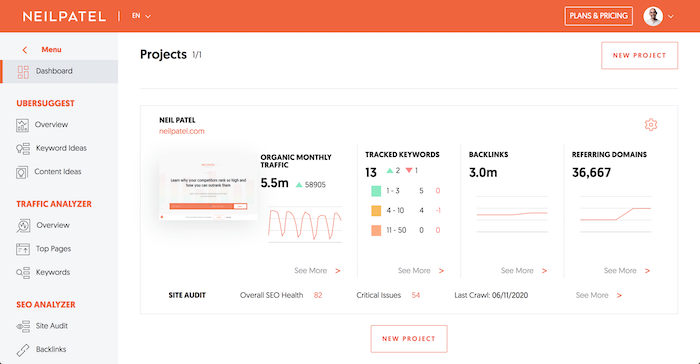
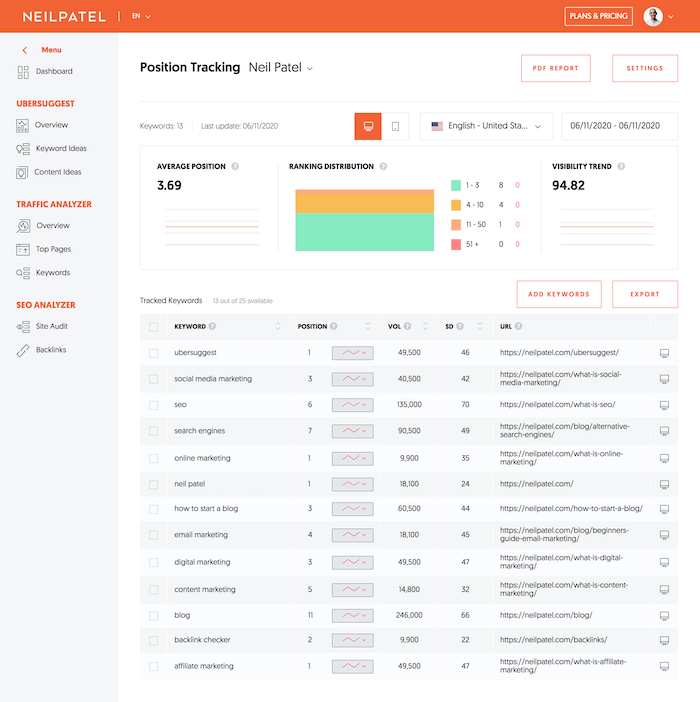
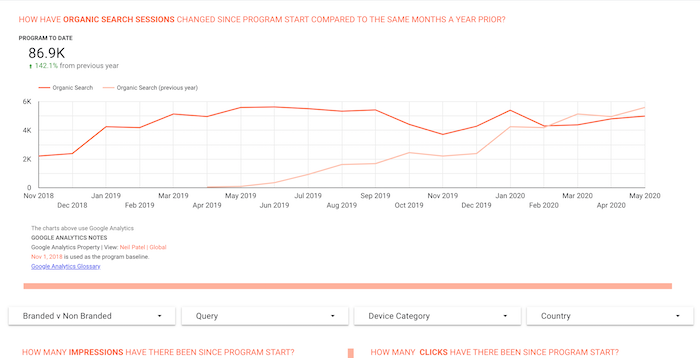
As you can see, it shows your SEO traffic over time. It will let you know if your rankings are going up or down, your link growth, and your SEO issues.
With so many things going on in marketing, you don’t have time to manually check your rankings or if things are going up or down or even what you need to fix.
Ubersuggest will do it for you all automatically and even notify you of what needs to happen through email. That way you don’t have to constantly check your SEO. Ubersuggest will do it all automatically.
More so, you’ll get notified of what you need to focus on each week to maximize your traffic.
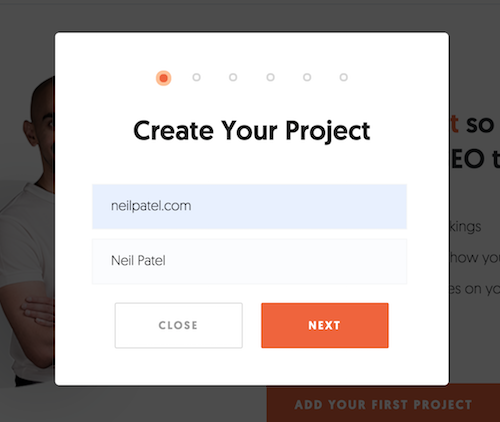
All you have do is head to the dashboard and click on “Add Your First Project.”
It’s as simple as adding in your URL.
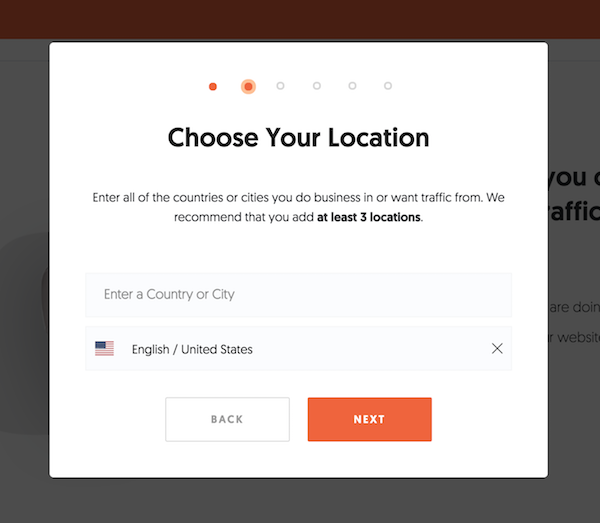
Then select the locations you do business in and want traffic from.
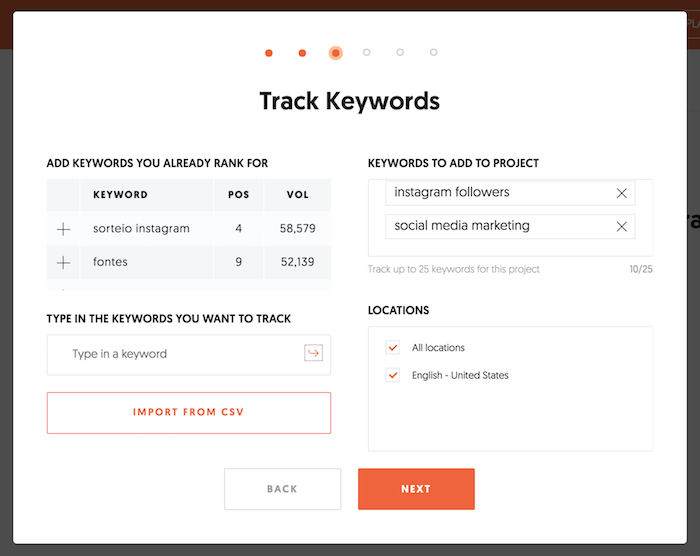
Then add in the keywords you currently rank for or want to go after.
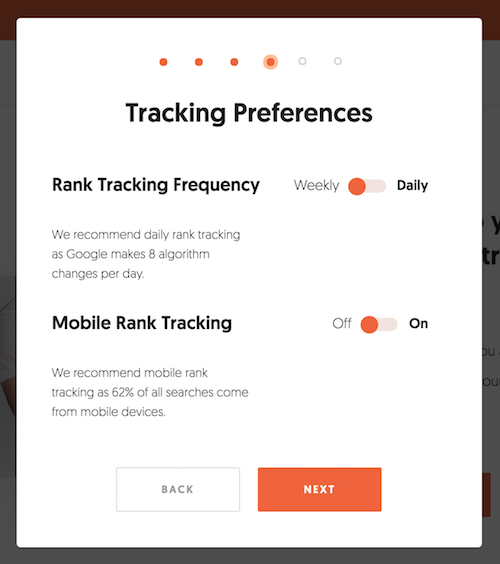
And of course, set up your traffic preferences.
And then you’ll be good to go.
Then when things go great, you’ll be notified. And when things are going wrong, you’ll also be notified. Ubersuggest will even tell you what to fix.
That way you get the maximum results in the least amount of time.
Tool #2: Google Analytics Alerts
You have Google Analytics set up on your site, but how often do you log in?
And when you do log in, do you know what to focus on or what to look at?
And if you do, do you know what to do with that data?
Google Analytics is a great tool, but you don’t want to waste hours and hours looking at reports. Instead, you want to spend your time doing and getting results.
But if you set up alerts in Google Analytics, you can save tons of time.
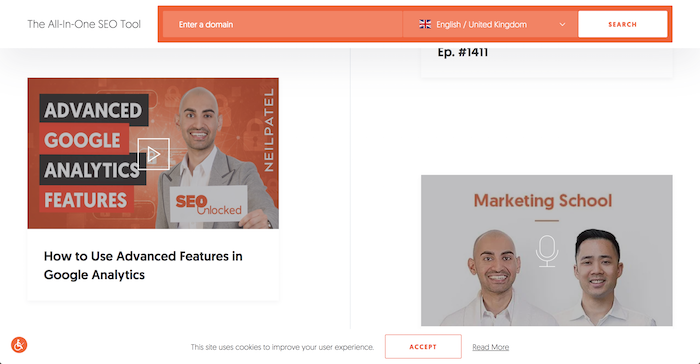
If you watch from the 6:33 mark, it will show you how to set up alerts. I added the whole video as it will teach you how to set up Google Analytics in general in case you don’t have goal tracking set in place.
Once you set up alerts, you’ll again get notified when anything good or bad happens. I usually have alerts set up for only when things go bad, so I know when I need to focus on fixing my marketing.
Tool #3: Trello
You’re probably thinking how the heck is Trello a marketing tool. It really isn’t, but it is a good project management tool.
And with your SEO, you may have a team helping you out and Trello will help streamline the process, make you more efficient, and get your results faster.
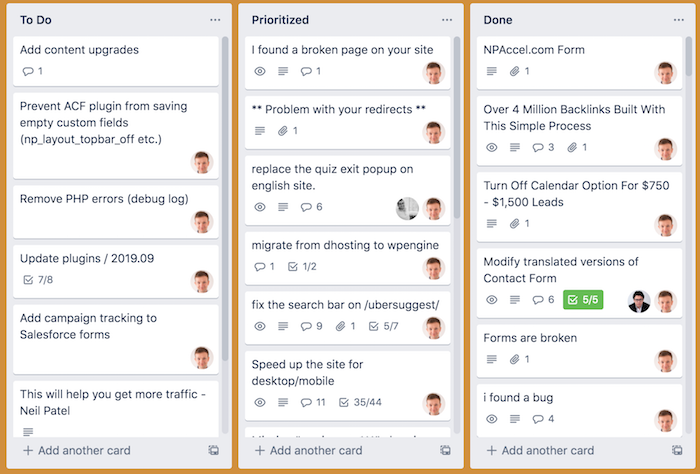
I keep my Trello board simple by breaking it into 3 sections.
To do – what needs to be done over time.
Prioritized – what I need to be done now (tasks at the top are the most important)
Done – tasks that need to be double-checked to ensure they were done right.
It’s that simple. That way you don’t have to micromanage your team.
Some people have more complex Trello boards, but something simple like I have works too.
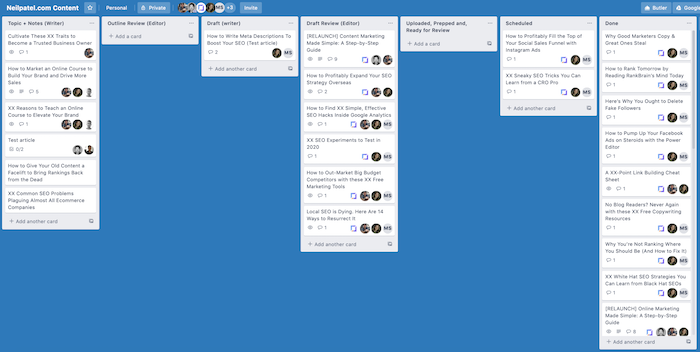
If you want to create a Trello board for your content marketing, assuming you want to write lots of content (such as 10 posts a week), this process works well.
The columns I use for content writers are:
Topics – this is where writers add topics they want to write about.
Outline review – writers submit their outline before they write for approval.
Draft – writers submit their rough draft.
Draft review – editors review each draft.
Uploaded, prepared, and ready to review – this is where the editor adds the post to your CMS (like WordPress).
Scheduled – this is where you schedule the content to go live.
Done – the content is now live.
We’ve found it effective if you are managing dozens of writers at once.
Tool #4: Content Decay Tool
Can you guess how many articles I write each week?
1.
Seriously, that’s it. 1 article a week which is roughly 4 to 5 per month (depending on how many weeks in the month).
And can you guess how many articles my team and I update each week?
21.
That’s roughly 90 a month.
Just think about it… why would I have a team of 3 people updating 90 articles per month when I only write 1 a week.
It’s because updating old content is an easier way to get more SEO traffic than it is to create new content.
It breaks down in order which articles you should update first, second, third… based on what will generate you the most traffic.
If you are wondering what is involved with updating content, just think of it this way:
Is there anything outdated within your post – if so, either update the outdated information and make it relevant again. If you can’t, then delete that part from your article.
Can you use media to improve the experience – do you need to embed videos, add more pictures, maybe even add an infographic? Use media to better tell your story and message.
Are you including the right keywords – a simple way to get more traffic is to integrate other popular related keywords within your article. Whatever your article is about, insert it into Ubersuggest and head to the “Keyword Ideas” report in the left-hand navigation.
Is there anything missing – try to poke holes within your content. What could you have done to make it better? What do your competitors talk about that you forgot to mention? What questions didn’t you answer that the reader might have? By asking yourself these simple questions, you’ll be able to make it better.
I’m not going to bore you with all of the features of the extension… instead, I am going to give you one thing that will save you time.
You know when you Google for information to learn more on any subject?
Chances are, sometimes you are Googling to learn something related to your space. And when you do, you’ll find that your site usually won’t be at the top of those search results.
And that’s ok.
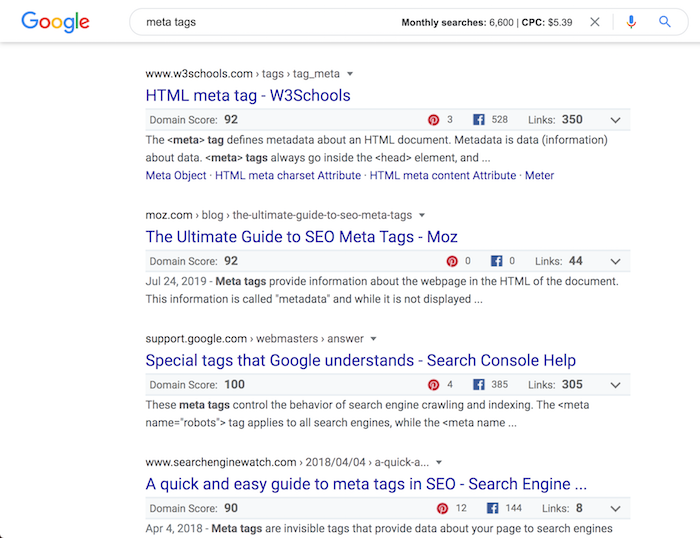
But when you do a search, you’ll notice “monthly searches” in the Google search bar.
This shows you how often that keyword is searched.
So anytime you are looking up anything in your space, pay attention to that number. If you see a keyword with over 5,000 searches, it may be worth targeting.
And as you scroll down and start going through the sites that rank at the top, you’ll notice metrics under each site.
If you notice a web page with thousands of social shares and hundreds of links, it should reaffirm that you probably want to go after that term. And the listing that has thousands of social shares and hundreds of links is a good benchmark of a page that is high in quality and what people in your space prefer.
Ideally, you want to create something better than that one, as that is the main way you beat them over time.
Tool #6: Hello Bar
SEO is very different than paid traffic.
With paid traffic, you can drive people to a landing page with very little content, which makes it easier to generate sales or leads.
With SEO, Google prefers to rank content-rich sites.
But when someone lands on a page full of educational-based content, they are less likely to convert into a customer.
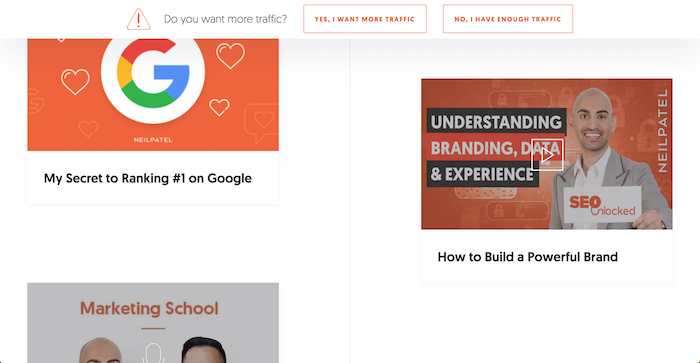
Hello Bar has a lot of features, but I just want you to use the top bar like I do on NeilPatel.com.
And as you scroll it moves along with you.
That one little thing allows me to improve my conversion rate from my SEO traffic.
You can easily adjust what you show with a few simple clicks within Hello Bar or you can even show people different messages based on where they are coming from.
Although SEO traffic doesn’t convert as well as paid traffic, it is much cheaper in the long run and does have a better overall ROI. And that one little Hello Bar will improve your numbers.
It’s responsible for 9.4% of revenue from NeilPatel.com.
Are you really going to keep up to date with all of them?
If you followed the first tool and set up a project in Ubersuggest, you’ll get notified when your rankings go down.
And if you set up alerts in Google Analytics (tool number 2) you’ll also get notified when your traffic drops drastically.
What you’ll find is that it’s overwhelming to keep up with all of Google’s updates and it could be confusing to figure out what you need to fix to get your traffic back.
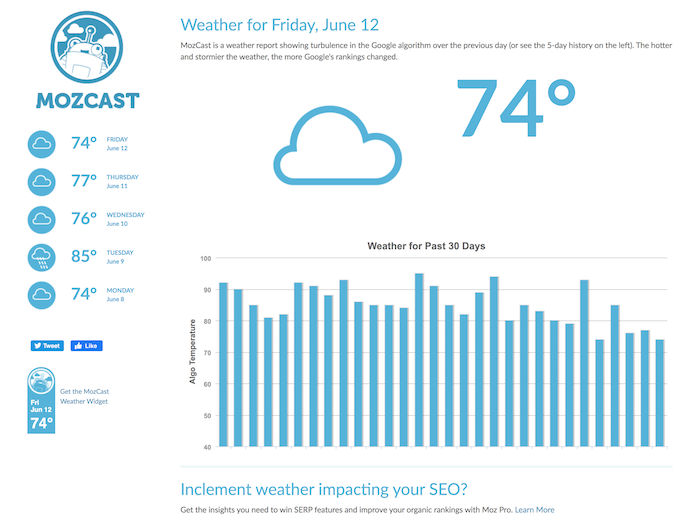
This report on Moz keeps track of all of the algorithm updates and gives you an overview of what has changed or what the update is about. On top of that, you’ll want to check out the Mozcast if you get a notification of ranking or traffic drops as this tool confirms if other people are also seeing changes from a Google update.
Keep in mind that Google doesn’t announce each update, hence you’ll want to cross-reference what you are seeing with the Mozcast.
That way you don’t have to spend hours researching each update.
Tool #8: Detailed
Link building is a pain. There are so many link tools like this one… but let’s not kid ourselves… you just don’t have the time to spend 10 to 20 hours a week doing link building.
So, each minute you spend, you have to make sure it counts.
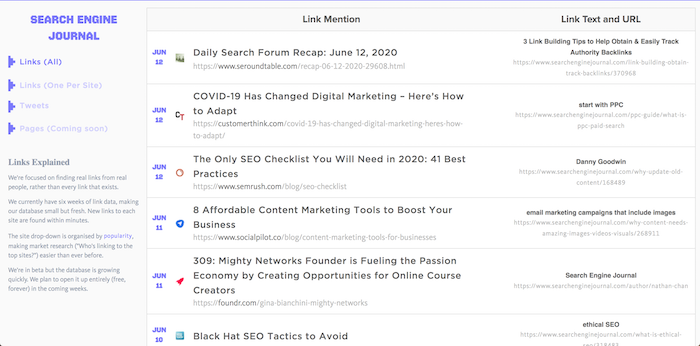
There’s a tool called Detailed that breaks down the best links for every industry.
All you have to do is select an industry and a site and it shows you all of the good links that are going to your competition.
You can then focus your efforts on reaching out to those sites to get links.
Sure, you will still need to have amazing content or a good product or service in order to convince those sites to link to you, but hey, if you don’t have any of that it’s going to be hard to do well in the first place.
So, don’t waste your time trying to search for links when Detailed will give you a list of hundreds of amazing sites to get links from within your space.
Tool #9: Site Speed Audit
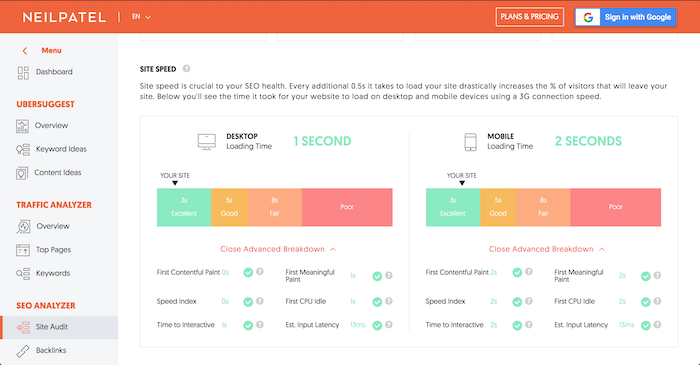
Speed impacts rankings.
Google doesn’t want to rank slow websites anymore.
It doesn’t matter that technology has become better and you can now purchase satellite Internet. Not every location has blazing fast Internet.
For that reason, Google has an Accelerated Mobile Pages framework that helps with mobile load time.
But that’s not enough, you also need your website to load fast.
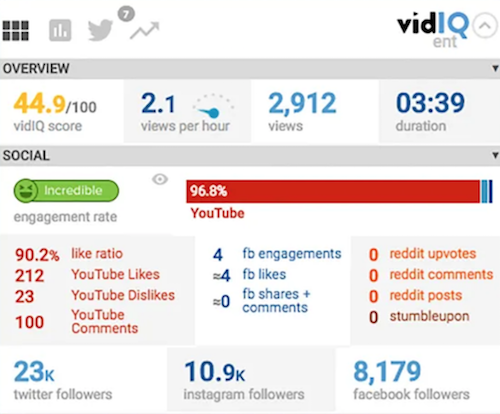
Whenever you perform a search on YouTube it will show you what’s popular, what keywords are being searched that are related to each video, and which tags people are using to get more SEO traffic.
I wanted to end this post with VidIQ because it’s not competitive.
See, unlike traditional SEO, it doesn’t take months to see results. YouTube SEO is the opposite in which it isn’t as competitive (yet) and you can rank at the top within 24 to 48 hours of releasing a video (seriously!).
Conclusion
They say SEO is hard and time-consuming. And I am not going to lie, you won’t get results unless you put in some effort.
But who says it has to be as time-consuming?
By using some of the tools I mentioned above you’ll save time. It really is that simple.
I know there is a lot and it can be overwhelming. So if you don’t have time to use all of the tools it is fine… just start at the top and work your way down (I put them in order based on what will save you the most time).
Throughout the past three months, with COVID-19 as a likely catalyst, influencers have been in trade publications frequently for perceived drama pertaining to seemingly abrupt changes to long-standing affiliate marketing programs. Journalists covering the space sought to understand the fallout between affiliate programs and influencers, campaign suspensions, and shifting compensation models. But as with everything in our space, understanding the truth is more dynamic than what may originally meets the eye. An evolution can be seen in retail marketers’ collective shift toward diversified programs and away from last-click overreliance. At the same time, influencers are responding to slashed upfront campaign fees by migrating to pay-for-outcome compensation models. These factors come together to seed a new relationship.
Over the last twenty years, affiliate marketing was heavily dominated by last-click coupon and loyalty publishers. But the affiliate marketing model made it too hard to assess the value of content creators and allocate compensation for their role in achieving a brand’s desired engagement—whether it be a registration or conversion. Affiliate technology was originally built to attribute compensation on last click. So for a long time, this system afforded no earning opportunity for influencers, simply because they were often the introducer touchpoint in the consumer journey.
As a result, the popular fixed fee monetization and commercial strategy around the creator marketplace was primarily developed as a defense mechanism.
For the dynamics between retail marketers and influencers to take hold, the affiliate industry needed to accelerate its evolution, to develop a way to prescribe value based on any given influencer’s explicit role in the consumer journey on the path to purchase, whether it be introduction or something more mid-funnel. The industry also needed to develop technology for precision influencer discovery, so that brands could find the right influencers based on specific attributes.
The welcome and collective move of brands and influencers toward pay-for-outcome models bodes well.
Now that affiliate technology is evolving beyond last-click publishers, there are opportunities for more sophisticated monetization. According to Pepperjam’s weekly indexing, over the last two months, content publishers, like influencers, have realized year-over-year gains not only in revenue performance but also in their percentage share of revenue across the affiliate pie. And brands are responding—by investing more on a variable compensation basis, upwards of 127% year-over-year. With measured and proven performance, affiliate tools are finally a real option for influencers—they present an opportunity for high-level compensation for playing a measurable role in the ultimate conversion.
Combined with other recent events like brands dumping their fixed-fee campaigns, this technology evolution within affiliate marketing has created an environment for influencers to readily embrace the pay-for-outcome model. Influencers certainly felt the impact of recent budget cuts, but there’s been a palpable realization that they can offset these losses with alternative revenue streams, like affiliate. This trend toward pay-for-performance models has persisted week over week, and we feel that this position as a primary sales and marketing channel will stick after the pandemic, having been put to the test during the most challenging of times.
This article was contributed and sponsored by Pepperjam.
Technology is GREAT — and it has changed the game. Tech has given us new ways to manage the businesses that are fine as they are — maybe — but it’s important to adapt. Now, managing the business workloads becomes efficient and less time-consuming. Here are ten of the best business management apps.
As a business owner, you have to complete many business operations at one time.
There are employee issues, payrolls, customer’s appointments, managing finances, marketing, and all that pop-ups. Indeed, you might be searching for new ways to streamline your business operations and to enhance productivity. Above all, to make your position in this competitive market.
The world is mobile.
Everyone likes to execute their tasks on mobile, it is because of the convenience factor it offers. Most of the companies have adopted agile working, which gives rise to mobile apps. It is the best tool that you can get to manage all of your important projects concurrently and can keep your business game on the top.
The market has many leading business management apps that are best to keep up the work efficiently.
These management apps permit the business team to share ideas, collaborate, and help in workload management. As a business owner, you can have an idea about your team activities and of course, their work status. While looking out for a business management app, consider the below measures:
Affordable.
Easy to use.
No commitment plans.
Can scale with your business.
Exceptional customer service if you need support.
It should have an immediate influence on investment.
So, after getting an outline of how these apps are important, know the best business management apps below.
Qwaiting allows you easy and effective management of queues and doesn’t allow your valuable customers to wait in the queue. As a leading business management app, it improves your business efficiency, profits, and thoroughly, changes the manner of handling the customers.
The Qwaiting apps don’t allow you to work manually and operate every necessary business activity by itself. From providing the ticket system, managing the customer details, employee management, appointment scheduling, sales funnel information, the screen with queue numbers, to provide real-time analytics, it covers everything.
Qwaiting allows the customers to follow the virtual queue online from the app, on-site kiosk, or from the mobile. It permits you to set up, manage, and configure the agent calendar and resource availability. With this app, you can easily check-in and manage the appointments. It provides notification to the customers about their turn and when they have to show their presence.
Also, from Qwaiting, you can have regular feedback from the customers. These reviews are quite helpful in giving you insights about where you are lagging and where the improvement is required. Accordingly, you can improve your marketing strategy.
Streak is a Content Relationship Management (CRM) app that offers everything that as a business owner you require. For those businesses who use Google and Gmail Apps, Streak is the best option. In addition to customer management, it allows you to track business analytics.
Like, in the case when you are just pitching or are about to crack one of the best deals, then, Streak enables you to check all the emails linked with every customer. Also, the newsfeed is there to update every team member about the current status of business analytics.
The streak has add-ons, from where you can integrate the appointments directly in the calendar to get more transparent experience. As the basic use of this app is meant for customer support, recruiting and sales, but, it can also be productive for everything from Fundraising to Project management.
We can say that, with Streaks, you can eradicate any possibility of time waste, and regular email drudgery with the mail merge and snippets. Manage the important emails and keep the tracking intact to communicate regularly with the customers.
As a CRM app, Insightly incorporates many business management features that are the basic requirement of every business type. From this app, you can easily characterize the contact with tags, incorporate that with the social network profiles and then, manage the leads.
Insightly allows you to make the tasks for the team members, setting the pipelines and then track the status of the assigned tasks. Also, it sends email reminders to all-time to time. The app has an easily navigable and understandable user interface. For those who are new to it, will find it more engaging with the customer-oriented features. For the integrations, projects, and relationships, this app works best.
As one of the best Salon apps, Salonist tops in the race. With the cloud-based ability, it allows all the Salon owners to streamline their daily operations without any hassles. It integrates all those features that are required to operate the Salon activities effectively. By allowing a Salonist to handle all of your work, you can utilize all of your productive time in generating more Salon productivity.
The synchronization of the calendar part with Outlook, Google calendar, and Apple, allows the customers to schedule, reschedule, and cancel their appointments easily. It includes email and SMS marketing, from where you can notify the customers regarding important events and activities.
Also, you can get the correct figure of your inventory from the report and analytics it provides. And, accordingly, you can refill your stocks and sell them continuously.
For those businesses, who have a great social media presence, should choose Nimble. The Nimble app is a Content Management System that gathers the information of customers from their social media profiles. Then, it updates it all in the database and consequently, saves a lot of time of yours. Also, it examines the shared interests and combines that with Outlook, Hootsuite, and Gmail and with more services.
In addition, it examines the relationships you more valued and interacted with. And, accordingly, it offers more future opportunities with them. From Nimble, you can make quality relationships, nourish the customer relationships, approach faster and smarter, secure more deals, and work easily from the inbox. Give Nimble a try, it is worth spending the additional time.
Zendesk Sell, a name behind customizing the sales pipeline effectively is deserving to be on this list. Primarily, it was termed as Base CRM. As all the leads cannot be created equal, so, this mobile app gives more priority to the leads and opportunities for your business.
Particularly, the Zendek Sell selects only those leads that are more important and worth spending time. It links that leads to the business first. The business management part allows you to centralize the attention to the deals and leads from the automated scoring rules from Zendesk Sell’s full-funnel analytics. Hence, those businesses whose aim is only to capture the leads can go with this app.
Bitrix24 is here to give you the best experience for your potential customer and business. It provides a free version that at least 12 users can use with 12 gigs of storage space. At the next level, the pricing table is fair and incorporates the plans that are available for all businesses.
This content management system is quite broad and provides several customer management and collaboration tools. Sign up with this business management app and experience effective customer management, projects, customer support, tasks, eCommerce, and internal communication. Get this all-in-one business management tool if you really want to have beneficial results.
HRMWage is the preeminent business management and cloud-based human resource management app. It includes wage management, payroll management, and attendance tracking. This Human resource management tool makes every task feasible and streamlines every issue faced by HR’s for their day to day activities. The salary calculation, interviews of various job aspirants, leave management, employee performance tracking, and many more are covered.
You can easily track the employee details at any time with the management app. HRMwage also assures security and does not allow any data breach. It also eradicates the process of leaves whether it is a short day, half-day, or full-day, and makes the handling process easy.
The employee can apply for the leaves directly from the HRM only. Also, it allows easy tracking of employees and makes the hiring process smooth. From the right document management, HR can know which sessions or courses the employee can adapt to the company culture.
You must have come across the word, Salesforce, even if you have not known any CRM tools. It is one of the most utilized business management apps for small businesses, particularly. Salesforce incorporates every single feature on the dashboard itself. Now, you can sell all of the customer details in one place, this app gives you access to the database whenever it is required.
It offers great in-app assistance by providing access to several tutorials and guided set-ups. Salesforce holds the capability to include more business apps, also, this app offers you everything your business might require. This is how this management app keeps your business ahead from all the competitors.
Freshsales gives you a powerful CRM system, with an activity capture, Artificial Intelligence leads scoring, built-in phone, etc. Freshsales admits that it has 15,000 customers to assure it, customers, that they have a large and solid base.
It offers outstanding reviews with exceptional features, such as; sales leads, Built-In Phone & Email, Associated Conversions, Intuitive Sales Pipeline, etc. FreshSales has four economical plans that fit perfectly for all business sizes.
Concluding Remarks
Gone are the days when managing business is a tough or impossible task. Technology has given us many ways that you can adapt and streamline every business operation. Business management apps are one of the best ways to get ahead.
Choose an app that fits your business size, and watch how your streamlining efforts change your brand position in the market.
Julia Ching is associated with Salonist- Salon Appointment App, where she is working as a writer. She manages all content management projects and is keenly interested in writing technology, CRM software and Business Software related topics.
“Psychological safety doesn’t just make work more pleasant for everyone—it makes teams more successful.”
Mollie West Duffy is an organizational and leadership development expert. She was a lead organizational designer at global innovation firm IDEO, and has written about workplace culture and more for Harvard Business Review, Entrepreneur, Fast Company, and Quartz.
She is also the co-author, with Liz Fosslien, of No Hard Feelings: The Secret Power of Embracing Emotions at Work. When No Hard Feelings became an officialNext Big Idea Club selection, Mollie stopped by our headquarters to discuss the secrets of trusting, creative, productive teams. We’re proud to share some of her key insights below.
Successful teams depend on psychological safety. Google did a study to figure out what factors contributed to great teams, and the best teams had psychological safety, meaning that members felt they could suggest ideas, admit mistakes, and take risks without being embarrassed by the group. These teams were less likely to leave their jobs, brought in more revenue, and were rated twice as effective by executives.
Adam Grant studied the writers’ room at The Daily Show. He found that psychological safety helped these teams get to burstiness, which is when group members build on one another’s ideas so rapidly that the room feels like it’s bursting with creativity. Teams need a base of psychological safety so that members don’t take the interruptions that often come with rapid-fire idea generation personally.
“The best teams discuss ideas frequently, don’t let one person dominate the conversation, and are sensitive to one another’s feelings.”
To create an open environment of psychological safety, use these four techniques:
Encourage open discussion. Questions like “Does anyone disagree?” do not effectively invite opposing viewpoints. Especially if someone on the team is quiet, ask each team member to write out their thoughts and then have everyone share them out loud. And don’t forget follow-up questions like “Say more about that.”
Suggest a bad ideas brainstorm. Have team members throw out purposefully absurd ideas, or ask them to come up with the worst suggestion they can think of. This exercise takes the pressure off, and allows team members to be silly and adventurous.
Ask clarifying questions, to make it okay for others to do the same. When team members use acronyms or jargon, ask them to explain (and avoid using them yourself ).
Use generative language. If someone has an interesting suggestion, respond with, “Let’s try it!” If you like the gist of someone’s idea, say, “Building on that idea…”
We all know there are things we can do to be productive when we wake up (i.e. coffee), but what about before we go to sleep? These are just a few things you can do to ensure you set yourself up for a good night ’s sleep to wake up feeling refreshed and ready to take on the day. Even if the day is sitting at home and taking a bunch of zoom calls.
Create a peaceful place for sleep
Your bedroom should be used only for sleeping, and a lot of people admit that they browse online in their beds, stay on their phones in bed, and watch TV to fall asleep. Try to stay away from electronics 30 minutes – 1 hour before bed. If you must have your devices on in bed, turn on “nightshift” on your iPhone (and other devices now have similar features), which cancels out blue light. Why is this helpful? Blue light is proven to disrupt our sleep cycles by “convincing” our eyes that it’s still daytime.
Ambient noise can be helpful if you find the right kinds
As mentioned above, the TV is not a good source of this, but white noise or pink noise can promote better sleep. Pink noise is classified as lower intensity and more soothing than white noise. Pink noise can be found in nature – think rustling leaves and light rain, or a cat purring. According to this small study, pink noise has been said to reduce brain wave complexity, so you can wake up ready to work! You can stream pink noise sounds on YouTube.
Don’t drink caffeine past 3 pm
It may seem like a long time before bed, but caffeine stays in your system for 5-6 hours after you drink it. In older adults, it can take even longer to process the caffeine out of the system. If you must have a beverage at night time, try some caffeine-free hot tea.
Pillow sprays
Lots of companies make pillow sprays now with essential oils and calming scents like lavender, which is proven to help slow activity in the central nervous system and aid in falling asleep faster. A popular one to try is ThisWorks Deep Sleep Pillow Spray – spray in the air around your bed or directly mist onto your pillow. You can also try an essential oils diffuser to keep a steady mist of lavender or sandalwood, both great sleep scents.
Keep your bedroom at a cool temperature
No one likes sleeping in a hot, stuffy room. Optimal sleep temperature is around low-mid 60’s. If you get really hot when you sleep, you can look into cooling systems like the ChiliPad, which is a mattress pad that cools, helping you stay at optimal sleep temperature all night long. They can be pricey, but worth the investment if you have temperature issues.
Create a before-bed routine to help calm your mind
Journal, meditate, read, or try coloring! There are tons of coloring books for adults now, and this practice has been proven to reduce stress and anxiety by calming the activity in the amygdala, which creates a similar state in the brain as meditating. If neither of these options appeals to you, try some simple breathing exercises 30 minutes before bed. There are plenty of apps now that offer guided meditations and exercises for free.
Don’t drink too much water before bed
Avoid liquids at least an hour before you go to bed, and always use the restroom before you actually go to bed. Waking up in the middle of the night to do this can bring on a slow morning!
Keep your web site simple, streamlined, and easy to use
A lot of work goes into creating a well-functioning website that will turn visitors into customers. You need to choose a reliable and fast web hosting service, design the look of the product pages, and fill the site with useful, informative content.
One thing that’s crucial is site useability. Modern internet users expect to instantly understand how your website works when they first arrive. If your site’s confusing, they’ll be quite happy to head to your competitor’s instead.
A well-designed site subconsciously leads site visitors exactly where you want them to go, all the way from the initial landing page to the checkout. It makes every step simple and intuitive, all while subtly selling your value proposition.
Every online business is different, but there are some tricks you can employ to improve your site design that work on just about every website.
Learning from print media
Traditional print media may seem like a dinosaur compared to digital media, but how people interact with websites mirrors how they read physical newspapers and magazines. The home page of a website is like the front page of a newspaper. There’s usually a logo, several main headlines and stories, and sections pointing to other pages where the reader can find more information on the topics they are most interested in.
It’s fine to have a site brimming with pages full of useful, exciting content, but you shouldn’t try to cram as much information into the home page as a newspaper does on its front page. The home page should be simple, uncluttered, and make it clear how the website can be navigated. Sub-pages shouldn’t deviate from the basic navigational structure introduced on the home page.
Consider differentiating each type of content by giving it a different color. For example, set shopping cart elements as one color and informational elements as another. Maintain that color scheme throughout the whole website so the visitor will always know how to get to the content they need.
Below, we outline 10 design choices that always improve a website and 10 that should always be avoided.
Design dos
1. Be age aware
If you have an older readership, avoid small fonts. Serif fonts are also more difficult to read, so don’t use them.
2. Use the logo
Visitors expect to be able to return to the home page from every page on your website. Typically, this should be via your company logo, situated at the top left of each page.
3. Use a footer
Include a footer on every page that links to important information such as opening hours or how to contact your company.
4. Remember mobile users
Your website should work on mobile phones just as well as it works on desktop computers. Sometimes, you will need to modify how your site looks and functions on mobile devices to accommodate smaller screens. If your website is image-heavy, consider that lower-resolution images will load faster and use less bandwidth while also reducing your web hosting service fees.
5. Speed is critical
A slow site will cause visitors to become frustrated quickly, so make sure you are using a fast web hosting service with a good track record. Pay particular attention to the homepage when optimizing the speed of your website as it is your most-visited page.
6. Consider the disabled
A significant proportion of web surfers are disabled, so take steps to ensure your website can be browsed by them. Web design guidelines created by the Web Accessibility Initiative (WAI) outline how to ensure everyone can understand, navigate, and interact with your website.
7. Count those clicks
Using web analytics tools, you can see which of your pages on your site are the most popular. Count how many clicks it takes to get from your site’s homepage to these pages and consider rearranging your site’s structure to make it easier to get to these pages.
8. Show color control
It is common to create a color scheme for your website by pairing colors from your company logo with complementary and contrasting colors. Once you’ve chosen a color scheme, investigate if it is readable by someone with a visual impairment or color blindness.
9. Use bigger pictures
Big, bright images draw a visitor’s attention and sell your products to them. Still, larger images will impact load times and increase the bandwidth costs charged by your web hosting service. Optimize larger images for the web by using image compression, making them faster to load without reducing the quality too much.
10. Big buttons
Call to Action (CTA) buttons encourage visitors to perform those important actions you want them to make, such as adding a product to their shopping cart. Ensure these buttons are big, bright, and obvious on every page.
Design don’ts
1. Stay away from some web technologies
Web technologies like Flash and Java that don’t work on all systems should generally be avoided as they reduce your website’s potential audience.
2. Don’t use sidebars
Because banner ads in sidebars have become the norm, people have learned to tune them out automatically when reading a website. Therefore, avoid using sidebars for your important content.
3. Keep fonts under control
Keep the number of different fonts you use on your website to a minimum. As a rule, two to three fonts are more than enough.
4. Limit scrolling
You should include the most important information on your site ‘above the fold,’ meaning readers shouldn’t need to scroll down to get to the main focus of each page.
5. Never underline text
You should avoid underlining text, as users will confuse it with a clickable hyperlink.
6. Avoid lengthy forms
Every field you add to a form requires effort from a visitor. Many people will simply click away when faced with a lengthy form. Keep forms short and only ask for the information you really need from the visitor to get them to the next stage in the buying process.
7. Don’t be rude
Avoid pop-ups that bombard the visitor as soon as they hit your homepage for the first time. They’re annoying and ineffective.
8. Don’t be long-winded
As a rule, online text should have fewer than 20 words per line, because long lines are hard to read. Paragraphs should normally not be longer than 50 words in length.
9. Never overload a page
While it’s tempting to include a lot of content showing why your products and services are the best, remember that less is more. Use white space to increase readability and move some of the information on busy pages to sub-pages.
10. Avoid auto-run objects
Avoid automatically playing sounds or video when visitors first arrive on a page. Leave it to the visitor to decide if they want to play these elements.
Final thoughts
Familiarity with your own website can make finding problems with its design difficult. Therefore, it’s important to get someone who is unfamiliar with your site to test every part of it and give you valuable feedback.
If you don’t know where to start with a new website design, jot down 10 websites you visit often and what you like about their design. Also, write down anything you think could be improved upon. This will give you a shortlist of things to aim for in your new site design.
Accept that most website designs are imperfect at first and need to be tweaked. Finally, don’t be afraid to break the mold. The trick is to have a memorable design that differentiates you from the competition without being confusing or annoying.