When James Watt talks about advertising, he sounds less like the founder of billion dollar beer brand BrewDog and more like a man ready to take on a trillion-dollar industry.
“Advertising hasn’t really evolved in a century,” he says. “It’s still this one-to-many model, brands spending huge amounts of money to get exposure and hoping something sticks. But we see between 4,000 and 10,000 ads a day now. The more we see, the less impact they have.”
Watt’s new venture, Social Tip, launched just 14 weeks ago, is his attempt to rewrite that playbook. Instead of paying influencers or pouring more money into digital ads, Social Tip turns everyday customers into brand advocates and pays them cash when they post about the products they genuinely love.
It’s a simple but radical idea. And one that might hint at where the future of advertising is headed.
From Beer To Brand Democracy
After 17 years growing BrewDog into one of the UK’s most recognizable consumer brands, Watt says he wanted to build something that redefines how marketing works.
“I love building businesses,” he says. “But I’m even more passionate about marketing and community. Peer-to-peer influence is where the future of that lives.”
The irony, he adds with a grin, is that his wife is an influencer. “So I’ve launched a company that, if successful, might just put her out of a job.”
Social Tip’s model is disarmingly simple. When a user buys from one of the platform’s 350 partner brands — including Unilever, HelloFresh, MyProtein, and Marks & Spencer — they can share a post about the product on TikTok or Instagram. Social Tip’s algorithm analyses reach, engagement and content quality, then pays users an average of £5.60 ($7.50) per post directly into their account.
Brands, meanwhile, gain a steady stream of authentic user-generated content (UGC) and measurable exposure. “We’re seeing CPMs of about $7,” Watt says. “Traditional influencer campaigns are five times this. So it’s massively more efficient and the money goes back to customers, not platforms.”
Authenticity Over Influence
At the core of Watt’s thesis is a belief that authenticity has become the rarest currency in marketing.
“If you’ve got 200 followers and a private Instagram account, that’s fine,” he says. “If you share something that fits naturally into your life, that’s where the magic happens.”
The platform’s user base has grown to 50,000 in just a few months. Some have hundreds of followers; others have hundreds of thousands. The common denominator is genuine enthusiasm.
His favourite example isn’t a multinational brand but a neighbourhood café. “There’s a small place in my village called Coffee Apothecary,” he says. “They put £200 into their Social Tip account, and suddenly the whole community was posting about them. It works for huge global brands and tiny independents alike.”
The vision, Watt says, is to make having a Social Tip presence as fundamental to a brand as having an Instagram page. “Ten years ago, Instagram was a competitive advantage,” he says. “Now it’s table stakes. I want Social Tip to be the same.”
James Watt, co-founder of BrewDog and founder of Social Tip
A Change In Consumer Trust
Social Tip’s timing is deliberate. Consumers are tuning out traditional ads, and marketers are struggling to keep pace with fragmented attention.
Kantar’s Media Reactions 2024 study found that people trust peer recommendations and word-of-mouth far more than social-media or streaming ads. Meanwhile, Nielsen’s 2024 Annual Marketing Report revealed that while 72 percent of marketers expect higher ad budgets this year, only 38 percent measure their digital and traditional channels together, a clear sign that legacy models aren’t keeping up with behaviour.
“Community is the new media,” Watt says. “People don’t trust ads. They don’t trust influencers. They trust people they know. Social Tip takes that timeless truth and makes it scalable.”
He’s careful, though, to position the company as a complement for traditional marketing. “We’re not the hero in any Social Tip story,” he says. “The hero is the customer and the brand. We’re just the connection.”
Early Results And Expansion Plans
Since its launch, Social Tip has paid out over £150,000 ($201,000) to users and partnered with hundreds of consumer brands. The company recently began testing in the U.S., starting with 10 businesses and 500 users, with plans to scale rapidly in 2025.
Watt admits that building a new model comes with challenges. “Any startup is hard, and disruption never comes easy,” he says. “But the early signs are phenomenal.. real engagement, real ROI, real excitement.”
He also sees the platform as part of a wider movement toward shared value in marketing. “We want to shorten the bond between brands and customers,” he says. “If you love a brand and you talk about it, that brand should share some of its value back with you. That’s the future.”
Expert Take: What This Means For Marketers
As someone who studies the evolution of the creator economy, what strikes me about Social Tip is how it reframes influence as infrastructure, not entertainment. We’ve spent years optimizing for followers and reach; now the real opportunity lies in community credibility and authentic micro-advocacy.
The next wave of marketing innovation will come from building systems that let brand love scale organically. In a fragmented world, trust is the true growth channel.
The Bottom Line
Advertising as we know it is evolving. In a world oversaturated with content and skepticism, the most powerful voices will be the ones with the most authenticity.
As Watt puts it, “If you can make customers feel like partners, not targets, that’s when marketing really works.”
And if Social Tip is right, the future of advertising might belong to regular people, posting about what they love.
This article is based on an interview with James Watt from my podcast, The Business of Creators.
One last debacle for the messiest rebrand of the decade.
The fact that people still refer to Elon Musk‘s social media platform as ‘X, formerly known as Twitter’ over two years later perhaps isn’t a sign of a brilliantly successful rebrand. Back in 2023, we called Twitter’s X-orcism a “masterclass in how to destroy a brand overnight”.
But perhaps one of the main reasons for the bird name sticking around is that the URL, twitter.com never went away. Until now. X has finally announced that is doing away with the original domain – and right now it’s redirecting to X.com. But like every aspect of this cursed rebrand, it hasn’t gone smoothly.
Twitter (left) is finally no more (Image credit: Twitter)
The changing of the URL has proven messy for those using a security key for two-factor authentication, with many finding themselves locked out of their account. In a statement, X asked users to re-enrol their devices – but the tweet (yes, I’m still calling it a tweet) has received hundreds of comments from users complaining that they can no longer access their accounts.
It seems X’s commitment to remaining the decade’s messiest (and slowest) rebrand is unwavering. From constant logo tweaks to algorithm problems, plus the ongoing debacle of giving Verified badges to anyone willing to pay for the privilege, the whole enterprise has given rise to a catalogue of errors.
So while the death of the Twitter URL might seem like the final nail in the coffin for one of the 2010s’ most iconic online brands, knowing the way this rebrand has been playing out, it’ll probably be back tomorrow.
Daniel John is Design Editor at Creative Bloq. He reports on the worlds of design, branding and lifestyle tech, and has covered several industry events including Milan Design Week, OFFF Barcelona and Adobe Max in Los Angeles. He has interviewed leaders and designers at brands including Apple, Microsoft and Adobe. Daniel’s debut book of short stories and poems was published in 2018, and his comedy newsletter is a Substack Bestseller.
Coca-Cola has rolled out its second AI-generated holiday ad campaign, featuring its iconic trucks.
Eagle-eyed viewers have noticed glitchy inconsistencies.
The studio behind the ad said Coke is pioneering AI, “rather than waiting for it to be 100% ready.”
Coca-Cola’s holiday trucks are coming — but thanks to AI, they’re causing some viewers to double-take.
This week, the soda giant unveiled three ads that will form part of its 2025 holiday campaign. One of the ads — an AI-generated remake of its iconic 1995 “Holidays are Coming” spot — has some glitchy inconsistencies.
Look closely, and you’ll see the famous Coca-Cola trucks appear to change shape as they roll through the festive village. The trucks also appear to gain or lose wheels in each scene.
Dino Burbidge, an independent innovation specialist, created this handy graphic to help you follow along:
Coca-Cola’s holiday trucks looked a little different in each scene. Dino Burbidge
Other viewers also noticed other apparent inconsistencies, including a concerning moment at the 50-second mark when a truck appears to be on a collision course with a crowd of onlookers.
“I really miss pre-AI internet,” reads one comment under the YouTube video.
Coca-Cola’s wobbly Christmas trucks highlight one of the biggest shortcomings of generative video models: the tech often struggles to maintain the consistency of characters and objects between multiple shots. Many systems generate video on a frame-by-frame basis without maintaining a strong memory of prior scenes, resulting in temporal drift — although some newer models claim to have solved this problem.
The lack of continuity is often one of the biggest giveaways that a video is inauthentic.
Marketers and the broader advertising industry have quickly adopted AI as a means to expedite production times and reduce costs. However, the industry’s adoption of the technology has also led to concerns about job losses and an overall decline in the quality of advertising. Recent research has found that some consumers have an aversion to AI-generated ads, especially those that feature human faces.
Coca-Cola didn’t respond to Business Insider’s requests for comment.
“There will be people who criticize — we cannot keep everyone 100% happy,” Pratik Thakar, Coca-Cola’s global VP and head of generative AI, said in an interview with The Hollywood Reporter this week. “But if the majority of consumers see it in a positive way, it’s worth going forward.”
In a behind-the-scenes video posted to Coca-Cola’s YouTube channel on Monday, the company said just five AI specialists refined 70,000 video clips to create the ad in 30 days, using tools such as OpenAI’s Sora, Google’s Veo 3, and Luma AI. There were some tweaks in post-production, the video said.
Silverside AI, an AI innovation lab backed by the ad agency Pereira O’Dell, worked with Coca-Cola to produce the 2025 “Holidays are Coming” spot.
“Coca-Cola became a pioneer in this space because, once they recognized AI as the future, they stopped debating whether it’s perfect or not — and instead focused on how to use it in the best, most creative way possible,” PJ Pereira, cofounder of Pereira O’Dell & Silverside AI, told Business Insider in a statement.
“When the world is evolving this fast, we need brands with the kind of leadership Coca-Cola shows, pushing technology and craft forward rather than waiting for it to be 100% ready,” Pereira said. He added that the ad had “already tested incredibly” well.
Never mind the critics — does the ad do its job?
System1, which rates ads on a scale from 1 to 5.9 stars on their potential to drive long-term growth for brands, gave the 2025 “Holidays are Coming” ads the highest possible score: 5.9. The research company asks a panel of consumers across several countries to indicate how they feel about the ad they’re viewing from a list of emotions ranging from contempt and disgust to happiness and surprise.
“While generative AI played a role behind the scenes, what truly shines through is Coca-Cola’s commitment to emotional storytelling and creative consistency,” said Vanessa Chin, System1’s senior vice president of marketing. “It’s a powerful reminder that when a brand understands its audience and honours what works, the results speak for themselves.”
DAIVID, another creative testing platform that measures viewer emotions, said the “Holidays are Coming” ad was slightly less likely (2.1%) to generate positive emotions and more likely to evoke feelings of distrust (2%) than the industry norms. However, it did generate higher-than-average attention and brand recall scores, which a DAIVID spokesperson said was likely because Coca-Cola ads are very distinctive.
Coca-Cola’s 2024 AI-generated holiday campaign also drew a polarizing response. One of the videos — another take on the classic trucks ad — was widely panned online as AI slop, with critics picking up on details like the wheels gliding across the floor instead of spinning and the eerie-looking AI “humans” smiling creepily.
In an interview with Ad Age last year, Thakar said of the 2024 ad that consumers don’t look at AI campaigns in the same way creative directors do. “Consumers were not concerned about AI versus non-AI,” Thakar said.
Burbidge, the innovation specialist who posted online about the faulty wheels on Coca-Cola’s AI trucks, said in an interview with Business Insider that the production issues in Coca-Cola’s campaigns were inexcusable and that the company risks damage to its brand.
“Is this the slippery slope that previously trusted media and production values will go down because ‘consumers don’t care’?” Burbidge said. “Craft, creativity, and quality should hold true. As soon as we let that go, who’s going to fight for it?”
The promised AI revolution in shopping is starting to materialise, with shoppers increasingly trusting agents for personal recommendations ahead of the festive season.
Traffic to retail sites from AI tools is expected to surge fivefold year-over-year, with particular boosts on Cyber Monday and Black Friday, according to Adobe.
“Traditional models of how consumers react with the web are going out the window,” Max Sinclair, Azoma CEO, said.
“Intelligent assistants begin to handle browsing, recommendations and purchasing on behalf of users.”
PayPal launched agentic commerce with ChatGPT, Perplexity, Gemini, and several technology partners last month, while OpenAI launched its ‘Buy it in ChatGPT’ trial in the US in September.
Efficiency and ease of payment are a cornerstone of the shift: Alex Chriss, PayPal’s CEO, said that he wants to “help people go from chat to checkout in just a few taps”.
Ellie Tuck, creative director and partner at FleishmanHillard, a PR agency, had told City AM that AI is “one of the biggest shifts we’re seeing in how brands show up in the world”.
However, despite the popularity of ChatGPT and other Gen AI models, there’s still one key sticking point: traffic has yet to translate into purchases.
Brits ‘not ready’ to hand over full control
AI-driven traffic is still around a quarter less likely to convert into purchases than traditional traffic, but this is easing: The figure was 38 per cent in April and 49 per cent in January.
AI tools are “making it easier than ever” for consumers to discover, research and buy new products and services, but they can “just as easily turn people away”, Carrie Ryan, chief strategy officer at Trustpilot, said.
Crucially, consumers are concerned about data privacy and sharing, as well as the lack of a human touch, she explained.
“Trust is the currency,” she said, adding that user-generated reviews are crucial and that AI is best suited to product summaries, automatic checkout agents and fraud detection.
“Shoppers still want to maintain control,” Nabil Manji, head of FinTech growth at Worldpay, added.
“AI shopping assistants are… changing how we discover and buy the things we love [but] retailers need to be ready to meet shoppers where they are.”
‘The next frontier’ for retail
The rise of AI shopping comes as brand loyalty is eroding and price points become ever-more important to shoppers, making deal-finding and efficiency the ripest area for AI innovation.
Consumers are already more likely to use AI to find deals than for general purchases, with two-thirds of UK shoppers planning to use AI for holiday shopping, according to Shopify.
“The most successful businesses will pair AI-powered personalisation with transparent controls and easy access to human support,” the Shopify report found.
“The message is clear: there is scope for more AI adoption, and brands that balance tech‑enabled personalisation with human service will have the strongest advantage.”
Whether Brits are fully ready or not, AI is already infiltrating every area of retail, with all trends indicating increased adoption.
“Agentic commerce is not a theory anymore,” said Roy Avidor, CEO of Symbio. “It is the most significant change in online retail architecture in two decades, and it can only happen when merchants, AI, and payment data are partnering in a symbiotic manner.”
Roman Stanek, founder and longtime CEO at GoodData, said that agentic commerce is “the next frontier for retailing”.
“That’s a massive shift and it is here today… OpenAI wants to insert itself between brands and customers, and that’s both an existential threat and a once-in-a-generation opportunity. The smartest brands won’t fight it – they’ll build their own agents and ecosystems to stay in control”.
Netflix has done away with the “monthly active users (MAU)” metric, which is widely used across ad-supported streaming, and has switched to capturing viewership as “monthly active viewers (MAV),” which it defines as subscribers watching at least one minute of ads on Netflix per month, multiplied by how many people are watching in a given household. “Our move to viewers means we can give a more comprehensive count of how many people are actually on the couch, enjoying our can’t-miss series, films, games and live events with friends and family,” the company explained in a blog post, via Deadline.
With a new metric comes a new viewership milestone, as Netflix has reported that it now reaches more than 190 million MAVs on its ad-supported tier. Given the metric change, it’s hard to know exactly how big a jump that is from the 94 million MAUs Netflix stated it had back in May, although the streamer did note that MAUs were tied to account profiles and therefore undercounted co-viewing, a factor that the new MAV metric addresses.
Netflix Has Offered an Ad-Tier Since 2022
Despite being initially against advertising, as competition in the streaming market grew, Netflix announced plans for an ad-tier in 2022, which was rolled out that November. With the three-year mark having just passed, Netflix is gearing up for an even bigger 2026, with the company currently testing out a new interactive video ad format in North America that is geared to each subscriber’s individual viewing behaviour. This new format has reportedly been well-received and will be rolled out globally by Q2 2026.
Netflix remains the biggest streaming service in the world, with an estimated 302 million subscribers. Despite facing stiffer competition now than it did during its first decade as a streaming service, Netflix has continued to grow its subscriber base by offering several crowd-pleasing and/or award-winning original series like House of Cards, Stranger Things, The Witcher, and Squid Game. The company has also been able to attract top-tier talent to its platform, such as television powerhouses Shonda Rhimes (Grey’s Anatomy, Bridgerton) and Ryan Murphy (Glee, Monster, Ratched).
Upcoming movies that Netflix subscribers will want to keep an eye out for include the Once Upon a Time in Hollywood sequel The Adventures of Cliff Booth, Greta Gerwig’s Narnia reboot The Magician’s Nephew, and Brad Bird’s long-gestating animated passion project Ray Gunn. On the TV side, subscribers have new seasons of Stranger Things, Virgin River, Outer Banks, and Bridgerton to look forward to, as well as a live-action take on Scooby-Doo, a new adaptation of Little House on the Prairie, and an Assassin’s Creed series.
Are you still using Snapchat? It’s the social media app that keeps on kicking, to the tune of more than 900 million monthly active users.
Are you still using Snapchat? It’s the social media app that keeps on kicking, to the tune of more than 900 million monthly active users.
Today, Perplexity.AI and Snap announced that the AI company will power AI search on Snapchat.
This $400 million partnership means the AI startup will integrate its conversational AI answer engine in the Snapchat app, starting in early 2026.
Snap’s stock surged 25% after market close, according to Deadline.
“Our goal is to make AI more personal, social, and fun—woven into the fabric of your friendships, Snaps, and conversations,” Evan Spiegel, Snap Inc. CEO, said. “This partnership reflects our shared vision for the power of AI to enhance discovery and connection on Snapchat, and we look forward to collaborating with more innovative partners in the future.”
Perplexity’s AI-powered answer engine will become a default part of Snapchat, letting users ask questions and get conversational answers within the app.
What This Means
In 2016, IndieWire called Snapchat “the new frontier for independent filmmaking.”
We’re not sure the assessment holds up, but this partnership could bring about some potential changes for content creators.
I went over to Perplexity’s search engine and asked it directly how this will help online creators, and got answers about how this new partnership will “empower Snapchat creators with AI search capabilities, improve efficiency in content creation, boost monetization options, and provide new competitive tools for digital storytelling and creative discovery.”
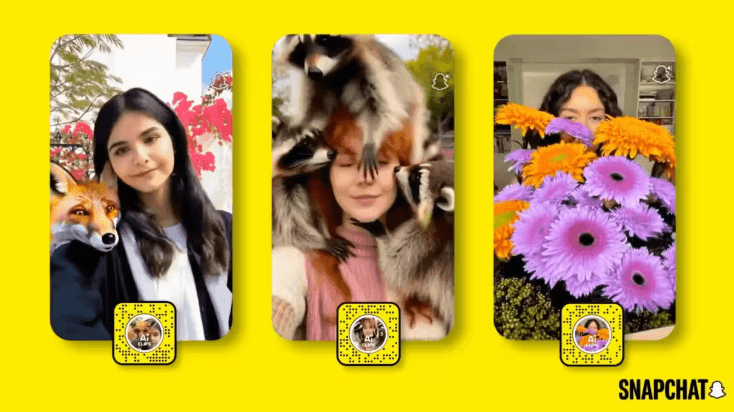
This is not the first integration of an AI tool within Snapchat. In 2024, it launched more augmented reality tools, and its developer program, Lens Studio, got a new suite of generative AI tools (per Reuters). Late in the year, the company also announced Snap AI Video, which lets users generate AI videos from a prompt or an image, although the rollout still seems to be in beta testing (per TechCrunch). “AI Video Lenses” were rolled out for Platinum subscribers in March 2025.
More than anything, this move is likely an attempt to position Snapchat alongside larger competitors like TikTok and Instagram Reels.
Snapchat is making a big push to capture a part of that market, and it might be working. This month, Vogue reported that the platform represents a potential opportunity to reach younger social media users, some of whom never left, and others who are returning.
Snapchat is leaning hard into winning content creators, with its new Creator Collab Studio (a way for users to partner with brands) and increased monetization opportunities. Creators can earn money from ads placed within Stories and its short‑video format, Spotlight.
Winning an AI partnership (regardless of how you feel about the technology) represents another assertive step toward relevancy.
And if you want to enter the creator economy, maybe Snapchat is a platform to try, given its less-crowded space.
In addition, if you aren’t integrating Snapchat into your social media campaigns for film promotion or fundraising, you should probably consider it.
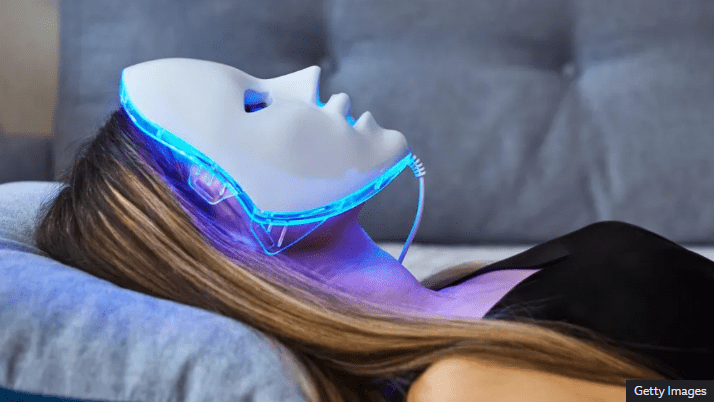
A number of adverts for LED face masks have been banned for making unauthorised claims they can improve acne and rosacea.
The popularity of at-home beauty devices has surged in recent years with social media feeds filled with influencers unboxing and reviewing the masks as the latest skincare trend.
However, dermatologists are divided over whether light-emitting diodes (LED) in at-home masks can deliver the results of medical-grade devices used in clinics.
The advertising watchdog banned adverts for cosmetic devices which were not registered with the medicines regulator.
LED therapy is thought to stimulate cells and improve the skin, but devices must be registered with the Medicines and Healthcare products Regulatory Agency (MHRA) to make medical claims about skin conditions like acne and rosacea.
Devices registered with the MHRA can be searched on its Public Access Registration Database (PARD). But the MHRA told the BBC “there are currently no LED face masks currently registered.”
The Advertising Standards Authority (ASA) used AI to search for ads which might break the rules, and the bans followed that search.
‘My acne had disappeared’
An advert on Project E Beauty’s website showed before and after images of a woman’s forehead with and without acne, with the words: “By week three, my acne had disappeared”.
The ad stated: “Our most advanced LED mask for deeper skin renewal”. It claimed it “treats acne” and offered “83% improvement in acne lesions in four weeks”.
The ASA said “no medical claims could be made for the product, whether or not such claims appeared in customer testimonials.”
Project E Beauty LLC said it had removed potential medical claims relating to “healing”, “treating acne” and “rosacea”.
It also said it had amended the advert to state that any references to acne in before/after photos and reviews were testimonials based on personal experiences.
Silk’n
This advert was banned for making a medicinal claim about acne
A paid-for social media ad for Silk’n featured a video of a woman using an LED face mask with the caption: “Finished with the blue light to help treat my acne and scars”.
Invention Works BV, trading as Silk’n, acknowledged the term “acne” constituted a medical claim. It said the advert was created by a woman after prolonged use of the mask and the wording reflected her individual perception and results.
The ASA told Silk’n the adverts must not appear again in that form.
Beautaholics
Beautaholics agreed not to make claims about acne in adverts in future
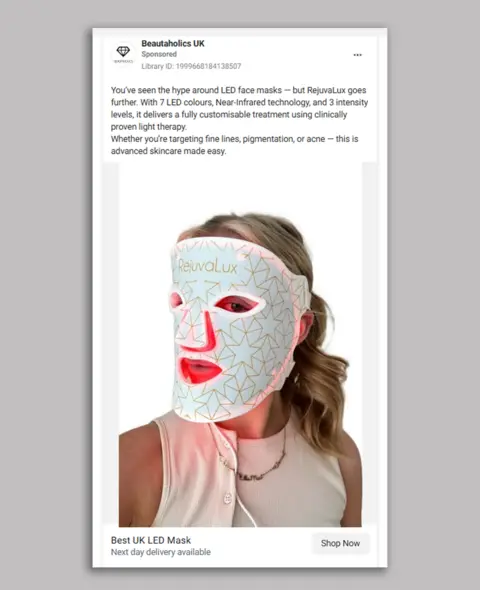
Other adverts banned include one on the Beautaholics website for a RejuvaLux mask which stated: “This mask provides targeted solutions for…acne…rosacea.”
Beautaholics said it would not make claims regarding the treatment or prevention of medical conditions in future.
A paid-for social media ad for a mask by Luyors Retail Inc was also banned after it stated: “It helps tackle everything from acne…with clinical precision.”
Luyors said it would ensure future advertising did not refer to “acne” or other terms that could imply a medicinal claim.
Izzy Dharmasiri at the ASA said ads “can have an influence on what people buy,” so it was “important that advertisers don’t blur the line between cosmetic benefits and medicinal claims.”
She said advertisers “need to have evidence to back up any claims they make in their ads”. She said the banning of the adverts was part of its work to protect vulnerable people “seeking genuine solutions to medical problems”.
It’s easy to change that. You can lock down your location sharing, app sharing, and targeted advertising, as well as enable features that will help you find your device if it’s lost or stolen. All of the settings I’ve rounded up are based on the latest iOS 26 version, which debuted shortly before the release of the iPhone 17. If you have an older version of iOS, certain settings may be in a different location, but the majority of iPhones should have access to most (if not all) of these settings.
iPhone Privacy Settings to Change
Privacy is personal, so you shouldn’t treat the settings I listed here as a checklist. Treat them as suggestions. Your tolerance for data collection and the individual apps you have installed will largely dictate what settings you need to change. And remember, there’s some level of privacy you have to give up with any device connected to the internet, so although these settings will help your online privacy, they won’t make you completely anonymous.
Turn Off App Tracking
ScreenshotApple via Jacob Roach
You’ve undoubtedly come across an app asking to track you, which the iPhone, thankfully, lets you deny. If you want to turn off all tracking, you can. By default, the iPhone allows apps to request to track you, following you around other apps and websites to see what you’re doing. In the settings, you can automatically deny app tracking requests whenever you install a new app.
Open the Settings app, swipe down to the bottom, and choose Privacy & Security. Choose Tracking, and tick off the All Apps to Request to Track setting. You’ll also see any apps you’ve given tracking permission to listed, and you can revoke those permissions if you want.
Customize Location Sharing
ScreenshotApple via Jacob Roach
There are a lot of reasons you’d want to share location data with an app—for example, when using Apple or Google Maps—but apps that don’t need your location might still request it. Follow the same path of Settings, then Privacy & Security, but choose Location Services after. There, you’ll find all of the apps that have access to location services, their individual settings, and the option to turn off location services altogether.
I don’t recommend doing that, but you can still clean things up. First, for any app that doesn’t need a precise GPS signal (for instance, a retailer’s app), turn off the Precise Location setting, which you can find by tapping into an app. Once that’s done, choose System Services, which covers all of the functionality built into the iPhone that accesses location data.
There are a lot of settings here you probably want to leave on, such as Setting Time Zone and Cell Network Search, but there are some you can take off. At the bottom, you’ll find the Product Improvement section, and you can safely turn off those settings. You can also turn off Significant Locations & Routes if you don’t want your iPhone to automatically pick up your home or, for instance, your route to work.
Change App Sharing Settings
In the same Privacy & Security menu, just below the previous two settings, you’ll see a list of apps. These are apps that other apps might request access to, and you can customize those settings here. A great example is already set up on the iPhone. You’ll see that the Focus app is shared with the Messages app, which is pretty useful to let your iMessage friends know that you need some time to focus.
There’s some app sharing you might want to turn off. For example, the Photos app is fully shared with Google Drive on my iPhone, but I don’t use Google Drive for photos. There’s a ton of information that travels along with photos—metadata like the date captured and location—that I’d rather not share. Tapping in, I can change Google Drive to Limited Access to choose what I share, or I can block it outright.
Turn Off Apple Analytics
ScreenshotApple via Jacob Roach
By default, the iPhone doesn’t share a ton of data. In fact, most settings are turned off out of the box, but there are a few analytics you’ll need to dig in and turn off manually. Once again, head to the Privacy & Security menu, and swipe all the way down to the bottom. There, you’ll find two settings: Analytics & Improvements and Apple Advertising.
First, analytics. Tap in, and you’ll find two settings turned on: Share iPhone Analytics and Share With App Developers. Turn those off. You might find some other settings depending on what you’ve connected to your iPhone (like an Apple Watch), and you can turn off that analytics sharing, as well.
Next is advertising. Apple Advertising is more focused on privacy than other platforms, blocking ads from tracking you across websites and services. You can turn off the Personalized Ads toggle. You’ll still get ads, but they’ll be generic. If you turn on Apple Advertising, you can tap into the Ad Targeting Information screen to see what data is shared, such as your birth year, zip code, and the categories for apps you have downloaded.
Generate Privacy Reports
This isn’t really a setting, but the iPhone has built-in privacy reporting tools that can give you insight into what data apps are requesting and using. In the Privacy & Security menu, near the bottom, you’ll see the App Privacy Report and Apple Intelligence Report.
For the former, you’ll see the domains the app contacts each time you use it, as well as a layout of how many domains an app contacts. For Apple Intelligence, you’ll see private compute requests and what data was shared with the request. This report is exported as a JSON file, and you’ll need a text editor to view it. Regardless, both of these reports are fairly technical, and they don’t help your privacy; they just give you more information.
ScreenshotApple via Jacob Roach
Keep Notes Local
Apple automatically stores and syncs anything you put in the Notes app through iCloud, so no, those random thoughts you jotted down five years ago aren’t completely private. Thankfully, you can keep them private with an “On My iPhone” account, which, as the name suggests, doesn’t sync your notes and keeps them local to your device.
To set it up, open Settings and go down to the bottom of the list for Apps. Find the Notes app and toggle the On My iPhone Account setting on. Just above it, you can also set a password if you want to encrypt and lock any highly sensitive notes. Remember, you won’t be able to pull up these notes on another Apple device because they won’t sync, and if you lose your iPhone, you may not be able to access your notes altogether without a recent backup.
Hide (or Lock) Apps and Photos
You can hold down on any app icon, select Edit Home Screen, and tap an app to hide it. That’ll keep the app on your phone, but it won’t appear on your home screen. (You can search for it via Spotlight.) You can also hold down and select Require Face ID to lock the app, meaning it’ll require biometric authorization every time you open the app.
That’s great for apps, but you can do the same thing for photos, as well. Hold down on any photo in the Photos app and select Hide. It’ll be put into your Hidden album, which is locked behind either Face ID or your password. You can find the Hidden album in the Collections tab, at the bottom under the Utilities section.
iPhone Security Settings to Change
The iPhone is pretty secure out of the box, and Apple courts users into leveraging its security features as you set up a new device. Just like the privacy settings, however, the particular settings you use here are up to you. Many security settings will sacrifice privacy, and vice versa. You can’t locate a stolen device if you aren’t using location services, for example.
Use Face ID
ScreenshotApple via Jacob Roach
You need to set up Face ID when you set up an iPhone, and you’re probably using it anyway. But I’ve seen some misconceptions about how Face ID (and biometric authentication more broadly) works. Your fingerprint for Touch ID and images for Face ID are not sent to Apple, and they’re generally more secure than a password or simple PIN.
Instead, your fingerprint or face is used to generate an ID, which is encrypted and stored in Apple’s Secure Enclave, locally on your device. When you unlock your device, Face ID or Touch ID is checked against this ID, and if there’s a match, your device unlocks. If you’ve been avoiding Face ID due to privacy concerns, you aren’t protecting yourself as much as you might think.
Set Up Two-Factor Authentication
You and I both know it—you should be using two-factor authentication (2FA). I hate typing in a code or pulling up a second device as much as the next person, but it’s hard to overstate just how much more secure an account is with two authentication factors instead of one. And, you can easily set up 2FA for your Apple account from your iPhone.
Select your name at the top of the Settings app, which will open your Apple account information. Select Sign-In & Security, and then choose Two-Factor Authentication. Here, you’ll see devices you can use for 2FA, including the iPhone you’re using. When signing into your Apple account on another device, you can use any of the devices listed as your second factor, be it another Apple product or a text sent to a verified phone number.
ScreenshotApple via Jacob Roach
Encrypt Your iPhone’s Cloud Storage
iCloud encrypts your data, but it doesn’t use end-to-end encryption, at least by default. Out of the box, Apple manages your encryption keys, so it could, technically, decrypt the data you store in iCloud. Although that’s unlikely, you can still set up end-to-end encryption and manage your own encryption keys with Advanced Data Protection.
To turn it on, open Settings and select iCloud. Then, scroll down and select Advanced Data Protection. To turn it on, you’ll need to set up some account recovery options. Apple won’t be able to decrypt your data, so if you don’t have any recovery options set up, you won’t be able to decrypt or recover your data.
Turn On Stolen Device Protection
ScreenshotApple via Jacob Roach
Apple includes Stolen Device Protection with your iPhone, but it’s turned off by default. This feature requires you to verify with Face ID or Touch ID when taking certain actions without a password to fall back on, and it enforces a security delay, where critical actions such as changing your Apple password are only possible after a one-hour delay.
There are two forms of Stolen Device Protection. You can either have these features on all the time, or only when you’re away from familiar locations. Note that if you choose the latter, you’ll need to keep the Significant Locations & Routes setting mentioned earlier turned on.
If you set up Stolen Device Protection to only work when you’re away from familiar locations, it’ll kick in automatically. However, Stolen Device Protection doesn’t lock down everything about your iPhone. It crops up in certain situations, which Apple details on its support page. You can turn on the setting in the Privacy & Security menu at the bottom of the page.
Turn On Find My
You often have to trade privacy for better security, and that’s the case for both Stolen Device Protection and Apple’s “Find My” feature. To make sure you have it on, open Settings, select your account at the top, and choose Find My. Make sure Find My iPhone is turned on. If you tap in, you can also turn on Send Last Location, which will update the location of your iPhone if it’s about to die.
Although you’ll need to have location services running, Apple says that devices using iOS 17 and later don’t need to share that location data. When offline, at least, Apple can’t see location information when you have Find My turned on.
Hide Notifications
Finally, a bit of operational security. If you have sensitive information that could pop up in notifications, you can obfuscate how notifications appear while your iPhone is locked. It’s a small change, but it can keep you protected from someone peaking over your shoulder or picking up your phone while it’s locked.
Open Settings and head to Notifications. There, switch the display to Count and change Show Previews to either When Unlocked or Never. If you have a particularly sensitive app—say, an encrypted messaging app—you can also customize individual app notifications on this screen.
iPhone Privacy and Security Apps to Download
The iPhone provides a surprising number of privacy and security tools, from app privacy reports to a built-in password manager via the Passwords app. Some functions are better served with a third-party app, though, either for better security or more features. Although all of the apps I’m recommending here have paid options—and I recommend those paid plans—they all also have a free version if you don’t have the money to spare.
ProtonVPN is the best VPN you can use, and you can get started with it for free. While most free VPNs are questionable at best, Proton’s free service is rock solid. You’re limited to slower speeds and only have access to a handful of servers, but it still works. I’d be worried if a free VPN didn’t impose any limitations, frankly. It’s also one of the best VPNs for iPhone, mainly due to its excellent speed. Proton tops the charts in our speed tests, and although others, such as NordVPN, are close, Proton has maintained its lead across desktop and mobile.
The iPhone has a VPN built in, but it’s not the same thing as commercial VPNs as most people know them. Rather, it’s a configuration tool if you want to set up your own VPN. If you want a tool to mask your IP address and help you stay more private online, you’ll need a third-party VPN, and Proton VPN is the best.
A Password Manager
Bitwarden ranks as the best password manager you can use, though Proton Pass takes a close second. Both offer free options, and they’ll give you more flexibility when storing and sharing credentials compared to Apple’s built-in Passwords app.
Although Apple’s Passwords app is plenty secure, it’s limited. An app like 1Password has apps for Windows and Android, for instance, which Passwords lacks. Third-party password managers let you store a wide range of data, too, from passwords and passkeys to encrypted documents and medical insurance.
Encrypted Email
You’ve locked down your messages; now it’s time for email. Google recently started offering end-to-end encryption for Gmail, but only for Google Workspace customers. If you want end-to-end encryption for personal use, you’ll need an encrypted email service like Proton Mail, which is my favorite option.
There’s a lot to like about Proton Mail, but from a security standpoint, it does a couple of things right. First, if you’re sending emails to another Proton Mail user, you get the convenience of a service like Gmail, but with true end-to-end encryption. Your emails are encrypted before they leave your device, and they’re only decrypted once they’re delivered.
You can also send emails to non-Proton users with end-to-end encryption, either using Proton’s password-protected email feature or by sharing your public key, though that requires a bit of technical know-how on both parties.
Jacob Roach is a product writer and reviewer at WIRED, focused on software as a service (SaaS) products, including VPNs, password managers, cloud storage, and antivirus applications. Previously he worked as lead reporter at Digital Trends, and his work has been cited in Fox News, Business Insider, and Futurism, among … Read More
The U.K. TV giant, led by CEO Carolyn McCall, reported its latest results.
U.K. TV giant ITV, led by CEO Carolyn McCall, is planning 35 million ($46 million) in “temporary,” or “one-off,” cost savings amid “softer” advertising demand in the fourth quarter. The news came Thursday as the company reported the latest revenue for its ITV Studios production arm and advertising business.
Third-quarter revenue came in unchanged from the year-ago period, better than forecast. That leaves nine-month ad revenue down 5 percent year to date. The company had previously forecast that its total ad revenue would come in “marginally down” in the third quarter, “compared to the same period in 2024, reflecting the tough comparative from the final knockout matches of the Men’s Euros in July 2024.” However, the firm had also predicted continued “strong growth in digital advertising revenues.”
But the current fourth quarter is full of uncertainty, with concern about what the late November budget by Prime Minister Keir Starmer’s Labour Party government may bring. “The economic outlook in the U.K. remains uncertain, with widespread caution being exercised across business sectors ahead of the budget in November,” ITV highlighted on Thursday. “This is impacting demand for advertising throughout the industry in the fourth quarter, with ITV total advertising revenue (TAR) expected to be down around 9 percent in the quarter.” That would leave full-year 2025 ad revenue down 6 percent.
“In response to this current reduction in advertising demand, we have identified £35 million of additional temporary savings in [our] Media & Entertainment (M&E) [segment] in the fourth quarter,” ITV said. “These savings align our M&E cost base — particularly content and discretionary spend — with the softer advertising demand we are seeing in the fourth quarter and will largely offset the expected reduction in total advertising revenue.”
The cuts will include 20 million pounds ($26 million) in content savings, “as we move some programming into 2026, which will be financed out of the existing 2026 content spending plans,” ITV said. “The total content budget for 2025 is expected to be around £1.21 billion ($1.58 billion).” In July, ITV had lowered its full-year 2025 total content spend estimate to around 1.23 billion pounds ($1.67 billion), compared to the previously indicated 1.25 billion pounds ($1.70 billion), “as we continue to optimize our content spend to best reflect viewer dynamics.”
ITV on Thursday also mentioned 15 million pounds ($20 million) of non-content savings, primarily from reduced discretionary spend reflecting the lower demand environment and reduced marketing spend aligned with the adjusted content slate, and marketing efficiencies.
Total ITV revenue grew 2 percent to 2.80 billion pounds ($3.66 billion) over the first nine months of 2025, driven by an 11 percent gain at ITV Studios. External revenue in the studios unit was up 20 percent, “reflecting strong demand from, and the timing of, programs for global streaming platforms.”
ITV Studios had recorded a revenue increase of 3 percent for the first six months of 2025. The production arm, which has been a much-rumored takeover target for various possible bidders in the industry, had back then also said that “we remain on track to deliver our target of total organic revenue growth of 5 percent on average per annum from 2021 to 2026 — ahead of the market.” But it had emphasized that 2025 results would be weighed more toward the second half of the year.
ITV’s M&E unit revenue for the first three quarters of 2025 fell 5 percent, but digital was a strong area, with digital advertising revenue up 15 percent and total digital revenue rising 13 percent. “ITVX delivered good growth in viewing, with total streaming hours up 14 percent,” ITV said.
“ITV has delivered a good performance in a tough advertising market,” McCall said Thursday. “Our strategic initiatives continue to progress well, and we remain confident in delivering good growth in ITV Studios revenue and digital revenue for the full year. This is supported by laser-focused strategic cost management and underpinned by our resilient and highly cash generative linear broadcast business.”
Thursday’s cost savings news came after ITV had in July unveiled an additional 15 million pounds($20 million) in permanent non-content cost savings, taking the total group permanent non-content savings in 2025 to 45 million pounds ($61 million). CFO Chris Kennedy in the mid-year earnings call cited technology and process efficiencies as drivers of the latest set of cost reductions. “Everyone is really focused on…rebalancing the cost base” to ensure continued business success, he said.
Feature image credit: ITV CEO Carolyn McCall Courtesy of Matt Frost/ITV
These days, agencies act more like orchestrators of tech and creator access
A decade ago, I fought tooth and nail to gain a foothold in the advertising industry. I contacted the great-ish minds of our generation leading strategy at the legendary Madison Ave. shops and the new-fangled, tech-enabled experience studios. Handwritten letters rattled the bin without reply. Most emails went unanswered, save for a few generous folks who gleaned genuine interest in my request.
To those folks, I explained my interest—I am curious about people.
During a decade working brand-side marketing roles, I glimpsed what agency strategists got to do and I was jealous. One anecdote came from my time at a youth-focused travel company. As part of a project, I flew to London and trailed a few strategists from our agency for field research. We hit university pubs, buying students pints of cider and lager in exchange for travel stories and booking experiences.
Strategists sought a truth about humans, business and culture. While the world of advertising was already in flux, it still had some shine. It seemed a fitting way to use my journalism degree while making enough to not need more roommates than rooms in my apartment.
There were trips for some to industry confabs. At least once a week, we entertained a client with dinner and drinks or at least a stop at happy hour. I got to do plenty of research interviews. I even spent a few years working at iconic agencies in London, the birthplace of planning.
Today, I fear the industry is losing what made it home for misfits like myself—its focus on people.
Recently, a well-known CMO shared a screenshot on LinkedIn. In the midst of a publisher’s article was an ad. This ad looked nothing like the ads I wanted to help create. You can imagine it now. They are usually found at the bottom of articles on news websites. They feature a clickbait headline, an AI-generated image and a tiny disclosure line in a half-assed attempt to tell you what you’re seeing is an ad and not actual news.
Over the decade since I got into advertising, the share of ad revenue going to Meta, Amazon, Microsoft, Alphabet and TikTok has climbed from 22 percent to 65 percent, per MoffettNathanson. Instead of the industry using its understanding of people to help these platforms create ad formats and creative that work through narrative and entertainment, agencies bent the knee. They reworked ideas to fit formats, ceded creation to influencers and accepted that somewhere between 5 and 50 percent of the users seeing an ad weren’t people, but bots. Unsurprisingly, the percentage of humans who find advertising annoying has also climbed.
A recent report from Forrester predicts that, “As creators take on more ideation and production responsibilities, creative agencies will act more like orchestrators of tech and creator access.”
Times change and culture shifts. I’m not naïve enough to see this prediction as a surprise nor stubborn enough to grasp at the vestiges of the industry of yore. What floors me about Forrester’s prediction is how willing the industry is to cede its leadership in understanding people.
These digital behemoths have reduced users to data points that brands can buy for pennies on the dollar. They don’t need to understand their users. Heck, they don’t even need to acknowledge that there is a human user. What matters is the identifying ID that bought from an e-commerce shop after tapping an ad so bad that even a junior art director wouldn’t put it in a sparse portfolio.
Our industry can and should do better.
Let’s give life to those aggregated data points. Let’s help clients see what they are already pointing out themselves: AI slop and clickbait ads are not going to win hearts and minds.
Research from System1 and others has shown that creators, as proper collaborators, can play a brand-building role. We can’t settle for becoming an orchestrator when at the very least we should be composing the music.
And these people aren’t gone. In terms of positioning, they are still our most valuable offer. They show us that when the advertising industry focuses on people, both those creating the ads and those enjoying them, the advertising industry wins.