Author

editor

Browsing

By Caroline Forsey

Maya Angelou once said, “You can’t use up creativity. The more you use, the more you have.”

Oftentimes, this couldn’t feel further from the truth. Imagine, for instance, the moment you finish your quarterly marketing campaign. You’re ecstatic — the campaign launched without a hitch, and you’ve already seen impressive conversion results.

But you’re also exhausted. You feel you’ve used up so much of your creative energy already — how will you ever come up with a new idea for the next quarter?

In these instances, it can feel like creativity is finite, and maybe even rare. But as marketers, we’re tasked with both the burden and the joy of using creativity to succeed in our roles every day.

Fortunately, there are tactics you can employ to begin building the right habits to become more prolific in your role. Henneke Duistermaat, writer and creator of Enchanting Marketing, created the following hand-drawn infographic to help boost creativity, improve focus, and minimize self-doubt to become a better, more creative marketer. Take a look.

Free Download: How to Use Photos in Marketing

3-creative-habits-infographic-final

By Caroline Forsey

Sourced from HubSpot

By Johanna Rivard

The beginning of the year always signals a reevaluation of old strategies and the hunt for newer ones to stay competitive in your industry. We’ll be ringing in 2019 no differently with a new set of B2B lead generation strategies you should watch out for.

The digital marketing landscape is constantly changing, which means B2B lead generation tactics are evolving as well. Other brands are getting better at converting their prospects while some are stuck doing their old ways, perhaps unsure how to spice things up.

61% percent of businesses are saying that lead generation is their biggest marketing challenge, as per HubSpot’s State of Inbound report.

There are many free lead generation tactics out there, but a few will help you maximize your ROI. Here are effective B2B lead generation strategies that will play up your game in 2019.

1. Gate Your Content Strategically

Gated Content

Not every marketer is confident whether or not they should gate their content. However, this is one of the most effective ways to attract and identify leads who care about your business.

When done right, gated content can increase leads and conversions. Case in point: Finance and trade website Trading Strategy Guides added almost 11,000 targeted subscribers to their email list in just one month by using a content locking script. Unbounce’s gated content stats reveal more campaigns with conversion rates that fall between 19 and 45%.

Putting out gated content is wise if you’ve already built a library of content that you are sure your audience is enjoying. This way, loyal readers won’t be bothered to give you their names and email addresses to read what you wrote.

2. Personalize More Touch Points

One-size-fits-all marketing is dead. Users are now craving for that human touch that allows them to cultivate deeper connection and more meaningful relationships with brands. In a Salesforce survey of 7,000 consumers, 57% of the respondents said they are willing to share their data in exchange for personalized offers, 53% for personalized product recommendations, and 52% for customized shopping experiences.

3. Produce Evergreen Content

Evergreen Content

Moment marketing is a great way to stay relevant or go viral for a certain period but sticking to evergreen topics in your niche is a sure way to get noticed no matter what stage your potential clients are in the sales funnel.

Evergreen content works hand in hand with your SEO strategy, allowing you to stay fresh on search engines. In a case study by Miles Anthony Smith, he presented a growth of 575% in organic traffic after adding evergreen content on his blog. It’s helpful, informative, and shareable—all the things people love about high-quality content. Plus, it never goes out of style.

4. Build Social Media Communities

Social media is no longer just an extra channel of publishing or promoting your content. This is your chance to engage with your audience. The average person has 7.6 active social media accounts and spends more than 2 hours a day on them. Take advantage of this.

You can start a Facebook group where you can have regular discussions on pressing issues relevant in your industry. Use hashtags on Twitter and Instagram to connect with like-minded individuals or specific causes or topics. LinkedIn is also a great platform to communicate with prospects and tell them more about your brand.

5. Launch an Incentive-Based Referral Program

Don’t take word-of-mouth marketing for granted—it’s still the primary factor behind almost 50% of buying decisions. More stats show that B2B companies with referrals reportedly have 70% higher conversion rates and a similar faster close time on sales.

Your satisfied clients are the best people who can market your business to others. Incentivize referrals! Make it more exciting for them by creating customized referral codes that entitle them to discounts. This also makes it easier for you to track where your leads are coming from, and which are converting.

6. Optimize Your Landing Pages and CTA

Optimize Landing Pages

Did you know that a lot of landing pages contain more than one offer? If yours falls into this category, it’s time to rethink your CRO strategy. Marketing Experiments found that multiple offers in one page can decrease conversion rates by up to 266%. Focus on a single goal for each landing page and be clear with your messaging in your CTA to reduce distractions. Your primary goal is to convert your visitors into leads, so make sure your landing pages and CTAs are convincing. Make it an engaging, straightforward, and natural experience for them to type in their information on your forms.

7. Record the Actions of Your Website Visitors

An excellent way to diagnose why your website visitors aren’t converting is through analyzing their actions on your website. Tools like Hotjar or Mouseflow can allow you to record user sessions and plot heatmaps on most-clicked buttons on your site.

Many CRO experts swear by this step and maintain that it’s one of the fastest ways you can uncover the “whys” in your process:

  • Why are they not converting?
  • Why are they not filling up my forms?
  • Why do they like this webpage so much?

From here, you can rectify a situation or apply more of the same strategy to your other pages. This is helpful for A/B testing as well.

8. Encourage Online Reviews

A study by RevLocal found that 92% of consumers read online reviews when considering a product or service. If your website doesn’t have a testimonials page or a reviews feature, it could be hurting your chances to get contacted. Create opportunities for your clients and customers to add a review and post it on your website.

Reviews build consumer trust, improve your local search ranking, and ultimately improve conversions. The RevLocal study also found that consumers are likely to spend 31% more on businesses with stellar reviews.

9. Expand Your Online Presence

The persona of your brand is not limited to your website and social channels only. Branch out and appear on other sites to grow your credibility, such as guest blogging, getting interviewed, or answering questions on Quora.

Quora alone can help you gain thousands of leads if you answer the relevant questions in your industry. Developing your brand as subject-matter experts can increase brand awareness and also help first-time learners about your brand build trust faster.

10. Use Gmail Ads to Target Your Competitors’ Audience

Email is still the most popular lead generation channel—77%  of B2B marketers use email marketing to drive leads, according to SuperOffice’s State of B2B Email Marketing report.

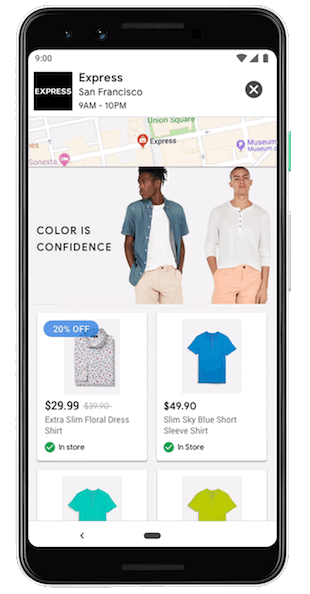
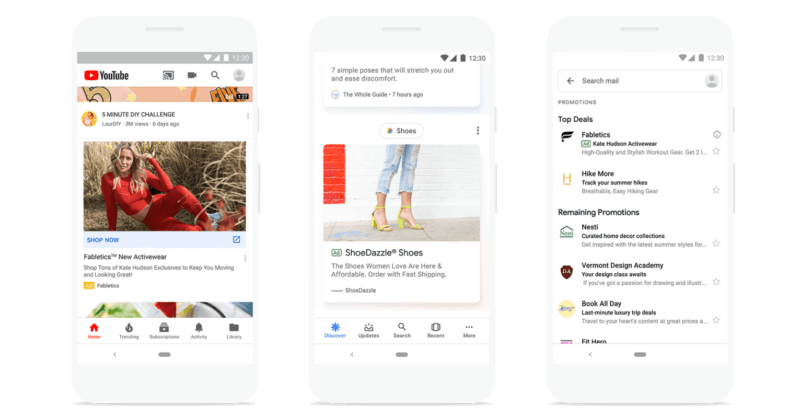
In B2B, there is a lot of value at drawing the attention of your competition’s customers. Gmail ads allow you to target your Google Ads campaign to people who have received emails from your competitor. Sounds sneaky? It is, but it’s effective. It gives you direct access to people who are already familiar with the nature of your service.

Use this opportunity to show what sets you apart from the competitor. Use familiar language, optimize your email marketing layout, and give them an offer they can’t refuse.

The Takeaway

In the world of digital marketing, you can expect each year to get even more competitive than the last. However, that’s a good thing—your business gets pushed to aim higher and get more creative regarding devising tactics or building tools that work best for you.

Nailing your lead generation strategies is the foundation of all your other moves along the sales cycle. Be smart and creative in getting your visitors to engage and convert.

The post 10 B2B Lead Generation Strategies for 2019 appeared first on PureB2B.com.

By Johanna Rivard

Sourced from Marketing Inside Group

By  Ryan Yaeger 

Marketing and advertising agencies have been a part of the marketplace for more than two centuries, helping product manufacturers and service providers connect with those in need of what they have to offer. Agencies like ours exist symbiotically with business – when our efforts do well in promoting a business, the business succeeds. “We succeed when you succeed” is more than a throwaway slogan – it’s the truth of agency work, and words we live and die by.

Retaining a client or sticking with an agency often comes down to deciding how beneficial the relationship is for both parties. But how can a client really measure the success of their marketing agency? What is the right way to tell whether or not the investment is worth it? While many would say that it simply boils down to the ROI – return on investment – the reality is that the answer isn’t always quite so clear cut.

First Things First – Marketing Is an Investment, Not an Expense

Before we dive in, it’s important to first dispel the notion that anything you spend on promoting your brand, your business and what you have to offer the market is a cost. Most organizations understand that marketing is an investment – something you put money into for the betterment of your organization and the growth of your business – and not an expense. It’s why they call it “return on investment” and not “return on expense,” after all.

Promoting your brand and your products or services is how new customers learn about you and what you offer, and how existing and previous customers keep you in mind for future needs. Being at the top of mind within consumers’ minds is a must. If they need something you offer and don’t think of you first – or at least know of you and what you can provide – you’ve at least put yourself at a disadvantage if you haven’t outright lost a potential sale.

Marketing helps you succeed, and marketing agencies offer experience in the best ways to find that success for your business. They deliver knowledge and expertise with different types of advertising and creative staff capable of concepting and delivering a unique and fresh idea for you and your organization. You wouldn’t ask just anyone to help you put an addition on your house or repair your car – you’d want an expert. When it comes to promoting brands and business, investing in a marketing and advertising agency that works on your behalf is an investment in your organization’s growth and development.

A Partnership for Measurable Success

Now, to really gauge how successful any given marketing or advertising efforts are, it often comes down to the numbers – but which numbers? The definition of success can vary, depending on the specific goals of the client. Do you want to increase product sales? Drive more queries to the website? Get more foot traffic at your storefront or make the phone ring more often?

Credit: iStock

The goal of the campaign has to be well understood before you start, and agencies and clients need to trust one another and provide transparency in the process. A client needs to be able and willing to share information like customer inquiry and sales data with the agency – this allows the agency team to track what campaigns or strategies are working and to what extent. On the other side, agencies need to be transparent about the costs for different services and deliver the trackable data available from campaigns run on digital or third-party networks.

To succeed, clients and agencies need to work as partners, sharing data, collaborating on ideas and cooperating on measuring results. For campaigns to be fairly evaluated, clients need to know what was done and agencies need to know how it impacted business. Together, each approach can be assessed, improved and refined, making each new campaign better than the last and helping to grow business.

Where Things Fall Apart

If you ask five companies or five agencies why their last relationship with the other failed, you’ll probably get five different stories. Maybe the agency cost too much or they weren’t transparent enough, or perhaps the client failed to pay bills on time or never provided any concrete input on a project. At the end of the day, though, many client and agency relationships fail for the same reason as personal relationships – a lack of communication and understanding.

Working with an agency offers many benefits for a client. Agencies have staff that are experienced and knowledgeable in the marketing world and in a range of advertising strategies, creative development approaches, content and copywriting, digital and traditional media and much more. Having an agency puts all this at the fingertips of a client, allowing them to adapt and grow in any channel without having to hire an in-house staff to cover all the different avenues.

But the partnership works both ways. Clients need to know that their agency can react to their requests and are able to deliver results on time and on budget. At the same time, clients need to respect that agencies have costs of doing business, and when a client requests a project, there will be a price attached to that work. That can include a range of different fees, as well, depending on the type of campaign – research and concepting, printing costs, media purchasing and placement, creative or technical development, project management and more.

But What About ROI?

That all said, measuring the success of your campaign won’t always boil down to a clear-cut gain in profits. The typical calculation for an ROI holds that an organization’s gross profit during a given campaign minus the marketing investment divided by the total of that investment and then all multiplied by 100 should result in a campaign’s ROI percentage. Or, in more clear terms:

However, that doesn’t tell the whole story. While that math works great for a campaign that’s directly tied to increased sales of products or services, it doesn’t work when the campaign has a less tangible goal. Is your goal to increase awareness in the marketplace or expand your reach into a new territory? You can’t necessarily measure that in increased revenue. Instead, that may be better gauged by surveying people in the area, tracking visits to your website from that area or using a new phone number that’s local to the region and counting call volumes.The standard calculation of ROI also doesn’t factor in things like residual customer values. For example, if a campaign brings 10 new customers to you, and two of them go on to make regular annual or quarterly purchases, that grows not only a company’s immediate sales, but develops long-term returning customer value. Similarly, growth in search engine rankings or increased website traffic doesn’t necessarily show an immediate gain, but instead sets a foundation for long-term growth and value by improving visibility and market awareness.

Credit: iStock

A Different ‘R’ for ROI

At the end of the day, perhaps it’s not so much a “return” on investment that should be the target term in “ROI,” but instead “results.” What success is can take many different forms depending on a campaign’s goals, so for a client to gauge the merits of an agency partnership on financial gains alone isn’t always the appropriate measure. Instead, look at what the agency delivers for investment and decide if that meets or exceeds the goals of a given marketing effort.

Growing an email list or placing a billboard doesn’t necessarily tie immediately to a financial growth. However, both offer long-term benefits. Having more customers on an email list increases the reach of digital marketing campaigns, allowing for more current or prospective customers to be reached with future incentives and promotional materials. Increasing awareness of your brand in the community doesn’t mean they will need your product or service immediately, but it does make them aware of who you are and what you offer when they do need you. Marketing isn’t just financial gains alone – sometimes it’s playing the long game and investing on efforts today that make campaigns in the future more successful.

If both the client and agency agree on what a campaign is setting out to do and what success looks like for any given effort, it’s easy to determine if a campaign is delivering ROI – results on investment. Success isn’t always measured by the same yardstick. By deciding what success looks like, clients and agencies can thrive together.

This article was originally posted on the J. Fitzgerald Group blog

By  Ryan Yaeger 

Sourced from Business 2 Community

By

Imagine you’re at an industry conference. It’s happy hour, so you grab a drink and turn to the attendee next to you. What do you do next? You don’t just throw a business card at them and walk away. If you do, you’re a lousy networker.

If you’re a good networker, you start a conversation.

If you’re a great networker, you take that conversation to the next level by adjusting the conversation based on their body language. If they lean in when you talk about search engine optimization but check their watch when you talk about paid search, well … then you talk more about SEO.

So the question is this: why aren’t more companies doing this with their website visitors?

Editor’s Note: This is the third and final part in a three-part series on why your audience clicks. Read the whole series here.

The Importance of Digital Body Language

Most companies just throw their digital business card at their site visitors, meaning they rely solely on web analytics such as Google Analytics to understand site performance — but web analytics only tells half the story.

Here’s an example: one of our clients thought they had a popular knowledge hub based on the data they were seeing in Google Analytics. But can you guess what happened when we applied behavioural analytics? Nothing. The hub was an abject failure!

It received a lot of page views (which thrilled our client), but the digital body language on the page made it clear that site visitors were not finding what they wanted or clicking on what was offered. They weren’t even scrolling far enough to see the majority of what was in the knowledge hub.

What our client thought was a wild success was really doing more harm than good. Instead of converting, users left with a bad taste in their mouth never to return.

If this client had only looked at Google Analytics, they would have continued to think the knowledge hub was a success and never would’ve made any changes. It took behavioral analysis to peek under the hood and discover just how bad of an experience the hub was for everyone arriving on the page.

How Behavioural Analysis Is Conducted

Behaviour Mapping

FullStory, MouseFlow, Decibel, Inspectlet and Hotjar are all applications that provide behavioural analytics for websites. Behavioural mapping includes everything from click and heat mapping to attention and scroll mapping. These tools are instrumental in finding out if your site is effective. By seeing where on the site people look, click, spend time and scroll, you gain a deeper understanding of what is and isn’t working.

For example, you may find that none of your site visitors scroll more than 50 percent down your page. If your most important messaging is at the bottom of the page, your visitors never see it. With this newfound knowledge, you can adjust your site accordingly.

Or, let’s say click mapping shows your users are clicking the same spot over and over and over again, but there’s nothing there to click. With this data, you realize your visitors are “rage clicking” — clicking a spot repeatedly thinking it’s a link when it’s not. Now you know you need to adjust your design.

Video Recordings

Some behavioural intelligence programs take mapping a step further by providing actual video recordings of site visitors. There’s no webcam involved (that’d be creepy), just a recording of their screen, cursor movements, navigation patterns, and the elements that get the most attention. Essentially, you get a live view of their digital body language.

This type of qualitative data is highly useful in providing insights the aggregate data may not reveal. Filtering the videos by campaign or traffic source or by the type of visitor (new vs. returning, etc.) can help you uncover new opportunities to improve the site experience for your visitors.

Form Analytics

Let’s say you’re collecting leads via a form on your site. Or at least, you’re trying to collect leads. But you’re not getting the volume you’re looking for.

When you look at Google Analytics, all you see is that your users aren’t clicking “submit.” You assume they’re not touching the form at all.

When you fire up the form analytics, however, you see something different: most visitors are filling out their first name and email but hesitating when you ask for their last name or their phone number or zip code. Now you know the form itself is the problem — not the arrangement of the page.

Behaviour-Based CTAs

A similar function can apply to behaviour-based CTAs. If you have a form at the bottom of the page but behavioural analysis shows your users never scroll that far, you might decide to add a behaviourally-triggered CTA — a CTA that pops up after a user takes a certain action such as when they start to leave your site.

We added one such CTA in our blog, requesting that visitors subscribe to our newsletter. The site visitor needs to scroll down 70 percent of a post before it’s triggered. Amazingly, we experienced a 300 percent jump in opt-in rate. Pretty sweet!

Polls and Surveys

If you thought we were done, think again. There’s still more that behavioural intelligence can do, like uncovering contextually relevant audience insights through polls and surveys. Let’s say you have a page that’s promoting a certain service. Insert a poll on the page that lets them indicate what they are trying to achieve. Or inquire about what brought them to the page. Or simply ask if they’re finding what they’re looking for. Apply conditional logic to the survey, and you’ll be able to customize the survey questions based on their initial responses, helping you uncover deeper insights.

Next Step, Excellent User Experiences

All of this awesome data helps you do three major things: 1) understand your audience better, 2) engage with them on a deeper level and 3) deliver a better user experience.

By

Feature Image Credit: Tim Gouw

Sourced from CMS WiRE

Aside from the fact that starting an online business is something you do when you have a great solution to offer people and also is something, you’re passionate about, you also start an online business because you want to have the ability to work on your own schedule and not be limited in how much you can earn.

However, not all online businesses will offer you that freedom and flexibility that you desire, so if that’s what you’re looking for, then in this post we’re going to share with you some of the online businesses that offer the most flexibility.

Freelancing:

Freelancing is probably one of the easiest ways to start an online business – especially if you want to start making money as quickly as possible. The great thing about freelancing is that you can start with very little to no money and build a successful business very quickly. Whether you’re working as a freelance copywriter, graphic designer, or even as a freelance tax consultant, as long as you’re able to provide a service and solution that solves a real problem people have, then you’re going to find freelancing to be a very rewarding business where you have lots of flexibility around the schedule you work, the money you make, and the clients you work with.

Coaching:

If you’re a people person, then a career as a coach is something that’s very flexible and rewarding, but it’s definitely something that you have to be passionate about. The great thing about coaching is that you can do it with very little technical setup and money and because you can work with clients online then you can work on a completely flexible schedule. If you decide to go down the coaching route, then you can choose to work as a business coach, a health coach, a fitness coach, or even a parenting coach.

Blogging:

If you’re someone who loves to write and would like to turn this into a business by writing about things, you’re passionate about, then blogging is a great way to make this happen. As well as being totally flexible and enjoyable, you can make great money as a blogger as long as you’re putting out consistent and good content. It doesn’t matter if you’re writing about software development companies like Praxent or if you’re writing about fashion, the content needs to be of value to people.

Affiliate Marketing:

Affiliate marketing is definitely an extremely flexible business that you can start because it’s very hands off. Although it definitely takes some work to build up in order to start making money from affiliate marketing, it’s worthwhile, so if you’re looking for something that you can work around your other commitments, then affiliate marketing is a good option. One of the best things about affiliate marketing is that you’re going to be making money by recommending other people’s products and services, so there’s really no content that you have to create, and since many of these products and services are subscription based, you can make money on repeat from something you’ve recommended previously.

By Ryan Kh

Sourced from Catalyst for Business

By Chris Smith

Samsung on Thursday announced the results for the December quarter as well as the 2018 fiscal year, marking the second straight year of record annual results. However, the numbers for the fourth quarter were less than stellar, with Samsung posting drops of 10% (revenue) and 29% (profit) compared to the same period last year. Smartphone sales weren’t great for the company during the December quarter, but that’s hardly a surprise considering that Samsung’s 2018 flagship failed to deliver any excitements. The Korean giant, however, hopes that phones like the upcoming Galaxy S10 series, as well as foldable and 5G devices to help it turn things around.

Samsung posted earnings for 59.27 trillion won ($53.4 billion) during the period and 10.8 trillion won ($9.7 billion) profits for the December quarter. For 2019, Samsung expects overall annual earnings to decline.

Aside from the smartphone business, which suffered during the December quarter, weaker NAND and DRAM sales also took a hit during the period, indirectly affected by slower overall smartphone sales. Samsung wasn’t the only company who sold fewer phones than anticipated last year.

Slow smartphone sales will continue to affect the performance of other Samsung divisions, like the mobile display division that manufactures screens for Samsung’s phones, but also for plenty of competitors, Apple included. Demand for OLED screens and memory products should improve in the second half of the year.

Demand for smartphones and tablets will continue to decline in the first quarter of 2019, but Samsung hopes the Galaxy S10, which is mentioned by name in the press release, to prop up sales during the coming months.

Also, Samsung plans to boost smartphone sales this year by launching “launching differentiated products and bolstering target marketing strategies.” That’s even though the demand for phones isn’t expected to increase this year compared to 2019. Samsung does say that average selling prices (ASP) are expected to rise “due to a trend toward adopting high-end features such as large screens, higher memory capacity, and multi-cameras.”

Samsung also said it’s expected to lead the market by launching foldable and 5G devices this year, but Samsung didn’t provide any commercial names for the upcoming products. The Galaxy F, which is what we call the first Samsung foldable phone, will also launch at the February 20th Unpacked event, rumors say. At least one 5G version of the Galaxy S10 should hit stores in Korea and the US in the coming months, according to various reports.

By Chris Smith

Sourced from BGR

By Kristin Burnham

Data has been ruling the roost for years. It’s no wonder why, either: Data has made personalization easy and effective, enabled informed decision-making based on concrete intelligence, clarified the customer journey, and led to a better understanding of ROI.

But now that having data and a single customer view are table stakes, a keen focus on both the data and creativity is what will help brand marketers standout among the competition.

Here are five ways you can breathe new creative life into your marketing organization.

1. Teach Creativity
Sometimes the best way to infuse creativity into an organization is by bringing in outside perspectives, said Becky Wang, author of “Creativity and Data Marketing” and co-founder of marketing consultancy Crossbeat. She suggested tapping a brand, design, or innovation agency to workshop inductive reasoning skills, which focus on making broad generalizations from specific observations—in other words, drawing conclusions from data.

“Part of it is just shaking up the culture because I think people learn by models—they have to be shown how to think about things differently,” Wang said. “People think that when you look at data, it will give you the answer because that’s what they want when they look at it. At best, data gives you direction.”

2. Test New Ideas
One step that high-performing marketing and advertising organizations take that others don’t do enough of is testing new ideas, said Nate Shetterley, global group director of data and design at marketing consultancy Fjord. If you’re optimizing around one individual, segment, or persona, for example, add an alternative to understand how people are moving.

“When you have a message that’s working, sub in message B, C, or D to test something new,” he said. “This looks like a complex version of A/B testing, but that’s where you have an opportunity to bring in a more creative approach.”

Testing new ideas can also stem from adopting an alternative mindset, Wang added. For example, think about what it would be like if you started the business you’re in today. This exercise could be as simple as running Facebook ads or market surveys that direct to a website that polls users about a potential product, she said.

“Data shows you the success or failure of something you’ve been doing, and it’s easy to get stuck in this loop,” Wang explained. “Think about what could happen if you did things differently, and then experiment with that. If you just imagined what it would be like if you created your business again today, you would probably notice that there was a plethora of decisions that didn’t come from the data.”

3. Resurrect The Human Element
The danger of going all in on data with no creativity counterbalance is that it strips the humanity out of marketing and advertising, said Adobe’s executive creative director, Steve Gustavson. If you ask someone how she feels about a product, for example, she will likely tell you a different story than what the data said if you’re just viewing her online consumption behaviors.

“I think what can get lost is that there are human beings in the process making the decisions of what’s said, how it’s said, and what gets built,” Gustavson said. “Once you strip the humanity out of that, suddenly nothing you do will be long-lasting. You need to figure out how to blend [data and creativity] to get a fully rounded view of the customer. Quantitative data can only tell you a piece of that.”

Marketers tend to fall into this trap when they focus on optimizing an algorithm to get the best answer, Shetterley added. When you tinker with numbers and tools to achieve the highest percentage, you extract yourself far away from the humans on the other side.

“When you’re focused on what it means to be more human, you’re more empathetic and ethical because in the end, you’re dealing with human beings and not just optimizing an algorithm,” he said. “That analytical approach blended with the human end keeps us on track.”

4. Teach Marketers Data Science
Consider the word “model.” To a data scientist, it could refer to an analytical model. In design, it’s a conceptual model or prototype. To the general public, it’s someone famous on a catwalk. That’s why it’s important for marketers to speak the language of a data scientist, Shetterley said.

Fjord created an internal program called “Data for Designers,” which taught the basics around how data scientists viewed the world in order to bridge the gap between how data-minded professionals and creative marketers think. The result was better collaboration, understanding, and burgeoning creativity.

“It’s almost like meeting someone from another country: You learn a little of their language so you can understand each other a bit better, which lends itself to working together more productively,” Shetterley said.

5. Teach Data Scientists Marketing
The flip side of that is equally important, Gustavson and Shetterley agreed. Gustavson suggested that organizations consider bringing more creativity into non creative disciplines such as data science.

And there are already organizations that are doing this. For example, the counterpart to Fjord’s “Data for Designers” program is an internal curriculum that teaches visual design to engineers, Shetterley said. Its goal is to surface more creativity and improve their ability to tell stories with data.

“What’s important is that some how we meet in the middle,” Gustavson said, emphasizing the importance of upskilling both creatives and data scientists.

This article is part of our series about 2019 trends, predictions, and new opportunities. Click here for more.

By Kristin Burnham

Sourced from CMO

What’s your backstory?

My name is Christian Vind, I was born and raised in Minnesota. All my life I dreamed of being famous for making music, but I could never find the right people to work with to make it happen back in my high school days. Whenever I tried to find people to work with, to start a music group or to be in one, they would laugh at me saying “Stick to your day job”, “White Boy trying to act Black”, “White people don’t have rhythm”, “Stop trying to be someone that your not”, “You’ll never make it”, “I don’t want you in my group”, “Who does this person think he is”, “You suck”, “You’ll never be good enough” and was bullied all the time just for me being who I wanted to be.

Years later, everything had changed for me when I watched Eminem’s movie, 8 Mile. I had seen that movie before, but then, watching it again, I had felt something tell me to chase my dream. Watching that film inspired me to chase my dreams and I told myself that if Eminem could do it, then I can do it as well. I started searching for recording studios in 2014 shortly after watching that movie. I had went from studio to studio till I went to High School for Recording Arts after hours, in St. Paul, Minnesota, to get my music recorded. I released my first EP, Christian Vind The EP, on iTunes, Google Play, Spotify, Apple Music, etc. in 2015 and then got some music videos done to it as well. The next step was to learn how to create a fanbase on social media.

Once I figured out social media marketing, I started making money from that just by retweeting people’s content to help them gain more exposure helping them expand their fan base, after I got verified on Twitter, I also helped people gain more organic followers to build their brands. How I got to where I am is by networking with celebrities and verified influencers on Twitter.

2016 is when I started performing and one of my best performances was at the PourHouse in downtown Minneapolis in Minnesota. It was a great year for me, I charted in the top 3-15 on the MTV Artist Website, in the summer of that year when they had it on their website. Then I got invited by Republic Records and I attended the MTV VMA After Party, in New York at Vandal, which got me to be on the red carpet. I feel like that helped my career a lot.

In 2017, I stopped performing my old music to work on my new album and now I will be releasing it in 2019! Definitely expect some dope creative photography and music videos from Andrew St. Jean and I in 2019 as well!  Also, get ready for Sundra Xaphakdy, Darrin Austyn James Hall, owner of www.newlifemusicgroup.com, Shermo, Christi Vind, After Memphis, John White, Jassiel Macias, Dylan Bostic, Devonte Riley, Dale Moss, Kiya Edwards, Jimmy Star, Angel Sessions, Rodney Crews, Demetrius Guidry, Tru-Serva, Cara Rgnonti, Dixon DeVille, Andrew St. Jean, A.Win Music, Daniel Mignault, and I, Christian Vind, to take over the entertainment industry!

I know this is not an easy job. What drives you?

What drives me is knowing that there is always a light at the end of the tunnel. On this entertainment journey, God has shown me many things about myself and they’re so many reasons to not give up. One major reason is knowing that there could be someone that is looking up to me and what if I gave up? I wouldn’t want them losing hope.

So what exactly does your company do?

I offer promotional services via Twitter, whether it would be a shoutout, and or retweeting their content. The first thing I do is reach out to brands and companies that are looking for more exposure for their businesses.

Is there someone who made a big difference in your life who helped you get to where you are today? What lesson did you learn from them?

John White helped make a big difference in my life. Not only did he teach me how to become a successful entrepreneur, but he also got me into the PR industry as well. One lesson that I learned from him is that LinkedIn is the best place to do business. For one, thats where most of the big ballers go. For two, it is so much easier to connect with people on there. So, if you’re looking for clients, that’s the first place you should look!

Photographer

Andrew St.Jean

Christian Vind’s Social media

Facebook s

Twitter

Instagram

By 

I am influencer in the PR industry. I have worked with clients worth over 100M. My goal is to share my experiences and influence others to find success while sharing valuable and interesting content.

Sourced from Thrive Global

By

Consumers have been talking to artificial voices for a while now. We know Alexa and Siri and a few others by names. Some kids talk to them like they’re a member of the family.

The always don’t seem real — but maybe real-like. These AI voices use natural language processing, and sometimes when they don’t understand the question, they’ll even say, “Hmmmm,” just the way you might if you’re a little stumped.

Joan Baker, a voiceover pro, and Rudy Gaskins, a producer-director and her husband, don’t seem so worried about what AI means for the future of the voiceover profession.

Baker says, “I hear a lot of people talking about it. A lot. I see it talked about on Facebook pages. They’ll write, ‘Oh, they’re going to take our jobs.’”

Time will tell. “Will synthesized voices rule the day someday? It is the wild West,” Gaskins says. “My guess is that as the generations go on, they’ll become less averse to it.”

But he adds, with a sentence that would have seemed nonsensical to utter just a few decades ago, “There will always be the need for a human voice.”

There are a few firms, like LyreMaker and Animaker (“As Real As It Gets”) that offer ways to create a real voice, but most of the time  a “computer voice” won’t fool anyone.
And in fact, as AI voices proliferate, the media role for human voices might actually become even more in demand. Or else AI voices will skim off the mundane voiceovers of phone prompts and such, leaving the better jobs to real people. Or AI will get much better at imitating real voices.

Still, who knows? As Gaskins points out, virtually every job in the tech economy is not what it once was.

“Right now, my competition is a stereo system,” Baker says.

Baker and Gaskins created the Society of Voice Arts and Sciences in 2014. It holds seminars and gives The Voice Arts Awards each November  for outstanding voiceover work in commercials, programs, podcasts and video games. Baker is also the author of “Secrets of Voiceover Success” a kind of how-to as told by top talent.

So they have an evangelistic zeal about the business, and theories about the unconscious power of real voices. Gaskins says the importance of the human voice is innate. “A lot of what we feel about the voice we began feeling in utero,” when a baby in its mother’s womb reacts to the sound of her voice. “It is that connected.”

Take, for example, “the voice of God,” probably the phrase many people have heard relating to voiceover work. That’s the  unseen, commanding, deep-throated (usually) male voice you might parody if you were trying to imitate a movie trailer (an association stemming from the late Don LaFontaine, whose voiceover movie trailer line that began, “In a world…” is now a knowing joke and the name of a 2013 movie about the business.).

“But what does that phrase tell you?” Baker asks. “It talks about that voice representing the  overwhelming power, and that God thing can get dangerous. That’s powerful. I’ve used that phrase in a group of of non-voice actors, and some of them were offended that I could say such a thing: the voice of God!”

By

Sourced from MediaPost

By Venugopal HG

From voice searches to videos here is everything that you need to know

With the advancements and changing trends in digital technology, digital marketing is expected to take giant strides in the future. We see E-commerce players like Amazon prioritizing marketplace and the search engine giant, Google testing out new approaches such as shopping tab to enhance customer experience and leverage buying intent and giving importance to customer experience and engagement by rolling out algorithm updates. Voice searches and Vernacular Searches are growing at a rapid pace and the trend will witness an exponential growth by 2020.

According to a survey by ET, Digital advertising is expected to grow at 32per cent CAGR to reach approximately 19,000 Crore by 2020.  The data also suggests that digital media spend which is 15per cent at present, will go up to 24per cent by 2020. With CAGR growth of Video by 38per cent, Display by 36per cent, and Search by 25per cent; all three verticals are found to increase their share in spends by 2020.

So, how to become exceptional in Digital Marketing in 2020?

Integration of Technology with Marketing:

Prepare for an end to end customer experience – It is important for business organizations to merge their marketing insights with technology. The organizations are now realizing the importance of customer experience and its value to the business. The evolution of Artificial Intelligence is going to play a huge role by merging with digital marketers to provide end to end customer experience.

Automation in Marketing – Everybody prefers modified and personalized content; with data now being mainstreamed more than ever before and innumerable insights available from the huge amount of data, marketers will have to look into providing more personalized and customized content. Thus, marketing automation will not only evolve but is expected to undergo an exquisite change due to the meeting of technology and marketing.

Invest in AR/VR – The use of AR and VR has already pressed the marketers to develop strategies to provide consumers with better services via technologies. This will bring further transformation in the process of collection of information by business organizations and customers, as well. Marketers will have to bring in digital innovations to improve the overall online experience of consumers.

Facebook AR ads – Facebook has been heavily investing in AR and expect it to be the wave of the future. Organizations can interact with their target audience and make product offerings on the basis of their purchasing patterns. Facebook has provided a new platform to the advertisers to display their products by rolling out augmented reality feed ads. With AR feed ads, shopping online will become an even more interactive experience and assist the business organizations in better conversions.

Evolve in measuring Store Visits Online- For a business with an online presence, the major challenge is to determine the number of store visits or footfalls achieved through online promotions. Using the digital marketing expertise and offline behaviour, business organizations must invest in a digital tool which provides information accurately.

Separate Budget for Marketplaces:

Amazon Will Emerge as a Big Player in Digital Marketing – Amazon had recorded a triple-digit growth in the quarter by quarter ad revenue, last year. The elevated buying intent of users makes it an immense platform for any Consumer Product client. It is evolving at a rapid pace and showing how committed Amazon is to change the landscape of digital marketing.

Invest in Amazon Automation Tool – Almost two-thirds of Amazon advertisers are either using ad campaign automation tools or expected to use it within the next twelve months, the market is poised to grow significantly in the next couple of years as Amazon ads will increase their market share.

Amazon SEO Optimisation – As per industry insights, Amazon is the first choice of over 56per cent of consumers if they want to shop online, and 51per cent cross check with Amazon if they are buying from any other platform. This search behaviour is slated to increase by 10-15per cent by end of 2020. This reflects upon the importance of using ‘Amazon optimisation’ in any e-commerce SEO strategy and also using Amazon for keyword research directly.

Become a master of Google Shopping:

In Digital Marketing Space, huge changes are expected in Google Shopping and it is advised to stay alert about everything related to Google Shopping. As Amazon is predicted to be the next big thing in the online shopping ads vertical, Google Shopping will make the inroads into the segment. Google has already started rolling shopping tabs through organic searches across the sphere providing more structured shopping options to choose from. Thus, it is important for the digital business organizations to prepare their digital wing to be shopping heavy.

Adapt and lead the major changes:

Voice Search – As the demand of the voice-based AI devices is on the rise, for example, Siri, Alexa, and Google Assistant; a huge rise is expected in the voice-based advertising for marketers. By using these products, people will be able to order products by their name and size. The number of voice searches is on the rise by every passing minute and this will make a huge trend shift by 2020.

Supremacy of Video – With 30hrs/week average time spent on viewing TV or any form of video content, the video viewing quotient is already at an all-time high. This huge trend shift has taken place in the form of videos watched on Mobile and TV. There has been a surge in the content of video channels like Amazon Prime, Netflix, Hotstar, Voot, zee5 being consumed at an all-time high rate. For digital marketers, the advertising usage on mobile or channel based video content will be crucial. With the leverage of the Internet by the service providers, new realms of opportunities are now available for digital marketers.

Native Ads taking over Mobile – Of the Mobile display Ad revenue, the predicted estimate of native ads on Mobile is 63per cent. This clearly indicates that native ads are dominating the display ads scenario. Native ads incorporate interesting and relative content thus, there is a possibility for higher engagement than any other display ads.

Get more personal with the Customer:

Focus on Private and Customized Messaging – In the quest to provide more personalized content to the customers, brands are shifting their focus to private messaging apps and this trend is set to continue in upcoming years also. Private messaging app advertising is an evolution in digital marketing and it will take the digital marketing space with a storm.

Advertising on WhatsApp – The huge reach of WhatsApp is still unexploited and it is the biggest social messaging app at the moment. Recently, the first TVC of WhatsApp was launched; and it is expected to grow as a mass reach marketing channel with a shift of ad budgets on WhatsApp.

A strong Presence on Social Media – One of the studies reveals 63per cent of the marketers think that Social media is going to be big as compared to apps or web. To create brand awareness and brand connectivity among the customers, the stranglehold on Social channels is a must. Social channels are constantly evolving as a lot of new features getting added to Instagram, YouTube etc. Social Media is here to stay and it is going nowhere. So, it is utterly important for digital marketers to mark their presence on social media.

Feature Image Credit:  Shutterstock

By Venugopal HG

VP Training, HiveMinds

Sourced from Entrepreneur India