Author

editor

Browsing

By Dakota Shane

Struggling to figure out where to start when it comes to social media advertising? Here’s how to begin the process the right way.

From 2014 to 2016 alone, global social media advertising spend doubled from ​$16 billion to $31 billion. There’s a good reason for this: it’s under-priced, and more importantly, it works. Yet, despite many entrepreneurs being aware of the significance social media can bring to their brand in terms of awareness on top of increased sales, knowing where to start and how to properly execute is the difficult part – causing many who try to become frustrated and give up.

On that note, here’s how to get started with social media advertising, along with best practices to ensure you’re getting the most out of the medium.

1. Don’t resort to only using Facebook ads.

When I speak with entrepreneurs who are looking to begin leveraging social media advertising, they almost always discuss soley Facebook ads. While Facebook certainly has the sharpest targeting capabilities given the immense amount of consumer data they have access to, the cost to advertise on the platform is steadily increasing and will only continue that trajectory. Additionally, users are leaving the platform in droves and access to certain segments of data will become more difficult following the Cambridge Analytica scandal.

The good news is, you’ve got plenty of alternatives, and I recommend giving all of them a try. Here are a few other platforms to consider, along with the average cost per click (CPC) along with the cost per 1,000 impressions, i.e. views (CPM), according to WordStream.

For reference, Facebook’s average CPC $1.72 and CPM is $9.06.

  • Instagram: CPC of $1.28 and CPM of $6.70
  • LinkedIn: CPC of $5.61 and CPM of $6.05
  • Twitter: CPC of $0.52 and CPM of $5.76

2. Know where your target audience is.

One of the most important things to figure out when deciding which social media advertising platforms to invest heavily into is knowing where your target audience hangs out most online.

For instance, if your company is trying to sell a recipe book, online yoga course or home decor, then chances are high you’ll find a lot of success on Pinterest. If your company is trying to sell inspiring merchandise like motivational t-shirts, chances are high Instagram will be a worthwhile platform to invest big into. If your company is a blockchain startup, then Twitter ads will more than likely be your best bet.

Take the time to brainstorm and put yourself in the shoes of your target audience and figure out where they spend their time browsing online. Once you do, buy ads on this platform.

3. Follow your social media marketing.

As basic as it sounds, one of the greatest indicators of which platform your social media ads will perform best is where your social media marketing is performing best. For example, if your business has a much larger and more loyal following on Instagram than they do anywhere else, then it’s safe to assume your budget would best be spent on Instagram advertising.

Additionally, you can also use the analytics gathered on your social media channels to refine your targeting for social media ads and vice versa. Who knows? You may have a dedicated following in Iceland or Dubai you would never have known about until diving deep into the analytics available on nearly all social media platforms.

4. Never be afraid to experiment.

No matter how calculated your decisions become by using the tips from this article and other material online, at the end of the day, every business is different and the social media landscape is always changing. Because of this, you’ll need to frequently test new platforms, strategies, targeting tactics and more to stay on top of your game.

Each month, set aside a portion of your budget as money for experimenting. Approach the situation as if you know you’ll lose the money entirely. Whether this experiment is a new social media platform or feature, giving influencer marketing a try or targeting a brand new audience, the point is to test to see what works best for you.

If you don’t have time to do this on your own, then hire an agency or talented freelancer to do it for you.

Lastly, according to a study by​ ​Zenith​, time spent watching media online will officially surpass time spent watching TV for the first time ever in 2019. Because of this, social media usage is on the rise and your advertising budget should begin reflecting that shift if it isn’t already. However complex or overwhelming it may seem to know where to invest your dollars into, how to target, optimize ads and more, if you follow the tips laid out in this article, you’ll be in a terrific position to reap all the benefits social media ads have to offer you. Best of luck.

Feature Image Credit: Getty Images

By Dakota Shane

Sourced from Inc.

By Beth Negus Viveiros

Smart email marketers realize that following the best practices outlined in regulations such as GDPR will ultimately help—not hinder—their email marketing ROI.

In a recent poll, Litmus Software found that 60 percent of brands that are complying with GDPR saw their email lists shrink by less than 10 percent. “That’s probably just healthy purging,” says Chad White, research director of Litmus. “GDPR is not the cataclysm everyone was expecting.”

Complying with GDPR definitely isn’t easy, White notes. It takes a lot of internal coordination between the email marketing team and other departments to make it happen. But once brands get their operations up to standard, there can be unexpected benefits.

“We did an ROI analysis of the marketing impact, and folks operating in the EU with tighter laws had slightly higher email marketing ROI,” he says.

The CAN-SPAM Act, passed back in 2003, set an arbitrarily low bar for email standards, White feels, and that has not served marketers well. “If you’re a U.S. marketer and all you did was comply with CAN-SPAM, you’d have a horrible email marketing program. You’d get blacklisted, you’d get blocked all over the place. You’d be in so much trouble.”

But, he feels, the stricter environment created by GDPR will set up marketers to succeed. “In the US, it has been driven into our heads that regulation is bad. But GDPR—while not being an easy thing to comply with—is in line with consumer expectations about how businesses should behave and treat their behavior. In the end, its good medicine to do what consumers want you to do.”

Consumers today are much more knowledgeable about marketing practices than some businesses give them credit for, he adds. “Marketers have a nasty propensity to think that consumers are confused about how things work.”

For example, some email marketers get nervous when their messages end up in the Gmail promotions tab. But, says White, that’s not the worst thing in the world. The types of communications that wind up there at this point are pretty consistent, and recipients know to look there if they want to find something.

“We found in our research that a lot of consumers regularly check their spam folder,” he notes. “And consumers will not only check but rescue messages. If they don’t rescue it, they don’t want it.”

Smart brands will look at the data surrounding their email opens and clicks, and use it to optimize their campaigns. But that can be challenging in today’s world, where there are so many touchpoints beyond the inbox. And, the impact of email messages varies from industry to industry, says White, noting that a CPG firm has different goals from a financial services company or a retailer or a nonprofit.

For example, if you have the type of business that typically closes deals on the phone, an email campaign that drives call center traffic is good. But, if a message causes confusion that simply drives recipients to call customer service, that isn’t so great.

The softer impact of email can also be tricky to track, and sometimes, businesses only measure what can easily be tracked, particularly as a multitude of conversion points makes the process more scattered.

“We’re good at looking at who received email and who opened and who clicked and who converted and who visited the website,” says White. “But depending on the brand, that happens half the time. Then, there’s the other half [of recipients], who got your email, and maybe didn’t open the message, but seeing it got them to go to [a retail] store. Or, they opened your email, and they went to their web browser and typed in your URL. People are strange and they don’t follow the golden path we’ve laid out for them.”

By Beth Negus Viveiros

Sourced from Chief Marketer

By Amy Aitman 

There are three key factors that affect the amount of money you can make on Instagram:

  1. The kind of photos you post
  2. The people who take the time to interact with your photos
  3. How committed you are to developing your Instagram account content

An influencer needs the right mix of photos, audience, and engagement. These provide many opportunities to make money from Instagram followers:

  1. Sponsored posts
  2. Affiliate marketing
  3. Selling your own products and services

Although you can use influencer marketing to sell your own and other people’s products. We are going to focus on the most common way to earn money on Instagram. That would be creating sponsored content for brands. Many brands will only offer you free products. But, some companies will pay $10 per 1,000 followers, while others pay over $800 per 1,000 followers. You can maximize the money you make when you publish sponsored photos. Learn how social media campaigns work from a business perspective.

What brands really want…

Influencers don’t need millions of Instagram followers to get paid. There are three things that will determine whether you can make money on Instagram:

  1. Your niche. And whether that niche ties into the offering of specific brands.
  2. Follower engagement. Because brands want to promote content on an account that will sell their products.
  3. How many followers do you need? That depends on how you decide to earn money with the content on your Instagram account.

Engagement is King

Engagement is more important than follower count for influencers. It is especially important because companies are looking for conversions. They want an influencer that convinces people to buy their products. It’s easy for someone to follow you. The value lies in that person doing the extra work required to like the content you post.

Social media marketing is difficult for a large business. As they reach a certain level of followers, the people responding to their marketing decreases. This is why they work on buying engagement from smaller social media accounts like yours.

The Likes Cliff

  • <1,000 followers – 8% engagement rate
  • 1,000 – 10,000 – 4%
  • 10,000 – 100,000 – 2.4%
  • 1M – 10M – 1.7%

The Likes Cliff means that brands with millions of followers must partner with accounts that may only have a few thousand people. But they are only willing to do this if you are influential with your audience.

Stay true to your audience and attractive to brands.

Becoming an influencer doesn’t have to be a full-time job. You still need to find enough time to consistently post high-quality photos. You need to build your social media reputation by posting remarkable things online. This is how you become influential.

Never Get Needy

On your journey to becoming an influencer, it is important to keep your independence. Your most valuable asset is the trust your audience has in you and your content. To protect that trust, you need to make sure that you are not wholly dependent on your Instagram income. This will allow you to be more selective about the brands you choose to work with.

Aim for 10k.

Brands love Instagram. The photos you post are shown to a much larger section of your audience. Especially when compared to Facebook. However, not every post will be seen by 100% of your audience. This is especially true if you do not include a good hashtag with your post. Brands are looking for audiences that are large enough to have an impact on sales. But small enough to guarantee strong engagement. That is why you should aim at least 10k followers before you can start earning good money on Instagram.

Find brands that are looking for influencers.

As your audience grows, your content becomes more attractive to brands. You will eventually have your first business reach out to you. But, remember that staying true to your audience means being selective. You may find a better fit when you seek out business opportunities yourself. This can be a daunting task, but luckily there are many markets for influencers. These markets will help influencers find people that want to sponsor your account.

Fohr Card: This is a membership-based influencer network. Fohr Card connects influencers like you with brands looking to boost their marketing. It is specifically designed for Instagram. They can provide unique insights into the demographics of your audience.

They will also score your audience using their unique Follower Health Score. This helps prove you have a high-quality audience. You get a simple to understand score from -8 (mostly bots) to +8 (100% real, engaged audience). Proving your account doesn’t suffer from follower fraud will help you get paid better on Instagram.

Grapevine: This is a great network to use once you get over 5,000 followers. This barrier allows them to offer excellent sponsorship opportunities. The area where they really stand out is in customer service. They have a dedicated team for working with influencers. This team is proactive about making sure you are happy and earning what you deserve. This is a network that attracts a lot of early-stage startups. So you may have the opportunity to promote cutting-edge, exclusive products.

Shoutcart: This is a marketplace you can use to monetize your Instagram audience. Brands can buy a shoutout from you just as easily as buying an item from an eCommerce store. You simply publish a profile and let people know what you have to offer. It also gives you a great way to build your reputation. Potential sponsors judge you based on a transparent scoring system. This way, the hard work you put into building engagement is verified. This feature increases the fees you can charge. And allows you to earn more money with your Instagram followers.

Conclusion: Do you need a lot of followers to make money on Instagram?

If you are creative with your account and respectful of your followers, then you can earn money on Instagram. The easiest way to do this is by selling your services as an influencer. In the end, the amount of money you can earn depends on your niche. If you are posting photos about cooking on your account, you will earn less for sponsored posts than someone who is promoting a jet-setting luxury lifestyle. However, regardless of your niche, if you keep growing your audience while working hard to maintain great engagement, then you will always be an attractive partner for brands.

One way to see where the limits are for your niche would be to look at the content of other successful Instagrammers in your category. Look at the kind of companies that they promote. Ask yourself whether these are the type of brands you would want for your Instagram page. From there you need to focus on your photography, storytelling, and marketing. Grow your following as much as you can, create a culture of engagement with your audience. And when the time comes, don’t be afraid to negotiate for what all that hard work is worth.

All this definitely takes time, it’s not going to happen in a few weeks. That’s why it is so important that you choose a subject for your Instagram that truly inspires you. Some people choose a niche just because they think it’ll be profitable to sponsors down the line. Their profiles lack the passion and authenticity necessary to be a real success.

How Crowdbabble Can Help You Make More Money on Instagram

Crowdbabble can help you with our Instagram Analytics, which lets you see how your audience is engaging with your content, with proven metrics that help you grow your followers and make more money in the process.

By Amy Aitman 

Sourced from Business 2 Community

Sourced from Lyndax

To understand the difference between these concepts, simply apply them to you

In my work with entrepreneurs and business students, I often hear marketing strategies explained as “having social media,” “having an online brand,” or “advertising a lot.”

These explanations make me cringe because while they might be part of a plan, they grossly oversimplify the deeper and more complex concepts behind a truly effective marketing strategy.

In order to explain and help others understand marketing — namely the difference between marketing, advertising, and branding — I ask them to apply each of these concepts to themselves personally. When you do, this is what it would look like.

Marketing is how you see yourself.

Marketing is the image that you are trying to present to others. It starts with how you dress, the colors and patterns you choose, and how you groom. We all have a strategy for this — yes, everyone, including your unkept second cousin who rarely showers and wears the same Star Wars shirt he’s worn since college.

Even not having a strategy for your personal appearance is a strategy itself.

You choose your image to portray yourself as a business professional, a punk rocker, a tech nerd, etc, and by doing so, you are expressing to others through your appearance your character, lovable attributes and in the end the value you offer to others.

It isn’t fun to admit that appearances are as important as they are, but let’s be honest, first impressions are driven by appearance. Impressions can evolve and be molded later, but as we all know, they require time and effort to change, so we do our best to get it right up front.

For a business, a marketing strategy considers how you want others to perceive your company. It should convey the vision and values of the business and express these in a way that the public will recognize and associate with your company.

How you “dress” your company will determine how effectively your message and image will be accepted by consumers.

Advertising is how you act in public.

If marketing is how you see yourself, advertising describes your actions.

How you carry yourself, where you hang out, and what you say are just as important as how you look. All of this should be considered with your marketing strategy to assure that you have consistency between your image and your actions.

For instance, imagine that you wear a New England Patriots jersey and get a “I Heart Tom Brady” tattoo, but during the Super Bowl, you cheer for the Philadelphia Eagles and celebrate their victory. You will confound — and probably infuriate — all of your friends and likely be exiled from future Sunday game days.

Your business advertising strategy is the same. If you execute it in the wrong places, with the wrong message and tone, at the wrong times, or to the wrong audience, it will ultimately confuse consumers and could turn them away.

Branding is how others see you.

While marketing is how you want others to see you, branding is how they actually do.

Your marketing strategy should assess and consider your personal brand. If you have a strong brand, you can spend more time building on it. If you have reputation problems, however, you need to focus on rebuilding or changing perceptions.

As an example, if your professional network believes you to be fraud or slacker, then it will require more than just dressing professionally and mastering your LinkedIn profile to change this perception.

Similarly from a business standpoint, understanding how consumers perceive your business is crucial for how you decide to execute a marketing and advertising strategy.

Now, I understand I just over-simplified complex marketing concepts — exactly what I critiqued at the beginning. I find, however, that applying these concepts to ourselves creates an effective and simple way to explain how each concept can and should be applied to your business.

Sourced from Lyndax

By  Eva Webster 

43% of all Google search has local intent.

82% of smartphone shoppers conduct ‘near me’ searches.

The surveys and studies will continue to roll in, each proving the same core finding in different sorts of ways, but these findings always point to the fact that getting local SEO right matters a great deal for your business.

Local SEO refers to all the different ways you can optimize your site for people searching in a geographically defined region. One of the most important components of local SEO is copywriting, which essentially comprises all the written content you put on your site – and there are simple copywriting tips you can start implementing today to improve your local SEO rankings.

How exactly is copywriting influenced by SEO? Incorporating local search terms into your copy helps you target a specific group of people that are already searching for a company like yours. Here are five simple copywriting tips for local SEO that have proven to be effective time and again.

  1. Optimize Your Title Tags

Generic title tags are one of the most common oversights made by small and medium-sized business owners today. I can’t tell you how many times I have seen ‘Home’ or ‘Services’ as the page title. Choosing a generic title tag for your pages is a huge local SEO copywriting opportunity missed, as you are essentially telling Google that those pages are not about anything in particular. The bitter irony is that it’s usually the home page or product pages that have the most important content for search engine optimization – especially in a local context where people want clear answers, fast.

The lesson to learn here is that if your a small and medium business owner and you manage your own site, you need to use relevant ‘branded’ terms – that have local intent – in the title tags for all your pages. For example, let’s say you have a textiles shop in Toronto and you are looking to optimize your site for local traffic. Instead of putting “Products” as the title of a product page, you should format it this way: Primary Keyword – Secondary Keyword I Brand Name.

  1. Put Local Regions in Your H1 and H2 Tags

Another copywriting trick to boost local SEO rankings is to incorporate local regions into your H1 and H2 tags. For those who don’t know, H1 and H2 tags are the HTML equivalent for the title and first heading of your article or page. These are the most important sections of your page as far as local SEO is concerned because it shows both Google and the reader that this page is about a topic with specific reference to a regional locale. To go back to the textile shop in Toronto example – When you want to target local search terms, you look into a keyword research tool and take note of the most relevant terms people are searching for in and around the GTA. Maybe it’s “custom rugs”, “fabric by the yard”, or something similar. Once you have your keywords picked out, you need to incorporate them into the H1 or H2 of a new or existing page on your site.

  1. Semantic Search = Lots of Keywords

The real kicker that makes copywriting so important to local SEO has to do with semantic search. Google now ranks pages higher that have a natural array of semantically-related keywords on a page – rather than say the same keyword used only three times, and no other mention of similar terms or phrases throughout the page. The goal, in terms of boosting traffic to your blog, is to write as naturally as possible; which should mean incorporating similar keywords and phrases to your target keyword throughout an article or product page. Getting the right semantic mix of keywords is hard, but when it comes to local SEO it can be the difference between ranking #5 and #1 for your target keyword. There’s a lot of high-target traffic at stake here, so you want to do your keyword research well.

  1. Write for Mobile – Keep it Impactful and Brief

It might not suit the way you like to read, but if you want to drive local traffic then you need to write for a mobile audience. What does that mean? Impactful sentences and short paragraphs are the way forward here, as people walking around searching for a local business do not want to scroll through embellished descriptions and amateur layout mistakes. Local SEO is built on the mobile experience, which has two inter-related implications. The first is that UX matters more than ever before. The second is that, in order for UX to be great, your website copy needs to be short and concise to be impactful.

  1. Include A Community Page

Copywriting includes content marketing strategies, and one of the most effective content marketing strategies for targeting local content is to make a community page. The contents of the community will vary depending on your industry, but they should serve these three purposes:

  • Link out to other local businesses
  • Be a resource for other sites to link to
  • Share some important information or updates about events in your community on an ongoing basis

Copywriting Can Be Simple If You Let It

“There are a thousand different ways this could go.”

People always say that in content marketing, but the truth is there are only a few that really bring in customers. This is especially true of copy for local SEO, a portion of search traffic made up of low traffic but hyper-specific searcher intent. These five copywriting tips should help you narrow down what to write about and keep you focused on serving the needs of your customer base.

By  Eva Webster 

View full profile ›

Sourced from Business 2 Community

By

I have been hearing a lot of marketers talk about “social commerce,” which is exactly what it sounds like: using social media networks to help sell products online. This may sound like a relatively new idea, but when you take a deeper look, social commerce was actually introduced by Yahoo in late 2005. At the time, things like product reviews and sharing wish lists were cutting edge, but that was one of the early examples of combining social networking with online commerce. Technology has since evolved, but the idea remains the same. To understand how to succeed in social commerce, here are five tips for using social networks to sell products online.

Create Authentic Content

You want to create content that speaks directly to the customer you are trying to engage with. Think of your content as a conversation with someone, just online. For example, if you were to meet in real life, what would you want them to know about you at first? Would you jump into selling them something, or would you let them know who you are and what you do? The same idea applies to create content for your social media marketing funnel. First you have to introduce your brand’s story, then move into educating them about what you are selling. I like to use videos to make an introduction.

Tell Your Story

My brand’s story is based on the real-life events that led to starting our company, and it’s also about the impact we are creating by selling products online. I have learned that people like to connect with both the story of the brand and with me personally as the founder. If you can create content that people want to like and share, then you can begin to build your audience and leverage social media to sell your products.

Maximize Social Media

As you manage your brand’s social media channels, remember to post regularly, be authentic and engage your audience. You can create a community around your brand that will spread your story through word of mouth, eventually drawing in more customers. I have grown all of my social channels organically by simply creating content on my iPhone and sharing it on social media with like-minded people.

Leverage Microinfluencers And Bloggers

Another great way to use social media to sell products is to connect with micro-influencers and bloggers. These can be photographers, writers, artists, musicians or stylists that have a social following of 10,000 followers or more. I have found that they have a strong community of fans who engage with the content and trust what the influencer is promoting. I have even tested this theory on my own social media accounts. I posted the same video on my brand’s Instagram and on my own Instagram on the same day at the same time. The engagement on my personal page was three times higher than on my brand’s page. This isn’t surprising: People naturally engage more with other people than they do with brands.

Leverage User-Generated Content 

When other people start telling your story, share what they are saying. It builds credibility with potential customers, which could lead to more purchases. One popular way to do this is to repurpose customer reviews or content that was created by micro-influencers. You can turn their material into clean, creative content for social posts or even paid media. I have seen an increase in conversion on my retargeting ads when I show people what customers are saying, and the same has been true about unboxing videos.

Over the years I have experienced how important it is to leverage social media to sell products online. The term “social commerce” has become increasingly popular, but this is still just the beginning. In the near future, I believe we will start to see major social platforms merge into commerce platforms. In the end, it will be the brand’s story and content that attracts users and creates loyal customers.

Feature Image Credit: Pexels

By

Sourced from Forbes

Sourced from Lyndax

Marketing is becoming more analytical and more focused on digital marketing through organic search, voice and social media.

This year saw the release of new technologies like Google Home and the iPhone X. Digital advertising expanded gains made last year over television advertising, and markets rewarded brands that bet big on innovation and customer service (think Teslaand Amazon).

As 2018 approaches, there are a number of new marketing trends poised to make a significant impact on go-to-market strategy. Here are 18 of the most important trends to look for in the coming year.

1. AI takes over website messaging.

Thanks to tools like Intercom and Drift, marketers can already use artificial-intelligence-powered live-chat tools to communicate with customers. As this technology gets ironed out, it is likely that more brands will embrace AI live chat to better service website visitors.

2. Personalization goes to the next level.

A key tenet of account-based marketing (ABM) is providing content tailored to specific accounts or account types. As ABM principles go mainstream, look for content personalization to proliferate. Platforms provided by Adobe and Optimizely make it possible for marketers to recommend specific pieces of content similar to the way Netflix suggests shows.

3. Quant marketing goes mainstream.

The rise of quantitative-based marketing is upon us. Organizations like Unilever and Kraft, which previously relied on marketing “soft skills,” are now taking a playbook out of the tech world by building data-science teams to work hand-in-hand with marketers. Next year, quantitative-based marketing will continue to surge as organizations that focus on the data find it easier to grow.

4. Marketers begin developing augmented-reality content.

With the release of the iPhone eight and iPhone X, Apple has made it clear that they are betting on augmented reality (AR). As these new devices go mainstream, brands will begin experimenting with AR-sponsored and -branded content.

5. In-car ads become a new marketing channel for some.

Self-driving cars are on the horizon. The Waymo fleet of self-driving cars has driven three million autonomous miles and simulated over one billion miles. Uber recently ordered 24,000 Volvo SUVs to be outfitted with the latest self-driving tech. The Tesla Models S, X and 3, the Audi A8 and the Mercedes-Benz S-Class are all self-driving to some degree.

What will happen when drivers no longer need to pay attention to the road? They’ll consume content, of course, and with that content will come in-car ads. Watch for some brands to begin experimenting with this new marketing channel in the coming year.

6. Brands start to develop voice-optimized content.

Last year 20 percent of online searches were conducted through voice search. By 2020, that number is expected to increase to 50 percent. Just as marketers have optimized content for web 2.0 and mobile, they will start optimizing content for voice search as well.

For example, because voice search is easier than typing, searches tend to surface more long-tail content. By comparison, text search tends to surface sorter phrases.

7. Privacy protection becomes a major selling point.

There have been a number of high-profile data breaches in 2017. From the DNC email hack to the Equifax breach, cyber security has had a considerable impact on many aspects of our world. Moving forward, consumers will begin to favor products that protect their privacy.

If consumers don’t prioritize privacy, some government associations will, and many are already doing so. For example, a new law passed by the European Union called GDPR will have a major impact on what businesses must do to protect user data. Because of a confluence of factors, marketers will begin using privacy protection and data security as a value proposition across industries.

8. Instagram becomes a more valuable channel than Facebook.

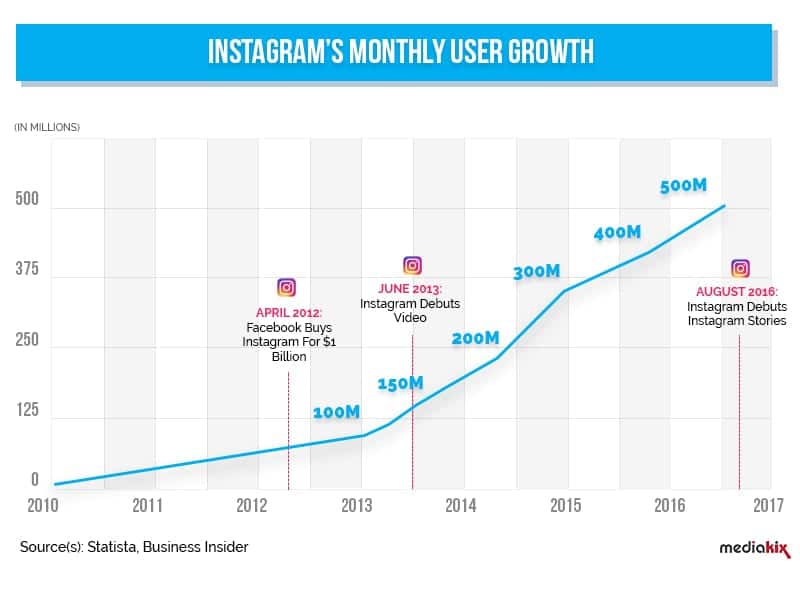
Instagram is growing at an incredible clip. In 2017, Instagram announced that approximately 800 million people use the platform each month. Their latest tool, Instagram Stories, became more popular than Snapchat just one year after going live.

Since brands tend to see better engagement on Instagram than any other social media platform, and because of great advertising controls, Instagram is poised to become the go-to channel for brands interested in social media marketing.

9. Leading brands invest in live events.

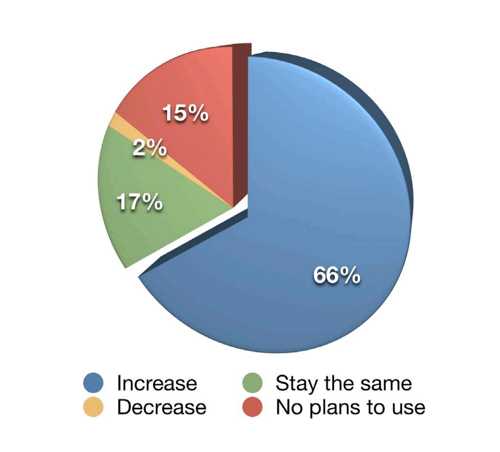
Approximately two-thirds of marketers say that they will increase the number of live events they host in 2018. This is because marketers recognize that live events are one of the most effective marketing channels.

There is a reason that some of the world’s most successful organizations, including Salesforce, Airbnb and Google, host an annual event designed to bring existing customers, prospective customers and the press together under one roof.

10. B2B marketers create multichannel cold-outreach campaigns.

The average cold email response rate is low, and it will continue to decline as email clients get better at filtering out junk mail. The best marketers develop integrated marketing campaigns that use a combination of email, digital ads and other channels to engage prospects in new and exciting ways.

For example, by using Twilio marketers can send text messages in addition to email. They can then retarget highly qualified prospects with custom audience ads offered by platforms like Facebook and Google AdWords.

11. Twitter dies a quiet death.

Twitter has been unable to grow users in 2017. The platform has focused on user acquisition rather than on making improvements to their ad platform. As a result, marketers are already using other social media platforms to connect with prospects. This trend will continue in 2018 as Twitter continues to struggle.

12. LinkedIn sees new life among B2B marketers.

While Twitter struggles, LinkedIn has made a number of great improvements to their platform. A site-wide revamp refreshed the LinkedIn user interface in 2017. The platform also saw good improvements to the LinkedIn ad platform. Thanks to these and other changes, B2B marketers will utilize LinkedIn more in the coming year.

13. Machine learning changes how marketers manage ads.

Why pay a digital marketing agency thousands to manage ads when a machine-learning platform can do it better? New platforms like Acquisio and Trapica promise to optimize ad spend through advanced machine-learning algorithms. Marketers simply need to set basic campaign parameters, and the platforms then do the work of identifying ideal audiences and effective creatives.

14. Predictive lead scoring makes marketers rethink lead routing.

Using predictive lead scoring, marketers can identify the prospects that are most likely to convert to customers. All that’s needed is an email address, and tools like Infer crawl the web looking for buying signals. Leads are then scored and sorted, so that only the most qualified people are passed to sales.

15. Virtual reality is called into question.

A few years ago, virtual reality was predicted to be the next big thing in content. While VR is popular in the videogame community, it has not gone mainstream. This is probably for the best, as it can be difficult for brands to produce content with a controlled point of view. Instead of virtual reality, augmented reality is slated to make waves next year. Look no further than Apple’s rumored AR glasses.

16. Consumers expect more from brands.

Thanks to a confluence of services, consumers will have increased expectations from brands of all kinds. Voice assistants, same-day delivery and on-demand content will mean that both B2C and B2B marketers must find innovative new ways to delight prospects and customers with nearly instant service.

17. Influencer marketing remains a useful strategy.

Nearly 95 percent of marketers who use an influencer marketing strategy believe it is effective. Brands interested in connecting with prospects via social media will continue to turn to influencer marketing. Influencers create compelling content that appears to be organic in many cases.

Consumers, especially younger ones, prefer content that feels less “staged” and more natural. The world of advertising is changing. It is moving toward subtle sponsored content promoted by influencers or micro-influencers.

18. Gated content falls out of vogue.

In the B2B world, gated content is how many marketers generate leads. But, some of the best brands, including Hubspot and Zendesk, are un-gating content in order to develop a stronger organic search presence in an increasingly crowded content landscape.

Conclusion

Unknown marketing surprises await in 2018, and some of these predictions will probably fail to come to fruition as technology and the expectations of consumers change. Nevertheless, many of the trends outlined here are likely to come to pass.

Based on current trends, marketing is likely to become more analytical, and more focused on digital marketing through organic search, voice and social media. In addition, new content formats like augmented reality and in-car ads will probably go mainstream.

Feature Image Credit: Getty Images

Sourced from Lyndax

By George Mathews

Most B2B e-commerce store owners agonize over website design, bulk ordering, payment terms, and shipping. Copywriting isn’t top of mind. However, this one element of your B2B online store can make or break your bottom line.

Poor sales copywriting is a major cause for slow or disappearing ecommerce sales. Here are six copywriting blunders that can cause your e-commerce sales to plummet.

Mistakes That Cause Poor E-Commerce Sales

1. Using “We” Instead of “You”

Does your website focus on your company instead of your customer? If you’re rambling on about your company’s history, your technologically advanced products, your numerous accolades and press mentions… yawn! You’ve already lost the customer. It’s a common mistake many businesses make.

Glowing product reviews and awards provide excellent social proof, which should be highlighted. However, don’t forget that customers are interested in how you can help them more than your bragging rights.

Using “you” and “your” rather than “we” and “our” is more customer-centric. To further punch up copy, shift from passive voice to active voice. For example, “We’ve bought in bulk to bring you lower prices” can change to “You can buy in bulk at a low price”.

2. Selling a Product Instead of a Solution

Most customers seek solutions to problems. They want to know how your product can solve their problem. A list of features doesn’t always answer that question. Explaining how a feature or service will benefit them does.

Let’s say you rent out construction equipment that can be delivered on the same day. Which heading is more effective?

“We Offer Same-Day Rental of Construction Equipment.”

“Bulldozer Bust? Need Construction Equipment in a Hurry?”

The first heading isn’t bad. It tells the customer what the business offers. However, the second speaks directly to the consumer and immediately offers a solution to a building contractor on a tight deadline or with construction equipment that’s broken down.

3. Overly Long Copy

It is tempting to blather on about your business or product but, in e-commerce, less is more. People’s attention spans are shrinking. An e-commerce website needs short but powerful copy with attention-grabbing headlines and irresistible product descriptions.

If you’re not a natural-born writer, the good news is, it is a skill you can improve. Udemy offer short online copywriting courses that teach the principles of good copywriting including how to create killer headlines, landing pages, and calls to action.

If, however, you still struggle with long-windedness, hire a copywriter. Alternatively, consider setting up a B2B e-commerce store on a platform like Shopify. They offer visually-appealing e-commerce store templates for every type of B2B business. Following a set template will force you to keep words to a minimum.

4. Unimaginative Product Descriptions

Unimaginative product descriptions kill e-commerce sales. It’s at this step that a customer decides whether to hit the “add to cart” button.

Writing product descriptions is tricky. If they were only about size, weight, and color, it would be easy. Specifications alone don’t seal the deal. You need to entice the customer to buy your product, but without being flowery or deceptive. In other words, pimp your product description but don’t exaggerate. Exaggeration will lead to bad reviews from unhappy customers who receive a product that doesn’t live up to the hype.

To write persuasive product descriptions, you must understand your audience. A good way to do this is to create a buyer persona. A buyer persona lists specific characteristics of a customer or group of customers. Be as detailed as you can and create more than one persona if you serve different types of customers. The clearer your customer picture is, the easier it is to write targeted product descriptions.

5. Being Afraid to Inject Personality Into the Copy

Some B2B owners adopt a formal “business-like” tone to appear professional to a corporate customer. All this achieves is lacklustre copy. Don’t be afraid to inject personality into B2B copy.

The type of business and your brand image influences your tone. Some businesses naturally lend themselves to a light, quirky, or humorous image. A toy wholesaler can play around — pardon the pun — with fun branding. A stationery retailer may be more conservative but that doesn’t mean you can’t liven up the copy. A good copywriter can get a customer to fill their shopping carts with staplers and sticky notes lickety-split.

6. Using Too Much Jargon

Don’t try to impress customers with jargon. Just because you’re talking to business-to-business clients, doesn’t mean they want to wade through a bunch of technical terms, definitions, and in-depth product explanations. It results in heavy copy that’s tedious to read. Remember, customers are seeking solutions to problems. They’re not interested in a product’s technical details. They’re interested in how it will benefit their business.

Conclusion

The key to e-commerce success is more than just website design and a user-friendly interface. It’s also about the right words. Once you’ve nailed the copy, don’t forget to check grammar and spelling! Business-to-business copy with poor grammar is unprofessional. Even the best copywriters slip up sometimes. Use a tool like Grammarly to catch typos and punctuation errors.

By George Mathews

George Mathews is a staff writer for WebWriterSpotlight.com. He is passionate about personal growth and development.

Sourced from The Web Writer Spotlight

By Max Willens

Google and Facebook over the past year introduced tools to help publishers sell subscriptions on their platform, and so far publisher response to both efforts has been mixed.

Publishers contacted for this story praised the platforms for being communicative and committed to these products but also groused that the tools were cumbersome to implement and had limited returns.

“The people they’ve got on this are diligent, and they mean it,” said a source that’s used both platforms’ tools. “But I can’t tell my CEO we’re making meaningful progress.”

A heavy lift
Facebook said early on, it averaged eight weeks for the participating publishers to integrate its tools, which let people subscribe to publications through Facebook’s fast-loading Instant Articles mobile format.

Many of the publishers that launched Subscribe with Google, meanwhile, still haven’t fully integrated its tools, according to Google. Part of the delay is that publishers have competing development and product priorities. But it’s also because the platforms’ tools are cumbersome. McClatchy had a 30-person person task force that spent three months getting the newspaper publisher’s 30 sites ready to integrate Subscribe with Google this spring. “That took some commitment,” said Dan Schaub, McClatchy’s corporate director of audience development, adding that he was pleased with the tests and the incremental improvement.

“No disrespect to Google, because it’s hard no matter what. But if I introduce ‘Subscribe with Google,’ my workload doubles,” said one source at a publisher that has experimented with both platforms’ tools. Google said it expected integration to take a long time since its tool is an end-to-end solution, but that it’s interested in integrating into third-party tools.

Early on, publishers said, Google’s tool also was limited by the fact that Accelerated Mobile Pages, Google’s mobile web framework, does not support a lot of javascript, a key ingredient in many publishers’ paywall solutions.

Modest rewards
It’s hard for some publishers to shoulder this extra lift when the upside remains limited. Most publishers’ subscription signups happen on desktop (in part because publishers’ own mobile checkout experiences often are subpar), while Facebook and Google’s products focus on mobile devices.

Facebook’s alpha test yielded a 17 percent average lift in subscriptions, which should be taken with a grain of salt because Facebook generated few subscriptions to begin with.

“Neither Instant Articles nor Subscribe with Google is moving the needle for any of the publishers I’ve spoken to,” said a source at one publisher that’s considered using the tools. “It’s all incremental.”

Facebook also wouldn’t give publishers user-level data of who was and wasn’t in its control group when testing its tool’s effectiveness. One publisher said that Facebook’s reports often seemed more positive than what the publisher observed. Facebook disputed the claim that there were wide disparities between the results observed by publisher and platform.

Grudging praise
Many publishers contacted for this story said they were impressed by how the platforms adjusted their products to improve engagement and retention.

Google, for example, made anonymous user data available with a News Consumer Insights tool, which measures a publisher audience’s propensity to subscribe and which Google said thousands of publishers have used since it was introduced in March. “Them opening up the kimono like that is a big deal,” one source said.

Facebook, for its part, discovered that almost 40 percent of its initial test publishers’ subscribers did not follow their pages on Facebook, so it added an account-linking page to the subscription checkout flow to show subscribers more content from those publishers. It also gave publishers the ability to put subscribe buttons on their Facebook pages to use for flash sales or other promotions.

Having paywall in Instant Articles sends the message that publishers’ content is worth paying for; it’s offset by the fact that Facebook has been decreasing the amount of publisher content in the news feed.

“We should be benefiting from their algorithm changes,” said a source at another publisher that’s used both products. “If the broad effort to fight fake news and gaming Facebook is supposed to lead to [users seeing] more brand-name news, you can’t say they’re knocking it out of the park.” Facebook said it is weighing that as an option but hasn’t planned any tests to do so.

By limiting the number of publisher pages that needed to have the platform’s code on them, Facebook said the integration time has been cut to under two weeks. In November, it will integrate with paywall provider Piano, which will open up Facebook’s subscription tools to a wider range of publishers. Google is readying case studies designed to show how a wider range of publishers can use the tools it launched in March.

It’s unclear when either product will become something any subscription publisher can use, though.

“Facebook and Google have been very good partners in this,” said Fran Wills, president of the Local Media Consortium, a publisher trade group that frequently partners with the two tech giants. “With any kind of technology, you have to start with a simple concept or a simple model and then try to make that work before you can start customizing and adapting to a lot of different needs.”

By Max Willens

Sourced from DIGIDAY UK

By Daniel Ndukwu 

There’s always more to do with the money you have on hand. It’s even more apparent in a business setting. Budgets rule everything.

If you blow your budget then you’ll be in a tough spot.

Because of this reality, we’re always looking for ways to increase our revenue and supplement our income. With more cash on hand, you can hire more people, start more initiatives, breathe a sigh of relief.

In this article, we’ll explore affiliate marketing to increase your income so you have more cash to do the things you want.

Using Affiliate Marketing to supplement your income

Affiliate marketing is a multibillion-dollar industry that’s been proven to increase the income of vendors and affiliate alike.

It can go both ways. You can recruit affiliates to market your products or you can become an affiliate partner to promote the products of businesses that complement your own.

Both work to increase your revenue.

The key in both cases is to find the right partners. Once you do, you’ll need to track what’s working and what’s not with the right tools.

There are multiple platforms dedicated to finding affiliate offers such as Clickbank, Flexoffers, and even Amazon.

Before choosing an actual offer, make a choice about what type of affiliate offer you’d like to promote. This will help you narrow your choices to a manageable few within your niche.

  1. Digital Downloads

This class of affiliate products pays a higher percentage of the sale amount because the cost of delivery and hosting is negligible. They also tend to be cheaper.

They’re online resources that customers can access instantly after paying for them.

They range from audio files, video files, or PDF files. An example is the entire Amazon Ebook marketplace or software such as WordPress plugins.

Since they’re relatively inexpensive, it’s easier to get the sale but you’ll have to sell a high volume to receive a sizeable income.

  1. Hosted or professional services

Professional services are a great way to achieve another stream of income through affiliate marketing. Before you settle on a provider, it’s important that you can vouch for their services.

Professional services tend to be more expensive than digital downloads. Hosted services, on the other hand, are cheaper but tend to follow a recurring subscription model.

Choose services that can cater to a worldwide audience as opposed to only local clientele. These are professional services like digital marketing or SEO (search engine optimization). An example of a hosted service would be a product like Leadpages or Convertkit.

As an affiliate for a professional service, you’re usually paid for the initial referral and that payment is much larger than what you can expect from a digital download. Hosted services tend to pay over the life of the subscriber you refer so the payments are small but add up over time.

  1. Online courses

This is a great way to earn a large affiliate income. Online courses are becoming more and more acceptable for adult skills development.

Everything from photography and gardening to digital marketing and productivity is being taught using online courses. In fact, the online education space is a multibillion-dollar industry.

Many of them have a premium price point and pay close to half of the revenue in affiliate income. They’re very similar to digital products but with one distinction – they’re not downloadable.

Choose online courses from reputable providers in your space and market them to your current audience. Within a short time, you’ll have enough extra income to offset more costs in your business.

  1. Physical products

Affiliate marketing started with physical products. They’ve adapted very well to the internet. The first thing you’ll notice about physical products is they pay a much smaller percentage than other types of affiliate products.

This is natural because there are more costs associated with manufacturing, storage, and delivery.

Recommended for YouWebcast, October 30th: What is Post-Click Optimization & Why is it Critical for Marketers?

Choose products that are unique, premium, and noteworthy. Commodity products aren’t worth your time because the commissions will be too small.

Marketing your Affiliate Products (without distracting from your core business).

Affiliate marketing can be a full-time business and it is for many people. That’s not what we’re after. We’re going to look at a few ways to promote your affiliate products to increase your revenue without taking away time and energy from your core business.

I’d recommend not placing them as a direct offer on your website. This may dilute the effectiveness of your core offer. Instead, we’ll mainly market to existing audience members.

There are two ways to go about this.

1. The thank you page

There’s a psychological phenomenon known as the confirmation bias. This is a when we give more weight to things that confirm our current beliefs.

What does that have to do with affiliate marketing?

When people sign up for your email list or certain offers, they hold a belief in their head. Most times, that belief is you know what you’re doing and have good products.

On the thank you page, you can confirm this belief. Use copy that reinforces what they already feel by inviting them to get something you only offer exclusive members.

What is that something?

A low-cost affiliate product such as a digital download.

These should be less than a hundred dollars and directly related to what they just bought or signed up for.

Jigsaw Health uses this opportunity to give a discount to customers. Though it’s not an affiliate product, the same principles apply.

2. Email sequence

Email marketing should never be ignored. It’s an efficient and effective way to deliver your message at scale.

Naturally, it works to sell tons of affiliate products.

It’s tempting to get a new email subscriber and bombard them with as many relevant offers as you can. The logic is they’ll bite on something.

What’s more likely to happen is a massive amount of unsubscribes and spam complaints. Instead, build a relationship with your subscribers, choose a few products you believe in, and sell them over the long term.

There are a few things to keep in mind about email marketing:

  1. The relationship is more important than a quick buck. If you treat your people right and recommend good products then they’ll stick around for the long haul and spend more money with you.
  2. Find a good email frequency and stick with it. If you email too much then people will unsubscribe. If you don’t email enough then people will forget about you.
  3. One call to action per email. The more calls to action you have, the less likely people are to click on anyone. It’s the paradox of choice
  4. Automate it. Set up an automated email sequence for new subscribers. Introduce them to your brand, let them know what to expect, and recommend products that will help them right now.
  5. Segment your email list. This is important so you’re always sending relevant emails to relevant people.
  6. Constantly track and improve. You won’t be perfect on your first time around and nobody expects you to be. Keep tracking and testing your campaigns over time.

These are the most important things you need to think about when you’re setting up your email sequences. Over time, you’ll get better at it and you’ll see your income increase as a result.

Conclusion

There are countless demands on the time and resources of a business. Affiliate marketing is a proven way to increase your income with minimal effort.

Though it can be tempting, don’t allow affiliate marketing to take over your core business. That would be counterproductive.

There are a few essentials to keep in mind:

  1. Choose a type of affiliate product that makes the most sense for you
  2. Promote it as a complement to your core offer
  3. Utilize email marketing as much as possible to sell and build relationships

Do you know any other ways to use affiliate marketing to supplement your income? What’s your take on affiliate marketing as a whole? Let me know and don’t forget to share.

Featured image courtesy of pexels.com

By Daniel Ndukwu 

Sourced from Business 2 Community