Author

editor

Browsing

By Andrew Keogh

Here are some very brief, yet highly engaging, stories explaining how Irish start-ups I worked with recently got attention and improved their business opportunities.

Elder Home Share – Founder Saoirse Sheridan

Elderhomeshare.ie is Dublin’s first home share service and provides peace of mind for elderly citizens to live happily and independently at home by matching them with home share companions. It’s an alternative home support solution for the elderly and can work well instead of paying for a live in carer at night, if the homeowner does not need night time assistance”

Journey Protector – Founder Anne Lawlor

JourneyProtector.com solves problems faced by haulage companies due to theft and damage to their load. We have developed a system which will protect drivers, haulage firms and their freight from loss or damage caused by clandestine stowaways or fires, saving time and money for our clients and giving them a competitive advantage over their rivals”.

The Shoes Story

While training a group of students on the Trinity College innovation program to pitch, a student told this story which still resonates with me weeks after the event.

I have used this story as an example of how a simply told yet powerful story can engage and evoke a response from an audience.

Here is the story as retold by me:

Some years ago this student was part of a group of Irish people working in Moscow who found the Russian people to be wonderful hosts, full of warmth, friendliness and welcoming.

After two years the group decided they should do something by way of response to the kindness of their hosts so they wrote to three charities and asked them for suggestions as to how they could be of help?

Two of the charities replied saying please send money; the third charity replied as follows:

“We need 82 pairs of shoes and here are the shoe sizes.”

The next day they ordered the shoes and had them shipped to the charity; they also continued to support this charity for the six years that they remained in Russia.


Here, on the other hand, are some examples of what I would call business speak/jargon:

A N Other: is a cloud-based solution for sourcing and digitising what is currently done manually.

(Whoopee! I bet people are beating a path to your door)

A N Other: We are a branding/design agency who offer creative services such as brand creation, marketing & strategy, packaging design, promotional design etc. etc. etc.

(Probably all their competitors say the same)

Listen to Christy Moore singing – ‘Lingo Politico’ for a great example of how jargon can be used to mislead us.

If you found the story of Elder Home Share or Journey Protector interesting and you would like to know more please do get in touch with Saoirse or Anne; they would be delighted to hear from you.

Feature Image Credit: qimono / Pixabay

By Andrew Keogh

Sourced from Irish Tech News

By 

Creativity is the key to unlocking your dreams and vision for the future. If you can unlock that creative mindset, you’ll be set for life.

How often do you try to look for success and fulfillment through logic? You might be looking too hard and in the wrong direction.

Creativity is the key to unlocking your dreams and vision for the future. If you can unlock that creative mindset, you’ll be set for life.

Machines and computers can do logical tasks and hard work, but they’ll never be able to be creative. That’s something only a person can do. Some people find their creative passions easily, while others feel a struggle. If you’re one who struggles, don’t worry — finding your unique passions aren’t as hard as you might think.

The key is to let go of your feeling of judgment. Let your mind relax and think about what made you weird or unusual as a child. Those fun oddities are what will make you something big today.

To go more into unlocking your creativity, I wanted to bring you back past episodes from Chase JarvisCasey NeistatManoush Zomorodi and Liz Gilbert.

These conversations have helped me unlock my passions to new levels, and I know they will help you too. No matter where your creativity lies, if it’s in writing, creating content on YouTube or still something you are trying to discover, this episode will bring you valuable insights.

Don’t forget to take these lessons and practice them any chance you get. Knowledge is only useful when it’s applied to your life.

So learn all about unlocking and mastering your creative side on Episode 668.


Feature Image credit: Panom | Shutterstock.com

By 

Sourced from Entrepreneur Europe

By Andrew Culbert

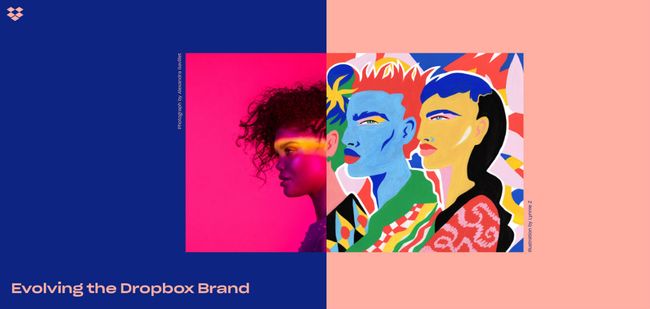
Like Coca Cola and Airbnb, hundreds of established brands are switching on to ‘digital-first design’ and those who aren’t risk forced to change their branding in the near future.

In the case of Airbnb, it unveiled a new core typeface aimed at increasing readability across all devices and digital platforms, with the ultimate goal of making it more accessible to a wider audience.

Those most affected are established brands with legacy branding that was designed prior to today’s ‘digital world’. As to be expected, where the predominant representation of the brand (and audience’s experience) was offline, branding was designed to best cater for these channels to market. Then as new digital channels exploded, the branding was ‘shoehorned’ into online environments (that are changing constantly) … and this is where the problem arises. Many are finding that, as they expand their digital activities, their brand is actually not fit for purpose. It simply doesn’t ‘work’ online.

So brands are having to re-think their whole look and feel, and with this digital re-branding movement a bigger shift is occurring. Brands are now switching on to taking a digital-first approach across their touchpoints, because designing for offline, then trying to make this branding work online, can often result in business headaches and costly changes.

So what’s the problem with designing offline? There is a huge difference between branding that has been designed for offline media versus how it needs to be designed for the numerous screens and platforms now used by consumer audiences.

Digital-first design means that, from-the-off, a brand, its positioning and guidelines are created to best suit the digital landscape and spaces.

It’s an approach that considers the development process and digital effectiveness at the start, not the end, and it is tested with end users and customers to ensure that the brand/design performs digitally before being rolled out further or translated to offline (or above the line) environments.

It means that branding is designed in a way that it can flex to work in both environments with EQUAL success.

And it can eliminate costly redesign bills that can occur when the creatives hand designs over to digital teams who then struggle to work with the design and brand assets.

Digital branding has a different set of considerations versus print; fonts need to be legible, colours need to be accessible and images, logos and other design components need to be responsive. Something that looks amazing in print might not be usable and functional when applied to a website or app. It’s easier to scale a brand upwards and out if you have considered the smallest first than vice versa. Even the tone of voice needs to be different for online audiences.

Yet many brands still may only have a set of offline brand guidelines that leave a lot of digital teams scratching their heads!

Embracing this approach isn’t just about things looking good. Consumers expect a slick online brand experience and for every design element to resonate with them – brands that aren’t meeting this expectation will fall behind.

It’s also more effective to test a brand online than offline; a variety of tools can be used to help make some really informed decisions.

We probably all remember the days of the focus group, sitting around with a small selection of our target audience to show boards displaying different creative.

Digital design has to go beyond this exercise. It’s not just about whether the majority, or even one person, has a preference to the overall look and feel, digital design has to be tested (before being rolled out) to ensure ‘it works’ and resonates with the end user.

Live testing also moves the decision-making process away from the whims of senior management putting the onus on the end user’s reaction. We’ve all fallen foul of the highest paid person’s opinion (or HiPPO) or even worse ‘design by committee’ (which only serves to dilute a message). Tangible and measurable results will drive the end product rather than opinions of few.

As digital experiences are constantly evolving, a brand’s online presence has to too. It has to work across more diverse channels than ever before – channels that each have different requirements, that can alter, sometimes overnight.

The majority of organisations we come into contact with already have some form of online presence – it may be that something doesn’t work quite right or it’s a little clunky (forced). Or it can be that the approach needs to be overhauled. A starting point is understanding the challenges/restrictions of your current brand – where it is not working and why it is not working.

But importantly, a shift to this approach doesn’t just lie with the design and marketing teams, there also needs to be a culture shift across the organisation – and a willingness within the business to transform an established brand for a digital world from the top down. When this isn’t the case it can sometimes be a struggle to get things agreed and decisions be made.

The way customers interact with brands online is a world apart from even two or three years ago.  To be successful, getting an online brand experience right is not a ‘nice to have’ – it’s paramount! It can now be the difference between success and fail; or it can even be make or break. Online channels can no longer be an afterthought in creating a successful brand. In many cases a brand’s identity can’t be ‘shoehorned’ into an effective online experience.

Taking a digital first approach means even an established, once offline only brand, can compete with brands born in the digital age and that have put the needs of an online consumer first from the off.

By Andrew Culbert

Sourced from Digital Doughnut

By

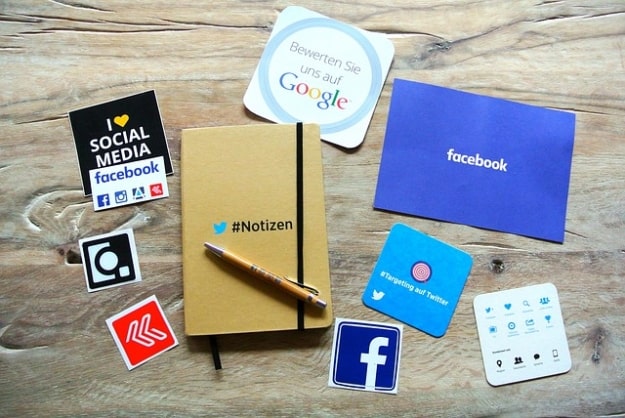
A generation of people have now grown up seemingly constantly broadcasting their lives on Instagram, sharing their innermost thoughts on Twitter, intimate details of life on Facebook and yet the world seems shocked that we’ve lost any sense of privacy. We now live in an age when it seems every Instagram user wants to be an influencer, to be popular and envied and to not have anyone know anything about them.

Ever more apps continuously ask us to share location data, software updates ask us to share our personal details, messaging apps want to scan the most personal communications we can imagine and access our friends lists too. And all in an era where security breaches are common, where nefarious companies seek to sway elections, where our data seems to be used to target us with ads that are designed to be as personal as possible, but never creepy, and yet haunt and chase us in on online lives.

Our homes are now wire tapped, not secretly and against our will, but we pay money and eagerly await delivery of connected smart speakers. We now volunteer all manner of information to Google, our location, photos, our calendar invites, our intentions are known by a global sentient network, more than our own selves.

It’s easy to think this is all a relentless march towards the dreadful future where our personal lives are invaded, where privacy is dead, where we can’t escape the filter bubble, where personalized ads follow us around like Minority Report, with few marketers aware it was a film about a dystopian future, not what should be done.

While we may hate personalization, the only thing we dislike more is irrelevance. We hate it when we phone up credit card companies and they don’t immediately know it’s us. We can’t imagine a world without Google offering us better search results based on our browsing history, we like that our weather is automatically shown in our location. Most people would happily swap mesothelioma class action lawsuit TV ads for a well-made commercial for some trendy new jeans.

The marketing and business world has long tip toed around the edge of the privacy debate. We take as much data as we can, whenever we can, we store it badly and hope to never awake the beast that is the customer. If we were to work around earning data from people, by giving them trust that we will use it wisely, not sell it, keep it massively securely and offer clear value in exchange, then life would be very different.

I’d love to see the world embrace privacy trading. How do we maximize the value offered to people in return for storing limited and intimate data about people in a transparent and trusted manner?

Uber knows that the only way for the app to work is to know where you are precisely and in real-time and we understand that and allow it. We know Google Traffic knows our location but uses it anonymously to process all traffic conditions and we’re fine with the net benefit. Dating apps track our location because sharing that is a small price to pay for life or evening long romance.

I like the thought experience of a post privacy world. Maybe I’m naive but if my airline knew exactly where I was at all times then it would be able to serve me better, to come and find me if I’m in the lounge and keep the plane from leaving without me. If my credit card company knew the same could it stop declining payments because I’m abroad and didn’t tell them? If my TV set knew I was in the market for a new car, new auto insurance and I liked leather manbags, is that a terrible world to live in? What if retailers had my face stored on file and I could pay for things with a smile? What if Uber could access my calendar and offer me cars when I’m running late? What if a hotel company could tell from my voice on phone calls I’m stressed and suggest a spa for me? What if a burger joint could tell I was hungry and not been there and entice me in with a special offer? What if a clothing retailer knew my size?

It’s easy to use the slippery slope argument against this and to assume that we can’t control a precise level of privacy. A company knowing you’ve bought a TV is one thing; knowing your blood test results or genetic code is absolutely another. If health insurers, for example, could ever access some of this information, we’d have absolute mayhem.

Yet the privacy debate is rooted in paranoia. It assumes companies want to know everything and not merely enough and likely in an anonymous way. It assumes advertisers want to build rich personal files and harass customers near endlessly. And given this has been so far how we’ve acted it’s easy to see why.

I’d love a discussion driven less by technology and language like targeting, and one driven by empathy and about serving people better. I’d love to see how we can start the process of asking permission, clear opt ins, clear trust, world class security protocols, and above all else a way to maximize the value exchange over a lifetime for all. Privacy is a recent invention, it’s perhaps the ultimate luxury for the future, but will it matter. Will our kids miss something like privacy, a concept they’ve probably never known.

Feature Image Credit: online information being given freely – picture from Pexels

By

Tom Goodwin is head of innovation at Zenith Media. A writer and speaker, Goodwin is the author of Digital Darwinism: Survival of the Fittest in the Age of Business Disruption. Previously, he has spoken at leading conferences and industry events around world, including Cannes Lions and CES.

Sourced from The Drum

By

Amazon Prime’s extended Prime Day (really 36 hours), didn’t get off to the start the online retail giant may have expected. According to several reports, the website either crashed or had trouble loading pages.

DownDetector.com reported over 24,000 problems just minutes into the sale. It noted that website problems accounted for 46% while log-ins affected 34% of those reporting, and check out had a 19% problem. The site said stated that problems started at 3:04 pm ET, four minutes into the sale.

TechCrunch reported that the landing page for Prime Day didn’t work correctly, and that when some links were clicked users were sent to error pages, which sent them back to the main landing page.

While direct links to product pages worked correctly, some users reported errors when completing a purchase as well.

As of 45 minutes into Prime Day, most problems seemed to be fixed, though the pages loaded slower than usual, but it’s still a problem for a retailer that has hyped the day for weeks and received plenty of media coverage.

Social media was on fire with people reporting the issues, with many noting that cute dogs won’t solve the problems or frustrations.

Prime Day also encountered several problems last year, including issues with Alexa, and web slowdowns.

The latest news also came on a day that found that research on Prime Day launched by global eCommerce consultancy Salmon, a Wunderman Commerce Company, showed Amazon’s retail domination (particularly over Google), where they start and finish the consumer’s shopping journey.

Amazon’s retail dominance, particularly over Google, found these stats: 35% of all UK online spend goes through Amazon, 52% in the US; 51% of shoppers start their journey on Amazon (compared to 16% on Google) and 55% purchase their goods on Amazon, showing where you start is usually where you finish your shop. Also price (64%) and free delivery (54%) is considered more important than brand (39%) for consumers.

Feature Image Credit: Amazon Prime Day has technical glitches in first 15 minutes

By

Sourced from The Drum

By Miles Price 

Every subscriber wants relevant, personal email messages in their inboxes. In fact, most demand it. Subscribers are 50% more likely to open an email that’s personalized and 58% more likely to click a link when the email is relevant to their interests and lifestyle.

Personalization is clearly vital, but how can you pull it off? How can you create and send personalized emails to every subscriber? While personalization may seem complicated, you can implement it relatively easily using email marketing automation.

By adding automation to your marketing toolbox, you can create email campaigns that are automatically delivered to subscribers based on their preferences, actions, or behaviors.

To help marketers use email marketing automation in a sensible, engaging way, here are three automated workflows you can use as inspiration.

1. Automate a welcome series

The perfect time to make a good impression is when a new subscriber joins your list. That’s because subscribers are most engaged with your brand in the first 48 hours of joining your list.

The first thing you should do is automate a welcome email. You can pre-create a welcome email in your account that’s automatically sent to any subscriber who joins your list. The act of joining the list serves as a trigger.

When a subscriber joins the list for Fashion magazine, for example, they receive this automated welcome email moments after joining.

Using email marketing automation to deliver a welcome email is fairly simple, and a good way to get started in the automation world.

While it’s a good start, you don’t have to stop there. You can continue to use email marketing automation to onboard customers or readers. The onboarding process introduces a customer to your product or content and serves as the basis of your new relationship.

Following the welcome email, Fashion magazine continues the automated journey with a newsletter two days later. The trigger, in this case, is a predetermined amount of time.

The newsletter might have a 2-3-line welcome letter from the editor and a list of four of their best articles.

If you’re not a publisher, you can tweak this workflow to fit your onboarding process. The first email should still welcome new customers, but the second email might showcase your best products or give subscribers a discount on their first purchase.

The idea is to create a series of two or three emails that make your new subscribers feel welcome while educating them about your product or service.

Automated workflow

2. Send email based on subscribers’ actions

Subscribers respond to emails that align with their interests. To send targeted emails, Penguin Random House sent an email to subscribers showcasing best-selling books.

When the subscriber opened the email, they clicked on The Game of Thrones: Illustrated Edition, but didn’t make a purchase. The publisher now knows the subscriber is interested in the book and wants to encourage a purchase, so they can use email marketing automation to further personalize messages.

When the subscriber clicked on the book title, it served as a trigger. Another email was sent to the subscriber, which celebrates the publisher’s fifth anniversary and provides a discount to the subscriber. Notice which book is at the top of the list; it’s the same book the subscriber clicked on in the previous email.

The publisher could continue the automated journey by continuing to send emails based on the subscriber’s actions.

If the subscriber clicks on the book in the email again and adds it to a shopping cart, but still doesn’t make a purchase, that action could trigger an abandoned cart email. The next day, the subscriber gets a reminder email about the book along with a final promotional offer.

Automated journey

3. Design an email course or class

Ready to send engaging emails on a regular basis? Tasty, makes this possible by creating guided courses sent via email.

For example, subscribers who signed up for Tasty’s Weekly Meal Plan are sent a daily email with directions to make breakfast, lunch, and dinner. Take a look at the email on day three of the meal plan.

These emails are all created ahead of time and scheduled to deliver on a specific time and date using email marketing automation.

However, Tasty can add to this automated journey by asking this segment of subscribers via email if they’re interested in another guided course, The Healthy Eating Challenge.

Since the content is related, there’s a good chance subscribers will be interested. If subscribers say yes, they’re added to a new segment that will now receive regular emails that help subscribers make wise meal choices. Here’s an example:

By offering guided classes, Tasty is getting to know its subscribers on a more personal level. As subscribers join different classes, they’re segmented into smaller groups, which improves personalization.

Automated journey

Tips to create automated journeys

If you’re ready to use email marketing automation to set up workflows, here are a few tips:

Get creative with starting points

Automated journeys are as unique as your subscribers. Don’t be afraid to get creative. Pick from one of the starting points below and design a series of emails that subscribers will love. Starting points include:

  • Subscriber joins a list
  • Subscriber enters a segment
  • Subscriber leaves a segment
  • A date
  • An anniversary
  • Subscriber activity

Give subscribers room to breathe

Automated journeys are great, but you don’t want to overwhelm subscribers either. You can build breaks into your journeys. They’re called delays. It’s best to give subscribers some time to open and engage with your email before sending another. Remember, the point of automation isn’t to send more emails; it’s to send more relevant ones.

Segment your automation

Automation works best when you use it in conjunction with segmentation. By creating specific campaigns for smaller groups, you’re making a stronger connection because the content is more targeted.

Watch your metrics

As with any email marketing tactic, it’s best to monitor your metrics when you’re using email marketing automation. Keep an eye on your engagement rates, specifically your open, click, and conversion rates to see how subscribers respond. Let the metrics guide and improve your automated journeys.

Wrap up

Automation can help marketers personalize emails without a ton of creation time. With the right mix of automated journeys, marketers can drive engagement and revenue with efficient personalized messages.

By Miles Price 

Sourced from Business 2 Community

By 

Brands are often advised that a good way to get attention from Millennials is to “stand for something.” Millennials seem to admire brands with a social IQ, as many business stories seem to underscore.

A new study from Morning Consult, a Washington, D.C-based research and brand-tracking technology company, provides data that seems to confirm part of that but notes it is not always true, or is more true for some issues than others.

In an introduction to the report, Michael Ramlet, the founder and CEO, says that the recession left an impression on Millennials, so they place an emphasis on value. “Crucially, Millennials expect more from brands. From the shoes they wear to the coffee they Instagram, brand choices are increasingly used to project values in public and online, elevating the need for brands themselves to be value-conscious.”

This report says they want values. And value. “There isn’t any kind of secret sauce to building brand loyalty,” the report says. “Millennials, like older generations, just want reliable, well-priced goods. Factors like ethical standards or transparency are important to some, but don’t rank atop the most significant contributing factors.”

The chapter and section headings of the 18-page report explore things like “Values and Politics” and “Business Ethics,” and much of the report seems a lot more basic.

“While there is certainly a cohort of Millennials that actively pays attention to these [social] issues — and are willing to hold companies accountable — the average Millennial does not.”

For example, on the cause-conscious side, just 25% of Millennials say they’ll buy goods or services from companies that they know have labor practices they don’t support. But, on the flip side, only 29% say they avoid buying from companies with different political positions from their own.

“Support for civil and gay rights are the least controversial political positions brands can take. Abortion remains deeply divisive,” the report says.

A brand that proclaims its support for civil rights garners a 56% net positive; gay rights scores a 31%; and gun control elicits an 18% positive reaction. Advocating for stricter abortion policies — that’s the way the idea was stated — elicits as much support as it does opposition, ending in no net gain at all.

The survey of 2,202 adults taken almost exactly a month ago includes a list of brands “most loved” by young adults. At the top, perhaps not surprisingly, are YouTube, Google, Netflix, Amazon and Sony.

(Tucked in 10th place, however, is Dollar Tree, which a Morning Consult spokesman tells Marketing Daily, is evidence of an earlier company survey showing appreciation by all adults for the dollar discount stores by whatever name. Those stores, Morning Consult says, have quiet, strong reputations for hyperlocal community support.)

The top words or phrases Millennials associate with the brands they like are “well-priced given the quality,” “reliable” “high quality,” “trustworthy” and “loyal to customers” and all of them are ahead of “fair-minded,” “ethical,” “moral” and “transparent.” Those value-based terms do show up but not near the top.

The survey breaks out data for four well-regarded companies or brands — Nike, Home Depot, Starbucks and Dove soap — and shows that in each, what Millennials liked more than other social responsibility aspects was that it was a reliable product and/or that it featured good service.

By 

Sourced from MediaPost

By

As Donald Trump and Vladimir Putin arrived in Helsinki for their summit, they were greeted by billboards, posters and transport shelter signs touting Finland as the ‘land of free press.’

TBWA\Helsinki and Helsingin Sanomat, the largest newspaper in the Nordics, greeted presidents Putin and Trump with a reminder of press freedom during their summit in Helsinki, since both leaders are notoriously trying to control the media in their respective countries.

The timely outdoor campaign had an extremely short production time, as the summit – undeniably the news event of the day – wasn’t announced until three weeks previous. 280-plus billboards were created and have been displayed in English and Russian throughout Helsinki, on the presidents’ travel routes to the summit from the airport.

An accompanying video describes the campaign.

The paper’s president, Kaius Niemi, reiterated his company and country’s belief in a totally free press in a tweet, saying: “As we welcome the presidents to the summit in Helsinki, we @hsfi want to remind them of the importance of free press. 300 billboards on the routes from the airport to the summit are filled with news headlines regarding presidents’ attitude towards the press freedom.”

President Trump has lambasted legitimate news sources throughout his tenure, crying ‘fake news’ whenever it suits him. Putin has continually blocked some news sites and put in laws to keep the media at bay. Those efforts by both presidents have caused the press freedom group Reporters Without Borders (RSF) to drop the rankings of both countries, with the US now at 45 (down two places) and Russia all the way at 148. Finland is fourth, just behind Norway, Sweden and the Netherlands.

By

Sourced from The Drum

By

To find out your company’s Net Promoter Score, all you have to do is ask your customers one simple question. That question can tell you a lot about where you stand in terms of customer loyalty.

Developed by Fred Reichheld at Bain & Company, the Net Promoter Score (NPS) is a customer loyalty metric that measures customer satisfaction using an index that ranges from -100 to 100. Customers are asked one question – if they’d recommend the company to a friend – and then asked to respond using a scale from zero to 10, with zero being “not likely” and 10 being “extremely likely.” Customers are then organized into three categories as detractors, passives or promoters, based on their responses.

Detractors

Detractors are those who score between zero and six – they’re the most likely to have a negative perception of the brand or company and the least likely to spend money. They’re also more likely customers to clog up customer service lines, lodge complaints and spread negative word-of-mouth.

In its 2013 report, The Economics of Net Promoter, Temkin Group identifies detractors as having a low Customer Lifetime Value (CLV), because their behaviors are seen as “economic penalties.” They’re less likely to spend more with the company and more likely to complain and spread negative reviews. As a result, they take up customer service’s time and are more expensive to serve than happy customers. In addition, winning back detractors from a brand is typically more expensive than maintaining loyalty with happy customers.

Passives

Passives score between seven and eight on the NPS, and exhibit behavior that falls between a detractor and a promoter. Passives count towards the total number of survey respondents, which helps balance the detractors and promotors since these neutral customers move the net score closer to zero. In terms of NPS, these customers are less important than detractors or promoters because they don’t inform the organization about their brand loyalty.

Promoters

Promoters include anyone who responds with a score of nine or 10. Promoters are more likely to buy products, stay loyal to the brand and spread positive brand awareness to others. Temkin Group found that 64 percent of promoters were more likely to forgive a business compared to 11 percent of detractors. They’re also five times more likely to repurchase from the business and twice as likely as detractors to recommend to a friend.

Companies typically engage with promoters after the first survey question, they will often follow up to try and find out why the customer is likely to recommend the business to a friend. These responses are typically communicated back to departments in the organization that can benefit from the information. The information might be used to improve products, services, training or to restructure workflow process to keep customers happy.

Tempkin Group states that promoters have a high CLV, since these customers display behaviors that are considered “economic benefits. They’re more likely to spread positive reviews, spend more money, cost less to serve and won’t cost anything to acquire, since you already have them.

How do you calculate NPS?

Once you gather the survey data, your company’s NPS is determined by subtracting the percentage of detractors from the percentage of promoters, while passives count towards the total number of respondents. Surveys are typically administered via e-mail and SMS, but it’s becoming increasingly popular for companies to include these surveys within their proprietary mobile apps.

It’s easy enough to calculate your organization’s NPS manually, but if you want to outsource the process, there are third-party services that will help you send out surveys and determine your score. Some popular NPS services include:

  • Survey Monkey
  • io
  • Zendesk
  • Delighted
  • Ask Nicely

What is a good NPS?

A good net promoter score is technically anything above zero, which means you have more promoters than detractors. The worst score you can get is a -100, which means you do not have a single promoter and that all your customers are detractors – vice versa for a score of 100. A score of 50 or more is considered excellent.

Looking at B2B NPS benchmarks will give you a general reference point for where you stand against the competition and help you measure your progress. It’s important to remember that average NPS scores can vary significantly by industry, and a good score in one industry might be a poor score in another. For example, the B2B software industry has an average NPS score of 27, while the IT services industry has an average NPS of 17. To put that in context, industries like HR services and architecture have an average NPS of eight and 32, respectively.

Why is the NPS important?

The result of NPS is a straightforward metric that companies can use to gauge customer loyalty and the health of the company’s brand. It’s just one question, but it’s an important metric for helping businesses understand where they stand in the market and determine whether their effort is better spent on maintaining customers’ satisfaction or if it’s time to try winning back unhappy customers.

Closing the loop

The NPS has a process called “closing the loop,” which is when someone can get more information from a detractor or, even better, convert them into a promoter. However, it’s important to note that to “close a loop,” you can’t allow customers to submit feedback anonymously. That’s because you’ll need some way to contact them in order to attempt winning them back as a customer.

To get a detractor back, you’ll need to reach out directly to the customer and interact with them first-hand. The Net Promoter survey will help you identify these customers and give you the opportunity to bring them back, if that’s what you want.

Criticisms and cautions

One thing to consider with the NPS is there’s no way to analyze responses without inherent human bias. Since responses aren’t standardized, organizations need to rely on human interpretation, which means the results might be skewed based on that person’s experiences.

Another criticism is that organizations might find detractors are unhappy but continue to stay with the company. Typically, this is because of “switching barriers,”as Reichheld noted in this HBR article from 2003. which is common in industries, like technology, where customers have to sign contracts and service agreements. A customer might be unhappy with their internet provider, but unable to switch because there aren’t any other options available in the area. In this instance, it might be important to focus on improving the experience for detractors, rather than focusing on the promoters.

By

Sarah White is a senior writer for CIO.com, covering IT and healthcare careers, among other technology topics.

Sourced from CIO